Objectives
After providing a brief overview of casting modelling topics and tools, the document aims to map the worldwide continuous casting modelling landscape, the European positioning within it, and current and future trends.
This section provides insights into Computational Techniques based on the physical phenomena involved in steel casting and solidification.1–11 So, it is worth mentioning that there are also some important experimental simulation research activities that are rather important for continuous casting supporting numerical modelling, e.g. Mold Crack Simulator (MCS), Single/Double Hot Thermocouple Technique (SHTT/DBTT), High-Temperature Confocal Laser Scanning Microscopy (HT-CLSM), etc. which use to simulate different phenomenon of dendrite formation, crystallization of mold flux, non-metallic inclusion motion behavior during casting, etc. These items are beyond the scope of such document, whilst relevant in most cases in contributing to their development, consistency and validation.
Finite Element Method (FEM). The finite element method (FEM)1 is a powerful numerical technique that discretizes a continuum domain into smaller linked elements and nodes (i.e. finite elements), enabling the solution of complex partial differential equations governing physical phenomena in steel casting and solidification. Its applications in this context include the following.
• Thermal Analysis: FEM was employed to simulate heat transfer during solidification, calculate temperature distributions within the casting and mold, and predict solidification paths. This facilitates the identification of potential defects, such as hot spots.
• Stress and Deformation Analysis: FEM supports the prediction of thermally induced stresses, which may lead to deformation or cracking during solidification.
• Solidification Modelling: FEM enables the simulation of the solidification process, including the formation and growth of the solid shell in continuous casting.
• Coupled Thermo-Mechanical Modelling: Advanced implementations, such as coupled thermomechanical FEM, allow for the simulation of interactions between thermal and mechanical phenomena during solidification.
• Coupled Thermal and Fluid Flow Simulations: Advanced implementations, such as implicit coupled thermal and CFD with an Arbitrary Eulerian-Lagrangian approach, allow the simulation of the smooth transition from the liquid to the solid and compute the velocity of the liquid metal, which turns into casting speed in the solid material.2
Finite Volume Method (FVM). It divides3 the spatial domain into small control volumes (i.e., cells) and is particularly effective in solving conservation laws. It is widely used in modelling the fluid flow and heat transfer in steel casting processes. The key applications include the following.
• Fluid Flow Simulation: FVM is used to model molten steel flow within molds, providing insights into thermal and flow conditions at the liquid–solid interface and identifying potential defects such as air entrapment or inclusions.
• Heat Transfer Analysis: FVM helps determine cooling rates and solidification patterns, which are critical for controlling the microstructure and mechanical properties.
• Solidification Modelling: This provides detailed insights into the temperature evolution and phase transformations during the casting process.
Cellular Automata (CA). They are computational models4 used to simulate complex systems using discrete cells governed by local rules based on the states of neighboring cells. In steel solidification, CA models are particularly effective in predicting grain structure evolution by capturing the nucleation and growth phenomena.5
Phase Field Models (PFM). These models are set up and used to investigate the phenomena of flow scenarios for different regions with different dynamics, and the impact on the formation of microstructure, based on computations of the thermodynamic and kinetic properties of the flow. These models can capture the dynamics of solidification and the effects that lead to defects in cast products.6 These approaches usually consider a wide range of chemical reactions due to elements present in the steel and rely on simple and fast calculations, as opposed to the FEM or FVM approaches described above.
They are briefly listed and referenced in [7] as follows:
Heat Transfer. Heat transfer governs the solidification rate and significantly influences the grain structure. Thermal gradients determine the morphology of the solidification front (e.g., planar, cellular, or dendritic). Accurate modelling must incorporate conduction, convection, and radiation to account for the heat exchange in the mold, convective currents in the molten steel, and radiative losses at the surface.
Fluid Flow. Fluid flow affects the heat transfer, solute distribution, and inclusion behavior. Key mechanisms include natural and forced convection (e.g., via electromagnetic stirring) and buoyancy-driven flow, which influence the flotation of nonmetallic inclusions. CFD models are extensively used to study the impact of turbulent flow on solidification and simulate mold flow dynamics, including turbulence and electromagnetic effects.
Solidification. Solidification involves the transformation from liquid to solid, which is influenced by thermal gradients, cooling rates, and alloy composition. This process determines the internal structure of steel (e.g., columnar or equiaxed grains). Accurate modelling requires coupling thermal and fluid flow models, often incorporating Darcy’s law, to describe the flow in the mushy zone.
Solute Redistribution and Microsegregation. During solidification, solutes partition between the solid and liquid phases, leading to micro-segregation. This phenomenon affects the mechanical and chemical properties of the final product and must be carefully modelled to ensure quality control.
Precipitates, Inclusions and Defect Formation. Precipitates and inclusions (e.g., oxides and sulfides) and other defects (e.g., porosity and cracks) form owing to steel chemistry, re-oxidation, flow conditions, and thermal gradients. CFD models, when coupled with thermodynamic calculations, can predict the inclusion behavior and help mitigate defect formation.
Modelling Tools and Technological Advances. The development and adoption of commercial and open-source computational tools have significantly advanced the modelling of steel casting processes. For example, CALPHAD (CALculation of PHAse Diagrams) is coupling with the CFD simulation to use in some solidification/casting research; AI-based branches, e.g. machine learning, are used to predict the solidification microstructure, and defects (cracks, macro segregation, porosity, inclusion, etc.) for the quality control of casting lab, etc. These tools implement momentum, heat, and solute conservation equations in user-friendly interfaces
• Commercial General purpose: ABAQUS, ANSYS Fluent, MSC.MARC.
• Commercial process-specific software: ProCAST, MAGMASOFT, THERCAST®.
• Open-source software: OpenFOAM.
• CALPHAD-based software: Thermo-Calc, MatCalc, Micress, JMatPro.
• Python-based frameworks.
Emerging Trends and Future Directions. Recent innovations in steel casting and solidification8 modelling include the following.
• Advanced Computational Techniques: Multiphysics simulations9 and High-Performance Computing (HPC) enable high-resolution, large-scale simulations of the entire casting process.
• Machine Learning (ML)10 and Artificial Intelligence (AI).11 These technologies are increasingly being used to predict casting defects, optimize process parameters, and analyze large datasets from simulations and experiments. Data-based approaches can significantly improve either the computational cost or the quality of the results.
• Real-Time Monitoring: Digital Twins.12 Digital twins act as virtual casting process replicas, enabling real-time monitoring and optimization. They are supported by in situ monitoring technologies, including advanced sensors and imaging systems, to achieve real-time data on temperature, solidification occurrence, and defect formation.
The technical trend can be summarized in Figure 1, taken from a former analysis conducted in an RFCS project,13 which focused more on defect occurrence in as-cast products.
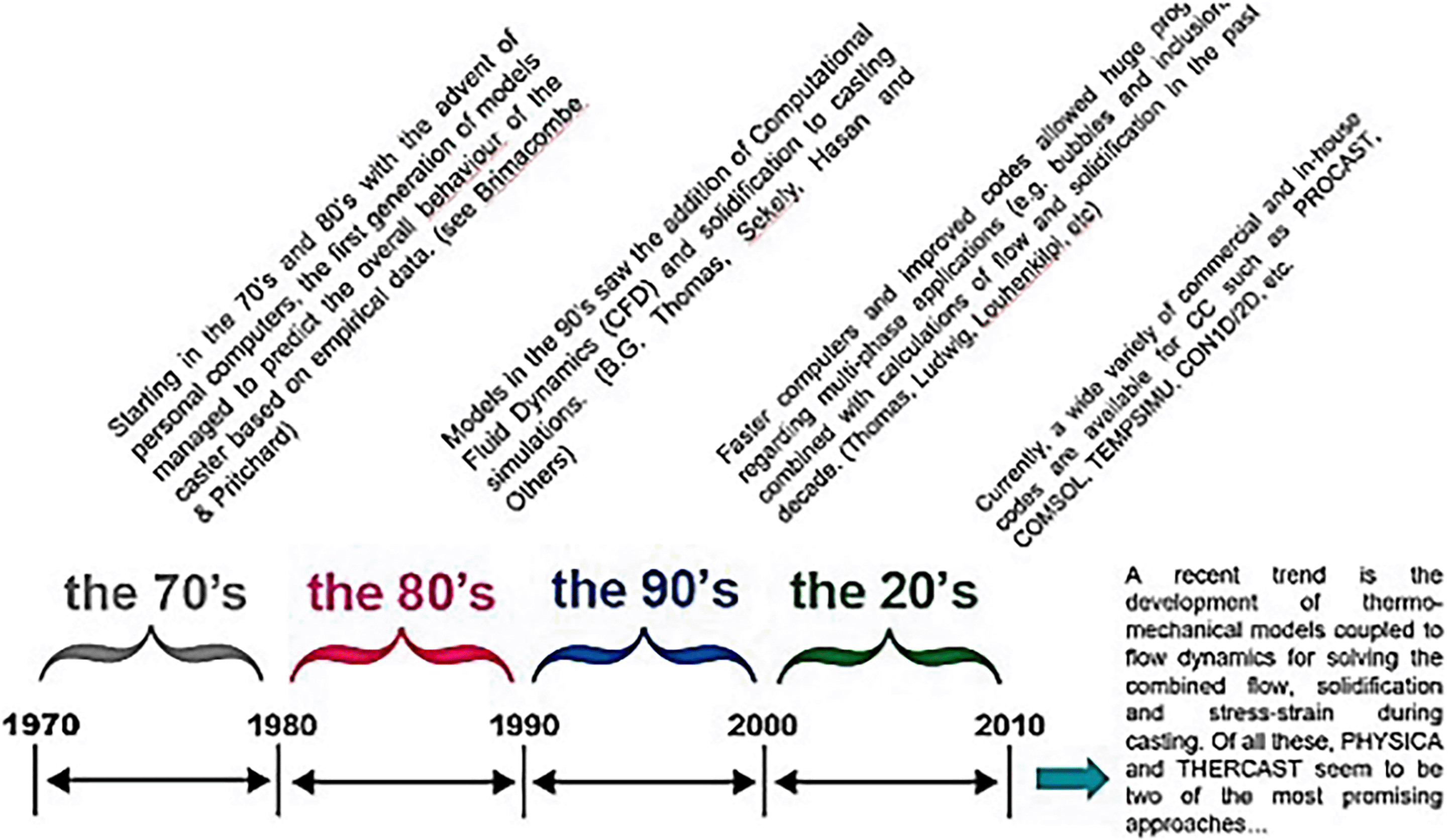
Trend of modelling of steel casting and solidification from 70’s onwards.13
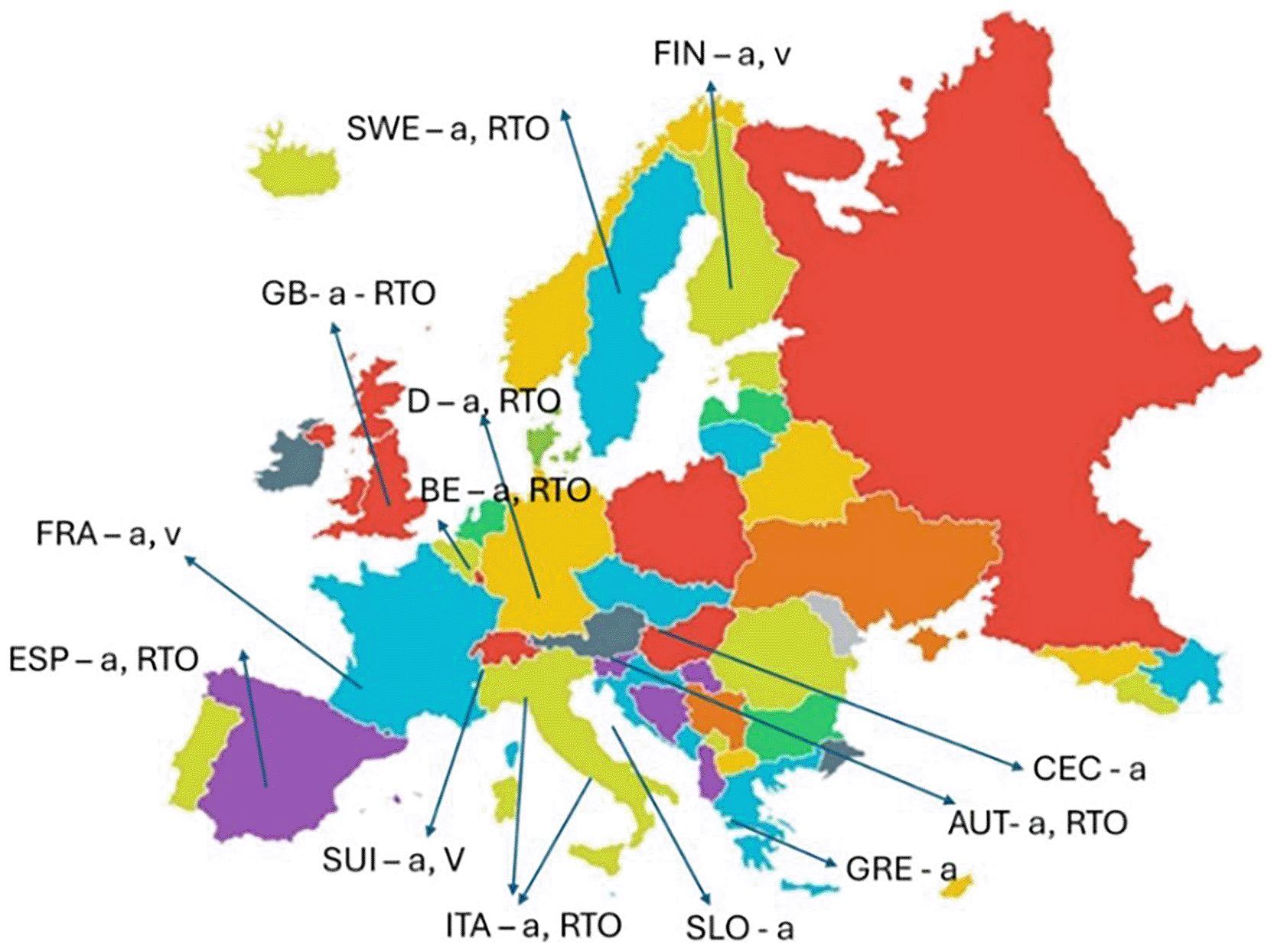
Legenda: a- academic frame; v = code developers; RTO = research centers.
World mapping. A classification was proposed aimed at offering a comprehensive view of the ecosystem that supports numerical modelling in the steel casting sector and highlighting the maturity and integration of modelling practices across academic, industrial, and research environments worldwide.14
To establish the regional classification, a set of quantitative criteria was defined using indicators derived from peer-reviewed technical literature and reproducible bibliometric sources (Scopus and Web of Science, 2011–2025). These indicators capture scientific output, the presence of research institutions, industrial know-how (including plant-validated modelling and digital-twin applications), software and technology development, and involvement in technical or industrial networks. All indicators listed in Table 1 were normalized to a 0–5 scale by dividing each regional value by the global maximum.
The bibliometric analysis covered publications from 2011 to 2025 (inclusive), providing sufficient temporal depth to map the evolution of continuous casting modelling, including CFD, FEM/FVM, multiphase flow formulations, thermo-mechanical coupling, and recent digital-twin approaches, which have gained significant traction since approximately 2018. The corpus includes peer-reviewed studies on advanced multiphase solvers (e.g., CFD-based DBM and VOF schemes), plant-validated digital-twin control systems for bloom casters, software-oriented modelling contributions (e.g., ProCAST, MAGMAsoft, FLOW-3D), and outputs from universities and RTOs presented in specialized casting-modelling conferences.
The expertise levels are categorized as follows:
• Very High: extensive incorporation of modelling methodologies within both academic and industrial domains, with presence of pioneering software developers and mature research and development infrastructures.
• High: strong scientific output and widespread industrial implementation, particularly evident among leading manufacturers and technology suppliers.
• Medium–High: developing modelling capabilities supported by prominent academic institutions and increasing engagement from industrial stakeholders.
• Medium: modelling practices are established but exhibit variability, often confined to specific organizations or regional clusters.
• Low–Medium: low progress in modelling development, with a predominant reliance on imported technologies and intermittent domestic initiatives.
• Low: poor or non-existent modelling frameworks, with substantial dependence on external expertise and technology.
Concerning the papers found on the net, a classification was guessed based on the numbers of contributions as in Table 2.
A classification based solely on publicly accessible information—such as peer-reviewed publications, technical reports, or documented industrial case studies—inevitably underrepresents regions where advanced modelling is primarily conducted within industry or through non-indexed channels.
For this reason, the classification in Table 3 was further refined by incorporating an assessment of actual technological capability and industrial practice. Latin America provides a representative example. Although bibliometric indicators suggest a moderate level of activity, countries such as Brazil and Argentina host highly experienced modelling communities. Brazil has a long tradition in metallurgical and computational engineering (e.g., CSN, Gerdau, ArcelorMittal Tubarão, Usiminas; and strong academic groups at USP, UFMG, UFOP, UFRGS). Argentina benefits from the longstanding modelling culture within the Tenaris/Techint group, including Tenaris R&D in Campana and multiple Tenaris–university collaborations in Argentina and Italy. However, much of this work is proprietary, explaining the discrepancy between bibliometric signals and actual regional expertise.
As a result, the classification/assessment here presented is based on the number of ‘KPI’ reached based on the info gained so far on these aspect: 1) Modelling developing capability; 2) Link with dedicated industries (for validation, application) and academies (network boosting info dissemination, also via dedicated projects at Institutional Level; 3) Application at a broad level in the industry frame; This classification offers a strategic lens through which to assess the global landscape of modelling expertise, facilitating the identification of prospective partnerships and avenues for knowledge exchange within the international steel sector.
Based on the assessment in Table 4, Europe is well positioned in the framework. Then, this section provides an overview of European academic and research institutions actively engaged in the development and dissemination of modelling techniques for steel casting and solidification.
| Country | Reference | Type | Skill | Main activity |
|---|---|---|---|---|
| France2,15 | CEMEF | A | Multiphysics, multiscale solidification modeling | Papers, support to codes |
| Transvalor SA | V | Multiphysics, multiscale casting and solidification software vendor | industrial application (problem solving) | |
| Spain16–21 | SIDENOR I + D | RTO | Flow & solidification modeling | Papers, industrial application (problem solving) |
| Switzerland22 | ETH- Poly. Of Zurich | A | Flow modeling | Papers |
| CALCOM | V | solidification code vendor | industrial application (problem solving) | |
| Italy13,14,23–26 | Politecnico di Milano | A | Flow & solidification modeling | Papers |
| Rina Consulting - CSM | RTO | Flow & solidification modeling | Papers, problem solving –numerical and physical tools | |
| Slovenia27 | Ljubljana University | A | Flow & solidification modeling | advanced flow models (LES) coupled to solidification |
| Greece28 | Athens University | A | Flow modeling in mould | advanced flow models (LES) coupled to solidification |
| Austria29–44 | Montanuniversität Leoben | A | Flow & solidification modeling | advanced flow models coupled to solidification/clogging |
| Johannes Kepler University | A | Flow modeling | advanced flow models in casters | |
| K1-MET | RTO | Flow modeling | advanced flow models in casters | |
| Czechia45 | Ostrava University | A | Flow & solidification modeling | advanced flow models coupled to solidification |
| Germany46–51 | RWTH Aachen | A | Flow modeling | advanced flow models (tundish) |
| VDEh-Betriebsforschungsinstitut GmbH | RTO | Flow & solidification modeling | Papers, problem solving –numerical and physical tools, milestone info for models insight and development Advancing in fundamentals and high-level validation (lab): use of real liquid metals, advanced flow diagnostics, full scale EM actuator testing Multiphysics model validation | |
| Zentrum - Zentrum Dresden-Rossendorf (HZDR) | state-of-the-art liquid metal model casting facilities: | |||
| Belgium52 | CRM | RTO | Mould Flow modeling | Pilot plants (mould alloying) |
| Sweden53–71 | SWERIM KTH | RTO A | Flow & solidification modelling, Thermodynamics, refractories | Papers, problem solving –numerical and physical tools |
| Finland72–75 | Oulu University | A | Flow & solidification modeling | Papers, problem solving – |
| CASIM consulting | V | Flow & solidification modeling | Papers, problem solving –coupling with thermo-chemistry | |
| UK76 | MPI (formerly CORUS) | RTO | Modeling validation (pilot plants) | Papers, problem solving |
| Imperial College Sheffield University Warwick University | A | Flow modelling, thermodynamic modelling, material properties | Papers, partner in EU funded projects |
In Figure 2, as a first reference, the countries participating in the METACAST project are highlighted as well as the mentioned Centers in Table 1, as representative and non-exhaustive examples of the European expertise. Additionally, institutions from the United Kingdom were included to illustrate further contributions from countries whose general characteristics are summarized in Table 4. For each Country, references in the field are recalled. This expanded perspective aims to showcase the diversity and depth of modelling capabilities across Europe and to underline the collaborative nature of ongoing research efforts in this domain.
In relation to EU-funded initiatives, a relevant role is played by European Commission co-financed projects involving continuous casting modelling with qualified participation of project partners. EU programs have significantly supported this topic. To give an idea, Figure 3 gives how the ‘call priorities” (the main topics the funding programmes were focused on) have evolved in the last 15 years, while Figure 4 highlights the technical/technological trend relating to modelling development.13 This shows how EU efforts and support are currently well-aligned with stakeholders’ needs and technical trends. Then, modelling trends should follow this way, namely, in the frame of enhanced and more complex (e.g., multiphysics) description and with shorter calculation times also thanks to increasing computing power.
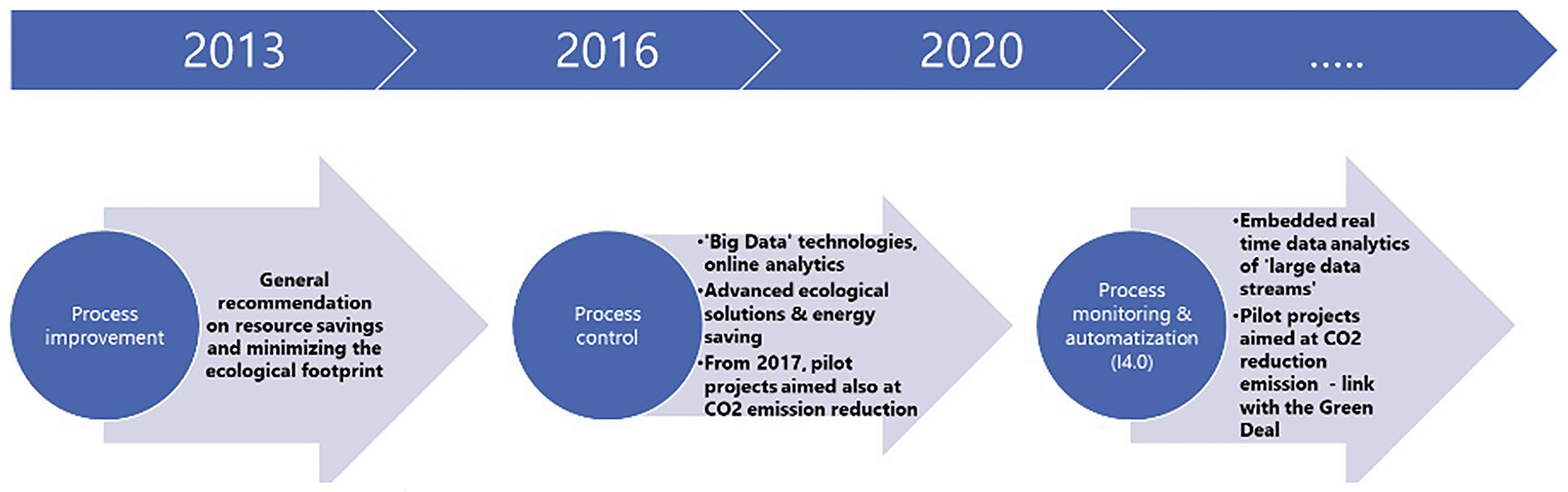
Evolution of the RFCS ‘call priorities’.13
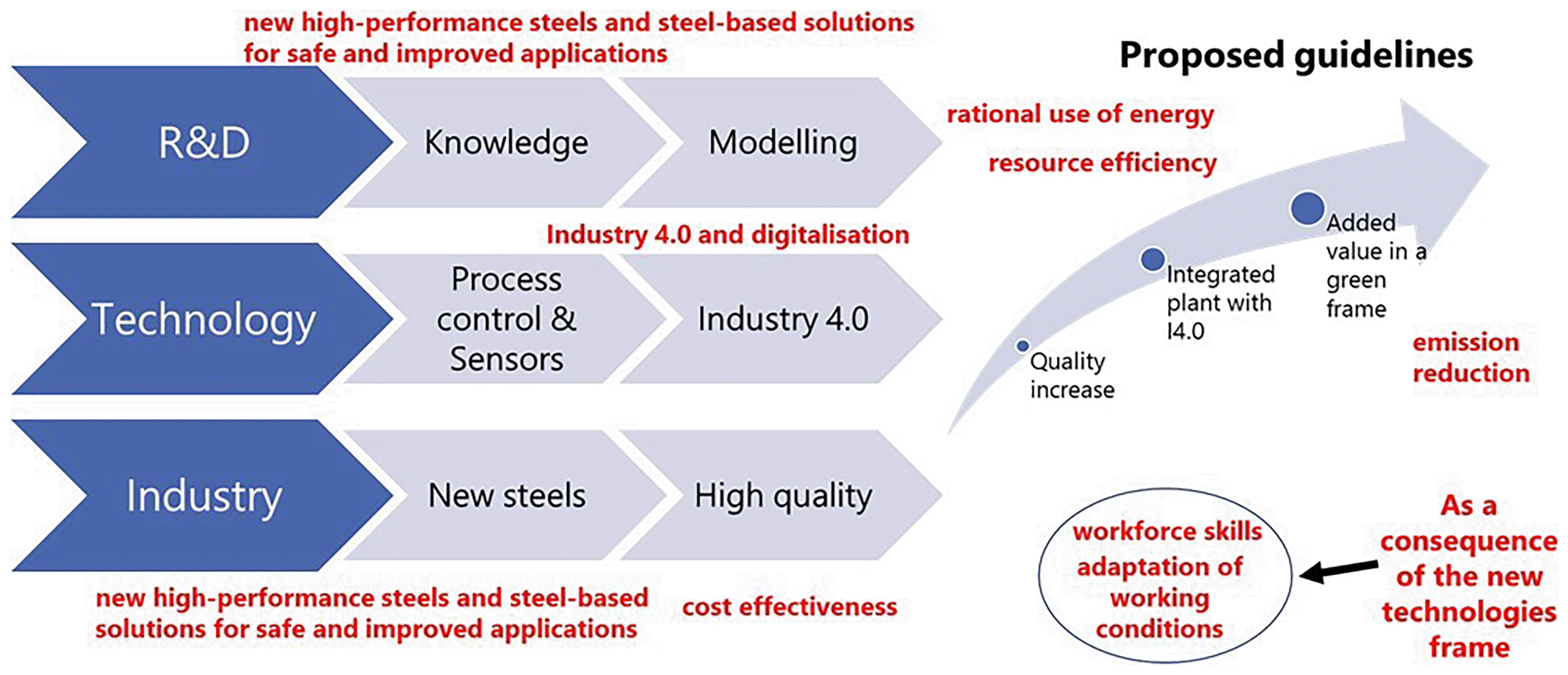
Technical/technological trend in casting process evolution.13
A comprehensive the list of the RFCS (Research fund of Coal and Steel) projects carried out focused on or involving casting modelling in the last 25 years is shown in 13. Most European projects demonstrated a satisfactory degree of success, both in terms of implementation during their execution and, in several cases, through continued uptake after their completion.
These outcomes indicate that the models and tools developed held substantial relevance for industrial stakeholders. However, systematic tracking of follow-up activities remains limited, and comprehensive evaluations of the economic impact generated by the deployed models are often unavailable. Consequently, it is difficult to determine whether the projects produced limited economic benefits or whether such benefits were not recorded or disclosed by industrial partners—possibly due to confidentiality constraints or because assessments took place at a later stage. This highlights a broader challenge in consistently evaluating project impact, despite the strong industrial value demonstrated during project implementation.
Continuous casting of steel is intrinsically governed by interacting phenomena spanning multiple spatial and temporal scales [15,27,28,45,52,22,72–80], from turbulent flow and heat transfer at the strand scale to microstructural evolution and defect formation during solidification. Multiscale simulation frameworks have therefore been developed to link macroscopic transport phenomena with mesoscopic and microscopic material descriptions, enabling improved prediction of process evolution and product quality compared with single-scale models. In recent years, these multiscale approaches have increasingly been combined with machine learning (ML) techniques, particularly in the context of process monitoring, control and optimisation, leading to the emergence of hybrid physics-based and data-driven modelling strategies.
At the macroscopic level, numerical models based on computational fluid dynamics and thermo-mechanical analysis are routinely employed to describe melt flow, heat extraction, shell growth and stress development in the mold and secondary cooling zones. Outputs from these models—such as local cooling rates, temperature gradients and solidification times—are transferred to mesoscopic solidification models, which capture dendritic growth, solute redistribution and mushy-zone behavior. This hierarchical information exchange represents the backbone of multiscale simulation in continuous casting and remains essential for understanding the physical origin of defects and the influence of process parameters. However, the computational cost associated with high-fidelity multiscale simulations limits their direct use in real-time control applications.
To overcome these limitations, machine learning has been introduced as a complementary modelling layer, rather than as a replacement for physics-based approaches. In this paradigm, numerical simulations and industrial data are used to train ML models that act as fast surrogates for selected components of the multiscale framework. These surrogate models can reproduce key outputs of numerical simulations—such as temperature fields, shell thickness or metallurgical length—with high accuracy while enabling prediction times compatible with online monitoring and control. Representative studies have demonstrated the feasibility of deep-learning-based surrogates for near real-time estimation of internal process states, supporting adaptive adjustment of operating parameters during continuous casting operations.
A significant research trend is the development of hybrid or mechanism-data-driven models, in which physical knowledge derived from numerical modelling is explicitly embedded into the ML workflow. This integration may take the form of physics-informed inputs, physically constrained loss functions, or training datasets generated by parametric numerical simulations. Such approaches enhance robustness, improve extrapolation capability beyond the range of available plant data, and partially address interpretability concerns that often limit industrial adoption of purely data-driven models. Recent reviews highlight that these hybrid frameworks are increasingly dominant in applications related to defect prediction, abnormal condition detection and process parameter optimisation in continuous casting.
From a process optimisation and control perspective, ML-based surrogate models derived from multiscale simulations enable efficient exploration of high-dimensional process spaces. When coupled with optimisation algorithms such as Bayesian optimisation or evolutionary strategies, these models support adaptive control of casting speed, secondary cooling intensity and soft-reduction parameters. This integrated modelling-optimisation loop forms the basis of emerging digital-twin concepts for continuous casting, where numerical models, ML surrogates and real-time plant data are combined within a unified framework for decision support and process stabilization.
Despite the rapid progress achieved, several challenges remain. Key issues include the quality and representativeness of industrial data, the transferability of ML models across different steel grades and caster configurations, and the need for improved interpretability and reliability in safety-critical control applications. These challenges further reinforce the importance of multiscale numerical modelling as a reference framework for ML development and validation. Current research efforts therefore increasingly focus on data-efficient learning strategies, physics-informed neural networks and hybrid digital-twin architectures, which align closely with European priorities in digitalisation, sustainability and low-carbon steel production.
This document provides a concise overview of the distribution of research and development efforts across Europe in the domain of continuous casting modelling. Notably, significant contributions have emerged from Western European countries, especially research centers, largely supported by European-level funding programmes. These initiatives have acted as catalysts, reinforcing the engagement of key stakeholders and fostering a robust modelling culture.
Recent trends indicate a strategic shift in focus toward the practical application of models, particularly their integration into process control systems and artificial intelligence (AI)-driven tools. The current state of knowledge in Europe is among the most advanced globally, enabling a transition from fundamental research to problem-solving and operational optimization. This evolution closely aligns with the thematic priorities of the Research Fund for Coal and Steel (RFCS) over the past 15 years.
Progression has moved from process improvement to process control and, more recently, toward process monitoring and automation. These developments reflect the growing demand for enhanced steel quality and the imperative to meet environmental and economic sustainability objectives. In addition, the trend of coupling modelling with digitalization will inevitably bring about the need for higher worker skills. In particular, coupling with AI-ML approaches represent the emerging trends, up to including the increased use of physics-informed neural networks, hybrid digital twins and data-assisted multiscale frameworks that integrate modelling across process, microstructure and control scales. These developments align closely with European strategies on digitalisation, sustainability and low-carbon steel production, where data-efficient, interpretable and physically grounded modelling approaches are strongly prioritized.
In this context, the accurate modelling of physical phenomena and a deeper understanding of the casting process have become increasingly critical. Such advancements are essential to ensure the reliability of sophisticated modelling tools, support effective production management, and reinforce the competitiveness of European stakeholders in the global steel industry.