Introduction
The global energy transition toward renewable technologies is one of the most significant socio-technical transformations of our time, requiring not only technological innovation but also broad social acceptance and democratic legitimacy1,2. While substantial research has examined the technical and economic dimensions of renewable energy deployment, the social and communicative processes shaping public acceptance remain less understood3,4. This gap is critical because social resistance can delay or derail renewable energy projects, regardless of their technical feasibility or economic viability5,6.
Biorefineries are a cornerstone of the circular bioeconomy, offering pathways to reduce fossil fuel dependence through biomass valorization for biofuels and bioproducts7,8. In Spain, Law 7/2021 on Climate Change and Energy Transition identifies the bioeconomy as a development driver, positioning bioenergy as essential for energy security and environmental sustainability. Yet, despite strong policy support, biorefineries face community concerns about environmental impacts, procedural justice and fair benefit distribution9,10.
Traditional approaches to social acceptance of renewable energy technologies focus primarily on psychological factors, economic benefits and procedural justice11,12. While valuable, these frameworks often overlook the central role of communication and media power in shaping public perceptions and democratic discourse13. Recent energy social science research has begun to fill this gap by examining how media representation, partisan identity and communicative strategies influence attitudes toward energy transitions14,15.
The political economy of communication adds further insight by analysing how media institutions construct rather than merely reflect public opinion through selective attention, framing and differential access to communicative channels16–18. In energy transitions, this dynamic becomes especially consequential as governments, corporations, environmental groups and citizen organisations compete to define acceptable and desirable energy futures19.
Spain provides an ideal context to explore these dynamics because of its ambitious renewable-energy policies, diverse biorefinery projects and well-documented patterns of social resistance to energy infrastructures20,21. The country’s democratic transition and strong civil-society traditions make communicative asymmetries particularly visible and politically significant.
Despite growing recognition of communication’s importance in energy transitions, few studies systematically examine structural inequalities in media access and narrative control. Most research relies on surveys of public attitudes or qualitative case studies, leaving underexplored how apparent “social acceptance” may reflect manufactured consent rather than authentic democratic deliberation22,23.
This study addresses that gap by analysing Spanish digital media discourse on biorefineries between 2019 and 2024. Using a mixed-methods design that combines content analysis, statistical modelling and critical discourse analysis, we examine which actors gain media visibility, which arguments dominate public narratives and how these patterns vary across geographical and socioeconomic contexts.
Our research makes three contributions to energy social science. First, it provides empirical evidence of systematic media asymmetries in renewable energy discourse, challenging assumptions of neutral information environments. Second, it integrates insights from social acceptance theory and the political economy of communication to explain how power relations shape public debate. Third, it generates a conceptual outcome—the Communicative Hegemony Model in Energy Transition (CHMET)—that synthesizes observed patterns into a framework for future research on media power in energy governance.
The remainder of the article is organized as follows. Section 2 reviews the literature on social acceptance, energy transitions and communication power. Section 3 details the theoretical framework and research questions. Section 4 describes the methodology and data collection. Section 5 presents empirical findings, and Section 6 discusses implications for energy social science and policy. Section 7 concludes with recommendations for democratic energy governance.
Literature review and conceptual framework
Social acceptance of renewable energy technologies: from individual to structural approaches
The study of social acceptance of renewable energy technologies has evolved from early psychological models focused on individual attitudes to more sophisticated frameworks that recognise the interplay of social, economic and political factors3,5. Traditional approaches, such as the Technology Acceptance Model (TAM), emphasised perceived usefulness, ease of use and behavioural intentions24. While valuable for understanding adoption patterns, these models have been criticised for their individualistic focus and limited attention to structural power relations4.
Research initially framed local opposition through NIMBY explanations25, but empirical studies revealed that resistance often reflects legitimate concerns about procedural justice, distributive equity and democratic participation6,11. Concepts such as place attachment26 and justice-oriented approaches12,27,28 highlighted the importance of fair decision-making and benefit distribution. Comparative studies also show that these dynamics are not limited to specific national contexts. Walker et al.29, for example, analysed news coverage of renewable energy projects involving Indigenous communities in Canada and demonstrated how media narratives intersect with questions of environmental justice and procedural fairness. However, even these justice-based frameworks often treat communication as a neutral process rather than interrogating how power relations shape communicative dynamics.
Recent contributions adopt critical and cultural perspectives to explore how renewable energy deployment can reproduce social inequalities5,30. Concepts such as energy colonialism describe how large-scale renewable projects may dispossess local communities of control over their energy futures31. Yet, despite these advances, little attention has been paid to the role of media representation and communicative power in shaping acceptance or resistance.
Communication and media power in energy transitions
Energy transitions are not merely technical or economic processes but also communicative arenas where actors compete to define desirable energy futures2,32. Media institutions actively construct public opinion through agenda-setting, framing and differential access to communicative channels33,34. The political economy of communication highlights structural filters—ownership concentration, advertising dependence and sourcing patterns—that systematically privilege certain perspectives16–18.
Empirical studies provide growing evidence of these mechanisms. Haas15 analysed media coverage of energy transitions in Germany and Spain, showing how partisan political contexts shape renewable energy discourse. McNeeley and Franz14 developed an integrated framework linking media consumption, partisan identity and transition attitudes, demonstrating how communicative strategies can either facilitate or hinder sustainable energy adoption. Cross-national comparisons further reveal shared framing patterns: Rochyadi-Reetz et al.35 found that media outlets across different countries systematically privilege economic narratives over environmental justice concerns, while Boykoff and Yulsman36 documented how climate and energy coverage often creates false balance between scientific consensus and minority viewpoints, contributing to public confusion about renewable energy benefits. Environmental communication research also shows how broader cultural narratives about progress, nature and risk influence the reception of energy technologies13,37. Batel and Castro19 demonstrate how social representations of renewable energy vary across different communicative spheres, revealing tensions between expert, media and local community discourses.
Despite these contributions, most analyses focus on climate change or general renewable energy rather than specific technologies such as biorefineries. Moreover, few studies systematically examine how structural inequalities in media access affect the democratic quality of energy transitions, a gap that obscures how apparent “social acceptance” may reflect manufactured consent rather than authentic democratic deliberation.
Critical approaches to energy communication: hegemony, counterpublics, and democratic legitimacy
Critical theories provide conceptual tools to examine these inequalities. Gramscian notions of hegemony explain how dominant groups maintain power through cultural leadership and the naturalisation of particular worldviews18,22. Habermas’s public sphere ideal highlights the need for inclusive, rational debate38, while Fraser23 underscores the existence of counterpublics—alternative communicative spaces where marginalised groups contest dominant narratives. In the context of energy transitions, environmental organisations, Indigenous communities and local residents often act as counterpublics that challenge official renewable-energy discourses39.
Research applying these concepts to energy debates demonstrates how competing energy imaginaries and discourses of energy security can privilege particular technologies and actors40,41. Bouzarovski and Bassin42 reveal how energy geopolitics involves not just material resource flows but also discursive struggles over the meaning and value of different energy systems. Yet most critical work still focuses on fossil fuels or climate denial, overlooking how renewable-energy advocacy can reproduce power imbalances through new forms of accumulation and dispossession43. Peck44 further illuminates the tension between political economy and cultural/discourse analysis, a debate highly relevant for understanding how structural and symbolic forces jointly shape energy.
Integrative perspective
Taken together, these strands of literature reveal a need for frameworks that combine insights from social acceptance research, political economy of communication and critical theories of media power. Such an approach can capture how structural inequalities in media access and narrative control condition the very possibility of “social acceptance.” Rather than applying a predefined model, this study responds to that need by integrating these perspectives and, based on the empirical analysis, develops a preliminary conceptual model to guide future research on communicative hegemony in energy transitions.
Objectives
The purpose of this study is to analyse how Spanish digital media construct and circulate narratives about biorefineries, a key renewable energy technology. The analysis focuses on patterns of media access, argument framing and territorial variation to understand how communicative power shapes public perceptions and acceptance of biorefineries and, more broadly, renewable energy transitions.
The specific objectives are:
1. Identify the predominant themes in media narratives about biorefineries-such as sustainability, technological innovation and rural development-and examine how these themes are assembled into dominant interpretive frameworks that present specific positions as "common sense."
2. Assess the distribution of sentiments (positive, neutral, negative) associated with biorefineries across geographical and economic contexts.
3. Analyse the influence of key actors (corporate, governmental, citizen groups) on public narratives, identifying their capacity to shape the media agenda.
4. Characterise arguments for and against biorefineries and relate them to the communicative strategies and actor profiles that promote these narratives.
5. Examine how different actors use communicative resources to consolidate influence or develop resistance narratives.
6. Explore how narrative patterns vary by geographical context, considering population size, regional GDP and the presence of biorefinery installations.
7. Segment recurrent narrative patterns through cluster analysis, differentiating communicative strategies and dominant frames by group.
Insights from these analyses inform the development of a preliminary Communicative Hegemony Model in Energy Transition (CHMET) as a conceptual result of the research, offering a framework for future studies on media power in renewable energy governance.
Hypothesis
The study tests the following hypotheses regarding media discourse on biorefineries in Spain:
H1. Patterns of acceptance and rejection of biorefineries are associated with asymmetric media access, whereby actors with greater visibility are more likely to naturalize their narratives as “common sense,” while citizen concerns receive less coverage.
H2. Negative mentions of biorefineries are primarily linked to environmental and health concerns and occur more frequently in rural areas, where institutional discourses have lower penetration.
H3. Communicative strategies that emphasise citizen participation and dialogue generate higher levels of acceptance and perceived legitimacy in rural regions compared with unilateral or top-down strategies.
H4. The use of highly technical or inaccessible language is associated with higher disaffection and negative mentions, whereas clear, context-adapted language facilitates more positive perceptions and deliberative engagement.
H5. Narratives led by governments and corporate actors tend to have a more neutral overall impact on sentiment compared with narratives led by citizen collectives or academic experts.
H6. Regions with higher GDP and a larger number of biorefinery projects display more technical narratives and more positive sentiments, while regions with lower GDP prioritise economic and social arguments.
Table 1 details the operational definition of variables.
Table 1. Operational definition of variables.
| ID | Variable name | Operational definition | Indicator |
|---|
| V1 | Main themes | Classification of the principal topics addressed in each
article regarding biorefineries. | Proportion of mentions by thematic
category (sustainability, economy). |
| V2 | Sentiment | Evaluation of the overall emotional tone of each article. | Frequency of positive, negative, or neutral
mentions. |
| V3 | Key actors | Identification of entities that lead narratives
(governments, companies, NGOs). | Relative frequency of mentions by actor. |
| V4 | Arguments | Identification of benefits or concerns expressed about
biorefineries. | Number of mentions by argument
(sustainability, health, employment). |
| V5 | Communicative
strategies | Methods employed by actors to influence public
perception. | Types of predominant strategies (media
campaigns, participation). |
| V6 | Language
accessibility | Degree of clarity and technical complexity of the text. | Classification of texts according to clarity
and technical complexity. |
| V7 | Power relations | Distribution of power among key actors. | Perception of influence in public
narratives. |
| V8 | Geographical
context | Relationship between narratives and regional variables
such as GDP, population, and number of installations. | Comparative analysis between regions. |
| V9 | Narrative
cluster | Segmentation of narrative and strategic patterns
through cluster analysis. | Grouping of localities and narratives
according to common characteristics. |
Methods
This research employs a mixed qualitative and quantitative methodology structured in four phases (see Figure 1). The qualitative dimension is based on discourse analysis applied to Spanish digital media about biorefineries, using social listening techniques and manual analysis of 350 news articles collected between 2019 and 2024. This approach identifies narrative patterns, social perceptions, and predominant communicative strategies.
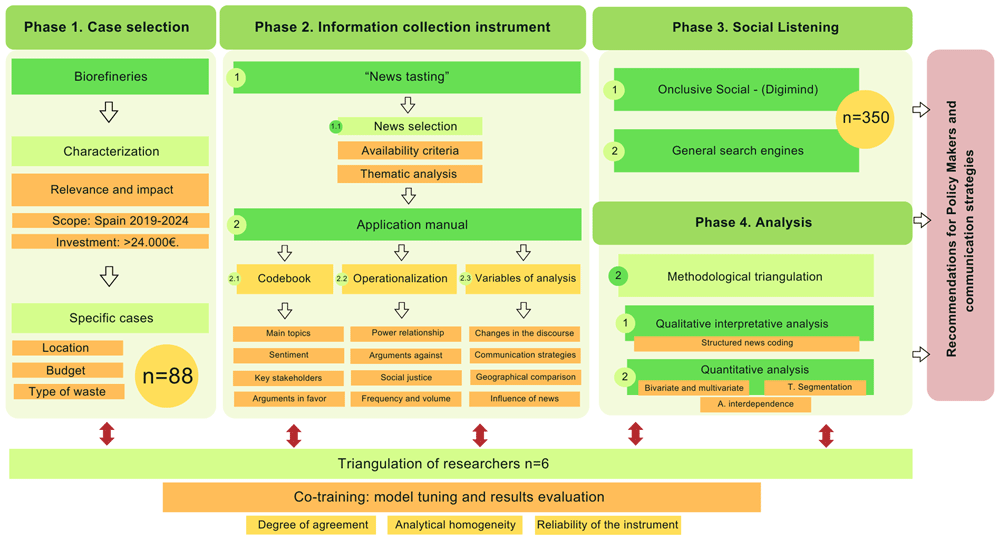
Figure 1. Methodological illustration indicating the phases and techniques used.
Source: Own elaboration.
The quantitative approach complements the analysis through statistical tools: frequency analysis, Chi-square tests, and binary logistic regressions, establishing significant relationships between key variables such as predominant sentiments, arguments, and communicative strategies.
To ensure reliability, researcher triangulation was employed throughout the entire process, encompassing sample selection, data collection instrument design, and data analysis. This strategy ensures bias reduction, analytical coherence, and study replicability45.
Phase 1. Case selection
The study universe encompasses information published in Spanish in digital media, related to the implementation of biorefineries in Spain during the last five years (from November 2019 to November 2024). A total of 88 specific biorefinery cases distributed across Spanish autonomous communities were identified (see Figure 2). These projects include both facilities already operational and making news due to some expansion, as well as those in development phase that were approved during this period.
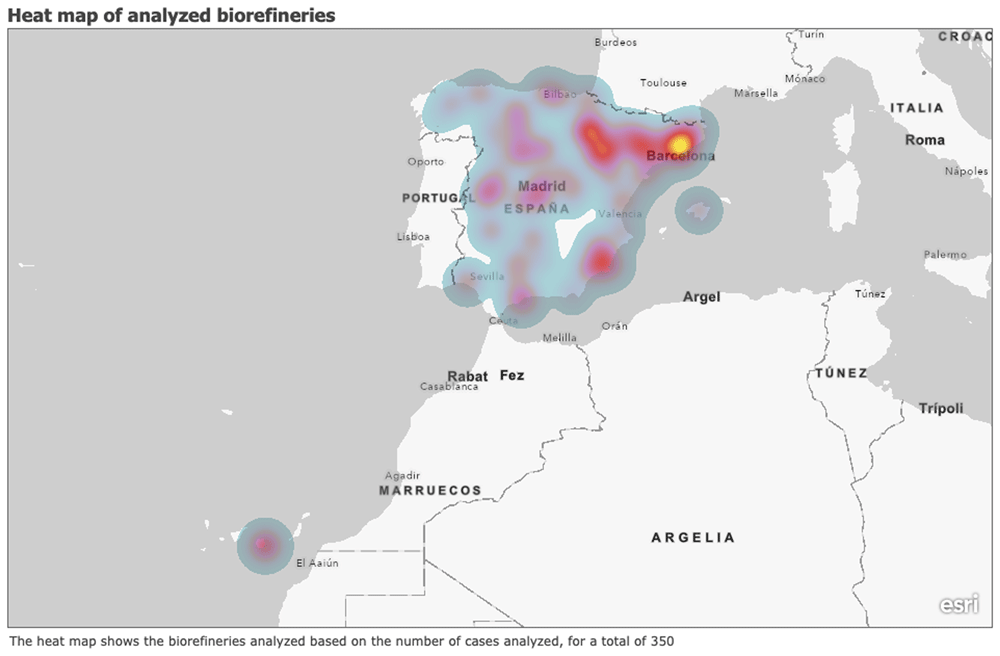
Figure 2. Heat map of analysed biorefineries.
Source: Own elaboration.
For biorefinery selection, criteria of geographical diversity, types of processed waste, investment level, and economic and social relevance were used. Due to the absence of a centralized inventory of installations, biorefineries were tracked through various sources such as the Ministry for Ecological Transition and Demographic Challenge46, the Spanish Association of Biocircularity (BIOCIRC), the Biorefinery and Bioenergy Center (BIO2C), the Spanish Biogas Association (AEBIG), and other relevant sectoral databases. These sources enabled identification of a representative set of installations in terms of scale, economic impact, and technological relevance, ensuring comprehensive and diverse coverage of facilities in Spain.
While communities such as Castilla y León lead in forest and agricultural biomass production, others like Catalonia and Aragon stand out for their industrial capacity and innovative projects. Meanwhile, regions such as Andalusia and Murcia excel in agricultural waste utilization, while urban communities like Madrid prioritize municipal solid waste (MSW) valorization.
Phase 2. Development of data collection instrument and researcher training
To ensure a structured and consistent framework, an application manual was developed that includes a codebook, operational terms, analysis variables, coding instructions, and practical examples47. To ensure coding consistency, an iterative approach was used where the team of six researchers followed a co-training model48,49 and conducted weekly calibration sessions for four months (September–December 2024). An online form was developed for analyzing selected news articles, whose access can be found in the underlying data section at the end of the article.
Phase 3. News collection in digital media
Once the 88 biorefineries were selected, relevant information published in digital media was collected through a combined method of semi-automatic search using the social listening tool Onclusive Social (formerly Digimind) and manual searches in general search engines. This strategy ensured comprehensive coverage and coherent collection, addressing limitations of automated tools in qualitative analysis.
The initial configuration included detailed definition of key terms, exclusion criteria, and specific labeling schemes for each installation. To overcome limitations of automated tools, such as low reliability in interpreting complex contexts50, semi-automatic searches were complemented with manual searches. This mixed approach integrating social listening with manual analysis has been successfully used in previous studies51.
Onclusive Social provides metadata that classify each source by outlet type (e.g., national press, regional/provincial press, digital-native platforms, specialised outlets, municipal or corporate sites, and NGO/citizen platforms). These categories were cross-checked by the research team to verify accuracy and to distinguish mainstream journalistic content from institutional or advocacy material. This classification allowed subsequent analyses to differentiate narrative patterns according to media type and to ensure that the final sample of 350 articles reflected the diversity of Spanish digital media ecosystems.
Phase 4. Analysis, statistical validation, and methodological triangulation
The final analysis included a sample of 350 news articles collected between September and December 2024, with an approximate average of 4 news articles per installation (see Table 2). The data, classified by their origin (press articles, specialized blogs...), were systematically analyzed applying the model based on the codebook variables.
Table 2. Distribution of cases and news by Spanish Region.
| Region | Number
of cases | Number
of News |
|---|
| Andalucía | 10 | 31 |
| Aragón | 13 | 46 |
| Canarias | 3 | 15 |
| Cantabria | 1 | 5 |
| Castilla y León | 17 | 40 |
| Castilla-La Mancha | 7 | 25 |
| Cataluña | 20 | 69 |
| Comunidad de Madrid | 3 | 11 |
| Comunidad Foral de Navarra | 4 | 16 |
| Comunidad Valenciana | 3 | 11 |
| Extremadura | 5 | 16 |
| Galicia | 3 | 9 |
| Islas Baleares | 2 | 5 |
| La Rioja | 2 | 7 |
| País Vasco | 3 | 12 |
| Principado de Asturias | 2 | 6 |
| Región de Murcia | 8 | 26 |
The analysis sought to identify predominant narratives and arguments employed, both for and against biorefineries, evaluating their perceived benefits and risks. Likewise, it examined how these narratives reflect and reinforce power dynamics, as well as social and economic inequalities, to better understand the factors that influence acceptance or rejection of these projects.
The analysis methodology included structured coding of news articles through the predefined coding system that encompassed the defined variables, and adopted a qualitative interpretive approach, focused on extracting narrative patterns and relevant social perceptions.
In order to guarantee the quality of results, a cross-validation strategy was followed through methodological triangulation. The identified patterns were confirmed using various complementary statistical techniques, including bivariate analyses (contingency tables and chi-square tests), multivariate analyses (binary and multinomial logistic regression), segmentation techniques (K-means cluster analysis), and interdependence analyses (multiple correspondence analysis).
This enabled validation of result consistency regardless of the analytical technique employed, confirming that the determining factors of media discourse (presence of specific actors, type of argumentation, and socioeconomic context) remain significant (p < 0.001) across all applied statistical approaches.
The collected data and all analytical materials are available in the underlying data section at the end of the article.
Findings
The analysis explores social perceptions and communicative factors that influence acceptance or rejection of biorefineries in Spain. The findings include patterns in predominant sentiments and arguments, relationships between communicative strategies and narratives, language impact, key actor dynamics, and how these variables interact in different geographical and population contexts. These results provide the empirical basis from which a broader conceptual framework on communicative hegemony is later derived.
Social perception: sentiment and argument analysis
Sentiment analysis reveals that 64.8% of mentions toward biorefineries are positive, while 24.6% are negative and 10.6% neutral (n = 349). These results contrast with initial expectations, indicating a predominantly favourable portrayal of biorefineries in Spanish digital media, which suggests that these technologies are framed as broadly acceptable within the media discourse on energy transition (see Figure 3).
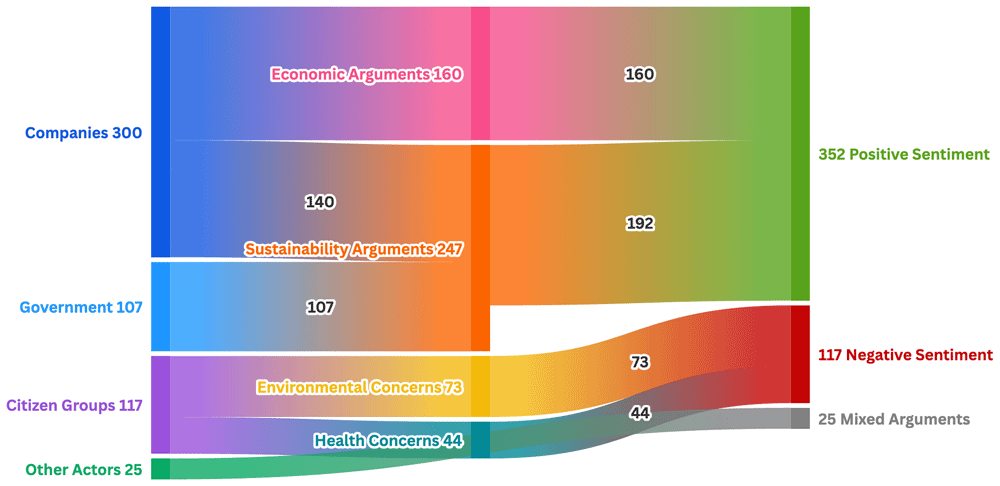
Figure 3. Communication flow in biorefinery media discourse.
Source: Own elaboration.
The analysis of specific arguments shows that positive sentiment is strongly associated with the type of argumentation employed. Arguments related to the economic development of areas where installations are implemented register 87.0% positive mentions (Cramer’s V = 0.511, p < 0.001). Media narratives emphasise benefits such as “the three million euro loan granted by the ICF, intended for the construction of a biogas plant” or highlight their “model of transformative, innovative activity.” Sustainability arguments occupy the second position, with 77.7% positive mentions (Cramer’s V = 0.466, p < 0.001), frequently framed as a “total example of the circular economy.”
In contrast, narratives that include concerns about environmental impacts show 78.5% negative mentions (Cramer’s V = 0.805, p < 0.001), making this the strongest predictor of negative sentiment. Local communities express concerns such as “residents of Albarreal de Tajo complain about bad odors attributed to a nearby biogas plant” or that “residents consider the odors as ‘bothersome and unhealthy’.” Mentions of potential health effects generate even higher negativity, with 84.6% negative mentions (Cramer’s V = 0.611, p < 0.001), highlighting “risks to public health.”
To assess the predictive capacity of these factors, a binary logistic regression was used with positive sentiment (versus negative/neutral) as the dependent variable and main themes, key actors, and geographical context as independent variables. The model shows good fit (Nagelkerke R2 = 0.607, correct classification = 85.6%) and indicates that arguments related to economic development increase the probability of generating positive sentiment by 12.8 times (OR = 12.82, 95% CI: 4.52–36.40, p < 0.001), whereas communications linked with citizen collectives reduce the probability of positive sentiment to approximately 1.8% (OR = 0.018, 95% CI: 0.006–0.052, p < 0.001).
This polarization is reflected in contrasting narratives: while companies emphasise that “the plant has all the permits and official controls,” citizen collectives argue that “residents perceive that they bear the inconveniences of the plant without receiving clear benefits,” questioning the fairness of environmental impacts. These patterns of asymmetric visibility and argument strength underpin the conceptual development of the Communicative Hegemony framework presented in the discussion, where media power emerges as a key structural factor.
Geographical differences in narratives: a rural-urban and regional approach
Narratives about biorefineries display significant differences according to geographical context, revealing more complex patterns than initially expected. The analysis confirms a significant association between type of geographical area and predominant sentiment (χ2 = 8.555, p = 0.014). Contrary to the common expectation that rural communities would show greater acceptance of renewable projects, coverage of installations in urban areas presents a higher proportion of positive sentiment (80.9%) compared with rural areas (62.1%), while rural areas register a higher proportion of negative mentions (28.6% vs. 8.5%). Urban narratives frequently frame biorefineries as “development opportunities in urban and industrial contexts,” whereas rural coverage highlights concerns such as “residents complain about bad odors” or that local people “bear the inconveniences of the plant without receiving clear benefits.”
The geographical distribution of the sample reflects the predominantly rural siting of Spanish biorefineries, with 85.7% of cases located in rural areas (n = 281) and 14.3% in urban areas (n = 47). This imbalance has important implications for communicative strategies, as most installations are situated in contexts where the probability of public contestation is structurally higher.
Analysis by regional socioeconomic level also reveals an unexpected pattern that challenges the assumption that economically poorer regions would be more resistant to biorefineries (see Figure 4). Medium-GDP regions show the highest proportion of negative sentiment (43.5%), exceeding even low-GDP regions (16.1%) (χ2 = 40.467, p < 0.001). This suggests that while medium-income regions may have greater expectations of benefiting from new projects, they also demonstrate a stronger critical capacity to question perceived inequities in benefit distribution.
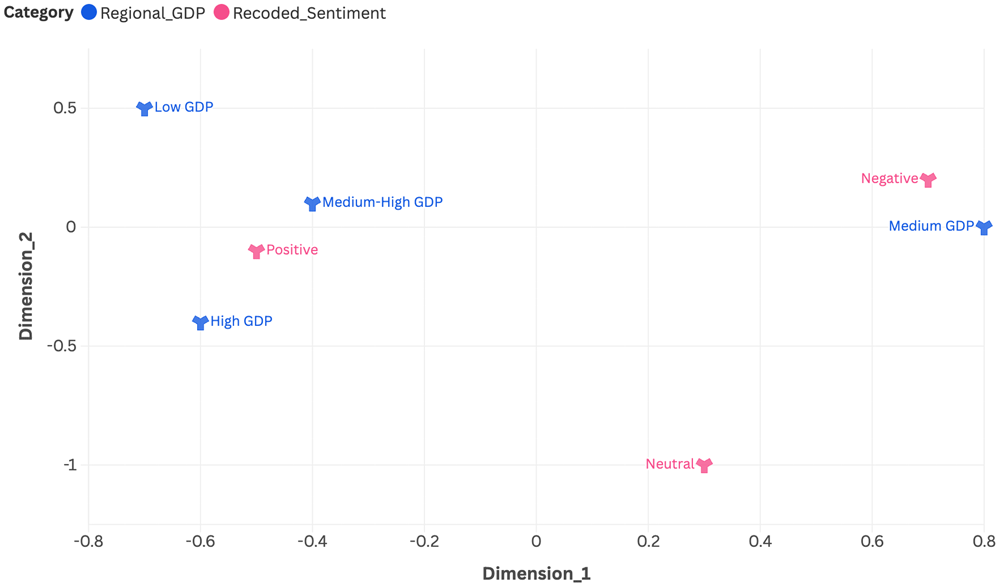
Figure 4. Correspondence analysis of regional GDP levels and sentiment categories toward biorefineries in Spain.
Source: Own elaboration.
Coverage of installations in low-GDP regions shows unexpectedly high positive sentiment (79.3% positive mentions), whereas high-GDP regions maintain moderately positive levels (76.7% positive). Multiple correspondence analysis confirms the centrality of medium-GDP regions in explaining patterns of contestation, with the highest factor loading (0.705) in the primary dimension of variability, identifying regional economic context as the most influential geographical factor associated with negative sentiment in Spanish digital media discourse.
At the regional level, extreme differences emerge that mirror the political, economic and social specificities of each autonomous community. Madrid exhibits the highest proportion of negative mentions (81.8%), followed by Castilla y León (55.0%) and La Rioja (85.7%). In contrast, Andalusia (96.8% positive), the Canary Islands (100% positive) and the Balearic Islands (100% positive) display very high levels of positive sentiment. Narrative contrasts are clear: regions with high positive coverage emphasise topics such as the “conversion of 70,000 tons of livestock manure” or “loans to finance construction,” whereas more critical regions highlight local concerns such as “community unrest” and the perception that “residents bear the inconveniences without receiving clear benefits.”
These regional differences are significantly associated with the arguments employed. Coverage in regions with higher positive sentiment predominantly uses economic development arguments (χ2 = 59.359, p < 0.001), while critical regions more frequently highlight environmental and health concerns (χ2 = 80.805, p < 0.001).
Distinct narrative patterns are also evident within specific communities. For example, Cantabria shows high local polarisation, with economic arguments present in 100% of positive articles and environmental concerns in 80% of negative ones. In contrast, the Basque Country combines extensive use of economic arguments (83.3%) with minimal reference to environmental concerns (8.3%), resulting in a high proportion of positive sentiment (91.7%).
Key actors, arguments, and predominant sentiments: Discourse polarization
The analysis reveals pronounced polarization in media discourse on biorefineries depending on which actors lead the published narratives. Companies appear most frequently, featuring in 68.3% of analysed mentions, followed by governments (63.1%), while citizen collectives are present in 22.0% of cases and other interest groups in only 5.4% (see Figure 5).
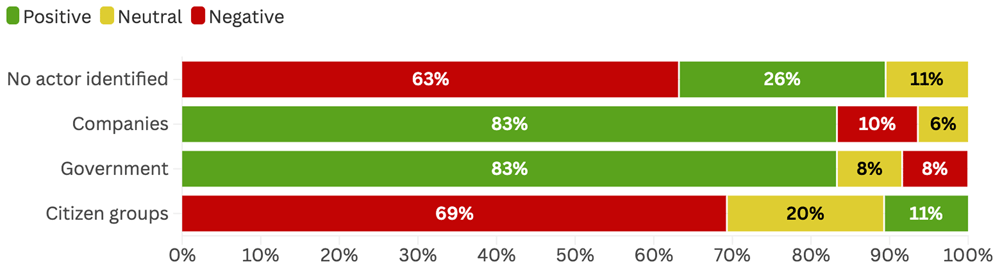
Figure 5. Media discourse polarisation by key actors.
Source: Own elaboration.
However, the influence of these actors on sentiment is inversely related to their quantitative presence. Logistic regression shows that when companies are identified as key actors, the probability of a positive tone increases more than fivefold (OR = 5.10, 95% CI: 2.54–10.24, p < 0.001). In contrast, when citizen collectives are prominent, the probability of positive sentiment falls to about 1.8% (OR = 0.018, 95% CI: 0.006–0.052, p < 0.001). This difference represents the strongest effect detected in the analysis, with a very high association magnitude (Cramer’s V = 0.602, p < 0.001).
Polarization is also evident in the discursive patterns linked to each actor. When citizen collectives lead the narrative, only 11.7% of mentions are positive and 67.5% are negative. Typical justifications highlight local concerns such as “residents consider the odors as ‘bothersome and unhealthy,’ generating unrest in the community.” In contrast, when companies dominate coverage, 73.6% of mentions are positive and only 15.9% are negative. Corporate narratives frequently stress transformative aspects, for example describing projects as a “model of transformative, innovative activity […] without generating waste and standing as a total example of the circular economy.” Governments occupy an intermediate position, with predominantly positive narratives (70.9%) but a higher proportion of negative mentions (17.3%) than companies.
The relationship between actors and arguments reveals differentiated communicative strategies. Government narratives tend to emphasise sustainability and procedural legitimacy, highlighting global environmental benefits and institutional oversight. Private companies focus on technological innovation and economic development. Conversely, NGOs and citizen collectives foreground critical narratives that draw attention to local impacts and the need for social justice, identifying actors such as “affected residents, the biogas plant owner, and the City Council.”
Communicative strategies and their impact on media discourse
Analysis of the communicative strategies present in media narratives shows that positive sentiment is strongly associated with the type of argumentation used (see Figure 6). Results reveal a clear hierarchy in which economic development arguments appear as the most influential frame, with 87.0% of mentions coded as positive (Cramer’s V = 0.511, p < 0.001). These narratives highlight tangible benefits such as “the three million euro loan granted by the ICF, intended for the construction of a biogas plant” or stress that “farmers expect the plant to reduce costs for their farms.” Sustainability arguments occupy the second position, reaching 77.7% positive mentions (Cramer’s V = 0.466, p < 0.001).
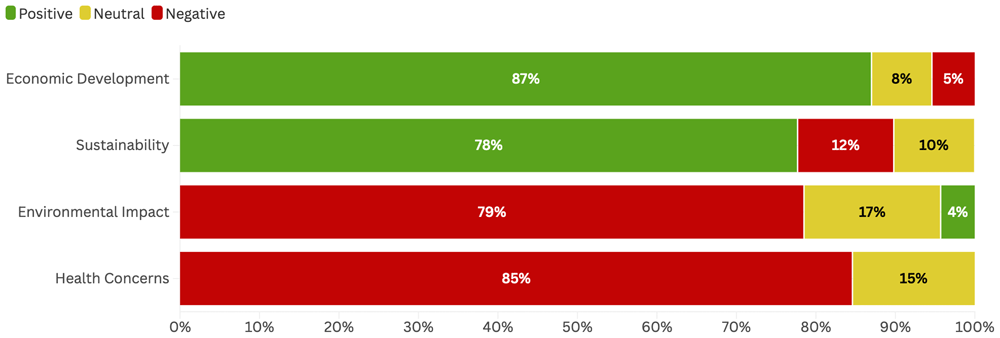
Figure 6. Communication Strategy Effectiveness on Biorefinery Discourse.
Source: Own elaboration.
Conversely, narratives that introduce environmental concerns show the strongest association with negative sentiment, with 78.5% of mentions coded as negative (Cramer’s V = 0.805, p < 0.001). Typical examples include “residents fear that odors are indicative of environmental problems.” This effect intensifies when narratives reference public health risks, where negative sentiment rises to 84.6% and positive mentions are absent (0%) (Cramer’s V = 0.611, p < 0.001), illustrated by statements expressing “risks to public health.”
Analysis of communication type distinguishes between institutional or unsigned news and items signed by individual authors, revealing differentiated patterns in media framing. Institutional news, which represents 65% of the analysed corpus, is mainly associated with neutral (70%) or positive (20%) tones, generally aligning with the communicative objectives of companies or institutions responsible for the projects. In contrast, news signed by individual authors (35% of cases) tend to adopt more critical approaches, with 40% negative mentions, suggesting that signed journalism reflects more independent analysis and a greater diversity of perspectives (χ2 = 16.7, p < 0.05).
Analysis of language accessibility produced results contrary to initial expectations. Contrary to hypothesis H4, no statistically significant association was found between language complexity and narrative tone (χ2 = 7.187, p = 0.304). Articles coded as “very comprehensible” display a similar distribution of positive tones (66.4%) to those with “somewhat comprehensible” language (78.9%), indicating that linguistic accessibility does not determine the sentiment of media framing around biorefineries.
Regional differences in communicative strategies reflect adaptation to specific contexts. Autonomous communities with greater positive coverage, such as the Canary Islands (93.3% positive) and the Basque Country (83.3% positive), predominantly employ economic development arguments, while regions with a stronger presence of critical narratives, such as Madrid (72.7% negative) and Cantabria (80.0% negative), centre discourse on environmental and health concerns.
The relationship between dominant narratives and communicative strategies is statistically significant (χ2 = 14,877.49, p < 0.001). Narratives focused on sustainability are linked to institutional strategies and traditional media, whereas those centred on economic development are associated with media campaigns and direct communication. Narratives highlighting social and environmental impacts frequently rely on digital mobilisation and lobbying strategies, which show a strong correlation with the presence of citizen collectives (r = 0.73, p < 0.001), suggesting coordination between actors and alternative communication channels.
Overall, the findings indicate that the success of communicative strategies in shaping positive sentiment does not depend on language sophistication but rather on the ability to articulate tangible economic benefits while minimising environmental concerns, establishing a media environment where the most favourable narratives shift attention from local risks toward regional economic opportunities.
Cluster segmentation: narrative patterns and communicative strategies
Cluster analysis was implemented to identify underlying patterns in media narratives, discourse tone, and communication strategies associated with biorefineries in Spain, allowing a more precise segmentation of media framings and the strategies employed in public discourse (see Figure 7).
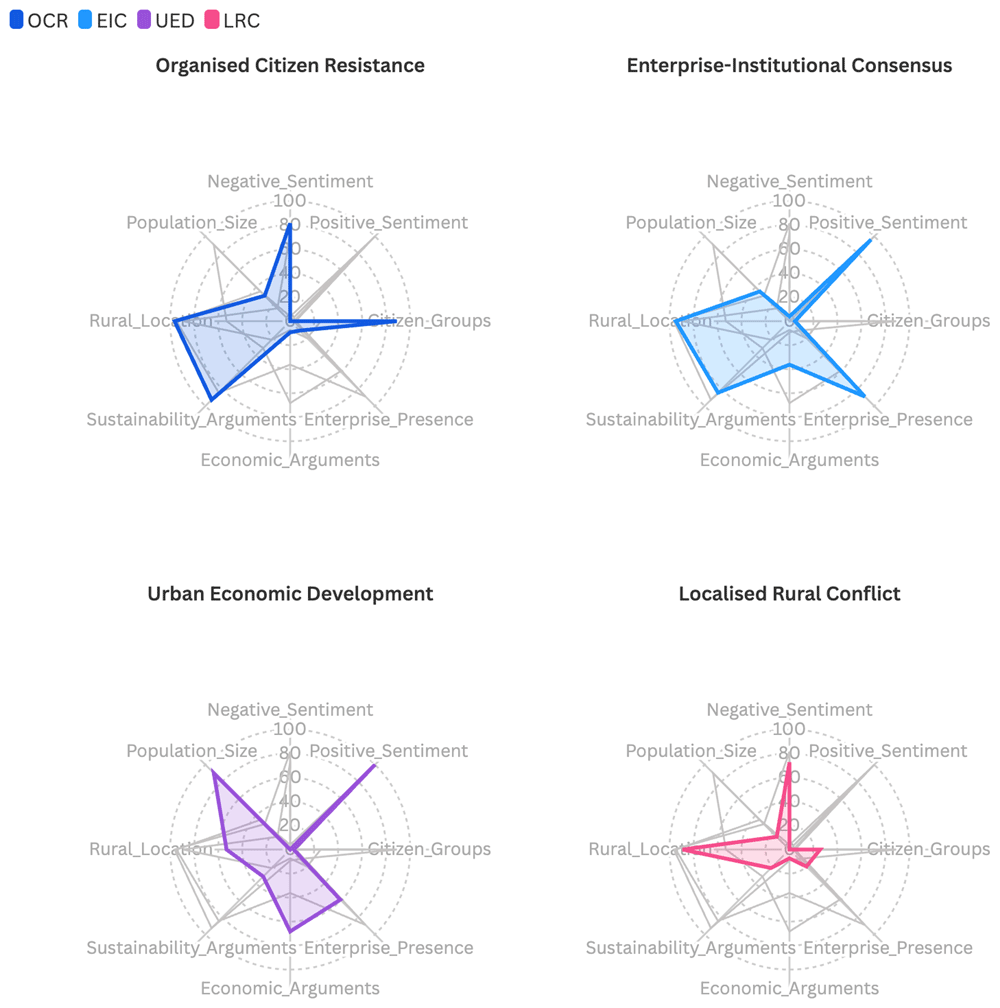
Figure 7. Biorefinery Discourse Profiles: Cluster Analysis.
Source: Own elaboration.
Six main variables were selected for the analysis: predominant discourse tone, presence of economic development and sustainability arguments, participation of companies and citizen collectives as key actors, and type of geographical area. Using K-means clustering with four groups, the model maximised explained variability between clusters (F = 958.989, p < 0.001 for discourse tone). The solution identified four distinct narrative profiles that together explain 82.6% of the total variability in the sample (see Figure 7).
Cluster 1 – OCR: Organised Citizen Resistance (n = 54, 16.5%)
This profile exhibits a predominantly critical media discourse, with 81.5% negative mentions and no positive mentions. Narratives are largely led by citizen collectives (88.9% presence) and focus on sustainability arguments (92.6%), while references to local economic benefits are minimal (9.3%). Coverage refers mainly to installations in rural areas (96.3%). This cluster reflects structured citizen mobilisation that uses environmental arguments to contest projects perceived as externally imposed.
Cluster 2 – EIC: Enterprise–Institutional Consensus (n = 152, 46.5%)
The largest profile, it displays an overwhelmingly positive discourse (96.1% positive, negligible negative mentions). Publications are predominantly led by companies (88.8% presence) with minimal involvement of citizen collectives (4.6%), combining sustainability arguments (84.2%) with economic benefits (36.2%). Coverage focuses mainly on rural installations (94.7%). This cluster illustrates a hegemonic narrative in which business and institutional actors align to produce highly optimistic media portrayals.
Cluster 3 – UED: Urban Economic Development (n = 66, 20.2%)
This profile shows complete positive discourse (100%) and is distinguished by a strong emphasis on economic arguments (68.2%), framing biorefineries as development opportunities in urban and industrial contexts. Sustainability arguments are less frequent (31.8%). Business participation is significant (59.1%) while citizen collectives are almost absent (3.0%). It is the only cluster with extensive reference to urban installations (47.0%), associated with the largest populations in the study (mean 101,201 inhabitants).
Cluster 4 – LRC: Localised Rural Conflict (n = 55, 16.8%)
Although the least numerous, this cluster exhibits the highest polarization, reflecting local conflicts in small communities where perceived lack of benefits fuels resistance despite limited argument elaboration. Negative mentions account for 72.7% and positive mentions are absent. Business participation is low (20.0%), citizen collectives are present in 25.5%, and both economic (7.3%) and sustainability arguments (21.8%) are scarce. Coverage refers mainly to rural installations (89.1%) and is associated with the smallest populations in the sample (mean 15,146 inhabitants).
The overall analysis reveals statistically significant associations across all examined dimensions (χ2 = 309.108, p < 0.001 for the relationship between cluster and discourse tone; χ2 = 72.761, p < 0.001 for the relationship between cluster and geographical area). This segmentation indicates that media discourse on biorefineries in Spain is not randomly distributed, but is organised around specific configurations of actors, arguments, and geographical contexts.
Conceptual proposal: Communicative Hegemony Model in Energy Transition (CHMET)
The empirical findings provide the basis for proposing the Communicative Hegemony Model in Energy Transition (CHMET) as a conceptual synthesis of the patterns identified in Spanish media discourse on biorefineries. Rather than testing a predefined theory, the analysis highlights recurrent dynamics that inform the model and illustrate key dimensions of communicative power in energy transitions (see Figure 8).
Axis 1. Media power structure: Structural filters condition differential access to communicative channels. Companies dominate coverage (68.3% of mentions), while citizen collectives remain marginal (22.0%). This asymmetry translates into contrasting tones: when companies lead narratives, 73.6% of mentions are positive versus 15.9% negative, whereas when citizen collectives dominate, only 11.7% are positive and 67.5% are negative.
Axis 2. Construction of dominant narratives. Economic arguments achieve clear primacy, reflecting a process of naturalisation of common sense. Economic frames are associated with 87.0% positive mentions (Cramer’s V = 0.511, p < 0.001), while environmental concerns generate 78.5% negative mentions (Cramer’s V = 0.805, p < 0.001), illustrating how economic criteria are presented as “objective” and politically neutral.
Axis 3. Emergence of alternative counterpublics. Citizen collectives act as counterpublics of communicative resistance. Their narratives are predominantly critical (67.5% negative, 11.7% positive), challenging hegemonic frames and foregrounding environmental and social justice concerns.
Axis 4. Territorial differentiation. Resistance varies across spatial and economic contexts. Rural areas show lower positive sentiment (62.1%) than urban areas (80.9%), and medium-GDP regions display the highest proportion of negative sentiment (43.5%) compared to low-GDP regions (16.1%), indicating that socio-territorial conditions shape the balance of hegemonic and counter-hegemonic narratives.
Axis 5. Actor-based legitimation mechanisms. Language complexity shows no significant association with sentiment (χ2 = 7.187, p = 0.304). This suggests that communicative effectiveness depends less on linguistic sophistication than on who speaks and with what resources, reinforcing the importance of actor power rather than textual accessibility.
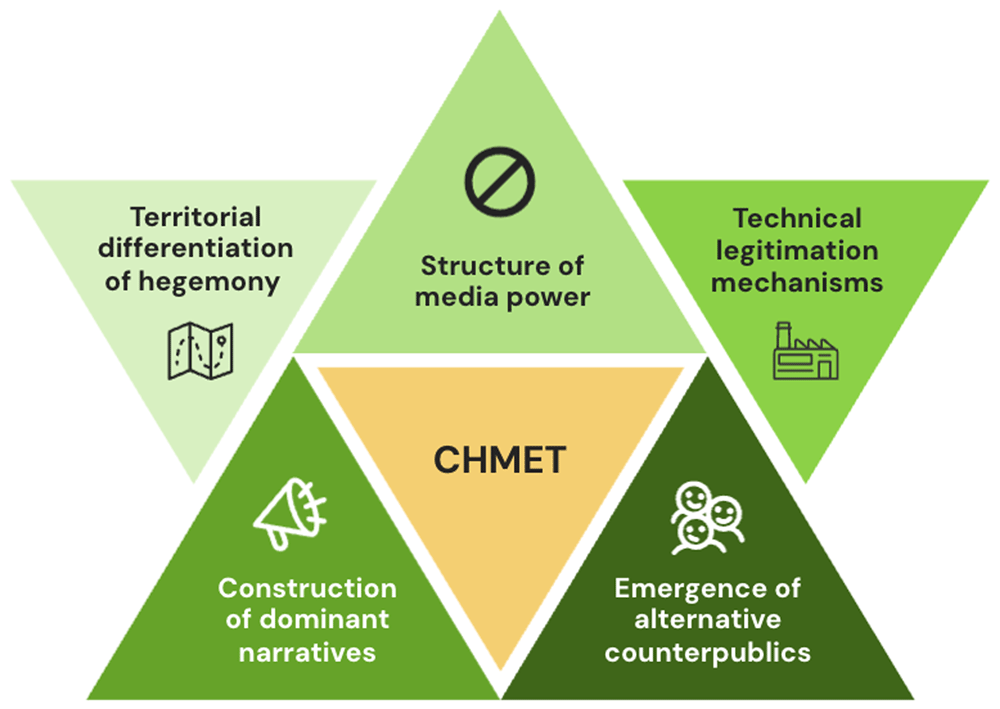
Figure 8. Model of Communicative Hegemony in Energy Transition (CHMET).
Source: Own elaboration.
Together, these five axes constitute an emergent conceptual model that synthesises the structural, narrative, and territorial dynamics identified in the data. The CHMET is therefore presented not as a validated theory but as a research-based proposal to guide future comparative and longitudinal studies on communicative power in energy transitions.
Discussion and conclusions
Discussion and interpretation of findings
The results demonstrate that media discourse on biorefineries in Spain is shaped by the presence of specific actors and regional socioeconomic characteristics, reflecting the complexity of public perceptions highlighted in the Integrated Acceptance Model of Hübner et al.52. Rather than validating a predefined theory, the findings inform the construction of the Communicative Hegemony Model in Energy Transition (CHMET) as a conceptual synthesis of the patterns observed.
The evidence supporting the main hypothesis (H1) shows the existence of communicative hegemony dynamics, in which certain arguments become naturalised as priorities while others are marginalised. Economic development arguments increase the likelihood of positive narratives by 12.8 times (OR = 12.82, p < 0.001), illustrating how media power privileges interpretive frameworks that favour economically dominant actors. This extends beyond traditional distributive justice models11,12 by revealing not only the importance of communicating local benefits but also how communicative hegemony frames economic arguments as “common sense,” rendering environmental or social concerns less visible. This supremacy of economic framings, consistent with Komendantova53, reflects processes of consensus manufacturing that privilege narratives serving dominant interests and present complex political decisions as technical-economic issues, thereby challenging the democratic legitimacy of energy communication.
Findings on geographical differences partially contradict hypothesis H2, revealing patterns that surpass traditional NIMBY and BANANA explanations25. Contrary to expectations, urban areas show a higher proportion of positive mentions (80.9%) than rural areas (62.1%), suggesting that rural resistance reflects a greater capacity to develop critical counterpublics. This aligns with Marciano et al.54, who found that small rural communities are more sensitive to perceived negative impacts than urban populations.
Results on citizen participation refine the understanding of procedural justice approaches. When citizen collectives gain visibility in media spaces, their narratives are predominantly critical (67.5% negative), which might seem at odds with classical procedural justice theories6,12. However, this critical participation illustrates how counterpublics articulate resistance to dominant hegemonic frames, consistent with the legitimate concerns about risk–benefit balance identified by Wang et al.55. Citizen participation thus operates less as a mechanism for consensus building and more as a channel for alternative discourses that contest the processes of consensus manufacturing, in line with the critical perspectives of Batel & Devine-Wright30.
The analysis refutes hypothesis H4 on language adequacy (χ2 = 7.187, p = 0.304). From a communicative hegemony perspective, narrative power resides not in the technical accessibility of messages but in the structural capacity of certain actors to legitimise their interpretive frameworks. Articles coded as “somewhat comprehensible” present a higher proportion of positive mentions (78.9%) than those rated “very comprehensible” (66.4%), indicating that message accessibility is not a determining factor in media framing when compared with argumentative content and actor credibility.
Findings on key actors support hypothesis H5 and underscore the polarisation inherent to communicative hegemony. When companies lead media narratives, 73.6% of mentions are positive, whereas when citizen collectives dominate, only 11.7% are positive (Cramer’s V = 0.602, p < 0.001). This asymmetry reflects patterns of energy colonialism30, where economic elites secure the benefits while local communities bear the impacts. These dynamics resonate with Herman and Chomsky’s concept of structural filters16, which privilege voices with greater economic and political capital.
The evidence supporting hypothesis H6 on regional differences aligns with theories of contextual heterogeneity in social acceptance56 but adds a critical dimension by showing how regional economic power conditions access to media channels, creating differentiated geographies of communicative hegemony in the energy transition.
Taken together, these findings reveal a hierarchical construction of interpretive frameworks that reflects structural power relations in the definition of legitimate priorities. Democratising communication in energy transition therefore requires strategies that go beyond manufacturing consent based solely on economic benefits. Policies and communication practices should recognise the legitimacy of alternative frameworks that foreground environmental and health concerns, helping to overcome the false dichotomy between economic rationality and local community interests.
Conclusions
The analysis of media discourse about biorefineries in Spain reveals a structural imbalance in access to communicative channels, raising questions about the democratic quality of energy-transition processes. The findings show that public perception is shaped not by an open and balanced debate but by asymmetric power dynamics in which certain actors dominate the public narrative.
Imbalance in narrative control. The communicative effectiveness of business and institutional actors demonstrates a concentration of discursive power operating through structural filters of media access. This dominance, while generating positive coverage of biorefineries, risks a manufacturing of consent that downplays the legitimate concerns of local communities. The marginalisation of citizen voices reflects deficits in procedural and distributive justice and informs the first axis of the CHMET, which highlights asymmetric structures of media power where actors with greater economic and political capital enjoy privileged access.
Citizen participation as resistance. Citizen collectives act as counterpublics, developing alternative narratives that reveal how formal participation mechanisms often fail to integrate local concerns into project design. Their predominantly critical discourse suggests that participation functions less as cooperation and more as the creation of communicative spaces of resistance to dominant frames. This dynamic supports the third axis of the CHMET, centred on the emergence of counterpublics that dispute, albeit with structural limitations, hegemonic narrative control.
Hegemony of economic arguments. Frames focused on local economic development have been naturalised as “common sense,” gaining greater salience than environmental arguments. Economic criteria are presented as technically objective and politically neutral, creating disproportionate expectations of local benefits while subordinating environmental and health concerns. This process underpins the second axis of the CHMET, which explains how dominant narratives gain legitimacy by presenting market criteria as neutral facts.
Unequal geographies of communicative power. Urban areas display higher positive coverage than rural areas, contradicting assumptions of stronger urban resistance and suggesting that rural communities develop greater capacity for critical discourse due to direct experience of local impacts. Medium-GDP regions show greater resistance than low-GDP ones. These patterns inform the fourth axis of the CHMET, which emphasises the territorial differentiation of communicative hegemony and the adaptation of narrative control to specific spatial and socioeconomic contexts.
Actor-based legitimation over message complexity. The credibility of the sender, grounded in institutional legitimacy, proves more influential than linguistic clarity. The absence of a significant relationship between language complexity and sentiment supports the fifth axis of the CHMET, highlighting that communicative effectiveness depends more on actor power than on textual accessibility.
Hegemony and communicative deficit. Overall, the results depict a model of communicative hegemony in which apparent social acceptance reflects control of media discourse more than genuine democratic consensus. Decisions are legitimised post-hoc through business–institutional dominance, illustrating what Gramsci22 described as the construction of consent through naturalised “common sense.” This dynamic signals a democratic deficit in energy-transition processes, where communication alone does not ensure political legitimacy or long-term social sustainability.
Recommendations for policy makers and communication strategies
The conclusions reveal a communicative hegemony that raises concerns about the democratic quality of debate on biorefineries in Spain. Current strategies generate media acceptance but perpetuate asymmetric dynamics in which business and institutional actors dominate public narratives through structural filters of access to information systems16, marginalising citizen voices and weakening procedural and distributive justice.
The following recommendations aim to democratise communicative processes so that energy transition is grounded in genuine consensus and not in the reproduction of hegemonic narrative control::
1. Democratise media access and ensure transparency of economic links. Establish citizen representation quotas in media coverage of biorefinery projects and require explicit disclosure of financial relationships between media outlets, sector companies, and public institutions. This would help identify systematic biases and guarantee that affected communities have a voice in the public debate.
2. Institutionalise binding public deliberation. Create mandatory citizen consultation processes before final project design, granting real capacity to modify or cancel installations according to the consultation results. Participation must move beyond post-hoc legitimation to exert effective influence on planning.
3. Balance economic narratives with critical risk assessment. Develop communication protocols that present economic benefits realistically, including distribution of costs and benefits, verifiable implementation timelines, and scenarios of potential non-compliance. Incorporate monitoring systems directly accessible to citizens to track fulfilment of commitments.
4. Strengthen independent scientific communication. Ensure that independent technical evaluations have access to public communication channels so citizens receive rigorous information not mediated by actors with direct economic interests.
5. Integrate information-balance requirements into project evaluation. Make the analysis of information balance a mandatory component of social impact assessments. Establish verifiable criteria for equitable access to information, diversity of consulted sources, and mechanisms for responding to citizen concerns as prerequisites for project approval.
These strategies are informed by the five axes of the proposed Communicative Hegemony Model in Energy Transition (CHMET), derived from the empirical findings of this study. They target:
Axis 1: Democratise media power structures.
Axis 2: De-naturalise hegemonic economic narratives through critical risk assessment.
Axis 3: Strengthen citizen counterpublics via binding participation.
Axis 4: Recognise territorial specificities in communicative strategies.
Axis 5: Overcome legitimation based solely on institutional or technical authority.
Applied together, these measures would help move beyond the current manufacturing of consent and contribute to an energy transition that combines environmental sustainability with social legitimacy and procedural justice.
Ethics and consent
Ethical approval and consent were not required for this study. The research analysed publicly available media content and did not involve human participants, interviews, surveys, or personal data collection.