Introduction

Hydrogen technology is central to the European Union’s strategy for achieving climate neutrality by 2050 (European Commission, 2020). It offers a low-carbon solution for hard-to-decarbonise sectors such as heavy industry, long-haul transport, and domestic heating. The EU Hydrogen Strategy sets an ambitious goal: to install at least 40 GW of hydrogen electrolyzers by 2030. This target is supported by substantial investment and policy incentives to develop hydrogen infrastructure and integrate hydrogen into national energy systems.

Alongside technical progress, public perception has become a key factor shaping the future of hydrogen technologies. Acceptance depends not only on awareness and knowledge but also on perceived risks, benefits, environmental values, and trust in institutions (Huijts et al., 2012). While attitudes across Europe are generally favourable, especially for applications like clean energy storage and fuel cell vehicles, support varies by country and context, often reflecting policy environments and levels of public understanding (Clean Air Task Force, 2023; HYACINTH Project, 2017).

Misconceptions about hydrogen types, unclear sectoral priorities, and concerns over safety, costs, and energy dependency continue to shape opinion (Gordon et al., 2024; Plank et al., 2023). Emotional responses and perceived personal impact also influence acceptance more than technical details (Scovell, 2022). These patterns highlight the need for more targeted public engagement and clear communication to ensure hydrogen’s role in the EU’s climate strategy is both technically viable and socially supported (Wolf & Zander, 2021).

This article contributes to the growing body of research on hydrogen acceptance by analysing EU-wide survey data and synthesising key findings from existing literature. As part of the Horizon Europe-funded HYdrogen Public Opinion and accePtance (HYPOP) project, we offer a comprehensive examination of how demographic, regional, and cultural factors shape public attitudes toward hydrogen technologies. By exploring both broad attitudes and specific concerns, such as safety, affordability, and environmental performance, we aim to generate actionable insights for policymakers, communicators, and researchers working to align public engagement strategies with the EU’s hydrogen and climate ambitions.

Literature review on public perceptions of hydrogen technology

This literature review was conducted to synthesise peer-reviewed and grey literature examining public and stakeholder perceptions of hydrogen and fuel cell technologies within the European Union. It aimed to identify recurring patterns, knowledge gaps, and contextual drivers of acceptance, with a view to informing public engagement strategies and supporting the EU’s hydrogen deployment and climate transition objectives. The review focused on survey-based studies offering analytical insights into awareness, acceptance, and the socio-cultural factors influencing support for hydrogen technologies across the EU27.

Literature review methodology

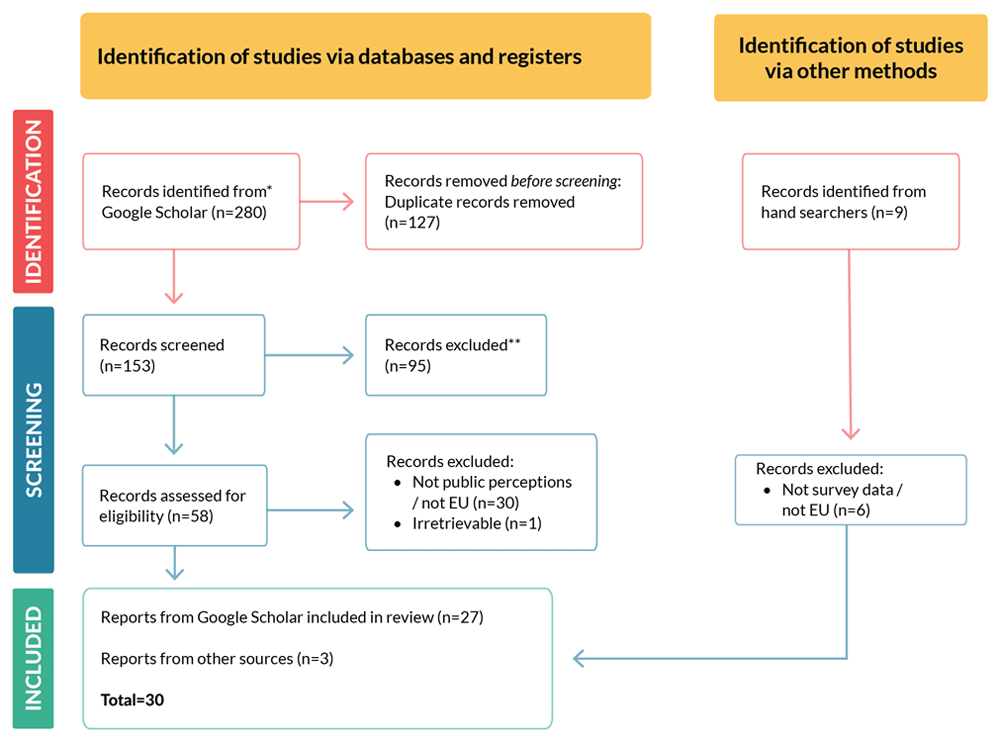
A rapid evidence assessment was conducted, broadly following established PRISMA guidelines (Page et al., 2021) and established good practices (e.g., Jensen & Laurie, 2016). The review incorporated systematic Google Scholar queries using combinations of country names with keywords such as hydrogen, public opinion, perception, and survey. The top ten results per country (plus 10 pan-European entries) were screened by title and abstract. A total of 153 unique entries were identified, of which 28 studies met the inclusion criteria: EU focus, survey-based data, and relevance to public perception. Additional hand searches yielded two more relevant sources. All selected texts were reviewed in full and summarised. To further characterise the findings, a sentiment analysis was applied to all included studies, categorising each as reflecting predominantly positive, negative, or mixed public attitudes toward hydrogen technologies. Detailed summaries of reviewed studies and their analytical categorisation are available as supplementary material with the published open dataset (Jensen & Jensen, 2025) (Figure 1).

8aedd545-5bd2-4b1f-9db9-e804ade3a205_figure1.gif

Figure 1. Flow chart detailing text selection following PRISMA guidelines.

Sources

Here is an overview of relevant sources identified by the literature review of survey data with analytical relevance to public understanding and acceptance of hydrogen technology in the EU27 (Table 1). Each identified relevant source is summarised in the following section.

Table 1. Relevant sources of survey data with analytical relevance.

#Source typeTitleLink
1Journal articleUnknowing but supportive? Predispositions,
knowledge, and support for hydrogen technology in
the Netherlands
https://doi.org/10.1016/j.ijhydene.2010.03.091
2Journal articleThe role of attitudes in technology acceptance
management: Reflections on the case of hydrogen fuel
cells in Europe
https://doi.org/10.1016/j.jclepro.2018.03.266
3Journal articleDynamic effects on the acceptance of hydrogen
technologies—an international comparison
https://doi.org/10.1016/j.ijhydene.2008.02.068
4Journal articleAre French people ready to accept hydrogen
underground storage? An answer through the distance
from object model
https://doi.org/10.1016/j.ijhydene.2023.02.077
5Journal articleHydrogen in future energy systems: Social acceptance
of the technology and its large-scale infrastructure
https://doi.org/10.1016/j.ijhydene.2021.05.160
6Journal articleLet's go green with hydrogen! The general public's
perspective
https://doi.org/10.1016/j.ijhydene.2012.02.126
7Journal articleKnowing hydrogen and loving it too? Information
provision, cultural predispositions, and support for
hydrogen technology among the Dutch.
https://doi.org/10.1177/0963662512453117
8Journal articlePublic acceptance of hydrogen in the Netherlands:
Two surveys that demystify public views on a hydrogen
economy
https://doi.org/10.1177/0270467606290308
9Journal articleA survey of Finnish energy engineering students'
knowledge and perception of hydrogen technology
https://doi.org/10.1016/j.ijhydene.2018.04.098
10Journal articleAssessing the social acceptance of hydrogen for
transportation in Spain: An unintentional focus on
target population for a potential hydrogen economy
https://doi.org/10.1016/j.ijhydene.2016.01.139
11Conference
paper
Forecasting the passenger car demand split from
public perceptions of electric, hybrid, and hydrogen-
fuelled cars in Greece
https://doi.org/10.1007/978-3-031-23721-8_6
12Journal articleIs the public willing to pay for hydrogen buses? A
comparative study of preferences in four cities
https://doi.org/10.1016/j.enpol.2006.12.031
13Journal articleSocial acceptance of green hydrogen in Germany:
building trust through responsible innovation
https://doi.org/10.1186/s13705-023-00394-4
14Journal articleThe changing face of public support for hydrogen
technology explaining declining support among the
Dutch (2008–2013)
https://doi.org/10.1016/j.ijhydene.2014.08.053
15Journal articleWillingness to pay and public acceptance for hydrogen
buses: A case study of Perugia
https://doi.org/10.3390/su71013270
16Journal articleA positive shift in the public acceptability of a low-
carbon energy project after implementation: The case
of a hydrogen fuel station
https://doi.org/10.3390/su11082220
17Journal articleHydrogen as Energy Source – Challenges for Regions
in Latvia (Results of Public Opinion Survey)
https://doi.org/10.15544/mts.2014.014
18Journal articleHydrogen energy as a catalyst for sustainable
development: A comparative analysis of policies,
strategies, and implementation in Poland and Germany
http://dx.doi.org/10.29119/1641-3466.2023.179.37
19Conference
proceedings
Opportunities for hydrogen marketing - Public opinion
analysis (New challenges of economic and business
development – 2012, Latvia)
ISBN 978-9984-45-519-78
20Journal articlePeople's attitude to energy from hydrogen—from
the point of view of modern energy technologies and
social responsibility
https://doi.org/10.3390/en13246495
21Journal articleProspects of the hydrogen-based mobility in the
private vehicle market. A social perspective in Denmark
https://doi.org/10.1016/j.ijhydene.2020.11.167
22Master’s degree
dissertation
Public perceptions of hydrogen as an energy vector
and aid to decarbonisation in the Republic of Ireland
https://sword.cit.ie/cgi/viewcontent.cgi?article=1009
&context=busmas
23Journal articleRisk assessment for hydrogen fuelling stations: Public
perception versus reality
https://doi.org/10.3303/CET23105024
24Journal articleStakeholders' perceptions of hydrogen and reflections
on energy transition governance
https://doi.org/10.1186/s13705-023-00429-w
25Journal articleAssessing the social acceptance of key technologies for
the German energy transition
https://doi.org/10.1186/s13705-021-00329-x
26Journal articleToward low-carbon European Union society: Young
Poles' perception of climate neutrality
https://doi.org/10.3390/en14165107
27Journal articlePublic acceptance of biofuels in the transport sector in
Finland
https://doi.org/10.1016/j.ijsbe.2017.07.008
28Journal articlePublic acceptance of emerging energy technologies in
context of the German energy transition
https://doi.org/10.1016/j.enpol.2020.111516
29Project reportAccept H2: public perception of hydrogen buses in five
countries
https://citeseerx.ist.psu.edu/document?repid=rep1
&type=pdf&doi=c5b4e2e26f96e8d5a6ca3be46f390
87fff0ebb4a
30European
Commission
project
deliverable
Hydrogen acceptance in the transition phase
(HYACINTH) D5.2: General findings on public
acceptance
https://hyacinthproject.eu/wp-content/
uploads/2017/12/HYACINTH-D5_2-General-findings-
on-public-acceptance_DEF.pdf

The review covered the representation of EU countries in studies on public perceptions of hydrogen technologies (Table 2). Of the EU27 countries, 24 were represented, with Malta, Cyprus, and Sweden absent due to not meeting the inclusion criteria (i.e., written in English, survey data, EU-based, and focused on public perceptions of hydrogen). Germany contributed to the most studies (n=12), followed by the Netherlands and Spain. Most countries were represented in one or two studies, with some studies including opinions from multiple countries, indicating broad yet uneven coverage. Studies summarised according to the location are shown in Table 2.

Table 2. Countries represented by the relevant articles/reports identified by the literature review.

CountryNo. of studiesReference
EU27 general119
Germany122, 3, 5, 6, 11, 13, 18,
24, 25, 28, 29, 30
Netherlands61, 3, 7, 8, 14, 16
Spain62, 3, 10, 23, 24, 30
Poland418, 20, 24, 26
Luxembourg33, 11, 29
France32,4, 30
Belgium22, 30
Czechia220, 24
Finland29, 27
Greece211, 24
Slovakia220, 24
Slovenia22, 24, 30
Austria124
Bulgaria124
Croatia124
Denmark121
Estonia124
Hungary124
Ireland122
Italy115
Latvia117
Lithuania124
Portugal124
Romania124
Cyprus00
Malta00
Sweden00

Data spanned from 2005 to 2024, showing an increase in studies post-2015. The earliest studies (2005–2010) focused predominantly on Germany, the Netherlands, Luxembourg, and Spain. While many studies had large sample sizes (1,000 or more respondents per country), some featured smaller samples, raising concerns about representativeness. Notably, the most recent study, with relatively low respondent numbers, served as the sole source for viewpoints from eight countries, including six from the EU13, highlighting the need for more comprehensive data from these nations.

Summaries of relevant research studies

Source 1. Unknowing but supportive? Predispositions, knowledge, and support for hydrogen technology in the Netherlands (2010). The study investigates the Dutch public's knowledge of and support for hydrogen technology, revealing a generally low level of hydrogen knowledge yet high support for its implementation. This paradox prompts exploration into the role of cultural predispositions—such as environmental concern and trust in technology—in shaping public opinion towards hydrogen technology. Drawing on a representative survey conducted in 2008 (N = 2121), the research uncovers that while factual knowledge about hydrogen positively influences support, cultural predispositions hold more sway in determining public acceptance. Specifically, individuals with high trust in technology and environmental concerns exhibit stronger support for hydrogen technology. Furthermore, the study finds that the impact of cultural predispositions on hydrogen technology support intensifies with an increase in relevant knowledge, highlighting the nuanced interplay between information, predispositions, and public support.

Source 2. The role of attitudes in technology acceptance management: reflections on the case of hydrogen fuel cells in Europe (2018). The study explores the impact of public attitudes on the acceptance of hydrogen fuel cell technologies across seven European countries (Belgium, France, Germany, Norway, Slovenia, Spain and the United Kingdom). The survey results (N = +/- 1000 per country) highlight a general positivity towards hydrogen technologies but underline the low strength and stability of these attitudes due to limited public knowledge and awareness. The research suggests that at the early stages of technology diffusion, public attitudes are not yet strong enough to significantly influence reactions to communication campaigns to increase social acceptance or merely inform the public about hydrogen fuel cells.

Source 3. Dynamic effects on the acceptance of hydrogen technologies—an international comparison (2008). The study, conducted across eight cities (Amsterdam, Barcelona, Berlin, Hamburg, London, Luxembourg, Madrid and Reykjavik) with 3352 respondents, explores public acceptance of hydrogen technologies. It reveals 68% of respondents are supportive, while 31% show volatile attitudes. Interestingly, 77% preferred hydrogen buses over conventional ones under identical conditions, yet 21% remained indifferent. This discrepancy highlights that acceptance can shift based on new information or incidents. The research suggests that significant events could either boost support to 97% or increase opposition to 32%, emphasising the need for ongoing public engagement to stabilise and enhance acceptance of hydrogen technologies. Overall, the research shows that people who are neutral about hydrogen technologies and seek more information are easier to educate and persuade than those who are already opposed. Indifference and a desire for more knowledge create an opportunity for effective communication, whereas opposition requires overcoming preconceived negative attitudes.

Source 4. Are French people ready to accept hydrogen underground storage? An answer through the distance from object model (2023). The article explores the social acceptability of underground hydrogen storage in France. It focuses on how public perceptions are influenced by knowledge, experience, and personal involvement. A survey of 157 French respondents highlights generally positive attitudes toward hydrogen storage and believes it could protect the environment, considering environmental and fossil fuel issues important. Those with higher knowledge of hydrogen saw it as more beneficial for the environment, while those with lower knowledge perceived greater problems with fossil fuels. Key findings suggest that increasing knowledge about hydrogen's environmental impact and emphasising the importance of environmental issues can enhance public acceptance of hydrogen storage.

Source 5. Hydrogen in future energy systems: Social acceptance of the technology and its large-scale infrastructure (2021). This study, part of the ELEGANCY project, examines the social acceptance of hydrogen technology and its infrastructure in Germany. Survey data from 1,438 Germans reveal a generally positive view of hydrogen (65%), but acceptance drops when infrastructure, such as pipelines, is proposed locally. Younger respondents show more tendencies for Not-In-My-Back-Yard (NIMBY) than older respondents. Trust in stakeholders, particularly political and scientific entities, boosts acceptance levels, while low trust, especially in environmental NGOs, correlates with NIMBY attitudes.

Source 6. Let's go green with hydrogen! The general public's perspective (2012). This study examines German public acceptance of hydrogen technology in the mobility sector, revealing that nearly 80% of Germans support the introduction of hydrogen vehicles. This positive outlook is contingent on hydrogen being produced in an environmentally friendly manner. The study, part of the HyTrust project (NOW GmbH, n.d.) and funded by the German Federal Ministry of Transport, employed interviews (N = 30), focus groups (N = 3), and a representative survey (N = 1011) to gauge public opinion. Despite high awareness and favourable attitudes towards hydrogen-powered cars, the public lacks detailed knowledge about hydrogen and fuel cell technology. The study indicates safety concerns are minimal, emphasizing the importance of renewable energy in hydrogen production for public support.

Source 7. Knowing hydrogen and loving it too? Information provision, cultural predispositions, and support for hydrogen technology among the Dutch (2012). The study investigates how information and cultural predispositions in the Netherlands shape public perceptions of hydrogen technology. The study explores the framing effects on public support by using 1,012 respondents provided with varying information about hydrogen technology. Findings suggest that for individuals with high trust in science and technology, positive information enhances support for hydrogen technology, whereas negative information diminishes it. Conversely, for those with low trust in science and technology, providing positive or negative information does not significantly influence their evaluation of hydrogen technology. This reveals a nuanced interaction between information provision and pre-existing cultural predispositions towards science and technology. This suggests that "providing positive information fails to evoke a more favourable evaluation" among those inherently sceptical of science and technology.

Source 8. Public acceptance of Hydrogen in the Netherlands: Two surveys that demystify public views on a hydrogen economy (2006). The journal article examines the Dutch public's (n=612) acceptance of hydrogen technology through two surveys. The findings indicate a generally positive attitude towards hydrogen, albeit with significant variability based on the type of information presented to participants. Specifically, the study finds that 87% of respondents showed a favourable attitude towards using hydrogen combined with natural gas for home heating when exposed to positively skewed information about hydrogen. However, acceptance rates differed when participants were provided with negative or neutral information, demonstrating the impact of media framing on public perception. The surveys also addressed the public's willingness to accept trade-offs while transitioning to a hydrogen economy. For example, while a significant majority (87%) would support the use of hydrogen if it produced 10% less carbon dioxide than natural gas and maintained the same level of service, this support dropped to 67% if a 100-euro switch cost was involved, and to less than a third if safety was perceived to be slightly compromised.

Source 9. A survey of Finnish energy engineering students' knowledge and perception of hydrogen technology (2018). The study, involving 93 students from Aalto University, assessed changes in their understanding and attitudes before and after a specific learning assignment focused on hydrogen technology. Key findings include significant improvements in students' knowledge, particularly regarding hydrogen safety, with an average increase of 1.74 points on a 6-point scale post-assignment. Additionally, students' willingness to adopt home hydrogen systems showed notable growth, highlighted by an increase from 2.78 to 4.06 on the same scale. This shift suggests a robust positive response to the educational content provided.

Source 10. Assessing the social acceptance of hydrogen for transportation in Spain (2016). The study surveyed 1005 Spanish residents to evaluate public perception and acceptance of hydrogen as a potential energy carrier in the transportation sector. The respondents demonstrated a high level of awareness (>70%) about hydrogen and a favourable opinion on its implementation, with nearly 80% supporting hydrogen technologies in public transport and 75% endorsing its environmental benefits. The survey revealed strong public backing for establishing local hydrogen refuelling stations, although there was a preference for these to be located away from residential areas. The findings suggest that, while there is substantial support for hydrogen technologies, considerable work remains to address economic and infrastructural challenges to facilitate broader adoption.

Source 11. Forecasting the passenger car demand split from public perceptions of electric, hybrid, and hydrogen-fuelled cars in Greece (2022). The study aims to explore the feasibility of mechanic learning techniques to forecast the demand for passenger cars with motor units other than internal combustion engines (ICE). The authors used a multilayer perceptron and an adaptive neural fuzzy inference system (machine learning techniques) to forecast the demand split from public perceptions, captured through an online survey. The survey data was collected in March 2022 (n=453) to measure respondents’ intent to buy a passenger car, including hydrogen electric vehicles. Researchers found less than 5% of respondents intended to buy a new or used hydrogen electric vehicle.

Source 12. Is the public willing to pay for hydrogen buses? A comparative study of preferences in four cities (2007). Using the contingent valuation method, the study evaluates the public's willingness to pay for hydrogen fuel cell buses across Berlin, London, Luxembourg, and Perth. This survey research took place between July 2003 and February 2004 and forms part of the AcceptH2 project and investigates public acceptance and preferences for this environmentally friendly transportation technology (n=1358 total; n=344 in Berlin; n=300 in Luxembourg). Findings show that the public in all surveyed cities is positively willing to pay for the air pollution reductions associated with hydrogen buses, with an adjusted willingness to pay extra, ranging from €0.29 to €0.35 per single bus fare. The study reveals that this willingness spans different geographic locations, indicating a generally positive reception towards hydrogen buses, irrespective of the specific urban context.

Source 13. Social acceptance of green hydrogen in Germany: Building trust through responsible innovation (2023). The study delves into the public's perception and acceptance of green hydrogen technology in Germany. The research used a comprehensive mixed-method approach comprising semi-structured interviews (n=24), participatory workshops (n=51), and a representative survey (n=2054) to gauge social attitudes and derive generalisable conclusions about green hydrogen. The study unearthed a critical mix of limited knowledge yet considerable openness towards green hydrogen within the general population. It shows that acceptance hinges significantly on trust in scientific, governmental, and media institutions, which are key in upholding distributive justice. Additionally, the research identified methodologically sound participatory processes as catalysts for enhancing trust and acceptance, suggesting that positive experiences within these engagements are crucial for fostering social trust.

Source 14. The changing face of public support for hydrogen technology: Explaining declining support among the Dutch (2008–2013) (2014). Using data from two surveys conducted in 2008 (n=2121) and 2013 (n=1982), the study found that while initially high, public support for hydrogen technology significantly declined by 2013. The decline in support was quantified through a series of F-tests revealing decreases in agreement with several statements about hydrogen technology: support for investment dropped from 84.8% to 79.2%, belief in its application in public transportation fell from 86.4% to 77.1%, agreement that it is good for the environment declined from 78.9% to 73.4%, and urgency for its adoption decreased from 45.7% to 35.6%. The research attributes this decline primarily to a corresponding drop in trust in science and technology over the same period. This shift is viewed through the lens of modern societal trends, suggesting that increased awareness of the risks associated with science and technology among the educated may undermine support for technological advancements such as hydrogen technology.

Source 15. Willingness to pay and public acceptance for hydrogen buses: A case study of Perugia (2015). The study assessed public perception among local public transport users in Perugia, Italy, concerning air pollution reduction through hydrogen buses from the end of January to March 2013 (n=587). A significant portion of the survey sample expressed a willingness to pay a premium for hydrogen buses, highlighting the public's recognition of the environmental benefits these buses could offer. The findings indicate that 81% of respondents supported the trial of hydrogen buses, and 88% were willing to pay more for public transportation if it involved hydrogen technology. This reflects a public acceptance of hydrogen buses, predicated on the potential environmental benefits.

Source 16. A positive shift in the public acceptability of a low-carbon energy project after implementation: The case of a hydrogen fuel station (2019). The article investigates the changes in public acceptance of a hydrogen fuel station in Arnhem, Netherlands, before and after its implementation. The data collection (n=280) took place around the official opening of the hydrogen fuel station on December 3, 2010. The study reveals that residents living near the station showed a significant increase in acceptability post-implementation, contrary to those living farther away, who showed no significant change. This phenomenon is attributed to psychological mechanisms such as loss aversion and cognitive dissonance reduction.

Source 17. Hydrogen as Energy Source – Challenges for Regions in Latvia (Results of Public Opinion Survey) (2014). The research explores the public's perception and acceptance of hydrogen energy across different regions of Latvia. Conducted in the first half of 2013, the study involved a comprehensive survey targeting various demographic groups, with a total of 1299 respondents, comprising 51.7% females and 48.3% males. The findings indicate a significant lack of public awareness and information about hydrogen energy, with average ratings on various aspects of hydrogen technology knowledge and acceptance falling on the lower end of the scale. Key results reveal that while there is widespread support for hydrogen technology, with 70.1% of respondents showing favourability, the public's detailed understanding of hydrogen energy applications in the economy and transport sector is notably low.

Source 18. Hydrogen energy as a catalyst for sustainable development: A comparative analysis of policies, strategies, and implementation in Poland and Germany (2023). The study presents a comparative analysis by reviewing literature, policy frameworks, and stakeholder surveys, highlighting how hydrogen is integrated into Poland and Germany's energy strategy. The survey component of this research took place in 2021 and involved a sample size of 898 people from Poland and 924 from Germany. In Poland, the implementation of hydrogen technology is still evolving, with a strong emphasis on research and development aimed at integrating hydrogen with renewable energy sources. The Polish government's proactive stance includes ambitious goals to make Poland a leader in hydrogen energy in Europe by 2030. Conversely, Germany is already a global leader in hydrogen technology, backed by a well-established and comprehensive strategy promoting commercialising hydrogen technologies across various sectors. Despite these advancements, both countries face high production costs and infrastructural demands.

Source 19. Opportunities for hydrogen marketing – Public opinion analysis (2012). The article explores public receptiveness to hydrogen energy, focusing on the European market. The study surveyed 1200 participants across various demographics. The key findings include that 62% of respondents know hydrogen as an energy source, yet only 28% can clearly articulate its potential uses or benefits. Public support for hydrogen energy is moderate, with 48% expressing tentative support contingent on further information about environmental impacts and safety. The study highlights a gap in effective communication, as demonstrated by the fact that 72% of respondents were uncertain about hydrogen's safety, pointing to a need for targeted educational campaigns.

Source 20. People's attitude to energy from hydrogen—from the point of view of modern energy technologies and social responsibility (2020). The journal article provides a comprehensive analysis of public opinion on hydrogen energy, particularly focusing on its safety and environmental impacts. The study involved surveying (n=749) individuals in countries where hydrogen technology is underdeveloped and infrastructure is sparse (Poland (n=247), Czech Republic (n=223), and Slovakia (n=199). The data collection period spanned from October 2019 to February 2020. The survey results indicate a significant lack of knowledge and familiarity with hydrogen energy among the public. Notably, while there is a foundational understanding that hydrogen can be an eco-friendly energy source, 78% of respondents expressed concerns about its safety. This scepticism highlights a significant barrier to wider acceptance and adoption of hydrogen energy technologies.

Source 21. Prospects of hydrogen-based mobility in the private vehicle market. A social perspective in Denmark (2021). The article focuses on the social acceptance and market prospects of hydrogen-based mobility in Denmark. It reports a considerable awareness and interest in hydrogen vehicles, revealing that knowledge about hydrogen technology and environmental awareness significantly influence the public's willingness to adopt such vehicles. The survey (n=158) found that 20% of respondents are ready to consider hydrogen fuel cell electric vehicles (FCEVs) as a viable alternative to conventional cars, given the proper infrastructure and cost considerations. A pivotal finding is the public's sensitivity to the high initial costs and the lack of refuelling infrastructure, which are major barriers to adoption.

Source 22. Public perceptions of hydrogen as an energy vector and aid to decarbonisation in the Republic of Ireland (2021). This master’s degree dissertation examines how the public perceives hydrogen as an energy vector in the Republic of Ireland, outlining potential obstacles to its acceptance. The sample size for the quantitative survey component of this research was 115 respondents. Semi-structured qualitative interviews with eight participants followed this to gather more detailed data and insights into public perceptions. The survey found that public perceptions of hydrogen as an energy vector are not entirely hostile, with broad acceptance evident, although some opposition to a transition was observed. The two overarching themes of this study are safety and cost. Safety is viewed as a prerequisite to any transition, with the public trusting that hydrogen safety will be demonstrated before a transition and that a competent authority will act with safety in mind. The cost of transitioning to hydrogen as an energy vector is vital to its acceptance by the public. Increased costs to consumers can result in the widespread rejection of conversion as concerns regarding cost far outweigh the environmental benefits of hydrogen among the public.

Source 23. Risk assessment for hydrogen fuelling stations: Public perception versus reality (2023). The article addresses the discrepancy between public perceptions and the empirical risks associated with Hydrogen Fuelling Stations (HFSs) in Japan (n=1000), Spain (n=1000), and Norway (n=500). The study was conducted in December 2022 and explored perceptions of risk regarding the operations of HFSs—namely hydrogen production, transportation, storage, and dispensing. The findings reveal a notable gap in public understanding: participants often overestimate the risks associated with transportation and underestimate those related to production and storage. The empirical data from event tree analysis highlighted that incidents like ruptures or leaks at HFSs are less frequent than the public perceives. Despite the lower empirical risk, the perception of danger is significantly higher, particularly for transportation processes.

Source 24. Stakeholders' perceptions of hydrogen and reflections on energy transition governance (2024). The research on stakeholders' perceptions of hydrogen and reflections on energy transition governance was conducted under the European Union-funded 112CO2 Project. It involved semi-structured interviews and a questionnaire survey (n=73) with stakeholders across various countries, largely within Europe (Germany, South Africa, Austria, Bulgaria, Czech Republic, Croatia, Slovakia, Slovenia, Spain, Estonia, Greece, Hungary, India, Lithuania, Poland, Portugal, Qatar, Romania, Serbia). The interviews were conducted from January to June 2022, while the questionnaire survey took place between July and December 2022. The findings reveal a strong preference for renewable hydrogen over non-renewable sources. Specifically, all respondent groups shared this preference, highlighting a consensus on the sustainability priorities within the hydrogen production debate. Key findings from the questionnaire indicate that 76.7% of stakeholders believe hydrogen must be produced from exclusively renewable sources, even if this results in higher costs. Conversely, nearly half of the participants are against hydrogen production from non-renewable sources, even if mixed with renewable sources to reduce costs.

Source 25. Assessing the social acceptance of key technologies for the German energy transition (2022). The study evaluates public attitudes towards three energy technologies: stationary battery storage, biofuel production plants, and hydrogen refuelling stations (n=1247). Conducted as part of the German energy transition initiative, the survey reveals nuanced insights into general and local acceptance levels, trust in stakeholders, and financial support attitudes among the German public. General acceptance for hydrogen refuelling stations was comparatively high, reflecting broad support for this technology as part of Germany's energy transition. However, while still positive, local acceptance was slightly lower than general acceptance, demonstrating the common "general-local gap" where public support wanes when installation near residential areas is proposed.

Source 26. Toward low-carbon European Union society: Young Poles' perception of climate neutrality (2021). The journal article explores young Polish students' perspectives on energy and environmental awareness, specifically emphasising hydrogen as a renewable energy source. The survey was conducted (n=1106) from January to May 2021. The findings reveal a significant interest among the youth in embracing hydrogen technologies. Specifically, the study finds that hydrogen is regarded as a promising energy carrier due to its high energy content and versatility in applications ranging from power generation to transportation. The article suggests the critical role of hydrogen in achieving the European Union's climate neutrality goals, reflecting a strong alignment between technological potential and policy aspirations.

Source 27. Public acceptance of biofuels in the transport sector in Finland (2017). The research on public acceptance of biofuels in the transport sector in Finland was conducted in the capital region, specifically in Helsinki, Espoo, and Vantaa (n=90). Data collection took place from April to June 2016. It highlights that despite a significant governmental push towards biofuels, public knowledge and acceptance are crucial for broader adoption. The study's findings indicate that 63% of car owners prefer ideal future fuel to be non-biofuel based: 60% favour electricity, 20% hydrogen, and another 20% prefer hybrid solutions.

Source 28. Public acceptance of emerging energy technologies in context of the German energy transition (2020). The study (n=1247) investigates public acceptance of hydrogen fuel stations, among other technologies. It leverages a socio-psychological factor model to explore how trust in industry and municipalities, perceived problems of the current energy system, and environmental self-identity impact acceptance generally and when these technologies are implemented locally. Specifically, hydrogen fuel stations (HFS) were one of the technologies studied for their potential to replace fossil fuels. The findings indicate varying degrees of acceptance influenced by several factors, including trust and perceived risks and benefits. The study reveals that the general acceptance of hydrogen fuel stations hinges significantly on perceived environmental benefits and trust in the industrial stakeholders pushing their development, notably the automotive industry. Additionally, the presence of hydrogen fuel stations in local settings tends to be more acceptable when there is significant trust in local municipalities.

Source 29. Accept H2: public perception of hydrogen buses in five countries (2004). The international study focuses on understanding public perception and acceptance of hydrogen buses within public transport. Conducted across London (UK) (n=414), Luxembourg (n=300), Berlin (Germany) (n=344), Perth (Australia) (n=300), and Oakland (USA) (n = 302) between 2003 and 2005, this study involved both pre- and post-intervention surveys around hydrogen bus projects to gauge changes in public perception. In Luxembourg, the acceptance of hydrogen buses is notably high. The study found that over 50% of respondents in Luxembourg indicated a willingness to pay an extra fee between 0.01 and 0.30 Euros per bus fare to support the implementation of hydrogen buses. Luxembourg's data showed that there is virtually no opposition to the introduction of hydrogen fuel technologies, with a strong curiosity about hydrogen-powered buses observed among the respondents.

Source 30. Hydrogen acceptance in the transition phase (HYACINTH): Deliverable 5.2 - General findings on public acceptance. The HYACINTH project's deliverable D5.2 analyses public acceptance and awareness regarding hydrogen fuel cell (FCH) applications across seven European countries (Belgium, France, Germany, Norway, Slovenia, Spain, and the United Kingdom). The multi-country survey collected responses from nationally representative samples of approximately 1000 adults from each country during April and May 2016. The survey results reveal that approximately 60% of respondents support FCH applications, while 30% remain neutral, and nearly 10% oppose them. Support is higher in Slovenia, Spain, and Germany, with lower levels observed in the UK, France, and Belgium.
Hydrogen public opinion results by valence

The literature summaries underwent sentiment analysis, revealing that most studies exhibited positive or mixed valences toward hydrogen (Table 3). Broadly positive opinions were noted, such as increased support for hydrogen technologies following participation in education programmes, a willingness to pay for hydrogen-powered vehicles, and a high percentage of support for hydrogen technologies overall. Mixed responses were also prevalent, indicating broad support for hydrogen technologies but often with caveats, such as support contingent on the technology sourced from renewable sources or concerns regarding safety and costs. Low support percentages primarily characterised negative perspectives compared to other green technologies; for example, one study found that only 20% of respondents would purchase a hydrogen-powered vehicle, contrasting with 60% preferring e-cars (#27).

Table 3. Hydrogen public opinion results by positive, mixed or negative valence.

Hydrogen public
opinion results
valence
References with findings in each
category
Positive2, 4, 8, 9, 10, 11, 12, 15, 16, 17, 26, 29, 30
Mixed1, 3, 5, 6, 7, 13, 14, 18, 22, 24, 25, 28
Negative19, 20, 21, 23, 27

Notably, despite being classified as generally negative, the studies did not have strongly anti-hydrogen sentiments; concerns primarily revolved around safety, costs, and a lack of awareness about the technology. It is important to acknowledge that valence analysis is subjective, and it could be argued that all studies represent varying degrees of mixed responses to hydrogen.

Discussion of key findings

General attitudes and awareness

The majority of studies report generally favourable public attitudes toward hydrogen, particularly when linked to renewable energy and climate objectives (Achterberg, 2014a; Alanne, 2018; Altmann et al., 2004; Christidis et al., 2023; Häußermann et al., 2023; Huijts et al., 2019; Huan et al., 2023; Ingaldi & Klimecka-Tatar, 2020; Wojtaszek, 2023; Zimmer & Welke, 2012). However, this support is often based on limited awareness and shallow knowledge (Achterberg et al., 2010; Biruta et al., 2014; Delaney, 2021; Dimants et al., 2012; Oltra & Sala, 2017; Zimmer & Welke, 2012). Many respondents report having “heard of” hydrogen but not being “familiar with” it, indicating a persistent gap between awareness and informed engagement.

Safety, cost, and infrastructure concerns

Safety and affordability are dominant concerns in shaping public opinion. Misconceptions about the risks associated with hydrogen production and transport frequently lead to inflated risk perceptions (Biruta et al., 2014; Delaney, 2021; Dimants et al., 2012; Huan et al., 2023). Cost-related hesitations, especially regarding fuel cell vehicles and domestic heating, persist across contexts, and acceptance often drops when respondents consider local implementation, illustrating a recurring NIMBY dynamic (Apostolou & Welcher, 2021; Bigerna & Polinori, 2015; Häußermann et al., 2023; Huijts et al., 2019; Oltra & Sala, 2017; Wojtaszek, 2023; Zachariah-Wolff & Hemmes, 2006; Zimmer & Welke, 2012).

Cultural values, trust, and political context

Support for hydrogen is strongly influenced by cultural predispositions, particularly environmental concern and trust in scientific and technological institutions (Achterberg et al., 2010; Achterberg, 2014b; Delaney, 2021; Häußermann et al., 2023; Parente et al., 2024; Schönauer & Glanz, 2022). Several studies demonstrate that public support does not necessarily depend on factual knowledge but is often shaped by values, emotional reactions, and the perceived alignment of hydrogen technologies with societal goals (Achterberg et al., 2010; Achterberg, 2014b; Delaney, 2021; Emmerich et al., 2020; Häußermann et al., 2023; Huijts et al., 2019). Regional differences reflect variations in national hydrogen strategies, government involvement, and public trust in political institutions (Biruta et al., 2014; Häußermann et al., 2023; Oltra & Sala, 2017; Parente et al., 2024; Wojtaszek, 2023).

Demographics and information needs

Demographic patterns are consistent across the literature: men and younger people tend to express higher familiarity and support for hydrogen technologies (Gryz & Kaczmarczyk, 2021; Oltra & Sala, 2017; Schönauer & Glanz, 2022). However, studies also emphasise that public acceptance is malleable and responsive to targeted, transparent communication. Misunderstandings about hydrogen typologies, especially the distinction between green and blue hydrogen, are common, suggesting a need for clearer messaging (Achterberg et al., 2010; Achterberg, 2014b; Dimants et al., 2012; Häußermann et al., 2023; Oltra & Sala, 2017; Parente et al., 2024).

Evidence gaps and geographic distribution

Most EU member states are represented in the literature, though the depth of evidence varies. Germany, the Netherlands, and Spain are the most studied contexts, while others, such as Cyprus, Malta, and Sweden, lack primary data. This uneven distribution limits generalisability across the EU27. Further work is needed to explore longitudinal trends and subgroup-specific dynamics, including attitudes among underrepresented demographics and local stakeholder communities.

In summary, the literature reveals a cautiously optimistic European public perspective on hydrogen technologies, shaped by values, limited awareness, and context-specific concerns. Common themes include widespread support grounded in environmental hopes, tempered by cost, safety, and infrastructure challenges. However, public understanding is often shallow, and acceptance varies by demographic group, country, and political context. These findings underscore the importance of improving public knowledge, addressing misconceptions, and tailoring communication strategies.

Conclusions

Literature review synthesis

This collection of European studies presents a nuanced picture of public opinion regarding hydrogen technologies. For example, although there is significant support for hydrogen as a part of renewable energy initiatives in Latvia, there remains a notable gap in detailed understanding and public awareness. The pattern of favourable public opinion coupled with relatively low informational depth is reflected across several EU countries, including those with advanced hydrogen strategies like Germany and Poland. These findings imply a base of support for hydrogen technologies based on the perceived environmental benefits. Yet, support for hydrogen technologies may be contingent on increasing public awareness and addressing misconceptions about safety and applications.

Indeed, this evidence synthesis highlights the interrelated nature of knowledge, cultural predispositions, and societal acceptance. Findings from the Netherlands, for example, suggest a pattern where public support for hydrogen technologies does not necessarily correlate with a deep understanding of the technology itself. Instead, cultural predispositions such as environmental concern and trust in technology play a more definitive role. This is evidenced by studies indicating that individuals with a pre-existing trust in scientific and technological advancements are more likely to support hydrogen technology, even if their factual knowledge is limited. The Netherlands research elucidates a pivotal finding: as knowledge about hydrogen increases, so does the influence of these cultural predispositions on individual support, suggesting an intertwined relationship between information dissemination and intrinsic values.

Overall, the European public's attitude towards hydrogen technologies is cautiously optimistic but highlights a clear need for strategic educational campaigns and transparent communication about the benefits and safety of hydrogen energy. This necessity is echoed in the research from Ireland, where safety and cost are pivotal to gaining public trust and acceptance for transitioning to hydrogen energy.

European attitudes towards hydrogen technology, especially in terms of its infrastructure and applications like hydrogen fuel cells and buses, exhibit general positivity but face challenges due to the NIMBY (Not in my backyard) phenomenon. This is particularly prominent in Germany, where while the populace may view hydrogen positively, local infrastructure projects such as pipelines meet with decreased acceptance. The volatility in public opinion is marked by a dynamic acceptance pattern, responsiveness to new information, and influence by ongoing communication strategies.

The broader European context shows a gradual increase in awareness and favourability towards hydrogen technologies, underpinned by their potential environmental benefits. Yet, this support is tempered by concerns related to infrastructure and the perceived risks associated with technology. The insights from Spain and Italy, where there is strong backing for hydrogen in public transport, contrast with the cautious approach seen in Germany and the Netherlands concerning hydrogen infrastructure in residential areas.

Despite differing stages of hydrogen technology integration within their respective energy strategies in Poland and Germany, public perception aligns with viewing hydrogen as environmentally friendly and innovative. However, perceptions of the technology’s reliability and cost-effectiveness diverge, influenced by national contexts and the extent of governmental and infrastructural commitment to hydrogen. This dichotomy between the two nations reflects broader European trends where public enthusiasm for hydrogen energy is moderated by practical concerns about cost and infrastructure, as also seen in research in Denmark highlighting hesitance regarding hydrogen fuel cell electric vehicles (FCEVs) due to high costs and inadequate refuelling infrastructure.

Public opinion research in the EU27 indicates a skew towards positive views. However, the existing published literature does not cover some countries, namely Malta, Cyprus, and Sweden.

There are some examples of overlap in the data. For instance, studies #12 and #29 use the same data regarding the Accept H2 survey; however, they are written with a slightly different focus and come from various sources. Similarly, studies #25 and #28 appear to use the same survey data but analyse different aspects. The data comprised two reports, one master’s thesis, two conference proceedings, and the rest are peer-reviewed journal articles. Most studies were opinion surveys; however, one survey (#15) was a willingness-to-pay study.

The literature review confirms that hydrogen enjoys widespread public support across Europe. Survey respondents consistently endorsed hydrogen as a sustainable alternative to fossil fuels and as a strategic solution for enhancing energy independence. These findings echo prior studies showing that public support tends to be strongest when hydrogen is framed in terms of environmental responsibility and geopolitical resilience (Gordon et al., 2024; Plank et al., 2023; Zimmer & Welke, 2012).

However, this support remains contingent. The data highlight a persistent gap between awareness and familiarity: while most respondents had heard of hydrogen, only a minority considered themselves familiar with the technology. This aligns with earlier research that describes support for hydrogen as unknowing but favourable (Achterberg et al., 2010). The implications are significant: a public that supports hydrogen without deep understanding may be vulnerable to shifts in opinion if safety incidents occur, if costs escalate, or if political narratives change.

Although perceptions of safety were generally positive, they were notably less robust than perceptions of sustainability. This finding is consistent with studies showing that safety concerns, often amplified by misconceptions, can undermine local acceptance (Delaney, 2021; Huan et al., 2023). The survey also revealed that the strongest agreement on hydrogen safety was modest compared to other indicators, suggesting a latent unease that could be triggered by high-profile incidents or poor risk communication.

Age-related variation in safety confidence further suggests that different groups may require differentiated messaging strategies. This reinforces calls from the literature for tailored engagement approaches and underscores the importance of trust in institutions as a key mediator of acceptance (Häußermann et al., 2023; Huijts et al., 2012).

In parallel, demographic differences in familiarity and overall confidence were also pronounced. Men and younger respondents reported higher levels of familiarity and stronger agreement across most indicators. This mirrors consistent demographic patterns observed across the literature (Schönauer & Glanz, 2022), and underlines the need for inclusive engagement strategies that respond to varying informational needs and value frameworks (e.g., Reed et al., 2025).

Geographic variation further reinforces this point. Countries with established hydrogen initiatives and high-profile energy policies, such as Portugal, Italy, and Poland, showed higher levels of support and confidence. In contrast, familiarity was lower in contexts where hydrogen remains politically marginal or less visible in public discourse. These differences highlight the influence of national framing, media coverage, and institutional trust on public opinion.

The findings underscore the importance of moving beyond general awareness campaigns. Engagement must be designed to foster deeper, more confident familiarity with hydrogen technologies. This includes addressing latent risk concerns and adapting strategies to the social and informational realities of lower-familiarity groups.

In addition, communication efforts should clarify the distinctions between hydrogen production types (e.g., green vs. blue), which remain poorly understood. Prior studies have shown that these technical distinctions matter for public acceptability, particularly when linked to climate performance and perceived legitimacy (Achterberg, 2014b; Parente et al., 2024). Transparent, consistent messaging will be essential to maintain public trust, particularly as hydrogen becomes more visible in public infrastructure and daily life.

This study is not without limitations. The secondary dataset was based on self-reported perceptions and does not capture qualitative depth or track changes over time. While the survey is nationally representative, regional or subnational variation may be underreported. Similarly, the rapid evidence assessment that informed the literature review was comprehensive but not exhaustive, and notable evidence gaps remain in several EU member states, particularly in Northern and Southeastern Europe. Furthermore, the absence of longitudinal data means we cannot assess the stability of current public support or predict how perceptions may evolve in response to future developments in policy, media coverage, or public incidents.

Policy implications

To support the EU’s hydrogen strategy and climate goals, we identify the following policy implications stemming from our findings:

  • 1. Public communication should not assume that visibility equates to understanding. Engagement efforts should focus on demystifying hydrogen’s applications, especially in domestic and transport settings, and ensure that people understand how it contributes to climate and energy goals.

  • 2. Women, older individuals, and residents in countries with less developed hydrogen strategies reported lower familiarity and confidence. Tailored outreach and trusted messengers should be used to close these gaps and ensure inclusive public support.

  • 3. Although hydrogen is widely seen as safe, this view is less strongly held than perceptions of sustainability. Governments and developers should prioritise transparent communication about safety protocols, incident response, and regulatory oversight, particularly in early-stage deployments.

  • 4. Misunderstandings around green, blue, and grey hydrogen persist. EU and national actors should invest in clear, consistent public messaging that aligns technological pathways with environmental ambitions.

  • 5. As hydrogen becomes more visible in public spaces and everyday applications, public attitudes may shift. Ongoing tracking of public perceptions and periodic social impact assessments will be essential to maintaining trust and adjusting communication strategies as needed.

In conclusion, the social acceptability of hydrogen technologies is not a given. It must be actively cultivated through informed, inclusive, and responsive public engagement. Doing so will strengthen the societal foundations for Europe’s energy transition and ensure that hydrogen deployment is both technically and socially sustainable.

Ethics and consent

Ethical approval and consent was not required because this is a review of existing research.

Data availability statement

Underlying data supporting the findings of this work are available in Zenodo: https://doi.org/10.5281/zenodo.16879951 (Jensen & Jensen, 2025).

Data are available under the terms of the Creative Commons Attribution 4.0 International

Acknowledgements

The project deliverable that this paper is adapted from included contributions from Sarah L. Spooner.

References

  •  Achterberg P: Knowing hydrogen and loving it too? Information provision, cultural predispositions, and support for hydrogen technology among the Dutch. Public Underst Sci. 2014a; 23(4): 445–453. PubMed Abstract | Publisher Full Text
  •  Achterberg P: The changing face of public support for hydrogen technology: explaining declining support among the Dutch (2008–2013). Int J Hydrogen Energy. 2014b; 39(33): 18711–18717. Publisher Full Text
  •  Achterberg P, Houtman D, van Bohemen S, et al.: Unknowing but supportive? Predispositions, knowledge, and support for hydrogen technology in the Netherlands. Int J Hydrogen Energy. 2010; 35(12): 6075–6083. Publisher Full Text
  •  Alanne K: A survey of Finnish energy engineering students’ knowledge and perception of hydrogen technology. Int J Hydrogen Energy. 2018; 43(22): 10205–10214. Publisher Full Text
  •  Altmann M, Schmidt P, O’Garra T, et al.: AcceptH2: Public perception of hydrogen buses in five countries. Paper presented at the International German Hydrogen Energy Congress, Essen, Germany, 11-12 February, 2004.
  •  Apostolou D, Welcher SN: Prospects of hydrogen-based mobility in the private vehicle market: a social perspective in Denmark. Int J Hydrogen Energy. 2021; 46(9): 6885–6900. Publisher Full Text
  •  Bigerna S, Polinori P: Willingness to pay and public acceptance for hydrogen buses: a case study of Perugia. Sustainability. 2015; 7(10): 13270–13289. Publisher Full Text
  •  Biruta S, Sloka J, Kleperis J, et al.: Hydrogen as energy source – Challenges for regions in Latvia (results of public opinion survey). Management Theory and Studies for Rural Business and Infrastructure Development. 2014; 36: 143–155. Publisher Full Text
  •  Christidis K, Profillidis V, Botzoris G, et al.: Forecasting the passenger car demand split from public perceptions of electric, hybrid, and hydrogen-fueled cars in Greece. In: Nathanail, E.G., Gavanas, N. and Adamos, G. (eds) Smart Energy for Smart Transport: CSUM 2022. Lecture Notes in Intelligent Transportation and Infrastructure. Cham: Springer, 2023. Publisher Full Text
  •  Clean Air Task Force: Perceptions of clean energy technologies in Europe. 2023; (Accessed: 15 August 2025). Reference Source
  •  Delaney C: Public perceptions of hydrogen as an energy vector and aid to decarbonisation in the Republic of Ireland. Master’s thesis, Munster Technological University, Cork, Ireland, 2021. Reference Source
  •  Dimants J, Sloka B, Kleperis J, et al.: Opportunities for hydrogen marketing: public opinion analysis. In: New Challenges of Economic and Business Development. University of Latvia, Riga, 10–12 May, 2012.
  •  Emmerich P, Hülemeier AG, Jendryczko D, et al.: Public acceptance of emerging energy technologies in the context of the German energy transition. Energy Policy. 2020; 142: 111516. Publisher Full Text
  •  European Commission: A hydrogen strategy for a climate-neutral Europe. 2020; (Accessed: 15 August 2025). Reference Source
  •  Gordon JA, Balta-Ozkan N, Nabavi SA: Gauging public perceptions of blue and green hydrogen futures: is the twin-track approach compatible with hydrogen acceptance? Int J Hydrogen Energy. 2024; 49(Part D): 75–104. Publisher Full Text
  •  Gryz J, Kaczmarczyk B: Toward low-carbon European Union society: young Poles’ perception of climate neutrality. Energies. 2021; 14(16): 5107. Publisher Full Text
  •  Häußermann JJ, Maier MJ, Kirsch TC, et al.: Social acceptance of green hydrogen in Germany: building trust through responsible innovation. Energy Sustain Soc. 2023; 13: 22. Publisher Full Text
  •  Huan N, Yamamoto T, Sato H, et al.: Risk assessment for hydrogen fuelling stations: public perception versus reality. Chem Eng Trans. 2023; 105: 139–144. Publisher Full Text
  •  Huijts NM, Molin EJ, Steg L: Psychological factors influencing sustainable energy technology acceptance: a review-based comprehensive framework. Renew Sustain Energy Rev. 2012; 16(1): 525–531. Publisher Full Text
  •  Huijts NMA, de Vries G, Molin EJE: A positive shift in the public acceptability of a low-carbon energy project after implementation: the case of a hydrogen fuel station. Sustainability. 2019; 11(8): 2220. Publisher Full Text
  •  HYACINTH Project: Hydrogen Acceptance in the Transition Phase (HYACINTH). Funded by the Fuel Cells and Hydrogen Joint Undertaking (FCH-JU) under Grant Agreement No. 621228. 2017; (Accessed: 15 August 2025). Reference Source
  •  Ingaldi M, Klimecka-Tatar D: People’s attitude to energy from hydrogen: from the point of view of modern energy technologies and social responsibility. Energies. 2020; 13(24): 6495. Publisher Full Text
  •  Jensen AM, Jensen E: Dataset: State-of-the-art review of public perceptions and reactions to hydrogen and fuel cell technologies in the European Union. [Data set]. In: Open Research Europe. Zenodo. 2025.
  •  Jensen EA, Laurie C: Doing real research: a practical guide to social research. SAGE: London, 2016. Reference Source
  •  Oltra C, Sala R: Deliverable 5.2: general findings on public acceptance. HYACINTH project report. 2017. Reference Source
  •  Page MJ, McKenzie JE, Bossuyt PM, et al.: The PRISMA 2020 statement: an updated guideline for reporting systematic reviews. BMJ. 2021; 372: n71. PubMed Abstract | Publisher Full Text | Free Full Text
  •  Parente C, Teixeira F, Cerdeira J: Perceptions of hydrogen and reflections on energy transition governance. Energy Sustainability and Society. 2024; 14: 15.
  •  Plank F, Muntschick J, Niemann A, et al.: External hydrogen relations of the European Union: framing processes in the public discourse towards and within partner countries. Sustainability. 2023; 15(20): 14757. Publisher Full Text
  •  Reed MS, Jensen EA, Noles S, et al.: Analyzing who is relevant to engage in environmental decision-making processes by interests, influence and impact: the 3i framework. J Environ Manage. 2025; 373: 123437. PubMed Abstract | Publisher Full Text
  •  Schönauer AL, Glanz S: Hydrogen in future energy systems: social acceptance of the technology and its large-scale infrastructure. Int J Hydrogen Energy. 2022; 47(24): 12251–12263. Publisher Full Text
  •  Scovell MD: Explaining hydrogen energy technology acceptance: a critical review. Int J Hydrogen Energy. 2022; 47(19): 10441–10459. Publisher Full Text
  •  Wojtaszek H: Hydrogen energy as a catalyst for sustainable development: a comparative analysis of policies, strategies, and implementation in Poland and Germany. Scientific Papers of Silesian University of Technology. Organization and Management Series. 2023; 179: 695–727. Publisher Full Text
  •  Wolf A, Zander N: Green hydrogen in Europe: do strategies meet expectations? Intereconomics. 2021; 56(6): 316–323. Reference Source
  •  Zachariah-Wolff JL, Hemmes K: Public acceptance of hydrogen in the Netherlands: two surveys that demystify public views on a hydrogen economy. Bull Sci Technol Soc. 2006; 26(4): 339–345. Publisher Full Text
  •  Zimmer R, Welke J: Let’s go green with hydrogen! the general public’s perspective. Int J Hydrogen Energy. 2012; 37(22): 17502–17508. Publisher Full Text