1. Introduction

The eastern North European Plain is an area of low elevation that is bounded by the Baltic Sea to the north and central European low mountain ranges to the south, covering the northern areas of Germany and Poland; an area from 10°E to 26°E, and 50.5°N to 55°N ( Figure 1). Since the Mid-Pleistocene Transition (~1.2–0.8 Ma; e.g. Legrain et al., 2023), this area has been subjected to multiple glaciations (e.g. Batchelor et al., 2019; Böse et al., 2012; Ehlers et al., 2011; Marks et al., 2019), and was covered in large ice sheets during glacial periods from marine oxygen isotope stage (MIS) 16 to MIS 2 ( Figure 1; Batchelor et al., 2019). The region is characterised by a high potential to archive several decametres of Pleistocene deposits across vast expanses and by the availability of numerous open-cast mines (especially for lignite and aggregates) exposing these deposits. For these reasons, it is an important region for the study of Quaternary climate change, as well as archaeological sites that can shed light on human adaptations to the changing conditions of the Middle and Late Pleistocene (e.g. Behm-Blancke, 1960; Cyrek et al., 2014; Veil et al., 1994; Vlček et al., 1993). Constraining the chronology of this region is challenging due to the erosional processes that occurred as a consequence of ice sheet expansion and retreat, resulting in Quaternary deposits that can be spatially isolated, redeposited and often only represent a relatively brief snapshot in time (reviewed in Marks, 2023). Therefore, chronostratigraphic methods are required that can cross-correlate these deposits (particularly when fragmentary or only unassignable, insignificant pollen spectra are present) to build a more complete picture of the Quaternary.

d4682e38-67d0-469b-b619-d8fa35ca7474_figure1.gif

Figure 1. Sites from which opercula analysed in this paper were collected. Elevation above sea level was produced using the Global multi-resolution terrain elevation data 2010 (GMTED2010; Danielson and Gesch, 2011) in ArcGIS Pro 3.4.2.

Hypothesised reconstructions, as synthesised by Batchelor et al. (2019), of the greatest ice sheet extents of the four largest northern hemisphere glaciations are shown in green (Don/MIS 16), yellow (Elsterian/MIS 12), orange (Saalian/MIS 6), and pink (Weichselian/MIS 2). Black dashed lines represent the division of the sites based on difference in modern temperature variables described in Section 3.2.2.

Although much progress has been made to understand how regional interglacial deposits correlate with one another (e.g. Cohen & Gibbard, 2022; Marks et al., 2024), the chronostratigraphy of Europe is highly complex and the correlation of regional deposits to global climate is often unclear. The timing of the Eemian interglacial is relatively well-constrained (~130–116 ka; MIS 5e; e.g. Cohen & Gibbard, 2022; Govin et al., 2015; Past Interglacials Working Group of PAGES, 2016; Shackleton et al., 2003; Tzedakis, 2003; Williams et al., 2015), and the Holocene interglacial (~11.7 ka to present, MIS 1; e.g. Walker et al., 2008) is universally agreed (Cohen & Gibbard, 2022), but the timing of pre-Eemian interglacials is still highly debated (e.g. Gegg et al., 2024; Geyh & Müller, 2005; Nitychoruk et al., 2006; Roe et al., 2009; Scourse et al., 1999). The Holsteinian Interglacial, for example, is generally attributed to MIS 11 (e.g. Cohen & Gibbard, 2022; Lauer & Weiss, 2018). However, the Subcommission for Quaternary Stratigraphy of Germany still officially lists the Holsteinian as MIS 9 (e.g. Stephan, 2014), using the 230Th/U ages published by Geyh and Müller (2005). Interglacial stages within the European record are defined by a characteristic tree pollen succession (e.g. Erd, 1973; Krupiński, 1995; Menke & Tynni, 1984; Turner, 1970; West, 1956; Zagwijn, 1996) and these successions can be correlated to one another to aid in the identification of an interglacial. However, sedimentary sections containing fragmentary pollen successions, pollen from pre- or post-temperate zones, or interstadial pollen deposits, can make correlation with warm stages within the Quaternary period challenging (e.g. Bridgland, 1994; Roe et al., 2009). It is therefore important to combine other stratigraphical and chronological approaches with pollen stratigraphy in order to correlate Quaternary sequences across regions.

Amino acid geochronology (AAG) is a relative dating technique which has been useful in correlating isolated Quaternary deposits within a region where a similar temperature history can be assumed (e.g. Hearty & Aharon, 1988; Miller & Mangerud, 1985; Ortiz et al., 2004; Penkman et al., 2011, 2013; Tesakov et al., 2020; Wehmiller, 1982). The intra-crystalline protein decomposition (IcPD) approach to AAG using the opercula of Bithynia snails has been demonstrated to be effective in cross-correlating Quaternary sites in Britain (Penkman et al., 2011, 2013; Preece et al., 2020), the Eastern European Plain (Tesakov et al., 2020), and the northern Upper Rhine Graben, Germany (Nelson et al., 2025a). Where both opercula and pollen are present in the same stratigraphic horizons, IcPD analysis can be used alongside pollen stratigraphy to confirm age correlations to chronostratigraphic stages within the Quaternary (e.g. Gegg et al., 2024; Nelson et al., 2025a; Penkman et al., 2013), but this approach has yet to be applied to northern continental Europe. In addition, the timing within an interglacial indicated by the pollen present can be used to assess the resolution achievable for a given region by IcPD.

In this study, six new regional aminostratigraphies from the east North European Plain are presented: the Thuringian Basin, the northwest North (NWN) German Plain, the southeast North (SEN) German Plain, central Poland, east Poland, and northeast Poland & Lithuania ( Figure 1). The regions were defined by using modern climate variables to determine areas with similar mean annual temperature and seasonal variation. They are used to assess the current age attributions of these late Early, Middle and Late Pleistocene sites, help to constrain the age of deposits where dating evidence is limited, and explore any systematic differences in IcPD due to differing temperature histories between the regions (e.g. Miller & Mangerud, 1985; Wehmiller, 1982). The temporal resolution that can be achieved by IcPD within an interglacial is also examined using correlated regional pollen zones for Holsteinian (Erd, 1973; Müller, 1974a; Müller, 1974b; Strahl, 2023)/Mazovian (Bińka & Nitychoruk, 1995; Bińka et al., 1997; Krupiński, 1995), Eemian (Behre & Lade, 1986; Cheddadi et al., 1998; Erd, 1973; Hermsdorf & Strahl, 2008; Menke & Tynni, 1984; Turner, 2002; Zagwijn, 1996) and Holocene (Mangerud et al., 1974; Sernander, 1908, reviewed in Birks and Seppä, 2010) aged material. This work provides new reference aminostratigraphies that can be used to constrain the chronology of Quaternary deposits within the eastern North European Plain, providing an additional tool to date this region’s climatic and environmental past.

2. The geological, chronological and climatic context of the eastern North European Plain

Sites for all regions covered in this study were selected for the presence of bithyniid opercula; in the majority of cases the opercula were associated with independent chronostratigraphic evidence, including palynology, molluscan and mammalian biostratigraphy, fluvial terrace sequences, palaeomagnetic boundaries, ESR and U/Th series and luminescence dating (see SI). Nearly all the sites included in this study are correlated with chronostratigraphic stages from the last 1 million years ( Figure 2; SI). A summary of regional terminologies and the generally agreed correlations between regional chronostratigraphies and the MIS record is presented in Figure 2. It should be noted that these correlations may be the result of different research traditions across Europe, and although progress has been made to cross-correlate regional chronostratigraphic stages with each other and the MIS record, age attributions of various sites/regional Quaternary warm stages may differ. The North-Western European terminology as outlined by Cohen and Gibbard (2022) will be used throughout, but regional terminology will also be used where relevant.

d4682e38-67d0-469b-b619-d8fa35ca7474_figure2.gif

Figure 2. Chrono-stratigraphical subdivision of the Quaternary (from left to right): marine oxygen isotope stages (MIS), palaeomagnetic record (black = normal polarity, white = reversed polarity), epochs, standard stages, British stages, North-West European stages (Germany), and Polish stages.

Figure has been recreated from the summary of northern European Quaternary chronostratigraphy correlations by Szymanek and Julien (2018) and Cohen and Gibbard, 2022. German sub-stages of the Saalian Complex have been correlated according to Bittman et al. (2018; Table 1). Note disagreement between the different alignments for the Cromerian Complex, Elsterian, Holsteinian and Saalian Complex in the NW European chronostratigraphy, represented by dashed lines.

Opercula were recovered from the surface to depths of up to 75 m below ground level, as this is above the depth at which systematic IcPD differences due to geothermal heating were observed in the Pannonian Basin (Nelson et al., 2024). The Pannonian Basin has a higher surface heat flow (90–100 mW m−2; Davies, 2013) compared to the regions included in this study (Cloetingh et al., 2010), so in material presently buried <75 m below the surface we assume that climate has been the most significant influence on the integrated temperature experienced by the opercula used in this study (e.g. Nelson et al., 2024, 2025a; Wehmiller & Stecher, 2000).

2.1 Variability in integrated burial temperatures across the east North European Plain

The intra-crystalline region of an operculum acts as a closed system; therefore, the assumption is that the only variables that can affect extent of IcPD is temperature and time since biomineralization. In this closed system, there is no evidence that local environmental conditions – such as sediment types, water content, pH etc. – have an impact on the extent of IcPD in non-remineralised opercula (e.g. Nelson et al., 2024, 2025a; Penkman et al., 2011, 2013, 2024; Preece et al., 2020; Tesakov et al., 2020). For the extent of IcPD analysis to be directly comparable between sites, a similar temperature gradient must have been experienced throughout the burial history. There is an exponential relationship between the rate of racemisation and temperature (e.g. Miller et al., 2000). Therefore, a 1°C difference in burial temperature will be more significant in warmer regions than it will for colder regions. For fossils buried near the surface, burial temperature is largely influenced by the climate (e.g. Nelson et al., 2024, 2025a; Wehmiller, 1982). At present, the eastern North European Plain is associated with a humid continental climate (Beck et al., 2018). Present mean annual surface temperature (MAT) in the study area ranges from 7.5 to 9.5°C; the temperature difference between the coldest and warmest months ranges between ~18–22°C (ERA5; Hersbach et al., 2020; Table 1; Figure 5). Continentality increases from west to east and north to south, as distance from the Atlantic Ocean and Baltic Sea increases (e.g. Beck et al., 2018). Therefore, integrated burial temperatures will likely vary throughout this region and will have done so throughout the Quaternary, and it cannot be assumed that a single aminostratigraphy for the whole eastern North European Plain would be valid. Therefore, a cautious approach was taken to identify individual sub-regions that currently experience similar temperature regimes.

Table 1. Mean annual temperature (2 m above surface) and the difference between the warmest and coldest month for the regions included in this study from 1991 to 2020 (ERA5; Hersbach et al., 2020).

British average temperatures are for the southern half of England, the location of most British IcPD samples in the reference dataset (Penkman et al., 2011, 2013).

RegionMean annual temperature (°C)Mean winter temperature (°C)Mean summer temperature (°C)
Cluster 1: Thuringian Basin8.8 ± 0.70.7 ± 0.817.3 ± 0.7
Cluster 2: NWN German Plain9.7 ± 0.31.9 ± 0.318.0 ± 0.4
Cluster 3: SEN German Plain10.2 ± 0.21.9 ± 0.218.9 ± 0.1
Cluster 4: Central Poland9.4 ± 0.30.3 ± 0.418.8 ± 0.3
Cluster 5: East Poland8.8 ± 0.2−1.1 ± 0.419.0 ± 0.1
Cluster 6: NE Poland & Lithuania7.7 ± 0.4−2.2 ± 0.517.9 ± 0.2
Cluster 7: Britain10.6 ± 0.35.1 ± 0.316.6 ± 0.4
d4682e38-67d0-469b-b619-d8fa35ca7474_figure3.gif

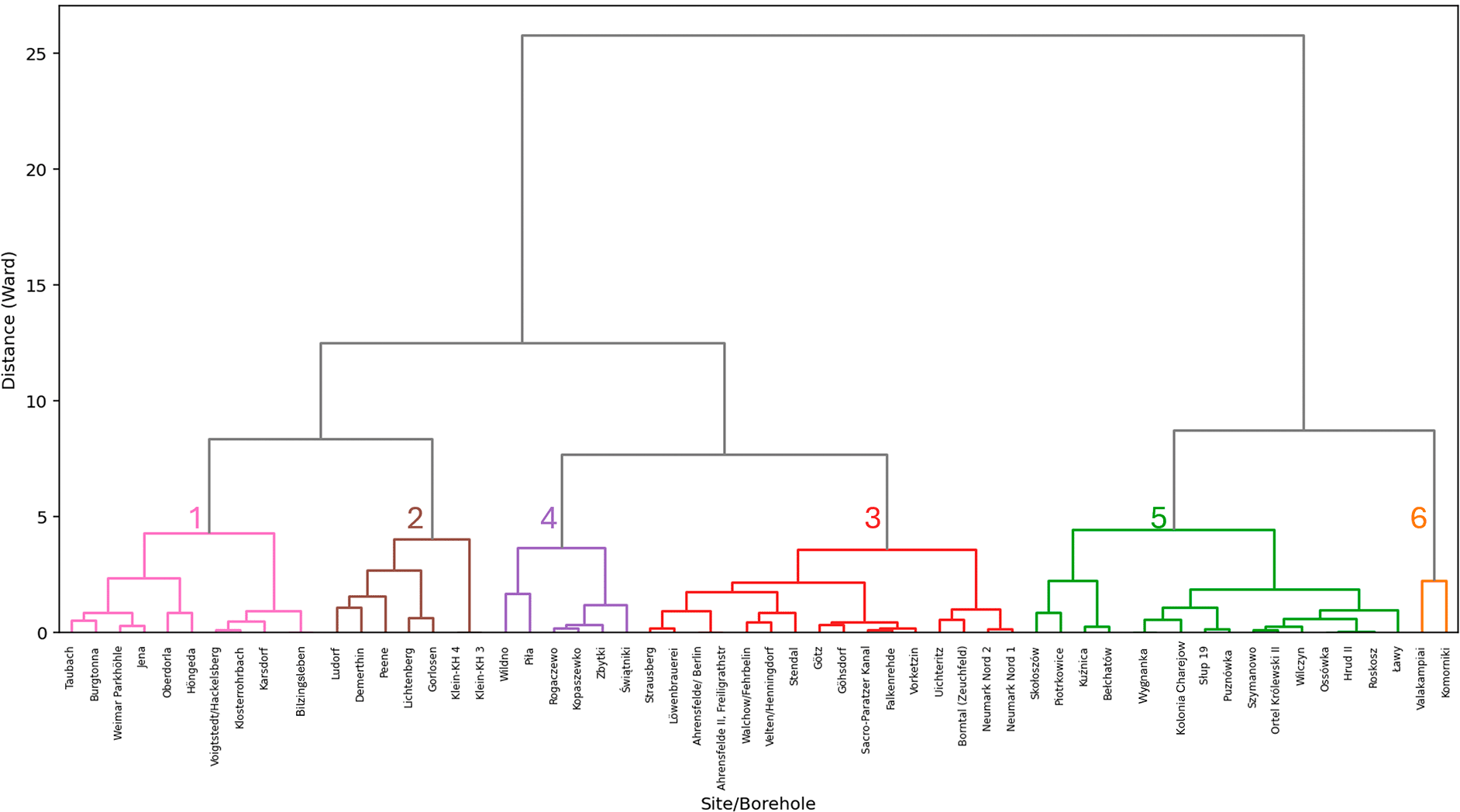
Figure 3. A dendrogram representing the hierarchical clustering approaching to grouping the eastern North European Plain sites based on temperature variables from ERA5 (Hersbach et al., 2020; 1991–2024).

Variables include: latitude, longitude, MAT, mean winter, mean summer, mean temperature of hottest month, mean temperature of coldest month, annual temperature range, Gorczyński continentality index (Gorczyński, 1922), and number of days per year where daily average temperature is below 2°C. Five clusters with similar annual temperature conditions have been defined using this approach.

To confirm this, sites were divided into six clusters with statistically similar instrumental records of average annual temperature and temperature range using a hierarchical clustering approach (Section 3.2.2; Figure 3). The extent of IcPD between chronostratigraphic stages is compared between each sub-region. In addition, IcPD results are compared to the nearby British aminostratigraphy, where the range of d/l values (Section 3.2.2) for warm marine oxygen isotope stages (MIS) is well established by independent chronology (Penkman et al., 2011, 2013). Britain has a more oceanic climate with warmer, wetter winters and cooler summers (Met Office, 2016). The British Isles have a higher MAT compared to the NE continental European sites, but smaller seasonal differences in temperature ( Table 1). Understanding the variability in burial temperature is the key to start to correct for this and enable cross-correlation of sites across Europe.

The extent of IcPD between chronostratigraphic stages is compared between each sub-region. In addition, IcPD results are compared to the nearby British aminostratigraphy, where the range of d/ l values (Section 3.2.2) for warm marine oxygen isotope stages (MIS) is well established by independent chronology (Penkman et al., 2011, 2013). Britain has a more oceanic climate with warmer, wetter winters and cooler summers (Met Office, 2016). The British Isles have a higher MAT compared to the NE continental European sites, but smaller seasonal differences in temperature ( Table 1). Understanding the variability in burial temperature is the key to start to correct for this and enable cross-correlation of sites across Europe.

2.2 Geological context

In this study, aminostratigraphic frameworks from six regions in north-east continental Europe were developed: the northwest and southeast of the North German Plain and Thuringian Basin, central Poland, and east Poland, northeast Poland & Lithuania ( Figure 1; Table 1). All regions occur within or in relatively close proximity to the North European Plain, which is an area of low-lying land between the North and Baltic Seas and Central European Uplands (reviewed in Woronko & Dąbski, 2022). It is a transitional area between oceanic and continental climates and has been exposed to repeated glaciations in the last 500 ka years. All sites also lie within the margins of the largest ice sheet extents of the Elsterian and/or Saalian glacial episodes (Batchelor et al., 2019). As such, the chronology of these regions is critical for understanding Quaternary climate.

2.2.1 Thuringian Basin and surrounding areas

The Thuringian Basin lies within central Germany. It is surrounded by areas of high elevation, including the Harz Mountains to the north, the Thüringer Wald to the southwest, the Thuringian Slate Mountains to the southeast and Eichsfeld to the west. The underlying bedrock of the basin is predominantly formed of Triassic sedimentary rocks including Muschelkalk and Keuper marl; in contrast the surrounding mountains are largely formed of Palaeozoic rocks (reviewed in Kramm et al., 2020). The basin itself lies 200–300 m above sea level and within the Central European climate region, but due to its confinement within areas of high relief it exhibits strong micro- and meso-climatic variability and below-average precipitation values (summarised in Meyrick & Schreve, 2002). Only the glaciers of the Elsterian glaciation reached parts of the Thuringian basin. This region has a rich history of Quaternary research (reviewed in Kahlke, 2002) and is particularly renowned for its Quaternary mammalian and molluscan fossils (e.g. Bratlund, 1999; Kahlke, 1965, 1969, 1974, 1975, 1977, 1978, 1984; Mania, 1973; van Kolfschoten, 2000; Wiefel, 1977). The type sites for the pre-Elsterian Borntal (warm stage between Tiglian and Waalian; Mania, 1973) and Artern (MIS 29–21; Maul et al., 2013) interglacials are all found here.

2.2.2 North German Plain

The North German Plain covers the entirety of northern Germany and is bounded by the Central German Uplands to the south. Its current topography is largely due to glacial processes of the Middle to Late Pleistocene (e.g. Stackebrandt, 2009); the area was crossed by the Elsterian, Saalian and Weichselian glaciers (e.g. Batchelor et al., 2019; Ehlers et al., 2004). The north-east of this region contains a multitude of lakes (the Mecklenburg Lake Plateau) which were formed during the retreat of the Weichselian ice sheet. The south-westerly areas are drier, and more weathered and levelled as a result of erosion from the Saalian ice sheet and posterior periglacial processes. The area is mainly drained by the Elbe and Oder rivers, which flow to the North and Baltic Seas, respectively.

2.2.3 Central Poland

All sites in this region are situated on the Central Polish Lowlands, also known as the “Polish Plain”, which is a low-lying area in the central-western part of Poland. They are bordered to the north by the coastal plain, and to the south by the Polish Highlands. This region is situated within the maximum ice extent of the Sanian 1 & 2, Odranian and Vistulian glaciations (see Figure 2 for correlations with MIS record and NW European stages; see Figure 1 for greatest ice sheet extents). As such, much of the terrain has been shaped by glacial processes, resulting in pro-glacial lakes which are now filled with sediment, and low hills in otherwise flat terrain (e.g. Marks et al., 2016).

2.2.4 East Poland

Three separate regions have been categorised as east Poland due to the sparsity of sites in some localities. The majority of sites are located in the Podlasie Lowland and Western Polesie, but sites situated to the east of the Central Polish Lowlands, and the more southerly site of Skołoszów is located in the Przemyśl Foredeep (an area located between the Lesser Poland Upland, Lublin Upland and Western Carpathian Mountains) have also been included in this region.. The Podlasie Lowland and Western Polesie is an area located in the east of Poland on the border with Belarus and Ukraine, to the north of the Lublin Upland. The remnants of a Holsteinian/Mazovian (e.g. Nitychoruk, 1994, 2000; Albrycht et al., 1997) and Eemian Lakeland (Hrynowiecka et al., 2018) are preserved in this region. Both sets of lake deposits are a result of ice-retreat of the preceding glacial episode, with lakes forming in depressions within surface tills. The region now features varied relief, with numerous lacustrine plains and peat bogs (e.g. Marks et al., 2016; Pochocka-Szwarc et al., 2024).

2.2.5 Northeast Poland & Lithuania

Two sites have been grouped in a separate cluster due to lower MAT. Komorniki is located in the Augustów Plain, in the north-east of Poland; it is a vast glacial plain that has been covered by ice sheets at multiple points over the last 1 Ma (e.g. Ber, 2006; Batchelor et al., 2019). Valakampiai is in Lithuania and is considered the type section for the Snaigupélè Interglacial (Kondratienė, 1959), which is commonly attributed to MIS 7 (Molodkov et al., 2002).

3. Materials and methods

3.1 Materials

To build the regional frameworks using IcPD, analysis of bithyniid opercula ranging in age from the Bavelian (~1.1–0.78 Ma; Cohen & Gibbard, 2022; Zagwijn & de Jong, 1984) to the Holocene (~11.7 ka) was carried out across the 6 sub-regions. Opercula correlated with robust independent chronostratigraphy evidence were used to provide tie points for the new aminostratigraphies. Once clusters for interglacial stages were defined using IcPD, the aminostratigraphy can be used to provide new or revised correlations for deposits with less certain age control. Opercula from one site attributed to the Miocene (~20–5 Ma) was also analysed to confirm whether endogenous intra-crystalline amino acids were still preserved in opercula of this age. It should be noted that bithyniids are a Palaearctic species and are not known from full glacial deposits (e.g. Alexandrowicz, 1999; Johansen, 1904; Penkman et al., 2013), therefore in this area IcPD values are likely to only represent warm stages/substages from this last 1 Ma.

Bithyniid opercula were analysed from 60 sites and boreholes from across north-east continental Europe (see SI) to build the aminostratigraphies developed in this study. The majority of specimens have been identified as Bithynia tentaculata (Linnaeus, 1758), however, several other species of the genus Bithynia analysed as pilot data indicate that they produce statistically similar extents of IcPD for samples of equivalent age (Penkman et al., 2007, 2013; Tesakov et al., 2020). This includes Bithynia troschelii/transsilvanica (Paasch, 1842), Bithynia cf. bavelensis (Meijer, 1990), and specimens which have been identified to genus level only. Opercula from Parafossarulus crassitesta (Brömme, 1885) and the genus Pomatias have also been used.

Table 2.1. (Available in the SI, Nelson & Penkman, 2026) The context of the opercula samples analysed in this study. Individual opercula (between 1 to 9 whole opercula or opercula fragments were selected) were analysed from a stratigraphic level within a sediment profile or borehole from a given location. The region, site or borehole name, sample depth (where recorded) or stratigraphic unit, morphology, other independent evidence of age, and associated pollen zone is described. The ‘NEaar no.’ is the identification number for each individual fossil sample analysed in the NEaar Laboratory, University of York. Please note that the pollen zonation (PZ) systems used to define pollen correlated with opercula in this study have been described in the SI (see Section 7.1: tables S1–S3, and SI 7.3; N/A = no pollen sequences available for correlation). Due to the variability between different pollen classification systems and to allow for cross-comparison between regional pollen stratigraphies, in this paper the Holsteinian and Eemian interglacials have been divided into four sub-periods: the Pre-temperate, Early-temperate, Late-temperate and post-temperate biostratigraphic zones (according to Turner & West, 1968). The Holocene has been divided into the Upper, Middle and Lower substages.

3.2 Methods

3.2.1 Intra-crystalline protein decomposition method

All samples were prepared using the procedure outlined for determining IcPD by Penkman et al. (2008) (for full methods see SI). This involves the isolation of the intra-crystalline fraction by oxidation (48 h, 12% NaOCl), followed by the division of the sample into two fractions: the FAA fraction (FAA, naturally occuring free amino acids as a result of protein degradation) and total hydrolysable amino acid fraction (THAA). Both FAA and THAA fractions were analysed in analytical duplicate using a modified version of the reverse-phased high-performance liquid chromatography (RP-HPLC) method described by Kaufman and Manley (1998), along with standards and blanks.

3.2.2 Intra-crystalline protein decomposition method

Three key reaction pathways occur during protein decomposition following the cessation of tissue turnover in an organism. The first two are the hydrolysis of the peptide bond and decomposition to other more stable amino acids and smaller organic molecules (Bada et al., 1978; Kossiakoff, 1988; Penkman et al., 2008; Sato et al., 2004). In addition, spontaneous racemisation occurs resulting in a slow change from only the l-isomers to a racemic equilibrium of l and d forms; this ratio is quantified as the d/ l value. Amino acids are chiral molecules that exist in two mirror-image forms, but only the l-isomers (left-handed) are naturally produced and incorporated into living proteins, making the progressive conversion to d-forms (right-handed) a useful indicator of post-mortem molecular alteration. This is quantified as the d/ l value. In a closed system, the FAA and THAA d/ l values should be highly correlated for each amino acid (Miller et al., 2000), and lack of correlation helps to identify compromised samples (Preece & Penkman, 2005). The best chromatographically-resolved amino acid pairs using RP-HPLC in opercula are serine (Ser), aspartic acid/asparagine (Asx), alanine (Ala), glutamine/glutamic acid (Glx), and valine (Val) (Penkman et al., 2013; Powell et al., 2013), so the analysis will focus on these amino acids. It must be noted that during hydrolysis both asparagine and glutamine can undergo deamidation to aspartic acid and glutamic acid respectively. Therefore, it is not possible to differentiate between these amino acids, so they are referred to as Asx and Glx respectively (Hill, 1965). They differ in terms of detectability and preservation/stability, and they also racemise at different rates (fastest to slowest: Ser > Asx > Ala > Glx Val; Penkman et al., 2013; Tesakov et al., 2020), providing better temporal resolution over different timescales, and complementary information about age consistencies, preservation and diagenetic history (e.g. Goodfriend, 1991). As the majority of opercula analysed have been attributed to the Middle Pleistocene, Ala provides the optimal resolution for this period in northern Europe (e.g. Penkman et al., 2011, 2013; Nelson et al., 2024, 2025a). However, other amino acids (Asx, Glx and Val) are used to confirm the relative chronology for the samples and to determine whether the closed system within each operculum analysed has been retained. Ser is geochemically unstable compared to other amino acids, decomposing to alanine in addition to other organic molecules (Bada et al., 1978). As such, it is not a useful geochronometer for the Pleistocene but is useful as a marker for contamination (e.g. Kosnik & Kaufman, 2008), and to provide temporal resolution for younger specimens attributed to the Holocene (e.g. Conti et al., 2024). Therefore, it has not been used here to evaluate the age of the opercula analysed in this study.

To develop the new regional aminostratigraphies, the data was first screened for non-closed system behaviour (Preece and Penkman, 2005). These were determined by identifying visual outliers resulting from a lack of correlation between the FAA and THAA d/ l values of each amino acid Samples where closed-system behaviour had been lost were excluded from further data analysis, but are reported in the Sup. Mat. In addition, samples where the concentration of all amino acids were below the limits in which d/ l values could be successfully quantified were also removed. Finally, one operculum (NEaar No: 17553) from Peene River 9.5–9.0 m produced d/ l values more similar to the shallower/younger horizon from this profile. It is possible this operculum may not have been in situ and therefore this specimen has been excluded from the interpretation of age for this horizon. All these outliers (4%) are detailed in the Sup. Mat. Data analysis was performed using Google Colab with Python (3.10). Sample results were colour-coded according to independent evidence of age ( Figure 4– Figure 8): Holocene = red, the last glacial complex (Vistulian/Weichselian) = orange, the Last Interglacial (MIS 5e/Eemian) = yellow, MIS 7 = green, the Saalian Complex = teal, Middle Pleistocene = blue, Holsteinian/Mazovian = purple, Elsterian = grey, Arternian (MIS 29–21) = dark red, Bavelian/Cromer I = black, Miocene = dark orange. Where the same chronostratigraphic stage is represented in multiple regions, different shades of the same colour are used.

d4682e38-67d0-469b-b619-d8fa35ca7474_figure4.gif

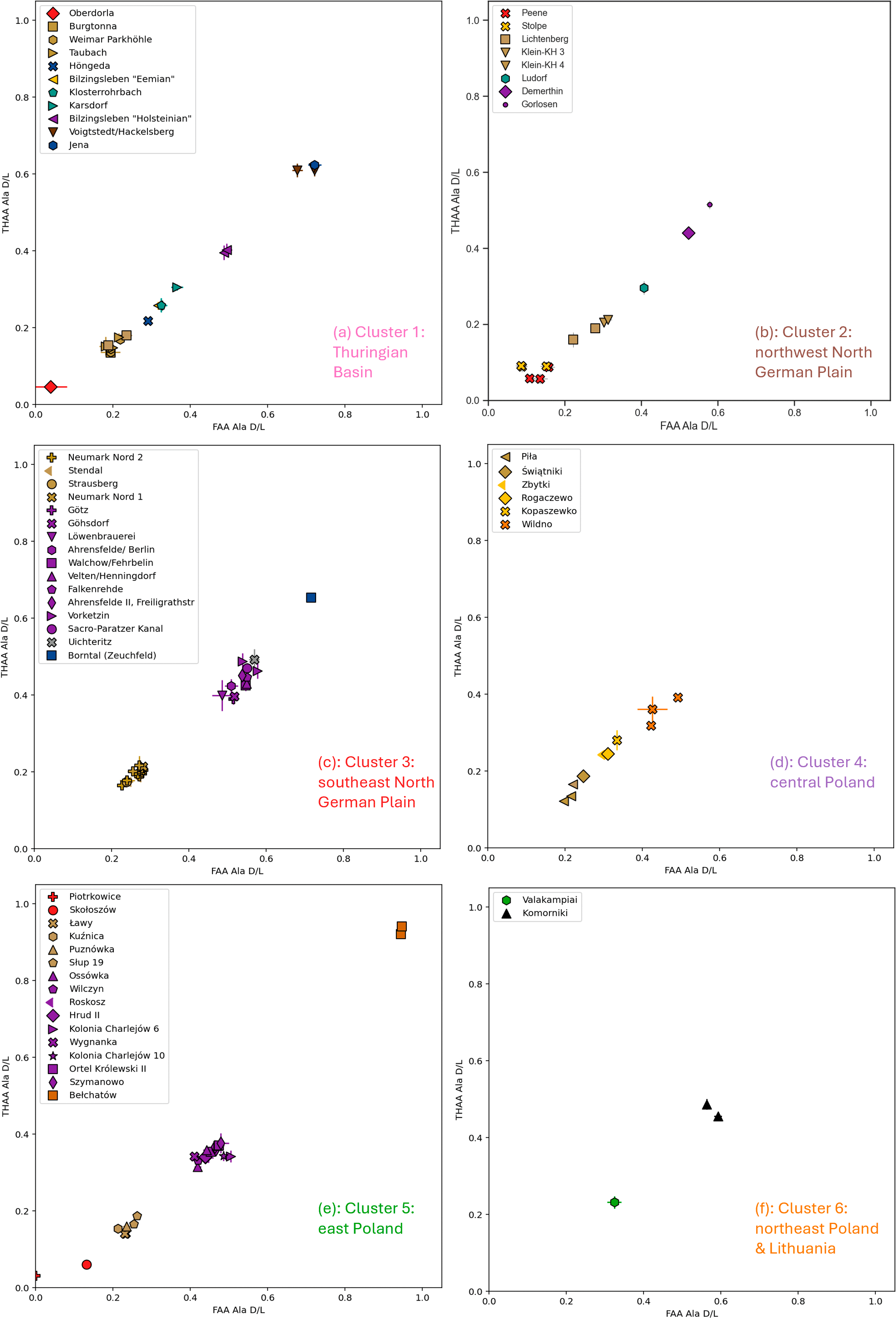
Figure 4. The Ala FAA and THAA fractions from the Bithynia opercula analysed for this study after data screening (see SI for samples rejected from this analysis) are presented for each aminostratigraphy: a) Cluster 5: NE German Plain, b) Cluster 4: Thuringian Basin, c) Cluster 3: central east Poland, and d) Clusters 2 & 1: east central Poland/ & NE Poland & Lithuania (These two clusters have been presented together as there are only two sites included in Cluster 1 and Cluster 2 has the most similar climate conditions).

The youngest material falls to the bottom left of the plot and the oldest to the top right. Horizons are coloured according to their chronostratigraphic attribution (made prior to this study) as follows: Holocene = red, MIS 3 = orange, Eemian = dark yellow, MIS 7 = green, the Saalian Complex = teal, Middle Pleistocene = dark blue, Holsteinian = purple, Elsterian = grey, Arternian = dark redbrown, Bavelian = black, and Miocene = dark orange.

The range of d/ l values for each chronostratigraphic stage represented in the new aminostratigraphies for the eastern Northern European Plain were compared to the British Quaternary aminostratigraphic framework developed by Penkman et al. (2013). A list and map of all sites included is presented in the SI. All information relating to the sites used in this framework, including independent chronology and relevant references, can be found in the Penkman et al. (2013): Supplementary Data.

3.2.3 Radiocarbon dating

Opercula from Peene River deposits at Stolpe (NE German Plain), originally attributed to the Eemian (Table 4.2), yielded anonymously low IcPD values when compared to other Eemian material from this region. A single operculum from the shallowest, and therefore youngest, horizon (23–23.3 m) was analysed by 14C dating, as the younger/shallower opercula were most likely to be of an age within the chronostratigraphic limit of radiocarbon dating (~50 ka; reviewed in Hajdas et al., 2021). Following cleaning of the opercula with 18 Ω deionised water, radiocarbon analyses were conducted by Beta Analytic (Lab no: 716865) using accelerator mass spectrometry (AMS). Radiocarbon ages were calibrated using the IntCal calibration curve (Reimer et al., 2020).

3.2.4 Exploration of the influence of climate variables on IcPD

To divide the eastern North European Plain into sub-regions, the variability in modern temperature variables across this area has been compared to the extent of racemisation. The temperature variables selected were chosen so that the difference in both the average, seasonal variation and range in temperature throughout the year could be evaluated. It is assumed that the variation in temperature across this region across instrumental timescales is indicative of variation throughout the Quaternary. Temperature variables (MAT, mean winter, mean summer, mean temperature of hottest month, mean temperature of coldest month, annual temperature range, Gorczyński continentality index (Gorczyński, 1922), and number of days per year where daily average temperature is below 2°C) for each site were extracted from the global reanalysis for global climate and weather, ERA5 (1991–2024, Hersbach et al., 2020). All variables were plotted against the extent of racemisation for Asx, Ala, Glx and Val to observe the strength of correlation for each variable.

These temperature variables were used, along with latitude and longitude, to group the sites into six clusters using a hierarchical clustering approach from the “scipy.cluster.hierarchy” package (Figure 3). The data were standardised using the “StandardScaler” from the “scikit-learn” library to ensure all features contributed equally to the distance calculation (see SI). The appropriate numbers were evaluated by a Silhouette Analysis loop, and six clusters were determined to be the most appropriate. The clusters have been named after the geographical region that the majority of sites included in the cluster were obtained from: (1) Thuringian Basin and surrounding areas, (2) northwest North (NWN) German Plain, (3) southeast North (SEN) German Plain, (4) central Poland, (5) east Poland, and (6) northeast Poland & Lithuania.

4. Results and discussion

4.1 IcPD vs. independent evidence of age

After data screening, the d/ l values were compared across all sites for each of the following amino acids: Asx, Glx, Ala and Val ( Figure 4; for Asx, Glx and Val see SI). For each region, d/ l values for sites broadly fell in the expected order given their independent evidence of age ( Figures 4–6). The opercula with the least racemised d/ l values were associated with the Holocene, while specimens that produced the highest d/ l values were from Bełchatów and attributed to the Miocene (Kowalski & Rzebik-Kowalska, 2002). The Miocene opercula from central Poland were substantially more racemised than the sites with the second highest d/ l values; these came from the Voigtstedt (Hackelsberg), Borntal, Uichteritz, and Jena, all situated in the Thuringian Basin. In the slowest racemising amino acids (Val and Glx) the d/ l values for these Thuringian Basin sites do not exceed 0.5; this implies that IcPD can temporally resolve deposits greater than ~1 Ma from this region.
d4682e38-67d0-469b-b619-d8fa35ca7474_figure5.gif

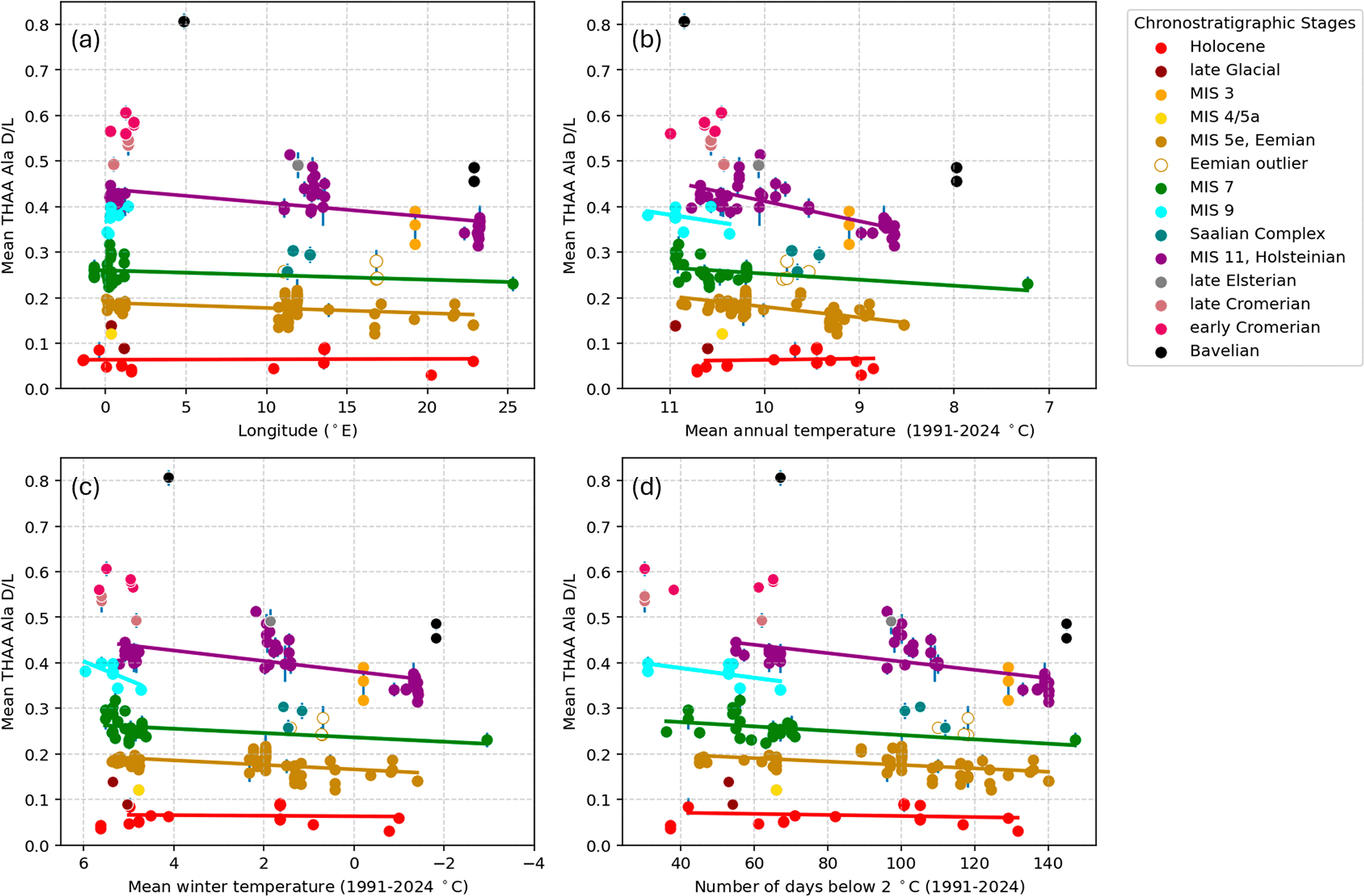
Figure 5. The aminostratigraphies from the eastern North European Plain have been compared to the British record (Penkman et al., 2011, 2013).

THAA Ala d/ l values have been plotted against (a) longitude (°E), (b) MAT (ERA5, 1991–2024), (c) mean winter temperature (ERA5, 1991–2024), and (d) mean number of days below 2°C per year (ERA5, 1991–2024). The trend for chronostratigraphic stages where n > 5 is presented. Outlying datapoints for the Eemian that show similar d/ l values to material attributed to the Saalian Complex are represented by unfilled markers.
d4682e38-67d0-469b-b619-d8fa35ca7474_figure6.gif

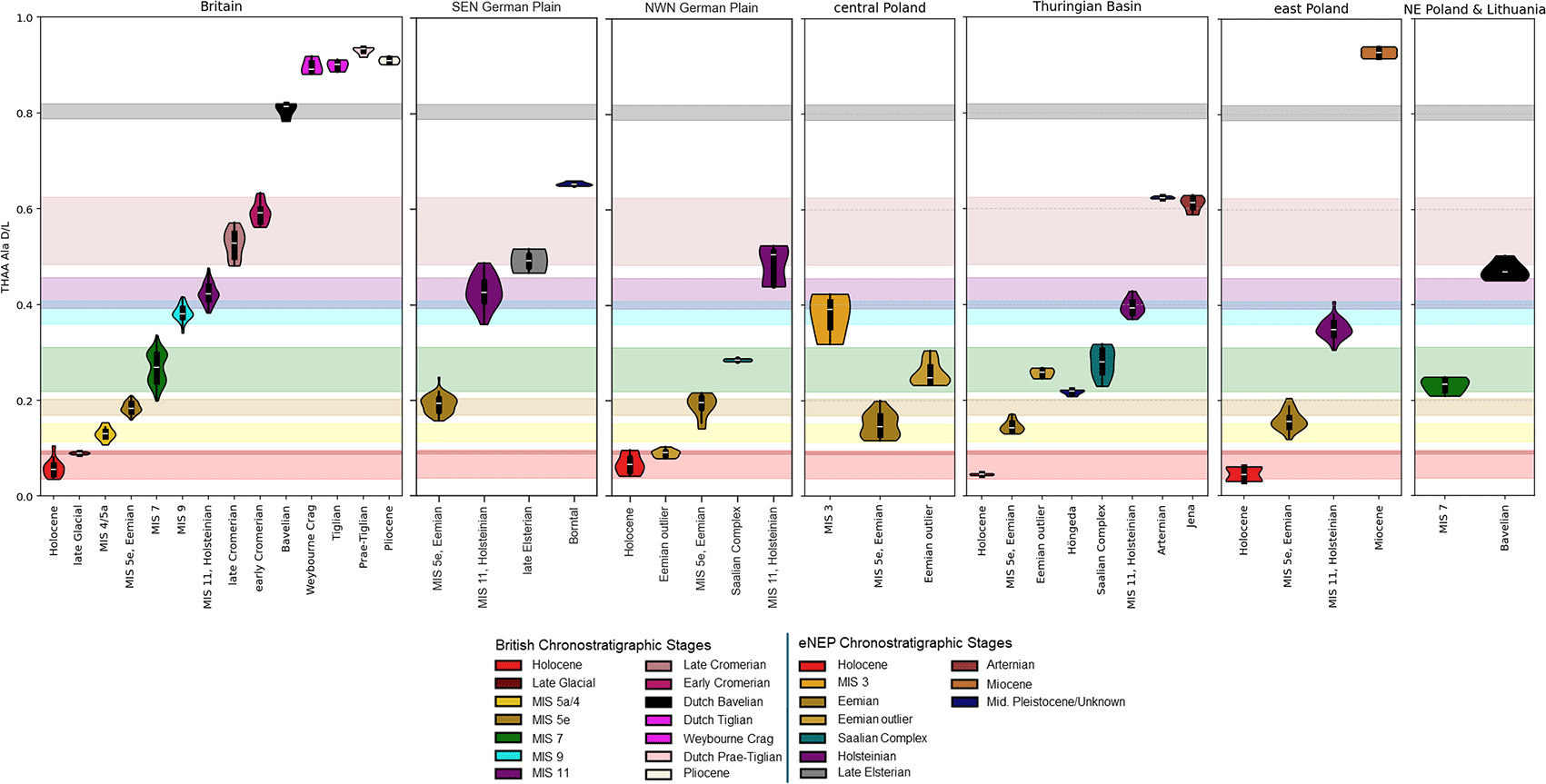
Figure 6. THAA Ala d/ l values for: a) Britain (Penkman et al., 2013: Supplementary Data), b) SEN German Plain, c) NWN German Plain, d) Thuringian Basin, e) central Poland, f ) east Poland, and g) NE Poland & Lithuania.

Sub-regions are order from left to right by warmest to coldest MAT. The 95th percentile range for the British record is demonstrated by horizontal colour bands on each plot, so the d/ l values for all regions can be compared to the British record. In general, for each chronostratigraphic stage, the d/ l values for interglacials assumed to be the same in age decrease from west to east, parallel to increasing continentality. This occurs in all amino acids (see SI).

Except for the Holocene, the mean d/ l values of material from Poland are lower than material from deposits attributed to the same age in Germany ( Figures 4, 5a, & 6). This systematic difference in IcPD increases with sample age. For example, the second oldest site, Komorniki (Augustów Plain), correlated with either the Bavelian or Cromer I (MIS 31–19, Ber, 2006; Khursevich et al., 2005), produced lower or similar d/ l values compared to the German Thuringian Basin site attributed to MIS 29–21 (Voigtstedt (Hackelsberg), Arternian Interglacial; Maul et al., 2013). There are also a few chronostratigraphic stages in each regional record that have a large range of d/ l values when compared to clusters of d/ l values for other stages ( Figure 6, see SI). These include Eemian age deposits from central Poland and Holsteinian deposits from the NE German Plain.

To understand these patterns, the d/ l values are compared to the d/ l clusters defined for each warm MIS stage within the British aminostratigraphy (where the range of d/ l values for each stage is well established by robust independent chronology; Penkman et al., 2011, 2013; Figure 5) and across climatic gradients: longitude (Figure 5a), MAT (Figure 5b), mean winter temperature (Figure 5c), and mean number of days per year daily temperature does not exceed 2°C (Figure 5d). These climate variables were selected as they most strongly correlate withto the extent of IcPD for each chronostratigraphic stage. The two variables that most strongly correlate withto the extent of IcPD is MAT and mean number of days per below 2°C (for chronostratigraphic stages where n > 5, p value <0.05). The strength of the correlation increases with the age of material (SI: Table S4); this is expected, as the temperature differences will have had longer to become apparenttake effect. There are also a few chronostratigraphic stages in each regional record that have a large range of d/ l values when compared to clusters of d/ l values for other stages (see SI). These include Eemian age deposits from central Poland and Holsteinian deposits from the NE German Plain. To understand these patterns, the d/ l values are compared to the d/ l clusters defined for each warm MIS stage within the British aminostratigraphy, where the range of d/ l values for each stage is well established by robust independent chronology (Penkman et al., 2011, 2013; Figure 6).

Comparison of the THAA Ala d/ ls between the sub-regions has revealed that there are three “Eemian sites” from Poland (Kopasweko, Rogaczewo, Zbytki) and the Eemian horizon from Bilzingsleben that have produced similar d/ l values to MIS 7/Saalian Complex material. In contrast, the Eemian deposits from the Peene River, Stolpe, have produced d/ l values similar to nearby Holocene deposits. There are also a few sites from NE Germany that have produced higher d/ l values than is predicted by the trends in Ala d/ l values against each climate variable. The d/ l values for these sites are similar to that observed for the British late Cromerian, Thuringian Basin late Elsterian, and NE Polish Bavelian/Cromer I material (Figure 6). In general, the THAA Ala d/ l values from the NE German Plain and Thuringian Basin opercula fall within a similar range to the British MIS stages they are generally assumed to correlate with. However, the mean THAA Ala d/ l values for each Polish Pleistocene chronostratigraphic stage are lower than both the equivalent British and German stages. The differences observed in the d/ l values for each sub-region are discussed in the following sections.

4.1.1 Eemian and Weichselian

The Eemian Interglacial was the last interglacial to occur prior to the present day, dated to between ~130–115 ka (e.g. Cohen & Gibbard, 2022). Twenty sites in this dataset have been attributed to the Eemian, with many including multiple horizons from the same stratigraphic profile. The mean Ala d/ l value is similar between the British and German records for both FAA and THAA ( Figure 6), but the range was larger for both North German Plain regions. Mean values were slightly lower for the Thuringian Basin, central and east Poland, but the range of d/ l values was broader for both Polish sub-regions.

Sites attributed to the Eemian from Cluster 2 (NWN German Plain) include Klein-Klütz-Höved profiles 1 and 2, Lichtenberg Li-BPa borehole horizons 1300–1325 cm and 1143–1163 cm, and deposits from the Peene River, Stolpe. Eemian sites included in Cluster 3 (SEN German Plain) include horizons from the Stendal and Strausberg boreholes (Figure 4a). All sites were correlated with Eemian pollen sequences (see Table 2). Although just north of the Thuringian Basin, the nearby sites of Neumark Nord I and II (Geiseltal - Central German Dry Area) have also been included in Cluster 3 with the SEN German Plain sites. Neumark Nord II has been attributed to the Eemian based on independent bio- and chronostratigraphic evidence, including a full Eemian pollen sequence and evidence for the Blake Event (0.12 Ma; Sier et al., 2011, 2015).

The two opercula-bearing horizons in the Lichtenberg Li-BPa borehole were correlated to MIS 5e/Eemian with high resolution palynological results (Hein et al., 2026 in press), which assigned the older layer to the Pre-temperate pollen zone E I/E1 and the upper horizon to the Late-temperate pollen zone E V/E6/7 (Menke and Tynni, 1984; Erd, 1970, 1973). The age of these deposits was further constrained by 11 quartz OSL ages and 23 fading-corrected pulsed IR50 and pulsed pIRIR225 ages (Rahimzadeh et al., 2024; Hein et al., 2026 in press). The Bayesian age-depth model places the deeper of the two horizons in the earliest part (ca. 126.5 to 128 ± 8.6 ka) and the shallower horizon in the later part of the interglacial (ca. 118 to 119 ± 8.2 ka). Opercula from Lichtenberg yielded d/ l values comparable to the British MIS 5e and Neumark Nord I (Figure 4b; Penkman, 2010) and Neumark Nord II (see SI; MAT for both sites ~10.2°C; ERA5 1991–2024); the two sedimentary horizons (Li-BPa 1300–1325 cm and the overlying Li-BPa 1143–1163 cm) could be temporally resolved by IcPD. This is consistent with the conclusions previously drawn regarding the age of this section of the Li-BPa borehole. d/ ls from nearly all other NE German Plain Eemian sites cluster around the samples from Lichtenberg and Neumark Nord II, confirming they were formed in the same chronostratigraphic stage.

The site of Stolpe in the NWN German Plain had lower d/ l values than all other Eemian sites included in this study. This was originally attributed to the Eemian due to the presence of the biostratigraphically important mollusc, Theodoxus fluviatilis (Linnaeus 1758), an Eemian pollen profile and the position of this deposit below Weichselian till (Meng et al., 2009). T. fluviatilis has been found in Eemian and Holocene deposits within the Netherlands (Meijer, 1990). However, IcPD analysis suggests that the opercula dated were significantly younger than other Eemian sites from the NE German Plain. The average Ala d/ l values for these deposits are 0.14 ± 0.01 (FAA) and 0.09 ± 0.01 (THAA), which falls in the range of d/ l values for the oldest British Holocene/late Devensian material. Radiocarbon dates of the opercula also support a Holocene age attribution (10,340 ± 30 cal BP, Beta Analytic). Therefore, these samples have been classified as Holocene within this analysis. It is possible that the opercula may have been moved from the early Holocene/late Weichselian age sands above into underlying Eemian sediments during the coring process resulting in early Holocene-age opercula being present in older sediments.

Sites attributed to the Eemian within the Thuringian Basin (Cluster 1) on the basis of biostratigraphy include Burgtonna (Table 2; Zeißler, 1970; Kahlke, 1978; Meyrick and Maul, 2002), Taubach (Table 2; Götze, 1892; Müller, 1902; Weiss, 1910; Ziegenhardt, 1962; Kahlke, 1977; Steiner, 1977; Zeißler, 1977; Brunnacker et al., 1983; Bratlund,1999), and Weimar Parkhöhle (Table 2; Zeißler, 1962, 1967; Mania, 1984), and the Eemian horizon from the archaeological site of Bilzingsleben (Figures 4–6; Stahlschmidt et al., in review). Opercula from Taubach, Burgtonna, and Weimar Parkhöhle produced similar but slightly lower values to Neumark Nord I (Figure 4b; Penkman, 2010), and Neumark Nord II (Sier et al., 2011) and Lichtenberg. The Bilzingsleben “Eem” has produced higher Asx (see S.I.) and Ala d/ l (Figures 4–6) to the other Eemian Thuringian Basin sites. This suggests that this deposit is likely from an earlier part of the Eemian interglacial, although because little degradation occurs within cold stages, we cannot rule out that it is from the end of the preceding warm stage. The Thuringian Basin sites of Burgtonna, Taubach and Weimar Parkhöhle are the only sites within these four aminostratigraphies located higher than 200 m.a.s.l (metres above sea level), and MAT (ERA5, 1991–2024) is ~1°C colder than Neumark Nord. It is possible that being positioned at higher elevation in the heart of the Thuringian Basin may have resulted in exposure to different micro-climates, and consequently slightly different temperature histories to sites located at lower elevations neighbouring the Thuringian Basin, such as Neumark Nord I & II.

Cluster 5 (east Poland) includes Puznówka, Kuźnica, Słup 19 and Ławy, all have been previously attributed to the Eemian on the basis of palynology (SI; Figure 4d). The d/ l values from these sites cover the same range as those from British MIS 5a/5c and MIS 5e material ( Figure 6). This suggests that these are also likely to have been deposited in MIS 5, but have probably experienced slightly cooler temperatures on average compared to British opercula from the same chronostratigraphic stage.

The central Polish sites previously attributed to the Eemian span the same range as the British MIS 5a/4 to MIS 7 data ( Figure 5; SI). There are two clusters of Ala d/ l values for opercula attributed to this stage ( Figure 4c and Figure 6), suggesting that the opercula within this group come from two different warm periods, probably two different interglacials. Opercula that yielded the lower extent of IcPD came from the sites of Świątniki and Piła ( Figure 4c). Świątniki has been attributed to the Eemian on the basis of the molluscs present (Alexandrowicz & Alexandrowicz, 2010). The Bithynia opercula occur in the same sedimentary horizon as the warm-loving mollusc Belgrandia marginata (Michaud, 1831), signifying the climate optimum. d/ l values from this site are similar to the British MIS 5a-4, and the Thuringian Basin Eemian. Piła, a site located further west in the Central Polish Lowlands, is attributed to the Eemian on the basis of the correlated pollen assemblages and molluscs (Alexandrowicz & Alexandrowicz, 2010; Alexandrowicz et al., 2024; Kuszell et al., 2008).

The higher d/ l values come from the sites of Kopaszewko, Rogaczewo and Zbytki ( Figure 4c), and plot midway between the cluster of Ala d/ l values from Świątniki and Piła attributed to the Eemian and the cluster attributed to the Mazovian/Holsteinian. This suggests that these sites either come from a warm episode between the Eemian and the Mazovian, or that conditions in Poland between these two interglacials did not reach temperatures required to accelerate the rate of IcPD sufficiently for substantial protein decomposition within the opercula to occur. The d/ ls from all amino acids from these three sites are similar to both the British MIS 7 (e.g. Stanton Harcourt, Aveley, Ebbsfleet Channel, West Thurrock (Lion Pit); Penkman et al., 2013, SI data and references therein) and German Saalian Complex (Dömnitz warm stage; Figure 5; SI Figures S1–S3) and higher than opercula material attributed to the early Eemian from Neumark Nord II (Geiseltal - Central German Dry Area; Sier et al., 2011) and Lichtenberg (attributed to the Pre-temperate and Late-temperate phases of the Eemian).

All three sites were originally classified as Eemian due to the position of the deposits containing molluscs below Weichselian till (Krzyszkowski & Winnicki, 1994) and the presence of tree pollen assemblages characteristic of the Eemian (Kuszell, 1994a; Kuszell, 1994b); however, only Rogaczewo has a full interglacial pollen sequence. In all three profiles, the sediments in which molluscs were present are likely to represent an early, Pre-temperate phase of the interglacial. This is indicated by the presence of Gyraulus laevis (Alder, 1838) (a cold-loving, pioneer taxon) towards the base of each profile, gradually disappearing towards the top. The presence of G. laevis, in addition to a lack of molluscan taxa with high ecological requirements, suggest sedimentation occurred during an early, Pre-temperate phase of an interglacial (Alexandrowicz, 1994). This might indicate that the higher d/ l values represent the earliest part of the Eemian interglacial and lower d/ l values in this region represent the climate optimum/Late-temperate phases. However, the limited space between the d/ ls associated with these sites and the Holsteinian cluster, and similarity to the d/ l values from Ludorf (NWN Germain Plain, Saalian Complex/Dömnitz warm stage), Klosterrohrbach and Karsdorf (north-east of the Thuringian Basin; Saalian Complex/Dömnitz warm stage) and the early part of the British MIS 7 would suggest an older age attribution is more likely. Therefore, the IcPD results of this study suggests a reattribution of these opercula (Kopaszewko, Rogaczewo, and Zbytki) to an interglacial between the Eemian and Holsteinian. With no indications of reworking, this study therefore attributes them to the Saalian Complex.

4.1.2 The Saalian complex

The Saalian Complex describes deposits occurring after the Holsteinian Interglacial and prior to the Eemian Interglacial. The timing of this part of the Middle Pleistocene is still debated. Some have argued that it occurred between MIS 10 and MIS 6 (Cohen & Gibbard, 2022; Lauer & Weiss, 2018) and includes both warm and cold stage deposits. However, some researchers previously proposed that this period of the Quaternary should be correlated with MIS 8 to MIS 6 (e.g. Geyh & Müller, 2007; Richter & Krbetschek, 2015). Four sites in this dataset have been previously attributed to the Saalian Complex on the basis of independent chronology ( Figure 4 & Figure 5).

One site from Cluster 2 (NWN German Plain), Ludorf from the NE German Plain ( Figures 4a and 6), has been attributed to the early Saalian Complex/late Holsteinian due to the presence of Azolla filiculoides (water fern), which is not known in Europe after the Saalian Complex (e.g. Bertelsen, 1972). Other associated pollen is indicative of a transition, which was interpreted as the end of the Holsteinian Interglacial to the beginning of the Fuhne cold period (Fuhne A). The palynological data from these sediments is fragmentary, therefore a Dömnitz age cannot be ruled out. IcPD values from Ludorf were significantly lower than other Holsteinian horizons from the NE German Plain ( Figures 4 & 5; SI), but at the higher range of d/ l values observed in Saalian Complex material from the Thuringian Basin and Poland. The average Ala d/ l for Ludorf lies within the higher range of MIS 7 Ala d/ l values from the British record. IcPD analysis therefore supports correlation with an interglacial period within the Saalian Complex for this site.

To the east of the Thuringian Basin (Cluster 1), two sites: Karsdorf and Klosterrohrbach (Burgenlandkreis), have been attributed to the Saalian Complex based on the presence of Corbicula fluminalis (Müller, 1774). Corbicula are known in NW Europe for all post-Elsterian interglacials with the exception of the Eemian (Meijer & Preece, 2000). Deposits from Klosterrohrbach have been attributed to the Dömnitz warm period following pollen analysis (RPAZ 4a-b), which has been correlated with MIS 7 (Endtmann et al., 2024). Both sites yielded higher d/ l values than Eemian deposits from the Thuringian Basin, and lower values than samples attributed to the Holsteinian at Bilzingsleben ( Figure 4b & Figure 5; SI: Daniel & Frenzel, 2023; Hutson et al., 2025; Stahlschmidt et al., in prep). This corroborates their assignment to the Saalian Complex. As Karsdorf has yielded higher d/ l values than Klosterrohrbach, it is likely this is an older deposit, either from an earlier stage in MIS 7 or an earlier warm period in the Saalian Complex.

The Snaigupėlė Interglacial deposits at Valakampiai, Lithuania (Cluster 6), are often attributed to MIS 7 (e.g. Gaigalas et al., 2005; reviewed in Šeirienė & Bitinas, 2024), but this interglacial has also been attributed to MIS 5 (Molodkov et al., 2002). Snaigupėlė Interglacial deposits from other localities have also been correlated with MIS 7 (e.g. Gaigalas et al., 2007; Kondratienė & Damušytė, 2009; Šeirienė et al., 2019), MIS 5e (e.g. Baltrūnas et al., 2015) and MIS 9 (e.g. Baltrūnas et al., 2019; Šeirienė et al., 2019). The d/ l values from this deposit are similar to the lower range of the MIS 7 d/ l values from the British record ( Figures 4d–6; SI), and are higher than d/ l values from Eemian deposits from the Podlasie Lowland. This supports the attribution of MIS 7 for the Snaigupėlė Interglacial at Valakampiai. MIS 7 deposits at Valakampiai yielded lower d/ l values than Saalian Complex sites from Germany. This could be due to Lithuania being on average colder than Germany since MIS 7 (Gamisch, 2019; Timmerman et al., 2022), or that material from the Snaigupėlė Interglacial is from a later part of this complex MIS than the Saalian Complex Corbicula gravels.

All samples attributed to the “Saalian Complex” in the German and Polish records fall within the range of MIS 7 in the British record ( Figure 6, e.g. Stanton Harcourt; Aveley, Ebbsfleet Channel, West Thurrock (Lion Pit); Penkman et al., 2013, SI data and references therein). This could suggest that all the Saalian Complex material in this dataset comes from MIS 7 (with the older material from the earliest substage MIS 7e, and the younger material from a later substage, MIS 7a/c). Alternatively, this could indicate that opercula deposited in MIS 9 and 7 in northern and central Germany and Poland were exposed to colder integrated burial temperatures than those from the British Isles, and as a result the German and Polish samples have a lower extent of IcPD and do not cover such a large range of d/ l values.

4.1.3 Middle Pleistocene

Two sites in this analysis, Höngeda (Cluster 1: Thuringian Basin) and Zeuchfeld-Borntal (Cluster 4: SEN German Plain), have been attributed to the Middle Pleistocene, with no further evidence to constrain these deposits to a narrower stage of the Quaternary (T. Meijer, pers. comm.). IcPD results from Höngeda suggest that this deposit dates to the early Eemian or late Saalian Complex. The extent of IcPD in the Zeuchfeld-Borntal material suggests this deposit dates to the early part of the Middle Pleistocene (e.g. the Cromerian Complex) or the latest part of the Early Pleistocene ( Figure 4, Figure 5 & Figure 6; SI Figures S1–S3).

4.1.4 Holsteinian

The Holsteinian Interglacial succeeds the Elsterian, the latter correlated to MIS 12 (Lauer & Weiss, 2018) but the precise timing of this period and its correlation with the MIS is still debated. The Holsteinian is commonly correlated with MIS 11c (e.g. Cohen & Gibbard, 2022; Koutsodendris et al., 2012; Nitychoruk et al., 2005; Sarnthein et al., 1986), the British Hoxnian (e.g. Bridgland, 1994; Horne et al., 2022; Rowe et al., 1999), and the Polish Mazovian (e.g. Górecki et al., 2022; Nitychoruk et al., 2005; Szymanek, 2011; Figure 2). However, correlations of the type-site have been made to MIS 9 on the basis of 230Th/U dates from two peat layers (Geyh & Müller, 2005; Geyh & Müller, 2007). The methods used to yield these ages have been questioned and new 230Th/U by Sierralta et al. (2017) of the para-stratotype in Mecklenburg-Vorpommern and Bossel suggest the original analyses were subjected to open system conditions (Preece et al., 2007). In Britain, it is now recognised that the “Hoxnian” pollen succession is present in more than one interglacial and sites with similar “Hoxnian” pollen have since been correlated with MIS 9 (e.g. Cudmore Grove; Penkman et al., 2013, SI data and references therein) and 11 (e.g. Ashton et al., 2008; Bridgland, 1994; Bridgland et al., 2001; Candy et al., 2021; Preece et al., 2007; Roe et al., 2009; Roe et al., 2011; Rowe et al., 1999; Scourse et al., 1999). In this data analysis, “Holsteinian” sites are considered together. Sedimentary horizons correlated with Holsteinian/Mazovian pollen successions have been subdivided into Pre-, Early-, Late- and Post-temperate phases after Turner and West (1968) (see SI 7.1: Table S3 and SI 7.3). For sites attributed to either the British Hoxnian, German Holsteinian and Polish Mazovian, the mean IcPD decreases from west to east, along the gradient of increasing climate continentality ( Figure 5; e.g. Mikolaskova, 2009; Stonevicius et al., 2018).

Opercula from both sub-regions of the North German Plain have been previously attributed to the Holsteinian due to the occurrence of Holsteinian pollen sequences and the presence of the “Paludinenschichten” (see SI; sediments containing the now extinct aquatic gastropod Viviparus diluvianus (e.g. Schmierer, 1922; Steusloff, 1953)). This species is known from Tiglian and Holsteinian deposits in the Netherlands (e.g. Boettger, 1955; Meijer, 1990; reviewed in Szymanek, 2011). The range of d/ l values in amino acids presented ( Figure 4a & Figure 6; SI) for the NE German Plain Holsteinian covers the same range as the highest British MIS 11 (e.g. Swanscombe; Penkman et al., 2013: SI data and references therein) and late Cromerian (Waverley Wood, Sidestrand; Penkman et al., 2013: SI data and references therein). The samples included in the SEN German Plain Holsteinian cluster cover the same range as MIS 9 (e.g. Cudmore Grove, Barling, Belhus Park, Grays, Purfleet; Penkman et al., 2013: SI data and references therein), MIS 11 (e.g. Hoxne, Barnham, Clacton-on-Sea, Mark’s Tey, Swanscombe; Penkman et al., 2013: SI data and references therein) and lowest d/ ls in the late Cromerian (Waverley Wood; Penkman et al., 2013, SI data and references therein) material from the British record.

The NWN German Plain Holsteinian includes only two sites: Gorlosen and Demerthin. Opercula from Gorsolen are correlated with pollen attributed to Pre-temperate pollen zone H2, suggesting it is from the earliest part of the interglacial. The Dermerthin opercula were correlated to Early/Late-temperate pollen zones H3-H5a. The lower d/ l values may suggest that a pollen zone later in the interglacial is more likely. The SEN German Plain d/ l values are normally distributed ( Figure 6). While this might be because the “Holsteinian” represents a single interglacial, interestingly when the data from MIS 9 and MIS 11 “Hoxnian” sites from Britain are combined, this also shows a normal distribution, so the presence of two interglacials within the dataset is not apparent from the IcPD data alone. Based on IcPD alone, we therefore cannot rule out that “Holsteinian” material may be associated with two interglacials. There is potential for regional pollen assemblages to resolve interglacial stages where resolution is not possible using IcPD; this is investigated in Section 4.2.3.

An alternative explanation for the large range of d/ l values observed in the NE German Plain Holsteinian record could be due to the depth below the surface at which opercula were found. Burial depths of this NE German Plain material vary between 28–74 m below the surface. All British Hoxnian material were found within 10 m of the surface (Penkman et al., 2013 and references therein). Estimated mean heat flow density in this area is between 69–70 mW m−2 (Davies, 2013), which is the highest out of all regions included in this study. It is therefore possible that the distance from surface has reduced the influence of surface temperatures and increased the influence of sub-surface factors on the burial temperature of the opercula as they become more deeply buried. A similar effect was observed by Nelson et al. (2024) for deep-core material from the Pannonian Basin, resulting in higher d/ l values. It is probable that a combination of timing within the interglacial and sub-surface factors has increased extent of IcPD in the more deeply buried opercula, causing the larger range of IcPD observed for the North European Plain sub-regions; future geochronological constraints will elucidate this.

The sole site from the Thuringian Basin attributed to the Holsteinian is the archaeological site of Bilzingsleben (Eissmann, 1994; Mania, 1995; Unger & Kahlke, 1995; reviewed in Pasda, 2012). Opercula from the sand layer below the travertine were analysed by IcPD. Previous work to date these deposits have involved U-series dating of the overlying travertine/tufa deposits (Brunnacker et al., 1983; Harmon et al., 1980; Mallick, 2001; Schwarcz et al., 1988) and ESR of overlying tufa and rhinoceros tooth enamel from the tufa sands (Schwarcz et al., 1988), correlating these deposits with MIS 7 to greater than MIS 9. Others have correlated Bilzingsleben to MIS 11 (Bridgland et al., 2004; Jöris & Baales, 2003; Steguweit, 2003). More recent work to constrain the age and environmental context of the site includes analysis of the mammalian biostratigraphy (Müller & Pasda, 2011), ostracods (Daniel & Frenzel, 2023) and pIRIR 290 and IR-RF luminescence dating (Stahlschmidt et al., in prep). The extent of IcPD from the “Holsteinian” Bilzingsleben opercula were similar to the d/ l values observed for the British MIS 11 material and the “Paludinenbank” deposits at Berlin ( Figure 4b & Figure 5), supporting correlation of these deposits to the Holsteinian Interglacial.

The Polish material that has been attributed to MIS 11 due to association of the opercula to Holsteinian pollen sequences and position above the Sanian 2/Elsterian tills (SI), although one age reassignment has been made by IcPD ( Figure 4c, Figure 5 & Figure 6). The central Poland site of Wildno was originally assigned to MIS 3 on the basis of a 14C date on shell detritus (34,159 ± 906 cal BP; Dzierżek & Szymanek, 2013). However, IcPD analysis suggested this site should be reassigned to MIS 11. Based on the geomorphological situation, the most probable explanation is that the MIS 11-aged sediments were redeposited by the ice sheet (as glacially-transported sediment masses) or, although less probable, that their high position results from glacio-tectonic deformation. Alternatively, if the younger 14C dates are considered to be reliable, we can also expect some mixing of older and younger shell material due to fluvial processes.

The d/ l values for the Polish Mazovian are lower than the German Holsteinian and British MIS 11 and 9 deposits ( Figure 4 & Figure 5). This further suggests that the integrated temperature has been colder in Poland compared to the other regions. This is to be expected if trends in temperature follow modern trends in MAT, seasonality and continentality, as discussed in Section 2.1.

4.1.5 Pre-Holsteinian

Material older than the Holsteinian is associated with the Elsterian, the locally defined Arternian (Thuringian Basin), and the Augustovian (=Podlasian; NE Poland) Interglacials. The Elsterian is the glacial stage preceding the Holsteinian Interglacial within Northwestern Europe. The Arternian Interglacial is the term for a regional interglacial deposit within the Thuringian Basin, attributed previously to MIS 29–21 by various independent age evidence (Maul et al., 2013). The oldest stage presented in these aminostratigraphies is the regional Augustovian/Podlasian Interglacial from north-east Poland, which has been correlated with the Dutch Bavel Interglacial, and is believed to have occurred at the start of the Jaramillo subchron (~1.1 Ma; Ber, 2006).

The deposits that have been attributed to the Elsterian are Uichteritz, from the Burgenlandkreis (Cluster 3) and Jena from the Thuringian Basin respectively (Cluster 1). The opercula from the Uichteritz gravel pit (Burgenlandkreis) were located near the contact between the early Elsterian Lower Gravel Unit (without Nordic till) and late Elsterian Middle Gravel Unit (Meng & Wansa, 2005). The IcPD is similar to the highest Holsteinian values from the NE German Plain, and the lowest values from the British Late Cromerian material ( Figure 4b & Figure 5; Penkman et al., 2011, 2013). Consequently, IcPD supports a late Elsterian age for the Uichteritz material. The other site suspected to be Elsterian is Jena, although the chronology of this deposit is uncertain (Meng, in pers. comms to E. Nelson). d/ l values for this site are significantly higher than that of Uichteritz, and more similar to d/ l values from the British early Cromerian sites and the Arternian Interglacial from Voigtstedt, which has been correlated with MIS 29–21 (~1–0.81 Ma; Maul et al., 2013). Therefore, IcPD suggests that the Jena opercula were precipitated in either the earliest stages of the Middle Pleistocene or the late Early Pleistocene.

The Augustovian Interglacial material comes from the site of Komorniki in the Augustów Plain (Cluster 6: NE Poland & Lithuania). This interglacial was correlated with the Bavelian Complex or Cromer I on the grounds of palynology and geological context (Ber, 1996; reviewed in Ber, 2006; Ber et al., 1998; Janczyk-Kopikowa, 1996; Nitychoruk et al., 2000; Winter, 2001). As such it should be older than the Elsterian deposits and the British Cromerian material, and of a similar age to the Arternian Interglacial at Voigtstedt/Hacklesberg. The d/ l values from Komorniki are higher than Holsteinian-aged material from the east Poland and Lithuanian sites, supporting the conclusion that the Komorniki material is older ( Figure 4d & Figure 5). However, this material is less racemised than both the British Cromerian opercula and the Arternian Interglacial material at Voigtstedt/Hacklesberg from the Thuringian Basin. These opercula were buried between 114–118 m below the surface, which would suggest that burial conditions are no longer affected by surface climate. However, there is evidence that there is relict permafrost at a depth of ~360 m below the surface ~30 km north of the Augustów Plain (Szewczyk and Nawrocki, 2011) and the heat flow density of this area is low for continental crust at 44.8 mW m−2 (Davies, 2013). Given the strong independent evidence of age and evidence of the last glacial still impacting the thermal regime of sediments in this area, the IcPD results support integrated burial temperatures in the north-east of Poland have been significantly colder than other areas studied.

4.1.6 Proposed changes to age attribution based on IcPD

Following the IcPD results from each individual regional aminostratigraphic framework, and comparison to the British record, recommendations for a new age attribution of seven sites have been made and summarised in Table 3.

Table 3. A summary of the sites where age has been reassigned following IcPD analysis.

Site Horizon Original attributions New attributions based on IcPD
Peene River, Stolpe915,15 sample 1–3, 23–24.65 mEemian≥10340 ± 30 cal BP (early Holocene)
Wildno5–3 mMIS 3MIS 11
RogaczewoEemian horizonEemianSaalian Complex/MIS 7
KopaszewkoEemian horizonEemianSaalian Complex/MIS 7
ZbytkiEemian horizonEemianSaalian Complex/MIS 7
Jena1020/1/1ElsterianEarly Middle Pleistocene/late Early Pleistocene
HöngedaMTG-447Middle PleistoceneEarly Eemian/late Saalian Complex
Zeuchfeld-Borntal Schicht 7 - NITG-445Middle PleistoceneEarly Middle Pleistocene/late Early Pleistocene

4.2 IcPD patterns in pollen successions

The majority of sites in this study are attributed to the Holocene, Eemian or Holsteinian interglacial periods. A large proportion of these sites yielded opercula correlated with an interglacial pollen zone (PZ), which given the pattern of pollen successions is indicative of the timing of these horizons within the interglacial (e.g. Cheddadi et al., 1998; Erd, 1970; Erd, 1973; Hermsdorf & Strahl, 2008; Menke & Tynni, 1984; Phillips, 1974; Turner, 2002; Turner & West, 1968; West, 1956; West, 1964; Zagwijn & de Jong, 1984; Zagwijn, 1996). To determine whether IcPD allows temporal resolution within these interglacial successions, and explore any differences observed between the Northern European Plain and British aminostratigraphies, this study compares the IcPD results to available PZ data. These are not uniform across different regions for each interglacial and the timing of each stage may differ across continental Europe depending on regional responses to the changing climate (e.g. Brewer et al., 2008; Sánchez Goñi et al., 2005). In addition, a marine transgression into the NE German Plain occurred in both the Eemian (e.g. Meng et al., 2022) and Holsteinian (e.g. Börner et al., 2019), resulting in some PZs missing in the pollen succession of some sites (e.g. Menzel-Harloff & Meng, 2015). Therefore, to enable cross-comparison between regional pollen stratigraphies, each interglacial has been subdivided into a Pre-temperate, temperate (including the Early-temperate and Late-temperate), and Post-temperate phase (SI: Tables S1–S3; SI 1.5) which describe similar and recurring sub-periods of vegetation development within an interglacial (Turner & West, 1968); the differences in extent of IcPD between these phases of each interglacial are demonstrated in Figures 6– 8.

4.2.1 Holocene

The Holocene (~11.7 ka to present) is the current interglacial. Comparisons of the Lower (Greenlandian; 11.7–8.2 ka), Middle (Northgrippian; 8.2–4.2 ka), and Upper (Meghalayan, 4.2 ka to present) Holocene material have been made using the amino acid Asx ( Figure 7), as it is a faster racemising amino acid and provides better temporal resolution for material of this age. The mean THAA Asx d/ l values for the Thuringian Basin and NE German Plain are similar to the THAA Asx d/ l values for the British Holocene ( Figure 7). In general, IcPD is highest at the start of the interglacial and lowest at the end, with similar extents of racemisation observed between substages.
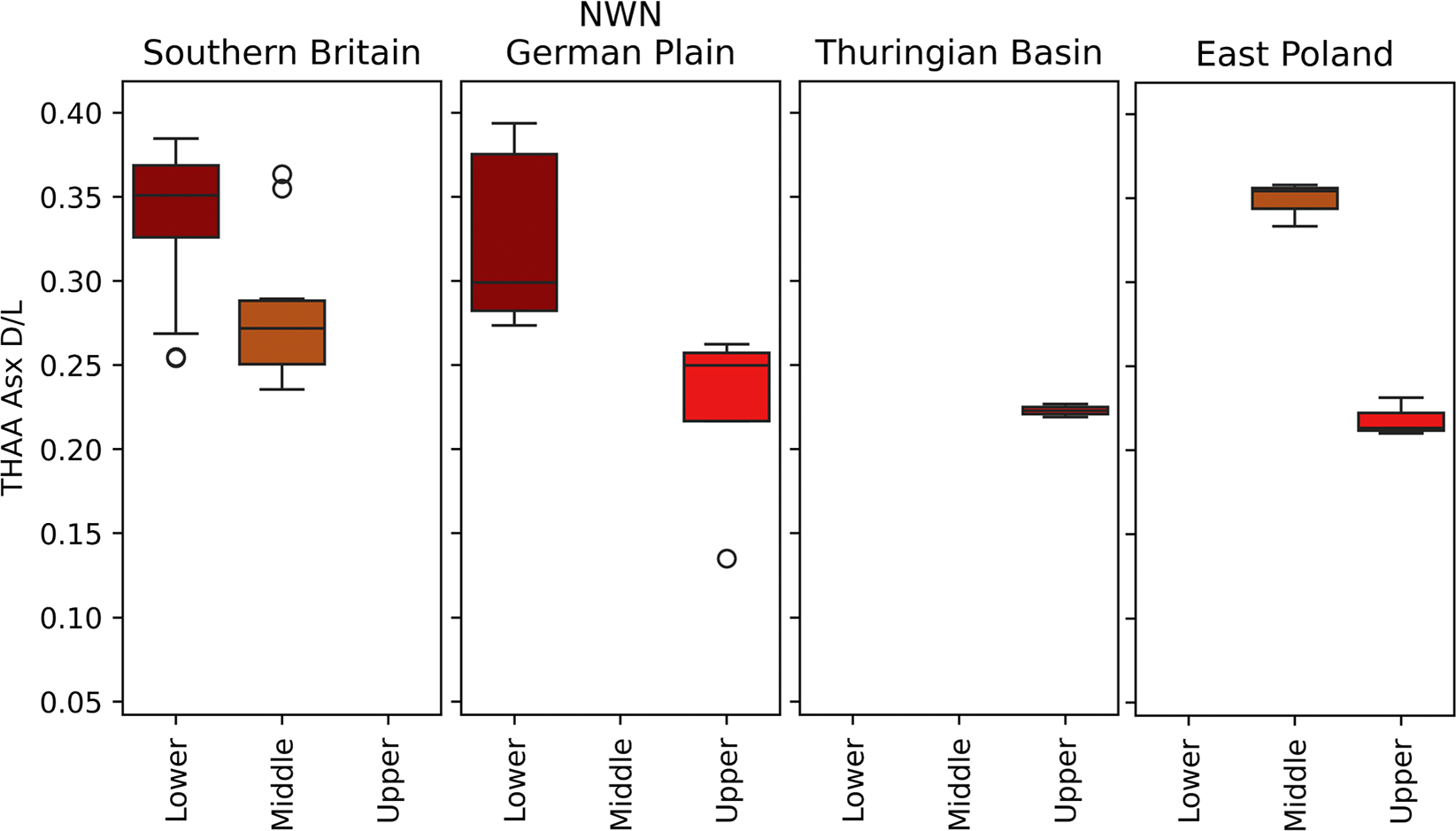
d4682e38-67d0-469b-b619-d8fa35ca7474_figure7.gif

Figure 7. The extent of THAA Asx d/ l for each Holocene substage for each region. A similar extent of IcPD is evident for all regions for material of this age, with higher d/ ls in earlier parts of the pollen successions and lower d/ ls for the youngest part of the interglacial. Substages of the Holocene are described in SI Table S1.

Holocene-aged opercula from east Poland come from Skołoszów and Piotrkowice. Skołoszów is the most southerly site in this aminostratigraphy (~300 km south of the nearest sites in the Podlasie Lowland and Western Polesie). The sedimentary horizon containing the opercula is associated with Atlantic stage pollen, placing this in the Middle Holocene. The extent of IcPD for the Skołoszów deposits is similar to levels of IcPD to the Lower Holocene age deposits from Britain and NE German Plain but higher than the Middle Holocene deposits from the British record (7.64 to 5 ka cal BP; e.g. Preece, 1998). This implies that either Skołoszów is older than the Middle Holocene, or it has been exposed to warmer temperatures throughout its burial history compared to the British Middle Holocene opercula. It is also possible that the level of resolution achieved by IcPD analysis is not sufficient to resolve the Middle and Lower Holocene. Further IcPD analyses of Holocene deposits across northern Europe are required before this can be determined.

In summary, it is possible to distinguish between Early and Late Holocene deposits with IcPD throughout northern Europe, but temporal resolution between the Early and Middle Holocene may not be possible.

4.2.2 Eemian

Eemian PZs have been defined across northern Europe and cover an approximately ~18,000-11,000-year period (e.g. Cohen & Gibbard, 2022; Lauterbach et al., 2024; Müller, 1974a; Sánchez Goñi, 2007). The subdivision of the PZs used here is described in SI 7.1: Table S2 and SI 7.3. Compared to the Holsteinian, the Eemian is characterised by a very uniform, and relatively rapid succession of pollen of temperate wooden taxa, with a Late-temperate expansion of Carpinus (e.g. Turner, 2000; Tzedakis, 2007).

Several of the horizons in this study can be correlated with a particular pollen zone within the Eemian ( Figure 8). In general, for the eastern North European Plain regional records, THAA Ala d/ l are highest in the earliest pollen stages and lowest in the latest pollen stages. Therefore, temporal resolution between the early and late stages of the interglacial is achievable with IcPD. Horizons from the British record only represent temperate conditions, and so we cannot test for any difference between the start and end of the interglacial. The range of d/ l values for the Polish Eemian tends to be lower than the German Eemian and British MIS 5e material, suggesting a slight temperature difference between the two areas. Differences in the extent of racemisation between MIS 5e deposits due to MAT difference along a latitudinal gradient has been observed along the Pacific Coast of North America (Wehmiller, 1982). In that region the 10° difference in latitude results in a ~ 10°C increase (~13.5 to 22°C) in present day MAT. The range of leucine d/ l values observed from MIS 5e deposits across the Pacific Coast region studied was ~0.4–0.7, rising in correlation with MAT. The difference in MAT is not so extreme between Britain and the North-East European Plain - in addition MATs are cooler than along the Pacific coast - therefore, the difference in the d/ l values is smaller.
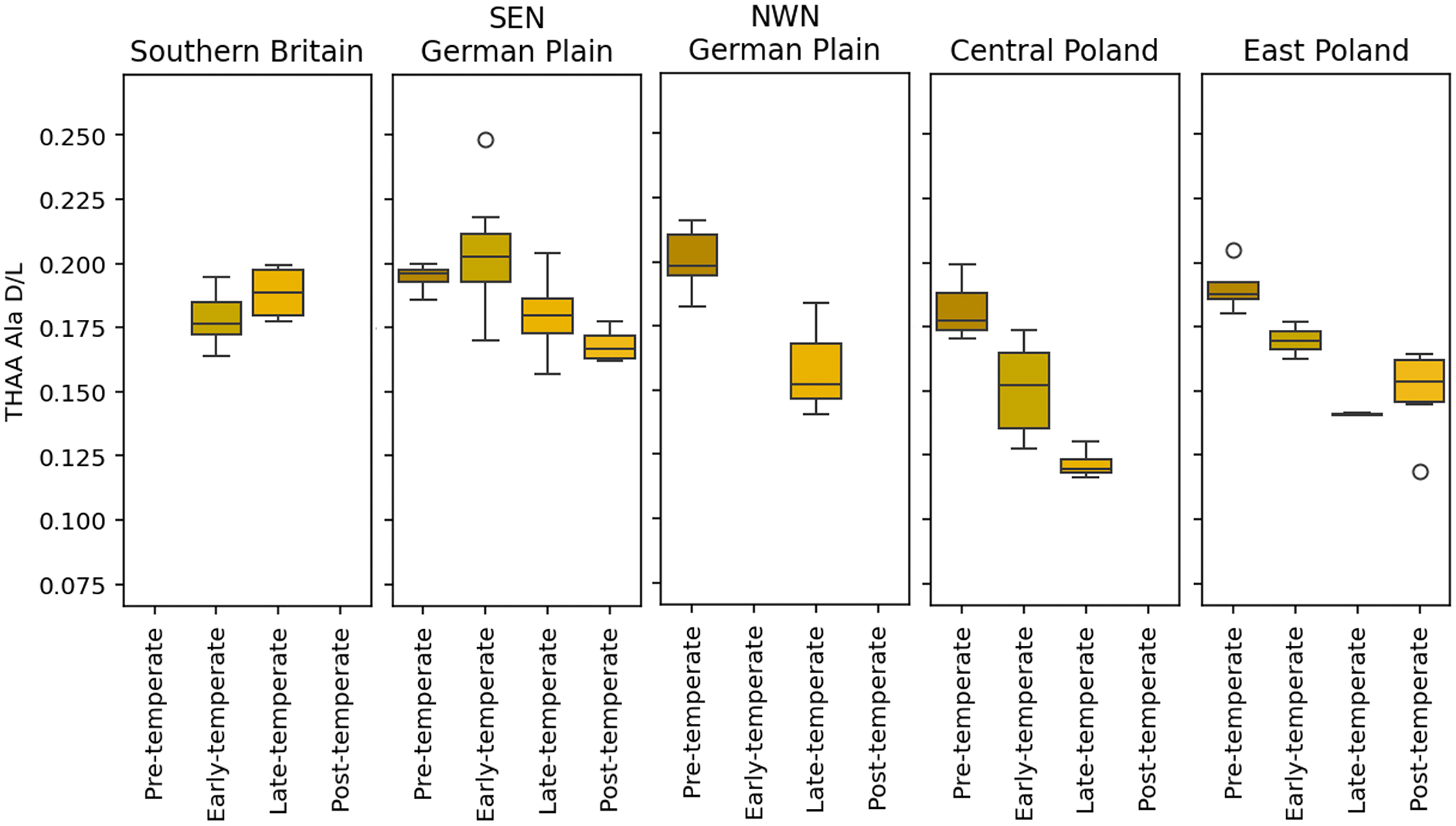
d4682e38-67d0-469b-b619-d8fa35ca7474_figure8.gif

Figure 8. The extent of THAA Ala d/ l for each Eemian biostratigraphic zone against longitude. d/ ls are higher for the earlier pollen stages (Pre-temperate/Early temperate) and lower for the later pollen stages (Late-temperate/Post-temperate) within this interglacial.

The range of THAA Ala d/ l values is lower for central and East Poland compared to the other regional aminostratigraphies. The range of IcPD values generally decreases from west to east.

IcPD can achieve temporal resolution between the two earliest Eemian temperate zones and the latest temperate zones for both Polish clusters. Resolution was also achieved between the Pre-temperate and Late-temperate zones associated with opercula from two sedimentary horizons in the Lichtenberg Li-BPa core. There is less resolution between the Eemian pollen zones for SEN Germain Plain. The degree of resolution achievable in the British record is uncertain as only the Early- and Late-temperate zones are represented. A possible explanation for this is that there is a larger difference in temperature between the peak of the Eemian Interglacial and the onset of the preceding cold stage in Poland than there was in the SEN German Plain. This demonstrates that it is possible to distinguish between the beginning and end of the Eemian Interglacial in the regions investigated here, and possibly to distinguish between individual pollen subzones in Poland.

4.2.3 Holsteinian

The Holsteinian and Hoxnian interglacials are characterised by their pollen sequence (Erd, 1970; Menke & Tynni, 1984; Selle, 1962; Turner, 1970; West, 1956; SI Table S3), with the dominance of Taxus and Quercetum mixtum elements in the Early-temperate phase, followed by the Late-temperate phase: Abies, Carpinus and Buxus dominated zone. In addition, Fagus, Abies, Celtis and Pterocarya are present in the final phase of the interglacial (e.g. Erd, 1970; Erd, 1973; Müller, 1974b; Turner & West, 1968). Evidence of the predominance of Abies during the climate optimum of both MIS 11 and MIS 9 is observed in continuous pollen sequences in the French record (e.g. Reille et al., 2000). In the German Holsteinian, Abies occurs together with Carpinus, however, in the Reinsdorf Interglacial pollen sequence (correlated with MIS 9) Carpinus dominates before Abies, the frequency of which varies depending on the location (Strahl, 2019; Urban, 1995; Urban et al., 2023; Wansa et al., 2022), suggesting the Holsteinian and Reinsdorf were not contemporaneous.

In general, d/ l values are slightly higher at the start of the interglacial and lower at the end of the Holsteinian Interglacial for each region ( Figure 9), but not such a substantial difference as is seen in the Eemian record (Section 2.2), which suggests IcPD struggles to yield such clear resolution for material of this age. Reduced temporal resolution for this point in time is also observed in the British aminostratigraphy, where opercula dated to late MIS 11 (e.g. Mark’s Tey; Trimingham, Elveden; Penkman et al., 2011, 2013 and references therein) cannot be resolved from early MIS 9 specimens (e.g. Shoeburyness, Purfleet, Grays; Penkman et al., 2011, 2013: Supplementary Data and references therein). It is possible that this could be due to the original stratigraphic attribution being incorrect. However, it is more likely due to two aspects: (i) the slowing/pausing of IcPD in the cold stages means that the end of one interglacial is hard to distinguish from the beginning of the next (Bates, 1993; Miller et al., 1999); and (ii) the initial racemisation rates are relatively fast, but as the d/ l values approach equilibrium, the curve flattens. Both of these factors means that the ability to discriminate between opercula associated with consecutive warm stages decreases as the protein becomes more degraded (e.g. Goodfriend, 1991; Kvenvolden et al., 1979; Kvenvolden et al., 1981; Wehmiller & Belknap, 1978). As a result, temporal resolution is poorer in older material.
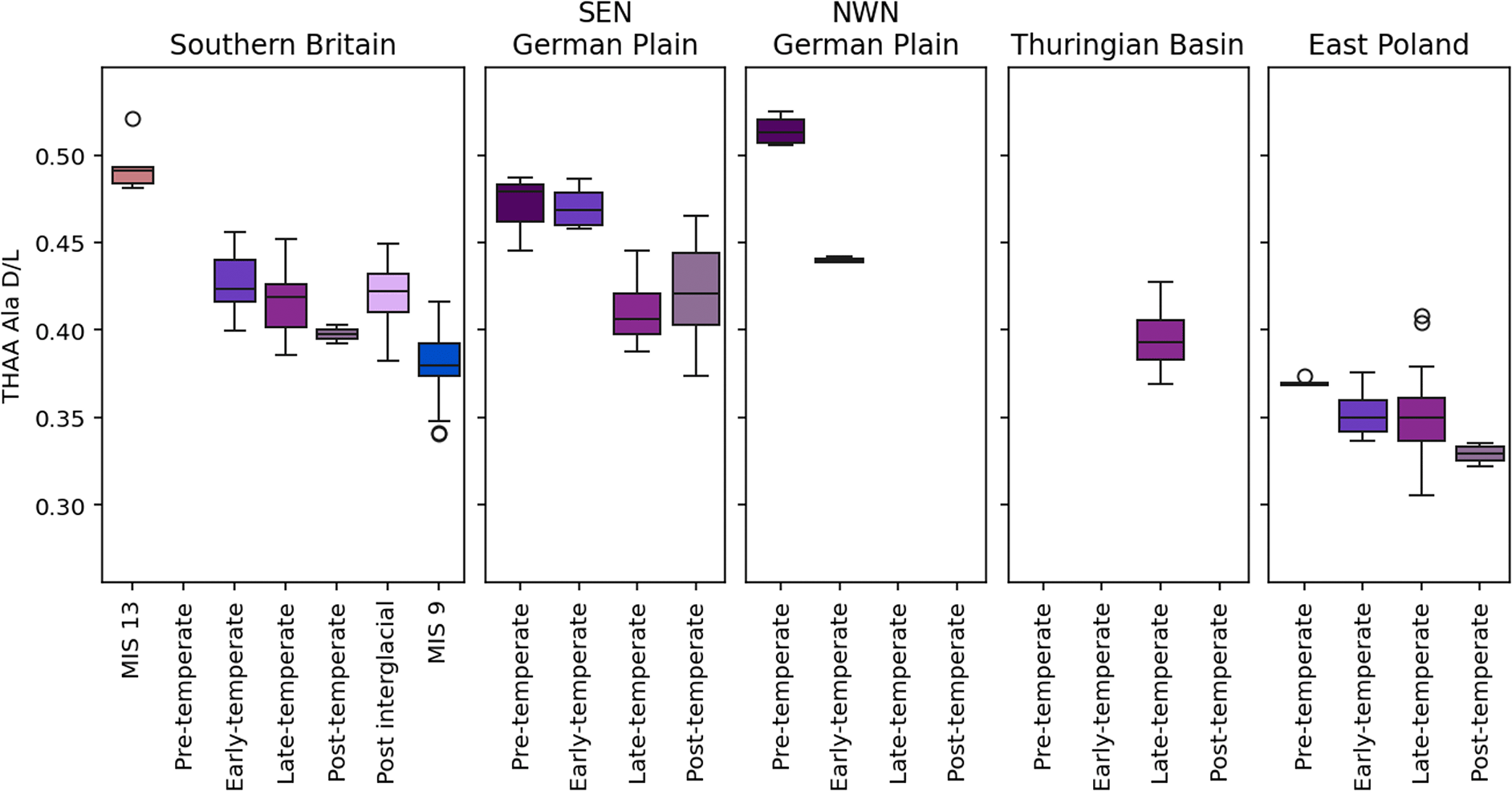
d4682e38-67d0-469b-b619-d8fa35ca7474_figure9.gif

Figure 9. The extent of THAA Ala d/ l for each Holsteinian biostratigraphic zone against longitude Generally, d/ ls are higher for the Pre-temperate phase compared to the Post-temperate phase of the Holsteinian but there is less resolution between pollen zones when compared to the Eemian. The range of IcPD values generally decreases from west to east.

The difference in regional mean d/ l values for the entire interglacial is greater than that observed for the Eemian IcPD results (Section 4.2.2). This is consistent with the longer exposure to the different burial temperatures having a greater effect on IcPD. This also aligns with observations of deeply-buried material (below 80 m depth) exposed to different burial temperatures (Nelson et al., 2024).

There is a larger than expected range of d/ l values for the Holsteinian sites from both sub-regions of the North German Plain record (Clusters 2&3). To determine why that is, the d/ l values for each vegetation sub-period have been compared to values from MIS 11 and MIS 9 in the British record ( Figure 9). In the British record there appears to be little temporal resolution between the different pollen stages within MIS 11, but on average d/ l values from MIS 11 sites are higher than those of MIS 9. In the North German Plain record, the highest d/ l values come from the sites of Vorketzin (Cluster 3) and Gorlosen (Cluster 2). The Vorketzin opercula were associated with pollen indicative of a transitional phase (PZ 1 (birch period) and early PZ 2 (pine-birch-spruce-alder period)), either at the beginning or end of a warm period (Meng, in pers. comms to E. Nelson; Strahl, in pers. comms to E. Nelson). IcPD results suggest that the beginning of the interglacial, when temperatures were still relatively cold, is more likely. Gorlosen is also associated with pollen assemblages from the Pre-temperate phase of the Holsteinian (PZ 1 and 2 sensu Erd, 1973). These opercula have similar d/ l values to those for MIS 13 in the British record (Waverley Wood; Penkman et al., 2013; Shotton et al., 1993) and the late Elsterian deposits at Uichteritz (Figure 4a). This suggests that it may not be possible to resolve the earliest phase of the Holsteinian from the preceding interglacial. However, as there are no deposits associated with MIS 13 from the NE German Plain, this cannot be confirmed.

IcPD for the Pre-temperate zone is generally higher than the temperate phase of the Holsteinian. The SEN German Plain Late-temperate and Post-temperate phases d/ l values are similar to that of the British MIS 11, but slightly higher than the temperate Holsteinian material from the Thuringian Basin (Bilzingsleben; Daniel & Frenzel, 2023; Erd, 1997; Schreve et al., 2002; Stahlschmidt et al., in prep).

For east Poland, the mean d/ l values for the beginning of the interglacial are higher than the final stages of the interglacial. However, there is a large range of d/ l values for the Post-temperate substage in east Poland & Lithuania, which may be due to reworked opercula within the Szymanowo 0.65 m horizon. On the basis of this limited dataset, it is not possible to temporally resolve each substage with IcPD. Generally, d/ l values for each vegetation sub-stage is lower in the Polish material compared to the NE German Plain, and lower than the range observed in the British material for most equivalent stages. This may be due to the lower extent of IcPD in this region, but may also hint that each warm stage lasted a shorter period of time than in Britain and Germany.
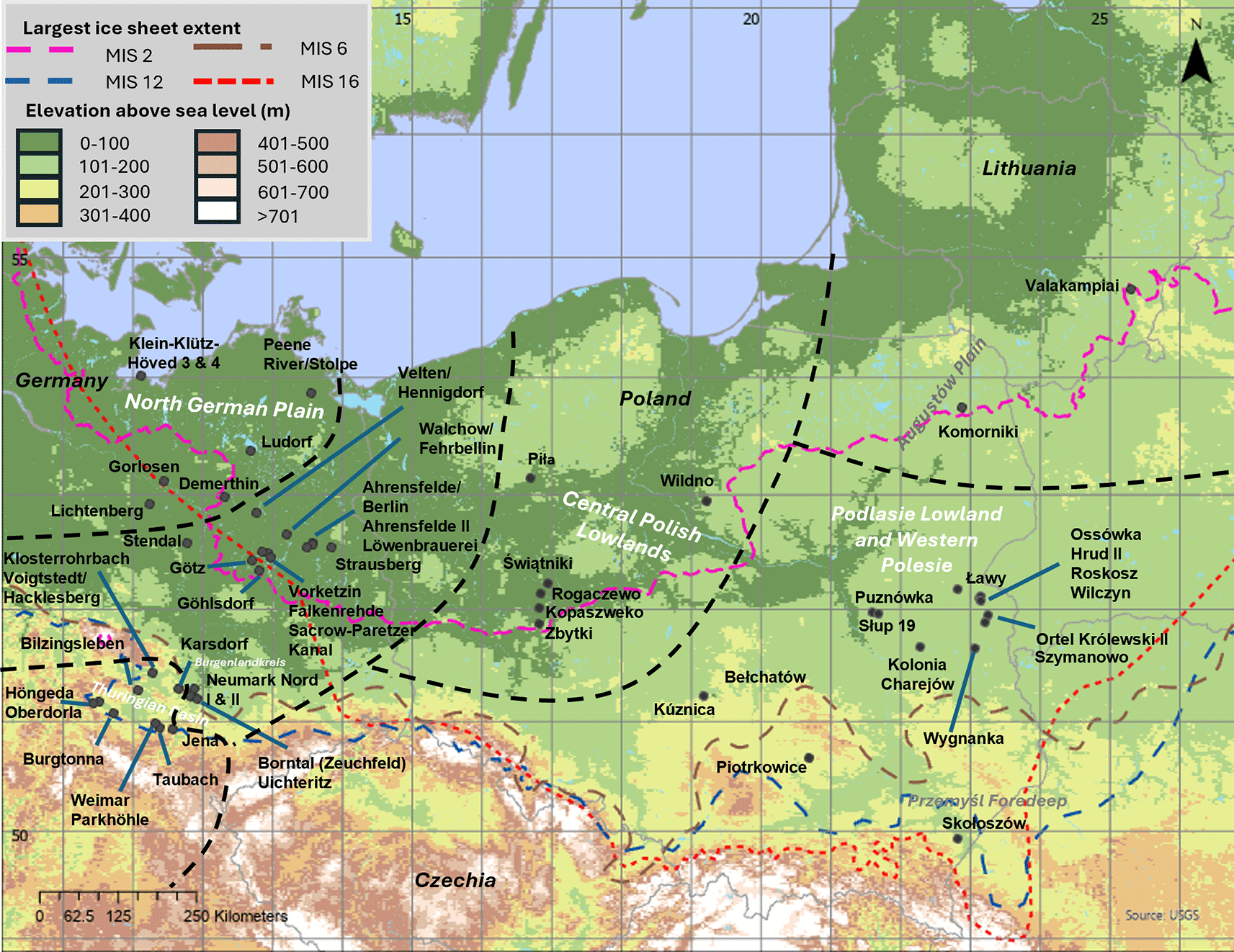
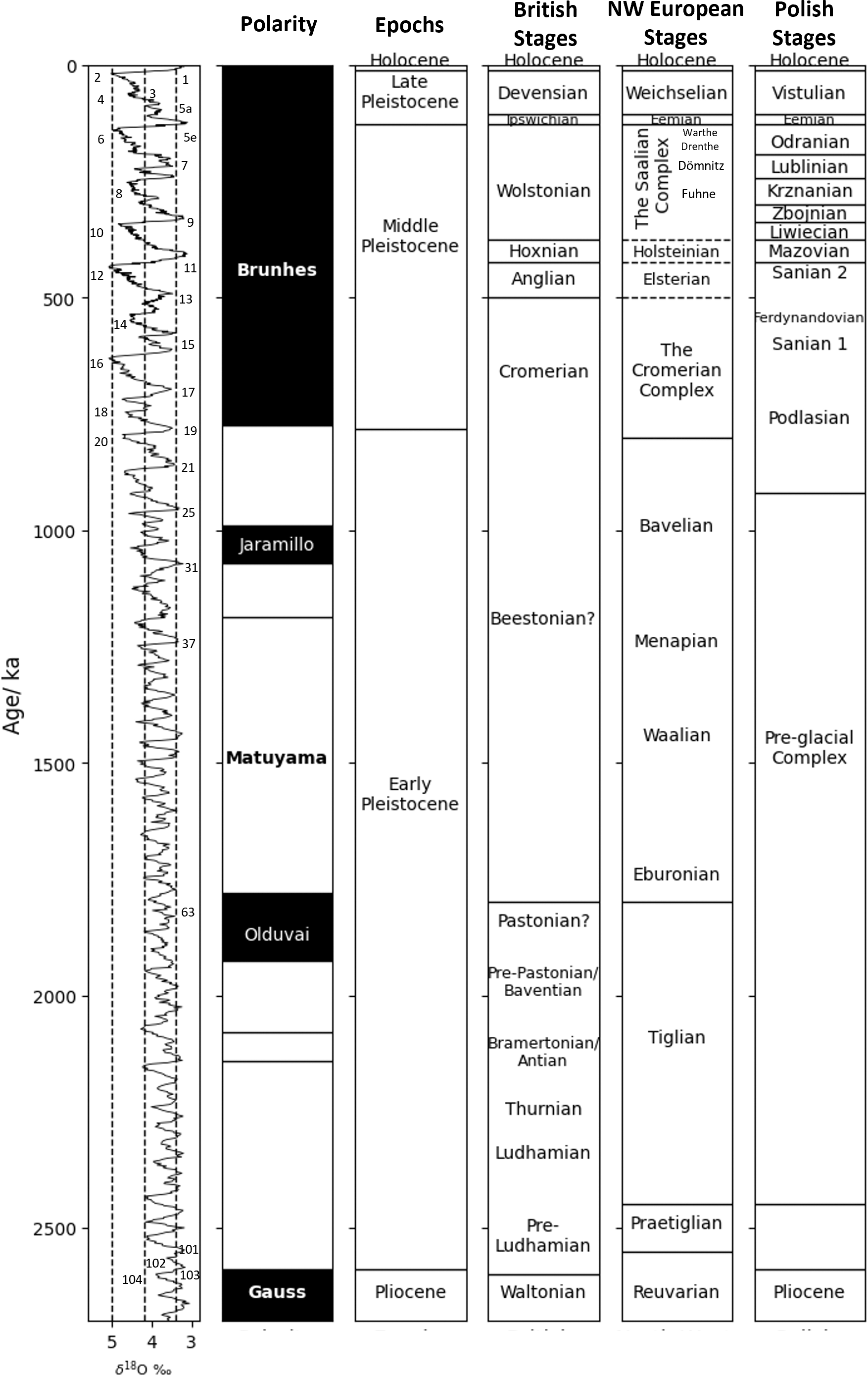
4.3 The possible causes of systematic differences in IcPD across the eastern North European Plain

The six aminostratigraphies were produced from opercula where the closed system of the intra-crystalline protein fraction was retained (e.g. Nelson et al., 2024, 2025a; Penkman et al., 2011, 2013, 2024; Preece et al., 2020; Tesakov et al., 2020). Therefore, the extent of IcPD will have been due to the time since biomineralisation of the operculum and its integrated burial temperature history. In this study, the extent of IcPD for opercula attributed to broadly concurrent regional chronological stages of the Quaternary were compared (e.g. Cohen & Gibbard, 2022; Szymanek & Julien, 2018). However, the sites included in the regional aminostratigraphies discussed here are located across a wide range of northern Europe (from Britain to Lithuania), with different research traditions and approaches involved in determining age attributions and correlations. Although much progress has been made in this field (e.g. Böse et al., 2012; Cohen & Gibbard, 2019; Cohen & Gibbard, 2022; Lauer & Weiss, 2018; Marks, 2023; Maul et al., 2013; Sier et al., 2011), age attributions may differ between regions, additionally some of the variability between individual frameworks may be because climate change has occurred asynchronously across Europe. Here, we have employed the current understanding of regional Quaternary chronostratigraphy correlations, but it is possible that future work may change some age attributions, which may explain some of the differences between and internal variability of the extent of IcPD from the six regional aminostratigraphies discussed here.

Some of the differences in the IcPD data can be explained by correlating the data with climate gradients across the study area. Generally, IcPD is higher for more westerly sites and lower for more easterly sites (Figure 5a). MAT (Figure 5b) and the mean number of days below 2°C per year (Figure 5d) (ERA5, 1991–2024) produced the strongest correlation with the IcPD data. Sites with warmer annual temperatures and shorter cold seasons generally produce higher levels of IcPD, so magnitude and duration of warmth is clearly important. This difference accumulates with age of the material.

In northern Europe, the climate transitions from an oceanic temperate climate in Britain to an increasingly continental climate with distance from the Atlantic Ocean, North and Baltic Seas (e.g. Mikolaskova, 2009; Stonevicius et al., 2018). It is likely that a marine-continental gradient occurred throughout the Quaternary, although due to changes in sea level (e.g. Barlow et al., 2017; Gibbard & Knudsen, 2024; Meng et al., 2022; Streif, 2004) and precipitation patterns (e.g. Koutsodendris et al., 2012; Kühl et al., 2007) this gradient will have varied over time. At present, the increasing continentality from west to east in northern Europe leads to more severe, colder winters but drier and slightly warmer summers in Poland compared to Britain ( Table 1; Figure 3). In addition, average temperatures drop below freezing for longer periods of time in more easterly areas compared to Britain, when it is likely that the rate of racemisation slows or pauses entirely (Miller et al., 2000). Should a similar trend in continentality have persisted throughout the Quaternary, where north-east Europe was exposed to cold conditions for longer periods of time (e.g. Osman et al., 2021), this may explain why lower levels of IcPD are observed in Poland when compared to Germany and the UK.

In addition, sub-surface factors may influence the extent of IcPD observed the deeper an operculum is buried. The conduction of geothermal heat through the lithosphere varies throughout continental Europe. In the study area, the highest surface heat flow occurs in the NE German Basin (between 69–70 mW m−2), and the lowest in NE Poland and Lithuania (37–46 mW m−2; Davies, 2013). This low heat flow density has resulted in, deep-seated relict permafrost (at least 93 m thick) still existing below a depth of 357 m (Szewczyk & Nawrocki, 2011; ~50 km north of Komorniki, Augustów Plain). The intensity, thickness and persistence of permafrost following each glacial stage will have played an important role in the burial temperatures that opercula were exposed to. Reconstructing permafrost is challenging, but this evidence of relict permafrost due to low heat flow density in north-east Poland may also account for the lower extents of IcPD observed in the east Poland aminostratigraphy.

Future work should explore the effects of different variables that influence the integrated burial temperature, and therefore the influence of burial temperatures on IcPD. This will assist with the cross-correlation of different regional IcPD frameworks, helping to link these together in a broader European aminostratigraphic framework.

5. Conclusions

In this study, six new sub-regional aminostratigraphic frameworks have been defined and presented for the eastern North European Plain, expanding the range of the IcPD dating method to new geographical areas. Each sub-regional aminostratigraphy was constrained by defining clusters of sites that had similar average annual temperatures and seasonal conditions using modern instrumental records of climate, assuming this is indicative that the sites will have experienced similar integrated temperatures throughout the Quaternary. All aminostratigraphies show that IcPD is able to provide useful temporal resolution, with the potential to extend beyond 1 Ma. Central Poland includes material from the Miocene and demonstrates that a closed system can be retained in opercula of this age. IcPD analysis has constrained the age of several sites with poor chronological control and suggests that the previous age attributions of seven sites need to be revised and/or refined to a smaller time window within the Quaternary.

Correlation of opercula with regional pollen assemblages for interglacials from the last 500 ka has shown that in general, IcPD can distinguish between the beginning and end of an interglacial for the Holocene, Eemian and Holsteinian interglacials, but not individual pollen zones. Temporal resolution within an interglacial was higher for the Holocene and Eemian compared to the Holsteinian, likely due to decreasing rates in IcPD in older material (e.g. Goodfriend, 1991; Kvenvolden et al., 1979, 1981; Wehmiller & Belknap, 1978).

Systematic differences in IcPD were observed between sites assumed to be similar in age for the Polish Mazovian, German Holsteinian and British Hoxnian (typically attributed to MIS 11). In general, IcPD was lower for Polish and Thuringian Basin material, whereas levels of IcPD within the two German regions were more similar to that observed for MIS 11 and MIS 9 sites in Britain. This suggests that central and east Poland and the Thuringian Basin have been on average colder throughout the Quaternary compared to the North German Plain and Britain. This meets expectations if trends in MAT and seasonality across northern continental Europe followed those observed today (e.g. Hersbach et al., 2020). The range of IcPD values for the Holsteinian in both sub-regions of the North German Plain was greater than observed for both the British MIS 11 and MIS 9 sites. Additional evidence of age is required to confirm correlations of the Holsteinian with the MIS record. We therefore highlight the importance of developing regional aminostratigraphies (as demonstrated here), so that further independent evidence of age in these regional relative chronologies can be tied together. These regional frameworks can be defined by determining the areas that are likely to have experienced a similar temperature history throughout the Quaternary. This study has also demonstrated how differences in climate regimes over continental land masses at similar latitudes (51–53°N) can result in systematic differences in IcPD, which increases with increasing age of material. This is likely a result of increasing degree of continentality from west to east, potentially resulting in the persistence of colder conditions for longer in more easterly material. Future work should attempt to disentangle the relationship between integrated burial temperatures as a result of varying climate, with the aim of being able to correct for temperature differences. This will allow for cross-correlation of IcPD dating frameworks across northern Europe.

Ethics and consent

Ethical approval and consent were not required.

Data and software availability

Underlying data

The underlying data has been deposited in the Zenodo Repository:

10.5281/zenodo.19950377 (Nelson & Penkman, 2026).

This project contains the following underlying data:

1. Sample Information Table_v2: Context of the opercula used in this study. Including lab information, correlated independent chronology, and pollen zones.

2. Supplementary information_v2:

  • a. Pollen zones: description of pollen zonation schemes used for opercula deposits

  • b. IcPD analysis: extended methodology

  • c. Supplementary Figures

    3. Supplementary data file: Sheet 1 – Eastern North European Plain IcPD data, Sheet 2 – pollen zones correlated with opercula samples where both types of fossils were present in a sedimentary horizon.

    4. Code availability: Python scripts used for the data analysis.

Data are available under the terms of the Creative Commons Zero “No rights reserved” data waiver (CC01.0 Public domain dedication).

Source data

The British aminostratigraphy data and site information has been sourced from:

Penkman, K.E.H., Preece, R.C., Bridgland, D.R., Keen, D.H., Meijer, T., Parfitt, S.A., White, T.S., Collins, M.J., 2011. A chronological framework for the British Quaternary based on Bithynia opercula. Nature 476, 446–449. doi: 10.1038/nature10305: Supplementary Data 1–2.

Penkman, K.E.H., Preece, R.C., Bridgland, D.R., Keen, D.H., Meijer, T., Parfitt, S.A., White, T.S., Collins, M.J., 2013. An aminostratigraphy for the British Quaternary based on Bithynia opercula. Quaternary Science Reviews 61, 111–134. doi: 10.1016/j.quascirev.2012.10.046: Supplementary Material.

Data are available under the terms of the Creative Commons Zero “No rights reserved” data waiver (CC01.0 Public domain dedication).

Copyright: © 2025 Nelson E.F. et al. This is an open access work distributed under the terms of the Creative Commons Attribution License, which permits unrestricted use, distribution, and reproduction in any medium, provided the original work is properly cited.

Acknowledgements

We would like to thank Lutz Maul, Gerald Utschig, Tom Meijer, Thomas Daniel, Irena Agnieszka Pidek, Marcin Żarski, Lucyna Wachecka-Kotkowska, Dariusz Krzyszowski, Dariusz Wieczorek, Ewa Stworzewicz and Richard Preece for providing samples for this study. We would also like to thank members of the NEaar Lab, University of York, for their support within the laboratory and writing this paper. We likewise would like to thank the other members of the EQuaTe project and the members of the advisory board for their support.

References

  •  Albrycht A, Bińka K, Brzezina R, et al.:Uwagi o nowych stanowiskach osadów interglacjalnych na tle stratygrafii młodszego czwartorzędu południowego (Polish). Przegl Geol. 1997; 45(6): 629–634. Reference Source
  •  Alder J:Supplement to a catalogue of the land and fresh-water Testaceous Mollusca, found in the vicinity of Newcastle. Trans Nat Hist Soc Northumb Durham Newcastle Upon Tyne. 1838; 2: 337–342. Reference Source
  •  Alexandrowicz SW:Malacofauna of the Eemian interglacial in the Leszno-Lake District. Folia Quatern. 1994; 65: 129–142.
  •  Alexandrowicz SW:Bithynia tentaculata (LINNAEUS, 1758) as an indicator of age and deposition environment of quaternary sediments. Folia Malacol. 1999; 7(2): 79–88. Publisher Full Text
  •  Alexandrowicz SW, Alexandrowicz WP:Molluscs of the Eemian interglacial in Poland. Ann Soc Geol Pol. 2010; 80(1): 69–87. Reference Source
  •  Alexandrowicz WP, Mirosław-Grabowska J, Badura J:Eemian paleoenvironment based on the freshwater malacofauna and isotope record (Piła site; North-western Poland). Quat Int. 2024; 686(687): 35–48. Publisher Full Text
  •  Ashton N, Lewis SG, Parfitt SA, et al.:New evidence for complex climate change in MIS 11 from Hoxne, Suffolk, UK. Quat Sci Rev. 2008; 27(7–8): 652–668. Publisher Full Text
  •  Bada JL, Shou MY, Man EH, et al.:Decomposition of hydroxy amino acids in foraminiferal tests; kinetics, mechanism and geochronological implications. Earth Planet Sci Lett. 1978; 41(1): 67–76. Publisher Full Text
  •  Baltrūnas V, Karmaza B, Pukelytė V, et al.:Pleistocene architecture and stratigraphy in the contact zone of ice streams and lobes in the South-Eastern part of the Baltic Region. Quat Int. 2019; 501: 21–32. Publisher Full Text
  •  Baltrūnas V, Maksimov FE, Kuznetsov VY, et al.:Geochronology and palaeomagnetic records of the Snaigupėlė section in South Lithuania. Geochronometria. 2015; 42(1): 172–181. Publisher Full Text
  •  Barlow NLM, Long AJ, Gehrels WR, et al.:Relative sea-level variability during the late Middle Pleistocene: new evidence from Eastern England. Quat Sci Rev. 2017; 173: 20–39. Publisher Full Text
  •  Batchelor CL, Margold M, Krapp M, et al.:The configuration of Northern Hemisphere ice sheets through the quaternary. Nat Commun. 2019; 10(1): 3713. PubMed Abstract | Publisher Full Text | Free Full Text
  •  Bates MR:Quaternary aminostratigraphy in Northwestern France. Quat Sci Rev. 1993; 12(9): 793–809. Publisher Full Text
  •  Beck HE, Zimmermann NE, McVicar TR, et al.:Present and future Köppen-Geiger climate classification maps at 1-km resolution. Sci Data. 2018; 5: 180214. PubMed Abstract | Publisher Full Text | Free Full Text
  •  Behm-Blancke G: Altsteinzeitliche Rastpläze im Travertingebiet von Taubach, Weimar, Ehringsdorf (German) :Böhlau;1960. Publisher Full Text
  •  Behre KE, Lade U:Eine Folge von Eem und 4 Weichsel-Interstadialen in Oerel/Niedersachsen und ihr Vegetationsablauf (German). E G Quat Sci J. 1986; 36(1): 11–36. Publisher Full Text
  •  Ber A:Geological situation of Augustovian (Pastonian) Interglacial lake sediments at Szczebra near Augustow and Mazovian Interglacial organogenic sediments at Krzyzewo. Biul Panstw Inst Geol. 1996; 373: 35–48.
  •  Ber A:Pleistocene interglacials and glaciations of Northeastern Poland compared to neighbouring areas. Quat Int. 2006; 149(1): 12–23. Publisher Full Text
  •  Ber A, Janczyk-Kopikowa Z, Krzyszkowski D:A new interglacial stage in Poland (Augustovian) and the problem of the age of the oldest Pleistocene till. Quat Sci Rev. 1998; 17(8): 761–773. Publisher Full Text
  •  Bertelsen F:Azolla species from the Pleistocene of the Central North Sea Area. Grana. 1972; 12(3): 131–145. Publisher Full Text
  •  Bińka K, Lindner L, Nitychoruk J:Geologic floristic setting of the Mazovian Interglacial sites in Wilczyn and Lipnica in Southern Podlasie (Eastern Poland) and their palaeogeographic connections. Geol Quart. 1997; 41(3): 381–394. Reference Source
  •  Bińka K, Nitychoruk J:Mazovian (Holsteinian) lake sediments at Woskrzenice near Biała Podlaska. Geol Quart. 1995; 39(1): 109–120. Reference Source
  •  Birks HJB, Seppä H:Late-Quaternary palaeoclimatic research in Fennoscandia – a historical review. Boreas. 2010; 39(4): 655–673. Publisher Full Text
  •  Bittman F, Börner A, Doppler G, et al.:Die Stratigraphische Tabelle von Deutschland 2016 (STD 2016) (German). zdgg. 2018; 169(2): 295–306. Publisher Full Text
  •  Boettger CR:Zoogeographische Betrachtungen über die europäischen Süß wasserschnecken der Gattung Viviparus Montfort (German). Arch Molluskenkd. 1955; 84(1/3): 87–95. Reference Source
  •  Börner A, Gehrmann A, Hüneke H, et al.:The Quaternary sequence of Mecklenburg-Western Pomerania: areas of specific interest and ongoing investigations. DEUQUA Special Publications. 2019; 2: 1–10. Publisher Full Text
  •  Böse M, Lüthgens C, Lee JR, et al.:Quaternary glaciations of Northern Europe. Quat Sci Rev. Quaternary Glaciation History of Northern Europe. 2012; 44: 1–25. Publisher Full Text
  •  Bratlund B:Taubach revisited. Jahrb Romisch-German Zentralmus Mainz. 1999; 46: 61–174. Publisher Full Text
  •  Brewer S, Guiot J, Sánchez-Goñi MF, et al.:The climate in Europe during the Eemian: a multi-method approach using pollen data. Quat Sci Rev. 2008; 27(25–26): 2303–2315. Publisher Full Text
  •  Bridgland DR: Quaternary of the Thames. Dordrecht:Springer Netherlands;1994. Publisher Full Text
  •  Bridgland DR, Preece RC, Roe HM, et al.:Middle Pleistocene interglacial deposits at Barling, Essex, England: evidence for a longer chronology for the Thames terrace sequence. J Quat Sci. 2001; 16(8): 813–840. Publisher Full Text
  •  Bridgland DR, Schreve DC, Keen DH, et al.:Biostratigraphical correlation between the late quaternary sequence of the Thames and key fluvial localities in central Germany. Proc Geol Assoc. 2004; 115(2): 125–140. Publisher Full Text
  •  Brömme C:Die Conchylien-Fauna des Mosbacher Diluvialsandes. Jahrb Nassauischen Vereins Naturkd. 1885; 38: 72–80. Reference Source
  •  Brunnacker K, Jäger K, Hennig G, et al.:Radiometrische Untersuchungen zur Datierung mitteleuropäischer Travertinvorkommen (German). Ethnographisch-Archaeologische Zeitschrift (EAZ). 1983: 217–266.
  •  Candy I, Tye G, Coxon P, et al.:A tephra-based correlation of Marine and terrestrial records of MIS 11c from Britain and the North Atlantic. J Quat Sci. 2021; 36(7): 1149–1161. Publisher Full Text
  •  Cheddadi R, Mamakowa K, Guiot J, et al.:Was the climate of the Eemian stable? A quantitative climate reconstruction from seven European pollen records. Palaeogeogr Palaeoclimatol Palaeoecol. 1998; 143(1–3): 73–85. Publisher Full Text
  •  Cloetingh S, van Wees JD , Ziegler PA, et al.:Lithosphere tectonics and thermo-mechanical properties: an integrated modelling approach for Enhanced Geothermal Systems exploration in Europe. Earth Sci Rev. 2010; 102(3–4): 159–206. Publisher Full Text
  •  Cohen K, Gibbard P:Global chronostratigraphical correlation table for the last 2.7 million years v.2019 (Poster version).2022. Publisher Full Text
  •  Cohen KM, Gibbard PL: Global chronostratigraphical correlation table for the last 2.7 million years, version 2019 QI-500. Quat Int. SI: Quaternary International.2019;500: 20–31. Publisher Full Text
  •  Conti MLG, Butler PG, Reynolds DJ, et al.:A new method for amino acid geochronology of the shell of the bivalve mollusc Arctica islandica. Geochronology. 2024; 6(2): 175–198. Publisher Full Text
  •  Cyrek K, Sudoł M, Czyżewski Ł, et al.:Middle Palaeolithic cultural levels from Middle and Late Pleistocene sediments of Biśnik Cave, Poland. Quat Int. 2014; 326(327): 20–63. Publisher Full Text
  •  Daniel T, Frenzel P:Pleistocene freshwater ostracods from the Homo erectus site at Bilzingsleben, Germany—Review of historic collection and unpublished manuscript material for palaeoenvironmental reconstruction. Geoarchaeology. 2023; 38(4): 445–465. Publisher Full Text
  •  Danielson J, Gesch D: Global multi-resolution terrain elevation data 2010 (GMTED2010) (Report No. 2011–1073), Open-File Report. 2011. Publisher Full Text
  •  Davies JH:Global map of solid Earth surface heat flow. Geochem Geophys Geosyst. 2013; 14: 4608–4622. Publisher Full Text
  •  Dzierżek J, Szymanek M:Interplenivistulian (MIS 3) environmental changes recorded in sub-till lake deposits at Wildno, Dobrzyń Lakeland (Polish Lowland). Quat Int. 2013; 294: 99–107. Publisher Full Text
  •  Ehlers J, Eissmann L, Lippstreu L, et al.: Pleistocene glaciations of North Germany. In:Ehlers J, Gibbard PL, editors. Developments in quaternary sciences, quaternary glaciations extent and chronology. Elsevier, 2004;2. (Part 1): 135–146. Publisher Full Text
  •  Ehlers J, Grube A, Stephan HJ, et al.: Chapter 13 - Pleistocene Glaciations of North Germany—New Results. In:Ehlers J, Gibbard PL, Hughes PD, et al., editors. Developments in quaternary sciences, quaternary glaciations - extent and chronology. Vol. 15.Elsevier, 2011; pp. 149–162. Publisher Full Text
  •  Eissmann L: Leitfaden der Geologie des Präquartärs im Saale-Elbe Gebeit (German). In: Eissmann L, Litt T, editors. Das Quartär Mitteldeutschlands. Ein Leitfaden und Exkursionsführer mit einer Übersicht über das Präquartär des Saale-Elbe-Gebietes . Vol. 7. Altenburger Naturwissenschaftliche Forschungen, Altenburg,1994; pp. 11–53.
  •  Endtmann E, Meng S, Rappsilber I, et al.:Die Forschungsbohrung Klosterrohrbach in der Helme-Niederung bei Sangerhausen - Interdisziplinäre Untersuchungen an Sedimenten aus dem oberen Mittelpleistozän (German). Brandenburg Geowiss Beitr. 2024; 31: 113–114. Reference Source
  •  Erd K:Pollen-analytical classification of the Middle Pleistocene in the German Democratic Republic. Palaeogeogr Palaeoclimatol Palaeoecol Geology and Fauna of the Lower and Middle Pleistocene. 1970; 8(2–3): 129–145. Publisher Full Text
  •  Erd K:Pollenanalytische Gliederung des Pleistozäns der Deutschen Demokratischen Republik (German). Z Geol Wiss. 1973; 1: 1087–1103.
  •  Erd K: Pollenanalytische Datierung des Seekalk/Fundhorizonts von Bilzingsleben (German). In: Mania D, Mania U, Heinrich W-D, et al., editors.Bilzingsleben V. Homo erectus - seine Kultur und Umwelt. Zum Lebensbild des Urmenschen & Verlag Ausbildung + Wissen, Bad Homburg, Leipzig,1997; 107–111.
  •  Gaigalas A, Fedorowicz S, Melesyte M:TL dates of aquatic sandy sediments of Middle-Upper Pleistocene in Lithuania. Geologija. 2005; 51: 39–49. Reference Source
  •  Gaigalas AJ, Arslanov KA, Maksimov FE, et al.:Uranium-Thorium isochron dating results of penultimate (Late Mid-Pleistocene interglacial in Lithuania from Mardasavas site). Geologija. 2007; 57: 21–29. Reference Source
  •  Gamisch A:Oscillayers: a dataset for the study of climatic oscillations over Plio-Pleistocene time-scales at high spatial-temporal resolution. Glob Ecol Biogeogr. 2019; 28(11): 1552–1560. PubMed Abstract | Publisher Full Text | Free Full Text
  •  Gegg L, Jacob L, Moine O, et al.:Climatic and tectonic controls on deposition in the Heidelberg Basin, Upper Rhine graben, Germany. Quat Sci Rev. 2024; 345: 109018. Publisher Full Text
  •  Geyh MA, Müller H:Numerical 230Th/U dating and a palynological review of the Holsteinian/Hoxnian interglacial. Quat Sci Rev. 2005; 24(16–17): 1861–1872. Publisher Full Text
  •  Geyh MA, Müller H: 26. Palynological and geochronological study of the Holsteinian/Hoxnian/Landos interglacial. In: Developments in quaternary sciences. Elsevier, 2007;7. : 387–396. Publisher Full Text
  •  Gibbard PL, Knudsen KL:The Eemian stage interglacial marine transgression in the south-western Baltic region. E&G Quaternary Sci J. 2024; 73(2): 217–237. Publisher Full Text
  •  Goodfriend GA:Patterns of racemization and epimerization of amino acids in land snail shells over the course of the Holocene. Geochim Cosmochim Acta. 1991; 55(1): 293–302. Publisher Full Text
  •  Gorczyński L: THE CALCULATION OF THE DEGREE OF CONTINENTALITY.1. Mon Wea Rev. 1922; 50: 370. Publisher Full Text
  •  Górecki A, Żarski M, Drzewicki W, et al.:New climatic oscillations during MIS 11c in the record of the Skrzynka II site (Eastern Poland) based on palynological and isotope analysis. Quat Int. 2022; 632: 4–20. Publisher Full Text
  •  Götze A:Die palaeolithische Fundstelle in Taubachbei Weimar (German). Z Ethnol. 1892; 24: 366–377.
  •  Govin A, Capron E, Tzedakis PC, et al.:Sequence of events from the onset to the demise of the last interglacial: evaluating strengths and limitations of chronologies used in climatic archives. Quat Sci Rev. 2015; 129: 1–36. Publisher Full Text
  •  Hajdas I, Ascough P, Garnett MH, et al.: Radiocarbon dating. Nat Rev Methods Primers. 2021; 1: 62. Publisher Full Text
  •  Harmon RS, Głazek J, Nowak K:230Th/234U dating of travertine from the Bilzingsleben archaeological site. Nature. 1980; 284: 132–135. Publisher Full Text
  •  Hearty PJ, Aharon P:Amino acid chronostratigraphy of late Quaternary coral reefs: Huon Peninsula, New Guinea, and the Great Barrier Reef, Australia. Geology. 1988; 16(7): 579–583. Publisher Full Text
  •  Hein M, Kasper T, Theuerkauf M, et al.: Towards an ‘absolute’ timing of biostratigraphic and environmental phases from the Saalian Late Glacial to the Weichselian Pleniglacial in Central Europe - Insights from a lacustrine sequence in Lichtenberg, Northern Germany. Boreas. 2026 (accepted, in press).
  •  Hermsdorf N, Strahl J:Karte der Eem-Vorkommen des Landes Brandenburg (German). Brandenburg geowiss Beitr. 2008; 15: 23–55. Reference Source
  •  Hersbach H, Bell B, Berrisford P, et al.:The ERA5 global reanalysis. Q J R Meteorol Soc. 2020; 146(730): 1999–2049. Publisher Full Text
  •  Hill RL: Hydrolysis of Proteins. Adv Protein Chem. Elsevier,1965;20: 37–107. PubMed Abstract | Publisher Full Text
  •  Horne DJ, Ashton N, Benardout G, et al.:A terrestrial record of climate variation during MIS 11 through multiproxy palaeotemperature reconstructions from Hoxne, UK. Quat Res. 2022; 111: 21–52. Publisher Full Text
  •  Hrynowiecka A, Żarski M, Jakubowski G, et al.:Eemian and Vistulian (Weichselian) paleoenvironmental changes: a multi-proxy study of sediments and mammal remains from the Ławy paleolake (Eastern Poland). Quat Int. 2018; 467: 131–146. Publisher Full Text
  •  Hutson JM, Bittmann F, Fischer P, et al.:Revised age for Schöningen hunting spears indicates intensification of Neanderthal cooperative behaviour around 200,000 years ago. Sci Adv. 2025; 11(19): eadv0752. Publisher Full Text
  •  Janczyk-Kopikowa Z:Temperate stages of the meso-Pleistocene in NE Poland. Biul Panstw Inst Geol. 1996; 373: 49–66.
  •  Johansen AC: Om den fossile kvartaere Molluskfauna i Danmark (Danish) Kobenhavn, Denmark. (Danish):Nordisk Forlag;1904.
  •  Jöris O, Baales M: Zur Alterstellung der Schöninger Speere (German). In: Burdukiewicz JM, Fiedler L, Heinrich W-D, Justus A, Brühl E, et al., editors. Erkenntnisjäger - Kultur und Umwelt des frühen Menschen (Festschrift für Dietrich Mania). Veröffentlichungen des Landesamts für Archäologie Sachsen-Anhalt, Halle/Saale, 2003;57. : 281–288. Reference Source
  •  Kahlke HD, editor: Das Pleistozän von Voigtstedt (German). Paläontologische Abhandlungen, A II (2/3), 221–692 + 40 plates, Berlin, 1965.
  •  Kahlke HD, editor: Das Pleistozän von Süßenborn (German).Paläontologische Abhandlungen, A III (3/4), 367–788 + 66 plates, Berlin, 1969. Reference Source
  •  Kahlke HD: Das Pleistozän von Weimar-Ehringsdorf (German). Teil 1. vol. 21. Berlin:Abhandlungen des Zentralen Geologischen Instituts, Paläontologische Abhandlungen;1974; pp. 1–351. Reference Source
  •  Kahlke HD: Das Pleistozän von Weimar-Ehringsdorf (German). Teil 2. vol. 23. Berlin:Abhandlungen des Zentralen Geologischen Instituts, Paläontologische Abhandlungen;1975; pp. 1–596. Reference Source
  •  Kahlke HD: Das Pleistozän von Taubach bei Weimar (German). vol. 2. Berlin:Quatärpaläontologie;1977; pp. 1–509.
  •  Kahlke HD: Das Pleistozän von Burgtonna in Thüringen (German). vol. 3. Berlin:Quatärpaläontologie;1978; pp. 1–399.
  •  Kahlke HD: Das Pleistozän von Weimar (German). Die Travertine im Stadtgebiet. vol. 5. Berlin:Quatärpaläontologie;1984; pp. 1–432.
  •  Kahlke RD: The quaternary large mammal faunas of Thuringia (Central Germany). In: Meyrick R, Schreve DC, editors. The quaternary of Central Germany (Thuringia and surroundings) field guide. Quaternary Research Association, 2002; pp. 59–78.
  •  Kaufman DS, Manley WF:A new procedure for determining dl amino acid ratios in fossils using reverse phase liquid chromatography. Quat Sci Rev. 1998; 17(11): 987–1000. Publisher Full Text
  •  Kennedy GL, Lajoie KR, Wehmiller JF:Aminostratigraphy and faunal correlations of late Quaternary Marine terraces, Pacific Coast, USA. Nature. 1982; 299: 545–547. Publisher Full Text
  •  Khursevich G, Nita M, Ber A, et al.:Palaeoenvironmental and climatic changes during the Early Pleistocene recorded in the lacustrine-boggy-fluvial sediments at Komorniki, NE Poland. Pol Geol Inst Spec Pap. 2005; 16: 35–44. Reference Source
  •  Kondratienė O: The interglacial deposits in the vicinities of Valakampiai and Buivydžiai. In: Scientific Reports (in Lithuanian) , Vilnius,1959; 10: 151–158.
  •  Kondratienė O, Damušytė A:Pollen biostratigraphy and environmental pattern of Snaigupėlė interglacial, Late middle Pleistocene, western Lithuania. Quat Int. 2009; 207(1–2): 4–13. Publisher Full Text
  •  Kosnik MA, Kaufman DS:Identifying outliers and assessing the accuracy of amino acid racemization measurements for geochronology: II. Data screening. Quat Geochronol. 2008; 3(4): 328–341. Publisher Full Text
  •  Kossiakoff AA:Tertiary structure is a principal determinant to protein deamidation. Science. 1988; 240(4849): 191–194. PubMed Abstract | Publisher Full Text
  •  Koutsodendris A, Pross J, Müller UC, et al.:A short-term climate oscillation during the Holsteinian interglacial (MIS 11c): an analogy to the 8.2 ka climatic event? Glob Planet Change. 2012; 92(93): 224–235. Publisher Full Text
  •  Kowalski K, Rzebik-Kowalska B:Paleoecology of the Miocene fossil mammal fauna from Bełchatów (Poland). Acta Theriol. 2002; 47: 115–126. Publisher Full Text
  •  Kramm E, Ockert W, Hagdorn H, et al.: Der Muschelkalk in der Thüringer Mulde (German). In: Deutsche Stratigraphische Kommission (Hrsg.; Koordination und Redaktion: Hagdorn H, Simon T, Perm-Trias f d S): Stratigraphie von Deutschland XIII. Muschelkalk. – Schriftenr. Dt. Ges. Geowiss., 91: S. 762–799, 14 Abb., 1 Tab.; Berlin, 2020. Reference Source
  •  Krupiński KM:Stratygrafia pyłkowa i sukcesja roślinności interglacjału mazowieckiego w świetle badań osadów z Podlasia (Polish). Acta Geogr Lodz. 1995; 50: 1–189. Reference Source
  •  Krzyszkowski D, Winnicki J:Stratigraphic, sedimentological and ecological aspects of the Eemian lacustrine deposition near Zbytki, Western Poland. Folia Quatern. 1994; 65: 73–88.
  •  Kühl N, Litt T, Schölzel C, et al.:Eemian and Early Weichselian temperature and precipitation variability in northern Germany. Quat Sci Rev. 2007; 26(25–28): 3311–3317. Publisher Full Text
  •  Kuszell T:The Eemian Interglacial in Kopaszewko and Rogaczewo near Czempiń, Central Great Poland Lowland, Western Poland. Folia Quaternia. 1994a; 65: 235–246.
  •  Kuszell T:The Eemian Interglacial at Zbytki near Lezno, southwestern Poland. Folia Quatern. 1994b; 65: 89–98.
  •  Kuszell T, Malkiewicz M, Bartczak E, et al.:A new approach to the stratigraphy of neo-Pleistocene palaeo-lake and glacial deposits in Piła. Biul Panstw Inst Geol. 2008; 428: 23–34. Reference Source
  •  Kvenvolden KA, Blunt DJ, Clifton HE:Amino-acid racemization in Quaternary shell deposits at Willapa Bay, Washington. Geochim Cosmochim Acta. 1979; 43(9): 1505–1520. Publisher Full Text
  •  Kvenvolden KA, Blunt DJ, Clifton HE:Age estimations based on amino acid racemization: reply to comments of J.F. Wehmiller. Geochim Cosmochim Acta. 1981; 45(2): 265–267. Publisher Full Text
  •  Lauer T, Weiss M:Timing of the Saalian-and Elsterian glacial cycles and the implications for middle Pleistocene hominin presence in Central Europe. Sci Rep. 2018; 8(1): 5111. PubMed Abstract | Publisher Full Text | Free Full Text
  •  Lauterbach S, Neumann FH, Tjallingii R, et al.:Re-investigation of the Bispingen palaeolake sediment succession (Northern Germany) reveals that the last interglacial (Eemian) in Northern-Central Europe lasted at least 15 000 years. Boreas. 2024; 53(2): 243–261. Publisher Full Text
  •  Legrain E, Parrenin F, Capron E:A gradual change is more likely to have caused the mid-Pleistocene transition than an abrupt event. Commun Earth Environ. 2023; 4: 90. Publisher Full Text
  •  Mallick R: Präzise Th/U-Datierung archäologisch relevanter travertinvorkommen Thüringens (German). In: Wagner G, Mania D, editors. Frühe Menschen in Mitteleuropa - Chronologie, Umwelt, Kultur. Shaker, Aachen, 2001; pp. 77–89.
  •  Mangerud J, Andersen ST, Berglund BE, et al.:Quaternary stratigraphy of Norden, a proposal for terminology and classification. Boreas. 1974; 3(3): 109–126. Publisher Full Text
  •  Mania D:Paläoökologie, faunenentwicklung und stratigraphie des eiszeitalters im mittleren elbe-saalegebiet auf grund von molluskengesellschaften (German). Geologie. 1973; 21: 1–175. Reference Source
  •  Mania D: Die Molluskenfauna aus dem pleistozänen travertin von Weimar - zur methode ökologisch auswertbarer fossilgemeinschaften. In: Kahlke H-D, editor. Das Pleistozän von Weimar. Die Travertine im StadtgebietQuatärpaläontologie. Berlin; 1984;5. : 259–284. Reference Source
  •  Mania D: The earliest occupation of Europe: the Elbe-Saale region (Germany). In: Roebroeks W, Van Kolfschoten T , editors. The Earliest of Occupation of Europe Leiden, The Netherlands,1995; pp. 85–101. Reference Source
  •  Marks L:Quaternary stratigraphy of Poland - current status. Acta Geol Pol. 2023; 73(3): 307–340. Reference Source
  •  Marks L, Bińka K, Woronko B, et al.:Revision of the late middle Pleistocene stratigraphy and palaeoclimate in Poland. Quat Int. 2019; 534: 5–17. Publisher Full Text
  •  Marks L, Dzierżek J, Janiszewski R, et al.:Quaternary stratigraphy and palaeogeography of Poland. Acta Geologica Polonica. 2016; 66(3): 410–434. Publisher Full Text
  •  Marks L, Gibbard PL, Sanchez Goni MF:Late middle Pleistocene (MIS 11-6) in Europe - introduction. Boreas. 2024; 53(4): 453–454. Publisher Full Text
  •  Maul LC, Stebich M, Frenzel P, et al.:Age and palaeoenvironment of the enigmatic Arternian interglacial - evidence from the Muschelton at Voigtstedt/Hackelsberg (Thuringia, Central Germany). Palaeogeogr Palaeoclimatol Palaeoecol. 2013; 386: 68–85. Publisher Full Text
  •  Meijer T:Notes on Quaternary freshwater Mollusca of The Netherlands, with descriptions of some new species. Meded Werkgr Tert Kwart Geol. 1990; 26: 145–181. Reference Source
  •  Meijer T, Preece RC:A review of the occurrence of Corbicula in the pleistocene of North-West Europe. Neth J Geosci. 2000; 79: 241–255. Publisher Full Text
  •  Meng S, Börner A, Menzel-Harloff H, et al.:Palaeo-ecological development and interpretation of the macrofauna inventory (Bivalvia and Gastropoda) in marine Eemian deposits at Warnow Bay (NE Germany). Quat Int. 2022; 630: 84–96. Publisher Full Text
  •  Meng S, Börner A, Strahl J, et al.: Bio- and lithostratigraphical investigations of Eemian fluviolacustrine sediments and tills from the lower Peene valley (NE Germany). Polish Geological Institute Special Papers. 2009; 25.
  •  Meng S, Wansa S:Lithologie, stratigraphie und paläoökologie des mittelpleistozäns von Uichteritz im Markröhlitzer Tal (Lkr. Weißenfels/Sachsen-Anhalt). E&G Quaternary Sci J. 2005; 55(1): 174–214. Publisher Full Text
  •  Menke B, Tynni R:Das Eem-Interglazial und das Weichselfrühglazial von Redderstall/Dithmarschen und ihre Bedeutung für die mitteleuropäische Jungpleistozän-Gliederung. Geol Jahrb A. 1984; 76: 3–120. Reference Source
  •  Menzel-Harloff H, Meng S:Spätsaalezeitliche und eemzeitliche makrofaunen aus dem kliffaufschluss Klein Klütz Höved (NW-Mecklenburg): mit Erstnachweisen von Belgrandia germanica (Gastropoda: Hydrobiidae), Pupilla loessica (Gastropoda: Pupillidae) und Lagurus lagurus (Mammalia: Cricetidae) für Mecklenburg-Vorpommern. Eiszeitalter und Gegenwart Quaternary Science Journal. 2015; 64: 82–94. Publisher Full Text
  •  Met Office:Eastern England: climate. Met Office 2016. Reference Source
  •  Meyrick RA, Maul LC: Stratigraphy and biostratigraphy of the Eemian deposits of Burgtonna. In: Meyrick RA, Schreve DC, editors. The Quaternary of Central Germany (Thuringia and surroundings) Field Guide Quaternary Research Association, 2002. Reference Source
  •  Meyrick RA, Schreve DC: The Quaternary of Central Germany (Thuringia and surroundings) field guide .Quaternary Research Association;2002. Reference Source
  •  Michaud ALG: Complément de l'Histoire des mollusques terrestres et fluviatiles. de la France, de J.P.R. Draparnaud. Errata (1 p.), 1–12, pls 14–16. [December]. Verdun: Lippmann,1831;i–xvi. : 1–116. Reference Source
  •  Mikolaskova K:Continental and oceanic precipitation régime in Europe. Open Geosci. 2009; 1(2): 176–182. Publisher Full Text
  •  Miller GH, Beaumont PB, Deacon HJ, et al.:Earliest modern humans in southern Africa dated by isoleucine epimerization in ostrich eggshell. Quat Sci Rev. 1999; 18(13): 1537–1548. Publisher Full Text
  •  Miller GH, Hart CP, Roark EB, et al.: Isoleucine epimerization in eggshells of the flightless Australian birds Genyornis and Dromaius. In: Goodfriend GA, Collins MJ, Fogel ML, Macko SA, Wehmiller JF, editors. Perspectives in Amino Acid and Protein Geochemistry. New York: Oxford University Press; 2000; pp. 161–181.
  •  Miller GH, Mangerud J:Aminostratigraphy of European marine interglacial deposits. Quat Sci Rev. 1985; 4(4): 215–278. Publisher Full Text
  •  Molodkov A, Bolikhovskaya N, Gaigalas A:The last Middle Pleistocene interglacial in Lithuania: insights from ESR-dating of deposits at Valakampiai, and from stratigraphic and palaeoenvironmental data. Geol Q. 2002; 46(4): 363–375. Reference Source
  •  Müller OF: Corbicula fluminalis.1774. Reference Source
  •  Müller EJL: Weimar, ein gedenkbuch. Wanderungen durch vergangenheit und gegenwart. Weimar:Verlag von Eiermann Grosse;1902. Reference Source
  •  Müller H:Pollenanalytische Untersuchungen und Jahresschichtenzählung an der eem-zeitlichen Kieselgur von Bispingen/Luhe (in German). Geol Jahrb. 1974a; A21: 149–169. Reference Source
  •  Müller H: Pollenanalytische Untersuchungen und Jahresschichtenzählungen an der holsteinzeitlichen Kieselgur von Munster-Brehloh. Geol Jahrb (German),1974b;A21: 107–140.
  •  Müller W, Pasda C:Site formation and faunal remains of the Middle Pleistocene site Bilzingsleben. Quartär - Internationales Jahrbuch zur Erforschung des Eiszeitalters und der Steinzeit. 2011; 58: 25–49. Publisher Full Text
  •  Nelson E:eNEP_IcPD_DataAnalysis. [Python Script]. In Quaternary aminostratigraphies for the eastern North European Plain. Zenodo. 2025. Publisher Full Text
  •  Nelson E, Penkman K:Quaternary aminostratigraphies for the eastern North European Plain (revised version). Open Res Eur. 2026. Publisher Full Text
  •  Nelson E, Püspöki Z, White D, et al.:A Quaternary aminostratigraphy for the Pannonian Basin: the competing influences of time, burial depth and temperature in deep-core material. Quat Sci Rev. 2024; 346: 109044. Publisher Full Text
  •  Nelson E, White D, Wheeler L, et al.:An aminostratigraphy of the northern Upper Rhine Graben, Germany. J Quat Sci. 2025a; 40(7): 1147–1175. Publisher Full Text
  •  Nitychoruk J:Stratigraphy of the Pleistocene and palaeogeomorphology of Southern Podlasie. Rocz Miedzyrz. 1994; 26: 23–107.
  •  Nitychoruk J:Climate reconstruction from stable-isotope composition of the Mazovian Interglacial (Holsteinian) lake sediments in eastern Poland. Acta Geol Pol. 2000; 50(2): 247–294. Reference Source
  •  Nitychoruk J, Ber A, Hoefs J, et al.:Interglaziale Klimaschwankungen in Nordost-Polen – palynologische und isotopengeochemische Untersuchungen an organischen Seesedimenten. E&G Quaternary Sci J. 2000; 50(1): 86–94. Publisher Full Text
  •  Nitychoruk J, Bińka K, Hoefs J, et al.:Climate reconstruction for the Holsteinian Interglacial in eastern Poland and its comparison with isotopic data from Marine Isotope Stage 11. Quat Sci Rev. 2005; 24(5–6): 631–644. Publisher Full Text
  •  Nitychoruk J, Bińka K, Ruppert H, et al.:Holsteinian Interglacial=Marine Isotope Stage 11? Quat Sci Rev. 2006; 25(21–22): 2678–2681. Publisher Full Text
  •  Ortiz JE, Torres T, Delgado A, et al.:The palaeoenvironmental and palaeohydrological evolution of Padul Peat Bog (Granada, Spain) over one million years, from elemental, isotopic and molecular organic geochemical proxies. Org Geochem. 2004; 35(11–12): 1243–1260. Publisher Full Text
  •  Osman MB, Tierney JE, Zhu J, et al.:Globally resolved surface temperatures since the Last Glacial Maximum. Nature. 2021; 599(7884): 239–244. PubMed Abstract | Publisher Full Text
  •  Pasda C:A study of rocks and flints from Bilzingsleben. Quartar. 2012; 59: 7–46. Reference Source
  •  Past Interglacials Working Group of PAGES:Interglacials of the last 800,000 years. Rev Geophys. 2016; 54(1): 162–219. Publisher Full Text
  •  Penkman KEH: Neumark-Nord 1: preliminary results of the amino acid analysis. In: Meller H, editor. ElefantenreichEine Fossilwelt in Europa. Landesamt Für Denkmalpflegeund Archäologie Sachsen-Anhalt - Population Structure in Straight-Tusked Elephants: A Case Study from Neumark Nord 1 (Late Middle Pleistocene?, Sachsen-Anhalt, Germany)Landesmuseum fürVorgeschichte, Halle, Saale, 2010; pp. 75–78. Reference Source
  •  Penkman KEH, Kaufman DS, Maddy D, et al.: Closed-system behaviour of the intra-crystalline fraction of amino acids in mollusc shells. Quat Geochronol. 2008;3(1–2): 2–25. PubMed Abstract | Publisher Full Text | Free Full Text
  •  Penkman KEH, Preece RC, Bridgland DR, et al.: A chronological framework for the British Quaternary based on Bithynia opercula. Nature. 2011;476(7361): 446–449. PubMed Abstract | Publisher Full Text | Free Full Text
  •  Penkman KEH, Preece RC, Bridgland DR, et al.:An aminostratigraphy for the British Quaternary based on Bithynia opercula. Quat Sci Rev. 2013; 61: 111–134. PubMed Abstract | Publisher Full Text | Free Full Text
  •  Penkman KEH, Preece RC, Keen DH, et al.: Testing the aminostratigraphy of fluvial archives: the evidence from intra-crystalline proteins within freshwater shells. Quat Sci Rev. 2007;26(22–24): 2958–2969. PubMed Abstract | Publisher Full Text | Free Full Text
  •  Penkman K, Thew N, Presslee S, et al.:An aminostratigraphy for the quaternary of the Swiss Plateau (preprint). Anal Chem. 2024; Publisher Full Text
  •  Phillips L:Vegetational history of the Ipswichian/Eemian interglacial in Britain and Continental Europe. New Phytol. 1974; 73(3): 589–604. Publisher Full Text
  •  Pochocka-Szwarc K, Żarski M, Hrynowiecka A, et al.:Mazovian interglacial sites in the Sosnowica depression and the Parczew-Kodeń Heights (Western Polesie, SE Poland), and their stratigraphic, palaeogeographic and palaeoenvironmental significance. Geol Q. 2024; 68(2): 18. Reference Source
  •  Powell J, Collins MJ, Cussens J, et al.:Results from an amino acid racemization inter-laboratory proficiency study; design and performance evaluation. Quaternary Geochronology, Amino Acid Racemization. 2013; 16: 183–197. Publisher Full Text
  •  Preece RC: The molluscan succession from Holocene lake marls at Star Carr. Star Carr in Context: new archaeological and palaeoecological investigations at the Early Mesolithic Site of Star Carr, East YorkshireMcDonald Institute Monograph.1998; pp. 172–175.
  •  Preece RC, Meijer T, Penkman KEH, et al.:The palaeontology and dating of the ‘Weybourne Crag’, an important marker horizon in the Early Pleistocene of the southern North Sea basin. Quat Sci Rev. 2020; 236: 106177. Publisher Full Text
  •  Preece RC, Parfitt SA, Bridgland DR, et al.:Terrestrial environments during MIS 11: evidence from the palaeolithic site at West Stow, Suffolk, UK. Quat Sci Rev. 2007; 26(9–10): 1236–1300. Publisher Full Text
  •  Preece RC, Penkman KEH:New faunal analyses and amino acid dating of the lower palaeolithic site at East Farm, Barnham, Suffolk. Proceedings of the Geologists’ Association, Commemorating the life and work of Douglas Shearman 1918–2003. 2005; 116(3–4): 363–377. Publisher Full Text
  •  Rahimzadeh N, Hein M, Urban B, et al.:Dating the Neanderthal environment: detailed luminescence chronology of a palaeochannel sediment core at the palaeolithic site of Lichtenberg in the lower Saxony, Northern Germany. Quat Geochronol. 2024; 83: 101564. Publisher Full Text
  •  Reille M, Beaulieu JLD, Svobodova H, et al.:Pollen analytical biostratigraphy of the last five climatic cycles from a long continental sequence from the Velay region (Massif Central, France). J Quat Sci. 2000; 15(7): 665–685. Publisher Full Text
  •  Reimer PJ, Austin WEN, Bard E, et al.: The IntCal20 Northern Hemisphere Radiocarbon Age Calibration Curve (0–55 cal kBP), Radiocarbon.2020; 62: 725–757. Publisher Full Text
  •  Richter D, Krbetschek M:The age of the Lower Paleolithic occupation at Schöningen. J Hum Evol. 2015; 89: 46–56. PubMed Abstract | Publisher Full Text
  •  Roe HM, Coope GR, Devoy RJN, et al.: Differentiation of MIS 9 and MIS 11 in the continental record: vegetational, faunal, aminostratigraphic and sea-level evidence from coastal sites in Essex, UK. Quat Sci Rev 2009;28(23–24): 2342–2373. PubMed Abstract | Publisher Full Text | Free Full Text
  •  Roe HM, Penkman KEH, Preece RC, et al.:Evolution of the Thames estuary during MIS 9: insights from the Shoeburyness area, Essex. Proc Geol Assoc. 2011; 122(3): 397–418. Publisher Full Text
  •  Rowe PJ, Atkinson TC, Turner C:U-series dating of Hoxnian interglacial deposits at Marks Tey, Essex, England. J Quat Sci. 1999; 14(7): 693–702. Publisher Full Text
  •  Sánchez Goñi MF: 13. Introduction to climate and vegetation in Europe during MIS5. In: Sirocko F, Claussen M, Sánchez Goñi MF, et al., editors. Developments in Quaternary Sciences. The Climate of Past InterglacialsElsevier, 2007;7. : 197–205. Publisher Full Text
  •  Sánchez Goñi MF, Loutre MF, Crucifix M, et al.:Increasing vegetation and climate gradient in Western Europe over the Last Glacial Inception (122–110 ka): data-model comparison. Earth Planet Sci Lett. 2005; 231(1–2): 111–130. Publisher Full Text
  •  Sarnthein M, Stremme HE, Mangini A:The holstein interglaciation: time-stratigraphic position and correlation to stable-isotope stratigraphy of deep-sea sediments. Quat Res. 1986; 26(3): 283–298. Publisher Full Text
  •  Sato N, Quitain AT, Kang K, et al.:Reaction kinetics of amino acid decomposition in high-temperature and high-pressure water. Ind Eng Chem Res. 2004; 43(13): 3217–3222. Publisher Full Text
  •  Schmierer T:Beitrag zur Kenntnis des faunistischen und floristischen Inhalts der Berliner Paludinenbank. Z Dtsch Geol Ges. 1922: 207–236.
  •  Schreve DC, Meyrick RA, Bridgland DR: The middle Pleistocene hominid site of Bilzingsleben. In: Schreve DC, editor. The Quaternary of Central Germany (Thuringia and Surroundings) Field Guide. Quaternary Research Association, London, 2002. Reference Source
  •  Schwarcz HP, Grün R, Latham AG, et al.:The Bilzingsleben archaeological site: new dating evidence. Archaeometry. 1988; 30(1): 5–17. Publisher Full Text
  •  Scourse JD, Austin WEN, Sejrup HP, et al.:Foraminiferal isoleucine epimerization determinations from the Nar Valley Clay, Norfolk, UK: implications for Quaternary correlations in the southern North Sea basin. Geol Mag. 1999; 136(5): 543–560. Publisher Full Text
  •  Šeirienė V, Bitinas A:Stratigraphy of Late Mid-Pleistocene in Lithuania: the current status and issues. Boreas. 2024; 53(4): 562–576. Publisher Full Text
  •  Šeirienė V, Šinkūnas P, Stančikaitė M, et al.:Late middle Pleistocene interglacial sediments from Buivydžiai site, eastern Lithuania: a problem of chronostratigraphic correlation. Quat Int. 2019; 534: 18–29. Publisher Full Text
  •  Selle W:Geologische und vegetationskundliche Untersuchungen an einigen wichtigen Vorkommen des letzten Interglazials in Norddeutschland. Geol Jb. Hannover. 1962; 79: 295–352.
  •  Sernander R:On the evidences of Postglacial changes of climate furnished by the peat-mosses of Northern Europe. Geologiska Föreningen i Stockholm Förhandlingar. 1908; 30(7): 465–473. Publisher Full Text
  •  Shackleton NJ, Sánchez-Goñi MF, Pailler D, et al.:Marine isotope substage 5e and the eemian interglacial. Glob Planet Change. 2003; 36(3): 151–155. Publisher Full Text
  •  Shotton FW, Keen DH, Coope GR, et al.:The middle pleistocene deposits of Waverley Wood Pit, Warwickshire, England. J Quat Sci. 1993; 8(4): 293–325. Publisher Full Text
  •  Sier MJ, Peeters J, Dekkers MJ, et al.:The Blake Event recorded near the Eemian type locality – a diachronic onset of the Eemian in Europe. Quat Geochronol. 2015; 28: 12–28. Publisher Full Text
  •  Sier MJ, Roebroeks W, Bakels CC, et al.:Direct terrestrial–marine correlation demonstrates surprisingly late onset of the last interglacial in central Europe. Quat Res. 2011; 75(1): 213–218. PubMed Abstract | Publisher Full Text
  •  Sierralta M, Urban B, Linke G, et al.:Middle Pleistocene interglacial peat deposits from Northern Germany investigated by 230 Th/U and palynology: case studies from Wedel and Schöningen. Zeitschrift der Deutschen Gesellschaft für Geowissenschaften. 2017; 168(3): 373–387. Publisher Full Text
  •  Stackebrandt W:Subglacial channels of Northern Germany - a brief review Die subglazialen Rinnen Norddeutschlands - ein kurzer Überblick. Zeitschrift der Deutschen Gesellschaft für Geowissenschaften. 2009; 160(3): 203–210. Publisher Full Text
  •  Stahlschmidt MC, Lauer T, Daniel T, et al.: A revisit of site formation and chronology of the Middle Pleistocene hominin site Bilzingsleben. (in prep).
  •  Steguweit L: Gebrauchsspuren an Artefakten der Hominidenfundstelle Bilzingsleben (Thüringen). Tübinger Arbeiten zur Urgeschichte2. . Marie Leidorf, Rahden/Westfalen, 2003. Reference Source
  •  Steiner W: Das geologische Profil des Travertin-Komplexes von Taubach bei Weimar. In: Kahlke H-D, editor. Das Pleistozän von Taubach bei Weimar.Quartärpaläontologie Bd. 2.Berlin (German): Akademie-Verlag; 1977; pp. 83–118.
  •  Stephan HJ:Climato-stratigraphic subdivision of the Pleistocene in Schleswig-Holstein, Germany and adjoining areas: status and problems. E&G Quaternary Sci J. 2014; 63(1): 3–18. Publisher Full Text
  •  Steusloff U:New aspects on the distribution of Paludina diluviana in Central and Western Europe during Early Pleistocene times and presently. zdgg_alt. 1953; 104(2): 426–427. Publisher Full Text
  •  Stonevicius E, Stankunavicius G, Rimkus E:Continentality and oceanity in the mid and high latitudes of the Northern Hemisphere and their links to atmospheric circulation. Adv Meteorol. 2018; 2018: 1–12. Publisher Full Text
  •  Strahl J:Ergebnisse palynologischer Untersuchungen an der Forschungsbohrung Ummendorf 1/2012 und Vergleich mit anderen pollenstratigraphischen Untersuchungen im oberen Allertal. Mitt Geol Bergwes Sachsen-Anhalt. 2019; 20: 41–92.
  •  Strahl J: Revision der palynostratigraphischen Gliederungen der Holstein-Warmzeit und des Unter Saale Berlin-Brandenburgs. Brandenb Geowiss Beitr (German),2023;30: 7–37. Reference Source
  •  Streif H:Sedimentary record of Pleistocene and Holocene marine inundations along the North Sea coast of Lower Saxony, Germany. Quat Int. Geological processes and human interaction on the German North Sea coast. 2004; 112(1): 3–28. Publisher Full Text
  •  Szewczyk J, Nawrocki J:Deep-seated relict permafrost in northeastern Poland: deep-seated relict permafrost, NE Poland. Boreas. 2011; 40(3): 385–388. Publisher Full Text
  •  Szymanek M:Climate oscillations of the Holsteinian (Mazovian) interglacial recorded in shell morphometry of Viviparus diluvianus (Kunth, 1865) from eastern Poland. Quat Int. 2011; 241(1–2): 143–159. Publisher Full Text
  •  Szymanek M, Julien MA:Early and middle pleistocene climate-environment conditions in central Europe and the hominin settlement record. Quat Sci Rev. 2018; 198: 56–75. Publisher Full Text
  •  Tesakov AS, Frolov PD, Titov VV, et al.:Aminostratigraphical test of the east european mammal zonation for the late neogene and quaternary. Quat Sci Rev. 2020; 245: 106434. Publisher Full Text
  •  Turner C:The middle pleistocene deposits at marks tey, essex. Philos Trans R Soc Lond B Biol Sci. 1970; 257(817): 373–440. Publisher Full Text
  •  Turner C:The Eemian interglacial in the North European plain and adjacent areas. Neth J Geosci. 2000; 79(2–3): 217–231. Publisher Full Text
  •  Turner C:Formal status and vegetational development of the Emian interglacial in northwestern and southern Europe. Quat Res. 2002; 58(1): 41–44. Publisher Full Text
  •  Turner C, West RG:The subdivision and zonation of interglacial periods. E&amp;G Quaternary Science Journal. 1968; 19(1): 93–101. Publisher Full Text
  •  Tzedakis C:Timing and duration of last interglacial conditions in Europe: a chronicle of a changing chronology. Quat Sci Rev. 2003; 22(8–9): 763–768. Publisher Full Text
  •  Tzedakis C: Pollen records, last interglacial of Europe. In: Encyclopedia of Quaternary Science. Elsevier; 2007; pp. 2597–2605. Publisher Full Text
  •  Unger KP, Kahlke RD: Thüringen. In: (Hrsg.) LB Das Quartär Deutschlands. Bornträger, Stuttgart; 1995; pp. 199–219.
  •  Urban B:Palynological evidence of younger Middle Pleistocene Interglacials (Holsteinian, Reinsdorf and Schöningen) in the Schöningen open cast lignite mine (eastern Lower Saxony, Germany). Meded Rijks Geol Dienst. 1995; 52: 175–185. Reference Source
  •  Urban B, Kasper T, Krahn KJ, et al.:Landscape dynamics and chronological refinement of the Middle Pleistocene Reinsdorf Sequence of Schöningen, NW Germany. Quat Res. 2023; 114: 148–177. Publisher Full Text
  •  van Kolfschoten T :The Eemian mammal fauna of central Europe. Neth J Geosci. 2000; 79(2–3): 269–281. Publisher Full Text
  •  Veil S, Breest K, Höfle HC, et al.:Ein mittelpaläolithischer Fundplatz aus der Weichsel-Kaltzeit bei Lichtenberg, Lkr. Lüchow-Dannenberg. Germania. 1994; 72: 1–66. Reference Source
  •  Vlček E, Steiner W, Mania D, et al.: Fossile Menschenfunde von Weimar-Ehringsdorf. Weimarer Monographien zur Ur- und Frühgeschichte. Stuttgart, 1–222+plates,1993;20. : 1–88. Reference Source
  •  Walker M, Johnsen S, Rasmussen SO, et al.:The Global Stratotype Section and Point (GSSP) for the base of the Holocene Series/Epoch (Quaternary System/Period) in the NGRIP ice core. Episodes. 2008; 31: 264–267. Publisher Full Text
  •  Wansa S, Strahl J, Meng S, et al.: Die Forschungsbohrung Martinsrieth - ein neues Profil für das jüngere Mittel- und das Oberpleistozän in der Helme-Niederung bei Sangerhausen (Sachsen-Anhalt). In: Brauer A, Schwab MJ, editors. DEUQUA 2022 Conference. German: Connecting Geoarchives; 2022; 143. Publisher Full Text
  •  Wehmiller JF:A review of amino acid racemization studies in Quaternary mollusks: stratigraphic and chronologic applications in coastal and interglacial sites, pacific and Atlantic coasts, United States, United Kingdom, Baffin Island, and tropical islands. Quat Sci Rev. 1982; 1(2): 83–120. Publisher Full Text
  •  Wehmiller JF: Relative and absolute dating of quaternary mollusks with amino acid racemization: evaluation, applications and questions. In: Mahaney WC, editor. Developments in Palaeontology and Stratigraphy, Quaternary Dating Methods. Elsevier; 1984; pp. 171–193. Publisher Full Text
  •  Wehmiller JF, Belknap DF:Alternative kinetic models for the interpretation of amino acid enantiomeric ratios in Pleistocene mollusks: examples from California, Washington, and Florida. Quat Res. 1978; 9(3): 330–348. Publisher Full Text
  •  Wehmiller JF, Stecher HA: The thermal environment of fossils: effective ground temperatures at aminostratigraphic sites on the U.S. coastal plain. In: Perspectives in Amino Acid and Protein Geochemistry. United Kingdom: Oxford University Press; 2000; pp. 219–252.
  •  Weiss A: Das Pleistozän der Umgebung von Weimar.Hildburghausen o. J,1910.
  •  West RG:The Quaternary deposits at Hoxne, Suffolk. Philos Trans R Soc Lond B Biol Sci. 1956; 239(665): 265–345. Publisher Full Text
  •  West RG:Inter-relations of ecology and quaternary palaeobotany. J Anim Ecol. 1964; 33: 47–57. Publisher Full Text
  •  Wiefel SW: Zur Geschichte der geologischen Erforschung des Travertins von Taubach bei Weimar. In: Kahlke H-D, editor. Das Pleistozän von Taubach bei Weimar. Quartärpaläontologie Bd. 2.Berlin (German): Akademie-Verlag, 1977; pp. 9–81.
  •  Williams PW, McGlone M, Neil H, et al.:A review of New Zealand palaeoclimate from the Last Interglacial to the global Last Glacial Maximum. Quat Sci Rev. 2015; 110: 92–106. Publisher Full Text
  •  Winter H:New profile of Augustowski Interglacial in northeastern Poland. Geografia Uniwersytetu Adama Mickiewicza. 2001; 64: 439–450.
  •  Woronko B, Dąbski M: The North European Plain. In: Oliva M, Nývlt D, Fernández-Fernández JM, editors. Periglacial Landscapes of Europe. Cham: Springer International Publishing; 2022; pp. 281–322. Publisher Full Text
  •  Zagwijn WH: The cromerian complex stage of the Netherlands and correlation with other areas in Europe. In: The Early Middle Pleistocene in Europe. CRC Press; 1996. Publisher Full Text
  •  Zagwijn WH, de Jong J :Die Interglaziale von Bavel und Leerdam und ihre stratigraphische Stellung im Niederländischen Früh-Pleistozän. Meded rijks geol dienst. 1984; 37: 156–169.
  •  Zeißler H:Konchylien aus dem Pleistozän von Weimar. Freiberger Forschungshefte, C. 1962; 151: 108–147.
  •  Zeißler H:Konchylien aus der kleineren Parkhöhle in Weimar, Belvederer Allee 5. Hercynia. 1967; 4(3): 263–278. Reference Source
  •  Zeißler H:Eine Konchylien-Probenreihe aus dem interglazialen Travertin von Burgtonna bei Bad Langensalza. Malakologische Abhandlungen Staatliches Museum für Tierkunde Dresden. 1970; 3(1): 99–108.
  •  Zeißler H: Die Konchylien aus dem Pleistozän von Taubach, Grube Vollmar. In: Kahlke H-D, editor. Das Pleistozän von Taubach bei Weimar. Quartärpaläontologie Bd. 2. Berlin (German): Akademie-Verlag; 1977; pp. 139–160.
  •  Ziegenhardt W:Sedimentologische und fazielle Untersuchungen am eeminterglazialen Travertin von Taubach bei Weimar. Geologie. Berlin (German). 1962; 11: 1029–1051.