Introduction

Low- and middle-income countries (LMICs) are disproportionately affected by the HIV pandemic, whereby Sub-Saharan (SSA) countries represent approximately 67% of PLHIV globally1. A vulnerable and high-priority population among PLHIV are children and adolescents living with HIV (CALHIV), who acquire HIV mostly vertically through mother-to-child transmission (MTCT)2,3. In 2024, an estimated 1.57 million adolescents (aged 10-19) were living with HIV worldwide4. In Tanzania, HIV is the leading cause of death for adolescents aged 10-14, and the second leading cause for 15–19-year-olds5. However, deaths are preventable through proper lifetime adherence to antiretroviral therapy (ART)6. Adherence is the degree to which patients follow medical advice and treatment guidelines; in the case of HIV, good adherence is defined as a client taking at least 95% of their ART medication over time7. Good adherence (>90%) is associated with a decreased risk of developing resistance to ART agents, as well as decreased HIV-related hospitalisation, treatment failure, morbidity, and mortality8–11. However, PLHIV commonly experience barriers to treatment adherence, such as complex dosing schemes, illiteracy, medication boredom, forgetfulness, busy schedules, unsatisfying patient-doctor relationships, negative side-effects and toxicities, and long waiting times at clinics7,12,13.

Treatment adherence is lower among adolescents compared to adults, with higher rates of treatment dropout and lower rates of viral suppression14–17. Adolescents face additional barriers in adhering to treatment, such as low autonomy (often depending on caregivers for treatment) or attending (boarding) school, where chances of unwanted HIV status disclosure are higher18,19. Tanzanian adolescents furthermore named forgetfulness, lack of funds or support, food insecurity, and fear of stigma and isolation as barriers to adherence20. Moreover, adolescents undergo various developmental changes that can disrupt adherence, such as biological changes, cognitive growth, increased autonomy, social changes, including an increased orientation towards peers, and the need to conform14.

Similarly, children living with HIV also show low adherence rates. While estimates in SSA differ considerably (72–94%), a study among children living in Dar es Salaam, Tanzania, found that approximately 60% achieved optimal adherence (>95%)20. Children face similar barriers to adherence as adolescents and adults and mostly rely on caregivers to obtain and administer medication according to schedule. Studies in Tanzania have shown that a caregiver’s commitment, age, education level, and socioeconomic status can influence a child’s level of adherence21,22.

Digital adherence tools (DAT) have shown promise in assisting PLHIV in dealing with non-adherence barriers by supporting medication-taking behaviour. DATs are a relatively affordable intervention, less labour-intensive for healthcare workers, and enable direct contact between providers and PLHIV, thereby eliminating travel costs, travel time, and hospital waiting times. Overall, these tools are regarded as a cost-saving solution for overburdened health systems23. Examples of digital adherence interventions include reminder SMS texts or phone calls, social media support groups, doctor-patient videoconferencing, informative smartphone applications, and real-time medication monitoring (RTMM) tools14. RTMM tools include (smart) pill boxes (e.g. Wisepill medication dispensers, an internet-enabled medication dispenser) and bottle caps, which send a signal to a server when the pill box or bottle is opened, a so-called ‘medication intake event’24. These RTMM tools can be combined with SMS messages to remind PLHIV of their medication intake times in real time. Furthermore, healthcare providers can utilise RTMM to monitor adherence patterns and provide informed feedback25.

DAT were reported to have a positive impact on adherence in adults, while being acceptable and feasible23. An RTMM-based DATs intervention, which makes use of the digital Wisepill RT3000 pill box, among adult Tanzanian HIV and tuberculosis patients, found positive feasibility results26. In a later trial, the intervention was also found to be highly acceptable; however, it was not effective in improving mean adherence (the primary outcome) to treatment and treatment outcomes, although the proportion of participants reaching 85% and 90% adherence was higher in the intervention arms compared to the control arm13,27. Evidence of DAT's effectiveness among CALHIV is limited. A minority of interventions explicitly aimed at improving ART adherence among adolescents were found to have positive results, while many reported no effect at all14. Furthermore, only a few of these studies have been performed in SSA28–30.

Several factors hinder the effective use of DAT in Africa, including low socioeconomic status (which could prevent the acquisition and maintenance of digital technology ownership), limited healthcare access, low technological literacy, poor internet access, and the risk of a confidentiality breach in the event of unauthorised access31. Furthermore, little is known about how DAT's interventions are implemented and how participants use those interventions.

Since the effectiveness of DAT depends on how well these are implemented, we conducted research among CALHIV participants in a trial that evaluated the effectiveness of DAT (REMIND KID trial) to assess the implementation of the intervention and the level of participant engagement. We used the RE-AIM theoretical framework to evaluate the implementation of the DAT intervention. The framework comprises five constructs, including reach, effectiveness, adoption, implementation fidelity, and maintenance. We assessed implementation fidelity from the research team's perspective on how the intervention was delivered as intended. We assessed reach, effectiveness, and maintenance from CALHIV's perspective on their engagement with the intervention. We did not cover adoption and maintenance at the health system level because they were beyond the scope of our protocol, and we did not intend to look at these constructs.

Methods

Study design and study settings

We conducted a convergent parallel mixed-methods study, in which we collected and analysed qualitative and quantitative data concurrently, and then compared the findings to address our objectives.

This study is embedded within the REMIND KID trial, which aimed to assess the effectiveness of DAT in improving adherence and viral suppression among CALHIV in Northern Tanzania32. During the trial, participants in the intervention arm used the DATs which consisted of (1) the Wisepill RT3000 pillbox, which records the opening of the pillbox as a medication intake (SMS content in Table 1), (2) daily short SMS medication reminders 30 minutes before their medication intake time, and (3) tailored feedback on adherence in each follow-up visit based on the Wisepill-generated graph reports. Additionally, we sent biweekly educational SMS messages and visit-reminder SMS messages. Detailed information on the intervention is described in the REMIND-KID trial protocol32. For this study, we evaluated device use activities of CALHIV that used the DAT intervention. In addition, we purposively selected eight children’s caregivers for in-depth interviews (IDIs) and 15 adolescents for IDIs and focus group discussions (FGDs), to represent those who used the intervention effectively and those who didn't. We also conducted an observation of our study procedures to describe how the interventions were administered.

Table 1. Characteristics of the participants included.

CharacteristicsChildren
N = 781
Adolescents
N =881
Age10.0 (6.6, 12.0)17.0(16.0,18.0)
Sex
   Female46 (60%)47(53.4%)
   Male32 (40%)41(46.6%)
Child education
   None5 (6.4%)2 (2.3%)
   Pre-school10 (13%)0
   Primary61 (78%)13 (14.8%)
   Secondary2 (2.6%)65 (73.9%)
    Tertiary0 (0.0%)8 (9.1%)
Caregiver education
   None6 (7.7%)-
   Primary46 (59%)-
   Secondary19 (24%)-
   Tertiary7 (9.0%)-
Years since first diagnosis5.1 (2.7, 7.7)
   Unknown4 (5.1%)11 (12.5%)
Art regimen
   ABC+3TC+DTG54 (69%)3 (3.4%)
   TDF+3TC+DTG24 (31%)84 (95.5%)
   ABC+3TC+ ATVr01 (1.1%)
Viral suppression (< 50 copies/ mL)
   Unsuppressed11 (15%)41 (47%)
   suppressed63 (85%)47(53%)
   Unknown4 (5.1%)0

1 Median (Q1, Q3); n (%)

We obtained ethical clearance (Ref No: 2589) dated 3rd October 2022, from the College Research and Ethical Review Committee (CRERC) of Kilimanjaro Christian Medical University College (KCMUCo), now known as KCMC University, and a certificate (Ref. NIMR/HQ/R.8a/Vol.IX/4141) dated 01 November 2022, from the National Health Research Ethics Sub-Committee (NatHREC) of the National Institute for Medical Research (NIMR) in Tanzania. We obtained written informed consent from participants aged 18 or older. For children and adolescents under 18, we first obtained written consent from the caregivers, followed by the child's written assent. If a child was not aware of their HIV status, we only used the caregiver’s written consent and collected data from the caregiver.

Intervention administration procedures

Following recruitment, we uploaded the participants' unique study IDs, phone numbers, usual medication intake times, device IDs (IMEI numbers), and the reminder SMS content (Table 2) to the Wisepill system. The Wisepill team in South Africa was involved in programming and triggering reminder SMS messages, as well as activating devices. The research team programmed biweekly educational and visit-reminder text messages to be sent to participants, in accordance with the protocol visit schedule. The research team was also responsible for monitoring device activity, conducting feedback sessions, terminating participants upon study exit, and informing Wisepill to deactivate participants who had completed the study. Every study team member had access to the Wisepill server, where we could monitor device activity, including battery levels, and view and download various reports. When the devices indicated a low-to-critical battery level, we contacted the participants to ask them to charge their devices.

Table 2. Reminder SMS contents.

First reminder SMS, 30 minutes before intake timeSecond reminder SMS if no intake is recorded
1.  Remember to focus on the child’s health.1.  You did not remember to focus on the child’s health!
2.  Please remember to protect the child's health today.2.  Did you remember to protect the child’s health today?
3.  Don't stop caring for your child’s health!3.  You did not remember to care for your child’s health.
4.  Your child’s time is near!4.  You did not remember the child’s time.
5.  You are reminded to protect the health of your child5.  You did not remember to protect the child’s health.
6.  Your child’s health is important.6.  You did not remember the importance of your child’s health.
7.  Remember the child!7.  You did not remember your child.

We used a local service provider network company to deliver text messages. Both daily intake reminders and bi-weekly educational text messages were delivered to participants with the same sender ID (RMNDR, meaning 'reminder'). At each follow-up visit, we asked participants whether there had been any changes to their phone number, place of residence, or caregiver. We made the necessary adjustments by sending reminder SMSs to the new lines.

To monitor SMS delivery, we registered some of our study team members' phones in the system to receive daily reminders and biweekly SMSs, enabling them to detect any errors. We conducted feedback sessions during medication refill visits. We planned to have a total of four follow-ups for virally suppressed participants attending every three months, and six follow-ups for unsuppressed participants attending every 2 months, as indicated in the protocol32.

Theoretical framework

We used the RE-AIM framework to evaluate the implementation of the DAT intervention. This theoretical framework is suitable for planning and evaluating healthcare interventions by assessing their internal and external validity (generalizability)33. The framework comprises five dimensions, measured at both the individual and system levels, including staff settings. These dimensions include and are defined in this study as: (1) Reach: we assessed the extent to which the DATs intervention reached the intended population (CALHIV), as well as their willingness to use DATs. We looked at the frequency of device openings/intakes, and the reasons for willingness to use DAT or not; (2) Effectiveness: we assessed perceived impact of DAT on adherence, quality of life, DAT negative effects and how it functions in different participant’s subgroups (actual effectiveness is reported in the trial paper); (3) Implementation fidelity: we assessed the extent to which the DATs intervention was delivered as intended, by describing the logistics, and adaptations made during the trial; (4) Maintenance: assessed as the long-term effects on DATs adherence/use after six or more months after the most recent intervention contact. We examined monthly device openings/intakes across all 12 months of study participation, as well as the reasons for variation in monthly device use.

Data collection

Quantitative data

We extracted the device openings/intakes data from the so-called consolidated activity report generated by the Wisepill dashboard. This report details participants' device use activities, including intakes and heartbeats, which are signals sent by the device indicating it is active, for every device throughout the participant’s time in the study. For each day, the report records whether Intakes occurred (Yes or No) and whether a heartbeat was detected (Yes or No). If a device reported either a heartbeat (HB) or an Intake, it was considered functional on that day. The device lost communication if it did not report both “Intake” and “Heartbeat”. When the device lost communication, it could not detect the opening; therefore, we could not estimate the participant’s use of the device at that moment.

Qualitative data

Following 12 months of using DAT, we conducted IDIs with adolescents and caregivers of children to understand their opinions on the functionality of the intervention and its implementation. We also conducted FGDs with adolescents to understand their views on the intervention's functionality. We reached saturation after conducting eight IDIs in each group and three FGDs with adolescents. Each FGD included 4 to 7 adolescents. Both IDIs and FGDs were conducted in Swahili by a research assistant, using a preprepared topic guide. FGDs were conducted by an interviewer and a facilitator (note-taker), with the interviewer using the topic guide to structure the discussion. All interviews were conducted in a private room in the health facility. Each interview lasted an average of 45 minutes. The interviews were tape-recorded, then transcribed and translated into English, ready for data analysis.

To assess implementation fidelity, we observed our research activities and reviewed the standard operating procedures (SOPs) related to delivering the DAT intervention, as well as the study meeting minutes.

Data analysis

To answer our objectives on the implementation of DATs, we conducted both quantitative and qualitative analyses. We calculated participants' device use as the total number of days with at least one intake. As a proxy for Reach, we calculated the median device use for participants' entire study duration. As a proxy for maintenance, we calculated monthly device use to assess whether it changed over time. We calculated Maintenance as follows: ((Total number of days with intakes/number of days in a month) × 100). Then, to account for multiple adherence measurements, we conducted a linear mixed-effects.

To assess implementation fidelity, we described our study activities, including logistics and adaptations implemented during the trial period. We also calculated the number of days when the devices lost communication.

Additionally, we conducted a thematic framework analysis of the qualitative data to evaluate the implementation of DATs from the participants' perspectives. We first summarised the transcripts to become familiar with the data. Then, IS and RM conducted inductive coding to organise the data inductively into the four RE-AIM constructs. To organise the data, we used NVivo version 13.

Results

The study included 78 children and 88 adolescents (see Table 1 for details). Four (5%) children and nine (10%) adolescents dropped out of the study due to withdrawal, being lost to follow-up, or being transferred to different facilities. Children had a median age of 10 years, 60% were female, and most (78%) were in primary school. They had been living with HIV for a mean of five years. Most children were on the ABC+3TC+DTG regimen (69%). Adolescents had a median age of 17 years (IQR 16-18), and most were female (53.4%) and in secondary schools (74%). Most adolescents (96%) were on the TDF+3TC+DTG regimen; one adolescent was on a second-line ART regimen at recruitment.

DAT Implementation

Here, we present implementation experiences following the four RE-AIM constructs.

(1) Reach

Participants were generally willing to use devices, with children’s caregivers more willing than adolescents (median device use: 94% [IQR 81-98%] vs 87% [IQR 50-97%], respectively). However, this willingness changed with the convenience of their use. Adolescents living with people who did not know the adolescents’ HIV status, and those whose friends/relatives had access to their phones, were less willing to use the intervention. This is because the device raised questions about its purpose and drew unwanted attention because of the sound it made when it opened. As some narrated:

“I did not accept the device because at home, there are many people around, and when they see it, they ask too many questions, and I don’t know how to answer them”. (Adolescent, FGD)

“She [his mother] told me to change the phone number so the messages would come to me. I told her I did not want the messages.” (Adolescent, IDI)

Others had concerns about the SMS contents, thinking they were not discrete enough, and could still lead to unwanted disclosure of HIV status. For example, a caregiver said:

“Its content was a little disclosing; they should have asked us how we wanted the messages to be? Then the participants could arrange what the message should be delivered in what format, so that even if someone takes my phone, they will know maybe the messages are from the SACCOS [traditional banking services] or something.” (Caregiver, IDI)

The intervention was provided free of charge to all participants. However, some factors limited the availability of the intervention at certain points during the 12 months of participation in the study. For example, reminder SMS did not reach adolescents using their caregivers' mobile phones when either of them moved. Some said:

“My mother is the one who was getting the messages. So, you find that there are days you just don’t feel like taking the pills, so I just open and don't take my medication.” (Adolescent girl, FGD)

“I had the device, but I returned it before going to school because I thought it would be a challenge; phones are not allowed in school. When you open it, it makes a certain sound, and someone might think it is a phone.” (Adolescent boy, IDI)

(2) Effectiveness

Participants perceived DAT as effective when it was convenient for addressing the adherence barriers they faced. Adolescents’ adherence barriers included: busy schedules, unfriendly environments that risk HIV status disclosure, medication boredom, and forgetfulness. For children, barriers furthermore included the absence of a caregiver or a busy caregiver, the child not being aware of their HIV status, and food insecurities. For example, a participant shared:

“I am busy in the evenings, so most of the time I get late and fail to remind him, or when I find there are some people inside, I was afraid to give him pills because the device makes some noises, so we have decided to change the time for meditation, now we take together at 20:00”. (Caregiver, IDI)

The need for DATs varied: some found specific components more useful than others (e.g., they needed only reminders), whereas others used the device as a storage container or for travel. Others clearly stated that they did not require the intervention and could maintain good adherence independently. A caregiver claimed:

“I don't see it as important; it is just a matter of someone using their mind, because someone can have a device, but still not use medications. It is simply a matter of self-determination and knowing that, when the time comes, they should take medications. Because in the past, people were taking medications without this device.” (Caregiver, IDI)

The DAT was considered a reliable tool for measuring adherence, and for caregivers, it helped them recognize when their children were not taking their medication. An adolescent explained:

“That report was helpful because you find someone who is lying and lying, and then the graph reveals the truth, and you give reasons as to why you are not taking your medication. You know it's not that easy for some people to tell the truth until they are very pressed. So, you find that the feedback report is pressing you… You’d better be honest. So, the report from the device has helped to reveal the truth and how to help this person take their medication on time.” (Adolescent, FGD)

Adolescents with an unsuppressed viral load at recruitment believed that the DAT helped them suppress viral replication. One of them said:

“The device is perfect. It can help those who take their medication monthly [unsuppressed]. It will help them take their medication. And they should be advised, and sometimes, as was the case with me, it's not that you forget but because you lose hope and are tired of taking your medication. When you accept yourself, is when you take your medication well.” (Adolescent, FGD)

The DAT motivated adolescents to take medication even when they experienced medication boredom. One explained:

“On my side, there is a time, it's not that I have forgotten, it’s just that I don’t want to take the medication, I decide that I am not taking my medication, but then when they send the messages, you feel that someone cares for you and then you don’t care about yourself… so, you just take your medication.”(Adolescent, FGD)

Participants acknowledged the effect the DAT had on their adherence. Still, they explained they could maintain optimal adherence without the pillbox when they had accepted their HIV status and understood the importance of good adherence. Regardless of the circumstances, participants made efforts to take their medications. For example, an adolescent explained:

“When I had the device, I used to leave the device in the hostel, and when I received the message, saying “The time is near,” I asked for a little bit of space, and that’s when I went to take my medication. Sometimes you find that they [colleagues] ask, “Every day you ask for space, where do you usually go?” (Adolescent, FGD)

The bi-weekly educational SMSs were less effective than the reminder SMSs because most participants ignored them. Adolescents expressed their need for education, especially concerning sexual and reproductive health, but admitted that education through SMS is not effective. They prefer that education be provided face-to-face during refill clinics or through youth seminars.

(3) Implementation fidelity

Most parts of our DAT intervention were implemented as intended and efficiently. Although we were unable to obtain SMS delivery reports, we received a Wisepill report indicating that the SMSs were sent, and none of the participants ever reported not receiving intake reminders. Participants reported not having received educational SMS. Later, we noticed they ignored them, thinking they were reminder SMS since they were both sent with the same sender ID (RMNDR). As the caregivers said:

“No, I have never received those messages [educational SMSs]; the messages that I was receiving are the reminders.” (Caregiver, IDI)

We encountered an error in the visit reminder program that caused some participants to receive SMS messages and visit CTC facilities outside their scheduled dates. Because we did not have a study team at the site every day, these participants were not attended to, and later, they didn’t trust the SMS, so they didn’t show up. To avoid confusion, and because we could not allocate additional time and personnel to accurately program clinic reminders, we ceased sending these SMS messages.

We encountered challenges related to poor network connectivity, malfunctioning devices or chargers, or drained device batteries, resulting in devices losing connectivity. Despite efforts to remind participants to charge their devices, we observed 2,458 (8.6%) days of lost device communication among children and 67,32 (19.8%) days among adolescents.

“She [the child] knows how to open and use it. Once, while travelling to Dar es Salaam, I received a call instructing me to charge the hospital device. Now, I called them [children] back home and told them “To put the charger" they had forgotten that the device needed charging.” (Caregiver, IDI)

During the study period, the standard of care changed: suppressed participants were given refills for six months. As a result, most participants missed their study visits (conducted every three months), resulting in fewer feedback sessions. Only 37/74 (50%) of children and 38/79 (48%) of adolescents had three or more feedback sessions conducted before the last study visit.

(4) Maintenance

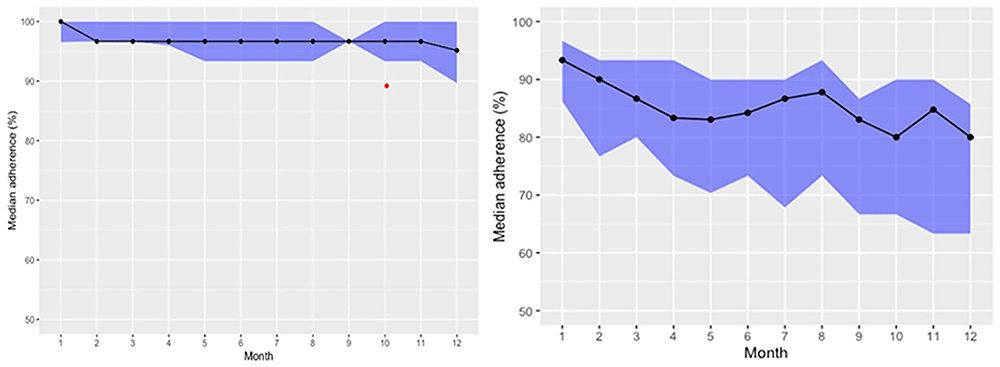
Median device-use adherence for the first month of DAT use was 100% (IQR 96-100) and 93.3% (IQR 86-97) among children and adolescents, respectively (as shown in Figure 1). We observed a significant decrease in monthly device use over the 12 months in both groups. Comparing participants' monthly device use of each of the twelve months from the first month as baseline, mixed effects showed that adolescents had a steeper decline in device use, from a decrease of 9% in the second month to 25% in the twelfth, compared to children who declined from 5% to 12% in the same intervals (see Table: 3)
01d76a8e-8131-446c-a30a-0b205244687e_figure1.gif

Figure 1. Monthly device use for children (left) and adolescents (right), respectively.

Table 3. Mixed effect output for children and adolescents.

ChildrenAdolescents
% Difference
in means
from baseline
95% CI1% Difference
in means
from baseline
95% CI1
Month 1————
Month 2-5-10, 0-9-15, -3
Month 3-5-10, 0-9-15, -3
Month 4-7-12, -1-10-16, -3
Month 5-8-13, -3-13-19, -7
Month 6-9-14, -4-14-20, -8
Month 7-7-13, -2-17-23, -11
Month 8-8-13, -2-15-21, -9
Month 9-9-14, -3-21-27, -14
Month 10-7-13, -2-22-29, -16
Month 11-9-15, -4-23-29, -16
Month 12-12-18, -7-25-32, -19

1CI = Confidence Interval

One factor that hindered consistent use of the device among adolescents was the inability to keep hiding the purpose of the device to avoid HIV status disclosure. Over time, close people around the adolescents had been exposed to the device, and at some point, participants had concealed the truth. This meant they saw the device, they would have to hide the truth repeatedly, and it would be even harder if the device were found with the pills. Some of them narrated:

“It was going well, in the beginning. Now that I've got used to it, I see it as a burden. And, after being asked so many questions like: “What is that?” “What is that?” When you open it, the alarm rings. I just started leaving it at home.” (Adolescent, IDI)

“At first, I was using it. When charging it, I would remove all the pills, then someone saw the device while it was charging, and since then. I was not putting the pills in the device because if I did, someone might see them, so it was a challenge. It was easier to take pills from the packaging container than from the Wisepill box.” (Adolescent, FGD)

Additionally, the noise the device made when opened drew unwanted attention from nearby observers, and participants couldn’t open it without being noticed. Although they admit these disadvantages are few and depend on the environment in which someone lives.

“I used to use the device at home; it helped to remind me. There were times when I would carry it, and then someone would ask what it was. You must lie to them. You tell them it's a power bank. Then they ask you where to insert the charger. It has become a problem that I must leave it at home now”. (Adolescent, FGD)

Children's caregivers used the device more consistently than adolescents due to a lower risk of disclosure. Most caregivers are living with HIV themselves, and family members are aware of the HIV status of the children, so it becomes easier to use the device when at home. However, caregivers also had concerns about the risks of disclosure, as the device was primarily kept at home and didn’t allow the child to move it.

“He [the child] has a little knowledge, so when we talk to him, he understands that these things [HIV status/ARVs] are not to be shown to everyone. So, every morning he will come to our room to take his medication.” (Caregiver, IDI)

“I can tell the reason [for not using the device], that the kid went to her grandmother’s house, so all those days we kept her medicines in a piece of paper, so we did not open the bottle for those days.” (Caregiver, IDI)

Decreased device activity over time was also due to challenges related to charging the device (i.e., not having electricity at home, failure to place the device in the socket, fearing unwanted disclosure if it was seen, and broken devices that lost their ability to stay charged for a long time.

“The challenge that I experienced was that the device was running out of charge, while the charger was already stolen. So, the charge ran out completely, but the SMS were still coming.” (Adolescent, IDI)

Adolescents advised that if the intervention were to be rolled out to the general population, time should be taken to understand participants' living conditions to determine whether it would pose challenges for them. Additionally, if possible, the device should be password-protected to ensure that only participants can access it. One said:

“In the instructions you give, you should explain that the device works like this and that. Then, after a few months, you call the person to ask if they have accepted it and still need it. You let them keep it, but if they don’t want it, then they return it.” (Adolescent, FGD)

Discussion

This implementation study on a DAT intervention (reminder SMS, use of the Wisepill device, and provision of feedback sessions) presents interesting experiences and challenges that can inform the design of future DAT-like interventions in Sub-Saharan African settings. Aspects such as educational and visit reminders were not implemented effectively. Participants were willing to use DAT, but both children and adolescents used the device less over time, with adolescents having a steeper decrease due to factors related to fear of HIV status disclosure and the device not being compatible with their day-to-day lifestyle.

Our research team had extensive experience administering the original intervention (reminder SMS texts, the device, and adherence feedback sessions) as implemented in the formative phase and in our previous REMIND studies26,27,34. Hence, these components of the intervention were implemented effectively with minimal errors. However, we encountered challenges in administering the components of the intervention that we developed and programmed ourselves, particularly in sending educational and visit reminders. This could partly be due to limited field experience with them, but also to relatively limited resources and personnel to implement them effectively.

As reported in other DAT studies, we encountered challenges related to poor network connectivity and communication failures due to dead batteries or malfunctioning devices34–36. On these occasions, the participant may have opened the device, but intakes were not recorded. Unfortunately, these technical challenges remain highly impactful for DAT, as reflected in our study, where 8.6% and 19.8% of communication days were lost among children and adolescents, respectively. Future studies should strengthen device-monitoring measures, such as utilising artificial intelligence for early detection of malfunctioning devices and assisting participants in charging or replacing them on time.

Several other trials have evaluated the effectiveness of RTMM-based DATs using Wisepill devices35–38. Since the trial results were reported, we assume the interventions were implemented successfully, although most did not report on the implementation of the DAT. This may be because Wisepill is an established intervention, with established experience and systems for its administration39,40. Because the DAT intervention comprises many components, researchers should identify which components to implement and focus on them. Some of the DAT trials focused their intervention on the reminder SMS and tailored feedback alone, while providing and using Wisepill devices to measure adherence as an outcome for all participants35,37,38,41. This depends on which components of the interventions are perceived as more effective in improving ART adherence.

Participants perceived DAT as effective if it addressed personal adherence barriers. As reported in other DAT studies, most participants found DAT a valuable tool for helping them observe their medication intake times through reminders. It also gave them a sense of being monitored and cared for, so they forced themselves to adhere13,42–44. The DAT, through recorded adherence graphs, identified non-adherence patterns and offered an opportunity for personalized discussion and possible solutions to those adherence barriers during the counselling sessions. Hence, the DAT intervention provides a useful counselling guide to enhance adherence counselling (EAC) and enables personalised counselling based on each participant's faced barriers45. However, some of the adherence barriers, like those related to poverty, disclosure issues, or HIV stigma, require more personal effort from the participants or different interventions. This shows that DAT may not be effective in addressing all adherence challenges independently and should be combined with other adherence interventions that equip participants with understanding and motivation to adhere.

Participants' willingness to use the device and to receive reminder SMS depended on how well the device and its reminders fit their lifestyle or living environment. In our formative study, in which participants used the DAT for only one month, we found that the DAT intervention was highly acceptable, and most participants believed the device preserved confidentiality because people wouldn't know its purpose34. However, after 12 months of DAT use, we observed that participants used the device less consistently over time. This finding raises concerns about the compatibility of the device with the lifestyle of people living with HIV. We could compare these findings to what was observed in a cohort study in South Africa, which reported a drop in device adherence for the subsequent follow-up from 76% to 53% and 49% at 1, 2, and 3 months, respectively, while participants were using Wisepill devices and received reminders via SMS post a missed dose35. Another study conducted in South Africa, which assessed experiences of using evriMed-pillbox devices among adult people with TB, found that participants avoided using the device due to perceived stigma, caused by size, and the alarm made by the device during medication time46.

The DAT intervention may not be effective for everyone, including individuals who share mobile phones or students in boarding schools. Others found that it did not work well among those abusing substances47. Additionally, biological, social, and psychological factors can significantly influence an adolescent’s experience of a disease or an intervention13. There is a need for the consideration of the developmental changes that adolescents go through, including cognitive development, emotional fluctuations, and increased social connections with peers, in the development of DAT interventions aimed explicitly at CALHIV30–33. Hence, in addition to assessing adherence levels and the need for an adherence intervention, it is essential to evaluate participants' living conditions and lifestyles before providing the device.

Strengths and limitations

Our study has the strength of evaluating DAT implementation and participants' use of the DAT over a more extended period (12 months) among a vulnerable group (CALHIV). This topic has not been studied in detail previously. Our findings highlight essential considerations for the successful implementation of the DAT intervention in future studies.

Study limitations include the possibility that the fidelity findings may be biased, as we evaluated our own implementation of the intervention. Additionally, we assessed the intervention's implementation solely from the perspectives of study participants; we did not assess those of healthcare professionals and other stakeholders involved in HIV care.

Conclusion

Participants were willing to use the DAT at the beginning, but decreased their use over time due to factors related to fear of unwanted disclosure of their HIV status. Improving the device to omit the beep alert produced when the device is opened and assessing participants' lifestyle and living conditions before providing them with the device could enhance its implementation among people living with HIV.

DAT cannot address all adherence barriers independently; it should be considered a supportive tool to be used alongside other standard-care adherence interventions. But also, DAT interventions require close monitoring to ensure they are implemented as intended. Future studies should plan which parts of the DAT they want to use and consider implementing the DAT intervention for a shorter period among participants who need and accept it.

Ethics and consent

We obtained ethical clearance (Ref No: 2589) dated 3rd October 2022, from the College Research and Ethical Review Committee (CRERC) of Kilimanjaro Christian Medical University College (KCMUCo), now known as KCMC University, and a certificate (Ref. NIMR/HQ/R.8a/Vol.IX/4141) dated 01 November 2022, from the National Health Research Ethics Sub-Committee (NatHREC) of the National Institute for Medical Research (NIMR) in Tanzania. We obtained written informed consent from participants aged 18 or older. For children and adolescents under 18, we first obtained written consent from the caregivers, followed by the child's written assent. If a child was not aware of their HIV status, we only used the caregiver’s written consent and collected data from the caregiver.

Data availability

We understand the importance of open access; however, our data cannot be made publicly available at this time. This is because Tanzania's regulations prohibit data sharing without a data transfer agreement with the recipient. The underlying data will be available upon request from the corresponding author (i.swai@kcri.ac.tz) or the principal investigator (m.sumari@kcri.ac.tz). We will then need to comply with Tanzanian data-sharing law, and the authorities will require approval of the data-sharing request by signing a data transfer agreement.

Acknowledgements

The authors thank all participants, i.e., children and adolescents and their caregivers, for participating and for providing their experiences regarding the DAT intervention. Their ideas will help shape the implementation of future DAT studies. We thank the healthcare workers at participating facilities and the KCRI REMIND team staff for their assistance with data collection.

References

  • 1.  UNAIDS: In Danger: UNAIDS global AIDS update 2022. United Nations, 2022; [cited 2025 Feb 14]. Reference Source
  • 2.  Maartens G, Celum C, Lewin SR: HIV infection: epidemiology, pathogenesis, treatment, and prevention. Lancet. 2014; 384(9939): 258–71. PubMed Abstract | Publisher Full Text
  • 3.  UNAIDS: UNAIDS DATA 2024. 2024. Reference Source
  • 4.  UNICEF DATA: Adolescent HIV treatment. UNICEF DATA, [cited 2025 Sept 26]. Reference Source
  • 5.  WHO: Global health estimates: leading causes of death. 2021; [cited 2025 Feb 10]. Reference Source
  • 6.  NIH: HIV treatment: the basics - Factsheet. 2025; [cited 2025 Feb 21]. Reference Source
  • 7.  Paterson DL, Swindells S, Mohr J, et al.: Adherence to protease inhibitor therapy and outcomes in patients with HIV infection. Ann Intern Med. 2000; 133(1): 21–30. PubMed Abstract | Publisher Full Text
  • 8.  Benson C, Emond B, Lefebvre P, et al.: Rapid initiation of Antiretroviral Therapy following diagnosis of Human Immunodeficiency Virus among patients with commercial insurance coverage. J Manag Care Spec Pharm. 2020; 26(2): 129–141. PubMed Abstract | Publisher Full Text | Free Full Text
  • 9.  Lundgren JD, Babiker AG, Sharma S, et al.: Long-term benefits from early antiretroviral therapy initiation in HIV infection. NEJM Evid. 2023; 2(3): 10.1056/evidoa2200302. PubMed Abstract | Publisher Full Text | Free Full Text
  • 10.  Nachega JB, Leisegang R, Bishai D, et al.: Association of antiretroviral therapy adherence and health care costs. Ann Intern Med. 2010; 152(1): 18–25. PubMed Abstract | Publisher Full Text
  • 11.  Byrd KK, Hou JG, Hazen R, et al.: Antiretroviral adherence level necessary for HIV Viral suppression using real-world data. J Acquir Immune Defic Syndr. 2019; 82(3): 245–51. PubMed Abstract | Publisher Full Text | Free Full Text
  • 12.  Coetzee B, Kagee A, Vermeulen N: Structural barriers to adherence to antiretroviral therapy in a resource-constrained setting: the perspectives of health care providers. AIDS Care. 2011; 23(2): 146–51. PubMed Abstract | Publisher Full Text
  • 13.  Ngowi K, Pima F, Mmbaga BT, et al.: “I Wish to continue receiving the reminder short messaging service”: a mixed methods study on the acceptability of Digital Adherence Tools among adults living with HIV on antiretroviral treatment in Tanzania. Patient Prefer Adherence. 2021; 15: 559–68. PubMed Abstract | Publisher Full Text | Free Full Text
  • 14.  Bezabih AM, Gerling K, Abebe W, et al.: Behavioral theories and motivational features underlying eHealth interventions for adolescent antiretroviral adherence: systematic review. JMIR Mhealth Uhealth. 2021; 9(12): e25129. PubMed Abstract | Publisher Full Text | Free Full Text
  • 15.  Fokam J, Sosso SM, Yagai B, et al.: Viral suppression in adults, adolescents and children receiving antiretroviral therapy in Cameroon: adolescents at high risk of virological failure in the era of “test and treat”. AIDS Res Ther. 2019; 16(1): 36. PubMed Abstract | Publisher Full Text | Free Full Text
  • 16.  Jerene D, Abebe W, Taye K, et al.: Adolescents living with HIV are at higher risk of death and loss to follow up from care: analysis of cohort data from eight health facilities in Ethiopia. Yotebieng M, editor. PLoS One. 2019; 14(10): e0223655. PubMed Abstract | Publisher Full Text | Free Full Text
  • 17.  Kranzer K, Bradley J, Musaazi J, et al.: Loss to follow‐up among children and adolescents growing up with HIV infection: age really matters. J Int AIDS Soc. 2017; 20(1): 21737. PubMed Abstract | Publisher Full Text | Free Full Text
  • 18.  Apondi E, Wachira J, Ayikukwei R, et al.: Barriers to ART adherence among school students living with HIV in Kenya. Afr J AIDS Res. 2021; 20(3): 232–237. PubMed Abstract | Publisher Full Text
  • 19.  Wiggins L, O’Malley G, Wagner AD, et al.: ‘They can stigmatize you’: a qualitative assessment of the influence of school factors on engagement in care and medication adherence among adolescents with HIV in Western Kenya. Health Educ Res. 2022; 37(5): 355–63. PubMed Abstract | Publisher Full Text | Free Full Text
  • 20.  Audi C, Jahanpour O, Antelman G, et al.: Facilitators and barriers to antiretroviral therapy adherence among HIV-positive adolescents living in Tanzania. BMC Public Health. 2021; 21(1): 2274. PubMed Abstract | Publisher Full Text | Free Full Text
  • 21.  Mussa FM, Massawe HP, Bhalloo H, et al.: Magnitude and associated factors of anti-retroviral therapy adherence among children attending HIV care and treatment clinics in Dar es Salaam, Tanzania. Onwuamah CK, editor. PLoS One. 2022; 17(9): e0275420. PubMed Abstract | Publisher Full Text | Free Full Text
  • 22.  Nsheha AH, Dow DE, Kapanda GE, et al.: Adherence to antiretroviral therapy among HIV-infected children receiv ing care at Kilimanjaro Christian Medical Centre (KCMC), Northern Tanz ania: a cross- sectional analytical study. Pan Afr Med J. 2014; 17: 238. PubMed Abstract | Publisher Full Text | Free Full Text
  • 23.  Daher J, Vijh R, Linthwaite B, et al.: Do digital innovations for HIV and sexually transmitted infections work? Results from a systematic review (1996–2017). BMJ Open. 2017; 7(11): e017604. PubMed Abstract | Publisher Full Text | Free Full Text
  • 24.  Park LG, Howie-Esquivel J, Dracup K: Electronic measurement of medication adherence. West J Nurs Res. 2015; 37(1): 28–49. PubMed Abstract | Publisher Full Text
  • 25.  Msosa TC, Swai I, Aarnoutse R, et al.: The effect of real-time medication monitoring-based digital adherence tools on adherence to antiretroviral therapy and viral suppression in people living with HIV: a systematic literature review and meta-analysis. J Acquir Immune Defic Syndr. 2024; 96(5): 411–20. PubMed Abstract | Publisher Full Text | Free Full Text
  • 26.  de Sumari-de Boer IM, van den Boogaard J, Ngowi KM, et al.: Feasibility of real time medication monitoring among HIV infected and TB patients in a resource-limited setting. AIDS Behav. 2016; 20(5): 1097–107. PubMed Abstract | Publisher Full Text
  • 27.  Sumari-de Boer IM, Ngowi KM, Sonda TB, et al.: Effect of digital adherence tools on adherence to antiretroviral treatment among adults living with HIV in Kilimanjaro, Tanzania: a randomized controlled trial. J Acquir Immune Defic Syndr. 2021; 87(5): 1136–44. PubMed Abstract | Publisher Full Text | Free Full Text
  • 28.  Abiodun O, Ladi-Akinyemi B, Olu-Abiodun O, et al.: A single-blind, parallel design RCT to assess the effectiveness of SMS reminders in improving ART adherence among adolescents living with HIV (STARTA trial). J Adolesc Health. 2021; 68(4): 728–36. PubMed Abstract | Publisher Full Text
  • 29.  Dulli L, Ridgeway K, Packer C, et al.: A social media-based support group for youth living with HIV in Nigeria (SMART connections): randomized controlled trial. J Med Internet Res. 2020; 22(6): e18343. PubMed Abstract | Publisher Full Text | Free Full Text
  • 30.  Linnemayr S, Huang H, Luoto J, et al.: Text messaging for improving antiretroviral therapy adherence: no effects after 1 year in a randomized controlled trial among adolescents and young adults. Am J Public Health. 2017; 107(12): 1944–50. PubMed Abstract | Publisher Full Text | Free Full Text
  • 31.  Ukoaka BM, Ugwuanyi EA, Ukueku KO, et al.: Digital tools for improving antiretroviral adherence among people living with HIV in Africa. J Med Surg Public Health. 2024; 2: 100077. Publisher Full Text
  • 32.  Sumari-de Boer M, Ngowi KM, Swai IU, et al.: Effect of a customized digital adherence tool on retention in care and adherence to antiretroviral treatment in breastfeeding women, children and adolescents living with HIV in Tanzania: a mixed-methods study followed by clinical trials. Trials. 2023; 24(1): 285. PubMed Abstract | Publisher Full Text | Free Full Text
  • 33.  Holtrop JS, Estabrooks PA, Gaglio B, et al.: Understanding and applying the RE-AIM framework: clarifications and resources. J Clin Trans Sci. 2021; 5(1): e126. PubMed Abstract | Publisher Full Text | Free Full Text
  • 34.  Swai I, ten Bergen LL, Mtenga A, et al.: Developing contents for a digital drug adherence tool with reminder cues and personalized feedback: a formative mixed-methods study among children and adolescents living with HIV in Tanzania. HIV/AIDS. 2023; [cited 2023 Apr 20]. Publisher Full Text
  • 35.  Evans D, Berhanu R, Moyo F, et al.: Can short-term use of electronic patient adherence monitoring devices improve adherence in patients failing second-line antiretroviral therapy? Evidence from a pilot study in Johannesburg, South Africa. AIDS Behav. 2016; 20(11): 2717–28. PubMed Abstract | Publisher Full Text | Free Full Text
  • 36.  Sabin LL, Bachman DeSilva M, Gill CJ, et al.: Improving adherence to antiretroviral therapy with triggered real-time text message reminders: the China adherence through technology study. J Acquir Immune Defic Syndr. 2015; 69(5): 551–9. PubMed Abstract | Publisher Full Text | Free Full Text
  • 37.  Orrell C, Cohen K, Mauff K, et al.: A randomized controlled trial of real-time electronic adherence monitoring with text message dosing reminders in people starting first-line antiretroviral therapy. J Acquir Immune Defic Syndr. 2015; 70(5): 495–502. PubMed Abstract | Publisher Full Text
  • 38.  Haberer JE, Musiimenta A, Atukunda EC, et al.: Short Message Service (SMS) reminders and real-time adherence monitoring improve antiretroviral therapy adherence in rural Uganda. AIDS. 2016; 30(8): 1295–9. PubMed Abstract | Publisher Full Text | Free Full Text
  • 39.  Wisepill: Wisepill RT3000 medication monitoring and reminder system - product handbook version 1.50. 2023. Reference Source
  • 40.  Wisepill technologies: Wisepill Technologies. Wisepill Technologies, 2022; [cited 2025 Sept 27]. Reference Source
  • 41.  Pellowski JA, Kalichman SC, White D, et al.: Real-time medication adherence monitoring intervention: test of concept in people living with HIV infection. J Assoc Nurses AIDS Care. 2014; 25(6): 646–51. PubMed Abstract | Publisher Full Text | Free Full Text
  • 42.  Ware NC, Pisarski EE, Tam M, et al.: The meanings in the messages: how SMS reminders and real-time adherence monitoring improve antiretroviral therapy adherence in rural Uganda. AIDS. 2016; 30(8): 1287–93. PubMed Abstract | Publisher Full Text | Free Full Text
  • 43.  Haberer JE, Robbins GK, Ybarra M, et al.: Real-time electronic adherence monitoring is feasible, comparable to unannounced pill counts, and acceptable. AIDS Behav. 2012; 16(2): 375–82. PubMed Abstract | Publisher Full Text | Free Full Text
  • 44.  Musiimenta A, Atukunda EC, Tumuhimbise W, et al.: Acceptability and feasibility of real-time antiretroviral therapy adherence interventions in rural Uganda: mixed-method pilot randomized controlled trial. JMIR Mhealth Uhealth. 2018; 6(5): e122. PubMed Abstract | Publisher Full Text | Free Full Text
  • 45.  Sabin LL, Simmons E, Halim N, et al.: Real-time feedback to improve HIV treatment adherence in pregnant and postpartum women in Uganda: a randomized controlled trial. AIDS Behav. 2022; 26(12): 3834–47. PubMed Abstract | Publisher Full Text | Free Full Text
  • 46.  Mukora R, Ahumah B, Maraba N, et al.: Acceptability of using the medication monitor and experience of a differentiated care approach for TB treatment adherence among people living with TB in South Africa. Shewade HD, editor. PLOS Glob Public Health. 2023; 3(10): e0001885. PubMed Abstract | Publisher Full Text | Free Full Text
  • 47.  Mukora R, Maraba N, Orrell C, et al.: Qualitative study exploring the feasibility of using medication monitors and a differentiated care approach to support adherence among people receiving TB treatment in South Africa. BMJ Open. 2023; 13(3): e065202. PubMed Abstract | Publisher Full Text | Free Full Text