Introduction
Albinaria teres belongs to the genus Albinaria Vest, 1867 (Stylommatophora: Clausiliidae) which is characterized by very high morphological and genetic differentiation (Gittenberger, 1991). It is one of the approximately 40 Albinaria species endemic to the island of Crete in Greece. It is distributed to the eastern part of Crete and some of its satellite islets where it is found on limestone rocks (Welter-Schultes, 2010). Albinaria teres is a polytypic species containing ten subspecies namely A. t. distans (L. Pfeiffer, 1865), A. t. extensa (L. Pfeiffer, 1865), A. t. manselli (O. Boettger, 1883), A. t. nordsiecki Zilch, 1977, A. t. phalanga (O. Boettger, 1883), A. t. teres (Olivier, 1801), A. t. toplouensis Welter-Schultes & Wiese, 1991, A. t. vermiculata (O. Boettger, 1883) and A. t. xerocampensis Wiese, 1990 (MolluscaBase, 2025).
The species has been assessed in the Red List of Greece (NECCA, 2023) and in the IUCN Red List (Triantis & Chelmis, 2023) as Least Concern.
Despite the great effort of researchers over the past 40 years on the systematics of Albinaria, the taxonomy and phylogeny of the genus is still not resolved (Bamberger et al., 2022; Becher et al., 2024; De Weerd & Gittenberger, 2005; Dimopoulou et al., 2017; Douris et al., 1995; Douris et al., 1998a; Douris et al., 1998b; Giokas et al., 2000; Kornilios et al., 2015; Páll-Gergely et al., 2012; Schilthuizen et al., 1993; Schilthuizen et al., 1995; Schilthuizen et al., 2004; Schilthuizen & Gittenberger, 1995; Van Moorsel et al., 2000). A high-quality reference genome for A. teres will serve as a reference for the entire genus of Albinaria, enabling more sophisticated methods of phylogenetic inference. It will help to clarify the phylogenetic relationships between the species of Albinaria, refine their taxonomic classifications, and improve our understanding of the evolutionary processes shaping the high diversity observed within the genus.
The generation of this reference resource was coordinated by the European Reference Genome Atlas (ERGA) initiative’s Biodiversity Genomics Europe (BGE) project, supporting ERGA’s aim of promoting transnational cooperation to promote advances in the application of genomics technologies to protect and restore biodiversity (Mazzoni et al., 2023).
Materials & methods
ERGA's sequencing strategy includes Oxford Nanopore Technology (ONT) and/or Pacific Biosciences (PacBio) for long-read sequencing, along with Hi-C sequencing for chromosomal architecture, Illumina Paired-End (PE) for polishing (i.e. recommended for ONT-only assemblies), and RNA sequencing for transcriptomic profiling, to facilitate genome assembly and annotation.
Sample and sampling information
Danae Karakasi and Charalampos Fassoulas sampled 25 specimens of Albinaria teres (Figure 1) by hand picking at Karydi, Lasithi, Crete, Greece on 5 July 2023. Determination was based on expert identification of Malacologist Dr. Katerina Vardinoyiannis. Sampling was performed under Presidential Decree 67/1981 issued by Greek State Law. Mollusc foot tissue from the specimens was cut and was immediately flash frozen in liquid nitrogen and preserved in a freezer at -80 ℃ until DNA extraction.
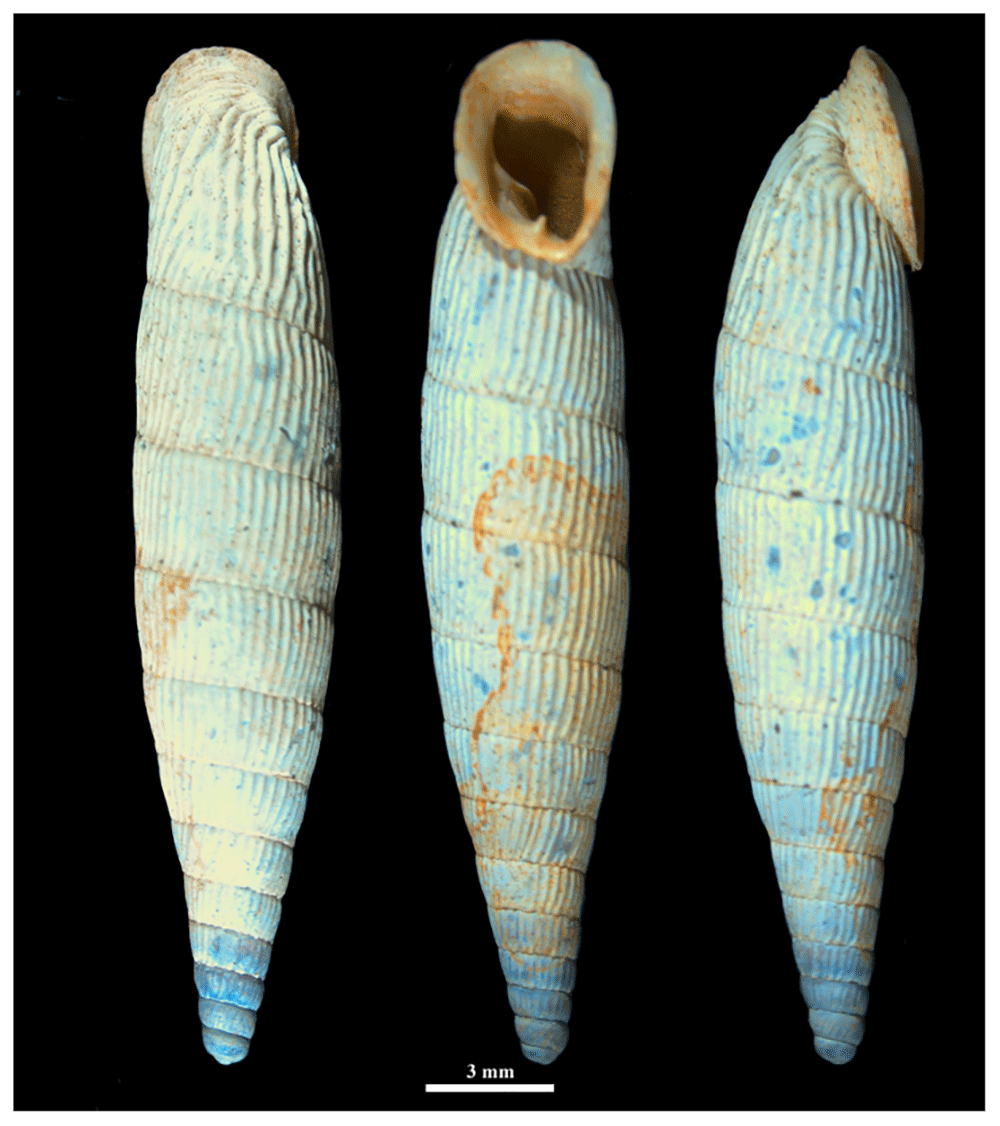
Figure 1. Electronic voucher image of the collected individuals of Albinaria teres.
Images of collected individuals are available in ERGA’s EBI BioImageArchive dataset (www.ebi.ac.uk/biostudies/bioimages/studies/S-BIAD1012?query=ERGA) under accession IDs SAMEA114349646, SAMEA114349647, SAMEA114349658, SAMEA114349659, SAMEA114349660, SAMEA114349661, SAMEA114349662, SAMEA114349663, SAMEA114349664 and SAMEA114349665.
Vouchering information
Physical reference materials for the sequenced specimen have been deposited in the Invertebrates Collections of the Natural History Museum of Crete (NHMC) – University of Crete (https://www.nhmc.uoc.gr/en/departments/invertebrates) under the accession ID NHMC.50.52125.
Frozen reference tissue material of mollusc foot is available from a proxy voucher at the Genomics and Genetic Resources Division of the NHMC (https://www.nhmc.uoc.gr/en/departments/genomics) under the accession IDs NHMC.50.52125.11-16.
Genetic information
The estimated genome size, based on ancestral taxa, is 2.85 Gb. This is a diploid genome with a haploid number of 31 chromosomes (2n=62) and unknown sex chromosomes. All information for this species was retrieved from Genomes on a Tree (Challis et al., 2023).
DNA/RNA processing
DNA was extracted from 30 mg of foot tissue using the Genomic-tip 20/G kit (Qiagen, MD, USA) following manufacturer instructions DNA fragment size selection was performed using Short Read Eliminator (PacBio, CA, USA). Quantification was performed using a Qubit dsDNA HS Assay kit (Thermo Fisher Scientific) and integrity was assessed in a FemtoPulse system (Agilent). DNA was stored at 4 ℃ until usage.
RNA was extracted from foot muscle (20 mg) using the RNeasy Plus Universal kit (Qiagen) following manufacturer instructions. Residual genomic DNA was removed with 6U of TURBO DNase (2 U/μL) (Thermo Fisher Scientific). Quantification was performed using a Qubit RNA HS Assay and integrity was assessed in a Bioanalyzer system (Agilent). RNA was stored at -80 °C.
Library preparation and sequencing
Long-read DNA libraries were prepared with the SMRTbell prep kit 3.0 following manufacturers' instructions and sequenced on a Revio system (PacBio).
Hi-C libraries were generated from foot muscle tissue using the Arima High Coverage HiC kit (following the Animal Tissues low input protocol v01) and sequenced on a NovaSeq6000 instrument (Illumina) with 2x150 bp read length. In total 57.4 Gb PacBio HiFi, 280.4 Gb Illumina WGS shotgun, and 52.3 Gb HiC data were sequenced to generate the assembly.
Genome assembly methods
The genome of A. teres was assembled using the Genoscope GALOP pipeline (https://workflowhub.eu/workflows/1200). Briefly, raw PacBio HiFi reads were assembled using Hifiasm v0.19.5-r593. Retained haplotigs were removed using purge_dups v1.2.5 with default parameters and the proposed cutoffs. The purged assembly was scaffolded using YaHS v1.2 and assembled scaffolds were then curated through manual inspection using PretextView v0.2.5 to remove false joins and incorporate sequences not automatically scaffolded into their respective locations within the chromosomal pseudomolecules. The mitochondrial genome was assembled as a single contig using Oatk v1.0 and included in the released assembly. Summary analysis of the released assembly was performed using the ERGA-BGE Genome Report ASM Galaxy workflow (De Panis, 2024b).
Genome annotation methods
A gene set was generated using the Ensembl Gene Annotation system (Aken et al., 2016), primarily by aligning publicly available short-read RNA-seq data from BioSample: SAMEA114349672 to the genome. Gaps in the annotation were filled via protein-to-genome alignments of a select set of clade-specific proteins from UniProt (The UniProt Consortium, 2019), which had experimental evidence at the protein or transcript level. At each locus, data were aggregated and consolidated, prioritising models derived from RNA-seq data, resulting in a final set of gene models and associated non-redundant transcript sets. To distinguish true isoforms from fragments, the likelihood of each open reading frame (ORF) was evaluated against known metazoan proteins. Low-quality transcript models, such as those showing evidence of fragmented ORFs, were removed. In cases where RNA-seq data were fragmented or absent, homology data were prioritised, favouring longer transcripts with strong intron support from short-read data. The resulting gene models were classified into two categories: protein-coding, and long non-coding. Models that did not overlap protein-coding genes, and were constructed from transcriptomic data were considered potential lncRNAs. Potential lncRNAs were further filtered to remove single-exon loci due to their unreliability. Putative miRNAs were predicted by performing a BLAST search of miRBase (Kozomara et al., 2019) against the genome, followed by RNAfold analysis (Gruber et al., 2008). Other small non-coding loci were identified by scanning the genome with Rfam (Kalvari et al., 2018) and passing the results through Infernal (Nawrocki & Eddy, 2013). Summary analysis of the released annotation was performed using the ERGA-BGE Genome Report ANNOT Galaxy workflow (De Panis, 2024a), incorporating tools such as AGAT v1.2, BUSCO v5.5 and OMArk v0.3.
Results
Genome assembly
The genome assembly has a total length of 1,710,616,219 bp in 43 scaffolds including the mitogenome (Figure 2 & Figure 3), with a GC content of 38.99%. The assembly has a contig N50 of 7,880,036 bp and L50 of 74 and a scaffold N50 of 57,558,842 bp and L50 of 11. The assembly has a total of 375 gaps, totaling 43.7 kb in cumulative size. The single-copy gene content analysis using the Metazoa database with BUSCO (Manni et al., 2021) resulted in 97.6% completeness (88.8% single and 8.8% duplicated). 82.1% of reads k-mers were present in the assembly and the assembly has a base accuracy Quality Value (QV) of 58.0 as calculated by Merqury (Rhie et al., 2020).
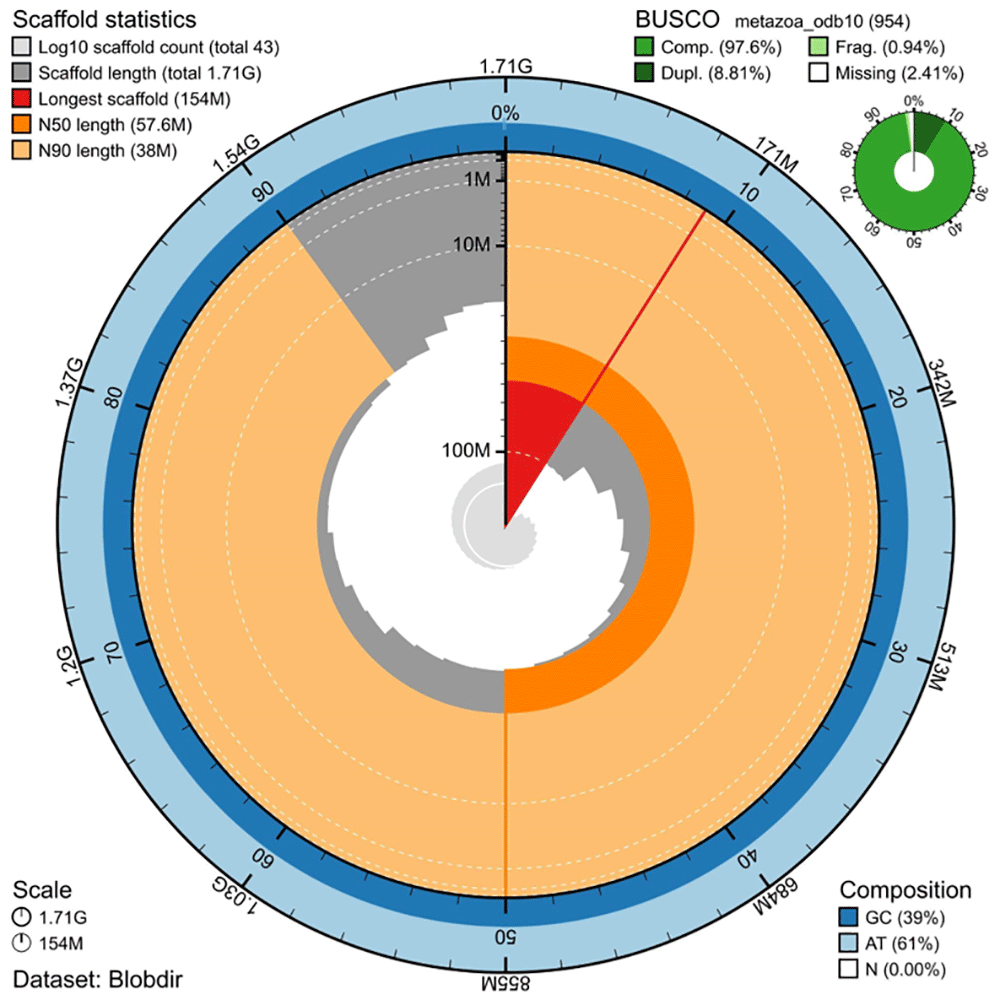
Figure 2. Snail plot summary of assembly statistics.
The main plot is divided into 1,000 size-ordered bins around the circumference, with each bin representing 0.1% of the 1,710,616,219 bp assembly including the mitochondrial genome. The distribution of sequence lengths is shown in dark grey, with the plot radius scaled to the longest sequence present in the assembly (154,472,788 bp, shown in red). Orange and pale-orange arcs show the scaffold N50 and N90 sequence lengths (57,558,842 and 38,046,388 bp), respectively. The pale grey spiral shows the cumulative sequence count on a log-scale, with white scale lines showing successive orders of magnitude. The blue and pale-blue area around the outside of the plot shows the distribution of GC, AT, and N percentages in the same bins as the inner plot. A summary of complete, fragmented, duplicated, and missing BUSCO genes found in the assembled genome from the Metazoa database (odb10) is shown in the top right.
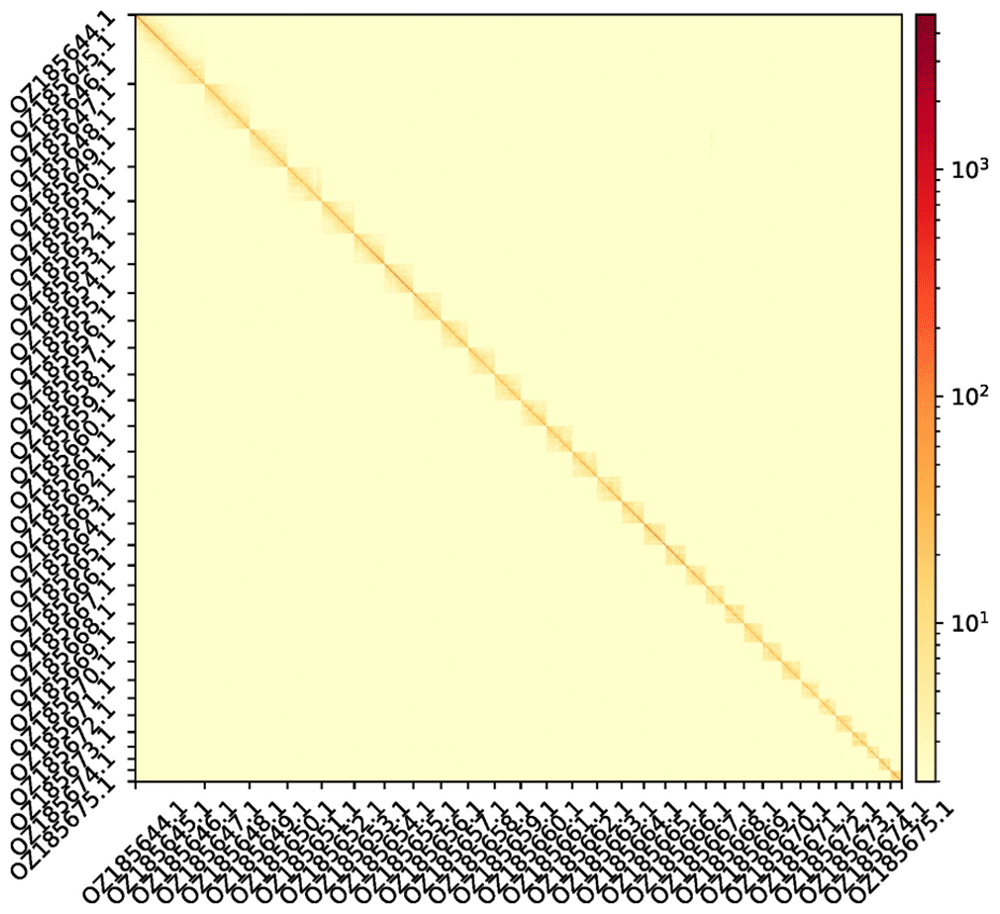
Figure 3. Hi-C contact map showing spatial interactions between regions of the genome.
The diagonal corresponds to intra-chromosomal contacts, depicting chromosome boundaries. The frequency of contacts is shown on a logarithmic heatmap scale. Hi-C matrix bins were merged into a 100 kb bin size for plotting.
Genome annotation
The genome annotation consists of 14,748 protein-coding genes with an associated 21,441 transcripts, in addition to 7,088 non-coding RNA genes of various types (Table 1). Using the longest isoform per transcript, the single-copy gene content analysis using the metazoa_odb10 database with BUSCO, run in protein mode, resulted in 91.1% completeness. Using the OMAmer Lophotrochozoa database for OMArk resulted in 93.40% completeness and 70.30% consistency (Table 2).
Table 1. Statistics from assembled gene models.
| No.
genes | No.
transcripts | Mean gene
length (bp) | No. single-
exon genes | Mean exons
per transcript |
|---|
| Protein-coding | 14,748 | 21,441 | 28,731 | 676 | 8.1 |
| lncRNA | 3,442 | 3,788 | 8,248 | 2 | 2.4 |
| snRNA | 312 | 312 | 149 | 312 | 1.0 |
| snoRNA | 616 | 616 | 170 | 616 | 1.0 |
| rRNA | 351 | 351 | 826 | 351 | 1.0 |
| tRNA | 649 | 649 | 76 | 649 | 1.0 |
| Other non-coding | 1,718 | 1,718 | 73 | 1,718 | 1.0 |
Table 2. Annotation completeness and consistency scores calculated by BUSCO run in protein (metazo_odb) and OMArk (Lophotrochozoa).
| Complete | Singular | Duplicated | Fragmented | Missing |
|---|
| BUSCO | 869 (91.1%) | 811 (85.0%) | 58 (6.1%) | 41 (4.3%) | 44 (4.6%) |
| OMArk | 2,01 (93.40%) | 1,635 (75.94%) | 376 (17.46%) | - | 142 (6.60%) |
| Consistent | Inconsistent | Contaminants | Unknown |
|---|
| OMArk | 10,368 (70.30%) | 1,473 (9.99%) | 0 (0.05) | 2,907 (19.71%) |
Data availability
Albinaria teres and the related genomic study were assigned to Tree of Life ID (ToLID) ‘xgAlbTers5’ and all sample, sequence, and assembly information are available under the umbrella BioProject PRJEB77226 (Genoscope Sequencing Team et al., 2024). The sample information is available at the following BioSample accessions: SAMEA114349668 and SAMEA114349670. The genome assembly is accessible from GenBank under accession number GCA_964271275.1. Sequencing data produced as part of this project are available from SRA at the following accessions: ERX12733447, ERX12733458, ERX12737188 and ERX12737189. The genome annotation is available from Ensembl under accession GCA_964271275.2 (Tricomi et al., 2025). All data are published under CC0 licence. Documentation related to the genome assembly and curation can be found in the ERGA Assembly Report (EAR) document available at https://github.com/ERGA-consortium/EARs/tree/main/Assembly_Reports/Albinaria_teres/xgAlbTers5. Further details and data about the project are hosted on the ERGA portal at https://portal.erga-biodiversity.eu/data_portal/69427.
Author contributions
DK collected the species, KV identified the species, DK sampled and preserved biological material and provided metadata, NE, RM, AB, THS, RF, DK, GB, EB, MS, PL, NP and TM provided support in sampling, shipping of biological material, metadata collection, and management, the GST extracted DNA, prepared libraries, and performed sequencing under the supervision of AM, CC, KL, PHO and PW; LD, AN, and JMA performed genome assembly and curation, TB generated the analysis and report. All authors contributed to the writing, review, and editing of this genome note and read and approved the final version. This work is part of the species assigned to Genoscope, which was instrumental in the wet lab, sequencing, and assembly processes, and represents a key contribution to BGE's outputs
Acknowledgements
We would like to acknowledge the assembly reviewer, Dom Absolon, from the Wellcome Sanger Institute. We would also like to thank Dr. Charalampos Fassoulas for his attribution in field sampling. The authors acknowledge the support of the Freiburg Galaxy Team: Saim Momin and Björn Grüning, Bioinformatics, University of Freiburg (Germany), funded by the German Federal Ministry of Education and Research BMBF grant 031 A538A de.NBI-RBC and the Ministry of Science, Research and the Arts Baden-Württemberg (MWK) within the framework of LIBIS/de.NBI Freiburg.
Faculty Opinions recommendedReferences
- Aken BL, Ayling S, Barrell D, et al.:
The ensembl gene annotation system.
Database (Oxford).
2016; 2016: baw093. PubMed Abstract
| Publisher Full Text
| Free Full Text
- Bamberger S, Xu J, Hausdorf B:
Evaluating species delimitation methods in radiations: the land snail Albinaria cretensis complex on Crete.
Syst Biol.
2022; 71(2): 439–460. PubMed Abstract
| Publisher Full Text
- Becher E, Bamberger S, Hausdorf B:
Phylogeny and species delimitation in Albinaria from western Crete (Gastropoda: Clausiliidae).
Zool J Linn Soc.
2024; 203(2): zlae061. Publisher Full Text
- De Panis D:
ERGA-BGE genome report ANNOT analyses. WorkflowHub. 2024a. Publisher Full Text
- De Panis D:
ERGA-BGE genome report ASM analyses (one-asm HiFi + HiC). WorkflowHub. 2024b. Publisher Full Text
- De Weerd DRU, Gittenberger E:
Towards a monophyletic genus Albinaria (Gastropoda, Pulmonata): the first molecular study into the phylogenetic position of eastern Albinaria species.
Zool J Linn Soc.
2005; 143(4): 531–542. Publisher Full Text
- Dimopoulou A, Antoniou A, Mylonas M, et al.:
Inferring phylogenetic patterns of land snails of the genus Albinaria on the Island of Dia (Crete, Greece).
Syst Biodivers.
2017; 15(5): 414–426. Publisher Full Text
- Douris V, Cameron RAD, Rodakis GC, et al.:
Mitochondrial phylogeography of the land snail Albinaria in Crete: long-term geological and short-term vicariance effects.
Evolution.
1998a; 52(1): 116–125. Publisher Full Text
- Douris V, Giokas S, Lecanidou R, et al.:
Phylogenetic analysis of mitochondrial DNA and morphological characters suggest a need for taxonomic re-evaluation within the alopiinae (Gastropoda: Clausiliidae).
J Molluscan Stud.
1998b; 64(1): 81–92. Publisher Full Text
- Douris V, Rodakis GC, Giokas S, et al.:
Mitochondrial DNA and morphological differentiation of Albinaria populations (gastropoda: clausiliidae).
J Molluscan Stud.
1995; 61(1): 65–78. Publisher Full Text
- Genoscope Sequencing Team, Moussy A, Cruaud C, et al.:
Albinaria teres genome sequencing and assembly. European Nucleotide Archive; Project: PRJEB77226 [Dataset], 2024.
- Giokas S, Mylonas M, Sotiropoulos K:
Gene flow and differential mortality in a contact zone between two Albinaria species (Gastropoda; Clausiliidae).
Biol J Linn Soc.
2000; 71(4): 755–770. Publisher Full Text
- Gittenberger E:
What about non-adaptive radiation?
Biol J Linn Soc.
1991; 43(4): 263–272. Publisher Full Text
- Gruber AR, Lorenz R, Bernhart SH, et al.:
The Vienna RNA Websuite.
Nucleic Acids Res.
2008; 36(suppl_2): W70–W74. PubMed Abstract
| Publisher Full Text
| Free Full Text
- Kalvari I, Nawrocki EP, Argasinska J, et al.:
Non-coding RNA analysis using the Rfam database.
Curr Protoc Bioinformatics.
2018; 62(1): e51. PubMed Abstract
| Publisher Full Text
| Free Full Text
- Kornilios P, Stamataki E, Giokas S:
Multiple reversals of chirality in the land snail genus Albinaria (Gastropoda, Clausiliidae).
Zoologica Scripta.
2015; 44(6): 603–611. Publisher Full Text
- Kozomara A, Birgaoanu M, Griffiths-Jones S:
miRBase: from microRNA sequences to function.
Nucleic Acids Res.
2019; 47(D1): D155–D162. PubMed Abstract
| Publisher Full Text
| Free Full Text
- Li H:
Minimap2: pairwise alignment for nucleotide sequences.
Bioinformatics.
2018; 34(18): 3094–3100. PubMed Abstract
| Publisher Full Text
| Free Full Text
- Manni M, Berkeley MR, Seppey M, et al.:
BUSCo update: novel and streamlined workflows along with broader and deeper phylogenetic coverage for scoring of eukaryotic, prokaryotic, and viral genomes.
Mol Biol Evol.
2021; 38(10): 4647–4654. PubMed Abstract
| Publisher Full Text
| Free Full Text
- Mazzoni CJ, Ciofi C, Waterhouse RM:
Biodiversity: an atlas of European reference genomes.
Nature.
2023; 619(7969): 252. PubMed Abstract
| Publisher Full Text
- MolluscaBase: MolluscaBase. MolluscaBase, 2025. Reference Source
- Nawrocki EP, Eddy SR:
Infernal 1.1: 100-fold faster RNA homology searches.
Bioinformatics.
2013; 29(22): 2933–2935. PubMed Abstract
| Publisher Full Text
| Free Full Text
- NECCA: Greek Red List. 2023. Reference Source
- Páll-Gergely B, Kornilios P, Giokas S:
Higher than anticipated diversity within an Albinaria species (Gastropoda, Pulmonata, Clausiliidae) in southern Turkey.
Journal of Biological Research-Thessaloniki.
2012; 18: 345–352. Reference Source
- Rhie A, Walenz BP, Koren S, et al.:
Merqury: reference-free quality, completeness, and phasing assessment for genome assemblies.
Genome Biol.
2020; 21(1): 245. PubMed Abstract
| Publisher Full Text
| Free Full Text
- Schilthuizen M, Gittenberger E:
Allozyme variation in some cretan albinaria (Gastropoda): paraphyletic species as natural phenomena. In: J. D. Taylor (Ed.): Origin and evolutionary radiation of the mollusca. Oxford University PressOxford, 1995; 301–312. Publisher Full Text
- Schilthuizen M, Gittenberger E, Gultyaev AP:
Phylogenetic Relationships Inferred from the Sequence and Secondary Structure of ITS1 rRNA in Albinaria and Putative Isabellaria Species (Gastropoda, Pulmonata, Clausiliidae).
molecular phylogenetics and evolution.
1995; 4(4): 457–462. Publisher Full Text
- Schilthuizen M, Gutteling E, Van Moorsel CHM, et al.:
Phylogeography of the land snail Albinaria hippolyti (Pulmonata: Clausiliidae) from Crete, inferred from ITS-1 sequences: PHYLOGEOGRAPHY OF A GREEK LAND SNAIL.
Biol J Linn Soc.
2004; 83(3): 317–326. Publisher Full Text
- Schilthuizen M, Welter-Schultes FW, Wiese V:
A revision of the polytypic Albinaria hippolyti (Boettger, 1878) from Crete (Gastropoda Pulmonata: Clausiliidae).
Zoologische Mededelingen.
1993; 67(9): 137–157. Reference Source
- Triantis K, Chelmis N:
IUCN Red List of Threatened Species: Albinaria teres.
IUCN Red List of Threatened Species.
2023. Reference Source
- Tricomi FF, Haggerty L, Martin F:
Albinaria teres genome annotation. Ensembl; GCA_ 964271275.2 [Dataset], 2025.
- The UniProt Consortium: UniProt: a worldwide hub of protein knowledge.
Nucleic Acids Research.
2019; 47(D1): D506–D515. PubMed Abstract
| Publisher Full Text
| Free Full Text
- Van Moorsel CHM, Dijkstra EGM, Gittenberger E:
Molecular evidence for repetitive parallel evolution of shell structure in clausiliidae (Gastropoda, Pulmonata).
Mol Phylogenet Evol.
2000; 17(2): 200–208. PubMed Abstract
| Publisher Full Text
- Welter-Schultes FW:
Revision of the genus Albinaria in Crete (Greece): presence of geographically variable monotypic and polytypic species (Gastropoda: Clausiliidae).
Archiv Für Molluskenkunde International Journal of Malacology.
2010; 139(2): 143–245. Publisher Full Text