Introduction
Phorcus turbinatus is a marine gastropod mollusc belonging to the family Trochidae. The species is endemic to Mediterranean coastal regions, particularly along the shores of Spain, Italy and Greece, an area recognised as a European biodiversity hotspot. P. turbinatus commonly inhabits intertidal and shallow subtidal rocky habitats, where it contributes to the regulation of algal growth and plays an important role in structuring coastal benthic ecosystems. Owing to its sensitivity to environmental stressors and its ability to bioaccumulate pollutants, P. turbinatus is widely used as a biomarker species for assessing water quality and coastal ecosystem health and is frequently included in environmental monitoring and ecological studies.
Despite its scientific relevance, P. turbinatus is not currently listed under any conservation category in the IUCN Red List and no specific conservation measures have been reported. Given its ecological importance and extensive use in research, the generation of a chromosome-level genome assembly for P. turbinatus represents a valuable resource. Making such genomic data rapidly available to the scientific community will support future studies in environmental monitoring, ecology, and evolutionary biology.
The generation of this reference resource was coordinated by the European Reference Genome Atlas (ERGA) initiative’s Biodiversity Genomics Europe (BGE) project, supporting ERGA’s aims of promoting transnational cooperation to promote advances in the application of genomics technologies to protect and restore biodiversity (Mazzoni et al., 2023).
Materials & Methods
ERGA’s sequencing strategy includes Oxford Nanopore Technology (ONT) and/or Pacific Biosciences (PacBio) for long-read sequencing, along with Hi-C sequencing for chromosomal architecture, Illumina Paired-End (PE) for polishing (i.e. recommended for ONT-only assemblies), and RNA sequencing for transcriptomic profiling, to facilitate genome assembly and annotation. In the case of this species, it was not possible to obtain a Hi-C library. However, chromosome territories could be confirmed by alignment to the chromosome-level assembly of a sister species, Phorcus lineatus (xgPhoLine1.1).
Sample and sampling information
On 28th November 2022, Judit Salces Ortiz, Klara Eleftheriadi, Fernando A. Fernández-Álvarez, and Rosa Fernández sampled five specimens of Phorcus turbinatus (sex unknown). Sampling took place in Cala de Niu, Sant Feliu de Guixols, Spain. The species was identified by Fernando Ángel Fernández-Álvarez based on morphology through the website Malacological Pictures (https://malacopics.nl/db/index.php).
The biological material collected in Spain and used to generate digital sequences, was retrieved from wildlife taxa regulated by the Spanish Royal Decree 124/2017. No ABS permits were granted as utilization of the material falls under exemption in Article 3(2) of the Spanish Royal Decree 124/2017 and was confirmed by the national authorities. Once collected, specimens were euthanized by being flash frozen in liquid nitrogen and were kept at −70 °C until DNA extraction.
Vouchering information
Physical reference materials for the here sequenced specimen have been deposited in the Museo Nacional de Ciencias Naturales (MNCN) https://www.mncn.csic.es/es under the accession number MNCN-ADN 151.725. Frozen reference tissue material of foot muscle is available from the same individual at the Biobank of the Museo Nacional de Ciencias Naturales (MNCN) https://www.mncn.csic.es/es under the voucher ID MNCN-ADN 151.724.
Data availability
Phorcus turbinatus and the related genomic study were assigned to Tree of Life ID (ToLID) ‘xgPhoTurb1’ and all sample, sequence, and assembly information are available from the INSDC under the umbrella BioProject PRJEB88157. The sample information is available at the following BioSample accessions: SAMEA114492921, SAMEA114492923, and SAMEA114492925. The genome assembly is accessible from ENA under accession number GCA_965237135.1 and the annotated genome is available through the Ensembl webpage (https://projects.ensembl.org/erga-bge/). Sequencing data produced as part of this project are available from ENA at the following accessions: ERX14228952, ERX14228953, ERX14228954, and ERX14228955. Documentation related to the genome assembly and curation can be found in the ERGA Assembly Report (EAR) document available at https://github.com/ERGA-consortium/EARs/tree/main/Assembly_Reports/Phorcus_turbinatus/xgPhoTurb1. Further details and data about the project are hosted on the ERGA portal at https://portal.erga-biodiversity.eu/data_portal/43341.
Genetic information
The estimated genome size, based on ancestral taxa, is 1.91 Gb. This is a diploid genome with a haploid number of 9 chromosomes (2n = 18). All information for this species was retrieved from Genomes on a Tree (Challis et al., 2023).
DNA/RNA processing
DNA was extracted from the body with a shell using the Blood & Cell Culture DNA Mini Kit (Qiagen) following the manufacturer’s instructions. DNA quantification was performed using a Qubit dsDNA BR Assay Kit (Thermo Fisher Scientific), and DNA integrity was assessed using a Genomic DNA 165 Kb Kit (Agilent) on the Femto Pulse system (Agilent). The DNA was stored at +4 °C until sequenced.
RNA was extracted from the body with a shell using an RNeasy Mini Kit (Qiagen) according to the manufacturer’s instructions. RNA quantification was performed using the Qubit RNA BR kit, and RNA integrity was assessed using a Bioanalyzer 2100 system (Agilent) RNA 6000 Nano Kit (Agilent). The RNA was stored at −80 °C until sequenced.
Library preparation and sequencing
For long-read whole genome sequencing, two libraries were prepared using the SQK-LSK114 Kit (Oxford Nanopore Technologies, ONT), which were then sequenced across three R10.4.1 flow cells on a PromethION 24 A Series instrument (ONT). A short-read whole-genome sequencing library was prepared using the KAPA Hyper Prep Kit (Roche). The RNA library was prepared using the KAPA mRNA Hyper prep kit (Roche). All short-read libraries were sequenced on a NovaSeq 6000 instrument (2x151bp, Illumina). In total 234x Oxford Nanopore and 135x Illumina WGS shotgun data were sequenced to generate the assembly.
Genome assembly methods
The genome was assembled using the CNAG CLAWS pipeline v2.3 (Gomez-Garrido, 2024). Briefly, reads were preprocessed for quality and length using Trim Galore v0.6.7 and Filtlong v0.2.1, and initial contigs were assembled using hifiasm v0.24.0 (Cheng et al. 2024) with options --dual-scaf --ont. As we used Q20+ ONT and QV of the primary assembly was already 59.7, no polishing with Illumina was required. In absence of Hi-C data, we aligned the contigs to the Phorcus lineatus chromosome-level assembly (GCA_921293015.1) using minimap2 v2.24 (Li 2016) with a maximum sequence divergence of 1%. The whole genome alignment (WGA) confirmed chromosomal status for 17 contigs and supported the joining of two other contigs aligning to chromosome 17 into a super-scaffold. Both contigs contain terminal telomeric repeats confirming their orientation and the telomere-to-telomere integrity of the super-scaffold. Finally, the mitochondrial genome was assembled as a single circular contig of 17,345 bp using the FOAM pipeline (https://github.com/cnag-aat/FOAM) and included in the released assembly (GCA_965237135.1). Summary analysis of the released assembly was performed using the ERGA-BGE Genome Report ASM Galaxy workflow (https://doi.org/10.48546/workflowhub.workflow.1103.2).
Genome annotation methods
A gene set was generated using the Ensembl Gene Annotation system (Aken et al., 2016), primarily by aligning publicly available short-read RNA-seq data from BioSample: SAMEA114492923 to the genome. Gaps in the annotation were filled via protein-to-genome alignments of a select set of clade-specific proteins from UniProt (The UniProt Consortium, 2019), which had experimental evidence at the protein or transcript level. At each locus, data were aggregated and consolidated, prioritising models derived from RNA-seq data, resulting in a final set of gene models and associated non-redundant transcript sets. To distinguish true isoforms from fragments, the likelihood of each open reading frame (ORF) was evaluated against known [metazoan|plant|fungal] proteins. Low-quality transcript models, such as those showing evidence of fragmented ORFs, were removed. In cases where RNA-seq data were fragmented or absent, homology data were prioritised, favouring longer transcripts with strong intron support from short-read data. The resulting gene models were classified into two categories: protein-coding, and long non-coding. Models that did not overlap protein-coding genes and were constructed from transcriptomic data were considered potential lncRNAs. Potential lncRNAs were further filtered to remove single-exon loci due to their unreliability. Putative miRNAs were predicted by performing a BLAST search of miRBase (Kozomara et al., 2019) against the genome, followed by RNAfold analysis (Gruber et al., 2008). Other small non-coding loci were identified by scanning the genome with Rfam (Kalvari et al., 2018) and passing the results through Infernal (Nawrocki & Eddy, 2013). Summary analysis of the released annotation was carried out using the ERGA-BGE Genome Report ANNOT Galaxy workflow (https://doi.org/10.48546/workflowhub.workflow.1096.1).
Results
Genome assembly
The genome assembly has a total length of 951,702,898 bp in 103 scaffolds including the mitogenome (
Figures 1 & 2), with a GC content of 35.5%. The assembly has a contig N50 of 50,589,882 bp and L50 of 8 and a scaffold N50 of 50,589,882 bp and L50 of 8. The assembly has a total of one gap, totalling 0.5 kb in cumulative size. The total sequence assigned to chromosomes is 99.57%. The divergence time between P. turbinatus and sister species P. lineatus was estimated to be as high as 16 MYA (14.0–16.1 MYA) (Kumar et al. 2017). Despite the large divergence, chromosomes are strongly collinear, showing several inversions but few translocations (
Figure 2). The single-copy gene content analysis using the Eukaryota database (odb10) with BUSCO (Manni et al., 2021) resulted in 99.6% completeness (98.9% single and 0.8% duplicated). 64.74% of reads k-mers were present in the assembly and the assembly has a base accuracy Quality Value (QV) of 73.83 as calculated by Merqury (Rhie et al., 2020).
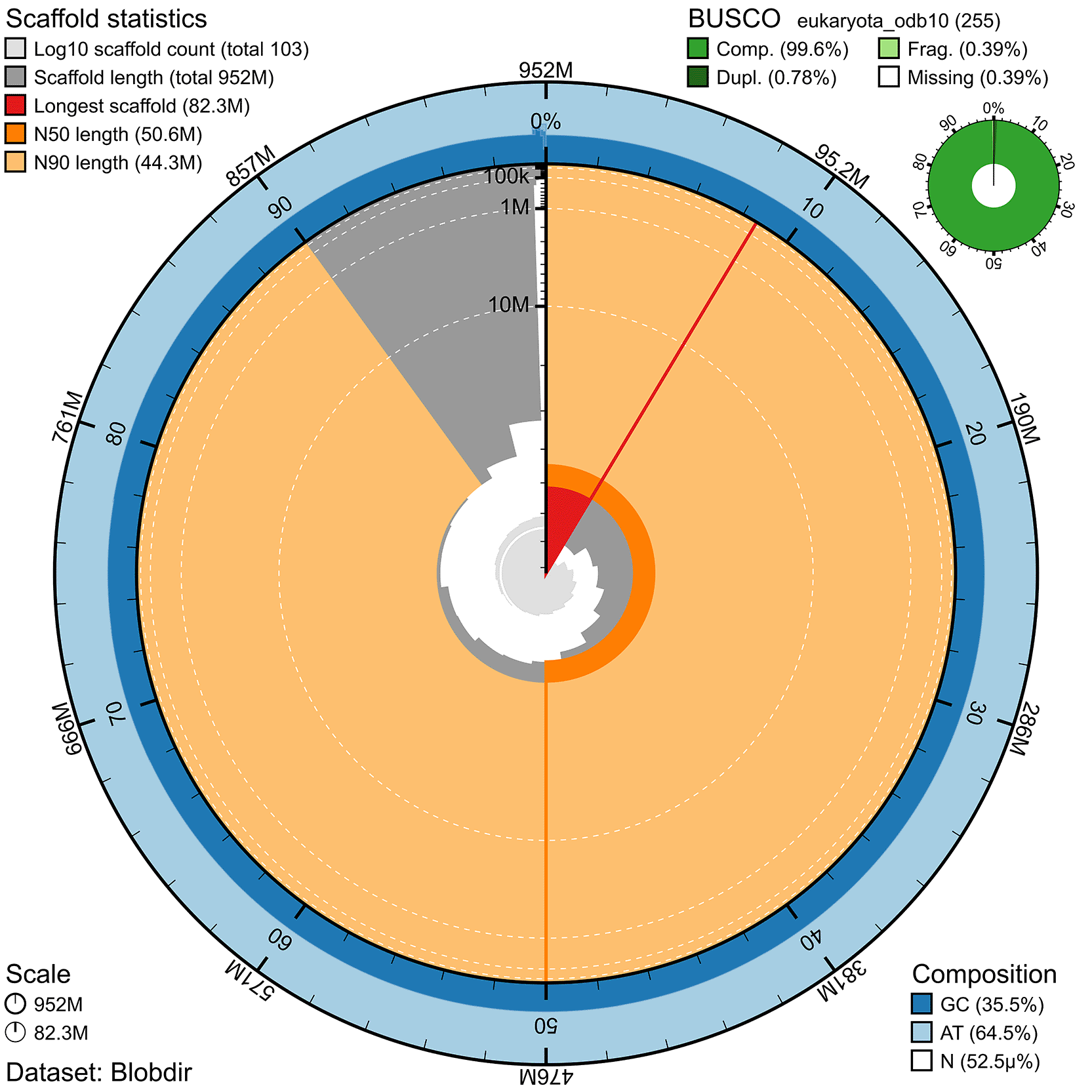
Figure 1. Snail plot summary of assembly statistics.
The main plot is divided into 1,000 size-ordered bins around the circumference, with each bin representing 0.1% of the 951,702,898 bp assembly including the mitochondrial genome. The distribution of sequence lengths is shown in dark grey, with the plot radius scaled to the longest sequence present in the assembly (82.3 Mb, shown in red). Orange and pale-orange arcs show the scaffold N50 and N90 sequence lengths (50,589,882 and 44,257,409 bp), respectively. The pale grey spiral shows the cumulative sequence count on a log-scale, with white scale lines showing successive orders of magnitude. The blue and pale-blue area around the outside of the plot shows the distribution of GC, AT, and N percentages in the same bins as the inner plot. A summary of complete, fragmented, duplicated, and missing BUSCO genes found in the assembled genome from the Eukaryota database (odb10) is shown in the top right.
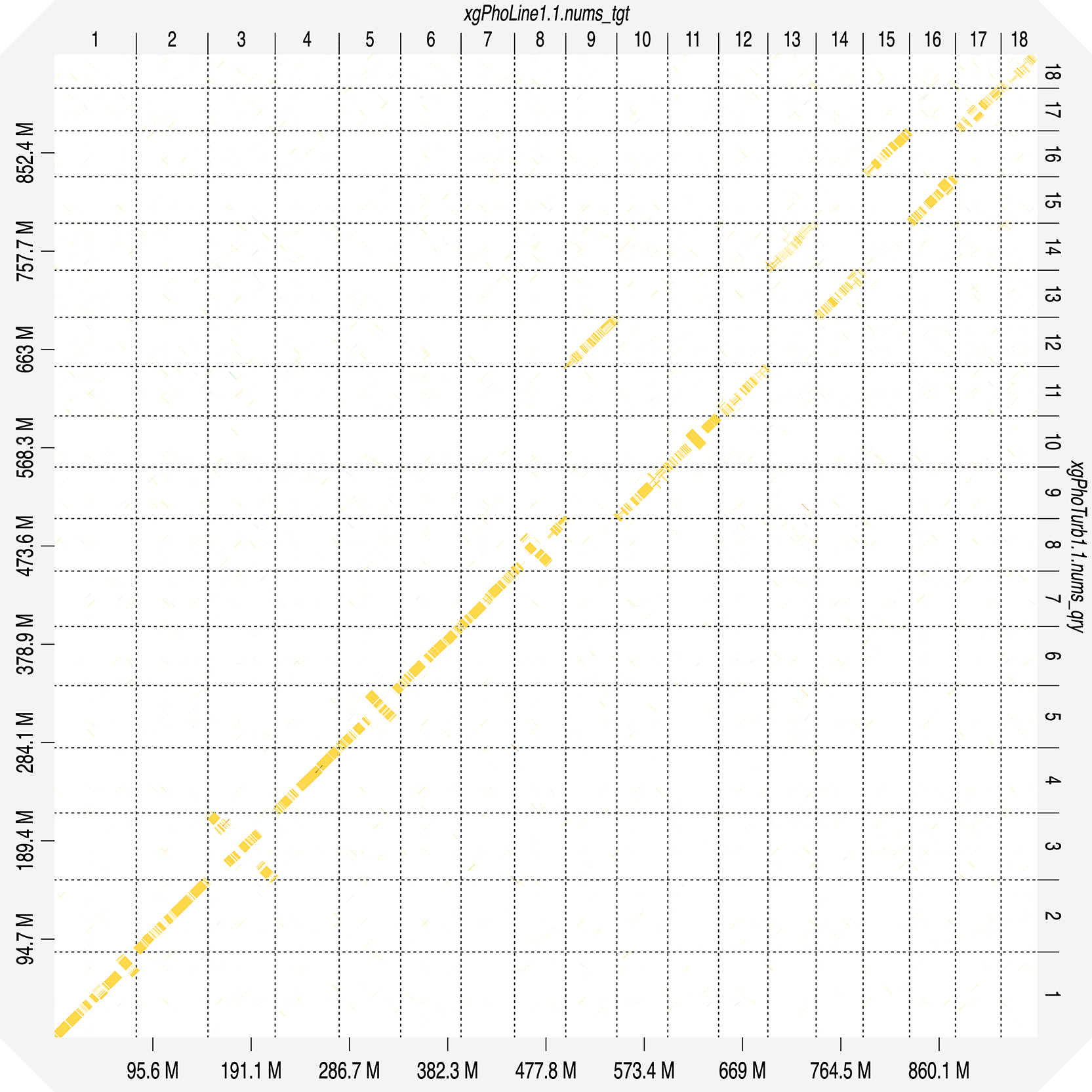
Figure 2. Whole-genome-alignment with Phorcus lineatus.
Dot-Plot of the minimap2 WGA between the two chromosome-level assemblies of Phorcus lineatus (X-axis) and Phorcus turbinatus (Y-axis) showing the strongest alignments between chromosomes. The plot was produced using D-GENIES (Cabanettes and Klopp, 2018). Note that chromosomes are numbered according to size, not karyotype; for example, chr12 of P. turbinatus and chr9 of P.lineatus derive from the same ancestral chromosome but have different names.
Genome annotation
The genome annotation consists of 40,094 protein-coding genes with associated 58,414 transcripts, in addition to 10,944 non-coding genes (
Table 1). Using the longest isoform per transcript, the single-copy gene content analysis using the Eukaryota database (odb10) with BUSCO resulted in 99.2% completeness. Using the OMAmer Metazoa-v2.0.0.h5 database for OMArk (Nevers et al., 2025) resulted in 96.0% completeness and 62.0% consistency (
Table 2).
Table 1. Statistics from assembled gene models.
| No. genes | No. transcripts | Mean gene length (bp) | No. single-exon genes | Mean exons per transcript |
|---|
| mRNA
| 40,094 | 58,414 | 16,269 | 1,248 | 9.3 |
| pseudogene
| 0.0 | 0.0 | 0.0 | 0.0 | 0.0 |
| snoRNA
| 98 | 98 | 150 | 98 | 1.0 |
| lncRNA
| 3,741 | 4,101 | 7,886 | 15 | 2.4 |
| tRNA
| 6,007 | 6,007 | 78 | 6,007 | 1.0 |
| snRNA
| 969 | 969 | 159 | 969 | 1.0 |
| rRNA
| 128 | 128 | 532 | 128 | 1.0 |
| scRNA
| 1 | 1 | 129 | 1 | 1.0 |
| Other ncRNA
| 10,979 | 10,979 | 75–105 | 10,979 | 1.0–1.0 |
Table 2. Annotation completeness and consistency scores calculated by BUSCO run in protein mode (eukaryota_odb10) and OMArk (Metazoa-v2.0.0.h5).
| Complete | Singular | Duplicated | Fragmented |
Missing |
|---|
| BUSCO
| 253 (99.2%) | 0.0 (0.0%) | 253 (99.2%) | 1 (0.4%) | 1 (0.4%) |
| OMArk
| 2,065 (96.0%) | 346 (16.1%) | 1,719 (79.9%) | - | 88 (4.1%) |
| Consistent | Inconsistent | Contaminants |
Unknown |
|---|
| OMArk
| 24,868 (62.0%) | 4,478 (11.2%) | 0.0 (0.0%) | 10,748 (26.8%) |
Author contributions
JS-O, KE, FÁFÁ and RF coordinated the project; JS-O, KE, FÁFÁ and RF collected the species; FÁFÁ identified the species; JS-O sampled and preserved biological material and provided metadata; AsB, RM, TM, RAO, and THS provided support in sampling, shipping of biological material, metadata collection, and management; LA and MG extracted DNA, prepared libraries, and performed sequencing; FCF, FC, and JG-G performed genome assembly and curation under the supervision of TSA; FM and LH performed genome annotation; CB generated the analysis and report. All authors contributed to the writing, review, and editing of this genome note and read and approved the final version.
Acknowledgements
We acknowledge the support of the Freiburg Galaxy Team: Saim Momin and Björn Grüning, Bioinformatics, University of Freiburg (Germany), funded by the German Federal Ministry of Education and Research BMBF grant 031 A538A de. NBI-RBC and the Ministry of Science, Research and the Arts Baden-Württemberg (MWK) within the framework of LIBIS/de. NBI Freiburg. We would like to acknowledge the assembly reviewer Benjamin Istace from Genoscope.
References
- Aken BL, Ayling S, Barrell D, et al.:
The Ensembl gene annotation system.
Database.
2016; 2016: baw093. Publisher Full Text
- Cabanettes F, Klopp C:
D-GENIES: dot plot large genomes in an interactive, efficient and simple way.
PeerJ.
2018; 6: e4958. PubMed Abstract
| Publisher Full Text
| Free Full Text
- Challis R, Kumar S, Sotero-Caio C, et al.:
Genomes on a Tree (GoaT): A versatile, scalable search engine for genomic and sequencing project metadata across the eukaryotic tree of life.
Wellcome Open Research.
2023; 8: 24. Publisher Full Text
- Cheng H, Asri M, Lucas J, et al.:
Scalable telomere-to-telomere assembly for diploid and polyploid genomes with double graph.
Nat. Methods.
2024; 21: 967–970. PubMed Abstract
| Free Full Text
- Consortium, U:
UniProt: A worldwide hub of protein knowledge.
Nucleic Acids Res.
2019; 47(D1): D506–D515.
- Gomez-Garrido J:
CLAWS (CNAG’s Long-read Assembly Workflow in Snakemake) [Computer software].2024.
- Gruber AR, Lorenz R, Bernhart SH, et al.:
The vienna RNA websuite.
Nucleic Acids Res.
2008; 36(suppl_2): W70–W74. PubMed Abstract
| Publisher Full Text
| Free Full Text
- Kalvari I, Nawrocki EP, Argasinska J, et al.:
Non-Coding RNA Analysis Using the Rfam Database.
Curr. Protoc. Bioinformatics.
2018; 62(1): e51. PubMed Abstract
| Publisher Full Text
| Free Full Text
- Kozomara A, Birgaoanu M, Griffiths-Jones S:
miRBase: From microRNA sequences to function.
Nucleic Acids Res.
2019; 47(D1): D155–D162. Publisher Full Text
- Kumar S, Stecher G, Suleski M, et al.:
TimeTree: a resource for timelines, timetrees, and divergence times.
Mol. Biol. Evol.
2017; 34(7): 1812–1819. PubMed Abstract
| Publisher Full Text
- Li H:
Minimap and miniasm: fast mapping and de novo assembly for noisy long sequences.
Bioinformatics.
2016; 32(14): 2103–2110. Publisher Full Text
- Manni M, Berkeley MR, Seppey M, et al.:
BUSCO update: Novel and streamlined workflows along with broader and deeper phylogenetic coverage for scoring of eukaryotic, prokaryotic, and viral genomes.
Mol. Biol. Evol.
2021; 38(10): 4647–4654. PubMed Abstract
| Publisher Full Text
| Free Full Text
- Mazzoni CJ, Ciofi C, Waterhouse RM:
Biodiversity: An atlas of European reference genomes.
Nature.
2023; 619: 252–252. Publisher Full Text
- Nawrocki EP, Eddy SR:
Infernal 1.1: 100-fold faster RNA homology searches.
Bioinformatics.
2013; 29(22): 2933–2935. PubMed Abstract
| Publisher Full Text
| Free Full Text
- Nevers Y, Warwick Vesztrocy A, Rossier V, et al.:
Quality assessment of gene repertoire annotations with OMArk.
Nat. Biotechnol.
2025; 43(1): 124–133. PubMed Abstract
| Publisher Full Text
| Free Full Text
- Rhie A, Walenz BP, Koren S, et al.:
Merqury: Reference-free quality, completeness, and phasing assessment for genome assemblies.
Genome Biol.
2020; 21(1): 245. PubMed Abstract
| Publisher Full Text
| Free Full Text