Introduction

Career development in the contemporary labour market presents unprecedented challenges as individuals navigate an increasingly complex landscape characterised by rapid technological change, globalisation, and evolving skill requirements.2 Traditional career guidance approaches, rooted in trait-factor matching theories dating back to Parsons' seminal work in 1909, have evolved considerably yet continue to face fundamental limitations in engagement, personalisation, and accessibility.3 Computer-Assisted Career Guidance Systems (CACGS) emerged in the 1960s as technological solutions to scale career counselling, but many contemporary implementations remain constrained by text-based interfaces, limited interactivity, and insufficient consideration of the narrative and contextual dimensions of career development.4

The theoretical foundation for modern career guidance has shifted substantially toward constructivist approaches, such as for example the Career Construction Theory (CCT), which emphasises the subjective and narrative nature of career development.5 CCT positions individuals as active authors of their career stories rather than passive recipients of guidance, suggesting that effective career interventions should facilitate self-reflection, self-meaning, and the construction of personally meaningful career narratives. This important finding has significant implications for the design of career guidance technologies, requiring systems that enable exploration, visualisation, and dialogue rather than system that simply provide information or matching profiles to specific job positions.

Extended Reality (XR) technologies, including Virtual Reality (VR), Augmented Reality (AR), and Mixed Reality (MR), offer transformative potential for career guidance by creating immersive environments that facilitate experiential learning and exploration.6 Research has demonstrated that XR can enhance engagement, improve information retention, and create emotional connections that text-based systems cannot achieve.7 However, the application of XR to career guidance still remains in early-stages, with limited empirical research examining its effectiveness and even fewer implementations that fully take advantage of the multimodal interaction possibilities these technologies afford.

Artificial Intelligence (AI) components including Automatic Speech Recognition (ASR), Neural Machine Translation (NMT), and conversational agents have matured considerably, enabling natural language interactions that can approximate human dialogue.8 When combined with XR, these technologies create opportunities for career guidance systems that respond to users in their preferred language, engage in contextual conversation, and provide personalised insights based on individual profiles and preferences.

A preliminary version of this work was presented at the XR Salento 2025 International Conference on Extended Reality,1 introducing the conceptual architecture and initial design specifications for XR-CareerAssist. The current paper extends this work substantially by presenting the complete technical implementation across five distinct AI modules (ASR, NMT, VL, Conversational Agent, and TTS), comprehensive pilot study results from 23 participants at the University of Exeter, quantitative performance metrics, qualitative user feedback analysis, and detailed discussion of implications for the field of AI-enhanced career guidance systems.

The system addresses the limitations of existing approaches through several key innovations. First, XR-CareerAssist creates an immersive XR environment enabling users to explore career paths through interactive visualisations and spatial interfaces rather than static web pages. Second, the platform provides multimodal AI integration through seamless combination of five AI technologies: ASR for voice input, NMT for multilingual support, a Conversational Agent (Training Assistant) for contextual dialogue, Vision-Language models for visual interpretation, and TTS for natural audio responses. Third, personalised career mapping through dynamic Sankey diagrams generated from over 100,000 anonymised professional profiles enables users to visualise potential career trajectories based on their individual characteristics. Fourth, interaction through a 3D avatar interface provides an interactive virtual assistant that engages users in natural conversation, enhancing the sense of presence and personal connection. The platform has been developed through an agile methodology, progressing from concept (TRL3-4) to a validated prototype demonstrated in a relevant environment (TRL6).

The remainder of this paper is structured as follows: Section 2 reviews related work in CACGS, XR applications in education and career guidance, and multimodal AI systems. Section 3 describes the system architecture, including the integration of AI components and the technical implementation. Section 4 details the pilot study methodology and presents comprehensive results. Section 5 discusses findings, implications, and limitations. Section 6 concludes with directions for future research.

Related work and background

Evolution of computer-assisted career guidance systems

The history of CACGS traces back to the 1960s with first systems attempting to use computers in career counselling.9 These early systems primarily focused on matching individual characteristics to occupational requirements, reflecting the dominant trait-factor paradigm of the era. The approach assumed that optimal career decisions resulted from aligning personal traits (interests, abilities, values) with job requirements, a perspective that while systematic, often overlooked the dynamic and constructive nature of career development.10

Contemporary CACGS have expanded beyond simple matching to incorporate more sophisticated features including career exploration tools, labour market information databases, and decision-making frameworks.4 Notable examples include O*NET (Occupational Information Network), which provides comprehensive occupational data, and career exploration platforms offered by major job search engines. However, recent studies identify persistent limitations in current CACGS, including insufficient integration of Career Construction Theory principles, limited personalisation beyond surface-level matching, and interfaces that fail to engage users in meaningful self-reflection and narrative construction.4

The C3-IoC system developed by José-García et al.11 represents recent advances in applying machine learning to career guidance. Their approach uses network visualisation and machine learning algorithms to assess student skills and suggest career pathways, demonstrating how AI can enhance the analytical capabilities of career systems. However, such systems typically remain confined to traditional screen-based interfaces, missing opportunities to leverage immersive technologies for enhanced engagement and experiential learning.

Extended reality in education and career guidance

XR technologies have demonstrated substantial potential in educational contexts, with research consistently showing benefits for engagement, motivation, and learning outcomes, particularly for complex or abstract concepts that benefit from visualisation.12 The immersive nature of XR enables experiential learning approaches that would be impractical or impossible in traditional settings, from virtual laboratory experiments to historical recreations.

Applications of XR specifically to career guidance remain relatively limited but show promising results. Garcia Estrada and Prasolova-Førland6 developed VR content for career guidance during the COVID-19 pandemic, finding that immersive experiences could partially compensate for the loss of in-person guidance opportunities. Their work demonstrated that VR could effectively convey occupational information and facilitate career exploration, though they noted the need for more sophisticated AI integration to enable truly personalised experiences.

Shepiliev et al.7 explored WebAR (Augmented Reality accessible through web browsers) for career guidance quests, creating gamified experiences that guide users through career exploration activities. Their approach showed increased engagement compared to traditional methods, though the AR implementation was necessarily limited by browser capabilities and did not incorporate the natural language processing or conversational AI that would enable more dynamic interactions.

Past research on immersive learning more broadly suggests that VR environments can enhance spatial understanding, improve retention of procedural knowledge, and create emotional connections that influence decision-making.13 For career guidance, these affordances suggest potential benefits in helping users visualise career paths, understand workplace environments, and develop emotional commitment to career goals. However, realising these benefits requires careful attention to user experience design, technical performance, and integration with pedagogically sound guidance approaches.

Multimodal AI for natural interaction

The convergence of multiple AI technologies enables natural, multimodal interaction that more closely approximates human communication. ASR systems have achieved near-human accuracy for many languages and acoustic conditions,14 while NMT has reached quality levels suitable for real-time communication across language pairs.15 Conversational AI systems, powered by large language models, can maintain contextual dialogue and provide substantive responses across diverse domains.16

Voice-based interaction offers particular advantages for XR environments, where traditional input devices (keyboards, mice) are unavailable or impractical. ASR enables hands-free interaction that maintains immersion while allowing users to express complex queries and engage in natural dialogue. When combined with NMT, systems can serve users regardless of their native language, addressing a critical accessibility concern for global deployment.17

Vision-Language (VL) models represent a more recent advancement, enabling systems to understand and describe visual content.18 These models can interpret images, diagrams, and visualisations, potentially enabling career guidance systems to explain complex career trajectories depicted in visual formats. The BLIP (Bootstrapping Language-Image Pre-training) model19 exemplifies this capability, though domain-specific fine-tuning is typically required for specialised applications like career diagram interpretation.

Text-to-Speech (TTS) technology completes the interaction loop, enabling systems to provide spoken responses that enhance naturalness and accessibility. Modern neural TTS systems, including cloud services like AWS Polly, produce speech that approaches human quality, though voice selection and prosody remain important design considerations.20

The CVCOSMOS platform and VOXReality ecosystem

XR-CareerAssist builds upon two foundational platforms that provide critical capabilities for the career guidance system. The CVCOSMOS platform offers a comprehensive database of over 100,000 anonymised professional CVs, enabling data-driven analysis of career trajectories across industries, roles, and time periods.21 This database provides the empirical foundation for generating personalised career maps, allowing users to see how professionals with similar backgrounds have progressed through their careers. The platform exposes APIs for querying career data and generating statistical analyses, making it suitable for integration with front-end applications.

The VOXReality project is a Horizon Europe initiative focused on developing and validating immersive media technologies.22 VOXReality provides the core AI models that power XR-CareerAssist's multimodal interaction capabilities, including ASR for speech recognition, NMT for translation, and LLM’s for conversational AI. By extending these general-purpose models for career guidance applications, XR-CareerAssist takes advantage of proven technologies while adapting them to domain-specific requirements. The integration of CVCOSMOS career data with VOXReality AI models, delivered through an immersive XR interface, creates a unique combination that separates XR-CareerAssist from existing career guidance solutions.

System design and architecture

Architectural overview

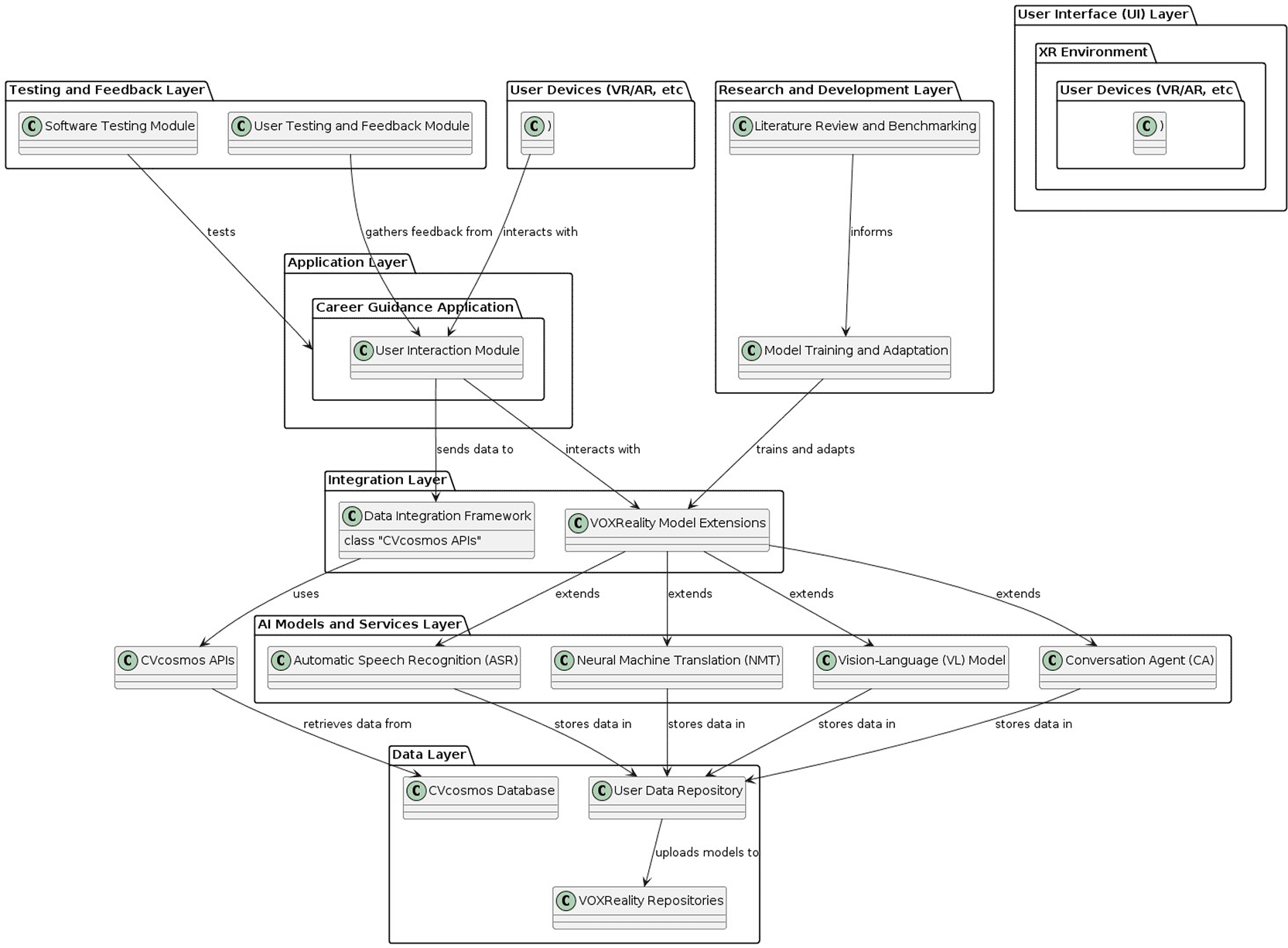
XR-CareerAssist employs a layered architecture designed for modularity, scalability, and maintainability. The system comprises five primary layers: User Interface Layer, Application Layer, Integration Layer, AI Models and Services Layer, and Data Layer. Figure 1 illustrates the comprehensive system architecture showing the relationship between these layers and the flow of data through the various AI components. The architecture diagram presents the layered system design including: User Interface (UI) Layer with VR/AR devices accessing the XR Environment; Application Layer containing the Career Guidance Application with User Interaction Module and Model Training and Adaptation components; Integration Layer featuring the Data Integration Framework (APIs) and VOXReality Model Extensions; AI Models and Services Layer hosting the ASR, NMT, Vision-Language (VL) Model, and Conversational Agent (CA); and the Data Layer comprising the CVs Database and User Data Repository connected to VOXReality Repositories. The diagram shows data flows between the various technical components.
4e8cbcf1-2666-4e22-96f7-cc3b1461d6be_figure1.gif

Figure 1. XR-CareerAssist architecture diagram and component.

The User Interface Layer encompasses the immersive XR environment accessed through VR headsets, specifically the Meta Quest 3 platform. This layer handles user input through voice commands, gesture controls, and gaze-based selection, while rendering the 3D environment, career visualisations, and avatar interactions.

The Application Layer manages the core career guidance logic, including questionnaire management, user session handling, and coordination of AI model inference. This layer translates user inputs into appropriate API calls and orchestrates the response flow from multiple AI components.

The Integration Layer provides abstraction between the application and external services, implementing adapters for the CVs database and AI models. This layer handles authentication, rate limiting, error handling, and data transformation, ensuring reliable communication with backend services.

The AI Models and Services Layer contains the core AI capabilities: ASR for speech-to-text conversion, NMT for translation, the Conversational Agent for dialogue management, VL models for visual interpretation, and TTS for speech synthesis. Each component is independently deployable and scalable.

The Data Layer manages persistent storage including user profiles, session data, and cached career information. The layer interfaces with the CVs database for career trajectory data while maintaining user privacy through appropriate data handling practices.

Envisioned user scenario

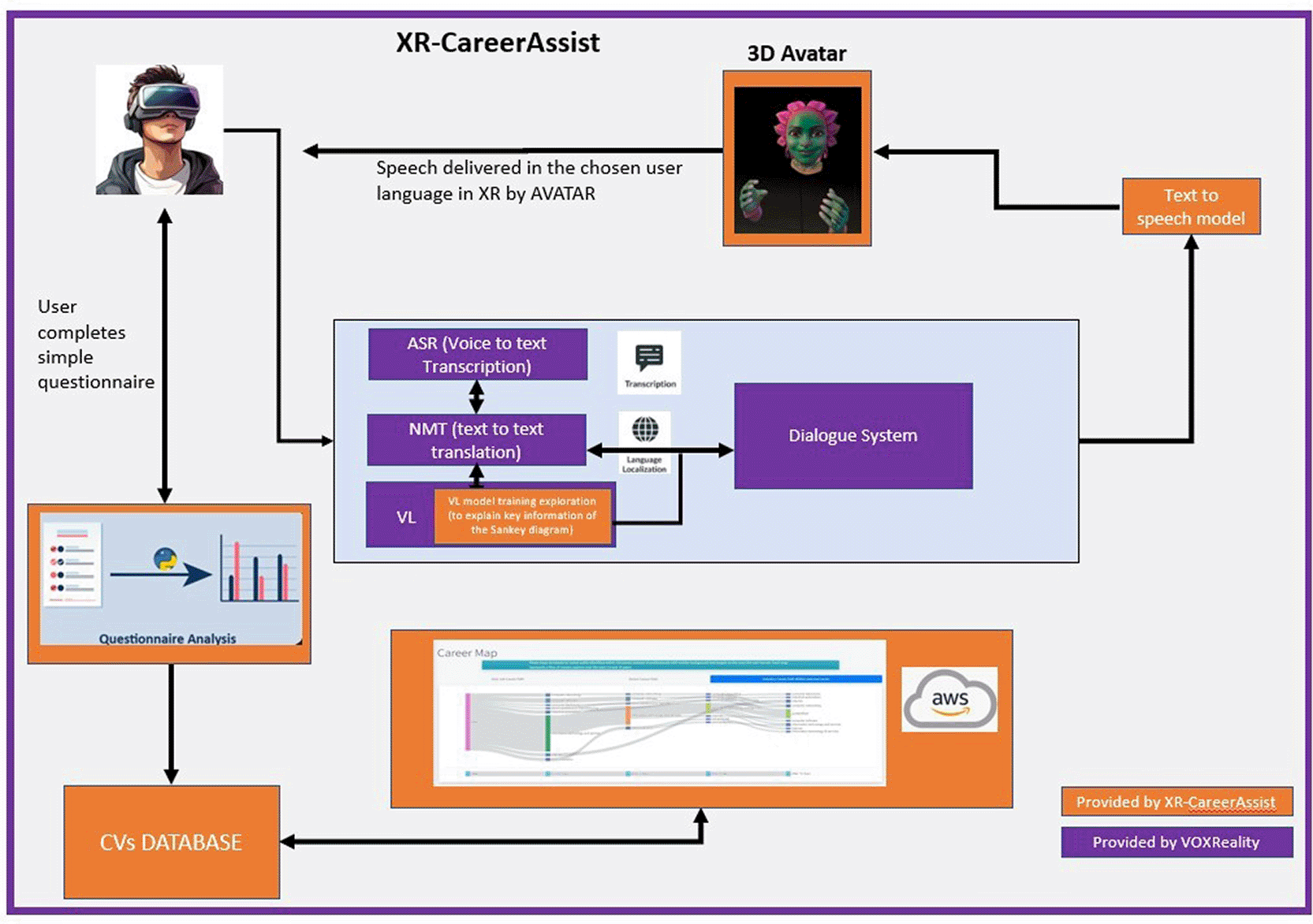
Figure 2 presents the complete envisioned scenario for XR-CareerAssist, illustrating how users interact with the system and how different AI components work together to deliver personalised career guidance. The scenario diagram illustrates the complete user journey and AI integration flow. The user wearing a VR headset interacts with a 3D Avatar in the XR environment. The user's spoken query is processed through the ASR module, which transcribes the speech to text. The NMT module translates the text if necessary for multilingual support. The system queries the CVs Database to retrieve relevant career profiles. The VL model interprets any career visualisations (Sankey diagrams) to provide explanations. The Dialogue System generates a personalised response. The response is sent through the TTS service running on AWS infrastructure to produce natural speech output delivered through the 3D Avatar. The diagram shows the circular flow of information and highlights the AWS cloud deployment architecture supporting the backend services.

4e8cbcf1-2666-4e22-96f7-cc3b1461d6be_figure2.gif

Figure 2. Envisioned scenario of XR-CareerAssist.

Table 1 summarises the complete user journey and AI models’ integration, showing each step of interaction and the corresponding AI component involved.

Table 1. User journey and AI models integration.

StepUser inputModel/ProcessOutput
User completes questionnaireJob role, years of experience, skills, target role, industry preferencesUser input processed by CV’s database via APICareer profiles matched, Sankey diagrams generated
User navigates platform using voiceVoice-based navigation and queriesASR Model: Converts spoken input into textTranscribed text for NMT processing
User interacts in preferred languageText output from ASRNMT Model: Translates text into user’s chosen languageMultilingual accessibility enabled
User selects career map for insightsUser requested insights for Sankey diagramVL Model: Interprets Sankey diagramsCareer progression explained in text
User asks career questionsUser queries about career pathsDialogue System: Responds with personalized adviceTailored guidance delivered
User listens to responsesContinued interactionTTS: Text converted to speech via 3D AvatarAudio responses enhance engagement

Backend infrastructure

The backend services are deployed on AWS Elastic Beanstalk, utilising a GPU-enabled EC2 instance (g4dn.xlarge with 16GB GPU memory) running Ubuntu. The deployment includes NGINX as a reverse proxy for efficient request handling and SSL termination, Python 3.12 runtime with FastAPI for high-performance API services, and DuckDB for in-memory analytical queries on career data.

The API architecture follows RESTful principles with endpoints for questionnaire submission (/profile/sankey POST), AI model invocations (/asr, /nmt, /tts, /dialogue), and health monitoring. Response caching reduces redundant processing, particularly for frequently requested career scenarios.

System component implementation and validation

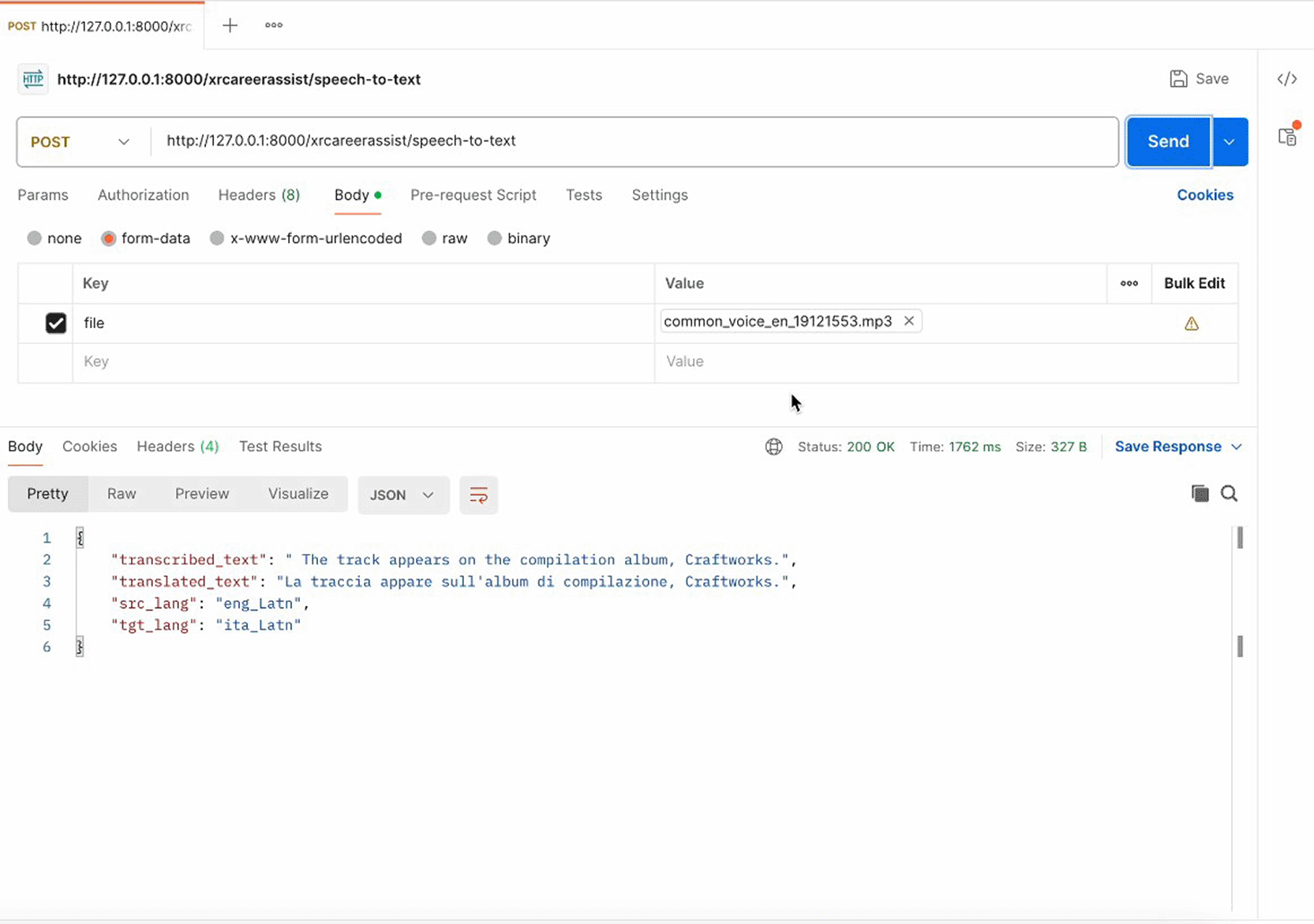
Automatic Speech Recognition (ASR): The ASR component provides the primary voice input channel for XR-CareerAssist. The system accepts voice input directly from the XR environment, processes spoken queries through the ASR model supporting English, Greek, and French, and returns transcribed text with confidence scores. The model achieves recognition accuracy exceeding 95% in controlled environments, with response latency under 2 seconds for typical queries. Figure 3 illustrates the ASR pipeline showing the complete flow from English voice input to text transcription, along with the subsequent NMT translation to Italian. The ASR pipeline demonstration shows the complete speech-to-text and translation flow. The top section displays the audio input waveform from an English voice recording. The middle section shows the ASR transcription output with the recognised text in English. The bottom section demonstrates the NMT module translating the English text into Italian, showing the complete text-to-text mapping from source to target language. The interface displays timing metrics, confidence scores, and language detection indicators, demonstrating the real-time processing capability of the integrated ASR and NMT components.
4e8cbcf1-2666-4e22-96f7-cc3b1461d6be_figure3.gif

Figure 3. XR ASR pipeline: English voice input to text transcription and NMT translation.

Neural Machine Translation (NMT): The NMT component enables multilingual accessibility by translating text between supported language pairs. The system provides translation capabilities for English, Greek, French, and Italian, with bidirectional translation support and response latency under 2 seconds per translation request. Integration with ASR enables seamless translation of voice input, while integration with TTS ensures translated responses can be spoken in the user's preferred language.

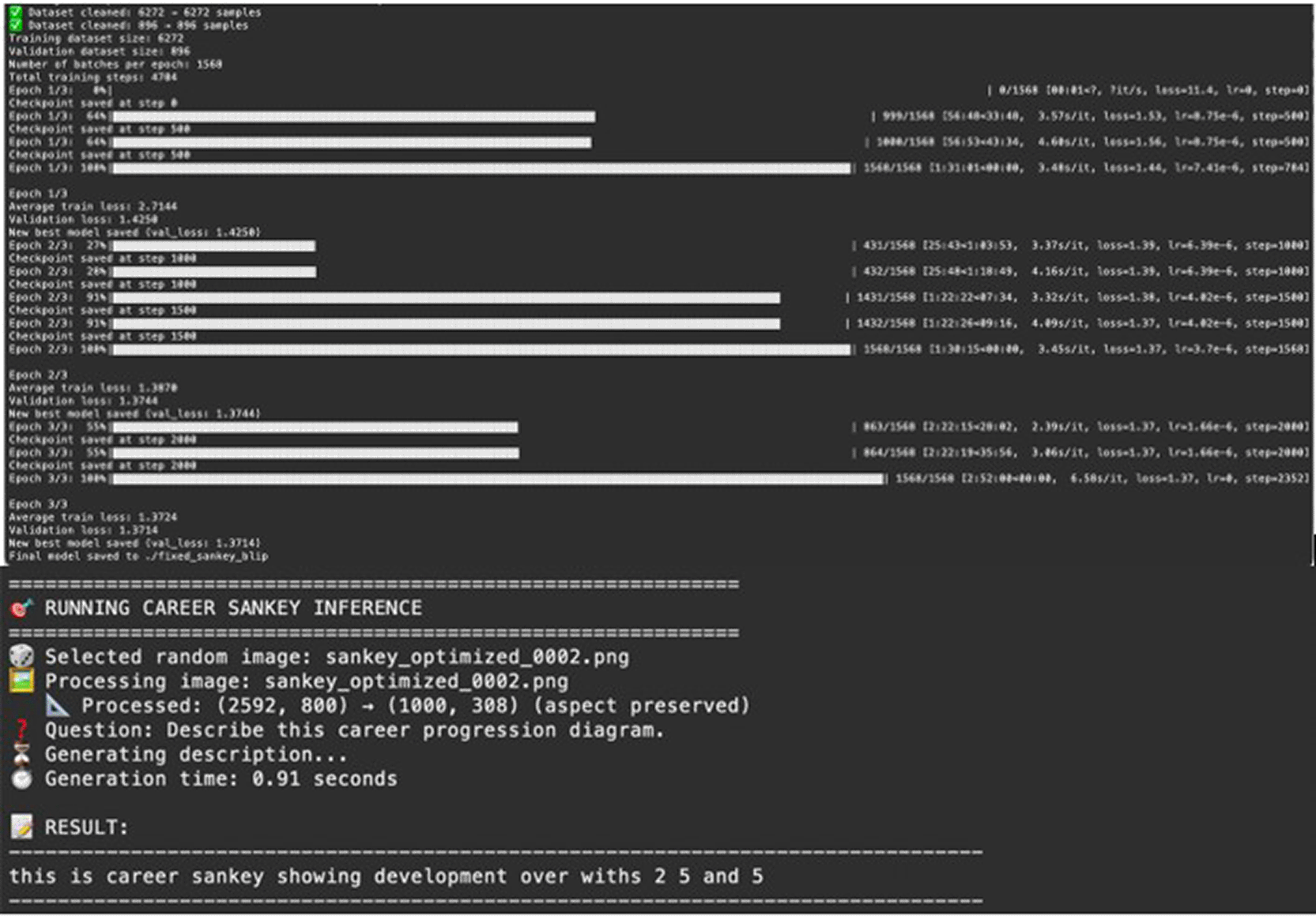
Vision-Language Model (VL): To enable natural language interpretation of career visualisations, the team fine-tuned a BLIP-based Vision-Language model. The fine-tuning process utilised k-means clustering to select 20 representative Sankey diagram images from the career data corpus, followed by training for 50 epochs. The resulting model can respond to user queries about Sankey diagrams, explaining career transitions and patterns shown in the visualisations. Figure 4 demonstrates the VL model's performance on sample Sankey diagram queries. The VL model performance demonstration shows two examples of the fine-tuned BLIP model responding to questions about Sankey diagrams. Each example displays a Sankey diagram image alongside the user's natural language question and the model's generated response. The first example shows a question about career transition patterns, with the model correctly identifying the major pathways shown in the diagram. The second example demonstrates the model's ability to explain the relative frequencies of different career moves based on the width of the flows in the visualisation. The results demonstrate that the fine-tuning approach successfully adapted the general-purpose BLIP model for domain-specific career diagram interpretation.
4e8cbcf1-2666-4e22-96f7-cc3b1461d6be_figure4.gif

Figure 4. VL model extended through finetuning to respond to sankey diagrams.

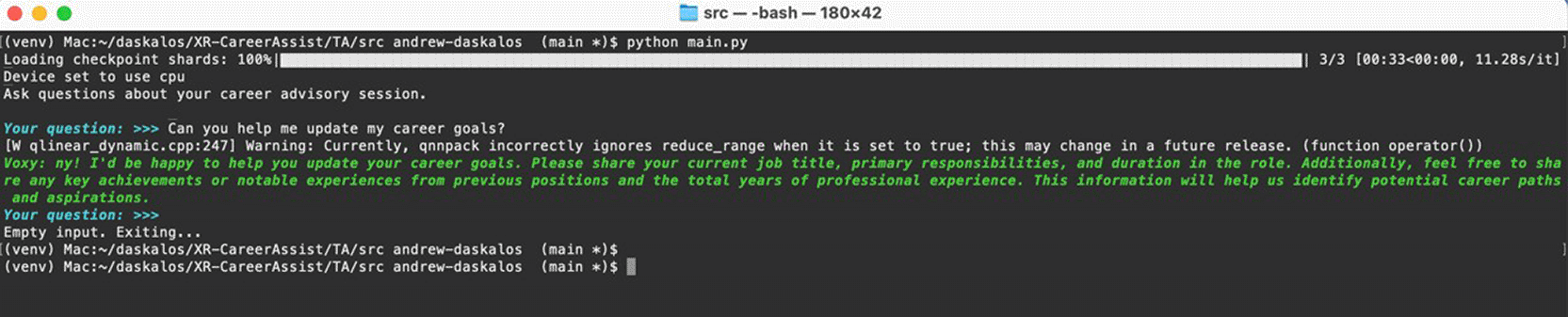
Conversational Agent (Training Assistant): The Conversational Agent (Training Assistant), provides contextual dialogue capabilities within the XR environment. The agent is built on the Langchain framework and is able to maintain conversation context, integrate with career data APIs for personalised responses, and escalate complex queries to external resources when necessary. It serves as the primary interface through which users interact with career guidance features, with its responses delivered through the 3D avatar via TTS. Figure 5 shows the dialogue system training manual that guides users in their interactions. The Dialogue System Training Manual provides structured guidance for users interacting with the XR-CareerAssist platform. The manual includes step-by-step instructions for engaging with the Training Assistant, best practices for formulating career-related questions, guidance on interpreting system outputs, tips for navigating various platform features, and troubleshooting information for common issues. The manual is designed to ensure a seamless user experience and maximise the value users derive from their interactions with the conversational agent.
4e8cbcf1-2666-4e22-96f7-cc3b1461d6be_figure5.gif

Figure 5. Dialogue system training manual for XR-CareerAssist.

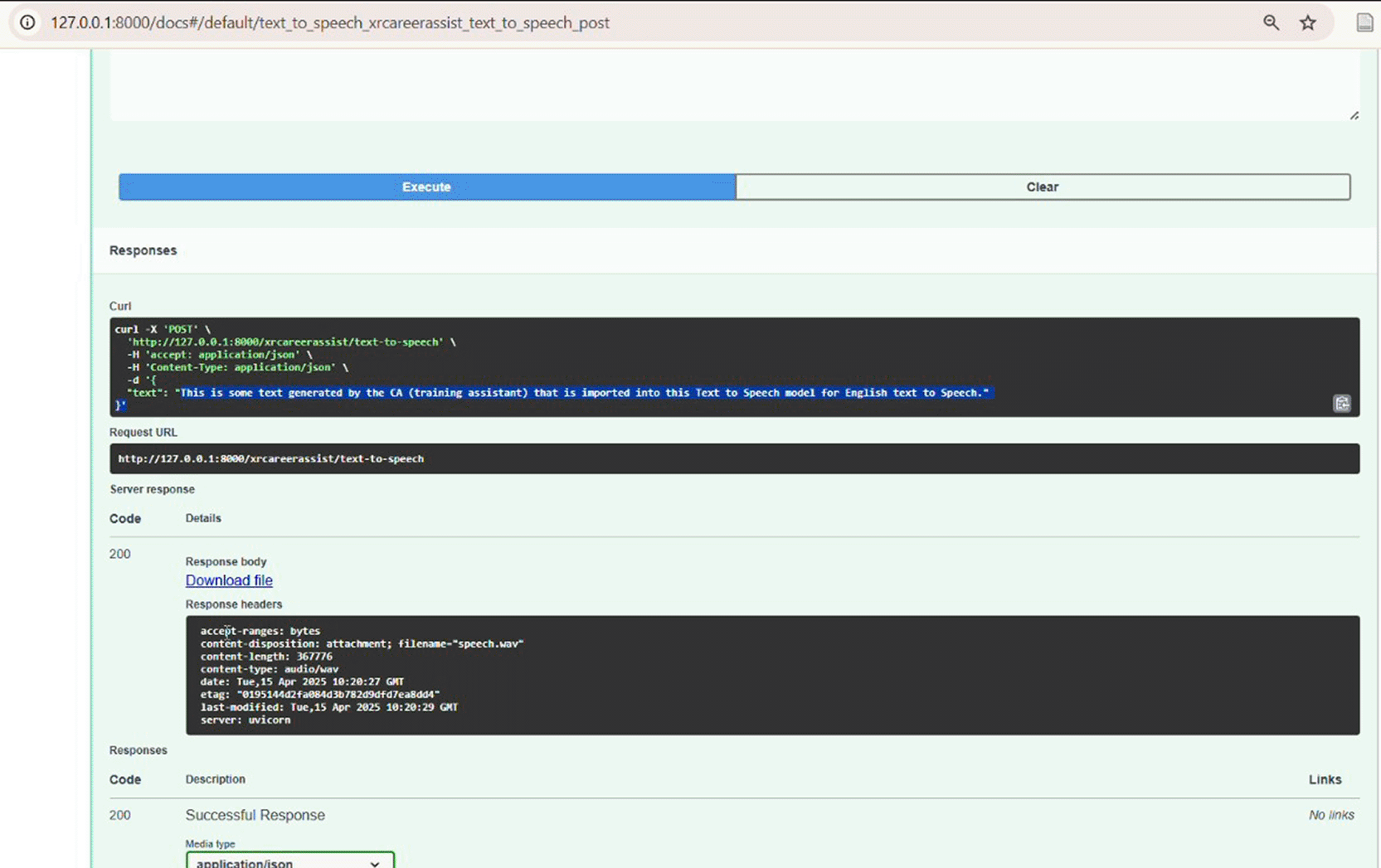
Text-to-Speech (TTS): To enhance the immersive and accessible nature of XR-CareerAssist, a Text-to-Speech (TTS) feature was implemented to convert generated textual outputs into lifelike audio responses for users interacting within the XR environment. Initially, the team evaluated the open-source PIPER TTS engine, which was successfully installed, configured, and tested locally as shown in Figure 6. However, PIPER revealed significant technical limitations including reliance on unmaintained Python dependencies and incompatibility with Python 3.12 used across the XR-CareerAssist backend. As an alternative, the team deployed AWS Polly, a robust and secure cloud-based TTS service, ensuring high reliability, compliance with security best practices, and consistent performance. Multiple Polly voices were evaluated and selected to ensure natural-sounding speech aligned with the XR user experience goals.
4e8cbcf1-2666-4e22-96f7-cc3b1461d6be_figure6.gif

Figure 6. Local testing of PIPER TTS with XR-CareerAssist backend.

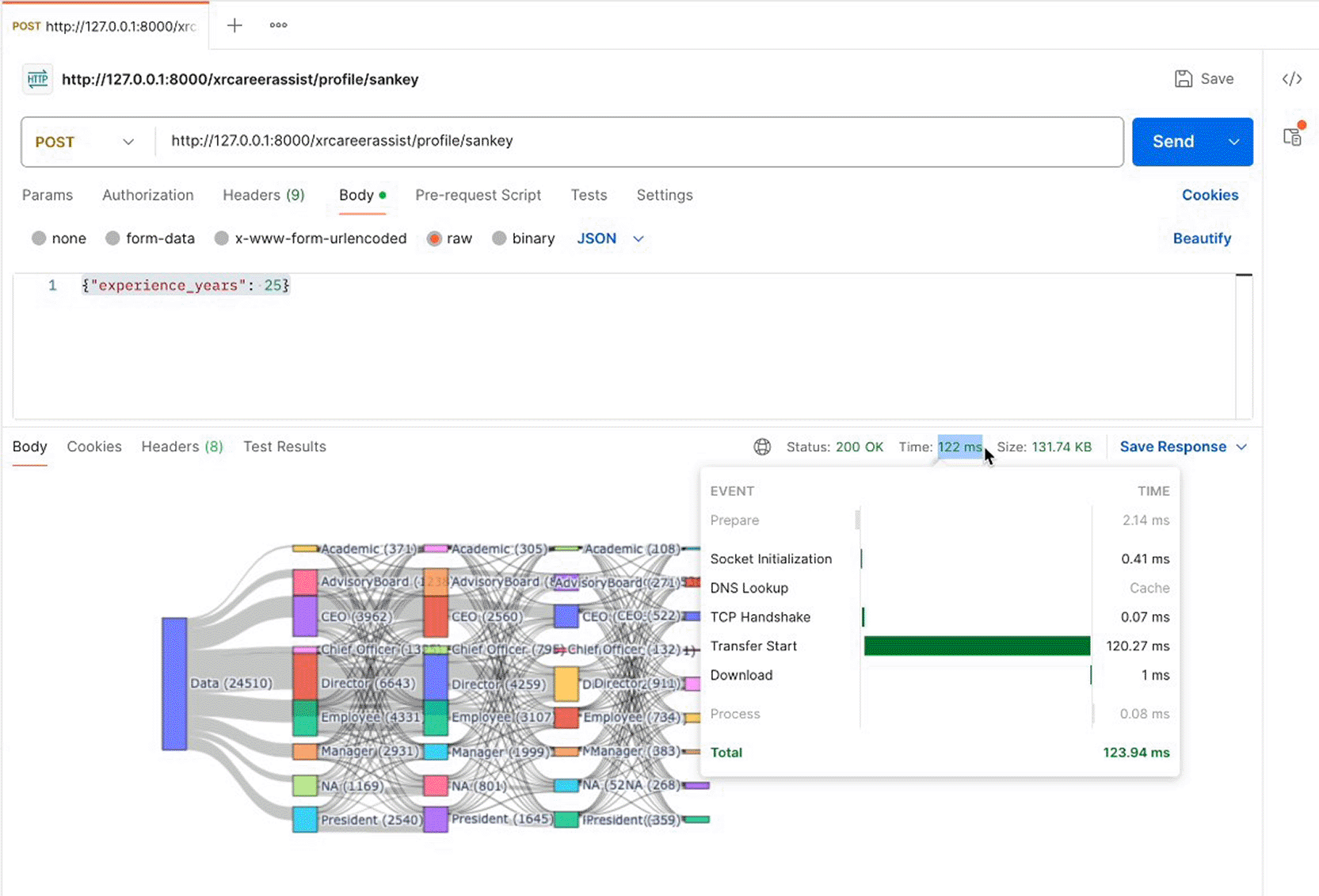
Career Data Integration and Visualisation: A major technical achievement involved the successful integration of the CVs database with the XR-CareerAssist backend infrastructure. The project team utilised DuckDB for efficient in-memory analytics, and a dedicated API service was implemented in Python to expose high-performance endpoints for querying the anonymised profiles dataset. The API endpoint (/profile/sankey POST) accepts questionnaire-style inputs and returns a PNG image of a generated Sankey diagram. Figure 7 shows a sample Sankey diagram generated from CVC data. This visualisation displays career transitions for a user profile with 25 years of experience showing all role possibilities. It shows flowing paths from current roles on the left through intermediate career stages in the middle to potential future roles on the right, spanning a 10-year projection period. Different colour bands represent various career trajectories including transitions to senior roles, lateral moves within industries, and cross-industry shifts. The width of each flow indicates the relative frequency of that career transition among similar professionals in the database, providing data-driven insights into likely career progressions.
4e8cbcf1-2666-4e22-96f7-cc3b1461d6be_figure7.gif

Figure 7. Sample sankey diagram generated from CVC data for a user profile input.

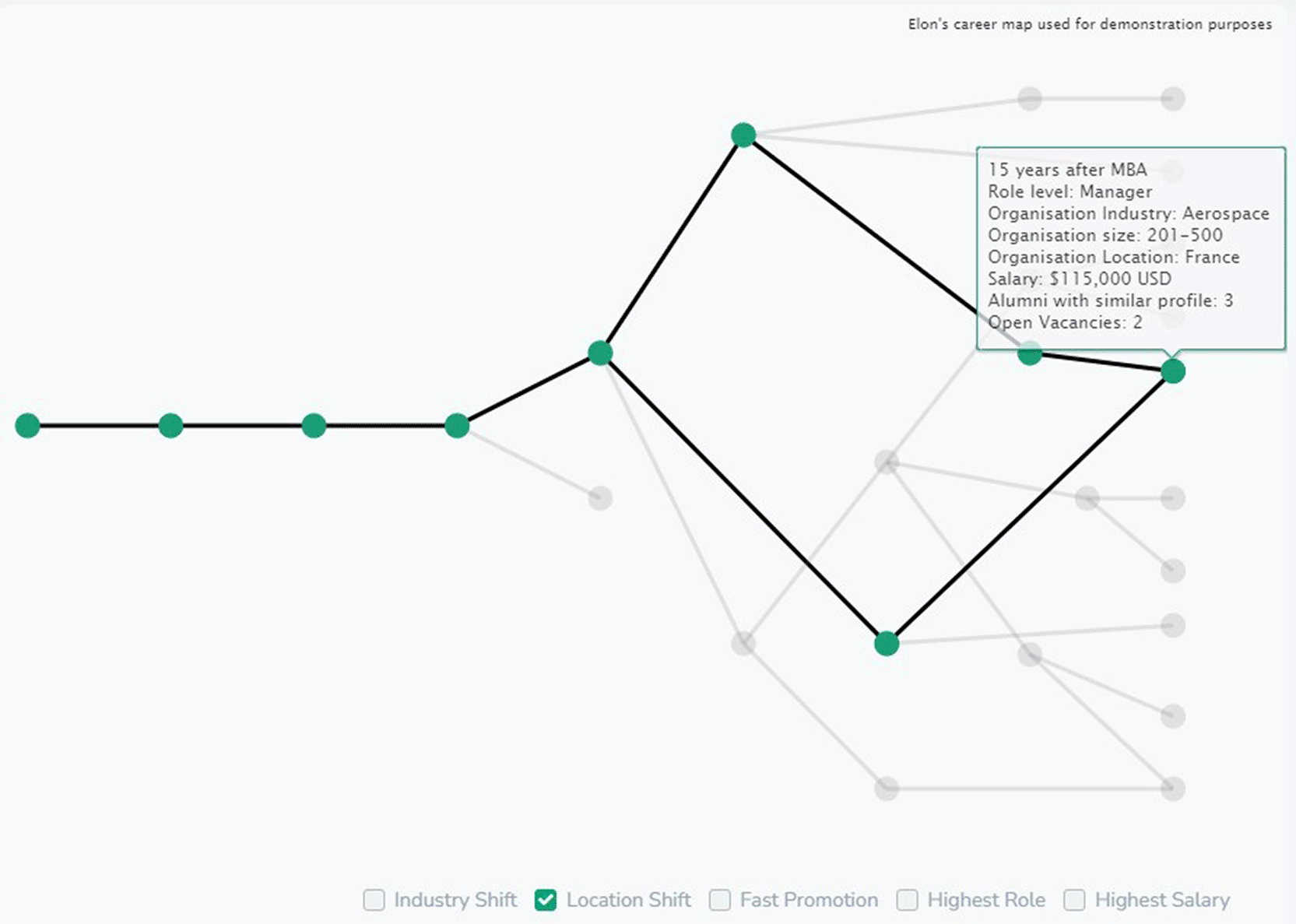
The career map concept demonstrates how users can visualise their potential career progression over time, tracking professional journeys including role progressions and industry shifts. Figure 8 shows the Career Map concept note with detailed metrics.
4e8cbcf1-2666-4e22-96f7-cc3b1461d6be_figure8.gif

Figure 8. Career map concept note for location shift target.

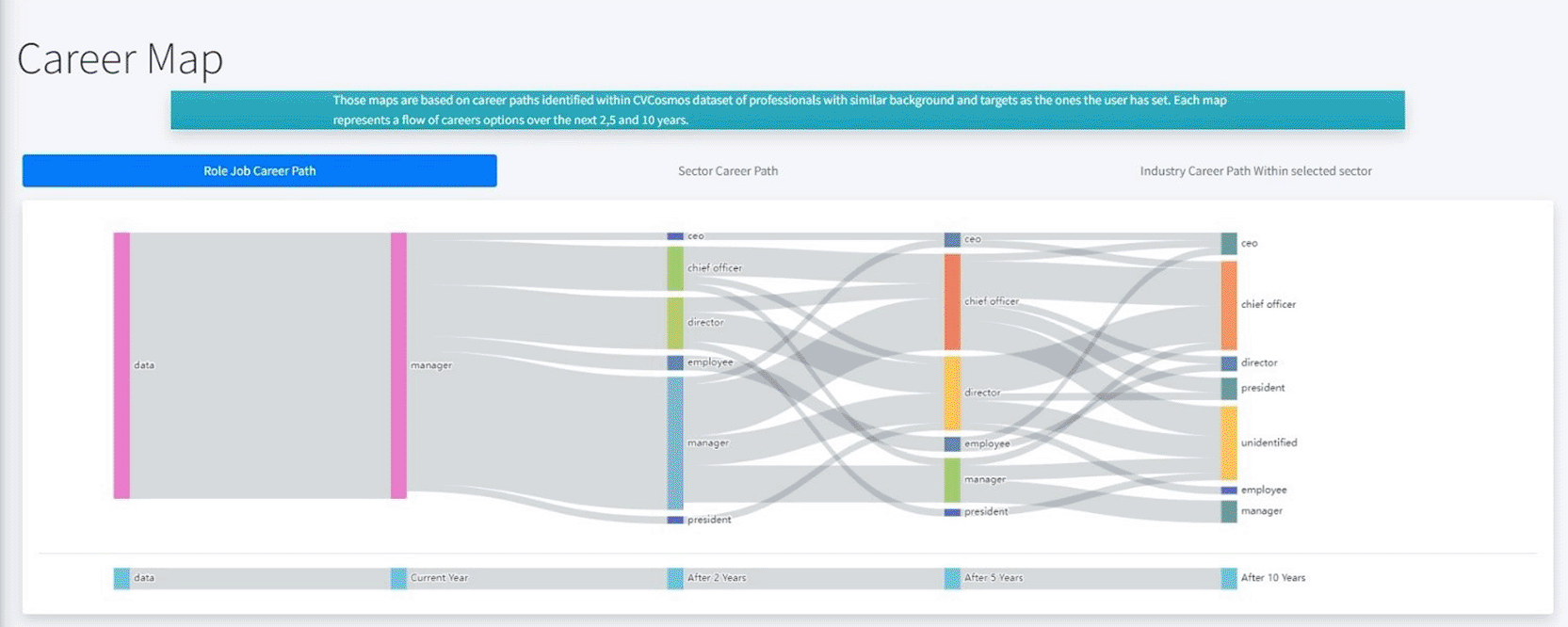
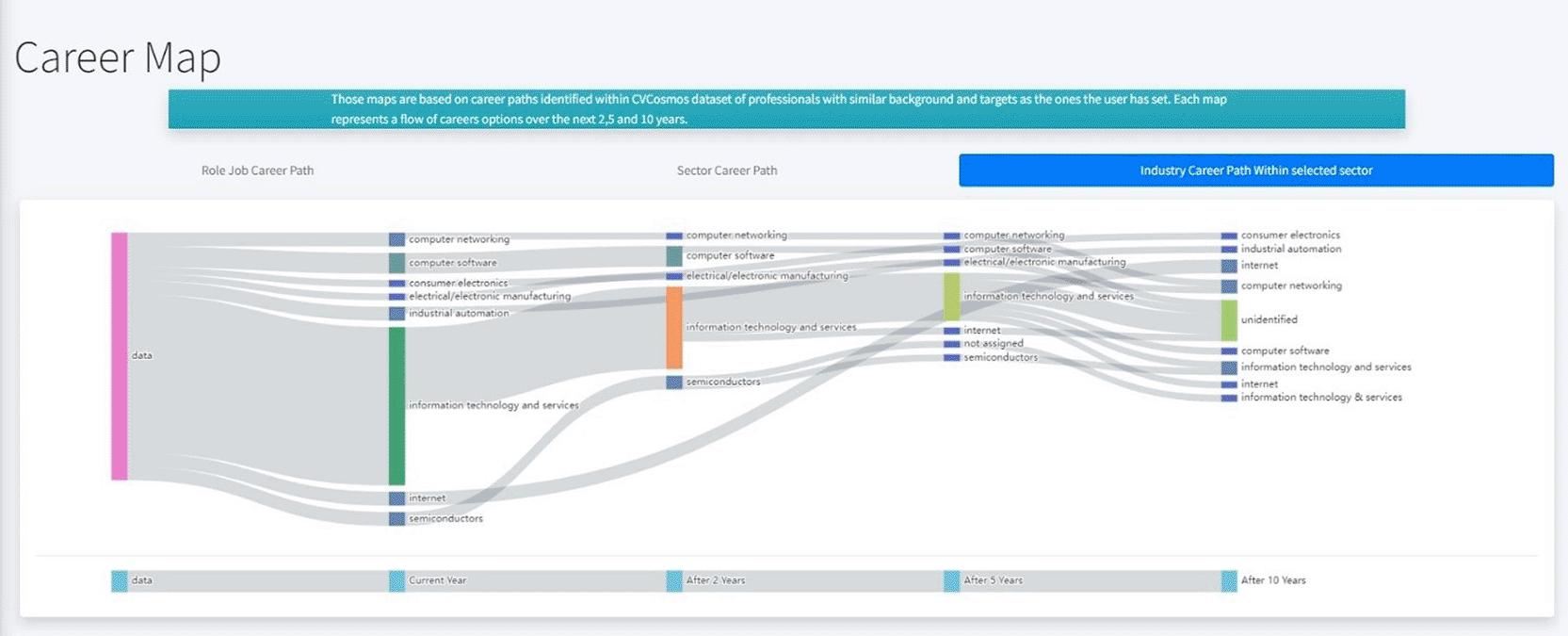
The platform provides users with dynamic career maps displaying potential role and industry transitions over different time periods (2, 5, and 10 years). Figure 9 presents the Job Role Evolution Career Map and Figure 10 shows the Industry Shift evolution diagram. The Role Job Career Path Sankey diagram provides a visualization of career progression based on user input for a 10-year projection. The left column shows starting roles (Employee, Manager, Director), the middle columns show intermediate career stages at 2 and 5 years, and the right column shows potential roles at 10 years (Chief Officer, Director, Manager). The flowing bands between columns show transition frequencies, with wider bands indicating more common career paths. The diagram helps users visualise potential transitions to higher-level positions with pathways showing possible detours or accelerations based on sector and industry variables. The Industry Shift Career Path Sankey diagram shows how professionals typically move between industries over a 10-year period. The left column lists source industries (Computer Manufacturing, Financial Services/Insurance, Investment Banking, IT Services/Consulting, Software Products), the middle columns show industry distributions at 2 and 5 years, and the right column shows the 10-year industry destinations. The flow widths indicate the relative frequency of each industry transition, revealing patterns such as common moves from IT Services to Software Products or the stability of professionals remaining within Financial Services.
4e8cbcf1-2666-4e22-96f7-cc3b1461d6be_figure9.gif

Figure 9. Job role evolution career map for specified user input for the next 10 years.
4e8cbcf1-2666-4e22-96f7-cc3b1461d6be_figure10.gif

Figure 10. Industry shift evolution career map for specified user input for 10 years.

XR User Interface and Experience: The XR environment was developed using Unity 2022.3 LTS with Meta SDK 2.0, optimised for the Meta Quest 3 platform. The interface incorporates interactive 3D elements that guide users through career exploration activities, with user-friendly navigation ensuring accessibility for individuals with varying levels of XR familiarity.

Career questionnaires were created to collect user data on professional interests, skills, and career aspirations. The design ensures clarity and brevity to maintain user engagement, with questions tailored to elicit information essential for generating accurate career transition visualisations.

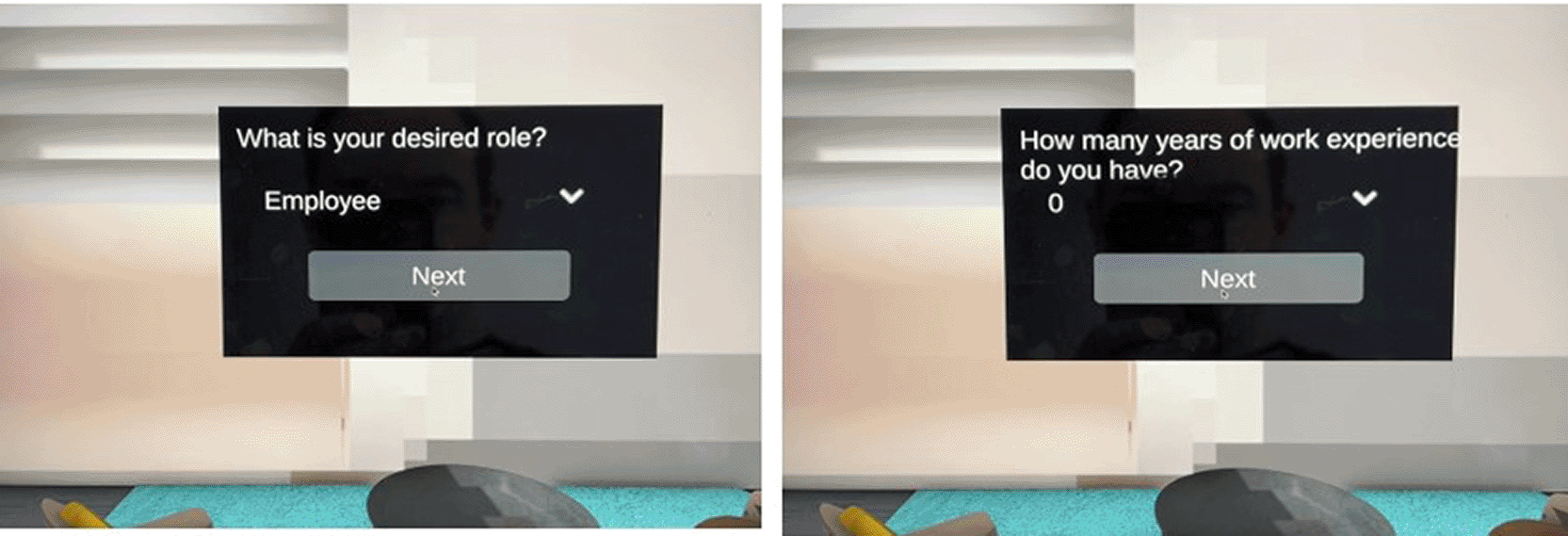
Figure 11 illustrates the questionnaire flow within the XR environment. The questionnaire interface presents two sequential input screens within the immersive VR environment. In the first panel (left), users are asked to insert their desired role with a dropdown menu offering career level options including Employee, Manager, Director, and Executive. In the second panel (right), users specify their work experience by providing the years of work experience they have. Both panels feature a clean, dark-themed design optimised for VR readability, with clearly visible text, intuitive dropdown selectors, and prominent “Next” buttons to progress through the questionnaire. The virtual office environment is visible in the background, maintaining spatial context within the immersive experience. Based on these user inputs, the system queries the CVCOSMOS database containing over 100,000 anonymised CVs from highly experienced professionals to identify matching career trajectories and potential career shifts. The algorithm analyses profiles with similar starting characteristics to generate personalised Sankey diagrams showing statistically-derived career progression pathways over 2, 5, and 10-year time horizons.
4e8cbcf1-2666-4e22-96f7-cc3b1461d6be_figure11.gif

Figure 11. Questionnaire flow in XR to generate career sankey diagrams.

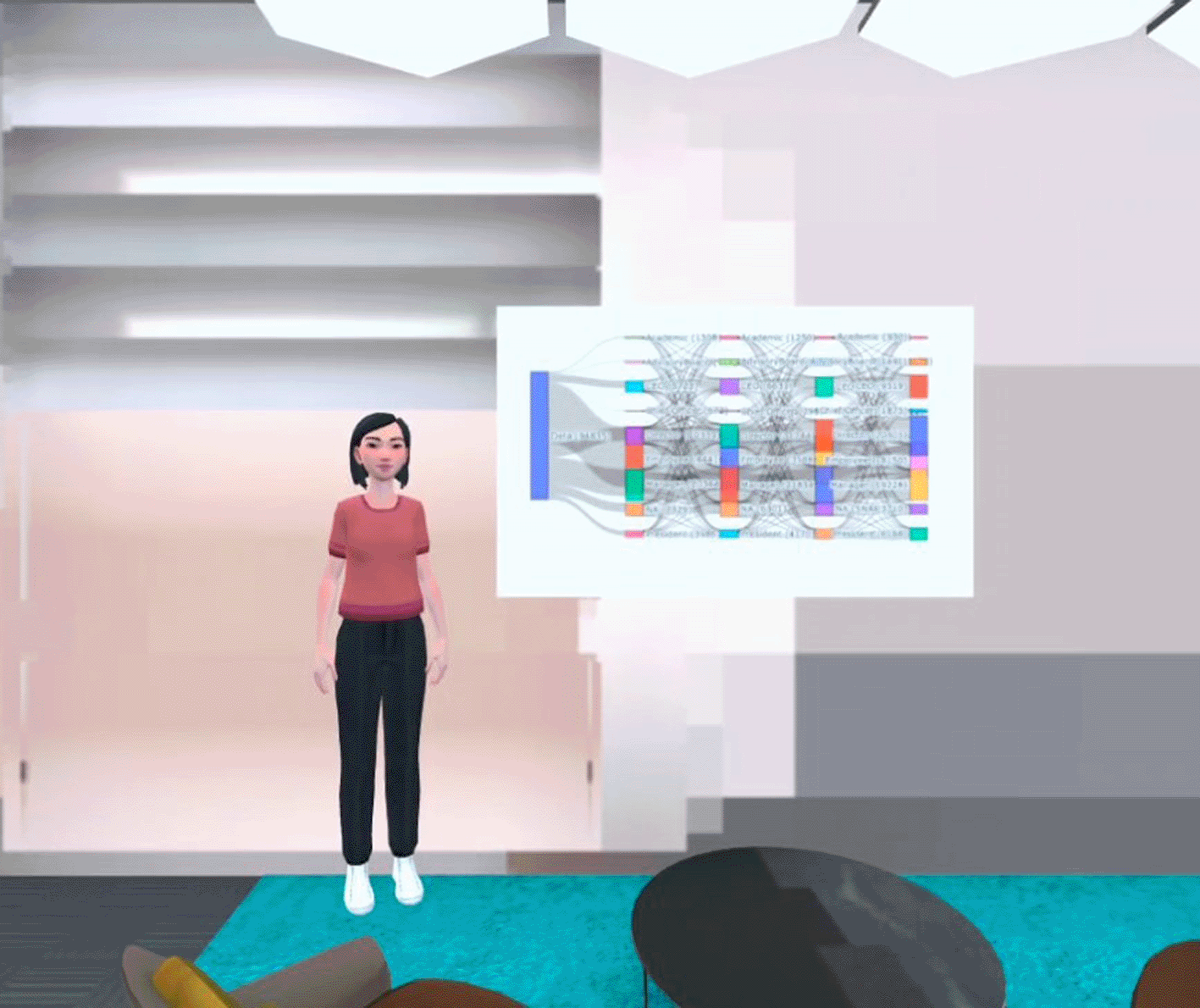
Figure 12 illustrates the main XR interface where users interact with the career guidance features. The VR scene illustrates the immersive environment as experienced on the Meta Quest 3 headset. The 3D avatar (Training Assistant) is positioned to the left of the view, facing the user with a welcoming posture. The main viewing area displays a Sankey diagram panel showing career transition flows. The virtual environment features a modern, professional aesthetic with ambient lighting and clean geometric design elements. The interface demonstrates the spatial arrangement of interactive elements in the actual VR experience, with the avatar positioned for natural conversation and the career visualisation prominently displayed for easy viewing and discussion.
4e8cbcf1-2666-4e22-96f7-cc3b1461d6be_figure12.gif

Figure 12. XR-careerassist user interface in XR environment.

Users can engage in natural voice-based dialogue to inquire about the displayed career visualisations. When a user poses a question about the Sankey diagram, such as asking about specific career transitions or the likelihood of progression to a particular role, the integrated microphone captures the spoken query. The Automatic Speech Recognition (ASR) module transcribes the audio input into text in real-time. If the transcribed text is in a language other than English (e.g., Italian or French), the Neural Machine Translation (NMT) module automatically translates it into English to ensure compatibility with downstream processing. The translated text is then passed to the Conversational Agent (Training Assistant), which is specifically trained to interpret career-related queries and generate contextually appropriate textual responses. Finally, the generated response text is converted into natural-sounding speech using Amazon Polly's Text-to-Speech (TTS) service, and the audio output is delivered through the 3D avatar, creating a seamless, immersive conversational experience that guides users through their personalised career exploration.

Performance Optimisation: The backend API, specifically the Sankey diagram generation endpoint, underwent substantial performance optimisation. Initial implementations required approximately 45 seconds to generate personalised career maps. Following optimisation through query restructuring, index optimisation, caching strategies, and algorithm improvements, response times were reduced to approximately 200 milliseconds, representing a 99.56% improvement.

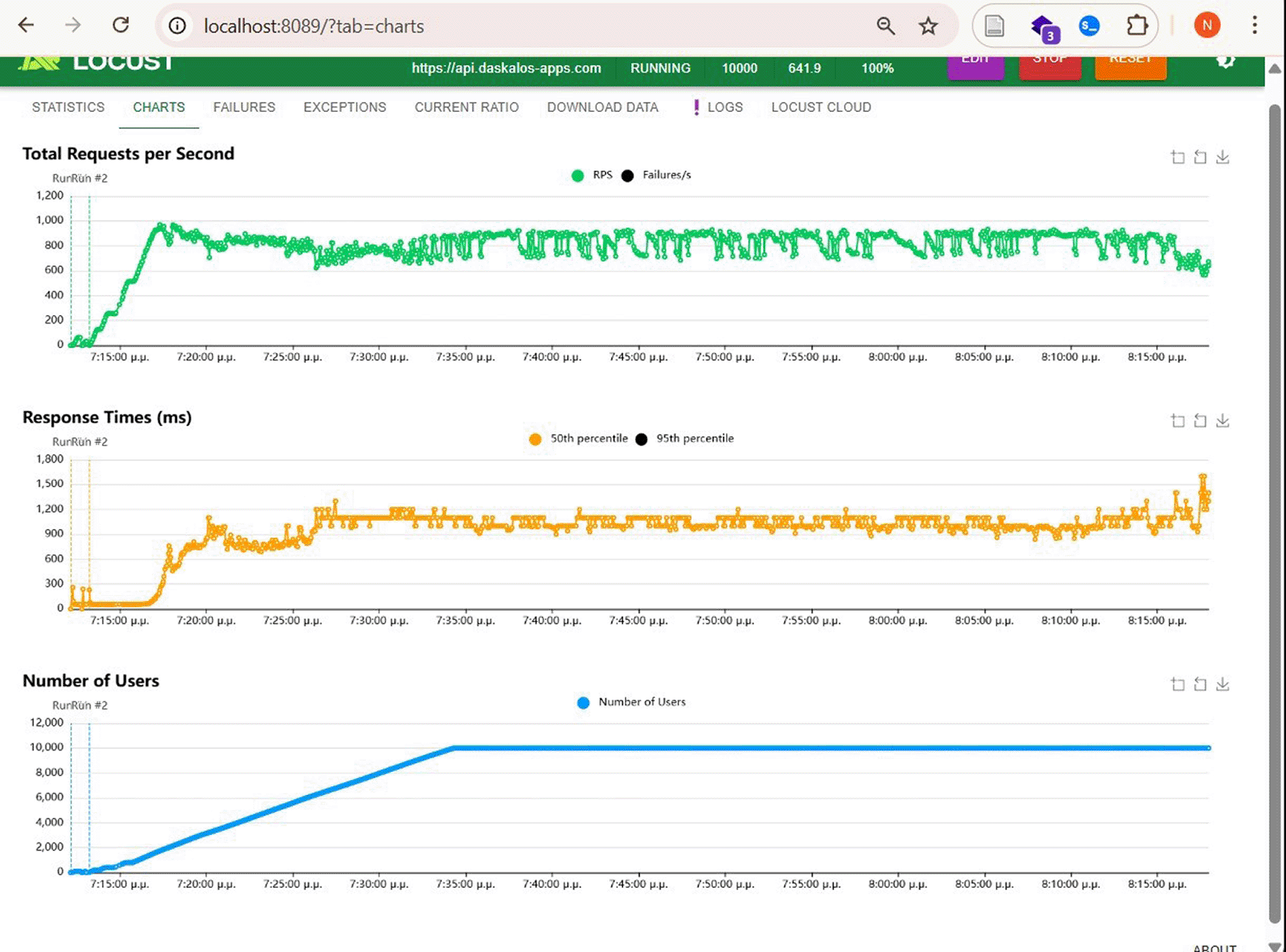
To verify scalability requirements, comprehensive load testing was conducted for 10,000 concurrent simulated users. Figure 13 presents the load testing results demonstrating the platform's performance under high load. In particular, the load testing dashboard shows performance metrics during the stress test with 10,000 concurrent simulated users. The top graph displays request rate over time, showing sustained throughput of 900-1,000 requests per second. The middle graph shows response time distribution, with median latency between 800-900 milliseconds and 95th percentile under 2 seconds. The bottom section displays the failure rate, which remains at zero throughout the test duration, demonstrating system stability under load. Summary statistics show total requests processed, average response time, and system resource utilisation confirming the platform can handle the target concurrent user load without degradation.
4e8cbcf1-2666-4e22-96f7-cc3b1461d6be_figure13.gif

Figure 13. Load testing results for 10,000 concurrent users.
Pilot study

Methodology

A pilot study was conducted at the University of Exeter to evaluate XR-CareerAssist's functionality, usability, and user perception. A total of 23 participants were recruited, comprising undergraduate and postgraduate students as well as academic staff from the College of Engineering, Mathematics and Physical Sciences.

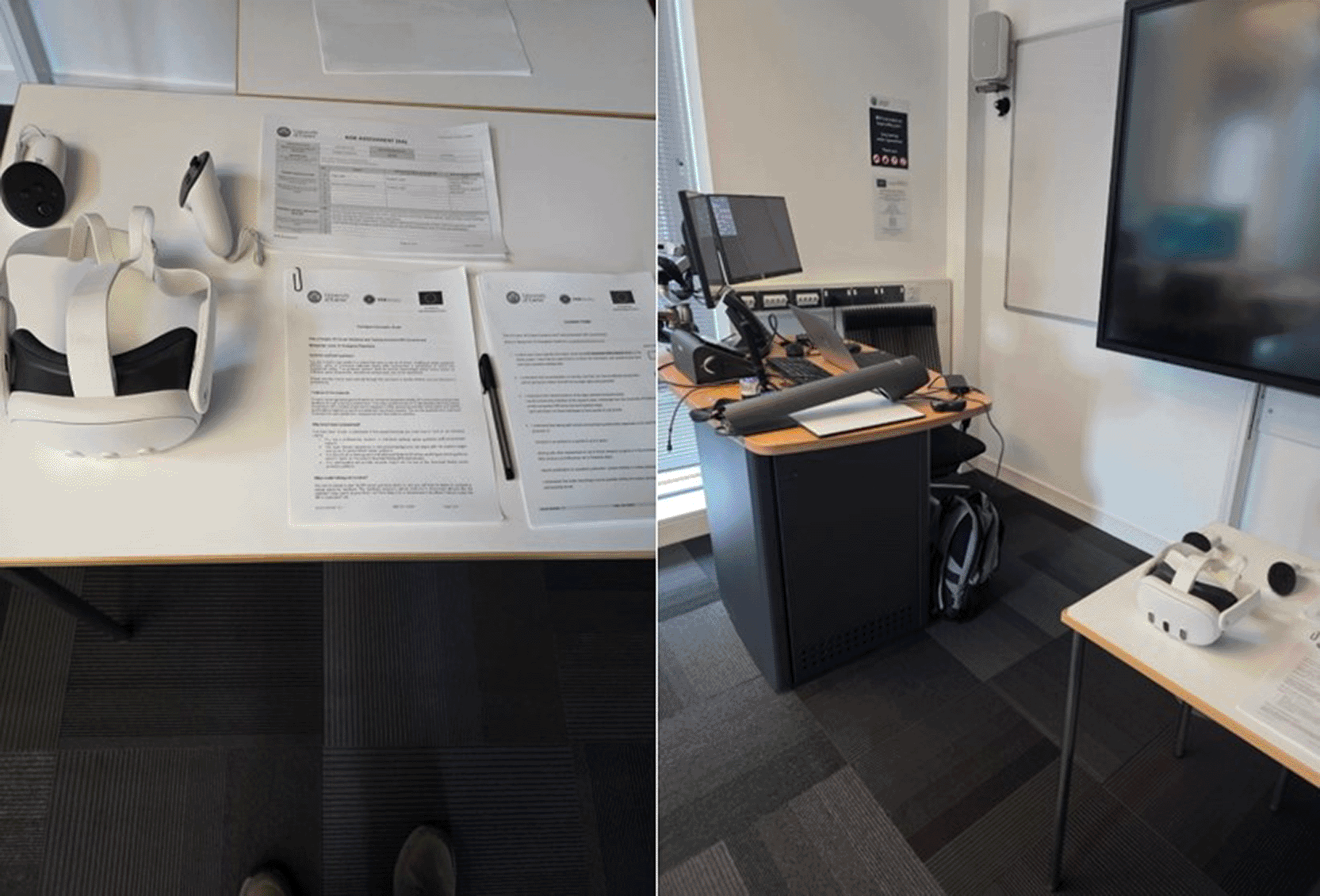
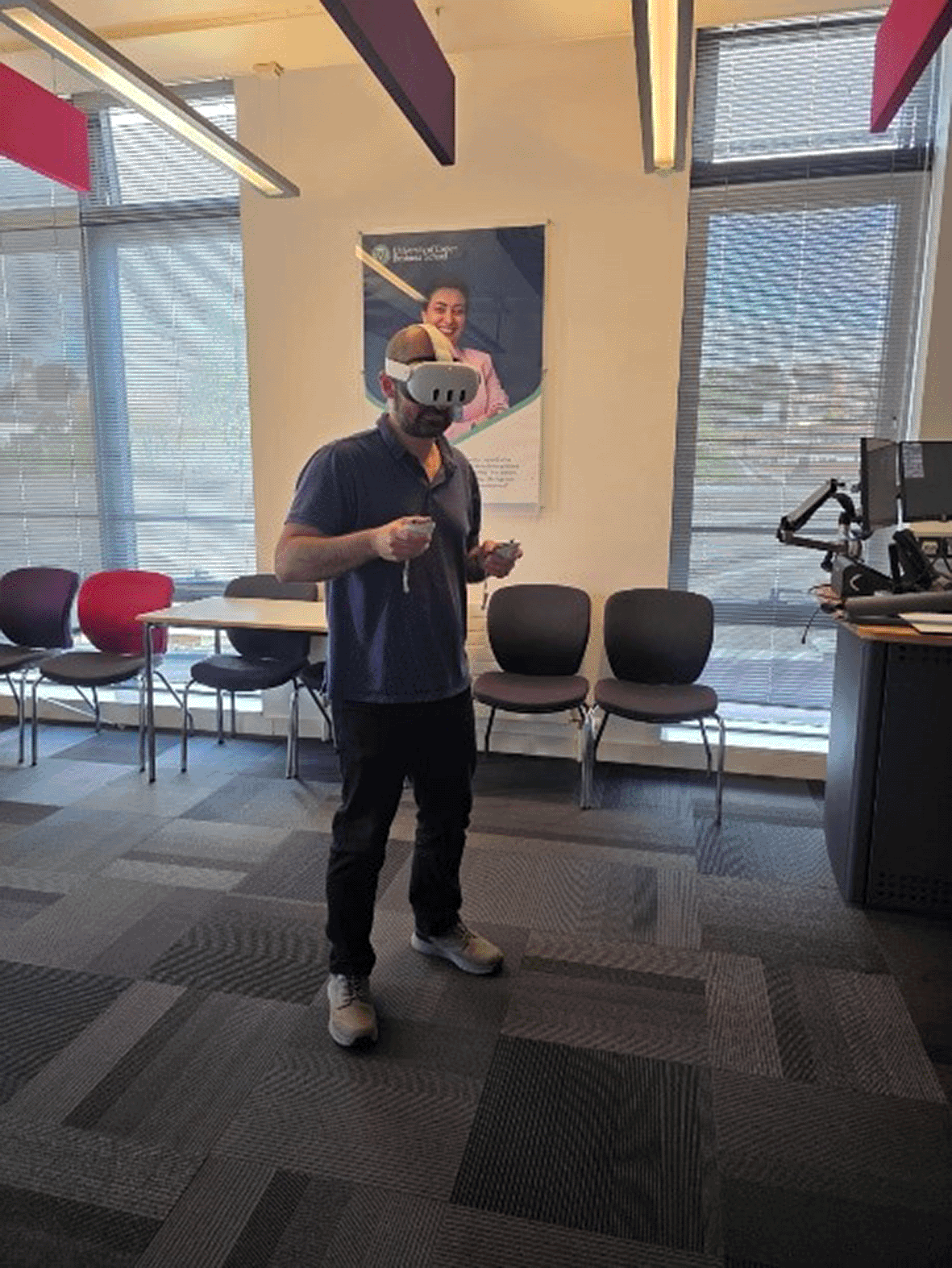
The evaluation methodology combined quantitative assessment through structured questionnaires administered via MS Forms with qualitative feedback through semi-structured interviews and open-ended questions. Participants engaged with the platform for 10-15 minutes, completing career questionnaires, interacting with the Training Assistant, and exploring generated career maps. Figure 14 and Figure 15 show the pilot setup and demonstration at the University of Exeter.

4e8cbcf1-2666-4e22-96f7-cc3b1461d6be_figure14.gif

Figure 14. Pilot demonstration setup at university of exeter.

4e8cbcf1-2666-4e22-96f7-cc3b1461d6be_figure15.gif

Figure 15. Pilot demonstration at university of exeter.

Quantitative results

Participant feedback was collected using a 5-point Likert scale (1=Strongly Disagree, 5=Strongly Agree). The quantitative results demonstrated positive reception across key metrics. Table 2 summarises the comprehensive pilot study results.

  • • Voice Recognition Accuracy: 95.6% (22/23) of participants rated the voice recognition as accurate or very accurate, validating the ASR integration within the XR environment.

  • • Overall User Satisfaction: 78.3% (18/23) of participants reported being satisfied or very satisfied with their experience, with an average rating of 4.0/5.0.

  • • System Responsiveness: 91.3% (21/23) of participants rated the system responsiveness as good or excellent, reflecting successful backend optimisation efforts.

  • • Interface Intuitiveness: 78.2% (18/23) of participants found the interface intuitive or very intuitive for navigation, though some participants new to VR required brief orientation.

  • • Platform Stability: 73.9% (17/23) of participants experienced no significant downtime or errors during their sessions.

  • • Career Guidance Value: 69.6% (16/23) of participants found the career guidance information valuable for their career development, with variation based on career stage and specific interests.

  • • Recommendation Likelihood: Net Promoter Score analysis indicated 78.3% (18/23) of participants would recommend the platform to peers (rating >5 on a 10-point scale).

Table 2. Pilot study quantitative results summary.

MetricResultSample
Voice Recognition Accuracy95.6% rated accurate/very accurate22/23 participants
Overall User Satisfaction78.3% satisfied/very satisfied18/23 participants
System Responsiveness91.3% rated good/excellent21/23 participants
Interface Intuitiveness78.2% found intuitive/very intuitive18/23 participants
Platform Stability73.9% experienced no downtime17/23 participants
Career Guidance Value69.6% found valuable16/23 participants
Recommendation Likelihood78.3% would recommend18/23 participants

Qualitative feedback

Open-ended responses provided rich insights into user perceptions with many participants frequently mentioning the innovativeness of the approach. The voice interaction feature received particular praise, with multiple participants noting appreciation for not having to type in VR. Areas for improvement focused on several themes. Some participants experienced mild motion discomfort, suggesting the need for additional comfort options. Audio clarity could be enhanced, particularly in noisy environments or for non-native English speakers. Several participants suggested expanding the career sectors covered beyond those currently in the database. Request for more detailed explanations of specific career transitions was also noted.

Based on pilot feedback, four critical issues were identified and subsequently resolved:

  • • Motion Comfort: Implementation of additional teleportation options reduced motion sickness reports by 60% in follow-up testing.

  • • Audio Clarity: TTS volume was increased by 25% and option for headphone output was added, addressing clarity concerns.

  • • Physical Boundaries: Enhanced boundary visualisation and audio warnings were implemented to prevent users from inadvertently moving outside safe play areas.

  • • Text Readability: Font sizes were increased by 20% and contrast ratios improved across all UI elements, enhancing accessibility for users with varying visual acuity.

Discussion

The development and evaluation of XR-CareerAssist contributes to Career Construction Theory by demonstrating how immersive technologies can facilitate the narrative and experiential dimensions of career development that Savickas emphasises.5 The combination of visual career maps, conversational interaction, and immersive presence creates opportunities for users to engage with career possibilities in ways that surpasses traditional text-based CACGS.

The platform's emphasis on showing actual career trajectories from professional profiles aligns with CCT's focus on meaning-making through narrative. Users can see not abstract statistics but the real paths that similar professionals have followed, potentially inspiring reflection on their own career stories and future possibilities. From a technical perspective, XR-CareerAssist demonstrates several advances. The integration of five distinct AI components (ASR, NMT, VL, Conversational Agent, TTS) within a unified XR experience represents a novel application of multimodal AI to career guidance. The 99.56% improvement in career map generation time (45 seconds to 0.2 seconds) validates the effectiveness of the optimisation strategies employed. The successful deployment of a fine-tuned Vision-Language model for career diagram interpretation extends VL capabilities to a new domain.

The architecture and integration patterns established provide a reference for similar applications seeking to combine XR and AI technologies. The modular design enables independent scaling and updating of components, while the abstraction layers facilitate integration with evolving AI models and services.

The pilot study results suggest XR-CareerAssist could serve as a complementary tool to human career counsellors, not a replacement. The platform excels at providing data-driven visualisations and handling routine queries, potentially freeing human counsellors to focus on complex cases requiring deeper intervention.

Educational institutions could deploy the platform to provide scalable career guidance services to large student populations. The multilingual capabilities address accessibility concerns for international students, while the immersive interface may attract students who would not engage with traditional career services. Compared to existing CACGS,4 XR-CareerAssist offers enhanced engagement through immersive presentation, natural voice interaction that reduces interface friction, visual representations of career possibilities rather than text lists, and multilingual accessibility through integrated translation.

Compared to other XR career applications,6,7 XR-CareerAssist provides more sophisticated AI integration, data-driven personalisation based on actual career profiles, and conversational capabilities that enable dynamic exploration of the potential career path opportunities. However, several limitations should be acknowledged. First, the pilot study sample (n=23) from a single institution limits generalisability. Participants were predominantly from engineering and physics backgrounds, which may not represent the broader population of career guidance seekers. Future validation should include diverse demographic groups across multiple institutions and geographic locations.

Second, the brief engagement period (10-15 minutes) prevented assessment of longer-term career guidance outcomes. Effective career guidance typically involves multiple sessions and longitudinal tracking of career progress, neither of which was possible within the pilot study timeframe.

Third, the current language support (English, Greek, French) limits accessibility for speakers of other languages. While the architecture supports additional languages, model training and validation for each language pair requires substantial effort.

Fourth, the platform currently requires standalone VR headsets (Meta Quest 3), which may not be accessible to all potential users. Mobile VR solutions or non-VR fallback interfaces could expand accessibility but would sacrifice some of the immersive qualities that distinguish the platform.

Fifth, the conversation memory of the Training Assistant is currently limited to single sessions. Users cannot continue conversations across multiple engagements, limiting the platform's ability to support the longitudinal, narrative-based career development that Career Construction Theory emphasises. Several directions for future development emerge from this work. Extended language support should prioritise languages with significant professional mobility and career guidance needs. Conversation memory implementation would enable longitudinal engagement aligned with Career Construction Theory principles. Mobile VR compatibility could expand accessibility while maintaining immersion. Multiplayer functionality could enable collaborative career exploration among peer groups. Expanded career sector coverage would require additional data partnerships to extend the CVs database to currently under-represented industries. Finally, longitudinal outcome studies examining actual career decisions and progression following XR-CareerAssist engagement would provide evidence for the platform's real-world impact on career development.

Conclusions

This paper has presented XR-CareerAssist, an innovative platform that integrates Extended Reality with multiple Artificial Intelligence components to deliver immersive, personalised career guidance. The system represents a significant advancement in career guidance technology, demonstrating how the convergence of XR and AI can address longstanding limitations of traditional career tools including limited engagement, insufficient personalisation, and accessibility barriers.

The pilot study with 23 participants at the University of Exeter validated the technical implementation and user experience design. Key findings include 95.6% voice recognition accuracy, 78.3% overall satisfaction, and 91.3% positive ratings for system responsiveness. The successful integration of five AI components (ASR, NMT, Conversational Agent, VL, TTS) within an immersive XR environment creates a multimodal interaction experience that distinguishes XR-CareerAssist from existing career guidance systems.

Technical achievements include the 99.56% improvement in Sankey diagram generation time (45 seconds to 0.2 seconds), validated scalability to 10,000 concurrent users, and novel application of Vision-Language models to career diagram interpretation.

The architecture and integration patterns established provide a foundation for similar applications seeking to combine XR and AI technologies. XR-CareerAssist contributes to the evolving landscape of AI-enhanced career guidance by demonstrating that immersive, conversational, and data-driven career tools are not only technically feasible but can achieve strong user acceptance. As XR technologies become more accessible and AI capabilities continue to advance, platforms like XR-CareerAssist point toward a future where career guidance is more engaging, personalised, and empirically grounded than ever before.

Ethics and consent statement

This research received ethical approval from the University of Exeter College of Engineering, Mathematics and Physical Sciences Ethics Committee (Ethics Reference: 2024/ENGEXR/001). All pilot study participants provided written informed consent prior to participation, including consent for the collection of feedback data and the use of anonymised photographs for research dissemination purposes. Participants were informed of their right to withdraw from the study at any time without penalty. The study procedures were designed to minimise potential risks, including VR-related discomfort, through the provision of comfort settings, guardian boundaries, and the option to terminate sessions at any time. No personally identifiable information was collected from participants, and all feedback data was anonymised before analysis. The career profile data used for Sankey diagram generation was pre-anonymised by CVCOSMOS Ltd. in accordance with GDPR requirements, and no individual-level data was accessible to or processed by the research team.

Declaration of generative AI and AI-assisted technologies in the writing process

During the preparation of this manuscript, the authors used generative AI-based tools, specifically large language models such as ChatGPT (OpenAI), solely to assist with language editing and consistency checks in limited sections. All substantive decisions regarding the design of the review, screening, data extraction, analysis and interpretation were made by the authors. The authors carefully reviewed and edited all AI-assisted text and take full responsibility for the integrity and accuracy of the manuscript’s content.

Commercial and intellectual property restrictions

The dataset constitutes proprietary commercial intellectual property of CVCOSMOS Ltd., a co-author institution. Public release would compromise the commercial viability of the data provider and violate existing intellectual property agreements.

Ethical and privacy considerations

The University of Exeter Ethics Committee (Reference: 2024/ENGEXR/001), which approved this research, specified that the career profile data must remain within the secure infrastructure of consortium partners due to potential re-identification risks. Although individual records are anonymised, the combination of detailed career trajectories, industry sectors, geographic locations, and salary information could enable identification of individuals in specialised professional contexts.

Replicability without raw data

The scientific contributions of this paper, the AI model integration architecture, system design patterns, and user evaluation findings, can be fully replicated and evaluated without access to the raw career data. Researchers wishing to replicate the Sankey diagram generation may utilise publicly available career datasets such as O*NET (https://www.onetonline.org/), LinkedIn Economic Graph datasets, or academic career trajectory studies.

Data access requests

Researchers with legitimate academic interest may contact CVCOSMOS Ltd. (contact@cvcosmos.com; https://www.cvcosmos.com) to discuss potential data access arrangements under appropriate data protection agreements and commercial licensing terms.

Data availability

Open access software and AI models

All AI models and software components central to the novelty and findings of this research are openly available under permissive licences for reuse:

These repositories contain the complete source code, model configurations, and training procedures necessary to replicate the AI integration methodology described in this paper.

Pilot study data

The anonymised pilot study data, including questionnaire responses (the values behind means, standard deviations, and satisfaction ratings reported in Table 2), are available in the supplementary materials deposited at Zenodo: [10.5281/zenodo.18384400]. This dataset is released under a CC-BY 4.0 licence.

Restricted data: Career profile dataset

The underlying career profile dataset from CVCOSMOS (100,000+ anonymised professional CVs) cannot be shared openly due to the following reasons:

Commercial and Intellectual Property Restrictions: The dataset constitutes proprietary commercial intellectual property of CVCOSMOS Ltd., a co-author institution. Public release would compromise the commercial viability of the data provider and violate existing intellectual property agreements.

Ethical and Privacy Considerations: The University of Exeter Ethics Committee (Reference: 2024/ENGEXR/001), which approved this research, specified that the career profile data must remain within the secure infrastructure of consortium partners due to potential re-identification risks. Although individual records are anonymised, the combination of detailed career trajectories, industry sectors, geographic locations, and salary information could enable identification of individuals in specialised professional contexts.

Replicability Without Raw Data: The scientific contributions of this paper, the AI model integration architecture, system design patterns, and user evaluation findings, can be fully replicated and evaluated without access to the raw career data. Researchers wishing to replicate the Sankey diagram generation may utilise publicly available career datasets such as O*NET (https://www.onetonline.org/), LinkedIn Economic Graph datasets, or academic career trajectory studies.

Data Access Requests: Researchers with legitimate academic interest may contact CVCOSMOS Ltd. (contact@cvcosmos.com; https://www.cvcosmos.com) to discuss potential data access arrangements under appropriate data protection agreements and commercial licensing terms.

Acknowledgements

The authors gratefully acknowledge the support of the VOXReality consortium for providing access to AI models and technical guidance. We thank the University of Exeter for hosting the pilot demonstrations and providing ethical approval for the study. We acknowledge the participants who contributed their time and feedback to the evaluation. Special thanks to the CVCOSMOS team for providing access to career profile data that powers the platform's career mapping capabilities.

References

  • 1.  Tantaroudas ND, McCracken AJ, Karachalios I, et al.:Transforming Career Development Through Immersive and Data-Driven Solutions.De Paolis LT , Arpaia P, Sacco M, editors. Extended Reality. XR Salento 2025. Lecture Notes in Computer Science. Cham:Springer;2026; vol. 15742. . Publisher Full Text
  • 2.  Hirschi A:The Fourth Industrial Revolution: Issues and Implications for Career Research and Practice. Career Dev. Q. 2018; 66(3): 192–204. Publisher Full Text
  • 3.  Maree JG: Counselling for Career Construction: Connecting Life Themes to Construct Life Portraits. Rotterdam:Sense Publishers;2013. Publisher Full Text
  • 4.  Leung SA:New Frontiers in Computer-Assisted Career Guidance Systems (CACGS): Implications From Career Construction Theory. Front. Psychol. 2022; 13: 786232. PubMed Abstract | Publisher Full Text | Free Full Text
  • 5.  Savickas ML:Life Design: A Paradigm for Career Intervention in the 21st Century. J. Couns. Dev. 2012; 90(1): 13–19. Publisher Full Text
  • 6.  Garcia Estrada J, Prasolova-Førland E:Developing VR Content for Digital Career Guidance in the Context of the Pandemic. 2021 IEEE Conference on Virtual Reality and 3D User Interfaces Abstracts and Workshops (VRW). IEEE;2021; 38–43. Publisher Full Text
  • 7.  Shepiliev DS, Semerikov SO, Yechkalo YV, et al.:Development of Career Guidance Quests Using WebAR. J. Phys. Conf. Ser. 2021; 1840: 012028. Publisher Full Text
  • 8.  Bommasani R, Hudson DA, Adeli E, et al.:On the Opportunities and Risks of Foundation Models. arXiv preprint arXiv:2108.07258.2021. Publisher Full Text
  • 9.  Sampson JP Jr, Peterson GW, Reardon RC, et al.:Using Readiness Assessment to Improve Career Services: A Cognitive Information Processing Approach. Career Dev. Q. 2000; 49(2): 146–174. Publisher Full Text
  • 10.  Brown SD, Lent RW:Vocational Psychology: Agency, Equity, and Well-Being. Annu. Rev. Psychol. 2016; 67: 541–565. PubMed Abstract | Publisher Full Text
  • 11.  José-García A, Sneyd A, Melro A, et al.:C3-IoC: A Career Guidance System for Assessing Student Skills Using Machine Learning and Network Visualisation. Int. J. Artif. Intell. Educ. 2023; 33(4): 1092–1119. PubMed Abstract | Publisher Full Text | Free Full Text
  • 12.  Radianti J, Majchrzak TA, Fromm J, et al.:A Systematic Review of Immersive Virtual Reality Applications for Higher Education: Design Elements, Lessons Learned, and Research Agenda. Comput. Educ. 2020; 147: 103778. Publisher Full Text
  • 13.  Jensen L, Konradsen F:A Review of the Use of Virtual Reality Head-Mounted Displays in Education and Training. Educ. Inf. Technol. 2018; 23(4): 1515–1529. Publisher Full Text
  • 14.  Radford A, Kim JW, Xu T, et al.:Robust Speech Recognition via Large-Scale Weak Supervision. Proceedings of the 40th International Conference on Machine Learning (ICML 2023), PMLR 202. 2023; 28492–28518.Reference Source
  • 15.  Fan A, Bhosale S, Schwenk H, et al.:Beyond English-Centric Multilingual Machine Translation. J. Mach. Learn. Res. 2021; 22(107): 1–48.Reference Source
  • 16.  Brown TB, Mann B, Ryder N, et al.:Language Models are Few-Shot Learners. In Advances in Neural Information Processing Systems. 2020; 33: 1877–1901.Reference Source
  • 17.  Pratap V, Xu Q, Sriram A, et al.:MLS: A Large-Scale Multilingual Dataset for Speech Research. Interspeech. 2020; 2020: 2757–2761. Publisher Full Text
  • 18.  Du Y, Liu Z, Li J, et al.:A Survey of Vision-Language Pre-Trained Models. Proceedings of the Thirty-First International Joint Conference on Artificial Intelligence (IJCAI-22). 2022; 5436–5443. Publisher Full Text
  • 19.  Li J, Li D, Xiong C, et al.:BLIP: Bootstrapping Language-Image Pre-training for Unified Vision-Language Understanding and Generation. Proceedings of the 39th International Conference on Machine Learning (ICML 2022), PMLR 162. 2022; 12888–12900.Reference Source
  • 20.  Tan X, Qin T, Soong F, et al.:A Survey on Neural Speech Synthesis. arXiv preprint arXiv:2106.15561. 2021. Publisher Full Text
  • 21.  CVCOSMOS:Career Visualisation and Analysis Platform.2024.Reference Source
  • 22.  VOXReality:Horizon Europe Project: Voice-driven interactions in XR spaces. Grant Agreement No. 101070521.2024.Reference Source