1. Introduction
The Paris Agreement is the main policy framework driving climate action globally. It requires countries to set voluntary national emission targets plans that take the form of Nationally Determined Contributions (NDCs). These plans are updated every five years. This regular cycle, known as the “ratchet mechanism”, ensures that each new plan is more ambitious than the last, allowing nations to align their targets with the latest climate science and the falling costs of clean technology.
Nonetheless, current global climate pledges and policies are far from sufficient to keep warming within the targets of the Paris Agreement — especially the 1.5 °C goal. Even if countries were to meet their NDCs, global temperature would increase by 2.3–2.5 °C by 2100 (UNEP, 2025). This gap underscores the urgent need to raise ambition and strengthen implementation. This is not just a problem of emissions reduction, but also of fossil fuel production. In fact, planned fossil fuel production is highly inconsistent with climate goals, as production plans far exceed the levels compatible with the targets of the Paris Agreement (SEI et al., 2025).
Sharing the responsibility for emission reduction is not an easy task. Although the NDCs are voluntary in nature, the United Nations Framework Convention on Climate Change (UNFCCC) acknowledges that countries have a ‘common but differentiated responsibility and respective capabilities’ in acting against climate change (UN, 1992), which, according to the UNFCCC, means that “while there is a duty on all countries to take climate action, the types of action they take will depend on their differing national circumstances” (UNFCCC, 2015). In this line, academics have proposed different ‘effort sharing’ criteria based on different fairness principles (Dekker et al., 2025; Höhne et al., 2014) and applied them globally (Dekker et al., 2025; Li et al., 2025; Williges et al., 2022), considering a set of illustrative countries (Pan et al., 2017; Robiou du Pont et al., 2017; van den Berg et al., 2020), individual countries (Kuramochi et al., 2016; McMullin et al., 2020), and even at the subnational level (Lackner et al., 2025).
While many examples exist about national case studies of fair share allocation of greenhouse gas (GHG) emission budgets, most remain largely theoretical, with limited engagement in detailed policy contexts. Against this background, we present a case study addressing the decarbonisation of the countries that are part of the Convention for the Protection of the Mediterranean Sea Against Pollution, also known as the Barcelona Convention. This is an interesting case study for several reasons. First, the Barcelona Convention brings together countries with very different socioeconomic and climate action profiles, covering high-, middle- and low-income countries, countries at very different stages of the energy transition and countries with very different fossil fuel dependency rates (some being net importers and others net exporters). Second, the Mediterranean is one of the most vulnerable regions to climate change and is considered a climate change hotspot (Ali et al., 2022). As a result, Parties to the Barcelona Convention face shared and significant climate-related risks, creating a strong collective interest in mitigation and adaptation action. Third, the current geopolitical situation, including the recent withdrawal of the United States from the Paris agreement, could weaken the collective effort and fragment climate leadership (Swain et al., 2025). Thus, in a context of uncertainty in global multilateral climate agreements, regional environmental agreements, such as the Barcelona Convention, may provide an important complementary arena for advancing implementation of climate action.
In the specific case of the Barcelona Convention, climate action so far has concentrated mainly on adaptation, while GHG emissions reduction (mitigation) has only been pushed forward recently through the creation of a Regional Activity Centre on Climate Change (CC/RAC) in Türkiye. This centre has as part of its mandate to provide support to contracting parties in the area of climate mitigation policies.
In this context, the aim of this paper is to quantify how fast and how fairly Mediterranean countries would need to cut CO₂ emissions to align with the Paris Agreement temperature goals, using the Barcelona Convention parties as a regional case study. To do so, we first use the concept of remaining global carbon budget to trace a set of post-2030 emissions pathways for Mediterranean countries using five alternative “effort-sharing” rules. This paper is based on the report “Remaining Carbon Budget Allocation to Mediterranean Countries”, which was requested by the ONG OceanCare, accredited observer and partner of the United Nations Environment Programme, Mediterranean Action Plan (UNEP/MAP) to the Basque Centre for Climate Change (BC3).
We also compare the resulting national decarbonisation rates with recent historical trends and current pledges, and assess whether current trajectories are compatible with the Paris goals and highlights the scale of acceleration required. The policy implications of the results are then discussed considering how fair share allocation of the remaining carbon budget could inform national mitigation strategies, international climate finance and technology transfer (Robiou du Pont et al., 2017).
This study provides a timely definition of alternative country-specific mitigation pathways for coastal nations of the Mediterranean region, which could inform a scientifically-grounded roadmap for effective implementation strategies by the contracting parties to the Barcelona Convention.
2. Case study
2.1 Climate change in the Mediterranean
The Mediterranean Basin is one of the world’s primary climate change hotspots because of its strong climate sensitivity, high population density, and tightly coupled human–environment systems (Cramer et al., 2018). Climate hotspots are typically defined as regions where climate is particularly responsive to global change or where climate change impacts are more intense (Giorgi, 2006). The Mediterranean meets these criteria, as it is particularly responsive to changes in temperature and precipitation. In this vein, the region is projected to experience amplified warming, increasing aridity, and greater climate impacts (Ali et al., 2022; Giorgi & Lionello, 2008).
Observed mean temperature increase in the Mediterranean already exceeds global trends. Regional temperatures have risen approximately 20% faster than the global average, reaching around 1.5 °C above pre-industrial levels, while heat extremes, drought frequency, and marine heatwaves have intensified (Ali et al., 2022; Cramer et al., 2018). Projections indicate that the region will face substantial declines in precipitation, alongside further reductions in surface and groundwater availability (Ali et al., 2022; Cramer et al., 2020; Giorgi & Lionello, 2008). These changes pose severe risks for human populations, especially given rapid population growth, urban concentration along coastlines, and strong dependence on climate-sensitive sectors such as agriculture, tourism, and fisheries. Increasing heat stress, deteriorating air quality, the spread of vector-borne diseases, and heightened exposure to floods and wildfires are expected to generate escalating health, economic, and infrastructure impacts across Mediterranean societies (Cramer et al., 2020; Lange, 2020; Linares et al., 2020).
Natural systems in the Mediterranean are also very vulnerable. Terrestrial ecosystems are already experiencing biodiversity loss, desertification processes, and altered fire regimes, while marine ecosystems are affected by warming, acidification, and deoxygenation (Cramer et al., 2018). Rising sea surface temperatures are driving species redistribution, the spread of invasive tropical species, and mass mortality events among benthic organisms, with cascading effects on food webs and ecosystem services (Ali et al., 2022). Projections show that these pressures will intensify, threatening the resilience of both terrestrial and marine ecosystems and undermining the ecological foundations of regional livelihoods.
The last Special Report on Climate and Environmental Coastal Risks in the Mediterranean (MedECC, 2024) asks for transformative actions across all sectors, systems and scales to avoid exacerbation of climate impacts and warns that the effectiveness of conservation measures relies on the materialization of emission reductions.
2.2 The barcelona convention
The Barcelona Convention, originally called “The Convention for the Protection of the Mediterranean Sea Against Pollution”, is an international agreement adopted in 1976, in Barcelona, Spain. The Convention is part of the MAP, created in 1975 to tackle the issues of pollution, biodiversity degradation and sustainability within the Mediterranean region (UNEP/MAP, 1976). Therefore, the Barcelona Convention operates within a larger framework of marine and coastal protection. While climate change was not originally within the main focus of the Convention, climate change has been considered as a threat multiplier that impedes the success of conservation efforts for decades. The latest action plan seeks to create a climate-resilient Mediterranean (UNEP/MAP, 2021), while parties have agreed to accelerate climate action with the creation of the CC/RAC (IISD, 2025). This shift is consistent with findings from the IPCC AR6 reports, which emphasize that comprehensive, effective, and innovative responses that integrate adaptation and mitigation can harness synergies and reduce trade-offs between the two (IPCC, 2023). The Convention has 22 contracting Parties which are: Albania, Algeria, Bosnia and Herzegovina, Croatia, Cyprus, Egypt, France, Greece, Israel, Italy, Lebanon, Libya, Malta, Monaco, Montenegro, Morocco, Slovenia, Spain, The Syrian Arab Republic, Tunisia, Türkiye and the European Union.
3. Methodology
The first step to determine the different decarbonization routes of the parties to the Barcelona Convention requires calculating the remaining carbon budget to meet the targets of the Paris Agreement. The remaining carbon budget selected allows for the emission of 900 Gt CO2 from the beginning of 2020 to 2100 (IPCC, 2021), which would limit the level of global warming by the end of the century to 1.75 °C with a 50% probability, or to 2 °C with an 83% probability. In this context, it is important to note that these budgets are given for CO2 only and exclude other GHGs (IPCC 2021, Lamboll et al., 2023).
Historical country emissions between 1850 and 2023 were sourced from Gütschow et al. (2025) and cover the most important sources, including land use, land use change and forestry. The period between 2023 and 2030 has been modelled assuming compliance with existing NDCs. The global mitigation scenario, from 2023 to 2100, required for this exercise needs to be consistent with both the chosen remaining carbon budget and the NDCs. The GCAM NDC-LTT meets these two conditions. It assumes that all countries achieve the targets documented in both the 2022/2023 version of their NDCs and their Long-Term Targets (LTTs).
Figure 1 illustrates this pathway.
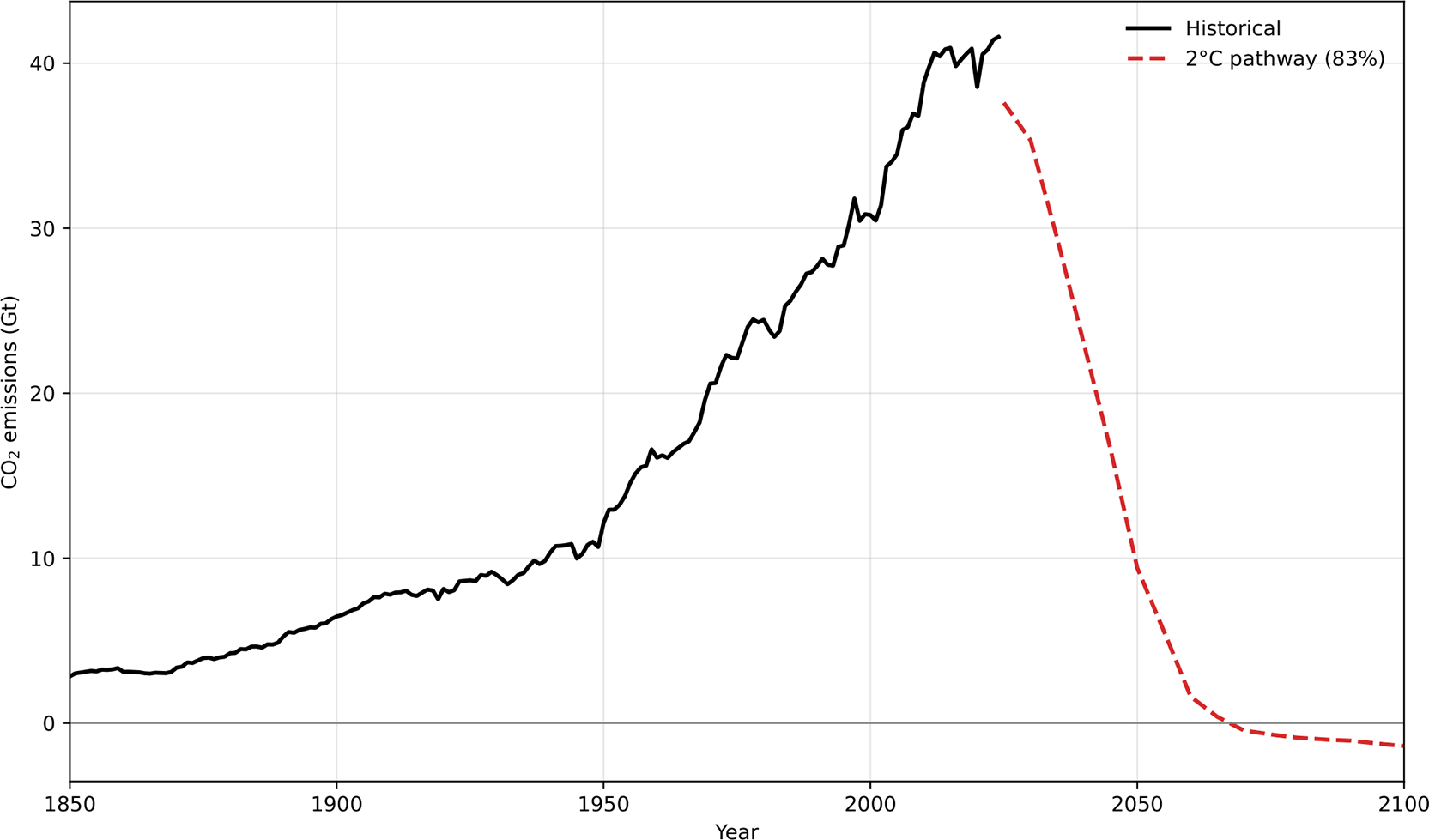
Figure 1. Global CO2 emissions from fossil fuel combustion, industrial processes and land-use change.
The global decarbonization pathway consistent with these assumptions has been modelled using the Global Change Analysis Model (GCAM) (Calvin et al., 2019; JGCRI, 2025), an internationally recognized integrated assessment model designed to explore human and Earth system dynamics. GCAM is a multisector model developed and maintained at the Pacific Northwest National Laboratory’s Joint Global Change Research Institute (JGCRI, 2025). The model is designed to explore the interactions among five interconnected systems: energy, water, agriculture and land use, the economy, and the climate in 32 geopolitical regions across the globe. The model is designed to analyse alternative what-if type scenarios within a single computational platform, allowing researchers to assess the implications of different policy choices, socioeconomic pathways, and technological developments.
GCAM is increasingly used in multi-model and multi-scale research frameworks, where it contributes to coordinated scenario exercises and intercomparison projects. It has played a central role in developing scenarios for national and international assessments, including those supporting the Intergovernmental Panel on Climate Change (IPCC), the Shared Socioeconomic Pathways (Calvin et al., 2019), or the recent ScenarioMIP exercise (van Vuuren et al., 2025). As an open-source community model, GCAM promotes transparency, reproducibility, and collaborative development. Comprehensive documentation and user resources are publicly available through the official GCAM documentation portal (http://jgcri.github.io/gcam-doc
). In this analysis, we employ GCAM version 7.0 (JGCRI, 2023).
Key assumptions in the NDC-LTT scenario in GCAM are aligned with the latest official projections for socioeconomic variables, techno-economics, and policies:
- Socioeconomics (population and GDP): The latest figures from the Eurostat population projections Europop (Eurostat, 2022) and UN datasets for population (United Nations, 2024) as well as from the IMF short-term outlook (International Monetary Fund, 2023) and SSP2 long-term trends for GDP are used (Dellink et al., 2017).
- Techno-economics (power sector): The technology cost assumptions from the IEA’s World Energy Outlook until 2050, where relevant, are used (IEA, 2023).
- Policies: A database of collected policies and targets for G20 countries (and all EU Member States) served as a guideline across models; the latest available NDCs and LTTs were used, with NDC targets based on the direct interpretation of countries’ unconditional Paris Agreement pledges – or, where pledges were expressed as ranges, the less ambitious end of the range.
For this exercise, the NDC-LTT scenario developed by Fragkos et al. (2024) is chosen. NDCs reflect the level of near-term ambition (by 2030), which in most cases is anchored in legislation and/or implemented policies, while LTTs show the level of ambition of countries’ long-term targets but not necessarily embodied in policy agendas or legislative policy measures. This NDC-LTT scenario therefore reflects national LTTs (i.e., predominantly net-zero emissions around or after mid-century) on top of and linearly extrapolated from currently pledged NDC targets (by 2030) for each model region. Driven by net-zero pledges, global fossil CO2 emissions drop quickly up to 2050 and become net-negative after 2060.
Country emissions for the 2031–2100 period have been assigned based on the allocation rules described in
Table 1. These rules embed differently principles of historical responsibility, capability, continuity and equality (van den Berg et al., 2020).
Table 1. Allocation rules used to distribute the CO2 emissions for the period 2031–2100.
| Approach | Description |
|---|
| Grandfathering (GF) | Based on continuity. All countries reduce emissions at the same speed and countries maintain their initial position in terms of emission. |
| Per capita (PC) | Based on equality. Same right to emit to all individuals. Allocation to countries based on projected population. |
| Per capita convergence (PCC) | Based on continuity and equality. Allows a gradual transition from continuity to equality. |
| Equal cumulative per capita (ECPC) | Considers historical responsibility and equality. Same right to emit to all (past, present and future) individuals. Negative allocation is possible for certain countries that have already exhausted the budget corresponding to their population until 2030. |
| Ability of pay (AP) | Based on capability. Each country’s effort is modulated according to its projected GDP per capita. |
The calculation of these allocation rules requires different types of data that have been collected from different open sources (see Román, 2026 for all data and calculations). Estimates of expected CO2 emissions by country for 2030 consistent with submitted NDCs are extracted from previous research. Existing source, however, diverge in the units of measurement, emission sources and countries covered. For this reason data for EU Member States of GHG emissions including land-use change was taken from
European Commission (2023). Meinshausen et al. (2022) offer data of GHG emissions from fossil fuels combustion for Montenegro, Libya and the Syrian Arab Republic. And estimates for the rest of countries in terms GHG emissions (including land-use change in some countries) of come from den Elzen et al. (2022).
To obtain comparable 2030 emission levels for all countries, there where original estimates do not include land-use change emissions, it was assumed that these remain at the same level as the last historical data point (2023) reported by Gütschow et al.(2025). In this database, official data is coded under the abbreviation “HISTCR”; 0 is the code for the total and 3 is the code for emissions from land-use change. Then, to isolate the share of emissions corresponding specifically to CO2, this same source was used to calculate, for each country, the ratio of CO2 to total GHG emissions for the most recent year available (2023). This is done selecting amongst the gases available in the database CO2 and KYOTOGHG (AR5GWP100).
Once 2030 CO2 emission levels were obtained, each country’s emissions pathway was completed by applying a linear interpolation between the last available data point and 2030 levels. The Gütschow et al. (2025) database, which provides historical CO2 emissions (including land-use change) from 1850 to 2023, was used as the reference. This data source is consistent with the official figures reported by these countries.
The grandfathering (GF) allocation rule, following Dekker et al. (2025), is applied according to Eq. 1 emissions for each country c and year t for the period 2031–2100.
(1)
where E
t,w is the global (
w) emission level determined by the NDC-LTT scenario. This rule means that the global budget of each year from 2031 to 2100 is distributed to countries proportionally to their emissions levels in 2030.
The proposed formula for the ability to pay (AP) criterion consists of correcting the emissions obtained in the grandfathering criterion by a factor reflecting the relative ability to pay of each country considering its projected per capita GDP level in comparison to the global level along the study period (2031–2100), as shown in Eq. 2.
(2)
Projections for GDP were taken, as those for population, from Byers et al. (2022). And the existing data gaps, in this case for Monaco and the Syrian Arab Republic, were solved using Holz et al. (2019) until 2030, and then projected assuming the same growth rates as France for Monaco, and as Lebanon for Syria.
The per capita (PC) rule is calculated following Eq. 3:
(3)
where
P refers to population. This way the global budget of each year from 2031 to 2100 is distributed to countries proportionally to their share of the global population that year. This ensures that, from 2031 onwards, everybody is entitled to an equal right to emit. Data on projected population at country and global levels is taken from
Byers et al. (2022) for different socioeconomic pathways (SSPs). For this exercise, the intermediate socioeconomic pathway (SSP2) is used, since it is aligned with the NDC-LTT scenario.
The per capita convergence (PCC) rule is applied following Eq. 4, which is the formula proposed by Dekker et al. (2025).
(4)
This results in a linear convergence from the emissions levels obtained with the grandfathering rule at the beginning of the period to the emissions levels corresponding to the per capita rule in the convergence year, set in 2050.
The equal cumulative per capita (ECPC) rule is applied by calculating the per capita emissions that would result if the total carbon budget (TCB), including total (historical and future) CO2 emissions globally, would be split by the total global population (past and projected). Each country would then be assigned the corresponding part of the TCB depending on their population (past and future) and their emissions until 2030 would be deducted, obtaining the remaining carbon budget (RCB) for each country for the period 2031–2100, as Eq. 5:
(5)
Historical population data at both country and global levels, together with projections up to 2100, are available from 1950 onwards in Byers et al. (2022). The population for Monaco, which is missing in that source, is taken from Holz et al. (2019) until 2030. Projections for 2030 to 2100 are made assuming the same population growth rate as France. The RCB of each country is later yearly distributed from 2031–2100 following a procedure that is explained next. In countries with a negative RCB (those whose emissions until 2030 surpass their fair share if everyone since 1950 would be entitled the same right to emit), a zero budget is allocated, meaning that in 2031 emissions would have to reach net zero. The fact that the negative budget obtained for certain countries is not subtracted from the rest of countries with positive budgets results in a global budget that would no longer be consistent with the global warming level of 2 degrees by 2100. This issue could be corrected by accelerating the decarbonization rates of the rest of countries, but this correction would contradict the spirit of the rule, since the failure of some countries to cut their emissions would be compensated by the rest, which have actually contained their own emissions. For that reason, we renounce to make such correction and provide the original estimates to illustrate how emission reduction pathways would look like if historical responsibility and equality would be considered in the burden sharing of mitigation, at the expense of having to allow for a larger global RCB.
Once the 2031–2100 time series of emissions for the different countries and allocation rules have been obtained, a procedure is implemented to allocate the cumulative RCB over time to obtain more gradual emission reductions. Although this approach can, in some cases, deviate from the annual allowances derived directly from the original formulas, it has the advantage of avoiding drastic and unintuitive year-to-year fluctuations in emission allocations that would be unrealistic.
The procedure starts by obtaining the number of years required to reach zero CO2 emissions if the reduction path was linear. This can be done using the formula for the area of a triangle,
, where A represents the cumulative emissions from 2031–2100 (i.e., the RCB for a certain country and allocation rule), h is the emission level in 2030 for that country, b is the unknown number of years needed to reach zero emissions for that country and that rule under a linear trajectory. Once the zero emissions year is identified, the annual emissions reduction is calculated by dividing the 2030 emission level by that number of years, and with that a linear reduction path can be drawn. This new path also means different cumulative emissions in the 2031–2100 period. To respect the original budget, the difference in 2031–2100 cumulative emissions between the original and the new path was evenly distributed along these years.
Table 2 includes the allocation obtained for each of the allocation rules for the 2031–2100 period after this process.
Table 2. Remaining Carbon Budget allocated to each country and the Mediterranean region by allocation rule.
| MtCO2 | GF | AP | PCC | PC | ECPC |
|---|
| Albania
| 124 | 120 | 131 | 152 | 425 |
| Algeria
| 2,250 | 2,765 | 2,462 | 3,015 | 8,406 |
| Bosnia and Herzegovina
| 229 | 220 | 205 | 173 | - |
| Croatia
| 157 | 124 | 168 | 205 | 383 |
| Cyprus
| 63 | 46 | 59 | 57 | - |
| Egypt
| 5,037 | 5,064 | 5,766 | 7,756 | 21,108 |
| France
| 2,455 | 1,874 | 2,824 | 3,682 | - |
| Greece
| 420 | 347 | 467 | 556 | - |
| Israel
| 573 | 421 | 547 | 620 | 577 |
| Italy
| 2,939 | 2,299 | 2,995 | 3,218 | - |
| Lebanon
| 298 | 355 | 322 | 379 | 875 |
| Libya
| 908 | 880 | 726 | 492 | - |
| Malta
| 27 | 23 | 45 | 57 | 53 |
| Monaco
| 1 | 0 | 1 | 2 | 3 |
| Montenegro
| 5 | 5 | 19 | 23 | 26 |
| Morocco
| 927 | 1,152 | 1,417 | 2,264 | 4,227 |
| Slovenia
| 67 | 51 | 81 | 109 | - |
| Spain
| 1,559 | 1,228 | 1,932 | 2,642 | 2,017 |
| Syria
| 574 | 1,884 | 869 | 1,458 | 2,630 |
| Tunisia
| 207 | 245 | 402 | 673 | 983 |
| Türkiye
| 6,955 | 5,397 | 6,270 | 5,412 | 11,589 |
| Mediterranean region
| 25,773
| 24,499
| 27,705
| 32,947
| 53,302
|
After calculating yearly emission allowances based on each allocation rule, the total emissions for the 2031–2100 period were reassigned to ensure a smooth transition from 2030 onwards, therefore avoiding drastic and unintuitive year-to-year fluctuations in emission allocations that would be unrealistic.
4. Results
Figure 2 shows the annual decarbonisation rate required between 2030 and 2050 to meet the Paris Agreement goals under the five allocation rules described in
Table 1. The median reduction (considering the five allocation rules) in the Mediterranean region is −5.8%. All the countries report the need to reduce emissions, although the effort required differs considerably. At the top, Libya reports a median annual reduction of 11.3% (Libya), while Montenegro sits at the bottom with −0.9% annually.
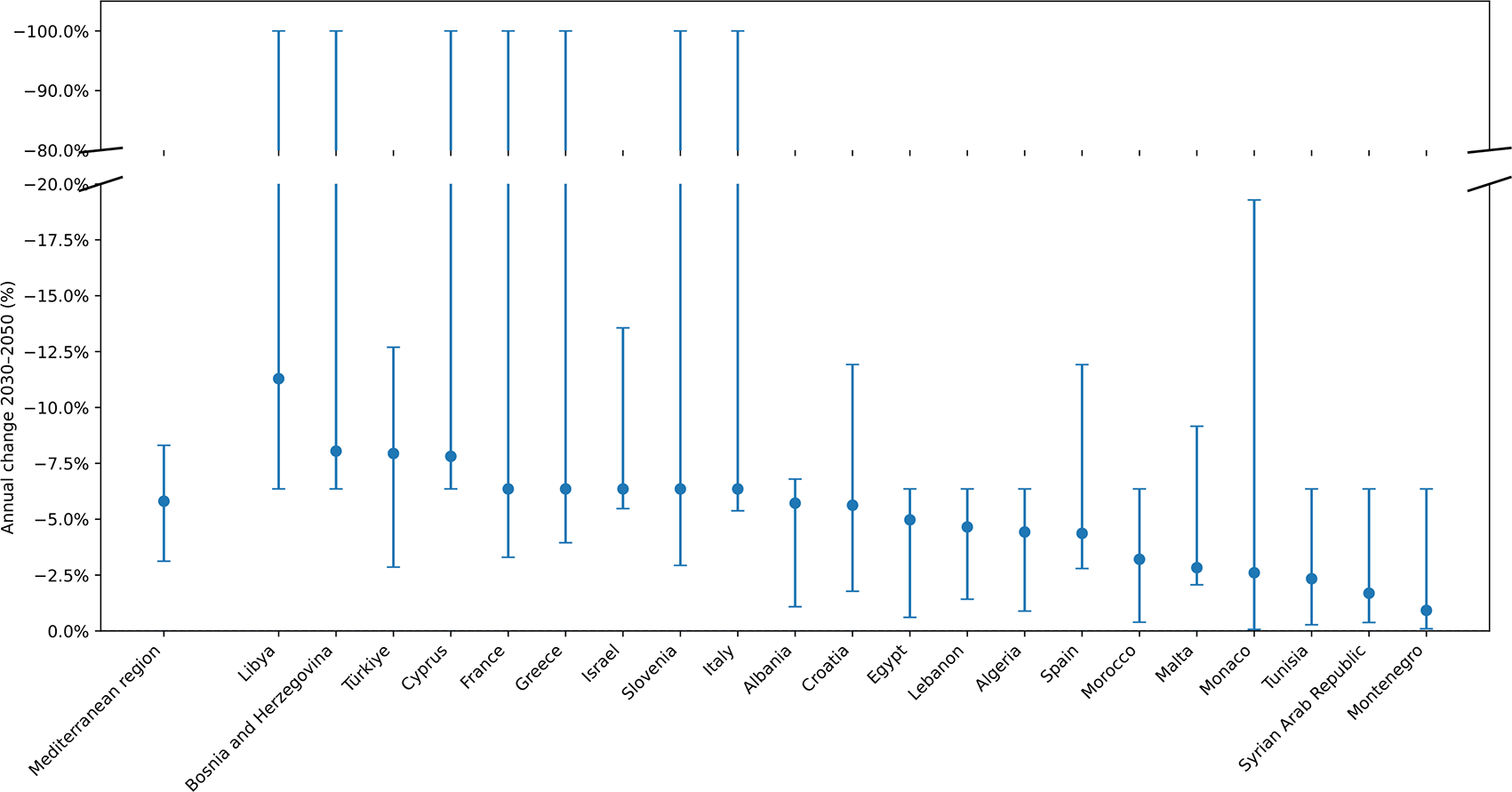
Figure 2. Annual change in emissions to meet the targets of the Paris Agreement (2030–2050).
At the national level, these values vary greatly depending on the allocation rule as shown by the bars in the figure. For instance, under the ECPC rule, some countries had already exhausted their remaining carbon budget by 2030, so a reduction of 100% is reported.
Figure 3 shows that the median annual reductions reported in
Figure 2 are unprecedented. Many countries increased their emissions between 2015 and 2023, while those that reduced them, did so at a lower speed than it is required between 2030 and 2050. In most of the cases, the reductions required by the NDCs are also lower than those in the 2030–2050 period.
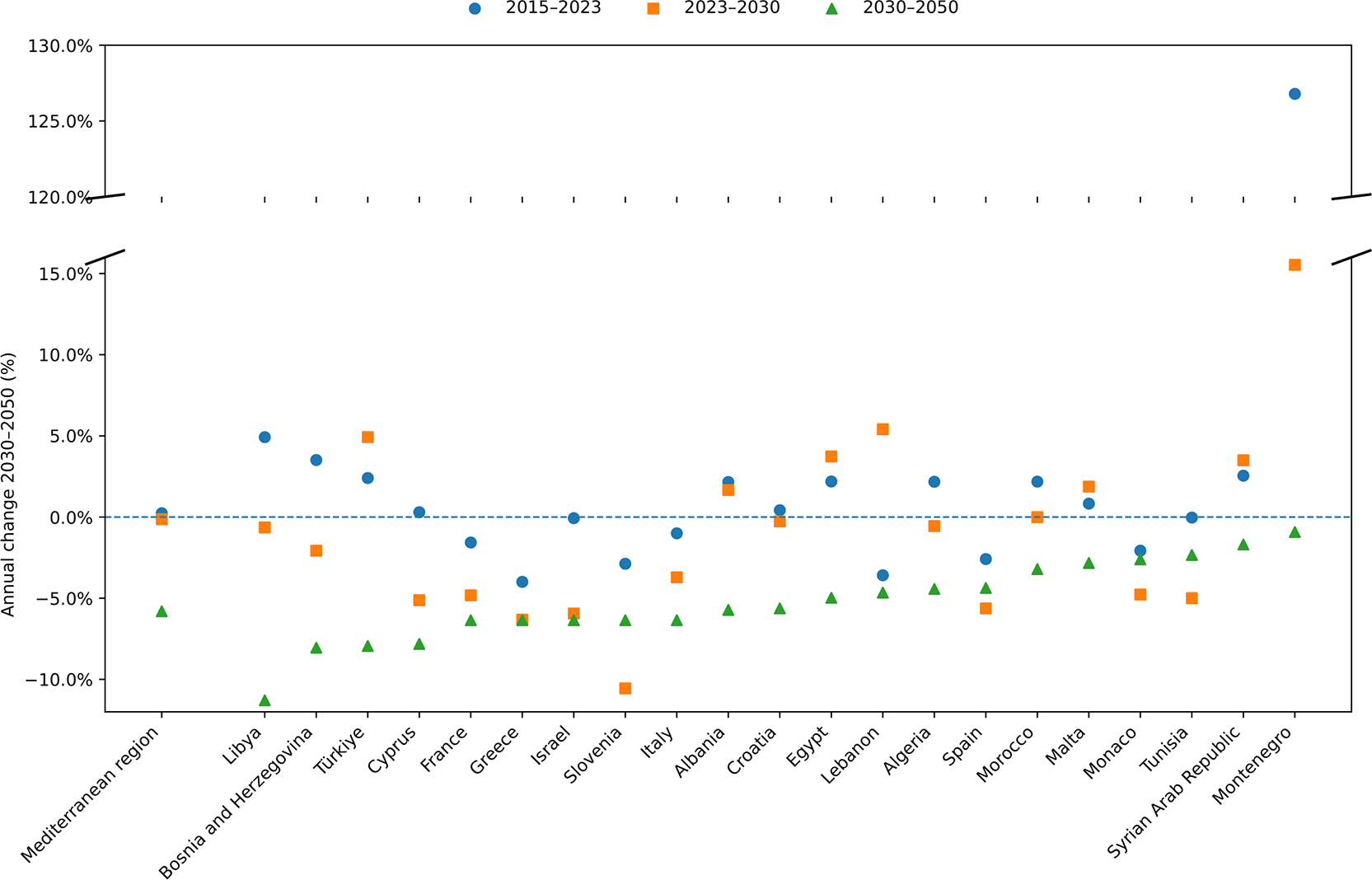
Figure 3. Annual change in emissions in the periods 2015–2023 (historical), 2023–2030 (NDCs) and 2030–2050.
Figure 4 shows that current emission levels are highly unsustainable. At the emission rate of 2023, the median (considering the five allocation rules) remaining carbon budget would be exhausted in 2035 for the Mediterranean region. For countries, the year varies between 2029 for Slovenia and 2073 for Montenegro. Most countries would exhaust their remaining carbon budget before 2040.
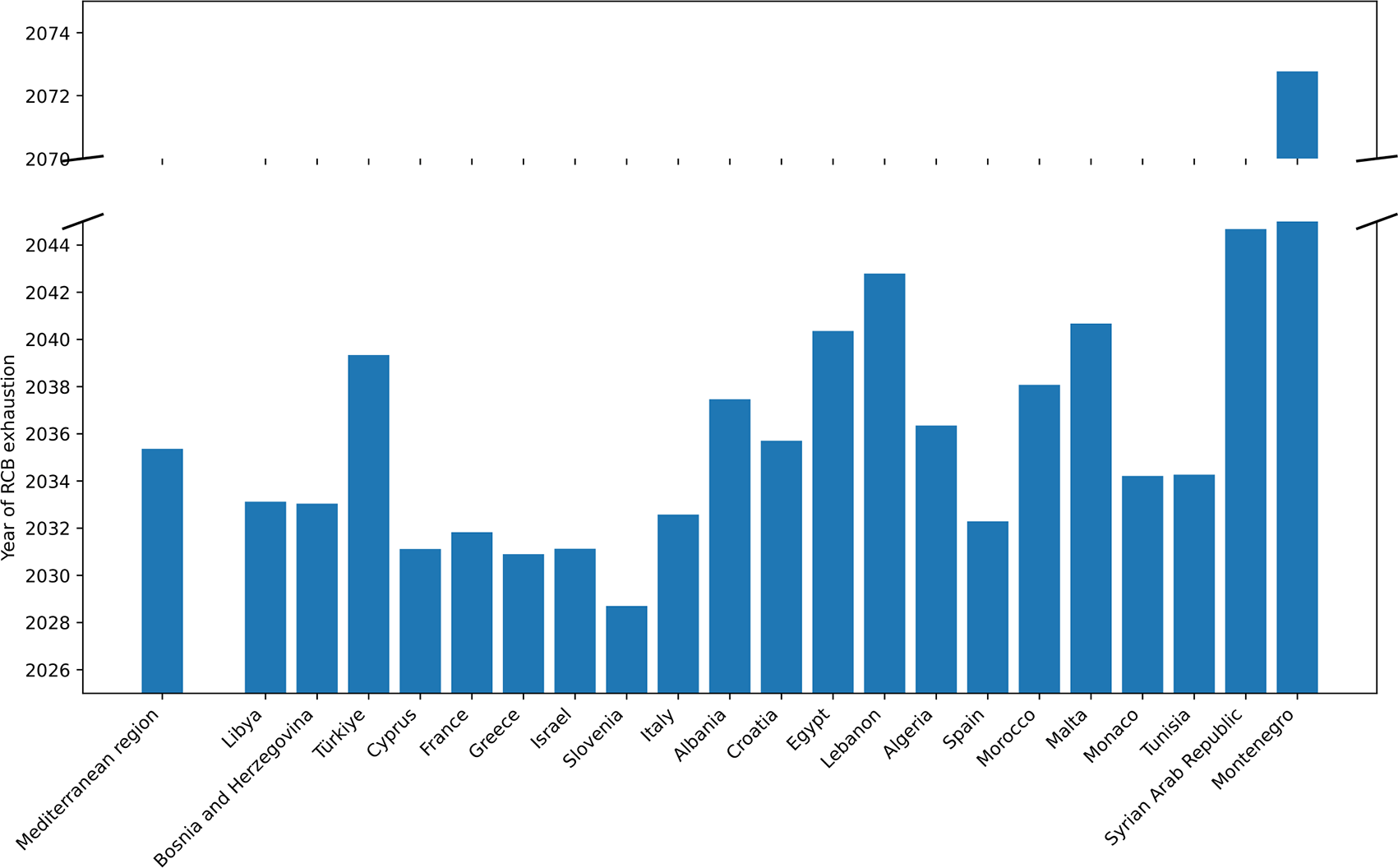
Figure 4. Year when the remaining carbon budget (RCB) is exhausted if emissions continue at 2023 levels.
Previous results focus on the median annual reductions required after 2030 to meet the goals of the Paris Agreement, but as shown in
Figure 2, the results vary considerably depending on the allocation rule used. The entire Mediterranean region, European Member States and Israel obtain the highest emission allowance under the per capita rule (see
Table 3). The reason for this is that other rules penalize these countries, either for being amongst the top emitters in 2030 (grandfathering and per capita convergence), for being relatively more financially capable in the future than others (ability to pay) and for having accumulated significant historical emissions until 2030 (equal cumulative per capita). A few countries benefit the most from the grandfathering rule, which allocates future emissions in proportion to current emissions. Other countries, especially those with historically lower emission levels, benefit the most from the equal cumulative per capita rule, as historical high emitters often exhaust their remaining carbon budget by 2030, leaving more space for others to continue emitting.
Table 3. Most favourable and unfavourable allocation rule by country.
| Position | Grandfathering | Per capita | Per capita convergence | Equal cumulative per capita | Ability to pay |
|---|
| Best | Libya, Bosnia and Herzegovina, Cyprus | Mediterranean region, France, Greece, Israel, Slovenia, Italy, Spain, Malta | | Türkiye, Albania, Croatia, Egypt, Lebanon, Algeria, Morocco, Monaco, Tunisia, Syrian Arab Republic, Montenegro | |
| Worst | Egypt, Lebanon, Algeria, Morocco, Tunisia, Syrian Arab Republic, Montenegro | | | Libya, Bosnia and Herzegovina, Cyprus, France, Greece, Slovenia, Italy | Mediterranean region, Türkiye, Israel, Albania, Croatia, Spain, Malta, Monaco |
On the most unfavourable schemes, several countries that benefitted the most from grandfathering and per capita, find equal cumulative per capita the worst scheme. At the same time, low emitters that benefitted the most from equal cumulative per capita, are penalised the most by the grandfathering scheme. In some cases, including the Mediterranean region, the ability to pay scheme, which aligns with the capability principle described earlier, assigns the lowest emission allowance.
5. Discussion
5.1 Additional action is needed to achieve the targets of the Paris Agreement
The results show that drastic, unprecedented and sustained reductions in CO2 emissions must start immediately, and certainly no later than 2030 to have any chance of keeping global warming below 2 °C by 2100. Under the current ambition of NDCs, the long-term 1.5 °C target is likely out of reach without overshoot (van de Ven et al., 2023) or it would require even more extreme reductions after 2030. If allowing for a temporal overshoot of the 1.5 °C target, the reductions in our results could be theoretically consistent with a long-term 1.5 °C target if they are accompanied by deep and sustained negative emissions beyond 2050.
Overall, the Mediterranean region has not yet begun the transition to a decarbonized economy, and based on the NDCs of the countries, reductions in emissions are not expected to start before 2030. At the current (2023) emission rate, the regional remaining carbon budget would be exhausted in 2035. Thus, any delay in reducing emissions will require a sharper decrease later. According to our results, median annual reductions would be around 6% between 2030 and 2050, something not seen before for the whole region except during COVID, when regional emissions decreased 8% in one year.
Results show that all Mediterranean countries need to increase the speed of decarbonisation. Yet, the required acceleration of decarbonisation varies across countries within a range of 1% to 11% of average annual emissions reductions between 2030 and 2050. The speed of decarbonisation depends both on the allocation rule applied to the remaining carbon budget and on the country. Under certain rules, some countries would need to stop emissions immediately in 2031, while under other rules they could cut them gradually until 2050.
The allocation rules applied embed different principles: responsibility, capability, equality and continuity. Thus, countries are allocated a different share of the global budget based on their own circumstances. For instance, under allocation rules that consider historical responsibility and equality (equal cumulative per capita), several countries have already exhausted their fair-share of emissions. On the contrary, those countries, which often have high emission levels, benefit greatly from rules that split the remaining carbon budget based on the continuity principle (grandfathering), which assumes that countries have acquired emission rights based on their current emission levels.
There is no consensus on which principles or allocation rules are superior. Each rule reflects different degrees of equity in the burden-sharing of mitigation and implies different degrees of feasibility in the transition. The equal cumulative per capita criterion can be considered the one that best meets the principle of ‘common but differentiated responsibility and respective capabilities’ embedded in the UNFCCC. However, this is also the most disruptive rule, since it would imply a significant relocation of emissions between countries, given the current level of inequality in the distribution of per capita emissions. By contrast, the least disruptive rule, since it maintains the ranking of emitting countries intact through the years and decades, is the grandfathering criterion. This rule, while perpetuating present inequalities, would also ensure that, in absolute terms, greater reductions occur there where emissions are most concentrated.
The Paris Agreement required countries to define the objectives of the NDCs “to reflect equity and the principle of common but differentiated responsibilities and respective capabilities, in the light of different national circumstances” (UNFCCC, 2015), but this has been considered differently by each country (Herrera et al., 2025). In general, allocation criteria do not change the general conclusions of the assessment, in that sharp reductions of domestic emissions are needed to meet the goals of the Paris Agreement by the Mediterranean countries. Nonetheless, it leads to differences, particularly at the national scale. In this line, assessing the extent to which country performance deviates from different effort sharing approaches also has implications beyond national target setting, as it has informed climate lawsuits (van Berkel et al., 2025).
5.2 Increased cooperation between Mediterranean countries could contribute to reducing emissions
While the Paris Agreement relies on nationally determined, voluntary targets, this does not diminish the value of allocating the remaining global carbon budget to guide national policy. Budget-allocation exercises provide a transparent way to translate global temperature goals into indicative national emissions pathways, making the scale of the mitigation challenge, and the implications of delayed action, more concrete.
Importantly, these allocations are not “binding targets” but benchmarks that can inform policy and diplomacy. They can be used in multilateral negotiations to (i) benchmark ambition by comparing NDCs against indicative fair-share ranges, (ii) clarify the scale of support needs (finance, technology transfer, capacity building) implied by more stringent pathways in lower-income or high-transition-cost contexts, and (iii) identify where international cooperation should be prioritised, for example, through financial support, just-transition partnerships, loss-and-damage-related assistance, or cooperative approaches under Article 6 of the Paris Agreement that preserve environmental integrity. By making trade-offs and distributional implications explicit, carbon budget allocations can help build trust, reduce ambiguity, and support a more coordinated increase in ambition over successive NDC cycles to guarantee a successful decarbonization on time.
In a context of a growing uncertainty in global multilateral climate agreements, regional conventions could become relevant to advance implementation of climate action. Thus, adopting a joint goal for the Mediterranean informed by different effort sharing rules and adopting a compensation mechanism to account for historical responsibility or differences in capability could spur additional action at the national level. In this regard, in COP24 of the Barcelona Convention (in Cairo) a call was raised for a Regional Climate Change Plan for the Mediterranean region to be discussed as part of the next steps to be taken under the Barcelona Convention.
Considering that decarbonising societies entails substantial investment in energy infrastructure, transforming industrial processes and skills, and redesigning urban space and transport systems (amongst other things), this would provide an opportunity for high-income countries with a historical debt to support the transition of other countries through targeted climate finance and technology transfer (Ganti et al., 2026). For such support to be effective in mitigation terms, ambitious mitigation plans need to be in place in the recipient countries, or established as a condition for the support. In this respect, the new Pact for the Mediterranean approved in 2025 by the European Commission represents an opportunity to strengthening the regional cooperation for effective decarbonization, as clean energy technologies and the green, just and inclusive transition lie at the heart of this initiative of this important party of the Barcelona Convention.
5.3 Paris Agreement lacks incentives to reduce fossil fuel extraction
Results show that, sooner rather than later, countries will need to reduce their demand for fossil fuels regionally and globally. Previous research has shown that meeting the Paris climate targets implies leaving most fossil fuels underground (McGlade & Ekins, 2015; Welsby et al., 2021). Expanding fossil fuel extraction capacities beyond Paris Agreement necessities would only create additional stranded assets, i.e. investments that lose value prematurely due to decarbonization trends (Bos & Gupta, 2019). Nevertheless, many coastal countries in the Mediterranean Sea are still investing in new exploration of fossil fuel deposits and in offshore oil and gas production in their national waters, which is specifically addressed by the Barcelona Convention in its Offshore Protocol. In 2020, there were 323 oil and gas production sites in the Mediterranean (REMPEC, 2021).
Under the Paris Agreement, some countries that are Parties to the Barcelona Convention have made ambitious plans to reduce domestic emissions (as reflected in their NDCs). While these plans might entail significant reductions in the domestic consumption of fossil fuels, they do not impose any restrictions on the supply of fossil fuels to other countries. That is, NDCs only affect the last activity in the global value chain of fossil fuels, i.e. consumption, leaving the continued exploration and extraction, processing and exporting outside of their scope.
This blind spot of the Paris Agreement architecture could be addressed with a complementary international agreement in the form of a fossil fuel non-proliferation treaty, as proposed by some authors (e.g. Howard et al. (2022); Newell et al., (2022)). In fact, Colombia hosts in 2026 the first conference about Transitioning away from Fossil Fuels as a complementary space to the UNFCCC, formally contributing to the COP30 by accelerating implementation. The Barcelona Convention could follow suit in this respect, initiating negotiations to transition away from fossil fuels in the Mediterranean region.
6. Conclusions
Coastal Mediterranean countries, which have already decided to collectively tackle the challenge of protecting the sea they share, might also decide to cooperate in reducing GHG emissions. This paper provides key insights to inform discussions on how to coordinate such a collective regional effort. In particular, it examines different approaches to sharing the burden of reducing CO2 emissions between the countries of the Barcelona Convention in order to meet the goals of the Paris Agreement. The results indicate that, at current emission levels, the region’s remaining carbon budget would be exhausted by 2035, implying that any delay would require post-2030 decarbonisation rates of around 6% per year, an unprecedented pace. Given that some countries are still planning to increase their emissions under their NDCs, reaching a peak in CO2 emissions (i.e. starting the decline) as soon as possible would ease the mitigation challenge after 2030.
Beyond highlighting the scale of the challenge, the study also identifies new opportunities for cooperation among Mediterranean countries within the framework of the Barcelona Convention. Some allocation criteria imply reductions targets for middle- and high-income countries that are especially challenging, while lower-income countries must also advance in their decarbonisation pathways. A promising approach is the development of mechanisms through which higher-income countries will finance mitigation projects in lower-income countries, allowing equity considerations to be addressed in a more practical manner.
In this line, combining efforts in reducing CO2 emissions with promoting the transition away from fossil fuels in Mediterranean countries should be an imperative. This should be done in close cooperation between the parties of the Barcelona Convention, especially considering the ethical implications of the difference decarbonisation paths. At the same time, incentives to reduce not only the use, but also the extraction of fossil fuels are needed.