Extended Reality (XR) is transforming industrial environments,1–3 making them more human-centric, adaptive, and intelligent. For XR innovations to reach their full potential in Industry 5.0, they must interoperate across European platforms rather than remain confined to individual projects.
Within the Horizon Europe project XR5.0, Task 2.6 focuses on Integration with the EU XR Platform. The goal is to ensure that XR5.0 technologies can connect with shared European infrastructures and contribute to a sustainable, interoperable XR ecosystem. To this end, XR5.0 identified XR2Industry,6 which develops the EU XR Platform, as a key partner for collaboration.
Why integration matters
Linking XR5.0 with the EU XR Platform offers multiple benefits:
•
Ecosystem compatibility: XR5.0 solutions can be adopted beyond initial pilots, facilitating wider industrial uptake.1,2
•
Standards and interoperability: Alignment with European standards for XR and Industry 5.0 ensures smoother future deployments.1–3
•
Access to shared resources: XR5.0 components (including AI services, digital twins, and training modules) can leverage datasets and services from the EU XR Platform.6
•
Sustainability: Integration enables XR5.0 solutions to evolve within a broader framework, remaining relevant and supported after the project concludes.1,2
Building collaboration
Collaboration began with joint technical exchanges. XR5.0 presented its system architecture, pilot scenarios, and technologies, while XR2Industry shared their platform architecture, work package timelines, and development approach.6 Technical documentation was exchanged through open repositories to support deeper exploration.
Figure 1 illustrates the integration architecture between XR5.0 and the XR2Industry EU XR Platform.
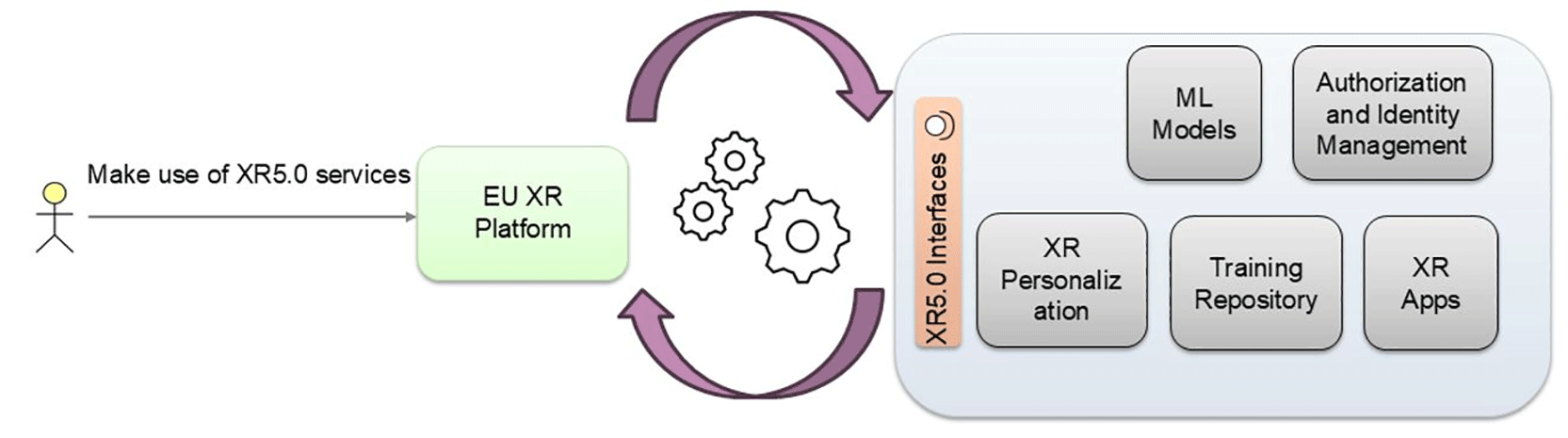
Figure 1. XR5.0 and XR2Industry integration architecture.
Subsequent sessions delved into platform specifics. XR2Industry showcased device management, content management, and activity management modules, along with a vision for an open and fair XR content ecosystem. Potential collaboration areas were discussed, including device interoperability, shared content repositories, and metadata approaches for XR assets.
XR5.0 outlined high-level architecture, pilot setups, and potential integration pathways. Internal reviews explored exposing XR5.0 modules and APIs, aligning security frameworks, leveraging XR5.0 Generative AI tools, and incorporating feedback from XR2Industry on deployment considerations.
Showcasing XR5.0 technologies
XR5.0 presented three key technologies:
•
Clawdite platform: Enables human-centric digital twins representing workers’ traits, behaviours, and contexts. Within XR5.0, Clawdite generates realistic worker models for XR applications, supporting personalization and metrics such as fatigue or cognitive load. Selected functional modules are being explored for integration into the EU XR Platform.7
• XR Training Plugin: The runtime component of the XR5.0 training platform, enabling operators to access, render, and interact with immersive training programs on XR devices.4
• Generative AI services: Customised large language model agents provide context-aware support for industrial XR scenarios, including training and operational guidance.5
These demonstrations established a foundation for identifying integration opportunities between the two projects’ tools.
Next steps
Planned activities include:
1.
Joint workshops on authoring and training tools: XR5.0 and XR2Industry will demonstrate their respective tools and explore complementary approaches for creating and sharing XR scenarios.
2.
Hands-on Clawdite sessions: XR5.0 will deploy instances of Clawdite for XR2Industry partners to explore its functionality and evaluate integration options.
3.
Metadata exploration: XR5.0 and XR2Industry partners are exchanging ideas on XR asset metadata to better understand potential interoperability approaches.
4.
Generative AI opportunities: XR2Industry’s upcoming third Open Call for industrial pilots may allow selected projects to leverage XR5.0’s GenAI tools.5,6
Towards a connected XR ecosystem
The XR5.0–XR2Industry collaboration illustrates a broader shift in European research: moving from isolated project outputs to interconnected digital ecosystems.1,2 By aligning technologies, sharing expertise, and exploring integration pathways, the projects are helping build a cohesive European XR landscape, ensuring that XR innovations scale, interoperate, and deliver long-term value to industry and society.
As both consortia continue their efforts, they provide a model for collaborative innovation, demonstrating how European research projects can advance human-centric, interoperable, and sustainable XR solutions.1–3
Ethics and consent
Ethical approval and consent were not required for this study.
Disclaimer
The views expressed in this article are those of the author. Publication in Open Research Europe does not imply endorsement by the European Commission.
Data availability
No underlying data are associated with this article.
References
- 1.
Breque M, De Nul L, Petridis A:
Industry 5.0: Towards a sustainable, human-centric and resilient European industry.
European Commission, Directorate-General for Research and Innovation;
2021. Publisher Full Text
Reference Source
- 2.
Renda A, Schwaag Serger S, Tataj D, et al.:
Industry 5.0, a transformative vision for Europe: Governing systemic transformations towards a sustainable industry.
European Commission;
2021. Publisher Full Text
Reference Source
- 3.
European Commission:
Industry 5.0. Research and Innovation webpage.Reference Source
- 4.
Milgram P, Kishino F:
A taxonomy of mixed reality visual displays.
IEICE Transactions on Information Systems.
1994; 77(12): 1321–1329.
- 5.
Zeb S, Mahmood A, Khowaja SA, et al.:
Industry 5.0 is coming: A survey on intelligent NextG wireless networks as technological enablers.
arXiv preprint.
2022. arXiv:2205.09084.
Reference Source
- 6.
XR2Industry:
XR2Industry Project Website.
(accessed 14 May 2026).
Reference Source
- 7.
Montini E, Cutrona V, Bonomi N, et al.:
An IIoT platform for human-aware factory digital twins.
Procedia CIRP.
2022 Jan 1; (107): 661–667. Publisher Full Text