1. Introduction

Economic development is generally regarded as a desirable and positive process; however, there is far less agreement on how it should be pursued. Much of this disagreement stems from the scarcity of resources, which forces societies to set priorities and make difficult choices about their allocation (Furtado, 2000). In this context, purely economic perspectives are insufficient to capture the complexity of development processes, underscoring the need for interdisciplinary approaches that incorporate insights from, for example, the social sciences (Cano, 2007).

Furthermore, a better understanding of development processes requires analyses that adopt a perspective on questions related to the allocation of resources across time and space (Hirschman, 1958). According to Furtado (2009), the historical allocation of capital, land, and labour has played a decisive role in shaping contemporary patterns of development. Therefore, migration cannot be understood independently of these historical and spatial conditions; it is at once an outcome of those conditions and a force that contributes to their transformation (Furtado, 2000).

Research on Indigenous migration has advanced significantly over the past decades, reflecting growing scholarly interest across a range of disciplines. As this expanding body of literature employs diverse units of analysis, temporal scopes, and conceptualisations of Indigenous migration, there is a pressing need for a systematic synthesis of the existing evidence. To the best of our knowledge, no systematic review has yet integrated this dispersed body of research across the different fields, nor has any study examined the drivers, decision-making processes, and outcomes of Indigenous migration within a single analytical framework.

Addressing this gap, the present study provides a systematic review of the literature on Indigenous migration from an interdisciplinary perspective encompassing economics, business, management, and the social sciences. Building on this broader analytical perspective, the review organises the literature around three interrelated dimensions of Indigenous migration: its antecedents, the decision-making processes that shape mobility, and its outcomes. By integrating these dimensions within a unified analytical framework, the study offers a comprehensive synthesis of the existing literature. To achieve this goal, the systematic literature review was guided by the following research questions:

RQ1: What are the main antecedents of Indigenous migration identified in this literature?

RQ2: What are the main migration-related decisions examined in this literature?

RQ3: What are the main outcomes of Indigenous migration reported in this literature?

RQ4: What are the main relationships established between the antecedents and migration-related decisions?

RQ5: What are the most frequently identified relationships between migration-related decisions and the outcomes of Indigenous migration?

The literature reviewed suggests that Indigenous migration, when examined from perspectives that extend beyond conventional economic approaches, should not be understood as a series of isolated individual choices, but rather as the outcome of profound tensions among historical legacies, economic pressures, and institutional and regulatory frameworks. This study synthesises the existing evidence through an analytical framework that links historical periods, migration antecedents, migration-related decision-making, and migration outcomes across diverse regions of the world. Building on these findings, the study also proposes a dynamic model to enhance our understanding of the interactions between contextual pressures, community conditions, and Indigenous migration over time.

2. Methods

2.1 Protocol and overview

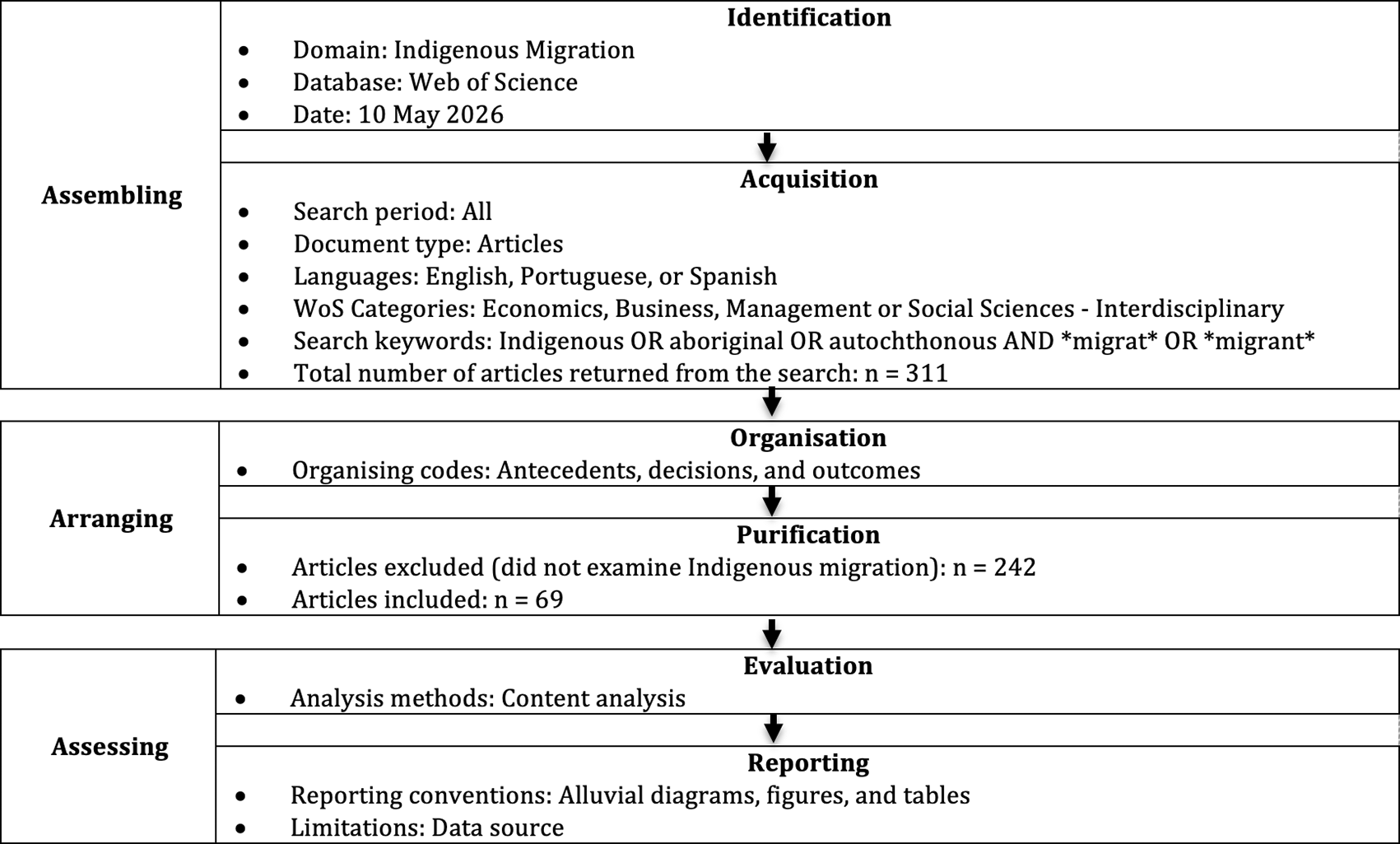
Figure 1 illustrates the application of the Scientific Procedures and Rationales for Systematic Literature Reviews (SPAR-4-SLR) protocol proposed by Paul et al. (2021), which guided each stage of the systematic literature review conducted in this study, and which we report in accordance with the PRISMA 2020 (Page et al., 2021). The review followed three main phases. The Assembling phase focused on defining the research domain and developing the search strategy. The Arranging phase involved the organisation and selection of studies based on the Antecedents–Decisions–Outcomes (ADO) framework (Paul & Benito, 2018). Finally, the Assessing phase comprised the descriptive and content analysis of the selected articles, together with the presentation of the findings through figures, diagrams, and tables. The application of the SPAR-4-SLR protocol enhances the reproducibility of this study.

f5ec1ab2-b843-48e7-9c2a-aa0ec3bc9434_figure1.gif

Figure 1. Data assembling, arranging, and assessing.

Source: Authors’ elaboration based on Paul et al. (2021).

2.2 Information sources and search strategy

This review included only articles indexed in the Web of Science. The database was last searched on 10 May 2026. Although this choice may have omitted relevant studies available in other databases, it provided a rigorous and consistent evidence base by relying on one of the most widely recognised indexing services for high-quality scientific publications. The search combined the terms displayed in Figure 1, and was restricted to articles published in English, Portuguese, or Spanish and to the Web of Science categories Economics, Business, Management, and Social Sciences – Interdisciplinary. The full parameters of each phase are summarised in Figure 1. The search returned 311 records.

2.3 Eligibility criteria and selection process

Studies were eligible if they were peer-reviewed articles that examined Indigenous migration as an object of analysis. Records that did not address Indigenous migration were excluded. Applying this criterion, 242 of the 311 records were excluded and 69 studies were retained. The first author screened all the articles. The selection process is summarised in Figure 1 and presented as a PRISMA 2020 flow diagram in Appendix IV.

2.4 Data collection and data items

For every included study, all three dimensions of the ADO framework were coded, using the category definitions presented in Table 1 (Appendix I). Each study was assigned to a single category within each dimension: one antecedent, one decision, and one outcome. Where a study addressed more than one antecedent, decision, or outcome, the category recorded was the one most central to the study’s argument or empirical findings. In addition to the ADO categories, we extracted the territory or territories addressed by each study, the corresponding macro-region, the temporal arc, and the full bibliographic reference. A study could refer to more than one territory, so the percentages reported in Appendix II are calculated over study–territory pairs rather than over the 69 included studies. Studies that did not correspond to a single country were assigned to supranational categories, such as Latin America, Eurasia, or Global, and studies spanning more than one century were assigned to the Long-Term category. There were no studies with unclear geographical or temporal scope.

2.5 Derivation of the coding categories

The ADO categories in Table 1 (Appendix I). were derived through inductive content analysis, following the three-phase procedure (open coding, category creation, and abstraction) described by Elo and Kyngäs (2008). Categories captured the main antecedents of Indigenous mobility, the migration-related decisions made by the various actors involved, and the outcomes reported across the reviewed studies. In the open-coding phase, each of the 69 included articles was read in full and annotated with preliminary codes capturing its content on the drivers of Indigenous migration, the decision processes involved, and the consequences reported; codes were generated freely, without a predefined list. In the category-creation phase, the freely generated codes were compared and grouped in a spreadsheet, with conceptually overlapping codes collapsed into broader, higher-order categories. In the abstraction phase, these higher-order categories were consolidated under the three dimensions of the framework, yielding the six antecedent, four decision, and four outcome categories reported in Table 1 (Appendix I). Coding was conducted by the first author.

2.6 Synthesis methods

The coded categories were converted into frequency counts of co-occurrence between region, temporal arc, antecedent, decision, and outcome, reported as percentages of the included studies and displayed as alluvial diagrams. Because each study was assigned to a single category per dimension, it contributes exactly one association between any two dimensions, so the total flow in each alluvial diagram equals the number of studies in that synthesis. No meta-analysis was performed; consequently, no summary effect estimates, measures of precision, or statistical measures of heterogeneity are reported, and no sensitivity analyses were conducted. Variation across the corpus was instead examined by comparing the configurations of antecedents, decisions, and outcomes across temporal arcs and regions, as reported in Sections 3.1 and 3.1.1.

2.7 Risk of bias and certainty of evidence

No formal assessment of risk of bias in the included studies was undertaken. The reviewed literature is predominantly qualitative, historical, and conceptual, and standard risk-of-bias instruments are not applicable to it; methodological quality was instead addressed through the requirement that all included studies be peer-reviewed articles indexed in the Web of Science. For the same reason, no effect measures were used and no meta-analysis was performed; consequently, no sensitivity analyses were conducted, reporting bias was not formally assessed, and the certainty of the body of evidence was not graded. The restriction to a single database and to three languages, discussed in the Limitations section, constitutes the principal source of potential bias in the evidence base.

3. Results

3.1 Configuration of the Temporal Arc, Antecedents, Decisions, and Outcomes

With respect to the geographical distribution of the territories studied, the United States emerged as the most frequently examined context (20.22%), followed by Canada (11.24%), Mexico (11.24%), and Australia (6.74%) (Appendix II). Approximately 70% of the studies focused on territories within the Americas. Another noteworthy aspect is that several studies adopted a supranational or regional perspective, examining contexts such as Latin America, Africa, Eurasia, Southeast Asia, and the global context, highlighting that Indigenous migration has been investigated from both national perspectives and cross-border dynamics.

Most of the studies are situated within the contemporary period (from 2001 onwards), followed by the pre-contemporary period (1901–2000), the long-term perspective (spanning more than one century), and the pre-1900 period ( Figure 2; Appendix III). Latin America accounts for the largest number of studies within the contemporary period, followed by Anglo-America, Asia, Oceania, Africa, and Europe. A similar pattern is observed for the pre-contemporary period, with Latin America, Anglo-America, and Asia concentrating the highest absolute number of studies. However, when adopting a long-term perspective, the most frequently examined regions become Anglo-America, Asia, and Oceania. Anglo-America and Asia are also the only regions represented by studies situated in periods prior to 1900.
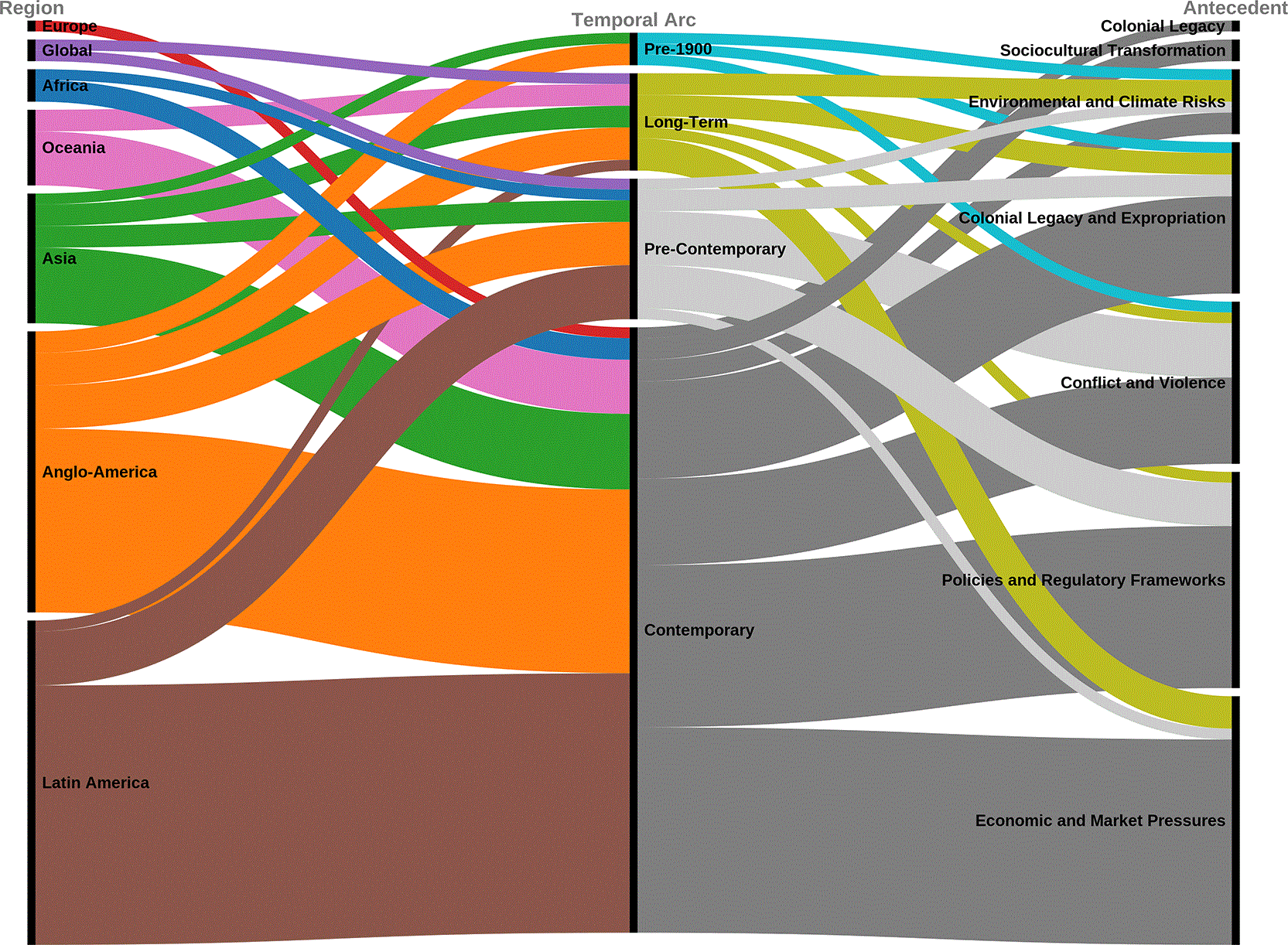
f5ec1ab2-b843-48e7-9c2a-aa0ec3bc9434_figure2.gif

Figure 2. Distribution by Region, Temporal Arc, and Antecedents (All Regions).

Source: Authors’ own elaboration.

Concerning the distribution of antecedents across the different time periods, the contemporary period exhibits the greatest diversity of antecedents. Within this period, Economic & Market Pressures is the most frequently identified antecedent, followed by Policies & Regulatory Frameworks. At the same time, Colonial Legacy & Expropriation and Conflict & Violence continue to be identified as key antecedents to understanding contemporary Indigenous migration. Although less frequently observed, Sociocultural Transformation also emerges as an antecedent in the contemporary period and is exclusive to this time frame. It is the only antecedent not directly represented in either the long-term perspective or the pre-contemporary period. By contrast, studies situated in the pre-1900 period primarily examine antecedents related to Colonial Legacy & Expropriation, Conflict & Violence, and Environmental & Climate Risks, rather than Policies & Regulatory Frameworks or Economic & Market Pressures.

The relationship between antecedents and decisions ( Figure 3) reveals how macroeconomic, political, and environmental pressures have been associated with Indigenous mobility. Adaptive Family Migration is the most recurrent decision category in the studies considered and exhibits the greatest variety of antecedents. Its most frequent antecedent is Economic & Market Pressures. Policies & Regulatory Frameworks is one of the most recurrent antecedents across all other decision categories, namely Institutional Mandate & Policy, Resilience & Sovereign Negotiation, and Systemic Coercion & Violence. Colonial Legacy & Expropriation and Conflict & Violence also appear as antecedents across all decision categories. Environmental & Climate Risks and Sociocultural Transformation appear to be more directly associated with Adaptive Family Migration and Resilience & Sovereign Negotiation decision types.
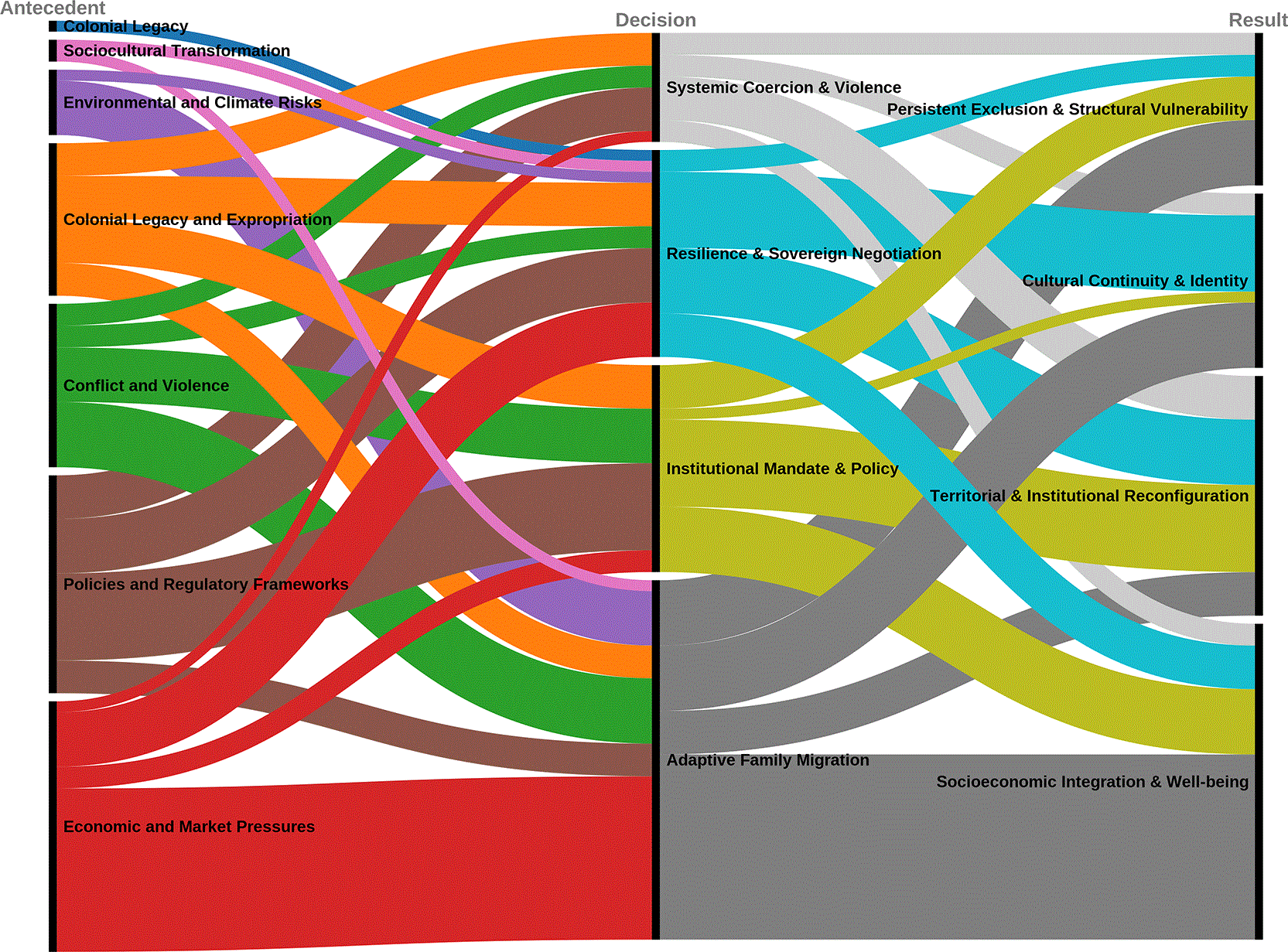
f5ec1ab2-b843-48e7-9c2a-aa0ec3bc9434_figure3.gif

Figure 3. Distribution of Antecedents, Decisions, and Outcomes (All Regions).

Source: Authors’ own elaboration.

In terms of the relationship between decisions and outcomes, the literature establishes relationships between all decision categories and all outcome categories, although with differing frequencies. In the case of Adaptive Family Migration, the outcome category most frequently associated is Socioeconomic Integration & Well-being. By contrast, for Institutional Mandate & Policy, the least recurrent outcome category is Cultural Continuity & Identity.

3.1.1. Regional Configuration

In the case of Latin America, the studies are spread across all the time periods analysed except pre-1900. The analysis of the relationship between the time period and antecedents also reveals a shift in the dimensions associated with Indigenous mobility ( Figure 4). The antecedents of migration evolve over time: Colonial Legacy & Expropriation predominate in earlier periods, giving way to Economic & Market Pressures in the contemporary period. Regarding the former, the literature analyses this category through the historical effects of coercive labour institutions such as the Mita and Encomienda systems in Peru (Abad & Maurer, 2025), the historical concentration of land ownership in Ecuador (Hentschel & Waters, 2002), and the systematic exclusion of Indigenous peoples to marginal lands in Chile (Clapp, 1998).
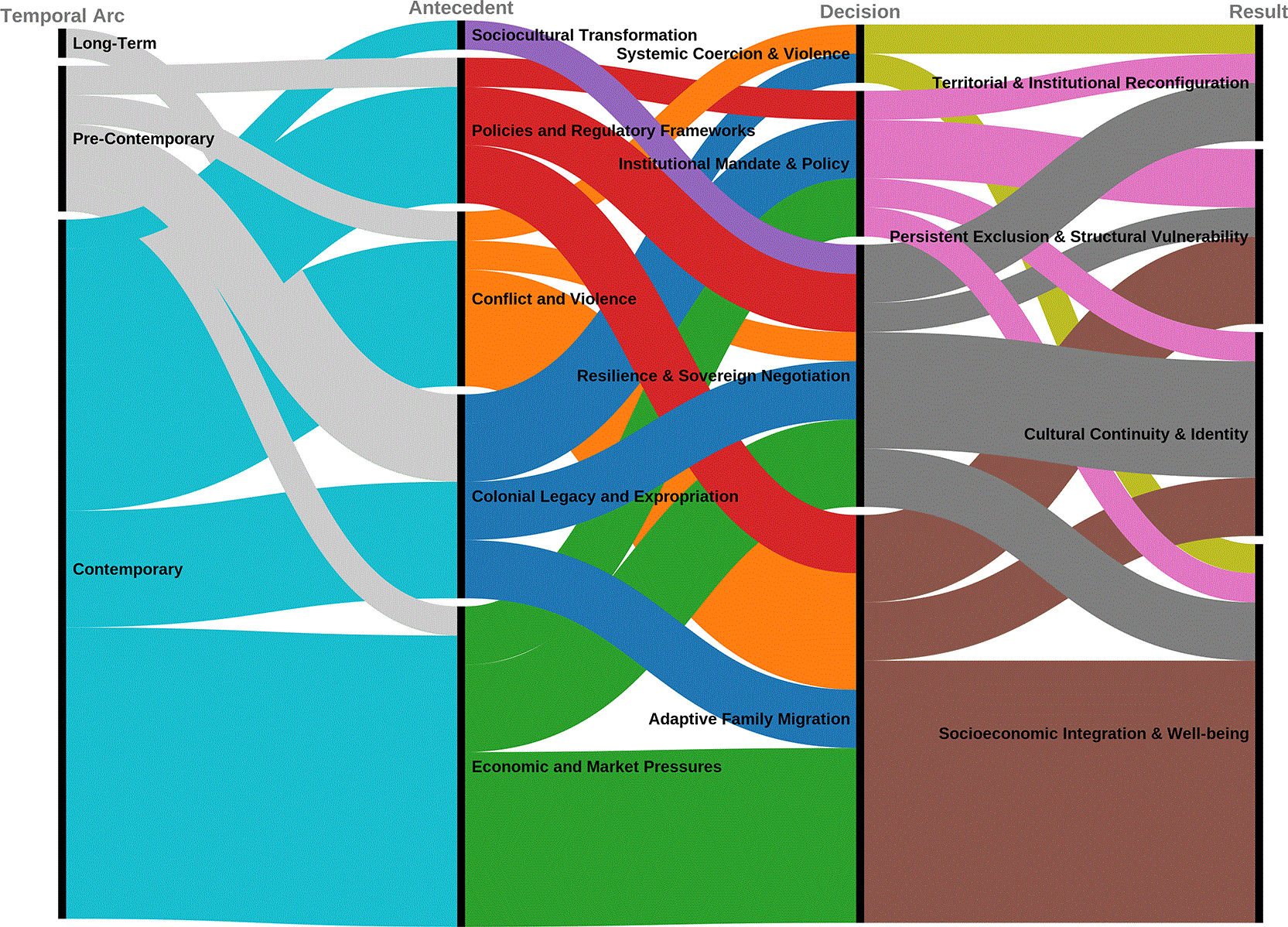
f5ec1ab2-b843-48e7-9c2a-aa0ec3bc9434_figure4.gif

Figure 4. Distribution of Temporal Arc, Antecedents, Decisions, and Outcomes (Latin America).

Source: Authors’ own elaboration.

Concerning the configuration of Economic & Market Pressures in Latin America, this category is associated with market reconfiguration, such as the shift from bananas to tourism kingdom in Panama (Pleasant & Spalding, 2021), poverty and low levels of education in different countries, such as Ecuador, Guatemala, Honduras, Mexico and Peru (Arcury et al., 2001; Hill, 2013; Millán et al., 2020; Rivera-Salgado, 1999; Stone-Cadena & Velasco, 2018; Wierucka, 2022; Webb, 2018).

Environmental & Climate Risks was not identified as a direct antecedent in the studies conducted in this region. Concerning the relationship between antecedents and the decisions made by Indigenous populations and institutions, the findings confirm the predominance of the relationship between Economic & Market Pressures and Adaptive Family Migration. Asad and Hwang (2019) highlight, for example, that the concentration of Indigenous residents in Mexican communities of origin is associated with migration decisions to the United States. In settings where access to secondary and higher education is limited, migration frequently represents a means of acquiring education and temporary work experience, with some Indigenous migrants intending to return and use the knowledge and skills gained to benefit their communities (Wierucka, 2022). The literature further suggests that Economic & Market Pressures can lead Indigenous migrants to adopt irregular migration pathways, including the use of migrant smugglers (coyotes) to facilitate border crossings (Stone-Cadena & Velasco, 2018) and other forms of unauthorised migration (Asad & Hwang, 2019).

Concerning the relationships among decisions and outcomes, the findings highlight the importance of the association between Adaptive Family Migration and Socioeconomic Integration & Well-being. Although migration is frequently pursued as a strategy to improve livelihoods, the reported outcomes are far from uniform. Some studies identify positive socioeconomic effects, such as increased household income (Webb, 2018). However, these gains often coexist with persistent socioeconomic disadvantages. For example, Indigenous workers employed in agricultural activities were less likely to receive training and safety information on pesticide use, reflecting inequalities in labour conditions (Arcury et al., 2001). The literature also reveals important gender differences in how migration outcomes are experienced and perceived. Women tend to emphasise family emotional well-being and cohesion influenced by migration, whereas men are more likely to focus on economic issues (Lazzaro-Salazar et al., 2025). In contexts of male out-migration, women frequently face increased workloads and psychological distress, despite the receipt of remittances (Hentschel & Waters, 2002; Webb, 2018).

Anglo-America is represented by studies across all time periods and outcome categories ( Figure 5). However, Sociocultural Transformation was not identified as a direct antecedent in the studies conducted in this region. The analysis of the relationship between time period and antecedents also confirms a shift in the dimensions associated with Indigenous mobility: Colonial Legacy & Expropriation as well as Conflict & Violence predominate in earlier periods, giving way to Economic & Market Pressures in the contemporary. However, there are studies associated with Conflict & Violence in the contemporary period: according to de Finney and Mucina (2021), in Canada, Indigenous girls and women are disproportionately criminalised for offences associated with poverty or self-defence against physical and sexual violence, while incarcerated Indigenous women face elevated risks of physical and sexual abuse.
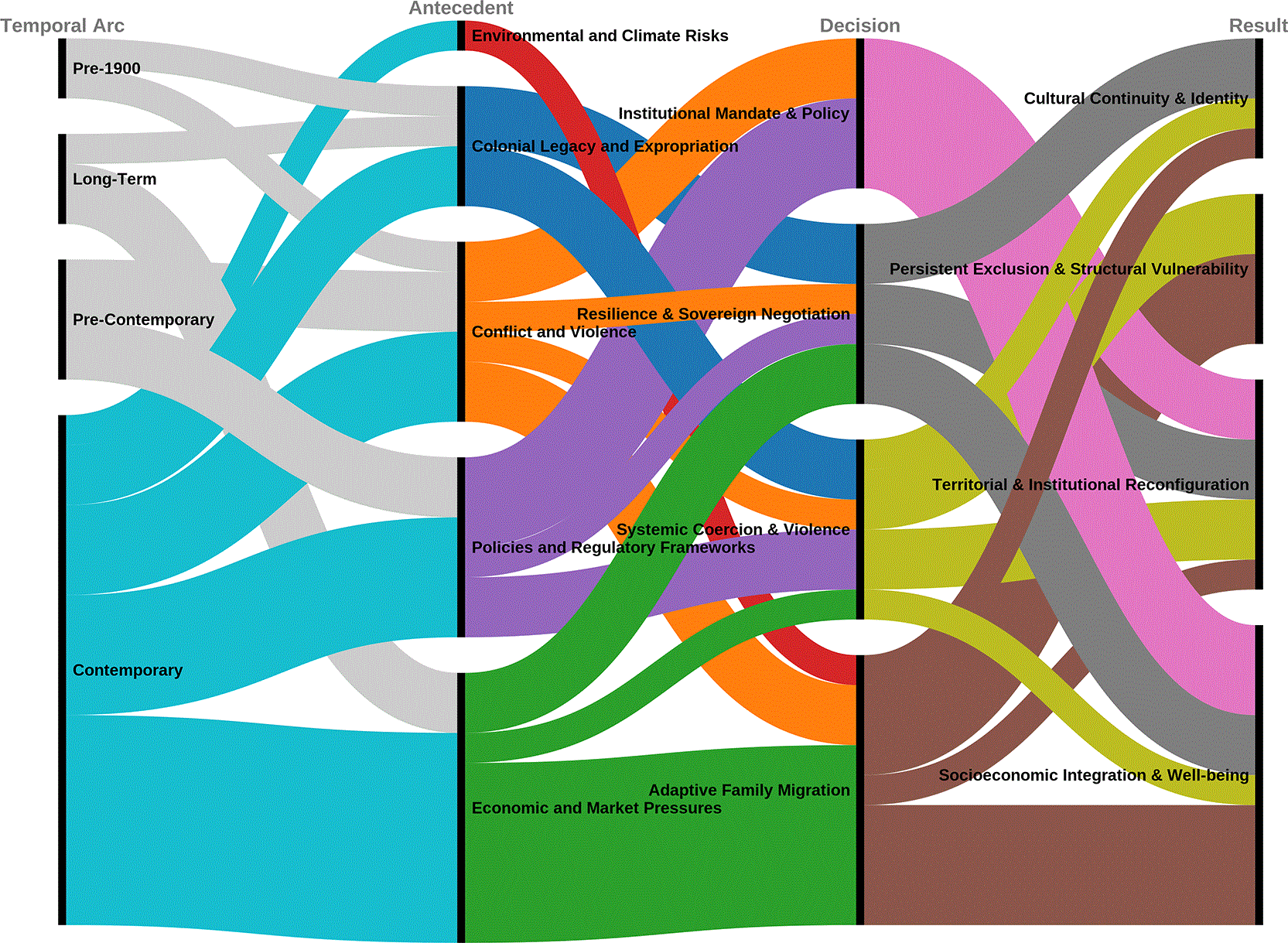
f5ec1ab2-b843-48e7-9c2a-aa0ec3bc9434_figure5.gif

Figure 5. Distribution of Temporal Arc, Antecedents, Decisions, and Outcomes (Anglo-America).

Source: Authors’ own elaboration.

Regarding the relationships among antecedents, decisions, and outcomes, the findings confirm the relevance of the links between Economic & Market Pressures and Adaptive Family Migration, as well as between Adaptive Family Migration and Socioeconomic Integration & Well-being. In this regard, DelaCruz et al. (2026) found that, among Indigenous migrants in New York City, higher educational attainment, greater proficiency in the host-country language, and successful adaptation to the receiving society were associated with improved economic outcomes. A study of Canada indicated that migration may influence the stock of human and social capital within Indigenous communities, while population mobility can weaken social ties among community members (Cooke & O’Sullivan, 2015). In Canada, Indigenous migrants tend to have higher levels of educational attainment and income than individuals who remain in their communities (Cooke & O’Sullivan, 2015).

Asia is also represented by studies across all time periods and outcome categories ( Figure 6). However, two categories are absent from the literature on this region: the antecedent Sociocultural Transformation and the decision Resilience & Sovereign Negotiation. Moreover, the relationship between time period and antecedents does not exhibit the same shift observed in the aggregate analysis: in Asia, colonial-era antecedents appear only in the contemporary period. Regarding the relationships between antecedents and decisions, the findings highlight the relevance of the relationship between Environmental & Climate Risks, Adaptive Family Migration and the outcome Territorial & Institutional Reconfiguration, in addition to those associated with Socioeconomic Integration & Well-being as well as Cultural Continuity & Identity.
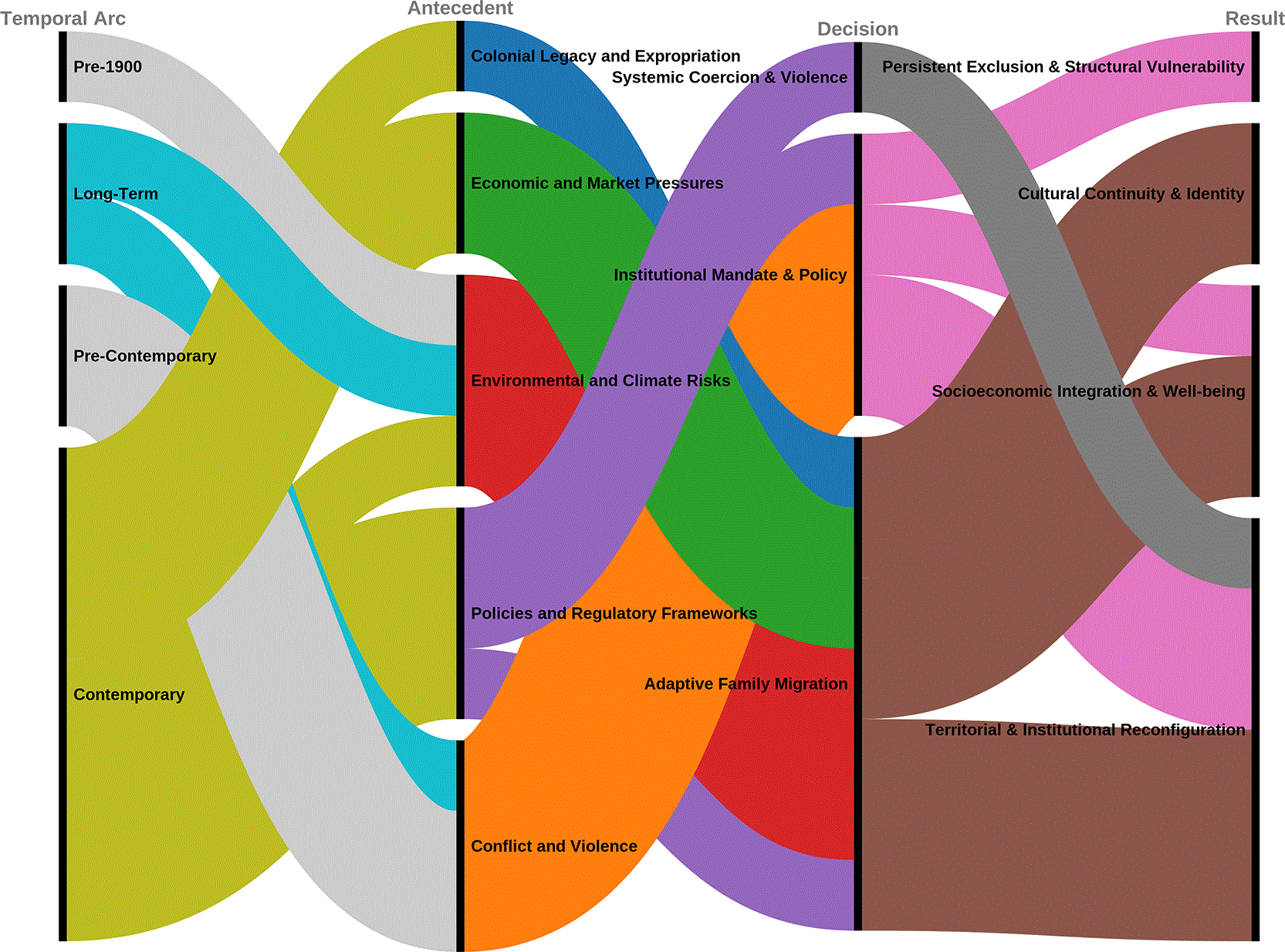
f5ec1ab2-b843-48e7-9c2a-aa0ec3bc9434_figure6.gif

Figure 6. Distribution of Temporal Arc, Antecedents, Decisions, and Outcomes (Asia).

Source: Authors’ own elaboration.

Within the Environmental & Climate Risks - Adaptive Family Migration - Territorial & Institutional Reconfiguration pathway, a study conducted in Nepal investigated Indigenous mobility following state relocation programmes designed to mitigate anticipated geological risks (Shneiderman et al., 2026). Rather than establishing permanent settlement in the relocation areas, affected households continued to alternate between the new locations and their places of origin, giving rise to recurrent mobility patterns that reshaped territorial occupation and community organisation (Shneiderman et al., 2026).

In terms of Cultural Continuity & Identity, the literature shows that employment opportunities for Indigenous migrant women in India do not necessarily translate into genuine inclusion (Majumder & Arora, 2024). Although some sectors portray themselves as inclusive by hiring Indigenous women, workplace practices often reinforce ethnic inequalities through the exoticisation and sexualisation of Indigenous identities and the use of coded language that perpetuates racialised hierarchies (Majumder & Arora, 2024).

Oceania is represented by studies covering the Contemporary and Long-term periods ( Figure 7). In terms of antecedents, Conflict & Violence and Economic & Market Pressures were not represented. All decision categories, however, were identified in the literature on this region. Regarding outcomes, the only category not directly represented was Persistent Exclusion & Structural Vulnerability.
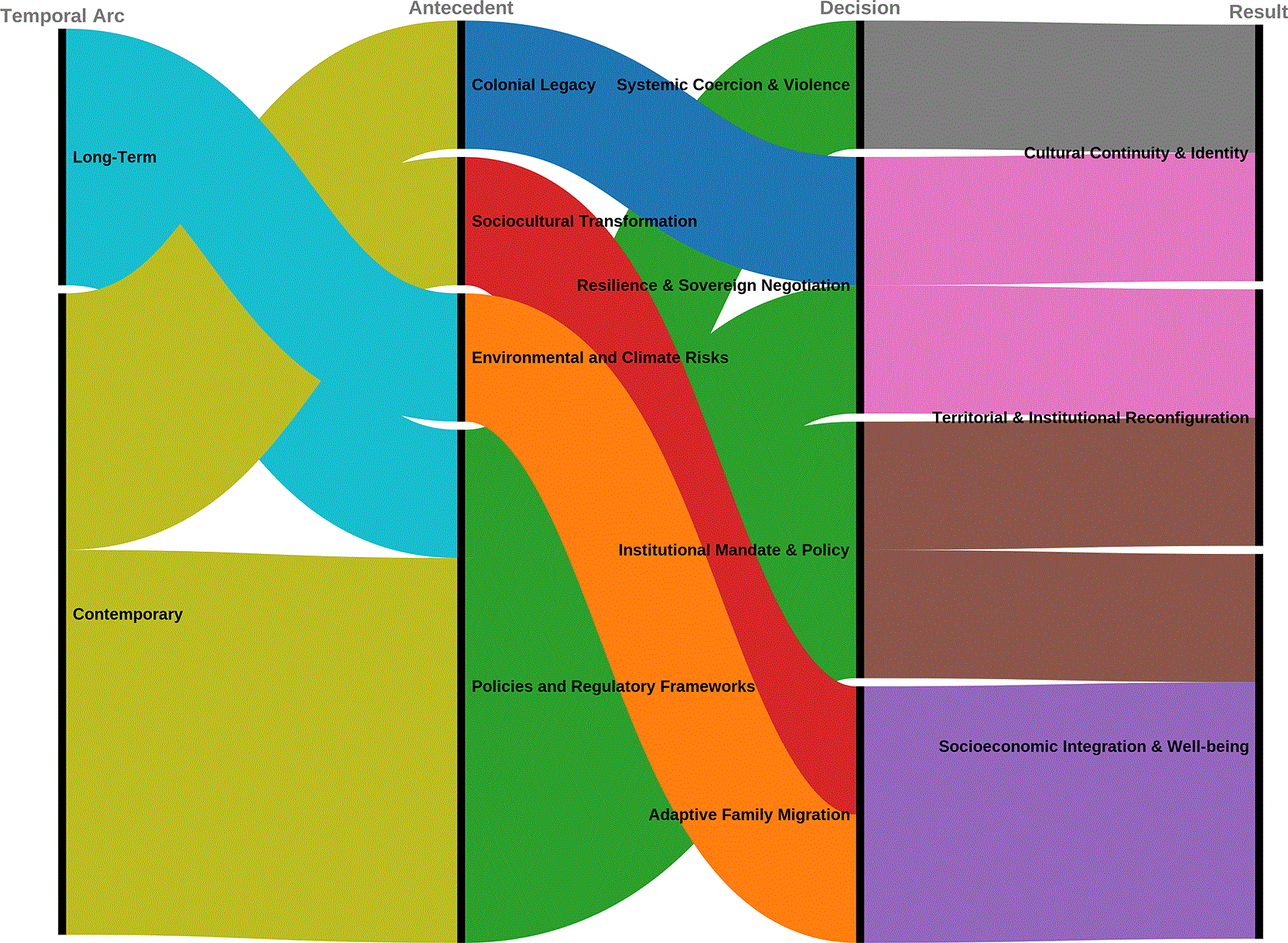
f5ec1ab2-b843-48e7-9c2a-aa0ec3bc9434_figure7.gif

Figure 7. Distribution of Temporal Arc, Antecedents, Decisions, and Outcomes (Oceania).

Source: Authors’ own elaboration.

Policies & Regulatory Frameworks emerge as the most recurrent antecedent in this pathway. In the long-term perspective, these policies are associated with Systemic Coercion & Violence. In this sense, Davis and Perheentupa (2026) demonstrated how the forced removal of Indigenous children in Australia from the late nineteenth century onward was legitimised through state policies that framed Indigenous families as incapable of providing adequate care. Presented as measures of rescue and assimilation, these policies relied on racialised narratives and contributed to the biocultural eradication of Indigenous communities. On the other hand, contemporary studies about Policies & Regulatory Frameworks indicate, for example, the contribution of Indigenous methodologies to their inclusion in higher education in Australia (Fainga’a-Manusione et al., 2024).

Africa was examined in three studies situated within the Contemporary and Pre-contemporary periods. The studies on this region focused on antecedents such as Environmental & Climate Risks and Colonial Legacy & Expropriation. The decisions were primarily related to Institutional Mandate & Policy and Resilience & Sovereign Negotiation, whereas the outcomes were represented by Territorial & Institutional Reconfiguration and Persistent Exclusion & Structural Vulnerability.

Transitology was examined through the lens of Colonial Legacy & Expropriation in Africa, emphasising Institutional Mandate & Policy as the principal decision-making mechanism. This study argues that state-led institutional processes have contributed to the erosion of African heritage, thereby reinforcing Persistent Exclusion & Structural Vulnerability (Nhemachena et al., 2020). In cases where the outcome was Territorial & Institutional Reconfiguration, the literature highlights government interventions that reinforced administrative boundaries and restricted land access for specific ethnic groups in Kenya (Golaz & Médard, 2016).

In the Global category, one study falls within the long-term period, while the other is classified as pre-contemporary. For the long-term period, Economic & Market Pressures is identified as the antecedent of Indigenous mobility, being associated with Adaptive Family Migration decisions and outcomes related to Cultural Continuity & Identity. More specifically, the study analysed the origins of Indo-European migrations based on dental evidence (Khudaverdyan, 2011). In contrast, the study referring to the pre-contemporary period identifies Policies & Regulatory Frameworks as the principal antecedent, associated with Institutional Mandate & Policy decisions and outcomes reflected in processes of Territorial & Institutional Reconfiguration. In this sense, the study shows that ethnic conflicts often emerge when state-supported migration of dominant ethnic groups into Indigenous territories generates competition over land and resources, leading to prolonged, low-intensity violence (Fearon & Laitin, 2011).

The only study carried out in Europe (Ireland) focuses on the Contemporary period, in which Policies & Regulatory Frameworks constitute the principal antecedent of Indigenous mobility. In this context, Indigenous populations tend to adopt Resilience & Sovereign Negotiation strategies, and the outcomes are characterised by Persistent Exclusion & Structural Vulnerability. The study shows that, in Ireland, motherhood serves as both a source of political mobilisation and a site of vulnerability for Indigenous women (Cullen, 2025). While caring for their children encourages civic and political engagement, these women also confront material hardships, racial discrimination, and threats to their families (Cullen, 2025).

3.2 Synthesis: Answering the research questions

The findings presented above allow the five research questions to be answered directly. Concerning RQ1, the literature identifies six main antecedents of Indigenous migration: Economic & Market Pressures (28% of the occurrences), Policies & Regulatory Frameworks (25%), Colonial Legacy & Expropriation (19%), Conflict & Violence (19%), Environmental & Climate Risks (7%), and Sociocultural Transformation (2%). Their relative weight varies across time: studies situated before 1900 are dominated by colonial expropriation, conflict, and environmental risks, whereas the contemporary period exhibits the greatest diversity of antecedents, with Economic & Market Pressures as well as Policies & Regulatory Frameworks the most frequently identified.

Concerning RQ2, four categories of migration-related decisions are examined in the literature, distinguished chiefly by who holds the initiative: Adaptive Family Migration (by far the most prevalent - 41% - recurring across all regions and periods), Institutional Mandate & Policy (23.5%), Resilience & Sovereign Negotiation (23.5%), and Systemic Coercion & Violence (12%). Concerning RQ3, the reported outcomes fall into four categories: Socioeconomic Integration & Well-being (36%), Territorial & Institutional Reconfiguration (27%), Cultural Continuity & Identity (20%), and Persistent Exclusion & Structural Vulnerability (17%); across the corpus, gains in welfare coexist with structural vulnerability, particularly in Latin America.

Concerning RQ4, the more recurrent relationship between antecedents and migration-related decisions links Economic & Market Pressures to Adaptive Family Migration (19%), which is also the decision category associated with the widest variety of antecedents. Policies & Regulatory Frameworks also recurs as an antecedent across all decision categories, underscoring the state’s pervasive role in shaping Indigenous mobility, and Colonial Legacy & Expropriation and Conflict & Violence likewise cut across all decision types. Concerning RQ5, the literature establishes relationships between all decision and all outcome categories, though with markedly different frequencies: the most frequent association links Adaptive Family Migration to Socioeconomic Integration & Well-being (21%), whereas the least frequent association is between Cultural Continuity & Identity and Institutional Mandate & Policy (1%).

Taken together, these findings point to a recursive dynamic in which Indigenous migration is both a response to existing pressures and a driver of subsequent transformations in community conditions. As discussed above, migration decisions are shaped by a set of antecedent pressures while simultaneously influencing processes of Territorial and Institutional Reconfiguration, including within Indigenous communities. These changes, in turn, alter the context in which future migration decisions are made, generating a continuous feedback process rather than a linear sequence of causes and effects. To make some of these interdependencies explicit and examine how they evolve over time, the following section translates the qualitative patterns identified in the literature into a dynamic model that illustrates the interactions among antecedent pressures, migration decisions, and community outcomes.
4. A Model of indigenous migration

To capture the intricacies of Indigenous migrations and present them under the form of a compact analytical model, we define a state space Xt and a contextual shock vector Ct . In this setting, time is discrete, t∈ℤ+ . Vector Xt conveys the state of the Indigenous community and its ancestral territory, and it four variables,

Xt=[PtKtItTt]

In the above expression, Pt stands for the population size in the ancestral territory at date t ; Kt represents local resources (e.g., agricultural land, clean water, Indigenous markets); It captures cultural identity integrity and social cohesion (language sharing, ritual continuity, community safety nets); Tt stands for territorial sovereignty and institutional autonomy (recognition of land rights, local governance strength).

Vector Ct characterises the pressure forces faced by the putative migrants when pondering migration. It contains the following elements:

Ct=[WtEtLNtSt]

The variables in the vector are: intensity of conflict/war, Wt (which implies physical insecurity and pushes towards forced displacement); environmental risks, Et (climate change, deforestation, soil degradation); structural parameter tracking the colonial legacy, L (historic land dispossession and marginalisation); economic pressures, Nt (global market penetration, resource extraction forcing local displacement); political constraints, St (state enforcement or lack of civil protections for Indigenous communities).

The decision to migrate depends on the comparison of expected long-term utility of staying ( Ustay ) versus migrating ( Umig ). Assuming heterogeneous thresholds within the community, the net migration rate mt (the proportion of the population migrating at time t ) can be modelled via a logistic choice function, with ζ>0 the behavioural sensitivity to utility differentials,

(1)
mt=11+e−ζ(Utmig−Utstay)

The utility differential, Utmig−Utstay, depends positively on Ct (people will want to leave if the context worsens) and negatively on Xt (people will want to stay if the state space improves). Let U¯ and U_ represent, respectively, the maximum and the minimum difference in utility between migrating and staying. This allows us to write the differential function in the following form:

(2)
Utmig−Utstay=U_+(U¯−U_)CtCt+Xt

Observe, in Equation (2), that if Ct=0 then Utmig−Utstay=U_ (the net utility of migration reaches its lowest point); and if Xt=0 then Utmig−Utstay=U¯ (the net utility of migration reaches its highest point). Moreover, if Ct→∞ then Utmig−Utstay=U¯ , and if Xt→∞ then Utmig−Utstay=U_ (ceteris paribus).

Migration choices ( mt ) and the structural conditions that provoke them generate a feedback loop. In general terms, we consider that migration aggravates state conditions. Migration contributes to the depletion of local human resources, via brain and muscle drain; it also erodes cultural integrity (splits families, breaks traditions); and makes economic and political pressures increase (the community loses the collective power to defend borders against illegal logging, mining, or state land grabs). In simple terms, we can model the evolution of the state space as a negative function of migration. Hence, we write.

(3)
Xt+1=(1−amt)Xt+bXt(X¯−Xt),a,b>0

Equation (3) contemplates two terms. The first indicates that the state space deteriorates as migration increases; the second term is a self-dependence component which translates the idea that in the absence of migration, local conditions (population, resources, cultural identity, sovereignty) will regenerate and reinforce until a boundary value X¯ (limit capacity) is reached.

Contextual threats ( Ct ) may also evolve over time, but we keep this evolution exogenous for tractability and to make it possible to study the impact of shocks hitting the local economy. To simulate the model, we attribute values to the defined array of parameters. Let U_=1,U¯=5,a=0.5,ζ=0.05,X¯=25 . Context is exogenous and constant: C=10 . We also set the initial value of the state to X0=10 . Parameter b is left as the bifurcation parameter in the analysis.

A straightforward inspection of the model’s global dynamics under the assumed parameterisation allows for the identification of three distinct parameter regions:

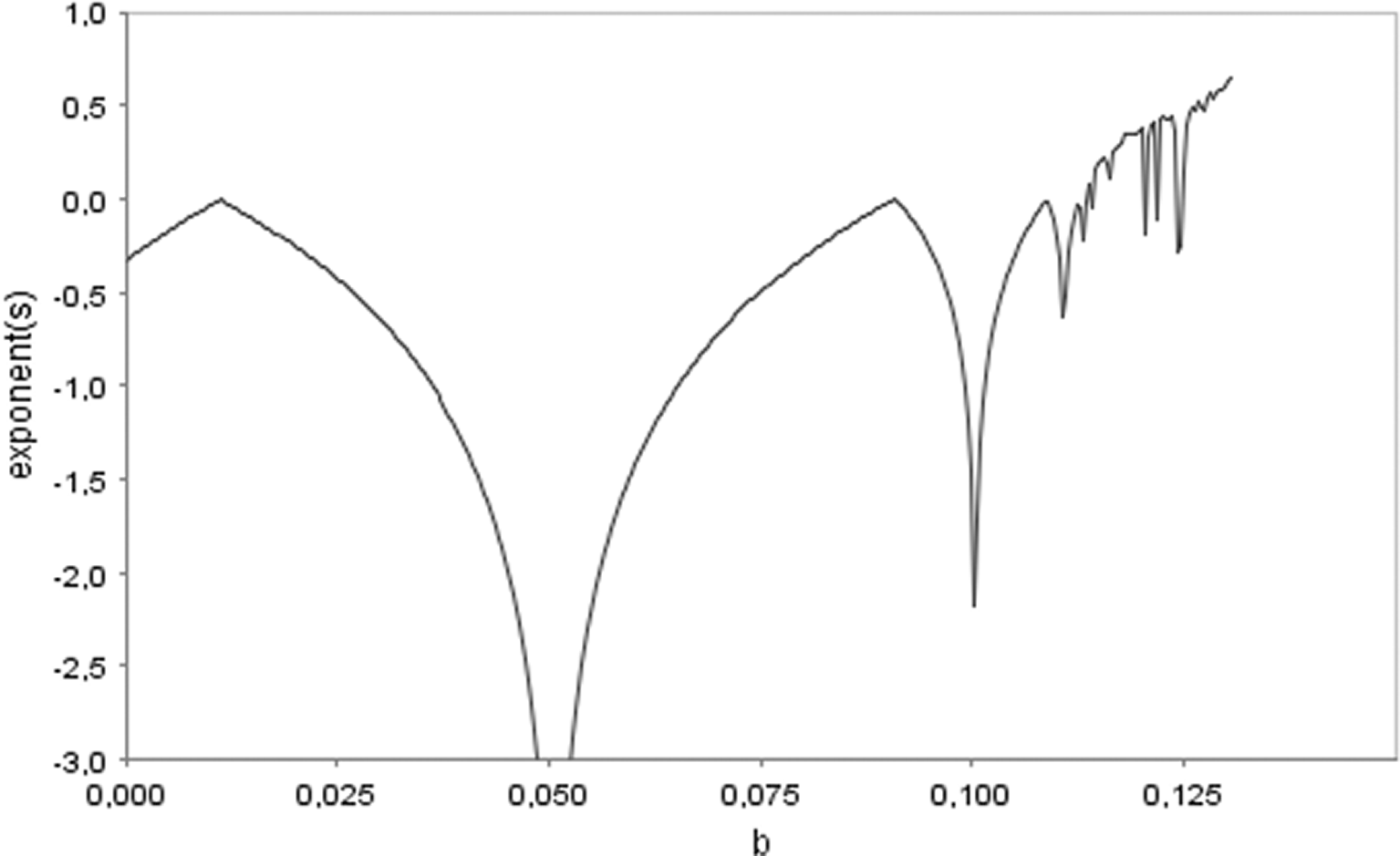
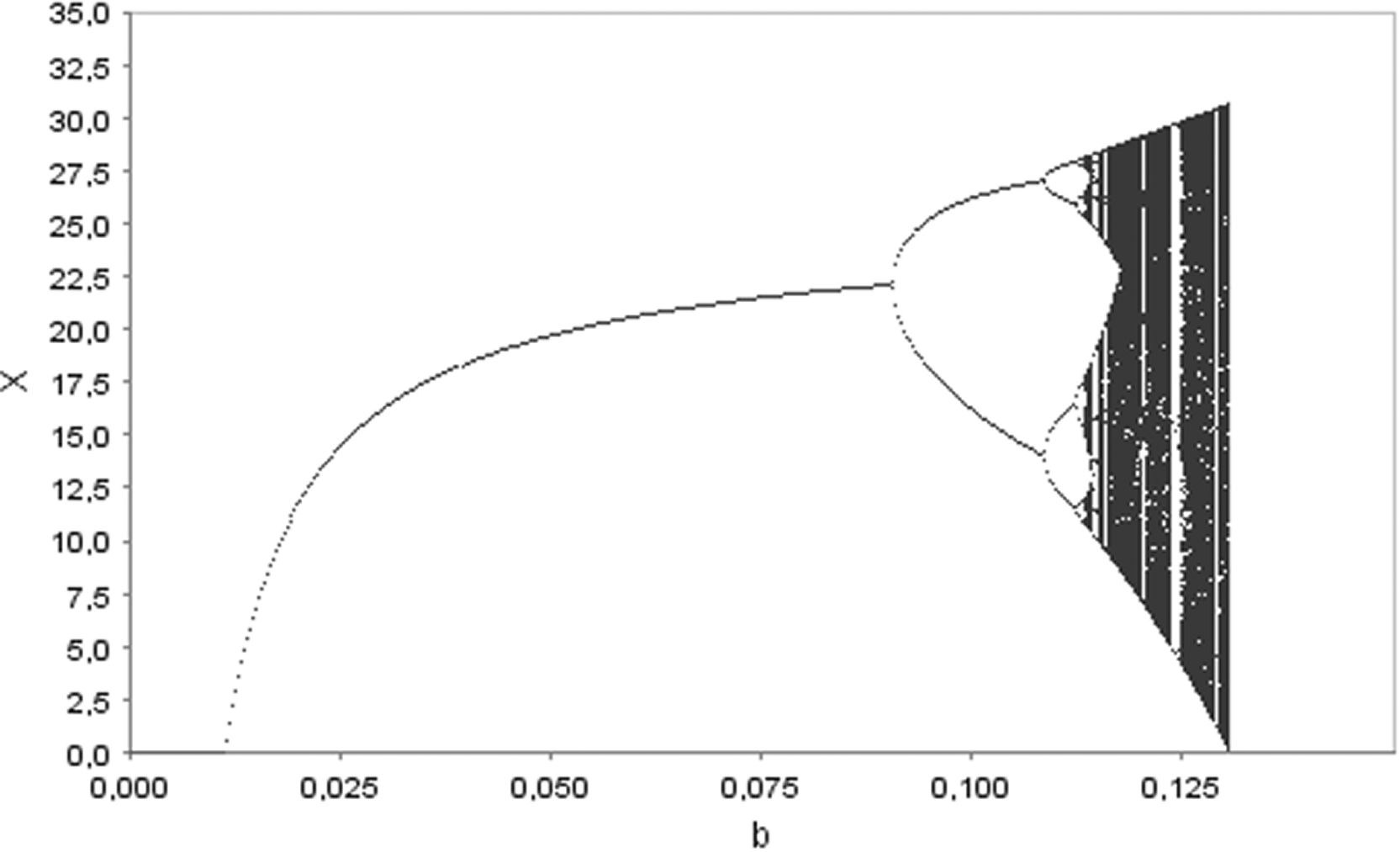
The results characterised in the preceding paragraph can be synthesised via a bifurcation diagram. The diagram in Figure 8 allows for the visualisation of the three mentioned stages (stability, cyclical motion, and instability). The graphic clearly exhibits a period-doubling route to chaos, which signifies that a flip bifurcation occurs leading first to regular cycles of low periodicity and, then, to fully irregular (chaotic) fluctuations. The presence of chaos can be confirmed by computing the system’s Lyapunov characteristic exponent (LCE). Chaos (i.e., sensitive dependence on initial conditions) exists for values of b for which the LCE is positive. Figure 9 confirms the persistence of chaos for most of the values of b in the interval (0.11 ; 0.13) .

f5ec1ab2-b843-48e7-9c2a-aa0ec3bc9434_figure8.gif

Figure 8. Bifurcation diagram.

f5ec1ab2-b843-48e7-9c2a-aa0ec3bc9434_figure9.gif

Figure 9. Lyapunov characteristic exponent.

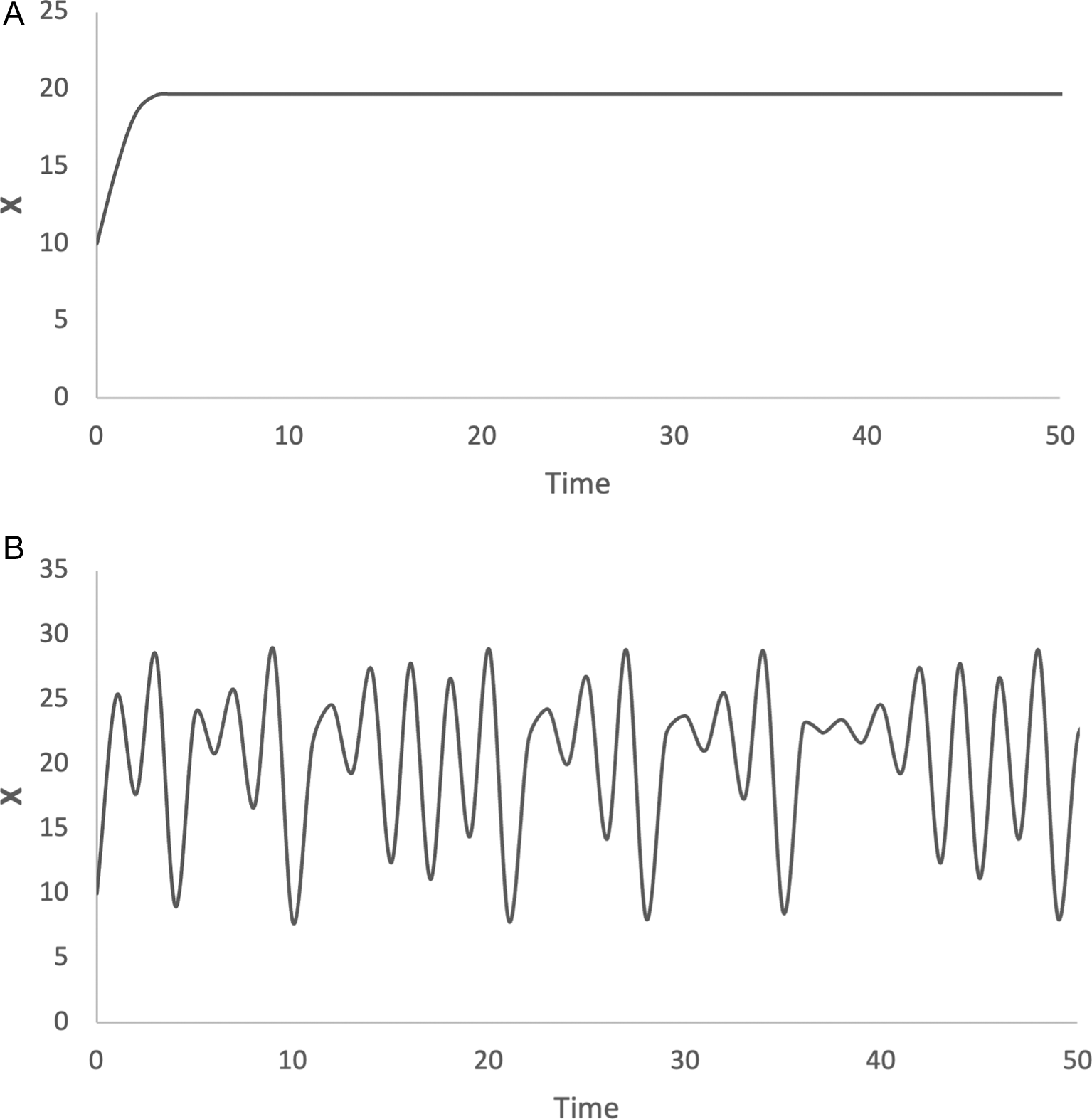
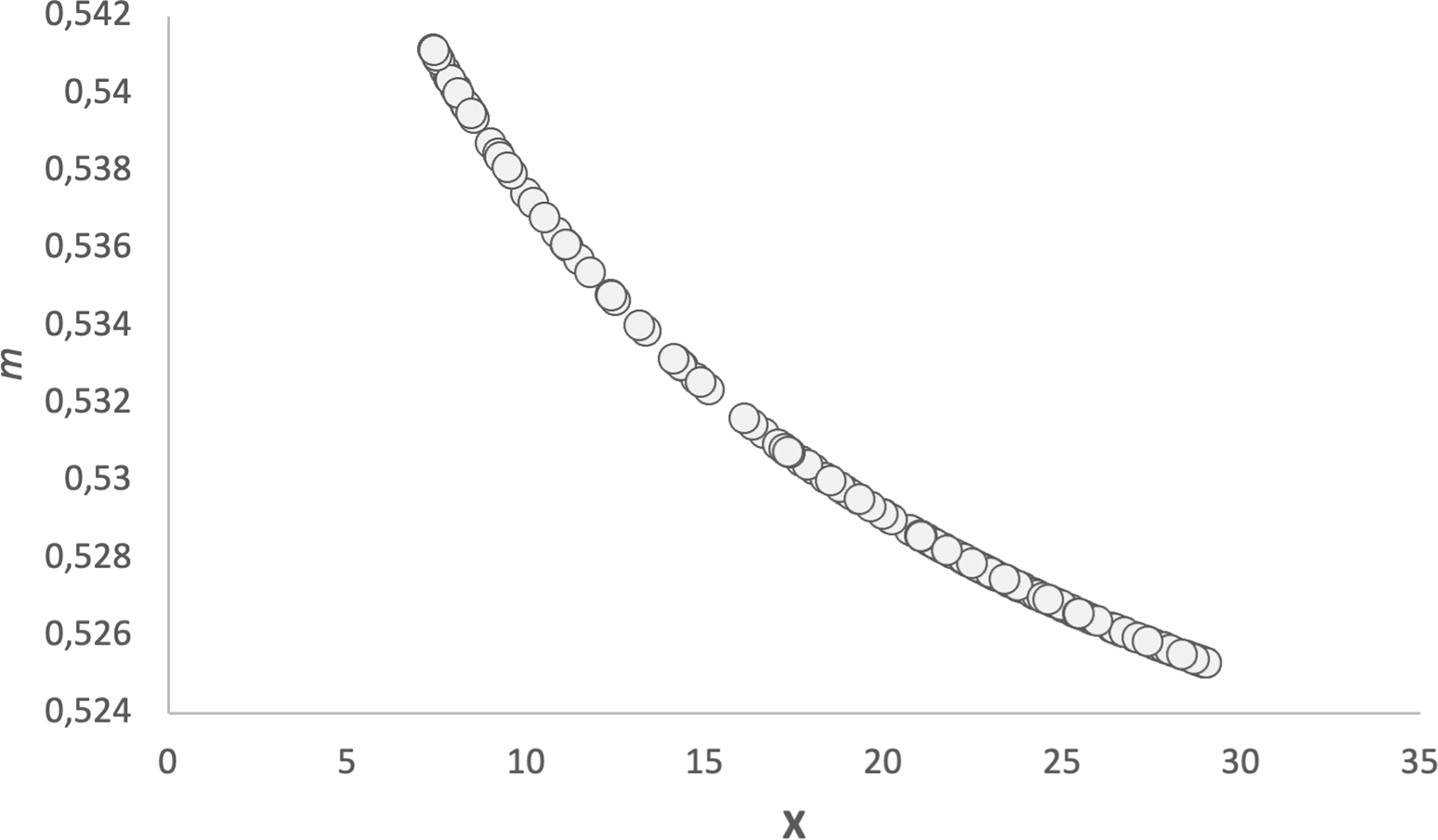
To complement the graphical analysis, we display in Figure 10 the evolution of the state space in two diagrams. The first is drawn for b=0.05 (convergence to a stable equilibrium) and the second for b=0.12 (chaotic motion). The illustration of dynamics is complemented with Figure 11, which displays an attractor for the chaotic case, linking variables X and m ; it is evident from the figure that there is a negative correlation between migration and state quality: the more native people migrate, the more the local economy and institutions degrade (and vice versa).

f5ec1ab2-b843-48e7-9c2a-aa0ec3bc9434_figure10.gif

Figure 10. State space time trajectory.

[first panel – stability ( b=0.05 ); second panel – chaos ( b=0.12 )].

f5ec1ab2-b843-48e7-9c2a-aa0ec3bc9434_figure11.gif

Figure 11. Long-term chaotic interaction between X and migration.

As mentioned, the contextual shock vector, Ct , exerts effect over the willingness of Indigenous people to stay or leave, which directly impacts the migration share, as characterised through Equation (2). Migration, in turn, influences the variables in the state space. Hence, we should use the model to explore the impact of a perturbation in Ct over the long-term time trajectory of Xt . Imagine a recrudescence of conflict, a deterioration of environmental conditions, or an increase in economic, social and political pressures. Any of these events contributes to an increase in the proposed value of Ct . Let ΔCt=2.5 . This perturbation will certainly change the steady state. Let us understand how.

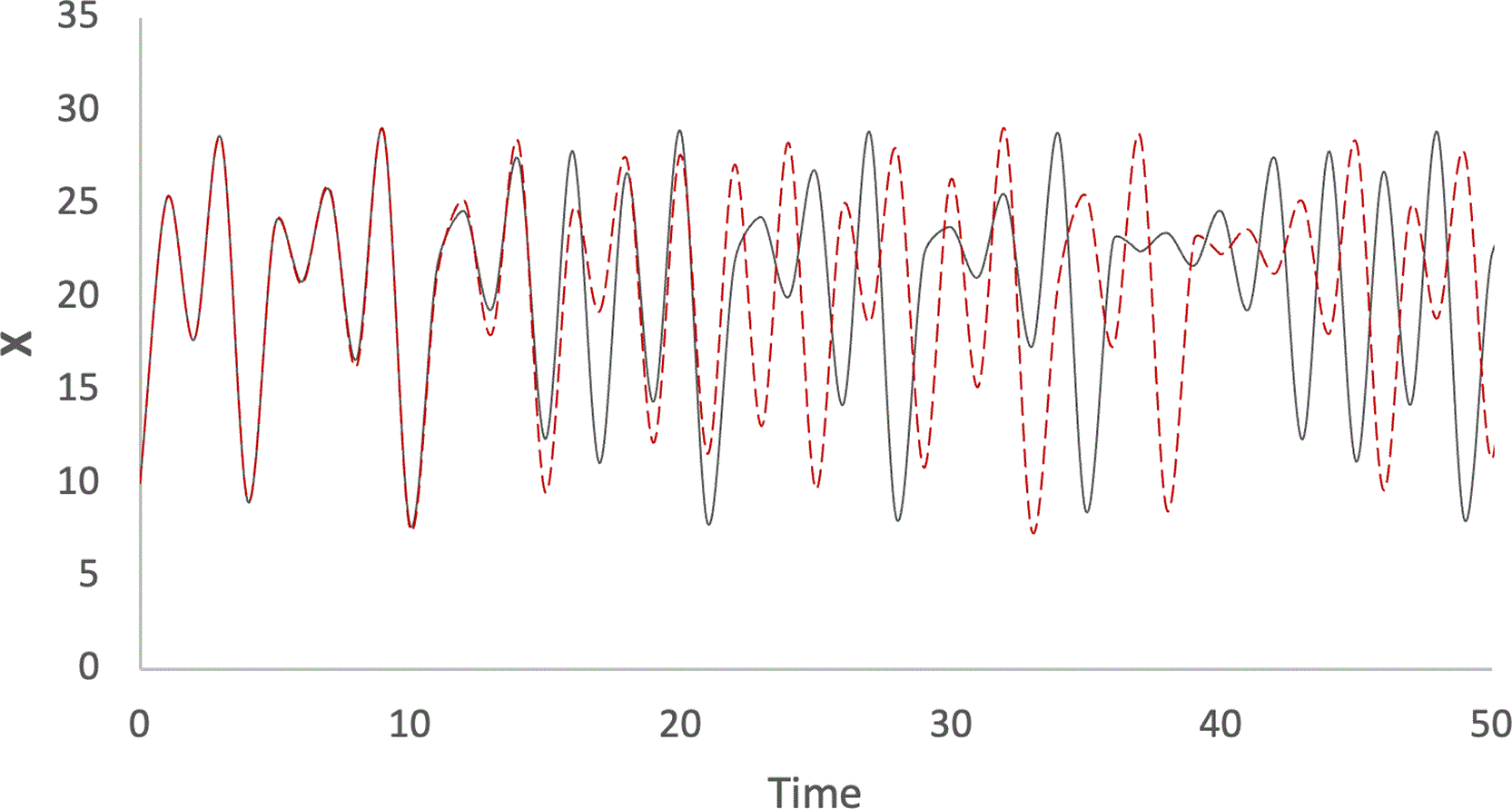
In the example with the stable equilibrium ( b=0.05 ), changing Ct=10 to Ct=12.5 makes Xt=19.707 fall to Xt=19.6812 , i.e., there is a small drop in the state index; this is accompanied by an increase in the migration rate from m=0.5293 to m=0.5319 . In the chaotic case, the trajectories of Xt begin by following similar paths, but given their chaotic nature after a few time periods they start taking completely different directions, as displayed in Figure 12. We conclude that in the chaotic regime, any change of context generates an entirely new path of persisting fluctuations.

f5ec1ab2-b843-48e7-9c2a-aa0ec3bc9434_figure12.gif

Figure 12. Chaotic trajectories of X , under different C.

5. Conclusions

This study provides a comprehensive analysis of Indigenous migration by integrating a systematic literature review with a novel dynamic analytical model. By moving beyond conventional neoclassical frameworks that treat migration as a purely individual choice, our research demonstrates that Indigenous mobility can be understood as a path-dependent phenomenon, deeply rooted in the interplay among historical colonial legacies, contemporary market pressures, and state-driven regulatory frameworks.

The synthesis of existing literature through the Antecedents–Decisions–Outcomes (ADO) framework reveals a critical temporal shift in the drivers of Indigenous mobility. While remote temporal arcs (Pre-1900 and Long-term) were primarily defined by Colonial Legacy & Expropriation and Conflict & Violence, the contemporary era is dominated by Economic & Market Pressures. Our findings highlight a systemic “integration gap”: although Adaptive Family Migration is the most frequent response to these modern economic pressures, aiming for socioeconomic well-being, it is frequently related to vulnerability, particularly in regions such as Latin America.

Regarding the proposed analytical framework, it offers an alternative perspective on the relationship between Indigenous migration, the conditions prevailing in places of origin, and the threats and risks faced by Indigenous communities. Both the state of the community and the broader contextual environment shape migration decisions. In turn, the level of migration plays a crucial role in determining the capacity of local communities to thrive and eventually attain a stable long-term equilibrium. When such an equilibrium cannot be achieved, communities may experience persistent instability or even collapse. The framework proposed in this review provides a foundation for future theoretical and empirical developments capable of supporting more effective research, policymaking, and Indigenous-centred development strategies, however, the proposed model can be further developed by examining individually the role of each state-space component and each contextual threat affecting Indigenous communities.

5.1 Limitations

Several limitations should be noted. First, the evidence base was restricted to articles indexed in the Web of Science and published in English, Portuguese, or Spanish; relevant work indexed elsewhere or written in other languages may therefore be under-represented. Second, the classification of studies along the Antecedents–Decisions–Outcomes framework, although derived inductively, involves interpretive judgement, and some studies could reasonably be assigned to more than one category. The regional configurations identified in 3.1.1. should be interpreted, at least in part, as maps of scholarly attention rather than of the phenomenon itself. The absences identified are findings about what has been studied; concluding that the corresponding dynamics are absent from those regions would overstate the evidence. The same caution applies with particular force to Africa and Europe, whose profiles rest on three studies and a single study, respectively, and cannot be taken to characterise regional patterns.

Ethics and consent

Ethical approval and consent were not required.

AI use disclosure

This study selectively employed AI technologies to support writing. ChatGPT assisted with APA formatting and language consistency.

Data availability

No new empirical data were generated in this study. All studies included in the systematic review are indexed in the Web of Science and are listed, together with their coding along the Antecedents–Decisions–Outcomes framework, in Appendices I, II, and III. The PRISMA 2020 Checklist, the Web of Science search results, and all supplementary appendices associated with this study are available in the Open Science Framework (OSF) repository. The repository is available under the CC0 1.0 Universal (CC0 1.0) Public Domain Dedication and can be accessed via the following DOI: https://doi.org/10.17605/OSF.IO/SHF29 (Moraes, 2026a).

Data are available under the terms of the Creative Commons Zero "No rights reserved" data waiver (CC0 1.0 Public domain dedication).

References

  •  Abad L, Maurer N: The long shadow of history? The impact of colonial labor institutions on economic development in Peru. J. Econ. Growth. 2025; 30(4): 521–565. Publisher Full Text
  •  Alvarado-Urbina A, Mondaca-Rojas C, Bustos-González R, et al.: Social Boundaries and Stigmatization in a Border Territory: Experiences of Peruvian and Bolivian Students in the Northernmost Region of Chile. SAGE Open. 2024; 14(2). Publisher Full Text
  •  Anderson RW: Politics, economics and Native American conflicts. Asia-Pacific Economic History Review. 2024; 64(1): 10–33. Publisher Full Text
  •  Arcury TA, Quandt SA, Rao P, et al.: Pesticide use and safety training in Mexico: The experience of farmworkers employed in North Carolina. Hum. Organ. 2001; 60(1): 56–66. PubMed Abstract | Publisher Full Text | Free Full Text
  •  Asad AL, Hwang J: Migration to the United States from Indigenous Communities in Mexico. Annals of the American Academy of Political and Social Science. 2019; 684(1): 120–145. Publisher Full Text
  •  Barajas M: Colonial Dislocations and Incorporation of Indigenous Migrants From Mexico to the United States. Am. Behav. Sci. 2014; 58(1): 53–63. Publisher Full Text
  •  Beban A, Martignoni JB: The lucky and unlucky daughter: Gender, land inheritance and agrarian change in Ratanakiri, Cambodia. J. Agrar. Chang. 2024; 24(2). Publisher Full Text
  •  Bebbington A: Modernization from Below: An Alternative Indigenous Development. Econ. Geogr. 1993; 69(3): 274–292. Publisher Full Text
  •  Berman M, Wang-Cendejas R: Rural-urban migration of Alaska Indigenous peoples: changing patterns and drivers. Ann. Reg. Sci. 2024; 73(4): 1865–1883. Publisher Full Text
  •  Butlin NG: The paleoeconomic history of Aboriginal migration. Aust. Econ. Hist. Rev. 1989; 29(2): 50–66. Publisher Full Text
  •  Calestani M: Being 'an authentic alteno': young people in a Bolivian Andean city. J. Youth Stud. 2012; 15(4): 541–555. Publisher Full Text
  •  Campbell C: Educational equity in Canada: The case of Ontario's strategies and actions to advance excellence and equity for students. School Leadership & Management. 2021; 41(4–5): 409–428. Publisher Full Text
  •  Cano W: Desequilíbrios regionais e concentração industrial no Brasil: 1930–1970. Editora Unesp; 2007.
  •  Carlson KM, Atem A, Dean J, et al.: Long-standing labour migration, new plantation enclosures, and social reproduction in Indonesian Borneo's borderlands. Globalizations. 2026; 23(2): 237–261. Publisher Full Text
  •  Chang SC: Evaluation of Taiwan's aboriginal development before Ching Dynasty. Appl. Econ. 2012; 44(34): 4409–4419. Publisher Full Text
  •  Clapp RA: Regions of refuge and the agrarian question: Peasant agriculture and plantation forestry Chilean araucania. World Dev. 1998; 26(4): 571–589. Publisher Full Text
  •  Cooke M, O'Sullivan E: The Impact of Migration on the First Nations Community Well-Being Index. Soc. Indic. Res. 2015; 122(2): 371–389. Publisher Full Text
  •  Cullen P: Minoritized mother politicians in Ireland: Subjectivities and subjectivation in the political workplace. Gend. Work. Organ. 2025; 32(1): 389–407. Publisher Full Text
  •  Darién C: Trafficking as settler colonialism in eastern Panama: Linking the Americas via illicit commerce, clientelism, and land cover change. World Dev. 2021; 145: 105490. Publisher Full Text
  •  Davis SE, Perheentupa J: Unsettling settler colonialism: forced removal of Romani and Indigenous children in the Habsburg Empire and Australia. Settl. Colon. Stud. 2026; 1–23. Publisher Full Text
  •  Davis J, Sellers S, Gray C, et al.: Indigenous Migration Dynamics in the Ecuadorian Amazon: A Longitudinal and Hierarchical Analysis. J. Dev. Stud. 2017; 53(11): 1849–1864. PubMed Abstract | Publisher Full Text | Free Full Text
  •  De Finney S, Mucina MK: The End of the Tunnel Girls' Marked Bodies in the Canadian Transcarceral Pipeline. Girlhood Studies-An Interdisciplinary Journal. 2021; 14(3): 18–36. Publisher Full Text
  •  De Leon A: The settler homeland: Racial violence, frontier colonialism, and Filipino repatriation. Settl. Colon. Stud. 2025; 15(2): 212–237. Publisher Full Text
  •  DelaCruz JJ, Kakolyris A, Suen TS: Education, Acculturation, and Ethnic Discrimination Among Indigenous Migrants from Latin America in New York City. Social Sciences-Basel. 2026; 15(2). Publisher Full Text
  •  Dhakal B, Chand N, Shrestha HL, et al.: Paradoxes of Aggravated Vulnerability, Marginalization, and Peril of Forest-Based Communities after Increasing Conservative Forest and Protected Areas in Nepal. World. 2022; 3(3): 544–574. Publisher Full Text
  •  Dockery AM: A Wellbeing Approach to Mobility and its Application to Aboriginal and Torres Strait Islander Australians. Soc. Indic. Res. 2016; 125(1): 243–255. Publisher Full Text
  •  Dube PR: Theorizing the Adivasi's absence in partition histories: Indigenes, refugees, and the settler state in Dandakaranya forest. Settl. Colon. Stud. 2024; 14(1): 94–113. Publisher Full Text
  •  Elo S, Kyngäs H: The qualitative content analysis process. J. Adv. Nurs. 2008; 62(1): 107–115. Publisher Full Text
  •  Fainga'a-Manusione I, Harvey A, Stuart J, et al.: Enhancing equitable inclusion for the Pasifika diaspora in mainstream Australia. Equality Diversity and Inclusion. 2024; 43(6): 910–925. Publisher Full Text
  •  Fearon JD, Laitin DD: Sons of the Soil, Migrants, and Civil War. World Dev. 2011; 39(2): 199–211. Publisher Full Text
  •  Feir DL: The long-term effects of forcible assimilation policy: The case of Indian boarding schools. Canadian Journal of Economics-Revue Canadienne D Economique. 2016; 49(2): 433–480. Publisher Full Text
  •  Feir DL, Gillezeau R, Jones MEC: The Slaughter of the Bison and Reversal of Fortunes on the Great Plains. Rev. Econ. Stud. 2024; 91(3): 1634–1670. Publisher Full Text
  •  Furtado C: Teoria e política do desenvolvimento econômico. Paz e Terra; 2000.
  •  Furtado C: Economia do desenvolvimento. Editora Contraponto; 2009.
  •  Galli C: The Effects of the COVID-19 Pandemic Crisis on Unaccompanied Minors Navigating US Removal Proceedings. Social Sciences-Basel. 2023; 12(7). Publisher Full Text
  •  Gardner P: Aboriginal Community Incomes and Migration in the NWT - Policy Issues and Alternatives. Canadian Public Policy-Analyse De Politiques. 1994; 20(3): 297–317. Publisher Full Text
  •  Gardner K: Indigenous Anti/Deportation: Contesting Sovereignty, Citizenship, and Belonging in Canada and Australia. Soc. Leg. Stud. 2024; 33(2): 168–190. Publisher Full Text
  •  Gil-García OF, Akalin N, Bové F, et al.: Understanding the Mobilities of Indigenous Migrant Youth across the Americas. Social Sciences-Basel. 2024; 13(2). Publisher Full Text
  •  Golaz V, Médard C: Agricultural frontier, land tenure changes and conflicts along the Gucha-Trans Mara boundary in Kenya. J. East. Afr. Stud. 2016; 10(2): 229–246. Publisher Full Text
  •  Guerin A: Shared routes of mammalian kinship: Race and migration in Long Island whaling diasporas. Island Studies Journal. 2021; 16(1): 43–61. Publisher Full Text
  •  Hecht AC: The struggle of being Toba in contemporary Argentina: Processes of ethnic identification of Indigenous children. Childhood-A Global Journal of Child Research. 2012; 19(3): 346–359. Publisher Full Text
  •  Hentschel J, Waters WF: Rural poverty in Ecuador: Assessing local realities for the development of anti-poverty programs. World Dev. 2002; 30(1): 33–47. Publisher Full Text
  •  Hernández DD, Pacheco AM: The social responsibility of tobacco production in Nayarit. Who pays the price?. Noesis-Revista De Ciencias Sociales Y Humanidades. 2023; 32(64): 95–115. Publisher Full Text
  •  Hill MD: Growing up Quechua: Ethnic identity, narrative, and the cultural politics of childhood migration in Cusco, Peru. Childhood-A Global Journal of Child Research. 2013; 20(3): 383–397. Publisher Full Text
  •  Hirschman AO: The strategy of economic development. Yale University Press; 1958.
  •  Khudaverdyan AY: Indo-European Migrations: Their Origin from the Point of View of Odontology. Anthropologist. 2011; 13(2): 75–81. Publisher Full Text
  •  Knickerbocker MR, Rose HA: Unsettling our family history: Critical interventions in settler Canadian pasts. Settl. Colon. Stud. 2026; 16(1): 162–190. Publisher Full Text
  •  Lalonde JL: The search for a promised land: Three settlement plans, three agents, and three handbooks for Icelandic migrant-settlers from 1875. Settl. Colon. Stud. 2024; 14(3): 314–340. Publisher Full Text
  •  Lazzaro-Salazar M, Arenas S, Mundaca EA, et al.: Perceptions of Nature in Cordillera and Urban Settings in Cultural Transitions of Colla Communities. SAGE Open. 2025; 15(2). Publisher Full Text
  •  Lin JJ, Chen CH, Hsieh TY: Job accessibility and ethnic minority employment in urban and rural areas in Taiwan. Pap. Reg. Sci. 2016; 95(2): 363–383. Publisher Full Text
  •  Majumder M, Arora S: Intersectional Inequalities and Invisibilization in Organizations: The Case of Indian Beauty and Wellness Services. J. Manag. 2024; 50(3): 1029–1065. Publisher Full Text
  •  Martinez LV: The situated configuration of the gender perspective in an intercultural school context. REIDOCREA-Revista Electronica De Investigacion Y Docencia Creativa. 2023; 12: 519–531. Publisher Full Text
  •  Maslov A, Zhong JW: Skill Mismatch of Indigenous Peoples in Canada: Findings from PIAAC. Canadian Public Policy-Analyse De Politiques. 2022; 48(1): 91–107. Publisher Full Text
  •  Matute ID: Indigeneity as a transnational battlefield: Disputes over meanings, spaces and peoples. Globalizations. 2021; 18(2): 256–272. Publisher Full Text
  •  Menjívar C: The intersection of work and gender: Central American immigrant women and employment in California. Am. Behav. Sci. 1999; 42(4): 601–627. Publisher Full Text
  •  Millán TM, Macours K, Maluccio JA, et al.: Experimental long-term effects of early-childhood and school-age exposure to a conditional cash transfer program. J. Dev. Econ. 2020; 143: 102385. Publisher Full Text
  •  Moraes M: Understanding Indigenous Migration. Open Science Framework. 2026a. Publisher Full Text
  •  Moraes M: Understanding Indigenous Migration.2026b July 28. Publisher Full Text
  •  Myrdal G: Economic theory and underdeveloped regions. Duckworth; 1957.
  •  Nhemachena A, Warikandwa TV, Mpofu N: Worse Than Bushmen and Transhumance? Transitology and the Resilient Cannibalization of African Heritages. J. Black Stud. 2020; 51(6): 503–523. Publisher Full Text
  •  Page MJ, McKenzie JE, Bossuyt PM, et al.: The PRISMA 2020 statement: An updated guideline for reporting systematic reviews. BMJ. 2021; 372. PubMed Abstract | Publisher Full Text | Free Full Text
  •  Parker J, Sayers J, Young-Hauser A, et al.: Gender and ethnic equity in Aotearoa New Zealand's public service. Gend. Work. Organ. 2022; 29(1): 110–130. Publisher Full Text
  •  Paul J, Benito GR: A review of research on outward foreign direct investment from emerging countries, including China: What do we know, how do we know and where should we be heading?. Asia Pac. Bus. Rev. 2018; 24(1): 90–115. Publisher Full Text
  •  Paul J, Lim WM, O'Cass A, et al.: Scientific procedures and rationales for systematic literature reviews (SPAR-4-SLR). Int. J. Consum. Stud. 2021; 45(1): 1–17. Publisher Full Text
  •  Pleasant T, Spalding A: Development and dependency in the periphery: From bananas to tourism in Bocas del Toro, Panama. World Development Perspectives. 2021; 24: 100363. Publisher Full Text
  •  PRISMA: PRISMA 2020 flow diagram. PRISMA Statement.n.d. Retrieved July 24, 2026. Reference Source
  •  Rak L, Randall E, Katrak-Harris M, et al.: Who I Am, and Why That Matters. Youth. 2025; 5(3). Publisher Full Text
  •  Rieger IA: COVID-19 and Indigenous Communities in Latin America: A Comparative Analysis. Revista De Estudios Sociales. 2021; 78: 36–55. Publisher Full Text
  •  Rivera-Salgado G: Mixtec activism in Oaxacalifornia - Transborder grassroots political strategies. Am. Behav. Sci. 1999; 42(9): 1439–1458. Publisher Full Text
  •  Robson J, Klooster D, Worthen H, et al.: Migration and agrarian transformation in Indigenous Mexico. J. Agrar. Chang. 2018; 18(2): 299–323. Publisher Full Text
  •  Sanchez D: Racial and Structural Discrimination Toward the Children of Indigenous Mexican Immigrants. Race Soc. Probl. 2018; 10(4): 306–319. Publisher Full Text
  •  Schott E, Kremin LV, Byers-Heinlein K: The Youngest Bilingual Canadians: Insights from the 2016 Census Regarding Children Aged 0-9 Years. Canadian Public Policy-Analyse De Politiques. 2022; 48(2): 254–266. Publisher Full Text
  •  Shneiderman S, Johnson AL, Baniya J, et al.: Circular resettlement and ongoing risk: Earthquakes, landslides, and the challenges of integrated reconstruction in Nepal. World Dev. 2026; 202: 107261. Publisher Full Text
  •  Sifuentes ME: Queer-Decolonial Pedagogy: Undoing Binaries Through Intergenerational Learning. J. Homosex. 2022; 69(12): 2066–2083. Publisher Full Text
  •  Spiegel SJ: Governance Institutions, Resource Rights Regimes, and the Informal Mining Sector: Regulatory Complexities in Indonesia. World Dev. 2012; 40(1): 189–205. Publisher Full Text
  •  Squeff T, Pecker J: The mobility difficulties of the Warao ethnic Venezuelan peoples in Brazil resulting from the veto in the migration law. Revista Brasileira De Historia & Ciencias Sociais. 2021; 13(26): 204–228. Publisher Full Text
  •  Stone-Cadena V, Velasco SA: Historicizing Mobility: Coyoterismo in the Indigenous Ecuadorian Migration Industry. Annals of the American Academy of Political and Social Science. 2018; 676(1): 194–211. Publisher Full Text
  •  Thiede BC, Gray C: Characterizing the Indigenous forest peoples of Latin America: Results from census data. World Dev. 2020; 125: 104685. PubMed Abstract | Publisher Full Text | Free Full Text
  •  Webb MF: Transnational Migration's Psychosocial Impacts for Kaqchikel Maya Migrants' Wives. Hum. Organ. 2018; 77(1): 32–41. Publisher Full Text
  •  Wierucka A: Negotiating better futures - Migration of Huaorani youth in rural Ecuador. J. Youth Stud. 2022; 25(3): 307–320. Publisher Full Text
  •  Xu Z: A Bioarchaeological Investigation of Population Dynamics in South-Central Inner Mongolia during the Eastern Zhou Period. Soc. Sci. China. 2025; 46(2): 57–76. Publisher Full Text

Footnotes

The temporal classification was organized into four categories to reflect different economic contexts: pre-1900, associated with the predominance of classical liberalism; pre-contemporary (1901–2000), marked by the transition from classical liberalism to the rise of neoliberalism; Contemporary (2001 onwards), characterized by the consolidation of neoliberalism.