1. Introduction
Gene therapy enables the treatment of a wide range of diseases through the delivery of therapeutic nucleic acids (NAs) to target cells. Vectors for NA delivery are broadly classified into viral and non-viral systems. Viral vectors, including retroviruses, lentiviruses, and adenoviruses remain the most efficient systems for delivering high-molecular-weight NAs into host cells and are employed in approximately 70% of clinical gene delivery trials.1–6 However, viral vectors are associated with several clinical limitations, including immunogenicity, the risk of insertional mutagenesis, limited cell selectivity, and restricted gene-loading capacity.2,7–9 These constraints have sustained interest in polymeric delivery systems as complementary/or alternative carriers for nucleic acids.
Non-viral colloidal vectors based on cationic lipids and polymers offer several advantages, including enhanced biocompatibility, low immunogenicity, high gene-loading capacity, tuneable architecture, and scalability.10–12 Lipid nanoparticles (LNPs) have enabled the clinical delivery of mRNA, most notably in COVID-19 vaccines.13,14 Blended block polycation micelles have also enhanced antisense oligonucleotide delivery in experimental studies.15 However, current LNP formulations can be limited by storage requirements, long-term stability,16–19 and a tendency toward hepatic accumulation after systemic administration.20 These limitations underscore the complementary potential of polymeric delivery systems.
Cationic polymers complex with the negatively charged phosphate backbone of NAs via electrostatic and hydrophobic interactions to form polyplexes (i.e., colloidal nanoparticles with tuneable size for cellular internalization and efficient intracellular NA trafficking).12,21 Through chemical modification and rational design, cationic polymers with diverse architectures, ranging from linear to branched, dendritic, cyclic, star-shaped, and brush forms, and specific physicochemical properties including charge density, biodegradability, and biocompatibility have been developed.
An increasing number of polymer-based delivery systems are commercially available for research use (
Table 1).22
Table 2 illustrates approved nucleic acid therapies; it does not establish approval of the polymer vectors discussed in this review. 9
Table 1. Polymeric gene vectors commercially available as reagents.
| Reagent | Class of polymer | Nucleic Acid delivered | Features |
|---|
| jetPEI, jetPRIME | Linear PEI | DNA, siRNA | High efficiency with low NA input |
| jetMESSENGER, in vivo-jetRNA
| Cationic polymer | mRNA | In vitro/in vivo mRNA delivery for vaccination |
| X-tremeGENE 360 | Cationic polymer | DNA, siRNA, miRNA, CRISPR/RNP | Broad eukaryotic cell coverage including hard-to-transfect lines |
| TurboFect | Cationic polymer | DNA or RNA | High efficiency with or without serum |
| FuGENE 4 K | Cationic polymer plus lipid | DNA | Protein and virus production workflows |
| Xfect | Biodegradable polymer | Plasmid DNA | Very low cytotoxicity; high efficiency |
| Altogen POLYMER in vivo | Biodegradable polymer | siRNA, plasmid DNA | In vivo delivery via I.V. or I.T. injection |
Table 2. Some approved and marketed small nucleic acid-based therapies.
|
Company |
Brand name |
Active |
Modality |
Delivery system |
Administration route |
Indication | Regulatory status |
|---|
| Isis Pharma; Novartis | Vitravene | Fomivirsen | ASO (PS) | None | Intravitreal | CMV retinitis | 1998 USA; 1999 EU* |
| Eyetech; Pfizer | Macugen | Pegaptanib | Aptamer | PEGylated | Intravitreal | AMD | 2004 USA; 2006 EU |
| Ionis; Genzyme | Kynamro | Mipomersen | ASO 2′-MOE gapmer | None | Subcutaneous | HoFH | 2013 USA |
| Biogen; Ionis | Spinraza | Nusinersen | ASO 2′-MOE | – | Intrathecal | SMA | 2016 USA; 2017 EU |
| Sarepta | Exondys 51 | Eteplirsen | PMO | PMO | Intravenous | DMD (exon 51) | 2016 USA |
| Alnylam | Onpattro | Patisiran | siRNA | LNP | Intravenous | hATTR | 2018 USA; 2018 EU |
| Ionis; Akcea | Tegsedi | Inotersen | ASO 2′-MOE gapmer | None | Subcutaneous | hATTR | 2018 USA; 2018 EU |
| Sarepta | Vyondys 53 | Golodirsen | PMO | PMO | Intravenous | DMD (exon 53) | 2019 USA |
| Akcea; Ionis | Waylivra | Volanesorsen | ASO 2′-MOE gapmer | None | Subcutaneous | FCS | 2019 EU; 2019 CAN |
| Alnylam | Givlaari | Givosiran | siRNA | GalNAc | Subcutaneous | AHP | 2019 USA; 2020 EU |
| NS Pharma | Viltepso | Viltolarsen | PMO | PMO | Intravenous | DMD (exon 53) | 2020 USA; 2020 JPN |
| Alnylam | Oxlumo | Lumasiran | siRNA | GalNAc | Subcutaneous | PH1 | 2020 EU; 2020 USA |
| Novartis | Leqvio | Inclisiran | siRNA | GalNAc | Subcutaneous | HeFH/ASCVD | 2020 EU; 2021 USA |
| Sarepta | Amondys 45 | Casimersen | PMO | PMO | Intravenous | DMD (exon 45) | 2021 USA |
| Alnylam | Amvuttra | Vutrisiran | siRNA | GalNAc | Subcutaneous | hATTR | 2022 USA; 2022 EU |
| Biogen; Ionis | Qalsody | Tofersen | ASO 2′-MOE gapmer | — | Intrathecal | SOD1-ALS | 2023 USA |
Polyplex performance depends, in fact, on several physicochemical and biological properties, including the structure of cationic groups, pKa, molecular weight, polymer architecture, biodegradability, and interactions with cell membranes.12 Therefore, understanding these structure–function relationships is essential for rational design of next-generation polymeric vectors.
This review focuses specifically on how the structural and compositional features of cationic polymers determine their performance as NA delivery vectors. The review examines the influence of molecular weight, surface charge, cationic moiety selection, polymer topology, and chemical modifications on polyplex formation, stability, cellular uptake, endosomal escape, and transfection efficiency. targeting ligands and stimuli-responsive moieties are discussed alongside the emerging application of artificial intelligence, machine learning, and molecular dynamics simulations for data-driven polymer design. Finally, the review assesses the clinical translation landscape and identifies some key bottlenecks and encompasses both small NAs (siRNAs, saRNAs, miRNAs, and ASOs) that exert their activity in the cytosol and high-molecular-weight pDNA that functions in the nucleus.24
2. Fundamentals of polyplex formation and biological barriers
2.1 Polyplex formation and extracellular barriers
Polyplexes are formed through electrostatic interactions between polyanionic NAs and multivalent cationic polymers.25,26 Polyplexes increase the NA bioavailability by reducing their elimination from the bloodstream and enzymatic degradation. Small NAs (<30 kDa) undergo rapid renal clearance, while larger NAs are cleared by mononuclear phagocytes in the liver and spleen.24
Polyplex stability in biological fluids is a key determinant of therapeutic performance. Cationic polymers are often used to improve nucleic acid protection against nuclease degradation. However, after intravenous administration, electrostatic interactions with plasma proteins and anionic blood components can alter the polyplex structure, leading to aggregation, rearrangement, or disassembly.27–29 For example, Dash et al.29 demonstrated that poly-L-lysine/DNA (PLL/DNA) polyplexes incubated with 50% fresh plasma bound to serum proteins, increasing particle size from ~50 nm to >100 nm. Albumin addition further induced aggregation. Warriner et al.30 reported up to 51% loss of transfection efficiency for polyethylenimine/DNA (PEI/DNA) polyplexes upon incubation with bovine serum albumin. In vivo, Veiman et al.31 observed that the polyplex interaction with protein extracellular matrix (ECM) caused an approximately 2.5-fold reduction in tumour accumulation of cell-penetrating peptide/pDNA complexes.
2.2 The protein corona
Typically, in biological fluids, proteins adsorb onto nanoparticle surfaces forming protein corona that can affect their biodistribution and cellular interactions. Protein adsorption, usually reported as “opsonization”, begins within seconds and remains dynamic, with loosely associated proteins exchanging more rapidly than proteins that bind more strongly to the nanoparticle surface. The major proteins involved in the corona formation are opsonins immunoglobin G (IgG) antibodies and complement proteins, especially C3b and iC3b, which bind fragment crystallizable (Fc) or complement receptors on phagocytes.32,33 The protein corona has several critical effects on polyplex performance. It can mask targeting ligands, reducing receptor-mediated cellular uptake, and undermining active targeting strategies. Opsonin adsorption promotes recognition by the mononuclear phagocyte system, accelerating clearance. Corona proteins can trigger complement activation, contributing to inflammatory responses. The corona can also alter particle size and colloidal stability, potentially causing aggregation.34
In polyplexes, corona composition depends on the surface properties such as charge density, hydrophobicity, surface decoration.35 PEGylation, zwitterionic coatings, and other low-fouling polymer architectures have been used to reduce undesirable protein adsorption, while in other cases corona formation has been exploited deliberately. For example, adsorption of endogenous proteins such as apolipoprotein E can promote receptor-mediated uptake, particularly in the liver.34,35 Better control over the protein corona composition is therefore essential for translating polymeric vectors from in vitro success to in vivo efficacy.
2.3 Intracellular barriers and endosomal escape
Following extravasation and interaction with cells (see
Figure 1), polyplexes are internalized primarily via endocytosis.36–39 After uptake, they are enclosed within early endosomes, which progressively mature into late endosomes and endolysosomal compartments. This maturation occurs via pH decrease (from ~7.4 to ~5.0) and the degradative enzyme activation. After cellular uptake, nanoparticles (NPs) follow different intracellular trafficking routes depending on their size, surface properties, and targeting ligands.11,40,41
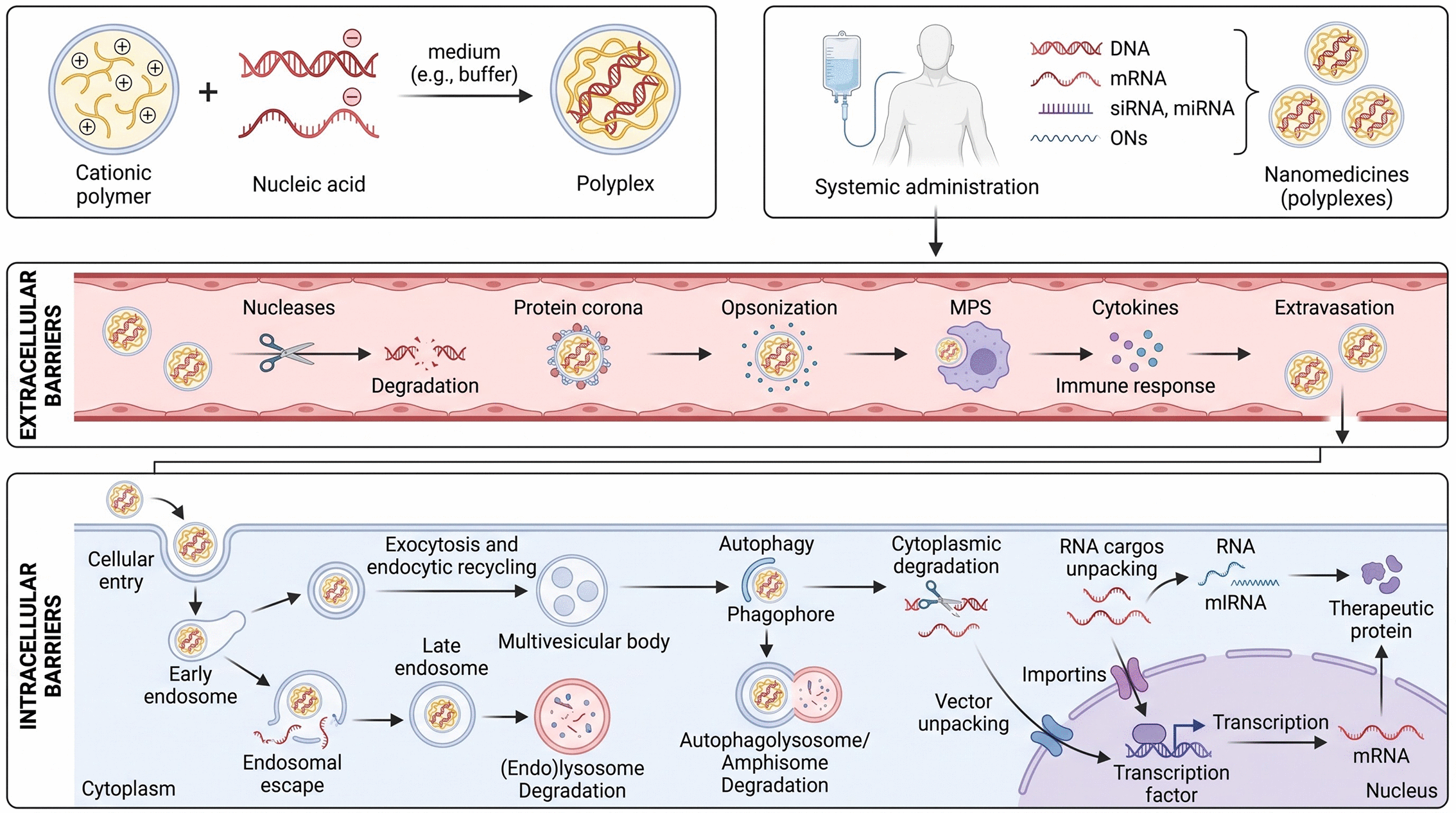
Figure 1. Polyplex Formation and Biological Barriers Following Systemic Administration.
Nucleic acids associate with cationic polymers to form polyplexes, which subsequently encounter extracellular barriers, including nuclease degradation, protein corona formation, opsonization, mononuclear phagocyte system (MPS) clearance, and extravasation. Following cellular uptake, intracellular barriers include endosomal escape, lysosomal degradation, exocytosis, autophagy, cytoplasmic trafficking, and, for plasmid DNA (pDNA), nuclear entry. Created with BioRender.com.
The endosomal escape bottleneck. Endosomal escape is widely recognized as the most critical intracellular barrier for non-viral gene delivery. Quantitative studies using split-GFP, and galectin-8 recruitment assays have revealed that typically less than 2% of internalized NPs successfully escape the endosomal compartment. Therefore, even small improvements in endosomal release can reflect in significant improvement of transfection efficiency.42,43
“Proton sponge” is one of the main proposed endosomal escape mechanisms. In such a case, polymers with high buffering capacity become protonated as endosomal pH decreases, yielding influx of counter-ions and water, which can increase osmotic pressure and contribute to endosomal membrane disruption.42–44 However, this mechanism remains debated, and other processes, including direct membrane destabilization, pore formation by protonated amines, and lipid-phase disruption, have been proposed to contribute to the endosomal escape.
While most of viral vectors can naturally escape the early endosomes or bypass the endolysosomal pathway,45,46 non-viral polyplexes must incorporate design features promoting efficient escape, making the selection of ionizable moieties with appropriate pKa a critical design parameter. Furthermore, intracellular destination shapes delivery requirements. RNA-based nucleic acids generally act in the cytosol, whereas plasmid DNA must reach the nucleus, where entry across the nuclear envelope is tightly regulated and may depend on nuclear localization signals.40,42,47,48
3. Representative cationic polymers for nucleic acid delivery
A wide range of cationic polymers has been explored for NA delivery, each with distinct physicochemical and structural features, advantages, and limitations (
Table 3). This section provides a concise overview of the major polymer families that serve as the foundation for the structure-function discussions in subsequent sections.
Table 3. Key features and limitations of principal polymeric vector classes.
| Polymer | Properties | Limitations |
|---|
| PLL | Biodegradable; electrostatic NA binding | High cytotoxicity; low unmodified transfection |
| PEI (linear/branched) | High transfection; broad buffering capacity | MW-dependent toxicity; non-degradable
|
| PAMAM dendrimers | Uniform size; generation-tuneable properties | High cost; concentration-dependent toxicity |
| PBAEs | Biodegradable; combinatorial synthesis; versatile | MW- and end-group-dependent performance |
| Natural polymers | Biodegradable; biocompatible; low toxicity | Batch variability; low transfection; limited solubility |
| Hydrogels | Controlled release; 3D architecture | Variable degradation; protein aggregation |
3.1 Poly-L-Lysine (PLL)
Poly-L-Lysine (PLL) was among the first cationic biodegradable polymers investigated for gene delivery, bearing primary amine groups that enable efficient electrostatic NA complexation. PLL condenses DNA into nanoparticles of various morphologies.49 However, PLL suffers from high cytotoxicity and limited transfection. Strategies to improve its performance include dendrigraft PLL,50,51 PLL grafted onto chitosan,52 and PLL modified PEI53 that has been studied for glioblastoma gene therapy.54
3.2 Polyethyleneimine (PEI)
PEI, available in linear and branched forms (0.2–800 kDa), is the most investigated polycationic vector for NA delivery.26 Branched 25 kDa PEI is the “gold standard” due to its high transfection efficiency, attributed to primary, secondary, and tertiary amines conferring broad buffering capacity.55 However, cytotoxicity increases with molecular weight. To address these challenges, PEI has been modified with different materials, including: galactose-PEG-PEI for liver targeting56; folic acid and PEG for cancer cell-specific delivery57; TAT (transactivator of transcription), PEG, and oleic acid for drug and gene co-delivery58; oxazoline59; magnetic systems60; graphene oxide (GO).61
3.3 Poly (amidoamine) (PAMAM) dendrimers
PAMAM dendrimers possess well-defined branching, uniform size, and good biocompatibility. Their generation-dependent properties allow precise control over surface charge and NA condensation.62 Cost and concentration-dependent toxicity are main concerns. Extensive surface modifications have produced PAMAM derivatives with enhanced delivery properties.63–77 Additionally, studies outside gene delivery have shown that functionalization of PAMAM-G0 and PAMAM-G3 with diethylene glycol and lauroyl chains can improve physicochemical properties, providing insights into dendrimer design for gene delivery applications.78,79
3.4 Poly(β-amino esters) (PBAEs)
PBAEs, first reported by Lynn and Langer in 2000,80 are widely studied for nucleic acid delivery because they are biodegradable, readily synthesized, and amenable to combinatorial modification and screening.81 PBAEs condense nucleic acids into polyplexes of approximately 50–200 nm with ζ-potentials of +10 to +15 mV.82
Natural polymers
3.5
Natural polymers, including chitosan, pullulan, dextrin and hyaluronic acid have attracted considerable interest as nucleic acid delivery vectors due to their biodegradability and biocompatibility.83,84 However, many of these polymers possess insufficient cationic charge to effectively bind anionic nucleic acids without modification, and batch-to-batch variability can also affect delivery performance. Cationic groups can therefore be introduced, or the natural polymer can be combined with a cationic component, to improve nucleic acid complexation.85
Chitosan requires separate consideration because its amino groups already provide a source of positive charge, although its properties can also be modified for delivery applications because its transfection efficiency depends on degree of deacetylation, molecular weight, pH, and chemical functionalization 85,86 PEG conjugation, for example, increases the chitosan solubility,87,88,89 the cell-uptake and DNA decomplexation.89–92 Tripolyphosphate (TPP) encapsulated miR-33 in PEG chitosan targeted mouse macrophages and reduced ABCA1 expression and lowered liposterol outflow in cholesterol mechanism.93 PEG-Trimethyl chitosan (TMC)-REDV peptide delivered miR-126 into vascular endothelial cell.94
Pullulan (PULL) is a water-soluble polysaccharide produced by Aureobasidium pullulans. 95,96 Its biomedical applications include investigation as a component of a protein vaccine.97 Pullulan also has an affinity for the asialoglycoprotein receptor on hepatocytes, which contributes to its receptor-mediated uptake by the liver.98 Kang et al. incorporated pullulan into a polyethylenimine (PEI) carrier and observed increased liver accumulation of siRNA after systemic administration in mice.99 Beyond nucleic acid delivery, folated pullulan conjugates have been investigated for targeted delivery of anticancer drugs.10095 For gene delivery, folate–PEI-modified pullulan has been used to carry plasmid DNA and siRNA,101 while quaternised pullulan derivatives have been developed for miRNA delivery.102 Pullulan modified with triethylenetetramine, diethylenetriamine pentaacetic acid or spermine has also been investigated for liver-targeted plasmid DNA delivery through metal coordination.103 More recently, modified pullulan polyplexes have been studied for gene silencing following nebulisation.104 Pullulan hydrogel nanoparticles have also been used to encapsulate and deliver a pBUDLacZ plasmid.105
Dextran can be functionalised with cationic groups to promote electrostatic binding to negatively charged nucleic acids, as demonstrated with cationised dextran for gene delivery.106–108 In a different approach, carboxymethyl β-dextran was combined with protamine sulfate in a carrier designed to co-deliver docetaxel, chloroquine and ATG5 siRNA.109109 A PSMA-targeted degradable dextran carrier delivered siRNAs against PD-L1 and CD46 to prostate cancer cells.110109 An acid-degradable dextran carrier was also used to deliver COX-2 siRNA and reduce COX-2 expression in cancer cells and tumours.111109 Chitosan–carboxymethyl dextran complexes delivered a plasmid encoding miR-145,112 whereas a separate glutathione-responsive chitosan–thiolated dextran system used AS1411 aptamer targeting to deliver dextran-conjugated miR-145.113 Spermine-modified acetalated dextran microparticles provide a further example of acid-responsive siRNA delivery.114
Hyaluronic (HA), also known as hyaluronan or hyaluronate has been reported to be modified for NA delivery including HA-CH-NP/siRNA nanoparticles delivering PLXDC1 siRNA to CD44-positive tumor endothelium for anti-angiogenic therapy in ovarian cancer.115–117
Hydrogels
3.6.
Hydrogels can provide controlled and sustained release through hydrated three-dimensional networks.118–120 PVA hydrogels containing PEI polyplexes have supported prolonged NA release.119,121,122 In angiogenesis studies, a gelatin hydrogel enhanced delivery of an FGF4 plasmid,125 a biodegradable hydrogel provided sustained local delivery of a VEGF plasmid,123 and a fibrin matrix was used to deliver a plasmid encoding a stabilized HIF-1α variant.124
4. Structure-Function relationships and polymer design parameters
Although cationic polymers readily form polyplexes with nucleic acids, these polyplexes can still suffer from insufficient stability, cytotoxicity, poor cell selectivity, and inefficient endosomal escape. Polymer design has therefore focused on tuning cationic functionalities, hydrophobic content, stimuli-responsive groups, molecular weight, and targeting ligands to improve delivery performance. This section discusses how these parameters influence polyplex behaviour, with the main structure-function relationships summarized in
Figure 2.
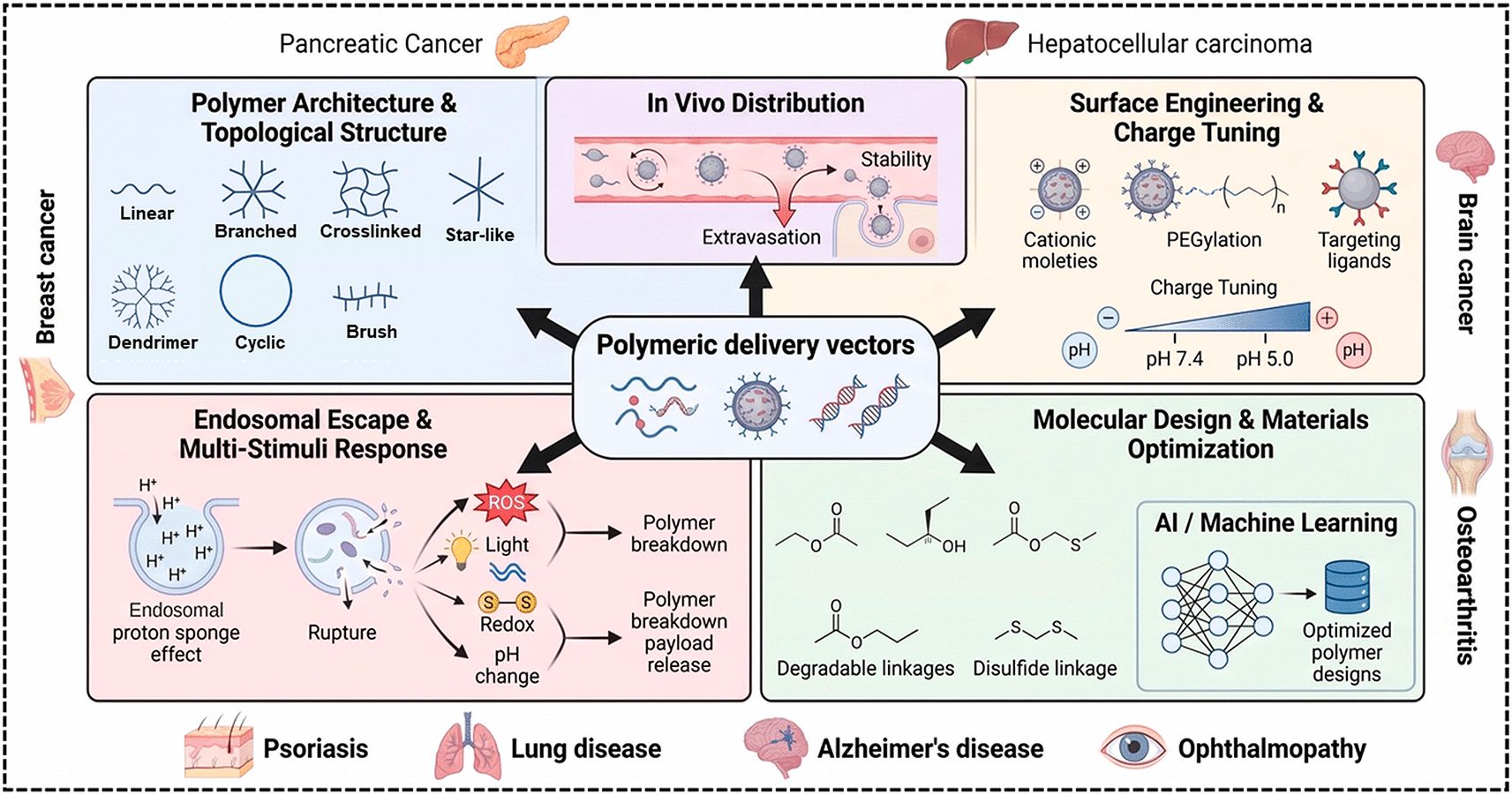
Figure 2. Overview of major strategies for improving gene transfection efficiency of polymer-based cationic vectors and their application in targeted diseases.
Created with BioRender.com
4.1 Molecular weight and polymer component distribution
Molecular weight (MW) plays a crucial role in determining NA condensation, polyplex stability, transfection efficiency, and cytotoxicity.80,82,126–142 Polymers used for polyplex preparation are typically molecular weight (MW) mixtures acting synergistically in gene delivery.128 High-MW polymers generally stabilize polyplexes more effectively,82,128,139 while low-MW polymers may enhance DNA release. Polymer MW also affects the cellular uptake and endosomal escape. Thus, determining the optimal polymer component distribution (PCD) is essential82,126,127 to improve transfection efficiency of polyplexes. However, MW does not show a uniform relationship with delivery performance across the various polymers used in NA delivery.
Anderson et al.82 synthesized over 400 PBAEs (ranging from 1,000 to 61,000 Da), demonstrating that efficient transfection required MW above 10,000 Da (
Figure 3A,B). Li et al.143 used an XGBoost model to optimize polymer component distribution (PCD), developing vectors that surpassed commercial reagents. For example, PAE-B1, with a weight-average MW of 13.58 kDa (Mn = 6.07 kDa, Đ = 2.24), achieved approximately 1.5× higher transfection than Lipo3000 and 2.0× higher transfection than jetPEI in U251 cells. Giron-Gonzalez et al.126 showed that low-MW PEI (1.8 kDa)/citric acid (CA) complexes achieved 3.8-fold higher transfection than 25 kDa PEI in CHO-k1 cells, forming stable 150–250 nm polyplexes with +25 mV zeta potential. This advantage was maintained in vivo with reduced toxicity. Gök et al.130 achieved 78.3% transfection with 1.8 kDa PBAE complexes demonstrating a 1.5× higher efficiency of transfection than 25 kDa PEI in primary ovine fibroblasts (
Figure 3C,D). These findings demonstrated that optimal transfection depends on the balance between polymer components, cell type, and delivery context. A comparative summary on the effects of select polymer MW on polymeric gene delivery is presented in
Table 4.
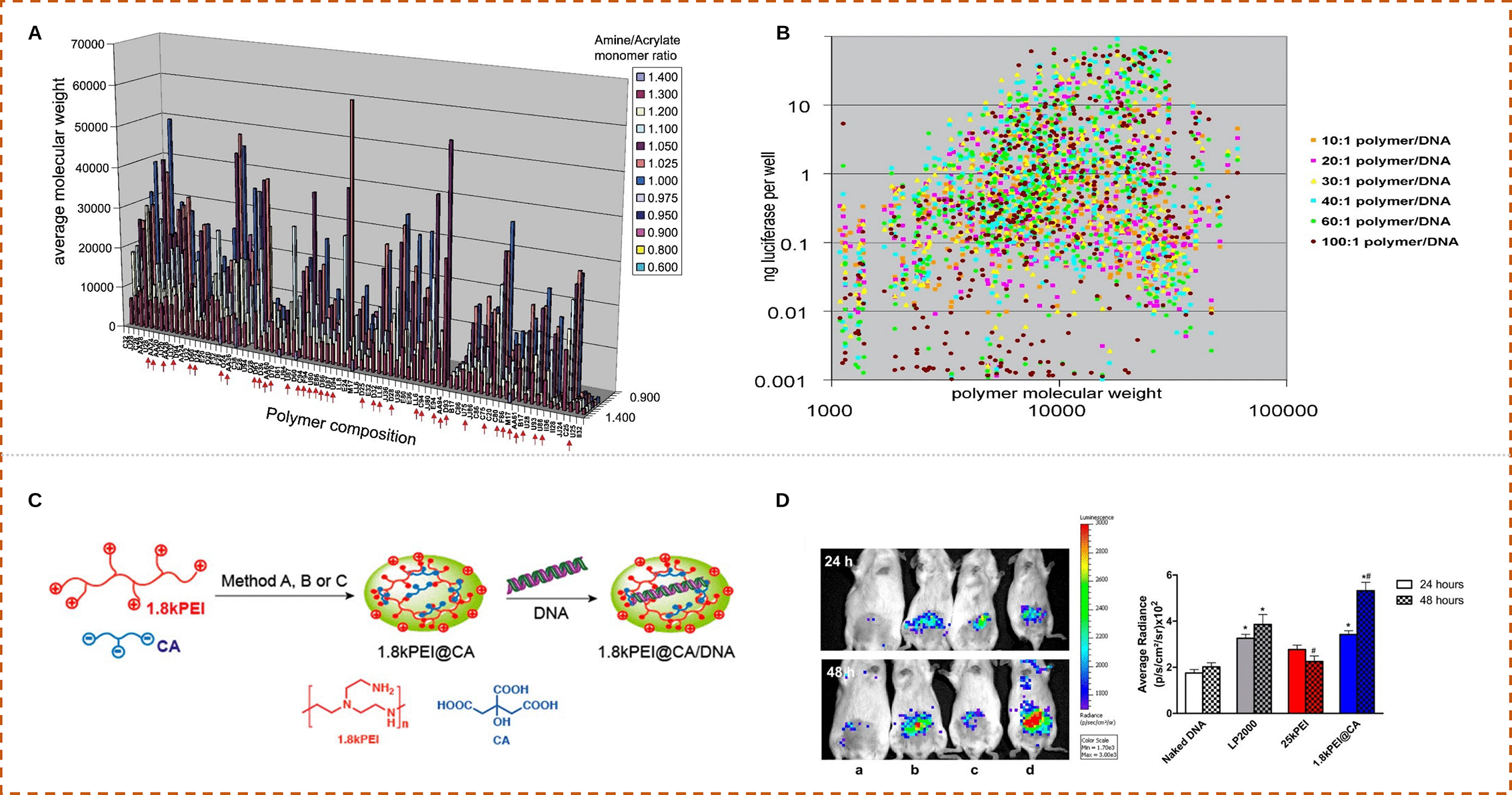
Figure 3. Molecular weight effects on PBAE gene delivery.
(A) Mean polymer molecular weights organized by transfection performance, with amine/acrylate ratio variation. (B) Transfection proficiency of COS-7 cells relative to polymer MW and polymer/DNA ratio, showing that efficient transfection requires MW >10,000 Da. ref.82 Copyright 2025, The American Society of Gene Therapy. (C) Preparative strategies for the synthesis of 1.8kPEI@CA complexes and corresponding 1.8kPEI@CA/DNA polyplexes and (D) Cell Transfection in the Presence of Serum and in vivo Gene Transfection of 1.8kPEI@CA/DNA Polyplexes ref.130 Copyright 2022 Elsevier.
| Polymer | MW | NP Size | ζ (mV) | Transfection | Outcomes |
|---|
| PEI | 1.8 kDa | 91.4 ± 0.7 nm | +30.4 ± 0.5 | Minimal/almost null | Low toxicity; weak DNA complexation/protection limits transfection |
| PEI | 25 kDa | 47.0 ± 0.6 nm | +31.20 ± 0.14 | ~80–90% of LP2000 in CHO-k1 cells | Strong DNA condensation; dose-dependent cytotoxicity |
| PAMAM G7 | 116.5 kDa | 100–170 nm | +35 | Highest among G2, G4 and G7; comparable to or greater than 25 kDa bPEI at effective N/P ratios | Higher generation increased surface charge and pDNA complexation; transfection remained N/P-dependent
|
| PEI@CA | 1.8 kDa PEI cross-linked with CA | 105 ± 0.7 nm | +30.7 ± 0.5 | ~3.8× LP2000 in CHO-k1 cells | Enhanced DNA binding, intracellular release and protection; low/moderate toxicity |
| PBAE | 1.8 kDa | 150–250 nm | +25 | 78.3% (POF cells) | High buffering; enhanced escape |
4.2 Biodistribution and toxicity
Size and shape. Size and shape critically influence biodistribution and pharmacokinetics of polyplex systems. Typically, polyplexes have spheroidal or rod-like shape with size ranging from tens to hundreds of nanometres. The ̴100 nm range represents a compromise that prevents rapid renal clearance and maximizes tumor penetration.144–146 Casadidio et al.147 compared mPEG-pDMAEMA siRNA and DNA polyplexes of ̴ 25 nm and ̴160 nm, finding that smaller polyplexes penetrated more efficiently through 3D tumour spheroids whereas larger complexes remained largely confined to the periphery. Across the study, penetration decreased consistently with increasing size, indicating that maintaining polyplex dimensions well below 100 nm is essential for effective transport in three-dimensional tumour models. In another study, Malfanti et al.148 demonstrated efficient cellular uptake of rod-shaped polyplexes of 50–75 nm sizes.148 However, passive accumulation depends on circulation time and stability of polyplexes in the bloodstream and cell type.149
Surface charge. Surface charge influences polyplex stability, cellular uptake, and transfection efficiency through opposing effects. Excessive positive charge can increase serum protein adsorption, aggregation, and polyplex destabilization,150–152 as well as membrane damage and immune activation,8,20,153–157 while a low surface charge can reduce cellular uptake and limit transfection efficiency.12
Highly charged polymers interact electrostatically with anionic phospholipid head groups, causing membrane thinning, pore formation, and integrity loss. Intracellularly, cationic polymers depolarize mitochondrial membranes, triggering cytochrome c release and caspase-mediated apoptosis.8,20,153–157 High-charge-density polymers also activate NF-κB and NLRP3 inflammasome pathways, causing pro-inflammatory cytokine release. Toxicity severity correlates with charge density, molecular weight, and architecture, with primary amines generally more toxic than tertiary amines.158
Surface charge optimization is achieved by modulating the N/P ratio (cationic charge due to nitrogen (N) and anionic group of the nucleic acid phosphates (P), respectively)159 and by selecting the cationic component of the polymer. For example, Dash et al.29 controlled the surface charges of PLL/DNA polyplexes by conjugating the free amino groups of PLL with the terminal carboxyl groups of the Gly-Phe-Leu-Gly peptides, which were pendant from the poly-[N-(2-hydroxypropyl)methacrylamide] (pHPMA). This strategy produced a hydrophilic coating on the polyplex surface (as measured by fluorescamine) and a surface charge of polyplexes of −25 mV (
Figure 4A,B).
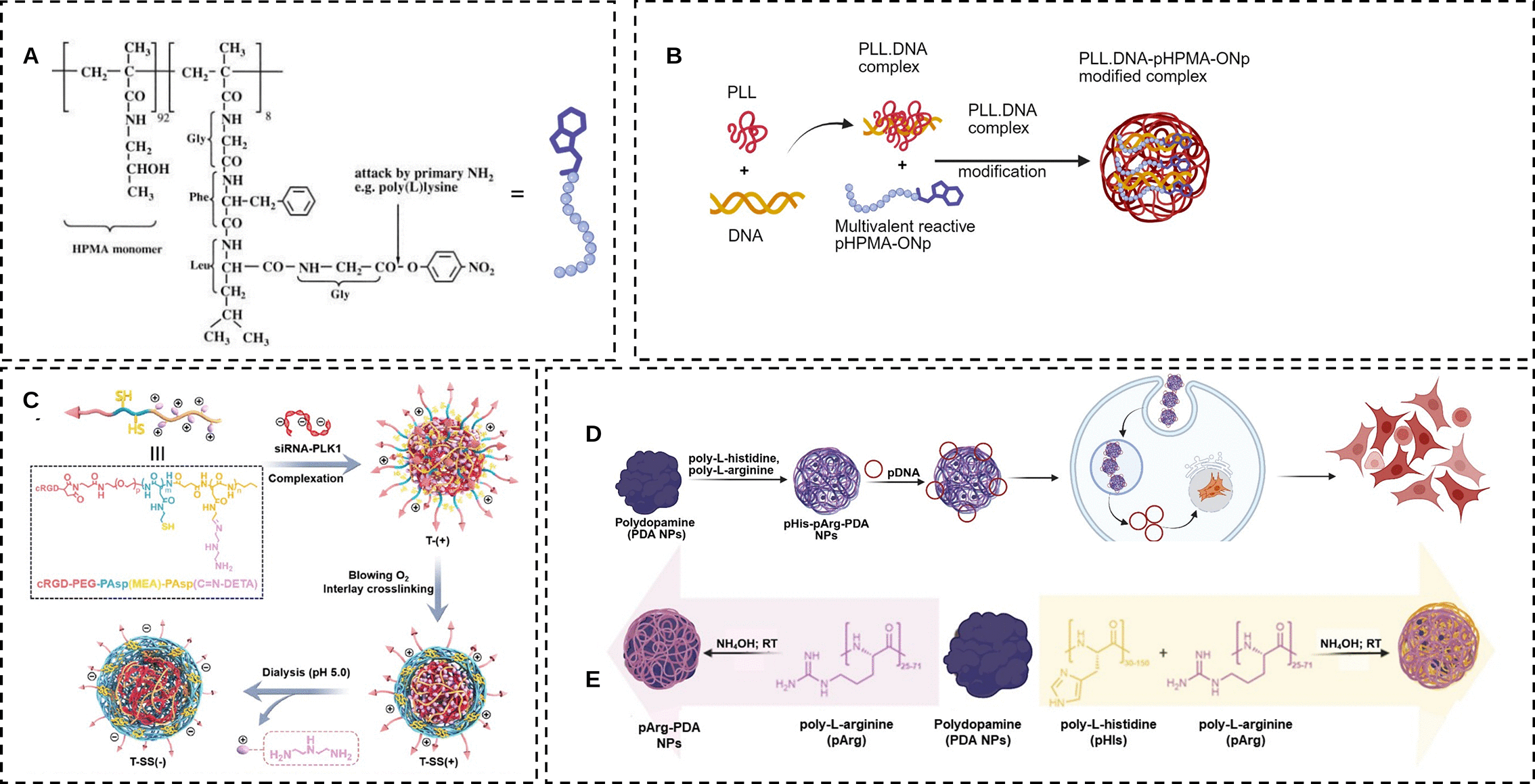
Figure 4. Schematic illustration of (A) pHPMA-ONp structure (B) synthesis of PLL.DNA-pHMPA-OP-modified complexes ref.29 Copyright 2000, The American Society for Biochemistry and Molecular Biology, Inc (C) Synthesis and intracellular behaviour of cation-free disulfide bond-crosslinked polymer-siRNA nanocapsules (T-SS(−) ref.164 Copyright 2023, Elsevier (D) Synthesis, pDNA binding, and gene delivery mediated by pHis-pArg-PDA nanoparticles and (E) pArg and pHis-pArg functionalization of PDA nanoparticles.
Adopted from ref.42 Copyright 2018 Royal Society of Chemistry.
In nature, protamine, an arginine-rich protein containing abundant cationic residues, is responsible for the condensation and protection of DNA.160 Inspired by this, polydopamine (PDA) NPs modified with arginine-rich compounds have shown enhanced cellular uptake.161 However, the low buffering capacity of poly-L-arginine (pArg) limits the endosomal escape and intracellular gene release.128 To overcome this limitation, Franck et al.162 modified PDA NPs with a combination of poly-L-arginine (PArg) and poly-L-histidine (PHis) (
Figure 4 D and E). The imidazole fraction in PHis facilitates proton buffering inside endosomes or rupture through the proton sponge effect.42 The studies performed with EGFP-pDNA as a model showed that the optimization of the Phis/PArg and the N/P ratios yielded transfection efficiency similar to Lipofectamine.
Zhang et al.163 conjugated PDA to PEI to reduce the positive charge of PEI/DNA polyplexes, which was responsible for considerable cytotoxicity due to cellular membrane damage and mitochondrial-mediated cell death. The PEI/PDA/DNA polyplexes displayed markedly lower cytotoxicity with respect to the PEI/DNA counterparts, resulting in more than 90% of HepG2 cells viability compared to 70% of PEI/DNA.
Huang et al.164 developed a cationic triblock copolymer consisting of three key components: a cRGD-capped poly (ethylene glycol) (cRGD-PEG) block, a poly (aspartic acid) block with a sulfhydryl side group (PAsp (MEA)), and a poly (aspartic acid) block grafted with the cationic divinylenetriamine (DETA) via a pH-sensitive imine bond (PAsp(C=N-DETA)) (
Figure 4C). Upon complexing with siRNA, the sulfhydryl groups of the intermediate layer were oxidized to form crosslinking disulfide bonds and the cationic DETA side chains were then removed by dialysis at pH 5.0. This copolymer yielded high siRNA encapsulation, low protein adsorption in serum, and cancer cell targeting due to the cRGD function. Additionally, the disulfide bonds were cleaved in the presence of high intracellular glutathione (GSH), which triggered the release of siRNA providing for tumor-targeted gene silencing in vivo.
Thus, these studies demonstrate that achieving an optimized polyplex system requires carefully striking a charge balance between the nitrogen group of the cationic polymer and phosphate group of the nucleic acid. This charge balance can be determined experimentally using a combination of gel electrophoresis and fluorescence spectroscopy to quantify complexation efficiency and isothermal titration calorimetry (ITC) to measure heat energy that provides data on key thermodynamic and stoichiometric binding parameters of the polymer-NA system.
4.4 Cationic moiety selection and the role of pKa
4.4.1 Nitrogen-based cationic moieties
The chemical nature of the ammine groups on cationic polymers dictates charge density and pKa, which critically influence polyplex formation and in vivo behaviour.
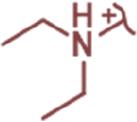
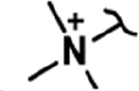
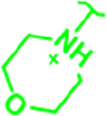
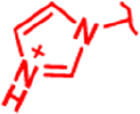
Table 5 summarizes the cationic moieties that have been studied for NA delivery and their order of delivery efficiency.
Computational and experimental studies suggest that polycations with ionizable groups with pKa values around 8–10 can support nucleic acid binding at physiological pH, while groups with pKa values around 6.25–7.25 may enhance protonation in the endosomal compartment, which allow for escape.43,165,166 Shin et al.167 showed that increasing branching of poly (amine-co-ester) (PACE) decreased pKa from 6.8 to 5.9, which resulted in increased transfection. Du et al.168 confirmed that polymers with pKa 5.8–6.2 exhibited the highest siRNA delivery in vitro and in vivo. This delivery efficiency may be attributed to a better endosomal escape of the systems. However, while cationic moieties are selected based on their pKa to optimize polyplex formation and performance, it is important to note that the apparent pKa of a polymer, influenced by polymer structure and polyplex architecture reflects the average ratio of ionized to unionized groups across the entire polymer, not the intrinsic pKa of individual functional groups.42,165
Polymers with primary amines tend to be more toxic than those with tertiary amines due to stronger cell membrane interactions.158 To mitigate the toxicity related to the cationic groups, moieties that engage in non-coulombic interactions with NAs, such as hydrogen bonding and π–π stacking, have been introduced in the structure of cationic polymers to form stable polyplexes. For example, tyrosine-modified PEG–poly (glycerol) block catiomers provide a neutral PEG segment together with a cationic poly (glycerol) block containing tertiary amines that complex nucleic acids. The tyrosine groups surround the cationic segment and stabilise the resulting polyplexes through hydrophobic and aromatic interactions, improving protection against nucleases and extending circulation.169 A similar influence of hydrophobic substitutions has been shown for low-molecular-weight PEI, where tryptophan modification yields higher transfection efficiency than leucine.170
Beyond conventional amine-based functionalities, guanidinium moieties have emerged as an effective strategy for improving polymer-mediated nucleic acid delivery. The guanidinium group can form strong electrostatic interactions and hydrogen bonds with nucleic acid phosphate groups, which enhances nucleic acid association and contributes to improved polyplex stability. However, unlike simple charge enhancement, incorporating guanidinium functionalities can also influence cellular uptake and intracellular trafficking through interactions with anionic cellular membranes and biological components.148 Guanidyl-containing PEG carriers have formed polyplexes that deliver oligonucleotides into cells and produce gene silencing, highlighting the potential of this functionality for overcoming delivery barriers.148 Nevertheless, excessive stabilization of polymer–nucleic acid complexes may hinder intracellular release, emphasizing the need to balance nucleic acid binding with efficient cargo dissociation after cellular uptake.12 Miyazaki et al.171 compared the effectiveness of amines and guanidines by synthesizing PEG-poly (glycidyl methyl amine) (PEG-PGMA) and PEG-poly (glycidyl methyl guanidine) (PEG-PGMG) block copolymers and demonstrated that mRNA complexes formed with guanidine-containing polymers exhibited superior stability against polyanions, urea, and nucleases compared to amine-containing complexes. This study shows that replacing primary amines with guanidine groups can strengthen polymer–mRNA interactions and improve micelle stability.
4.4.2 Non-Nitrogen cationic moieties
Beyond typical nitrogen-based cationic functionalities, non-nitrogenous polycations such as phosphonium- and sulfonium-containing polymers have emerged as alternatives for NA delivery.14 Differences in electronegativity and electron-density distribution around phosphorus- and sulfur-centered cations, relative to nitrogen-based cations, may influence their interactions with nucleic acids. Polymers bearing these non-conventional cations have shown efficient transfection, with some phosphonium systems exhibiting lower cytotoxicity than corresponding ammonium-based carriers and degradable sulfonium polymers supporting effective intracellular nucleic acid release.172,176 Herma et al. compared carbosilane dendrimers with phosphonium and ammonium terminal groups and found that the phosphonium-containing dendrimers exhibited similar siRNA transfection efficiencies but significantly reduced in vivo toxicity.173
Sulfonium-based polymers, though capable of forming stable polyplexes with nucleic acids, tend to exhibit lower transfection efficiency with respect to amino derivatives. This may be due to the strong binding between nucleic acids and sulfonium polycations, which reduces the release of the therapeutic cargo after cellular uptake.177 To circumvent this bottleneck, Zhu et al.172 developed ROS (reactive oxygen species)-responsive, disintegrable polysulfonium polymers that efficiently condense DNA and showed improved transfection efficiency both in vitro and in vivo in comparison to conventional PEI-based systems.
4.5 Polymer architecture and topology
Polymer architecture fundamentally determines polyplex formation, efficiency, and biocompatibility. The major topologies, i.e., linear, branched, cyclic, star-shaped, and brush, offer distinct advantages and trade-offs and are subsequently discussed in detail.
4.5.1 Linear polymers
Linear cationic polymers were among the earliest synthetic materials investigated for non-viral gene delivery. These include Polyethylenimine (PEI), poly(amido amine)s (PAAs), Poly(L-lysine) (PLL) and poly(L-ornithine) (PLO), Poly(2-dimethylaminoethyl methacrylate) (PDMAEMA) and poly(β-amino ester)s (PBAEs). Their protonatable or permanently cationic amine groups promote electrostatic complexation with the phosphate backbone of nucleic acids, producing polyplexes that protect the cargo and facilitate cellular uptake. Polymer molecular weight, charge density, spacing of cationic groups and backbone structure strongly affect DNA condensation, polyplex stability and transfection efficiency, making these polymers useful models for defining structure-function relationships in gene delivery.178
Polyethylenimine (PEI) remains one of the most established cationic polymers for non-viral gene delivery and occurs in both linear and branched forms. Linear PEI (LPEI) condenses nucleic acids through protonatable backbone amines, with transfection and cytotoxicity strongly influenced by molecular weight and polymer-to-nucleic-acid ratio. Breunig et al.179 showed that low-molecular-weight LPEIs (1.0–9.5 kDa) could retain gene-transfer activity while reducing cytotoxicity, whereas optimization of 25 kDa LPEI demonstrated strong dependence on N/P ratio, DNA concentration and cell type.180
Linear PAAs provide greater scope for backbone modification. Bioreducible PAAs containing disulfide linkages can maintain DNA condensation extracellularly and undergo rapid cleavage under reducing intracellular conditions, promoting polyplex destabilization and reducing polymer-associated toxicity. Lin et al.181 reported several such PAAs with higher transfection than branched PEI and low cytotoxicity in COS-7 cells. Conventional poly(amidoamine) (PAMAM) should be distinguished from linear PAAs because PAMAM gene-delivery systems are dendritic, generation-defined polymers rather than linear architectures.182
Poly(L-lysine) (PLL) and poly(L-ornithine) (PLO) are linear cationic polypeptides whose side-chain amines mediate nucleic-acid complexation. Differences in backbone connectivity and cationic-group spacing influence complex stability and release. α-PLL showed stronger DNA binding and higher transfection than ε-PLL, whereas PLO produced mRNA polyplexes with greater nuclease stability than PLL, although additional endosomal-release functionality was required for efficient cytosolic delivery.183,184
Poly(2-dimethylaminoethyl methacrylate) (PDMAEMA) is a well-established linear cationic methacrylate used for DNA delivery. Layman et al.185 showed a clear molecular-weight dependence across PDMAEMA samples from 43 to 915 kDa: higher molecular weight increased DNA-binding affinity and transfection, but also increased cytotoxicity. Interestingly, cellular uptake didn’t vary substantially with molecular weight, suggesting that intracellular processing contributed more strongly to the transfection differences.
Linear PBAEs (LPAEs), first developed in 2000 by Lynn and Langer80 by conjugation of secondary amines to the bis(acrylate ester), have emerged as one of the most versatile families of NA delivery vectors. Linear PBAES condense NAs into soluble NA/polymer particles with size ranging from 50 to 200 nm and ζ-potential in the range of +10 to +15 mV. In 2003, Anderson et al.186 reported the first high-throughput combinatorial synthesis and screening of 2,350 structurally unique linear PBAEs, identifying 46 polymers with 4-
to 8-fold higher transfection than PEI and comparable to lipofectamine 2000 in COS-7 mammalian cells. Effective polymers were enriched in hydrophobic diacrylate monomers and amino alcohol groups. A subsequent 486-member second-generation library revealed that efficient polymers generally had MW >10 kDa, formed sub-150 nm polyplexes, and frequently contained amino alcohol monomers with hydrophobic diacrylates. Over 12,000 transfections identified the top polymers (C32, JJ28, C28) at N:P ratios ≥40:1.82,138 Independent combinatorial studies by Green et al.81 further confirmed that gene-delivery performance relies on defined structural parameters such as hydrophobicity, charge distribution and degradability, supporting the structure-function trends observed in the PBAE libraries.
4.5.2 Branched polymers
Polymer branching has been reported to enhance polymer/NA interaction and transfection. Wightman et al.187 demonstrated that branched PEI produced smaller and more stable polyplexes with higher transfection than linear PEI.
Zhou et al.138 synthesized highly branched PBAEs (HPBAEs) via a one-pot “A2 + B3 + C2” Michael addition, achieving up to 8,521-fold higher transfection across 12 cell types compared to corresponding linear PBAEs and commercial SuperFect. The optimized HPBAEs were used for NA delivery in a recessive dystrophic epidermolysis bullosa graft mouse model, restoring type VII collagen expression (
Figure 5A–C). Likewise, Patel et al.188 demonstrated that branched PBAE polyplexes retained structural integrity after nebulization and achieved higher mRNA expression in lung epithelium than aggregating linear analogues. Shin et al.189 compared linear and branched poly (amine-co-ester)s (PACEs), finding that intermediate branching optimized mRNA transfection both in vitro and in vivo, confirming that branching must be tailored to the delivery route (
Figure 5D).
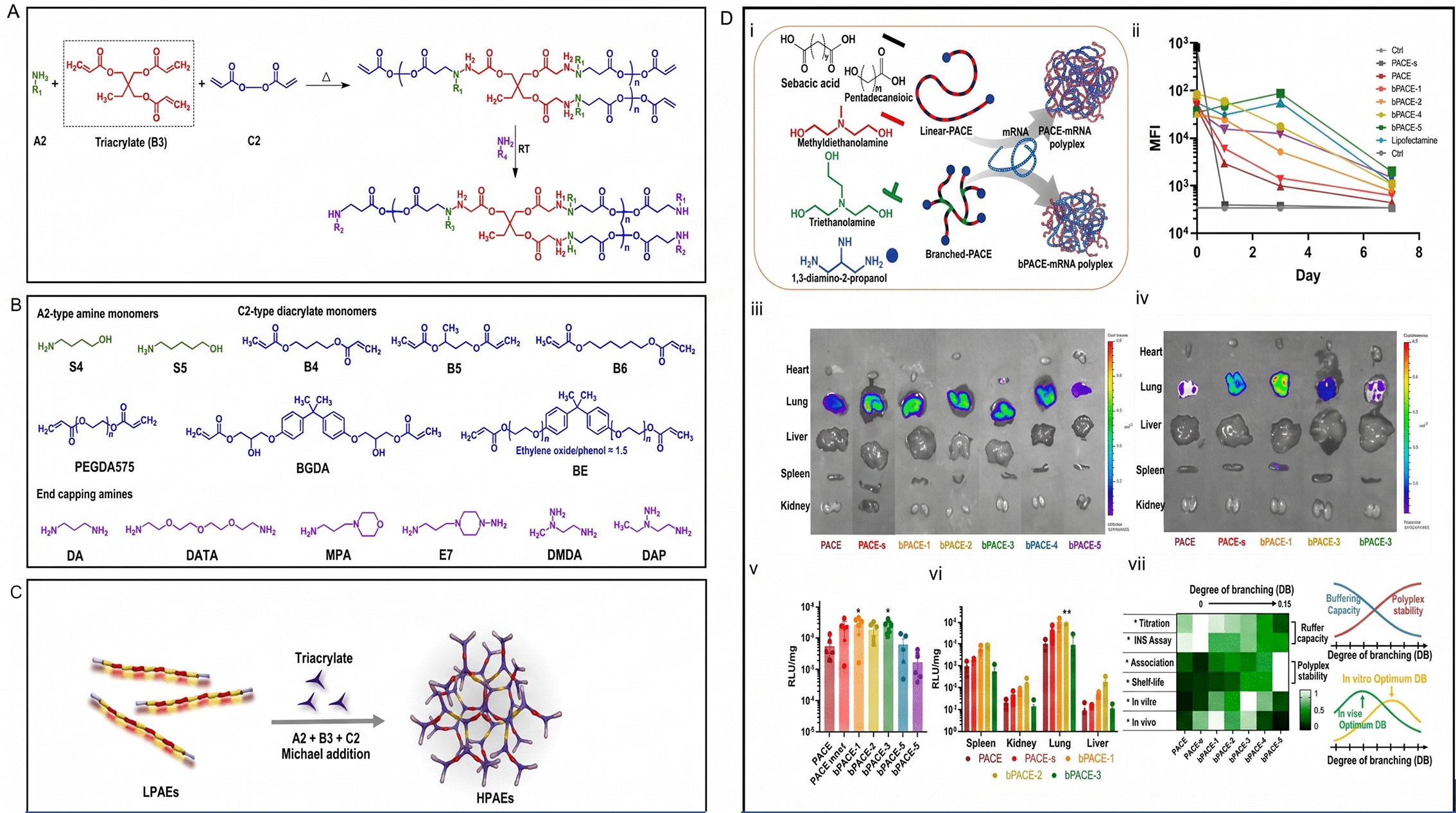
Figure 5. Development of highly branched poly(β-amino ester) s (HPBAEs) and branched PACE polymers.
(A) A2 + B3 + C2 Michael addition synthesis of HPBAEs followed by end-capping. (B) Monomer structures of branched and corresponding linear PBAEs. (C) Branching of linear PBAEs with triacrylate enhanced transfection across 12 cell types and enabled correction of genetic defects in a recessive dystrophic epidermolysis bullosa mouse model. Ref.138 (D) PACE and branched PACE (bPACE) structures, mRNA/bPACE polyplex formation and stability, effects of branching on transfection, and in vivo luciferase expression following intratracheal and intravenous administration. The heat map summarizes the influence of branching degree. Adapted from Ref.189, Copyright 2024 Elsevier.
Overall, polymer branching provides an additional means of tuning nucleic acid delivery by influencing molecular weight, charge distribution and polyplex organization. However, increasing branching alone does not guarantee improved delivery performance, as the optimal architecture depends on polymer chemistry, nucleic acid cargo and the intended application. Therefore, branching should be considered together with other design parameters, including charge density, degradability, and intracellular release mechanisms.
4.5.3 Cyclic polymers
Cyclic architectures have been found to enhance biocompatibility, DNA encapsulation, and produced more compact polyplexes than linear counterparts due to their unique 3D architectures and distinct physicochemical properties.190,191
Cortez et al.140 compared cyclic and linear PEI analogues containing 21, 42, 70, or 84 repeat units and matched molecular weights. Cyclic PEIs consistently produced higher red fluorescence protein (RFP) expression than their corresponding linear analogues and showed lower cytotoxicity than 25 kDa branched PEI. A linear triazole-containing PEI control showed transfection comparable to the corresponding linear PEI, indicating that the improved performance arose from cyclic topology rather than the triazole functionality introduced during synthesis (
Figure 6A).
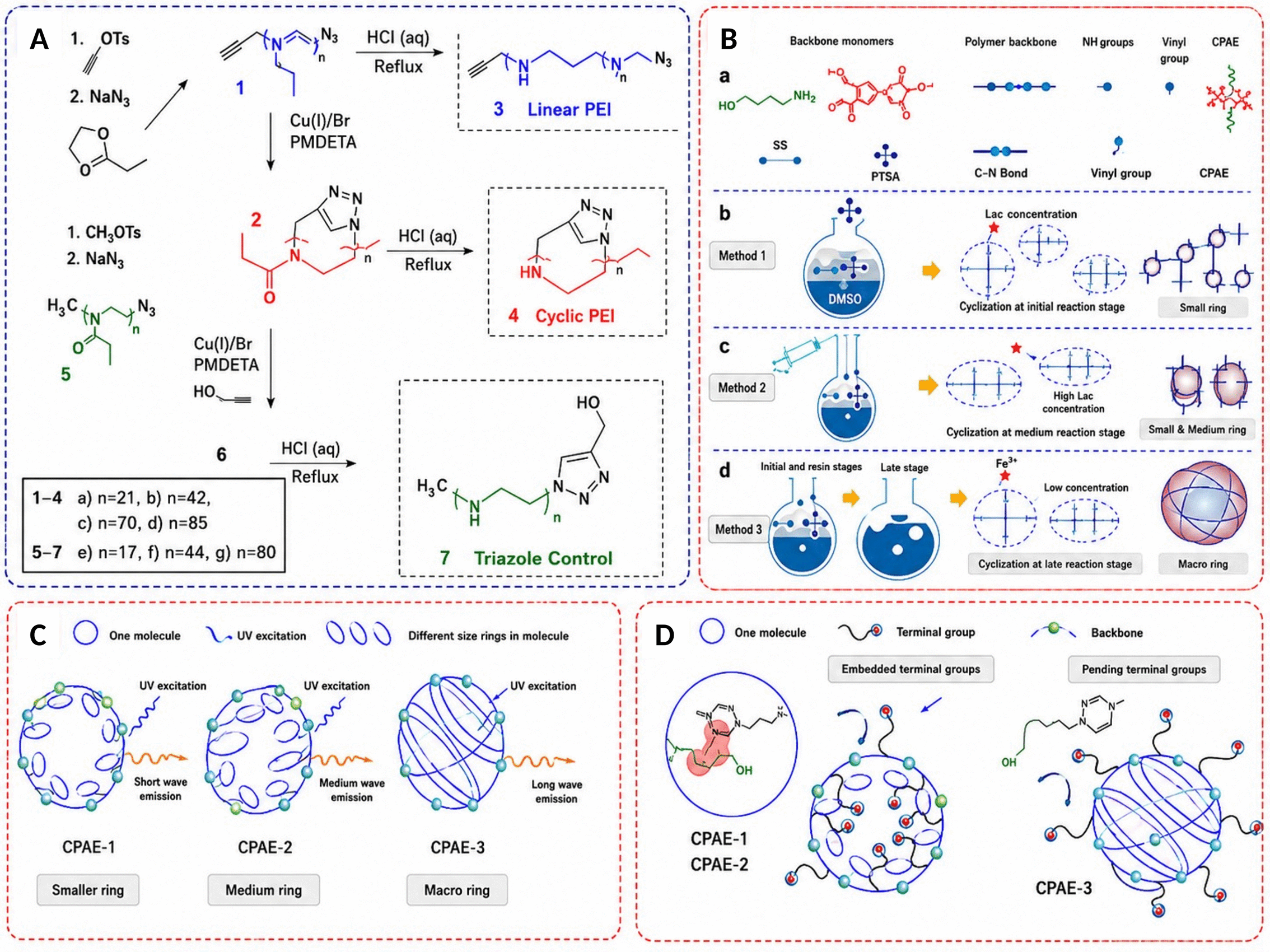
Figure 6. Cyclic polymer architectures for nucleic acid delivery.
(A) Synthetic route to a PEI library comprising linear, cyclic, and linear triazole-control PEIs. Ref.140 Copyright 2015 American Chemical Society. (B) Chemical structures and synthesis of cyclic poly(β-amino ester)s (CPAEs) from 5-amino-1-pentanol (S5) and pentaerythritol tetraacrylate (PTTA), showing three step-growth polymerization strategies that control the stage of cyclization and resulting ring size. (C) Relationship between CPAE cyclic structure and photoluminescence behavior. (D) Schematic representation of the three-dimensional topologies of CPAEs with different cyclic structures. Ref.192 Copyright 2023 the Authors. Published by American Chemical Society under CC BY 4.0.
Li et al.192 synthesized a library of 3D cyclic PBAEs (referred to as CPAEs in the study) with variable ring sizes and structures by fine-tuning the cyclization propensity at different stages of step-growth polymerization (SGP) yielding a series CPAES with macrorings (MCPAEs) and demonstrated that optimized MCPAEs outperformed HPBAEs, smaller cyclic variants, and other commercial reagents (Lipo 3000, jetPEI, Xfect) in both transfection and biocompatibility. The enhanced properties of MCPAEs were attributed to the unique 3D topological features of the macrocyclic architecture (
Figure 6B–D).
4.5.4 Dendrimers and star-like polymers
Dendrimers and star-shaped polymers are branched architectures investigated as nucleic acid delivery vectors, with multiple arms or surface groups that can be tailored for NA binding and delivery.79,193–195
poly(amidoamine) (PAMAM) is one of the main dendrimers investigated for NA delivery. The architecture of PAMAM can be modulated for gene delivery, with emphasis on generation, surface chemistry and targeting ligands.62,196 Higher-generation PAMAM dendrimers (generations 5–7, G5–G7) condense DNA more effectively than low generation PAMAM but with increased toxicity due to their dense surface charge.197,198 A G5-PAMAM functionalized with the muscle-targeting peptide ASSLNIA (G5-SMTP) produced threefold higher luciferase expression than unmodified G5, further enhanced sixfold by a dynein-binding peptide. In vivo, this construct triggered stronger antigen-specific responses in BALB/c mice compared with naked pcOVA.66 Avila et al.199 showed that intermediate PAMAM generations (G4–G5) achieved efficient uptake with reduced inflammation, whereas higher generations induced stronger type I interferon and NF-κB responses. Overall, dendrimer generation and architecture, and the nucleic acid structure co-determine delivery efficiency and innate immune activation and should be the central factors to consider when engineering star polymers/dendrimers.
Poly(propylene imine) (PPI) dendrimers have been found to produce stable complexes through their primary-amine surface and have demonstrated substantial gene expression.67,193,194,196 PPI G5 dendrimers with dithiol crosslinking, PEGylation, and luteinizing hormone-releasing hormone (LHRH) targeting achieved tumour-specific siRNA delivery with BCL2 knockdown and preferential intratumoral accumulation in in A549 and A2780 cancer cells.200
Polyester-based dendrimers, with amino acids, have been developed as promising candidates for gene delivery application.201 Polyester-dendrimers obtained from bis(hydroxymethyl) propanoic acid were synthesised up to the fourth and fifth generations and functionalised at the periphery with L-arginine, lysine, O-methyltyrosine, or Arg-Gly dipeptide residues using carbodiimide-mediated esterification. The polycationic dendrimer polyplexes displayed hydrodynamic diameters consistent with well-defined dendritic structures and substantial positive charge due to the protonable amino acid residues. Potentiometric titration showed that their buffer capacities exceeded that of G4-PAMAM, indicating their ability to sustain protonation across endosomal pH ranges, which were positioned to represent degradable, low-toxicity candidates for gene delivery applications.201
In addition to dendrimers, star polymers represent an important class of branched architectures investigated for nucleic acid delivery. Unlike dendrimers, which possess highly defined generations and regularly branched structures, star polymers consist of multiple polymer arms connected to a central core, providing flexibility in controlling arm composition, length, and functionality. These structural features allow tuning of nucleic acid complexation, cellular interactions, and intracellular release processes.202,203
Studies have demonstrated the potential of star-shaped architectures for gene delivery applications. Burgevin et al.202 developed cationic star copolymers using an arm-first approach and evaluated their suitability as non-viral gene delivery systems. Similarly, Stefanovic et al.203 reported degradable star-shaped poly (L-lysine) architectures containing polyester cores for nucleic acid delivery applications. Earlier work on redox-cleavable star PDMAEMA further demonstrated how combining star architecture with intracellular responsiveness can improve transfection behaviour.204 Beyond conventional star polymers, core-centred multivalent systems such as β-cyclodextrin click clusters have also shown the importance of spatial organization and functional group presentation in nucleic acid delivery.205
Although numerous star-like high MW polycationic polymers have been synthesized for gene transfection applications, the toxicity due to MW and cationic arms still needs to be addressed in these systems.
4.5.5 Brush polymers
Brush polymers (BPs) are a unique class of branched polymers formed by short-side chain molecules grafted onto the backbone chain either by using ‘grafting-through’, ‘grafting-to’ or ‘grafting-from’ methods.206,207Structurally, BPs can possess different dimensional architectures like 1D, 2D, and 3D and ultra-dense chains with extended surface, where neighbouring chain distance is less than twice the gyration radius of the conjugated polymers.208
Li et al.209 prepared cationic hyperbranched polymers grafted with poly (oligo (ethylene glycol) methyl ether methacrylate) (polyOEGMA) or poly (dimethylsiloxane) (polyDMSO) shells, achieving Runx2 knockdown of 59.2% and 77.1%, respectively, comparable to Lipofectamine (68.2%) and with reduced cytotoxicity.
Chen et al.210 designed a coil-comb polycationic brush with a brush backbone as its main chain and cyclodextrin (CD)-containing cationic star polymers as side chains. In their earlier work 211 however, this brush macromolecules showed significantly higher plasmid DNA transfection than the corresponding single CD-based star polycation or 25 kDa polyethyleneimine (PEI) in COS-7 and 293 T cells. In the co-delivery study, the CD sidechains on the brush were exploited to load doxorubicin (DOX) and then a p53-encoding plasmid (as well as pEGFP) was condensed by these DOX-NPs to yield DOX-NPs/pDNA complexes with sizes below 150 nm and near-neutral zeta potential. DOX-NPs/p53 complexes demonstrated stronger growth inhibition in MCF-7 cells, than either brush/p53 or free DOX at the same DOX dose, with reduced cell viability (<30%), suggesting a clear synergistic effect of simultaneous delivery of DOX and p53. An extended read on brush polymers can be found in literature.212–215
4.5.6 Comparative perspective on polymer architecture
Table 6 and
Figure 7 report a comparative overview of polycationic polymers with different architectures and chemical compositions used in polyplex preparation. Selected studies report improved DNA condensation, stability or transfection with branched and cyclic architectures compared with linear analogues, although the outcome depends on polymer chemistry, cargo and experimental conditions.
Table 6. Comparative summary of polymer architectures for gene delivery.
| Architecture |
Size Range |
Condensation | Transfection | Toxicity | Advantage | Limitation |
|---|
| Linear | 50–200 nm | Moderate | Good (MW-dependent) | Generally low | Easy synthesis; screening | Limited stability |
| Branched | 100–300 nm | Strong | Very high (up to 8,521×) | Moderate | Stability; end groups | Complex synthesis |
| Cyclic | <100 nm | Superior | Higher than linear | Low | Compact; DNase resistance | Challenging synthesis |
| Dendrimer | 50–200 nm | Generation-dependent
| High (G5–G7) | Generation-dependent
| Precise; modulable | Costly |
| Brush | <150 nm | Good | Lipofectamine | Low (with grafting) | Co-delivery
| Scalability |
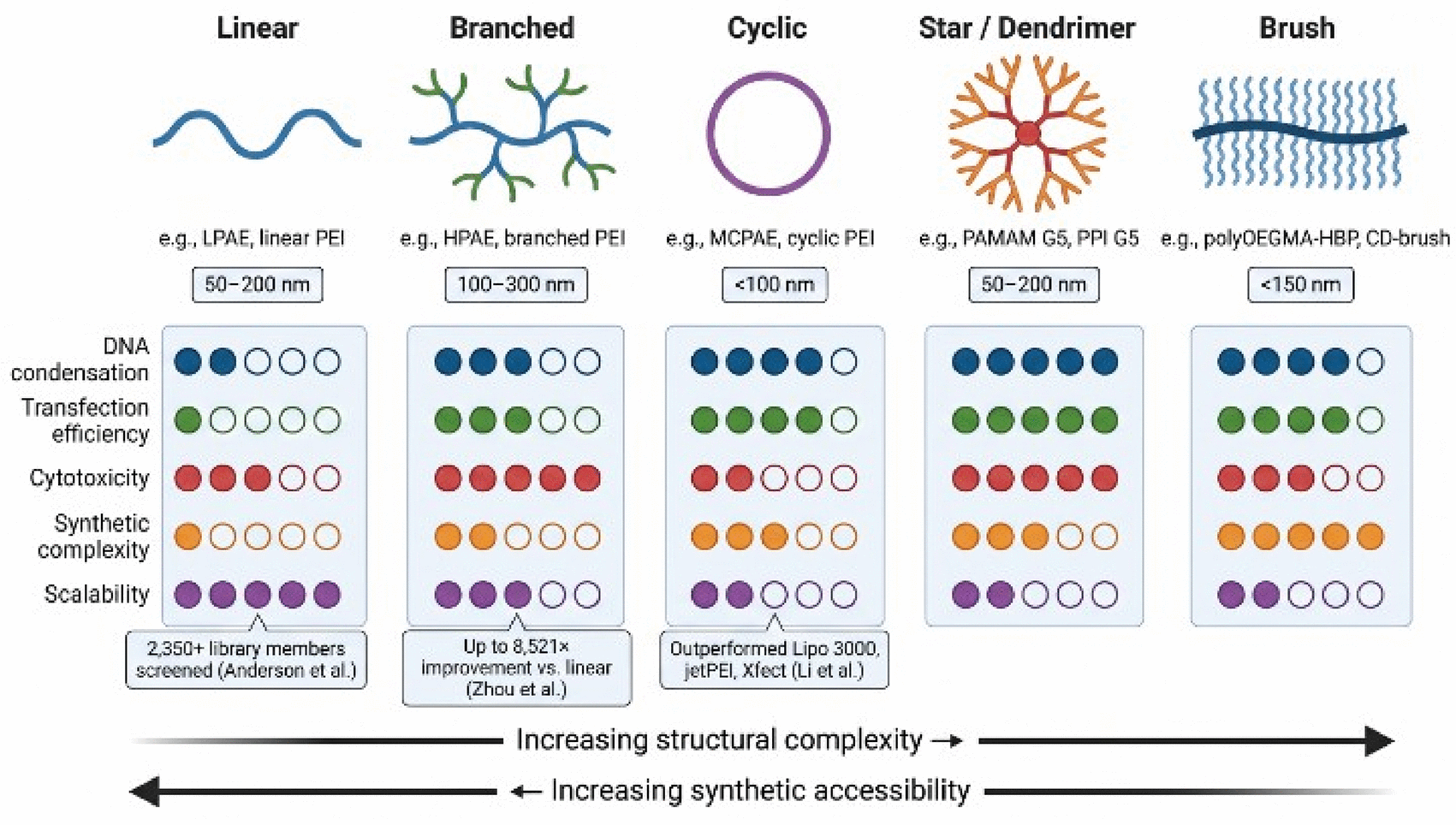
Figure 7. Comparative overview of polymer architectures for nucleic acid delivery.
Five major topologies: linear, branched, cyclic, star-shaped/dendritic, and brush are illustrated with representative structural features (top) and annotated with key performance characteristics (bottom). Performance metrics are displayed using a semi-quantitative scale (filled circles) for DNA condensation, transfection efficiency, cytotoxicity, synthetic complexity, and scalability. Typical polyplex size ranges are indicated. Key landmark results from the literature are highlighted in callout boxes. The horizontal arrows show how increasing structural complexity is generally accompanied by greater synthetic difficulty, which can influence the choice of polymer architecture. Created with BioRender.com.
It should be noted that direct head-to-head comparisons of all architectures under standardized conditions i.e., the same cell line, N/P ratio, cargo, and assay, are largely absent from the literature. The comparisons presented here derive from independent studies with different experimental systems, limiting quantitative cross-architecture comparison. Therefore, establishing standardized benchmarking protocols represents an important unmet need for the development of innovative and efficient polymeric vectors for NA delivery.
5. Chemical modifications for enhanced delivery
The biological barriers (extracellular and intracellular) previously discussed in Section 2 can be addressed through chemical modifications of the polymer structure. Each strategy, including PEGylation, fluorination, introduction of amino acid units, hydrophobic modifications and targeting ligands, addresses specific delivery bottlenecks and barriers, as summarised in
Figure 8.
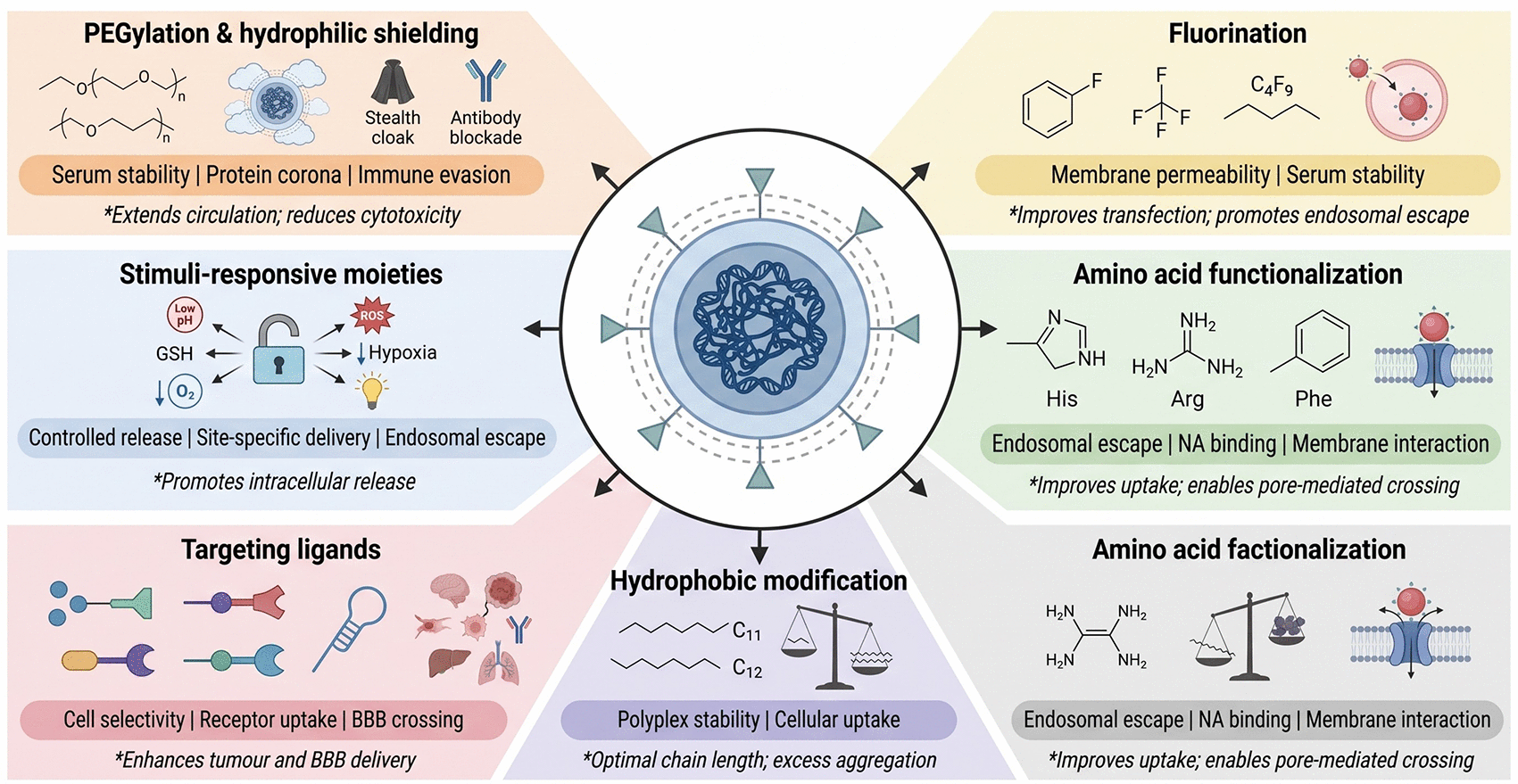
Figure 8. Chemical modification strategies for polymeric gene delivery vectors, organized by the biological barrier each modification addresses.
A central polyplex schematic (core: condensed nucleic acid; shell: cationic polymer; corona: PEG; surface: targeting ligands) is surrounded by six radially arranged modification categories: PEGylation and hydrophilic shielding, fluorination, amino acid functionalization, hydrophobic modification, targeting ligands, and stimuli-responsive moieties. For each category, representative chemical motifs, the specific biological barriers addressed, key performance outcomes, and relevant limitations are indicated. The wheel layout illustrates how multiple modifications can be combined on a single polymer platform to address multiple barriers simultaneously. Created with BioRender.com.
5.1 PEGylation and shielding
PEGylation is widely used to improve the colloidal stability and biocompatibility of polymeric nucleic acid carriers. Poly (ethylene glycol) (PEG) chains anchored to the carrier surface form a hydrated corona that reduces aggregation, surface charge, protein adsorption and nonspecific interactions, thereby improving stability under physiological conditions and prolonging circulation.216–219 However, increasing PEG density or chain length can also reduce nucleic acid complexation, cellular uptake and intracellular delivery, resulting in the widely recognized “PEG dilemma”.216–219Current approaches therefore include cleavable or stimuli-responsive PEG coatings that are removed after reaching the target environment, as well as PEG termini bearing targeting ligands to restore receptor-mediated cellular uptake.216–219
Fitzsimmons and Uludağ 220 showed that increasing PEG substitution of 25 kDa PEI reduced cytotoxicity and improved polyplex stability in serum, but generally decreased transfection, with the outcome strongly dependent on PEG substitution and polymer/pDNA ratio. PEG chain length is similarly important: Williford et al.221 found that short PEG grafts of 500–700 Da on linear PEI maintained colloidal stability while producing substantially higher transfection than 2 kDa PEG grafts. Strategies to overcome this PEG-associated reduction in intracellular delivery include removable PEG shields and ligand-functionalized PEG. Guan et al.222 introduced an acid-labile PEG coating on PEI/DNA polyplexes that remained stable at neutral pH but detached under mildly acidic conditions, improving cellular uptake and transfection. Similarly, RGD-PEG-SS-PEI combined receptor targeting with reductively cleavable PEG and produced higher transfection than non-cleavable mPEG-PEI in U87 cells, together with increased gene expression in an intracranial glioblastoma model.223
5.2 Fluorination
Fluorine modification modulates polymer conformation, hydrophobicity, and membrane permeability, enhancing delivery across PEI,224 PAMAM,225 PBAE,226 poly (2-(dimethylamino) ethyl methacrylate) (pDMAEMA),227 and peptide dendrimers.228 Deng et al.229 demonstrated 87% and 55% transfection in HepG2 and Molt-4 cells with fluorinated PBAEs (denoted as FPAE in the study), surpassing Lipofectamine 3000 (
Figure 9A,B).
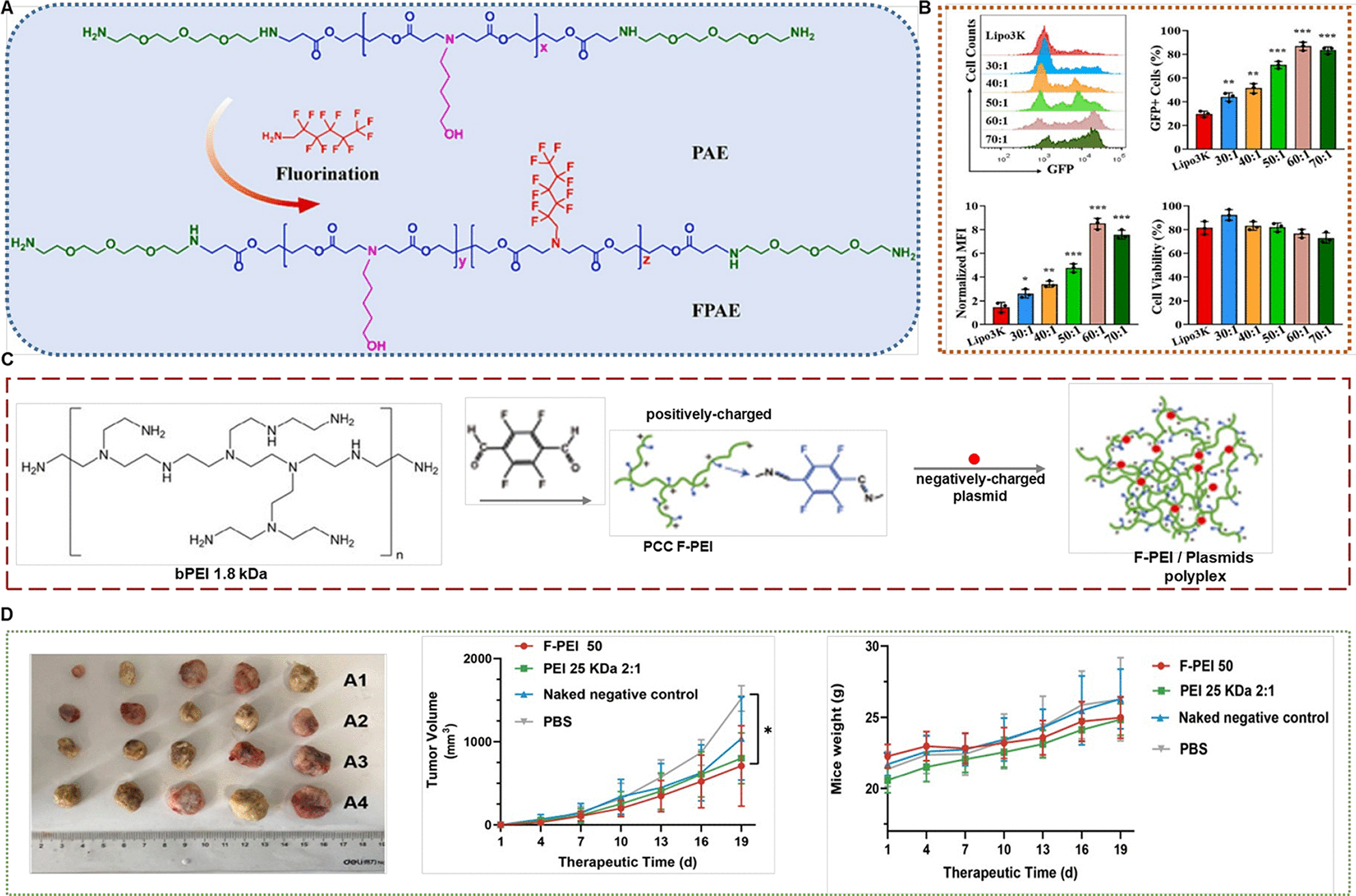
Figure 9. Achieving higher delivery efficiencies through rational design/modification of polymer vectors (A) Synthesis strategy for FPAE and (B) Gene transfection in HepG2 cells.
Ref. 229 Copyright, 2023 Elsevier. (C) Schematic of the chemical synthesis route for PCC F-PEI and (D) in vivo anti-tumor efficacy in H1299 tumor-bearing mice Ref. 230 Copyright 2023 Elsevier.
Ji et al.230 demonstrated that fluorinated low-MW PEI improved polyplex formation with a plasmid encoding a miR-942-5p sponge and GFP reporter, leading to stronger complexation, enhanced serum stability, and efficient delivery in NSCLC models. By expressing the miR-942-5p sponge, the polyplexes inhibited the oncogenic miR-942-5p pathway, reduced VEGF expression, and produced marked tumour-growth suppression with improved survival in H1299 xenografts (
Figure 9C,D).
Zhang et al.231 developed fluoropolymer-coated DNA nanoclews (FNCs) that form compact nanoclusters capable of improved cellular uptake, prolonged intracellular retention, and repeated cycles of endosomal escape. The fluoropolymer shell stabilises the nanoclews, promotes membrane interaction, and enables the structures to re-enter the cytosol after endosomal recycling, allowing multiple rounds of oligonucleotide release rather than a single delivery event.
Amino acid modifications
5.3.
Amino acids can be conjugated to introduce imidazoles, guanidines, carbonyls, thiols, amides, aromatic rings, and amines in the structure of polymers to enhance NA complexation, and polyplex cellular uptake and endosomal escape.232
Histidine (pKa ≈ 6.0) 233 is frequently incorporated into gene-delivery polymers because the imidazole group buffers efficiently at endosomal pH increasing osmotic pressure and promoting endosomal escape through the proton-sponge effect, 234,235 as demonstrated for histidylated polylysine-DNA complexes.236
Hydrophobic amino acids such as tyrosine and phenylalanine enhance polymer–membrane interactions and support more efficient cellular uptake. This behaviour has been shown in amino-acid-modified poly (aspartamide) systems where aromatic and aliphatic hydrophobic residues increased the cell internalisation.237 In contrast, basic amino acids such as arginine and lysine strengthen electrostatic DNA binding and can improve transfection, but their high charge density also correlates with greater cytotoxicity.237
In a study by Kaplan et al.,134 branched PBAE polymers were end-functionalized with histidine, isoleucine, serine, methionine, phenylalanine, and arginine, and evaluated for NA delivery. The study showed that the transfection efficiency of modified PBAE/pDNA nanoparticles depended on the type of amino acid conjugated to the polymer. Polyplexes obtained by combining plasmid DNA encoding yellow fluorescent protein (YFP) as the reporter gene, with cationic arginine and hydrophobic phenylalanine and methionine demonstrated the highest transfection efficiency. However, despite its high buffering capacity due to histidine, the derivatized polymers did not achieve transfection efficiencies comparable to the polyplexes obtained with polymers functionalized with cationic and hydrophobic groups (
Figure 10A).
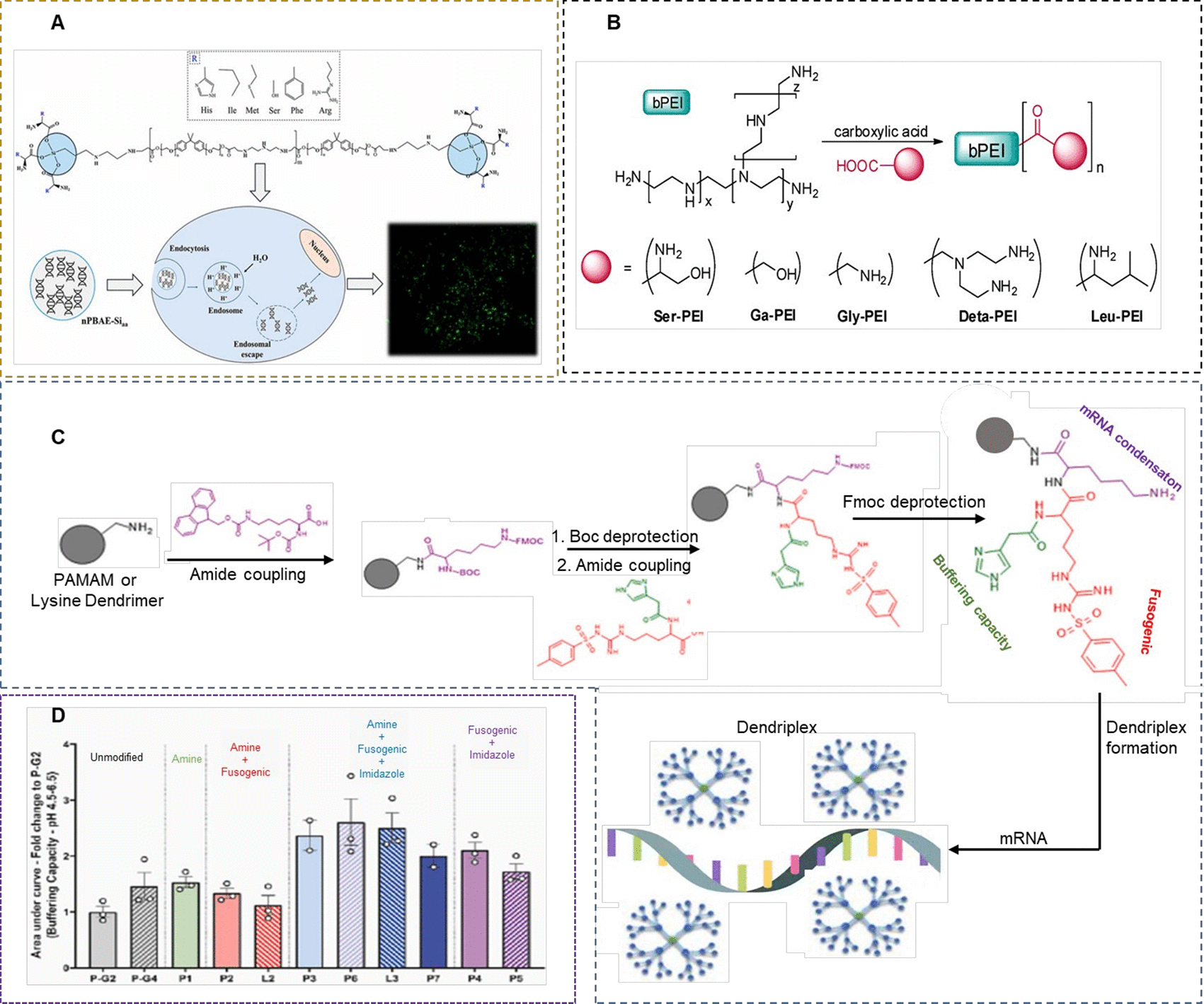
Figure 10. (A) Rational design for silane and amino acid modifications of PBAE/pDNA complexes.
Ref. 134 Copyright 2025, Elsevier (B) Synthesis and preparation of amino acids-modified PEI/DNA complexes. Ref 238 (C) Schematic illustration for PAMAM/Lysine dendrimer chemical design and formation of dendriplex. (D) Buffering capacity of investigated dendriplex. Ref. 239 Copyright 2023 Elsevier.
Zhang et al.238 reported the preparation of target PEI 25 kDa finctionalized with different amino acids at various amino densities and with different hydrophilic/hydrophobic properties. The study performed with pDNA encoding green fluorescent protein (GFP) showed that the polyplexes prepared from amino acid-modified-PEI displayed low cytotoxicity, higher in vitro transfection, and cell uptake up to 23-folds in HeLa and HEK293 cell lines compared to unmodified-PEI/pDNA polyplexes (
Figure 10B).
Joubert et al.239 reported that the conjugation of arginine and imidazole moieties to the amino groups of PAMAM improved the fusion properties, buffering capacity of the polymer and enhanced endosomal escape of the polyplexes (
Figure 10C, D). Additionally, arginine-rich polymers have been found to form pores in the cell membrane, which avoid endo-lysosomal trapping and significantly improve the cellular internalization.128 Following a structure-activity relationship studies, Kang et al.240 developed arginine-rich polymers capable of crossing the plasma membrane through a pore-formation mechanism and evaluated their performance as gene-delivery carriers. The polymers formed nanoscale polyplexes with plasmid DNA and were internalised into cells through direct membrane translocation, bypassing endocytosis and avoiding lysosomal trapping. Using YOYO-1-labelled pDNA, the authors demonstrated rapid cytosolic and nuclear distribution of the cargo. For functional gene expression, a luciferase reporter plasmid (pGL4.13) was used, and the PTn-R2-C6 series, particularly PT25-R2-C6, produced significantly higher luciferase activity than linear R20 or the benchmark PEI 25 K.
These studies collectively demonstrate that amino acid selection determines the balance between NA complexation, cellular uptake, endosomal escape, and toxicity. Cationic and hydrophobic residues generally enhance transfection, while buffering residues contribute most when paired with moieties that ensure cellular entry.
5.4 Hydrophobic modifications
Hydrophobic moieties have been introduced into polymeric macromolecules to yield polymer-based NA delivery systems that mimic the amphiphilic nature of liposomes and LNPs. However, the transfection efficiency obtained with these amphiphilic polymers is typically low.132
Anderson et al.82 reported that the incorporation of hydrophobic units into the hydrophilic amine 2-morpholinoethylamine produced PBAE enhanced polyplex stability and improved gene delivery performance. These polymers were evaluated using plasmid DNA encoding firefly luciferase (pCMV-Luc), and the resulting polyplexes generated significantly higher luciferase expression compared to the polyplexes obtained with the non-modified polymers.
Eltoukhy et al.241 demonstrated that the introduction of hydrophobic alkyl side chains into degradable PBAE terpolymers significantly improved the stability and transfection efficiency of DNA polyplexes. Terpolymers containing C12 alkyl groups formed smaller, more stable complexes and delivered GFP-encoding plasmid DNA with remarkable higher efficiency than non-alkylated PBAEs.
Liu et al.242 synthesised a branched PBAE from trimethylolpropane triacrylate (TMPTA), 1,4-butanediol diacrylate (B4), and undecylamine (C11), followed by end-capping with 3-morpholinopropylamine (MPA). The study showed that PBAE formed serum-stable polyplexes with plasmid DNA and delivered much higher gene expression than its linear analogue. Employing plasmids encoding firefly luciferase or GFP, authors demonstrated that PBAE polyplexes achieved superior transfection efficiencies in HeLa and adipose-derived stem cells, which they attributed to the combined effects of branching and the incorporation of hydrophobic C11 that yielded compact DNA condensation, reduced aggregation, and improved cellular uptake.
Shi et al.243 investigated the influence of varying hydrophilic and hydrophobic components in linear PBAEs on the behaviour of their corresponding DNA complexes. By adjusting alkylamine and amino alcohol monomers ratio, they showed that increasing hydrophobic content strengthened DNA condensation, produced smaller and more uniform particles, and improved serum stability. Polymers with a moderate hydrophobic fraction gave the highest activity, delivering plasmid DNA encoding luciferase with improved transfection efficiency and enhanced cellular uptake. When the hydrophobic content was too high, the complexes became unstable or aggregated, reducing performance. The study demonstrates that the hydrophilic-hydrophobic balance is a key determinant of the polyplex function (
Figure 11).
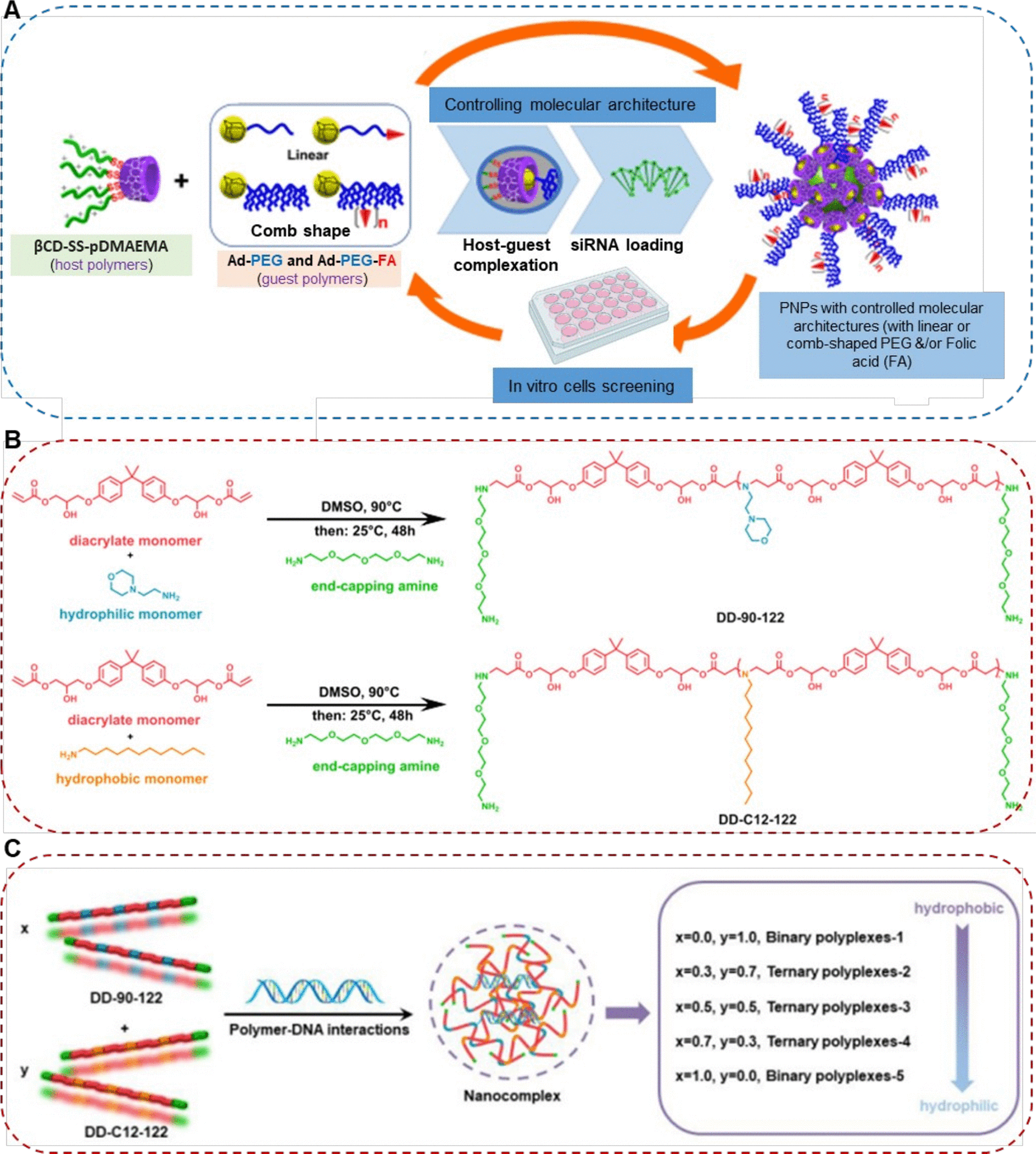
Figure 11. Schematic illustration of (A) the engineering platform for the control and screening of the molecular architecture of siRNA targeted delivery vectors and (B and C) synthesis of hydrophilic and hydrophobic LPAEs and their amphiphilicity modulation for efficient DNA delivery.
Ref.243 Copyright, 2023 American Chemical Society.
Furthermore, hydrophobic modification can also improve polyplex stability and cellular interactions by introducing lipid or fatty-acid moieties into polymeric carriers. For lipid-modified PEI, the stability and biocompatibility of polyplex core complex (PCC) are due to the amphiphilicity of lipids.128,244 For example, a family of lipopolyplexes was developed by coating PEI/DNA polyplexes with three serum-resistant cationic lipids, namely, lysinylated, histidylated, and arginylated cholesterol. The physical properties, transfection efficiency, cellular uptake, subcellular distribution, and cytotoxicity of the lipopolyplexes was investigated by Song et al.245 They found that the outer coat composed of lysinylated or histidylated cholesterol remarkably improved the transfection efficiency of the polyplex with a low PEI/DNA ratio of 2 in the presence of serum, far more efficient than the best performing polyplex with a high PEI/DNA ratio of 10 which was further confirmed by delivering the therapeutic gene, hVEGF. They futher demonstrated that, the lipid coating removed the necessity of introducing excess free PEI chains into the transfection solution for higher efficiency, generating lipopolyplexes with no signs of cytotoxicity. Rajendran et al.246 attached fatty acids to low-MW PEI through a poly(3-hydroxypropyl acrylate) (PHPA) linker. These amphiphilic derivatives formed compact pDNA and mRNA polyplexes and showed improved condensation and better stability in serum compared with unmodified PEI. Introducing a polyanion to create ternary complexes further reduced surface charge in the polyplexes and supported more efficient intracellular release, resulting in higher transfection levels across several primary cell types. The study further demonstrated that the most effective formulations, including PEI1.2 k-PHPA-Lau5-Ole5 and PEI1.2 k-PHPA-Lin9, outperformed commercial reagents while maintaining low cytotoxicity.
These findings establish that moderate hydrophobic incorporation (C11 – C12) optimizes NA condensation, polyplex stability, and uptake in cells. The optimal ratio is, therefore, cargo- and cell-type dependent, which must be taken into account at the polymer vector design stage.
5.5 Targeted Modifications
Targeting ligands address cell selectivity, with effectiveness depending on ligand-receptor affinity, ligand density, competing natural ligands, and polyplex size. Multiple targeting moieties can synergistically enhance cellular uptake of the delivery system.149,247–249 A comprehensive summary is presented in
Table 7.
Table 7. Receptors and ligands in targeted polyplex delivery.12,262a
| Target | Receptor | Ligand | Polymer |
|---|
| Tumour
| Transferrin R | Transferrin, B6, T7 | pLys, PEI, PEG-PAMAM, PEG-PEI, PEG-STP
|
| EGF R | EGF, GE11, anti-EGF AB | pLys, PEI, PEG-PEI, PAMAM, PEG-STP
|
| Folate R | Folate, MTX | PEG-pLys, PEG-PEI, PEG-STP
|
| Integrin | RGD peptide | pLys, PEG-PEI, PAE |
| LHRH R | LHRH peptide | PAMAM, PEI, PPI |
| HGF R/c-Met
| cMBP peptides | PEG-STP
|
| Brain
| Transferrin R | Transferrin | PEG-PAMAM
|
| LRP1 | Angiopep | PEG-PAMAM
|
| Leptin R | Leptin peptide | PEG-dend pLys |
| Liver
| ASGP R | ASOR, galactose, tri-NAG
| pLys, PEI, PAMAM, PEG-DPC
|
| Lung
| PECAM | Anti-PECAM AB | PEI |
| Lactoferrin R | Lactoferrin | PEI |
In 1987, Wu and Wu conjugated asialoorosomucoid (ASOR) to PLL for asialoglycoprotein receptor (ASGPR)-targeted hepatocyte delivery,250 paving the way for subsequent clinical applications of polylysine-based gene delivery systems, including a Phase I study in which autologous melanoma cells were transfected with the IL-2 gene using adenovirus-enhanced transferrinfection and elicited antitumour immune responses.251
Phenylboronic acid (PBA) interacts with cis-diols via reversible boronate ester formation.252 This moiety has been broadly applied to target cells exhibiting high levels of surface sialylation, a behaviour typical of many tumour phenotypes. Phenylboronated cationic carriers have been exploited in gene delivery systems to enhance selective cellular uptake.253 Fan et al.254 used a phenylboronic acid-functionalized PEI carrier with a detachable PEG coating to deliver survivin-targeted siRNA in a 4T1 breast cancer model, reporting improved tumour delivery and inhibition of tumour growth and metastasis. The PBA groups facilitated both sialic-acid-mediated targeting and enhanced complex formation with the siRNA. In another study by Kim et al.255 the PBA-PEI–based systems efficiently delivered plasmid DNA encoding a therapeutic anti-angiogenic gene (sFlt-1), yielding functional transgene expression and tumor growth inhibition in vivo.
Folate-modified hexa-guanidyl maltotriose core (Agm6-M) linked to PEG and terminated either with folic acid (Agm6-M-PEG-FA) or a methoxy group (Agm6-M-PEG-OCH3) was found to enhance Rac1 knockdown in folate-receptor-positive cells.256
Angiopep-2 is a targeting agent used to target highly expressed low-density lipoprotein receptor-related protein-1 (LRP-1) in the blood brain barrier (BBB) endothelial cells and glioblastoma (GBM) cells.257 Zou et al.258 developed a PEG-b-poly(ε-caprolactone) (PEG-PCL) polymeric nanocapsule to deliver Cas9/sgRNA ribonucleoproteins (RNPs) across the blood–brain barrier and into glioblastoma (GBM) cells. The Cas9 RNPs were encapsulated within a PEG-PCL polymer shell, which was surface-modified with Angiopep-2 to target LRP1 receptors abundantly expressed on brain endothelial and GBM cells.
Glucose, mannose, or galactose-modified dendritic macromolecules-target upregulated glucose transporters in glioblastoma, promoting effective brain penetration and cellular internalization for enhanced NA delivery to the brain for GBM treatment.74 Sugar modified PAMAM dendrimers have demonstrated the ability to alter targeting profiles within glioblastoma. Glucose-modified dendrimers exhibited increased brain penetration and strong uptake by tumour-associated macrophages and microglia, while galactose modification shifted uptake toward galectin-expressing tumour cells. Mannose-modified dendrimers have been found to change the kinetics of tumour accumulation without markedly altering cellular specificity.259
In liver targeting, galactose-functionalized polymers exploit the ASGPR, which is highly expressed on hepatocytes and retained in many hepatocellular carcinoma cells, to enhance liver-selective uptake and gene delivery.260,261
The diversity of targeting strategies reflects the principle that effective targeting requires matching ligand chemistry to the specific receptor biology of the target tissue.
5.6 Stimuli-Responsive modifications
Stimulus-responsive polymeric vectors exploit physicochemical cues in the tumor microenvironment (TME) to achieve spatiotemporally controlled nucleic acid release. Such systems respond to endogenous triggers including pH gradients, hypoxia, elevated glutathione (GSH), reactive oxygen species (ROS), and tumor-specific enzymatic activity, thereby enhancing tumor-selective delivery and minimizing systemic toxicity.264 The development of polymers that can respond to narrow pH differences is an effective strategy to enhance the efficiency of systemic NA delivery.128
Table 8 summarizes some major stimuli-responsive systems.
Table 8. Stimuli-responsive polymeric systems for NA delivery.
| System | Trigger and Mechanism | Cargo |
In-vitro Transfection Efficiency | In-vivo Activity and Model | Control/Comparison Group | Reference |
|---|
| Pullulan norbornene carboxylate (PNC-DMA) | pH-responsive amphiphilic polysaccharide with tunable degree of substitution (DS) for gene delivery. | pDNA | Enhanced transfection efficiency in HEK293T cells. | Serum-stable formulation with low cytotoxicity. | Control: Non-pH-responsive pullulan derivatives; lower transfection efficiency. | 271 |
| Quinine-functionalized micelles | pH-responsive quinine functionalities enhance intracellular gene delivery and expression. | pDNA | Enhanced transfection efficiency in A549 cells. | Improved serum stability and prolonged protein expression. | Control: Non-quinine-functionalized micelles; lower transfection efficiency. | 272 |
| PGlu (DET-Car) polyzwitterion micelle shell conjugated to bPEI (PGDC) | pH-triggered charge conversion. Shell: neutral at pH 7.4, cationic at pH 6.5–5.5 for tumor uptake, endosomal escape. | pDNA | 2.3–5.7-fold increase in Luc expression efficiency at pH 6.5 compared to pH 7.4. | Enhanced tumor accumulation and transfection efficiency. | Control: PEI-polyplexes and PEG PMs; no pH-responsiveness. Lower Luc expression efficiency. | 264 |
| mPEG-PC7A nanomicelles (pH-responsive tertiary amines) | pH-driven protonation promotes DNA release. | Cas9 RNP + ssODN | 35% gene editing efficiency in Hep3B cells. | Improved muscle editing in Ai14 mice, enhanced dystrophin restoration in mdx mice. | Control: Non-pH-responsive mPEG (no pH responsiveness); 5% editing. | 273 |
| Study 1. Oleyl-Nonene amino (ONA) CARTs | pH/O-to-N acyl shift for polyanion release. | mRNA | Up to 80% transfection in Jurkat cells in primary T cells. ONA CARTs drawback: only 10–20% transfection efficiency in primary T-cells | Only in vitro data | Control: Non-functionalized CARTs; 50% transfection in Jurkat cells. | 274,275 |
| Improvement on Study 1: Fingolimod used as an initiator of CARTs | Targets sphingosine1 phosphate receptor (S1P1) on T and B lymphocytes | | ̴ 70% transfection in primary T cells.
Drawback: No improvement of T cells transfection in mouse model | < 1% transfection of CD4 and CD8 T cells in the spleen | ONA, non-targeted CARTs |
| Study 2. CARTs, a β-amino carbonate (bAC) backbones | Same principle: O → N shift and lipid-enhanced T-cell targeting. | mRNA | 77–81% transfection in Jurkat cells, i.e., 6-fold higher than unmixed CARTs and 9-fold higher than Lipo 2000 and exclusive spleen tropism. Outperforms other commercial transfection reagents. | > 1.5% transfection of CD4 and CD8 T cells in the spleen | Control: Targeted ONA CARTs, unmodified CARTs and Lipo 2000 (9% transfection). |
| GSH-cleavable PADDAC polycation | GSH-triggered reductive cleavage of dinitrophenyl ether group, releasing cargo. | pDNA | 50–60% transfection in HEK293T and tumor cells. | GSH-sensitive delivery in tumor cells; low cytotoxicity in vitro, with rapid gene release. | Control: Non-reductive PADDAC polymers; lower ( ̴ 30%) transfection, higher cytotoxicity in vitro. | 265 |
| Hypoxia-responsive AZO-bridged mPEG-PLL micelles | Hypoxia triggers azobenzene cleavage. | DOX + shRNA (shHIF-1α) | High transfection efficiency in hypoxic tumor cells. | In orthotopic TNBC, inhibited primary tumor growth and distant metastasis. | Control: mPEG-PLL micelles without AZO, much lower tumor penetration and gene silencing ( ̴10%). | 268 |
| ROS-responsive diselenide polymer grafted to bPEI | ROS cleaves diselenide bond, releasing PD-L1 siRNA. | PD-L1 siRNA | ̴60% gene silencing efficiency in tumor cells. | Tumor inhibition via PD-L1 silencing; dual immune checkpoint blockade. | Control: Non-ROS-responsive bPEI-polymer, ̴25% gene silencing, no immune modulation. | 267 |
| Reduction-responsive TGIC-cystamine polycation (TC) | High GSH concentrations reduce disulfide bonds, releasing miRNA. | miR-22 | 50% transfection in osteosarcoma cells. | Effective reduction of primary tumor and lung metastasis in osteosarcoma xenografts. | Control: Non-reduction-responsive TC, ̴20% transfection; no significant tumor suppression. | 268 |
| Light and pH dual-responsive supramolecular block copolymer “SBC” | pH and light-triggered depolymerization for DNA release. | pDNA | ̴60% transfection efficiency in COS-7 and HeLa cells with light activation. | Limited in vivo application due to shallow light penetration (450 nm). | Control: Non-light responsive SBCs, ̴20% transfection, poor endosomal escape. | 269 |
| NIR-triggered upconversion nanoplatform for caged polyprodrug and siPlk1 | Upconversion nanoparticle-mediated 980 nm light converts to UV, cleaving photolabile polymer and releasing siPlk1. | siPlk1 + polyprodrug | 65% transfection in vitro. | Synergistic chemo-gene therapy with significant tumor inhibition under NIR. | Control: Non-light-responsive polyprodrug; only 25% gene delivery without synergistic chemo effect. | 270 |
Shen et al.264 prepared polycarboxybetaine PGlu (DET-Car)/bPEI pDNA-loaded polyplex micelles with zwitterionic shell. Potentiometric titration of PGlu (DET-Car) yielded three pKa values (8.6, 6.2 and 4.5), consistent with stepwise protonation of the ethylenediamine-based side chains that supports the observed pH-responsive behaviour. The micelles remained near-neutral at pH 7.4, supporting extended circulation, became mildly cationic at pH 6.5 to enhance tumour accumulation and uptake, and displayed increased positive charge at pH 5.5 to promote endosomal escape. These properties resulted in improved transfection of luciferase and sFlt-1 plasmids in Neuro-2A tumour model.
Redox-responsive systems exploit elevated intracellular GSH ( ̴10 mM vs. ̴ 2 μM extracellular). Disulfide-crosslinked polyplexes remain stable extracellularly but release cargo upon cytoplasmic GSH exposure.265,266
Reactive oxygen species (ROS)- and hypoxia-responsive systems target the oxidative tumour microenvironment. Diselenide-linked bPEI achieved ̴60% PD-L1 silencing through ROS-triggered release,267 while azobenzene-bridged micelles co-delivered DOX and shHIF-1α under hypoxia.268
Light-responsive systems enable external spatiotemporal control but face penetration limitations. NIR-triggered upconversion platforms achieved synergistic chemo-gene therapy.269,270
However, the performance of these systems depends on the magnitude and accessibility of the intended stimulus, which can vary considerably across tumour types, disease stages, and different regions within the same tumour.
6. Computational and AI-Driven approaches
6.1 Machine learning for polymer optimization
Machine learning methods (
Figure 12A), including support vector machines, random forests, and neural networks, are increasingly being applied to polymer design because they can relate large numbers of structural and formulation variables to biological performance.276 Their use in this field is still constrained by the size of most experimental datasets. Polymer synthesis and biological testing are expensive and difficult to scale, so datasets in drug delivery are generally much smaller than those commonly used in other areas of machine learning. Even so, useful models can be developed from limited datasets when the experimental variables are carefully selected, and the resulting predictions are appropriately validated.277
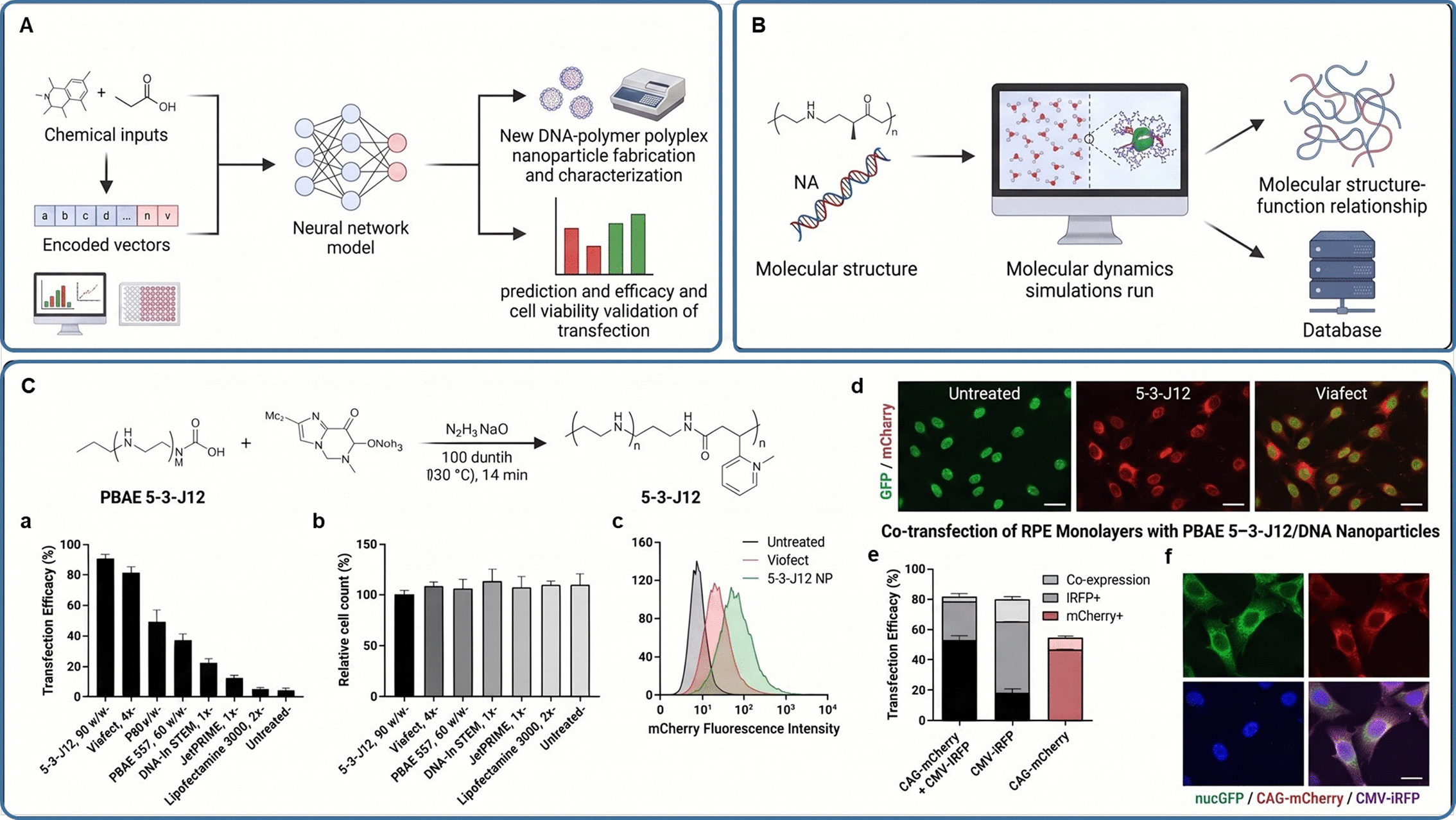
Figure 12. Computational and high-throughput approaches for polymeric nucleic acid delivery.
(A) Machine-learning workflow for encoding poly(β-amino ester) (PBAE) nanoparticles using chemical descriptors and predicting transfection performance. Ref.278 (B) Molecular dynamics simulation of polymer-nucleic acid interactions. (C) High-throughput screening of PBAE nanoparticles in retinal pigment epithelial (RPE) cells, showing (a) transfection efficiency, (b) cell viability, (c) distribution of expression levels, and (d) representative fluorescence images of transfected cells, with nuclear GFP shown in green and mCherry in red. Co-transfection of RPE monolayers with PBAE 5–3-J12/DNA nanoparticles showing (e) CAG-mCherry and CMV-iRFP co-expression 72 h after transfection and (f
) representative fluorescence images, with mCherry in red, iRFP670 in blue, and co-expression in purple. Adapted from Ref.289 Copyright 2020, The Regenerative Engineering Society.
Gong et al.278 used machine learning to predict the transfection efficiency and cell viability of DNA-poly(β-amino ester) polyplexes. Each polymer was represented using 665 structural features, and several regression models were compared, including elastic net regression, automatic relevance determination regression, k-nearest neighbours, random forest and boosted trees. Random forest gave the best overall performance, with reported predictive values of 0.64 for transfection and 0.50 for cell viability. The study also showed that polymer structure could be encoded in a form suitable for identifying features associated with delivery performance. In a separate study, Wang et al.279 compiled data from 445 poly(lactic-co-glycolic acid) (PLGA) formulations reported in the literature and trained models to predict the size of nanoparticles prepared by electrospraying. This work illustrates how published formulation data can be reused, although differences in experimental methods and reporting standards remain an important source of variability.
Other studies have used machine learning to examine which polymer properties contribute most strongly to delivery. Kumar et al.280 identified cooperative deprotonation and hydrophobicity as important features in polymers developed for intracellular delivery of CRISPR ribonucleoproteins. These findings provided a basis for selecting polymers with improved cargo release and editing activity. Dalal et al.281 combined SHAP analysis with Bayesian optimization to investigate structure–activity relationships and guide the selection of new polymer formulations. A closed-loop study involving 552 formulations identified candidates that produced a 1.7-fold increase in plasmid DNA delivery and sustained gene expression in mouse liver for up to 20 days. This approach is particularly relevant because experimental results were used to inform subsequent rounds of formulation selection rather than relying only on retrospective analysis.
Computational tools have also been developed to generate new polymer structures. Ohno et al.282 introduced Small Molecules into Polymers, or SMiPoly, a rule-based method that classifies monomers, assigns compatible polymerization reactions, and generates candidate polymers. Using 22 reaction rules and 1,083 commercially available monomers, the method produced more than 169,000 potentially synthesizable structures across seven polymer classes. The inclusion of reaction rules is important because many polymer-generation methods produce chemically plausible structures without establishing whether they can realistically be synthesized.
Several barriers continue to limit the wider use of these approaches in polymeric gene delivery. Publicly available datasets remain small, fragmented, and inconsistent, and few repositories contain polymer structures in machine-readable formats that can be directly processed computationally.283 Polymer behaviour also depends on information that is often poorly reported, including molecular-weight distribution, branching, dispersity, charge density, formulation conditions, N/P ratio and the biological model used for evaluation. Polymer nomenclature presents an additional problem because the same or closely related materials may be described differently across studies. Progress will therefore depend on better reporting standards, shared datasets and closer collaboration between researchers working in polymer chemistry, drug delivery and computational modelling.
6.2 Molecular dynamics simulations
Molecular dynamics (MD) simulations provide atomistic or coarse-grained descriptions of interactions that are difficult to resolve experimentally, making them valuable for examining polymer-NA acid association, nanoparticle stability, cell membrane interactions and cargo release.14 MD can also help to explain experimental observations by identifying molecular interactions, conformational changes, and energetic barriers underlying polymer performance. Although simulation does not replace experimental evaluation, it can reduce the number of polymer candidates requiring synthesis and support the selection of polymers for further investigation (
Figure 12B).
Zhang et al.284 used coarse-grained MD simulations based on the MARTINI force field to investigate the passage of PEG-coated nanoparticles across lipid bilayers. By varying temperature and PEG grafting density, the study examined how surface composition influenced nanoparticle interactions with the membrane and their capacity to cross cell membrane. Raman et al.285 similarly combined coarse-grained MD with enhanced sampling methods to study the interactions of methoxy-polyethylene glycol-block-polycaprolactone copolymers and their self-assembled micelles with a model DOPC bilayer. Comparison of MePEG17-b-PCL3 and MePEG5-b-PCL9 systems showed that the free-energy barrier associated with membrane internalization depended strongly on the balance between the hydrophilic and hydrophobic blocks. The micelles retained interaction patterns characteristic of their constituent amphiphilic copolymers, indicating that polymer composition remained an important determinant after self-assembly.
Binder et al.286 developed a coarse-grained PEI model compatible with the MARTINI 3 force field, allowing simulations of PEI molecules at experimentally relevant sizes. Simulations of PEI–siRNA complexation showed stronger association as the degree of PEI protonation increased, particularly under acidic conditions representative of the endosomal environment. Polymer MW also influenced the thermodynamics and dynamics of complex formation. These computational findings were supported by isothermal titration calorimetry (ITC) and single-molecule fluorescence measurements, providing experimental evidence for the predicted changes in binding behaviour.
Computational evaluations by Ziebarth et al.287 further showed that nucleic acid identity, polymer MW, and branching can alter the organization and stability of PEI-nucleic acid complexes. Collectively, these studies demonstrate that polymer composition, architecture, protonation state and environmental conditions must be considered together when interpreting polyplex formation and membrane interactions. MD is therefore most informative when it is integrated with experimental measurements rather than used solely as a screening tool.
6.3 High-Throughput automation
High-throughput polymer discovery has developed more slowly than small-molecule screening, partly because standardized and commercially available polymer libraries remain scarce. Nevertheless, combinatorial synthesis and automated screening have enabled the evaluation of large numbers of polycationic materials for gene delivery.139,288
Anderson et al.186 provided an early demonstration of this approach by preparing a library of 2,350 degradable poly(β-amino ester)s in 96-well plates using semi-automated synthesis. Automated liquid-handling systems were then used to formulate the polymers with nucleic acids and assess their transfection activity in mammalian cells. This work showed that polymer synthesis, nanoparticle formulation and biological screening could be integrated within a single high-throughput workflow, allowing large chemical libraries to be examined under comparable experimental conditions.
More recently, Mishra et al.289 developed a high-throughput platform for screening 148 polymeric nanoparticle formulations in human retinal pigment epithelial cells, a cell type that is often difficult to transfect. The polymers were synthesized in 96-well plates using dimethyl sulfoxide (DMSO) as the reaction solvent and were subsequently mixed with plasmid DNA to form polyplexes by self-assembly. Because the cells tolerated the low residual solvent concentration, the formulations could be transferred directly to the cell plates using automated liquid handling. Transfection was quantified by fluorescence imaging of nuclear GFP and plasmid-encoded mCherry expression (
Figure 12C). This workflow reduced the number of manual processing steps and allowed polymer structure, cellular tolerance, and transfection performance to be assessed in parallel.
Despite the advantages of high-throughput polymer discovery, it still faces practical limitations. Polymer purification and characterization are considerably more difficult to automate than synthesis and screening, while differences in MW, dispersity, and residual monomer content can complicate comparisons between polymer candidates. Materials identified at microscale must also be reproduced at larger scale without altering their physicochemical or biological properties. These constraints continue to limit the translation of high-performing screening hits into well-characterized delivery systems.
Table 914 summarises these computational and AI/ML tools for polymer design.
Table 9. Computational and AI/ML tools for polymer design.14
| Simulation/ML tool | Applications |
|---|
| All-Atom MD Simulations |
▪ To evaluate binding interactions of polymers and nucleic acid290,291 ▪ To assess polymer-lipid bilayer interactions292 ▪ To study the influence of polymer structure and concentration on nucleic acid complexation293,294 ▪ To investigate the role of glycosaminoglycans (e.g., heparin) in polyplex delivery295
|
| Coarse-grained molecular dynamics simulations |
▪ To examine thermodynamics of siRNA condensation with PEI286 ▪ To assess polymer interactions with biomembranes284,285,296
|
| Predictive machine learning models | Generally, to Predict nanoparticle size and drug release from polymers297
▪ To forecast transfection efficiency and toxicity based on polymer structures (e.g., LightGBM)278 ▪ To Identify key physicochemical properties of polymers for efficient nucleic acid delivery (e.g., Random Forest)280 ▪ To predict structure-activity relationships to enhance polymer design and delivery efficiency (e.g., XGBoost)281
|
| Generative machine learning models |
|
7. Clinical Translation: Current status and challenges
7.1 Clinical experience and development status
Commercially available transfection reagents demonstrate the practical value of polymeric vectors in laboratory research and ex vivo applications (
Table 1). Nevertheless, their clinical development has been limited by low systemic safety, poor pharmacokinetics and issues related to manufacturing reproducibility.14,298
ARC-520 and ARC-521 remain important clinical precedents for DPC-mediated siRNA delivery. ARC-520 comprised two cholesterol-conjugated HBV-targeting siRNAs (siHBV-74 and siHBV-77) co-administered with the hepatocyte-targeted endosomal escape agent N-acetylgalactosamine-conjugated melittin-like peptide (NAG-MLP; ARC-EX1) using the Dynamic PolyConjugate (DPC) platform. ARC-521 used the related DPC delivery system but incorporated siRNAs designed to target HBV transcripts derived from both cccDNA and integrated HBV DNA. ARC-520 progressed to Phase 2 evaluation, whereas ARC-521 entered Phase 1/2 clinical testing.299,300 Multiple doses of ARC-520 produced significant and sustained reductions in hepatitis B surface antigen in both HBeAg-positive and HBeAg-negative patients receiving nucleo(s/t) ide analogue therapy.300
Development of ARC-520 and ARC-521 was discontinued in 2016 due to lethal toxicity occurred at the highest EX1 dose tested in a non-human-primate safety study. The toxicity was attributed to the delivery vehicle rather than the siRNA cargo, prompting termination of the EX1-containing programmes and a shift towards newer subcutaneous delivery systems.299,301 This result demonstrated that polymer-assisted delivery could produce target engagement in humans, while also showing how the safety profile of the carrier can determine the viability of the entire therapeutic programme.
Most subsequent polymeric nucleic acid delivery systems remain at the preclinical stage.14,300 Poly(β-amino ester) nanoparticles have recently enabled efficient systemic mRNA delivery to lung tissue and primary human airway epithelial cells, in mouse models.302
Dendrimer-based carriers are being developed for the delivery of siRNA, mRNA, DNA and genome-editing cargoes, including applications involving difficult-to-transfect cells and tissues.303
Modified polyethylenimine systems remain under investigation because of their high nucleic acid complexation and transfection capacity, although their performance depends strongly on molecular weight, architecture, charge density and surface modification.304
Local administration and ex vivo treatment may provide practical routes for the early translation of some polymeric systems because exposure can be restricted to a defined tissue or cell population. This could be particularly relevant where systemic administration offers no clear therapeutic advantage.
7.2 Translational challenges
Manufacturing and material control
Polymer architecture can influence synthetic reproducibility and purification because topology itself can affect gene-delivery performance.300,304 Polymeric materials are commonly characterized by distributions rather than single molecular structures. MW distribution, dispersity, branching density, end-group composition, residual monomers and degradation products can influence particle size, cargo loading, release, toxicity and biological activity.305 Recent studies with poly(β-amino ester) s (PBAEs) illustrate this sensitivity. Li et al.192 controlled the stage of cyclization during step-growth polymerization to generate multi-cyclic PBAEs with different ring topologies, which produced distinct physicochemical and transfection profiles. More recently, Wang et al.306 used sequential hydrolysis to modify the topology, composition and molecular weight of star-shaped PBAEs, resulting in marked changes in transfection efficiency. Architecture-dependent performance has also been demonstrated for cationic bottlebrush polymers, which produced greater pDNA delivery and gene expression than matched linear analogues.307 These findings indicate that attributes such as cyclic content, arm structure, grafting density or branching degree may require close synthetic control when they determine biological activity. Architecture-specific manufacturing problems are also well established: cyclic-polymer synthesis can generate residual linear species that require separation,308 while high-generation dendrimer synthesis can introduce peripheral defects during divergent growth or suffer reduced yields during convergent assembly.309
Quality assessment should therefore extend beyond average molecular weight when additional structural attributes influence carrier function. FDA guidance310 for nanomaterial-containing drug products recommends defining critical quality attributes according to their structure–function relationship and identifies chemical composition, particle-size distribution, morphology, stability, surface properties and impurities among the attributes that may require characterization and control. It also notes that physicochemical comparison of critical quality attributes may be required following manufacturing changes. For polymeric nucleic acid carriers, polymer-level characteristics such as molecular-weight distribution, dispersity and architecture-related parameters should therefore be controlled when they can be linked experimentally to nanoparticle assembly, transfection, toxicity, or other performance attributes.
Therefore, establishing acceptable ranges for these attributes and connecting them to biological performance are critical for batch release and manufacturing comparability. These challenges become more significant when small changes in molecular composition alter nucleic acid binding, nanoparticle assembly or biological activity.
Biological predictability
Polymeric vectors that perform well in cultured cells frequently show reduced activity after administration in vivo. Indeed, protein adsorption, extracellular matrices, immune recognition, vascular barriers, phagocytic clearance and tissue-specific transport can substantially alter nanoparticle behaviour.311 Conventional screening in immortalized monolayer cell lines captures only a limited part of these processes.
Three-dimensional spheroids, organoids and organ-on-chip systems can reproduce selected features of tissue architecture, fluid flow, extracellular barriers and multicellular interactions that are absent from standard two-dimensional cultures.312 Their predictive value still depends on the extent to which results are validated against animal and human data. These models are therefore better positioned as intermediate stages between initial cell screening and in vivo evaluation.
The requirements for productive delivery also differ across nucleic acid cargoes. siRNA must reach the cytoplasm and become available for loading into the RNA-induced silencing complex (RISC). mRNA requires cytoplasmic release while retaining integrity and translational competence. Plasmid DNA must cross the nuclear envelope, whereas CRISPR ribonucleoproteins require release of an intact protein-RNA complex followed by access to the nucleus.311 Carrier selection and optimization should therefore be matched to the intracellular pathway required by the intended cargo.
Safety and repeated administration
Cationic polymers bind and protect nucleic acids, but high or persistent positive charge can disrupt cellular membranes, interact with serum proteins, and contribute to inflammatory or cytotoxic responses.304 Toxicity may also arise from unbound polymer, residual reagents, degradation products or impurities introduced during synthesis and formulation.305 Biodegradable backbones can reduce prolonged material accumulation, although biodegradability alone does not establish safety.
Repeated administration presents additional concerns. Pre-existing or treatment-induced antibodies against polyethylene glycol can alter nanoparticle pharmacokinetics, promote accelerated blood clearance, and contribute to hypersensitivity or complement-mediated reactions.313 Repeated-dose studies are therefore needed to determine whether pharmacological activity and tolerability remain stable across clinically relevant treatment schedules.
Regulatory and analytical requirements
The regulatory development of polymer-NA formulations depends on identifying material and formulation parameters or factors that influence safety, potency, and stability. Relevant parameters can include MW distribution, particle size, surface charge, cargo loading, free polymer content, impurities, degradation products and biological potency.314 The required analytical package will vary with the polymer, cargo, route of administration and intended clinical use.
Changes in synthesis, purification, formulation, or scale may alter biological performance even when the nominal chemical composition remains unchanged.305,314 Sensitive release assays, stability-indicating methods and comparability studies will therefore be required throughout development. Early interaction with regulatory authorities may help define the expected analytical, toxicological, and manufacturing evidence for a particular therapeutic product.
7.3 The position of polymeric vectors relative to other delivery platforms
Lipid nanoparticles currently have the strongest clinical record among non-viral nanoparticle systems for nucleic acid delivery. Their clinical use includes an approved siRNA therapeutic and multiple mRNA vaccines, and their formulation and manufacturing processes are comparatively developed and mature.315 Polymeric carriers provide broader options for modifying backbone chemistry, architecture, ionization, degradation, and surface functionality, although this diversity creates additional analytical and manufacturing demands.298
GalNAc-siRNA conjugates achieve efficient hepatocyte delivery through binding to the asialoglycoprotein receptor and have supported several approved liver-directed RNA interference therapeutics.316 Their receptor dependence makes the established platform principally suited to hepatocyte-targeted delivery. Polymeric nanoparticles can accommodate a wider range of cargo sizes and compositions, but their capacity for reproducible extrahepatic delivery remains predominantly preclinical.298
Cell-derived extracellular vesicles possess membrane proteins and lipids that can support biological interactions and cargo transport. However, variability in cellular source, isolation method, composition, cargo loading, and large-scale production complicates their characterization and quality control.317 Synthetic polymer systems may permit more direct adjustment of composition and function, although molecular heterogeneity remains an important concern for several polymer classes.
The most defensible clinical position for polymeric vectors may lie in applications where their chemical adaptability solves a delivery problem that established platforms cannot address readily. These applications may include local administration, extrahepatic targeting, simultaneous delivery of different therapeutic agents and transport of large or structurally complex nucleic acid cargoes.
8. Conclusions and outlook
Polymeric vectors provide extensive chemical and architectural options for nucleic acid delivery. Molecular weight, architecture modulation, ionization behaviour, charge density, degradability, end-group chemistry, type of payload and formulation conditions can jointly influence polyplex assembly, extracellular stability, cellular uptake, intracellular trafficking and toxicity.14,298 This interdependence makes conclusions based on a single polymer feature difficult to generalize across delivery systems.
Polymer architecture remains an important area for controlled comparison. Branched, cyclic and dendritic structures have produced substantial improvements over related linear materials in selected studies, including the large transfection enhancement discussed in
Section 3. However, many comparisons have been conducted using limited cell models, unmatched MW, or different formulation conditions. Large fold differences should also be interpreted in relation to the activity of the comparator, since a poorly active control can produce a disproportionately large relative improvement.
Direct comparisons using matched chemical composition, MW, NA payload dose and experimental conditions should receive greater priority. Such studies would help establish whether architectural effects are transferable across cargoes and biological models.
Ionization behaviour also provides a useful basis for polymer design because nucleic acid association, extracellular stability, cargo release and endosomal membrane interaction may favour different protonation states.318 pH-responsive polymers containing ionizable groups near the endosomal pH range have consequently been studied as a means of promoting intracellular release.318
The dual-pKa framework provides a useful working hypothesis for separating the ionization behaviour required for NA association from that associated with endosomal activity. Its broader value will depend on whether these relationships remain consistent across polymer classes, NA cargoes, and experimental methods.
Endosomal release remains a major limitation in nanoparticle-mediated nucleic acid delivery. Quantitative studies indicate that only a small proportion of internalized nanoparticles release functional NA cargo into the cytoplasm, although the estimated efficiency varies according to the carrier, NA type, cell type and measurement technique.319 Measurements of cellular uptake alone therefore provide insufficient evidence of efficient delivery.
Better distinction between uptake, endosomal disruption, cytoplasmic release, and biological activity is needed. Combining quantitative imaging, intracellular trafficking assays, biophysical membrane studies and molecular simulations may provide a more informative account of the processes that determine efficient delivery.
NA type/identity should receive the same attention as carrier chemistry. siRNA, mRNA, plasmid DNA and genome-editing complexes differ in size, structure, stability, and intracellular destination.311 A carrier optimized for one NA cargo cannot be assumed to retain the same performance with another.
Polymer development should therefore begin with the biological and intracellular requirements of the intended NA payload. Computational models may become more informative when NA properties and trafficking requirements are treated as design variables rather than as fixed experimental inputs.
Machine learning, Bayesian optimization and molecular simulation can assist in identifying structure-property relationships and selecting materials for experimental evaluation. Their reliability is presently limited by small datasets, inconsistent polymer nomenclature, incomplete structural descriptions, and differences in experimental protocols. Molecular-weight distribution, architecture, formulation method, assay conditions and unsuccessful formulations are often missing from published datasets.320
Shared reporting standards and machine-readable polymer representations would allow stronger comparisons across studies. Public datasets should also retain negative or low-performing results, since models trained only on successful formulations will provide a distorted account of the chemical design space.
The biological identity of a nanoparticle changes after contact with physiological fluids. Adsorbed proteins can alter biodistribution, receptor interactions, cellular uptake, and intracellular trafficking. Recent evidence shows that individual corona proteins can increase nanoparticle uptake without improving mRNA expression and may instead direct particles towards lysosomal trafficking.321
Control of protein adsorption may eventually support endogenous targeting, but the composition and function of an engineered corona would need to remain reproducible across individuals, disease states and formulation batches.
Clinical progress will depend on connecting polymer design with the conditions encountered during administration. More informative tissue models, repeated-dose safety studies, pharmacokinetic analysis and comparisons with established delivery technologies should form part of polymer development. Manufacturing feasibility should also be assessed during material optimization rather than after a lead formulation has been selected.
The framework summarized in
Figure 8 should be applied as an integrated system. MW, surface charge, ionization profile, architecture and chemical modification must be matched to the intended cargo, administration route and target tissue. Polymeric vectors are most likely to progress where their chemical adaptability provides a reproducible therapeutic advantage that outweighs the additional challenges of characterization, manufacture, and safety assessment.
F1000 AI policy
In accordance with the F1000Research AI Policy, during manuscript preparation, ChatGPT (OpenAI, GPT-5.6 Sol) was used in some instances to assist with language refinement and clarity. All AI-assisted outputs were critically reviewed, edited, and validated before inclusion in the final manuscript.