Introduction
Recent technological advances are causing a profound transformation in the higher education landscape. The rise of Artificial Intelligence (AI) has ignited an intellectual debate on the evolving role of universities.13,25 A major shift towards the use of AI tools calls for reflection and restructuring of higher education to bridge the gap among stakeholders and maintain teaching and learning behaviours.5,44
While AI is a long-established field of computer science, its recent proliferation, particularly in the form of Generative AI (GenAI), which uses deep learning to generate human-like content,69 is triggering a profound transformation across higher education. These systems create novel outputs by leveraging vast datasets of public digital content,89,95 enabling capabilities that directly impact core academic activities.
The main stakeholders in the higher education sphere fall into roughly three categories. There are the educators: faculty staff who carry out research and who design and implement courses; there are students who are enrolled on those courses who will eventually make use of skills acquired after graduation; finally there are the university institutions that, besides carrying out teaching and research, define the legal, social and educational framework within which these activities take place. The increasing diffusion of AI tools throughout higher education impacts all of these stakeholders. The basic conflict arises because, like most new technologies, AI has pros and cons which impact these different stakeholders in different ways. This tension between opportunity and risk is now recognised across disciplines,35 and earlier reviews have mapped AI applications in particular regions and settings99; what has been missing is a synthesis that treats the two sides as a single, mutually conditioning system rather than a catalogue of benefits set against a catalogue of risks.
One aim of this article is to examine how these competing pros and cons play out differently for educators, students, and institutions, and to propose a framework within which these conflicting aspects of AI can be assessed and reconciled. We discuss this in further detail below.
There have been different reactions from higher education to the use of AI technology. Some, such as the Russell Group of 24 top Universities in the UK, have embraced it by publishing guidelines on how to use AI ethically and effectively, whilst others have strictly banned the use of certain tools. New York City Education Department, for example, was reported to have blocked the use of ChatGPT on school devices and networks for both teachers and students.36 In Europe, the Sciences Po school in Paris, one of the most prestigious universities in France, has banned the use of ChatGPT without transparent referencing, saying that unauthorised usage could risk sanctions which can go as far as expulsion from the establishment or even from higher learning.
However, the majority of universities have yet to clarify their stance on specific circumstances when the use of tools like ChatGPT may be considered acceptable. There is little consensus on the exact scope and content of such policies.8,76,79,105,106,108,119 The key challenge for universities and all stakeholders is to find a balance that allows the use of AI without compromising the integrity of the educational process. The main purpose of this article is to synthesise the existing literature on the benefits and risks of AI in higher education into a single conceptual framework, the Bright-Shadow Integration Model, that captures this dual nature and provides higher education stakeholders with a structured approach for assessing and responding to it.
The structure of the article is as follows. Following this introduction, the Methodology section outlines the Systematic Conceptual Review (SCR) approach used to analyze the literature. The Findings section presents a thematic synthesis of the literature, organized into the Bright Highlights and Dark Shadows of AI integration. This synthesis directly informs the subsequent section, which introduces our central contribution: the Bright-Shadow Integration Model, a conceptual framework for understanding the mediating factors that influence AI’s impact. The Discussion section then interprets these findings through the lens of the proposed framework. Finally, the Conclusion summarizes the study’s contributions and offers practical recommendations for stakeholders based on the model’s insights.
Methodology
This study uses a SCR methodology to synthesise and structure the literature on Artificial Intelligence (AI) in higher education.17 Unlike a standard Systematic Literature Review (SLR) which often addresses specific empirical questions, an SCR is specifically designed to integrate findings into conceptual categories and construct theoretical frameworks for understanding complex phenomena.
Research strategy and data sources
The literature search was conducted for the period January 2021–July 2025. This window was selected to capture the first full calendar year of scholarly engagement with GPT-3 based generative AI tools, which entered private beta in mid-2020 and saw growing application and discussion through 2021 ahead of their general API release that November, through to July 2025, capturing the continued rapid evolution of Generative AI following the release of ChatGPT in November 2022.72,77 Three major databases were used: Google Scholar, ERIC, and Scopus. The search strategy employed a precise set of key phrases: “AI in higher education,” “academic integrity,” “ethical dilemmas,” and “critical digital literacy.” Each phrase was searched independently, as an exact phrase, restricted to the title and keyword fields where the database allowed such restriction. Searches were run in August 2025. This keyword-restricted approach, rather than a broader full-text search, accounts for the comparatively low number of records identified relative to the total volume of literature on this topic. Because each phrase was searched separately rather than combined into a single query, a study matching more than one phrase could be retrieved under each of the relevant phrases; this is addressed further in
Table 1. While “academic integrity” and “ethical dilemmas” both relate to ethical mediation, they were treated at different levels of analysis: academic integrity refers to student-level issues (e.g., plagiarism, misuse of AI writing tools), whereas ethical dilemmas capture institutional or policy-level challenges (e.g., fairness of AI adoption, transparency, data privacy).
Table 1. Distribution of papers by search phrase and key themes.
|
Search phase | Papers retained | Prominent topics/keywords |
|---|
| AI in higher education | 99 | Teaching practices, assessment redesign, adaptive learning, teacher workload, student engagement |
| Academic integrity | 33 | Plagiarism, misconduct, cheating, originality, fairness in evaluation |
| Ethical dilemmas | 44 | Data privacy, transparency, algorithmic bias, fairness, institutional responsibility |
| Critical digital literacy | 21 | AI literacy, digital skills, staff training, student preparedness, digital divide |
Reference lists of relevant papers were also examined, a technique called snowballing,115 to ensure comprehensive coverage and to identify seminal papers.
Inclusion and exclusion criteria
Studies were included if they met the following criteria:
- Peer-reviewed journal articles, conference proceedings, institutional policy reports or theoretical frameworks.
- Direct relevance to higher education.
- Focus on AI tools, applications or their ethical, pedagogical or policy implications.
- Published in English between 2021-2025.
Exclusion criteria included:
- Studies focused exclusively on K-12, professional, or corporate training.
- Blog posts, opinions, non-substantive, or promotional content.
- Publications not in English.
- Articles focused solely on technical AI development without clear educational insights or application.
Screening and selection process
The study identification process (
Figure 1) followed the Preferred Reporting Items for Systematic Reviews and Meta-Analyses (PRISMA) guidelines to ensure transparency and reproducibility.83 Titles, abstracts, and full texts were screened independently by three reviewers; decisions were then compared and discussed jointly, with disagreements resolved through consensus among all three authors. The initial systematic search strategy was executed across three multidisciplinary electronic databases: Google Scholar, ERIC, and Scopus. Using the four predefined key phrases, 131 records were initially identified. After removing 8 duplicates, 123 unique records remained for screening. Titles and abstracts were assessed against the inclusion criteria, resulting in the exclusion of 12 studies (3 not in English, 1 not about AI, 5 published before 2021, and 3 not peer reviewed). This left 111 studies for full-text review. Following a detailed assessment, 6 papers were excluded: 3 due to thematic misfit, 2 due to methodological misfit, and 1 ranked as lower priority because its central theme substantially overlapped with an already-included study and its methodological contribution was comparatively weaker. A total of 105 papers were included in the final synthesis.
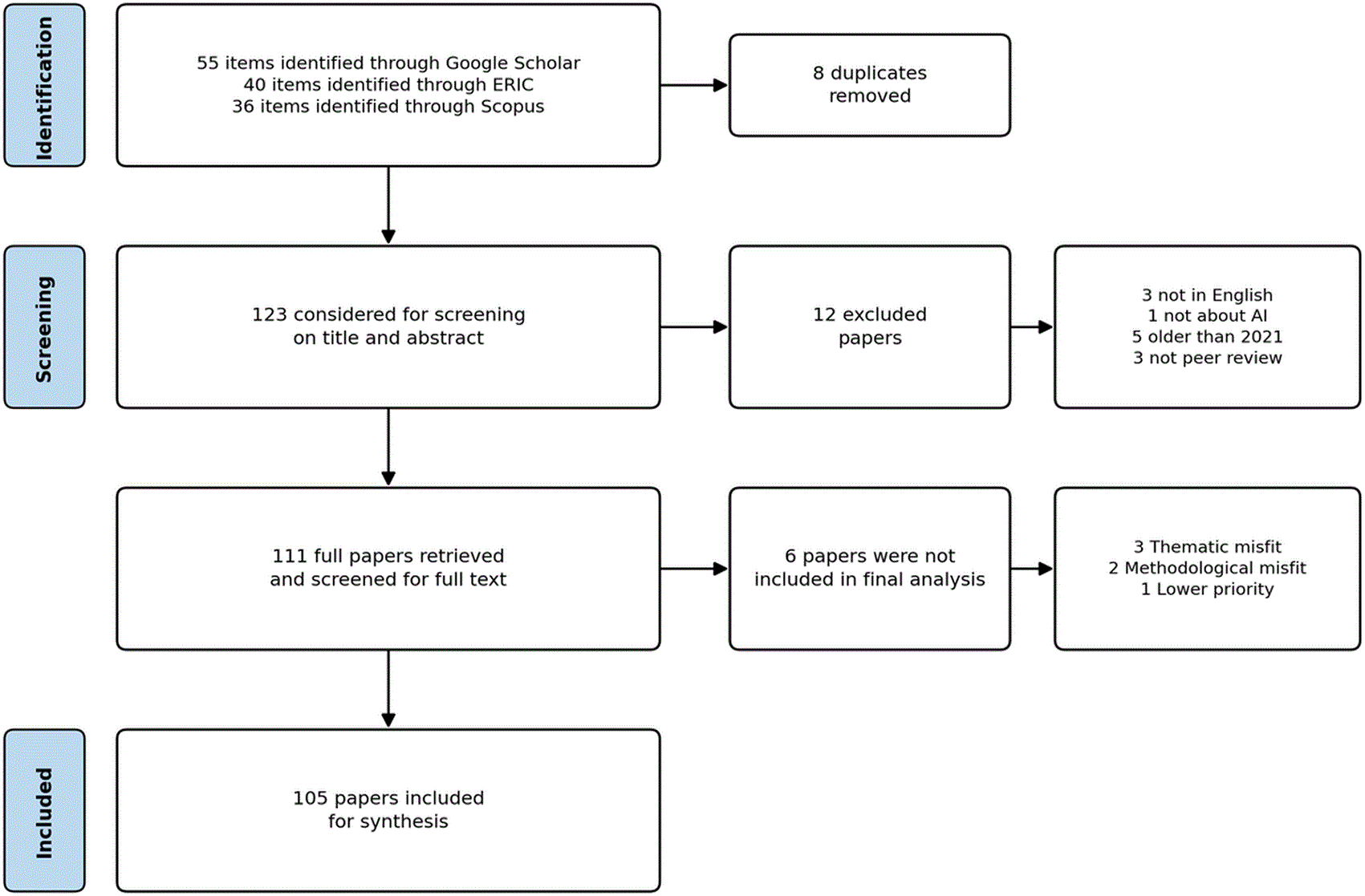
Figure 1. PRISMA flow diagram of the systematic conceptual review process.
To provide greater clarity, the retained studies are also broken down by the four search phrases (
Table 1). This shows the distribution of articles and the most prominent themes discussed within each category.
Because the four search phrases were queried independently, the per-phrase totals in
Table 1 sum to more than the 105 studies included overall; a number of studies were retrieved under, and are counted within, more than one search phrase. Studies were manually classified into themes based on recurring concepts identified through close reading. This approach allowed us to map the thematic landscape without formal coding software.
Findings/Thematic synthesis
Data extraction and analysis
For each included study, bibliographic and contextual data were extracted (author, year, country, AI tool/technology, stakeholder group, research focus, etc.). The studies were then analysed using a thematic synthesis approach.
Full characteristics of all included studies (author, year, country, AI tool/technology, stakeholder group, research focus) are provided in Supplementary Table S1
The analysis was guided by four main concepts mentioned above that formed the basis of the search strategy, resulting in two overarching analytical categories: (i) Bright Highlights – the benefits and positive contributions of AI in higher education; (ii) Dark Shadows – the risks, limitations and ethical challenges associated with the adoption of AI. This synthesis enabled the construction of a conceptual framework (Bright-Shadow Framework for AI in Higher Education), which integrates positive and negative dimensions and highlights the tensions between innovation and ethical responsibility.
Bright highlights of AI in higher education
Higher education has already entered a new era of AI mediated digital content, and the technologies mentioned above are anticipated to become ever more sophisticated as this era progresses. Many of the impacts of this shift are not only positive but sufficiently advantageous that institutions should treat personalised learning, operational efficiency, and enhanced accessibility as core priorities for future higher education, rather than optional enhancements.12,30,63,100,107
For educators, the literature reports three main impacts of GenAI tools. First, they can cater for diverse learning needs and styles7,10,39,60,64,66 and facilitate the creation of personalised and interactive educational experiences.4,21,49,51,82,98,121 Second, they improve access to educational materials across cultures and languages by lowering language barriers through machine translation tools, promoting inclusivity and more equitable access to information.33 Third, Knowledge Graphs and related tools further enhance this inclusivity by structuring complex information in an accessible and comprehensible way, supporting efficient exploration of large volumes of data.55 AI support can help teachers move toward more personalised coaching and mentorship for individual students.46 These findings point to a central challenge for educators: navigating the range of possibilities the technology offers rather than mastering any single capability in isolation.
For students, the reviewed literature reports impacts similar to those for educators, viewed from the learner’s position.26,42,54,59,74,103 Across this literature, students report becoming more efficient at meeting academic requirements while reducing the effort spent on tasks they judge routine or time-consuming, a least-effort dynamic whose implications for skill development are examined in the Discussion.
Finally, there is the perspective of institutions. Several studies argue that higher education institutions need to set out ground rules defining fair use of AI technology, weighing the bright highlights and dark shadows examined throughout this review. 48,102,113 A global comparison of institutional adoption policies confirms that most universities are still working out what such ground rules should contain, with considerable variation in scope and enforcement across institutions and countries.56 A related shift has been described from technology-based learning to learning with technology.32
Dark shadows of AI in higher education
By effectively demonstrating that the output of AI systems can not only be useful but also presented in a highly accessible form, the release of ChatGPT in November 2022 triggered an unprecedented debate on the potential of GenAI to reshape higher education. As one recent study observes, ‘Generative AI tools like ChatGPT have become as ubiquitous as Wi-Fi, quietly shaping how students research, write, and even think’ (p. 2).90 This ubiquity underscores both the potential benefits and the risks that frame our discussion of bright highlights and dark shadows. At the same time, the technology is still highly imperfect at this point in its development, presenting many potential challenges. We can usefully divide these into technical and societal challenges.
Technical challenges
Technical challenges are posed by shortcomings in the underlying technological framework. Because this is essentially data-driven, one important class of such technical challenges are the result of imperfections in the data used to build the GenAI models. To begin with, there is the problem of bias. Generally speaking, LLMs are often trained on a huge volume of Internet-based data, which, being uncurated, can include stereotypes, misrepresentations, derogatory and exclusionary language that disproportionately affect vulnerable communities.81 These constitute a “social bias” which, if not mitigated in some way, is inherited by applications which use that data. A comprehensive recent review examines the concept of bias in relation to fairness and discusses a range of mitigation techniques that have been proposed and applied.43
A related problem is that of data quality, as indicated by factors such as level of noise, reliability, provenance, completeness, timeliness, level of detail, etc. Generally speaking, the higher the quality, the higher the cost, but this depends to some extent on the availability of data in a particular domain and on the level of curation that is necessary to achieve a minimal level of performance on a given task. The main point is that high-quality data is an expensive resource.
In general, the least costly data is that which can be automatically scraped in large volumes by crawling the web opportunistically, whilst the most costly involves judgment by human experts and manual labelling. The cost can sometimes be mitigated by minimising the amount of data that must be labelled in this way, and developing an algorithm that builds a first model from the small quantity of hand-labelled data that is then used to label a larger quantity of unlabelled data. The now larger labelled data can then be used to build a second, improved model, and the whole cycle is iterated until the desired level of performance is reached.
The reliability of results generated by the models built by such algorithms is not guaranteed and depends upon a wide variety of factors, the details of which are beyond the scope of this paper. But in a nutshell, the algorithms are imperfect and do not necessarily lead to arbitrary improvements in performance.
Recent research has shown that ChatGPT may generate incorrect or fabricated information, which can be problematic for students who rely on it to inform their learning.47,67 One frequently observed phenomenon is hallucination, which occurs when an underlying AI model (such as an LLM) perceives patterns or objects that are non-existent or imperceptible to human observers. This can create outputs that are literally nonsensical or inaccurate. Examples have been reported for many different systems from all the main technology companies.
Limited up-to-date knowledge and data, generation of incorrect/fake information, and provision of fictitious references are just some of the issues raised recently.71 Until these limitations are both recognised and mitigated, ChatGPT cannot be integrated straightforwardly within academic contexts in an unsupervised way. Intellectual responsibility, whereby the teacher tries to instil the spirit and techniques of critical thinking in the student, thus remains an important part of the academic tradition, and we should strive to retain it.
Societal challenges
Regardless of the potential advantages offered by AI technologies, their adoption also gives rise to contradictions, especially concerning the roles of educators. Several studies highlight a rising need for professional development to equip educators with the skills to integrate AI tools effectively into teaching practice.19,75,87,94 At the same time, other studies suggest that the efficiency gains driving this need could themselves contribute to reduced demand for educator roles over time. These two strands of findings sit in tension, a point taken up in the Discussion.28,41,45,53,80,92
This risk to educator roles calls for a broader paradigm shift in higher education, one that revalues the skills educators need and supports their adaptation to AI-integrated teaching practice.61 Some studies go further, proposing that the educator’s role be redefined from primary knowledge dispenser to facilitator and guide within a technology-mediated learning environment.78,70 Other studies suggest that tools which seem, at first glance, to work against this role can instead support the quality of interaction that makes it possible.10,45
Loss of basic skills by students
Keyboards and screens are quietly replacing handwriting in everyday tasks, despite evidence that handwriting engages a complex cognitive-motor process involving multiple senses. One study of letter formation in children describes handwriting as requiring sustained attention to the physical coordination of hand and pen and notes that this deeper sensory-motor processing has been linked to stronger reading and spelling outcomes.93 Whether this same mechanism extends to older students acquiring academic writing skills is a separate question this source does not directly address, but it points to what may be lost when handwriting is replaced entirely rather than supplemented. This is not to say that we should abandon calculators or keyboards, but that we must be aware of what is lost when they are used exclusively.
Given these observations, in our view the underlying question is whether GenAI use is disadvantageous to the wider acquisition of cognitive skills. It has been argued that immediate, hands-on engagement with a skill produces advantages that extend beyond the skill itself, integrating different areas of cognitive activity in ways that more mediated forms of interaction with AI tools do not.114
Building on this argument, we suggest a key issue is what might be lost when students use GenAI tools to replace traditional writing processes. A typical scenario is that, faced with a writing assignment, a student provides a prompt and then edits the output until it matches what they judge to be an appropriate answer. Whatever the merits of this activity, we argue that the skills required to edit a machine generated first draft differ substantially from those required to create an original assignment from scratch: evidence gathering and selection, formulation of research questions, and marshalling evidence to support an argument, alongside the writing itself. Since these skills underlie not only a convincing research article but arguably any serious academic activity, we hold that university education should aim to instil them.
Studies have found evidence that critical thinking and problem-solving skills are negatively affected by overreliance on ChatGPT, which supports our concern that traditional academic skills could be eroded by technology in the way arithmetic skills were by the calculator.58,86
We would distinguish, however, between cases like long division, where automation frees cognitive capacity for more demanding tasks, and cases like writing assignments, where depth of understanding, engagement with context, and creativity remain central to producing work that goes beyond the immediate task. In our assessment, GenAI use in higher education sits closer to the second case than the first.
Ethical considerations on the use of AI in education
A paramount concern that universities face is to ensure that the usage of AI tools in education is ethically acceptable.2,40,52,73 Research on stakeholder perspectives underlines that these ethical concerns are perceived differently by educators, students, and institutions, so that what counts as acceptable use is itself contested.50 Because the models upon which these tools are based are constructed from huge quantities of data, a number of ethical issues arise. The data may be non-representative, leading to biased, potentially harmful conclusions affecting particular social subgroups. There is also the risk of privacy breaches and misuse of sensitive information.22,39 One reason for this is that the origin of data is not always explicit. Inadvertent or deliberate misuse of intellectual property without acknowledging the source can undermine the academic integrity of the educational process.
Finally, the widespread use of ChatGPT as a shortcut may contribute to a culture of academic dishonesty. Several studies identify student plagiarism as a significant and growing concern for educational institutions following the widespread adoption of AI writing tools.46,62,68,84 In our reading, this risk illustrates the role of ethical mediation directly: where institutional policies are absent or unclear, a Bright capability, content generation, can devolve into a Dark Shadow. Survey evidence supports the scale of the underlying behaviour. A BestColleges survey conducted in November 2023 found that 56% of college students reported having used such tools for assignments, and a separate survey by Intelligent.com in February 2024 found that 40% of college students admitted to using ChatGPT on assignments, with 86% of those students reporting that their use went undetected.57 Studies report that GenAI-generated assignments and essays are not easily identified by current anti-plagiarism software.85,120 Evidence also suggests that students who use ChatGPT for assignments are more likely to engage in plagiarism than those who do not.9 Furthermore, ChatGPT-generated compositions have been shown to bypass plagiarism checks.69 Recent syntheses of this literature converge on the same conclusion. A systematic review of generative AI and academic integrity found that while these tools can enhance engagement and efficiency, they carry substantial risk of academic dishonesty.15 A broader critical review covering 54 studies from 2023 to 2025 similarly identified persistent inconsistency in detection, fragmented institutional policy, and unresolved questions of authorship across the field.104 Turning to the student perspective specifically, a scoping review of 38 empirical studies on student voices found that students navigate GenAI use as an ethical grey zone, actively interpreting and adapting institutional expectations rather than simply complying with or violating them.118
An important question that currently lacks an answer is what exactly constitutes plagiarism when such tools are used. Is the fact that text has been generated by a machine sufficient grounds in itself for the attribution of plagiarism, or is there a minimal level of student-originated alteration that nullifies that attribution1,117? Furthermore, is it sufficient for the student to acknowledge the use of the tool to lift the attribution? Another issue is assessment, since, as some researchers have suggested, AI tools can also be used as a vital tool in grading.6,14 However, when students use ChatGPT for assignments, it is quite difficult to determine whether their output reflects their understanding and knowledge of the course material or their competence to use AI tools. A critical concern is therefore whether the assessment should target the student, ChatGPT, or the ability of the student to use ChatGPT in this situation.
The above remarks suggest that the following goals are of key importance to address concerns about plagiarism arising from the use of GenAI tools: (i) practical definitions of plagiarism involving the use of GenAI tools; (ii) development of AI systems that can help distinguish between AI-generated and human-written text in order to underline the significance of academic integrity and reinforce the value of original work within educational settings46 (iii) criteria to determine what can usefully be assessed when using AI tools to support the activity of assessment.37,109
Conceptual framework: The Bright-Shadow Integration Model
According to the presented thematic synthesis, the impact of Artificial Intelligence (AI) in higher education is not uniform, so the attempt to integrate it must respond to a complex duality of opportunities and challenges. To understand this interaction, we propose a conceptual model: the Bright-Shadow Integration Model for AI in Higher Education (see
Figure 2). This framework asserts that the outcome of AI adoption is not determined by the technology itself, but by the dynamic interaction between its inherent capabilities and mediating factors that enhance its benefits or exacerbate its risks.
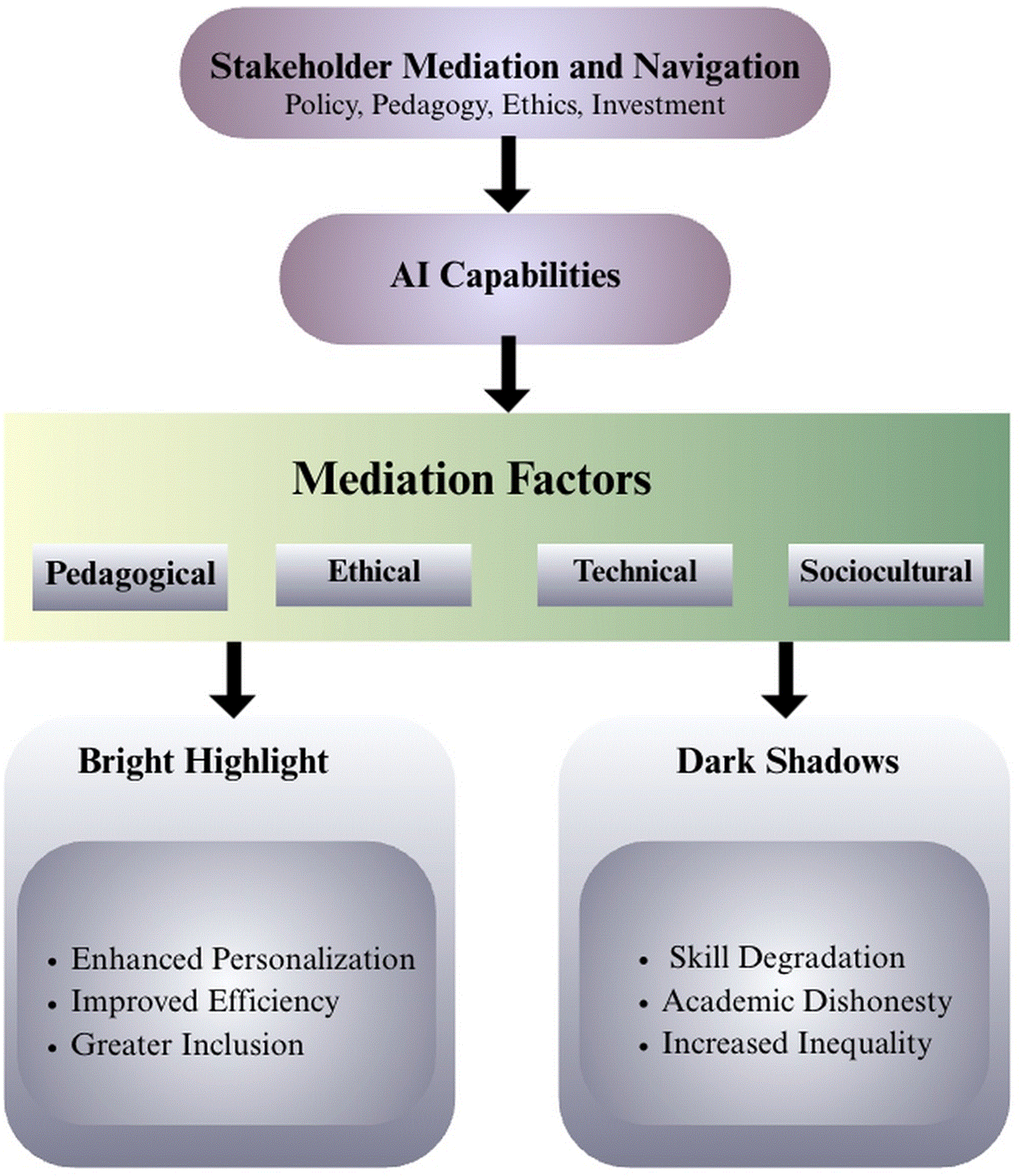
Figure 2. A conceptual framework illustrating how the outcomes of AI integration are mediated by pedagogical, ethical, technical, and sociostructural factors.
Strategic navigation by stakeholders is required to channel AI capabilities toward positive outcomes (Bright Highlights) and away from negative consequences (Dark Shadows).
This model is built on two fundamental axes derived from our analysis:
1. AI capability axis: This represents the main functionalities of AI tools, ranging from content generation (e.g., text, code, media creation via tools like ChatGPT) 58,97 and personalized teaching (adaptive learning paths and real-time feedback)4,49 to data analytics and knowledge structuring (e.g., via knowledge graphs for improved access to information and inference)55,88 and automation (of administrative and assessment tasks). 14,46
2. Mediation axis: This represents the critical intervening factors that determine whether a specific AI capability manifests as a “Bright Highlight” or a “Dark Shadow.” Our synthesis identifies four key mediators:
- Pedagogical mediation: AI can support personalised learning (a Highlight), but it can also lead to skill atrophy if it replaces critical cognitive processes (a Shadow).86,114 The outcome depends on whether assessments target the product or the process of learning.14,37
- Ethical and Integrity Mediation: The same content generation capability can be a tool for idea exchange and support (a Highlight) or a mechanism for plagiarism and academic dishonesty (a Shadow).46,62 This is mediated by the presence of clear policies on acceptable use, transparency, and authorship.2,105
- Technical and Quality Assurance Mediation: The analytical power of AI is moderated by issues of bias, hallucinations, and data quality. These technical flaws can perpetuate bias and spread misinformation if unchecked (Dark Shadows).43,81 Mitigation requires ongoing technical refinement and critical engagement by users.
- Sociostructural mediation: The benefits of AI depend on equitable access to technology and training. Without intervention, AI adoption risks exacerbating existing educational inequalities, creating a digital divide between institutions and students.11,38,53
The deployment of an AI capability must pass through the filter of these four mediators. Effective navigation through strategic policy, pedagogical redesign, ethical guidelines, and efforts to ensure equity channels the capability toward the positive pole, realising the Key Bright Highlights of improved personalisation, efficiency, and inclusion. In contrast, the lack of mediation allows inherent risks to dominate, resulting in Dark Shadows of ethical compromise, skill degradation, and increasing inequality.
This framework provides a sketch of a diagnostic process by first emphasising that the future of AI in higher education is not predetermined, but must be actively shaped by all stakeholders involved. It highlights the need for coordination across all stakeholders, including students, educators, institutions, and other policymakers, to steer the integration of AI toward its transformative potential while rigorously mitigating its inherent risks.
Discussion
The thematic synthesis presented in this study confirms that the integration of AI in higher education is essentially dualistic, characterised by a constant tension between significant Bright Highlights and profound Dark Shadows. The proposed Bright Shadow Integration Model provides an essential framework for understanding this duality as a dynamic outcome mediated by pedagogical, ethical, technical, and sociostructural factors. Although AI has transformed the education landscape in general, higher education institutions remain crucial in educating and preparing students for the future. In support of this, the role of educators has been described as shifting from knowledge transmitters to learning facilitators in the AI era.29,45 It has also been argued that pedagogical strategies require fundamental rethinking to support the development of new skills for the effective use of AI tools.60,111 Unless such strategies are formulated and implemented, educational inequalities will be amplified, issues related to data privacy and the risks of widening educational inequalities must be addressed despite the complexity of their ethical implications.23 Thus, risk of inequality is a key Dark Shadow mediated by sociostructural factors, such as institutional resources and policy. The rapid pace of AI development, which outstrips current regulatory and policy frameworks, will lead to uncertainties in governance and standardisation if not tackled.116 This governance gap is measurable rather than merely anticipated. An EDUCAUSE survey conducted in January 2026 found that 94 percent of higher education staff had used AI tools for work in the preceding six months, yet only 54 percent were aware of their institution’s AI policy.96 Regulatory frameworks are beginning to close this gap unevenly across regions. The European Union’s AI Act designates AI systems used in admissions and student performance analytics as high risk, with obligations applying from August 2026, while South Korea’s AI Basic Act, in force since January 2026, introduces comparable requirements for transparency and human oversight. This governance gap represents a critical lack of ethical mediation, which our framework identifies as essential for mitigating risks. Outright bans on tools such as ChatGPT have been criticised as placing students at institutions where such restrictions apply at a disadvantage compared with those where the tools remain available.34 Universities have instead been encouraged to focus on informing students about academic integrity policies and the consequences of academic misconduct.112 ChatGPT has also been reported to provide features that educators can use to design interactive lessons, improve teaching strategies, and adapt learning resources to diverse student needs.46 A broader shift from technology-based learning to learning with technology has also been described, in which AI support enables teachers to reduce administrative workload and redirect their focus towards lesson design and professional development.32 This perspective has been extended through a process-aware pedagogical model in which generative AI functions as a cognitive scaffold rather than a substitute for learning, combined with transparent, process-oriented assessment and institutional governance.101 In our view, these findings together illustrate the Bright Highlights achievable through effective pedagogical mediation, where AI empowers educators rather than replacing them, provided institutions also invest in the professional development needed to realise this potential.
Despite the benefits, the integration of AI into higher education also presents significant ethical, social, and educational challenges.5 An ethical threat is presented by the unacknowledged use of AI models to generate or contribute to assignments and papers in a way that is difficult to distinguish from human writing. This threat is a direct manifestation of insufficient ethical mediation. Closely related to this are the societal challenges posed by easy-to-use automated simulations of fundamental academic skills, which lack the breadth and depth of the genuine article. We also recognise technical challenges such as bias and hallucinations, which arise from the imperfect nature of the machinery used.
The challenges and benefits are very finely balanced. Clearly, the technical challenges will eventually be addressed. However, with the ethical and societal challenges, our view is that cooperation among all stakeholders must be fostered so that the academic community as a whole can work together to maximise the positive impact of AI whilst mitigating potential risks. That said, the perspective of students deserves some priority, since they are the ones in the best position to understand and reap the benefits of a technology whose speed of evolution is without precedent.3,18,20,27,65,110
For the framework to be of practical use, its consequences for institutional organisation need to be spelled out. We propose that stakeholders operationalise the two axes through dedicated working groups. An AI capabilities working group would focus on fleshing out the nature and scope of what the respective AI technologies can offer, whilst a set of mediation working groups, one for each of the four mediators, would evaluate the capabilities group’s output from their respective perspectives. A third, decision-making group would take input from both, representing stakeholder navigation, and would formulate policies that maximise the Bright Highlights and minimise the Dark Shadows. This proposal is consistent with, and further supported by, findings from a global Delphi study,31 in which governance experts across 22 countries independently converged on a comparable eight-part framework spanning academic integrity, ethical use, privacy, equitable access, AI literacy, integration strategy, human oversight, and institutional support, together with a structured process for keeping such policies current. In short, the contribution of this paper is not only a conceptual framework but a practical method for operationalising it. This direction is consistent with recent calls for research to focus on institution-wide strategies for the responsible integration of generative AI, including governance, pedagogy, assessment, and long-term organisational transformation.24
Limitations
This review has several limitations worth noting. First, the search strategy used exact-phrase matching restricted to title and keyword fields rather than full-text search, which was a deliberate choice to keep the corpus manageable but which may have excluded relevant studies using different terminology to describe the same concepts. Second, the review was limited to English-language publications, which may have excluded relevant scholarship published in other languages, particularly given the global nature of AI adoption in higher education. Third, while three major databases were searched (Google Scholar, ERIC, and Scopus), other databases such as Web of Science or IEEE Xplore may hold additional relevant literature not captured here. Fourth, the thematic classification into Bright Highlights and Dark Shadows, while conducted by three reviewers with disagreements resolved through consensus, remains an interpretive process; other researchers working from the same corpus might draw different thematic boundaries. Finally, as a conceptual review, the Bright-Shadow Integration Model synthesises existing literature into a novel framework but has not yet been empirically tested; validating its mediating factors against real institutional or classroom data is an important direction for future research.
Conclusion
AI technologies provide education with a myriad of opportunities for enhancing the outcomes and experiences of both learners and teachers, but also present significant challenges, a duality captured by our Bright-Shadow Integration Model. Most universities have yet to decide on the adaptation and implementation of AI tools in academic settings. Among the reasons are concerns for the possibility of AI to hinder traditional teaching, over-reliance on AI, and uneven familiarity with AI tools among stakeholders. Given the capability of AI tools to provide sophisticated personalised learning, educators need to consider redefining their roles and responsibilities from knowledge providers to facilitators, thereby acknowledging that AI is a valuable educational tool that will substantially influence modern education.16
Recent technological advances have the potential to revolutionise teaching and learning experiences by creating more responsive and adaptable learning environments. This transformation requires new pedagogical strategies to integrate AI effectively in the classroom.70 Our framework demonstrates that such strategies are essential for mediating AI’s capabilities toward positive outcomes. However, such strategies can only be implemented when the creative potential of AI in education is better understood. This aspect is yet to be comprehensively researched and reported.
On the other hand, we should bear in mind that remarkable as the capabilities of AI tools to generate text are, they are not a substitute for human teachers, as they lack humanlike interaction, emotional intelligence, empathy, etc., which human teachers can respond to and that can critically impact students’ motivation and performance.
Therefore, to maximise the teaching and learning opportunities AI tools provide while minimising their risks, we recommend a proactive approach in which all stakeholders benefit from clear guidelines and regulations governing how these tools are used.
In the end, higher education institutions need to be proactive with the integration of AI in academic domains, preparing students with the required skills and abilities to thrive in an AI-mediated future. In our view, outright bans on AI tools would be counterproductive to this goal, given the pace at which these technologies are becoming embedded in professional and academic life.
Universities need to engage in open dialogues with all stakeholders - employers, educators and students and establish policies that determine the ethical use of AI tools in steering the future of education. Their future lies in embracing AI as a tool for empowerment, not replacement. By consciously mediating its integration by making practical use of the Framework as described above, we can harness the Bright Highlights of AI while safeguarding the integrity of education, thereby preparing generations to meet the future demands of the job market, as many future careers will undoubtedly involve working with AI tools.
Ethics and consent
This study is based exclusively on the analysis of published literature and publicly available documents. No human participants, personal data, or identifiable information were involved. Therefore, ethical approval and participant consent were not required for this study.