Introduction
The growing food demand and the consequent pressure on natural resources have led to the need for modern societies to develop strategies for a more sustainable and socio-environmental-conscious lifestyle1. There is a global consensus on the need to reduce the consumption of animal protein2 and to develop alternative products of plant origin with a nutritious and sustainable profile.
However, food production remains one of the sectors with a higher carbon footprint3 and, to sustain the expected increase in production to support global food security, it is necessary to promote sustainable agricultural practices that imply less use of water, fossil fuels, and agrochemicals. Legume grains, as a protein source, have a more positive outcome on greenhouse gas balances and carbon footprint4 than animal protein, and their wider inclusion in agricultural systems can help in climate change mitigation5. They are natural soil fertilizers, reducing the use of synthetic nitrogen fertilizers; they contribute to breaking pest life cycles, resulting in a reduction in the use of phytochemicals; and they promote soil microbial diversity, improving soil quality6. Given these attributes, legumes production, utilisation, and consumption largely contribute to achieving the Sustainable Development Goals (SDG) 12 on responsible production and consumption, and 13 on climate action (https://sdgs.un.org/goals).
However, the technology associated with legume grain cultivation has been delayed and the incentive in the agricultural sector for their exploitation is still not enough. To overcome this ‘lock-in’, the importance of including and increasing the production/use of pulses has been highlighted in recent policy debates on global food security7. The Food and Agriculture Organization of the United Nations declared the year 2016 as the International Year of Pulses, to make both the food industry and consumers aware of the need to adhere to more sustainable practices8. In 2018, the European Commission issued directives to increase the production of legume grains as one of the key solutions to a sustainable future9. Currently, the new Farm to Fork Strategy for 2030 aims at achieving sustainable food systems and healthier diets, to combat biodiversity loss, tackle climate change and ensure food affordability10. These are goals that can be supported by increased legume grain production and consumption.
Generally, legume grains have high protein and fibre content and low glycaemic index11, and the bioactive compounds in their composition have been associated with the reduction of cardiovascular risk factors and metabolic health improvement12. Additionally, the increasing prevalence of celiac disease and gluten intolerance underscores the need for innovative gluten-free food products that meet nutritional and sensory expectations13. Celiac disease affects approximately 1% of the global population14, with many others adopting gluten-free diets due to gluten sensitivity or perceived health benefits. However, many gluten-free products currently available on the market lack essential nutrients, particularly fibre and protein, and often have inferior sensory qualities compared to their gluten-containing counterparts15. This has led to a growing demand for gluten-free alternatives that are not only safe for celiac patients but also nutritionally balanced and enjoyable to consume13.
Legumes are also affordable sources of essential micronutrients, contributing to achieving food security and improved nutrition, thus contributing to SDG216. Hence, the use of legumes as a plant-based protein source is increasingly in the spotlight, especially because their rich nutritional profile and functional properties are maintained when processed as flour, and even after heat treatment17. Concomitantly to improved awareness of healthy diets and sustainability, the number of legume-based alternatives being launched to the market has been increasing18. The legume grain-based snacking industry is a particularly growing market19, as convenience is one of the main drivers underlying consumer behaviour and preferences20,21. The main processing methods for snack production are extrusion, frying and baking19 and some examples of legume flour-based sweet baked products include chickpea flour muffins22, bean flour cupcakes23 and faba bean flour cookies24. Sweet baked products and snacks can be particularly attractive to children and adolescents, but these are usually characterised by a profile rich in energy and poor in nutrients, with high sugar and salt content25–27. The World Health Organization (WHO) has issued a policy statement recommending an urgent reduction in sugar intake28, and also WHO Member States have agreed to reduce the global population’s intake of salt by a relative 30% by 202529. Hence, in the last decade, the snacking industry has been pushed not only by policy directives but also by changing consumer preferences to adapt to healthier profiles. Collectively, these recommendations should be taken into consideration in food product innovation.
Among the vast diversity of existing legumes, lentils (Lens culinaris) have a fast preparation time, low phytic acid content and high folate and total phenolic content of antioxidant flavonoids30. The use of lentil flour in product development offers great potential due to its mild taste and its protein fraction, which has physicochemical and functional properties that allow product development with good sensory attributes31,32 and lower environmental impact, when compared to cereal-based counterparts33. Hence, different types of products have been developed using lentil flour, such as bread, crackers, pasta, yogurt, soups, or meat alternatives34–38.
Pancakes are one of the most popular snacks worldwide, usually consumed at breakfast, and are composed of high carbohydrate content and low fibre content39. Replacing the ingredients of traditional recipes, usually cereal-based, with bio-functional alternatives has been shown to improve the nutritional profile of different food products19, as well as their environmental impact40. Inclusively, a few studies have demonstrated that including up to 10% to 20% of legume flours in sweet pancake recipes improves the nutritional profile, without affecting the sensory quality41–43. However, these recipes include gluten, eggs and/or milk, not being suitable to all types of consumers.
The main hypothesis of this study was if partially replacing cereal flour with lentil flour in a sweet pancake mix would improve the nutritional profile (higher protein and fiber content, lower sodium and carbohydrate content) while maintaining or enhancing the sensory properties (appearance, texture, and flavour) compared to a commercial pancake mix.
Methods
Ethical statement
All study procedures were accomplished in full compliance with the Declaration of Helsinki on ethical principles for medical research involving humans and received approval from by the Institute of Bioethics of the Portuguese Catholic University (Ethics Screening Report 11/2017).
Upon receiving the invitation to participate in the study, the volunteers completed the written informed consent form that presented the objectives and procedures of the study. After the completion of the research, the files will be kept for five years, in case it is necessary to legitimize any information, and after this period, they will be destroyed.
Lentil-based pancake formulation
The formulation comprised, per 100 g of dry mix, 55 g of oat flour (Próvida, Portugal), 26.2 g of red lentil flour (Amisa, Portugal), 13.1 g of coconut sugar (Iswari, Portugal), 3.1 g of baking powder (Royal, Portugal), 2.1 g of baking soda (Margão, Portugal) and 0.5 g of powdered vanilla aroma (Vahiné, Portugal).
To each 100 g of lentil-based pancake mix, 125 mL of water and 7 mL of vegetable oil (Fula, Portugal) were added. The batter was divided in five portions and pancakes were prepared by frying in a non-stick pan. The commercially available product used as counterpart in the study was the ‘Easy Mix Pancakes’ from Muuglu brand (Spain), composed of rice flour, 37% of oat flour, whole cane sugar, cinnamon, salt, sodium bicarbonate and citric acid. Pancakes were prepared according to the manufacturer’s instructions.
Lentil-based pancakes nutritional evaluation
Lentil-based pancakes were prepared as described in Lentil-based pancakes formulation, with three replicates. The whole formulation was analysed for its nutritional content. Energy content was calculated following the EU regulation 1169/201144. Crude fat content was determined by acid digestion in 25% HCl and subsequent Soxhlet ex-traction with petroleum ether. The Kjeldahl method (ISO 1871:2009) was used to analyse total protein content, with the 6.25 conversion factor45. The enzymatic-gravimetric method from the AOAC 991.43 and AOAC 985.29 was used for determining the total fibre content46,47. Random replicates were performed to 7% of the analysis by a credited laboratory that follows standard, verified, and certificated protocols, and that regularly works with industry.
Participant recruitment
The study was conducted in the city of Porto (Portugal), and overall data collection, participants’ assessments and dietary interventions took place at the Faculty of Biotechnology of the Portuguese Catholic University (ESB-UCP). Volunteers were recruited at ESB-UCP, as well as at the university campus neighbouring areas, via common communication channels, such as e-mail networks, social media, flyer distribution, poster affixation and word-of-mouth. Subjects were screened according to general eligibility criteria: male or female individuals older than 18 years old; healthy, with no severe food allergies or food intolerances; with no severe chronic inflammatory, infectious, endocrine, or metabolic diseases, including gastrointestinal disorders; not pregnant or breastfeeding. The study involved 90 untrained participants (72 women, 18 men) aged between 18 and 56 (mean = 29.1, standard deviation = 9.7).
Sensory analysis
A quantitative blind affective test was performed on the 27th of March of 2018. No ingredient information was provided to the participant, allowing to establish a baseline preference rating in comparison with a similar commercially available product. Samples were encoded using three-digit numbers and presented simultaneously but in randomized order per participant. The lentil-based pancakes were compared with an existing product and a nine-point hedonic scale was used to indicate the degrees of acceptance from ‘1 = dislike extremely’ to ‘9 = like extremely’ of appearance, texture, flavour and overall appreciation. Both pancakes were served warm and a chocolate topping was provided to the participants.
The sensorial analysis questionnaire included full information explaining the purpose of the experiment and the procedure followed, to be read prior to taking part in the experiment, together with an informed consent form. Questionnaires were developed according to methodologies previously established at ESB’s Sensorial Platform and were distributed in Portuguese.
The participants were asked to rate from ‘1 = completely disagree’ to ‘5 = completely agree’ the importance of different factors when purchasing food products. The questionnaire also included questions regarding the willingness to consume the pancakes if available at the market. A blank copy is provided as extended data48.
Statistical analysis
Mean comparisons on an error probability level of P < 0.05 were calculated using unpaired t-test on GraphPad Prism 8 version 8.4 for macOS X (GraphPad Software, La Jolla, CA, USA).
Results
Nutritional analysis
The composition of the cooked lentil-based pancake mix developed in this work (Figure 1) was obtained by laboratory nutritional analysis. The nutritional value of the commercial pancake mix was taken from the information available on the brand’s website (Table 1).
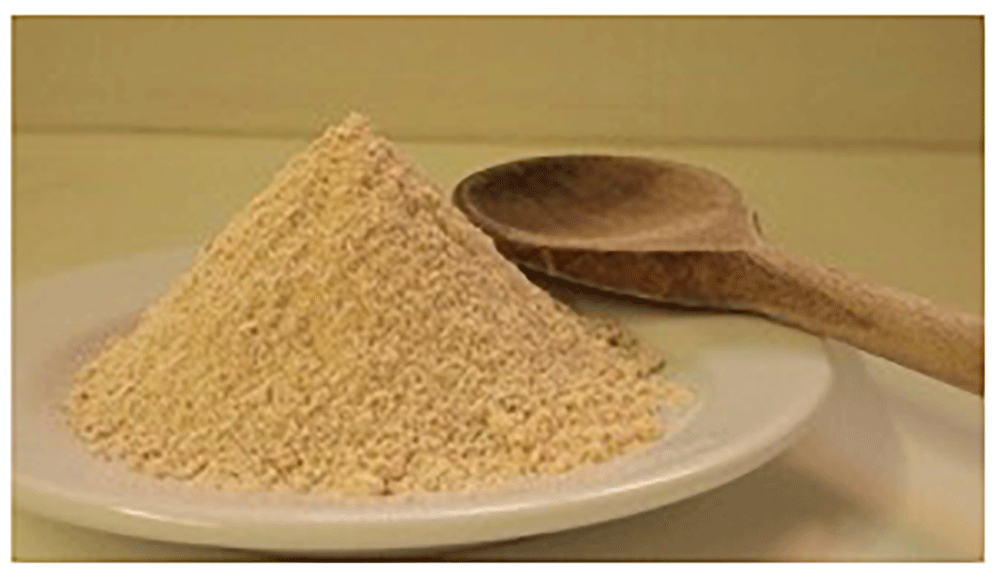
Figure 1. Dry mix for lentil-based, sweet pancakes preparation.
Table 1. Energy, total fat, carbohydrates, protein, total fibre and salt content of 100 g of lentil-based and commercial pancakes, prepared according to the instructions.
| Nutritional composition | Lentil
pancakes | Commercial
pancakes1 |
|---|
| Energy (kcal) | 211 | 208 |
| Total fat (g) | 5.8 | 3.8 |
| Carbohydrates (g) | 34.4 | 36.5 |
| Protein (g) | 7.5 | 5.2 |
| Fibre (g) | 4.3 | n.a.* |
| Sodium (mg) | 100 | 400 |
The energy content of the two products was similar, with 211 kcal per 100 g of lentil-based pancakes versus 208 kcal per 100 g of commercial pancakes. The carbohydrate content was lower in the lentil-based mix, with a total of 34.4 g per 100g.
Regarding protein content, the lentil flour pancakes had 1.4 times more protein than the commercial formulation, corresponding to 14.2 % of the product’s total energy value (Table 1).
Although no information on the fibre amount of the commercial pancake mix is provided, the lentil flour pancakes had a total of 4.3 g of fibre per 100 g of product. The sodium content in lentil flour pancakes was four times lower when compared to the commercial formulation (Table 1).
Sensory analysis
Of the 90 participants in the study, 71% were regular consumers of pancakes. Participants also responded to the most frequent form of pancake consumption: 71% prepared them at home, using the individual ingredients; 47% consumed pancakes only at restaurants, and only 6% used premade dry pancake mix for preparation at home49.
The importance given to different factors when purchasing this type of product was evaluated (Figure 2). The participants identified as the most important factors that the product should have good flavour, good texture, and an easy and quick preparation method. The least important factors were to be low in calories, rich in protein, and have low-fat content.
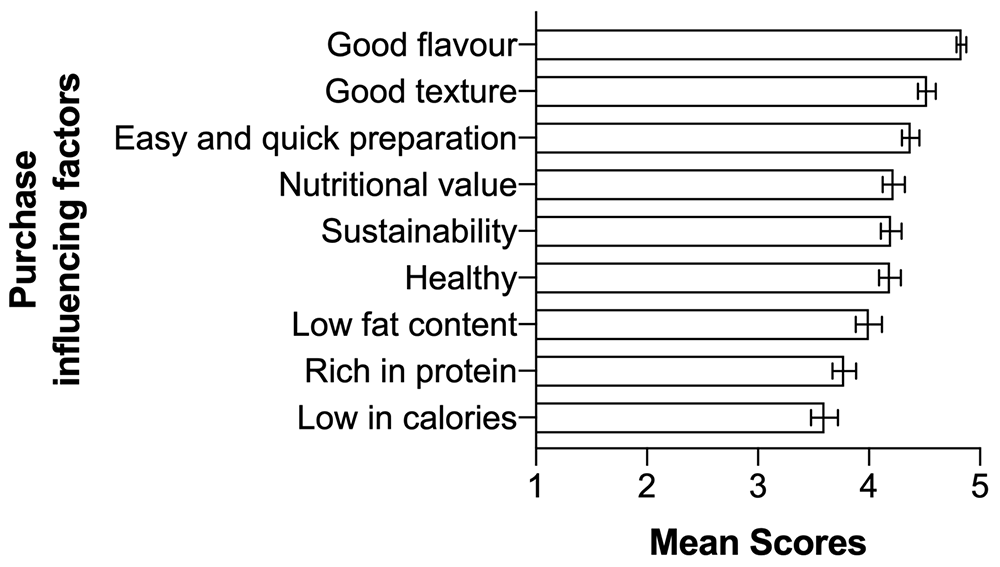
Figure 2. Mean scores attributed to different purchase influencing factors regarding pre-made pancake dry formulations from ‘1 = completely disagree’ to ‘5 = completely agree’.
Data are means and SE of 90 ratings.
The mean scores of sensory characteristics for lentil flour pancakes and the commercial formulation are shown in Figure 3. The results for the appearance attribute were similar in both products (median = 7). Texture and flavour had significantly higher scores in lentil flour pancakes (Figure 1), 28 % (P < 0.0001) and 22 % (P < 0.001), respectively.
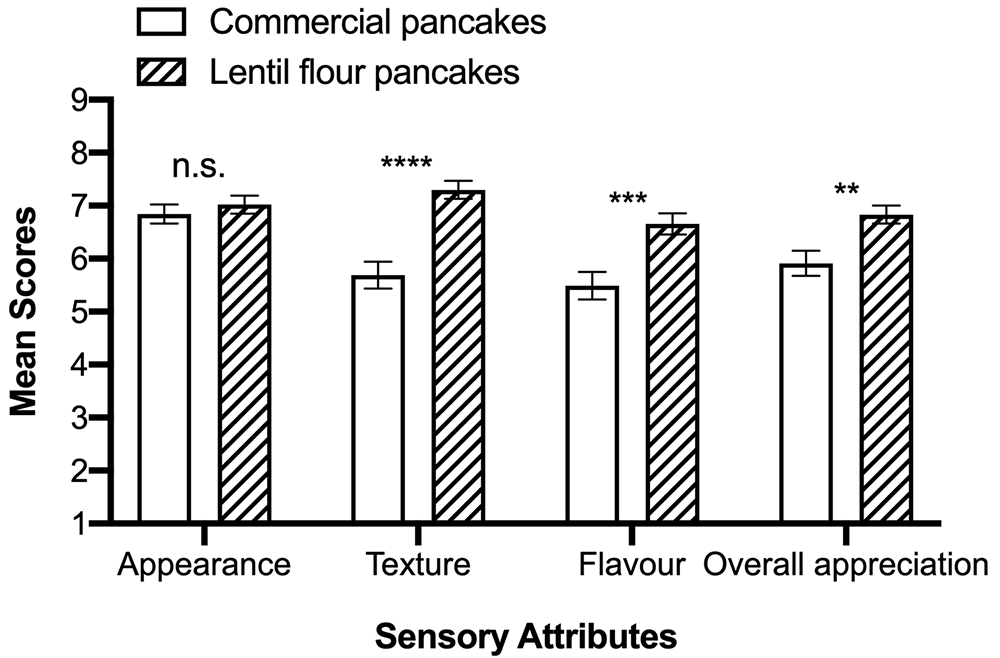
Figure 3. Sensorial analysis mean scores attributed to appearance, texture, flavour and overall appreciation of lentil flour pancakes vs. commercial formulation.
The assessment was based on an anchored nine-point hedonic scale, from 1 = dislike extremely to 9 = like extremely. Data are means and SE of 90 ratings. Significant differences between pancake formulations are indicated at ** P < 0.01, *** P < 0.001 and **** P < 0.0001.
The overall acceptance of both products had statistically significant differences, where the median of the commercial formulation was 6 and of the lentil flour pancakes was 7 (Figure 2). The lentil flour pancakes had a significantly 15% higher score on overall appreciation than the commercial formulation (P < 0.01).
Willingness to consume influencing factors
The participants of the study were asked about their willingness to consume the product if available at the market, with a convenient price and preparation method (Table 2). The majority of the participants responded with ‘4 = probably would consume’ for the lentil flour pancakes, while for the commercial formulation, most respondents answered with ‘3 = I have doubts if I would consume or not’.
Table 2. Willingness to consume the products if available at the market, from ‘1 = certainly would not consume the product’ to ‘5 = certainly would consume the product’.
| Lentil pancakes | Commercial pancakes |
|---|
| Mean | 3.77 | 3.11 |
| SD | 1.01 | 1.29 |
| P-value | 0.0002 |
Discussion
Conventional snacks, especially those targeted at younger consumers, are usually associated with high fat intake25. Here, total fat was 1.5 times higher in the lentil-based pancakes when compared to the commercial formulation (Table 1). However, high-fat products usually contain 13 g or more of total fat per 100 g of product50; here, 100 g of lentil-based pancakes had 5.8 g of fat, corresponding to 7.4 % of fat daily intake of adults and children. The recommended portion of each pancake is 20 g and, although this formulation cannot be considered low in fat (low-fat foods must have less than 3 g of fat per 100 g of product), it has a moderate amount of fat51. Moreover, the lentil flour pancakes can be considered as a source of protein51. The addition of legume grain flours to baked products has oftentimes the main goal of increasing protein content20 although, in the case of lentil flour, it may also impact structural properties and protein digestibility52. Current animal-based protein intake among European adults is twice the global average, being important to promote alternative protein sources, with lower health and environmental impact12,53. This pancake-ready mix provides a balanced protein amount and nutritional profile and can be incorporated as a healthy and sustainable food choice. The developed product can also be considered high in fibre, as it meets the recommendations made by the EU standards51 which require a minimum of 6 g of fibre per 100 g of sample for high fibre claim in food products. The intake of fibre is usually associated with several diseases’ prevention, such as type 2 diabetes, heart disease, and certain types of cancers, and modulates gut microbiota53. As traditional pancake recipes have low fibre content54, the addition of lentil flour to this formulation leads to a nutritional and functional change in the final product that may have a positive effect on consumers’ purchasing options. According to Regulation (EC) No 1924/2006, products with morels than 0.12 g of sodium per 100 g of product are considered ‘low sodium’. Salt is frequently added to baked goods, as it significantly affects flavour and texture, often resulting in ‘hidden-salt’ consumption55. The rich mineral content of lentils may help reduce sodium content while maintaining pleasant sensory properties, which may be attractive to hypertensive and health-conscious consumers. Furthermore, the use of oat and lentil flours, both gluten-free, makes this product relevant not only to individuals with celiac disease (about 1% of the world’s population) but also to the growing number of consumers that are adopting gluten-free diets56.
In the present study, only a small percentage of panellists declared that generally consumes store-bought dry pancake mix. This may be representative of the fact that, in Portugal, pancake consumption is a relatively recent trend and not widely adopted. On the contrary, according to U.S. Census data and Simmons National Consumer Survey (NHCS), circa 207 million Americans used store-bought dry pancake and waffle mixes in 202057. This is an important market worldwide, especially gluten-free mixes, that fulfil not only convenience but also health-related demands58.
Regarding the purchasing factors for this type of product, characteristics related to the product sensory attributes and convenience had an increased level of importance, while nutrition factors had the lowest. Additionally, given the positive impact of legume-based foods on the environment, it is important to note that ‘sustainability’ was ranked in the 5th position of the purchase influencing factors listed in the sensorial analysis questionnaire (Figure 2). This result is in agreement with recent studies that show that the ‘environmentally sustainable' factor is yet to be on the top of the motivation factors for consumers in Europe to change dietary habits59.
In terms of the impact of the addition of lentil flour to baked products, some studies report that it may lead to a darker colour and higher density in the products (e.g., bread)52, and a substitution level of wheat flour by lentil flour at 10% was considered optimum to avoid negative sensorial attributes34. A proportion of 26% of lentil flour was used in the lentil-pancake formulation, without a negative impact on appearance, texture, or flavour. This shows that this type of sweet baked product may be a good vehicle to introduce pulses in general diets and that can be attractive to younger consumers. Overall acceptance scores of different sweet baked pulse-based products ranged between 5.15–6.52 for chickpea flour-based muffins22 and 5.9–7.2 for red kidney bean-based cupcakes23,60. These results show that adding pulses flour as a technological innovation to new food formulations can be positively accepted by consumers.
The study has several limitations, primarily the absence of physical and technological evaluations (e.g., texture, volume, colour, and specific volume) of the developed products. While the focus was on nutritional and sensory aspects, these technological properties are crucial for assessing the product’s potential for mass production and long-term consumer acceptance. Additionally, to support its classification as a functional food, the new food formulation would benefit from a more detailed nutritional analysis, including understanding the antioxidant potential and the antinutritional properties, to understand if using the legume flour could have any disadvantageous outcome and if it would be recommendable to include a thermal flour treatment prior to the mix formulation. Future research should address these factors to offer a more comprehensive assessment of the product.
These results show the potential of legume grain-based foods innovations in breaking some of the barriers of the consumers towards low pulse consumption, such as lack of recognition of pulses’ nutritional value and long cooking time61. Consumer acceptance of legume grains as alternative proteins is increasing, especially in light of their health and environmental benefits20. However, they are still generally perceived as less convenient and tasty18,61. There is common sense that current marketplaces have a growing demand for plant-based protein and that the food trends are in line with the need for more climate-positive products and protein alternatives20.
Conclusions
This work presents and evaluates an innovative product, with a partial replacement of cereal flour with lentil flour. The goal was to obtain a gluten-free, vegan sweet bakery product with a nutritionally improved profile, well accepted sensorial profile, that the panellists admitted to being willing to buy if available on the market. Legume grain flours inclusion in food product development, inputs health, and environmental benefits.
More nutritious and environmentally friendly products are current marketplace demands and food innovation is one of the possible levers to promote the necessary changes in society’s habits and perceptions to achieve the SDGs. Hence, it would also be of interest to perform a life cycle analysis to the products, showing any potential gains of using legume flours instead of the cereal counterparts.
This work demonstrates that product development with legume-grain flours may be accomplished using simple processing methodologies, with low technological investment requirements, which could be a lever to facilitate the promotion of such products’ inclusion in value chains by the industry.