Plain language summary
The paper investigates the equality of men and women in connection with the implementation process of charging infrastructure. The User-Chi project is a reference to this research topic. The User-Chi project creates solutions for user-friendly e-mobility in the area surrounding the Mediterranean and Scandinavian Trans European Network corridors. During this creation process, it became necessary to learn more about the equality between men and women in connection to the charging infrastructure. The paper seeks to offer a summary about specific differences in user needs between men and women and how this knowledge can be integrated into the design of charging infrastructure. When thinking about the equality and inequality of men and women especially in infrastructure, the current system of electric mobility is not ideal for women. The paper offers recommendations that make it easier for women to access electric mobility.
List of abbreviations
CLICK Charging infrastructure Location concept development kit
ECI Electric Charging Infrastructure
EU European Union
EU strategy EU Gender Equality Strategy 2020–2025
INDUCAR Inductive Charging for e-CARs
INSOC Integrated Solar DC Charging
TEN-T Mediterranean and Scandinavian Trans European Network
USER-CHI Innovative solutions for USER centric Charging Infrastructure
Motivation and scope
The current Gender Equality Strategy 2020–2025 of the European Union (EU) states that gender equality is a "fundamental right".1 But despite these significant advances over the past few decades, the EU strategy also points to slow progress.2 A deeper view of this topic in mobility planning is therefore necessary.3 This paper investigates aspects of gender4 equality in the implementation process of charging infrastructure with the USER-CHI project as reference. The USER-CHI (Innovative solutions for USER centric Charging Infrastructure) project co-creates smart solutions around the Mediterranean and Scandinavian Trans European Network (TEN-T) corridor (see Figure 1). The project is funded by European Union’s Horizon 2020 research and innovation programme and aims to promote and expand the e-mobility market. During the project, different products are developed and tested, which seek to increase the user’s acceptance and accessibility of charging infrastructure. The testing sites are located in the Metropolitan Area of Barcelona (ES), Berlin (DE), Budapest (HU), Rome (IT) and Turku (FI).5 The tested products are subsequently evaluated and improved in an exchange process organized as site visits and regular meetings for the so called fellow cities, which in return may benefit from the innovative products to improve their respective e-mobility plans.6 Looking beyond the results from the demonstration sites in the mentioned project countries, User-Chi paves the way for user-friendly e-mobility solutions that could be replicated in other locations across Europe.
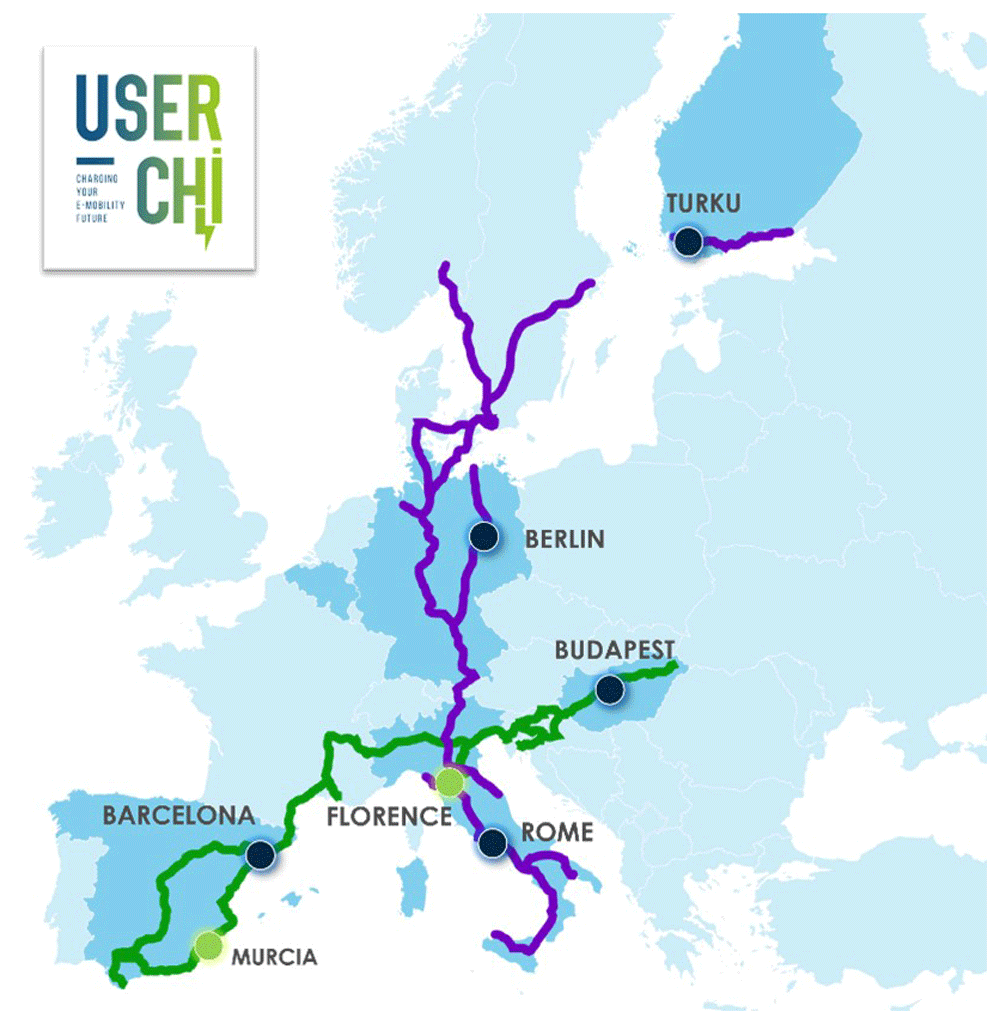
Figure 1. The project cities along the TEN-T corridor.
Source: USER-CHI Project.
In this regard, the need for further information to recognise gender bias throughout the implementation process arose between several city partners. According to their concerns, there is a gap that must be filled in gender bias when planning and implementing the charging infrastructure for a user-friendly e-mobility.7,8
Addressing this need, the paper combines insights from the project’s product development and a literature review on documented differences in society as well as presumable effects of this gender bias transferred in infrastructure and mobility planning. It aims at providing knowledge about gender-specific differences in user needs which then can be incorporated into the design of charging infrastructure. According to the authors' understanding, the discussion on gender equality encompasses all genders. However, due to the limitations of available datasets, literature and state of research9–11 the authors focus on differing patterns between male and female users only.
To this aim, the paper is structured as follows: the methodological approach is presented first, followed by a section discussing the state of the art regarding of the gender bias in literature as well as in project practices in the mobility and transport sector effect on future developments Finally, conclusions are drawn from the analysis and solution mechanisms are offered, which find their way into the USER-CHI project in a specific and practical way.
Methods
Study design
The paper intends to provide an overview on gender bias in literature and the mobility projects as well as to enable approaches which help to design an inclusive planning and implementation process for the full-scale expansion of the electric charging infrastructure (ECI). Therefore, a dual approach is applied: First, extensive literature research and meta-analysis of data to a large extent provided by USER-CHI partner IBV were conducted in order to find evidence concerning the existence of a gender bias in mobility. As previously stated, the presumable effects of gender bias in literature and differences in the meta-analysis of the project data set were transferred in the field of infrastructure and mobility planning, due to the limitations of available research. To address this research gap, the review gives implications of gender biases in infrastructure planning. Subsequently as a second step, conclusions were drawn from the results of the research and analysis which were then directly applied to the currently developed products of the USER-CHI project, intended to provide recommendations to overcome this bias.
Data collection
This study used data of results from D.1.1: User requirements for USER-CHI solutions12. This report presents the work performed by USER-CHI consortium members from February 2020 to October 2020, to define the users’ needs and expectations related to project products. The data set used for this paper was collected with a mix-method approach by one partner of the consortium (IBV) during this time. IBV used for the end user insights the qualitative method of field diaries13. These field diaries are an open questionnaire that can be answered online by end users of electric charging infrastructure in the cities of the project consortium. Each city was asked to contact a total number of 15 end users with different profiles (long range user professional, low range user private, LEV user and long-range user). IBV used two standardized online questionnaires as the quantitative method14 to generate their data set. The maximum number of questions was limited to 50 questions per questionnaire. To reach enough required participants in the selected six countries15, IBV used the SurveyMonkey database. The database includes options to select users who meet specific requirements. In total, the questionnaire almost always achieved a sample size objective of 100 users per city for every user profile, summing up a total number of 1,800 participants16. The data set was then made available to the researchers.
Literature review
The literature research follows these preconditions: the initial research period started in June 2022 and lasted till August 2022. It was conducted as a keyword search in title, abstract and full text using key words as “gender equality”, “gender discrimination” and “gender bias” in connection with “road infrastructure”, “mobility sector” and “e-mobility”. The databases used include established literature databases such as google scholar, academia.edu, sciencedirect.com and researchgate.net and focused geographically on scientific papers from Europe and Northern America. The main focus of the literature overview is to define and describe gender bias in e-mobility, focusing especially on the charging infrastructure. In conclusion to this procedure, the authors analysed a total of forty sources. In kind of a pioneer position, the literature overviews referred to gender in overall mobility and infrastructure to give a first overview of an underrated topic.
Analysis
The literature overview regarding gender bias in mobility was followed by a meta-analysis of data. The data taken into account encompass results of USER-CHI partner IBV's survey about user requirements for charging infrastructure, as well as data from statistical offices such as Eurostat17. In a second step, conclusions from the research were identified and collected. according to the following, newly formed key factors: mobility patterns, financial aspects and security aspects. Under these key factors, identified aspects of gender bias in charging infrastructure were concluded. Parallel to that, the products still being developed in the USER-CHI project were taken into consideration in order to identify eligible products to link the specific theoretical conclusions directly with the practical tools. Within this step, the authors won’t reproduce stereotypes. There are gender differences in mode choice, and it can be proved that these are linked to several structural gender inequalities in society (see chapter Foundations: Aspects of gender (in)equality and linkage to transport infrastructure). The link to practical tools and products of USER-CHI tries to do a first step in breaking existing structures instead of reproducing. In summary, bridging literature research results and data analysis with the USER-CHI products will allow recommendations for more diversity in design choices of charging infrastructure, thus contributing to the goal of an inclusively user-centric charging infrastructure landscape in Europe.
Results
Foundations: Aspects of gender (in)equality and linkage to transport infrastructure
The current EU Gender Equality Strategy 2020–2025 (EU strategy) states that “gender equality is a core value of the EU, a fundamental right and key principle of the European Pillar of Social Rights”.18,19 But whereas promoting that significant progress has been achieved in the last decades, the EU strategy also states that “no Member State has achieved full gender equality and progress is slow”.20 This assessment addresses a potentially very broad set of impacts and topics which are well-researched, globally as well as on the EU level. The key objectives21 of the EU strategy respond to the main documented inequalities and their direct and indirect impacts:
Gender-based violence: According to a 2014 report based on interviews with 42,000 women across the 28 Member States of the EU, one in three women (33%) had experienced physical and/or sexual violence since she was 15 years old.22,23
Gender stereotypes: Stereotypical expectations based on fixed norms for women and men, girls and boys that strongly contribute to the gender pay gap.24
Gender gaps in the labour market, inequal participation across different sectors of the economy: More women than men work in low-paid jobs and sectors, and in lower positions.25 With regard to the all-over employment rates, although a new record low of the gender employment gap was reached in 2021 when it dropped below 11 percentage points, the proportion of working-age men in employment still considerably exceeds that of women.26
Gender pay and pension gaps: On average, women still earn less than men; lifetime cumulative gender employment and wage gaps lead to larger pension gaps, so older women are at higher risk of poverty than men.27
Gender care gap: Women's decisions are often based on jobs, how they work, and whether and how they share these responsibilities with their partners. This is a particular challenge for single parents, most of whom are women, and those living in remote rural areas, who often lack supportive solutions. Women also carry a disproportionate burden of unpaid work, which accounts for a large share of economic activity.28
Gender imbalances in decision-making and in politics: Despite recent progress, women’s under-representation in decision-making positions in Europe's businesses and industry persists.29 For example, out of all EU27 national members of the governments or political executives dealing with transport, 78,1% are men and 21,9% are women.30
In general, gender inequality can be considered as deeply rooted in the structure of many areas of western societies such as the organisation of marriage and family as well as work and the economy, politics, religion and even the language itself.31 In order to achieve the goal of gender equality, namely ensuring the equality of men and women on all possible levels,32 it is considered a necessity to strive for social and not individual solutions.33 Whereas the EU strategy only so much as brushes the surface on the topic of gender-related (in)equalities in the mobility and transport sector,34 research based on data from Finland, Norway, Sweden, Denmark, Germany, India and Singapore suggests that there are gender differences in mode choice and that these are linked to a number of structural gender differences in mode choice and that these are linked to a number of structural gender inequalities in society – such as the gender power gap (decision-making gap), gender work participation gap (gender employment gap), gender pay gap, and unpaid care work gap.35
Moreover, these structural differences are found to have become infrastructural ones: They influenced the design of transport systems as a whole, prioritising the individual commute, and failing to incorporate planning and design for other transport patterns and needs.36
Gender bias in today’s transport and settlement infrastructure
In recent years, researchers in the field of general infrastructure realised peculiarities of the different genders as individual realities which are worth being included as a parameter in studies. Past planning and implementation processes of projects in these fields lack sufficient consideration of diverse transport needs. This conclusion is not a new one: As early as in the 1960s, the built-in effects of urban planning after the Athens Charta (CIAM 1933) with its promotion of the “functional city” – a city which separates the functions of dwelling, working, recreation, and transportation37 - were criticised for their shortcomings. Thus, German psychoanalyst Mitscherlich analysed in 1971 how city planning favoured only the able-to-work-adult.38 To his analysis, cities planned in this sense presented themselves inconsiderate to the tendencies of more women entering the workforce while inhabiting the role of mothers, lacked playgrounds for children as well as sport areas for adolescents, and in general spaces for friendships and neighbourly human behaviour.
From these early critiques, there is a continuity to more recent findings that the average city structure particularly benefits the male population of a city as most women take shorter and more frequent trips due to gender-typical distribution of responsibilities in the household.39 To this day, the existing infrastructure and its geographical distribution can only be described as invariably unequal. The circumstance of the inequality alone is to be considered as problematic, even more so considering that general infrastructure is deemed the central driver for social advantage and disadvantage. What may create connectivity for some will on the other hand lead to the production of barriers and boundaries for others.40
This lack of consideration of multiple variants of mobility patterns in the transport infrastructure can also be framed as an effect of gender bias. The term “gender bias” is - according to the European Institute for Gender Equality - generally understood as “prejudiced actions or thoughts based on the gender-based perception that women are not equal to men in rights and dignity”.41 Although using the wording “gender bias” or “gender inequality” which might be understood in a broader sense of the meaning and could seemingly apply to all genders, it is mostly women being disadvantaged by the phenomenon.42 According to a definition by Health Canada (2000), “Gender Bias is the root of gender inequalities and falls into three broad problem types:
Over-generalisation—adopting the perspective or experience of one sex and applying it to both sexes;
Gender Insensitivity - ignoring sex and gender as important variables; and
Double Standards - assessing the same or essentially the same situation, trait or behaviour differently on the basis of sex.”43
However, the increased awareness of the gendered perception of infrastructure also led to the implementation of several features aiming at capturing the specific needs of the caring person. For example, one of those projects are so-called women and family car parking spaces in Germany44 and China45. These parking spaces are located near stairs, elevators or exits and are furthermore well lit to take up women’s needs in parking lots to be safer, easily accessible and spacious, especially when women are accompanied by older people or children.
Whilst the general infrastructure and mobility sector is able to present a noteworthy amount of research dedicated to immanent gendered parameters, there are certain areas within the overall research which fail to provide specific data concerning a potential gender bias in its conception.46,47 This particularly involves the ECI for cars and other electric vehicles. One reason for the lack of specific data may be the only recently emerged need for a full-scale expansion of the ECI. It can be assumed that this development is related to the registration figures for electric cars, which have also only increased in some cases by leaps and bounds in recent years.48
The lack of recognition of female needs which is observed in the general infrastructure sector is, as shown, intertwined with the effects of gender bias in the transport sector, especially concerning female car usage and ownership. In general, women are less likely to use a car in their everyday life compared to men.49 Furthermore, women are more likely to travel as passengers in a car than actually driving the car.50 Regarding the issue of ownership, it is estimated that by only 70.4% women are less likely to own a car whereas 79.8% of men are considered car owners. As a consequence, this leads to the understanding that overall women are driving shorter distances and therefore have less driving experience than men.51 The assumption is furthermore supported by the fact that women are more likely to use public transport and walk whilst the majority of men travel by car and motorcycle.52
The following section uses key factors to illustrate selected aspects of gender bias in the transport and mobility sector. The selection of key factors is based on the claim to prove a potential gender bias on as many diverse levels as possible. For this reason, the selection of the corresponding factors refers to those that can be transferred to the specific segment of individual electro mobility and the charging infrastructure in addition to the overarching mobility sector. Such key factors are the different mobility patterns of men and women, the differences in financial set-ups of women and their inherent security concerns.
1. Key factor: different mobility patterns. Individual mobility patterns are highly influenced by gender. Typically, men display longer and more linear travel patterns whereas women often travel shorter distances within more complex travel chains.53 This includes women travelling during peak-off hours as well as experiencing various start and stop stages.54 Those diverse mobility patterns can be considered as gendered mobility patterns which appear to be a result of the role distribution of men and women within the labour market as well as the family.55 A phenomenon directly interacting with this finding is the concept of mobility of care. According to this understanding, women are considered the primary care givers for the family, meaning that they are responsible for domestic chores as well as the care of dependent children, elderly relatives, and the sick.56 Among such chores are for example grocery shopping and bringing children to school. As a result, women often undertake a smaller number of work trips compared to men, whereas they generally travel more often due to the combination of work and care trips as illustrated by statistics from several European countries focusing on the purposes of trips differentiated by gender.57
2. Key factor: financial aspects. Women are considered to be less likely to own or use private electric vehicles as well as car-sharing options.58 According to the IBV survey conducted for the USER-CHI project, such a discrepancy can amount to only 27,4% of electric vehicles are owned by women in contrast to 72,6% by men.59 Even though they are considered to be more sensible towards environmental issues.60
There appears to be several reasons explaining this reality. First and foremost, women tend to be subject to financial contingencies due to the existing income gap between men and women meaning that women earn less than men whilst doing the same work.61 Currently, the gender pay gap in the European Union amounts to 14.1% which leads to women earning 86 Cents for every Euro earned by a men.62 As a result, women are often negatively affected in their career development and labour income and therefore are less likely to be willing to pay for better transport services or access to private transport modes.63 But not only the gender pay gap causes financial restraints for women. In 2020, 77.2% of men were employed all over Europe while the employment rate of women is only 66.2%.64 Furthermore, women are more likely to be employed in part-time jobs as studies focusing on the 27 EU-countries as well as Switzerland, Norway and Iceland show.65 Nearly half of all women employed in part-time jobs name “family or personal responsibilities” as the main reason keeping women for their type of employment. On the other hand only 11.7% of men are employed part-time for the same reason.66 In addition to that, the employment catchment area that women have access to is being restricted due to the complex areas of responsibilities imposed on many women, leading to a so-called double working day as well as the mode of transportation most women use which includes primarily public transport instead of privately owned cars.67
Another reason which can be used to explain why women are less likely to privately own an electric vehicle is the public perception of the ownership of a car and the influence of it by reports of the media. In general, cars are displayed as a necessity for men to care for their families. It is often thereby connected to the image of a successful and powerful man driving a car that “completes” him as a person.68 By focusing on men instead of all genders as a target group for car ownership, it may could be concluded that women could believe that the car is not essential in their reality of lives.
Finally, the financial situation of single parents, most of them being single mothers, may provide another explanation for the small number of women owning a private electric vehicle. This is due to the fact, that especially single mothers tend to have the highest risk of poverty69 leading to the incapability to pay for certain types of mobility, especially individual transport.
3. Key factor: security aspects. In general, there are two types of risks which have to be considered when talking about security aspects concerning women in the mobility sector. One is the risk of accidents and the other is the risk of experiencing sexual harassment.70 Women are considered to be disproportionally affected by the design of public spaces causing them to develop avoidance strategies when going outside at night or even to stop travelling at all.71 When analysing the risk of accidents related to the travel behaviour of a women, it is important to notice that women are often considered to be better drivers than men.72 This assumption is derived from the hypothesis that they take fewer risks when driving. For example, young men are at a significantly higher risk for road traffic injuries as they are believed to be more likely to engage in aggressive driving behaviour. Furthermore, they are found to be more prevalent than women under the influence of alcohol and drugs.73 In general, the predominant amount of fatal car accidents is caused by men.74 Women on the other hand are considered to be more observant as well as attentive to other road users therefore causing fewer accidents.75 When taking into account the risk of experiencing sexual harassment, many women have developed several protection mechanisms in order to avoid these kinds of situations. In particular, these different strategies relate to the travelling at night times as outdoor crime rates, especially concerning sexual offences, increase at nightfall.76 Therefore, women tend to travel less at night due to their fear of violence and even due to gender roles restricting some women of leaving their home at night time.77 Likewise, women tend to choose routes which seem to provide the highest level of safety possible, which causes them to act more carefully in general when in traffic.78
Advantages from implementing gender neutral charging infrastructure
The recognisable gender bias in the general mobility sector as well as individual electro mobility and charging infrastructure makes the system itself vulnerable to disadvantages. It is assumed that a system which is to be regarded as a one-sided system due to gender bias must also be described as an inefficient system. The reason for this is that the system at best benefits parts and at worst fractions of the entirety. In this way, it can never be fully utilised. On the same basis, the system cannot claim sustainability.79
Conversely, various positive outcomes can be expected in pushing back gender bias in the electromobility and charging infrastructure sector. This requires the consistent application of the principle of gender mainstreaming. In principle, it is considered as the “(re-)organisation, improvement, development and evaluation of (…) processes, so that a gender equality perspective is incorporated (…) at all levels at all stages, by the actors (…)”.80 The concept was originally defined for the area of policy making, but its essence can easily also be transferred to other areas. Thoughtful implementation of the concept in the area of individual electromobility and charging infrastructure allows for efficient use of human resources and enhancement of women and men in view of different societal roles.81 Furthermore, it leads to better informed decisions in the planning and implementation process and therefore to a better assessment in general.82 Ultimately, the integration of the concept of gender mainstreaming raises awareness among the broader public thereby making the topic visible and is expected to change negative attitudes.83
Approaches and recommendations
Due to particular needs of women, which lead to specific characteristics influencing women’s mobility, electric cars do not appear to be the default solution.84 Therefore, the recommendations made should focus on the intention to make the usage of electric mobility more accessible for women and at the same time set the goal to a gender-neutral access to this type of mobility. Jane Jacobs showed an approach for the field of urban planning that could be transferred in its basic features to the planning of the charging infrastructure of electromobility. She writes that in the attempt to create diversity, it is necessary to include a “mixture of functions” in a neighbourhood, rather than separating areas in commercial, residential, and cultural spaces.85 This approach shall be considered as the baseline for the following recommendations.
In the following the conclusions previously drawn in this paper shall be applied to a specific project – the USER-CHI Project – in order to illustrate and incentivise approaches aiming at including women’s needs in future electromobility projects.
The USER-CHI Project focuses on the co-creation and demonstration of smart solutions around seven connecting nodes of the Mediterranean and Scandinavian-Mediterranean Trans European Network-Transport (TEN-T). Several of these solutions shall be presented in the follow-up, and at the same time approaches within the applications shall be proposed that represent a fundamental contribution to the integration of the special needs of women in the context of the development of an electronic charging infrastructure.
One USER-CHI product is the Charging infrastructure Location Concept development kit (CLICK86). This planning tool addresses mainly municipalities aiming at extending their charging infrastructure by using different data regarding the city and its districts such as demographic statistics and previous usage of electric vehicles. It is designed to provide recommendations of the position, amount, and preferable technology of future charging points in a certain area. The tool will be tested in a two staged implementation during the term of the project by the city partners. The tool will be accompanied by user support materials developed in the project, too, as well as by workshops. So far it is not clear, in which way CLICK recognises a possible gender bias in the demographic data set. Overall, there is a possibility to introduce gender equality in the planning tool, by including behavioural patterns and usage of electric vehicles in future adaptions of the algorithm. Such a planning and programming process should be designed to recognise and process gender sensitive information.
This could be achieved explicitly through the inclusion of gender-sensitive data within the four-stage CLICK application. Therein, step 3 (“feed data”) and step 4 (“get recommendations”) require addressees to feed gender sensitive data to the tool such as distribution of inhabitants regarding male and female or the number of families in the area. Apart from that, it can be further requested to characterise a certain neighbourhood as a socially advantaged or disadvantaged area. Finally, a variety of other criteria may be considered in order to receive recommendations as accurate as possible such as the amount of privately owned charging infrastructure; number of schools and kindergartens in the area as well as other facilities often visited by women due to phenomenon of mobility of care.
As a result, the recommendations provided should mirror the gender sensitive information by highlighting locations which either acknowledge specific security needs of women such as well-lit places for charging infrastructure as well as public places or places near entrances of buildings and residential buildings. On the other hand, women’s specific rapid mobility pattern needs to be taken into account when enumerating recommendations such as fast-charging stations in front of kindergartens or schools, shops, doctors’ offices and nursing homes. Furthermore, the recommendations for the location itself should adapt to the environment and its inherent conditions. An illustrative example may be to propose a collective e-bike charging station in front of park entrances or playgrounds instead of charging stations for cars to minimise traffic and thus avoid accidents and to additionally achieve a diversification of the mobility options.
Another product of USER-CHI, tested in Barcelona, which clearly takes up this point is INSOC87- Integrated Solar DC Charging for Light Electric Vehicles. This charging station is designed with solar panel roof for e-bikes and e-scooters as a solution combining charging, onsite production of renewable energy and theft-proof parking. Besides being a climate-friendly solution and representing multimodal instead of solely car-based mobility options, the product also refers to transport modes being more likely used by women. This is due to the special demands women are facing in the context of the mobility of care phenomenon. Therefore, the design of the charging point itself may contribute to reach more gender equality in the electric charging infrastructure. Such an inclusive design could include measures like roofed charging points, storage areas to enable unloading shopping without any difficulties and perimeter surrounding the charging point in cases where it is located near roads in order to hinder children from running out into the street. Furthermore, it could be advantageous to provide charging stations for cargo bikes with enough space between single charging points to move around the vehicle. Additionally, the installation of an emergency button able to trigger silent and loud alarms may seem sensible to increase the feeling of security of women. The explicit location of these charging stations could follow the recommendations previously mentioned.
Especially in terms of safety, the product INDUCAR88 - Inductive Charging for e-CARs – may recognise aspects increasing gender equality. The wireless charging solution will be aligned with the Machine-to-Machine communication technologies, to fully automate the identification, payment and charging operations. Therefore, it also sets an opportunity to improve the general feeling of safety in particular due to an alternative usage to cable charging. Furthermore, it could meet practical needs resulting from the previously mentioned specific needs due to women’s mobility patterns and in regard to mobility of care. INDUCAR aims to be less time consuming and reversely a more time effective method than conventional charging infrastructure, that could support women.
Finally, the Station of the Future Handbook89,90 has a high potential in combining all previously mentioned aspects in the development of the selected USER-CHI products. This handbook includes guidelines and recommendations to design the perfect user-centric charging station. The purpose is to accelerate the widespread usage of electric vehicles, encouraging users of different social groups and market segments to overcome existing acceptance barriers, and therefore providing viable business models to private stakeholders. It addresses CPOs, EMPs/MSPs and other private stakeholders of the electromobility field. On the one hand, it could raise awareness concerning the existence and specific circumstances surrounding gender inequality within the general transport infrastructure and accordingly charging infrastructure - especially the key factors listed above. On the other hand, it could provide guidance and recommendations regarding the creation of either public or private financing models for the use of charging infrastructure. Such financing structures could integrate reduced pricing systems for certain age groups given that there is an increased probability of old-age poverty among women. In addition to that, provisions for specific travel periods for example more economical tariffs during night hours to ensure safe transport to one's home or provisions concerning the means of transport including cheaper tariffs for e-bikes rather than electric vehicles could be promoted in the handbook.
Outlook
While a comprehensive scientific overview of the question of the existence of a gender bias in electric charging infrastructure cannot yet be clearly answered, it is probably recognisable that the problem of gender inequality in the field of infrastructure planning and implementation has been identified. It can be assumed that in future projects of planning and implementation of charging infrastructure projects, criteria leading to an adjustment of gender inequality will be increasingly included. It remains to be said, however, that the current approach to planning and implementing charging infrastructure projects is largely oriented towards the status quo and as a result carries the existing gender bias in the field of general infrastructure on to new fields such as charging infrastructure. The USER-CHI project could counteract the status quo of a gender bias in charging infrastructure by fully exploiting the existing potential of the individual products. According to the proposals, the topic around gender bias could be brought into the focus of development and proposed solutions could be developed that are oriented towards the concrete ideas of this paper. Future research needs to address gender and diversity issues to establish sustainable and future oriented mobility and transport infrastructures. Because of this, it is also necessary to approach the topic from a conceptualised side. Especially with regard to which concepts scientists can use to assess a non-discriminatory and diversely accessible infrastructure. Nonetheless, focussing on creating for example a system of categories to assess diversity in transport. In this way, the USER-CHI project could develop even further into a lighthouse project that serves as a blueprint for the central questions and criteria for the future planning of charging infrastructure.