Introduction

As antimicrobial resistance (AMR) continues to increase unevenly worldwide (CDC, 2019; EFSA & ECDC, 2020; WHO, 2020), it is becoming increasingly urgent to study the transmission routes of resistant bacteria and mobile genetic elements harboring resistance genes. The drivers behind increasing AMR levels in different niches, including humans, animals, and the environment, have been studied (Holmes et al., 2016), but occurrence and transmission routes of resistant bacteria need to be continuously monitored to enable early mitigation efforts.

Extended-spectrum beta-lactamase (ESBL) and plasmid-encoded AmpC (pAmpC) producing bacteria, especially Escherichia coli, have been successfully spreading in both humans and animals (Ewers et al., 2012). Moreover, increasing numbers of carbapenemase-producing E. coli are worrisome (Nordmann & Poirel, 2019). The successful spread of AMR is partly attributed to epidemic plasmids harboring resistance genes (Carattoli, 2011).

Regarding AMR in humans, studies have indicated human-to-human contact as the main route of transmission of ESBL-producing bacteria (Day et al., 2019; Mughini-Gras et al., 2019). However, resistant bacteria may also spread via animals, food, and the environment (EFSA, 2011; Mughini-Gras et al., 2019) and their role should be continuously monitored as part of a One Health approach.

When studying bacteria resistant to antibiotics in different environments, it is important to assess the true threat any finding possesses to human or animal health. Whole genome sequencing (WGS) offers an efficient method for comparative epidemiological analysis. Different species and locations may have their unique set of bacterial sequence types (STs) and typical resistance genes but overlap between human- or animal-associated resistant bacteria and plasmids has been shown (Carattoli, 2009; Carattoli, 2011; Rozwandowicz et al., 2018). Combining short-read and long-read sequence technology provides a more accurate assembly of sequence data, which is especially important when determining the presence and structure of AMR-encoding plasmids. Plasmids occurring in multiple different regions, bacterial species, and sources can be considered epidemic (Carattoli, 2009). Certain traits, such as pilus formation and effective conjugation machinery in IncI1 and IncN type plasmids or plasmid addiction systems, may aid in the successful spread of plasmids (Carattoli, 2009; Carattoli, 2013).

One of the drivers of AMR has been identified to be international travel (Holmes et al., 2016; Lääveri et al., 2018; van der Bij & Pitout, 2012; Woerther et al., 2017). As people and goods travel across country borders, so do wild animals. Migratory birds are able to travel across continents, potentially carrying resistant bacteria with them which they have picked up from anthropogenic waste sources (Bonnedahl & Järhult, 2014; Dolejska & Papagiannitsis, 2018). Wild birds have been shown to carry and spread ESBL-producing E. coli effectively between individuals in a flock (Sandegren et al., 2018), emphasizing the potential rapid spread of AMR. Waterfowl, especially barnacle geese (Branta leucopsis), have become a regular sight in many countries. Thousands of geese feed and defecate in densely human-populated areas, such as near housing and recreational parks (Elmberg et al., 2017). Hundreds of thousands of barnacle geese migrate over Finland each year and feed on crop fields (SYKE, 2016). In addition to direct contact with bird feces, food-producing animals may come into contact with crops contaminated with fecal matter, as barnacle geese increasingly forage on maintained grasslands and pastures (Jensen et al., 2018).

Barnacle geese are a protected species under the European Union Birds Directive (2009/147/EC) and listed under Annex I, which has enabled them to grow exponentially in number during recent decades, reaching a total population size of 1,390,000 in the 2010s (Fox & Leafloor, 2018). The populations are divided into three groups: east Greenland / Scotland & Ireland, Svalbard / southwest Scotland, and Russia / Germany & the Netherlands (Jensen et al., 2018). From the 1980s to 2010s, the Russia / Germany & the Netherlands population size increased by 30 times, with birds breeding now also in the Baltic and North Sea area (Jensen et al., 2018). Originally, barnacle geese only migrated through the Baltic Sea and bred in the Arctic zone, but since 1985 increasing numbers are also breeding in coastal areas of Finland and partly inland, especially the Turku archipelago region and the capital area (SYKE, 2019; Yrjölä et al., 2017). The geese included in this study were expected to belong to this latter group.

The increasing number of birds breeding in and migrating through new areas has resulted in birds being in closer contact with humans. Increased numbers of birds have also resulted in worries of contaminated recreational and drinking water, crop damage, and conflict in cities between humans and birds. Regarding AMR in birds, gulls in particular have been studied previously, and they have been found to harbor ESBL-producing bacteria frequently, although with varying prevalence between different countries (Stedt et al., 2015). The less studied geese and other waterfowl have also been shown to carry multiple pathogens (Elmberg et al., 2017), such as Campylobacter jejuni in barnacle geese in Finland (Llarena et al., 2015) and Yersinia spp. in barnacle geese in Sweden (Niskanen et al., 2003), but studies on the role of barnacle geese in AMR dissemination and potential transmission to humans or food-producing animals is limited. Barnacle geese breeding in Svalbard and wintering in the UK were found to carry intestinal E. coli with a high level of resistance against colistin (100%) but only a low level against ceftazidime (2%) (Hatha et al., 2013). Waterfowl in the Netherlands and Poland have been found to have different levels of resistance against amoxicillin, enrofloxacin, and tetracycline in one study (Kuczkowski et al., 2016), and the difference was speculated to be partly attributed to differences in the environment and the proximity to humans. The resistance patterns in wild birds can mirror those found in humans in different geographic locations (Stedt et al., 2015). As technologies have advanced, hybrid sequencing now offers a powerful tool for in-depth analysis of resistance genes along with plasmid replicons, virulence genes, and phylogeny between samples extracted from different sources. The goal of the present study was to study ESBL/AmpC-producing E. coli in barnacle geese residing in close proximity to humans, to identify resistance and virulence genes, STs, and plasmid replicons, and to conduct comparative phylogenetic analysis to identify potential epidemic plasmids.

Methods

Sampling

Fecal samples from barnacle geese (n=200) were collected during one day on two occasions, September 2017 (samples H1–H100) and May 2018 (samples H101–H200), in Helsinki, Finland. The sample location, a recreational park area, was the same on both occasions. During both sampling days, a flock of approximately 500 barnacle geese were present in the area. Samples were selected on the basis of collecting fresh droppings from the area, each sample being located approximately 0.5 - 2 meters from the previous sample, totaling at covering a sampling area of approximately 100 x 100 meters. Samples were aseptically collected into individual 1 l plastic bags and transported to the laboratory for further analysis within 1 h.

Isolation and confirmation of Escherichia coli

From each sample, 1.0 ± 0.1 g of feces was enriched in 9 ml sterile buffered peptone water (Oxoid, Basingstoke, UK) by incubating at 37°C overnight. Subsequently, 10 μl of the pre-enrichment was streaked onto selective MacConkey agar plates (Oxoid, Basingstoke, UK) supplemented with 1 mg/l cefotaxime and incubated at 44°C for 18–22 h. One colony from each plate with bacterial growth was re-streaked onto MacConkey agar plates with 1 mg/l cefotaxime supplement and incubated at 37°C for 18–22 h. If a plate had morphologically different colonies, a representative colony from each different growth was streaked onto an agar plate.

After achieving a pure bacterial culture, the isolate was streaked onto a bovine blood agar plate and incubated at 37°C overnight for bacterial species determination with a matrix-assisted laser desorption ionization–time of flight mass spectrometry (MALDI-TOF MS) based Bruker Biotyper (Bruker Daltonics). A score value of 2.0–3.0 was considered high-confidence and was set as the criteria. All isolates identified as E. coli were stored at -70°C for further characterization.

Antimicrobial susceptibility testing

To confirm ESBL, AmpC, and/or carbapenemase production, antimicrobial susceptibility testing was performed on E. coli isolates with the disk diffusion method (EUCAST, 2017). Susceptibility to third-generation cephalosporins was tested with ceftazidime (10 μg) (Neo-Sensitabs, Rosco Diagnostica, Taastrup, Denmark) and cefotaxime (5 μg) (Oxoid, Basingstoke, UK), to fourth-generation cephalosporin with cefepime (30 μg), to cephamycin with cefoxitin (30 μg), and to carbapenem with meropenem (10 μg) (Neo-Sensitabs, Rosco Diagnostica, Taastrup, Denmark). Epidemiological cutoff values were used as a reference (EUCAST, 2019). Synergism between third-generation cephalosporins and clavulanic acid was tested with a combination disk diffusion test with cefotaxime + clavulanic acid (30 μg + 10 μg) and ceftazidime + clavulanic acid (30 μg + 10 μg) (Neo-Sensitabs, Rosco Diagnostica, Taastrup, Denmark). E. coli ATCC 25922 was included as a quality control. In addition to resistance to third-generation cephalosporins, resistance to cephamycin and < 5 mm difference in inhibition zones in the combination disk diffusion test were used as criteria for AmpC production, whereas ESBL production was evidenced by resistance to third-generation cephalosporins and ≥ 5 mm difference in the combination disk diffusion test.

DNA extraction and whole genome sequencing

Short-read sequencing. All ESBL/AmpC-producing E. coli isolates (n=9) were subjected to WGS with Illumina to study the presence of AMR and virulence genes and plasmid replicons, as well as to assess the multilocus ST.

Bacterial DNA was extracted and purified with the PureLink Genomic DNA Mini Kit (Cat# K182002, Invitrogen, Thermo Fischer Scientific, Carlsbad, CA, USA) according to the manufacturer’s instructions. The assessment of DNA quality was carried out using a NanoDrop ND-1000 spectrophotometer (Thermo Fischer Scientific, Wilmington, DE, USA) and DNA quantity was measured using a Qubit 2.0 fluorometer (Invitrogen, Life Technologies, Carlsbad, CA, USA). Optical density OD260/280 of 1.8–2.0 and concentration of ≥ 50 ng/μl were set as thresholds. Library preparation was performed with Illumina Nextera XT and sequencing with Illumina Novaseq 6000 (Center for Genomics and Transcriptomics, Tübingen, Germany) with paired-end reads. Samples were sequenced with 100 × coverage, 2 × 100 bp read length, and a minimal phred quality score of 30.

Long-read sequencing. To study the complete sequences and to identify plasmid replicons carrying bla genes, all ESBL/AmpC-producing E. coli isolates (n=9) were additionally long-read sequenced. DNA extraction and purification were performed as described above. DNA extracts from all isolates were multiplexed in a random order with either SQK-LSK 108 or SQK-LSK 109 ligation sequence kit (Oxford Nanopore Technologies, Oxford, UK), depending on the availability of the respective flow cells, as described in more detail in the following sentences. DNA extracts from four geese isolates (H11, H21, H29, and H163) were multiplexed using the SQK-LSK108 ligation sequence kit (Oxford Nanopore Technologies, Oxford, UK) according to the manufacturer’s protocol. Libraries were loaded onto FLO-MIN106D R9.4.1 MinION flow cells (Oxford Nanopore Technologies, Oxford, UK) used with the MinION Mk1B sequencing device and sequenced with MinKNOW software v19.06.8 for 48 h. For five isolates (H5, H58, H68B, H98, and H193) DNA extracts from three or two isolates at a time were multiplexed using the SQK-LSK109 ligation sequence kit (Oxford Nanopore Technologies, Oxford, UK) according to the manufacturer’s protocol. Libraries were loaded onto FLO-FLG001 R9.4.1 Flongle flow cells (Oxford Nanopore Technologies, Oxford, UK) used with the MinION Mk1B sequencing device and sequenced with MinKNOW software v19.06.8 for 20–24 h.

Bioinformatic analyses

Nanopore FAST5 read files were basecalled using Guppy v3.4.1 (Oxford Nanopore Technologies, Oxford, UK) with FASTQ output and demultiplexed with Qcat v1.1.0 (Oxford Nanopore Technologies, Oxford, UK). Quality trimming was performed with BBDuk (BBTools v38.71, Joint Genome Institute, USA) using a QTRIM value of seven. Hybrid assembly of Illumina and Nanopore sequences was performed with Unicycler v0.4.9b (Wick et al., 2017) set at default values. Bioinformatic analyses of bacterial DNA sequences were run on a web-based service (Center for Genomic Epidemiology, DTU, Denmark). Hybrid-assembled FASTA files were uploaded to ResFinder 4.1 (Zankari et al., 2012) to determine acquired beta-lactamase resistance genes with a 90% identity threshold and minimum length of 60%. In addition, chromosomal point mutations were searched for isolate H68B with the tool. Bacterial species identification was confirmed with KmerFinder 3.1 (Clausen et al., 2018; Hasman et al., 2014; Larsen et al., 2014). Bacterial multilocus sequence typing (MLST) was determined with MLST 2.0 (Larsen et al., 2012) using E. coli scheme 1 (Wirth et al., 2006). Virulence genes for E. coli isolates were determined with VirulenceFinder 2.0 (Joensen et al., 2014), using an identity threshold of 90% and a minimum length of 60%. PlasmidFinder 2.1 (Carattoli et al., 2014) was used to determine plasmid replicons located in the same contigs as beta-lactamase genes using an identity threshold of 95% and a minimum length of 60%. Plasmid STs were determined for beta-lactamase harboring plasmid replicons with pMLST 2.0 (Carattoli et al., 2014).

The plasmid sequences were annotated with Prokka v1.13 (Seemann, 2014) and manually curated with BLASTn/BLASTp. Plasmid structures were compared with previously published reference plasmids for each different replicon type identified and visualized in BRIG v0.95 (Alikhan et al., 2011). The structure of plasmid pZPK-H11 was visualized with SnapGene software (from Insightful Science, available at https://www.snapgene.com). Visualization of the plasmid structure can also be achieved with BRIG v0.95 (Alikhan et al., 2011), for example. Studied plasmids were compared using BacCompare (Liu et al., 2019) with previously published plasmids found with a BLASTn search against the National Center for Biotechnology Information (NCBI) database and the 20 best matches with available metadata for each studied incompatibility type (for IncY plasmids only six similar, previously published plasmids with available metadata were found) were used to build a core genome MLST (cgMLST) based tree with 95% occurrence for discriminatory loci. The minimum spanning tree was visualized using GrapeTree v1.5 (Zhou et al., 2018). Information on included previously published plasmids with available metadata from NCBI GenBank are provided in Table 1.

Table 1. Plasmids from GenBank database included for comparison with plasmids obtained in the current study.

Plasmid
name (this
study)
Inc group /
pMLST
bla
gene
Plasmid
name
(GenBank)
Query
coverage
(%)
Identity
(%)
bla geneInc group /
pMLST
Bacterial species /
ST
Accession
number
CountrySourceYear of
isolation
pZPK-H5IncI1/ST38
CC-3
CTX-M-1pCOV159699.79CTX-M-1IncI1/ST3E. coliMG648932.1FranceHealthy broiler caecal
sample
2010–2012
pH2291-1129699.90CTX-M-1IncI1/ST3E. coli / ST1638KJ484629.1SwitzerlandHealthy human2013
p226389599.83CTX-M-1IncI1-Iγ/ST3E. coli / ST1638MN419437.1NorwayPoultry feces2016
pEC79599.87CTX-M-1IncI1/ST3E. coli / ST196CP053679.1Guadeloupe /
France
Rat2013
pEC389299.90CTX-M-1IncI1/ST3E. coli / ST349CP053677.1Guadeloupe /
France
Human blood sample
(pyelonephritis)
2013
p08-11189499.90CTX-M-1IncI1/ST3E. coliMH847511.1FrancePig digestive tract2008
pCOV129499.90CTX-M-1IncI1/ST3E. coliMG648914.1FranceHealthy broiler caecal
sample
2010–2012
p23059499.86CTX-M-1IncI1/ST3E. coliMG948334.1SwitzerlandDog2012–2016
p140112529299.91CTX-M-1IncI1/ST3E. coli / ST602MK181561.1DenmarkChicken meat2014
pESBL269299.91CTX-M-1IncI1/ST3E. coliMT230257.1FranceRiver2014
pZPK-H163,
pZPK-H193
IncI1/ST23
CC-2
CMY-2pCMY-13610099.95CMY-136IncI1E. coliMG844436.1FranceHuman urinary tract
sample
2002–2005
pCE1628_I110099.96CMY-2IncI1/ST23E. coli / ST457MT468651.1AustraliaAustralian silver gull2012
pJIE512b10098.75CMY-2IncI1/ST2E. coliHG970648.1AustraliaHuman clinical sampleN/A
p879799.99CMY-2IncI1/ST23E. coliCP023385.1ScotlandDog urinary tract
infection
2002
p174379398.44CTX-M-1IncI1-Iγ/ST3E. coli / ST57MN419430.1NorwayPoultry feces2016
pIFM38049298.95CTX-M-1IncI1/ST108E. coliKF787110.1UKPig2009
p07-0249299.09CTX-M-1IncI1/ST3E. coliMH847502.1FrancePig digestive tract2006
pCOV309299.10CTX-M-1IncI1/ST3E. coliMG649043.1FranceBroiler (colibasillosis)2010–2012
pDE1059099.06TEM-1IncI1Shigella sonneiMG569891.1VietnamHuman fecal sample2000
p150763319298.51CTX-M-1IncI1/ST3E. coli / ST156MK181558.1DenmarkCattle/pork meat2015
pZPK-H21IncKCMY-2,
TEM-32
p4809.669499.85CMY-2IncK2E. coli / ST1431KR905389.1SwitzerlandHuman urinary tract
infection
2011
pDV459499.81CMY-2IncK2E. coli / ST1564KR905384.1SwitzerlandPoultry meat2013
p23C57-39499.84CMY-2IncB/O/K/ZE. coli / ST648LC501565.1JapanBroiler fecal sample2011
p5312.299299.88CMY-2IncK2E. coli / ST131KR905385.1SwitzerlandHuman urinary tract
infection
2014
pMbl4889094.81TEM-1B
(also
mcr-1)
IncK2E. coli / ST38KY565558.1SwitzerlandBroiler meat (imported
from Germany)
2014
pCOV98899.87CMY-2IncB/O/K/ZEscherichia coliMG648907.1FranceHealthy broiler caecal
sample
2010–2012
pNVI12928899.86CMY-2IncK2Escherichia
coli/ST38
KU312044.1NorwayBroiler meat2012
pDV108899.99CMY-4IncK2Escherichia coli/
ST38
KR905390.1SwitzerlandPoultry meat2013
pMbl5368897.82TEM-1B (also mcr-1)IncK2Escherichia coli/
ST226
KY689635.1SwitzerlandBroiler meat (imported
from Germany)
2014
pTMSA9708699.86CMY-2IncK2Escherichia coli/
ST420
KR905388.1SwitzerlandPoultry cloacae2012
pZPK-H58IncKCMY-2p23C16-29999.98CMY-2IncB/O/K/ZEscherichia coli/
ST23
LC501559.1JapanBroiler fecal sample2011
p17C9-39999.95CMY-2IncB/O/K/ZEscherichia coli/
ST373
LC501529.1JapanBroiler fecal sample2005
p22C48-39899.78CMY-2IncB/O/K/ZEscherichia coli/
ST362
LC501547.1JapanBroiler fecal sample2010
p24C117-39899.94CMY-2IncB/O/K/ZEscherichia coli/
ST155
LC501577.1JapanBroiler fecal sample2012
p24C25-29799.97CMY-2IncB/O/K/ZEscherichia coli/
ST57
LC501570.1JapanBroiler fecal sample2012
p16C96-39799.95CMY-2IncB/O/K/ZEscherichia coli/
ST155
LC501526.1JapanBroiler fecal sample2004
p22C25-29799.95CMY-2IncB/O/K/ZEscherichia coli/
ST10
LC501544.1JapanBroiler fecal sample2010
p18C3-29799.95CMY-2IncB/O/K/ZEscherichia coli/
ST90
LC501531.1JapanBroiler fecal sample2006
p19C79-29799.95CMY-2IncB/O/K/ZEscherichia coli/
ST354
LC501535.1JapanBroiler fecal sample2007
pTMSA9929799.96CMY-2IncK2Escherichia coli/
ST420
KR905387.1SwitzerlandPoultry cloacae2012
pZPK-H29,
pZPK-H98
IncYCTX-M-15, TEM-1Bp2018K-07568799.92CTX-M-15, TEM-1BIncYSalmonella TyphiCP044008.1PakistanHuman clinical sample2018
p600068799.98CTX-M-15IncYSalmonella TyphiLT906492.1PakistanHuman blood culture2016–2017
pR19.2839_
83k
8699.92CTX-M-15,
TEM-1B
IncYSalmonella TyphiCP046430.1TaiwanHuman blood culture2019
pPGR467199.98CTX-M-15,
TEM-1B
IncYEscherichia coliKM023153.1NigeriaHuman fecal sample2011
pEco-CTX-
M-15
7099.90CTX-M-15,
TEM-1B
IncYEscherichia coliMF510423.1FranceHuman bile sample
(cholangitis)
2015
pRC960-16199.88TEM-1BIncYShigella flexneriKY848295.1ChinaPig fecal sample2009
pZPK-H11IncN+IncR/
ST1(IncN)
CTX-M-1p100_NDM5_
IncN
6099.97NDM-5IncF-IncNEscherichia coli/
ST167
MT199177.1ItalyHuman urine2018
pH1038-1425999.97CTX-M-1,
TEM-1
IncF-IncN/ST1 Escherichia coliKJ484634.1SwitzerlandHealthy human2013
pC5_416085499.96CTX-M-1IncNKlebsiella
pneumoniae/ST2748
MF953243.1USACow2016
pHHA455499.93CTX-M-1IncN/ST1Escherichia coliJX065630.1DenmarkPig2006
pL2-435499.96CTX-M-1IncN/ST1Escherichia coli/
ST295
KJ484641.1SwitzerlandLamb2012
pYUHAP5-25499.95TEM-1BIncNSalmonella enterica
serovar London
CP060136.1ChinaSlaughtered pig2016
pVQS15399.93TEM-1
(also
qnrS1)
IncNSalmonella enterica
serovar Wirchow
JQ609357.1SwitzerlandHuman clinical sample2005–2009
pRSB2034799.89TEM-1IncNUncultured
bacteria
JN102342.1GermanyWastewater treatment
plant effluent
N/A
pABWA45_35199.99TEM-1BIncNEscherichia coli/ST635CP022157.1SwitzerlandWastewater2016
pKC3965599.53CTX-M-65, TEM-1IncNEscherichia coli/ST131HM138653.1GermanyHuman clinical sample2006
pBK315516199.70KPC-4,
TEM-1
IncNKlebsiella
pneumoniae/
ST834
JX193301.1USAHuman clinical
sample (blood culture,
bacteremia)
2005
pKC3945699.45CTX-M-1,
TEM-1
IncNEscherichia coli/
ST131
HM138652.1GermanyHuman clinical sample2006
pKT58A5499.77(qnrS1)IncN/ST3Escherichia coliJX065631.1SlovakiaWild water bird2010
pMUR0505399.60(armA)IncNEscherichia coliAY522431.4SpainPig clinical isolate2002
p15ODMR4799.99TEM-1BIncNEscherichia coli/
ST10
MG904997.1SwitzerlandPig (diarrhea)2014–2015
pRSB2064899.99TEM-1IncNUncultured bacteriaJN102344.1GermanyWastewater treatment plant effluentN/A
pRSB2054799.99TEM-1IncNUncultured bacteriaJN102343.1GermanyWastewater treatment
plant effluent
N/A
plasmid IncN4899.78TEM-1AIncNKlebsiella
pneumoniae/ST258
CP027050.1GreeceHuman clinical sample
(stool)
2012–2014
pRSB2015099.70TEM-1IncNUncultured
bacteria
JN102341.1GermanyWastewater treatment
plant effluent
N/A
pQNR20785399.61(qnrB19)IncNEscherichia coliHE613857.1GermanyHorse clinical sample
(genital tract infection)
2005

Inc group = incompatibility group; pMLST = plasmid multilocus sequence type; ST = sequence type; E. coli = Escherichia coli.

Ethics statement

The study did not include any handling or disruption of animals, and therefore ethical approval of the research was not needed.

Results

Phenotypic identification of ESBL/AmpC-producing Escherichia coli

Out of 200 samples, 98 (49%) yielded bacterial growth on MacConkey agar plates supplemented with cefotaxime (1 mg/l). Of these, 55 (56%) samples were collected in fall 2017 and 43 (44%) in spring 2018. One colony was tested from each sample by using MALDI-TOF, revealing E. coli from nine (4.5%) samples. Seven (78%) of these originated from fecal samples collected on the first sampling period and two (22%) from the second sampling period. All E. coli samples originated from fresh, wet droppings.

Antimicrobial susceptibility testing. All nine isolates subjected to antimicrobial susceptibility testing were resistant to third-generation cephalosporins (cefotaxime and ceftazidime) (Table 3). According to the combination disk diffusion test, four isolates were phenotypically ESBL producers, four isolates AmpC producers, and one isolate both an ESBL and AmpC producer. Antimicrobial susceptibility testing results are shown in Table 3.

Table 2. Accession numbers for isolates deposited to European Nucleotide Archive project number PRJEB42655.

Isolate
name
Sample primary
accession
Sample secondary
accession
Illumina run
accession
Oxford Nanopore
run accession
Plasmid sequence
accession
H5ERS5602973SAMEA7856498ERR5188293ERR5190298ERZ1738234
H11ERS5602974SAMEA7856499ERR5188294ERR5190299ERZ1738235
H21ERS5602975SAMEA7856500ERR5188295ERR5190300ERZ1738236
H29ERS5602976SAMEA7856501ERR5188296ERR5190301ERZ1738237
H58ERS5602977SAMEA7856502ERR5188297ERR5190302ERZ1738238
H68BERS5602978SAMEA7856503ERR5188298ERR5208198No ESBL-plasmid
H98ERS5602979SAMEA7856504ERR5188299ERR5190303ERZ1738239
H163ERS5602980SAMEA7856505ERR5188300ERR5190304ERZ1738240
H193ERS5602981SAMEA7856506ERR5188301ERR5190305ERZ1738241

Table 3. Antimicrobial susceptibility testinga for presumptive extended-spectrum beta-lactamase (ESBL)/AmpC-producing Escherichia coli from barnacle geese.

IsolateCefotaxime
(5 μg)a
Ceftazidime
(10 μg)
Meropenem
(10 μg)
Cefoxitin
(30 μg)
Cefepime
(30 μg)
Cefotaxime + clavulanic acid
(30 μg + 10 μg), difference in
zone diameter (mm)
Ceftazidime + clavulanic acid
(30 μg + 10 μg), difference in
zone diameter (mm)
Phenotypeb
H5RcRSSR187ESBL
H11RRSSR207ESBL
H21RRSRS14AmpC
H29RRSSR2112ESBL
H58RRSRS33AmpC
H68BRRSRS12AmpC
H98RRSSR2012ESBL
H163RRSRR34AmpC
H193RRSRR05ESBL + AmpC

a Antimicrobial susceptibility testing with disk diffusion method according to EUCAST (2017); EUCAST (2019).

b Criteria for ESBL production: resistance to third-generation cephalosporins and ≥ 5 mm difference in combination disk diffusion test; criteria for AmpC production: resistance to third-generation cephalosporins and cephamycin and < 5 mm difference in inhibition zones in combination disk diffusion test.

c R = phenotypically resistant; S = phenotypically susceptible.

Whole genome sequencing and sequence analysis

WGS revealed seven different E. coli STs in the sequenced isolates (Table 4). Each sequenced isolate harbored from one to six different plasmid replicons. Three isolates carried an IncI1 plasmid replicon. Multidrug resistance was found in all of the sequenced isolates. Four of the isolates harbored genes conferring resistance to seven different antibiotic classes. In addition to beta-lactams, resistance genes were detected against aminoglycoside, fluoroquinolone, macrolide, lincosamide, streptogramin B, phenicol, sulfonamide, tetracycline, and trimethoprim. No fosfomycin or rifampicin resistance genes were detected.

Table 4. Genomic characteristics of hybrid sequenced Escherichia coli isolates and plasmid replicons from barnacle geese.

Isolate
(E. coli
MLST)
Sampling
period
Number
of total
contigs
ESBL-
plasmid
(replicon;
pMLST)
bla gene(s)
on ESBL-
plasmid
Other
resistance
genes
on ESBL-
plasmid
Virulence
genes on
ESBL-
plasmid
PhenotypeaOther plasmid
replicons in
isolate
Other
resistance
genes in
isolate
Other virulence genes in
isolate
H5
(ST359)
Fall6pZPK-H5
(IncI1; ST38,
CC-3)
blaCTX-M-1floRciaESBLIncFIB,
IncFIC(FII),
IncFII(29)
mdf(A), aph(6)-
Id, aph(3″)-Ib,
sul2, dfrA
astA, cea, etsC, gad, hlyF,
iroN, iss, iucC, iutA, lpfA,
ompT, sitA, terC, traT, tsh
H11
(ST58)
Fall11pZPK-H11
(IncN+IncR;
IncN: ST1)
blaCTX-M-1qnrS1,
aadA2b, lnu(F)
–ESBLIncFIB, IncFII,
IncFII(pCoo),
IncQ1
mdf(A), aph(6)-
Id, aph(3")-Ib,
dfrA5, sul2,
tet(A)
cea, cia, cvaC, etsC, fyuA,
gad, hlyF, iroN, irp2, iss,
iucC, iutA, lpfA, mchF, ompT,
sitA, terC, traT, tsh
H21
(ST115)
Fall9pZPK-H21
(IncK)
blaCMY-2, blaTEM-32–traTAmpCCol156,
Col8282, IncFIB,
IncFII, IncFII
mdf(A) air, celb, chuA, cia, eilA, etsC,
gad, hlyF, hra, iha, iss, iucC,
iutA, kpsE, kpsMII_K5, mcbA,
ompT, papC, sitA, terC, traT
H29
(ST453)
Fall3pZPK-H29
(IncY)
blaCTX-M-15,
blaTEM-1B
qnrS1, aph(6)-
Id, aph(3")-Ib,
sul2, dfrA14,
tet(A)
–ESBL–dfrA1, mdf(A),
aadA1, tet(A)
fyuA, gad, irp2, iss, kpsE,
kpsMIII_K10, lpfA, papC,
sitA, terC
H58
(ST1594)
Fall20pZPK-H58
(IncK)
blaCMY-2–traTAmpCCol8282,
ColpVC
mdf(A)astA, celb, gad, gad, hra,
iha, iss, iucC, iutA, kpsE,
kpsMII, ompT, sitA, terC
H68B
(ST3580)
Fall3–Chromosomal
point
mutation
in AmpC
promoter
––AmpCIncFIA, IncFIB,
IncFIC(FII),
IncFII(pHN7A8)
mdf(A), tet(A)cba, cma, etsC, gad, hlyF,
iroN, iss, iucC, iutA, lpfA,
ompT, sitA, terC, traT, tsh
H98
(ST453)
Fall3pZPK-H98
(IncY)
blaCTX-M-15,
blaTEM-1B
qnrS1, aph(6)-
Id, aph(3")-Ib,
sul2, dfrA14,
tet(A)
–ESBL–dfrA1, mdf(A),
aadA1, tet(A)
fyuA, gad, irp2, iss, kpsE,
kpsMIII_K10, lpfA, papC,
sitA, terC
H163
(ST2178)
Spring9pZPK-H163
(IncI1; ST23,
CC-2)
blaCMY-2–ciaAmpCColpVC, IncFIB,
IncFII
mdf(A)cif, eae, espA, espF, espJ,
gad, iss, lpfA, nleB, sepA,
terC, tir
H193
(ST2178)
Spring4pZPK-H193
(IncI1; ST23,
CC-2)
blaCMY-2–ciaAmpC+ESBLColpVC, IncFIB,
IncFII
mdf(A)cif, eae, espA, espF, espJ,
gad, iss, lpfA, nleB, sepA,
terC, tir

CC = clonal complex; ESBL = extended-spectrum beta-lactamase; MLST = multilocus sequence type; pMLST = plasmid multilocus sequence type.

a Based on phenotypic tests.

Human-associated resistance gene blaCTX-M-15 was found in two isolates sharing the same sequence type ST453 and plasmid replicon IncY. Additionally, four and two isolates harbored blaCMY-2 and blaCTX-M-1, respectively, which are commonly found from poultry (EFSA, 2011; Rozwandowicz et al., 2018). Interestingly, no beta-lactamase genes were recovered from isolate H68B, although this isolate was phenotypically an AmpC producer. The phenotype correlated with the genotype in all but two isolates—the aforementioned isolate H68B and isolate H193—which was phenotypically both an AmpC and an ESBL producer, but only blaCMY-2 was recovered from the WGS analysis. In addition, isolate H21 was phenotypically an AmpC producer but harbored both blaCMY-2 and blaTEM-32.

The isolates harbored a wide variety of different virulence genes with 38 different genes found altogether. The increased serum survival gene iss, tellurium ion resistance gene terC, and glutamate decarboxylase gene gad were found in all isolates, and the long polar fimbriae gene lpfA in seven isolates. Enterobactin siderophore receptor gene iroN and temperature sensitive hemagglutinin gene tsh were both found in three isolates. Two of the isolates harbored the adhesin intimin coding eae gene, which is associated with enteropathogenic E. coli (Frankel et al., 1998; Müller et al., 2016), but no Shiga toxin coding genes were found.

Plasmid analysis. Eight out of the nine hybrid sequenced E. coli isolates were found to harbor a plasmid replicon with a bla gene. All hybrid-assembled bla-carrying plasmids were found to be in one circular contig.

One isolate, H68B, did not carry any plasmids with bla genes, but instead a chromosomal point mutation in the AmpC promoter was identified. This isolate did, however, harbor multiple IncF type replicons and resistance genes mdf(A) and tet(A) (Table 4).

IncI1 type plasmids

In three isolates, an IncI1 type replicon harboring either blaCMY-2 (H163 and H193) or blaCTX-M-1 (H5) was identified (plasmids pZPK-H5, pZPK-H163, and pZPK-H193). Plasmid pZPK-H5 from isolate H5 was 98.7 kb in size with a G+C content of 50.2% and 112 predicted coding sequences (CDSs). Plasmid multilocus sequence typing (pMLST) analysis indicated that the plasmid belonged to ST38 CC-3. In addition to blaCTX-M-1, pZPK-H5 harbored the florfenicol resistance gene floR. The only virulence gene identified on this plasmid was the channel-forming colicin cia.

pZPK-H163 from isolate H163 and pZPK-H193 from isolate H193 were found to be identical with pairwise alignment with BLASTn. Both plasmids were 89.6 kb in size with a G+C content of 50.31% and predicted 101 CDSs. pMLST analysis identified the plasmids as ST23 CC-2. In addition to blaCMY-2, the plasmids carried the macrolide-associated resistance gene mdf(A). Similar to pZPK-H5, the only virulence gene identified on these plasmids was cia.

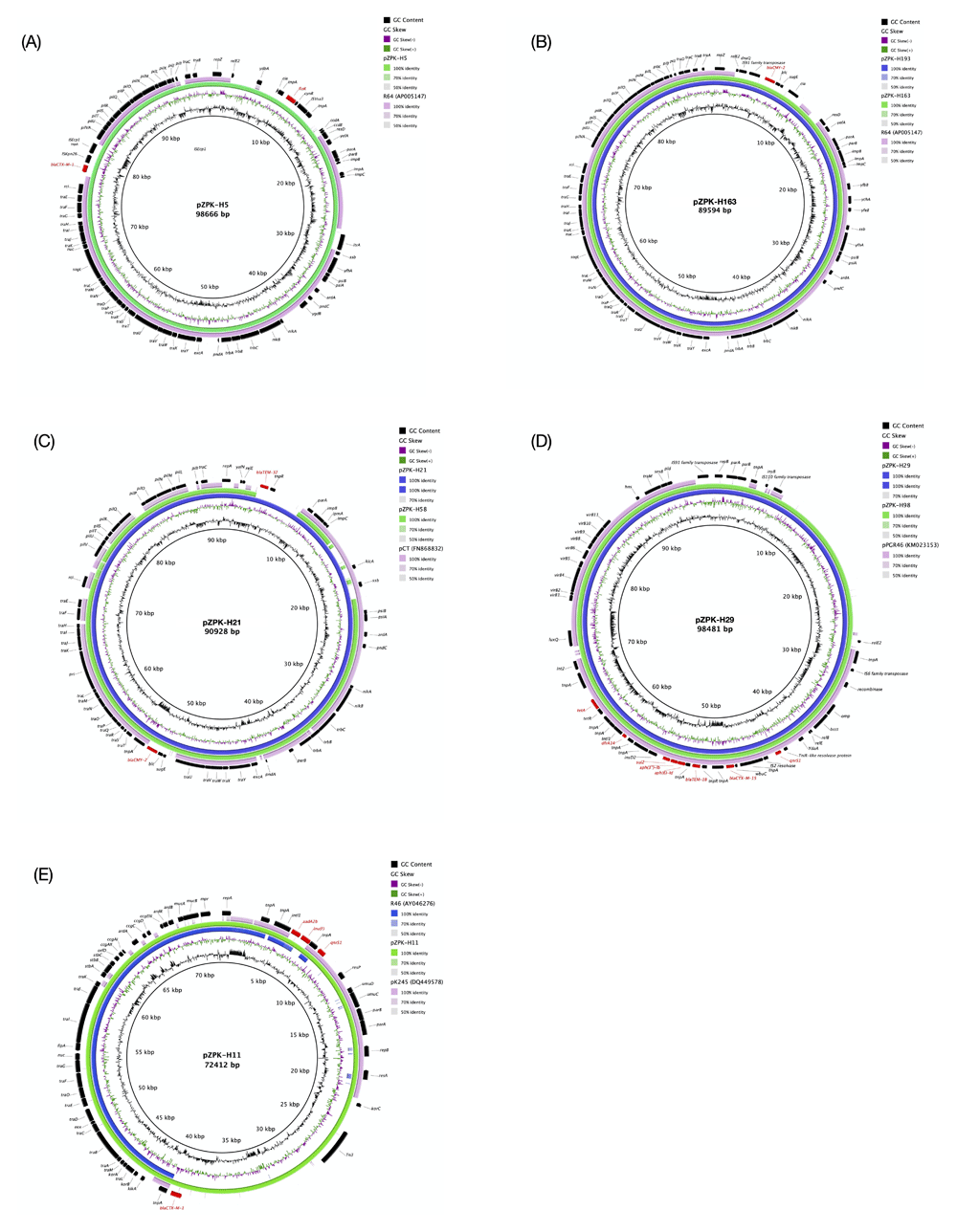
Pairwise alignment with BLASTn against IncI1 type reference plasmid R64 (GenBank accession: AP005147) demonstrated high similarity between R64 and pZPK-H163 and pZPK-H193, with 89% coverage and 97.57% identity. BLASTn alignment between R64 and pZPK-H5 indicated less similarity, with 79% coverage and 98.52% identity. Alignments of the studied plasmids with the reference R64 are visualized in Figure 1A for pZPK-H5 and Figure 1B for PZPK-H163 and pZPK-H193.
78b8b981-0410-49bc-b540-785afe0a7c7d_figure1.gif

Figure 1. Circular comparison of the studied plasmids with previously published reference plasmids.

GC content and GC skew are depicted in the inner map with distance scale. Predicted coding sequences of the plasmid named within the circle are depicted in the outer ring with antimicrobial resistance genes highlighted in red. (A) pZPK-H5 compared with IncI1 type reference R64 (GenBank accession: AP005147), (B) pZPK-H163 and pZPK-H193 compared with IncI1 type reference R64 (GenBank accession: AP005147), (C) pZPK-H21 and pZPK-H58 compared with IncK type reference pCT (GenBank accession: FN868832), (D) pZPK-H29 and pZPK-98 compared with IncY type reference pPGR46 (GenBank accession: KM023153), (E) pZPK-H11 compared with IncN type R46 (GenBank accession: AY046276) and IncR type pK245 (GenBank accession: DQ449578).

The studied IncI1 plasmids demonstrated typical IncI plasmid backbones with maintenance and stability-related regions with parAB, impCAB, ssb, psiAB, ardA, and pndAC genes, and transfer-associated, shufflon, and pilus formation regions (Figure 1A–B). In pZPK-H5, flor and cia genes were located in the accessory module, whereas blaCTX-M-1 was integrated into the shufflon region. As previously described, blaCTX-M-1 was integrated into shufflon segment B by a copy of ISEcp1, although in pZPK-H5 this IS element contains an integration of ISKpn26 (Brouwer et al., 2015). In pZPK-H163 and pZPK-H193, blaCMY-2 was located in the accessory module after the replication region.

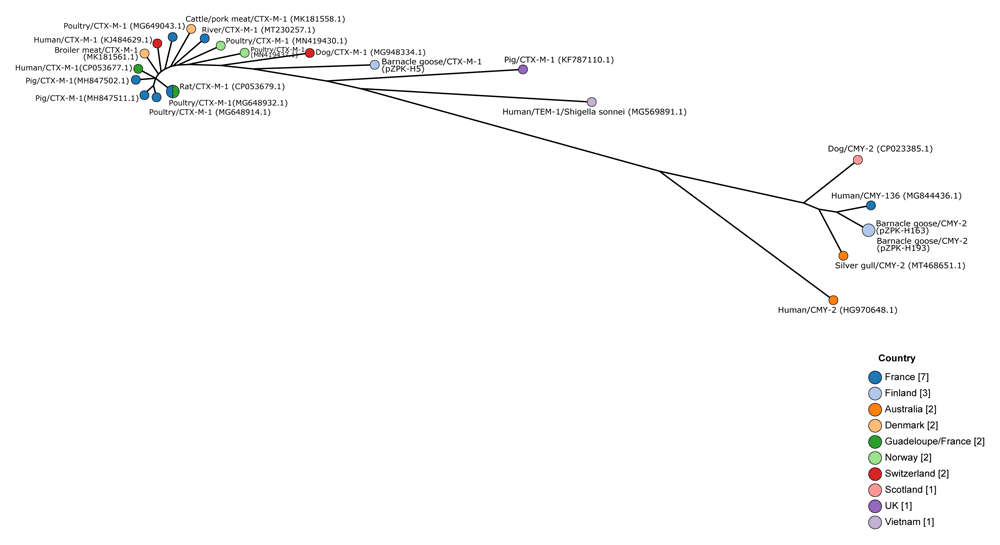
Comparison of the studied IncI1 plasmids with the most closely related previously published plasmids from GenBank using BLASTn demonstrated that pZPK-H163 and pZPK-H193 were similar with a blaCMY-136-harboring IncI1 plasmid obtained from a human urinary tract sample in France with 100% coverage and 99.95% identity (GenBank accession: MG844436.1), a blaCMY-2-harboring IncI1 ST23 plasmid from an Australian silver gull with 100% coverage and 99.96% identity (GenBank accession: MT468651.1), and a blaCMY-2-harboring IncI1 ST2 plasmid recovered from a human clinical sample in Australia with 100% coverage and 98.75% identity (GenBank accession: HG970648.1). pZPK-H5 was found to be most similar, with blaCTX-M-1-harboring IncI1 ST3 plasmids, such as a plasmid obtained from a poultry sample in France (GenBank accession: MG648932.1) with 96% coverage and 99.79% identity, and a plasmid recovered from E. coli from a healthy human in Switzerland (GenBank accession: KJ484629.1) with 96% coverage and 99.90% identity. A cgMLST-based minimum spanning tree built with 75 discriminatory loci (95% occurrence) is visualized in Figure 2.
78b8b981-0410-49bc-b540-785afe0a7c7d_figure2.gif

Figure 2. Minimum spanning tree based on core genome multilocus sequence typing of IncI1 type plasmids.

Plasmids pZPK-H5, pZPK-H163, and pZPK-H193 compared with 20 previously published IncI1 plasmids from GenBank. Nodes are colored by the country of origin and node text includes information on the source, bla gene, and bacterial species if other than Escherichia coli. GenBank accession numbers are provided in parentheses.

IncK type plasmids

Two isolates, H21 and H58, harbored IncK type replicons with blaCMY-2. Plasmid pZPK-H21 from isolate H21 was 90.9 kb in size with a G+C content of 52.51% and 108 CDSs. In addition to blaCMY-2, pZPK-H21 carried blaTEM-32. pZPK-H58 was 79.2 kb in size with a G+C content of 52.16% and 92 predicted CDSs. From both pZPK-H21 and pZPK-H58, only the virulence gene traT was identified. Pairwise alignment with BLASTn showed 88% coverage and 99.99% identity between pZPK-H21 and pZPK-H58.

Similar to IncI1 plasmids, pZPK-H21 and pZPK-H58 were found to have a typical I-complex plasmid backbone structure with maintenance and stability, conjugation, shufflon, and pilus formation regions (Figure 1C). blaTEM-32 in pZPK-H21 was located in the accessory module, whereas blaCMY-2 in both pZPK-H21 and pZPK-H58 was located near a transfer-associated region next to tnpA. BLASTn pairwise alignment with IncK type reference plasmid pCT (GenBank accession: FN868832) indicated that both pZPK-H21 and pZPK-H58 shared 92.42% identity with pCT, whereas pZPK-H21 shared 81% coverage and pZPK-H58 82% coverage.

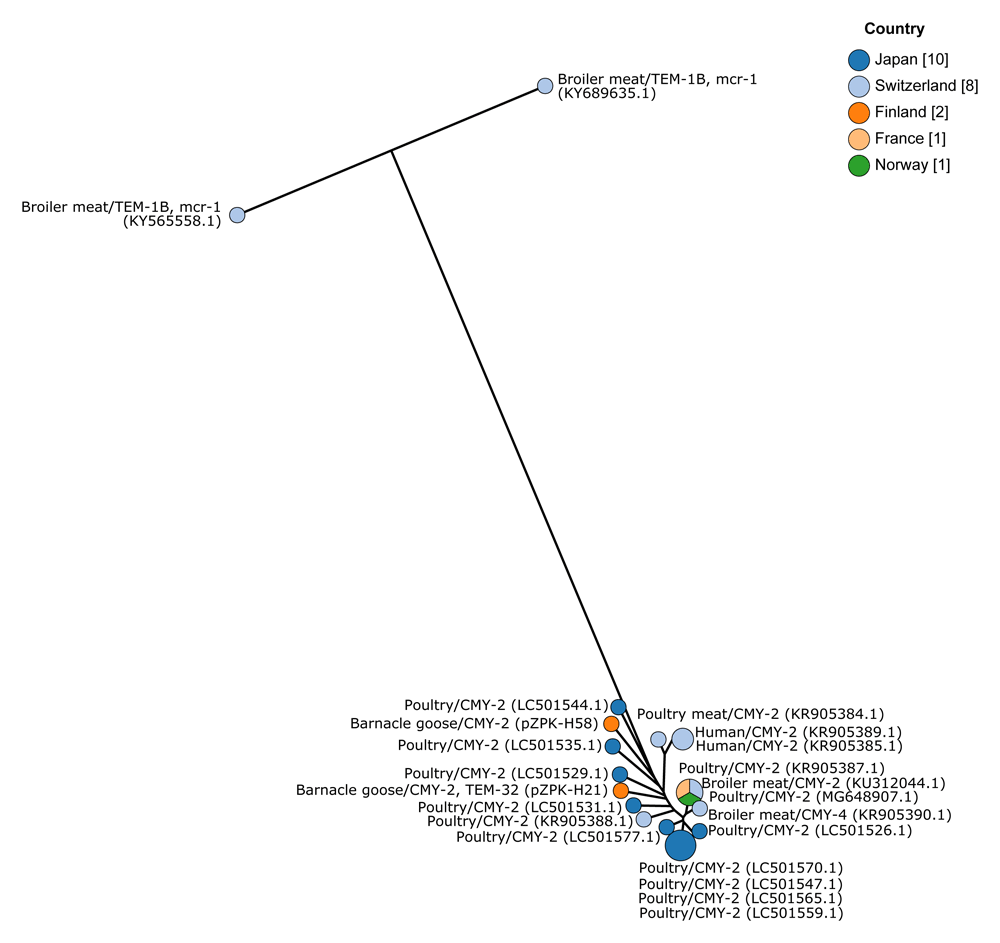
A BLASTn search against the NCBI database indicated that the most similar previously published plasmids consisted of poultry-associated IncK2 or IncB/O/K/Z replicons harboring blaCMY-2 (Table 1). pZPK-H21 was also found to be similar with two IncK2 plasmids derived from E. coli from a human urinary tract infection in Switzerland, with 94% coverage and 99.81% identity with plasmid pDV45 (GenBank accession: KR905384.1) and 92% coverage and 99.88% identity with plasmid p5312.29 (GenBank accession: KR905385.1). A cgMLST-based minimum spanning tree was built with 64 discriminatory loci (95% occurrence) and is visualized in Figure 3.
78b8b981-0410-49bc-b540-785afe0a7c7d_figure3.gif

Figure 3. Minimum spanning tree based on core genome multilocus sequence typing of IncK type plasmids.

Plasmids pZPK-H21 and pZPK-H58 compared with 20 previously published IncK or IncB/O/K/Z plasmids from GenBank. Nodes are colored by the country of origin and node text includes information on the source, bla gene, and possible additional mcr-1. GenBank accession numbers are provided in parentheses.

IncY type plasmids

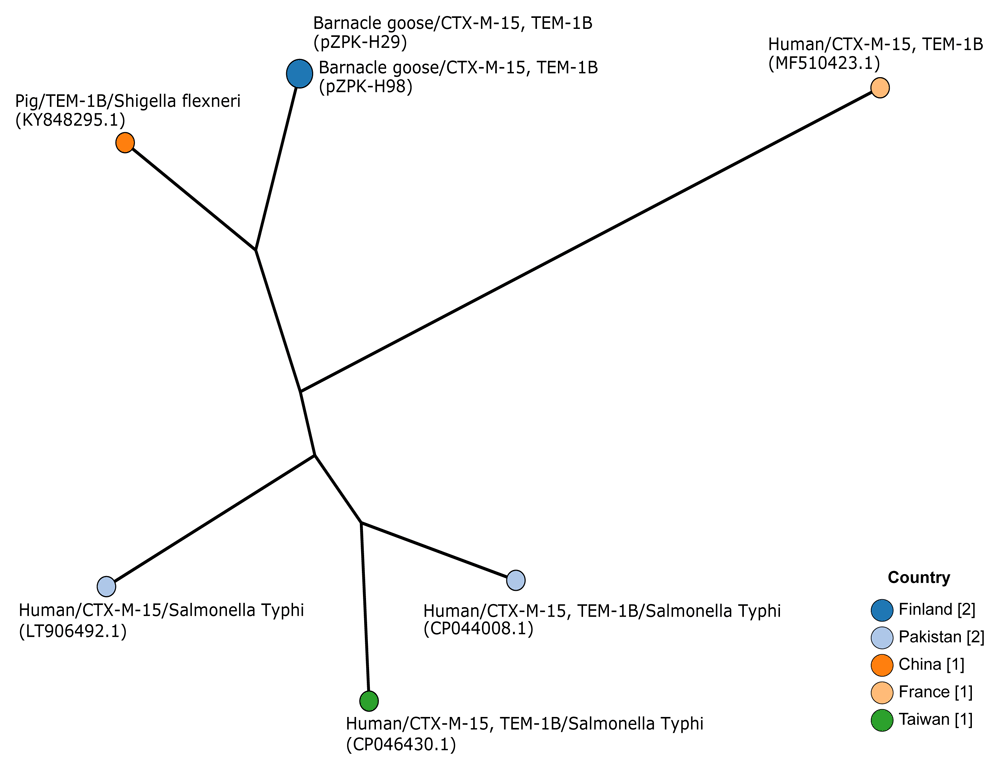
Two isolates, H29 and H98, harbored IncY type replicons. pZPK-H29 from isolate H29 and pZPK-H98 from isolate H98 were highly similar when compared with pairwise alignment with BLASTn, resulting in 100% coverage and 99.94% identity. Both plasmids harbored blaCTX-M-15 and blaTEM-1B. In addition to bla genes, both plasmids carried the resistance genes qnrS1, aph(6)-Id, aph(3")-Ib, sul2, dfrA14, and tet(A). Both plasmids were 98.5 kb in size, had a G+C content of 51.13% and 98 predicted CDSs in pZPK-H29, and had a G+C content of 51.12% and 99 predicted CDSs in pZPK-H98. These IncY plasmids were not found to harbor any virulence genes. BLASTn comparison with previously described IncY type plasmid pPGR46 (GenBank accession: KM023153) demonstrated 71% coverage with both pZPK-H29 and pZPK-H98, and 99.98% identity with pZPK-H29 and 99.94% identity with pZPK-H98 (Figure 1D). A BLASTn search against the NCBI database identified only six IncY type previously published plasmids with available metadata to be similar to pZPK-H29 and pZPK-H98 (Table 1). Three of the similar previously published plasmids were obtained from human clinical samples isolated from Salmonella Typhi (GenBank accessions: CP044008.1, LT906492.1, and CP046430.1) and two from E. coli also of human clinical sample origin (GenBank accessions: KM023153.1 and MF510423.1), all harboring blaCTX-M-15. One IncY plasmid originated from Shigella flexneri from a pig fecal sample harboring blaTEM-1B (GenBank accession: KY848295.1). Phylogenetic comparison with these six previously published IncY plasmids with a cgMLST-based minimum spanning tree included 20 discriminatory loci (95% occurrence) and did not indicate clusters (Figure 4).
78b8b981-0410-49bc-b540-785afe0a7c7d_figure4.gif

Figure 4. Minimum spanning tree based on core genome multilocus sequence typing of IncY type plasmids.

Plasmids pZPK-H29 and pZPK-H98 compared with six previously published IncY plasmids from GenBank. Nodes are colored by the country of origin and node text includes information on the source, bla gene, and bacterial species if other than Escherichia coli. GenBank accession numbers are provided in parentheses.

IncN+IncR multireplicon

From isolate H11, two plasmid replicons, IncN and IncR, were identified on the same contig. This multireplicon plasmid pZPK-H11 was 72.4 kb in size, with a G+C content of 50.91% and 78 predicted CDSs. Pairwise alignment with BLASTn indicated that the plasmid aligned with IncN reference plasmid R46 (GenBank accession: AY046276) with a coverage of 55% and 99.73% identity, whereas alignment with previously published IncR type plasmid pK245 (GenBank accession: DQ449578) resulted in a coverage of 31% and 98.53% identity (Figure 1E).

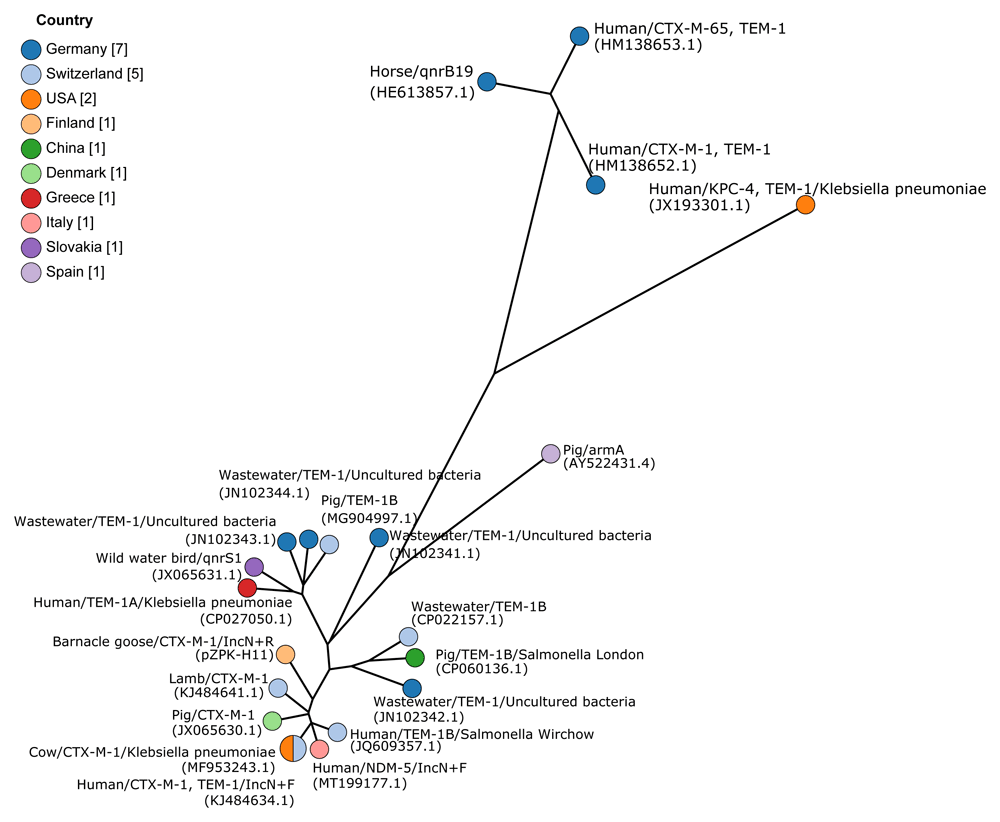
The multireplicon plasmid harbored blaCTX-M-1 and additional resistance genes qnrS1, aadA2b, and lnu(F). No virulence genes were detected on the multireplicon plasmid. The IncN replicon in the plasmid was identified as ST1 with pMLST analysis. Top two hits from a BLASTn search against the NCBI database were IncF+IncN type multireplicons both isolated from E. coli of human origin, one in Italy with blaNDM-5 (GenBank accession: MT199177.1; 60% coverage and 99.97% identity) and the other in Switzerland carrying blaCTX-M-1 (GenBank accession: KJ484634.1; 59% coverage and 99.97% identity) (Table 1). Other top hits with BLASTn included IncN plasmids isolated from various sources, such as uncultured bacteria from wastewater treatment plant effluent in Germany, carrying blaTEM-1 (GenBank accessions: JN102342.1, JN102344.1, and JN102343.1). A cgMLST-based minimum spanning tree was built with 34 discriminatory loci (95% occurrence) and is visualized in Figure 5.
78b8b981-0410-49bc-b540-785afe0a7c7d_figure5.gif

Figure 5. Minimum spanning tree based on core genome multilocus sequence typing of IncN+IncR multireplicon.

Plasmid pZPK-H11 compared with 20 previously published plasmids from GenBank. Nodes are colored by the country of origin and node text includes information on the source, bla gene, or other resistance gene if the bla gene was not present, bacterial species if other than Escherichia coli, and replicon type if other than IncN. GenBank accession numbers are provided in parentheses.

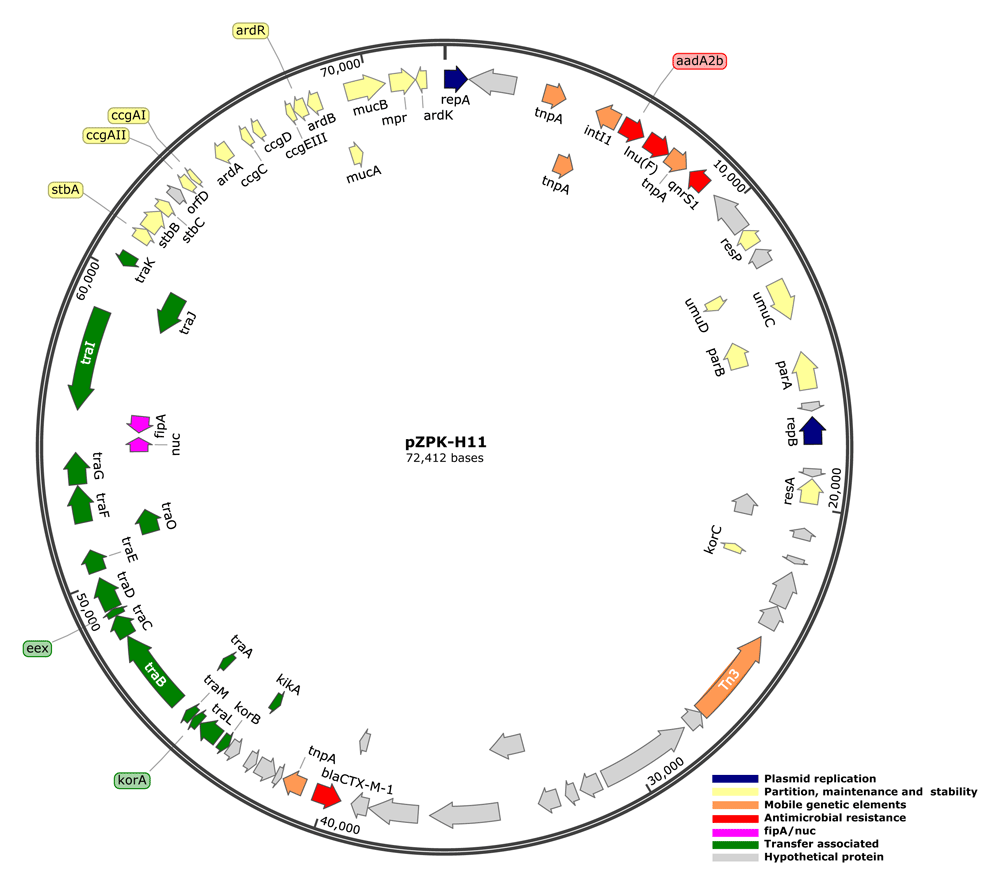
pPK-H11 shared similar backbone structures with IncN reference R46, including the replicon repA, stability-related stbABC, mucA, and mucB involved in mutagenesis enhancement, genes involved in plasmid DNA protection from type I restriction enzymes (ccgC, ccgD, ccgAI, and ccgAII), antirestriction-associated ardA, ardB, and ardR, and two transfer-associated tra loci (traI, traJ, traK; traL, traM, traA, traB, traC, traD, traE, traO, traF, traG) (Carattoli et al., 2010; Delver & Belogurov, 1997; Dolejska et al., 2013). Similar to the R46 structure, fipA and nuc were located between tra loci in pZPK-H11. IncR plasmid backbone structures identified in pZPK-H11 included replicon repB, parAB, and umuCD and multimer resolvase, but toxin–antitoxin vagDC operon involved in plasmid maintenance and retA reverse transcriptase were not identified (Guo et al., 2016). Transcriptional regulator korC was identified in a region not aligning with either IncN or IncR reference plasmids (Ludwiczak et al., 2013). blaCTX-M-1 was located next to mobile genetic element tnpA outside of a multidrug resistance cassette containing aadA2b, lnu(F), and qnrS1, which were located downstream of repA. The pZPK-H11 structure is visualized in Figure 6.
78b8b981-0410-49bc-b540-785afe0a7c7d_figure6.gif

Figure 6. Genetic structure of multireplicon plasmid pZPK-H11.

Predicted coding sequences and their orientation are represented by arrows colored based on the function of the gene product. Size of the plasmid is depicted on the outer circle.

Discussion

The purpose of this study was to identify ESBL/pAmpC-producing E. coli in migrating barnacle geese residing near humans and to investigate plasmids harboring bla genes. The bla genes were encoded on four different plasmid replicons from nine different samples: IncI1 and IncK, the rare IncY, and the multireplicon IncN+IncR.

Interestingly, IncY harboring blaCTX-M-15 was found from two sequenced isolates with the same bacterial ST type (ST453) and AMR gene profile, indicating clonal spread of the bacteria between the animals or a common source. Plasmids of the IncY group are considered rarely detected phage-like plasmids with low copy numbers (Meyer et al., 1986; Rozwandowicz et al., 2018). ESBL-producing E. coli harboring IncY have been detected in clinical human isolates (Yasir et al., 2020), a wastewater treatment plant in China (Jiang et al., 2019), and environment and fish samples in Tanzania (Moremi et al., 2016). The aforementioned human-associated finding of IncY raises the question of the origin of IncY in the barnacle geese samples. It can be speculated that the origin of AMR in geese is from anthropogenic sources.

Notable is the finding of the pZPK-H11 multireplicon IncN+IncR harboring blaCTX-M-1 in one of the sequenced isolates. IncN has been commonly found in animal fecal microbiota (Carattoli, 2009) and has been identified as a disseminator of blaCTX-M-1 among animals and humans in Europe (Dolejska et al., 2013). blaCTX-M-1 has often been recovered from IncN ST1 (Rozwandowicz et al., 2018). In addition to blaCTX-M-1, the IncN+IncR multireplicon pZPK-H11 harbored resistance genes aadA2b, lnu(F), and qnrS1. qnr genes have been previously associated with IncN plasmids from different Salmonella serovars isolated from human and poultry samples in the Netherlands (García-Fernández et al., 2009). It has been shown previously that IncR plasmids are able to form multireplicons with IncN, IncA/C, IncHI, and IncF type plasmids (Drieux et al., 2013; Jing et al., 2019; Papagiannitsis et al., 2013; Qu et al., 2019). Previous studies indicate that IncR plasmids lack genes involved in conjugation (Bielak et al., 2011; Chen et al., 2006), which indicates that pZPK-H11 is a putatively conjugative plasmid contributing to the transfer-associated genes located on the IncN region of the plasmid.

IncI1 carrying blaCTX-M-1 was identified in one of the isolates in our study. The finding of two identical IncI1 plasmids harboring blaCMY-2 from two samples, pZPK-H163 and pZPK-H193, indicates very recent clonal transmission within the flock or the possibility of samples originating from the same goose individual. IncK type plasmids with blaCMY-2 were recovered from two isolates in our study. IncK type plasmids carrying blaCMY-2 and blaCTX-M-14 have been previously isolated mainly from E. coli from animal sources in Europe (Rozwandowicz et al., 2018). The most prevalent resistance genes in the isolates in our study were AmpC type blaCMY-2 followed by blaCTX-M-1 and blaCTX-M-15. The finding of blaCMY-2 and blaCTX-M-1 on IncI1 plasmids is a common finding among poultry (Accogli et al., 2013; Leverstein-van Hall et al., 2011), and these genes and plasmid replicons have been identified previously also from other wild avian species, such as seagulls and pelicans in Florida (Poirel et al., 2012). Wild birds of different species in Catalonia have also been found to harbor blaCTX-M-15 and blaCMY-2 among other beta-lactamases, such as blaOXA-48 in a barn owl (Darwich et al., 2019). No carbapenemases were recovered in our study. In addition, in a study by Bonnedahl et al. (2009), 9.4% of wild yellow-legged gulls in the south of France were found to harbor ESBL-producing E. coli and 6% more specifically blaCTX-M-1. The finding of beta-lactamases, especially in wild birds habituating aquatic environments, is worrisome because of the potential of bacterial transmission between humans and animals via surface water. Wild gulls in Sweden were found to harbor blaCTX-M-15/blaCTX-M-14-producing E. coli similar to human and surface water isolates (Atterby et al., 2017). Wild birds may acquire resistance genes from anthropogenic sources and circulate resistance determinants again back into the human population, although contact with wild birds has been estimated to contribute only 0.3% of community-acquired intestinal carriage of ESBL/pAmpC-producing E. coli in humans in the Netherlands (Mughini-Gras et al., 2019). In addition to human health, wild migratory birds may play a role as disseminators of human-derived AMR to remote areas, potentially endangering the welfare of native animal species (Hernández & González-Acuña, 2016).

Interestingly, the finding of ESBL/AmpC-producing E. coli in 4.5% of the studied barnacle geese fecal samples is slightly less than the prevalence of ESBL/AmpC-producing E. coli and Klebsiella pneumoniae described in Finnish asymptomatic human carriers (6.3%) (Rintala et al., 2018). AMR has been studied in wild birds previously, but this was the first time it was studied in migratory birds in Finland, and with WGS applied. The prevalence of 4.5% is relatively low compared with other studies conducted with different avian species. In a study conducted in the Netherlands (Veldman et al., 2013), ESBL/AmpC-producing E. coli were found in 15.7% of 21 different bird species tested, mainly originating from aquatic-associated species. In Spain, 15% of sampled birds were found to be positive for ESBL/pAmpC-producing E. coli (Alcalá et al., 2016), whereas in birds of prey in Germany and Mongolia the prevalence was found to be 13.8% and 10.8%, respectively (Guenther et al., 2012). The lower percentage in the present study could be partly explained by the different bird species examined. Barnacle geese do not feed on landfills or other human-related waste areas like gulls in certain areas (Bonnedahl et al., 2014) or other bird or mammal species like birds of prey but, as a waterfowl, may come into contact with human wastewater. Although the prevalence of ESBL/AmpC-producing E. coli in our study was less than in some other birds studied earlier, barnacle geese that have habituated to densely human-populated areas, such as recreational parks and public beaches (Simões et al., 2010), pose the potential risk of AMR spread to humans. Parks and public beaches can quickly become contaminated with fecal matter while flocks of hundreds of birds feed and defecate in the area. Additionally, household pets and children may come into contact with fecal matter more easily.

It has to be taken into account, however, that the sample size was limited. There have been studies of the effect of ultraviolet light on E. coli survival (Vermeulen et al., 2008; Whitman et al., 2004), but to assess the effect of sunlight and other environmental factors on E. coli or resistance genes and plasmid survival in bird feces, more studies would need to be conducted. Seven out of nine samples positive for ESBL/AmpC-producing E. coli originated from samples collected in fall 2017, and temporal changes have been identified in ESBL-producing Enterobacteriaceae previously in urban Swedish mallards, with higher prevalence during warm summer months (Hessman et al., 2018).

To assess the actual risk of AMR in wildlife, bacteria, resistance genes, and mobile genetic elements have to be typed to a level where comparison between different sources, i.e., humans and animals, is plausible. WGS provides a powerful tool for studying phylogeny between different bacterial and plasmid reservoirs, and also enables the early detection of new resistance genes or successful plasmids. Long-read sequencing of the isolates allows for even more in-depth analysis of the location of resistance genes on plasmid replicons.

As E. coli belong to the normal intestinal microbiota of animals and virulence potential varies between strains, the public health relevance of ESBL/AmpC-producing E. coli derived from barnacle geese feces should be interpreted with caution. By examining virulence traits, however, it is possible to identify potential pathogens. The increased serum survival gene iss was found from all of the sequenced isolates. Iss has been identified in extraintestinal pathogenic E. coli (ExPEC) as well as in avian pathogenic E. coli (APEC) (Johnson et al., 2008; Tivendale et al., 2004). Iss and iroN have been found to be prevalent in E. coli, causing salpingitis in egg-laying hens (Poulsen et al., 2020), and have also been identified in E. coli in poultry production (Kim et al., 2020; Oikarainen et al., 2019). The glutamate decarboxylase gene gad was also prevalent in the sequenced isolates, and it has been identified frequently in APEC in broilers together with iss and iroN (Azam et al., 2020). These findings highlight the potential of AMR transmission via virulent E. coli strains between bird species, as well as between other animals and potentially humans.

Wildlife may serve as a reservoir for resistant bacteria (Carroll et al., 2015) and more than 60% of emerging infectious diseases since the 1940s have been zoonotic (Jones et al., 2008), which makes the continuous surveillance of wildlife pathogens extremely important. Our study highlights the fact that wild birds living in close contact with humans carry bacteria with plasmid-mediated beta-lactamases and may pose a potential risk of bacterial clonal spread or horizontal gene transfer through the environment.

Conclusion

Wild migratory geese were found to carry ESBL/AmpC-producing E. coli with diverse bacterial STs and the assessment of samples with WGS revealed the location of resistance genes in specific plasmid replicons. A novel multireplicon, IncN+IncR, carrying blaCTX-M-1 was recovered, and human-associated blaCTX-M-15 was found from two IncY plasmids. The findings indicate that wildlife carrying plasmids and resistance genes are potentially worrisome for public health. In addition to successful, more frequently identified plasmid replicons IncI1, IncK, and IncN, the rare IncY plasmid and IncN+IncR multireplicon plasmids were recovered in our study, indicating that wildlife carry epidemic plasmids and also serve as potential disseminators of plasmids currently viewed as uncommon in humans and livestock. Although the prevalence of ESBL/AmpC-producing E. coli was relatively moderate at 4.5%, the transmission potential should not be underestimated, especially in urban areas with dense human and animal populations. Continuous and prudent monitoring of resistance determinants in different environments is vital for understanding evolving resistance patterns and the epidemiology of AMR within and between the different One Health compartments.

Data availability

EMBL-EBI European Nucleotide Archive: Raw reads and plasmid sequences. Accession number PRJEB42655; https://identifiers.org/ena.embl:PRJEB42655.

Accession numbers for each isolate are provided in Table 2.

Acknowledgments

We would like to thank senior laboratory technicians Kirsi Ristkari, Anu Seppänen, and Arie Kant for their valuable assistance with laboratory work, and senior researcher Suvi Nykäsenoja for valuable assistance with the MALDI-TOF analysis.

References

  •  Accogli M, Fortini D, Giufrè M, et al.: IncI1 plasmids associated with the spread of CMY-2, CTX-M-1 and SHV-12 in Escherichia coli of animal and human origin. Clin Microbiol Infect. 2013; 19(5): E238–E240. PubMed Abstract | Publisher Full Text
  •  Alcalá L, Alonso CA, Simón C, et al.: Wild Birds, Frequent Carriers of Extended-Spectrum β-Lactamase (ESBL) Producing Escherichia coli of CTX-M and SHV-12 Types. Microb Ecol. 2016; 72(4): 861–869. PubMed Abstract | Publisher Full Text
  •  Alikhan NF, Petty NK, Ben Zakour NL, et al.: BLAST Ring Image Generator (BRIG): Simple prokaryote genome comparisons. BMC Genomics. 2011; 12: 402. PubMed Abstract | Publisher Full Text | Free Full Text
  •  Atterby C, Börjesson S, Ny S, et al.: ESBL-producing Escherichia coli in Swedish gulls—A case of environmental pollution from humans? PLoS One. 2017; 12(12): e0190380. PubMed Abstract | Publisher Full Text | Free Full Text
  •  Azam M, Mohsin M, Johnson TJ, et al.: Genomic landscape of multi-drug resistant avian pathogenic Escherichia coli recovered from broilers. Vet Microbiol. 2020; 247: 108766. PubMed Abstract | Publisher Full Text
  •  Bielak E, Bergenholtz RD, Jørgensen MS, et al.: Investigation of diversity of plasmids carrying the blaTEM-52 gene. J Antimicrob Chemother. 2011; 66(11): 2465–2474. PubMed Abstract | Publisher Full Text
  •  Bonnedahl J, Drobni M, Gauthier-Clerc M, et al.: Dissemination of Escherichia coli with CTX-M type ESBL between humans and yellow-legged gulls in the south of France. PLoS One. 2009; 4(6): e5958. PubMed Abstract | Publisher Full Text | Free Full Text
  •  Bonnedahl J, Hernandez J, Stedt J, et al.: Extended-spectrum β-lactamases in Escherichia coli and Klebsiella pneumoniae in Gulls, Alaska, USA. Emerg Infect Dis. 2014; 20(5): 897–899. PubMed Abstract | Publisher Full Text | Free Full Text
  •  Bonnedahl J, Järhult JD: Antibiotic resistance in wild birds. Ups J Med Sci. 2014; 119(2): 113–116. PubMed Abstract | Publisher Full Text | Free Full Text
  •  Brouwer MSM, Tagg KA, Mevius DJ, et al.: IncI shufflons: Assembly issues in the next-generation sequencing era. Plasmid. 2015; 80: 111–117. PubMed Abstract | Publisher Full Text
  •  Carattoli A: Resistance plasmid families in Enterobacteriaceae. Antimicrob Agents Chemother. 2009; 53(6): 2227–2238. PubMed Abstract | Publisher Full Text | Free Full Text
  •  Carattoli A, Aschbacher R, March A, et al.: Complete nucleotide sequence of the IncN plasmid pKOX105 encoding VIM-1, QnrS1 and SHV-12 proteins in Enterobacteriaceae from Bolzano, Italy compared with IncN plasmids encoding KPC enzymes in the USA. J Antimicrob Chemother. 2010; 65(10): 2070–2075. PubMed Abstract | Publisher Full Text
  •  Carattoli A: Plasmids in Gram negatives: Molecular typing of resistance plasmids. Int J Med Microbiol. 2011; 301(8): 654–658. PubMed Abstract | Publisher Full Text
  •  Carattoli A: Plasmids and the spread of resistance. Int J Med Microbiol. 2013; 303(6–7): 298–304. PubMed Abstract | Publisher Full Text
  •  Carattoli A, Zankari E, Garciá-Fernández A, et al.: In Silico detection and typing of plasmids using plasmidfinder and plasmid multilocus sequence typing. Antimicrob Agents Chemother. 2014; 58(7): 3895–3903. PubMed Abstract | Publisher Full Text | Free Full Text
  •  Carroll D, Wang J, Fanning S, et al.: Antimicrobial Resistance in Wildlife: Implications for Public Health. Zoonoses Public Health. 2015; 62(7): 534–542. PubMed Abstract | Publisher Full Text
  •  CDC (Centers for Disease Control and Prevention): Antibiotic resistance threats in the United States, 2019. Atlanta, GA; U.S. Department of Health and Human Services, CDC. 2019. Publisher Full Text
  •  Chen YT, Shu HY, Li LH, et al.: Complete nucleotide sequence of pK245, a 98-kilobase plasmid conferring quinolone resistance and extended-spectrum-beta-lactamase activity in a clinical Klebsiella pneumoniae isolate. Antimicrob Agents Chemother. 2006; 50(11): 3861–3866. PubMed Abstract | Publisher Full Text | Free Full Text
  •  Clausen PTLC, Aarestrup FM, Lund O: Rapid and precise alignment of raw reads against redundant databases with KMA. BMC Bioinformatics. 2018; 19(1): 307. PubMed Abstract | Publisher Full Text | Free Full Text
  •  Darwich L, Vidal A, Seminati C, et al.: High prevalence and diversity of extended-spectrum β-lactamase and emergence of OXA-48 producing Enterobacterales in wildlife in Catalonia. PLoS One. 2019; 14(8): e0210686. PubMed Abstract | Publisher Full Text | Free Full Text
  •  Day MJ, Hopkins KL, Wareham DW, et al.: Extended-spectrum β-lactamase-producing Escherichia coli in human-derived and foodchain-derived samples from England, Wales, and Scotland: an epidemiological surveillance and typing study. Lancet Infect Dis. 2019; 19(12): 1325–1335. PubMed Abstract | Publisher Full Text
  •  Delver EP, Belogurov AA: Organization of the leading region of IncN plasmid pKM101 (R46): A regulation controlled by CUP sequence elements. J Mol Biol. 1997; 271(1): 13–30. PubMed Abstract | Publisher Full Text
  •  Drieux L, Decré D, Frangeul L, et al.: Complete nucleotide sequence of the large conjugative pTC2 multireplicon plasmid encoding the VIM-1 metallo-β-lactamase. J Antimicrob Chemother. 2013; 68(1): 97–100. PubMed Abstract | Publisher Full Text
  •  Dolejska M, Villa L, Hasman H, et al.: Characterization of IncN plasmids carrying blaCTX-M-1 and qnr genes in Escherichia coli and Salmonella from animals, the environment and humans. J Antimicrob Chemother. 2013; 68(2): 333–339. PubMed Abstract | Publisher Full Text
  •  Dolejska M, Papagiannitsis CC: Plasmid-mediated resistance is going wild. Plasmid. 2018; 99: 99–111. PubMed Abstract | Publisher Full Text
  •  EFSA (European Food Safety Authority): Scientific Opinion on the public health risks of bacterial strains producing extended-spectrum β-lactamases and/or AmpC β-lactamases in food and food-producing animals. EFSA J. 2011; 9(8): 2322. Publisher Full Text
  •  EFSA (European Food Safety Authority) and ECDC (European Centre for Disease Prevention and Control): The European Union Summary Report on Antimicrobial Resistance in zoonotic and indicator bacteria from humans, animals and food in 2017/2018. EFSA J. 2020; 18(3): 6007. PubMed Abstract | Publisher Full Text | Free Full Text
  •  Elmberg J, Berg C, Lerner H, et al.: Potential disease transmission from wild geese and swans to livestock, poultry and humans: a review of the scientific literature from a One Health perspective. Infect Ecol Epidemiol. 2017; 7(1): 1300450. PubMed Abstract | Publisher Full Text | Free Full Text
  •  EUCAST: European Committee on Antimicrobial Susceptibility Testing. EUCAST Disk Diffusion Method Manual 6.0. 2017; [Accessed December 19, 2018]. Reference Source
  •  EUCAST: European Committee on Antimicrobial Susceptibility Testing. Antimicrobial wild type, distributions of microorganisms. 2019; [Accessed January 27, 2019]. Reference Source
  •  Ewers C, Bethe A, Semmler T, et al.: Extended-spectrum β-lactamase-producing and AmpC-producing Escherichia coli from livestock and companion animals, and their putative impact on public health: A global perspective. Clin Microbiol Infect. 2012; 18(7): 646–655. PubMed Abstract | Publisher Full Text
  •  Fox AD, Leafloor JO: A global audit of the status and trends of Arctic and Northern Hemisphere goose populations. Conservation of Arctic Flore and Fauna International Secretariat: Akureyri, Iceland. 2018. Reference Source
  •  Frankel G, Phillips AD, Rosenshine I, et al.: Enteropathogenic and enterohaemorrhagic Escherichia coli : more subversive elements. Mol Microbiol. 1998; 30(5): 911–921. PubMed Abstract | Publisher Full Text
  •  García-Fernández A, Fortini D, Veldman K, et al.: Characterization of plasmids harbouring qnrS1, qnrB2 and qnrB19 genes in Salmonella. J Antimicrob Chemother. 2009; 63(2): 274–281. PubMed Abstract | Publisher Full Text
  •  Guenther S, Aschenbrenner K, Stamm I, et al.: Comparable High Rates of Extended-Spectrum-Beta-Lactamase-Producing Escherichia coli in Birds of Prey from Germany and Mongolia. PLoS One. 2012; 7(12): e53039. PubMed Abstract | Publisher Full Text | Free Full Text
  •  Guo Q, Spychala CN, McElheny CL, et al.: Comparative analysis of an IncR plasmid carrying armA, blaDHA-1 and qnrB4 from Klebsiella pneumoniae ST37 isolates. J Antimicrob Chemother. 2016; 71(4): 882–886. PubMed Abstract | Publisher Full Text | Free Full Text
  •  Hasman H, Saputra D, Sicheritz-Ponten T, et al.: Rapid whole-genome sequencing for detection and characterization of microorganisms directly from clinical samples. J Clin Microbiol. 2014; 52(1): 139–146. PubMed Abstract | Publisher Full Text | Free Full Text
  •  Hatha AAM, Divya PS, Saramma AV, et al.: Migratory bird, Branta leucopis (Barnacle goose), a potential carrier of diverse Escherichia coli serotypes into pristime Arctic environment. Curr Sci. 2013; 104(8): 1078–1080. [Accessed June 24, 2020]. Reference Source
  •  Hernández J, González-Acuña D: Anthropogenic antibiotic resistance genes mobilization to the polar regions. Infect Ecol Epidemiol. 2016; 6: 32112. PubMed Abstract | Publisher Full Text | Free Full Text
  •  Hessman J, Atterby C, Olsen B, et al.: High Prevalence and Temporal Variation of Extended Spectrum β-Lactamase-Producing Bacteria in Urban Swedish Mallards. Microb Drug Resist. 2018; 24(6): 822–829. PubMed Abstract | Publisher Full Text
  •  Holmes AH, Moore LSP, Sundsfjord A, et al.: Understanding the mechanisms and drivers of antimicrobial resistance. Lancet. 2016; 387(10014): 176–187. PubMed Abstract | Publisher Full Text
  •  Jensen GH, Madsen J, Nagy S, et al.: AEWA International Single Species Management Plan for the Barnacle Goose (Branta leucopsis) - Russia/Germany & Netherlands population, East Greenland/Scotland & Ireland population, Svalbard/South-west Scotland population. AEWA Technical Series No. 70. Bonn, Germany. 2018. Reference Source
  •  Jiang X, Cui X, Xu H, et al.: Whole Genome Sequencing of Extended-Spectrum Beta-Lactamase (ESBL)-Producing Escherichia coli Isolated From a Wastewater Treatment Plant in China. Front Microbiol. 2019; 10: 1797. PubMed Abstract | Publisher Full Text | Free Full Text
  •  Jing Y, Jiang X, Yin Z, et al.: Genomic diversification of IncR plasmids from China. J Glob Antimicrob Resist. 2019; 19: 358–364. PubMed Abstract | Publisher Full Text
  •  Joensen KG, Scheutz F, Lund O, et al.: Real-time whole-genome sequencing for routine typing, surveillance, and outbreak detection of verotoxigenic Escherichia coli. J Clin Microbiol. 2014; 52(5): 1501–10. PubMed Abstract | Publisher Full Text | Free Full Text
  •  Johnson TJ, Wannemuehler YM, Nolan LK: Evolution of the iss gene in Escherichia coli. Appl Environ Microbiol. 2008; 74(8): 2360–2369. PubMed Abstract | Publisher Full Text | Free Full Text
  •  Jones KE, Patel NG, Levy MA, et al.: Global trends in emerging infectious diseases. Nature. 2008; 451(7181): 990–993. PubMed Abstract | Publisher Full Text | Free Full Text
  •  Kim YB, Yoon MY, Ha JS, et al.: Molecular characterization of avian pathogenic Escherichia coli from broiler chickens with colibacillosis. Poult Sci. 2020; 99(2): 1088–1095. PubMed Abstract | Publisher Full Text | Free Full Text
  •  Kuczkowski M, Krawiec M, Voslamber B, et al.: Virulence Genes and the Antimicrobial Susceptibility of Escherichia coli, Isolated from Wild Waterbirds, in the Netherlands and Poland. Vector Borne Zoonotic Dis. 2016; 16(8): 528–536. PubMed Abstract | Publisher Full Text
  •  Lääveri T, Vlot JA, van Dam AP, et al.: Extended-spectrum beta-lactamase-producing Enterobacteriaceae (ESBL-PE) among travellers to Africa: Destination-specific data pooled from three European prospective studies. BMC Infect Dis. 2018; 18(1): 341. PubMed Abstract | Publisher Full Text | Free Full Text
  •  Larsen MV, Cosentino S, Rasmussen S, et al.: Multilocus sequence typing of total-genome-sequenced bacteria. J Clin Microbiol. 2012; 50(4): 1355–61. PubMed Abstract | Publisher Full Text | Free Full Text
  •  Larsen MV, Cosentino S, Lukjancenko O, et al.: Benchmarking of methods for genomic taxonomy. J Clin Microbiol. 2014; 52(5): 1529–39. PubMed Abstract | Publisher Full Text | Free Full Text
  •  Leverstein-van Hall MA, Dierikx CM, Stuart JC, et al.: Dutch patients, retail chicken meat and poultry share the same ESBL genes, plasmids and strains. Clin Microbiol Infect. 2011; 17(6): 873–880. PubMed Abstract | Publisher Full Text
  •  Liu YY, Lin JW, Chen CC: cano-wgMLST_BacCompare: A Bacterial Genome Analysis Platform for Epidemiological Investigation and Comparative Genomic Analysis. Front Microbiol. 2019; 10: 1687. PubMed Abstract | Publisher Full Text | Free Full Text
  •  Llarena AK, Skarp-de Haan CPA, Rossi M, et al.: Characterization of the Campylobacter jejuni Population in the Barnacle Geese Reservoir. Zoonoses Public Health. 2015; 62(3): 209–221. PubMed Abstract | Publisher Full Text
  •  Ludwiczak M, Dolowy P, Markowska A, et al.: Global transcriptional regulator KorC coordinates expression of three backbone modules of the broad-host-range RA3 plasmid from IncU incompatibility group. Plasmid. 2013; 70(1): 131–145. PubMed Abstract | Publisher Full Text
  •  Meyer J, Stålhammar-Carlemalm M, Streiff M, et al.: Sequence relations among the IncY plasmid p15B, P1, and P7 prophages. Plasmid. 1986; 16(2): 81–89. PubMed Abstract | Publisher Full Text
  •  Moremi N, Manda EV, Falgenhauer L, et al.: Predominance of CTX-M-15 among ESBL producers from environment and fish gut from the shores of Lake Victoria in Mwanza, Tanzania. Front Microbiol. 2016; 7: 1862. PubMed Abstract | Publisher Full Text | Free Full Text
  •  Mughini-Gras L, Dorado-García A, van Duijkeren E, et al.: Attributable sources of community-acquired carriage of Escherichia coli containing β-lactam antibiotic resistance genes: a population-based modelling study. Lancet Planet Health. 2019; 3(8): e357–e369. PubMed Abstract | Publisher Full Text
  •  Müller A, Stephan R, Nüesch-Inderbinen M: Distribution of virulence factors in ESBL-producing Escherichia coli isolated from the environment, livestock, food and humans. Sci Total Environ. 2016; 541: 667–672. PubMed Abstract | Publisher Full Text
  •  Niskanen T, Waldenström J, Fredriksson-Ahomaa M, et al.: virF-positive Yersinia pseudotuberculosis and Yersinia enterocolitica found in migratory birds in Sweden. Appl Environ Microbiol. 2003; 69(8): 4670–4675. PubMed Abstract | Publisher Full Text | Free Full Text
  •  Nordmann P, Poirel L: Epidemiology and Diagnostics of Carbapenem Resistance in Gram-negative Bacteria. Clin Infect Dis. 2019; 69(Suppl 7): S521–S528. PubMed Abstract | Publisher Full Text | Free Full Text
  •  Oikarainen PE, Pohjola LK, Pietola ES, et al.: Direct vertical transmission of ESBL/pAmpC-producing Escherichia coli limited in poultry production pyramid. Vet Microbiol. 2019; 231: 100–106. PubMed Abstract | Publisher Full Text
  •  Papagiannitsis CC, Miriagou V, Giakkoupi P, et al.: Characterization of pKP1780, a novel IncR plasmid from the emerging Klebsiella pneumoniae ST147, encoding the VIM-1 metallo-Β-lactamase. J Antimicrob Chemother. 2013; 68(10): 2259–2262. PubMed Abstract | Publisher Full Text
  •  Poirel L, Potron A, De La Cuesta C, et al.: Wild coastline birds as reservoirs of broad-spectrum-β-lactamase-producing Enterobacteriaceae in Miami Beach, Florida. Antimicrob Agents Chemother. 2012; 56(5): 2756–2758. PubMed Abstract | Publisher Full Text | Free Full Text
  •  Poulsen LL, Kudirkiene E, Jørgensen SL, et al.: Whole genome sequence comparison of avian pathogenic Escherichia coli from acute and chronic salpingitis of egg laying hens. BMC Vet Res. 2020; 16(1): 148. PubMed Abstract | Publisher Full Text | Free Full Text
  •  Qu D, Shen Y, Hu L, et al.: Comparative analysis of KPC-2-encoding chimera plasmids with multi-replicon IncR:Inc pA1763-KPC:IncN1 or IncFII pHN7A8:Inc pA1763-KPC:IncN1. Infect Drug Resist. 2019; 12: 285–296. PubMed Abstract | Publisher Full Text | Free Full Text
  •  Rintala ESA, Gröndahl-Yli-Hannuksela K, Lönnqvist E, et al.: ESBL:ää tuottavien suolistobakteerien oireeton kantajuus Etelä-Suomessa. Suom Lääril 43/2018;73:2503-2513. 2018. Reference Source
  •  Rozwandowicz M, Brouwer MSM, Fischer J, et al.: Plasmids carrying antimicrobial resistance genes in Enterobacteriaceae. J Antimicrob Chemother. 2018; 73(5): 1121–1137. PubMed Abstract | Publisher Full Text
  •  Sandegren L, Stedt J, Lustig U, et al.: Long-term carriage and rapid transmission of extended spectrum beta-lactamase-producing E. coli within a flock of Mallards in the absence of antibiotic selection. Environ Microbiol Rep. 2018; 10(5): 576–582. PubMed Abstract | Publisher Full Text
  •  Seemann T: Prokka: rapid prokaryotic genome annotation. Bioinformatics. 2014; 30(14): 2068–2069. PubMed Abstract | Publisher Full Text
  •  Simões RR, Poirel L, Da Costa PM, et al.: Seagulls and beaches as reservoirs for multidrug-resistant Escherichia coli. Emerg Infect Dis. 2010; 16(1): 110–112. PubMed Abstract | Publisher Full Text | Free Full Text
  •  Stedt J, Bonnedahl J, Hernandez J, et al.: Carriage of CTX-M type extended spectrum β-lactamases (ESBLs) in gulls across Europe. Acta Vet Scand. 2015; 57: 74. PubMed Abstract | Publisher Full Text | Free Full Text
  •  SYKE (Suomen ympäristökeskus) > Ymparisto >: Valkoposkihanhien seuranta. Published 9.9. 2016, updated 23.9. 2019. [Accessed June 23, 2020]. Reference Source
  •  SYKE (Suomen ympäristökeskus) >: Valkoposkihanhien väheneminen pääkaupunkiseudulla taittui. Published 7.8.2019. [Accessed June 23, 2020]. Reference Source
  •  Tivendale KA, Allen JL, Ginns CA, et al.: Association of iss and iucA, but not tsh, with plasmid-mediated virulence of avian pathogenic Escherichia coli. Infect Immun. 2004; 72(11): 6554–6560. PubMed Abstract | Publisher Full Text | Free Full Text
  •  van der Bij AK, Pitout JDD: The role of international travel in the worldwide spread of multiresistant Enterobacteriaceae. J Antimicrob Chemother. 2012; 67(9): 2090–2100. PubMed Abstract | Publisher Full Text
  •  Veldman K, van Tulden P, Kant A, et al.: Characteristics of cefotaxime-resistant Escherichia coli from wild birds in The Netherlands. Appl Environ Microbiol. 2013; 79(24): 7556–7561. PubMed Abstract | Publisher Full Text | Free Full Text
  •  Vermeulen N, Keeler WJ, Nandakumar K, et al.: The bactericidal effect of ultraviolet and visible light on Escherichia coli. Biotechnol Bioeng. 2008; 99(3): 550–556. PubMed Abstract | Publisher Full Text
  •  Whitman RL, Nevers MB, Korinek GC, et al.: Solar and temporal effects on Escherichia coli concentration at a Lake Michigan swimming beach. Appl Environ Microbiol. 2004; 70(7): 4276–4285. PubMed Abstract | Publisher Full Text | Free Full Text
  •  WHO Global Health Observatory. [Accessed June 22, 2020]. Reference Source
  •  Wick RR, Judd LM, Gorrie CL, et al.: Unicycler: Resolving bacterial genome assemblies from short and long sequencing reads. PLoS Comput Biol. 2017; 13(6): e1005595. PubMed Abstract | Publisher Full Text | Free Full Text
  •  Wirth T, Falush D, Lan R, et al.: Sex and virulence in Escherichia coli: An evolutionary perspective. Mol Microbiol. 2006; 60(5): 1136–1151. PubMed Abstract | Publisher Full Text | Free Full Text
  •  Woerther PL, Andremont A, Kantele A: Travel-acquired ESBL-producing Enterobacteriaceae: impact of colonization at individual and community level. J Travel Med. 2017; 24(suppl_1): S29–S34. PubMed Abstract | Publisher Full Text | Free Full Text
  •  Yasir M, Farman M, Shah MW, et al.: Genomic and antimicrobial resistance genes diversity in multidrug-resistant CTX-M-positive isolates of Escherichia coli at a health care facility in Jeddah. J Infect Public Health. 2020; 13(1): 94–100. PubMed Abstract | Publisher Full Text
  •  Yrjölä RA, Holopainen S, Pakarinen R, et al.: The Barnacle Goose (Branta leucopsis) in the archipelago of southern Finland - population growth and nesting dispersal. 2017. Reference Source
  •  Zankari E, Hasman H, Cosentino S, et al.: Identification of acquired antimicrobial resistance genes. J Antimicrob Chemother. 2012; 67(11): 2640–4. PubMed Abstract | Publisher Full Text | Free Full Text
  •  Zhou Z, Alikhan NF, Sergeant MJ, et al.: Grapetree: Visualization of core genomic relationships among 100,000 bacterial pathogens. Genome Res. 2018; 28(9): 1395–1404. PubMed Abstract | Publisher Full Text | Free Full Text