Plain language summary

We have tested the common idea that poetic meter has emerged in order to help verbal memory. We have focused on classical Italian poetry and on three components of meter: rhyme, accent and verse length. We selected four passages from Dante’s Divina Commedia and four from Ariosto’s Orlando Furioso, and from them derived meaningless poems by replacing key words with non-words in such a way as to retain the original prosody. Alongside these eight "original" non-poems, we created three metrically defective variants of each, by either ablating rhymes or modifying accent patterns or altering the number of syllables. The resulting four versions of each non-poem were presented repeatedly to Italian native speakers, who were then asked, a day later, to remember some of the non-words. Surprisingly, we found that the integrity of Dante’s meter has no significant effect on memory performance. With Ariosto, instead, removing each component downgrades memory proportionally to its contribution to perceived metric plausibility, with rhymes the most important one. Counterintuitively, the fully metric versions required longer reaction times, implying that activating a given metric pattern, an example of a recurring schema, is helpful but involves a cognitive cost. Within schema theories, this finding provides evidence for high-level interactions between procedural and episodic memory.

Introduction

Poems, nursery rhymes, traditional songs: they are found in every culture, and they have been around for ages, well before the advent of writing systems. Sometimes, they have or had the crucial mission of carrying an important message for the listeners: a list to know by heart, an event happening every year, a warning of a potential danger. What do these texts have in common? At least one aspect: they adopt a variety of devices that help hold verbal material in memory.

Human memory can, in fact, fail spectacularly at times. Writing systems have helped safely store verbal information, in a format relatively difficult to tamper with; before, when our ancestors had to rely on their fallible memory, a number of linguistic devices crystallized to help them remember words and verbal material. Cultural transmission, then, has depended for ages on these devices, which in poetry we can broadly refer to as “meter”. These devices may range from the use of repeated metaphors: “rosy-fingered dawn” in Homer (Reece, 2011), to the ring composition in the Zoroastrian Yasna (Hintze, 2002) to semantic repetition as in Biblical poetry: “In the way of righteousness is life; and in the pathway thereof there is no death.” in Prov. 12:28 (King James Version).

In several Western literary traditions, including the Italian one, the local structure of poetry revolves around the verse, and includes a constant number of syllables, a limited variability in the pattern of accents, and a specific organization of rhymes. These components of meter (again, intended in a very broad sense) have gradually lost their centrality or at least their perceived necessity over the course of several centuries, but they were in full sway at least between the 13th and 16th centuries, from the emergence of modern Italian (so called “volgare”, the language of the people) as an acceptable literary language to the diffusion of the printing press. The Divina Commedia by Dante Alighieri and the Orlando Furioso by Ludovico Ariosto are two lengthy masterpieces towards the beginning and, respectively, the end of this golden age. With 14,233 verses in the Commedia and 38,736 in the Orlando Furioso, neither of which contains material which is absolutely necessary to remember in order to carry on with one’s life, it may be asked whether their metric structure still retained a primary memory function, or is already a purely esthetic ornament for cultured readers (Rubin, 1995).

Can the role of metrical features be explained from a neurocognitive point of view, with respect to memory? Recently, in memory literature the notion of schemata, long seen as important (see e.g., (Brewer & Dupree, 1983), has been discussed again (Ghosh & Gilboa, 2014), stimulated also by the analysis of its neurobiological basis in rodents (Tse et al., 2007). A schema, whether directly functional like those involved in preparing coffee (Norman & Shallice, 1986) or social/ornamental, like rituals of salutations (Taylor & Crocker, 1981), can be considered as a set of regularities that help organize and retrieve information (Van Kesteren et al., 2012). Its neural basis would be the memory trace of those regularities, that helps funnel neural activity so as to reinstate them. In language processing, “narrative schemata” have often been described, as the features of stories which make them easier to remember, sometimes called “story grammars” (Rumelhart, 1975). In the present context, however we are considering metrical schemata: patterns which, by somewhat restricting options and encouraging expectations, facilitate the recall of verses. Thus, meter (broadly defined) should help us recruit, and possibly produce, the next element of a sequence stored in our memory.

In facilitating verbal sequence replay, metrical features appear to be effective with extended “trajectories”, lasting even several verses. These are extended relative to the short trajectories thought to be produced by the phonological loop of Baddeley’s model of working memory, which are presumed to last only a couple of seconds, precisely because of the lack of specific devices that extend their range (Baddeley, 1992; Haluts et al., 2020). To the best of our knowledge, though, the effectiveness of these features has never been quantified. In this study, we aim at measuring the strength of some metric devices. Specifically, we focus on the three main characteristics of classical Italian meter: rhyme, pattern of accents, and verse length.

Methods

We extracted passages from two masterpieces of Italian literature: the Divina Commedia by Dante Alighieri (1265–1321), and the Orlando Furioso by Ludovico Ariosto (1474–1533). From the latter we chose ottave (octaves, stanzas of eight verses) from canti XIII, XV, XIX and XXX, and one from canto I to train subjects, while from the former we selected sequences of three consecutive terzine (hence nine verses) from two canti from Inferno (XXIV for the experiment, V for training), two from Purgatorio (VI and XVI) and one from Paradiso (XXVII). All passages had only proper (Italian) hendecasyllables with an accented 10th syllable, and were, to our arbitrary judgement, devoid of explicit or easily reconstructed memorable content or references.

Poem manipulation

The original texts were manipulated in a number of different ways. Firstly, most content words were converted into non-words in order to eliminate discernible semantic content, hence semantic effects on memory; an effort was made to minimize the impact of this manipulation (like for the subsequent ones below) by changing phonemes with similar ones, while maintaining the original prosody. Function words were not modified. This applied equally to all passages and resulted in “original non-poems” (ONPs).

The second stage of manipulations focused on metrical patterns. We created three conditions:

  • 1) a condition where we eliminated rhymes (“NPR” – Non-Poem without Rhyme)

  • 2) a condition where the accent patterns of four-five verses per passage were replaced with less standard ones (“NPA” – Non-Poem with modified Accents). This manipulation was particularly non-trivial, since accent patterns are not rigidly defined. However, to validate proper original accents, we consulted with an expert scholar for Orlando Furioso, whereas for Divina Commedia we referred to the “Archivio Metrico Italiano”, a database collecting masterpieces of Italian literature with their accents annotated (www.maldura.unipd.it). On these bases, we altered the “original accents” by putting them in different positions within the verse, taking advantage in particular of non-words with no mandatory accent.

  • 3) a condition where the number of syllables per verse, which in the ONPs were strictly 11 throughout (regular hendecasyllables) was altered again in four-five verses, to nine, 10, 12 or 13 (“NPS” – Non-Poem with wrong numbers of Syllables). Note that by adding or subtracting one or two syllables, also the pattern of accents was perforce altered, but we attempted to make the alteration less noticeable than the number change, in contrast to the NPA condition in which, while there were strictly 11 syllables/verse, the accents followed more unusual patterns.

These manipulations were applied to all passages. All texts were then recited by a professional actor and audio recorded.

For the experiment, every subject was administered four texts in total, by the same (original) author: one per passage and one per condition (a Latin square design). Therefore, twenty-four combinations were created.

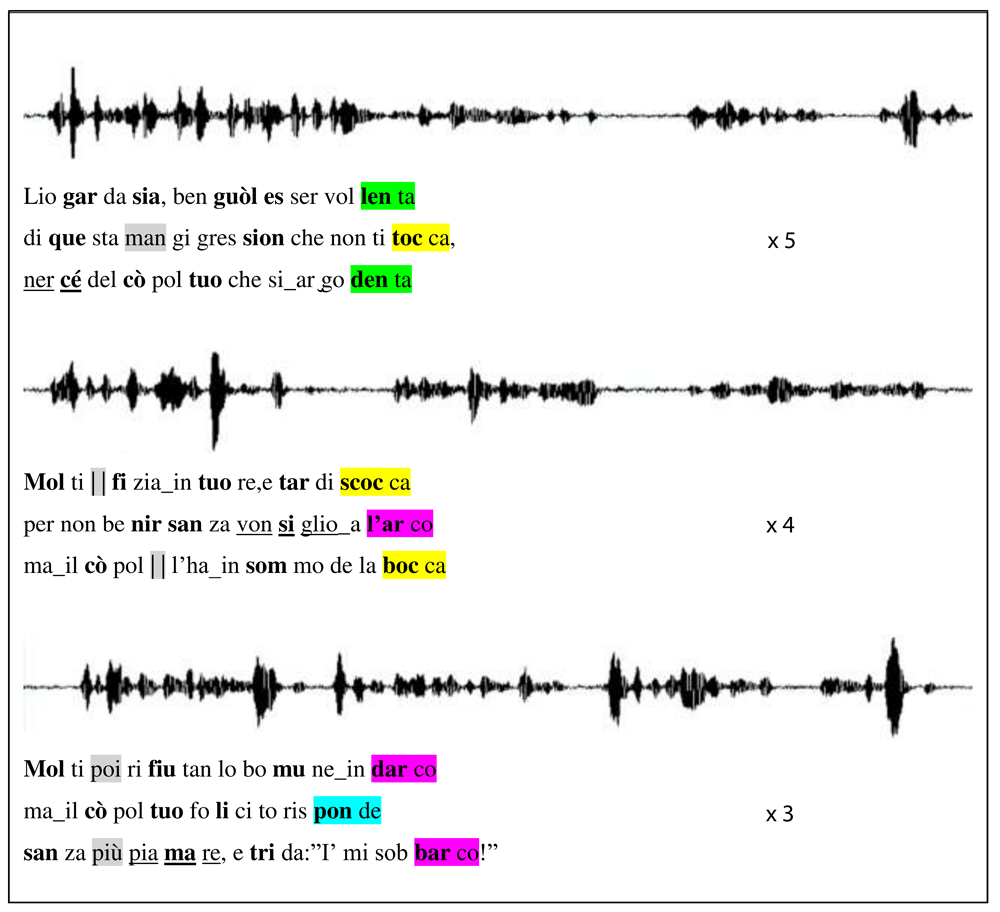
An example of an NPS we used, from the Commedia, is presented in Figure 1 together with its original spectrogram, and all non-poems can be inspected in the Extended data, with a descriptive README file detailing how they were used (Andreetta et al., 2021).

15f79420-78b4-4111-838b-1f631dd45734_figure1.gif

Figure 1. NPS example derived from Purgatorio, canto VI.

For each terzina (vv.127–135) the NPS text, shown below the sound wave by the professional actor, maintains rhymes, in color, and accents, in boldface, as in the ONP version; whereas overall three syllables have been added and two taken away, in gray. The underlined non-words were the targets of the memory test; underlined blanks denote synizesis (when two syllables are pronounced as one).

Ranking

We conducted an online survey about how these manipulated poems were perceived by a group of Italian native speakers. Participants were asked to listen to the four conditions and give a ranking of preference, from the one that sounded the most “poetically plausible” to them, to the one they perceived as the strangest.

Consent statement. Written informed consent for participation was obtained in advance from all participants.

Subjects. 62 people participated in the online survey for Ariosto (F=32, M=30, mean age = 29.06, sd= 8.13) and 65 people for Dante (F=35, M=30, mean age = 26.48, sd = 6.26). Part of either cohort were the participants in the main experiment below, but tested with the other author, and they were asked to complete this survey after the end of the second session of the main experiment. Another group of participants was recruited through the online platform Prolific (www.prolific.co). This last group was compensated with five euros. We had aimed for 72 rankers in each cohort, to have 3 for any of the 24 passage-condition combinations, but had to exclude some a posteriori, who failed to complete the ranking in full. To maintain the balance in the averages, if a combination ended up with only 2 rankers, we gave them weight 1.5 (also in the shuffled distributions, see the Extended Data).

Experimental design. The online survey was designed with the open-source toolkit Psytoolkit (Stoet, 2017). After an example, presented as training also in the main experiment below, they listened to the four poems one at a time. Every poem was associated with a name, in order to help participants refer to that specific condition. If they wanted, they were allowed to listen again and again to the same poem before proceeding to the next.

At the end they were asked to rank the four poems: from the one they perceived as the best, to the one that sounded worse to them. From the rankings by all participating subjects we extracted an average index of metric plausibility by assigning a value 0.6 to the first-ranked condition (e.g., NPA), 0.3 to the second, 0.1 to the third, and 0 to the fourth. The logic behind this assignment is that subjects occasionally reported being unsure as to which passage sounded the strangest. The rankings were collapsed across passages, with the relatively large number of participants ensuring approximately even sampling (each passage was presented originally 18 times per condition, which came down to 16+/-2 after the exclusions). As a result, the average metric plausibility of each condition could in principle range from 0 to 0.6, but in practice was much more restricted, particularly with passages from Dante, to values around the average of 0.25 (see Figure 2, and the Extended Data).
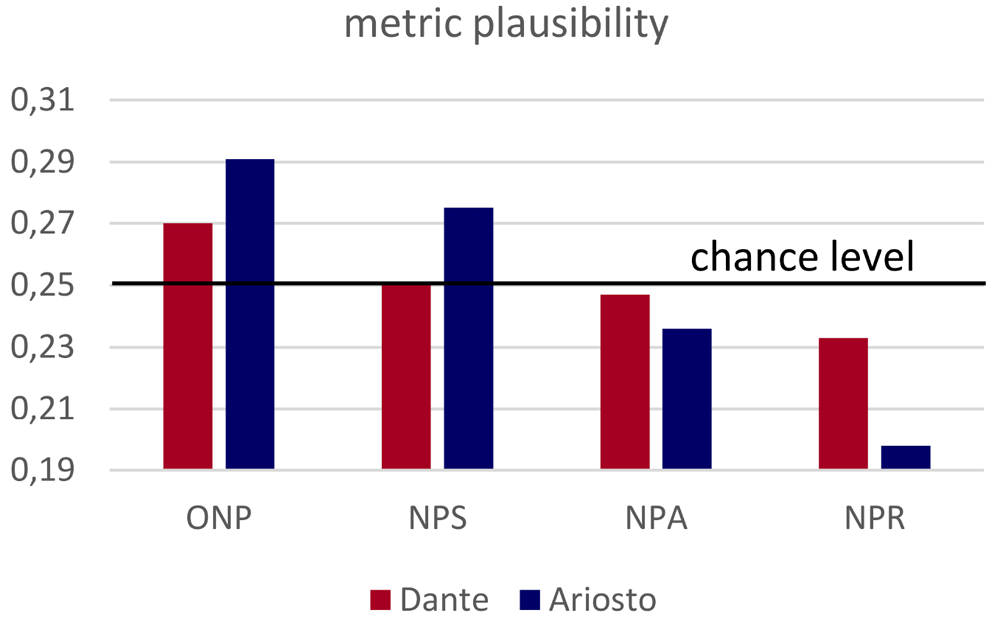
15f79420-78b4-4111-838b-1f631dd45734_figure2.gif

Figure 2. Relative metric plausibility.

The different versions of the same four passages from the Divina Commedia (red) and Orlando Furioso (blue) were ranked in the same order, but the plausibility index (see Methods) is more spread out for Ariosto.

Memory experiment

The main experiment testing the effect of the manipulations utilized two groups of 24 participants each, who were later included in the cohorts for the ranking (of the texts from the other author). Ethical approval for this study was granted by the SISSA Ethics Committee at the Scuola Internazionale Superiore di Studi Avanzati with deliberation 2018/16/ib on Nov. 5th, 2018 transmitted by act prot. 15534-III/13.

Subjects. 48 native Italian speakers who had been exposed to Italian literature through one of the national high school curricula were recruited through the SISSA recruiting platform and social media. Half of them were administered material from Ariosto (F= 15, M=9, mean age= 26.34, sd=4.02), the other half from Dante (F=15, M=9, mean age= 26.12, sd=3.61). None of them had a previous history of psychiatric or neurological illness, learning disabilities, nor hearing or visual loss. They were asked to participate in a study on memory and poetry, which would have involved them for two consecutive days, for about 30 minutes the first and about 10 minutes the second. Due to the pandemic situation, they were asked to be connected remotely with their own devices.

Experimental design. The experiment was designed with Psychopy Builder (Peirce et al., 2019). It included a study phase of about 30 minutes the first day, and the test of about 10 minutes the second day.

We aimed at an almost exclusively auditory experiment, in order to assess how memory relies on meter if listening is the only available channel to learn from (Najme et al., 2020). Indeed, the material included audio files only, with the sole exception of written material when a fill in the gap task appeared.

Besides the four passages, verses from two other canti were used for training, as indicated above. However, these verses were presented only in the ONP condition, leaving meter intact.

Every passage, including the training, was associated with an image, taken from among Gustave Doré’s illustrations of the Divina Commedia. The images were the same for each passage in the different conditions and were intended to help engage memory without, at the same time, biasing the linguistic material (see Extended data).

Every poem, including the training, was presented divided into three consecutive portions.

Notice on the use of the Zoom platform. The pandemic of 2020 forced us to find new methods to administer our experiment to subjects in remote mode.

After evaluating several options, we decided that, for this study, it was important to keep a degree of dialogue with participants. Also, we wanted to make sure that they were focused on the task and that they did the second part at the same time the following day.

For these reasons, among others, we thought that a good option was to have them on streaming in an open source platform. We chose Zoom, for which we had an institutional account.

Unfortunately, this meant that lab conditions could not be fully guaranteed. To overcome potential biases, we gave participants specific instructions:

  • - be connected with a computer or a tablet. Smartphones were not allowed, because of the small size of their screens and because they could potentially be distracting in case of notifications during the experiment

  • - be in a silent room with no disturbances

  • - be in the same room during the experiment for both days

Moreover, the accompanying images also helped focus the visual attention of the participants away from distracting visual stimuli in the rooms they were in. The images, it should be noted, accompanied passages derived from canti in the Commedia unrelated to those Gustave Doré referred to, as well as the a priori unrelated passages derived from the Orlando Furioso, and they were further enriched with graded color hues. Each image was consistently paired to each passage, whichever version, ONP, NPS, NPA or NPR, was presented to the subject. The variability across images, enhanced also by leaving each image in its original non-commensurate format, was thus adding an independent component to the natural variability across passages, but not contributing to the metric plausibility effect; and possibly helped reduce the variability, across participants, due to their heterogeneous testing-at-home conditions.

The dialogue over zoom was always conducted by the first author, but the experiment was self-paced by the participants using the Psychopy platform, with the images displayed on the shared screen and the passages played auditorily from the prior recordings by actor Sara Alzetta. The recordings are available upon request. When tested with the muted non-word (see below), participants would read aloud the left, central or right alternative appearing on the screen, and the experimenter would press the corresponding key (leftward, downward or rightward) on her own keyboard.

Study phase. The study phase started with the training ONP. First, participants listened once to all verses. Then they listened to the first part (three verses) repeated five times, with a three second pause between repetitions. Afterwards, another repetition of the same verses followed, but this time a non-word was muted. Muted non-words were usually positioned in the third verse. The task for the participant was then to retrieve the correct non-word. Three written alternatives appeared on the screen and the participant had to read aloud his/her choice.

After this training, each of the experimental passages was played, in a separate block, in the one of the four versions that had been assigned to that subject in the design. Then, after listening once to the entire poem (nine verses in Dante, eight verses in Ariosto), participants listened to the first part (three verses for both authors) five times. Next, they had to complete the task with the muted non-words.

The same happened with the second part of the poem, repeated four times. In this case the audio started from silence with the first part ramping up linearly in intensity, until it continued smoothly into the second part at the standard volume. Therefore, this allowed them to have feedback about the test they just completed.

For the third part they just listened to the repetitions (three verses for Dante, two verses for Ariosto; repeated three times), starting now with an acoustically smoothed version of the second part, but there was no test.

The alternatives to the correct non-word were chosen by maintaining the same number of syllables, and the same accent. Typically, stems and intermediate vowels or consonants changed. Again, target non-words were generally in the third verse, aiming not to overload working memory from the moment they listened to the silent word until the test time. In a few cases where this was not possible (e.g., because there were no appropriate non-words in the third verse) a non-word in the second verse was chosen, towards the end. Notably, for every passage we chose options which were consistent across all conditions, allowing a fair comparison in the results.

Test phase. The following day participants were connected at the same time, so 24 hours had passed. They listened directly to the test parts of the text, so the verses with a muted non-word, and they were asked to identify the muted target in all three parts, including then the third one. For the first and second part, tested also the previous day, target non-words were different. After completing the three tests per passage, they listened to the entire poem, to receive feedback.

Data analysis. The outcome of interest is essentially the presence of a significant correlation between the ranking produced by our intentionally delicate manipulations (expressed by the plausibility index, see Figure 2 and Extended Data) and the memory score in the main experiment (as well as the reaction times, see Figure 4), that would indicate a joint dependence on the type of manipulation. Correlations were considered significant at p < 0.05. Additional methodological considerations and controls are detailed below.

Entropy in the accent distribution. Two simple entropy measures were used to quantify the variability in the pattern of accents in the eight passages from the Divina Commedia and Orlando Furioso from which we derived the non-poems used in the experiment. First, the pattern of accents in each verse (from a total of 36 verses from the Commedia and 32 from the Orlando) was codified, based on the consensus in the literature, as a binary string of length 11, where each syllable was assigned a 1 if accented and a 0 if not. Since all 68 verses were regular hendecasyllables with the 10th syllable accented and the 11th not, we focused on the first nine digits in each string.

The first measure is based on the simplifying assumption of independent accents on neighboring syllables and calculates, for each author, the sum of the binary entropies for the syllables in each ordinal position, a sum which can range from 0 to nine bits.

The second measure is the entropy of the distribution, for each author, of distinct binary strings, and it ranges from 0 to log2(36) for Dante and from 0 to 5 bits for Ariosto.

These two entropy measures appear no less sensitive, with our passages, than others recently proposed (see e.g. Sela & Gronas, 2022).

Word frequency. The targets were derived from words of widely different frequency, covering the entire spectrum from 5×10⁻⁸ to 1.5×10⁻³ in SUBTLEX-IT, the corpus of Italian Subtitle-based Word Frequency Estimates, containing 517.564 entries (poster presented at the Annual Meeting of the Italian Ass Expl Psychol, Rovereto, Sept. 2015: Crepaldi, Amenta, Mandera, Keuleers and Brysbaert, SUBTLEX-IT. Subtitle-based word frequency estimates for Italian. Available online: https://lrlac.sissa.it/publications/frequency-estimates-different-registers-explain-different-aspects-visual-word).
Results

The contribution of distinct components to metric plausibility. Two separate cohorts of rankers, for Dante- and Ariosto-derived non-poems, were presented with a combination of the four passages from the same author, one in each of the ONP, NPS, NPS and NPR versions, and were asked to rank them in order of metric plausibility. The fully balanced design allowed us to extract a passage-independent plausibility score.

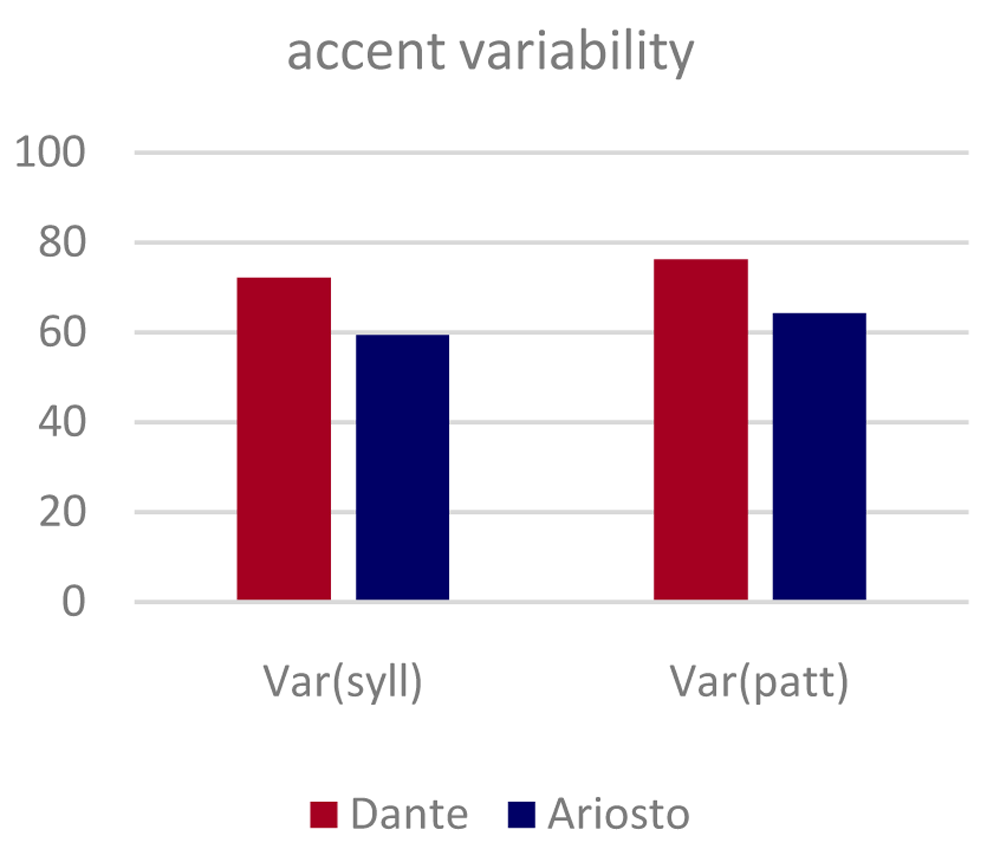
Both when derived from passages by Dante and Ariosto, non-sense poems were found most plausible in their fully metric ONP versions, somewhat less when the number of syllables was manipulated (NPS), even less when the pattern of accents was altered in the NPA renditions, and the least when rhymes were removed, NPR. Remarkably, however, differences in the plausibility index are shown in Figure 2 to be quite limited (see also the comparison with shuffled responses in the Extended Data), confirming the soft impact of our manipulations and making the fully balanced design essential. The variance was particularly limited in passages from the Commedia, which may be due to Dante’s taking more liberties with the meter he had adopted (the same hendecasyllables as Ariosto, but in terzine rather than ottave). To quantify this perception, at least in relation to accent patterns, which are more accessible to analysis, we applied two independent measures of accent variability to the four original passages by each author.

Dante appears to be slightly more variable in his accent patterns relative to Ariosto, but the main observation that can be gleaned off Figure 3 is that both poets are far from using a fixed pattern, utilizing over half of the maximum entropy they had available in terms of accenting those passages.

15f79420-78b4-4111-838b-1f631dd45734_figure3.gif

Figure 3. Variability in the pattern of accented syllables in the eight original passages by the two authors.

Two independent entropy measures of variability, per syllable and per verse (see Methods) are both normalized to range from 0 (a single fixed pattern) to 100% (i.e., each syllable in the verse is accented half the time; or each verse follows a different accent pattern).

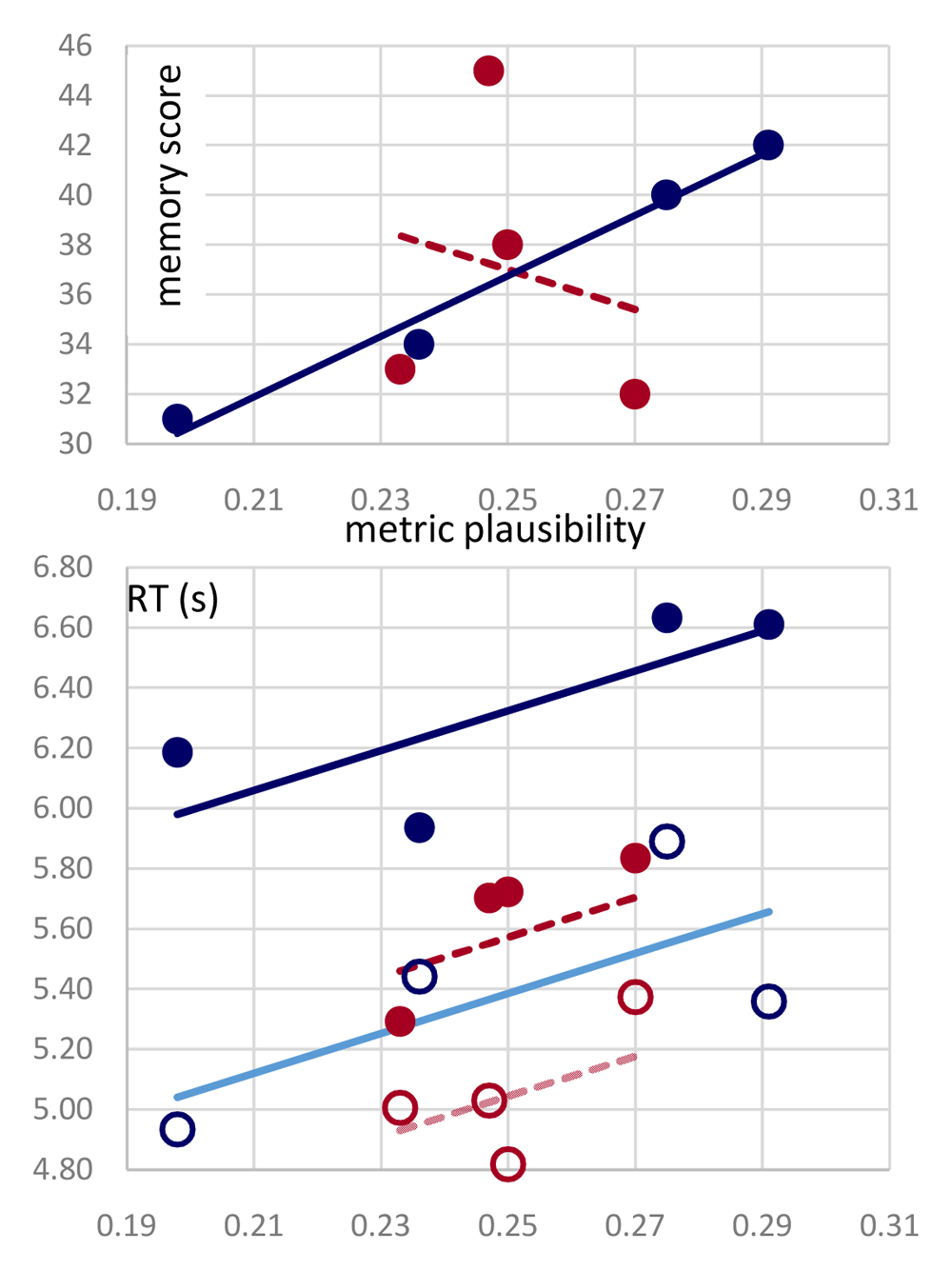
Meter can facilitate memory. Does such a loose structure help remember individual words? Table 1 and Figure 4 (upper) show that it does, only for the non-poems derived from Ariosto’s octaves. Twenty-four subjects per author were asked, one day after repeatedly listening to one version of each passage, to remember non-word targets out of three alternatives, upon listening to the non-poem with selected non-words muted. There were three such targets in each non-poem. While in the case of those derived from passages in the Divina Commedia the overall number of correct responses per condition was unrelated to its metric plausibility (r2=0.04), seemingly fluctuating as much as the correct responses to the first, second, and third query taken alone (Table 1), for the passages from Orlando Furioso the correlation with metric plausibility was remarkable (r2=0.98) and highly significant (p<0.01). Interestingly, the total score of the two cohorts was nearly identical, 147 for Ariosto and 148 for Dante, out of a total of 288 (24×4×3) and the memory scores per condition, with the exception of the NPA for Dante, were not significantly different from those obtained by randomly shuffling conditions across subjects (see Extended Data, Andreetta et al., 2021).

Table 1. Correct responses out of a total of 24 participants for the first, second, and third query.

DanteAriosto
NPRNPANPSONPNPRNPANPSONP
1515131011161913
21313910910915
3151716121181214
All3345383231344042
15f79420-78b4-4111-838b-1f631dd45734_figure4.gif

Figure 4. Memory and reaction times both increase with metric plausibility.

(Upper) Overall correct responses (out of 72) for each condition, ordered in terms of their metric plausibility, as in Figure 2, for passages from Dante (red) and Ariosto (blue). (Lower) Reaction times (in seconds) for correct (circles) and wrong responses (dots) are regressed against plausibility for each author, with a single slope parameter. The slope is significant and similar to that characterizing the Ariosto data alone, whereas it is denoted with a dashed line for the Dante data, because the latter would not produce a significant correlation on its own.

Meter helps, but not for free. The analysis of reaction times helps interpret the above results. As shown in Figure 4 (lower), overall it took longer for participants to pick a wrong answer over the correct answer (on average, 733ms more), and it took longer for participants tested with Ariosto, relative to those tested with Dante, to respond (on average, 547ms more). Most importantly, in each of the four types of trials above, the more metrically plausible the passage, the longer the reaction time. However, the trend is significant only with Ariosto, if data from the two authors are analyzed separately, and it is significant overall (p<0.004) with a slope mainly determined by the Ariosto data, if analyzed together, as shown in Figure 4. The slope for the Dante data alone would be higher, but not significant, likely because of the limited plausibility range spanned.

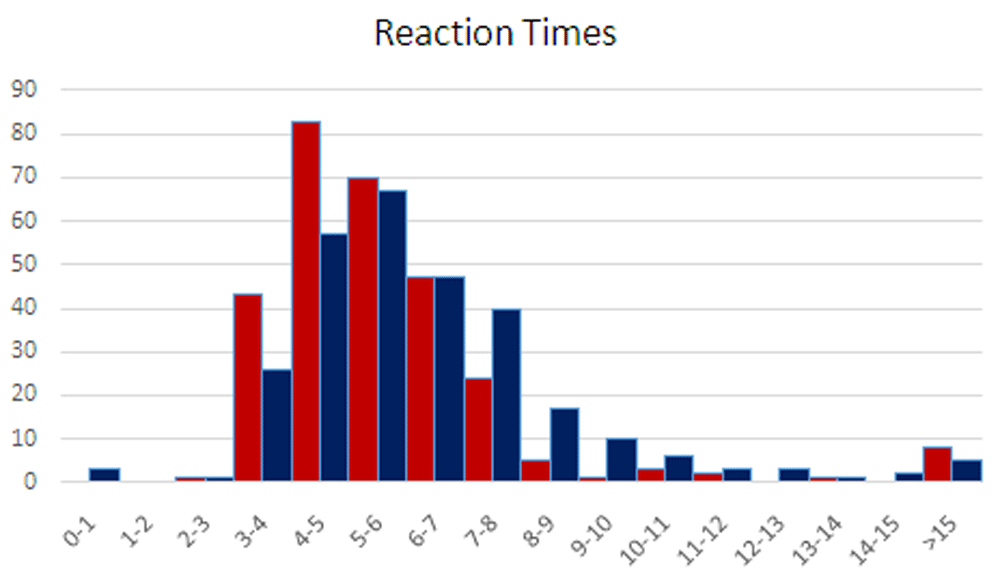
The overall distribution of reaction times is reported in Figure 5. Note that to avoid biasing RT results with the occasional outliers, only RTs < 10s where included in the averages in Figure 4, leaving out 14 trials for Dante and 20 for Ariosto, each out of 288. Including them (or alternatively excluding the three trials with RT< 2.8s), does not change the results, in fact it widens the RT gap between Dante and Ariosto.

15f79420-78b4-4111-838b-1f631dd45734_figure5.gif

Figure 5. Distribution of reaction times.

As explained in the results section, only RTs < 10s where included, leaving out 14 trials for Dante (red) and 20 for Ariosto (blue).

These findings suggest that processing meter in order to help retrieve a non-word heard the day before has a cognitive cost, and takes the order of hundreds of ms extra time, depending on exactly how much meter there is “used up” in the process. For passages derived from Dante, it appears that although outwardly the metric structure is essentially the same (with the slight qualification reported in Figure 3, and the note that a passage is a sequence of three terzine rather than a single ottava), meter is used less, and the very same memory performance is attained on average in less time.

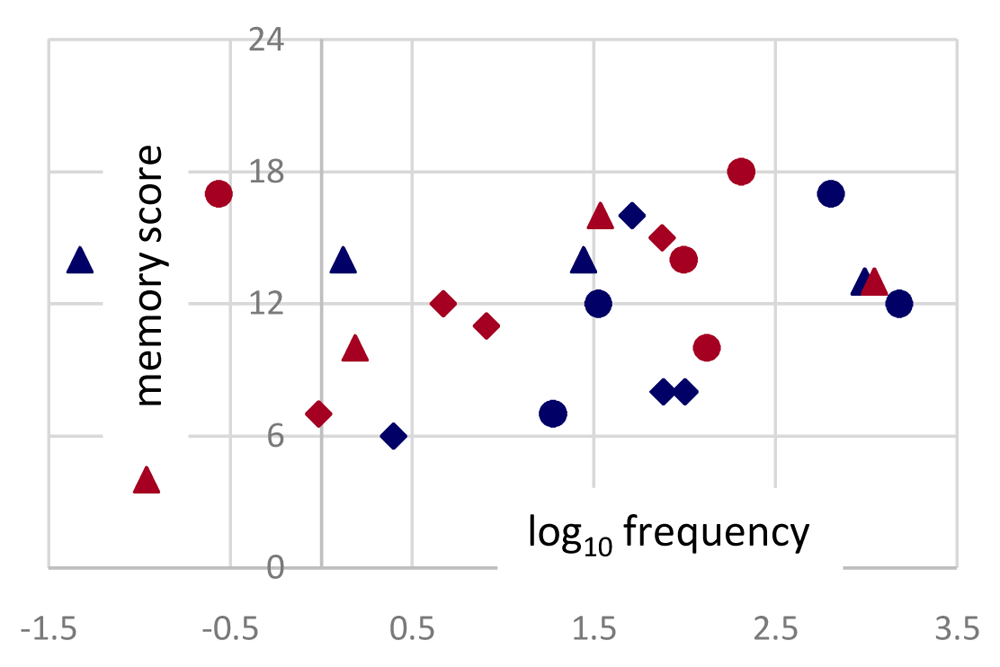
Word frequency does not have major effects. While targets derived from more frequent words tended to be remembered marginally better, the same trend was observed for both authors (Figure 6), and each target appeared by design in all four conditions.

15f79420-78b4-4111-838b-1f631dd45734_figure6.gif

Figure 6. Frequencies.

Word frequencies (log of occurrencies per million) in SUBTLEX-IT for the 24 (8×3) target words used in non-poems derived from Dante (red) and Ariosto (blue). On the y-axis the memory score is the number of times each target word has been correctly selected, by 24 participants.

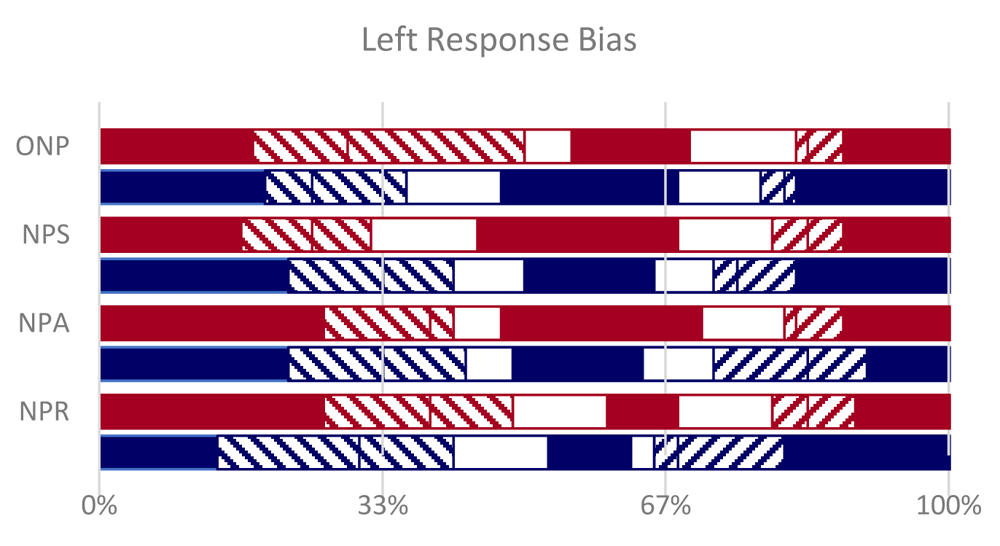
A strong bias makes subject favor the left alternative, among the three non-word options, but mainly in their wrong responses and the extent of the bias does not correlate with metric plausibility (Figure 7).

15f79420-78b4-4111-838b-1f631dd45734_figure7.gif

Figure 7. Left Bias.

In full color (red for Dante, blue for Ariosto) the correct responses on the left, central and right non-words. Left alternative, among the three non-word options, was often chosen when the correct non-word was central or on the right (left-tilted striped segments). Blank segments are responses in the center, when the correct non-word was left or right. Right-tilted striped responses are on the right, when the correct non-word was left or center.

Discussion

The connection between meter and memory is not new to cognitive science: in a seminal book Rubin described oral traditions and the linguistic devices they use, highlighting in particular their role in memory as limiting the choice (one could say the entropy, (Shannon & Weaver, 1949) of larger units: by indicating a specific word ending, for instance, choices will be limited to those words which have the same ending, if a rhyme is expected (Rubin, 1995).

In music, Schulkind has investigated memory mechanisms by having participants listen to well-known and novel songs which were altered in their rhythm. Results showed that unaltered versions were identified significantly better than the altered ones, and this applied to both known and novel songs (Schulkind, 1999).

Analogously, Sachs investigated the retention of semantic and syntactic information in discourse by having participants listen to short prose stories. By selectively manipulating the meaning or the syntactic form of a target sentence, she could show that meaning is remembered, in prose, better and for longer that meaning-irrelevant sentence form (Sachs, 1967).

In a similar design, Tillman and colleagues have tested short term memory in prose and poetry. Also in this case, a sentence, considered the target, was changed in its form or in meaning. While with prose memory for surface characteristics declined over time, as expected, the same did not happen with poetry, for which form, in addition to content, was efficiently retrieved (Tillmann & Dowling, 2007).

With this study, we had hoped to be able to quantify, in rather absolute terms, the contribution of different aspects of meter to memory retention, using “material” from the classical period of Italian literature, before the advent of the printing press diminished the perceived value of memorability per se, and promoted the further ritualization of the written verse into a primarily esthetic construct. The results belied our naïve expectation, in that meter seems to be ‘perceived’ much more (in terms of our plausibility index) in passages derived from Ariosto than in those from Dante, and to contribute to memory in the former but not in the latter. Yet the meter employed by the two authors is nearly identical, with a discrete difference in the concatenation of hendecasyllables (in terzine in the Divina Commedia, in ottave in the Orlando Furioso) and a presumably small quantitative difference in the variability with which the common meter is used (Figure 3). Therefore, one would expect that the listener, or the reader, activates the very same cognitive schema, at least locally, within the few verses of a single ottava or three terzine.

The time the subjects from the two statistically indistinguishable cohorts needed to react to the memory tests suggest an account of the main finding: the metric schema is the same, but it is activated to a different extent. Somewhat counterintuitively, it appears to be activated less with Dante, an author with whom most people who have been in high school in Italy are rather familiar, than with Ariosto, who has been relegated, especially in the last few decades, to a marginal niche in standard Italian curricula. This appears to discount a possible interpretation of this difference, i.e., that we are seeing two competing effects, whereby both congruence and incongruence with established schemata can enhance memory, the latter a novelty effect (Bonasia et al., 2018): novelty presupposes the activation of the schema it contradicts. An alternative interpretation is that Dante’s verses are just more interesting and tend to focus one’s attention to other aspects than the components of meter. Even if this interpretation were to be shown to be correct, it is quite surprising that it would apply, in our paradigm, to verses that have been deprived of their meaning. Moreover, our replacing several of the key words chosen by Dante with our untalented choice of non-words would have been expected to remove other potentially useful devices from the poet’s bag-of-tricks, like alliteration, onomatopoeia, use of liquids, of newly crafted words, etc. (Robey, 1985). Still, the wide-ranging contribution of sound ‘shape’ to cognitive processes has been noted, in particular in poetry (Blohm et al., 2021) and it might play a role in our findings, in forms not readily evident. In line with previous studies, we also acknowledge that a potential factor could also be the individual participants’ expertise with poetry and/or music. Such data were not considered, here, and presumably individual differences average out, but these factors are being investigated in a related study.

Can the hypothesis of differential schema activation be tested experimentally? In principle, yes, and one approach would be by looking at evoked response potentials (ERPs), which have been widely used to reveal brain signals that reflect violations of expectation, whether (in the language domain) syntactic, semantic, or just phonological (Brown & Hagoort, 1993; Hagoort, 2003). With poetry, there have been ERP studies of aesthetic appreciation and ease of processing (Obermeier et al., 2016) and of brain activity during poem composition (Liu et al., 2015). For an experimental design like ours, however, one challenge is how to obtain the large number of trials per condition needed in order to obtain valid ERP measures. Another one is to what extent one can rely on single ERPs to characterize a heterogeneous variety of metric components. It is possible that addressing both challenges will require a change in perspective from whole brain dynamics to one which articulates the cortex into a plurality of interacting local networks, as embodied e.g., by the Potts model (Naim et al., 2018). Distinct processes, among the many that concur to the overall perception, appreciation and memory of a poem, including the components of meter, are likely reflected differentially in the dynamics of distinct cortical networks, just like other, better studied types of memory such as episodic and spatial memories (Robin & Moscovitch, 2017), which have stimulated theories about the interactions between the medial temporal lobe and medial prefrontal cortex (Van Kesteren et al., 2012). Meter, with its multiple components, indicates the need to go beyond the somewhat coarse distinctions available to neuropsychology, what is at the moment accessible only through mathematical models (Spalla et al., 2021), with which one can study forms of partial coherence among multiple local networks, reminiscent of that of systems unable to attain long-range order (Stella et al., 2020).

While partial coherence might seem to detract from the wholeness attributed to conscious processing (Dehaene et al., 1998), it is entirely consistent with the idea of a mixture of automatic and controlled components concurring to memory encoding and retrieval (Wang & Morris, 2010). With meter, the notion that different schemata might be activated only optionally, at times, and then partially and incoherently with others, and when activated might offer only an incremental contribution, suggests a more nuanced take on high-level cognition in general. Using many filters to interpret reality, and to a variable degree, implies check-and-balances and minimal recourse to prevailing or dominant schemata, those that often reflect biases or prejudice.

Data availability

Underlying data

Repository: Meter and Memory. DOI: 10.17605/OSF.IO/A825X (Andreetta et al., 2021).

The project contains the following underlying data:

  • all Ariosto.xlsx (Responses to the non-poems derived from the Orlando Furioso).

  • all Dante.xlsx (Responses to the non-poems derived from the Divina Commedia).

Extended data

Repository: Meter and Memory. DOI: 10.17605/OSF.IO/A825X (Andreetta et al., 2021).

The project contains the following extended data:

  • Andreetta_ExtendedData.pdf (the non-poems and the associated images)

  • README file

Data are available under the terms of the Creative Commons Attribution 4.0 International license (CC-BY 4.0).

Acknowledgements

An earlier version of this article can be found on bioRxiv (https://doi.org/10.1101/2021.03.14.435310)

We are grateful to the HFSP collaboration on Analog computations underlying language mechanisms, in particular to Yair Lakretz, with whom the original idea for this study was discussed, and to Elisa Ciaramelli, Rodolfo Zucco, Sergio Bozzola, Andrea Tabarroni and Sara Alzetta, who offered their different perspectives.

Author contributions

SA and AT conceived the experiment and generated the non-poems. SA and VB implemented it in Psychopy and Psytoolkit, and SA run it, assisted by OS with Prolific and with data analysis. SA and AT have written the report with inputs from VB and OS.

References

  •  Andreetta S, Soldatkina O, Boboeva V, et al.: Meter and memory. 2021. http://www.doi.org/10.17605/OSF.IO/A825X
  •  Baddeley A: Working Memory Alan Baddeley. Science. 1992; 255(5044): 556–559. PubMed Abstract | Publisher Full Text
  •  Blohm S, Kraxenberger M, Knoop CA, et al.: Sound shape and sound effects of literary texts. In: Kuiken, D. and Jacobs, A. M. (ed. by), Handbook of Empirical Literary Studies, De Gruyter, Berlin-Munich-Boston. 2021. Publisher Full Text
  •  Bonasia K, Sekeres MJ, Gilboa A, et al.: Prior knowledge modulates the neural substrates of encoding and retrieving naturalistic events at short and long delays. Neurobiol Learn Mem. 2018; 153(Pt A): 26–39. PubMed Abstract | Publisher Full Text
  •  Brewer WF, Dupree DA: Use of plan schemata in the recall and recognition of goal-directed actions. J Exp Psychol Learn Mem Cogn. 1983; 9: 117–129. Publisher Full Text
  •  Brown C, Hagoort P: The processing nature of the N400: Evidence from masked priming. J Cogn Neurosci. 1993; 5(1): 34–44. PubMed Abstract | Publisher Full Text
  •  Dehaene S, Kerszberg M, Changeux JP: A neuronal model of a global workspace in effortful cognitive tasks. Proc Natl Acad Sci U S A. 1998; 95(24): 14529–14534. PubMed Abstract | Publisher Full Text | Free Full Text
  •  Ghosh VE, Gilboa A: What is a memory schema? A historical perspective on current neuroscience literature. Neuropsychologia. 2014; 53(1): 104–114. PubMed Abstract | Publisher Full Text
  •  Hagoort P: Interplay between syntax and semantics during sentence comprehension: ERP effects of combining syntactic and semantic violations. J Cogn Neurosci. 2003; 15(6): 883–899. PubMed Abstract | Publisher Full Text
  •  Haluts N, Trippa M, Friedmann N, et al.: Professional or amateur? the phonological output buffer as a working memory operator. Entropy (Basel). 2020; 22(6): 662. PubMed Abstract | Publisher Full Text | Free Full Text
  •  Hintze A: On the literary structure of the older Avesta. Bull Sch Orient Afr Stud. 2002; 65(1): 31–51. Publisher Full Text
  •  Liu S, Erkkinen MG, Healey ML, et al.: Brain Activity and Connectivity During Poetry Composition: Toward a Multidimensional Model of the Creative Process. 2015. Publisher Full Text
  •  Naim M, Boboeva V, Kang CJ, et al.: Reducing a cortical network to a Potts model yields storage capacity estimates. J Stat Mech Theory Exp. 2018; 2018(4): 043304. Publisher Full Text
  •  Najme D, Mahdi P, Majid ZA: Oral-Oriented Teaching of Meter through the Use of Music: Proposing a New Method of Teaching Meter in Poetry. J Literary Arts. 2020; 12(4): 73–96. Publisher Full Text
  •  Norman DA, Shallice T: Attention to action: Willed and automatic control of behavior BT - Consciousness and Self-Regulation. Consciousness and Self-Regulation. 1986; 4: 1–18. Reference Source
  •  Obermeier C, Kotz SA, Jessen S, et al.: Aesthetic appreciation of poetry correlates with ease of processing in event-related potentials. Cogn Affect Behav Neurosci. 2016; 16(2): 362–373. PubMed Abstract | Publisher Full Text
  •  Peirce J, Gray JR, Simpson S, et al.: PsychoPy2: Experiments in behavior made easy. Behav Res Methods. 2019; 51(1): 195–203. PubMed Abstract | Publisher Full Text | Free Full Text
  •  Reece S: Epithets. In M. Finkelberg (Ed.), Homeric Encyclopedia. Blackwell. 2011; 257–259.
  •  Robey D: Language and Style in the Divine Comedy. Roman Stud. 1985; 3(1): 112–127. Publisher Full Text
  •  Robin J, Moscovitch M: Details, gist and schema: hippocampal-neocortical interactions underlying recent and remote episodic and spatial memory. In Curr Opin Behav Sci. Elsevier Ltd. 2017; 17: 114–123. Publisher Full Text
  •  Rubin DC: Memory in oral traditions: The cognitive psychology of epic, ballads, and counting-out rhymes. In Memory in oral traditions: The cognitive psychology of epic, ballads, and counting-out rhymes.1995. Reference Source
  •  Rumelhart DE: Notes on a schema for stories. In: Representation and understanding, Morgan Kaufmann. 1975; 211–236. Publisher Full Text
  •  Sachs JS: Recognition memory for syntactic and semantic aspects of connected discourse. Percept Psychophys. 1967; 2(9): 437–442. Publisher Full Text
  •  Schulkind MD: Long-term memory for temporal structure: Evidence from the identification of well-known and novel songs. Mem Cognit. 1999; 27(5): 896–906. PubMed Abstract | Publisher Full Text
  •  Šeļa A, Gronas M: Measuring rhythm regularity in verse: entropy of inter-stress intervals. CHR 2022: Computational Humanities Research Conference, Dec 12-14, Antwerp, Belgium, CEUR Workshop Proceedings (CEUR-WS.org). 2022. Reference Source
  •  Shannon CE, Weaver W: The mathematical theory of communication. University of Illinois Press. 1949. Reference Source
  •  Spalla D, Cornacchia IM, Treves A: Continuous attractors for dynamic memories. eLife. 2021; 10: e69499. PubMed Abstract | Publisher Full Text | Free Full Text
  •  Stella F, Urdapilleta E, Luo Y, et al.: Partial coherence and frustration in self-organizing spherical grids. Hippocampus. 2020; 30(4): 302–313. PubMed Abstract | Publisher Full Text
  •  Stoet G: PsyToolkit: A Novel Web-Based Method for Running Online Questionnaires and Reaction-Time Experiments. Teach Psychology. 2017; 44(1): 24–31. Publisher Full Text
  •  Taylor SE, Crocker J: Schematic Bases of Social Information Processing. In Higgins, E.T. et al. (Ed.), Social Cognition: The Ontario Symposium. Lawrence Erlbaum Associates. 1981. Reference Source
  •  Tillmann B, Dowling WJ: Memory decreases for prose, but not for poetry. Mem Cognit. 2007; 35(4): 628–39. PubMed Abstract | Publisher Full Text
  •  Tse D, Langston RF, Kakeyama M, et al.: Schemas and memory consolidation. Science. 2007; 316(5821): 76–82. PubMed Abstract | Publisher Full Text
  •  Van Kesteren MTR, Ruiter DJ, Fernández G, et al.: How schema and novelty augment memory formation. Trends Neurosci. 2012; 35(4): 211–219. PubMed Abstract | Publisher Full Text
  •  Wang SH, Morris RGM: Hippocampal-neocortical interactions in memory formation, consolidation, and reconsolidation. Annu Rev Psychol. 2010; 61: 49–79, C1-4. PubMed Abstract | Publisher Full Text
  •  www.maldura.unipd.it (“Archivio Metrico Italiano”, accessed November 2018).
  •  www.prolific.co (accessed December 2020).