Introduction
The Iberian Peninsula, located in the western Mediterranean basin, is known as a hotspot of plant biodiversity1–3. With an estimated 6,500 species and subspecies of vascular plants, including those found in the Balearic Islands, and a remarkable endemicity rate of 28%4,5, its ecological importance cannot be underestimated. However, this region is currently facing significant challenges due to global warming, which has led to an increase in the frequency, duration and severity of droughts6. These climatic changes are fundamentally reshaping Mediterranean ecosystems distribution.
In the midst of these changes, the dynamics of forest cover are significantly influenced by succession processes triggered by land abandonment, which are currently having a greater impact than climate change7. Recognising this, Spain has prioritised increasing the resilience of forests to drought as a primary objective in the management of protected areas8. Proposed strategies to achieve this include promoting mixed stands and the resilient species to drought, and reducing tree density to decrease competition for water and nutrients during dry periods7,9–11
However, a key aspect closely aligned with these proposed strategies is the recognition of the contribution of floristic composition to forest development and conservation.
In this context, the Orchidaceae family stands out as a group of significant biological, ecological and conservation interest. Despite its mainly tropical distribution, approximately 100 species and subspecies of orchids have been documented in the Iberian flora12–17, with endemic orchids representing 0.7% of the total number of Iberian endemic taxa. This highlights the importance of considering the diversity of the flora present in efforts to increase the resilience of forests and ensure their long-term conservation.
The Orchidaceae family is one of the richest in species (about 20,000), but it is also one of the most threatened in the world by collecting and habitat destruction. So much so that orchids are considered flagship species for plant conservation worldwide18. Many orchids are rare and narrowly distributed in specific habitats19–22, possibly due to their mycorrhizal specificity, pollinator specialisation and germination limitation23,24.
Recent research has made significant progress in elucidating the distribution patterns and ecological requirements of endemic orchids in the Iberian Peninsula and the Balearic Islands. Studies by De la Torre25, Pereira et al.26 have identified distinct biogeographical regions and hotspots of endemism for orchid taxa, highlighting the importance of localised conservation efforts. Endemic taxa, with their high evolutionary importance and vulnerability to extinction, are priority targets for conservation efforts at different scales27. Previous studies in endemic taxa have provided valuable baseline data such as IUCN categories28, floristic studies29 but there remains a need for more comprehensive biogeographical characterisations and in-depth analyses of the ecological niches of these species.
In this context, detailed biogeographical knowledge of these species and their corresponding cartographic representation is a fundamental tool for their conservation30.
According to Rivas-Martínez et al. (2017), Biogeography is the science that studies the distribution of species, communities, habitats, biocoenoses and natural ecosystems on Earth, and the relationships between them. It considers the distribution areas of taxa and syntaxa (chorology), and combines information from other natural sciences (geography, botany, zoology, soil science, bioclimatology, geology, etc.), in order to establish a hierarchical biogeographic classification of the planet territories.
The main typological units in descending rank are kingdom, region, province, sector, district, country, landscape cell and tesela31–35 (Table 1). Terrestrial biogeography has been linked to phytogeography due to the value of vascular plant species and communities in defining and delimiting the Earth.
Table 1. Typology of biogeographical units in ascending order.
Biogeographical
Units | Definition |
|---|
| Tesela | Geographical area of greater or lesser extent, ecologically homogeneous, it has only a single type of potential
natural vegetation. |
| Landscape cell | Constituted by a mosaic of teselas, it is assembled by networks of geosigmeta based on the geomorphology and
the soils of the territory. |
| Country | A large and clearly delimited geographic territory that has a rich set of landscape cells and its own topographical
geosigmeta. |
| District | A group of biogeographical countries characterised by a high number of differential species and even endemic
taxa, which distinguishes it from neighbouring areas. It also includes units such as associations, series and
geoseries that are not present in neighbouring districts. |
| Sector | A group of biogeographical districts forming a largescale geographical unit with its own endemic taxa, associations
and vegetation series, as well as original topographic and geoclinosequential (altitudinal zonation) geoseries. |
| Province | It is a large geographical area that contains numerous endemisms and unique species (its own subelement), as
well as particular macroseries |
| Region | It comprises a vast area made up by a group of biogeographical provinces, each with its own regional floristic
element, including endemic species, genera or even families. |
| Kingdom | It is the supreme unit of biogeography, deals with the origin of the flora and fauna, as well as the origin of the
major continents, orogenies and particular macrobioclimates. |
The names of the biogeographical units are derived from existing place names, which have been assigned using a standardised methodology for cartography, particularly in Spain. They are considered to be congruent with the area they are intended to represent.
It should be emphasised that the delimitation of biogeographical units can only be accurately determined by their diagnosis and corresponding maps. All areas, with the exception of the teselas, must be contiguous by land, lake or sea routes and include all the small orographic accidents and lithological diversity in the area. Sometimes, neighbouring areas invade biogeographical regions, creating "islands", which often occur in areas with different lithologies or near regional or provincial borders. These islands may have a lower typological independence than the area they intrude, which depends on their originality, floristic richness, phytocoenosis and surface area.
One of the criteria traditionally used for the recognition and delimitation of biogeographical units, as well as for the determination of their entity, is the inclusion of information on the geographical distribution of those taxa (families, genera, species, and subspecies) that are narrowly restricted to a particular area, up to the rank of biogeographical province. In this line, endemisms have been successfully used to define and delimit the chorological or biogeographical units (provinces, sectors and districts), and they form part of the phytogeographical subelement that characterises them.
According to the proposal of Rivas-Martínez et al. (2017), the territory of the Iberian Peninsula and the Balearic Islands share two biogeographical regions: the Eurosiberian and the Mediterranean, both included in the Holarctic Kingdom. The numerical synthesis of biogeographical units is displayed in Table 2.
Table 2. Number of biogeographical units in the Iberian Peninsula and Balearic Islands.
| Biogeographic unit | Eurosiberian Region | Mediterranean Region | Total |
|---|
| Subregions | 2 | 1 | 3 |
| Provinces | 2 | 6 | 8 |
| Subprovinces | 6 | 10 | 16 |
| Sectors | 12 | 37 | 49 |
| Districts | 64 | 182 | 264 |
Motivated by the need for a more holistic understanding of the distribution, ecology and conservation status of endemic orchids in the region, this study aims to fill existing knowledge gaps and contribute to the conservation and management of these unique taxa within the Iberian Mediterranean forests. By integrating biogeographical mapping, bioclimatic analysis, and phytosociological description, we aim to provide a comprehensive assessment of the distribution patterns, ecological preferences and conservation status of endemic orchid species, including Epipactis cardina, Ophrys bertolonii subsp. balearica, Ophrys speculum subsp. lusitanica, Orchis cazorlensis and Serapias perez-chiscanoi.
Three aspects are present as novelty: 1) the biogeographical characterisation, a set of rules and criteria are proposed that allow us to assign in a simple, objective and universal way the correct biogeographical epithet that corresponds to the taxon according to its distribution area. 2) The current conservation status of the aforementioned species including their phytosociological behaviour. 3) The bioclimatic characterisation, which defines both the qualitative and quantitative requirements for these species, endemic to the Iberian Mediterranean grasslands and forests.
Methods
Study area
The Iberian Peninsula (Portugal, Spain and Andorra) including the Balearic Islands (a total of 4992 km2) was studied.
Data compilation
Five taxa (three species and two subspecies) considered Iberian and/or Balearic endemisms11 were studied (Table 3).
Table 3. Studied taxa.
| Genus | Species / Subespecies | Authorship |
|---|
| Epipactis | E. cardina | Benito & C.E. Hermos. in Estud. Mus. Ci. Nat. Álava 13: 108–109 (1998) |
| Ophrys | O. bertolonii subsp. balearica | (P. Delforge) L. Sáez & Rosselló in Fl. Montiber. 7: 88 (1997) |
| Ophrys | O. speculum subsp. lusitanica | O. Danesch & E. Danesch in Orchidee (Hamburg) 20: 21 (1969) |
| Orchis | O. cazorlensis | Lacaita in Cavanillesia 3: 35 (1930) |
| Serapias | S. perez-chiscanoi | Acedo in Anales Jard. Bot. Madrid 47: 510 (1990) |
These five species were specifically chosen because they are Iberian endemics, making them ideal candidates to validate the biogeographical methodology and demonstrate the suitability of the Iberian Peninsula and the Balearic Islands as a representative study area for this type of research. To obtain plant occurrence records for each taxon, a search was conducted using the Global Biodiversity Information Facility36–40. This database stands as the primary source of Iberian plant distribution data due to the inclusion of all plant records from the Spanish Plant Information System ANTHOS (http://www.anthos.es). Additionally, we utilised the Flora-On database (https://flora-on.pt/) to supplement the information.
All presence points were compiled into an Excel file. Records with uncertain origin and undefined locations were removed, following the distribution criteria outlined in Flora Iberica13. Subsequently, the Excel data was exported to ArcGIS software for mapping the species' distribution points. The final records underwent manual verification by our team of botanical experts to ensure accuracy.
Mapping generation
To generate the biogeographical maps for each taxon, we used the shape file from the Biogeographic Map at the District Level of the Iberian Peninsula and Balearic Islands (Annex 1 in extended data) as our basis. his shape file was created through previous research41 conducted with ArcGIS 10.8 software42. The occurrence points of each taxon were exported as a point shape file and overlaid with the polygon shape file of biogeographical districts in ArcGIS 10.8 software.
The detailed biogeographical final map for each taxon was obtained by colouring the districts that match the occurrence points of the taxa, using the geostatistical tool selection by location. This method allows for a quick and easy visualisation of the presented information.
Proposed criteria and biogeographical characterization
Biogeographical terminology is often used very loosely and therefore with little specificity. Although sometimes the use of a macro-territorial term may be sufficient, when it comes to biogeographical nomenclature applied to an endemism, a more specific term is usually required. Widely used terms such as Eurosiberian, Circummediterranean, Western Iberian, etc. provide rather limited information on the distribution area of endemic taxa such as those we are dealing with here.
For this reason, we propose a set of rules and criteria that will allow us to assign in a simple, objective, and universal way the specific biogeographical epithet that corresponds to the taxon according to its more detailed area of distribution. On the basis of this proposal, the biogeographical characterisation of each taxon is presented.
Bioclimatic range
For establishing the qualitative and quantitative diagnosis, we have calculated the bioclimatic parameters and indices for each location of each taxon studied, following the Worldwide Bioclimatic Classification System43. Monthly temperature and precipitation values were obtained from the WorldClim database (www.worldclim.org) from 1970–201944. For each taxon, we calculated the maximum, minimum and interquartile range (Q1 and Q3) of each variable examined. To present these results in an easily understandable format, we used box-whisker plots. A box-whisker plot is a visual representation of descriptive statistical data that shows the minimum, first quartile, median, third quartile and maximum values. The top of the box symbolises the third quartile, while a horizontal line near the centre of the rectangle indicates the median. The base of the box represents the first quartile, and in the edge of the vertical lines extending from the top and bottom of the rectangle represent the maximum and values minimum respectively45,46.
Phytosociological adscription and conservation status
In order to know the type of habitat in which each taxon occurs, a bibliographic review was carried out to describe their phytosociological behaviour at the level of class, order and alliance when possible32–34,47. In addition, the information has been completed with data from the Iberian and Macaronesian Vegetation Information System (SIVIM database, www.sivim.info)48,49. For taxa for which no phytosociological information was found, an adscription is proposed on the basis of the habitat characteristics reported in the literature13,50–52, and data of Interactive Flora of Portugal (FLORA-ON database, https://flora-on.pt/).
Furthermore, the information for each taxon is completed with up to date data on its legal protection status and threat category, if available, (legal provisions and Red Lists and Red Books at regional, national or international levels) obtained from: the PHYTEIA database (Information System on the Protected and Threatened Flora of Spain, module of ANTHOS, http://www.anthos.es); the DRIADA web (https://www.conservacionvegetal.org/driada/), that includes all the Spanish vascular flora taxa listed in the Spanish Catalogue of Threatened Species, besides the List of Wild Species under special protection regime, and the regional catalogues; and the Red List of the vascular flora of continental Portugal (https://listavermelha-flora.pt/).
Results and discussion
Figure 1 to Figure 5 show the biogeographical maps obtained for the taxa studied: Epipactis cardina (Figure 1), Ophrys bertolonii subsp. balearica (Figure 2), O. speculum subsp. lusitanica (Figure 3), Orchis cazorlensis (Figure 4), and Serapias perez-chiscanoi (Figure 5). The legend shows the names of the biogeographical districts in which the plant occurs. The occurrence records obtained for each plant are also given.
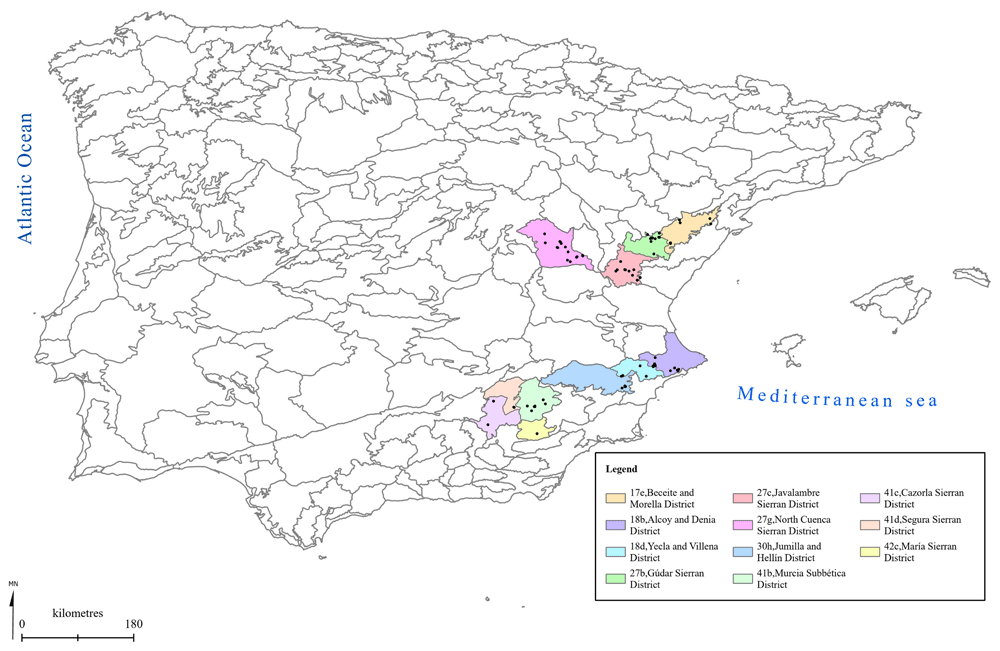
Figure 1. Biogeographical map of Epipactis cardina.
(●) Occurrence records.
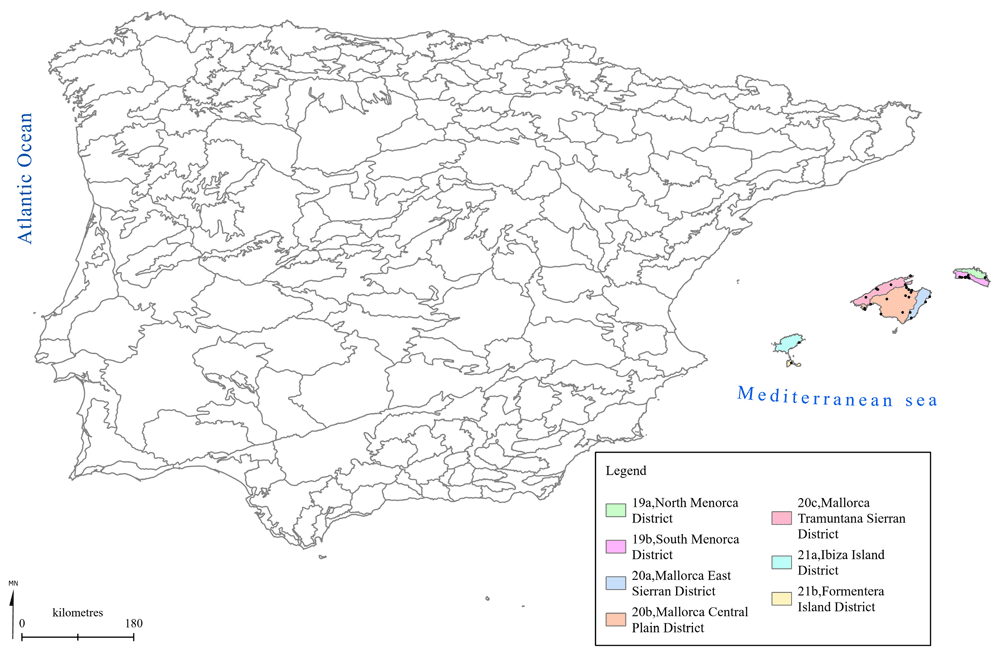
Figure 2. Biogeographical map of Ophrys bertolonii subsp. balearica.
(●) Occurrence records.
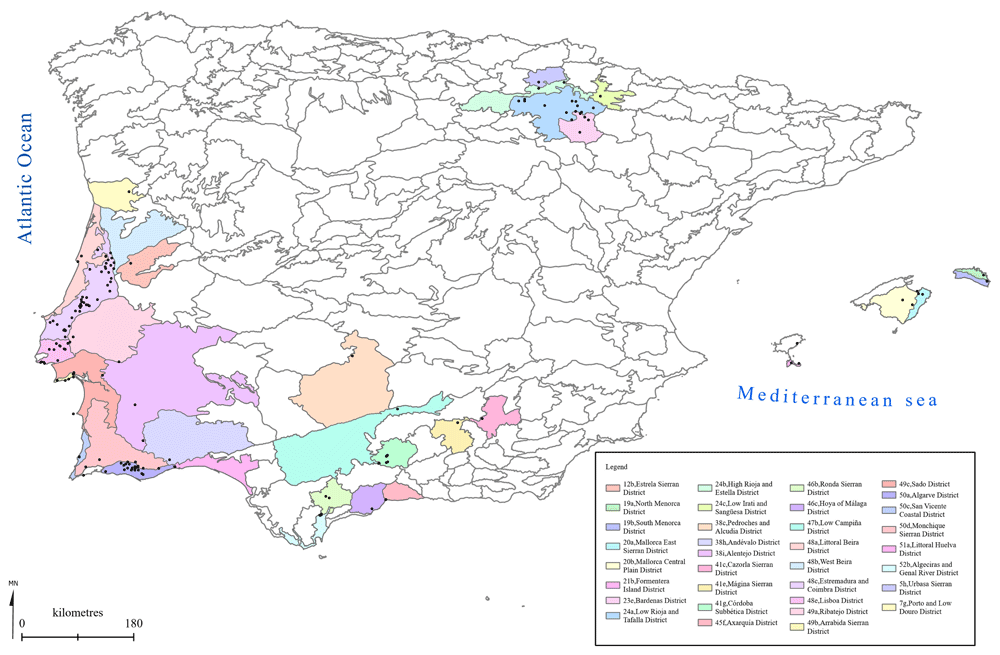
Figure 3. Biogeographical map of Ophrys speculum subsp. lusitanica.
(●) Occurrence records.
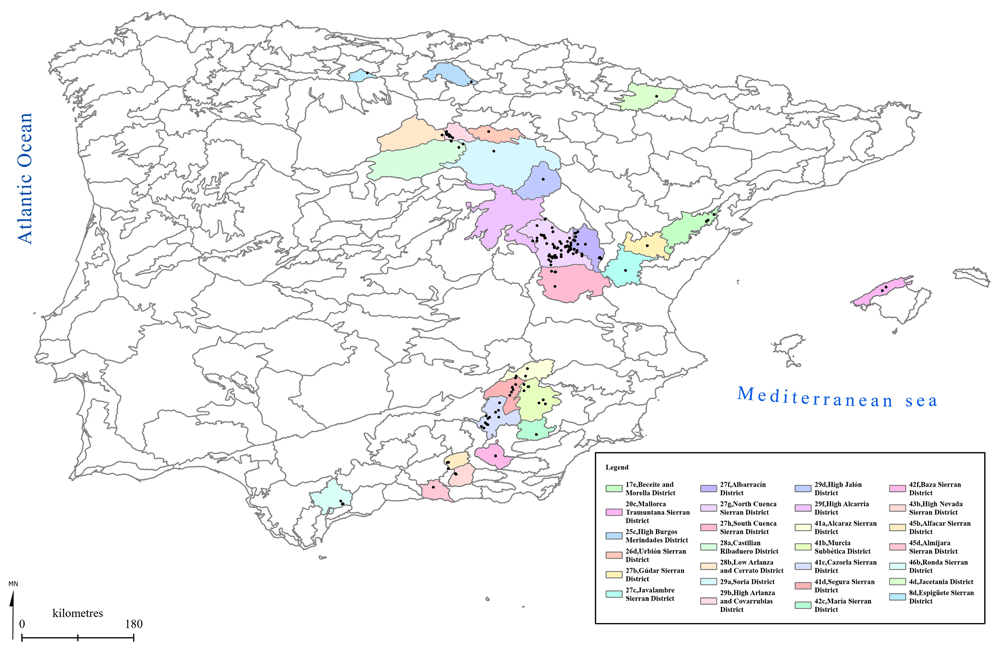
Figure 4. Biogeographical map of Orchis cazorlensis.
(●) Occurrence records.
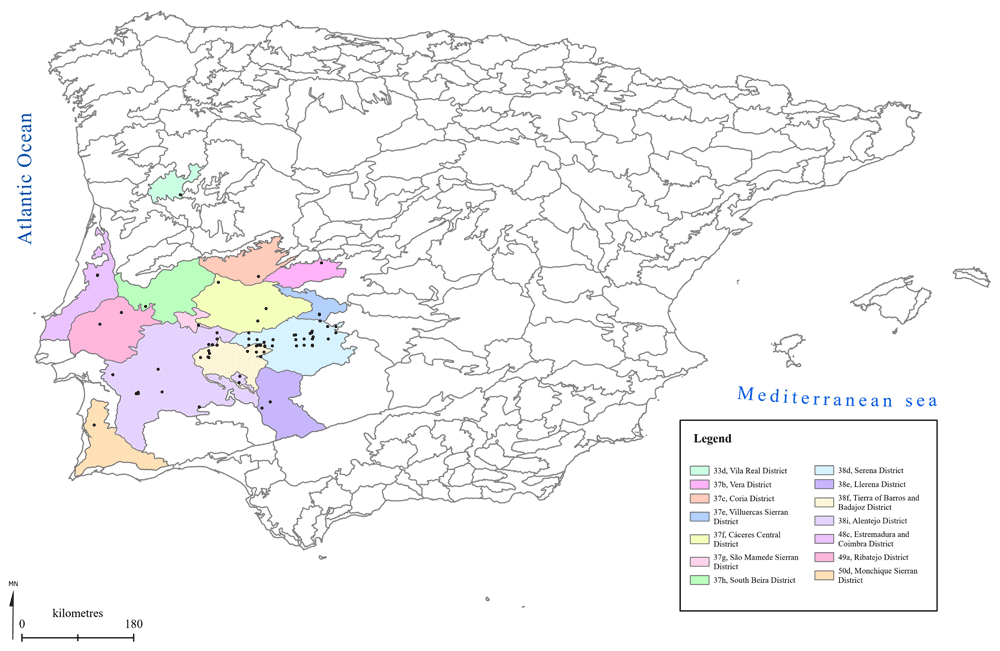
Figure 5. Biogeographical map of Serapias perez-chiscanoi.
(●) Occurrence records.
Proposed criteria and biogeographical characterisation
We propose the following rules and criteria for the biogeographical characterisation of the taxa:
1. The biogeographical characterisation epithet of a taxon shall be formed from the names of the biogeographical units in which that taxon occurs.
2. The epithet shall always be formed from the lowest possible biogeographical unit in which the taxon occurs.
3. If the taxon occurs in 1, 2 or 3 of those lower ranked units, the epithet is formed using the names of those units.
4. If the taxon is present in more than 3 of these lower-level units, the name of the immediately higher-level unit or units is taken.
a. If the taxon occurs in more than 3 districts, the epithet is formed from the name of the corresponding sector(s).
b. If the taxon occurs in more than 3 sectors, the epithet is formed from the name of the corresponding subprovince or subprovinces.
c. If the taxon occurs in more than 4 subprovinces, the epithet is formed from the name of the corresponding province or provinces.
d. If the taxon occurs in more than 5 provinces, the epithet shall be formed from the name of the corresponding subregion(s).
e. If the taxon occurs in more than 3 subregions, the epithet shall be formed with the name of the corresponding region or regions.
5. In any case, if the units used to form the epithet are the only ones comprising the immediately superior biogeographical unit, the name of that superior unit shall be taken.
6. In the case of points 4.b and 4.c, if the name of the subprovince or province used to form the epithet is derived from the presence of the taxon in a single district or sector thereof, the name of that district or sector should be given in brackets.
7. In the absence of an auxiliary unit (subprovince or subregion), the biogeographical unit at the immediately higher level should be considered.
8. The names used to form the epithet should be adjectival, separated by commas and arranged in alphabetical order.
This proposal follows the biogeographical units established by Rivas-Martínez et al. (2017). which provides not only chorological data but also insights into various environmental characteristics such as lithology, soils, successional dynamics and land use. While this study focuses primarily on chorological aspects, future research could be expanded to include these additional dimensions to enrich the ecological and conservation framework53. It is necessary that the distribution territory of the taxa is thoroughly studied, both floristically and phytosociologically, and that there is a detailed cartography defining the boundaries of each biogeographical unit, which is the case in the Iberian Peninsula.
On the basis of this proposal and according to the biogeographical maps obtained, the biogeographical characterisation of the taxa studied (Table 4) was carried out.
Table 4. Biogeographical characterisation of the studied endemic orchids.
| Taxon | Biogeographical characterisation | Criteria applied |
|---|
| Epipactis cardina | Betic, Castilian, Oroiberian, Valencian endemism | 4b, 6, 7 |
Ophrys bertolonii
subsp.
balearica | Balearic endemism | 4a, 5 |
Ophrys speculum
subsp.
lusitanica | Betic, coastal Lusitanian-western Andalusian,
European Atlantic, western Iberian
Mediterranean (Mariánica Range) endemism | 4c, 6 |
| Orchis cazorlensis | Betic, central Iberian Mediterranean,
European Atlantic (Espigüete Sierran), Pyrenean
(Jacetania), Valencian-Provençal-Balearic
endemism | 4c, 6 |
| Serapias perez-chiscanoi | Coastal Lusitanian- (Lusitanian Douro) western
Andalusian, Lusitanian-Extremaduran endemism | 4b, 5 |
Bioclimatic characterisation
The box plots obtained for the different parameters and bioclimatic indices analysed for each endemism are presented in this part.
The compensated thermicity index and the positive temperature make it possible to define the thermal component of the bioclimatic zone.
The thermotype boundary for the taxa studied in this research showed two distinct groups (Figure 6). Firstly, both Epipactis cardina and Orchis cazorlensis reached a similar range of thermotype levels: mesomediterranean and supramediterranean, although O. cazorlensis is mainly developed at the supramediterranean level. The other three species, Ophrys bertoloni subsp. balearica, Ophrys speculum subsp. lusitanica and Serapias perez-chiscanoi, showed higher thermotype levels from thermomediterranean to inframediterranean.
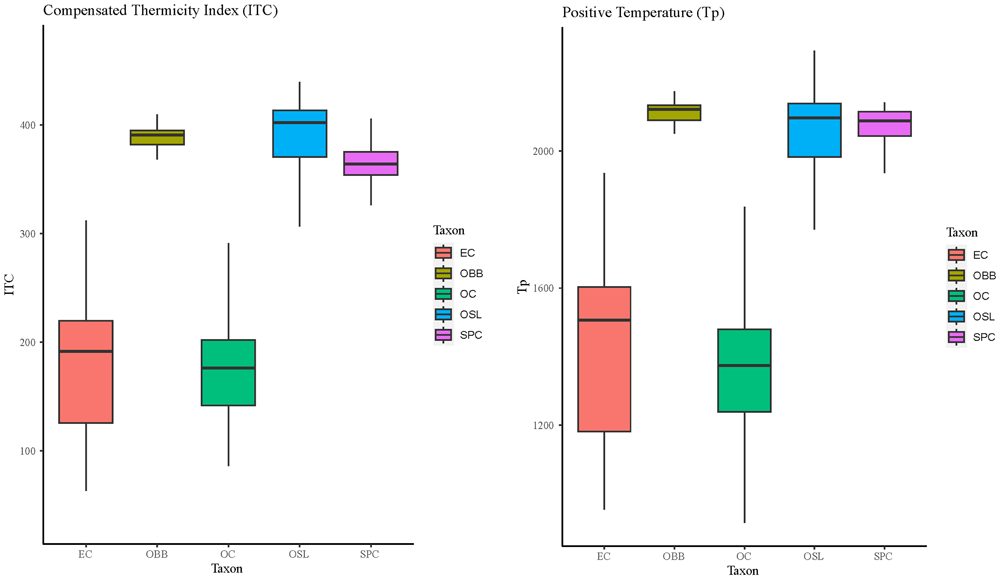
Figure 6. Boxplots for Compensated Thermicity Index (Itc) and Positive Temperature (Tp).
Abbreviations: EC: Epipactis cardina, OBB: Ophrys bertolonii subsp. balearica, OC: Orchis cazorlensis, OSL: Ophrys speculum subsp. lusitanica, SPC: Serapias perez-chiscanoi.
If we focus on the rainfall for plants, the annual precipitation rate is more important than the amount. The annual ombrothermic index (Io) represents the ratio of the average rainfall in millimetres to the total rainfall in months where the temperature is above freezing, as the root water absorption processes of plants are hindered below this temperature. In this research, results have shown that the species that exhibited the widest range of ombric tolerance was Orchis cazorlensis, spanning from dry to humid environments (Figure 7). This nuance supports with the information provided in the available Flora Iberica data, which indicates locations ranging from 900 to 1850 m in altitude. Additionally, on the website of Flora Protegida (http://www.floraprotegida.es), it is defined solely as supramediterranean subhumid, in this regard this research gives more detail.
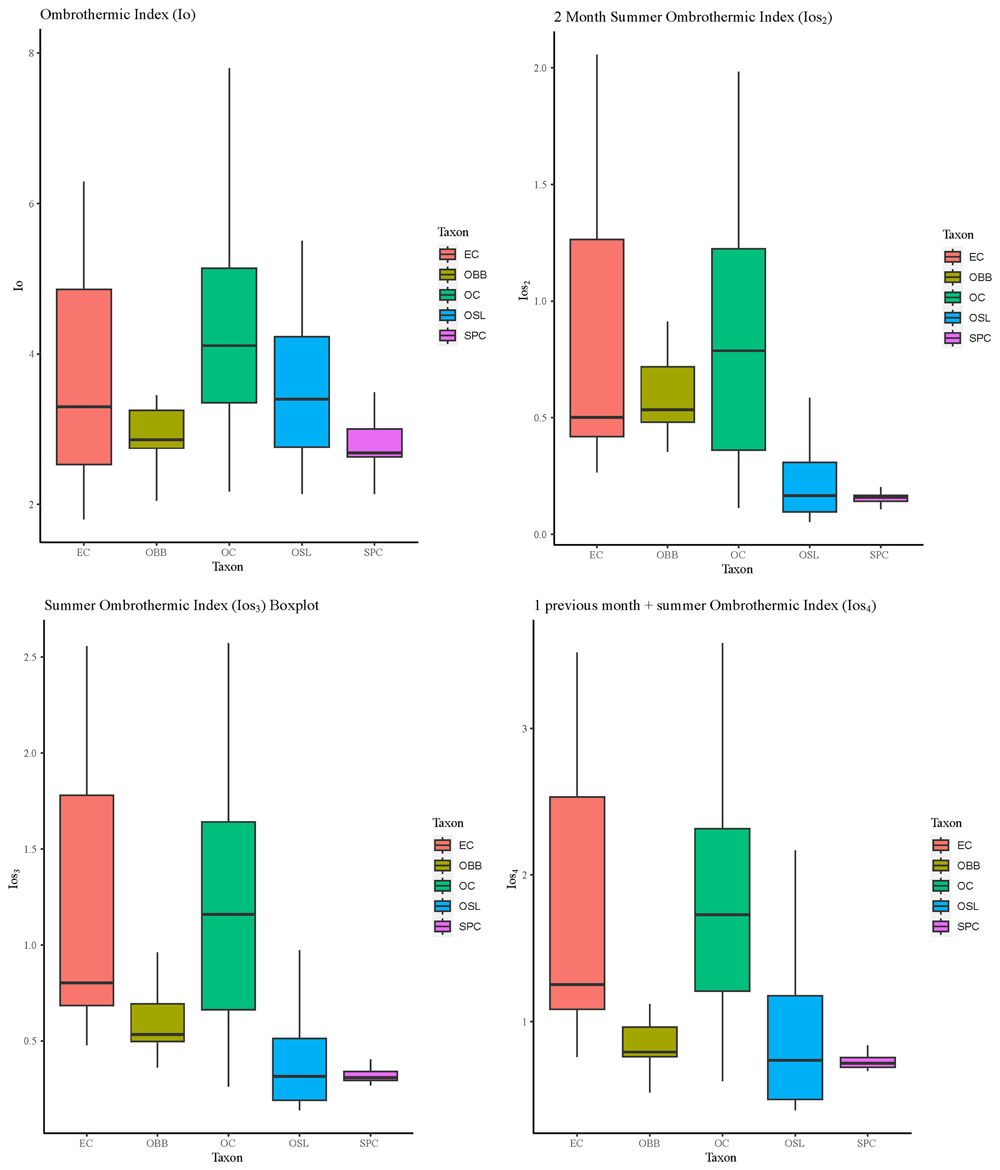
Figure 7. Boxplots of annual ombrothermic index (Io); ombrothermic index of the hottest two months of the summer quarter (Ios2); ombrothermic index of the summer quarter (Ios3) and ombrothermic index of the four-month period (Ios4) for each one the taxon studied.
Abbreviations: EC: Epipactis cardina, OBB: Ophrys bertolonii subsp. balearica, OC: Orchis cazorlensis, OSL: Ophrys speculum subsp. lusitanica, SPC: Serapias perez-chiscanoi.
In addition, the summer ombrothermic indices are fundamental as they discriminate between Temperate and Mediterranean bioclimatic areas. The species studied have distinctly Mediterranean macrobioclimate characteristics, except in some places where E. cardina develops, which are Temperate macrobioclimate. This is consistent with the habitat description in dry mountain locations but some of the points achieve more precipitation and less temperature as can be seen in the values of Ios254,55.
The species with the most restrictive bioclimatic range is S. perez-chiscanoi (Figure 7), it grows in a strict summer drought, and it does not usually tolerate constant waterlogging for long periods of time. In addition, can only be found in low elevation56. Previous research establishes this species as Upper Mesomediterranean thermotype and Lower subhumid ombrotype57. Our research establishes a more detail bioclimatic belts. Furthermore, if climatic conditions persist in the future as indicated by the IPCC58,59, this species could see its populations affected by climate change.
According to Continentality index, that reflects the amplitude of the annual oscillation of temperature43, results show (Figure 8) that the more continental species is E. cardina and the more oceanic one is Ophrys speculum subsp. lusitanica.
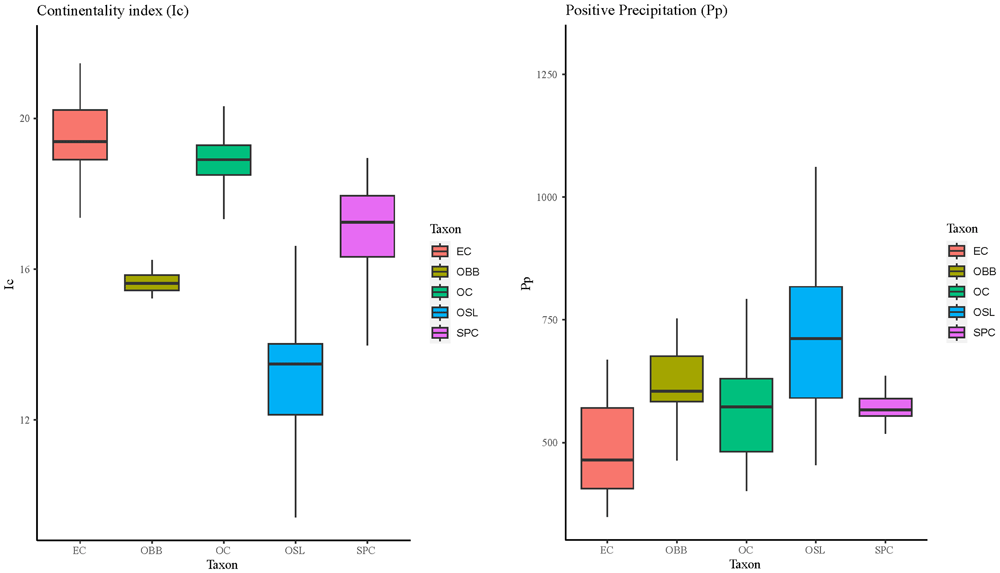
Figure 8. Boxplots of Continentality index (Ic) and Positive precipitation (Pp) for each one of the taxon studied.
Abbreviations: EC: Epipactis cardina, OBB: Ophrys bertolonii subsp. balearica, OC: Orchis cazorlensis, OSL: Ophrys speculum subsp. lusitanica, SPC: Serapias perez-chiscanoi.
Finally, the qualitative bioclimatic characterisation was determined according to the bioclimatic classification outlined by Rivas-Martínez et al. (2011). As indicated in previous research60, we have specified the most common isobioclimate in which a taxon develops. Brackets are used to denote situations where a taxon might occur in another isobioclimate on an ad hoc basis. Quantitative diagnoses include the lowest value, the interquartile range (in bold and brackets) and the highest value for each measured variable.
Epipactis cardina
Mediterranean pluviseasonal oceanic and Temperate oceanic submediterranean semicontinental supramediterranean and supratemperate lower dry to upper subhumid
(Temperate oceanic semicontinental lower supratemperate from upper subhumid to lower humid)
Tavg: 7.8 (9.8-13.3) 16.1; Tmax: 5.90 (16.9-20.3) 23.0; Tmin: -5.3 (2.7-6.4) 9.3; Tp: 953.1 (1181.0-1603.7) 1936.0; Pp: 349.1 (405.9-571.6) 668.9; Itc: 63.4 (123.8-219.7) 312.3; Ic: 17.4 (18.9-20.2) 21.5; Io: 1.8 (2.5-4.9) 6.3; Ios2: 0.3 (0.5-1.3) 2.1; Ios3: 0.5 (0.7-1.8) 2.6; Ios4: 0.8 (1.1-2.5)3.5.
Ophrys speculum subsp. lusitanica
Mediterranean pluviseasonal oceanic subhyperoceanic to semicontinental lower thermomediterranean to upper mesomediterranean lower dry to upper humid
Tavg: 14.8 (16.5-17.8) 19.1; Tmax: 19.5 (21.3-23.2) 26.0; Tmin: 7.9 (11.2-12.7) 13.8; Tp: 884.0 (1046.0-1386.0) 1977.0; Pp: 454.0 (590.8-822.5) 1303.0; Itc: 261.0 (370.5-413.5) 440.0; Ic: 9.4 (12.1-14.0) 20.4; Io: 2.1 (2.8-4.3) 7.0; Ios2: 0.1 (0.1-0.3) 0.9; Ios3: 0.1 (0.2-0.5) 1.3; Ios4: 0.4 (0.5-1.2) 2.2.
Ophrys bertolonii subsp. balearica
Mediterranean pluviseasonal oceanic and Mediterranean xeric oceanic weak euoceanic lower thermomediterranean to lower mesomediterranean upper semiarid to lower subhumid
Tavg: 14.9 (17.4-17.8) 18.9; Tmax: 20.1 (21.6-23.0) 24.4; Tmin: 10.5 (12.4-13.6) 14.3; Tp: 1785.0 (2086.9-2135.7) 2266.6; Pp: 412.3 (577.3-679.5) 752.8; Itc: 303.6 (380.9-395.4) 417.8; Ic: 15.2 (15.4-15.9) 16.8; Io: 1.8 (2.7-3.2) 4.2; Ios2: 0.4 (0.5-0.7) 0.9; Ios3: 0.4 (0.5-0.7) 1.0; Ios4: 0.5 (0.8-1.0) 1.4.
Orchis cazorlensis
Mediterranean pluviseasonal oceanic and Mediterranean pluviseasonal continental and Temperate oceanic submediterranean weak euoceanic to weak subcontinental mesomediterranean to supramediterranean and upper supratemperate lower dry to upper humid
Tavg: 7.4 (10.3-12.4) 15.4; Tmax: 13.6 (16.8-18.6) 22.3; Tmin: 0.2 (3.5-5.9) 10.2; Tp: 915.3 (1238.5-1485.8) 1845.0; Pp: 401.3 (480.4-626.8) 966.0; Itc: 35.8 (141.4-202.1) 310.6; Ic: 15.2 (18.5-19.3) 21.8; Io: 2.1 (3.3-5.2) 8.0; Ios2: 0.1 (0.4-1.2) 2.0; Ios3: 0.3 (0.7-1.6) 2.6; Ios4: 0.6 (1.2-2.3) 3.6.
Serapias perez-chiscanoi
Mediterranean pluviseasonal oceanic weak semihyperoceanic weak semicontinental and upper inframediterranean to upper mesomediterranean lower dry to lower subhumid.
Tavg: 13.0 (17.0-17.62) 17.8; Tmax: 17.5 (23.0-24.2) 24.6; Tmin: 2.8 (4.3-5.1) 11.4; Tp: 1558.0 (2043.1-2114.6) 2141.5; Pp: 413.7 (554.0-589.6) 1191.0; Itc: 242.3 (354.2-375.4) 470.5; Ic: 11.5 (16.4-18.0) 18.9; Io: 2.1 (2.6-3.0)7.64; Ios2: 0.1 (0.1-0.2) 0.8; Ios3: 0.3 (0.3-0.4) 1.45; Ios4: 0.7 (0.7-0.8) 2.43.
Phytosociological adscription and conservation status
The phytosociological description of the taxa studied is given in Table 5. Information of legal protection status and threat category is shown in Table 6.
Table 5. Phytosociological adscription of the studied endemic orchids.
| Taxon | Phytosociological adscription | Ecology |
|---|
| Epipactis cardina | Quercetea ilicis Br.-Bl. ex A. & O. Bolòs 1950 Rosmarinetea officinalis
Rivas-Martínez, T.E. Díaz, F. Prieto, Loidi & Penas 2002 | Pine forests and sclerophyllous scrubland, on dry and preferably basic soils. |
Ophrys bertolonii subsp.
balearica | Querco rotundifoliae-Oleion sylvestris Barbero, Quézel & Rivas-
Martínez in Rivas-Martínez, Costa & Izco 1986 (Quercetea ilicis Br.-Bl.
ex A. & O. Bolòs 1950) | Mediterranean Scrubland and forest glades |
| Ophrys speculum subsp. lusitanica | Rosmarinetea officinalis Rivas-Martínez, T.E. Díaz, F. Prieto, Loidi &
Penas 2002 | Scrub and grassland on stony soils |
| Orchis cazorlensis | Quercetea ilicis Br.-Bl. ex A. & O. Bolòs 1950 Rosmarinetea officinalis
Rivas-Martínez, T.E. Díaz, F. Prieto, Loidi & Penas 2002 | Mediterranean Scrubland and
forest glades |
Serapias perez-
chiscanoi | Holoschoenetalia vulgaris Br.-Bl. ex Tchou 1948 (Molinio caeruleae-
Arrhenatheretea elatioris Tüxen 1937)
Agrostion castellanae Rivas Goday ex Rivas-Martínez, Costa,
Castroviejo & E. Valdés 1980 (Stipo giganteae-Agrostietea castellanae
Rivas-Martínez, Fernández González & Loidi 1999) | Meadows and pastures with
certain soil moisture |
Table 6. Conservation status and threat category of the studied endemic orchids.
| Taxon | Legal protection status | IUCN category |
|---|
Epipactis
cardina | Protected at regional level by Murcia legislation with the
category “Of Special Interest”62 | Included in the regional Red Lists of
Murcia63 and Catalonia as Data Deficient
(DD)64 |
Ophrys
bertolonii subsp.
balearica | Not legally protected | Included in the regional Red List of the
Balearic Islands as Least Concern (LC)65 |
Ophrys
speculum subsp.
lusitanica | Protected at regional level by Andalusian legislation as
“Vulnerable”66 | Included in the regional Red List of
Andalusia as Data Deficient (DD)67 |
Orchis
cazorlensis | Protected at regional level by the legislation of the Balearic
Islands ("In danger of extinction" (In danger of extinction)68,69,
Catalonia ("In danger of extinction")70, Castilla y León ("Of
preferential attention")71, Murcia ("Vulnerable")62 and the
Basque Country ("In danger of extinction")72 | Included in the regional Red Lists of
Baleares as Vulnerable (VU)73, Catalonia
as Critically Endangered (CR)73, Murcia as
Vulnerable (VU)74 and Basque Country as
Critically Endangered (CR)75 |
Serapias perez
-chiscanoi | Protected at regional level by Extremadura legislation with the
category of “In danger of extinction”76,77 | Included in the Red List of Spanish Flora as
Near Threatened (NT)78, and in the Red List
of the vascular flora of continental Portugal
as Endangered (EN)79 |
These orchids live mainly in Mediterranean forests and scrub clearings of the classes Quercetea ilicis and Rosmarinetea officinalis, and only Serapias perez-chiscanoi has higher soil moisture requirements and is found in meadows and pastures of Molinio-Arrhenatheretea and Stipo-Agrostietea.
These plant communities are included in Annex I of Directive 92/43/EEC61, which obliges Member States to establish a network of special areas that guarantees their conservation or restoration to a favourable state61, with the following codes of Habitats of Community Interest (HICs): 9340-Quercus ilex and Q. rotundifolia forests, 5330-Mediterranean scrub and thymes, 6420-Mediterranean tall humid grasslands of the Molinio-Holoschoenion, and 6220*-Mediterranean xerophytic perennial and annual grasslands. The last one has the category of Priority Natural Habitat. Molinio-Holoschoenion, and 6220*-Mediterranean xerophytic perennial and annual grasslands. The last one has the category of Priority Natural Habitat.
All taxa are legally protected at regional level apart from Ophrys bertolonii subsp. balearica. The orchids Orchis cazorlensis and Serapias perez-chiscanoi are listed as endangered (category of "In danger of extinction") in some Spanish territories such as the Balearic Islands, Catalonia, the Basque Country, or Extremadura. None of them are legally protected at national or European level.
Furthermore, all of them are included in a regional or national Red List. However, two of them (Epipactis cardina and O. speculum subsp. lusitanica) are listed in the DD category, which implies that more knowledge is needed to assign them (or not) a threat category. Others are in non-threatened IUCN categories such as NT (S. perez-chiscanoi) or LC (O. bertolonii subsp. balearica) and others are in IUCN threatened categories (VU, EN and CR). Of particular concern is the case of Orchis cazorlensis in the Basque Country and Catalonia where it is classified as CR. Only S. perez-chiscanoi appears on the national Red Lists of Spain and Portugal, in the latter case with the category EN.
Conclusions
Detailed mapping and biogeographical characterisation identified specific regions of endemism for each species, providing valuable insights into their distribution patterns. The proposed rules for biogeographical characterisation provided a systematic approach that increased the precision of the definition of their endemic areas. Bioclimatic analyses revealed different climatic preferences, shedding light on their ecological niches and phytosociological patterns. These results lead to the following conclusions:
- The orchids Epipactis cardina, Ophrys bertolonii subsp. balearica, Ophrys speculum subsp. lusitanica, Orchis cazorlensis and Serapias perez-chiscanoi, exemplify unique and diverse taxa within the Iberian Peninsula and the Balearic Islands.
- Biogeographical characterisations reveal the complex relationships between these taxa and their respective regions, indicating their adaptability to local environmental conditions. In addition, the biogeographical maps illustrate the specific distribution patterns of these orchids, providing insights into their geographical ranges.
- The proposed criteria for the biogeographical characterisation of taxa are objective, useful and relevant both for endemics from very localised and restricted areas, such as Ophrys bertolonii subsp. balearica, and for those with a wider distribution, as is the case of Orchis cazorlensis and Ophrys speculum subsp. lusitanica. Understanding their biogeographical distribution and ecological requirements is crucial for their conservation in Mediterranean forests.
- In terms of precipitation, annual ombrothermic index (Io) results highlight the diverse ombric tolerances of these species, with Orchis cazorlensis showing the widest range, thriving from dry to humid environments.
- Serapias perez-chiscanoi emerges as the most sensitive species, restricted to severe summer drought conditions and lower elevations, making it vulnerable to future climate change impacts as shown by the IPCC scenarios. This sensitivity to climatic factors, including drought, underlines the vulnerability of these orchids, with narrower bioclimatic ranges, to changing climate patterns.
- The habitat of these endemic orchids is mainly linked to Mediterranean scrubs and forests, and to a lesser extent to grasslands and pastures (classes Quercetea ilicis, Rosmarinetea officinalis, Molinio-Arrhenatheretea and Stipo-Agrostietea).
- All the orchids studied are part of the Habitats of Community Interest (HICs) and, in the case of Serapias perez-chiscanoi, it is also a Priority Natural Habitat. This reinforces the need to conserve these species and plant communities in which they develop.
- In the case of Orchis cazorlensis, despite regional legal protection, its Critically Endangered (CR) status on the Red Lists of certain regions raises alarm about the immediate threats it faces. It is also important to note the case of Serapias perez-chiscanoi, listed as Endangered (EN) in the Portuguese Red List. Urgent conservation efforts are therefore essential. In addition, Epipactis cardina and Ophrys speculum subsp. lusitanica are listed as Data Deficient (DD) on the regional Red Lists, requiring immediate comprehensive surveys to determine its population size, habitat health and potential threats.
This research will allow greater prospection to obtain a more reliable knowledge of the species studied in the Mediterranean forests, scrubs and grasslands of the Iberian Peninsula and the Balearic Islands. It is worth noting the support that this type of study can bring together to improve the data available to environmental management professionals. In this regard, the comprehensive biogeographical, phytosociological, and bioclimatic characterisation of these taxa will provide the basis for appropriate decisions on the management measures necessary for their protection and for the possible updating of their conservation status, especially those focused on the conservation of endemic taxa.