1. Introduction

A digital marketplace refers to an online software platform that brings together buyers and sellers to facilitate the exchange of goods and services (Jiang & Balasubramanian, 2014). Over the past years, the popularity and use of digital marketplaces have exploded (Costa Melo et al., 2022), driven by the exponential rise of e-commerce and e-procurement solutions; and by the use of different types of technological and innovative solutions in everyday life (Shirzad & Bell, 2013). Through this technological outburst, digital marketplaces are now being used across many industries and sectors of the economy; since they offer a number of advantages in comparison to traditional brick-and-mortar stores and other forms of e-commerce. Undoubtedly, the ease of business globalization through digital marketplaces provides a wider range of products to potential customers, thus increasing product visibility and accessibility; while also making it easy for customers to compare prices from multiple vendors (Cano et al., 2022). According to the aforementioned, it is obvious that commerce through the Internet has enhanced the bargaining power of the customer’s side (Laudon & Laudon, 2016).

In addition to these benefits, digital marketplaces also offer a number of advanced features, such as personalized recommendations, real-time pricing, availability information, integrated payment and shipping solutions (Shirzad & Bell, 2013), which in turn make the shopping experience faster, easier, and more convenient. However, the expansion of digital marketplaces has also introduced novel barriers, including increased competition, sophisticated cybersecurity requirements, and the necessity to handle customer trust and satisfaction (Zahedi et al., 2010). To address these hurdles, businesses in the digital marketplace ecosystem are investing in new technologies such as artificial intelligence, machine learning, and blockchain, having as major goals the customer experience improvement, fraudulent activities mitigation, and ubiquitous operations.

Typical electronic marketplaces can be described as web applications that allow commercial transactions from different sources in a convenient way (Wang et al., 2013). However, the ever increasing number of technological advancements in the wider area of Information Technology (Buyya et al., 2009) and in the global environment of multi-stakeholders and services allow digital marketplaces to act as a focal point for the provision of heterogeneous “products”. In other approaches (Nizamis et al., 2018), marketplaces can be considered as ecosystems that virtual agents represent providers and consumers, to automate the decision making and exchange of goods or services. Due to the above, different types of marketplaces have now emerged (except from the traditional e-commerce platforms where physical products are traded), with software, data, and services marketplaces being amongst the most popular. In addition, multi-type marketplaces are becoming more and more common, where different types of “products” are being traded among interested parties and stakeholders.

Preliminary research in the aforementioned emerging field has pointed out that digital marketplaces are being developed across different industries, such as manufacturing, healthcare, automotive, cloud computing, cybersecurity, and many more (Hänninen & Smedlund, 2021). These online marketplaces differ from traditional e-commerce platforms since their main objective is to design, develop, and maintain a sustainable centralized or decentralized web-based platform that can serve as an access point for online trading, buying, and/or using of various tangible or intangible ”products” in a proprietary manner (Atluri et al., 2017).

By further expanding the preliminary research, it has shown that a significant number of European projects (either funded directly from the European Commission or through grants from Programmes for Research and Technological Development, i.e. HORIZON20201, Horizon Europe2, FP73 3, etc.) focus on developing digital marketplaces in order to create an ecosystem that can assist to exploitation activities since they can act as a one-stop-place where various software services, data, tools, applications, and products, are being shared and used from the different beneficiaries, associated partners and/or external entities. For these reasons, the EU has encouraged the use of digital technologies to enhance competitiveness and innovation in the region, and digital marketplaces have been a key part of this effort. It is also worth-mentioning that a main differentiation of the digital marketplaces from EU-funded projects in comparison with other marketplaces presented in the literature is that can also serve a higher community purpose, such as public health and security apart from exploitation purposes and is prominent to investigate if there are specific characteristics either business or technical toward this direction. Furthermore, since the nature of the EU-funded projects is research oriented, it would be interesting to explore the different research areas covered by such marketplaces. Additionally, considering the huge amount of the total budget invested from the EU in different EU funding programs (e.g. the total budget of the Horizon 2020 program was nearly 80 billion4), in which a large number of projects contains digital marketplaces, it would be valuable to assess the research footprint of these digital marketplaces. From all the above, it is obvious that there is a strong research interest for investigation of the EU-funded digital marketplaces.

Considering all the aforementioned, the purpose of the present research work is to streamline and extract aggregated knowledge from recent studies that present digital marketplaces that were developed in the course of EU-funded projects. Although several digital marketplaces have been developed and deployed in many European projects, they have not yet drawn much attention from the research community. To that end, the key objectives of this work are: (a) to provide a detailed overview of either fully developed or just prototypes of digital marketplaces delivered from European funding; (b) to classify them based on specific characteristics; (c) to identify research gaps and recommend areas for future study; and (d) to steer and motivate future research to foster innovation regarding several aspects in the field. For these reasons, a Systematic Literature Review (SLR) is presented to incorporate the aforementioned objectives as it sets out to search, compile, highlight, assess, and categorize primary studies in the field in a rigidly precise, typical, and systematic way.

The structure of the rest of the work is the following. Section 2 describes the related work and similar SLRs in the area of digital marketplaces, while Section 3 presents the methodology that this paper is based upon, by providing insight into the main research questions that are to be addressed through this work, thus identifying the need for this research. Moreover, Section 4 further examines the research questions that need to be addressed and showcases the general and the more specific results that were deducted during this research. Finally, Section 5 provides a comprehensive discussion of the research obstacles identified in this review and suggests potential avenues for future research, while Section 6 summarizes the conclusions of this review paper.

2. Related work

Digital marketplaces have gained significant academic and practical interest, reflecting a dynamic meeting point of technological innovation and economic activity. This section investigates existing literature, emphasizing the evolution of digital marketplaces, methodologies employed in prior reviews, key findings, and identified research gaps.

2.1. Business-oriented reviews

Studies like Shirzad and Bell (2013) and Cano et al. (2022) have adopted systematic literature reviews and bibliometric analyses, focusing on the impact of digital platforms across industries. These reviews offer an analytical view on how digital platforms facilitate economic activities, with a focus on sustainable practices. Similar studies like Täuscher and Laudien (2018) deal with the classification and understanding of platform business models within the context of digital marketplaces, while Shree et al., 2021 offer a systematic review that contains a research on digital platforms in B2B contexts, supported by the Technology-Organization-Environment (TOE) framework and the Diffusion of Innovation (DOI) theory.

Shirzad and Bell (2013) emphasize the importance of the TOES framework in understanding e-procurement marketplace flexibility, suggesting a mixed-methods approach combining quantitative and qualitative analyses. This perspective is helpful in understanding the challenges and opportunities inherent in the deployment and management of e-procurement systems. By categorizing flexibility into visible domains, the authors provide a framework for analyzing e-procurement marketplaces, offering valuable insights into how these platforms can better accommodate the changing demands of the digital economy.

Cano et al. (2022) examine the mutual dependency between e-marketplaces and open innovation, leveraging a decade-long bibliometric review to highlight sustainability's pivotal role. Their research unveils the developing focus on the relationship between e-marketplaces and open innovation mechanisms, underscoring the essential role of sustainability in shaping future marketplace models. By analyzing trends across varying timeframes, the study not only maps out the evolution of academic discourse but also identifies important themes such as the integration of environmental, social, and economic dimensions of sustainability. This analysis clarifies the critical pathways through which e-marketplaces can leverage open innovation to foster sustainable development, thus providing a robust framework for future research endeavors in the meeting point of digital commerce, innovation, and sustainability.

The research of Täuscher and Laudien (2018) meticulously defines six distinct types of marketplace business models, emphasizing the varied mechanisms through which these platforms create, deliver, and capture value. By leveraging a robust analytical framework, the study not only sheds light on the operational complexities and strategic necessities of platforms like Airbnb and Uber but also presents the broader implications for innovation, competition, and regulation within digital ecosystems. Furthermore, their work contributes to the ongoing discourse on the sharing economy and gig economy by providing an understanding of how digital platforms can foster novel forms of economic interaction and value exchange, hence challenging traditional industry boundaries and business practices.

Finally, the study by Shree et al., 2021 highlights the multifaceted role of technological, organizational, and environmental contexts in shaping the adoption and success of digital platforms in B2B markets. Their analysis not only explains the technological affordances and organizational readiness that foster digital platform adoption but also underscores the environmental catalysts and inhibitors influencing such platforms' trajectory. Moreover, by charting out a future research agenda, the authors emphasize on the pressing need for empirical studies exploring the relationships between platform providers and users, the impact of digital platforms on business models, and the dynamics of value co-creation within B2B platform ecosystems.

2.2. Technology-oriented reviews

Emerging technologies like blockchain, data and mobile app marketplaces are reshaping the digital marketplace landscape. Tkachuk et al. (2021) and Azcoitia and Laoutaris (2022) offer systematic reviews on the adoption of blockchain in telecommunication services and the operation of data marketplaces, respectively. Similarly, another review from Abbas et al. (2021) examines the transformative potential of data marketplaces in catalyzing the data economy, while Petsas et al. (2013) provide critical insights into app popularity trends, download patterns, and the influence of economic models on app distribution and revenue generation.. These works utilize case study analysis and content analysis methods to explore the operational dynamics and challenges of technology adoption in marketplaces.

Notably, Tkachuk et al. (2021) provide a survey of Telecommunication Services Marketplaces (TSMs), emphasizing the role of blockchain as a trust-enabling mechanism that makes unnecessary the need for centralized intermediaries. This paradigm shift facilitates a more equitable value distribution among stakeholders, thus catalyzing innovation and streamlining service delivery processes. By analyzing the architecture and operational dynamics of blockchain-based marketplaces, the survey presents the potential of distributed ledger technology (DLT) to revolutionize the telecommunication sector's business models. Furthermore, the authors underscore the practical applicability and future prospects of blockchain in fostering a collaborative and transparent digital ecosystem for telecommunication services.

Azcoitia and Laoutaris (2022) survey presents the evolving landscape of Data Marketplaces (DMs), providing an overview of their business models, operational strategies, and the challenges they face. This work not only identifies a wide array of entities engaged in data trading but also categorizes them into distinct business models, underscoring the diversity and complexity inherent in the data economy. Moreover, the study highlights the significant role of technological innovations, such as blockchain and digital watermarking, in addressing critical issues related to data ownership, privacy, and value determination. Their analysis provides an understanding into how data marketplaces can speed up the growth of the knowledge economy, fostering an interconnected and efficient global data ecosystem.

Similarly, Abbas et al. (2021) provide a pivotal examination of the current research landscape through their systematic literature review. Their study emphasizes on computational pricing and architecture while revealing a shortage in empirical research on non-technical facets crucial for marketplace commercialization. By employing the Service-Technology-Organization-Finance (STOF) model as an analytical framework, they identify significant knowledge gaps, particularly in understanding market dynamics, user value, and governance structures that are essential for transitioning from platform design to adoption stages. Their call for a balanced inquiry into both technological and socio-economic dimensions of data marketplaces underscores the need for an academic and practical effort to realize their full potential in the emerging data economy.

Finally, the research of Petsas et al. (2013) challenges conventional assumptions about app popularity distributions, highlighting a significant deviation from the traditional Zipf-like behavior due to a phenomenon termed as the "clustering effect." This effect, attributed to users' propensity to focus on specific app categories over time, introduces a new dimension to understanding user behavior within app marketplace ecosystems. Furthermore, the authors offer a pioneering model for Appstore workloads, incorporating this clustering effect, which presents a closer approximation to real-world app download distributions than previous models. Their analysis extends to examining the consequences of app pricing strategies, shedding light on the varying financial outcomes for developers stemming from paid versus free app models. This study not only enriches the comprehension of the mobile app marketplace dynamics but also offers pragmatic insights for stakeholders in the app development and distribution chain.

2.3. Summary of related work

To better present the diverse methodologies, analytical perspectives, and key findings of seminal works in this domain, Table 1 presents a summarization. This consolidation aids in identifying the thematic continuities and differences within the literature, laying the groundwork for our research.

Table 1. Summary of related work on digital marketplaces.

Study referenceResearch methods
used
Data analysisMajor conclusions
Shirzad & Bell (2013)Systematic literature
review, Mixed-
methods
Quantitative and
Qualitative Analysis
Highlighted the importance of the TOES framework in
understanding e-procurement marketplace flexibility.
Emphasized a comprehensive approach to marketplace
design and adaptation.
Cano et al. (2022)Bibliometric analysis,
Systematic review
Thematic Analysis,
Bibliometric
Techniques
Unveiled the focus on the relationship between e-
marketplaces and open innovation. Highlighted the role
of sustainability in shaping future marketplace models.
Täuscher & Laudien (2018)Systematic literature
review, Mixed-
methods
Analytical FrameworkDefined six distinct types of marketplace business models.
Discussed their impact on innovation, competition, and
regulation within digital ecosystems.
Shree et al., 2021Systematic reviewTOE Framework, DOI
Theory
Explored the role of technological, organizational,
and environmental contexts in the adoption of digital
platforms in B2B markets. Proposed future research directions.
Tkachuk et al. (2021)Systematic review,
Case study analysis
Qualitative AnalysisEmphasized blockchain's role in Telecommunication
Services Marketplaces as a trust-enabling mechanism.
Discussed the potential of DLT to revolutionize business
models.
Azcoitia & Laoutaris (2022)Systematic reviewQualitative AnalysisPresented the evolving landscape of Data Marketplaces,
discussing challenges and the role of technological
innovations.
Abbas et al. (2021)Systematic reviewSTOF Model AnalysisHighlighted gaps in understanding market dynamics, user
value, and governance structures in data marketplaces.
Called for a balanced inquiry into both technological and
socio-economic dimensions.
Petsas et al. (2013)Systematic reviewStatistical Analysis,
Model Development
Challenged conventional assumptions about app
popularity distributions. Introduced the "clustering effect"
and its implications for appstore workload models.

2.4. Identified research gaps & contribution

As already mentioned in Section 1 and from what was mentioned in Section 2.1, Section 2.2 and Section 2.3, existing literature provides valuable insights into the business and technology aspects of digital marketplaces, however there is a notable gap in studies focusing on EU-funded marketplaces. This gap extends to an understanding of how these marketplaces leverage emerging technologies to address specific economic and societal challenges within the EU context.

This study aims to bridge the identified gap by conducting a systematic literature review of EU-funded digital marketplaces. By focusing on the integration of emerging technologies and examining their socio-economic impact, we contribute to the body of knowledge by offering an understanding of the role of EU funding in shaping innovative marketplace ecosystems.

3. Methods

As mentioned in the previous Sections, the current research work represents an SLR following the instructions for conducting a Systematic Literature Review as presented in the works of Kitchenham (2004) and Kitchenham, Charters, et al. (2007), adhering also to the PRISMA guidelines5. Moreover, this research study was also inspired by the following works performing SLRs based on the above guidelines: a) the work of Spanos and Angelis (2016), who conducted an SLR in order to measure the impact of information security incidents on stock prices; b) the work of Polymeni et al. (2022), who performed an SLR on environmental Internet of Things (IoT) applications that implement prediction-based models; and finally c) the work of Alamdari et al. (2020), who conducted an SLR, focusing on e-commerce recommender systems.

Although the aforementioned methodology is widely used for conducting SLRs in the field of software engineering, the basic rules are more generic and can be easily applied in multiple research fields (evidenced by the three aforementioned research works), as it provides a clear and consistent approach for identifying and evaluating relevant literature, and for that reason, it was also followed in the present systematic review.

Based on these guidelines, the present SLR is comprised of three stages, as explained below:

The steps of the process are depicted in Figure 1, and will be thoroughly explained. The first stage of an SLR is the planning stage and consists of three steps. The first is the identification of the need for conducting the SLR. As already mentioned in the previous Sections, there are many research studies that aim to investigate the field of digital marketplaces in general, but to the best of our knowledge there is no review that specifically focuses on examining digital marketplaces developed through European funding and thus, presenting specific characteristics as mentioned in Section 1. Therefore, the need for the present SLR emerges from the requirement to examine and formulate a detailed analysis, in a complete and impartial manner (Kitchenham, 2004), of different types of digital marketplaces delivered from European funding. The second step in this stage is the definition of the main research questions that need to be addressed through this research work and that affect almost every step of the whole procedure. According to the guidelines of Kitchenham (2004), the extraction of research questions is a very crucial step in order fulfill the research purpose of the SLR and to cover the research gaps, formulated in the Introduction, Moreover, the research questions can be refined and enhanced during the whole procedure studying the primary research works. Hence, the research questions that will be answered in this SLR are the following:

f833c673-2c1c-4d97-a670-815c19a60728_figure1.gif

Figure 1. Steps of the Systematic Literature Review procedure.

The last step involved in the planning stage is the development of the review protocol that actually defines the whole procedure that is followed in this SLR. It essentially describes all the actions necessary to proceed in the conducting stage. These steps are described next and namely are the following: a) finding the query that will be used for the selection of the primary studies in the scientific databases, b) the definition of the inclusion/exclusion criteria, c) the selection of the quality assessment criteria, and lastly d) the definition of the main data features that will be obtained from each study and are useful for the proposed SLR. Table 2 presents the query that was used in this study. The terms added to the query were searched in the title, abstract, keywords of each study, and also in the funding-related details, since the goal of the present SLR is to only include studies that present a digital marketplace that was developed in the course of an EU-funded project. The selection of the right and most accurate search string is an iterative procedure, since the aim is to extract as many related primary studies as possible in an accurate and rigorous way (Kitchenham et al., 2007). Finally, in this step, the scientific databases were determined following a similar consideration with other SLRs (Polymeni et al., 2022; Spanos & Angelis, 2016) and these are: Scopus, IEEE, ACM, and Web of Science.

Table 2. Search query structure: (marketplace-related results) AND (funding-related results).

(ABS ("marketplace") OR TITLE ("marketplace") OR KEY ("marketplace")) AND (FUND-ALL ("EUROPEAN") OR FUND-ALL (EU) OR FUND-ALL (EC))

The backward and forward snowball techniques were also used as supplementary methods in order to expand the search and to find relevant research studies that could not be found through the first method (Ketsetsis et al., 2020). The guidelines followed for the snowball technique are the ones proposed by Wohlin (2014), who describes how to conduct literature reviews using the snowballing technique. For this SLR the automated search in scientific databases as proposed by Kitchenham (2004) and (Kitchenham et al., 2007) is the primary methodology used, but in order to ensure that this review paper covers the clear majority of studies in the research field, a combination with the snowball technique was performed. The backward snowball technique refers to using the reference list of each study in order to identify new papers in an iterative manner. After each iteration, new related papers might be found, and when no more new related studies can be found the procedure ends. The forward snowball technique refers to searching for papers citing the paper being examined. The citations are studied by using Google Scholar. The approach to go through each paper is iterative and similar as in the backward snowball technique. At this point, it is worth mentioning that following the aforementioned methodology for the automated search of relevant research studies, also used in the vast majority of SLRs, the grey literature was not considered, although that for the digital marketplaces of EU-funded projects, there are many technical reports (grey literature) explaining their full functionality. This exclusion in the current SLR was performed, apart from being aligned with the majority of SLRs, in order to investigate the research footprint of these marketplaces, which can be better depicted by studies published in research journals and conferences.

In every SLR, the inclusion and exclusion criteria must be transparent and clearly stated, as they make the primary study selection procedure easier. The following criteria were used in the present SLR for the selection of the primary studies to be examined:

The quality assessment criteria are an essential part of the SLR procedure, as they are defined to set the limits and ultimately ensure that all studies included in the SLR, after the full content scan, accomplish an adequate level of quality. When it comes to quality assessment criteria in software systems such as digital marketplaces, the classification of such criteria becomes a little bit unclear compared to model-based studies. For this reason, a similar consideration with the SLR of Polymeni et al. (2022) was followed and according to this approach, the following criteria are considered for quality assessment in the present SLR work:

After having defined all of the aforementioned actions and steps, the last necessary step for the development of a solid review protocol is the selection of the data features that will be obtained from the papers found in the search and will prove useful for the present SLR work. These data features are presented and explained in Table 3.

Table 3. Data features to be extracted from each primary study.

Data FeaturesDescription
AuthorsThe authors that participate in the study.
YearThe publication year of the paper.
Publication source typeThe source type of the study (i.e. conference, journal).
Publication sourcePublication source of the paper.
Sector/industryThe classification of each marketplace presented in each study to the industry they were
designed to operate in.
Marketplace typeThe categorization of each marketplace from every paper to a certain type based on its
market offerings (e.g., product, software, service, etc.).
Marketplace business targets
and objectives
A brief description of the primary objective and area of emphasis of every digital
marketplace.
Payment method (if
described)
It refers to whether each paper also describes how payments are handled in the
marketplace.
Blockchain-basedDescribes if the marketplace is blockchain-based or not.
Blockchain detailsFor every blockchain-based marketplace, the related technologies are documented.
Architecture visualizationDescribes if each study also provides a figure of the architecture behind every marketplace.
Existence of UI screenshotsIt portrays if there are any UI screenshots included in the papers or not.
Technologies usedThe main technologies (if provided) used to develop and implement the marketplace from
each study. Every technology described will be part of a broader category (e.g., computer
languages, frameworks, etc.).
Link for open-source
repository
It presents if the papers examined also provide the link for an open-source repository (e.g.,
GitHub).
Link for marketplace websiteIt refers to whether each study also includes the link to the marketplace website or not.
Major research outcomesIt describes in a brief manner the major research topics and major conclusions drawn from
each study.

The execution of all the predefined steps described in the SLR methodology is the next procedure that follows after the development of the review protocol. As Figure 2 depicts, during the first search process 1050 papers were found (443 from Scopus, 97 from IEEE, 355 from ACM and 155 from Web of Science). The execution of this step is then followed by scanning the title, abstract, acknowledgements, and funding details since the goal of the present SLR work is to determine if the marketplace presented in each paper is delivered through European funding or not. In this step, 181 papers are included, while the rest are excluded. After this step, the exclusion of the double entries follows leaving the total number of included papers at 130. The final step before proceeding to the quality assessment process is the full-text reading of every paper. The number of papers remaining after this step is 25.

f833c673-2c1c-4d97-a670-815c19a60728_figure2.gif

Figure 2. Flowchart with the steps for the systematic literature review procedure.

As noted earlier, and in order to ensure a comprehensive review of the literature, the backward and forward snowballing techniques were employed to identify relevant studies that were not found in the initial search process. After this additional step, one more paper meeting the inclusion criteria was identified, bringing the total number of papers in this systematic literature review to 26. All of the studies included in this review fully met the quality assessment criteria previously defined and therefore, the final number of examined research works in the current SLR is 26.

4. Results

This Section presents the results of this systematic literature review that answers the four research questions set in the previous Section. As already noted, the final number of the included papers is 26, and the results gathered from each study are categorized and presented into the three following subsections: General Results, Business-related Results, Technical-related Results and Research-related Results.

4.1. General Results

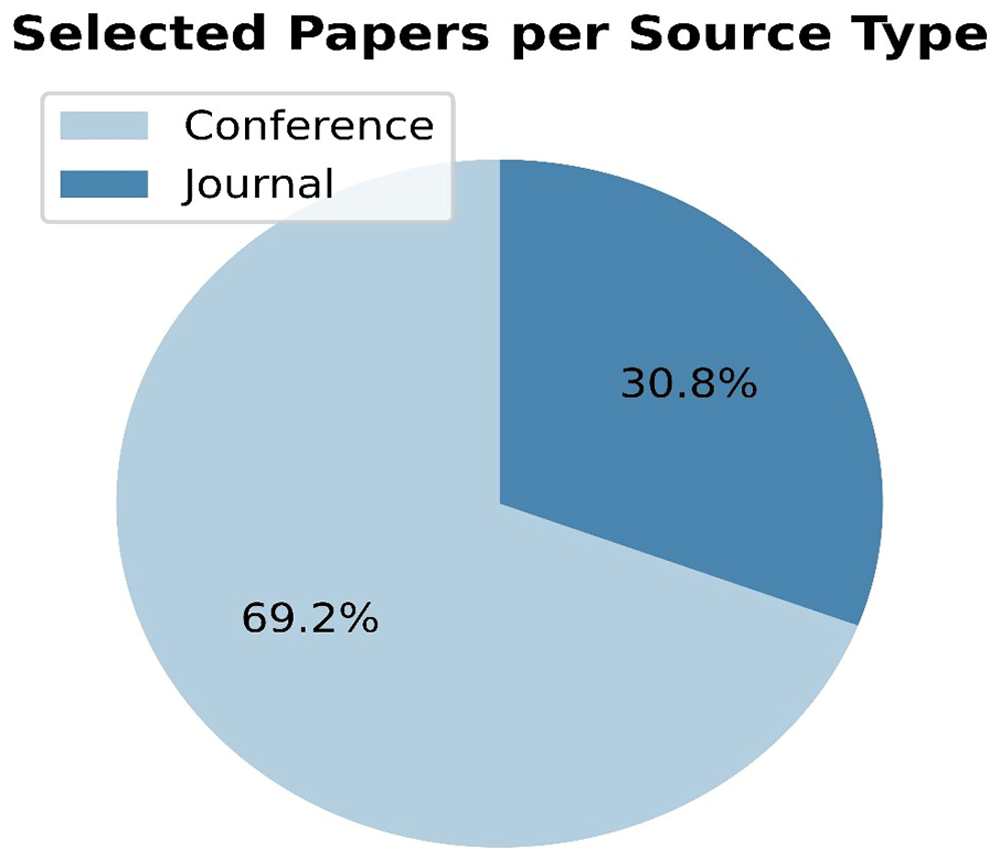
In this Section, the general results extracted from the selected primary studies are presented. Specifically, we focus on two categories of data: (a) publication characteristics, which include information on authors, publication sources, and source types; and (b) the distribution of the selected primary studies per year. Table 4 summarizes the publication characteristics of the 26 primary studies. The majority of the papers included in this study (18 out of 26) and as Figure 3 depicts, were published in conference proceedings, while the remaining 8 papers were published in journals. These results indicate that a significant proportion of the studies were more preliminary and exploratory in nature, as conference papers often feature early results or works in progress. Conversely, a third of the papers analyzed were more comprehensive and rigorously researched, which is a hallmark of journal publications. Hence, it is worth mentioning that due to this proportion of papers between conference and journal papers, the present statistical analysis of the results requires careful treatment, and the generalization of these results is not always feasible. However, toward the extraction of meaningful research findings, apart from the statistical analysis, a qualitative analysis is performed in the current manuscript.

Table 4. Publication characteristics of the selected primary studies.

No.AuthorsPublication SourceSource TypeYear
a1Ali et al. (2013)CCISConference2013
a2Stavropoulos et al. (2020)AISCConference2020
a3Westera et al. (2019)LNCSConference2019
a4Roman et al. (2017)CEUR Workshop ProceedingsConference2017
a5Barmparitsas et al. (2022)SEEDA-CECNSMConference2022
a6Pincheira et al. (2020)SDSConference2020
a7Faliagka et al. (2022)VLSI, ISVLSIConference2022
a8Alvsvåg et al. (2022)CCISConference2022
a9Genés-Durán et al. (2022)SCCConference2022
a10Bassiliades et al. (2018)Data and Knowledge EngineeringJournal2018
a11Shi et al. (2022)Journal of Cloud ComputingJournal2022
a12Menychtas et al. (2014)Future Generation Computer SystemsJournal2014
a13Niya et al. (2021)IFIP/IEEE IMConference2021
a14Maciel et al. (2019)NetSoftConference2019
a15Horsch et al. (2020)KI - Kunstliche IntelligenzJournal2020
a16Palaiokrassas et al. (2021)ComputersJournal2021
a17Fernández-Fernández et al. (2021)EuCNC/6GConference2021
a18Fotiou et al. (2021)Blockchain: Research and ApplicationsJournal2021
a19Bernardinetti et al. (2021)ARESConference2021
a20Markakis et al. (2019)IEEE Communications MagazineJournal2019
a21Oikonomou et al. (2021)CSRConference2021
a22Mladenov et al. (2022)EnergiesJournal2022
a23Rehm et al. (2021)EACLConference2021
a24Bavota et al. (2014)CSMR-WCRE - ProceedingsConference2014
a25Gönül et al. (2023)I-ESAConference2023
a26Mavrogiorgou et al. (2022)ESSEConference2022
f833c673-2c1c-4d97-a670-815c19a60728_figure3.gif

Figure 3. Pie chart depicting the percentage per source type.

It is also notable that only two of the primary studies reviewed (7.69% of the total) were published in the same conference proceedings (Communications in Computer and Information Science - CCIS), while the others were published in different sources, reflecting that way the multi-disciplinary nature of this research. Finally, it is worth noting that only one author appears as an author in more than one of the included research studies.

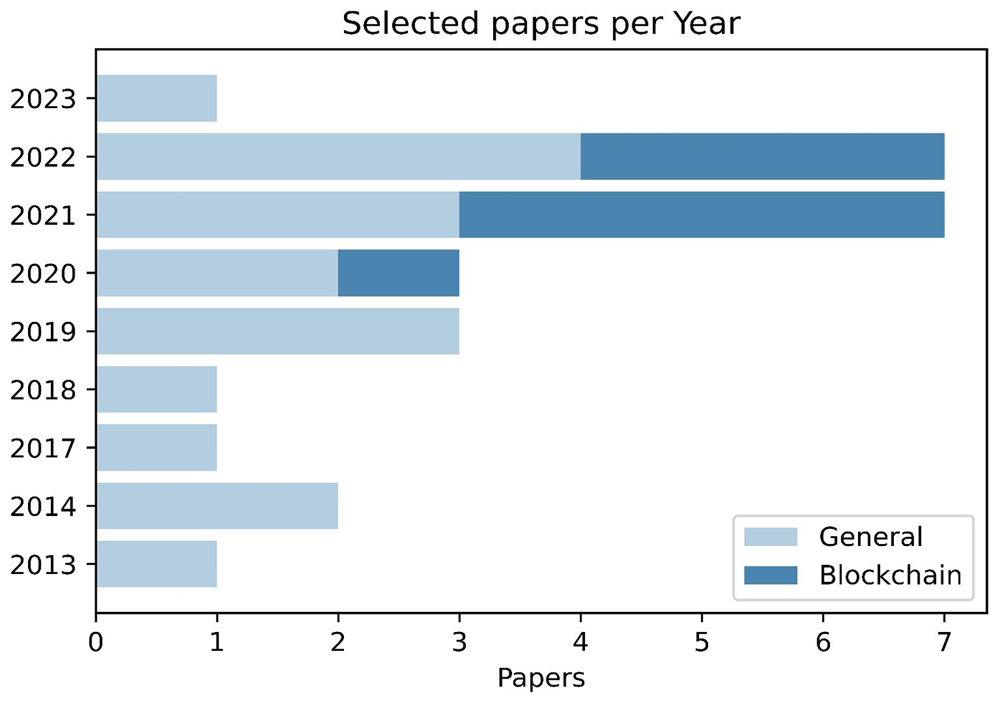
Table 4 yielded another significant observation concerning the quantity of primary studies published each year. As shown in Figure 4, only 4 out of 26 studies (approximately 15.38%) were published from 2013 until 2017 while the vast majority (22 out of 26) of the papers (approximately 84.62%) were published from 2018 until 2023. The observed difference can be attributed to the growing number of digital marketplaces funded by European research and innovation programs, which leverage the collaboration and interconnectivity capabilities of these platforms. By sharing, offering, and managing their market offerings through these platforms, partners, and stakeholders can effectively exploit the benefits of digital marketplaces. Figure 4 also aims to gauge the blockchain’s impact on the deployment of marketplaces. Blockchain was part of the reviewed marketplaces after 2020 and continues to gather interest. The publication date for including blockchain is strongly associated to the advent of smart contracts, open-source solutions, and their corresponding inclusion in the proposal of European projects. Smart contracts (Kolvart et al., 2016) were introduced in 2016 and are the catalyst for blockchain to enter the next generation. The importance and resulting inclusion of smart contracts into European projects logically lag in time due to the procedures for a proposal to be accepted as a project and deliver results. Blockchain is included in 4 and 3 papers for 2021 and 2022, respectively, numbers comparable to the selected papers per year. The research community will continue to experiment with the use of blockchain as it can be a versatile tool for security, auditability, and transparency for marketplaces.

f833c673-2c1c-4d97-a670-815c19a60728_figure4.gif

Figure 4. Column chart depicting the papers per year and the blockchain papers per year.

4.2. Business-related Results

This Section presents the results of the business-related analysis from the SLR. This analysis aims to provide a comprehensive understanding of the various types of digital marketplaces presented in each primary study and their applicability to different industries. In addition, the business-related analysis also includes some specific details for the business targets and objectives for each marketplace. This information adds another layer of understanding and sheds light on how these marketplaces operate. Overall, this Section examines in detail the current state of digital marketplaces in terms of their business aspects and highlights trends and potential areas for future research. In this study, the classification of every marketplace to a certain type was based on their market offerings or to be more precise on the type of goods or services they offer. From the literature analysis, the identified types of marketplaces were classified into the following categories:

  • (1) Software Marketplace: Marketplaces that offer software applications, such as mobile, desktop, and web apps.

  • (2) Data Marketplace: Marketplaces that provide various types of data sets, such as weather data, through a digital platform.

  • (3) Product Marketplace: A type of marketplace that specializes in facilitating the exchange of physical goods and/or serving as an intermediary for procuring such products.

  • (4) Services Marketplace: Marketplaces that enable individuals, professionals, or companies to offer their services online.

  • (5) Multi-typed Marketplace: A marketplace type that combines two or more of the attributes of the above types of marketplaces.

Regarding the classification of every marketplace to the industry they were designed to operate in, it was also based on the type of goods or services offered that are related to various domains, such as cloud computing, healthcare, automotive, manufacturing, among others. Hence, this was the primary criterion used to categorize the industry of each marketplace in the primary studies. However, this categorization was not always strict, as many marketplaces could operate and be applicable in more than one industry. In cases where a marketplace did not have a specific industry focus, the term ”Generic” was used to classify it. In addition to the previous data features, this Section includes a brief overview of the primary objective and area of emphasis of each marketplace, thus providing further insight into the business goals that each marketplace aims to accomplish. Table 5 highlights the overall results of the business-related analysis regarding the aforementioned data features that were extracted and gathered from the selected primary studies.

Table 5. Categorization of each marketplace from every primary study per type and per industry.

No.IndustryMarketplace
type
Marketplace business targets and objectives
a1GenericSoftwareA marketplace offering cloud services to business customers that
come attached with verifiable certificates of security properties.
a2Healthcare, IoTSoftwareThis one-stop-shop brings together business entities/developers
with end-users/health professionals by offering various IoT apps in
the field of Active \& Healthy Ageing (AHA).
a3GamingMulti-typedThis multi-typed marketplace is designed to become a knowledge
hub and a digital repository in the gaming community where
relevant software products and tools can also be exchanged.
a4GenericDataThe platform enables data providers to publish, distribute and
monetize their data and simultaneously, facilitates data consumers in
discovering and accessing data available on the marketplace.
a5Circular Economy, HVAC-RProductAims to change the way the industry handles used F-gases by
supporting the circular economy of refrigerants in the HVAC-R sector.
a6Cloud Computing, IoTServicesA distributed and decentralized marketplace designed to deliver
computational, storage and network services.
a7GenericMulti-typedThis multi-typed marketplace offers a variety of solutions (across
various domains), such as tools, matchmaking services, funding
opportunities, and educational material.
a8Urban PlanningDataA data marketplace designed to not only support the buying and
selling of data but also foster knowledge and experience sharing
among the users, in smart and sustainable cities.
a9Automotive, Manufacturing,
Healthcare
DataThe primary objective is to establish equitable competition and
trust among various stakeholders, promoting the development of a
digital-data trading ecosystem in Europe.
a10Cloud ComputingServicesA Platform as a Service (PaaS) marketplace addressing the challenges
of cloud platform compatibility and the transferability of cloud
applications.
a11Cloud ComputingMulti-typedA decentralized auction-based platform for the exchange of software
and data in a trustworthy ecosystem.
a12Cloud ComputingMulti-typedThis marketplace aims to act as a market in the context of Anything
as a Service (XaaS), in order to foster the creation of viable business
ecosystems.
a13IoTDataA blockchain-based IoT data marketplace to facilitate the access to
a wide range of data providers in a manner that is both simple and
compliant with privacy regulations.
a14Cloud ComputingServicesA services marketplace that aims to foster slice resource discovery
and information exchange.
a15ManufacturingMulti-typedA marketplace for the exchange of data, software and services
related to material modelling.
a16Urban Planning, IoTDataA blockchain-based data marketplace for the exchange of IoT sensor
data and media in an easy, secure and anonymous way.
a17TelecommunicationsServicesA services marketplace based on blockchain and designed to enable
secure trade of various resources amidst the fast-evolving 5G
technology landscape.
a18IoTDataA data marketplace based on blockchain that enables data
consumers to acquire noisy data that can be utilized for extracting
meaningful statistics.
a19CybersecurityServicesThis marketplace aims at fostering the exchange of knowledge
regarding cyber range services.
a20CybersecurityServicesThis marketplace platform offers a variety of cutting-edge
cybersecurity services, introducing novel business scenarios and
significantly broadening potential markets.
a21CybersecurityServicesA marketplace acting as an intermediary between customers and
providers offering cyber range services.
a22EnergyServicesA marketplace acting as a flexibility market between Transmission
System Operators (TSOs), Distribution System Operators (DSOs), and
Prosumers in a secure, transparent, cost-effective manner.
a23Language TechnologyMulti-typedThis multi-typed marketplace aims at enabling the upload, share, and
distribution of software, products, and resources in the European
Language Technology Landscape.
a24GenericMulti-typedA multi-typed marketplace that aims to act as a public directory
and search engine of free and open source software fostering the
exchange of knowledge in the community.
a25GenericProductA B2B marketplace addressing challenges in semantic annotation
and introducing a generic product classification taxonomy model
using eClass and Furniture Sector Taxonomy as examples.
a26GenericDataA cross-domain marketplace integrating diverse solutions and
assets, with a focus on storage, advanced search, retrieval, and
combining data assets into comprehensive offerings.

Based on the analysis of Table 5 and as depicted in Figure 5, it was observed that most marketplaces (6 out of 26) had a more generic nature making them suitable for a wide range of domains, which could explain their popularity. The generic nature of a marketplace enables the exploration of synergies, the creation of new value propositions, and the realization of cross-domain innovations by connecting complementary products and services from multiple industries. Furthermore, our analysis showcased that the Cloud Computing and Internet of Things industries were found to be the second most commonly encountered industries, accounting together for one-third of the total number. This could be attributed to their growing importance and increasing adoption across domains, since the demand for cloud computing services and IoT-enabled devices has been on the rise, and this trend is expected to continue in the foreseeable future (Taha et al., 2020). As a result, many entrepreneurs, businesses, and researchers are exploring opportunities to develop marketplaces that cater to these industries. Finally, Cybersecurity emerged as the next most frequently occurring industry sector (3 respective marketplaces that specifically focus on ensuring the uninterrupted operation of critical systems and services). All the remaining industries showcased in Figure 5 were identified only once or twice.
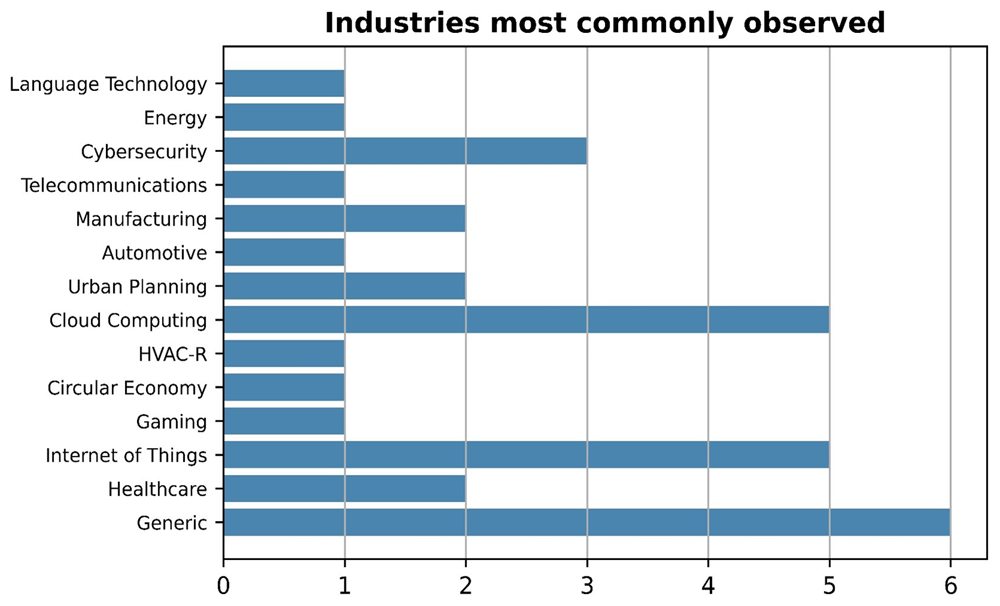
f833c673-2c1c-4d97-a670-815c19a60728_figure5.gif

Figure 5. Column chart depicting the most frequently encountered industries.

In Figure 6, the classification of each platform into a marketplace type is presented. The results indicate that approximately one-third (30.8%) of the marketplaces are categorized as services marketplaces, either serving as intermediaries between service providers and consumers across various domains, or offering their own specific services. Another significant finding is that 26.9% of the marketplaces are multi-typed, providing a variety of software products, data sets, tools, services, and related items. This suggests an increasing trend toward hybrid marketplace models in multiple economic sectors. Additionally, the same percentage (26.9%) of the digital marketplaces are categorized as data marketplaces, with the majority of the encountered data marketplaces emerging after 2018, indicating a notable trend in the growing recognition and significance of data handling and distribution. Data marketplaces offer opportunities for businesses to unlock the untapped potential of data, foster collaborations, and leverage data-driven insights to drive growth and competitive advantage. Notably, only two marketplaces are classified as software marketplaces, and only two as well exclusively deal with product trading among stakeholders and across domains. All the above, highlight the current trends regarding marketplace type (services and data) in electronic marketplaces, resulting also in the fact that traditional product marketplaces, at least for the EU-funded projects, are of minor scientific importance and somehow old-fashioned, therefore eliminating geographical barriers and enabling convenient access to a wide range of products and services.
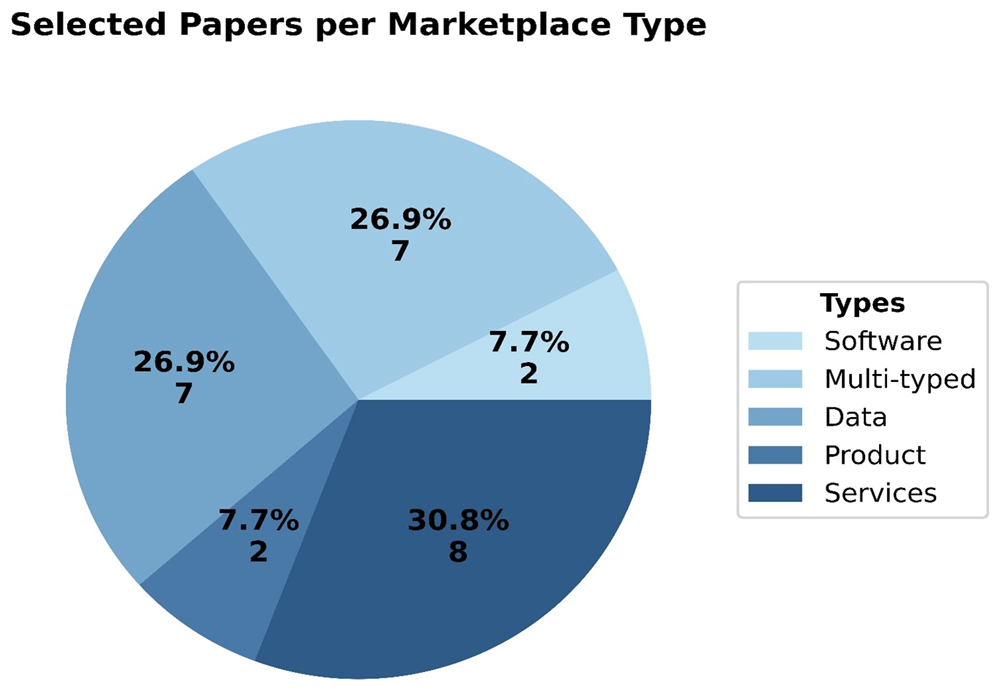
f833c673-2c1c-4d97-a670-815c19a60728_figure6.gif

Figure 6. Pie chart depicting percentage per marketplace type.

4.2.1. Payment and pricing. The addition of "Payment and Pricing" as a distinct subsection within the broader context of business-related results stems from its critical role in shaping the operational and economic landscape of these platforms. Despite the exploration of types, industries, and business objectives of digital marketplaces presented earlier, the specific mechanisms of payment and pricing have a direct impact on marketplace sustainability, user adoption, and overall financial health. In spite of its critical importance, it was observed that only a limited number of papers within the systematic literature review explicitly investigate payment and pricing mechanisms. This selective coverage highlights the need for a focused examination to understand the subtle differences and impacts of these financial strategies on the digital marketplace ecosystem.

The payment and pricing methods used in digital marketplaces are a crucial aspect of their business model. However, the proposed SLR found that only one-third approximately of the 26 primary studies analyzed provided a detailed analysis of the payment methods used, limiting the ability to conduct a detailed and comparative analysis of this parameter. While this is a limitation, it is important to acknowledge that the primary studies did not always focus on business-related aspects of the marketplaces, and therefore may not have provided a dedicated analysis of the payment method. Overall, payment and pricing methods are essential components of the business model of digital marketplaces. The present analysis highlights the variety of payment methods used in non-blockchain marketplaces and the potential of blockchain technology to introduce digital tokens and decentralize the agreement mechanism.

There are papers in the literature detailing a specific case like subscription (Roman et al., 2017), while others cover a broader spectrum of payment methods with four different methods (Menychtas et al., 2014). A degree of flexibility for adopting various methods can help marketplaces’ adoption, as elaborated in Alvsvåg’s future work (Alvsvåg et al., 2022). Additionally, the business model for the marketplace has room to contemplate the payment means. Indeed, Europe has introduced the Single Euro Payments Area (SEPA) network, and marketplaces can benefit from cashless euro payments (Barmparitsas et al., 2022). Finally, the business model can dictate technical requirements to marketplaces for adopting various agreement mechanisms. For example, Barmparitsas et al. (2022) describe that the trade and payment mechanisms are based on a Bidding model quite different from a traditional Auction Model, as only one Bid can be submitted per Listing and grade.

For blockchain-based marketplaces, the use of blockchain technology provides promising opportunities to decentralize processes and introduce trust into a network without a central authority. Due to the monetary nature of marketplace transactions, digital tokens can serve as a means for exchanges between buyers and sellers. In the research works examined, there are European marketplaces allowing users to select between fiat methods (Genés-Durán et al., 2022; Mladenov et al., 2022), and digital token payment (Genés-Durán et al., 2022; Mladenov et al., 2022; Palaiokrassas et al., 2021). The papers introduce a native to the marketplace token by applying market-tested standards such as ERC-1155 (Genés-Durán et al., 2022) or ERC-223 (Palaiokrassas et al., 2021). Other works (Fernández-Fernández et al., 2021) abstract the notion of money to a numerical representation without specifying the currency to any digital or fiat one. Digital tokens may not be essential for the suggested applications as traditional payment methods remain applicable, and the application’s scope can differ from the payment method by suggesting other mechanisms. Apart from the payment, blockchain can decentralize the agreement mechanism. There are auction and bidding mechanisms accompanying the marketplaces, and there are ideas for automating the procedure with the use of smart contracts (Shi et al., 2022). Blockchain has the potential to decentralize procedures, but business models may require a revision. The business model should account for transactional settlement between individuals rather than devising a business case relying on central authorities. Business cases where the marketplace’s operator distributes the funds to the owners (Fotiou et al., 2021), confine the decentralization of the technology.

4.3. Technical-related Results

In this subsection of the SLR, a comprehensive overview of the technical aspects of the digital marketplaces from the selected primary studies is presented. The analysis of the technical features is a three-layered analysis including the following technical characteristics: a) the deployment-related features that examine the evidence and realization characteristics of the digital marketplaces; b) the classification of software technologies to broader categories based on the similarities or shared characteristics; and finally, c) the blockchain-related analysis that presents the technical features that are closely related to the blockchain technologies used in several marketplaces. The presentation of the technical features of every digital marketplace studied, allows for a deeper understanding of the digital marketplace ecosystem and can offer valuable insights that can help future research and provide guidance to practitioners and policy makers.

4.3.1. Analysis of Deployment-related features. As mentioned above, the first layer of the technical analysis is the presentation of the deployment related features that examine the maturity development level of each marketplace at the time having been presented and provide insights concerning the availability and accessibility of the marketplace. The information extracted from each primary study are presented in Table 6. Although the deployment features are presented as Boolean values (Yes/No), they allow for a clear, concise and simplified analysis, since they offer an easy comparison among the different marketplaces. This approach can also highlight any potential issues or areas for improvement in the deployment of these marketplaces.

Table 6. Deployment related features for each primary study.

No.Architecture
visualization
UI screenshotsLink for
open-source
repository
Link for
marketplace
website
a1NoYesNoNo
a2YesYesNoYes
a3NoYesNoYes
a4YesNoNoNo
a5NoYesNoYes
a6YesNoNoNo
a7YesNoNoYes
a8NoYesNoNo
a9NoNoNoNo
a10YesNoNoNo
a11YesYesYesNo
a12YesYesNoNo
a13YesNoNoNo
a14YesNoNoNo
a15NoYesNoNo
a16YesYesYesNo
a17YesNoNoNo
a18NoNoYesNo
a19NoYesNoNo
a20NoYesNoNo
a21YesYesNoNo
a22NoYesNoNo
a23YesYesYesYes
a24YesNoNoYes
a25NoYesYesNo
a26YesYesNoYes

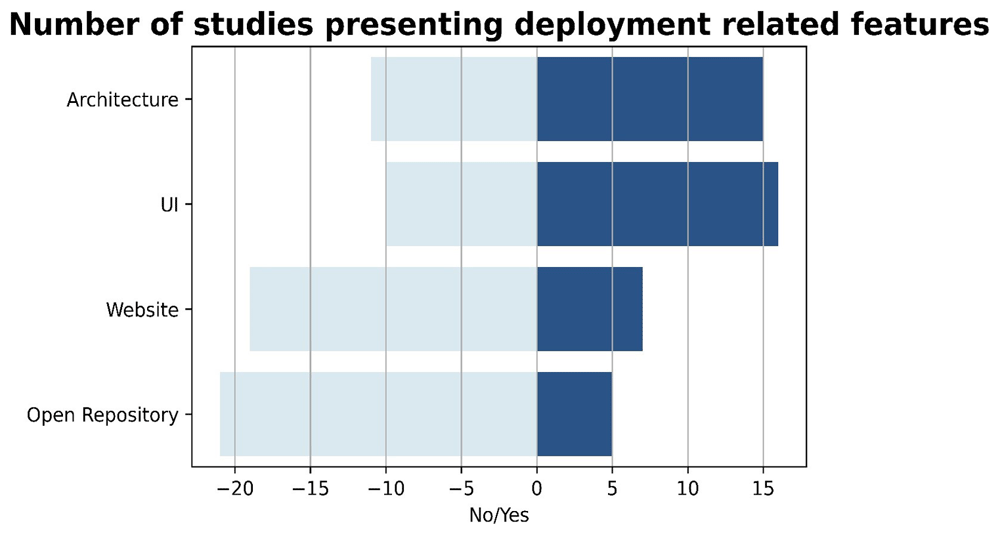
It is interesting to observe in Table 6 that out of the 26 primary studies analyzed, 57.69% (15 studies) have provided a visualization of the marketplace architecture. The distribution of architectural designs was found to be diverse across the 15 included studies. Architectural designs (Hofmeister et al., 2000) refer to the fundamental structure of a digital marketplace, which might include its components, modules, subsystems, infrastructure, and interfaces. From those 15 studies, multitiered architectural designs were utilized in the 33.33% (5 studies), while a more traditional component-based architecture was used in the 20% (3 studies). Service-oriented architecture (Valipour et al., 2009) was observed in the 6.67% (1 study), while the microservices architecture (Ghofrani & Lübke, 2018) was utilized in the 13.33% (2 studies). Finally, 4 studies (26.67%) have presented a visualization of their architecture and belong to the blockchain-based marketplaces in which a decentralized architecture was observed and can be considered a distinct category of architecture, as it differs significantly from traditional centralized or client-server architectures, since there is no central authority or intermediary controlling the network, but instead, the system is distributed among multiple nodes or devices. Based on the above results, the information regarding architecture can be critical in understanding the overall structure and design of each marketplace, and in identifying the different components and the interactions that occur. Additionally, it can help identify the level of complexity involved in the implementation of the marketplace and the type of infrastructure required to support it. Overall, the visualization of architecture constitutes a valuable tool in software engineering life cycle offering insight into the technical aspects of the marketplace, thus making it also an essential component of the present SLR study.

Regarding the rest of the results presented in Table 6, out of the 26 primary studies analyzed, 61.53% (16 studies) provided user interface (UI) screenshots. From those 16 studies, in 4 studies (25%) the screenshots were limited to the homepage, in 5 studies the screenshots focused on specific functionalities or services provided by the platform (31.25%), and in the majority of the studies both the homepage and some of the marketplace functionalities are presented in the screenshots (43.75%, 7 studies). The inclusion of UI screenshots is important as it provides insights into the overall user experience and helps to identify potential usability issues and areas for improvement.

On the other hand, only 7 studies (26.92%) provided a link to the marketplace website, while only 5 studies (19.23%) provided a link to an open-source repository. The provision of website links and open-source repositories can greatly facilitate the evaluation and replication of the marketplace, with the latter also being useful for evaluating the implementation details and potentially reusing the source code. Furthermore, providing access to the marketplace website and open-source repository, in addition to the UI screenshots, can significantly enhance the transparency and reproducibility of the research results. Finally, these two features are also crucial for exploitation reasons of the EU-funded projects, since they prove the existence and operation of a marketplace after the finalization of the project and thus, their usefulness for the community.

All of the aforementioned results are visualized in Figure 7, to better facilitate the reader in understanding the aggregated results.
f833c673-2c1c-4d97-a670-815c19a60728_figure7.gif

Figure 7. Chart presenting the number of studies that provided information of deployment related features.

4.3.2. Classification and Analysis of most prominent Software Technologies. The second layer of the technical characteristics analysis refers to the classification of the various technologies used for the marketplaces development and presented in the corresponding primary studies. It is evident that in several studies, not all or any of the technologies were showcased. Hence, the purpose of this analysis is to highlight the most prominent technologies used, allowing for the better understanding of the digital marketplace ecosystem in the field of EU-funded projects and for facilitating future research based on the State-of-the-Art technologies. Furthermore, since a significant number of papers (8 out of 26 studies) utilize blockchain technology, the analysis is divided into two parts: the first focuses on presenting the aggregated results gathered regarding the technologies used, while the second focuses only on the blockchain-related technologies and is thoroughly presented in Section 4.3.3. Overall, the technical analysis aims to provide a more focused and comprehensive examination of the technologies used in digital marketplaces.

The identified technologies were grouped into four broader categories:

  • (1) Frameworks (Edwin, 2014): A framework typically includes a set of standardized practices, concepts, rules, conventions, and best practices that guide the development process.

  • (2) Computer Languages (Lando et al., 2007): Formal languages used to communicate instructions to a computer. Several types of languages exist that serve different purposes. For instance, programming languages are used to create software applications and programs, while markup languages are used to store and transport data.

  • (3) Data & Storage technologies (Carullo et al., 2017; Siddiqa et al., 2017): Data and Storage technologies refer to the technologies and techniques used for managing and storing data, information, and objects in computer systems.

  • (4) Communication technologies (Lascano & Clyde, 2016): Communication technologies refer to several sets of protocols, rules, standards, and objects that enable two or more entities to exchange information and facilitate transfer of data or information between different systems or platforms, which may use different communication protocols or data formats.

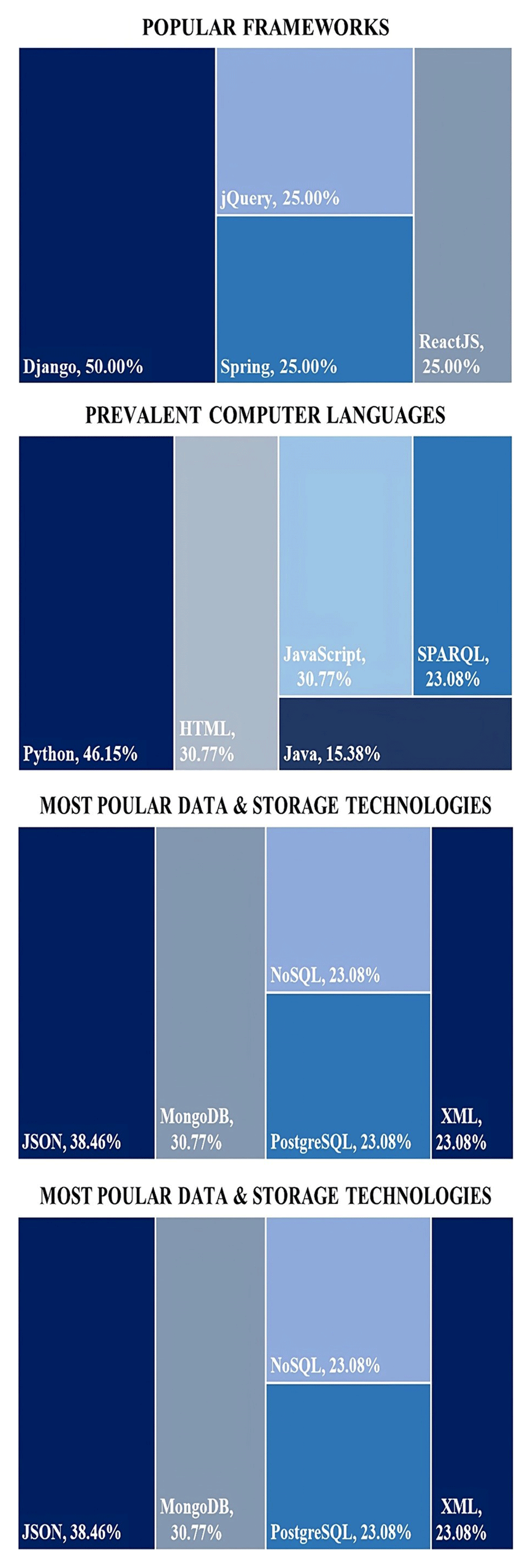
Table 7 provides a summary of the technologies employed in each primary study, offering a comprehensive overview of the digital marketplace landscape across the literature reviewed. Additionally, the technologies that were most frequently utilized in the primary studies for each category are showcased in Figure 8. It should be noted that the frequency percentages presented for each category were based solely on the studies that provided information on technologies within that category and did not include those that did not.

Table 7. Classification of technologies.

No.FrameworksComputer
Languages
Data & Storage technologiesCommunication
technologies
a1Assert4SoaSerDiQueL--
a2Django; jQueryPython; SASS; HTML--
a3-C#; C++; Java;
JavaScript
-HTTP
a4-SPARQL-REST APIs
a5----
a6DjangoPythonJSON-
a7Django; Spring;
ReactJS
Python; Bash;
JavaScript
SQL; NoSQL; MinIO; ElasticsearchREST APIs
a8----
a9----
a10Spring; Hibernate
ORM
SPARQL; JavaMySQL; SQL; MongoDB; PostgreSQL;
NoSQL; GraphDB Free
-
a11--JSON-
a12--MongoDB; XML; Open Virtualization
Format
-
a13-JavaScriptJSONKafka stream; HTTP;
GraphQL
a14-Python-FED4FIRE API
a15--HDF5; RDF-
a16Bootstrap; SASL;
jQuery
HTML; JavaScriptPostgreSQL; IPFSLDAP; HTTP
a17---REST APIs
a18----
a19--YAMLHTTP
a20--DRAMOpenFlow; HTTP
a21--MongoDBDelayed Message Queue
a22--XML-
a23Django; ReactJS;
Angular
HTML; Python;
Typescript
PostgreSQL; MariaDB; XML;
Elasticsearch; JSON
REST APIs; HTTP
a24-SPARQL; RDF Query
Language
RDF-
a25----
a26FlaskPython; CSS; HTML;
PHP
MongoDB; NGINX; Gunicorn; NoSQL;
JSON
REST APIs; HTTP
f833c673-2c1c-4d97-a670-815c19a60728_figure8.gif

Figure 8. Multiple treemap charts depicting the most prevalent technologies used across the primary studies.

In the analysis of the primary studies, it was found that 50% of them utilized the Django web framework, making it the most commonly used framework. Django is a high-level Python web framework that enables the efficient and practical development of web applications. For example, Rehm et al. (2021) utilized Django to develop their web application, showcasing the capabilities and effectiveness of the framework in web development. The next most common frameworks used in the primary studies were jQuery, Spring, and ReactJS, each with a frequency of 25%. jQuery is a fast, small, and feature-rich JavaScript library that simplifies HTML document traversal and manipulation, and event handling, which was utilized by Palaiokrassas et al. (2021). Spring is a popular Java-based framework that provides a comprehensive programming and configuration model for modern Java-based enterprise applications (Bassiliades et al., 2018). Lastly, ReactJS is an open-source JavaScript library used for building user interfaces or UI components, utilized by Rehm et al. (2021).

The next category evaluated for this technical analysis refers to the most common computer languages observed among the primary studies. The broader term “Computer Languages” was used to encompass all different types of languages (i.e., programming, markup, query, etc.) used in the primary studies both for front-end and back-end development. The analysis of computer languages revealed that Python was the most prevalent language, with 46.15% of the studies utilizing it and this is quite anticipated also from the framework analysis. Python is a versatile language and is often used for full-stack web development, as described by Stavropoulos et al. (2020), or for executing certain services via REST API calls, as Rehm et al. (2021) mention. JavaScript along with HTML followed next with 30.77% of the studies utilizing them. JavaScript is primarily used for client-side web development, although it can also be utilized to handle the interaction with smart contracts (Palaiokrassas et al., 2021), while HTML is a commonly used standard markup language for creating web pages (Rehm et al., 2021). The next most common language was SPARQL which was utilized in 23.08% of the primary studies. SPARQL is a query language for handling RDF data, and was utilized accordingly by Bavota et al. (2014). Lastly, Java was used in 15.38% of the primary studies. Java is a popular general-purpose programming language often used for enterprise applications, utilized by Bassiliades et al. (2018). Overall, these findings suggest that Python, JavaScript and HTML are the most commonly used languages for developing applications related to the technologies covered in this systematic literature review and these findings are also in accordance with well-known indexes such as TIOBE Index6.

Data & Storage technologies were identified as a prominent category in the primary studies, with JSON being the most commonly used technology at 38.46%, followed by MongoDB at 30.77%. Other common technologies used include PostgreSQL, NoSQL and XML, all of which were utilized in 23.08% of the primary studies. JavaScript Object Notation (JSON), is a lightweight data interchange format that is easy for humans to read and write, while also being easy for machines to parse and generate, as Shi et al. (2022) describe. MongoDB and PostgreSQL are both popular database management systems, which can also be used in combination as presented by Bassiliades et al. (2018), with MongoDB being a NoSQL database, and PostgreSQL being a relational database management system. NoSQL (Not Only SQL) databases are used for storing and managing large volumes of unstructured or semi-structured data, and can handle flexible data models, provide horizontal scalability, and support high-performance data processing; thus, it was utilized accordingly by Mavrogiorgou et al. (2022). Lastly, XML, or Extensible Markup Language, is a markup language referenced by Bavota et al. (2014), as an example of its wide usage for storing and exchanging data on the web. The prevalence of these data and storage technologies highlights the importance of managing and storing data effectively in web-based applications.

The last category evaluated refers to Communication Technologies. The most common technology used in this category is HTTP at 58.33%. This is not surprising since HTTP is a fundamental protocol for data communication on the World Wide Web, which offers platform-independence and interoperability, and was utilized accordingly by Westera et al. (2019). RESTful APIs are the next most common communication technology used in the primary studies, with a percentage of 41.67%. As Pincheira, Vecchio, and Giaffreda (2020) describe, RESTful APIs have gained popularity due to their ability to offer a standardized approach for creating web services that enable diverse components to communicate with each other seamlessly, making them compatible with various client applications. HTTP and REST APIs are the most prevalent communication technologies due to their ability to provide a standardized, flexible, and efficient way for systems to communicate and to meet different needs.

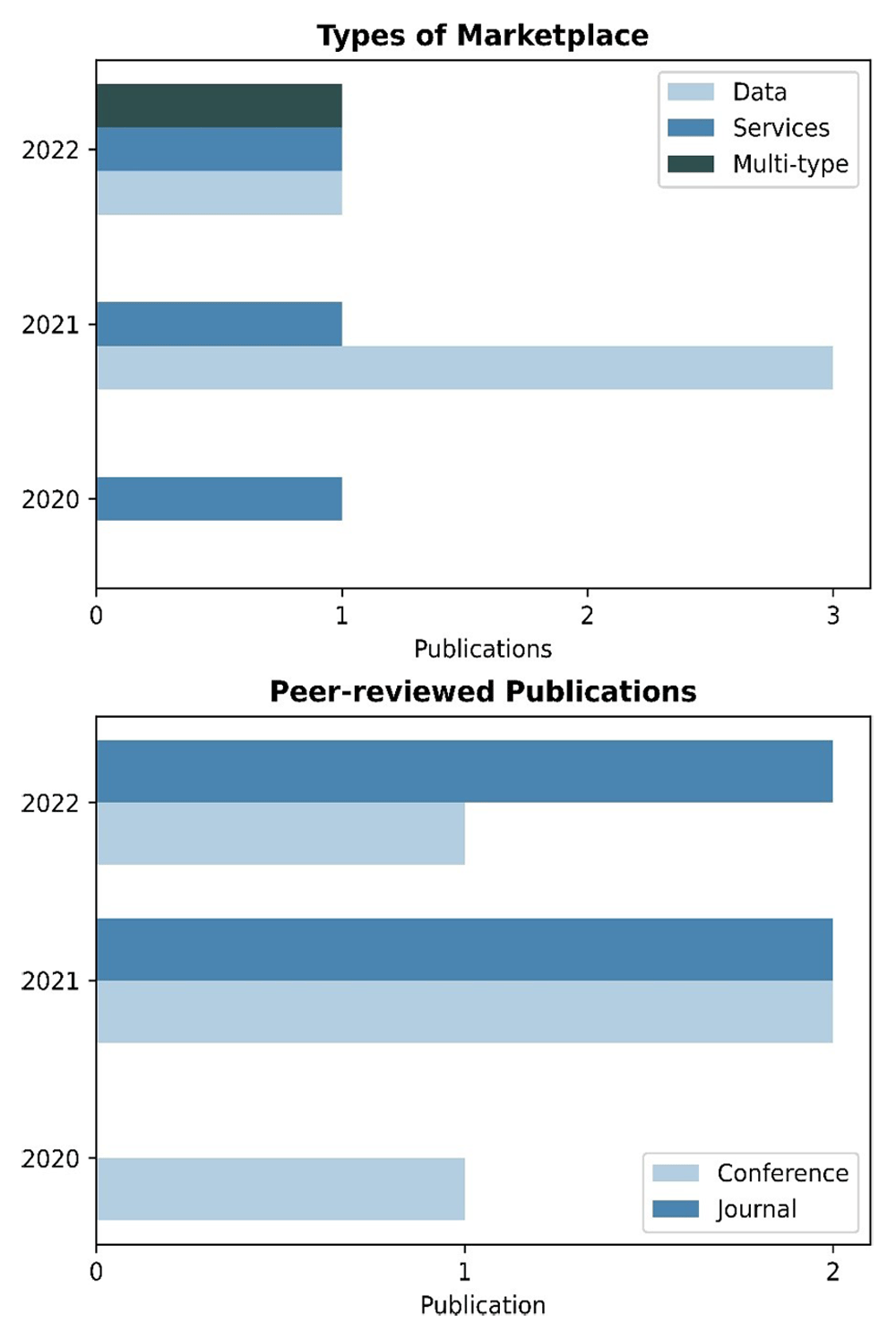
4.3.3. Blockchain-related analysis. The last layer of the technical analysis pertains to the presentation of the blockchain-specific details gathered and examined from blockchain-based papers (as showcased in Figure 9). The papers relevant to blockchain are numbered to be eight, with the first one published in 2020 and the majority published in 2021. The works in the literature are related to different marketplace types, with the majority of them focusing on data (50%), reflecting the emergence of data marketplaces after 2018 (as analyzed in Section 4.1). Data marketplaces use blockchain to allow users to have control and incentives for sharing their data, by promoting disintermediation and democratization in data exchange. Similarly to data, there are suggestions in services (37.5%) and marketplaces with a wide variety of products (12.5%). The products’ complexity grows as the community gets accustomed to the blockchain. Conferences and journals accommodate the publications with an equal split (each source has 4 related publications).
f833c673-2c1c-4d97-a670-815c19a60728_figure9.gif

Figure 9. Blockchain-related papers distributions.

The aforementioned papers use a range of technologies for delivering a functional marketplace for end-users. Blockchain research divides the concepts into four categories for analysis based on the considerations of the blockchain features and user requirements for an intuitive DApp:

  • (1) Infrastructure

  • (2) Smart contract development

  • (3) Technologies for deploying a DApp

  • (4) Testing and debugging tools

Blockchain merges hardware and software with cryptography to establish a decentralized network where nodes can securely exchange information. Initially, the analysis commences with the review of the blockchain protocols, which provides a level of abstraction on the technology stack executed by the nodes. The applications suggested in the literature benefit from various blockchains varying in the network’s type and permissions. Ethereum7 is the first blockchain to implement a Turing-complete machine for executing smart contracts. As a result, it is the favored out of the public permissionless networks indicated by the concepts established on Ethereum (Fotiou et al., 2021; Niya et al., 2021; Pincheira et al., 2020). On the other hand, some concepts rely on private permissioned blockchains using frameworks to operate their networks, like Corda R3 (Fernández-Fernández et al., 2021), Quorum (Palaiokrassas et al., 2021), and Hyperledger Fabric8. Finally, an intriguing use case is the selection of Alastria (Palaiokrassas et al., 2021), which is a public-permissioned platform.

The introduction of smart contracts is vital for the distributed ledger technology as triggers the transition to the second generation of the blockchain. Essentially, smart contracts are the encoded logic of procedures executed in a decentralized manner by the network’s nodes. While developers can opt for new smart contract languages like Solidity (Palaiokrassas et al., 2021), there are frameworks in other languages like JavaScript (Genés-Durán et al., 2022) and Python’s web3 (Pincheira et al., 2020) for deploying smart contracts.

Despite blockchain being an integral component for developing a decentralized application, there is a need to implement other components for the completion. There are suggestions discussing the security and identity aspect of the marketplaces by implementing standards like OpenID and OAuth2 (Palaiokrassas et al., 2021) and frameworks like Keycloak (Palaiokrassas et al., 2021) to apply these standards. In the case of authentication based on blockchain, the identity management has been facilitated by the JavaScript’s Web3 library (Niya et al., 2021) in order to utilize Ethereum addresses. Finally, the literature refers to developing and testing smart contracts in a lab environment. Most of the tools used do not require their deployment on public networks but still provide metrics like gas and associated fees, and Frameworks for development and testing are mainly Ganache (Palaiokrassas et al., 2021; Pincheira et al., 2020) and Remix (Palaiokrassas et al., 2021).

4.3.4. Rest of technical-related analysis. This Section delves into further technical-related analyses beyond deployment features, software technologies, and blockchain specifics, touching on areas vital for enhancing marketplace functionality and user experience. It is essential to mention that, although a similar detailed and aggregated analysis as conducted in previous subsections was not feasible for following technical aspects due to the limited number of studies directly addressing them, these elements have been included due to their importance in the development and operation of digital marketplaces. The topics that are analyzed in the following paragraphs play pivotal roles in the secure, efficient, and user-friendly operation of digital marketplaces.

OAuth

In the context of digital marketplaces, OAuth has emerged as a powerful tool and is often the first step in the process of accessing a web platform (or marketplace in our case), providing both authorization and authentication to ensure secure and seamless integration between multiple platforms and applications. While only a few papers provided details on how they handle authentication and authorization processes, the topic was still explored in primary studies. OAuth is particularly relevant for digital marketplaces that rely on external APIs to access user data (Stavropoulos et al., 2020), as it provides a secure and standardized way to delegate access to these resources. OAuth can also be used in conjunction with other technologies, such as JSON Web Tokens (JWTs), to securely transmit information between parties, further enhancing the security and usability of OAuth in digital marketplaces (Rehm et al., 2021). In addition, by allowing users to grant controlled access to their protected resources, OAuth provides a standardized framework for digital marketplaces to share access and functionality in a way that benefits all parties involved (Palaiokrassas et al., 2021). For digital marketplaces, the use of OAuth can offer several benefits, including increased interoperability, improved user experience, and enhanced security. By leveraging the power of OAuth, these marketplaces can enable seamless data exchange between different systems and applications, facilitating the creation of a vibrant and interconnected digital marketplace ecosystem.

Ontologies

Ontologies were identified as a relevant aspect in this SLR, however only a limited number of studies provided information about them, making it difficult to conduct an aggregated analysis. Despite the limitations, the topic of ontologies was still explored in the primary studies, and it is worth noting that their absence in some domains may be attributed to their resource-intensive nature and that they require significant expertise, which may lead to difficulties in their use. Digital marketplaces are evolving to become increasingly complex, considering the diverse range of products and users they accommodate. This new paradigm allows for the inclusion of both tangible products such as sensors (Stavropoulos et al., 2020), as well as intangible products such as software applications. Users set their requirements and desire to query the products based on their individual features (Ali et al., 2013). The marketplaces’ complexity increase as the target audience can be global and have different backgrounds. For example, healthcare marketplaces (Stavropoulos et al., 2020) accommodate services and products for developers and other stakeholders.

Ontologies are deployed in the marketplaces to address the above issues, as they enhance the interconnection and openness of the marketplaces’ resources and ultimately result in their findability, and also provide a structured way to represent knowledge. For instance, Bassiliades et al. (2018) utilize the DUL upper level ontology, a domain-independent ontology, to enhance semantic interoperability with similar projects and research endeavors, favoring extensibility since adding new classes and properties is made easier. One of the most known ontologies is OWL, utilized by Horsch et al. (2020), to better define concepts, relationships, and properties in a structured and systematic manner, enabling thus greater interoperability and reusability of data. Finally, ontologies can also help users link and monetize their resources like data marketplaces (Roman et al., 2017).

Data & Storage

As already presented in Section 4.3.2, the primary studies reviewed detail the text file formats for facilitating the storage and exchange of data between applications and systems, with JSON being the most popular. However, there are similar technologies found across the literature that facilitate different needs. For example, YAML is a human-readable data serialization format that is often used for configuration files (Bernardinetti et al., 2021) and data exchange between programming languages.

The data format is essential for standardizing the format for facilitating communications and reducing errors’ likelihood, while the file formats relate to the underlying storage infrastructure permitting information to be stored and transmitted. The storage infrastructure requirements differ in each work, as the stored data can be structured and unstructured. For example, there are contemporary deployed platforms that utilized relational databases, but there are also works in the literature with the more flexible approach provided by NoSQL platforms. However, a combination of both technologies is observed across the literature (Bassiliades et al., 2018; Faliagka et al., 2022). The combination of SQL and NoSQL databases is often referred to as NewSQL or hybrid databases, where the benefits of both SQL and NoSQL databases are combined to achieve improved scalability, performance, and flexibility. In this approach, SQL databases are typically used for transactional processing and complex queries, while NoSQL databases are used for high-speed data ingestion, processing, and retrieval. The two types of databases can be integrated using a variety of approaches, including data replication, data synchronization, and data sharding.

Furthermore, there are decentralized systems implemented in the literature for storing data, like IPFS (Palaiokrassas et al., 2021), which is a protocol and network designed to create a distributed file system that allows users to access and store files in a decentralized manner. Finally, storage systems should be considered alongside blockchain implementations. The aforementioned platforms are viable as off-chain storage, while blockchain can store transactional data.

Containerization

Containerization is a method that is frequently used in the process of software deployment. This method bundles an application’s source code, files, and libraries so that it can run on any infrastructure (Watada et al., 2019). In terms of marketplace deployment, containerization can have two distinct applications covered in the literature. The marketplace is a software of different components interconnected to each via their logical architecture. All these components composing the marketplace can use containerization to simplify the deployment. The second use case for containerization is associated with the distribution of applications to be utilized in the market. There are marketplaces encouraging developers to publish their applications. Containerization is basically the standard that marketplaces provide to developers to follow when they publish their applications and ensure the execution on the user’s infrastructure.

The two most commonly used technologies that were found in the primary studies of this SLR are Kubernetes and Docker. Docker is a platform for building, packaging, and distributing containerized applications (Rehm et al., 2021), while Kubernetes is an orchestration system for automating the deployment, scaling, and management of containerized applications across a cluster of nodes (Faliagka et al., 2022). Hence, Docker provides the tools to create and manage containers (Faliagka et al., 2022), while Kubernetes provides the tools to manage and orchestrate multiple containers across multiple hosts (Niya et al., 2021). Continuous integration (Rehm et al., 2021) is an important aspect of software engineering that can be facilitated through the use of deployment software such as Jenkins and Kubernetes’ Helm (Rehm et al., 2021). When combined with containerization, these tools can help to further streamline the deployment process and improve the overall efficiency of marketplace deployment.

As the marketplace relies on different components, there is a need to document the changes and details for all the deployed ones. For this reason, literature papers include tools for aiding developers in versioning their code, as analyzed in the following subsection.

Collaboration tools

The use of collaboration tools in software development has been found to facilitate teamwork and increase productivity. However, it is important to note that not all projects or teams may find collaboration tools suitable or effective, especially those that require strict access controls, have concerns about intellectual property, or have difficulties with version control and coordination among team members.

The suggested review found that the most commonly used tools found across the literature, are GitHub (Palaiokrassas et al., 2021) and GitLab (Faliagka et al., 2022; Rehm et al., 2021). These platforms provide a centralized location for developers to work together on code, track changes, and manage the development process, and through their use, teams can streamline their software development process and increase productivity. Finally, another tool found across the literature was Figma (Alvsvåg et al., 2022), which is a design and prototyping tool that enables teams to collaborate on user interface (UI) and user experience (UX) design, and also provides features such as real-time collaboration, commenting, and version history.
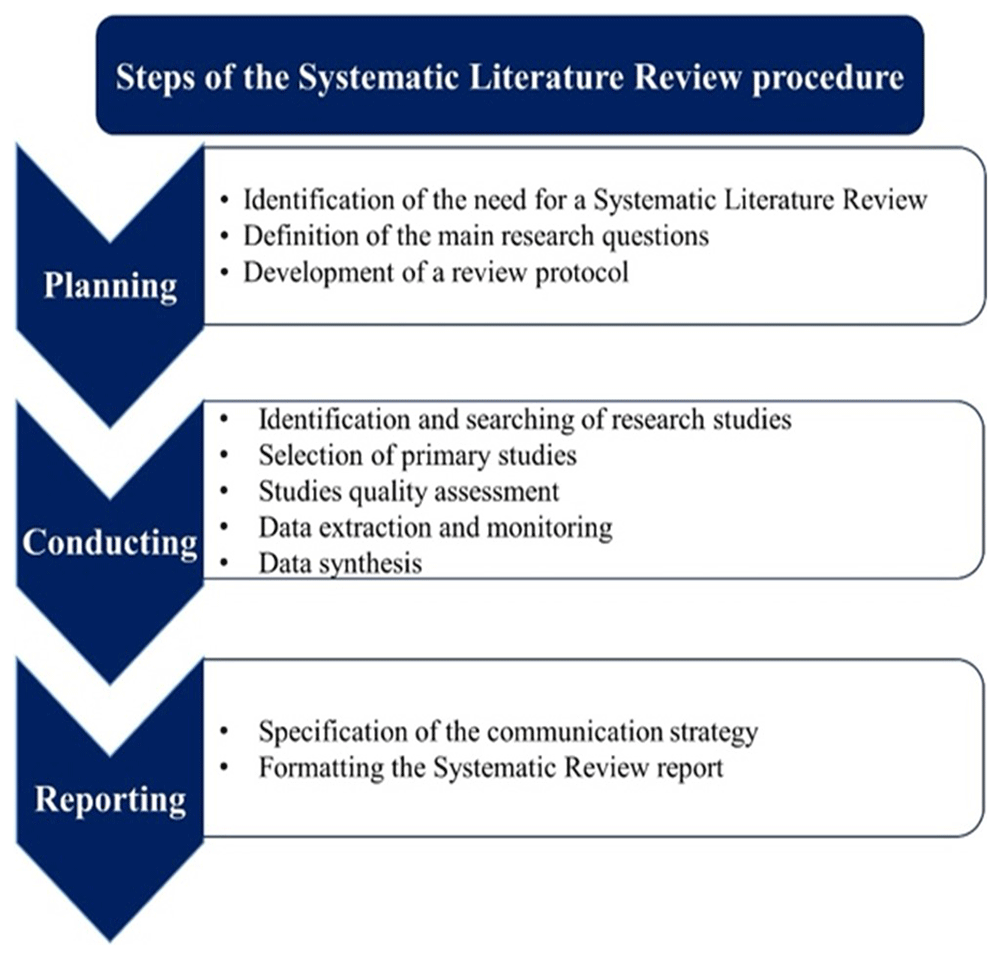
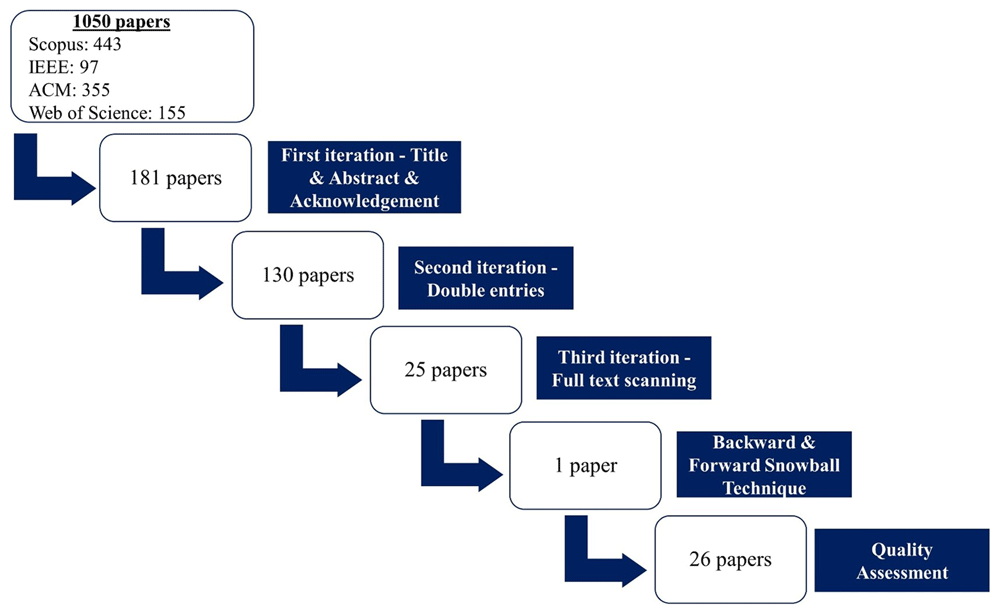
4.4. Research-related Results

This section investigates the core research aspects of the studies included in our systematic literature review, aiming to provide a holistic view of the research dynamics within the domain of digital marketplaces fostered by EU funding. For a better overview of the findings, a summary table is presented below (Table 8), where the scope diversity of the research studies is obvious: from the presentation of complete and holistic marketplaces in various industry sectors to more methodology focused research studies applied to a marketplace.

Table 8. Major Research Outcomes.

No.Major research outcomes
a1This study introduces a marketplace prototype that leverages the Assert4Soa framework to offer business software with certified
security properties. It aims to mitigate security concerns in cloud adoption by providing a transparent platform where users can
compare software based on security certifications. This solution helps businesses comply with security standards and regulatory
requirements, facilitating informed procurement decisions for cloud services and applications.
a2The ACTIVAGE marketplace uses a hybrid logic- and text-based method for discovering Active and Healthy Ageing IoT
applications. The authors employed semantic analysis to enable seamless discovery and deployment of AHA solutions.
By integrating blockchain for security, and smart contracts for transparency, it addresses key challenges in deploying IoT
applications for ageing populations, promoting a unified portal to enhance accessibility and innovation in the sector.
a3The RAGE project introduces a marketplace to initiate innovation in serious gaming by offering a central platform for sharing
game technologies and resources. Aimed at connecting researchers, developers, and other stakeholders, it facilitates the
dissemination and application of game technology components. With an initial offering tested through seven serious games, it
invites contributions, aiming to be a technology-neutral hub that enhances innovation potential.
a4The proDataMarket marketplace aims at facilitating the publication, discovery, and monetization of linked data, with a particular
focus on geospatial linked data. This data marketplace enables data providers to monetize their data while offering consumers
simplified access to valuable geospatial insights. Through demonstration and architectural design, it showcases how linked data
can support diverse domains beyond its initial geospatial focus, promoting flexibility, utility, and innovation in data usage and
sharing across various sectors.
a5The study introduces the first European marketplace for trading used F-gases, aligning with EU's F-gas Regulation and the
Green Deal to support the circular economy of refrigerants. It facilitates the trade of recovered F-gases, ensuring transparency
and secure transactions. The marketplace, currently operational in Slovakia, Hungary, Czech Republic, aims for wider European
expansion. It features user verification, wallet management, and SEPA transactions.
a6The study presents a decentralized blockchain-based marketplace for Fog/Edge computing resources. Through experimental
setup and live network analysis, it evaluates the feasibility, cost, and performance of blockchain technology for creating a
marketplace that ensures transparency, security, and trust. The findings demonstrate the potential to facilitate a decentralized
infrastructure for trading computing resources, and also contribute to the understanding of blockchain's applicability in
enhancing the reliability of distributed computing environments.
a7The SMART4ALL marketplace promotes collaboration in IoT and customized low energy computing, utilizing open-source
technologies for flexibility. In its initial six months, it engaged 840 members from 44 countries and hosted 184 artefacts. It
features a matchmaking service powered by AI, aligning user needs with available resources. It aims at expanding its network,
enhancing semantic search, and integrating with other platforms.
a8This study explores the creation of a data marketplace prototype to enhance data sharing, reuse, and collaboration in smart
cities. By employing iterative prototyping and expert evaluation through semi-structured interviews, the authors demonstrate
the potential of a data marketplace in facilitating innovative services and improving urban living. The findings indicate that such a
marketplace is feasible and also valuable in promoting data-driven innovation and collaboration among city stakeholders, by also
contributing to smarter and sustainable urban areas.
a9This study presents the decentralized blockchain-based data marketplace i3-MARKET and DEFS, a free data sampling service,
integrated into i3-MARKET. DEFS allows consumers to preview data samples before purchase, building trust and ensuring data
quality. The service enhances marketplace efficiency by streamlining payment processes and resolving conflicts, aiming for
broader applicability with future expansions to support both crypto and fiat transactions. This approach marks a significant step
towards trustworthy and transparent data trading environments.
a10The authors present a Platform-as-a-Service marketplace that avoids provider lock-in by using a semantic model based on DUL
ontology. Through systematic reviews of Cloud platforms and leveraging standards like CAMP and TOSCA, they developed a
flexible, extensible ontology for annotating PaaS offerings and application requirements. It supports efficient matchmaking
between appls and Cloud PaaS offerings, addressing interoperability and portability challenges.
a11The authors present a novel approach to building trustworthy cloud marketplaces through blockchain technology. By integrating
auction-based service selection and decentralized witness mechanisms within SLA management, they present a transparent,
fair, and inclusive marketplace environment. Utilizing Ethereum, AWESOME demonstrates practical viability through extensive
evaluations on execution latency and cost, revealing its economic and operational feasibility.
a12The authors introduce a marketplace, offering a seamless environment for trading cloud-based services. Employing a service-
oriented architecture, it facilitates the modular composition of services, supports advanced pricing models, and incorporates
BI for enhanced service discovery, selection, and trading. Evaluation through expert feedback and real-world scenarios
demonstrates its potential to transform cloud service trading, which benefits both providers and consumers.
a13ITrade is a blockchain-based marketplace for IoT data streams, focusing on decentralization, scalability, and data sovereignty.
Employing Smart Contracts, it facilitates secure data exchange between IoT device owners and data buyers. Its architecture
enhances user experience by simplifying deployment and reducing costs, with evaluations confirming its efficacy and compliance
with data sovereignty principles.
a14This study introduces a marketplace to enable cloud network slicing across multiple domains, addressing critical aspects of 5G
networking. The NECOS platform facilitates dynamic discovery and allocation of slice resources. It is backed by an architecture
and information model that supports the dynamic creation of end-to-end network slices, leveraging resources from various
infrastructure providers. Its model is demonstrated through an initial implementation, showcasing its potential to enhance
resource utilization and flexibility in network slice provisioning.
a15The authors develop an open marketplace platform for materials modeling services, utilizing ontologies for service
characterization, user interactions, and data management. The ontologies, facilitate the annotation, ingest, and retrieval of data,
supporting semantic interoperability within and across modeling platforms. The marketplace aims to cater various users by
offering diverse services, such as training, model parameters, and simulation platforms, with the goal of enhancing accessibility
and usability of modeling and simulation in thermodynamics and mechanics.
a16This study showcases a system that integrates blockchain technology, smart contracts, and IoT to create a secure, decentralized
data marketplace for smart cities. The marketplace enables stakeholders to trade sensor data and services securely and
anonymously, supported by a custom token for transactions. Tested across cross-border trials, including Santander and
Fujisawa, the system demonstrates interoperability, efficiency, and adherence to data protection principles.
a17This paper presents a decentralized marketplace for multi-party collaboration in 5G networks, leveraging DLT to ensure
secure, transparent trading of 5G resources across different domains. The marketplace facilitates dynamic service provisioning
and resource sharing, enhancing trust, privacy, and distributed transactions. An initial proof-of-concept implementation
demonstrates its feasibility for real-time resource trading in 5G ecosystems, emphasizing the potential of DLT to streamline
operations and foster innovative services in next-generation networks.
a18This study introduces a marketplace facilitating the trade of information between data providers and consumers, tailored for
smart-grid data sharing. Leveraging local differential privacy and Ethereum, it ensures the privacy of data providers against
consumers and system operators, by also enabling fair exchange and immutable transaction logs. It addresses the critical
balance between privacy protection and the utility of shared data in generating meaningful statistics.
a19Nautilus revolutionizes cybersecurity training by automating the deployment of training scenarios and enabling a marketplace
for sharing vulnerabilities and scenarios. It simplifies creating and managing cyber ranges with cloud technology and a user-
friendly interface, promoting community collaboration. Early feedback from usability tests reflects its potential to enhance
cybersecurity education and knowledge exchange.
a20FORTIKA introduces a cybersecurity solution for SMEs, integrating hardware and software within existing network gateways. It
guides SMEs to trusted services via a marketplace, offering tailored cybersecurity solutions. Preliminary evaluations show the
marketplace's efficiency in service deployment, demonstrating FORTIKA's potential to streamline cybersecurity for European
SMEs with customizable, adaptive solutions.
a21ECHO integrates diverse cyber range capabilities into a unified platform, enabling complex cybersecurity training and testing
scenarios across sectors. It acts as a centralized portal for managing cyber training exercises, emphasizing scalability and
the simulation of intricate environments. By combining various cyber ranges, it enhances training realism and effectiveness,
advancing cybersecurity preparedness.
a22This study introduces a blockchain-based TSO-DSO flexibility marketplace (EFLEX) that facilitates trading and flexibility services
among TSOs, DSOs, and Prosumers. EFLEX provides a transparent, secure, and cost-effective way for managing energy flows
and addressing congestion. Through blockchain technology and smart contracts, it ensures the secure and fair transaction of
flexibility services. Pilot implementations in Bulgaria and Romania are highlighted, emphasizing in congestion management,
TSO-DSO coordination, and marketplace dynamics.
a23The ELG project aims to establish the primary platform and marketplace for Language Technologies (LT) in Europe. By offering
an umbrella platform, it enables stakeholders to upload, share, and distribute LT services, products, and resources. Targeted
to support all European languages, ELG plans to provide access to approximately 1,300 services and datasets, aiming to foster
digital language equality and address the fragmentation in the European LT landscape.
a24The MARKOS project develops a virtual marketplace for exploring open-source projects, emphasizing code structure,
functionality, and licensing. It offers advanced browsing capabilities, inter-project dependency visualization, and legal issue
identification. It supports sophisticated queries for better software reuse, addresses licensing compatibility, and promotes global
access to open-source resources, making it a unique tool for developers and the open-source community.
a25The study introduces a method to improve B2B marketplaces by seamlessly integrating purchasing and transport processes,
leveraging semantic annotations and B2B standards. It offers a marketplace for product discovery, process integration, and
synchronizing marketplace data with users' legacy systems. Validated in NIMBLE project, it enhances trading efficiency, reduces
interaction efforts, and fosters trust through improved data interoperability and synchronization.
a26The study introduces a data marketplace designed to offer an integrated platform for accessing and sharing various data
assets, including AI/ML resources. Addressing the fragmentation of existing solutions, it provides structured, accessible data
management tools and solutions, supporting both human and machine user’s data analysis and sharing needs. It aims to
facilitate collaboration and efficient use of data assets, promoting innovation and knowledge sharing.

5. Discussion

This Section provides a thorough discussion to offer deeper insight into the research challenges and opportunities that have emerged during the course of this SLR, with the identified issues being addressed in the following subsections. The main insights of current work as they are extracted from this discussion section and the previous analysis are depicted in Figure 10.

f833c673-2c1c-4d97-a670-815c19a60728_figure10.gif

Figure 10. Highlights of SLRs Findings.

5.1. Discussion of Results

This study focused on digital marketplaces developed through European funding and in the course of European projects, which has not been specifically investigated in previous research studies. It also highlighted the significant potential of digital marketplaces as a means to enhance competitiveness and innovation in various industries and to stimulate novel research and industry sectors in the European region, since they offer various advantages, such as increased accessibility, convenience, and personalized recommendations.

Within these subject areas, this research work presents a technical classification system that encompasses general, business-related, technical characteristics and research-related results observed between the years 2013–2023, which could be used as a valuable tool for benchmarking and comparing different digital marketplaces based on their characteristics and as a framework for conducting market research and trend analysis in the digital marketplace industry. From the present SLR, 26 papers were examined and analyzed, from which specific data features were gathered and were thoroughly presented in Section 4. This rigorous analysis offered valuable insights and discovered trends in the digital marketplace ecosystem. Firstly, services, data, and multi-typed marketplaces were found to be the most prominent ones, probably attributed to the increased demand for digital services and the rise of big data, while multi-typed marketplaces by providing a diverse range of market offerings (including digital services, data analytics, and innovative product combinations), can meet various customer needs. In addition, the IoT is a developing industry, among the most common for these marketplaces, and their popularity can be justified by their ability to provide a convenient and efficient way for businesses to access and manage IoT data and services. Secondly, the combination of Django and Python was particularly prevalent in the studies analyzed, with many papers mentioning their ease of use and ability to quickly create web applications as a major advantage, while Python’s versatility and large number of libraries (including AI-related among others) and frameworks renders it as an attractive choice for digital marketplace development. In terms of data management, JSON (JavaScript Object Notation) was identified as a widely used technology due to its lightweight and easy-to-parse format, and its simplicity and compatibility with many programming languages. Lastly, HTTP and REST APIs were found to be the most commonly used communication technologies, due to their ability to provide consistent communication between different systems and devices, thus handling a large volume of requests. Finally, blockchain technology emerged as a prominent trend in digital marketplaces, offering benefits such as increased transparency, security, and trust. Its decentralized nature makes transactions more direct, since no central authority is required, while the immutability of blockchain-based transactions can enhance the overall trust and credibility in the marketplace, since all records are tamper-proof and can be verified by all parties involved.

5.2. Limitations of the study

While this study offers valuable insights into digital marketplaces developed through European funding and highlights their potential, limitations worth documented emerged throughout the process. Since only EU-funded projects’ publications with prototypes or fully developed marketplaces were considered, the publications’ number for analysis was capped by the criteria and excluded conceptual frameworks. Acknowledging that the criteria strictness can affect the extent of the digital marketplace landscape analysis, the snowballing process was carried out as a mitigation action to this threat (Wohlin, 2014), considering all references listed in the selected papers. Secondly, the researchers’ technical analysis solely details the novel aspects of the components while disregarding information on the other functional components existing in the marketplaces (i.e., back-end processes, authentication, data storage and management, etc.). The information absence limits the ability to conduct an aggregated and comparative analysis of the overall and diverse marketplaces’ components. This could impact the usefulness of the technical classification system developed in this study for benchmarking and comparing different digital marketplaces, but to mitigate this risk, this topic was addressed in the Subsection 4.3.4 in order to provide a more nuanced and contextualized interpretation of our results. Lastly, business-related characteristics (revenue model, pricing strategies) are underrepresented in the technical description, restricting the comprehension of the digital marketplaces’ potential impact on various industries. A rigorous analysis was conducted as a mitigation to the aforementioned risk in the previous Subsection 4.2.1 to highlight the potential impact of business-related characteristics on the success of digital marketplaces.

5.3. Future directions

Based on the limitations and insights of this study, future researchers could consider exploring conceptual ideas for digital marketplaces to broaden the analysis of the landscape of marketplaces developed through European funding. Furthermore, more information is needed in regard to revenue models and pricing strategies, which could assist future studies examining the potential impact of digital marketplaces on various sectors of the economy. In addition, there is a need for more information on specific technical characteristics such as software and hardware components, system architecture and design, data storage and management, data security and privacy, performance metrics and scalability. A framework could be designed for future researchers to systematically collect and analyze relevant data, which could outline methods for benchmarking and comparing these features, in order to identify best practices and areas for improvement in marketplace development. Moreover, as blockchain technology emerges as a prominent trend, researchers could explore its impact on the development and success of digital marketplaces, also considering novel characteristics. For example, in some more recent approaches (Nizamis et al., 2024), Non-Fungible Tokens (NFTs) are also used for exchanging AI models over a digital marketplace. However, it is crucial also to investigate the potential ethical and legal implications of blockchain in electronic marketplaces, such as issues related to privacy, data security, and intellectual property rights. Finally, the results related to marketplace deployment clearly indicated that a lot of work should be done in the exploitation of EU-funded marketplaces in order to function smoothly after the project finalization and therefore, the community to benefit from their operation.

In addition to the above, the systematic literature review also raises important questions about the marketplaces’ societal implications. The observed trends have implications for policymakers and practitioners. This reflects a growing societal demand for greater control over personal data and the integrity of digital transactions, signaling a shift towards more decentralized and user-centric digital marketplaces.

Policymakers need to foster regulatory frameworks that support innovation while ensuring data protection, user privacy, and fair market practices. They should prioritize:

  • Regulatory support for emerging technologies that enhance marketplace transparency and security, facilitating their adoption while safeguarding against potential misuse.

  • Standards and guidelines for data sharing and transactions in digital marketplaces, ensuring they promote user trust and engagement.

  • Encouragement of cross-sector collaborations to leverage digital marketplaces for societal benefits, such as improved healthcare access, environmental sustainability, and inclusive economic growth.

For practitioners, the emphasis on decentralized technologies and the integration of advanced data and analytics into marketplace operations suggests a strategic direction that aligns with evolving user expectations and regulatory landscapes. Practitioners should consider:

  • Investing in user-centric design and development approaches that prioritize transparency, data control, and privacy as central features of digital marketplaces.

  • Engaging with stakeholders across sectors to understand the broader societal impacts of marketplace technologies and to identify opportunities for creating shared value.

  • Adopting agile and responsive strategies that enable quick adaptation to technological advancements and regulatory changes, ensuring sustained competitiveness and relevance in the digital economy.

In conclusion, the technological trends highlighted in this review call for a combined effort by policymakers and practitioners to steer the development of digital marketplaces towards positive societal outcomes. This involves not only accepting technological innovations but also addressing the ethical, legal, and social considerations they entail, ensuring that digital marketplaces contribute to a more transparent, secure, and inclusive digital future.

6. Conclusions

Digital marketplaces represent electronic platforms dedicated to the sale, distribution and marketing of various tangible and intangible “products” in the era of business digitalization, with software, data and services marketplaces being amongst the most popular. This study has systematically investigated the landscape of digital marketplaces delivered by EU funding, highlighting their diverse types, underlying technologies, deployment strategies, and their impact on various sectors. The conclusions drawn from this study underline the important role of EU-funded projects in advancing digital marketplace innovations and their contribution to addressing contemporary economic and societal challenges. However, the low number of scientific papers related to Marketplace coming from EU funding projects highlights that the developed Marketplaces in various EC projects are not documented in the scientific bibliography by the corresponding researchers and developers.

The analysis performed in this research study revealed a wide array of marketplace types, reflecting the adaptability of digital marketplaces to cater to different economic sectors and user needs, fostering a dynamic and versatile digital ecosystem within the EU. It also explored how technological advancements, and cutting-edge technologies foster secure and efficient digital platforms. Despite the successes, the study identified technological challenges and societal implications, which need to be addressed, since they are crucial for the sustainable growth of digital marketplaces.

Ethics and consent

Ethical approval and consent were not required.

Data availability statement

Underlying data

No data associated with this article.

Extended data

Repository name: Checklist for Digital marketplaces in European research landscape: A systematic literature review, https://doi.org/10.5281/zenodo.13869982

Data material for SLR, uploaded in Zenodo (Nikoletos et al., 2024) Creative Commons Zero v1.0 Universal.

Footnotes

References

  •  Abbas AE, Agahari W, Van de Ven M, et al.: Business data sharing through data marketplaces: a systematic Literature review. J Theor Appl Electron Commer Res. MDPI, 2021; 16 (7): 3321–39. Publisher Full Text
  •  Alamdari PM, Navimipour NJ, Hosseinzadeh M, et al.: A systematic study on the recommender systems in the E-Commerce. IEEE Access. IEEE, 2020; 8: 115694–716. Publisher Full Text
  •  Ali M, Sabetta A, Bezzi M: A marketplace for business software with certified security properties. In: CCIS. 2013; 182: 105–14. Publisher Full Text
  •  Alvsvåg R, Bokolo A Jr, Petersen SA: The role of a data marketplace for innovation and value-added services in smart and sustainable cities. In: Innovations for Community Services: 22nd International Conference, I4CS 2022, Delft, The Netherlands, June 13-15, 2022, Proceedings. Springer, 2022; 215–30. Publisher Full Text
  •  Atluri V, Dietz M, Henke N: Competing in a world of sectors without borders. McKinsey Quarterly. 2017; 54(3): 33–47. Reference Source
  •  Azcoitia SA, Laoutaris N: A survey of data marketplaces and their business models. ACM SIGMOD Record. ACM New York, NY, USA, 2022; 51(3): 18–29. Publisher Full Text
  •  Barmparitsas N, Baronchelli A, Karellas S, et al.: Retradeables: the first online marketplace for used F-Gases in Europe. In: 2022 7th South-East Europe Design Automation, Computer Engineering, Computer Networks and Social Media Conference (SEEDA-CECNSM). IEEE, 2022; 1–6. Publisher Full Text
  •  Bassiliades N, Symeonidis M, Gouvas P, et al.: PaaSport semantic model: an ontology for a platform-as-a-service semantically interoperable marketplace. Data Knowl Eng. Elsevier, 2018; 113: 81–115. Publisher Full Text
  •  Bavota G, Ciemniewska A, Chulani I, et al.: The market for open source: an intelligent virtual open source marketplace. In: 2014 Software Evolution Week-IEEE Conference on Software Maintenance, Reengineering, and Reverse Engineering (CSMR-WCRE). IEEE, 2014; 399–402. Publisher Full Text
  •  Bernardinetti G, Iafrate S, Bianchi G: Nautilus: a tool for automated deployment and sharing of cyber range scenarios. In: Proceedings of the 16th International Conference on Availability, Reliability and Security. 2021; 1–7. Publisher Full Text
  •  Buyya R, Yeo CS, Venugopal S, et al.: Cloud computing and emerging IT platforms: vision, hype, and reality for delivering computing as the 5th utility. Future Gener Comput Syst. Elsevier, 2009; 25(6): 599–616. Publisher Full Text
  •  Cano JA, Londoño-Pineda A, Castro MF, et al.: A bibliometric analysis and systematic review on E-Marketplaces, open innovation, and sustainability. Sustainability. MDPI, 2022; 14 (9): 5456. Publisher Full Text
  •  Carullo G, Di Mauro M, Galderisi M, et al.: Object storage in cloud computing environments: an availability analysis. In: Green, Pervasive, and Cloud Computing: 12th International Conference, GPC 2017, Cetara, Italy, May 11–14, 2017, Proceedings 12. Springer, 2017; 178–90. Publisher Full Text
  •  Costa Melo I, Alves Junior PN, Callefi JS, et al.: A performance index for traditional retailers incorporating digital marketplace: benchmarking through Data Envelopment Analysis (DEA). J Organ Comp Electron Commer. 2022; 32(3–4): 196–216. Publisher Full Text
  •  Edwin NM: Software frameworks, architectural and design patterns. J Softw Eng Appl. 2014. Scientific Research Publishing, 2014; 7. Publisher Full Text
  •  Faliagka E, Panagiotou C, Antonopoulos C, et al.: A Novel marketplace perspective promoting customized low energy computing and IoT: the SMART4ALL approach. In: 2022 IEEE Computer Society Annual Symposium on VLSI (ISVLSI). IEEE, 2022; 363–68. Publisher Full Text
  •  Fernández-Fernández A, De Angelis M, Giardina PG, et al.: Multi-Party collaboration in 5G networks via DLT-Enabled marketplaces: a pragmatic approach. In: 2021 Joint European Conference on Networks and Communications & 6G Summit (EuCNC/6G Summit). IEEE, 2021; 550–55. Publisher Full Text
  •  Fotiou N, Pittaras I, Siris VA, et al.: A privacy-preserving statistics marketplace using local differential privacy and blockchain: an application to smart-grid measurements sharing. Blockchain: Research and Applications. Elsevier, 2021; 2(1): 100022. Publisher Full Text
  •  Genés-Durán R, Esparza O, Hernández-Serrano J, et al.: Data marketplaces with a free sampling service. In: 2022 IEEE International Conference on Services Computing (SCC). IEEE, 2022; 333–38. Publisher Full Text
  •  Ghofrani J, Lübke D: Challenges of microservices architecture: a survey on the state of the practice. ZEUS. 2018; 2018: 1–8. Reference Source
  •  Gönül S, Çavdaroğlu D, Kabak Y, et al.: A B2B marketplace ECommerce platform approach integrating purchasing and transport processes. In: Enterprise Interoperability IX: Interoperability in the Era of Artificial Intelligence.Springer, 2023; 105–21. Publisher Full Text
  •  Hänninen M, Smedlund A: Same old song with a different melody: the paradox of market reach and financial performance on digital platforms. J Manage Stud. Wiley Online Library, 2021; 58(7): 1832–68. Publisher Full Text
  •  Hofmeister C, Nord R, Soni D: Applied software architecture. Addison-Wesley Professional, 2000. Reference Source
  •  Horsch MT, Chiacchiera S, Seaton MA, et al.: Ontologies for the virtual materials marketplace. Künstl Intell. Springer, 2020; 34: 423–28. Publisher Full Text
  •  Jiang P, Balasubramanian SK: An empirical comparison of market efficiency: electronic marketplaces vs. traditional retail formats. Electron Commer Res Appl. Elsevier, 2014; 13(2): 98–109. Publisher Full Text
  •  Ketsetsis AP, Kourounis C, Spanos G, et al.: Deep learning techniques for stock market prediction in the European union: a systematic review. In: 2020 International Conference on Computational Science and Computational Intelligence (CSCI). IEEE, 2020; 605–610. Publisher Full Text
  •  Kitchenham B: Procedures for performing systematic reviews. Keele, UK, Keele University. Citeseer, 2004; 33(2004): 1–26. Reference Source
  •  Kitchenham B, Charters S, Budgen D, et al.: Guidelines for performing systematic literature reviews in software engineering. UK, 2007. Reference Source
  •  Kolvart M, Poola M, Rull A: Smart contracts. The future of law and etechnologies. Springer, 2016; 133–47. Reference Source
  •  Lando P, Lapujade A, Kassel G, et al.: Towards a general ontology of computer programs. ICSOFT 2007 - 2nd International Conference on Software and Data Technologies, Proceedings. 2007. Reference Source
  •  Lascano JE, Clyde SW: A pattern language for application-level communication protocols. ICSEA 2016. 2016. Reference Source
  •  Laudon KC, Laudon JP: Management information systems: managing the digital film. Pearson Prentice Hall, 2016.
  •  Maciel PD, Verdi FL, Valsamas P, et al.: A marketplace-based approach to cloud network slice composition across multiple domains. In: 2019 IEEE Conference on Network Softwarization (NetSoft). IEEE, 2019; 480–88. Publisher Full Text
  •  Markakis E, Nikoloudakis Y, Mastorakis G, et al.: Acceleration at the edge for supporting SMEs security: the Fortika paradigm. IEEE Commun Mag. IEEE, 2019; 57(2): 41–47. Publisher Full Text
  •  Mavrogiorgou A, Koukos V, Kouremenou E, et al.: A cross-domain data marketplace for data sharing. In: Proceedings of the 2022 European Symposium on Software Engineering. 2022; 72–79. Publisher Full Text
  •  Menychtas A, Vogel J, Giessmann A, et al.: 4CaaSt marketplace: an advanced business environment for trading cloud services. Future Gener Comput Syst. Elsevier, 2014; 41: 104–120. Publisher Full Text
  •  Mladenov V, Chobanov V, Seritan GC, et al.: A flexibility market platform for electricity system operators using blockchain technology. Energies. MDPI, 2022; 15(2): 539. Publisher Full Text
  •  Nikoletos G, Papoutsoglou I, Spanos G: Data material for SLR. Zenodo. 2024. http://www.doi.org/10.5281/zenodo.13869982
  •  Niya SR, Dordevic D, Stiller B: Itrade: a blockchain-based, self-sovereign, and scalable marketplace for Iot data streams. In: 2021 IFIP/IEEE International Symposium on Integrated Network Management (IM). IEEE, 2021; 530–36. Publisher Full Text
  •  Nizamis AG, Ioannidis DK, Kaklanis NT, et al.: A semantic framework for agent-based collaborative manufacturing eco-systems. IFAC-PapersOnLine. 2018; 51(11): 382–387. Publisher Full Text
  •  Nizamis A, Schlake G, Siachamis G, et al.: Designing a marketplace to exchange AI models for industry 5.0. In: Soldatos, J. (eds) Artificial Intelligence in Manufacturing. Springer, Cham, 2024. Publisher Full Text
  •  Oikonomou N, Mengidis N, Spanopoulos-Karalexidis M, et al.: ECHO federated cyber range: towards next-generation scalable cyber ranges. In: 2021 IEEE International Conference on Cyber Security and Resilience (CSR). IEEE, 2021; 403–8. Publisher Full Text
  •  Palaiokrassas G, Skoufis P, Voutyras O, et al.: Combining blockchains, smart contracts, and complex sensors management platform for hyper-connected smartcities: an IoT data marketplace use case. Computers. MDPI, 2021; 10(10): 133. Publisher Full Text
  •  Petsas T, Papadogiannakis A, Polychronakis M, et al.: Rise of the planet of the apps: a systematic study of the mobile app ecosystem. In: Proceedings of the 2013 Conference on Internet Measurement Conference. 2013; 277–290. Publisher Full Text
  •  Pincheira M, Vecchio M, Giaffreda R: Rationale and practical assessment of a fully distributed blockchain-based marketplace of Fog/Edge computing resources. In: 2020 Seventh International Conference on Software Defined Systems (SDS). IEEE, 2020; 165–70. Publisher Full Text
  •  Polymeni S, Athanasakis E, Spanos G, et al.: IoT-based prediction models in the environmental context: a systematic literature review. Internet Things. Elsevier, 2022; 20: 100612. Publisher Full Text
  •  Rehm G, Piperidis S, Bontcheva K, et al.: European language grid: a joint platform for the European language technology community. In: Proceedings of the 16th Conference of the European Chapter of the Association for Computational Linguistics: System Demonstrations. 2021; 221–230. Publisher Full Text
  •  Roman D, Paniagua J, Tarasova T, et al.: ProDataMarket: a data marketplace for monetizing linked data. CEUR Workshop Proceedings. 2017. Reference Source
  •  Shi Z, Ivankovic V, Farshidi S, et al.: AWESOME: an auction and witness enhanced SLA model for decentralized cloud marketplaces. J Cloud Comp. SpringerOpen, 2022; 11(1): 27. Publisher Full Text
  •  Shirzad SR, Bell D: A systematic literature review of flexible e-procurement marketplace. J Theor Appl Electron Commer Res. Multidisciplinary Digital Publishing Institute, 2013; 8(2): 49–70. Publisher Full Text
  •  Shree D, Singh RK, Paul J, et al.: Digital platforms for business-to-business markets: a systematic review and future research agenda. J Bus Res. Elsevier, 2021; 137: 354–365. Publisher Full Text
  •  Siddiqa A, Karim A, Gani A: Big data storage technologies: a survey. Front Inform Technol Electron Eng. Springer, 2017; 18: 1040–1070. Publisher Full Text
  •  Spanos G, Angelis L: The impact of information security events to the stock market: a systematic literature review. Comput Secur. Elsevier, 2016; 58: 216–229. Publisher Full Text
  •  Stavropoulos TG, Strantsalis D, Nikolopoulos S, et al.: The ACTIVAGE marketplace: hybrid logic-and text-based discovery of Active and Healthy Ageing IoT applications. In: Ambient Intelligence–Software and Applications: 11th International Symposium on Ambient Intelligence. Springer, 2020; 24–33. Publisher Full Text
  •  Taha MY, Kurnaz S, Ibrahim AA, et al.: Internet of Things and Cloud Computing-a review. In: 2020 4th International Symposium on Multidisciplinary Studies and Innovative Technologies (ISMSIT). IEEE, 2020; 1–7. Publisher Full Text
  •  Täuscher K, Laudien SM: Understanding platform business models: a mixed methods study of marketplaces. Eur Manag J. Elsevier, 2018; 36(3): 319–329. Publisher Full Text
  •  Tkachuk RV, Ilie D, Tutschku K, et al.: A survey on blockchain-based Telecommunication Services Marketplaces. IEEE Trans Netw Serv Manag. IEEE, 2021; 19(1): 228–55. Publisher Full Text
  •  Valipour MH, Amirzafari B, Maleki KN, et al.: A brief survey of software architecture concepts and service oriented architecture. In: 2009 2nd IEEE International Conference on Computer Science and Information Technology. IEEE, 2009; 34–38. Publisher Full Text
  •  Wang Y, Wang S, Fang Y, et al.: Store survival in online marketplace: an empirical investigation. Decis Supp Syst. Elsevier, 2013; 56: 482–493. Publisher Full Text
  •  Watada J, Roy A, Kadikar R, et al.: Emerging trends, techniques and open issues of containerization: a review. IEEE Access. 2019; 7. Publisher Full Text
  •  Westera W, Fernandez-Manjon B, Prada R, et al.: The RAGE software portal: toward a serious game technologies marketplace. In: Games and Learning Alliance. edited by Manuel Gentile, Mario Allegra, and Heinrich Söbke, Lecture Notes in Computer Science. Cham: Springer International Publishing, 2019; 11385. : 277–86. Publisher Full Text
  •  Wohlin C: Guidelines for snowballing in systematic literature studies and a replication in software engineering. In: Proceedings of the 18th International Conference on Evaluation and Assessment in Software Engineering. 2014; 1–10. Publisher Full Text
  •  Zahedi FM, Bansal G, Ische J: Success factors in cooperative online marketplaces: trust as the social capital and value generator in vendors-exchange relationships. J Organ Comput Electron Commer. 2010; 20(4): 295–327. Publisher Full Text