Introduction
Resin is a plant secretion of unquestionable importance for sustainable development, considering its chemical, biological, environmental, socioeconomic, and cultural dimensions. Resin has a significant economic aspect1 and, from this perspective, can contribute significantly to landowners’ income2. Resin is also important for bee ecology3, mutualism between bees and plants4, rural development5 and defence against insects6. On the other hand, the size of the resin ducts is fundamental to resin production7. These insights highlight the importance of resin-related topics for the scientific community, policymakers and landowners. The key question is what has already done and what can be improved in the future. The idea is to assess the information available in the scientific literature, namely through bibliometric analysis, and from there present suggestion that can be considered by stakeholders and, specifically, by the EU-PoTaRCh COST Action.
The literature survey shows that, despite some efforts to apply bibliometric analysis in the fields associated with natural/plant resin8,9, there is still space to explore even more of the several dimensions related to this, often called, forest by-product (in a more reductive approach). Natural resin and gums are relevant complements of timber production in forest areas10.
Bibliometric assessment is an approach that may produce relevant insights as support for the researchers, policymakers and other stakeholders in the diverse science fields, including in the forest domains, allowing gaps and trends identification in the literature11. This is particularly important when, in some topics, we need to deal with a great number of documents to survey and understand what was already done and what we still need to do12.
The literature also reveal also that some fields have been poorly addressed in the topics considered in this research, namely those associated with the following areas13: social sciences; economics econometrics and finance; business, management and accounting; and decision sciences.
On the other hand, the areas related to “agricultural and biological sciences” have received relevant attention from researchers. Some of these studies give relevance to the resin synthesis by the trees14 and others on the resin produced by bees (propolis)15. The propolis is a resinous combination16 that is obtained from plant resin17 and used by the honeybees for their needs in beehives18. This bee glue has several benefits for human health and has been used as an antioxidant or anti-inflammatory product, for example19. In some cases, propolis has been considered as a substitute for antibiotics20, including in the poultry industry21. Nonetheless, pests and pathogens, for example, create difficulties for the honeybee’s activities, where the role of the propolis still needs deeper analysis22,23.
Other research associated with natural/plant resin focuses on: extraction techniques, related economic dimensions and environmental impacts24; tree response to wounding and fungi infections25; Dragon’s Blood reddish resin oil26; resin tapping27; and the benefits of Chios mastic gum for human health28. In addition to areas related to “agricultural and biological sciences”, topics associated with “medicine”, “biochemistry, genetics and molecular biology”, “chemistry”, and “pharmacology, toxicology and pharmaceutics” have also received special attention from the scientific community.
Considering these perspectives, the aim of this study is to bring more insights into the diverse dimensions (chemical, biological, environmental, socioeconomic, and cultural) of natural/plant resin. This work contributes directly to the objectives of COST Action CA22155 (EU-PoTaRCh), particularly in supporting interdisciplinary collaboration, addressing research gaps, and promoting the sustainable use of non-wood forest products29. More specifically, this research has the following two research questions: 1) What insights does the scientific literature offer on natural/plant resin?; What are the key recommendations for stakeholders, particularly in guiding future research priorities under the EU-PoTaRCh COST Action?
Methods
This COST Action focuses, as its name suggests, on the “Network for forest by-products charcoal, resin, tar, potash” and aims to analyse, over time, the productions that may be obtained in the forest lands, beyond the timber, highlighting chemical, biological, environmental, socioeconomic and cultural dimensions. EU-PoTaRCh is organised into five working groups focused on fields related to heritage, analytical approaches, archaeology, history and future scenarios29. To achieve the objectives proposed in this research, 4127 documents were obtained from the Scopus database13, in a search carried out on 02 November 2024 (for the topics: “natural resin” or “plant resin”), and were assessed through bibliometric analysis, following the procedures proposed by the Bibliometrix software30–34.
Suggestions, gaps and trends from bibliometric analysis
For this study, the period 1915–2024 was considered, for a total of 1742 sources, 4127 documents, 4.74% of annual growth rate, 20.59 average citations per document, 12538 authors, 3.96 co-authors per document and 12.41% of international co-authorships (Table 1). Molecules, Contact Dermatitis, Phytochemistry, International Journal of Biological Macromolecules, Journal of Chromatography A, Fitoterapia, Food Chemistry and Journal of Agricultural and Food Chemistry are between the top 30 most important sources about the topics of natural resin or plant resin (Table 2). Some of these sources are also among those with the highest impact within the sample considered (Table 3). The most productive authors and those with the highest impact within the sample taken into account are presented in Table 4 and Table 5, respectively. These findings confirm the relevance of topics related to specific areas, such as “agricultural and biological sciences”, “medicine”, “biochemistry, genetics and molecular biology”, “chemistry”, and “pharmacology, toxicology and pharmaceutics”. These insights reveal that there is room for exploration in other dimensions associated with natural/plant resin, namely social, economic, cultural, and policy making.
Table 1. Main information related to natural resin or plant resin.
| Description | Results |
|---|
| Main Information about Data | |
| Timespan | 1915:2024 |
| Sources (Journals, Books, etc) | 1742 |
| Documents | 4127 |
| Annual Growth Rate % | 4.74 |
| Document Average Age | 25.7 |
| Average citations per doc | 20.59 |
| References | 95836 |
| Document Contents | |
| Keywords Plus (ID) | 21866 |
| Author's Keywords (DE) | 6881 |
| Authors | |
| Authors | 12538 |
| Authors of single-authored docs | 626 |
| Authors Collaboration | |
| Single-authored docs | 687 |
| Co-Authors per Doc | 3.96 |
| International co-authorships % | 12.41 |
| Document Types | |
| article | 3663 |
| book | 2 |
| book chapter | 46 |
| conference paper | 108 |
| conference review | 2 |
| data paper | 4 |
| editorial | 11 |
| erratum | 4 |
| letter | 46 |
| note | 29 |
| retracted | 1 |
| review | 201 |
| short survey | 10 |
Table 2. Top 30 most relevant sources related to natural resin or plant resin.
| Source | Articles |
|---|
| Molecules | 97 |
| Contact Dermatitis | 65 |
| Phytochemistry | 45 |
| International Journal of Biological Macromolecules | 43 |
| Journal of Chromatography A | 42 |
| Fitoterapia | 40 |
| Food Chemistry | 40 |
| Journal of Agricultural and Food Chemistry | 37 |
| Scientific Reports | 34 |
| Natural Product Research | 33 |
| Plos One | 33 |
| Journal of Natural Products | 31 |
| Journal of Ethnopharmacology | 28 |
| Meditsina Truda I Promyshlennaya Ekologiya | 28 |
| Gigiena i Sanitariia | 26 |
| Journal of Combinatorial Chemistry | 26 |
| Zhongguo Zhongyao Zazhi | 25 |
| Organic Letters | 20 |
| Journal of the American Chemical Society | 19 |
| Planta Medica | 19 |
| Journal of Natural Medicines | 18 |
| Analytical Biochemistry | 17 |
| International Journal of Molecular Sciences | 17 |
| Operative Dentistry | 17 |
| Analytical and Bioanalytical Chemistry | 16 |
| The Journal of Prosthetic Dentistry | 16 |
| Tree Physiology | 16 |
| Chemistry and Biodiversity | 15 |
| Biotechnic and Histochemistry | 14 |
| Journal of The American Dental Association | 14 |
Table 3. Top 30 sources' local impact related to natural resin or plant resin.
| Source | h_index |
|---|
| Molecules | 26 |
| Food Chemistry | 23 |
| Journal of Agricultural and Food Chemistry | 23 |
| Phytochemistry | 21 |
| Journal of Combinatorial Chemistry | 19 |
| Journal of Chromatography A | 18 |
| Fitoterapia | 17 |
| Journal of Natural Products | 17 |
| Contact Dermatitis | 16 |
| International Journal of Biological Macromolecules | 16 |
| Plos One | 16 |
| Journal of Ethnopharmacology | 15 |
| Tree Physiology | 14 |
| Organic Letters | 13 |
| Operative Dentistry | 12 |
| Phytomedicine | 12 |
| Planta Medica | 12 |
| Analytical and Bioanalytical Chemistry | 11 |
| Organic Geochemistry | 11 |
| Scientific Reports | 11 |
| Analytical Chemistry | 10 |
| Industrial Crops and Products | 10 |
| Journal of The American Chemical Society | 10 |
| Natural Product Research | 10 |
| Spectrochimica Acta - Part A: Molecular and Biomolecular Spectroscopy | 10 |
| The Journal of Prosthetic Dentistry | 10 |
| International Journal of Molecular Sciences | 9 |
| Journal of the American Dental Association | 9 |
| Analytical Biochemistry | 8 |
| Biomedicine and Pharmacotherapy | 8 |
Table 4. Top 30 most relevant authors related to natural resin or plant resin.
| Author | Articles |
|---|
| Li J | 37 |
| Wang X | 25 |
| Ono M | 23 |
| Zhang H | 22 |
| Chen Y | 20 |
| Kinjo J | 20 |
| Liu Y | 20 |
| Okawa M | 20 |
| Yoshimitsu H | 20 |
| Yasuda S | 19 |
| Wang J | 18 |
| Zhang J | 18 |
| Cheng Y-X | 17 |
| Chen X | 16 |
| Li Y | 16 |
| Pereda-Miranda R | 16 |
| Wang L | 16 |
| Zhang Y | 16 |
| Anderson KB | 15 |
| Song Z | 15 |
| Wang H | 15 |
| Wang Y | 15 |
| Al-Harrasi A | 14 |
| Chen H | 14 |
| Leonhardt SD | 14 |
| Nohara T | 14 |
| Spivak M | 14 |
| Zhang L | 14 |
| JR | 13 |
| Miyashita H | 13 |
Table 5. Top 30 authors' local impact related to natural resin or plant resin.
| Author | h_index |
|---|
| Li J | 16 |
| Wang X | 14 |
| Chen Y | 13 |
| Zhang H | 13 |
| Liu Y | 12 |
| Pereda-Miranda R | 12 |
| Spivak M | 12 |
| Chen H | 11 |
| Anderson KB | 10 |
| Chen X | 10 |
| Edwards Hgm | 10 |
| Leonhardt SD | 10 |
| Li K | 10 |
| Li Y | 10 |
| Song J | 10 |
| Wang C | 10 |
| Wang J | 10 |
| Wang L | 10 |
| Zhang J | 10 |
| Al-Harrasi A | 9 |
| Colombini MP | 9 |
| Lu Y | 9 |
| Merrifield RB | 9 |
| Wang H | 9 |
| Zhang Y | 9 |
| Cheng Y-X | 8 |
| Kinjo J | 8 |
| Liu X | 8 |
| Nohara T | 8 |
| Okawa M | 8 |
The most important affiliations are the following (Table 6): Tokai University; Beijing University of Chinese Medicine; National and Kapodistrian University of Athens; Chinese Academy of Medical Sciences and Peking Union Medical College; University of Nizwa; Sojo University; Fukuoka University; and China Pharmaceutical University. China, USA, India, Brazil, Japan, Italy, Germany, UK, France, Iran, Greece and Spain are the most productive countries (Table 7) and are among the most cited nations (Table 8). Natural/plant resin is also of great importance in countries with less scientific production in these areas. Strategies to promote research in these countries on these themes should be designed and implemented.
Table 6. Top 30 most relevant affiliations related to natural resin or plant resin.
| Affiliation | Articles |
|---|
| Tokai University | 111 |
| Beijing University of Chinese Medicine | 90 |
| National and Kapodistrian University of Athens | 62 |
Chinese Academy of Medical Sciences and
Peking Union Medical College | 59 |
| University of Nizwa | 59 |
| Sojo University | 55 |
| Fukuoka University | 54 |
| China Pharmaceutical University | 53 |
| Nanjing University of Chinese Medicine | 53 |
| Northwest Aandf University | 53 |
| Shandong University | 51 |
| Nanjing Forestry University | 50 |
| Guangdong Pharmaceutical University | 49 |
| University of Alberta | 48 |
| Institute of Chemical Industry of Forest Products | 46 |
| Shenyang Pharmaceutical University | 46 |
| University of São Paulo | 46 |
| King Saud University | 43 |
| Peking Union Medical College | 43 |
| Universidad Nacional Autónoma de México | 42 |
| Jiangnan University | 40 |
| Guangxi University for Nationalities | 39 |
| Silpakorn University | 39 |
| Notreported | 38 |
| University of Messina | 38 |
| Mashhad University of Medical Sciences | 35 |
| University of Minnesota | 34 |
| Aristotle University of Thessaloniki | 32 |
| Nantong University | 31 |
| Shenzhen University Health Science Center | 31 |
Table 7. Top 30 countries' scientific production related to natural resin or plant resin.
| Country | Number of
documents |
|---|
| China | 2830 |
| USA | 1728 |
| India | 989 |
| Brazil | 885 |
| Japan | 674 |
| Italy | 595 |
| Germany | 555 |
| UK | 481 |
| France | 386 |
| Iran | 270 |
| Greece | 251 |
| Spain | 249 |
| Canada | 225 |
| Egypt | 224 |
| Mexico | 214 |
| Poland | 189 |
| South Korea | 178 |
| Australia | 168 |
| Thailand | 163 |
| Turkey | 161 |
| Saudi Arabia | 144 |
| Finland | 143 |
| Romania | 140 |
| Switzerland | 130 |
| Belgium | 118 |
| Sweden | 117 |
| Austria | 114 |
| Chile | 99 |
| Indonesia | 90 |
| Pakistan | 83 |
Table 8. Top 30 most cited countries related to natural resin or plant resin.
| Country | Total
Citations |
|---|
| China | 7512 |
| USA | 6685 |
| India | 3645 |
| Brazil | 3555 |
| Germany | 2837 |
| Italy | 2465 |
| Malaysia | 1498 |
| France | 1492 |
| United Kingdom | 1277 |
| Austria | 1178 |
| Canada | 1149 |
| Japan | 1112 |
| Egypt | 1055 |
| Iran | 1032 |
| Greece | 889 |
| Australia | 876 |
| Switzerland | 701 |
| Thailand | 671 |
| Korea | 661 |
| Mexico | 595 |
| Spain | 554 |
| Turkey | 531 |
| Finland | 483 |
| Denmark | 472 |
| Poland | 430 |
| Chile | 343 |
| Singapore | 302 |
| Belgium | 297 |
| Oman | 292 |
| Israel | 284 |
Beyond the topics of search considered in this study (natural resin and plant resin), dragon’s blood and mass spectrometry are examples of the most frequent words in the abstracts of the 4127 documents taken into account in this analysis (Figure 1). Other words appear with lower frequency, such as (Figure 2): amalgam restorations; fatty acids; traditional medicine; natural products; wound healing; mastic gum; antibacterial activity; resin ducts; biological activities; oxidative stress; and resin glycoside.
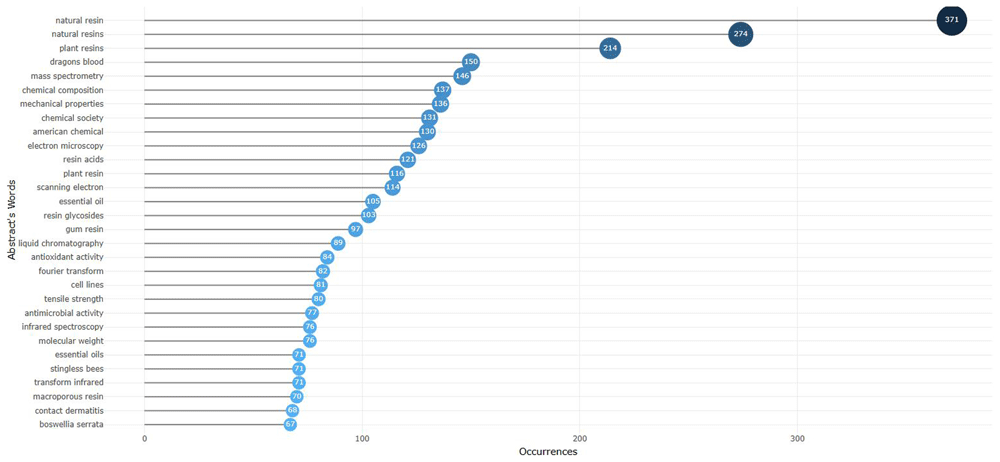
Figure 1. Most frequent words (in abstracts) related to natural resin or plant resin.
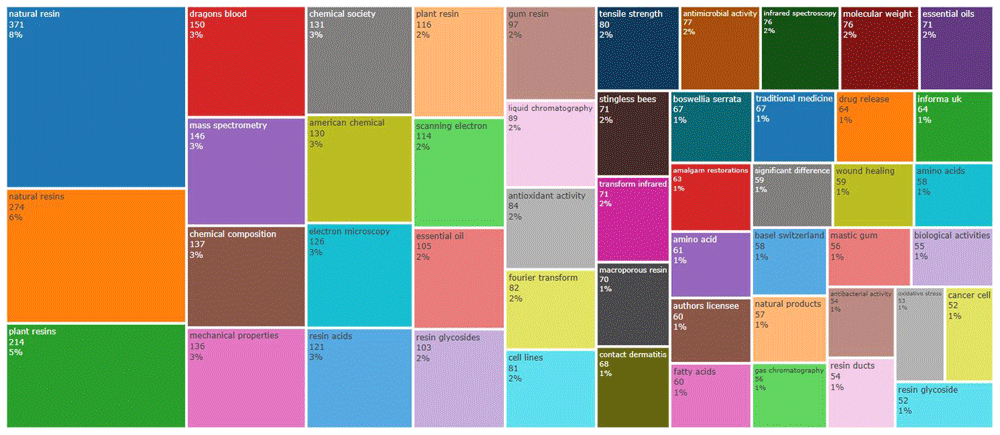
Figure 2. TreeMap (in abstracts) related to natural resin or plant resin.
On the other hand, composite films, glycosidic acid, mechanical properties, chemical composition, mass spectrometry, resin acids, natural resin, dragon’s blood, fatty acids and mastic gum are trending terms (Figure 3). Figure 4 shows (considering information in abstracts and Walktrap clustering algorithm) that amalgam restorations, resin ducts, drug release and controlled release are emerging or declining themes. Resin glycosides is an important theme, but not yet well developed. Electron microscopy, mass spectrometry, chemical composition, traditional medicine and gum resin are important and well-developed themes. Figure 5 (taking into account information in abstracts, Walktrap as clustering algorithm and inclusion index weighted by word-occurrences as weight index) confirms that plant resin and natural resin are trending themes. Figure 6 and Table 9 (factorial analysis in abstracts and multiple correspondence analysis) highlight three clusters for the words present in the abstracts and show that the words considered in cluster 1 are central for the research of the topics here addressed, considering the documents surveyed.
These results reveal that topics related to political, social, economic, and cultural dimensions have received less attention from the scientific community. As highlighted by the literature survey, natural/plant resin plays a fundamental role in socioeconomic sustainability, with the policy framework being crucial for this sustainable development.
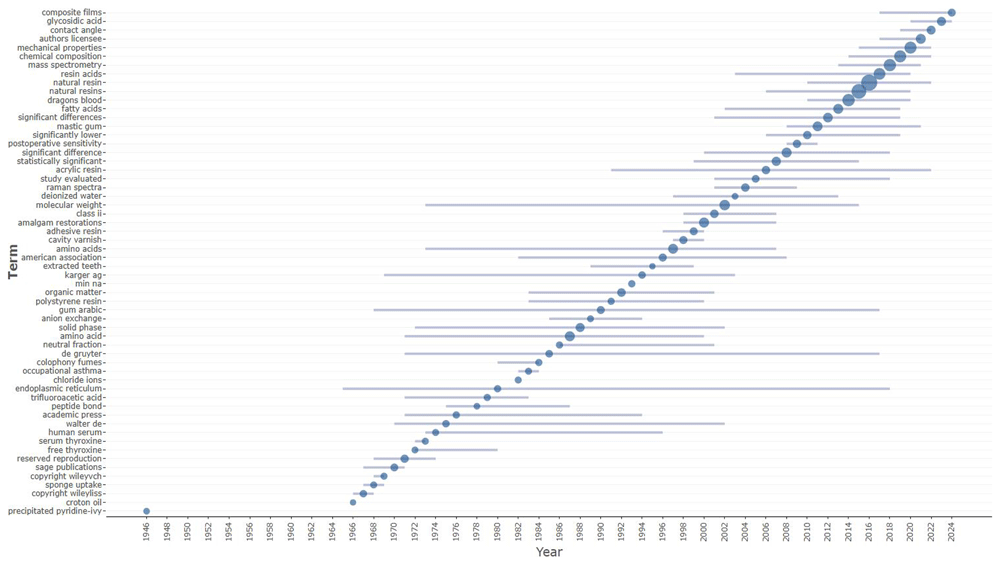
Figure 3. Trend topics (in abstracts) related to natural resin or plant resin.
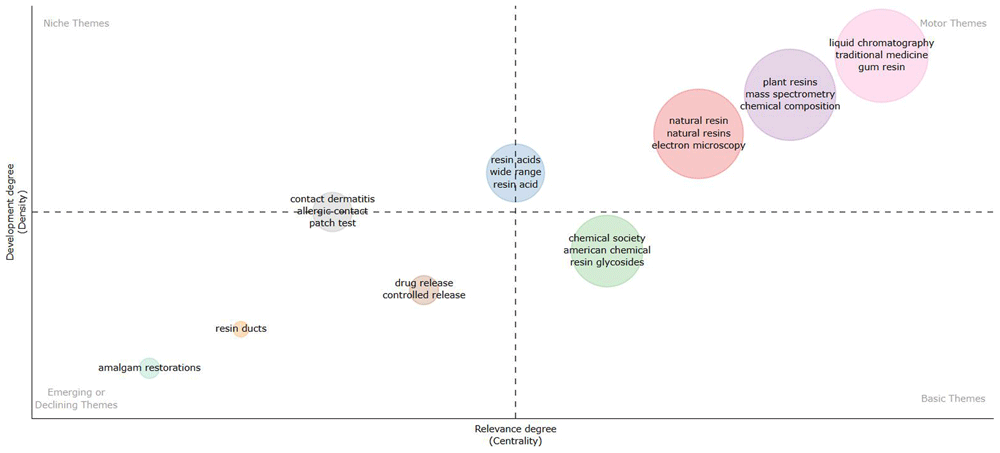
Figure 4. Thematic map related to natural resin or plant resin.
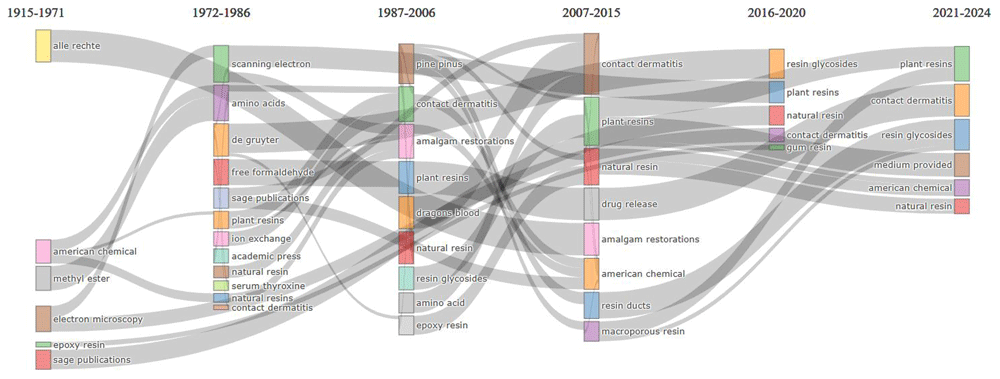
Figure 5. Thematic evolution related to natural resin or plant resin.
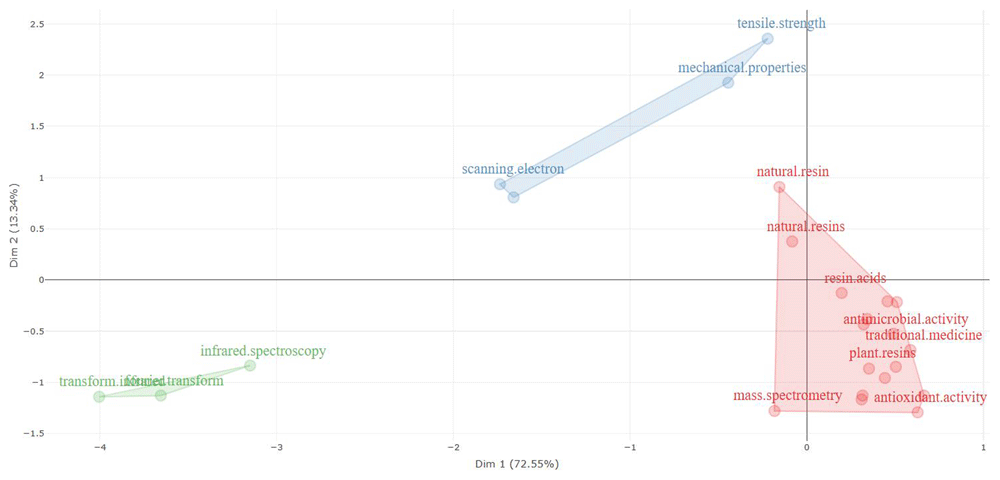
Figure 6. Factorial analysis related to natural resin or plant resin.
Table 9. Words by cluster related to natural resin or plant resin.
| word | cluster |
|---|
| natural.resin | 1 |
| natural.resins | 1 |
| plant.resins | 1 |
| dragons.blood | 1 |
| mass.spectrometry | 1 |
| chemical.composition | 1 |
| resin.acids | 1 |
| plant.resin | 1 |
| essential.oil | 1 |
| resin.glycosides | 1 |
| gum.resin | 1 |
| liquid.chromatography | 1 |
| antioxidant.activity | 1 |
| cell.lines | 1 |
| antimicrobial.activity | 1 |
| traditional.medicine | 1 |
| biological.activities | 1 |
| mechanical.properties | 2 |
| electron.microscopy | 2 |
| scanning.electron | 2 |
| tensile.strength | 2 |
| fourier.transform | 3 |
| infrared.spectroscopy | 3 |
| transform.infrared | 3 |
More in-depth assessment of the most relevant documents
In this section, the 15 most relevant documents (with the highest total link strength metrics for bibliographic coupling links), presented in Table 10, will be analysed in greater depth in terms of their content, namely, to better understand how research on resins considered their different dimensions. These studies were identified following the procedures proposed by the VOSviewer software. Bibliographic coupling links appear when two documents share references, and the total link strength is associated with the number of references shared by one item with others in the network35–37.
Table 10. Top 15 documents with the highest total link strength for bibliographic coupling links and for the topics “natural resin” or “plant resin”.
The documents presented in Table 10 reveal that a relevant number of documents analysed the chemical characteristics38, applications (for example, medicine and food industry)39, sources of plant resin40 and potentialities of propolis. In some documents, propolis is described as a resinous compound16, presented as having antimicrobial characteristics23 and considered by honeybees as a defence strategy against infestations and associated viruses41. The biological properties of propolis depend on its chemical characteristics, plant sources and geographical origin42, as well as the genetic variability of bees and the season of production43. Propolis is also referred to in the literature as a serious source of pesticide contamination22. In summary, propolis is considered by the literature not as a food, but as a building and defence material18, with several potentialities and applications for bees and humans.
Other studies focus on the mechanism and factors associated with resin production by trees14, the medicinal potential of natural resin44 and the health benefits of Boswellia resin45. The pharmaceutical use of resin glycosides has also been assessed in scientific literature46. More recently, the literature highlights the structural and biological dynamics of natural products based on medicinal plant resin47.
This in-depth review of the literature confirms that the literature has focused on topics related to a few specific areas, such as “agricultural and biological sciences”, “medicine”, “biochemistry, genetics and molecular biology”, “chemistry”, and “pharmacology, toxicology and pharmaceutics”, with further contributions needed on the social, economic, environmental and cultural dimensions.
In areas less considered by the literature, some documents addressed the economic dimension, focusing on the export destinations of natural resins48, or cultural aspects, analysing the biomaterials used in past centuries49, or even environmental issues, using natural resins to produce modified nanofiltration membranes50.
Discussion
The literature survey highlights the importance of the natural/plant resin for forest management, considering that this by-product may be an interesting complement of the forest owners’ income1,2. The consideration of alternative and sustainable sources of revenues on forest land, beyond wood production, is crucial to motivate more adjusted forestry planning, namely in contexts where such adjustments are needed and urgent. This is particularly indispensable in frameworks where forest fire prevention requires innovative and effective approaches. Climate changes and the abandonment of agricultural land increased the risk of forest fires worldwide, requiring new approaches, mostly by providing more incentives for forest landowners51, and the natural resin can play a key role here. The bibliometric analysis may bring important highlights in the literature survey on any topic11,12, including in the fields related to the forest dimensions and natural/plant resin. On the specific topics covered here, the literature review reveals that the scientific areas associated with social sciences, economics and management may be further explored in future research In turn, the issues associated with the following areas have already been addressed by a relevant number of documents13: agricultural and biological sciences; medicine; biochemistry, genetics and molecular biology; chemistry; and pharmacology, toxicology and pharmaceutics. In these studies, a relevant part of documents considered the different dimensions of the propolis (resinous combination produced by bees from plant resin)16. Other studies analysed, for example, extraction techniques24, tree response to external aggressions25, dragon’s blood resin26 and resin tapping27.
The bibliometric assessment highlights a modest international co-authorship of 12.41% and that the most important sources (number of documents and citations) are related, for example, to contact dermatitis, phytochemistry, biological macromolecules, chromatography and food chemistry. This shows that there is space to be explored in other sources with scopes more multidisciplinary and focused on other scientific areas, such as socioeconomic, environmental and cultural issues. The most productive countries, for the topics addressed here, are China, the USA, India and Brazil, revealing that some European countries, for example, where the natural/plant resin has a historical relevance may add important contributions to these fields. The bibliometric analysis also shows that natural resin, plant resin, dragon’s blood, mass spectrometry, chemical composition, resin acids, essential oils, resin glycosides, gum resin, antioxidant activity and traditional medicine are central topics for natural/plant resin research. Some of them are also trending topics, such as chemical composition, mass spectrometry, resin acids, natural resin and dragon’s blood. Other important themes are missing here, particularly those associated with strategies, legislation and policies designed for natural/plant resin frameworks. The socioeconomic impacts of natural resin use deserve greater attention, specifically in rural areas, where sustainability issues face more serious threats in some circumstances. New technologies for data collection and assessment, particularly those associated with artificial intelligence, need to be better explored, as well as approaches related to life cycle sustainability assessment.
Conclusions
In terms of practical implications, this research highlights trending themes related to natural/plant resin topics, nonetheless, these issues are mainly associated with the fields of agricultural, medicine, biochemistry, chemistry, and pharmacology. On the other hand, some scientific areas, such as social, cultural, economics, management and environmental sciences, could be further explored in the literature. For policy recommendations, it is suggested to promote more transdisciplinary approaches in the analyses related to the different dimensions of resin production and collection, to better support the various stakeholders in managing and planning the natural/plant resin activities. Specifically for COST Action CA22155 (EU-PoTaRCh), it is suggested to scientifically and technically explore the socioeconomic dimensions of the natural/plant resin to provide guidelines that support stakeholders in better considering this forest by-product as an alternative way to bring more income for rural land management. It is also suggested to promote more research on natural/plant resin in countries with fewer scientific studies on these subjects. For future research, it would be important to increase international co-authorships, promote transdisciplinary co-authorships and consider other bibliometric methodologies. These suggestions for future research are something that can be promoted by COST Action CA22155 (EU-PoTaRCh).
In summary, the areas of agricultural, medicine, biochemistry, chemistry, and pharmacology have already been addressed by scientific literature, namely the several dimensions associated with propolis. We need, in future studies, to explore social, economic, environmental and cultural areas in greater depth and promote scientific research on natural/plant resin in countries where this by-product is important, but the number of studies is more limited.