Introduction
Music plays an important role in everyday life and serves not only personal purposes (e.g., mood regulation, evoking positive memories), but also social functions (e.g., Dingle et al., 2021; Tarr et al., 2014). For example, musical preferences are among the most frequent topics of conversation when strangers initiate relationships (Rentfrow & Gosling, 2006), and social bonding develops more rapidly in singing groups than in those engaged in crafts or creative writing (Pearce et al., 2015). While most research to date has concentrated on music's social functions in contexts involving strangers or friends, a recent comprehensive theoretical review by Bamford et al. (2024) explored the potential role of music in the specific case of romantic relationships, addressing mate selection and social bonding functions of musical experiences across different relationship stages. Building on this work, the present study aimed to offer an initial investigation into the perceived relevance of music in romantic relationships. Using a combination of quantitative ratings and qualitative open-ended questions, we asked participants to rate music’s relevance to different aspects of love and to retrospectively report on their experiences with musical activities and the outcomes they associated with them.
Aspects of love in romantic relationships
In romantic relationships, love refers to the emotional, cognitive, motivational, and behavioural bonds that develop between partners. It encompasses romantic love, which is an intense, short-term motivational state typically observed in the early stages of a relationship, and companionate love, which is a less intense but more enduring form of love common in long-term partnerships (Bode & Kushnick, 2021; Walster & Walster, 1978). Although definitions vary, commonly cited elements of love include a desire for an enduring bond (Hatfield & Rapson, 1993), strong emotional attachment combined with sexual desire (Goode, 1959), and interdependence, in which partners influence each other's behaviours and decisions (Bradbury & Karney, 2019). A prominent research framework is Sternberg's (1986) Triangular Theory of Love, which identifies three key components of love: intimacy, passion, and commitment. These components determine the type of love, ranging from non-love (absence of all components) to consummate love (strong presence of all three components).
Within this framework, intimacy represents the 'warm' components of love, involving mutual interactions and self-disclosure, deep affective feelings, and an inclination to seek closeness (Sternberg, 1986). Passion embodies the 'hot' component of love and includes cognitive (e.g., persistent thoughts), affective (e.g., sexual attraction and intense emotions), and behavioural (e.g., seeking physical closeness) aspects (Hatfield & Sprecher, 1986; Sternberg, 1986). The third component, commitment, is the 'cold' component of love. It involves the decision to enter and maintain a long-term relationship, as well as behaviours intended to achieve this goal, such as devaluing alternatives, making sacrifices for the partner, and accommodating negative partner behaviour (Sternberg, 1986).
The Triangular Theory of Love has significantly influenced subsequent theories of love in romantic relationships, has been empirically validated (e.g., Acker & Davis, 1992; Kowal et al., 2024; Lemieux & Hale, 2002), and has shown potential universality across cultures (Sorokowski et al., 2021).
Romantic relationship stages
For the present study, we used Levinger's (1980) concept of long-term relationships, as adopted in the theoretical framework of Bamford et al. (2024). This model distinguishes three primary stages of romantic relationships: attraction, relationship building and, when the relationship continues, the maintenance phase. Although this framework is widely used in relationship research, it should be considered a helpful guide rather than a prescriptive sequence. Contemporary research has shown that romantic relationships often follow nonlinear and highly variable developmental pathways (e.g., Eastwick et al., 2019; Ogolsky et al., 2025). Nevertheless, these stages align well with other influential models of relationship development such as the Staircase Model (Knapp, 1978), Social Penetration Theory (Altman & Taylor, 1973), and Uncertainty Reduction Theory (Berger & Calabrese, 1975).
During the attraction stage, potential partners get to know each other, leading to emotional and cognitive evaluations. Attraction is influenced by a variety of internal and external factors, including personality traits, values, physical appearance, mutual liking, and perceived similarities in personality, values, and attitudes (e.g., Buss & Barnes, 1986; Luo, 2017; Montoya & Horton, 2020). Communication at this stage is typically superficial and guided by social norms, with limited personal disclosure (e.g., Berger & Calabrese, 1975; Knapp, 1978). However, recent evidence suggests that attraction frequently emerges between individuals who are already acquainted, with “friends-first” being a prevalent pathway (Stinson et al., 2022).
The phase of building a relationship is characterised by a rapid increase in self-disclosure, allowing for deeper communication and the sharing of personal opinions and attitudes (e.g., Altman & Taylor, 1973). As communication intensifies and bonds strengthen, partners may form a relational identity, make the relationship public, or take significant steps such as marriage (Knapp, 1978).
Once partners define themselves as couples or romantic partners, the relationship continues into the maintenance phase. Individual strategies for maintaining the relationship may include positive illusions, idealisation, and expressions of gratitude, while interactive strategies include effective communication, conflict management, dyadic coping, mutual support, humour, and engaging in joint activities (Ogolsky et al., 2017).
The prominence of the three components of love changes with relationship phase. The attraction phase (which typically lasts up to six months) is characterised by a rapid increase in passion for a potential partner. As the relationship moves into the building phase, and for about the first four years, couples experience increased intimacy, with a slight decrease in passion. Beyond this period, commitment becomes more central, with intimacy remaining at medium to high levels, while passion continues to decline (Acker & Davis, 1992; García, 1998; Wojciszke, 2002).
Music for mate choice and social bonding
The potential for music to foster social connection has been widely studied; however, most studies focus on groups of strangers or friends, rather than couples. For example, musical preferences are important expressions of identity (e.g., Shepherd & Sigg, 2015) and are often used to initiate conversations with strangers (Rentfrow & Gosling, 2006). Having similar tastes can strengthen in-group bonds and encourage the development of friendships (Lonsdale & North, 2009; Selfhout et al., 2009). Singing elicits sociobiological bonding responses (Bowling et al., 2022; Kreutz, 2014) and has been associated with faster bonding processes compared to other activities (Pearce et al., 2015). Collective musical activities, such as drumming and improvisation, have been linked to prosocial behaviour, feelings of belonging, and commitment (Kokal et al., 2011; Kokotsaki & Hallam, 2007; Verneert et al., 2021). These effects are often attributed to synchrony, as interpersonal temporal coordination of actions tends to increase feelings of social affiliation, trust, and prosocial behaviour (Bamford et al., 2023; Hove & Risen, 2009; Mogan et al., 2017; Rennung & Göritz, 2016; Vicaria & Dickens, 2016). Music provides a temporal scaffolding that makes it easier to coordinate actions in time (Tarr, 2017), while also creating a social space that aligns the intentions and emotions of participants (Cross, 2014). These mechanisms can be understood through the Access-Awareness-Agency model, which proposes music’s ability to provide non-verbal, embodied access to shared emotional experiences is fundamental to social-emotional development (Saarikallio, 2019).
However, while there is substantial research on the capacity of music to foster bonding between groups or strangers, few studies have specifically examined how music-related experiences are associated with mate choice (the process by which individuals evaluate and select potential romantic or sexual partners based on perceived desirable or compatible traits; Edward, 2015) or may enhance feelings of love in romantic relationships. This question is particularly relevant from an evolutionary perspective. The function of music has been linked not only to social bonding and coalition signalling in groups (Mehr et al., 2021; Savage et al., 2021), but also to mating, where musicality may signal fitness or compatibility (e.g., Miller, 2000). In many species, including birds and gibbons, vocalisations and musical displays are associated with pair bonding (e.g., Fitch, 2005; Geissmann, 2000). This supports the theory that music has evolved, at least in part, through sexual selection.
Some studies have already shown that musical traits – such as being a musician, improvisational skills, or dance ability – are perceived as attractive (Hagen & Bryant, 2003; Madison et al., 2018; Marin & Rathgeber, 2022), consistent with evidence that creativity is generally considered attractive in mate choice (e.g., Karamihalev, 2013). However, other studies have found no significant associations between musical ability and mating success (Mosing et al., 2015) or have reported such effects only among highly musical individuals (Bongard et al., 2019).
Beyond attracting potential partners, music also appears in established relationships. A prominent example is the 'couple-defining song'. Harris et al. (2020) found that 60% of 200 U.S. participants reported having songs they associate with their romantic relationships, which in turn were associated with greater intimacy, a stronger sense of "we", and the retrieval of positive shared memories. Couples also report engaging in musical activities together (Campbell et al., 2011). However, to the best of our knowledge, only one study has specifically examined the effects of engaging in dyadic musical activities such as listening to music together, sharing and exploring music, or making music as a couple. This study found that even when controlling for other non-musical dyadic activities, couples who engaged in dyadic musical activities (as opposed to structured group activities with others) experienced higher levels of commitment, mediated by interpersonal coordination and self-disclosure (Harwood & Wallace, 2021). Notably, two thirds of the dyads in this study were non-musicians, suggesting that the positive effects of engaging in musical activities are not solely dependent on both partners being musically inclined.
Overall, research on the relevance of music to different aspects of love in romantic relationships is limited. Apart from one study that examined the impact of shared musical activities on commitment (Harwood & Wallace, 2021), little research has been conducted on how music influences intimacy or passion. It remains unclear how couples use music in their relationships, whether and how these actions influence love-related outcomes, and which individuals place more or less importance on music during the development and maintenance of romantic feelings.
The present study: Aims and research questions
This study aimed to empirically test the role of music in romantic relationships. Although the research questions were not preregistered, they were derived from predictions by Bamford et al. (2024). We used a mixed-method design combining quantitative and qualitative approaches, which allowed us to explore the nuances of participants' experiences with music in relationships, potentially uncovering themes and patterns that may not emerge from quantitative measures alone. The following three research questions guided this study:
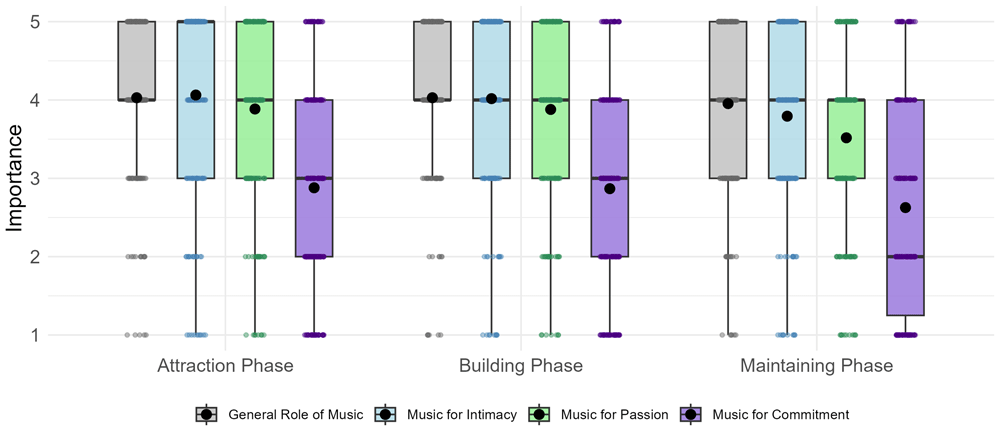
RQ1: How important do individuals perceive music to be in romantic relationships overall, and how relevant do they consider it to be in fostering intimacy, passion, and commitment at different stages of romantic relationships?
According to the model outlined by Bamford et al. (2024), we expect the relevance of music to passion to be highest in the attraction phase, intimacy to be highest in the building phase, and commitment to be highest in the maintenance phase. However, these predictions are based on limited prior research.
RQ2: Does the perceived importance of music in romantic relationships, both overall and in contributing to specific aspects of love (passion, intimacy, and commitment), vary with individual differences in musical expertise and sensitivity to musical reward?
Two contrasting hypotheses can be considered for RQ2: On the one hand, people often seek similarity in romantic partners (Luo, 2017), so musical expertise and sensitivity to music-related reward may correlate positively with the perceived importance of music in romantic relationships overall, as well as in different aspects of love. On the other hand, musicality may be broadly attractive because it signals overall fitness (Miller, 1999), implying that music should be equally important to everyone. Therefore, an alternative hypothesis is that there is no correlation between individual factors (musical expertise, and sensitivity to music-related reward) and the importance of music. Examining these associations could help clarify whether the role and potential benefits of music in romantic relationships are universal, or whether they are primarily characteristic of individuals with higher musicality.
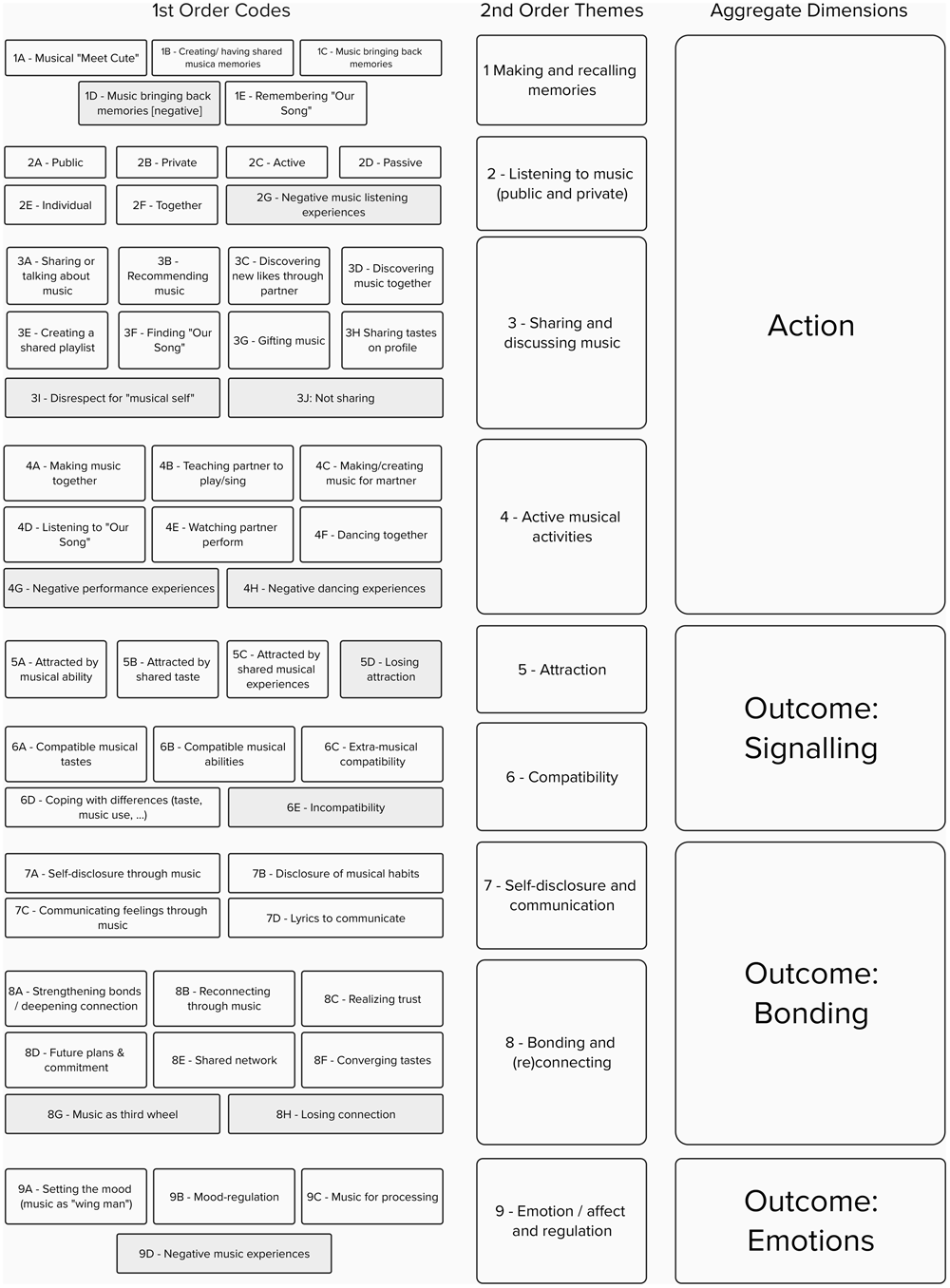
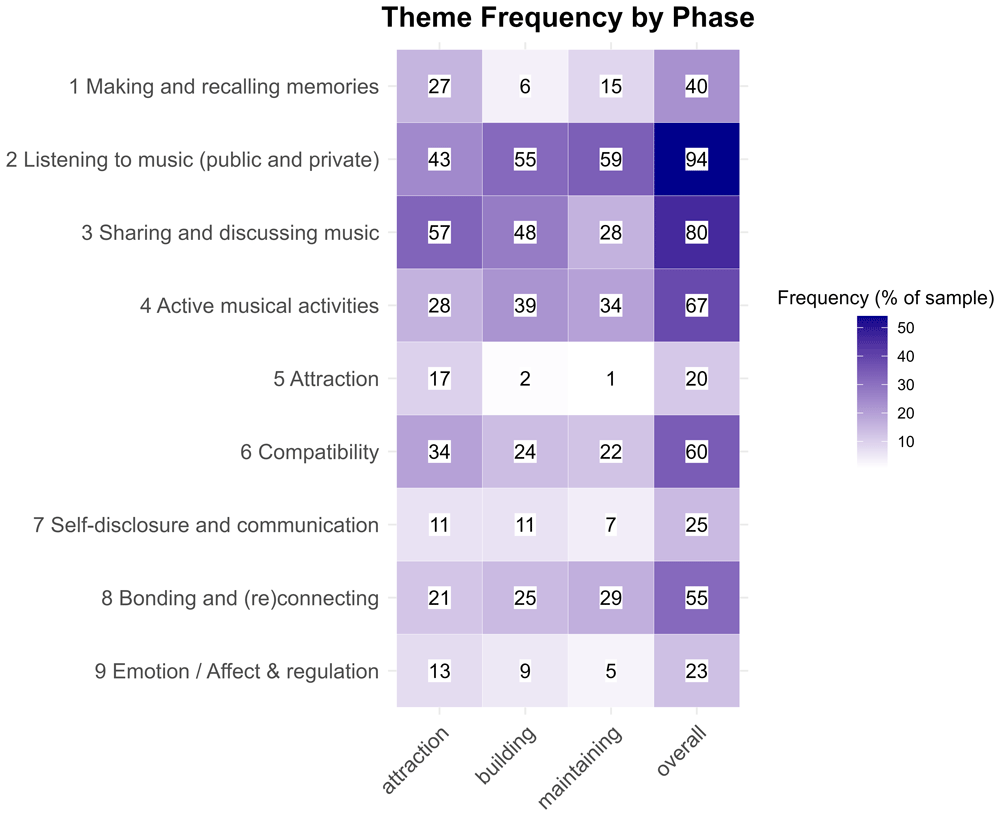
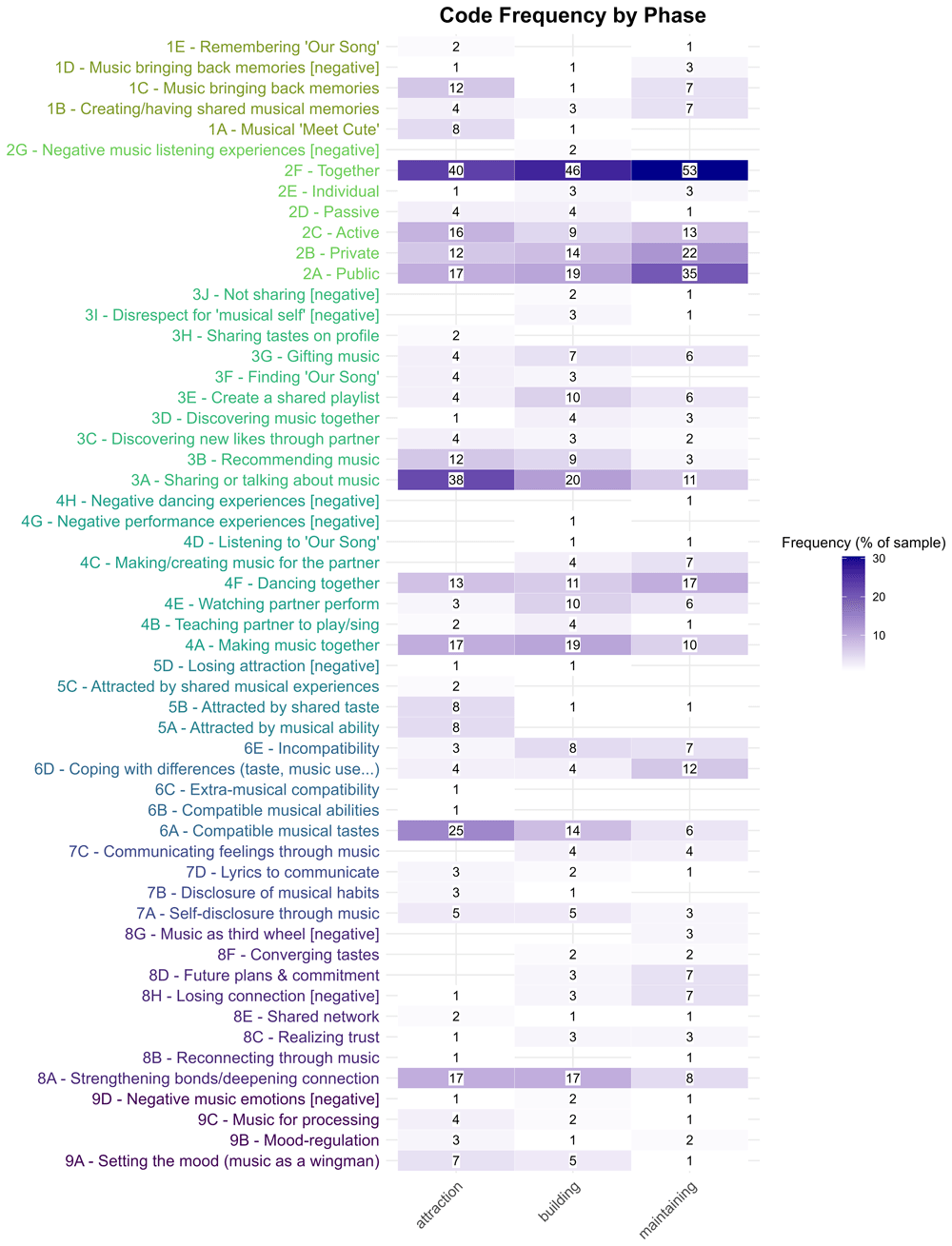
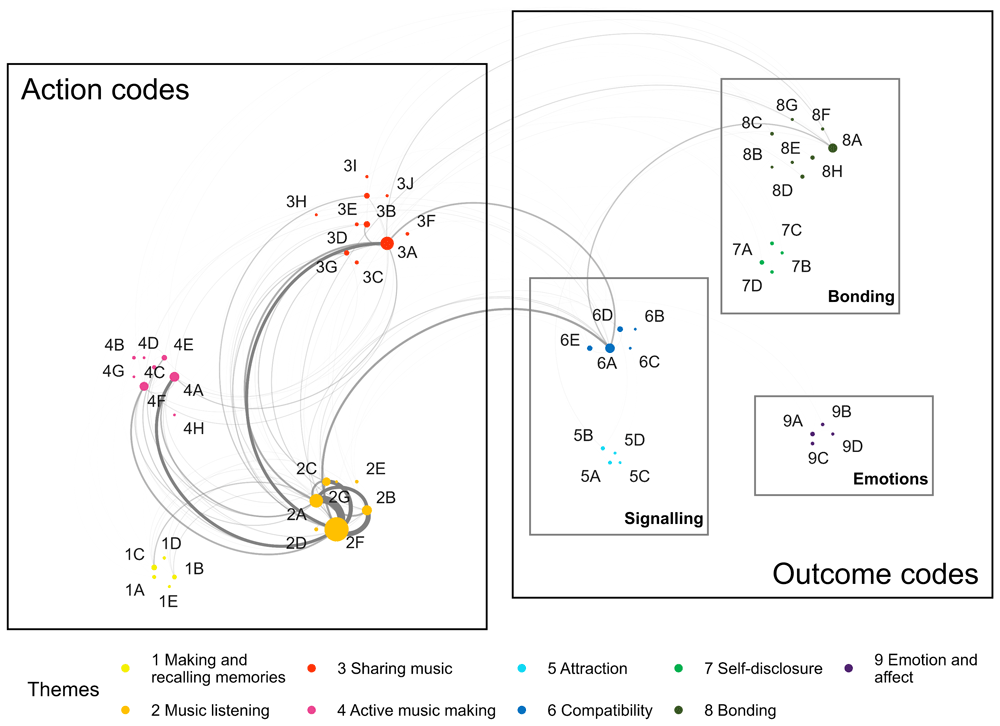
RQ3: What is the nature of music-related experiences that individuals recall in the context of romantic relationships across the three relationship phases?
While RQ1 and RQ2 will be addressed with quantitative data, RQ3 is purely exploratory and will be analysed qualitatively using a data-driven template analysis of participants' responses.