Background
Self-medication is the process of using drugs intending to treat self-recognized or medically diagnosed illnesses without advice or prescription from a health professional (Tsifiregna et al., 2016). Common illnesses for which children are often self-medicated include diarrhoea, fever, cough, and acute upper respiratory tract infections (URTI) (Edessa et al., 2022). Self-medication is a global problem, especially among caregivers of under-five children (Simon & Kazaura, 2020) and it is more prevalent in developing countries (Mahmood et al., 2020) with Africa carrying the greatest burden (30–85%) (Ekambi et al., 2019). Many countries around the world have policies regarding self-medication. However, the morbidity and mortality associated with self-medication for under-five children can make the achievement of theme 3 of the Sustainable Development Goals (SDGs) unrealizable if countries fail to either alleviate or eradicate self-medication.
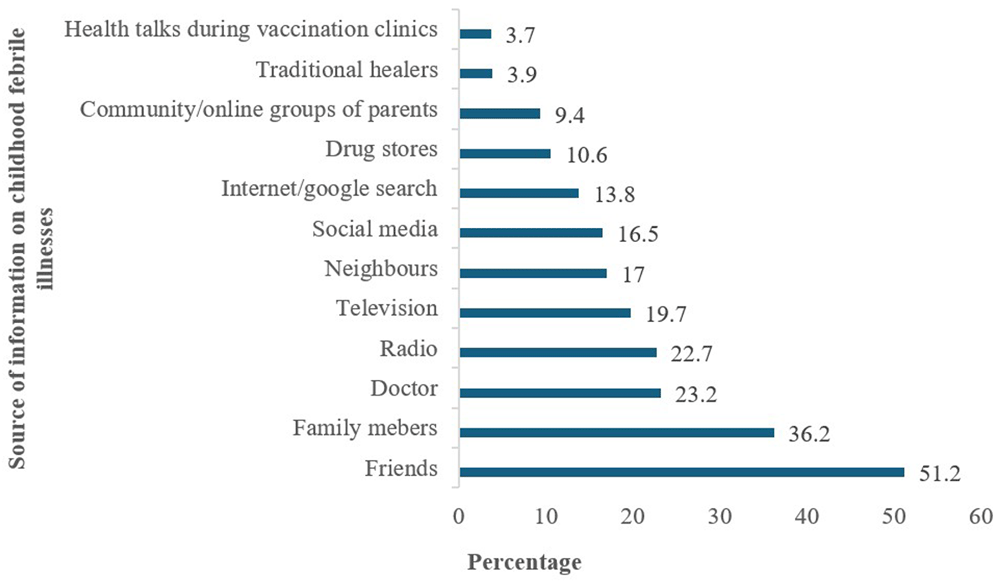
One of the main consequences of self-medication is an increase in disease resistance to medications, which can lead to major health risks such as unpleasant reactions and protracted suffering. Antimicrobial resistance is an issue everywhere today, especially in underdeveloped nations where drugs are freely available. Self-medication in most situations offers partial treatment, thereby masking other diseases and resulting in multi-drug resistance. This phenomenon leads to high morbidity and mortality (Cruz et al., 2022). While the information on self-medication is frequently sourced via friends, family, neighbours, chemists, previously prescribed prescriptions, and advertisements in popular publications or newspapers, self-medication should be understood as the elf-administration of prophylactic, diagnostic, and remedial tasks (Bennadi, 2014). Consequently, the use of self-medication particularly the use of antibiotics for under-five children around the world is most likely due to their vulnerability to infections, specifically upper respiratory tract infections (URTI) (Yu et al., 2014). This raises great concerns about antibiotic abuse and its grave antimicrobial resistance effects, among children (Olmeda et al., 2023). Over-the-counter (OTC) painkillers such as ibuprofen, aspirin, and paracetamol are used worldwide. These medications are mostly used to relieve minor pains, headaches, and menstrual cramps. If used as directed, painkillers are not harmful but can result in gastrointestinal infections and high blood pressure when abused. Due to their ease of access and lower costs, OTC drugs mainly serve as the first treatment option for febrile illnesses by many caregivers because of their easy access from small-scale vendors, family members, and friends, without professional advice (Kawuma et al., 2021).
Globally, the prevalence of parental self-medication for children has been reported to be between 7 and 70% (Yuan et al., 2022). Studies conducted in Madagascar, India, Greece, and Australia have reported prevalence rates of paediatric self-medication to be between 32 and 98% (Ukwishaka et al., 2020). In Nigeria and Ghana, parents used home remedies and non-prescribed drugs (75%), respectively as the first option for managing childhood illnesses (Ahmed et al., 2021).
Self-medication has been reported in The Gambia among students (Oriavwote & Ikwuka, 2022). A similar study reported that 19% of women living in Farafenni, the Gambia, and diagnosed with Malaria preferred to treat their symptoms at home instead of seeking professional treatment (Wiseman et al., 2008). Self-medication for malaria has been observed among caregivers of under-five children in the urban areas of the Gambia (Clarke et al., 2003).
In the Gambia, the death rate per 1,000 is 8, the infant mortality rate is 31 per 1000 live births, and the life expectancy of 62 years for the total population (World Population Data Sheet, 2018). These high demographic indices in The Gambia to some extent could be traced to self-medication thus contributing to poor health indicators in the country. In the Gambia, more than 80 under-five children were recently hospitalized as a result of drug-induced Acute Kidney Injury (AKI), with a case-fatality rate (CFR) of 90% on account of self-medication (Bastani et al., 2023).
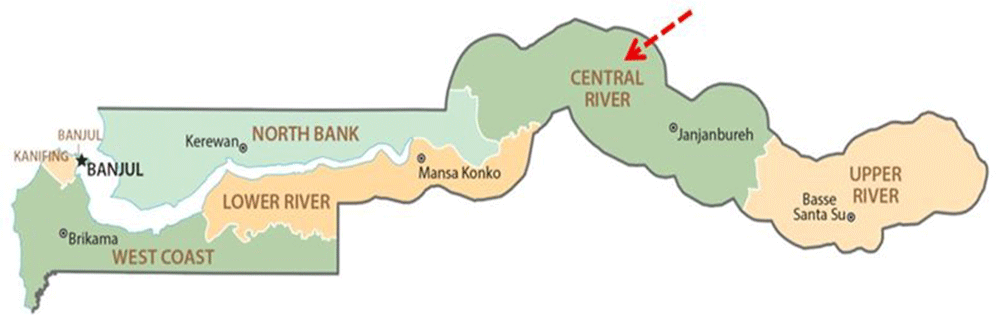
Despite the health hazards of self-medication, a few research had examined self-medication and the practice for under-five children in Sub-Saharan Africa is not well documented in the literature parents self-medicating their under-five children especially when it comes to antibiotic self-medication (Simon & Kazaura, 2020). The practice of self-medication for under-five children in Sub-Saharan Africa is not well-documented in the literature (Ukwishaka et al., 2020). A study conducted among caregivers of under-five children in urban areas of the Gambia found that about 60% of women used paracetamol to self-medicate their children against malaria, while 16% used herbal remedies (Clarke et al., 2003) to achieve the same goals. However, studies on self-medication in rural areas of the Gambia are scares in the literature. This study aimed to assess the knowledge, practices, and reasons for the self-medication of under-five children for perceived febrile illnesses by their caregivers in the Central River Region, the Gambia.