Introduction

The often devastating effects of recent disasters have highlighted the importance of collective action when preparing for, responding to, and recovering from natural or man-made hazards. At a CERIS meeting of the European Commission focusing on Disaster Resilient Societies in December 2023, the participating experts also unanimously agreed that the involvement of citizens and communities is an essential feature of effective disaster management. Yet, community engagement is not always easy to achieve and requires concerted efforts. It also presupposes appropriate and sustainable strategies and methods to effectively engage citizens, and in particular vulnerable groups, in these processes. In the context of this study, vulnerable groups are defined as “people with characteristics that put them at higher risk of injury, death, financial or other ruin during or after a disaster situation” (Kainz et al., 2024, p. 15).

Based on an extensive literature analysis and an empirical study with European experts in the field of citizen participation in Disaster Risk Management (DRM), this paper aims to give practical recommendations on how to effectively involve, mobilize, inform and organise communities to participate in all aspects of preparedness, response and recovery to enhance the disaster resilience of these communities. Part of this aim is a specific focus on vulnerable groups and ways to include, support and empower them. To this end, the present research rigorously combines both, the findings of state-of-the-art literature and a qualitative empirical study conducted with stakeholders and experts in the fields of disaster management and community engagement. It leads to the presentation of general recommendations, that will help in engaging communities effectively and in purposeful ways.

This study includes a Methodology section and a Literature Analysis section, followed by a discussion of the requirements for an inclusive participatory approach and the results of the empirical study. The publication culminates with the presentation of a proposed model for participatory governance as well as a collection of all recommendations derived from both literature and collected data, followed by a general Conclusion section. This paper was developed as part of the EU-funded project PANTHEON, which aims to enhance current disaster resilience models by developing evidence-based tools for policy analysis and evaluation, for example utilizing Smart City Digital Twin (SCDT) technology.1 It is based on Deliverable 2.5 (Bittner et al., 2024).

Methods

The study methodology consisted of three parts: a comprehensive literature analysis for the state-of-the-art-section, stakeholder workshops on approaches to community engagement and participatory governance, and a qualitative survey which further enabled stakeholders to share and discuss their experiences. All collected data was uploaded on the open data platform Zenodo (Bittner & Kainz, 2024). The study was approved by the Ethics Committee of the Polytechnic University of Barcelona (UPC) on 24 April 2023 (Valles, 2023).

For the literature analysis, the keywords <participatory>, <governance>, <community>, <distributed decision making>, <engagement>, <participate>, <inclusive>, <urban | local | regional>, <risk reduction>, and <disaster management> were entered into Scopus, Web of Science, Science Direct and Google Scholar. The scope was limited to sources published between 2010 and 2023, but some highly relevant older papers were also included after reading the selected publications.

This resulted in a list of 34 papers published between 1986 and 2023. Additional sources were added during the revision stage, resulting in the list of references which can be found at the end of this paper.

Two stakeholder workshops were held in June 2023, each lasting approximately two hours. The workshop setting was chosen for its interactive nature, allowing engaging discussions and providing benefits for participants through reciprocal learning experiences (Ahmed & Mohd Asraf, 2018). They were conducted online via Zoom and in English to facilitate access for international experts and stakeholders. Stakeholders with backgrounds in local government, emergency services, civil protection, disaster management, community engagement and representation of vulnerable groups from all over Europe were invited to participate, with a focus on people working in Greece and France (the intended pilot regions of the PANTHEON project at the time). Contacts were sought through the project partners' networks (convenience sampling). Invitations were sent by email. In addition, the invitation to the workshops was posted on the Crisis Management Innovation Network Europe (CMINE) platform.

This resulted in 48 European stakeholders being invited. Seven of them agreed and participated in the workshops. The design of the workshops included interactive participation via a concept board and group discussion via Power Point. The topics discussed were:

The workshops were recorded and then transcribed, anonymized and analysed using qualitative content analysis according to Mayring (2002). The reduced text was then categorised and concrete recommendations for participatory governance in DM and DRR were formulated.

A qualitative survey2 was distributed as an exploratory tool to complement the workshop data. Forty potential participants who had not attended the workshops were selected through convenience sampling and invited by email, of which five eventually completed the survey. The survey was developed as a short online questionnaire (four demographic, one closed and five open-ended questions) implemented on LimeSurvey (LimeSurvey Project Team - Carsten Schmitz, 2024) and estimated to take 10–15 minutes to complete. Questions covered aspects of community representation, community engagement in different disaster phases and hazard situations, engagement of vulnerable groups, and existing community engagement guidelines. The questionnaire also included the option to switch between English and Greek language versions. All respondents of both the survey and the workshops gave their written informed consent on the use of the generated and anonymised data.

The informative level of collected data have the following difficulties and limitations:

State-of-the-art analysis

Participatory governance

In recent years, the concept of participatory governance has gained great popularity (see e.g. Hickey & Mohan, 2004; Kiss et al., 2022; Righettini & Vicentini, 2023). Both in academic and public discourses, the field of disaster risk management is including this concept as a fundamental item. This section defines some of the key concepts relevant to the intersection of participatory governance and disaster resilience based on the literature analysis. These are ‘participatory governance’, ‘community’, ‘vulnerability’ and ‘resilience’. A summary with working definitions of these terms is provided in Table 1.

Table 1. Working definitions of key terms.

Key-termWorking definition
Participatory
governance
The engagement of communities/citizens apart from the state in public decision-making as well as
in public policy-making processes through different measures and methods.
CommunityA group of people that is characterized by living in the same place/region and may thus be affected
by the same hazards and disasters. The way people are prepared for, react to and recover from
disasters may, however, vary significantly across communities.
VulnerabilityA particular susceptibility to being harmed or affected by hazards and disasters.
Disaster
resilience
The ability of a system, country, community, society or household that is exposed to hazards to
resist, absorb, accommodate to and recover from the effects of the hazard in a timely and efficient
manner, while preserving and/or quickly restoring its essential basic structures and functions.

According to political scientist Harry Blair (2008, p. 78), in the context of participatory governance ‘participation’ refers to citizens apart from the state, whether as individuals or in groups, who play a significant role in the governance process. ‘Governance’, according to him, means “the whole range of state sector activity as it fits together, including branches of government at all levels […]“ (Blair, 2008, p. 78). By analogy, Frank Fischer (2012, p. 457) defines ‘participatory governance’ as “a variant or subset of governance theory that puts emphasis on democratic engagement, in particular through deliberative practices.” Building on these definitions, we refer to ‘participatory governance’ as the engagement of communities/citizens in public decision-making as well as in public policy-making processes through different measures and methods. As will be elaborated in greater detail below, in contrast to Blair (2008), our conceptualization of community comprises not only citizens apart from the state, but also local state institutions such as local municipal offices and local administration.

Since the approach of participatory governance essentially aims at enhancing participation at local/regional levels by including and attending to ‘local communities’, the term ‘community’ deserves some closer examination. Anthropologist Gerald Creed (2006, p. 1) claims that within the last decades, “the focus on community has become ubiquitous in the way we talk and think about life in the twenty-first century”, whereas many political, economic and developmental initiatives seem to perceive the ‘community’ as the most appropriate target and vehicle of change. This also seems to hold true when it comes to participatory governance or community engagement. Creed (2006) contends, however, that although used ubiquitously, the term ‘community’ is hardly defined but is rather applied in a self-explanatory manner. What characterizes a group of people as a community is thus often left open and not further specified.

For our purposes, the term community refers to a group of people that is characterized by living in the same place/region and may thus be affected by the same hazards and disasters. However, this does not reveal much about how the members of these communities are affected by and are able to prepare for, handle and react to these hazards and disasters. We thus do not presuppose that the members of a community necessarily share the same values, ideals, characteristics, knowledge and skills when dealing with disasters. Rather, we argue, that the way people are prepared for, react to, and recover from disasters – although being part of the same ‘community’ – may vary significantly. When speaking of ‘community’ in the context of disaster management, we refer to both, ‘mere’ citizens, as well as to voluntary fire fighters, members of local administrations and local first responder organizations, who all may assume different roles and participate in various ways in the different phases of disaster management. Furthermore, we assume that people’s varying experiences of both vulnerability and resilience may differ according to socioeconomic status, class, gender, ethnicity, interests, power asymmetries, available access to resources, knowledge and information, physical impairment or disability, which makes certain individuals and groups within a community more vulnerable than others.

This is precisely what the concept of ‘vulnerability’ implies, namely that different groups of people within certain ‘communities’ may have different levels of susceptibility to being harmed or affected by hazards and disasters. ‘Vulnerability’ is one of the key concepts in disaster research and refers to either people’s physical or social vulnerability, both of which may make them more prone to being hurt or harmed in the event of a disaster. In conceptual terms, vulnerability is closely related to disaster resilience. Disaster resilience is part of the broader concept of ‘resilience‘ and according to the UNISDR (2015, p. 26), resilience is the “ability of a system, community or society exposed to hazards to resist, absorb, accommodate to and recover from the effects of a hazard in a timely and efficient manner, including through the preservation and restoration of its essential basic structures and functions.“ Disaster resilience can thus be defined as “the ability of countries, communities and households to manage change, by maintaining or transforming living standards in the face of shocks or stresses – such as earthquakes, drought or violent conflict – without compromising their long-term prospects“ (DFID, 2011, p. 6). The UN Hyogo Framework for Action further specifies that disaster resilience essentially hinges on and is determined by the capacity of individuals, communities and private and public organisations to organise themselves in order to learn from past disasters and reduce their risks to future ones at international, regional, national and local levels (UNISDR, 2007). Essential elements for building disaster resilience and reducing disaster risk are a good knowledge of the context (“whose resilience is being built“), the potential hazards, the capacities available to respond and react to disasters, including potential social, economic, physical and environmental vulnerabilities that may exist within a given community (cf. DFID, 2011, p. 6f.; UNISDR, 2007, p. 7). To best capture and assess these elements, the Hyogo framework proposes promoting community participation in disaster risk reduction „through the adoption of specific policies, the promotion of networking, the strategic management of volunteer resources, the attribution of roles and responsibilities, and the delegation and provision of the necessary authority and resources“ (UNISDR, 2007, p. 7).

Many institutions involved in participatory governance emphasize the aspect of people’s self-development and empowerment as primary goals of the participatory approach. This entails not a mere “talking for” financially disadvantaged or otherwise marginalized citizens. Rather, it should entail assisting them so that they can develop their own capacities such as communicative skills and citizen empowerment, to negotiate with policy-makers (cf. Fischer, 2012, p. 459). Accordingly, participation is seen to bring positive change and development of certain communities in regard to increased social justice, economic and social empowerment and more equity when it comes to the distribution of benefits and resources. In recent years, community participation has been recognized as a supplementary element of disaster management necessary to reverse the global trend of exponential increase in disasters and associated losses, to build a culture of safety and to ensure sustainable development and disaster resilience for all.

Further benefits of involving communities in disaster resilience and risk management are seen in building confidence, improving the capacity for disaster preparedness and mitigation, greater development roles and responsibilities at the local level and pride in making a difference. In addition, the involvement of local communities provides an opportunity to develop a wide range of appropriate innovative and workable mitigation solutions in a cost-effective and sustainable manner (cf. Fischer, 2012; Lorna, 2003). This last point of increased (cost)-efficiency is emphasized by Scully and Shaw (2022), who show that the integration and active participation of communities in disaster resilience and risk reduction can be a means of reducing costs and of incorporating important competencies, networks, etc. to make response and recovery faster and more effective (cf. (Beldyga, 2022; Linnell, 2013). Likewise, Fischer (2012) describes an increase in efficiency and effectiveness of the provision and management of public services as one of the main goals and potential benefits of capacity building by community engagement.

While the participatory approach – at least theoretically – certainly has the potential to contribute to greater equity and a fairer distribution of resources as well as a fairer design of decision-making processes, actual participatory processes often fail in enabling such a broad participation for all (Osmani, 2008). Empirical studies on the topic suggest that achieving the alleged positive effects of participation is particularly difficult in contexts that are characterized by significant social and economic inequality. As Fischer (2012, p. 451) notes, “equitable outcomes more commonly occur in combination with other factors, such as those related to the distribution of power, motivation levels of the participants, and the presence of groups that can facilitate the process.“

Since participation is neither an easy nor a straightforward task and needs to be carefully organized, facilitated and cultivated (Fischer, 2006), its role is not viewed in an entirely positive light: while some call for more participation, others believe it should be restrained. Still others point out the limitations and difficulties of participation. Gustafson & Hertting (2017) for instance maintain that despite a growing body of literature on participatory modes of governance, there is still very little knowledge available on the key players of such approaches, namely the participants and their capabilities and motives for and expectations of participation. This knowledge, however, would be urgently needed, since the implementation of participatory governance depends on the voluntary and often continuous cooperation of committed participants. At this point Fischer (2012) adds that in order to participate, people need an incentive to do so as the engagement in public affairs is not without costs. These costs should be outweighed by potential benefits resulting from citizens’ participation. What is more, people may not see an immediate relevance for their participation or it may seem more important to outsiders than to the relevant communities themselves, and people may also simply lack the motivation, time or resources to take part in participatory processes. Osmani (2008) states that a careful analysis of previous approaches to participatory governance indicates that success depends largely on how well a society can deal with three distinct but interrelated gaps that stand in the way of effective participation. These are further referred to as the capacity gap, the incentive gap and the power gap.

  • The Capacity gap “arises from the fact that meaningful participation in the process of governance requires certain skills which common people, least of all the traditionally disadvantaged and marginalized segments of the society, do not typically possess“ (Osmani, 2008, p. 28). To bridge this gap, participation must be made more effective by training and practicing general skills such as working in heterogenous teams or articulating one’s view rationally and understandably over a longer period of time (Osmani, 2008).

  • The Incentive gap refers to the various types of costs of participation. These include an opportunity cost of the time and effort that people have to put into participatory activities, which usually is especially high for women because of their alleged “triple burden“ – adding costs of participation to the burden of engaging in both productive and reproductive activities; further, a psychological cost of speaking out in public and the probable cost of retribution which refers to potential class hierarchies are named (Osmani, 2008).

  • The Power gap according to Osmani (2008, p. 31) arises from “systematic asymmetries of power that is inherent in unequal societies“, i.e. due to gender, age, ethnicity, class, religion or other differences that may make a difference in certain situations. He argues that “participation in such unequal societies is likely to be unequal too, with members of dominant groups wielding superior power to further their own narrow interests“ (Osmani, 2008, p. 28).

A basic prerequisite for closing or at least narrowing down these gaps is that people have the necessary resources, education and economic security and stability. For participation to contribute to increasing social equity, it must be ensured that financially disadvantaged and other vulnerable groups are able to act and advocate in their own interests, even though this may go against the interests of their donors (Osmani, 2008).

While participation may significantly contribute to greater efficiency and equity, there are certainly no guarantees, and especially large-scale disasters continue to expose weaknesses in the communitarian dimension of crisis-management policy. The design of policy around participatory concepts is often problematic because of its ambiguous nature and connected romanticism while some initiatives may reflect a neo-liberal agenda (Stark & Taylor, 2014). These are by no means arguments against citizen participation but rather for a careful design and implementation. To be able to respond more effectively and efficiently to disaster events in the future, Beldyga (2022) recommends to develop emergency plans in collaboration with affected communities in an iterative process in order to enhance disaster resilience.

Yet, as already indicated above, including members of local communities in processes of building disaster resilience is not an easy task, and authors such as Alexander and Sagramola (2014), Andharia et al. (2023) and Geekiyanage et al. (2020) criticize that current disaster management plans and decision-making processes especially fail in sufficiently considering the views and needs of people with disabilities and other vulnerable groups, although they are often more severely affected by disasters than people with no disabilities and “they can suffer additional forms of discrimination or neglect“ (Alexander & Sagramola, 2014, p. 7). The authors plea for an inclusive approach in disaster management that adequately considers people with disabilities and implements their special needs. Before we take a closer look at the inclusion of vulnerable groups in DRM, we will first briefly discuss general modes of community engagement.

Geekiyanage et al. (2020, p. 1) state that community engagement is a “purposeful process which develops a working relationship between communities, community organizations and public and private bodies to help them to identify and act on community needs and ambitions.” Participatory governance involves the effective participation of all relevant stakeholders in decision-making processes at five levels of engagement: inform, consult, involve, collaborate and empower (IAP2 International Federation, n.d.).

The purpose of informing communities is to provide the public with information that is balanced and objective (IAP2 International Federation, n.d.). Approaches may include open data and information sharing through channels such as websites, social media, newspapers or other media, expert panels that can be presented to the public, public meetings or events, displays or exhibits, or site visits and tours (particularly appropriate for large infrastructure projects such as dams) (Tamarck Institute, 2017).

Consultation aims to obtain opinions and feedback from the public (IAP2 International Federation, n.d.). Methods that constitute consulting include focus groups, social media listening, social media discussions or town halls, workshops, surveys and interviews (Tamarck Institute, 2017).

The aim of involving the public or a community is to work directly with them to ensure that their concerns and preferences are taken into account (IAP2 International Federation, n.d.). A wide range of tools and methods are available for this level, including crowdsourcing ideas, visioning, community mapping, social network analysis, design charrettes, hackathons, mind mapping, role-playing games, and brainstorming events with community members (Schröter et al., 2018; Tamarck Institute, 2017; Voinov et al., 2018).

Collaboration means partnering with the community as much as possible, distributing control and power between those in charge of the project and people from the community (IAP2 International Federation, n.d.). This may involve large group meetings, co-creation of documents, creation of online communities, open space meetings, working groups or study circles (Tamarck Institute, 2017).

The final and highest level of community engagement is empowerment, where the final decisions are placed in the hands of the public (IAP2 International Federation, n.d.). Authorities or people in charge of projects can help empower the community by using democratic tools such as decision platforms (a computer algorithm that collects opinions and calculates the most agreeable solution for the largest number of people), citizens' committees/public advisory committees or citizens' juries. In addition, communities can empower and improve themselves through grassroots movements and community-led projects. Examples include community indicator projects or asset-based community development projects (Tamarck Institute, 2017). Higher levels of community engagement should be strived for, as they help to ensure that peoples’ needs and wishes are considered.

As already indicated above, for community engagement to be successful and for building disaster resilience and reducing disaster risk, it is crucial to know the context. This includes existing tools in Community based disaster risk management (CBDRM) and emergency response, policies, platforms that rely on the engagement of and feedback from communities, potential hazards, and capacities that are available to respond to disasters with special attention given to existing social, economic, physical or environmental vulnerabilities. All of these aspects must be researched and analysed for each specific use case/community, which is why they are not discussed in greater detail here. In the following, however, we will focus on the latter aspect, that of different vulnerabilities, and discuss a few general requirements necessary for involving vulnerable groups in DRM.

Vulnerable groups in DRM

Disasters often hit those who are already vulnerable, such as homeless people and people with disabilities, the hardest (Prieur, 2012). Vulnerability is determined by physical, social, economic and environmental factors and is defined as an increased susceptibility to the effects of hazards (United Nations General Assembly, 2016). Vulnerable groups, in the specific context of this study, can be defined as “people with characteristics that put them at higher risk of injury, death, financial or other ruin during or after a disaster situation” (Kainz et al., 2024, p. 15). Vulnerabilities can be mitigated or reduced through capacity building. Capacity describes the strengths, attributes and resources available to manage and reduce disaster risk and strengthen resilience (United Nations General Assembly, 2016). Because people belonging to vulnerable groups have special needs of protection as well as special capabilities to contribute, it is particularly important to include them in DRM processes. Otherwise, decisions may be made that do not take their needs into account and even put them at a disadvantage (see e.g. Steger & Kočnik, 2022). The United Nations Convention on the Rights of the Child (UNCRC) for instance states that children have the right to participate in decision-making processes that affect them (United Nations, 1989). However, those children and young people who face additional vulnerability factors, such as young people with mental or physical health problems, are often under-represented in decision-making processes and may require special initiatives for participation (Kelleher et al., 2014).

As part of the PANTHEON project, Kainz et al. (2024) devised a list of factors which make people particularly vulnerable to disasters based on literature reviews, interviews and expert surveys in the three European cities of Athens, Paris and Vienna. These vulnerability factors can be used as the basis for a set of vulnerable groups that should particularly be included in disaster management: The elderly, children and minors, single-parent families with minor children, people with mental and physical illnesses/disorders/disabilities, people with known mobility problems, pregnant people, migrants, refugees, asylum seekers, people without sufficient knowledge of the local language, people living alone (especially the elderly), people with low incomes, people living in densely populated areas or overcrowded places, people with increased exposure to hazards (including first responders and healthcare workers), the homeless, people living in houses with inadequate regulations or poor building materials, and people living in special accommodations (Kainz et al., 2024). In addition, women and members of the LGBTQ+ community may be more vulnerable in disaster situations, for various reasons (Bradshaw & Fordham, 2015; Goldsmith et al., 2022). While these groups may face different levels of risk depending on the disaster scenario, their underlying vulnerabilities may increase their risk of harm or other adverse consequences in any hazard situation. Furthermore, as these groups are often already marginalised, their needs may be overlooked in an acute crisis situation. It is therefore particularly important to build their capacities and involve them in DRM processes (Kainz et al., 2024). The study by Kainz et al. (2024) lists several possible actions or characteristics of a community which increase the capacity of vulnerable groups and consequently of the community as a whole: inclusion, capacity building and representation of vulnerable groups; confidence and initiatives taken by members of vulnerable groups; individual mobility; degree of social connectedness in the area; networking between DRM and the community; and raising risk awareness.

Capacity building of vulnerable groups is essential to ensure that the resilience of a community is increased. This can for instance be done through education, training, (simulation) exercises and preparedness activities. Training the local population in disaster management is particularly important, as they are usually the first to respond to a disaster. Ensuring that members of vulnerable groups also have access to trainings and awareness campaigns can for instance be done by providing special trainings for people with special needs or information in multiple languages. Furthermore, warning messages that can be understood and received by all (e.g. sign-language broadcasting of warning messages) are an important measure to ensure the safety of vulnerable people. In order to reach out to citizens and make community disaster management more effective, it is necessary for governments and other agencies to improve their communication channels. For local authorities, such as mayors, it is essential to be more involved in the process to enable a closer and more efficient network between DRM organisations and the community, including representatives of vulnerable groups (see Kainz et al., 2024). One of the most important steps in building capacity and empowering vulnerable groups is to ensure that members and representatives of these groups are involved in disaster management, including decision making (see also the Sendai Framework for Disaster Risk Reduction, United Nations, 2015). This helps to make sure that their needs are taken into account when planning for disasters, while at the same time increasing the awareness and knowledge of members of these vulnerable communities about disaster situations and enabling them to increase their own capacities (Hilfinger Messias et al., 2012; IFRC, 2007; Pertiwi et al., 2019; Twigg, 2014; United Nations, 2015). Furthermore, capacity building can involve strengthening vulnerable people’s organisations, which can then in turn better represent their members and advocate for their rights (Robles et al., n.d.).

To ensure that vulnerable groups are adequately involved and represented in DRM processes, members of these groups may need to be specifically invited to join the participative processes. One possible access point may be organisations representing these groups, such as LGBTQ+ initiatives or special-needs schools. These could for instance be asked to directly nominate members who would wish to participate (Kelleher et al., 2014). It may be unpractical or impossible to include members of all possible vulnerable groups. Sinclair (2005) lists a number of considerations for involving children in participatory processes, which can also be applied to vulnerable groups in general: Choosing groups that are relevant for achieving the goal of the participatory activity; ensuring that those who will be affected by a decision are able to express their view; ensuring that the participation processes enable all invited persons to take part; designing the recruitment processes so members of vulnerable groups are also reached; and taking into consideration whether the venue can be reached and the planned activities can be done by everyone. Vulnerable groups can also be involved through consultation with representatives. This may be particularly justified in larger areas, such as cities, where large numbers of people need to be assessed. Disability-inclusive DRR for instance can involve the inclusion of organisations of persons with disabilities in relevant committees and at all levels of decision-making, for example as resource persons and mentor trainers (Gvetadze & Pertiwi, 2022).

When working with vulnerable groups, it may be warranted to adjust the usual methodology. For example, children can be involved in disaster risk management through participatory mapping (identifying hazard-prone locations, vulnerabilities and capacities in the area) using child-friendly techniques: Traditionally, this can be done by having children draw maps in the sand or on the ground and sketch maps, while more modern solutions may include mapping with drones, LEGO and Minecraft (Le Dé et al., 2020). Some DRM activities, such as annual livelihoods calendars, seasonal calendars, historical timelines or hazard mapping, may particularly benefit from the long life-experience of the elderly. Participatory activities with elderly people may require using larger fonts or audio material for people with visual impairments. In addition, activities which require walking, such as creating a resource map, must use accessible routes. These considerations are also relevant for people with physical impairments, which also often develop with advanced age (HelpAge International, 2019).

There are numerous factors and hurdles that may significantly hinder the engagement of vulnerable groups. Geekiyanage et al. (2020) for instance state that vulnerable populations are often not considered in urban development decision-making processes because of barriers to community access and challenges to their inclusion. This neglect of vulnerable groups can subsequently also affect the disaster resilience of cities and urban environments. In their literature review, Geekiyanage et al. (2020) identify several challenges and barriers to collaborative decision-making, mainly in relation to the categories of context (community capacity, quality of existing relationships, organizational culture, attitudes and knowledge), infrastructure (investment in infrastructure and planning to support community engagement), and process (stakeholder engagement process, inclusive and accessible practice). These barriers include, first and foremost, the communities’ lack of knowledge about how to best engage in participatory decision-making and development processes, and a lack of awareness of the benefits they can gain from being involved in these processes. The second most frequently cited barrier is a lack of meaningful community involvement by decision-makers. Gvetadze and Pertiwi (2022) mention a similar barrier factor in the inclusion of people with disabilities, namely a lack of awareness and commitment to disability inclusion among key DRM stakeholders. Unclearly defined goals and purposes of civil society engagement, as well as a lack of clarity, lack of transparency and unclear expectations of current stakeholder engagement processes were cited as the third most important barrier to engaging vulnerable communities in urban development (Geekiyanage et al., 2020). Gvetadze and Pertiwi (2022) add a lack of capacities of vulnerable people (through socio-economic or cultural factors) or accessibility as barriers to inclusive participatory processes. Through a synthesis of current research, Geekiyanage et al. (2020) found that these barriers can be tackled by changing attitudes and, as already outlined above, building capacity of both the community and professionals, investing in community engagement, and making changes to current stakeholder engagement processes and policies. This last aspect can be achieved by “incorporating bottom-up dimensions instead of having dominant top-down governance” and by decentralizing decision-making and management powers “with responsibilities spread over different stakeholder organizations“ (Geekiyanage et al., 2020, p. 10).

Discussion of findings on community engagement in disaster management

The sections above have presented different approaches to community involvement in decision-making processes with governmental stakeholders. This section summarises the main findings of our empirical study on participatory governance and community engagement (consisting of two workshops and one online survey), before we move to giving concrete recommendations on how to actively and efficiently inform, mobilize and involve citizens in all phases of the disaster management cycle, based on the empirical study and on the state-of-the-art analysis above.

Understanding the focus communities

As has become clear during our research, before starting the engagement processes, it is essential to understand the communities to be approached. Demographic, cultural, geographical and infrastructural aspects may have great influence on how to design participatory approaches. In the following part, some topics are discussed that were identified as relevant by the consulted experts.

Definitions/conceptualization. What is meant by the term “community” can depend greatly on who you ask. During one of the workshops we conducted with European experts in CBDRM, it became clear that the respondent from France understood “community” as “citizens”, while the Greek respondent also included voluntary firefighters or parts of communities that are trained to respond to disasters as parts of “communities”. The respondent from Greece noted:

  • “The way we conceptualize things is rather important. Because […] the way we conceptualize communities when we talk about response in Greece, it’s not with the literal meaning. […] If you have a community of 10,000 people, we don’t really mean that 10,000 people will be involved in the response phase. Rather, you use representatives or volunteers from the community.”

Meanwhile, a respondent from France said that “in France, voluntary fire fighters or other voluntary first responders are considered to be part of the official response forces and are not considered to be part of the community.” This differences in perception of who belongs to a community and who does not may be due to the fact that the term “community” is often used in a self-explanatory manner without further reflecting on what actually characterizes a group of people as a community (see chapter on Key terms). That makes clear that a common language and uniform understanding of terms is necessary, which is why we provided some definitions of key terms above.

Differences between rural and urban areas regarding community engagement. Depending on the kind of community, certain issues might arise and different engagement tactics may be necessary. One particularly stark difference is that between rural and urban communities. As one respondent from Greece explained:

  • “[T]he problem with urban areas is that you have a lot of heterogeneity, you don’t have a homogeneous population and it’s very difficult to distinguish between different communities the same way you do in a rural area […] or in smaller communities like villages, mountainous or other areas that are less populated. And this is a huge challenge for first responders.”

This heterogeneity and the sheer size of the population in large cities can lead to challenges in community engagement. Including a good sample of the population in training exercises, for instance, is challenging for our respondent from the Hellenic police, so in most cases they try to make them as interdisciplinary as possible, involving as many stakeholders as possible. They further pointed out that the community representatives in these cases are often not really representative of the population, as “the community” in large cities is quite diverse. Another participant stressed the difficulties that emergency responders face when they have to work in a large, complex area and hinted to the impossibility of handling the whole city. This is why response teams must be connected to smaller parts of the city. In disaster situations it is also important to have detailed information about the area you are operating in, such as where elderly people live, which houses have elevators, and where the next hospital is.

In general, the workshop participants highlighted factors that make community engagement apparently easier in rural than in urban areas. One participant shared their belief that rural communities are generally more competent and knowledgeable when dealing with disasters: “Sometimes rural communities have a better response to disasters than urban communities, because they have something like an inherited knowledge on how to deal with disasters and how to recover from them.” Another respondent stated a similar belief, attributing a rural communities’ apparent advantage when dealing with disasters to their comparably harder lives: “In rural areas, people are usually having a hard life in comparison with the standard of living in cities. Even in situations of emergencies, for a lot of urban people to walk four kilometres seems to be asking too much, whereas for rural people, this is usually not a problem.”

As these descriptions show, certain problems may occur when trying to engage an urban community. The large population size and the heterogeneity of the community make it very difficult to engage a representative sample of the population. Because it is assumed by our respondents that urban communities often have a weaker relationship with authorities than those in the countryside, it seems especially important in cities to ensure a good collaboration between community and authorities and to strengthen trust in authorities, such as emergency response teams, police, and decision makers.3 A lack of social ties and local knowledge as well as difficulties to approach the ‘whole community’ may be tackled by working with small-scale communities like neighbourhoods, sports clubs or cultural centres.

Existing and possible risks, vulnerabilities and capacities. One respondent pointed out that the decision on whom to involve highly depends on the type of hazard. For instance, when working with areas at high risk for wildfires, “we involve the local communities, […] for example the local mayor, the local law enforcement, fire service, and also representatives from the communities”. Especially fires affecting tall buildings or wildfires can be a challenge for emergency responders in terms of deciding on prioritization. The respondent highlighted how local knowledge can be useful, particularly in the case of a wildfire, as local people have knowledge of the area and the weather which external experts may be lacking. It may thus be beneficial to create guidelines for community engagement that are specific to the hazards at hand.

Concerning capacities, one respondent pointed out the importance of knowing the community and its capabilities. This includes knowing who the retired firefighters and volunteer firefighters are, who the companies and factories belong to and who has responsibilities in these facilities, who has been in the army, whether companies have emergency plans, who the nurses and doctors are and who in the community already has experience with dealing with disasters. These are people who have emergency training and experience and can be especially useful in emergency situations. It is therefore recommended to collect information about the inherent capacities of a community, so that people who already have expertise in relevant areas can be optimally engaged and utilized in DRM processes.

Establishing relationships

After understanding the individual features of a community, the actual engagement process can be started. For this, relationships must be established by approaching local networks and facilitators. This process serves as a foundation for successful mobilization for participation and implementation of CBDRM initiatives.

Building/enhancing trust in public institutions. As our discussions with different experts in the field of participatory governance/community engagement in DM have clearly shown, the relationship between the community and the authorities is extremely important for ensuring the efficient operation of disaster management and the safety of the community. Yet, as the experts emphasized, people often lack trust in authorities and tend to prefer to rely on information circulating within their community, even though they may not have the required knowledge and expertise. One respondent assumed that this lack of trust in authorities may be partly due to the institutions not knowing how to engage with and communicate with the community, and partly because people have had bad experiences with institutions in the past. They stressed that taking measures to increase faith in institutions is crucial, as this would help increase the likelihood that people adhere to their plans and instructions.

A workshop participant recalled an incident in Greece where a lack of coordination between the affected community and the responsible authorities caused many preventable deaths. They also mentioned an example of what effective collaboration can look like, recalling an incident where the mayor sent civilian groups on patrol to identify areas of potential risk for loss of lives and property. This was implemented by installing a liaison officer as an intermediary between police and community (in this case the mayor). The civilian patrols would communicate to the mayor and the mayor was in direct contact with the liaison officer from the police, who were in charge of initiating evacuations. On the other hand, the respondent also stated that initiatives that are led by the community need collaboration with state agencies to be successful, as otherwise they can have “disastrous consequences”. This may especially refer to the response phase, as grassroot initiatives, e.g. in the recovery phase, are often successful even without interference of official bodies.

Doing physical meetings. Regarding their opinions and recommendations on meetings with the community, one respondent recommended live meetings. They warned, though, that it has to be expected that the people will also want to talk about other issues not necessarily related to the topic, as they do not often have the opportunity to bring their concerns about the community directly to the authorities or to people who they feel can implement changes. The participant recommended giving the participants the opportunity to do this for the first half of the meeting, after which the focus should be shifted to the actual topic at hand – disaster risk management. One should then explain to the participants the purpose and limitations of the meeting (e.g. “This is a consultation, we will probably not be able to follow exactly what you recommend, because there is previous work that has already established some possible measures to be taken, and certain regulations that establish certain responsibilities, but we are here to listen to you and hope to receive input from you about possible measures, hopefully giving us new ideas that we had not thought about before”). The respondent also warned to not expect a high rate of participation and said that 10% of the population of a quarter participating in such a meeting would already be a very good turnout. They also underlined that those who participate are usually very committed members of the community, but also warned to expect a high number of elderly citizens as they tend to have more free time. The results of the meeting and the resulting recommendations should afterwards be presented to the authorities (“...a committee, usually have 4 or 5 people plus the president”).

In the literature, a wide range of modes for physical meetings is presented that can be utilized depending on the phase in the engagement process, the hazards addressed and the degree of community participation aimed at. These range from community meetings with the goal to share information among their members all the way to community-led assemblies with decision-making power and the support of community-initiated grass-root movements. Different degrees of participation that may be implemented during physical meetings, as well as their benefits and disadvantages according to literature are described in the chapter on Modes of Community Engagement.

Cultural awareness in community engagement. One respondent emphasized the role of cultural awareness for establishing relationships. Cultural awareness may be important, especially when dealing with immigrant or refugee communities, “because you have communities with different religious or cultural backgrounds […].” Not being aware of cultural norms may lead to uncomfortable situations and certain behaviour might even be seen as rude or unacceptable, hindering efforts of community engagement in the area or the group. The respondent further recommended that the authorities should be trained accordingly, stating:

  • “They should know how to address and how to approach communities, especially if they want the communities to be engaged. Otherwise you can endorse a very cynical approach and say “I don’t want the communities to be engaged, I don’t care.” But if you want them to be engaged, you have to know them, you have to know specific sensitivities, their differences, their cultural or religious background, all of this are very important. Otherwise it would be very easy to help them feel more alienated and isolated and you know, distance themselves even more from the authorities.”

Another participant mentioned the issue of language barriers that arises when dealing with certain subgroups or immigrant communities: “Now with the huge influx of refugees, there is also a language barrier which can affect participation of certain communities. It is not intentional, it is just that they don’t understand. You have to be able to reach out to every single community, even people speaking different languages. So, you have to make sure you have enough people or personnel who can speak foreign languages so they can talk to people and engage them in the process, whether you need to engage them in the preparedness or in the response phase, but you have to have people who are able to talk the language of other people to understand them.” This reiterates a topic that the workshop participants brought up multiple times, namely that effective communication is key when attempting community engagement.

Several participants also stressed that it is important to be aware of regional differences in mentality and level of involvement. One respondent, for instance, described the mentality in Southern Europe as a belief of “It will never happen to me”, ... “and if it happens, I will manage”, referring to disasters. Another said about the situation in Greece that, while many are “reluctant about the situation of the official state to manage disasters”, the population is heavily dependent on them. They therefore suggested empowering the population through education, making them less dependent on the state.

Informing, mobilizing and involving communities in DRM

In general, the participants stressed the importance of community engagement as a valuable resource in DRM. One respondent highlighted that especially in the future it will not be enough to rely on experts, but that communities will have to be more strongly involved in DM, saying that “we will not be able to face the future [challenges] only with our different associations and professional rescuers.” Yet, in order to integrate communities, they must be properly trained and take part in regular exercises. The respondent believed that “it is one of the most important political investments to involve communities in disaster management […]” and further expressed their strong belief that changes have to happen on a political level, which requires a strong political will on a European level to more strongly engage communities.

Community engagement and participation are thereby not only believed to have advantages in terms of workforce, but also for the community itself. One participant highlighted the desire of citizens to be involved in decision-making and criticized that most of the current approaches that use participatory governance/citizen engagement usually end up in telling people what to do. The general focus from only informing people should thus be changed to actively engaging them, especially in the prevention phase, as the current strategy of only informing people of what they should do ignores the psychological aspect, which potentially leads to adverse outcomes while the authorities believe to be off the hook because they supposedly did their duty by instructing the citizens.

Another participant mentioned the importance of community involvement in raising awareness and knowledge within a community. They expressed their belief that very often, citizens do not understand why responders make certain decisions during an emergency, but these decisions may have a long-term impact on their lives. Thus, citizens should be involved in negotiations so that they understand which risks may arise and why certain decisions are made. The installation of more early alert systems could also help to enhance the response to and resolution of emergencies. Basically, citizens and first responders should talk more to better understand each other’s actions and decisions.

Yet another participant recommended working with small, local units, taking into consideration that when a disaster happens, people will have immediate contact with those living near them and will be able to group up with them. They also recommended utilizing structures that are already in place, such as locally organized groups (football teams, neighbourhood associations) or spaces for communication (e.g. a cultural centre). The respondent further pointed out that every community includes people who are already involved as volunteers and have therefore already shown their commitment, meaning “they will probably be the first ones to react, to try to organize, to be sensible if the public administration talks to them”. They also mentioned that people who already have experience with managing or leading an organization will be well equipped to also be community leaders in a disaster situation. The respondent pointed out that “if you say that you are a doctor, you are a fireman, probably they [people in the community] will follow you easily”, and their respect and prominence in the community will help to attract other people who can help. They recommended utilizing local festivities for playful disaster education or similar interventions, and to ask community members about opportunities like these and about how to best reach the community in terms of disaster education. However, they warned against the risk of what they call a “parachute attitude”, wherein a lack of planning on how to approach the community might lead to opportunists abusing the effort for their own benefit, such as political popularity or financial gains.

In accordance with the respondents, (Linnell, 2013) argues that established networks like families, workplaces, clubs, organisations and church congregations could and should be considered and engaged as relevant actors for emergency and disaster management. Emergency plans are also recommended to be developed in collaboration with such actors of affected communities by Beldyga (2022).

Depending on the phase of disaster risk management, community engagement can be more or less helpful, and different methods may be required to engage the public.

Community engagement in the preparedness phase. Several participants stressed the importance of collaborating with the community in the preparedness phase, but they also mentioned that it is hard to engage the community in the preparedness phase and raise awareness because usually the community has other priorities than disaster preparedness. People tend to be involved only in the newest events, like the war in Ukraine, and disasters only become relevant for most people when they actually occur and cause a disruption to everyday life. Preparedness is different for emergency services because they are working in the field, being constantly exposed to this topic, but they constitute a minority in society.

However, as one participant pointed out, “citizens are part of the solution (response) when they adapt to what they have learned in the preparedness phase, for instance not taking bad decisions and listening to the orders of the responsible authorities.” Another said, similarly: “When I speak of the community as citizens – they have to follow the orders that they receive. For that they must be able to understand what’s happening, and for that they must be part of the preparedness.” They agreed that including citizens in the preparedness phase by informing them about potential hazards is crucial to ensure their safety for when disasters strike. When talking about specific practices, one participant working for the police in Greece stated that although the police may not be the main institution responsible for preparedness in terms of civil protection:

  • “[…] but we work together with other stakeholders and we heavily rely on exercises, either table top or real-life exercises. This is a lesson we learned from the Athens 2004 Olympic Games where – in terms of preparedness – exercises turned out to be a very useful tool.”

Another participant talked about ensuring the safety of vulnerable groups, saying: “[…] especially for earthquakes, which is a major challenge for most Greek urban areas, we try to have as much organized preparation as possible by reaching out to vulnerable groups like elderly or homeless people for example.”

The focus of community engagement in the preparedness phase should lie on informing them of potential hazards and teaching them how to act when disasters occur, e.g. making good, safe decisions and listening to the orders of the responsible authorities. As community members might not be very motivated to participate in disaster preparedness programs, one way to ensure that at least some people within the community are prepared might be to offer programs in schools or other learning facilities such as universities, perhaps offering credits for successful completion.

Community engagement in the response phase. The workshop participants agreed that community engagement in the response phase is largely out of place, because it is impossible to fully engage the population in the field as they lack the necessary training. The focus for community engagement should thus lie in the preparedness and recovery phase. A participant from the Hellenic police in Greece stated that their position on the engagement of untrained citizens in the response phase is very clear: “Unless you are specifically trained or designated to do a specific task, you have to evacuate the area.” They further specified that it is crucial for emergency responders and the community to collaborate in the recovery phase but stated that community-led approaches, for instance, are not very successful in their experience. They recalled the 2007 wildfires in Southern Europe, where due to the large area affected by the fires and a lack of resources provided by the states, some local communities had to step up and lead the response. They stated that “... they had no other option, and the results were not really successful”. Other respondents shared their opinion that “in the response phase, it should be about informing the community, like informing them about how to best evacuate, how to best get away, keep updated with the situation. This is especially important, as another respondent explained, because “…the community is much more confused about what happened, and what is going to happen and it is the phase when the community is seeking for answers and they have much more questions because they are not aware.”

Community members with training from the preparedness phase may be able to assist in the response phase, but most of the work has to be done by responders who are specifically trained. One participant described the difficult and ambivalent position of the authorities in the response phase, who oversee the reaction to the disaster but should simultaneously inform the public on how to act.

Community engagement in the recovery phase. Regarding community engagement in the recovery phase it was mentioned that this may be quite unpleasant, because people may have to deal with trauma, with disaster and with the loss of lives. Nonetheless, several respondents stated that working with the community in this phase is crucial, and that the community should be consulted or collaborated with and that they should be more included than in the response phase. One person specified that decisions about recovery efforts, such as replanting trees, should be made by the authorities and the community together, for which participation is needed. They also highlighted that mechanisms of collaboration have to be established before a disaster happens and not afterwards. Another respondent pointed out that the awareness and capacity of the community is at its highest level during the recovery phase, “where the community actually has in mind what happened, what's going on and what’s the best to do.”

One participant claimed that in Greece, unfortunately, the focus tends to be on the preparedness and response phases instead of the recovery phase. They believed that due to the rise in numbers of disasters, community engagement in this phase is becoming more and more important and that community engagement should be a priority, in particular “the engagement and collaboration with communities by state services, by government stakeholders, even by the local administration”. It should be interdisciplinary, potentially with planning from the central government, civil protection, or the community itself. They also recalled grassroot-movements in the recovery phase which “did a really good job, even without any state assistance.” They further stated that consultations with the community are likely to lead to better outcomes for the community, as at the end of the day, it’s them that are the most affected by a disaster. One respondent thus believed that the community should be even more involved in this phase than the institutions, since the community members have a better understanding of what needs to be done to rebuild their community. One possible way to ensure their participation is (physical) meetings, as already outlined above.

The engagement of informal volunteers. One respondent from the Hellenic police referred to the importance and the value of local voluntary first responders like voluntary firefighters. He emphasized that the importance of engaging the community (again, voluntary fire fighters but also the local mayor) in DM was not recognized in Greece for a long time, but this has changed significantly over the last years:

  • “So now, if we’re talking about today, there are certain bodies of volunteers within the communities. Even in big cities like Athens, you have the fire service for example, you have a body of volunteers, firemen, firefighters who work on a local basis for the local fire service to respond wildfires especially in rural areas but also in Athens.”

They also recalled their experience with a wildfire: due to difficulties in understanding where to reply and respond first, the police engaged the community in the response phase, and volunteers and members of the local community would “…help the police and identify areas where people were trapped or stranded so the police would respond by sending forces there to evacuate people. So, it was a very important role in terms of saving people’s lives. At the end of the day, it was about making sure nobody would be left behind, nobody would be left trapped in a house, … because it was a very difficult situation.”

The respondent believed, on the other hand, that the engagement of spontaneous volunteers who are not specifically trained is very dangerous and not recommended. He also said that it depends a bit on the culture whether people will spontaneously engage in the response phase or let the authorities respond. In Greece, at least, this practice is highly discouraged, although there were a few instances in the past “where people didn’t really comply with this and they […] spontaneously ran into the fire to help, although nobody asked them to do that, and this can be dangerous both for them and for the trained fire fighters […], it can create huge hazards and dangers for everybody.”

While this respondent highlighted the importance of trained volunteers in the response phase, they also urged to not engage untrained volunteers in this phase, except perhaps for tasks that are safe, such as patrolling and helping to identify areas where people might be trapped. Another participant stressed that spontaneous volunteers need to be coordinated, which can be especially challenging in the recovery phase, because after a disaster, lots of people would like to help, but don’t know how. “Usually, people tend to give away whatever they have. Like they send lots of clothes, or lots of diapers, or other things that are actually not needed, so they create problems because the actual helpers have to deal with all the stuff they do not need but they have no time to do so.” Effective communication with the public about what kind of help is needed and why certain items may cause more work than help might improve this situation and make the organizing of these efforts more efficient. Social media could, for instance, be used to coordinate the donation. As one respondent highlighted: “From my perspective, communication is extremely important, and of course, a successful communication channel would also have a lot of potential in engaging with volunteers on how to raise awareness and then engage people in volunteering acts, providing aid, and so on.”

Concerning volunteering, the participants stated that focusing only on crisis education is not enough, but a focus should also lie in the volunteering aspect of education. One respondent further believes that in a world of climate change and the resulting rise in the number of disasters, the involvement of volunteers is becoming increasingly indispensable to increase the workforce in disaster management.

One participant encouraged that volunteering and awareness campaigns should be done especially for younger generations in order to motivate them to participate, and another one suggested that “municipalities must be partners and organize workshops with citizens so that citizens understand what different hazards there are and what can be occurring in the future.”

Nahkur et al. (2022) reveal that disaster management systems in some European countries are slowly beginning to open their structures towards participation of informal volunteers, although only Sweden and Norway, countries with an established culture of volunteering, have regulations in place that enable the insurance of spontaneous volunteers. Since complexities of disasters increase, the authors argue for more specific plans on informal volunteer’s engagement. Thus, proper ways for registering might be needed for them to fulfil more complex tasks, since one of the biggest risks and challenges identified was the incomplete overview of informal resources. Furthermore, the potential benefit of the help from digital volunteers, providing and sharing information on the internet, is big but may be limited by the risk of the provision of incorrect information (Nahkur et al., 2022, p. 11).

Tools and methods for community engagement. The workshop participants had several suggestions from their experiences with different tools and methods for community engagement, referring particularly to the use of social media, exercises and education and trainings at school.

Use of social media

One person referred to the important role of social media by stating that in their organization, they extensively use social media and that they also “have emergency hotlines where people can call and report any suspicious events that are related with man-made or natural disasters.”

In their opinion, social media can be used to mobilize people and raise risk awareness, sharing videos, and giving advice. Another participant suggested using social media to communicate what first responders are doing, and why they decide on a certain strategy, yet institutionalized social media profiles would be needed because there is a lot of fake news out there. When used sensibly and responsibly, distributing information via social media may also help to avoid panic behaviour from citizens during the response phase. Social media, as well as special games or apps could also be used at school to teach children potential hazards and threats, how to react to them, and how to behave if they occur.

Although social media can be a very useful resource in disaster management, some respondents also highlighted potential problems with them. One stated that “all these things require electricity, and usually in the case of a disaster, the first thing that fails is electricity.” This makes social media an unreliable tool for communicating directly during or after a disaster, i.e. in the response phase. The respondent also remarked that social media can easily be used for fake news, which is a big danger because someone with bad intentions can really disturb the whole disaster management cycle. Social media may be particularly unreliable in the direct aftermath of a disaster, especially regarding fake-news or unverified information. However, interest in the topic decreases after a disaster, and when too much time has passed since a disaster (“when one year, two years, three years have passed”), people are not susceptible to the topic anymore. Therefore, the ideal time to use social media according to the participant is one or two weeks after a disaster. They further highlighted the importance of physical social networks within a community, as not every person has social media, and it is difficult to reach everyone by only using digital devices.

Use of exercises

In addition to the use of social media, respondents also stressed that real life exercises should be organized at least every six months, “with the involvement of real people of the community so they know first-hand what they should do in the case of fire”. The respondent working for the Hellenic police for instance stressed that they try to do either real-life or table-top exercises as often as possible, while another one even suggested conducting exercises that are mandatory for all citizens, like in Japan.

Respondents also suggested nominating liaison officers to communicate with the first responders, stating: “Knowing what to do can save lives. Most of the time what I have seen in the aftermaths of natural disasters is that the lack of knowledge resulted in a higher death toll. [...] If people don’t know how to respond to a natural disaster, the risk of losing their lives is increasing dramatically. So, I think the keyword here is knowledge.”

On the topic of which parts of the community they involve in the exercises, the participant stated that this depends on the disaster at hand. For earthquakes for example, they – in that case the police – try to involve as many representatives as possible, such as people from the local administration, someone from the mayor’s office, decision makers, people from community organizations, from sports clubs, young people, etc. “We try to do like a sample and use people that are as representative as possible of the local communities. And again, this is easier in smaller communities, in smaller cities.“

Education and trainings at schools and in the business sector

A participant suggested focusing on schools for disaster education for children, “...teaching them what is a crisis, what are new risks and how you have to (address them).“ They believed that schools are the most important places for people to learn disaster preparedness, and outside of school, “we can organize once a year or once every two years a specific day for preparedness training for crises and how to be prepared for that.” Another participant highlighted the importance of educating children about disasters. They recalled the case of the 2004 earthquake in Indonesia, accompanied by a devastating tsunami with many fatalities. A 10-year-old girl from England alarmed the guests of a hotel to evacuate, as she recognized the warning signs of a tsunami which she learned in school. The participant therefore stated their belief including disasters within the education system would be very beneficial, while a third respondent thought that disaster education should also be extended to the private sector. Large companies could for instance be encouraged to raise awareness about disaster preparedness. The participants thus urged for action from the side of the government as well as businesses to offer more education and awareness campaigns on the topic.

Involvement of vulnerable groups. The workshop participants agreed that involving vulnerable groups in disaster management is important, mentioning existing initiatives as well as possible ways to involve them. One respondent worked on a project on disaster risk perception and vulnerability issues, with a special focus on accessibility and mobility issues, and how to include vulnerable groups, i.e. how to reach them through social media. The participant criticized that the scientific community usually does not consider vulnerable groups. They stated that different vulnerabilities exist – physical vulnerabilities, such as blindness, and social vulnerabilities, such as low income or digital illiteracy – which all require different approaches when trying to include people with these vulnerabilities. They also argued that children should be involved more in DRM, seeing them as a valuable resource. As one participant explained:

  • “[W]e can involve children in the prevention by training them or involve [them] in the aftermath when a fire [occurs] in the forest, organize events like planting trees or something like that. So, I believe that every person in spite of their age or their origin can participate within this stage of the process.”

This again underlines the general opinion expressed by many of the workshop participants that community engagement should mainly happen in the preparedness and the recovery phase, while in the response phase, the work should be left to the experts. Respondents also provided reasons why children are a very good group to target: One the one hand, because it is presumably easier to give children instructions as they tend to follow orders without questioning them, more so than adults. On the other hand, children supposedly are more informed about the right behaviour in a disaster situation than adults through education at school, for instance when an earthquake occurs. Children can also be more easily engaged in educational and creative activities concerning disaster education. Firstly, because they may not be as traumatized and “blocked” yet and may therefore be more open to learn about the topic, and secondly, they are better at using modern tools, e.g., for communication and navigation, than older generations. To increase children’s motivation to participate and learn, it should be ensured that they feel important and involved. However, the consulted experts warned that when engaging children, communication may be an issue, as not all children have social media, for instance.

Regarding the current state of involving other vulnerable groups in their region, one respondent said that “… especially for earthquakes, which is a major challenge for most Greek urban areas, we try to have as much organized preparation as possible by reaching out to vulnerable groups like elderly or homeless, people for example. Another participant from Greece mentioned that they (the police) try to reach out to refugees and other vulnerable groups by using social media and leaflets to reach and “inform them of how to best prepare themselves in case of a disaster.” They also try to involve vulnerable groups in exercises, but as "not all groups are homogenous, it can be difficult to have representatives.” Especially homeless people, as one of our respondents believes, are often not very connected amongst each other, making it hard to “just pick one and include them in the exercises.” Therefore they “try to give them advice, make them aware of the threat, the risk and make sure that they respond effectively if need arises”, either, as already mentioned, by using social media, or sometimes also by providing information door to door. By deploying community policing techniques, they try to identify the more vulnerable sections of the population.

The use of modern digital tools as an engagement tactic was a general trend among participants. One respondent talked about using social media to engage elderly people and explained that in a research project, they did “research about […] how to craft […] a social media post which could be accessible to people, for instance the elderly, […] which should be very short, very concise […].” The analysed literature also emphasizes that proper communication is an important aspect for the inclusion of vulnerable groups and could be implemented by warning messages in accessible language or inclusive disaster trainings (Adams et al., 2019; Hansson et al., 2020). While the problem of tokenism should be critically reflected and measures of actual participation through partnerships, delegated power and citizen control should be prioritized (Arnstein, 1969), the consultation of representatives may be warranted, particularly in larger areas where a great number of people have to be addressed (Kirshen et al., 2018).
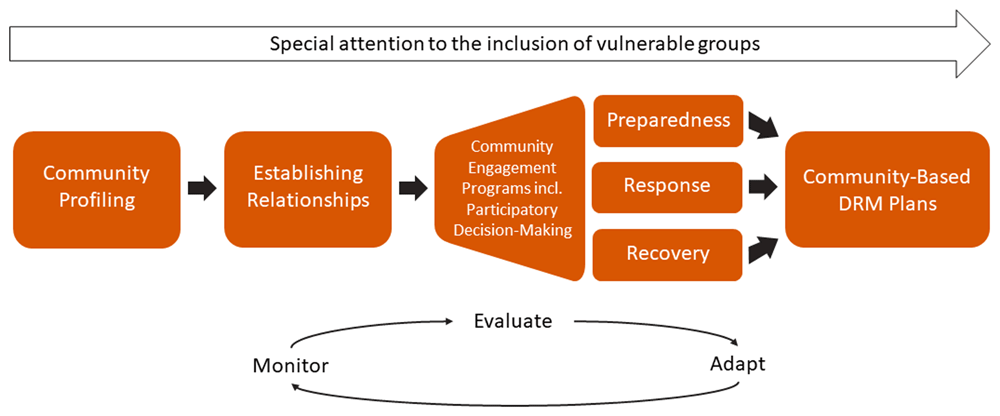
Ensuring sustainable impact

For ensuring a sustainable impact of participatory governance/community engagement and for ultimately contributing to an increased resilience of communities towards disasters, as our empirical study has clearly shown, it is indispensable to enhance the trust of citizens in public authorities and institutions. This is accompanied by benefits of building long-lasting relationships with and within communities.

Factors that influence the community engagement. The workshop participants mentioned several aspects that need to be kept in mind, including several best practices that could be implemented. Two of the most important factors one has to ensure are effective communication between the community and the institutions and faith in institutions. Concerning communication, our respondents considered it crucial for official institutions and disaster risk management to ensure that the language and modes of communications they use actually reach the community. Otherwise fake news might gain the upper hand.

Regarding strengthening the faith in institutions, one participant stated that “[…] faith in institutions would make people be much more involved in institutional plans. Because what is also problematic sometimes is a deficit of volunteerism which is a phenomenon we have in Italy and which is extremely problematic for the first responders.”

Regarding best practice, a respondent mentioned a practice that is extensively used in the USA, namely the deployment of liaison officers. This is a person who liaises between first responders and the community – a volunteer who is “responsible to mobilize the community and to work with the first responders to be prepared but also to know what to do when a disaster happens”. Another mentioned a problem that sometimes arises “in very small villages where communities in the recovery stage relied on their own assets, on their own knowledge to recover from the disaster”, stating that this is bad practice. The best practice would be to instead “use specific guidelines and engage as many stakeholders as possible”. The respondent further emphasized that spontaneous engagement in the response phase by untrained volunteers is also very bad practice which they highly advise against.

The workshop participants highlighted a number of cultural factors that may hinder community engagement; for instance, the lack of awareness of the Greek population with regard to voluntarism. Another participant talked about the people in Greece that are allegedly “heavily dependent on the emergency service of the state and they [note: the authorities] don't give enough room to civil society voices or actions”, highlighting that political factors and organizational issues can also hinder efforts in community engagement and disaster risk management as a whole.

Another respondent thought that language barriers can be an issue, for instance when dealing with refugee or immigrant communities, stressing that to communicate effectively, translators or other personnel that can speak the language may be needed. Another person added that many “people coming from outside of Europe are younger […] than the average population”. This was seen as an advantage as they can react faster and may have more physical capabilities than older people. However, they also mentioned the language barrier, stating that even on social media one may have to use signs instead of working with text, as people coming from elsewhere may not understand much of the local language.

For ensuring a sustainable impact of community engagement, it is indispensable to consider potential ethical or legal issues. One participant for instance recounted an incident where people had to be evacuated because of great danger. “We identified 50 people who had no right to remain in the country, they didn’t have documents. So, what do you do in that case? Do you arrest them, do you evacuate them, […] do you detain them?” For these cases, concrete guidelines and best practices are necessary, to ensure the safety of everyone regardless of legal status. The participant further stated that authorities have to be aware of certain sensitivities that communities might have, which requires training, saying that “the authorities should be trained in order not to raise legal issues or liabilities.”

Recommendations for participatory governance in DRM

This section provides a general framework on how to approach communities for participatory governance. It also summarizes the key recommendations that were identified to enable community engagement as part of CBDRM.

Figure 1 presents a participatory governance model that serves as a general guideline for the implementation of CBDRM through the definition of several workflows. Inspired by the model of Johnston et al. (2022), community profiling shall be first establish the understanding of specific community features, local resources and risks as well as the perception and knowledge about them. After building this foundation, relational ties and networks as well as individual facilitators shall be analysed, identified and approached in order to establish relationships and build trust with the community. The utilization of local networks and organisations as well as the recruitment/instalment of liaison officers within the local community should help enabling capacity building and the opportunity for long-lasting relationships. The specifics of the community engagement programs applied will then depend on each individual case. Further, the whole process should be accompanied by an iterative loop of monitoring, evaluating and adapting and keep the inclusion of vulnerable groups in mind at all steps. Special attention to vulnerable groups inclusion shall be present in all steps.

b3518695-54cc-4d27-81f1-8e889b8c24d4_figure1.gif

Figure 1. Participatory governance model.

From D2.5 Participatory Governance Model and Recommendations. (p. 67), by S. Bittner, I. Grabmaier, S. Kainz, C. Barrado, V. Bagiyan, S. Bakunts, & D. Zamora, 2024, PANTHEON - Community-Based Smart City Digital Twin Platform for Optimised DRM operations and Enhanced Community Disaster Resilience, Horizon Europe PANTHEON, Grant Agreement N°101074008. Copyright lies with the authors.

Recommendations for all these steps, as well as approaches to community engagement and capacity building for different phases of the disaster management cycle, are presented in Table 2 in the Extended Data Repository. The recommendations are structured according to those steps and phases but do not follow any chronological order within these categories.

Conclusion

According to the experts that were consulted for this study, community engagement will be crucial in the future to tackle the challenges that lie ahead. A model that promotes community engagement and involves joint responsibility in decision making is participatory governance. When applied to DRM, participatory governance may contribute significantly to improving society’s resilience to natural and man-made disasters, as it takes advantage of local knowledge, efficiently uses the available resources and serves all, including the most vulnerable parts of society. Thereby, communities are empowered to be part of the decision-making process.

However, participatory governance comes with a cost, especially in terms of time. Decisions will take longer because understanding and accepting the reasons of others is a time-consuming process, and consensual decisions may require several iterations. But the agreements obtained after such long process will be very stable and last long periods. Measures must be taken to make the participation process as accessible as possible for all members of a community.

In this study, the state-of-the-art analysis of the literature related with participatory governance applied to disaster risk management and the involvement of vulnerable groups is extensively discussed and complemented with empirical work supported by twelve European experts in the field of community engagement in DRM. All sources consulted agree on most of the associated challenges and together with the experts, several approaches were jointly elaborated to address them. These include among others: the vocabulary to be used must be comprehensible for all parts of a community; the channels of communication need to be effective and supported by previously existing networks; the diversity in urban areas needs to be acknowledged and addressed in an appropriate way; volunteers are important assets but need training and coordination; and emergency exercises are a good way to complement other training and informative methods such as leaflets, apps, schools, door-to-door, social media, etc.

There is also agreement on the different degrees of community participation that are appropriate at the various phases of a disaster management cycle. Community engagement is highly recommended in the preparedness and the recovery phase, but in the response phase, experts strongly recommend a clear line of command, where orders need to be followed. For this reason, the experts suggest investing more effort in cooperative training and joint disaster planning in the run-up to a disaster and in community-based decision-making in post-disaster reconstruction. It was also highlighted that there is great potential in involving young citizens who may be more open to learning and more advanced in the use of technology than adults.

As a result of the research, a participatory governance model is proposed. This model presents the steps required to prepare and implement community-based disaster resilience programs and is complemented by a life cycle that iterates in three sequential phases: monitoring, evaluation and adaptation. A structured list of 26 recommendations provides guidance on how to best proceed in the defined working steps and how to implement community engagement in different phases of the disaster management cycle. Finally, the paper emphasizes the inclusion of vulnerable groups throughout the whole process and recommendations are proposed on how to best facilitate this.

Ethical approval and consent

The study was approved by the Ethics Committee of the Polytechnic University of Barcelona (UPC) as part of the publication of Deliverable 10.1 (Valles, 2023) on 24 April 2023.

Prior to participating, all participants in the study signed an informed consent form which was provided in written form. The informed consent form was reviewed and approved prior to the study by the Ethics Committee of the Polytechnic University of Barcelona (UPC).

Data availability statement

Zenodo: Enhancing community participation in Disaster Risk Management: Recommendations for an inclusive approach, DOI: 10.5281/zenodo.13889634 (Bittner et al., 2024)

The project contains the following underlying data:

Data are available under the terms of the Creative Commons Attribution 4.0 International license (CC-BY 4.0). 

Acknowledgements

We would like to thank the participants of the workshops and the survey respondents for their time.

Footnotes

1The project has received funding from the European Union’s Horizon Europe programme under Grant Agreement No 101074008

2For this study, a novel questionnaire was created that was pre-tested and validated among all members of the consortium and reviewed according to the received feedback. The data received has also been independently verified by two people.

3More details on this topic can be found in the chapter Building/enhancing trust in public institutions.

References

  •  Adams RM, Eisenman DP, Glik D: Community advantage and individual self-efficacy promote disaster preparedness: a multilevel model among persons with disabilities. Int J Environ Res Public Health. 2019; 16(15): 2779. PubMed Abstract | Publisher Full Text | Free Full Text
  •  Ahmed S, Mohd Asraf R: The workshop as a qualitative research approach: lessons learnt from a “critical thinking through writing’ workshop. The Turkish Online Journal of Design, Art and Communication - TOJDAC, Special Edition. 2018; 1504–1510. Reference Source
  •  Alexander D, Sagramola S: Major hazards and people with disabilities. European and Mediterranean Major Hazards Agreement (EUR-OPA). 2014. Reference Source
  •  Andharia J, Puri A, Namboothiripad A: Transforming post-disaster recovery: participatory mechanisms for community feedback and responding to Government’s real-time data needs with a focus on persons with disability. The International Journal of Community and Social Development. 2023; 5(1): 47–70. Publisher Full Text
  •  Arnstein SR: A ladder of citizen participation. J Am Inst Plann. 1969; 35(4): 216–224. Publisher Full Text
  •  Beldyga N: A review of Literature on community responses to environmental crises. FILOSOFIJA. Sociol. 2022; 33(4): 397–406. Publisher Full Text
  •  Bittner S, Grabmaier I, Kainz S, et al.: D2.5 Participatory governance model and recommendations (Pantheon - Community-Based smart city digital twin platform for optimised DRM Operations and enhanced community disaster resilience). Horizon Europe PANTHEON, Grant Agreement N° 101074008, 2024.
  •  Bittner S, Kainz S: Feedback from experts on participatory governance (Version 1.0.0). 2024. Publisher Full Text
  •  Blair H: Innovations in participatory local governance. In: Participatory Government and the Millennium Development Goals. United Nations, Department of Economic and Social Affairs, Division for Public Administration and Development Management, 2008; 77–124. Reference Source
  •  Bradshaw S, Fordham M: Double disaster: disaster through a gender lens. Hazards, Risks, and Disasters in Society. 2015; 233–251. Publisher Full Text
  •  Creed G: The seductions of community: emancipations, oppressions, quandaries. SAR Press, 2006. Reference Source
  •  DFID: Defining disaster resilience: a DFID approach paper. Department for International Development, 2011. Reference Source
  •  Fischer F: Participatory governance as deliberative empowerment: the cultural politics of discursive space. The American Review of Public Administration. 2006; 36(1): 19–40. Reference Source
  •  Fischer F: Participatory governance: from theory to practice. In: D. Levi-Faur (Ed.), The Oxford Handbook of Governance. Oxford Academic, 2012; 457–471. Publisher Full Text
  •  Geekiyanage D, Fernando T, Keraminiyage K: Assessing the state of the art in community engagement for participatory decision-making in disaster risk-sensitive urban development. Int J Disaster Risk Reduct. 2020; 51: 101847. PubMed Abstract | Publisher Full Text | Free Full Text
  •  Goldsmith L, Raditz V, Méndez M: Queer and present danger: understanding the disparate impacts of disasters on LGBTQ+ communities. Disasters. 2022; 46(4): 946–973. PubMed Abstract | Publisher Full Text
  •  Gustafson P, Hertting N: Understanding participatory governance: an analysis of participants’ motives for participation. The American Review of Public Administration. 2017; 47(5): 538–549. Publisher Full Text
  •  Gvetadze N, Pertiwi P: Including persons with disabilities in disaster risk reduction: a research study from eight countries of Africa, Asia and South/Central America. Arbeiter-Samariter-Bund, Centre for Disability in Development, Christian Blind Mission, International Disability Alliance, and Malteser International, 2022. Reference Source
  •  Hansson S, Orru K, Siibak A, et al.: Communication-related vulnerability to disasters: A heuristic framework. Int J Disaster Risk Reduct. 2020; 51: 101931. Publisher Full Text
  •  HelpAge International: Age inclusive disaster risk reduction—A toolkit. HelpAge International, 2019. Reference Source
  •  Hickey S, Mohan G: (Eds.). Participation, from tyranny to transformation? Exploring new approaches to participation in development. ZED Books; Distributed exclusively in the U.S. by Palgrave Macmillan, 2004. Reference Source
  •  Hilfinger Messias DK, Barrington C, Lacy E: Latino social network dynamics and the Hurricane Katrina disaster. Disasters. 2012; 36(1): 101–121. PubMed Abstract | Publisher Full Text
  •  IAP2 International Federation: IAP2 Spectrum of public participation. (n.d.). Reference Source
  •  IFRC: VCA toolbox with reference sheets. International Federation of Red Cross and Red Crescent Societies, 2007. Reference Source
  •  Johnston KA, Taylor M, Ryan B: Engaging communities to prepare for natural hazards: a conceptual model. Nat Hazards. 2022; 112(3): 2831–2851. Publisher Full Text
  •  Kainz S, Geyer C, Kirilova S, et al.: D2.3 Community vulnerability and capacity assessments (PANTHEON - Community-Based Smart City Digital Twin Platform for Optimised DRM Operations and Enhanced Community Disaster Resilience). Horizon Europe PANTHEON, Grant Agreement N° 101074008, 2024.
  •  Kelleher C, Seymour M, Halpenny AM: Promoting the participation of seldom heard young people: a review of the literature on best practice principles. Dublin Institute of Technology, 2014. Reference Source
  •  Kirshen P, Ballestero T, Douglas E, et al.: Engaging Vulnerable Populations in Multi-Level Stakeholder Collaborative Urban Adaptation Planning for Extreme Events and Climate Risks — A Case Study of East Boston USA. J Extreme Events. 2018; 05(02n03): 1850013. Publisher Full Text
  •  Kiss B, Sekulova F, Hörschelmann K, et al.: Citizen participation in the governance of nature-based solutions. Environ Policy Gov. 2022; 32(3): 247–272. Publisher Full Text
  •  Le Dé L, Gaillard JC, Gampell A, et al.: Participatory mapping 2.0: new ways for children’s participation in disaster risk reduction. Australian Journal of Emergency Management. 2020; 36(3): 34–42. Reference Source
  •  LimeSurvey Project Team - Carsten Schmitz: LimeSurvey: an open source survey tool. LimeSurvey Project, 2024. Reference Source
  •  Linnell M: Community approaches involving the public in crisis management a literature review. (5; RCR WORKING PAPER SERIES 2013). Mittuniversitetet, 2013. Reference Source
  •  Lorna V: Community based approaches to disaster mitigation. Asian Disaster Preparedness Center, 2003. Reference Source
  •  Mayring P: Einführung in die qualitative sozialforschung [Introduction to qualitative social research]. Beltz Verlag, 2002. Publisher Full Text
  •  Nahkur O, Orru K, Hansson S, et al.: The engagement of informal volunteers in disaster management in Europe. Int J Disast Risk Re. 2022; 83: 103413. Publisher Full Text
  •  Osmani SR: Participatory governance: an overview of issues and evidence. In: Participatory governance and the millennium development goals. United Nations Department for Economic and Social Affairs, 2008; 1–45. Reference Source
  •  Pertiwi P, Llewellyn G, Villeneuve M: People with disabilities as key actors in community-based disaster risk reduction. Disabil Soc. 2019; 34(9–10): 1419–1444. Publisher Full Text
  •  Prieur M: Ethical principles on disaster risk reduction and people’s resilience. Council of Europe, 2012. Reference Source
  •  Righettini MS, Vicentini G: Assessing and comparing participatory governance in energy transition: evidence from the 27 European Union Member States. Journal of Comparative Policy Analysis: Research and Practice. 2023; 25(6): 565–584. Publisher Full Text
  •  Robles LR, Carandang RRZ, Koli A, et al.: Older adults’ participation in resilience building to address climate change-induced disasters: perspective and experiences from the philippines. (n.d.). Reference Source
  •  Schröter B, Hauck J, Hackenberg I, et al.: Bringing transparency into the process: social network analysis as a tool to support the participatory design and implementation process of payments for ecosystem services. Ecosyst Serv. 2018; 34(Part B): 206–217. Publisher Full Text
  •  Scully J, Shaw D: International models of emergency management involving civil society. National Preparedness Commission, 2022. Reference Source
  •  Sinclair R: Embedding children’s participation. ChildLinks. 2005; 1: 1–24.
  •  Stark A, Taylor M: Citizen participation, community resilience and crisis-management policy. Australian Journal of Political Science. 2014; 49(2): 300–315. Publisher Full Text
  •  Steger C, Kočnik E: Stellungnahme im Rahmen der Öffentlichen Sitzung 2022 „Klimakrise und Katastrophenschutz“. MonitoringAusschuss, 2022. Reference Source
  •  Tamarck Institute: Index of Community Engagement Techniques. Tamarck Institute, 2017. Reference Source
  •  Twigg J: Attitude before method: disability in vulnerability and capacity assessment. Disasters. 2014; 38(3): 465–482. PubMed Abstract | Publisher Full Text
  •  UNISDR: Hyogo framework for action 2005—2015: building the resilience of nations and communities to disasters. UNISDR, United Nations, 2007. Reference Source
  •  UNISDR: Proposed updated terminology on disaster risk reduction. Facilitated by The United Nations Office for Disaster Risk Reduction, August, 2015. Reference Source
  •  United Nations: Convention on the rights of the child. United Nations, 1989. Reference Source
  •  United Nations: Sendai framework for disaster risk reduction 2015—2030. UNISDR, United Nations, 2015. Reference Source
  •  United Nations General Assembly: Report of the open-ended intergovernmental expert working group on indicators and terminology relating to disaster risk reduction. 2016. Reference Source
  •  Valles L: D10.1 POPD - HEF - REQUIREMENT NO. 1. (PANTHEON - Community-Based Smart City Digital Twin Platform for Optimised DRM Operations and Enhanced Community Disaster Resilience). Horizon Europe PANTHEON, Grant Agreement N° 101074008, 2023.
  •  Voinov A, Jenni K, Gray S, et al.: Tools and methods in participatory modeling: selecting the right tool for the job. Environ Modell Softw. 2018; 109: 232–255. Publisher Full Text