Introduction

The attention toward sustainability transition has been growing recently in the current transition agenda from a linear to circular economy. It showed by expanding research on these topics by various interdisciplinary researchers, including social innovation studies (Avelino, 2021; Markard et al., 2012). Ensuring the transition to consider multiple dimensions of environmental sustainability, social inclusion, decent work and inequality reduction has been largely demanded, and triggered the notion of ‘just transition’, particularly in the contexts of climate change and low-carbon energy transition (Schröder, 2020). The link between environmental and social justice topics increasingly emerged (Berthe et al., 2021) showing the interdependent nature of these dimensions that need integrated policies.

In developing countries, pre-existing inequality coupled with their heavy dependence on the extractive and linear sectors, placed them on a more vulnerable side to be negatively affected by the transition to circularity (Schröder, 2020). The need to design and implement a just transition framework in these countries becoming increasingly important, supported by the fact that social inequality will be exacerbated by the current climate crisis (Wang & Lo, 2021). The transition toward a green economy is a key part of the UN 2030 Agenda for Sustainable Development, where waste reduction is included as key aspect to achieve the sustainable consumption and production plan. Circular economy concepts are included in the contexts of low-carbon transition and digitalization of the economy (Schröder, 2020), therefore social justice aspects become an important consideration to sustain the transition. It is important to ensure that the negative consequences of promoting the circularity model will not disproportionately fall on the side of vulnerable communities such as health impact, workers firing, and reduced livelihoods.

Ensuring a just transition from a linear to circular model requires engagement from diverse stakeholders with intersections in various fields. It requires significant interventions from both the state and non-state actors, as the existing socio-technical system are characterized by its complexity and lock-in (Markard et al., 2012). In the context of waste management and recycling industries, one of the key actors involved in the informal sector is social enterprises, along with cooperatives, NGOs and micro enterprises. The emergence of these organizations is often framed in the third sector of economy where the government responses to social needs are considered limited (Hillman et al., 2018). Social enterprises participated in the market mechanism and reinvest their majority of profits to tacking social issues (Avelino & Wittmayer, 2019). They prioritized social needs over profit maximization and involved marginalized communities within viable commercial businesses (Daya, 2014).

Several scholars have shown the role and potential of social enterprises in the development of renewable energy (van der Horst, 2008), as the drivers of low-carbon transition at the community level (Hillman et al., 2018), and more broadly their capacities as an actor for poverty reduction and employment generation (Borzaga et al., 2008). With the explicit motivation to solve social and environmental problems in a particular region, social enterprises have unique characteristics that are not possessed by traditional or for-profit businesses. The social enterprise model has proven to drive social change, and deliver more than economic and financial benefits for the community involved in their activities (Hillman et al., 2018). These community-led and grassroots enterprises have little explored their role and potential to deliver and support just transition in the circular economy agenda. In this study, one of the objectives attempted to fill this gap, by exploring the business model of social enterprises and the just transition elements in their approaches.

In the context of waste management problems, Indonesia as an emerging economy country has generated a significant amount of waste, with around 65.8 million metric tonnes in 2017 (Ministry of Environment and Forestry, 2020), and projected to significantly expanded in the future. In addition, the country has been listed as one of the most contributors to plastic pollution in the world with about 3.22 million mismanaged plastic waste (Jambeck et al., 2015). This geographically concentrated problem is caused by a lack of infrastructure support and low research and development activities to develop plastic waste abatement technology such as recycling tools or waste management standardization in these developing countries (Browning et al., 2021). Therefore, in this study, Indonesia has been selected as a case study to explore its current challenges in waste management, and examine the role of local social enterprises to contribute to solve the complex problem of waste management. Furthermore, using socio-technical transition of multi-level perspectives (Geels, 2002), this study explores the potential and challenges of social enterprises business model as a niche innovation to adapt and disrupt the existing waste management regimes, embedding elements of just transition in their approaches, and influence the just transition objectives in their models.

The article is structured as follows. The next section provides a theoretical framework which consists of multiple dimensions: just transition, social enterprises, socio-technical transition, waste management sector and business model innovation. It discussed the nexus between business model innovation, social enterprises and just transition principles These dynamics further are illustrated by six case studies of social enterprises in waste management in Indonesia: Biomagg in the organic waste management, Seling.id and Resik in the community-based and waste banks model, Rapel.id in the context of digital waste management, Gammawaste in recycling and upcycling model, and the Inowastek represent sustainable waste sorting products. In the next section, the article considers cross-case analysis to highlight the strength of social enterprise model in the informal sector and points out the similarity of just transition principles in their business models. Lastly, the discussion around potential inclusive economy in the community-based waste banks model will be elaborated along with the social enterprises challenges on bridging the just transition agenda in the existing waste management regimes.

Theoretical framework

Defining “just transition”

The concept of ‘just transition’ has increasingly important in the current transition agenda toward sustainable economy. This framework originally introduced in the case of energy transition which demanded by trade union in the energy sector (Berthe et al., 2021; Galgoczi, 2019). While this framework also has various interpretation depends on the context and industry, mainly intertwined with the concept of energy, climate and environmental justice studies (Wang & Lo, 2021). One of the of main lesson learned in the climate justice studies for example, is that grassroot participation in organizing transition with a more participatory, deliberative, non-hierarchical sets of relations is a key component realizing just transition (Wang & Lo, 2021). It is argued that just transition is a critical component of a successful transition to a zero-carbon economy, with a focus on ensuring that activities to combat climate change also take into account key social priorities including distributional consequences and decision-making processes (Robins et al., 2019).

Since the transformation to low carbon economy were changing the supply chain and business model in general, it would create many new opportunities and at the same time, some jobs would be disrupted that potentially generating adversity to the vulnerable communities (ILO, 2015). In the more recent UN Climate Change Conference (COP), this framework included in the strategy to address climate change to ensure the transition process are well managed, that ‘no one is left behind’, and to be fully inclusive through equitable distribution of resources, improved health and wellbeing, and access to skills development and employment opportunities.

McCauley & Heffron (2018) emphasized that the process of just transition must promote fairness and equity in relation to the major global justice concerns such as (but not limited to) ethnicity, income, gender within both developed and developing contexts. In a more general context, the outcome of a just transition should be a sustainable economy in the region that accommodates a long-term perspective with decent jobs and reduced inequality (Galgoczi, 2019). In addition, the main objective of just transition is to protect workers and communities from the most negative consequences of decarbonization policies, thus, genuine social dialogue at all stages of the transformation are necessary and vital (Galgoczi, 2019). The importance of social dialogue echoed by Wang & Lo (2021) emphasized one of the key principles in just transition is a public dialogue, in order to mobilize greater engagement from multiple stakeholders, with a different kind of technical, cultural, political and economic perspectives to be aligned in the just transition plan. In the previous case for coal transition, the involvement of all pertinent stakeholders in social dialogue is the key for a fruitful just transition (Galgoczi, 2019).

In the context of circular economy, there is a few literatures that discuss the case through just transition lens. Schröder (2020) is one of the recent scholars who elaborated a just transition for circular economy with key point creating decent work and social inclusion, and illustrated the distributive justice (costs and benefits in specific sectors affected by green transition). Furthermore, he also shown a form of social innovation related to the sustainability of the textile sector, which will be an interesting case for alternative form to govern a just transition. However, there is a limitation in the literature of the discussion of the organizational form related to governing, financing, mobilizing social innovation activities in the relevance of just transition framework. It is important to consider the political aspect of the transition in a given context. Governing the transition is a complex problem which consider set of institutional structures, political tradeoffs, and power relations to achieve collective pursuit of public, or individual interests (Newell & Simms, 2021).

Bastos Lima (2022) use just transition concept with an environmental justice perspective, is one of the first efforts applying this framework in the case of bioeconomy. He analyzed four key categories in the perspective of environmental justice, which are distributive, procedural, retributive, and restorative justice. These include several key concerns such as fair allocation of benefits and burdens, participation and inclusiveness, accountability and law enforcement mechanisms. Scholars in transition studies argued that socio-technical aspect of such transition should be managed, as Geels (2002) highlighted that transition do not only involve change in technology but also changes in user practices, legislation, industrial networks, infrastructure, and symbolic meaning. Taking into account the social and technical elements of finance and innovation, including cultural change and social pressure are one of the key principles in governing just transition (Newell & Simms, 2021).

With all of the different notion applied for the just transition concept, Wang & Lo (2021) argued that this create a set of different interpretation. As a result of multidisciplinary engagement with the concepts, ranging from labor-oriented approach, governance strategies perspectives to public perception, that led to no universally agreement upon the definition or framework for just transition (Wang & Lo, 2021). In the Table 01 below, it can be seen a different view of just transition and cases applied in various transition agenda toward low-carbon economy. In this particular study, the just transition concept will be discussed in the context of circular economy, specifically in the waste management sector, harnessing social enterprise business models innovation in that process.

Table 01. Different view of just transition applied in various cases (adapted from Wang & Lo, 2021).

ThemeMain ideas/ influenceCase selection
Labor-oriented     ◦   Key role of labor union
     ◦   Mitigate social problem resulted from new environmental policies
     ◦   Advocate to generate new jobs
     ◦   Energy transition from fossil fuel to renewable
Integrated framework for justice     ◦   Interdisciplinary approach combining environmental, climate and energy justice
     ◦   Historical responsibility, finance, loss and damage, human rights, and adaptation
     ◦   Fairness, equity, and rightness
     ◦   Climate change effects on developing countries
     ◦   Energy transition
Governance strategies     ◦   Politics of transition
     ◦   Socially just
     ◦   Key role of government
     ◦   Democratic regimes
     ◦   Authoritarian regimes
Socio-technical transition     ◦   Multi-level perspectives
     ◦   Focus on the dynamic process of transition (considering social, technological pattern in existing regime)
     ◦   Suggest the processes of transition create radical shifts in society’s structure, values, and use of technology;
     ◦   Energy transition
     ◦   Circular economy transition
     ◦   Waste management
Public perception     ◦   Stakeholder attitudes toward transition
     ◦   Public opinions (those are directly affected)
     ◦   Could be influenced by level unemployment, environmental sensitivity
     ◦   Clean energy transition
Integrated framework     ◦   Distributional, procedural, restorative justice, and justice as recognition
     ◦   reduce inequality & injustice during the transition process
     ◦   Bioeconomy
     ◦   Agri-food
     ◦   Circular economy

Social enterprises as a form of social innovation

The term of social enterprise and social entrepreneurship in general has been increasingly popular recently. The growing issue on social and environmental problems both local and global scale triggered aspiring entrepreneurs to harness business as a tool to address such issues. In the last part of the 20th century, social enteprises as part of social innovation were categorized in Europe and South America under the term “solidarity economy”. It can be defined as a set of actions that contribute to democratizing the economy through citizen involvement, and it shares similarities with the social economy but is more tied to the political dimension (Eynaud et al., 2019). Daya (2014) summarized the concepts of social enterprise as an entity that uses established business principles and practices to achieve its primary objectives to deliver social and environmental benefits, and prioritized social needs over profit maximization. Similarly, Alter (2007) defines social enterprise as “any business venture created for a social purpose or reducing social problem or a market failure, and at the same time operating with innovation, financial discipline, and determination of private business to generate social value”.

A social enterprise also participated in market mechanism to cover their own cost, tackling social issue in the private sphere, with entrepreneurs as the main actors who setup the business at the intersection between market and non-profit sector (Avelino & Wittmayer, 2019). The form of social enterprises often associated in the third sector of economy, which have become the key driver of social progress, particularly in regions where market and governmental limitation exist in a provision of social welfare (Hillman et al., 2018). The fact that, in countries where its social welfare system comparatively inadequate, particularly as a result of the transition to democratic political system and market-oriented economies, the social cost of the transformation has not been equally distributed among the citizens (Borzaga et al., 2008). Social enterprise then attempted to answer the local demand from certain groups of population who have been marginalized and socially excluded as a result from the transformation of state enterprise and public institutions and overall economic transition (Borzaga et al., 2008). This demand has been strongly constructed by the fact that communities in this transition countries often have little trust in political institutions and low involvement in democratic processes, as well as low social capital stocks (Raise et al., 2002).

The emergence of social enterprise as a self-reliance, inclusive and community-driven form of organization has been increasingly adopted in transition countries with a different type of business models and institutional settings. The main classification based on integration between social programs and business activities, which are: embedded social enterprise, integrated social enterprise, and external social enterprise (Alter, 2007). Embedded model is a mission-focus, where the social and economic activities are unified. Cooperative, entrepreneurs support, and market linkage model are few examples form of embedded social enterprise. The second type is an integrated social enterprise, where the synergies exist between social and economic activities, for example in service subsidization model (Alter, 2007). The model allows two separate entities where profit-centric enterprise supporting social or non-profit entities through cost-sharing, enhancing system, or asset leveraging. The third type is external social enterprise where social programs are explicitly distinct from business activities. In this model, nonprofits create “external” entity to fund their social services or operational costs. This typology explores not only how institutions can combine a mix of social programs with commercial business activities, but also how it can come up with unique ownership model, revenue stream and capitalization strategies to achieve it social aims.

In the case of low carbon transition, social enterprise approach studied by some scholars to explore the potential capacity to support the sustainable transition. In the EU country context, some scholars attempted to show the role of social enterprises in energy transition, exploring the capability in embedding energy justice concept with its business models (Hillman et al., 2018; Mikkonen et al., 2020; van der Horst, 2008). It is argued that social enterprise has the potential to enhancing communities through addressing local needs, building capacity of the community to be independent and creating social capital between individuals and communities (Hillman et al., 2018). With the visibility and “easy to reach-out” characteristics, social enterprise can become a bridge to accommodate targeted communities demands thus create an inclusive transition plan. Avelino & Wittmayer (2019) also argued that social enterprise has a characteristic to create a structural change and changing power relations in a given community. They elaborated the concept of ‘transformative potential’ which defined as changing social relation that entails new ways of doing, thinking, and organizing that challenge, alter, and/or replace current social context. Innovation in this case should not focus only on efficiency or business-related metrics, but in a matter of collective action, empowerment and social relations (Lechevalier, 2019).

In the context of third sector where social enterprise and other forms of collective organization such as co-operatives, associations, NGOs and community-based enterprises, have a significant contribution both in social and economic side. Generating new employments opportunities, supplying basic public and merit goods to disadvantaged people are some examples of economic value that is self-evident in social enterprise approach (Borzaga et al., 2008). In addition, in the context of circular economy transition, social enterprises have played a key role to generate green jobs in their business model in waste management sectors (Vesere et al., 2021).

Besides the potential and opportunities that social enterprises may possess, its model also received critics by some scholars. The debates whether social enterprises can be framed as an alternative to neoliberal capitalism and its negative impact on social, economic and ecological aspects that receive more attention after 2008 global financial crisis (Daya, 2014). There is no clear consensus to define the concepts of social enterprises which can be different in another nation (Daya, 2014), that can include in the third economy, popular economy and social economy concepts. Eynaud et al. (2019) further argued that the form of social enterprises itself is often confused in the two forms of solidarities, democratic and philanthropies. They argued that the emergence of social enterprise (or venture philanthropy) backed by institutional investors or venture capitals are the new way to legitimize capitalism. Its participation in market mechanism to generate revenue and at the same time claimed to align its business to solve and environmental problems is another way to support capitalism idea (Eynaud et al., 2019).

Socio-technical transitions in waste management

The attention on just and sustainability transition has been growing recently. It showed by increasing research on this topic by various interdisciplinary scholars, including social innovation studies (Avelino, 2021; Markard et al., 2012). The demand toward an inclusive transition that provide the opportunity to create broader societal impact, where involving multiple stakeholders in the processes has become the focus of sustainability transitions. Community involvement is one of the key elements of social sustainability, as highlighted by Hillman et al. (2018) in the case of energy justice.

Geels (2002) introduced a concept of ‘socio-technical transition’ in the context of technological transformation for transportation sector. Other major sectors such as energy, water, communication, housing and transportation system can also use the concept of socio-technical transition (Hillman, 2018). This framework is important to be applied to transform such critical sectors to understand its complex dynamics of sociotechnical change. The system consists of interlinkages between heterogeneous elements which not only fulfilling the technology-related aspects but also societal functions such as cultural symbol, consumer practices, public policies, business models, markets and infrastructure (Geels, 2019). This system consists of networks of individual and social groups such as firms, collective organizations, policymakers, universities, investors who engage in different activities including its own rules, belief-system and institutions (Geels, 2019).

In the case of energy system, J. S. Hillman (2018) studied the role of community-led social enterprises applying socio-technical transition framework in the sustainable energy transition agenda. Given the complexity of the energy system, the socio-technical transition perspective is required to understand a holistic approach which not as simple as switching from one energy mix to another but taken into account the human interaction between technologies, market, innovation and policies (Geels, 2002; Hillman, 2018). In addition, energy transition also involving various and multiple stakeholders which are interconnected and diverse, that each interest should be considered (Hillman, 2018). Geels (2002) further elaborated these diverse interactions in the framework called multi-level perspective (MLP), to describe the whole system, each role and interaction between landscape, regime, and niche-level activities (Figure 01)

2dab1bab-a4ea-43f1-a6f0-d92b533c6062_figure1.gif

Figure 01. Multi-level perspective framework (Geels, 2002), this figure has been reproduced with permission from Elsevier, License Number: 5964231395485.

In the multi-level perspective concepts, regimes are embedded within landscapes and niches within regimes. Niches are important spaces where radical innovation are generated and incubated, and provide space to create social networks such as supply-chain (Geels, 2002). In this niche-level, radical innovation created may challenge existing regime (Hillman, 2018). Regimes are the part where different social groups have set of rules where coordinated in a dynamic ecosystem. Landscape here consist of a set of deep structural, external and heterogeneous trends such as economic growth, wars, political condition, and environmental problems (Geels, 2002).

An emerging topic on how the MLP framework of socio-technical transition applied to social sustainability, such as inequality, poverty and work conditions, have been explored by scholars on justice and distributional consequences of sustainability transitions (Geels, 2019). For example, some scholars explored the MLP framework and integrated them with the energy justice model of low-carbon energy transition at the niche, regime and landscape level (Jenkins et al., 2018; Sareen & Haarstad, 2018). It showed that recently socio-technical transition literature has been studied in the emerging problem of just and fair distribution of transition agenda. In terms of sectors, such as energy, mobility, water, and waste are examples of socio-technical systems, whereas education, labor or finance sector is applied within socio-economic systems and forestry, fisheries and agricultural sectors are applied within socio-ecological systems (Geels, 2019). Therefore, in this study, understanding the waste management industry would be suitable to explore in the framework of socio-technical systems, focused in the social enterprise business model as one of the key actors in this sector.

Previous scholars have studied the potential of social enterprises models to implement socio-technical innovation, for example in addressing the problem of delivering renewable energy projects (van der Horst, 2008). It is argued that the social enterprise approach has transformative potential that has the capacity to challenge, alter, and/or replace existing power relations at regime level (Avelino & Wittmayer, 2019). Similar with energy system transition, waste system transition toward more responsible and sustainable way can be viewed in socio-technical framework, paying attention to incumbent elements, including actors (individual, firms, organizations), institutions (regulations, norms, beliefs), and infrastructure (Markard et al., 2012; van Waes et al., 2018).

In the waste sector, Andersson et al. (2019) adopted a socio-technical framework into waste management particularly waste electrical and electronic equipment (WEEE) and end-of-life vehicles (ELVs). They argued that most of research in waste management industries previously used a specific system analysis tool (e.g life cycle assessment, material flow analysis, cost-benefit analysis, etc), and not addressed holistic approach of socio-technical perspectives (Andersson et al., 2019). In order to develop innovation in waste management, a shift in the way entrepreneurs develop business framework in this sector will be critical. It is important to examine how this approach can be applied in the responsible waste management industries, or circular economy in general, to understand its potential to deliver ‘just transition’ mechanism in their business models from socio-technical transition perspectives.

Waste management problems in developing countries

Plastic waste is one of the most-pressing problems recently which has threatened the environment and human health since it was introduced. Despite the usability and practicality for consumers, plastic contains enormous pollutants which harm human life and the overall ecosystem on the earth that outweighs the positive side. Plastic waste, especially that has been littered to the ocean, brings severe problems for wellbeing, human health, marine life and overall ecosystem (Browning et al., 2021). According to a study, average people consume approximately 5 grams of plastic every week which is equivalent to the weight of a credit card (Senathirajah & Palanisami, 2019). It shows the massive impact of plastic consumption on humans. Compared to its potential benefits, various intangible resources such as ecological (biodiversity), social and economic impact have more risks to be quantified.

The fact that the majority of mismanaged plastic waste was found in the developing world (Browning et al., 2021) illustrates how vulnerable and exposed these countries are with the impacts. From political ecology perspectives, Yang (2024) showed that in most of slums in the Global South, neoliberal waste governance has led to an uneven accumulation of plastic waste and create a disproportionate burden on low-income communities. This geographically-concentrated problem is caused by a lack of infrastructure support and low research and development activities to develop plastic waste abatement technology such as recycling tools or waste management standardization in these developing countries (Browning et al., 2021). Indonesia, as the case for this study, is one of the most contributors for plastic emitted to the ocean with estimated 56.333 tonnes plastic emission in 2019, as shown in the Figure 02 below (Meijer et al., 2021).

2dab1bab-a4ea-43f1-a6f0-d92b533c6062_figure2.gif

Figure 02. Plastic waste emitted to the ocean (Source: Meijer et al. (2021) – This figure is reused under the Creative Commons Attribution 4.0 International License (CC BY 4.0) from Our World in Data.

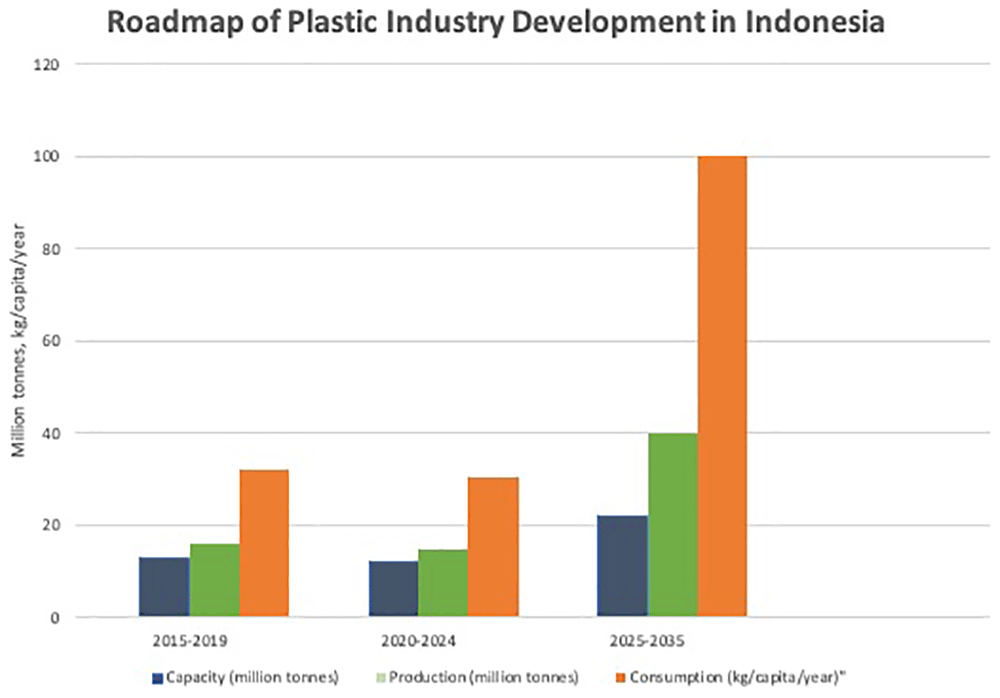
While the lack of standardized waste management systems still remains, the projected consumption of plastic is increasing significantly. According to data by the Ministry of Environment and Forestry (2020), plastic industry development in Indonesia is estimated to increase more than double in 2035 (Figure 03). It is inevitable as a consequence of economic growth that fostering consumption and boosting manufacturing output is a critical challenge to manage the increasing daily amount of waste produced both from households and industry.

2dab1bab-a4ea-43f1-a6f0-d92b533c6062_figure3.gif

Figure 03. Projected plastic industry development in Indonesia (This figures were adapted from a report by Ministry of Environment and Forestry (2020).

A set of different measures have been implemented to tackle plastic pollution problems, ranging from regulating the manufacturing industries production mechanism to creating a campaign in order to increase awareness for the consumers to shift from single-use plastic. It is a common strategy to impose tax in order to solve negative externality caused by exceeding consumption of plastics. Although the majority of developing countries are applying a common strategy of banning all single use plastic bags, the effect of such policies is not sustainable and needs more effective strategies (Browning et al., 2021). Indonesia has its national waste management policy that was issued under Waste Management Law No. 18/ 2008 as an umbrella for ministerial level, local and regional policy (Ministry of Environment and Forestry, 2020). Recently, the government has imposed a kind of pigovian tax to reduce negative externality from plastic waste by banning single-use plastic bags in traditional markets, modern supermarkets, and minimarkets in the capital of Jakarta. The banned products include all types of single-use plastic such as plastic sachets, plastic straws, plastic bags, single-use food containers and utensils. This government response through regulation such as plastic ban and reduction policies from manufacturers or companies will have consequences such as job loss (workers firing) and reduced economic activity due to these measures (Napitupulu et al., 2021).

The transition from a linear to circular economy, in this case single-use plastic reduction, would have potential adverse effects on particular communities which should be prevented and managed through equitable transition or a ‘just transition’ (Newell & Simms, 2021). As elaborated in the section of just transition previously, this concept is critical to ensure that the transition to the circular economy by waste management sectors does not create new disadvantages for future or existing stakeholders. Furthermore, it is imperative to consider the vulnerable groups such as women, migrants, marginalized communities, and low-income populations to be affected by improper waste management and plastic pollution to receive social justice (World Economic Forum, 2020). By ensuring the process of transition is not disrupted, that potential losers are supported and vulnerable populations are not left behind is a key to sustainable transition (Schröder, 2020). If this concept is realized and managed, it would provide opportunities for all key actors in this sector to engage in a collaboration to support the transition.

Business model innovation and just transition

The importance of business model innovation has been discussed by several scholars, emphasized the potential to create sustainable change in the existing system through rethinking the purpose of the firms in how they create and capture values, and often considered as a key to business success (Bocken et al., 2014). Through introducing alternative values such as environmental and social aspects into the business model thinking, it offers an inclusive model to consider beyond traditional stakeholders in the mainstream businesses. Business model innovations can also involve the new ways of doing, shifting the sequences of activities required and introducing new activities that did not exist in previous traditional business models (Hiteva & Sovacool, 2017).

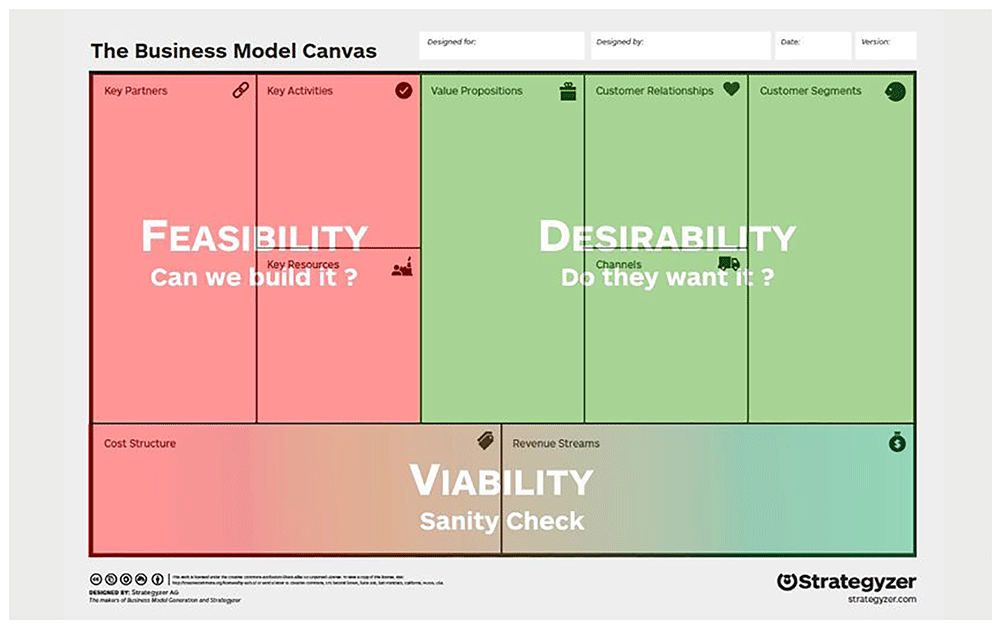
It is important to extend the current understanding of the business model approaches, exploring its potential to deliver and respond to unmet social needs. Hiteva & Sovacool (2017) argued that most of the business models studied in the literature are dominated by cases of highly successful private companies created for purely competitive market conditions operating for a profit-maximization objective. The mainstream approaches for business models are developing in a fundamental building blocks of business (Amit & Zott, 2012; Osterwalder & Pigneur, 2010; van Waes et al., 2018). These blocks represent the logic of how an enterprise capture and deliver the value to its intended customers, often divided into three main tenets: desirability, feasibility and viability.

Social enterprises often used adjusted model of business model canvas, with a different name such as sustainable business model canvas, triple layered (Joyce & Paquin, 2016), social lean canvas, and social enterprise model canvas (Sparviero, 2019). The added blocks in each version is unique to the different purposes that social venture possessed. in the sustainable business model canvas, for example, there are blocks for eco-social cost and benefit to assess the ecological or social cost and benefit generating by the business. Foxon et al. (2015) extend the business model canvas with several sustainability-oriented aspects for low carbon infrastructures. Joyce & Paquin (2016) introduced the triple layered business model canvas as an extension from original canvas, to design a more comprehensive tool for sustainability objectives based on triple bottom line approach.

Various business models have been adopted in the waste management industry, with the core to create value from ‘waste’. A business model is a conceptual framework to understand how a company runs a business, which consists of several elements: the value proposition, key activities, key resources, key partners, distribution channels, cost structure and revenue stream (Osterwalder & Pigneur, 2010). It also further divided into three main principles of feasibility, desirability and viability as can be seen in the Figure 04. Through a series of activities identified to deliver values to its intended customers, the business model framework illustrates a whole system perspective of the relationships and reciprocity actions that take place within a specific supply chain (Hiteva & Sovacool, 2017). Therefore, business model has been argued as the key determinant of business success where shown by Hiteva & Sovacool (2017) in the case of embedding business model innovation in the energy justice objectives.

2dab1bab-a4ea-43f1-a6f0-d92b533c6062_figure4.gif

Figure 04. Three elements of business model canvas, adapted from Osterwalder & Pigneur (2010) by Strategizer AG licensed under CC BY-SA 3.0.

Social enterprises in the mission to reduce waste have different ways to achieve their social and environmental goals, such as increasing awareness of consumers to reduce single-use plastic and replacing them with alternative products such as bamboo straw, producing and selling recycled materials, or investing in the waste management facilities through waste banks units. In the waste management industry, most business models centered into reuse and recycling efforts as well as decreasing waste ended up in landfill through several strategies. It can be started from a simple as delivering public trainings and campaign for using proper waste handling at a municipal level, to an advanced action such as investing in a technology and facilities to create recycled materials from waste.

Bocken et al. (2014) categorized waste management as one of the archetypes of sustainable business models which can be applied in a model of recycling, closed loop and industrial symbiosis. This model has its unique value propositions, value creation and delivery and value capture as summarized in Table 02 below. Sustainable business model is a useful framework to accommodate new necessity to consider various stakeholder’s interests such as environment into the business process. Also, sustainable business model can serve as a vehicle to synchronize technological and social innovation with a system-level sustainability (Bocken et al., 2014)

Table 02. Business model archetype of waste sectors. Source: adopted from Bocken et al. (2014).

Main value propositionValue creation & deliveryValue capture
Eliminating the waste by turning them into useful and valuable input to other material of production or end products Activities & partnership to create a circular model of waste. Reducing economic and environmental cost through reuse material
Collaborating with across industries (e.g recycling firms), to capture and transfer waste streamsCreate additional jobs for people involved in the supply chain (waste pickers/ informal scavengers)

The framework used for exploring just transition elements is mainly derived from ILO Guidelines for a just transition (2015) as it identified key principles that are relevant for developing countries to tackle the challenges of decent work, poverty eradication and environmental sustainability. The principles are divided into four main aspects summarized by Atteridge & Strambo (2020), that is creating decent jobs, addressing inequalities, social dialogue and human and worker’s rights (Table 03).

Table 03. Just transition principles from (ILO, 2015), derived from (Atteridge & Strambo, 2020).

AspectsJust transition principles
Create decent jobs and provide support to workers.Promote the creation of more decent jobs, including, as appropriate, anticipating impacts on employment; adequate and sustainable social protection for job losses and displacement; and skills development and social dialogue, including the effective exercise of the right to organize and bargain collectively
Address (pre-existing) inequalities, including gender inequalities.Ensure that policies and programs consider the strong gender dimension of many environmental challenges and opportunities. Adopt specific gender policies where needed to promote equitable outcomes.
Social dialogueRecognize that strong social consensus on sustainability goals and pathways is fundamental. Recognize that social dialogue is an integral part of the institutional framework for policy making and implementation at all levels. Ensure that adequate, informed and ongoing consultation takes place with all relevant stakeholders.
Human and workers’ rightsAdhere to policies that respect, promote and realize fundamental principles and rights at work.

Method

Research design

This article employs a qualitative case study approach to explore the role and potential of social enterprise’s business model, particularly in the waste management sector to deliver just transition agenda in the circular economy transition context. The traditional comparative and interpretative case study methods was chosen due to its flexibility in analyzing cases based on specific research interest of the cases rather than formulating a general theory (Lijphart, 1971). This approach is particularly relevant for a relatively new and highly dynamic phenomenon (van Waes et al., 2018) as most cases of social enterprise business involved novel approaches across value chain in the waste management industry.

A socio-technical transition framework (Geels, 2019) was adopted to examine the interactions between niche social enterprise innovations and existing key stakeholders within Indonesia’s broader waste management ecosystem. This framework allows for a multi-level perspectives (MLP) analysis, incorporating institutional, economic and regulatory dimensions that influence innovation and disrupting business models in the circular economy transitions (Markard et al., 2012)

Case selection and recruitment

A total of six social enterprises focused in the waste management related sector operated in Indonesia were purposively selected to ensure representation across waste value chain, different business models and accommodate geographic locations. The selection criteria included:

  • 1) Sectoral involvement: the enterprises must be engaged in the waste management business, and tackling one of the issues in the waste value-chain from upstream to downstream perspectives

  • 2) Business model diversity: the business covering various model to solve different waste issues such as organic waste processing, digital-driven platforms, empowering informal waste sectors, and awareness campaign to households

  • 3) Geographical distributions: representation of the enterprise should cover western and eastern region in Indonesia to capture the heterogeneity.

The cases of enterprises selected were intended to be illustrative rather than representative cases (Hiteva & Sovacool, 2017). Additionally, extensive stakeholder engagement including four key stakeholder interviews were conducted, that include academics, waste banks representatives, and international NGO specializing in waste management and social entrepreneurship. Participants were obtained through professional network, referrals, and publicly available databases, including institution located in a particular interest of research (Ponelis, 2015).

Data collection method

A series of semi-structured interviews were conducted in two phases: first phases between January–May 2022, we conducted 10 interviews with social enterprises and key stakeholders focused on understanding the business model of social enterprises and their role in just circularity transition. The second phase conducted between July–October 2024, we conducted additional 2 key stakeholders aimed to expand the analysis specifically for the informal recycling sector and waste banks model, updated insights and assess the evolving dynamics of circular economy transition in Indonesia.

Each interview lasted between 45 and 75 minutes, and was conducted either in person or virtually via teleconferencing software. A semi-structured format was chosen for its flexibility to explore the discussion around the topics while maintaining a consistent way across all interviews, as well as to investigate some areas where some prior knowledge already possessed to the topic (Hillman, 2018).

The interview questions focused on:

  • Business models aspects (Osterwalder & Pigneur, 2010) and elements of just transition (ILO, 2015),

  • Social and environmental challenges intended to address by the enterprises

  • Regulatory and operational challenges in the waste management industry

  • Perceived contribution to a just transition perspective

All interviews were recorded with participant consent, and the list of interview questions and participants are available in the annexes of this study.

Secondary data analysis

To complement primary data, secondary sources from grey literature such as government reports, policy documents, industry white papers and organizational reports were reviewed. These documents provided contextual background on current regulatory framework and waste management industry trends in Indonesia and the region.

Data analysis

A thematic analysis approach (Braun & Clarke, 2006) was combined with the adaptation of Business Model Canvas (BMC) framework (Osterwalder & Pigneur, 2010) to systematically identified the business model of selected social enterprises. The analysis followed five steps: first, familiarization with data by reading and re-reading the interview notes for initial insights. Second, initial coding was done by manually extracting key themes related to each BMC structure such as value propositions, key activities and key partners. Next, organizing the themes into nine building blocks of the BMC, and identifying differences and similarities between the enterprises. Finally, the interpretation phase was conducted to link findings of the BMC component to the just transition elements, using ILO Guidelines for just transition (2015).

Ethical approval was not required for the initial phase of this study, as it was not involved sensitive or high-risk topics and participants voluntarily provided informed consent. However, for the additional data and analysis conducted during the PhD research, ethical approval was obtained from The Ethical Committee of the University of Bucharest (decision no 80/06.06.2024). All participants (in this case, waste bank representatives) were provided with detailed study information, asked to give written informed consent and given options to withdraw at any stage without consequence, prior to their participation.

Results

Social enterprises in waste management sector in Indonesia

This section exploring the linkages between key blocks of selected social enterprise’s business model canvas and just transition elements whether or not its embedded intentionally by the enterprise actors. Furthermore, each part of the cases represents the nexus of business model innovation, social enterprise and just transition perspectives.

The social enterprises were selected in the waste sector in Indonesia, with the involvement of various business models beyond waste management and circular economy innovation such as organic waste management (Biomagg), Community-based waste management and waste banks model (Daur Resik and Seling.id), digital platform to connect waste pickers and households or e-waste trading platforms (Rapel.id), upcycling and recyling (Gammawaste) as well as a new innovative waste cart model (Inowastek), to accommodate different type of business models in the waste management & recycling sectors (Table 04).

Table 04. The selected cases of social enterprise in the waste management & recycling sectors.

NoNameBusiness ModelCity/ Region
1BiomaggOrganic waste managementDepok, West Java
2Seling.id and ResikWaste banks and Community-based waste managementPalu, Central Sulawesi and Yogyakarta
3Rapel.idE-waste trading platformsSemarang, Central Java
4GammawasteUpcycling and recycling Jakarta
5InowastekWaste cart innovationYogyakarta

Organic waste management. With the projection to have an increased population as well as increased waste per person by 38% in 2040 (World Economic Forum, 2020), the necessity for Indonesia to have an advanced waste management becomes more urgent than before. The majority of waste composition is still dominated by organic waste, with about 43 percent in 2018, according to a report by the Ministry of Environment and Forestry (2020). The recent practice of waste handling in households level mostly in Indonesia is unsorted between organic and inorganic due to lack of awareness of the consequences resulting from irresponsible practice of waste from the houses. If organic waste mixed with other waste in the open landfill, the waste potentially becomes a source of environmental pollution such as fire and garbage explosion (Mujahiddin et al., 2018). According to one of the interviewees, organic waste has a wet characteristic and bad odor that makes them difficult to process, yet they contain some nutrition that would be beneficial if treated correctly.

To answer the problem of organic waste, Biomagg as a social enterprise was founded in a mission to provide responsible organic waste management in Indonesia. Initially, in early 2016, Biomagg was founded simply to serve its own catfish farm’s need for nutritious fish feed for the catfish in which they develop products from maggot or BSF (Black Soldier Fly) larvae that resulted from organic waste. Along with the business performance improved, Biomagg expanded its business to open an organic waste management unit that targeted companies and private sectors in general. Legally under the name of PT Biomagg Sinergi International, the company currently has four different business units that are centered in circular economy concepts, including: organic waste management, agribusiness, research innovation, and learning center.

Beside targeting environmental impact by reducing the amount of organic waste ended up in landfill, the social enterprise also aims to empower the community and educate the local neighborhood in how to properly handle their own waste at house using Biomagg model. The learning center unit has been collaborated with several universities and foundation in Indonesia, targeting students and youth to raise awareness and transfer the knowledge relating to environmental issues. Another social impact that created from the business process is the vegetables or organic products that produced using Biomagg’s fertilizer and processed in the farm, is delivered for free to the local resident near the company’s site of processing center in Depok region, West Java. The business itself has generated new opportunity of green jobs that include their current 27 employees in the processing facilities, waste pickers, and other units. According to the data provided by informant, until October 2021, Biomagg has processed 1.662 billion of waste and has expanded the operation to Jakarta, Banten, West Java, and Sumatera as well planning to replicate their businesses in other provinces in Indonesia.

With the characteristics which are relatively easy to replicate, Biomagg business model has a potential scalability in low cost to be replicated in other regions in Indonesia. Especially for maggot cultivation that can be applied at the household level, the economic value resulting from product sales such as organic fertilizer, fish feed, maggot meal and maggot oil have potential to become alternative or additional income for the community. For the fish farmers, the company also targeted to solve the high prices of fish feed by selling the product with comparatively affordable price, and help the farmers to increase their productivity by producing their own maggot cultivation. The company has multiple revenue streams from maggot-related products sales, waste management service for companies and collaboration projects with other stakeholders. The cost structures are mostly linked to the key resources which are development of maggot house facilities, waste transport cost, and personnel or workers who are the key resources within their system.

Major challenges for the company are the waste sorting processes after collected from the companies or individuals. Generally, this problem of unsorted waste from households is the most challenging process to solve waste issues in Indonesia (Chaerul et al., 2007). It is stated by the interviewee regarding this root problem, that the cost to educate the public to properly sort their waste is the most expensive cost in terms of intervention, as it involves changing the mindset and behavioral change process that requires continuous and long-term efforts. This impediment of the lack of public awareness and education at both individual and institutional level also influence their activities as it relates to the demands for their products and services in providing organic waste management and maggot-related products. Table 05 below present the business model findings of Biomagg

Table 05. Biomagg’s business model findings.

DimensionsBusiness model structureBusiness model findings
DesirabilityCustomer segmentsFish farmers; Poultry farmer; Public consumers; Local authorities that responsible for waste management
Value propositionOrganic waste management without bad odor; High protein animal feed; Easily applicable in household, districts level, village or town; Community empowerment in the business development
Customer relationshipFeed sharing program to fish farmers; BSF cultivation training
ChannelsFarm and feed shop/ store; Local authorities
FeasibilityKey activitiesWaste collection from local traditional market, households, restaurants; Maggot cultivation; Bioconversion process (organic waste to feed products)
Key resourcesPersonnel/ workers in maggot cultivation; Organic waste from traditional market, households and restaurant
Key partnerLocal communities; Traditional and local markets; Local authorities (cleanliness service unit); Research institutions/ universities; Ministry of research and higher education
ViabilityRevenue streamsProduct sales; Environmental conservation projects with the government and CSR program of companies; Organic waste management service fee
Cost structuresPersonnel/ workers salary; Waste transportation cost; Tools and equipment; Maggot house facilities cost and maintenance

The importance of a coherent, integrated policy design and implementation also highlighted by the interviewee regarding the current landscape of waste management in Indonesia. It is resonated by the argument of the necessity to have a supporting environment to develop new industry (Gong et al., 2022) which also includes supporting policies and regulation. In order to develop a successful new industry in a region, the key and relevant actors in the sectors depend on initial regional conditions, such as institutional structures, and organizational support system, thus ensuring the supporting ecosystem is a critical point to develop a sustainable waste management sector. The existing regulation of waste management that is unclear, according to the interviewee, is that the formal institutions who act as executor are also responsible for the regulation and supervision which are prone to misused actions and conflict of interests. It is argued that the separation between executor and regulator in the current waste management are necessary (for example through collaboration with private and/or informal sectors as authorized executors, rather than voluntary-based as the current mechanism) to ensure the accountability and better governance of the current waste management system.

In terms of ‘just transition’ element in the business model, Biomagg has created community empowerment and raising awareness through training and education programs that targeted the broader public regarding a proper waste management for household level. Furthermore, through its maggot cultivation and organic waste management services, the enterprise generated new, green and decent jobs as well as ensure the safety and protection measure for its workers as recommended by ILO documents on the Just Transition Guideline (2015).

Community-based waste management and waste bank model. The necessity to have a locally-owned and community-driven waste management in each region led to emergence of localized approaches such as waste banks. The concept of ‘locally managed decentralized circular economy (LMDCE)’ is one of the approaches introduced by Browning et al. (2021) focused on solving inadequate waste management facilities in developing countries. They further show that, with the localized approach, a sustainable solution that is specific to local context can also empower communities to take control of their waste, and harness locally available raw materials to produce goods and sell in the local market (Browning et al., 2021).

One of the common models of waste management in Indonesia that emerge in the community level is waste bank. A waste bank operates on a bank-like system providing individuals to deposit their sorted garbage. The nature of this type of waste management is a communal based that centered their activities in recycling principles. It has been studied that the waste bank model provides their members with economic values as well as community empowerment through their activities (Tauran et al., 2015). Generally, the type of waste received in the system is inorganic, such as paper, plastic, metal, cans, aluminum, and copper which have been demanded by recycling manufacturers or waste brokers and scrap dealers as intermediaries. The model encouraged the individuals and households to collect and sort their own waste at home and contribute to waste reduction efforts in general.

The increasing number of waste banks in Indonesia has been significant, from only 1,072 units in 2014 to more than 7,488 units in 2018 (Ministry of Environment and Forestry, 2020) showed the popularity of the model in recent years. The government through the Ministry of Environment and Forestry launched the specific regulation, with decree number 13/2012 on Guidelines for implementation of Reduce, Reuse and Recycle through waste banks. Given the relatively low initial capital to establish a new unit of waste bank, the model can be started by any institutions such as local groups, private companies, government bodies or NGOs. While the contribution of waste reduction by waste banks is still relatively small (about 1.7 percent in 2017 and 2.3 percent in 2018 of total waste collected), the nature of community-based model of waste bank has proven to trigger behavior changes among local residents to actively involved in the waste bank as a member (Ministry of Environment and Forestry, 2020). Through this direct community involvement in the process of sorting and collecting waste, the members are able to manage their waste consumptions.

In the eastern part of Indonesia, where the development and education gap existed, the issue of waste and environmental-related problems in general are more challenging and complex compared to other regions. Coupled with a significant number of poverty and unemployment among the population, the climate change discussion is not that mainstream yet among the households. One of social enterprises that adopted the waste bank model is Seling.id –stands for environmental school or Sekolah Lingkungan in Indonesian –aims to provide community-based waste management for local residents, and at the same time educate the broader public to be more aware of environmental issues through informal training programs. Based in Palu, a small city in eastern Indonesia, Seling was founded by a group of young environmental activists concerned with the mismanaged waste treatment in their small neighborhood. They started the enterprise operating as a waste bank, with initial members coming from family, friends and a network of environmental-based organizations in the city. Along the way, they served other surrounding neighborhoods, which triggered by witnessing their activities collecting and buying waste from fellow residents.

Potential additional income that generated from selling the waste is the one of the motivations for the members applied to the waste bank. With those incentives, especially for lower income families, it might be an opportunity for them to obtain additional sources of income and help their local economies. The fact that most of the successful waste banks cases in Indonesia have members which come from lower-middle class communities (Ministry of Environment and Forestry, 2020) is resonated with Seling’s waste bank context in which their active members are dominated by this group of families. Other value creation that is observed is the ability to create a community of knowledge, as well as bridging a dialogue between environmental activists, local community with local authorities and other related government institutions related to recent waste management issues. It is consistent with the additional data from recent interviews (in 2024) with two waste banks representatives in Palu city that emphasize this value creation dimension.

The business model of waste banks centered in their key activities to collect, buy and resell the sorted waste to the third party or waste brokers who act as intermediaries. The process involves individual workers to clean and sort the waste collected from the members. For the Seling and Resik cases, the workers paid on a prorated basis, who are mostly women living close to the waste bank site. Other costs that involve transportation, as well as maintenance for waste bank facilities, yet it is mostly a small number. In terms of scalability, the waste bank model is also relatively easy to be replicated in other regions, however, it needs prior knowledge regarding basic waste type, and willingness to support others economically as well as personal calling and motivation regarding solving waste issues. As the success metrics are not to be the only source of income for the owners (not for profit maximization), which according to the interviewee, is one of the paradoxes and unique points that needs to be considered for aspiring entrepreneurs attempting to open similar models. One of the interviewees also stated that in order to improve the business, they need to invest in adequate infrastructure such as buildings, and vehicles to collect the waste for their members. Table 06 below present the business model findings of Seling and Resik

Table 06. Seling.id and Resik’s business model findings.

DimensionsBusiness model structureBusiness model findings
DesirabilityCustomer segmentsIndividuals, Environmental organization, NGOs, waste brokers
Value propositionReducing waste in landfill; Community empowerment; Economic incentives for local residents; Relatively easy to be replicated,
Customer relationshipCommunity engagement; Education and training
ChannelsGroup of community; word of mouth; social media
FeasibilityKey activitiesWaste collection process; Informal training and education; Members engagement
Key resourcesSorting workers; Social capital (trust and relationship)
Key partnerThird party buyers (intermediaries); Local authorities; Recycling companies; non-government organizations (NGOs); universities; waste banks associations
ViabilityRevenue streamsSales from sorted waste; Training and education programs; funding support from Government/ NGOs (donation)
Cost structuresPersonnel/ workers compensation; transportation cost; purchasing cost

One of the challenges related to the viability of this model is the low interest by the higher class to become the members of waste banks. This argument also supported by the interviewee that the services they provide are more likely attractive to the lower income group because the incentives are sufficient to support their daily needs, where among the upper-middle class have preferences with low effort to manage their waste, such as pay extra cost for waste disposal and sorting service.

Regarding the just transition elements, the waste bank model can support the generation of decent jobs for the local community with relatively low technical skill needed in all the processes (from cleaning, sorting and transport the waste). A previous study showed that the waste banks model has a positive and strong relationship with the poor women’s empowerment (Mujahiddin et al., 2018). In addition, the model also emphasized the key activities to educate the residents in household level to properly manage their waste which can indirectly shift their behaviors to be more aware with waste issues that can contribute to waste reduction in general.

Previous study shows how social enterprises in waste management have contributed to improve socio-economic values in a given community, for example Tauran et al. (2015) shows that social enterprises in the form of waste banks have ability to (a) provide additional income for local residents; (b) encourage the emergence of innovative and creative community through skill development and training; (c) increasing social capital such as culture of cooperation, trust, and sense of belonging are developed. With their activities, not only environmental problems are addressed in this case amount of waste managed are increased, but also generating new jobs in several activities such as waste collection, transport, sorting, recovery and recycling, disposal, and preparation for re-use (Vesere et al., 2021).

Furthermore, in the waste bank case, it also showed the key role of women involving both as sorting workers and active members as in the Seling case. Also, the fact that the founders in both cases for Resik and Seling.id are women, it also supported the argument that women are more interested to involve in this model. According to the World Economic Forum Report (2020), some successful showcases of effective community engagement were activated by women’s associations and networks. Furthermore, the report showed gender perspective where women also admit to using correct disposal methods more frequently than males, whereas men admit to littering more frequently.

Digital waste management. In recent decades, the development and adoption of new technology has accelerated dramatically (UNCTAD, 2018). It includes the multiple platforms model which benefitting from the exponential growth of data and information, resulting in the emergence of new startups-business introduced a new data-driven business model. The rise of businesses using digital platforms is also adopted by social enterprises following this model, which is increasingly found in developing countries including Indonesia (British Council & UNESCAP, 2018). The adoption of the platform model can be found in almost major sectors such as transportation, food and beverage, finance, energy, tourism, and also waste management (Kurniawan et al., 2022). Some enterprises as early adopters in these industries succeeded disrupting the incumbent business and shifting the habits, norm, and market-rules in the existing regime. In the waste management sector in Indonesia, with the domination of top-down and centralized models of waste collection, some innovative business models introduced by social enterprises attempted to improve the current system and create a breakthrough at a regime level.

One of the social enterprises in Indonesia, providing waste management services using digital platforms (waste e-trading platform) is Rapel Indonesia (Rapel.id). Founded in 2019 in Yogyakarta, Rapel.id delivers a new approach to solve a low-level collection problem in households, limited infrastructure of waste disposal as well as intended to generate more employment through their mobile apps. With their apps, it allows the consumers to sell their sorted waste instantly, by uploading a photo to the platform and waiting for a nearby collector who already partnered with the company to collect the waste. Consumers will exchange their sorted waste with money which is based on the current market price in the regions. After sorted waste is processed in their sorting facilities, the waste will be sold to the industry manufacturers and recycling companies who produce another material from waste. The platform also provides the guideline for new users to properly segregate the waste in which they contribute to educate the consumers regarding waste collection. In the B2B model, Rapel.id also serves the private companies, small-medium enterprises (SMEs), restaurants, waste banks and other organizations to become users of their waste management services.

Currently, the enterprises mostly operate in the Java region: Yogyakarta, Solo, Semarang and Tangerang. The business itself has advantages in the expansion as they are funded by parent companies and has their own mobile apps and sorting facilities in each region where they operate. It allows them to scale up and reach more audiences, despite the fact that they remain challenged with user acquisition problems, because consumer awareness regarding waste collection in their targeted area is relatively low. The incentivized collection that the model offers can be a potential solution to the low level of waste segregation problem at household level. The model also provides opportunities for new jobs as enterprise’s partner collectors that are open to all segments of societies, including traditional waste pickers that are often marginalized (Reddy & Lau, 2020). From the interview, the study found that their collector partners are coming from different backgrounds such as teachers, and unemployed midwives that are mostly being laid off from their prior work.

Similar to the fellow social enterprise in this study, Rapel.id team was also actively involved in the education and training programs related to proper waste management, that targeted audiences in educational institutions, including religious-based schools. According to the interviewee, the majority of their revenue obtained in the B2B model, which sales from waste trading with the private companies, small and medium enterprises, including food and beverage stores who mostly produce more waste in their daily operation. The value proposition that they offer in this model —companies will receive money from selling their sorted waste to Rapel.id —might influence the B2B customer to use their services rather than competitors who usually charge them for another cost to use waste management services. In the B2C model, the company uses the platform fee-based model which charges 10–15 percent from the user for each transaction. In terms of cost structure, mostly linked to the key resources such as mobile apps development, staffs and collectors compensation as well as maintenance for the sorting facilities.

One of the expert interviews conducted in this study, found that the model of aggregator or platforms has advantages that are relatively easy to be replicated in other areas as they are supported by documented system and technology infrastructures. However, in terms of profitability, the model still needs to consider the sustainability of the model that mostly relied on the waste trading sales, where based on the expert observation, the amount of waste collected from their users is relatively low compared to the conventional collection from local authorities. The expert further predicted that the model of platform that increasingly adopted by social enterprise in the waste management in Indonesia, need an economies of scale in which they have to compete with the current traditional collection to process more waste, as well tapping into opportunities to collaborate with third party and government to remain survive in the current waste management ecosystem. Table 07 below illustrates the business model findings of Rapel

Table 07. Rapel.id’s business model findings.

DimensionsBusiness model structureBusiness model findings
DesirabilityCustomer segmentsB2C: Individuals/ households; B2B: private companies; Small Medium Enterprises, Hotel/ apartment, education institutions
Value propositionEasily selling sorted inorganic waste through mobile apps; Fair pricing; Door-to-door waste pickups; Rebranding for companies
Customer relationshipTraining/ education, waste segregation guidelines
ChannelsWebsites, mobile apps, social media, media coverage
FeasibilityKey activitiesWaste collection, user acquisition, partnership development
Key resourcesSorting facilities; Mobile apps; Collector partners
Key partnerIndustry factories; Recycling manufacturers; Religious organization, waste banks
ViabilityRevenue streamsWaste trading sales; Platforms fee
Cost structuresTeam salary; Mobile app developments; Sorting facilities maintenance

The role of informal collectors such as waste pickers are significantly important that contributed to reducing waste to the landfill and ocean. Waste pickers are individuals, often licensed, who collect and sort any recyclable materials with resale value that can be collected (Browning et al., 2021). Globally, they are responsible for 60 percent of global plastic recycling (Reddy & Lau, 2020), and the informal sector played critical role in the waste management effort in most developing countries (Korsunova et al., 2022; Tong et al., 2021). In Indonesia, waste pickers supply 1 million tonnes of plastic waste to recyclers, and recover about 26 percent of plastics that arrive at landfills (Ministry of Environment and Forestry, 2020). However, the waste pickers who work mostly in the informal recycling sector often not receive acknowledgment and support by formal solid waste authorities (Safitri et al., 2024; Sembiring & Nitivattananon, 2010).

With the platform and the implementation of a new digital approach that can increase the demand for local waste collectors (Kurniawan et al., 2022), the enterprise has contributed to social justice by increasing obtained value for these underpaid workers, allowing them to work independently and further increase their livelihood standards. It also opens the opportunity to generate new jobs for local residents to become their collector partners. This element of just transition is aligned with the key principles of the just transition agenda by ILO (2015), which is “creating decent jobs and providing support to workers (Atteridge & Strambo, 2020).

Recycling and upcycling model. With the growing projection of plastic consumption per capita and listed as a major contributor to plastic pollution in the world, the concern toward plastic pollution becomes a major issue for Indonesia. It is shown by the establishment formal roadmap by the government such as Indonesia National Plastic Action Partnership (World Economic Forum, 2020) and National Plastic Waste Reduction Strategic Actions for Indonesia by the Ministry of Environment and Forestry (2020). The aim of this multi-stakeholder partnership is to reduce plastic pollution through implementing collective actions that involved government bodies, private enterprises, academia, and NGOs. communities and religious groups. Social enterprises are also included in the scenario, with their various innovative approaches and their integration within informal sectors along the chain from upstream to downstream.

One of the key actions from this scenario is to create high-value recycling that turns plastic waste into a valuable commodity, as well as redesign reusable plastic products and packaging (World Economic Forum (2020). With the current plastic recycling rate of only 7 percent (Ministry of Environment and Forestry, 2020), upcycling and recycling activities become an important part of contributing to the increase in the amount of plastic waste recycling in Indonesia. Gammawaste is one of the social enterprises in Indonesia that play their roles in plastic waste upcycling activities. Founded in 2020, the enterprise focuses to process plastic waste into valuable materials that can be sold to businesses and end consumers. The type of plastic they process is Polypropylene (PP) and Polyethylene (PET), two types that are most commonly used. Gammawaste’s products include furniture (barstool), decorative (ashtrays, flower vases, coasters), building materials, accessories and customize design. Collaborating with interior design companies, the enterprises offer aesthetic, functional and customized products that can be used for businesses or end consumers. The majority of the consumers are coming from businesses (B2B) that are mostly in the restaurants, cafes, and coffee shops, which according to the interviewee, are also become the main sources of their revenues.

Prior to focusing on plastic upcycling models, the enterprise has done several research and development activities related to plastic waste, for example from waste to energy model. However, along the way, they decided to only focus on the plastic upcycling model that is because in terms of business is more viable and profitable than other models. One of the value propositions found is that Gammawaste harness a collaborative approach with various actors, that covers up and downstream such as traditional waste collectors, interior design companies and other waste management startups. These collaborations, particularly with the interior design experts are one of the key advantages for the enterprises to create high-quality products that are accepted in the markets. According to the interviewee, a social enterprise should not only rely on its social values as ‘marketing’ tools but needs to ensure its products and services are excellent that can compete with other players in the markets.

In terms of customers, their buying customers mostly come from the segments with a low level of environmental awareness, which contrast with the common senses. Their current customers mainly choose the products based on their quality, functionality, and available budgets. From this case, we found that upcycling products have the potential to receive high public acceptance and contribute to reducing plastic waste significantly if these end products have competitive advantages in terms of design, functionality and price that are comparable with the traditional, non-sustainable products. Furthermore, in the B2B model, the enterprise also sees the opportunity to deliver a rebranding model for other enterprises that uses their products, to disseminate waste management campaigns and sustainable lifestyles to the broader communities. Table 08 below present the business model findings of Gammawaste

Table 08. Gammawaste’s business model findings.

DimensionsBusiness model structureBusiness model findings
DesirabilityCustomer segmentsB2B: restaurants, food stores, coffee shops; B2C: individual consumers;
Value propositionAesthetic, functional and affordable price; Customized products
Customer relationshipPartnership programs; Community engagement;
ChannelsDigital marketplaces; Social media; Reseller and public influencers; Exhibition
FeasibilityKey activitiesUpcycling activities, research and development, product design
Key resourcesProcessing machine; Workers
Key partnerWaste collectors; Waste management startups; private companies; interior design companies
ViabilityRevenue streamsDirect product sales (B2B and B2C)
Cost structuresWorkers salary; Waste processing facilities; Tools and equipment;

Given the relatively early established time, according to the document provided, Gammawaste has recycled more than 700 kilograms of plastic and sold more than 400 units of upcycling products to the customers. To obtain the plastic waste materials to be recycled in their processing facilities, the enterprises partnered with traditional waste collectors, waste management startups and their inner-circle companies such as families and close friends. One of the challenges mentioned by the interviewee regarding the upstream collaboration is that most of the collectors in their regions have established and continuos contracts with other buyers. This current complex relationship and lock-in nature in the waste management stakeholders often becomes the barrier for early-stage enterprise entering the sectors.

Finally, regarding the just transition elements, the enterprises have two main contributions. Firstly, the enterprises contributed to generating new green jobs for their innovative, environmentally friendly technology. It is also indirectly creating added values for plastic material that can influence the obtained income for waste pickers that potentially improved their livelihoods. Secondly, Gammawaste also contributes to providing training opportunities for up- and re-skilling to their existing and future workers in the waste processing facilities, as aligned with the ILO Guideline for just transition (2015).

Sustainable waste sorting products. One of the major issues regarding waste management in Indonesia is the low level of waste sorting from the household, school, public places or the first waste sources. This challenge is often considered as one of the root causes of poor waste management in Indonesia, where lack of education, public awareness and poor attitudes takes place. With insufficient sorting, most of the low value waste ended up in the landfill, leading to lower recycling rate, where in Indonesia, less than five percent of the total amount of waste generated were recycled (Ministry of Environment and Forestry, 2020). It is important to ensure that waste of its highest quality is sorted at the source in order to prepare the appropriate recycling process through education and public education (Vesere et al., 2021). The role of the informal sector here is very important as they work closely with local residents, as elaborated in the waste bank model previously, shifting the mindset and changing behaviour regarding waste is the most difficult aspect which requires continuous effort both supporting facilities and strong environmental regulation.

Concerned with the inefficient way of waste handling in many observations, a social enterprise was founded to contribute to tackle the problem by developing appropriate products for supporting waste management and circular economy in general through a simple but impactful product such as waste sorting cart. Inowastek attempts to design products to support waste management that can be applied in the small-scale spatial context, such as housing, prison complexes, or universities. Their pilot product, waste cart, aimed to ensure that waste that has been sorted in the household, is not mixed in the way they go and when it ends up at the recycling center or temporary disposal place (TPS3R). The massive public campaign such as sorting at home would be ineffectual if the sorted waste is mixed up when they are transported in the trucks or arrived in landfill, as can be seen in most cases of waste management in most regions in Indonesia recently. With the sorting cart, the enterprise encourages better sorting and recycling in a sustainable way, and at the same time influences the public to learn the basic category of waste.

Inowastek’s products are mainly sold to the local authorities such as environmental service bodies (DLH) in a business-to-government (B2G) model. It supports the government project relating to waste reduction programs, where they are participating mostly in a bidding mechanism (Key Informant 5). The enterprise also supported education programs by involving in the public campaign activities aim to raising awareness to young people regarding climate and environmental issues. In addition, they also partnered with waste banks, providing easier sorting process before the waste being sold, as well as collaborated with private companies to implement their CSR projects to run a waste management service in a small-scale regions. Since it founded in 2018, Inowastek has supported several government programs, pilot projects in prison complex, and implementing some CSR programs in Bandung, West Java.

Their value proposition is that the product can be customized according to the specific needs of the users, for example the volume and size of organic and inorganic waste in the cart can be arranged based on the waste volume specificity in the area. In terms of viability, to produce an end product such as waste sorting cart, Inowastek need a relatively high cost of goods sold (COGS) –about 3 million rupiahs, where they need to batch the production in order to achieve cost efficiency. The reason why the business adopted a B2G is because the order from the government is usually in large quantities, in which they favor compared to one individual order from the consumer. The interviewee stated that they plan to start tapping on the B2B and B2C market (as distributors) in the future to address the scalability challenges for their models. The enterprise also stated the challenge of copyright and patents for their products which are vulnerable to be replicated without holding a sufficient legal patent framework. Table 09 below present the business model findings of Inowastek

Table 09. Inowastek’s business model findings.

DimensionsBusiness model structureBusiness model findings
DesirabilityCustomer segmentsB2G (local authorities); B2B (CSR programs; housing area; Eco-village; Universities
Value propositionSustainable waste sorting products; Customized products
Customer relationshipProduct guideline; Discount
ChannelsSocial media and websites; Exhibition events; Deck and proposals
FeasibilityKey activitiesResearch and Development; Collaboration projects; Education activities; Marketing and business development
Key resourcesPatent and license; Operational workers; Tools and machines
Key partnerThird party vendors; Waste banks; Recycling center (TPS3R); Local community
ViabilityRevenue streamsProduct sales;
Cost structuresOperational cost; Marketing cost; Workers; Building and tools rent cost

Overall, the key activities of the enterprise are in line with the Ministry of Environment recommendation that is “to improve the operation of collection, sorting, processing, packing, and transporting of recyclable materials through the informal sector and/or community-based organisations” (Ministry of Environment and Forestry, 2020). The enterprise through its innovative product, can support the reduction of waste being ended up in landfill, and prepare to segregate the high possible quality of recyclable waste that can be used for recycling efforts. This can lead to minimize the effect of mismanaged waste that ended up in ocean, or open dump facilities that potentially pollute the surrounding areas affecting vulnerable communities who also have the right for clean air. Ideally, the product can indirectly decrease the waste burning activities that can reduce air pollution, GHG emission from landfill, limit the spread of contagious diseases (World Economic Forum, 2020). Furthermore, the enterprise supports the ILO recommendation regarding just transition (ILO, 2015) by supporting productive, safer, and decent work for the waste pickers in the transition.
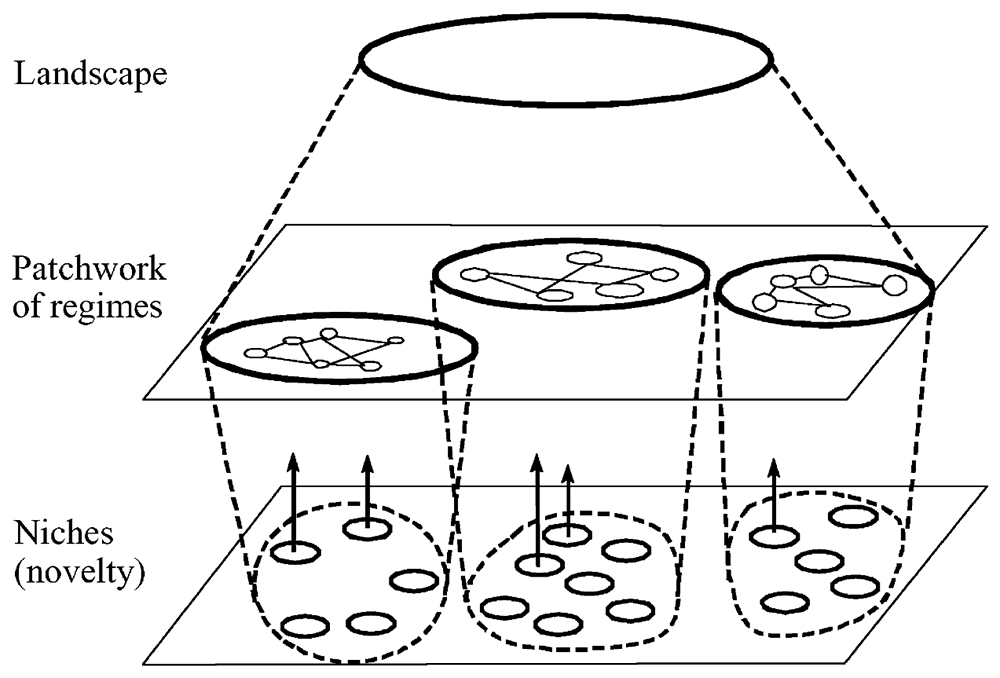
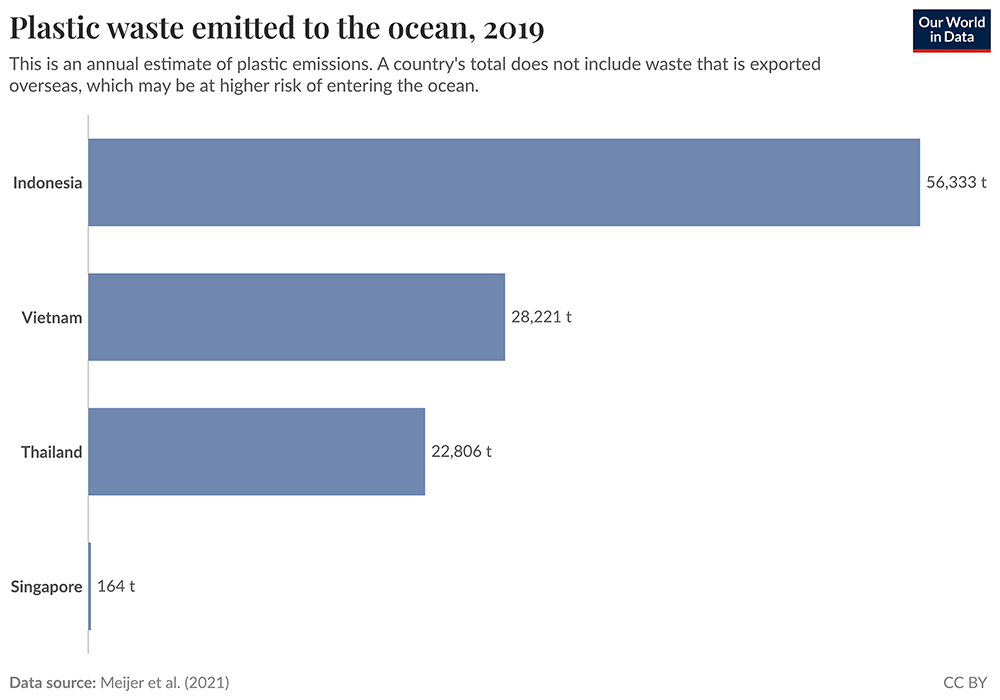
Cross-case analysis

Overall the comparative analysis for all cases summarized in the Table 10 below, provides the combination of business models by each social enterprise and just transition elements that is either intended or unintended was embedded in their business model. As elaborated in the earlier section (literature review), this study utilizes just transition principles adapted from ILO Guidelines for a just transition (ILO, 2015) to identified the elements of decent jobs creation, solving existing inequalities, facilitating social dialogue, and promoting fundamental human and worker’s rights.

Table 10. Case study summaries, business model and just transition elements.

NameBusiness modelElements of just transition
Biomagg A social enterprise providing high protein fish feed from maggot cultivation to be used for fish farmers.

Organic waste management services for households, buildings, and businesses and reducing organic waste that ends up in landfill;
Creates value by providing training, capacity building related to waste management to local and broader community;

Ensuring safety and protection measures for its workers;
Seling.id

Resik
Waste bank model that provides inorganic waste management service to local residents with a bank-like system.

Community-based waste management;
Creating community of knowledge related to proper waste management;
Bridging a social dialogue between environmental activists, community with the local authorities related to waste management issues; The key role of women in the business operations (as a member or workers)
Rapel.idDigital waste management platform that allow user to sell their sorted waste to the nearby collector Provide new productive employment; Open opportunities for all segment of societies; Prevent plastic waste leakage in the oceans
Gammawaste.idUpcycling and recyclingGenerating new green jobs, training for reskilling in a new industry; Opportunity for social justice by creating economic values
obtained by empowering local waste collectors that previously worked in unrecognized ways, and unsupported informal sectors
InowastekProviding appropriate and sustainable products to support responsible waste management (such as waste sorting cart) for a small-scale region.Supporting productive, safer, and decent work for the waste pickers in the circular economy transition

Overall, the main environmental objectives for waste management business is to reduce the amount of waste sent to landfill, recycle and upcycle more valuable material rather than sent to incineration. By reducing waste and shifting the economy from linear to the circular model, waste management facilities are essential to achieve Sustainable Development Goals (SDGs), specifically for responsible consumption and production targets and circular economy in general (Di Foggia & Beccarello, 2021). From these cases, the elements of just transition values are found in the key activities and value proposition for all social enterprises, particularly for community-based waste management and waste banks. The waste banks model possessed strong grassroots understanding through their direct engagement with the low-class communities, strengthening social capital, facilitating social dialogue as well as generating alternative jobs and economic empowerment for local communities that were dominated by women. Most social entrepreneurs in the waste management industry are also actively involved in providing informal training education to the public related to responsible waste management practices, as shown in the case of Resik, and seling.id in waste bank, Biomagg and Inowastek.

In terms of promoting worker’s rights, Biomagg in organic waste management emphasized their key focus ensuring a protection measure and healthy work environment for all workers involved in precarious work such as cleaning, sorting, and collecting activities in the business. The digital platform business model as shown in the Rapel.id case, show the innovative way of harnessing technology to create positive social impact. With the platforms, it creates opportunity for social justice by increasing the economic values obtained by waste pickers that previously worked in unrecognized ways, and unsupported informal sectors (Ezeah et al., 2013; Reddy & Lau, 2020). Overall, all cases in this study provide opportunity to create new (green) employment in their business model, especially for recycling and upcycling industry in the case of Gammawaste, that also offer training and reskilling opportunities for their innovative products creation.

In the viability analysis, some business models relied on fundamental infrastructure such as buildings, trucks, and waste treatment & recycling facilities in order to scale up and improve their operation delivering better waste management. For Inowastek case, the challenge of high cost of production also showed the need for pivoting the business model to targeting broader customer segments in order to sustain the financial aspects. Other observations found that in the digital platform business models have a scale up potential to be implemented in areas with similar problems of high volumes and mismanaged waste management, however it should consider the socio-technical aspect such as the norm, public acceptance, technology literacy and adoption level in that targeted region. Lastly, a diverse business model in this study possess a potential to form collaboration between each enterprise to complement their product and service, becoming an integrated model, for example waste banks that mostly handling inorganic waste can partnered with organic waste services, or developing new platform model that connect nearby waste banks with local residents as well as involving waste pickers in the process. Table 10 below present the summary of business model and just transition elemetns of the case study.

The strength of social enterprises model for waste management

This section provides critical examination of the advantages of social enterprises may possessed as an entity compared to private enterprise, specifically in the waste management industry. The explicit social and environmental mission that social enterprises have might be the obvious features that distinguish them with traditional businesses. Ensuring the sustainable way of doing business activities that consider planetary boundaries and at the same time empowering local communities are the strenghts of social enterprise model to contribute tackling the current challenges in the circular economy transition. With the potential to generate decent and inclusive jobs in the several activities such as segregation, collection, transportation, disposal and recycling of waste (Vesere et al., 2021), social enterprises approach can influence a sustainable and just transition mechanism in the field of waste management.

In this study, the similarity of characteristics found in the several cases regarding delivery process of values to their customers and intended beneficiaries. Most of the key activities in the cases showed the power of collective actions from diverse actors working together, enhancing social capital, building trusts and strengthening existing relations, especially in community-based waste management and waste bank models. This point is also supported by van der Horst (2008) study that found social enterprise in renewable energy creates mutual interdependence with the form of trust and collaboration among energy producers and consumers. In the case of Resik and Seling.id in the waste bank model, their active role building community of knowledge, and bridging social dialogue between multiple actors show their potential role as intermediaries between diverse stakeholders in the ecosystem. Furthermore, this study found most of the social entrepreneurs started the enterprise at a relatively young age, relevant with the British Council & UNESCAP (2018) report that shows the growing interest of social entrepreneurship among youth group in Indonesia that may accelerate the future development of the social innovation ecosystem in the country.

Within the waste management sector in Indonesia, a space for socio-technical innovation remains available to disrupt existing systems in the regime landscape, where previously shown by the adoption of the waste bank model that is currently being prioritized by existing regimes (Ministry of Environment and Forestry, 2020). The role of grassroots innovation through community participation has a strong and powerful influence to improve waste management at the municipal level. In Indonesia's case, the model of the waste bank has similar characteristics with the third sector historically emerged by collective action of citizens who responded to both the inadequate social and community services and inability of the welfare state to ensure employment (Borzaga et al., 2008). In Indonesia, the economic empowerment that social enterprise offers in their approaches, might thrive as it offers social impact creation that is attractive to Indonesian who are known for its generosity. It is specifically shown in the case of Resik that the majority of their members prefer to choose donation scheme options rather than receive money from selling their waste. This benevolent attitude that Indonesian possessed might be influenced by religious belief and local tradition that related to giving, volunteering and helping others.

Discussion

Community-based social enterprises and inclusive governance for integration and formalization

The emergence of a just transition framework applied beyond the energy sector shows the need to design and implement an inclusive model of transition across industries. It combines sustainability and justice perspectives that focus on policies that both reduce excessive consumption and social inequality (Laurent, 2021). This objective requires multiple actors in the implementation, not only proposing various normative solutions such as helping the poor and vulnerable communities (Berthe et al., 2021). It is imperative to recognize the justice issues of those at the ‘bottom of the pyramid’ regarding their concern in social and environmental challenges (Jenkins et al., 2018) as well as accommodate diverse stakeholders’ interests to support and sustain the transition agenda. This section will explore the role of social enterprises can (and already) play, as one of the key players in the context of waste management industries in Indonesia, to support an inclusive and sustainable economy.

From the case one of the enterprises in this study found, that social enterprises whether intended or not, has bridging the dialogue between diverse actors in waste system regimes. As it shown in the community-based and waste banks model where they become intermediaries between local community and government bodies and actively advocating the needs of social needs and concern regarding waste-related issues. Through its community of knowledge, social enterprises and other ‘Third Sector organization’ could act as the intermediary institutional space lying between community, market and government (Avelino et al., 2019). This potential also might be related to challenging the existing power dynamics that can alter or replace the unequal power relations experienced by marginalized groups in existing regimes (Avelino & Wittmayer, 2019). However, in Indonesia context, it needs more time and effort to contest the domination of capital-backed incumbent businesses and regulation in the waste management sector.

Social enterprises that adopted a community-based waste management model –in the case of Resik and Seling.id – have demonstrated their capacity to encourage collective actions that focus on human interactions with their members. This value is rooted within a ‘third sector’ economy organization that emphasized collective entrepreneurship, encouraging grassroots participation, and reciprocity-based activities (Eynaud et al., 2019). This point is supported by the finding that the waste banks model can increase the social capital such as culture of cooperation, trust, and sense of belonging among the given community (Tauran et al., 2015). The social capital formed and enhanced in their activities is a unique advantage that the model possessed, as Ostrom & Ahn (2007) described that actors' ability to solve collective-action challenges can be boosted by social capital. Furthermore, it might contribute to solving one of the underlying problems of waste management in developing countries, specifically in Indonesia where consumer recycling education and engagement was low (Indrosaptono & Syahbana, 2017). The fact that these enterprises are at the core of their activities is to actively educate the public and raise awareness of better waste management in their respective regions.

Finally, the social enterprises in waste management present more opportunities available for all segments in society. including those marginalized communities such as traditional waste pickers. It is estimated that in the plastic and waste recycling sectors, more than 150,000 direct jobs could be created, mostly in the waste collection system (World Economic Forum, 2020). All of the enterprises interviewed in this study have supported new employment creation, whether in capacity building or reskilling as shown in the case of Gammawaste in the upcycling business, or improved income with Rapel.id digital platforms. It is important to highlight an inclusive term from this perspective. In the existing system of formal solid waste management, informal waste pickers often work in an unrecognized and underpaid way (Reddy & Lau, 2020), and in this case, social enterprise could be a model for addressing vulnerabilities by formalizing or integrating informal recycling sector (Aparcana, 2017).

Challenges in bridging just transition in the business models

Using socio-technical framework, this section will explore the challenges that social enterprises faced in delivering just transition elements in the waste system transition in Indonesia. As previously discussed, the socio-technical transition framework is useful to analyze waste system transition through holistically review the incumbent elements, including actors (individual, firms, organizations), institutions (regulations, norms, beliefs), and infrastructure (Markard et al., 2012; van Waes et al., 2018). Therefore, it is important to analyze whether the innovative approaches and business model innovation adopted by social enterprises can survive or succeed in challenging the existing regime in waste management industry in Indonesia.

In the current practice of waste management in Indonesia, one of the complex challenges is that relationships between federal, state, provincial, and local governments are complicated, and there are multiple actors involved (Ministry of Environment and Forestry, 2020). Social enterprises in this case, can operate in the intersection between formal and informal sectors, where the majority of enterprises in this study sits in the informal or private collection, except for waste bank models which are semi-formal (World Economic Forum, 2020). In terms of waste collection, the citizens still depend on the local authorities' service through temporary waste disposal in small districts before being transported either to recycling facilities or ending up in landfill. The effort to manage the waste through government program such as public campaign of 3R (Reduce, Reuse, Recycle), local recycling center (TPS3R), establishment of formal waste banks, seems not impactful enough, given the lower rate of recycling which less than five percent of the total amount of waste generated were recycled (Ministry of Environment and Forestry, 2020).

As one of the key actors that actively contributed to improve waste management problems in Indonesia, the innovative model of social enterprise approaches receives good public responses as shown in the majority of cases in this study where number of users and amount of waste managed increase significantly. Especially for enterprises harnessing technology for delivering their services, the rise of user growth has shown particularly in regions where technology adoption has been established, and mismanaged waste problems also exist. However, the challenge to compete with domination of the current formal sectors (Safitri et al., 2024) might be one of the main barriers for social enterprises to disrupt the existing waste system regime. It is supported by the data from the interview where the majority of entrepreneurs expressed their concerns regarding the inefficient system of centralized and top-down approach, overlapping scope of work and lack of implementation run by local authorities in the region where they operated.

The tension between social enterprise and key market actors may exist as the incumbent business want to prevent the upscale of niche innovation that could disrupt the business as usual approach (Hillman, 2018). At a regime level, when the new niche opportunities begin to develop and drive regime adjustment, the tension and contradiction may occur (Hillman et al., 2018). These might become a barrier for social enterprises' approach to flourish and scale their business model beyond their current region. Indeed, by questioning existing practices and proposing alternative solutions, social enterprises have the capacity to disrupt the incumbent, centralized regime. Furthermore, this tension in the regime creates windows of opportunity for the niche innovation to grow and thrive (Geels et al., 2016). In the context of the waste management system in Indonesia, this study also found that innovative, bottom-up models that social enterprises offer has potential not only to disrupt existing waste regime, but also to influence policies, institutions and market-rules, as shown in the case of the waste banks model and digital waste management platform.

In terms of scalability, the availability and access to funding become the main challenges for social enterprises found in this study, exception for enterprise backed by institutional investor. As shown by a report by the British Council & UNESCAP (2018), sustaining funding sources is one of key challenges faced by social enterprises in Indonesia. It is a common issue for social enterprise who started the enterprise from founder’s capital or families (angel investor), which further become inadequate to expand the business operation. Some of entrepreneurs here relied on their profit from various revenue streams, also iterating and pivoting to adapt with market conditions. Also, the government support such as grant or donor from international organization is useful for early-stage social enterprise to start testing their product or service in the market (in the case of Seling).

Finally, the unique challenge for social enterprise is to achieve a balanced proportion between social and commercial purposes in which those values are inherently contradictory (Hiteva & Sovacool, 2017), in order to sustain their business operation which simultaneously impacts their social and/ or environmental beneficiaries. The challenge of juggling their daily activity, to keep the mission delivered to their beneficiaries while ensuring business activity is progressive and a unique challenge for social entrepreneurs. Besides lack of capital, social enterprises especially in the early-stage also faced difficulties to attract human resources as well as shortage of managerial skills (British Council & UNESCAP, 2018).

Conclusion

Overall, the study contributes to providing a new perspective on the nexus of social enterprise, business model innovation and just transition elements in the circular economy transition. In this section, five conclusions will be presented consecutively. Firstly, all cases of social enterprises, summarized in Table 10 (above), have elements of just transition principles as part of their business models. In the case of Biomagg, the promotion of safety and protection measures for the workers has been shown by enterprises along with providing capacity building related to waste management to local and broader communities. In the case of Resik and Seling.id, we found the bigger portions of just transition elements such as bridging social dialogue, creating a community of knowledge, and women empowerment model that can create collective bargaining power for such communities which uniquely attached to these grassroots, community-based waste management. In the case of Rapel.id, with their digital platforms, the enterprise presents inclusive employment opportunities for all segments of society as their collector partners. In the case of Gammawaste, the company provides training opportunities for up-and re-skilling to their existing and future workers in their waste processing facilities. In addition, similar to the digital model, the company presents the opportunity for social justice by creating economic values obtained by empowering local waste collectors that previously worked in unrecognized ways, and unsupported informal sectors. With Inowastek, we found that their products are supporting productive, safer, and decent work for the waste pickers in the circular economy transition.

Second, the study found the important role of informal waste pickers in reducing municipal waste through collection, sorting and recycling. While some enterprises in this study case showed their contribution to providing solutions to this particular group, another potential ‘just’ solution emerged is to govern them into a collective, participatory group such as a cooperative enterprise (Kasinja & Tilley, 2018) that can increase their bargaining power in the current waste management ecosystem. However, these conditions are localized and contextually dependent on the regions, yet most of the waste pickers in Indonesia are individuals or families that continuously work in informal sector without being recognized by the formal authorities (Harfadli et al., 2024; Reddy & Lau, 2020). Given the complexity of the current waste management practices especially on the upstream side (lack of transparency, complex relationship between actors), these informal waste pickers should be supported by fair remuneration, decent working condition, and have basic social protection schemes, to improve their working performance that eventually contributed to overall waste management in Indonesia.

Third, as a country with an archipelago nature, Indonesia needs a decentralization model of waste management to better tackle its problem of waste. Drawing upon findings from semi-structured interviews, the study found that the current implementation of waste banks reveals that the model not only helps to improve the municipal level of waste service but also generates new job opportunities in the sector. The waste banks model allow citizen to sell their waste and receive a small amount of money, raise public awareness, and at the same time helps waste pickers or scavengers to collect and sell waste more efficiently, as a foundation of a safer and better-paid work (Zahrah et al., 2024). However, given the challenge of development peculiarities in Indonesia that were concentrated in Java, the distribution waste banks should be distributed proportionately across the region as suggested by just transition principles (ILO, 2015). This study found that community-based waste management such as waste banks has the potential both to create a just economic transition (e.g creating new jobs, facilitating social dialogues, empowering low-income populations, women, and marginalized communities) and to contribute to solving environmental problems of waste.

Fourth, various innovative approaches and business models that social enterprises offer in the waste management sector should be supported and incubated in an enabling ecosystem, including supportive infrastructures, incentives, funding and other policy instruments to allow them to break through to the regime level. Given the unique characteristics possessed by the social enterprise model, it shows their potentials to address contemporary ecological challenges of neo-liberal market economies (Hillman et al., 2018), and at the same time deliver just transition principles in their business model that is needed to sustain the current transition agenda to the circular economy. These informal and third sector organizations as shown in this study, are capable to develop strong links to their local communities, provide economic and social opportunities for marginalized groups, and can contribute to reducing social inequality. However, despite the potential, social enterprises have several limitations in terms of the viability of the business model, particularly for its financial sustainability aspects. In addition, the enterprises promote a dual mission that is conflicted in nature: commercial values of profit maximization and social justice objectives, which further result in additional tensions that need to be balanced (Hiteva & Sovacool, 2017).

Fifth, this study possesses some limitations that might need to be considered for further research. The cases in this study represent small-scale enterprise examples that may be uncertain or contextually peculiar in their approaches to business, particularly for Seling.id, Resik and Inowastek. Despite there being a case from the Eastern part of Indonesia, the majority of cases are centred in the Java island which represents a limited view to capture holistic perspectives and heterogeneity of each region in the country. In terms of socio-technical transition, this study focused only on analyzing the existing practices of waste management with their key stakeholders, without further analysing the pre-existing power relations and dynamics among the actors. The study also has not captured and analyzed the ownership structure of each enterprise that might influence their overall business models. Finally, as the study only focuses on the role of social enterprises, future research might be extended to other third sector organizations such as cooperatives, NGOs and associations that also have their important role in their organizational model to deliver just transition agenda within the waste management sectors.

Ethics and consent

Ethics and consent were not required for the first phase of the study (2021–2022). For the additional data in the second phase (2024), the study received ethical approval from the Ethical Committee of the University of Bucharest on 06 June 2024 (decision no 80/06.06.2024). All participants (in this case, waste bank representatives) were provided with detailed study information, asked to give written informed consent and given options to withdraw at any stage without consequence, prior to their participation.

Data availability statement

Underlying data

supporting this study is not publicly available due to confidentiality agreements. Request for the data access can be made by contacting email at aulia.rahman@s.unibuc.ro

Access will be granted subject to institutional approval and signing a data-sharing agreement.

Extended data

Open Science Framework (OSF): Annex - Role of Social Enterprises in Just Transition - Indonesia EPOG-JM https://doi.org/10.17605/OSF.IO/SNV7G (Rahman, 2025).

The project contains the following underlying data:

- Annex 1 – List of interviewees (Summary of list of respondents)

- Annex 2 - Semi-structured interview questions (A summary of the structured questions used for data collection.

Data are available under the terms of the Creative Commons Zero “No rights reserved” data waiver (CC0 1.0 Public domain dedication).

Acknowledgement

The article was written for Author’s master thesis. The author is now a PhD student at the Doctoral School of Administrative Science, University of Bucharest, and part of MSCA-DN PRESILIENT.

References

  •  Alter K: Social enterprise typology. Virtue Ventures LLC. 2007; 133. Reference Source
  •  Amit R, Zott C: Creating value through business model innovation. MIT Sloan Manag Rev. 2012; 53(3): 41–49. Reference Source
  •  Andersson M, Ljunggren Söderman M, Sandén BA: Adoption of systemic and socio-technical perspectives in waste management, WEEE and ELV research. Sustainability. 2019; 11(6): 1677. Publisher Full Text
  •  Aparcana S: Approaches to formalization of the informal waste sector into Municipal Solid Waste Management systems in low- and middle-income countries: review of barriers and success factors. Waste Manag. 2017; 61: 593–607. PubMed Abstract | Publisher Full Text
  •  Atteridge A, Strambo C: Seven principles to realize a just transition to a low-carbon economy. 2020; 20. Reference Source
  •  Avelino F: Theories of power and social change. Power contestations and their implications for research on social change and innovation. J Political Power. 2021; 14(3): 425–448. Publisher Full Text
  •  Avelino F, Wittmayer JM: The transformative potential of plural social enterprise: a multi-actor perspective. 2019; 29. Publisher Full Text
  •  Avelino F, Wittmayer JM, Pel B, et al.: Transformative social innovation and (dis)empowerment. Technol Forecast Soc Change. 2019; 145: 195–206. Publisher Full Text
  •  Bastos Lima MG: Just transition towards a bioeconomy: four dimensions in Brazil, India and Indonesia. For Policy Econ. 2022; 136: 102684. Publisher Full Text
  •  Berthe A, Turquet P, Huynh TPL, et al.: Just transition in Southeast Asia: exploring the links between social protection and environmental policies. 2021.
  •  Bocken NMP, Short SW, Rana P, et al.: A literature and practice review to develop sustainable business model archetypes. J Clean Prod. 2014; 65: 42–56. Publisher Full Text
  •  Borzaga C, Galera G, Nogales R: Social enterprise: a new model for poverty reduction and employment generation: an examination of the concept and practice in Europe and the commonwealth of Independent States. UNDP Regional Centre for Europe and the CIS, 2008. Reference Source
  •  Braun V, Clarke V: Using thematic analysis in psychology. Qual Res Psychol. 2006; 3(2): 77–101. Publisher Full Text
  •  British Council & UNESCAP: Building an inclusive and creative: the state of social enterprise in Indonesia. 2018. Reference Source
  •  Browning S, Beymer-Farris B, Seay JR: Addressing the challenges associated with plastic waste disposal and management in developing countries. Curr Opin Chem Eng. 2021; 32: 100682. Publisher Full Text
  •  Chaerul M, Tanaka M, Shekdar AV: Municipal Solid Waste Management in Indonesia: status and the strategic actions. 2007. Reference Source
  •  Daya S: Saving the other: exploring the social in social enterprise. Geoforum. 2014; 57: 120–128. Publisher Full Text
  •  Di Foggia G, Beccarello M: Designing waste management systems to meet circular economy goals: the Italian case. Sustainable Production and Consumption. 2021; 26: 1074–1083. Publisher Full Text
  •  Eynaud P, Laville JL, dos Santos LL, et al.: Theory of social enterprise and pluralism: social movements, solidarity economy, and the global South. (1st ed.). Routledge, 2019. Publisher Full Text
  •  Ezeah C, Fazakerley JA, Roberts CL: Emerging trends in Informal Sector Recycling in developing and transition countries. Waste Management. 2013; 33(11): 2509–2519. Publisher Full Text
  •  Foxon TJ, Bale CSE, Busch J, et al.: Low carbon infrastructure investment: extending business models for sustainability. Infrastruct Complex. 2015; 2(1): 4. Publisher Full Text
  •  Galgoczi B: Phasing out coal – a just transition approach. SSRN Electronic Journal. 2019. Publisher Full Text
  •  Geels FW: Technological Transitions as evolutionary reconfiguration processes: a multi-level perspective and a case-study. Research Policy. 2002; 31(8–9): 1257–1274. Publisher Full Text
  •  Geels FW: Socio-technical transitions to sustainability: a review of criticisms and elaborations of the Multi-Level Perspective. Curr Opin Environ Sustain. 2019; 39: 187–201. Publisher Full Text
  •  Geels FW, Berkhout F, van Vuuren DP: Bridging analytical approaches for low-carbon transitions. Nat Clim Chang. 2016; 6(6): 576–583. Publisher Full Text
  •  Gong H, Binz C, Hassink R, et al.: Emerging industries: institutions, legitimacy and system-level agency. Reg Stud. 2022; 56(4): 523–535. Publisher Full Text
  •  Harfadli MM, Ulimaz M, Ramadan BS, et al.: Understanding the informal waste sector for sustainable waste management using the pressure-state-response framework: a case study in Balikpapan, Indonesia. J Mater Cycles Waste Manag. 2024; 27(2): 761–776. Publisher Full Text
  •  Hillman J, Axon S, Morrissey J: Social enterprise as a potential niche innovation breakout for low carbon transition. Energy Policy. 2018; 117: 445–456. Publisher Full Text
  •  Hillman JS: The role of social enterprise in the transition to a low-carbon energy system. 2018. Reference Source
  •  Hiteva R, Sovacool B: Harnessing social innovation for energy justice: a business model perspective. Energy Policy. 2017; 107: 631–639. Publisher Full Text
  •  ILO: Guidelines for a just transition towards environmentally sustainable economies and societies for all. International Labour Organization, 2015. Reference Source
  •  Indrosaptono D, Syahbana JA: Informal sector strategy in urban inorganic waste management toward 3 M management (Merubah: Changing, Mengurangi: Reducing, Manfaat: Benefit) in Semarang city. J Archit Urban. 2017; 41(4): 278–287. Publisher Full Text
  •  Jambeck JR, Geyer R, Wilcox C, et al.: Plastic waste inputs from land into the ocean. Science. 2015; 347(6223): 768–771. PubMed Abstract | Publisher Full Text
  •  Jenkins K, Sovacool BK, McCauley D: Humanizing sociotechnical transitions through energy justice: an ethical framework for global transformative change. Energy Policy. 2018; 117: 66–74. Publisher Full Text
  •  Joyce A, Paquin RL: The Triple Layered Business Model Canvas: a tool to design more sustainable business models. J Clean Prod. 2016; 135: 1474–1486. Publisher Full Text
  •  Kasinja C, Tilley E: Formalization of Informal Waste Pickers’ cooperatives in Blantyre, Malawi: a feasibility assessment. Sustainability. 2018; 10(4): 1149. Publisher Full Text
  •  Korsunova A, Halme M, Kourula A, et al.: Necessity-driven circular economy in low-income contexts: how informal sector practices retain value for circularity. Global Environmental Change. 2022; 76: 102573. Publisher Full Text
  •  Kurniawan TA, Dzarfan Othman MH, Hwang GH, et al.: Unlocking digital technologies for waste recycling in industry 4.0 era: a transformation towards a digitalization-based circular economy in Indonesia. J Clean Prod. 2022; 357: 131911. Publisher Full Text
  •  Laurent E: From welfare to farewell: the European social-ecological State beyond economic growth. SSRN Scholarly Paper No. 3873766. Social Science Research Network, 2021. Publisher Full Text
  •  Lechevalier S, (Ed.).: Innovation beyond technology: science for society and interdisciplinary approaches. Springer Singapore, 2019. Publisher Full Text
  •  Lijphart A: Comparative politics and the comparative method. Am Polit Sci Rev. 1971; 65(3): 682–693. Publisher Full Text
  •  Markard J, Raven R, Truffer B: Sustainability transitions: an emerging field of research and its prospects. Research Policy. 2012; 41(6): 955–967. Publisher Full Text
  •  McCauley D, Heffron R: Just transition: integrating climate, energy and environmental justice. Energy Policy. 2018; 119: 1–7. Publisher Full Text
  •  Meijer LJJ, van Emmerik T, van der Ent R, et al.: More than 1000 rivers account for 80% of global riverine plastic emissions into the ocean. Sci Adv. 2021; 7(18): eaaz5803. PubMed Abstract | Publisher Full Text | Free Full Text
  •  Mikkonen I, Gynther L, Matschoss K, et al.: Social innovations for the energy transition: an overview of concepts and projects contributing to behavioural changes, and increased well being. Publications Office of the European Union, 2020. Publisher Full Text
  •  Ministry of Environment and Forestry: National plastic waste reduction strategic actions for Indonesia. Ministry of Environment and Forestry, 2020. Reference Source
  •  Mujahiddin M, Tanjung Y, Augus E: Analysis of the effect of waste bank program on empowerment of poor women in Kelurahan Sicanang Belawan Medan. Budapest International Research and Critics Institute (BIRCI-Journal): Humanities and Social Sciences. 2018; 1(3): 105–113. Publisher Full Text
  •  Napitupulu L, Hamzah H, Haniy SU: 3 key interventions to support the ban on single-use plastic. 2021. Reference Source
  •  Newell P, Simms A: How did we do that? Histories and political economies of rapid and just transitions. New Polit Econ. 2021; 26(6): 907–922. Publisher Full Text
  •  Osterwalder A, Pigneur Y: Business model generation: a handbook for visionaries, game changers, and challengers. 2010. Reference Source
  •  Ostrom E, Ahn TK: The meaning of social capital and its link to collective action. SSRN Scholarly Paper No. 1936058. Social Science Research Network, 2007. Reference Source
  •  Ponelis SR: Using interpretive qualitative case studies for exploratory research in doctoral studies: a case of information systems research in small and medium enterprises. Int J Dr Stud. 2015; 10: 535–550. Publisher Full Text
  •  Rahman A: Annex—Role of Social Enterprises in Just Transition—Indonesia EPOG-JM. 2025. http://www.doi.org/10.17605/OSF.IO/SNV7G
  •  Raise M, Haerpfer C, Nowotny T, et al.: Social capital in transition: a first look at the evidence. Czech Sociol Rev. 2002; 38(6): 693–720. Publisher Full Text
  •  Reddy S, Lau W: Breaking the plastic wave: top findings for preventing plastic pollution. July, 2020. Reference Source
  •  Robins N, Gouldson A, Irwin W, et al.: Financing inclusive climate action in the UK An investor roadmap for the just transition. 2019. Reference Source
  •  Safitri Y, Ariyaningsih, Shaw R: Stakeholders’ Involvement in Household Solid Waste Management (HSWM) during COVID-19 Case of Pontianak City, Indonesia. International Review For Spatial Planning And Sustainable Development. 2024; 12(3): 238–257. Publisher Full Text
  •  Sareen S, Haarstad H: Bridging socio-technical and justice aspects of sustainable energy transitions. Applied Energy. 2018; 228: 624–632. Publisher Full Text
  •  Schröder P: Promoting a just transition to an inclusive circular economy. 2020; 33. Reference Source
  •  Sembiring E, Nitivattananon V: Sustainable Solid Waste Management toward an inclusive society: integration of the informal sector. Resour Conserv Recycl. 2010; 54(11): 802–809. Publisher Full Text
  •  Senathirajah K, Palanisami T: How much microplastics are we ingesting?: estimation of the mass of microplastics ingested. The University of Newcastle, Australia; garw461, June 11, 2019. Reference Source
  •  Sparviero S: The case for a socially oriented business model canvas: the Social Enterprise Model Canvas. Journal of Social Entrepreneurship. 2019; 10(2): 232–251. Publisher Full Text
  •  Tauran T, Maâ€TMruf MF, Suyatno S: Social entrepreneurship in waste management: Surabayaâ€TMs experience. Journal of Governance and Development (JGD). 2015; 11: 53–66. Reference Source
  •  Tong YD, Huynh TDX, Khong TD: Understanding the role of informal sector for sustainable development of Municipal solid waste management system: a case study in Vietnam. Waste Manag. 2021; 124: 118–127. PubMed Abstract | Publisher Full Text
  •  UNCTAD (Ed.): Harnessing frontier technologies for sustainable development. United Nations, 2018. Reference Source
  •  van der Horst D: Social enterprise and renewable energy: emerging initiatives and communities of practice. Social Enterprise Journal. 2008; 4(3): 171–185. Publisher Full Text
  •  van Waes A, Farla J, Frenken K, et al.: Business model innovation and socio-technical transitions. A new prospective framework with an application to bike sharing. J Clean Prod. 2018; 195: 1300–1312. Publisher Full Text
  •  Vesere R, Kalnins SN, Blumberga D: Role of green jobs in the reduction of waste and waste management. Environmental and Climate Technologies. 2021; 25(1): 1128–1141. Publisher Full Text
  •  Wang X, Lo K: Just transition: a conceptual review. Energy Res Soc Sci. 2021; 82: 102291. Publisher Full Text
  •  World Economic Forum: Radically reducing plastic pollution in Indonesia: a multistakeholder action plan national plastic action partnership. 2020. Reference Source
  •  Yang J: Waste accumulation in Jakarta’s slums: neoliberal flows of waste distribution. Geoforum. 2024; 150: 103994. Publisher Full Text
  •  Zahrah Y, Yu J, Liu X: How Indonesia’s cities are grappling with plastic waste: an integrated approach towards sustainable Plastic Waste Management. Sustainability. 2024; 16(10): 3921. Publisher Full Text