Introduction
The scientific community must adapt to an environment in which research budgets are shrinking in many parts of the world, even though scientific advances are urgently needed to tackle global challenges such as climate change, biodiversity loss, and pandemics1,2. It is equally important today that scientific findings can be trusted and are not easily called into question. Sharing and publishing reusable research outputs is a crucial strategy to mitigate these challenges and foster new collaborative developments3. A key concept is computational reproducibility, which ensures that other researchers can validate and verify the results reported in a scientific article using the same data and code4,5. Consequently, reproducibility is a fundamental quality criterion in science, and one might assume it is widely practiced to strengthen the credibility and transparency of research. However, several studies have shown that many research articles across disciplines are in fact not reproducible6–8 - a phenomenon often referred to as the "reproducibility crisis"9. There are various reasons for this, but a major obstacle is that publishing reproducible research results is time-consuming and some might argue it is not worth the investment10. Nevertheless, reproducible research should be valued not only for its intrinsic scientific merit, including verification and validation, but also for its wider benefits. One of these advantages is that readers do not have to blindly trust the results in an article, but can check them themselves on the basis of the accompanying data and analysis. A key expectation is that reproducible research results are inherently more reusable by other researchers, reducing redundant efforts and accelerating the creation of new knowledge11–13. Nevertheless, someone trying to reuse someone else's code has to invest a lot of time to understand the code and incorporate parts of it into their own analysis.
In response, funding agencies, peer reviewers, and academic journals are increasingly emphasizing the need for researchers to publish all materials required for reproducibility14–16. While this emphasis represents a step forward, it also entails changes in researchers’ daily workflows, and this transition is still ongoing. Numerous tools, guidelines, and best practices have been developed to support this trend, including the FAIR (Findability, Accessibility, Interoperability, and Reusability) principles for data17 and software18 and the "Ten Simple Rules for Computational Reproducible Research”19. Gentleman and Lang20 introduced the concept of a compendium as a package including a dynamic document (i.e., the paper) and the code and data needed to produce the computational results in that document. ReproZip21 is an example implementation of the compendium concept and packages the computational environment with the source code and data so that users can start a virtual machine to re-run the analysis. The commercial publisher CodeOcean creates such virtual environments as supplements for research articles22. In addition, eLife is a scientific publisher that offers interactive papers based on a reproducible analysis23.
Encapsulating all materials in a compendium might limit the findability of the individual components contained therein, unless the metadata of the individual elements can be found externally. Moreover, researchers may want or need to publish individual research assets in dedicated repositories. As an alternative to a compendium, a so-called Research Object can be created, which aggregates digital assets that are part of an analysis and are published in different repositories or archives24,25. Together with the Research Object, a particularly influential concept in the context of this paper is the Knowledge Package developed by the Group on Earth Observation (GEO), a “reusable application-sharing unit” that integrates geospatial datasets, code, tools, and the computational environment26.
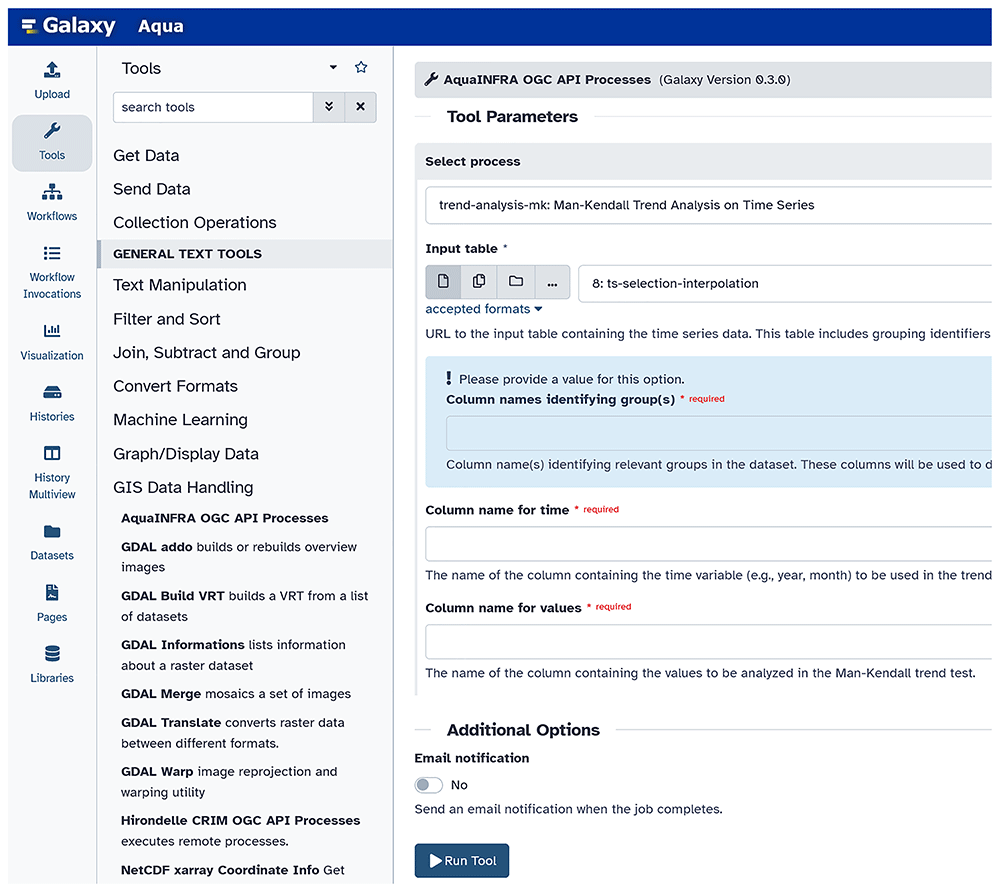
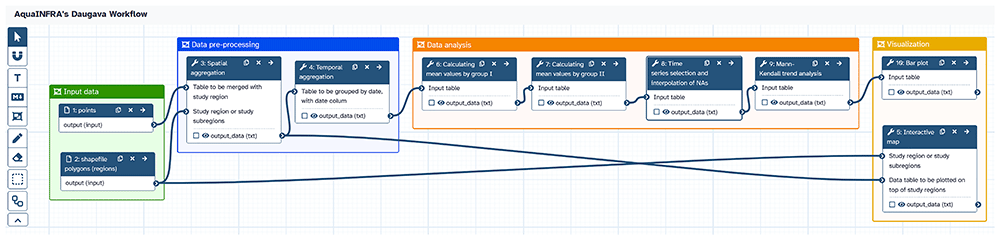
However, reusing research code requires a deep understanding of the underlying logic of the analysis pipeline, e.g., how the functions work, the meaning of input parameters, and how to adapt them to other contexts. Understanding complex source code requires knowledge of the programming language and can be a challenge even for experienced programmers27. Consequently, researchers often tend to reinvent the wheel and develop analyses from scratch, or rely on proprietary, point-and-click software with a graphical user interface (GUI) that lacks reproducibility28. This challenge is further complicated by the diverse needs and skills of different stakeholders, including reviewers, researchers, and science journalists. Workflow management systems can help with this problem by providing an entry point into the analysis pipeline. Examples include Nextflow29, a command line-based tool that allows users to script workflows, and Snakemake30, which defines workflow steps as rules. The Galaxy platform31 also addresses users without programming expertise by offering an intuitive user interface for the development and execution of readily-sharable workflows.
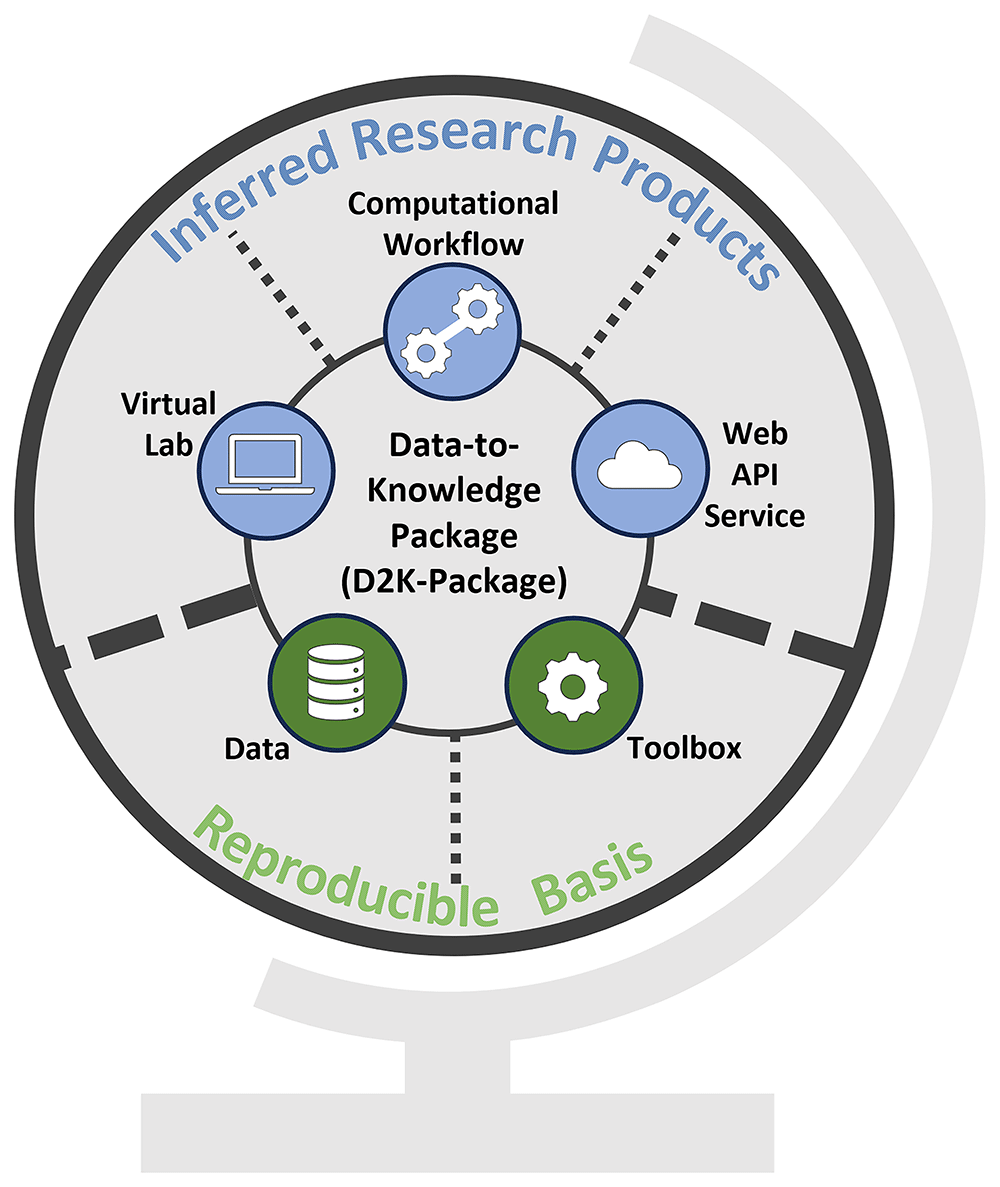
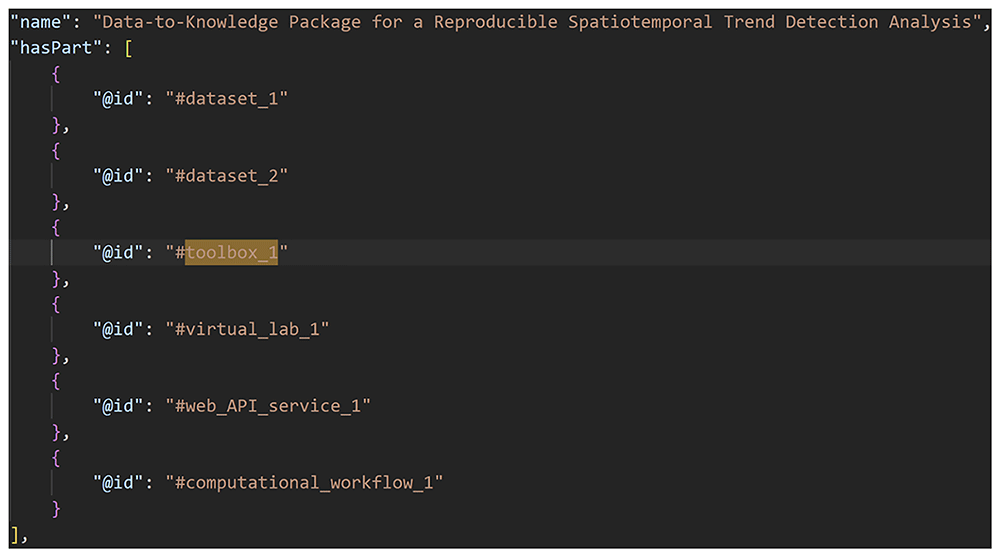
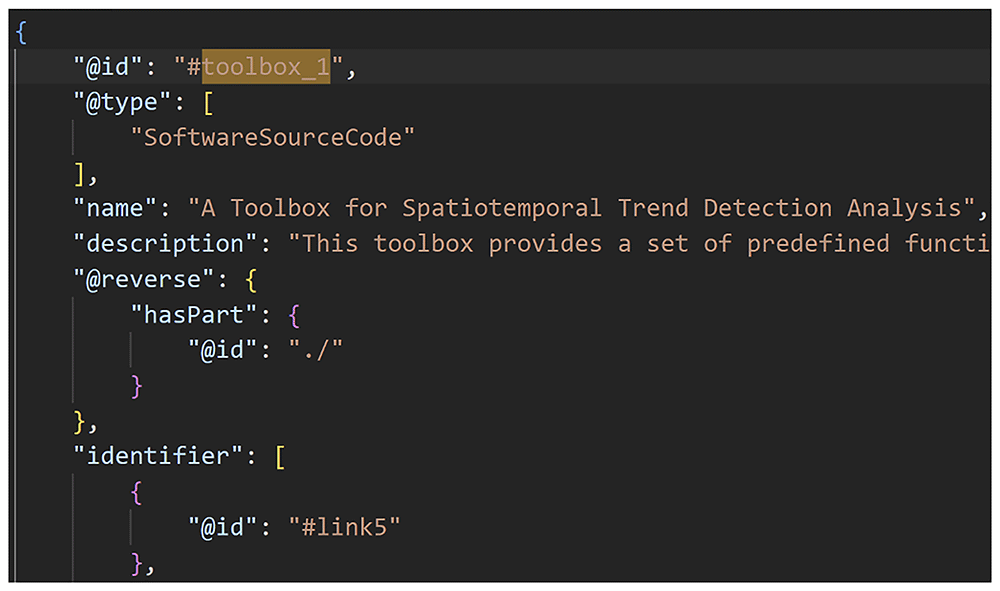
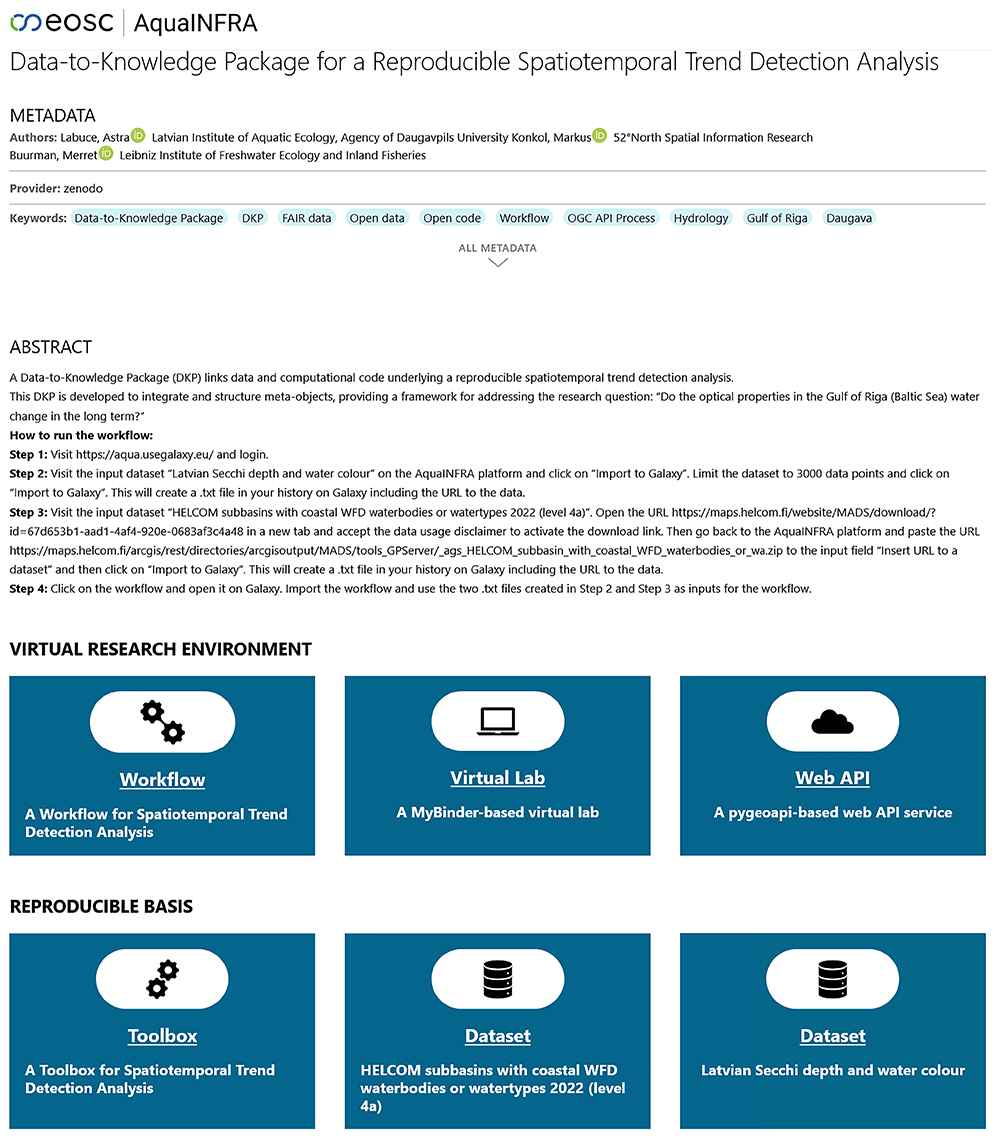
In this paper, we introduce the Data-to-Knowledge Package (D2K-Package), a collection of links to digital research assets - such as data, code, virtual labs, web API services and workflows - that unlock the potential of open reproducible research and open FAIR data. Conceptually, the D2K-Package is built on top of the Research Object and GEO’s Knowledge Package but focuses on creating a reproducible basis out of the code and data so that the other research assets (i.e., virtual labs, web API services, and workflows) can be inferred from it. A special feature of the code component is its structuring into self-contained and reusable functions that fulfil a specific task (e.g. data transformation) instead of enabling access to the analysis script as a whole. The primary aim of the D2K-Package is to enhance the reusability of computational research outputs by enabling audiences with varying skill levels to follow the process from data analysis to knowledge generation.
In the following sections, we first outline the concept of the D2K-Package and show how researchers can develop a D2K-Package based on their reproducible analysis. Afterwards, we showcase its applicability using a hydrological use case, which we provide as a demonstrator so that the D2K-Package concept can be tested and explored. The paper concludes with a discussion on the integration of the D2K-Package into the research cycle, its benefits and limitations.