Introduction

Anthropogenic activities have profoundly impacted human, animal, and environmental health, presenting a significant scientific challenge of growing complexity and urgency. The rapid acceleration of industrialization and the widespread use of artificial materials have been major contributors to environmental degradation, leading to cascading effects on public health and ecosystem stability. In 2022, the European Union alone generated 2,233 million tonnes of waste —equivalent to 4,991 kg pro capite— originating from economic activities and households (Eurostat Statistics). These numbers illustrate the magnitude of human impact on the environment during the so-called "Anthropocene era". Such impact is a significant driver of pollution, exacerbating interconnected health issues and weakening ecosystem resilience1. The urgency of addressing these systemic challenges is underscored by data from the World Health Organization (WHO), which estimates that 24% of global deaths are linked to preventable environmental risks (WHO - World health organization).

A critical concern is the pervasive and increasing presence of micro- and nano-scale artificial materials, particularly Micro and Nanoplastics (MNPs). Ten years ago MNPs were included in the UNEP Year Book, a publication that highlights emerging environmental issues, significant events, and developments (UNEP year book). To date, MNPs have been extensively studied as a significant category of pollutants due to their ubiquitous presence across various systems, including the airborne environment2,3 marine environments4,5, terrestrial habitats6,7 and agricultural soil8,9. Due to their small size, these materials are intrinsically prone to uptake in both environmental and biological systems, and thus can easily infiltrate and disrupt ecosystems10. Beside their pervasive and increasing presence, MNPs have a significant potential of impact on health as they can harbor a variety of endogenous chemical additives11,12. Plastic additives are a diverse group of chemical compounds added to plastic products to give them their unique physical-chemical properties. They are not chemically bound within the polymers and can be persistent and biologically active. As plastics in the environment break down to smaller particles, the additives contained therein might be released as fragmentation proceeds from the meso to micro and nano scale. The ecotoxicological effects of plastic additives represent another growing concern, as well as a significant knowledge gap13,14.

From a biological perspective, MNPs pose a significant risk to human health, with several pathways for their entry into the body through ingestion, inhalation, or skin absorption. The micro- and nano-scale of these particles enable them to cross biological barriers, potentially bypassing the body's natural defenses and leading to systemic exposure15. As an example, the gastrointestinal tract has been identified as a pathway for the absorption of MNPs16 and, as reported in the review of 17, a potential vector for intestinal inflammation and inflammatory bowel disease. The increasing interest in MNPs and their potential impact on various health conditions has also extended to neurological aspects, with numerous studies investigating their role in neurotoxicity18. Recently Campen et al., 202519 highlighted an alarming increase in MNPs concentrations in both the brain and liver, with levels in the brain being 7–30 times higher than in the liver or kidneys, particularly in dementia cases. MNPs have been implicated in cardiovascular events20 and the development of antibiotic-resistant bacteria21, underscoring the growing concern about their potential impact on human health. Exposure assessments across various food sources indicate significant intake levels of MNPs. For example, the daily exposure level to micro-plastics from fruits and vegetables reaches a number of 105–106 particles/kg body weight22. From these figures, assuming an adult weighing 70 kg and a particle mass of 10–8 g, the annual intake of microplastics would be approximately 118 g. A comparable amount can be ingested by drinking mineral water from plastic bottles. To alleviate plastic pollution, biodegradable plastics (bioplastics) were introduced as an environmentally friendly alternative to conventional plastics. Bioplastics are used to manufacture food packaging, disposable tableware, and biomedical delivery containers, and their manufacturing has kept growing over the years. Nonetheless, some recent studies investigating the possible impact of bioplastics on humans and animal models show that they might trigger inflammation23 and other adverse effects24. The microplastics generated through their deterioration processes and their toxicological effects when ingested warrant further in-depth study25.

Despite the current increase of interest in micro- and nano-scale material particles, considerable knowledge gaps remain in our understanding of their environmental and human health implications. This is also due to the lack of universally accepted definitions and frameworks for standards, quality assurance, accreditation, and metrology that collectively introduce further uncertainty into this complex field26. Addressing this requires a One Health approach, recognizing the interconnectedness of human, animal, and ecosystem health (One Health Overview). Organizations like the World Health Organization (WHO), the Food and Agriculture Organization (FAO), and the World Organization for Animal Health (OIE) endorse and promote this unified perspective to align pollution mitigation with sustainability27. However, interdisciplinary barriers, particularly in communication between legal, economic, and scientific sectors, hinder its implementation. The harmonization of methodologies, protocols, and approaches across disciplines would enable a shift from generating isolated knowledge to producing systematic and applicable insights that address the complexities of pollution at micro- and nano-scale28.

The present contribution, developed within the EC Coordination Action FHERITALE (https://fheritale.eu/), employs bibliometric analysis to prove a landscape of current research on micro- and nano-scale material particles within the One Health framework. In this context, the Environment, Food and research areas are related to the domains of ESFRI, the European Strategy Forum on Research Infrastructure (http://www.esfri.eu). By integrating the Environment, Food and Health domains, the adopted methodology for collecting and analyzing research studies provides insights into research clusters, trends, and conceptual connections13,29. This work also aims to define a set of recurring One Health sub-thematics and an inventory of currently employed technologies, which is crucial for identifying key technological gaps and service-related needs.

Methods

Topics selection: the definition of the thematic priorities

To narrow the focus within the broader context of addressing the effects of micro- and nano-scale material particles on human, animal, and ecosystem health, in the initial step of this work we selected a subset of critical and impactful artificial materials. This was done drawing on the expertise of the FHERITALE partners and included in a document shared within the project consortium (Milestone 4: Summary of Thematic Priorities), namely MNPs, Bioplastics, Metals/Metal oxides, and Plastic Additives. Table 1 provides a glossary of the terms used in this article.

Table 1. Glossary of terms.

Articles database = Articles DB
MNPs = Micro and Nanoplastics
WoS = Web of ScienceTM
Artificial Materials = term used to refer to the broader category of materials generated by human activity that are classified as pollutants and impactful
Selected Topics/Thematic Priorities = MNPs, bioplastics, Metals/Metal oxides, and Plastic Additives
Research domains = Environment, Food, Health
Free terms/Keywords = Keywords used in the Manual Searches
Key terms = list of terms and synonyms targeted during the initial review-based approach systematically integrated into each query
Keywords Combination = Queries generated by combining terms related to the selected topics, research domains, and key terms
Full-text assessment = A component of the bibliometric analysis in which each article was thoroughly reviewed to ensure its relevance to our work and its suitability for inclusion in the article database. Each article was assigned a label corresponding to the number of the article, authors, research domain, sub-thematics, technologies employed, dimension (scale) of the particles analyzed, types of selected topics studied.
Sub-thematics = terms to indicate the more detailed view of the research areas covered by the Articles DB, corresponding to most frequently investigated topics

Bibliometric investigation: manual searches and Web of Science™ search

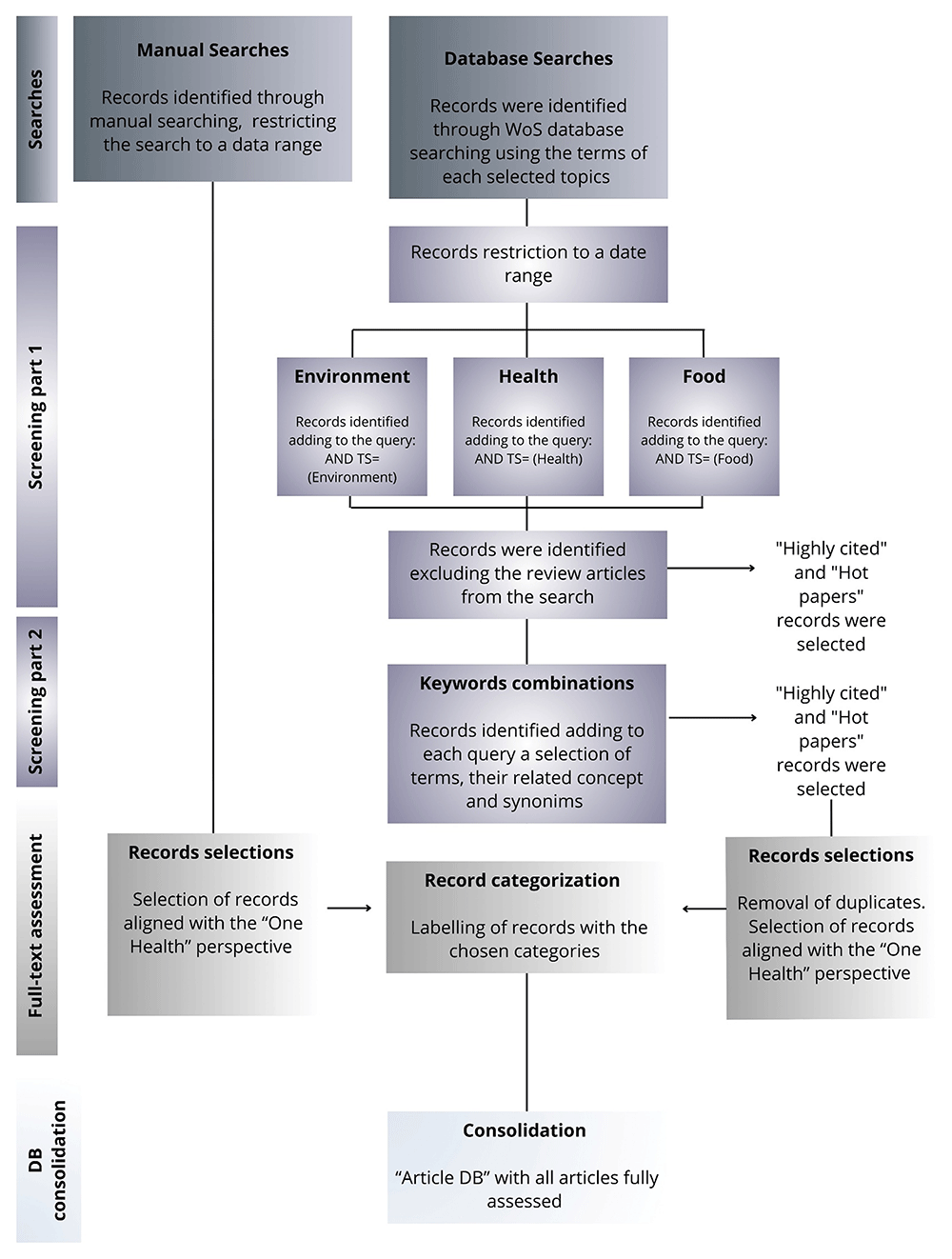
Bibliometry is a multidisciplinary field that applies statistical approaches to the examination of scientific outputs by employing various bibliometric indicators such as articles counts, citation metrics, authors and key topics30. Drawing upon the methodology employed in other recent bibliometric analyses31–33 and following the guidelines of the PRISMA, Preferred Reporting Items for Systematic Reviews and Meta-Analyses;34, this research was conducted using two approaches: manual searches and a systematic search through the Web of Science™ Core Collection (hereinafter referred to as WoS) database (Clarivate™ Analytics, 2023a). Manual search was initially driven by a set of free terms/keywords (available in the supplementary material); then, publications were selected when all the following inclusion criteria were satisfied: a) the research topic is related to the impact of MNPs, Bioplastics, Metals/Metal Oxides, or Plastic Additives (based on the terminology used in the papers); b) recent publication date. Those papers regarding material science/synthesis of new materials and those regarding particles larger than the micro scale were excluded. In parallel, the systematic search was conducted in the WoS database by combining a set of relevant keywords, selecting only the articles classified as "hot papers" and “highly cited papers” (see Clarivate™ Analytics definitions: 2023b and 2023c). After the removal of duplicate records, the remaining articles were filtered based on the same criteria applied in the manual search. In this process, we also identified the specific sub-thematics and technologies associated with the selected articles. In order to avoid redundancy of entries, reviews were excluded from both manual and WoS searches. The overall process of selecting the articles for analysis and appropriate categorization is referred to as full text assessment.

The flowchart in Figure 1 illustrates the steps undertaken in the bibliographic search. It is divided into four parts. The first part, "Searches", highlights the differences between manual searches and those conducted on the Web of Science. The second part, "Screening", is further divided into two phases: Screening Part 1 and Screening Part 2. The Screening Part 1 step includes the initial selection based on the last publication year and three domains: Environment, Health, and Food; the Screening Part 2 relates to the use of keyword combinations. The scheme of activities was repeated for each selected topic.

a78bef5e-c91f-4cf0-8261-1f1679c87d82_figure1.gif

Figure 1. Flowchart of the bibliometric investigation conducted for each topic.

As an example, the search string for MNPs in Screening Part 1 is (((TS=(nanoplas*) OR TS=(microplas*)) AND TS=(Environment)) AND DOP=(2020-01-01/2024-12-31)). For details on the queries used, refer to the supplementary information.

Keywords combination

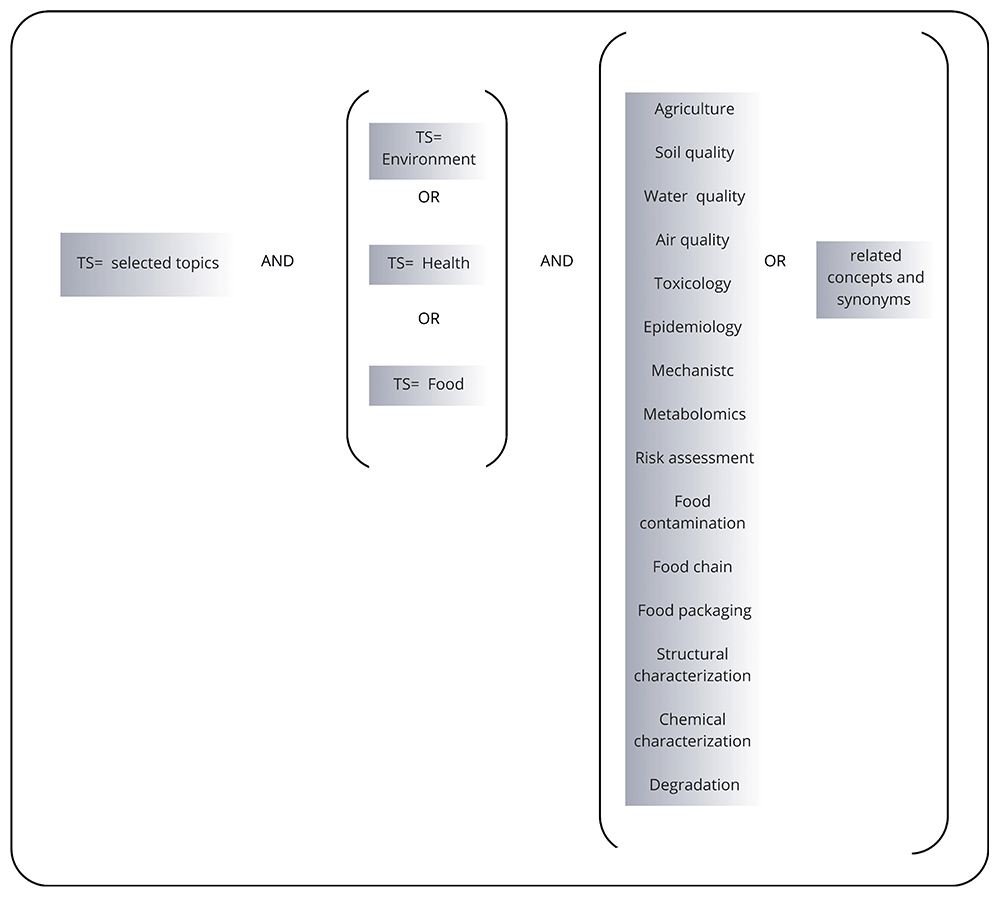
In the "Keywords Combination" step, key terms were included in the search string in order to increase the likelihood of identifying relevant records aligned with the thematic areas of interest. Key terms are a list of terms and synonyms targeted during the initial review-based approach (Manual searches), informed by existing opinion papers and reports that highlight critical priority areas for research on artificial materials within the scientific community (e.g., SAPEA reports). These terms were systematically integrated into each query, with each key term flanked by synonyms and related concepts (Figure 2). Boolean operators and truncated words were used to improve the search process.

a78bef5e-c91f-4cf0-8261-1f1679c87d82_figure2.gif

Figure 2. Representation of the Keywords combination approach.

As an example, the search string for Agriculture, including its synonyms, is TS=(“Agricult*”) OR TS=(“Agronomy”) OR TS=(“Farm*”) OR TS=(“Horticult*”) OR TS=(“Crop Product*”) OR TS=(“Cultivat*”) OR TS=(“Agroeco*”) OR TS=(“Land Use”) OR TS=(“Crop Science”) OR TS=(“Farming System*”). For details on the queries used, refer to the supplementary information.

Time frame selection

For the analysis, given the extensive body of research, with a total of 121.908 articles over the last twenty-four years, we focused on the most recent five years (2020–2024) to provide an overview of the current state of research. As a time reference we adopted the 'final publication year' which in WoS refers to the most recent year in which articles are indexed and made available in the database.

The resulting Articles DB comprises 813 publications and is available in the supplementary material section.

Articles DB organization and categorization

The articles were included in the final database only after a full-text assessment (Figure 1). This process enabled systematic organization and classification of each entry. Due to the selection criteria, all articles possessed a transversal nature across the three research domains—Environment, Food, and Health. Consequently, each article was labeled with its most representative domain. A "Methods" category was also introduced to identify articles solely focused on methodologies, either related to chemical or structural characterization. To provide a more granular understanding of the research areas within the Articles DB, we assigned specific "sub-thematics" to each article. Furthermore, we categorized the articles based on the particle size as defined by the authors; the articles where the particle sizes were not specified or included both the micro- and nano-scales were marked with (*). We also added labels for the applied techniques, grouped in the following categories: X-Ray techniques, Magnetic Resonance techniques, Omics techniques, Optical Spectroscopy, Light Scattering, Microscopy techniques, Mass Spectrometry techniques, biological studies, and Data and Bioinformatics methodologies. In the Biological studies category, we included all techniques related to the biological and biochemical responses of living organisms and their interactions with artificial materials, both in vivo and in vitro. The proposed structure aims to provide a rational organization of the collected articles and facilitate efficient data retrieval and analysis across the defined categories. During data analysis, each entry is counted individually, with each occurrence recorded only once.

Complementary analysis and bibliometric mapping

In parallel with the building of the Articles DB, we also performed a statistical analysis on the whole WoS database, which included a significantly larger number of articles. We also analyzed the citation topics, an additional tool available within WoS (Clarivate™ Analytics, 2020). The "Author Keywords" obtained from WoS (i.e., the terms provided by the authors during article submission to highlight the paper’s main research focus and core concepts) were examined through VOSviewer35.

Results and discussion

Time-frame analysis on publications from WoS

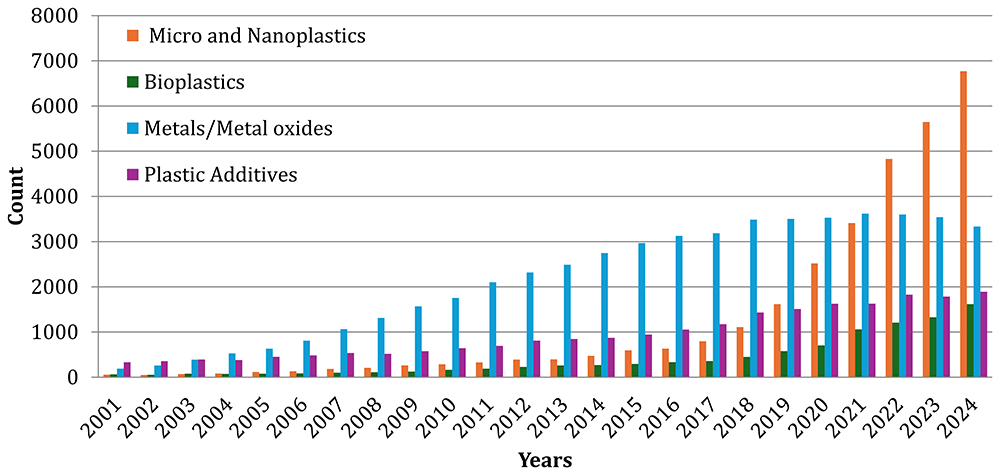
Figure 3 shows the number of publications over the past twenty-four years (2021-2024), revealing a significant increase in research activity on the selected topics over the last five years. This is particularly evident for MNPs, as well as for Bioplastics, underscoring the recent and rapidly growing interest in these topics. We thus decided to focus our subsequent work on the last five years of publications, to be able to detect the latest trends while maintaining a sufficiently large basis for statistics.

a78bef5e-c91f-4cf0-8261-1f1679c87d82_figure3.gif

Figure 3. Chronological overview of studies on selected topics.

Bar plot representing the distribution of 121,908 articles obtained from the Web of Science through queries related to the selected topics.

Analysis of the Articles DB

The analysis of the distribution of authors' affiliations across countries, based on the WoS data, reveals that Europe holds the largest share, with 353 publications (45% of the total), followed by China with 321 publications (41%), and the United States with 81 publications (10%). Within Europe, the leading countries are Italy and Germany, with 74 and 67 publications, respectively, corresponding to 9% and 8% of the total. These findings align with the results of similar studies36,37.

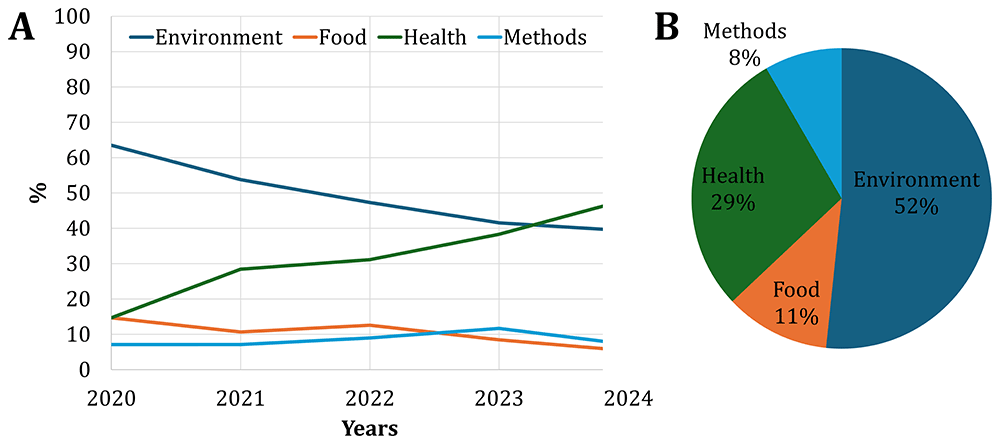
The data collected in the Articles DB have been grouped across four macrodomains including the 3 research domains — Environment, Food, Health — and the Methods category. The Environment category relates to the largest share of articles, although a reduction in percentage is observed in the last two years (Figure 4). In contrast, the percentage of articles classified under the Health macrodomain shows an increase throughout the five-year period, reflecting the growing interest in the impact on Health of artificial materials at the micro- and nano-scale. Food and Methods appears to be relatively steady over the examined period with a possible exception of 2024. A potential bias might be the result of the article selection process, which was partly based on citations38. This approach favours the selection of older articles, which may have accumulated more citations than more recent publications. Furthermore, the citation index differs across areas of research39, which might favour articles focusing on Health with respect to publications addressing the Environment and Food domains.
a78bef5e-c91f-4cf0-8261-1f1679c87d82_figure4.gif

Figure 4. Macrodomains trends: chronological and percentage distribution.

(A) Trends derived from 813 entries in the article database for the Environment, Health, Food and Methods categories (2020-2024) and (B) their percentage distribution over the data range selected.

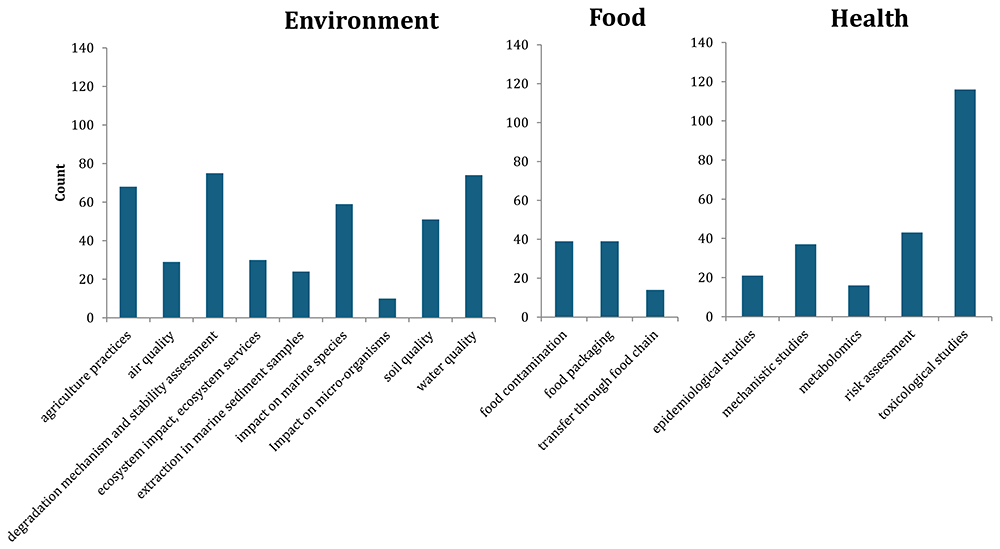
During the full-assessment phase, guided by the key terms selected for the keyword combinations, we categorized each article based on a series of macrodomain-related sub-thematics, which were identified as its primary focus (Table 2, Figure 5). This approach allowed for the identification of current key areas of interest in research on these subjects. The Environment domain includes a greater number of sub-thematics than the Food and Health domains, possibly also due to the larger number of publications related to Environment in the Articles DB (Figure 4B). Several of these topics are relevant to policy, regulation, and public awareness. Toxicological studies and Degradation mechanism and stability assessment are among the most frequent sub-thematics. This can be attributed to the One Health perspective implemented in our workflow, specifically at the full-assessment stage, which emphasizes studies with an interdisciplinary nature. On the other hand, it may reflect an actual gap in research on the underrepresented sub-thematics, such as the "impact on microorganisms".

Table 2. Sub-thematics.

ENVIRONMENTHEALTHFOOD
extraction in marine sediment samplestoxicological studiesfood contamination
Impact on micro-organismsepidemiological studiestransfer through food chain
agriculture practicesmechanistic studiesfood packaging
soil qualitymetabolomics
water qualityrisk assessment
air quality
ecosystem impact, ecosystem services
impact on marine species
degradation mechanism and stability assessment
a78bef5e-c91f-4cf0-8261-1f1679c87d82_figure5.gif

Figure 5. Occurrence of sub-thematics within their respective macrodomain.

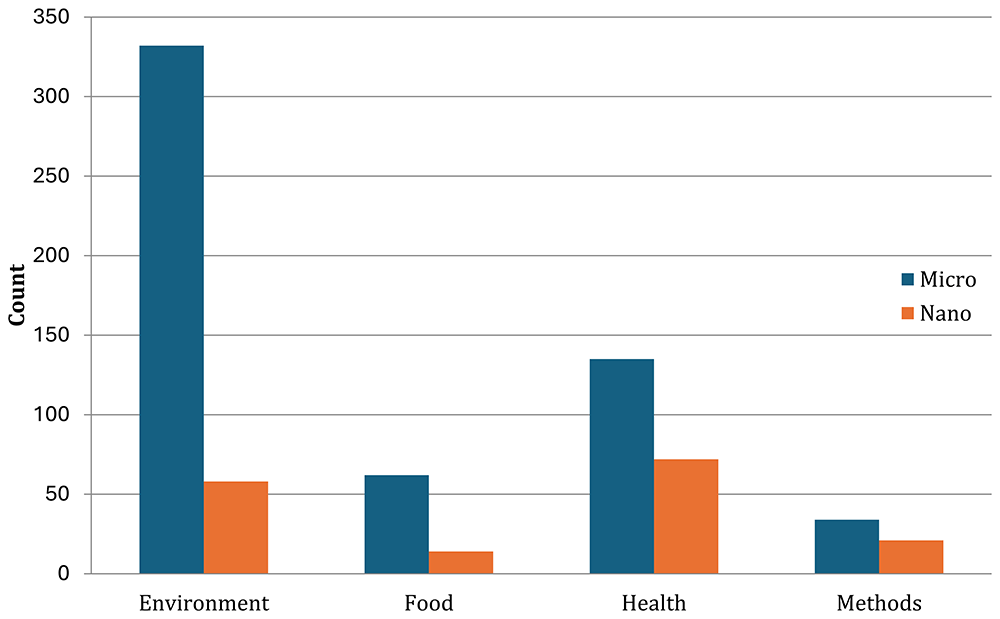
For the “Methods” category, no sub-thematics were defined, as it was introduced to identify articles focused on new methodologies and/or analytical approaches. Notably, several of the articles categorized within this latter macrodomain indicate the critical importance of standardization, as consistent and reliable data are essential for ensuring the accuracy and comparability of research outcomes. Indeed, uniform methodologies enhance the reproducibility of results40. Figure 6 clearly demonstrates a significant disparity in current research as represented by the Articles DB. Namely, the publications focusing on nano-scale particles are substantially fewer than those examining micro-scale materials. This can be partially explained by the fact that microparticles are easier to detect and identify.
a78bef5e-c91f-4cf0-8261-1f1679c87d82_figure6.gif

Figure 6. Distribution of the dimension along macrodomains.

Distribution of the dimension of the investigated particles across macrodomains, measured by the number of corresponding publications in the Articles DB. The 85 articles marked with (*) were excluded from the analysis.

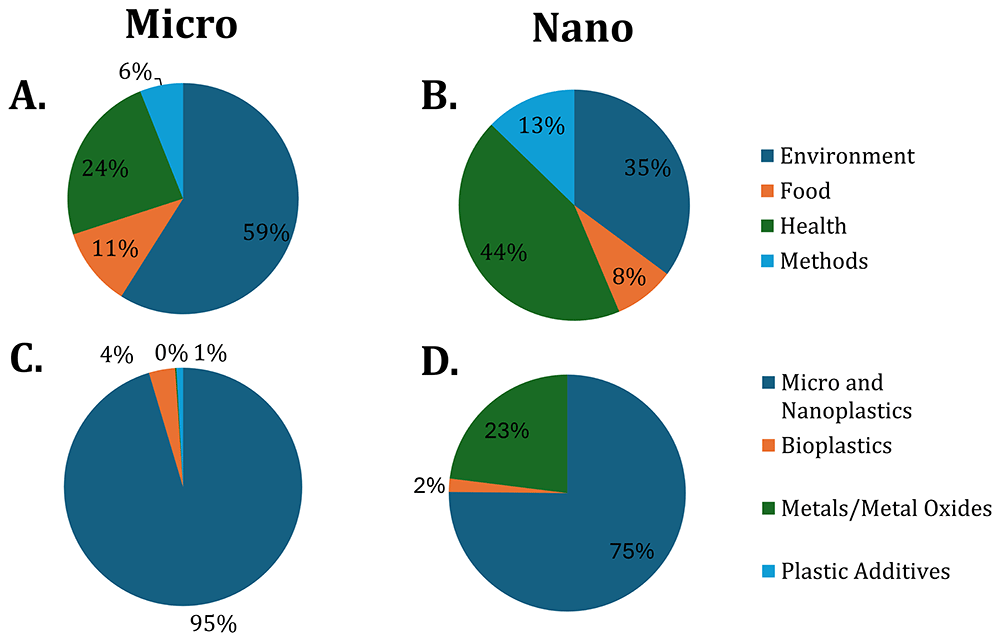
By addressing this issue in more detail, it appears that the percentage of studies dealing with the impact of nano-particles is significantly higher in Health (Figure 7). This likely reflects the increased ease with which smaller particles interact with biological systems41. Examining the distribution of studies across the selected topics (Figure 7C, D) it appears that at the nano-scale there is a prominent focus on Metals/Metal Oxides, while studies on Bioplastics are more represented at the micro-scale.
a78bef5e-c91f-4cf0-8261-1f1679c87d82_figure7.gif

Figure 7. Domains and Selected Topics distributions within Particles dimension.

Percentage of articles investigating micro- and nano-scale material particles across the different research macrodomains (A and B, respectively) and across the different selected topics (C and D, respectively). The 85 articles marked with (*) were excluded from the analysis.

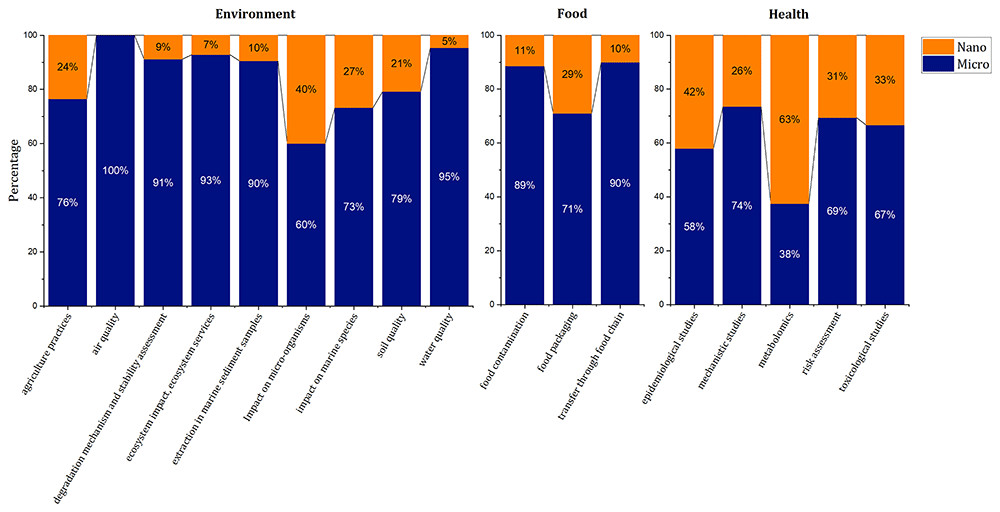
From the sub-thematics point of view (Figure 8), we observe that sub-thematics oriented to Environment emphasize micro-scale studies. Instead, sub-thematics within the Health domain show a much higher share of studies investigating materials at the nano-scale, as for instance, toxicological and epidemiological studies, along with metabolomics, confirming the growing interest in the potential risks of nanoparticles for human health42,43. A closer look at the Environment-related sub-thematics show that studies focusing on the impact of artificial materials on microorganisms and marine species have a much higher percentage of nanoparticles studies with respect to other sub-thematics. This is in agreement with the above observations on the Health domain as both sub-thematics have their focus on biological systems.
a78bef5e-c91f-4cf0-8261-1f1679c87d82_figure8.gif

Figure 8. Dimension distribution within sub-thematics.

Distribution of the dimension of the investigated particles across sub-thematics. The 85 articles marked with (*) were excluded from the analysis.

An overview on techniques

We analyzed the Articles DB with respect to the techniques employed in each article (Table 3). As expected, given their availability in most of the laboratories equipment, Microscopy and Optical Spectrometry techniques are the most commonly employed across all topics, particularly for the investigation of MNPs44. Other techniques, such as Mass Spectrometry and Biological techniques, appear more popular in studies addressing the impact of Plastic Additives. This may be due to their capability of studying complex chemical compositions and the biological effects of materials. While Omics techniques are evenly applied across, Light Scattering techniques and Magnetic Resonance techniques show a very narrow usage. In this context, Magnetic Resonance techniques cannot be applied to Metals due to limitations in detection, whereas the most representative Metal oxides have poor NMR sensitivity.

Table 3. Percentage distribution of the techniques used over the selected topics.

Micro and NanoplasticsBioplasticsMetals/Metal OxidesPlastic Additives
X-Ray techniques39110
Magnetic Resonance techniques2402
Omics techniques86710
Optical Spectroscopy 25291317
Light Scattering4442
Microscopy techniques28262722
Mass Spectrometry techniques781324
Biological studies19132220
Data and Bioinformatics methodologies4132
Total100100100100

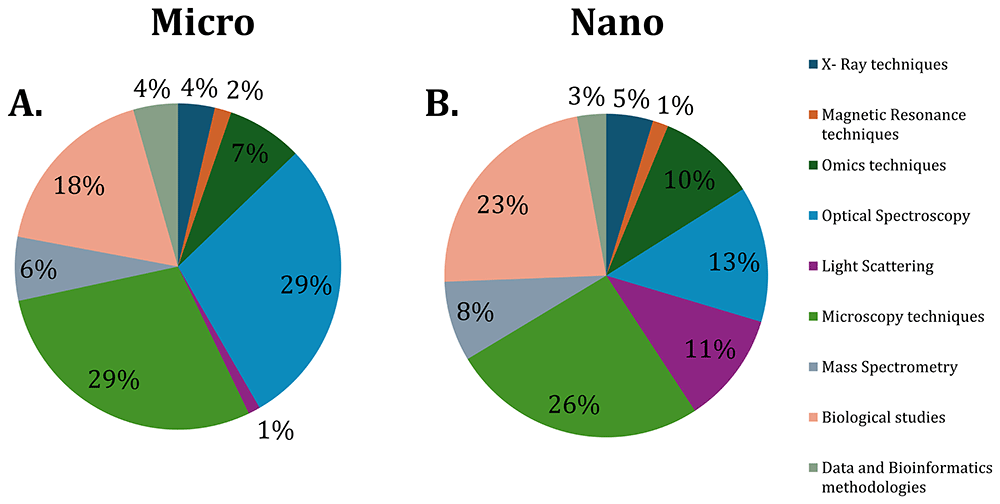
Considering the application of techniques in relation to the particle scale (Figure 9), we observed that biological, omics and Light Scattering techniques are more used in studies on nano- than micro-scale particles. This reflects respectively the higher absorption of smaller particles by living systems, as already noted, and the high resolving capability of Light Scattering in this scale.
a78bef5e-c91f-4cf0-8261-1f1679c87d82_figure9.gif

Figure 9. Percentage distribution of techniques by micro- and nano-scale.

Percentage distribution of the techniques employed at the (a.) micro- and (b.): nano-scale. The 85 articles marked with (*) were excluded from the analysis.

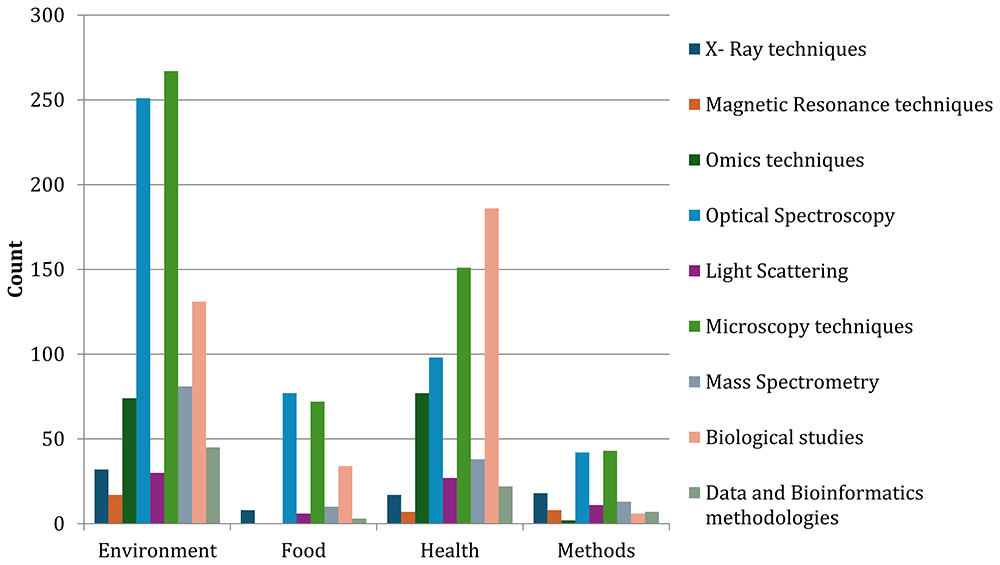
The distribution of employed techniques across the three domains—Environment, Food and Health (Figure 10) might be representative of how each domain tailors its methodological approach to meet its specific research objectives.
a78bef5e-c91f-4cf0-8261-1f1679c87d82_figure10.gif

Figure 10. Distribution of employed techniques across the selected macrodomains.

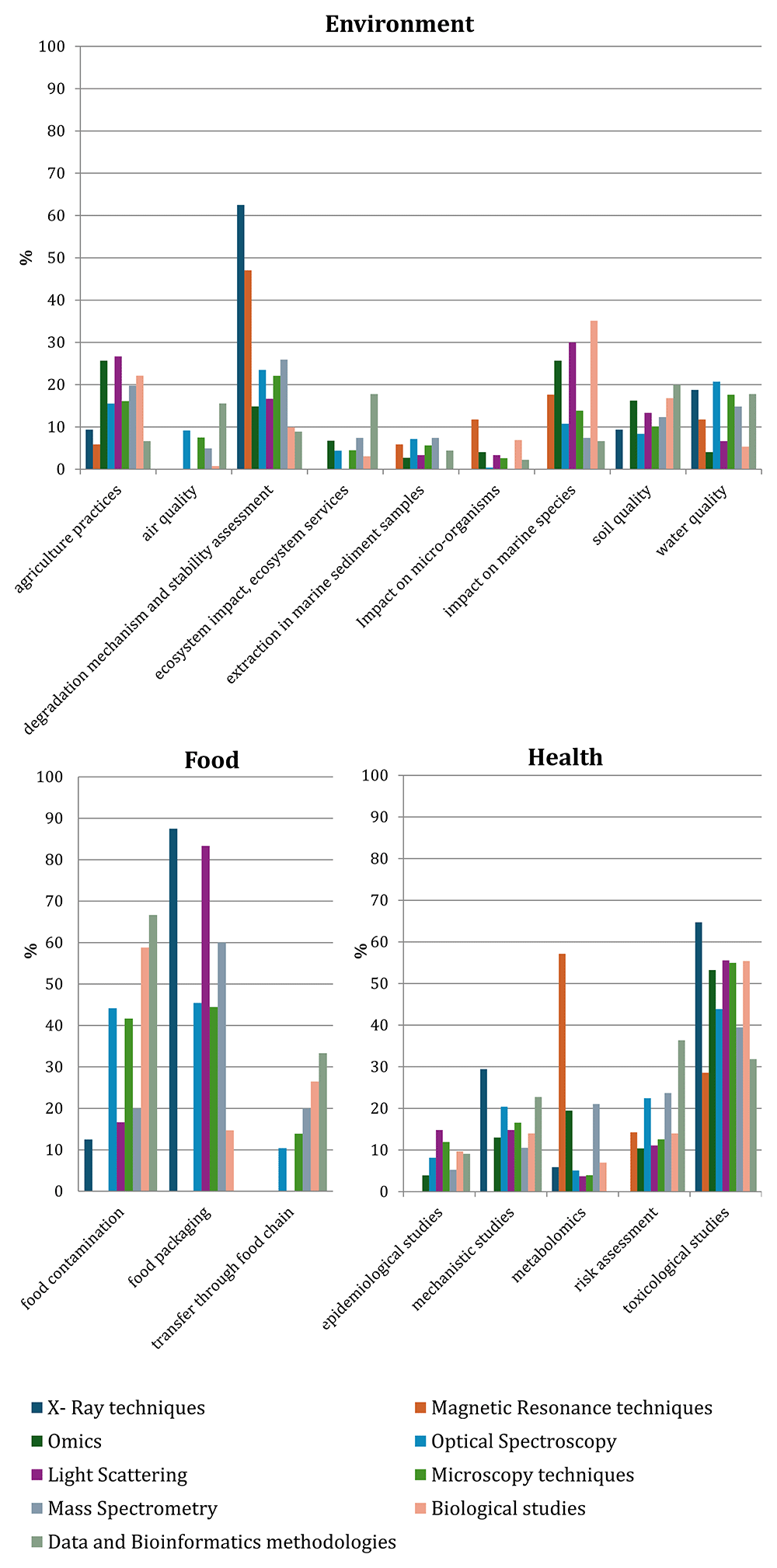
A more detailed overview is provided in Figure 11, showing the use of the various analytical techniques with respect to the research sub-thematics. Optical spectroscopies (such as FT-IR and Raman) and Microscopy techniques (such as SEM and TEM), appear to be commonly employed across all the diverse macrodomains. This is in agreement with recent reviews45,46. Indeed, FT-IR is a powerful tool to characterize polymers, as well as capable of revealing information on their degradation and organic impurities/contaminants47. Instead, Microscopy techniques are extensively used in the field of MNP imaging, as they provide a relatively fast and straightforward means of assessing particle size, shape, and quantity48.
a78bef5e-c91f-4cf0-8261-1f1679c87d82_figure11.gif

Figure 11. Distribution of employed techniques across sub-thematics areas.

X-Ray techniques are primarily utilized in Food contamination, Magnetic Resonance techniques are particularly valuable in metabolomics, highlighting their utility in examining metabolic processes, while Omics techniques are applied across several fields, contributing significantly to the studies of marine species impact. Optical Spectroscopy and Microscopy techniques are notably employed in soil and water quality assessments, providing physical and chemical properties of Environment matrices. Light Scattering is employed in studies of soil and water quality to analyze particle size and dispersion. Mass Spectrometry techniques are widely applicable across all sub-topics, with a major role for risk assessment studies. Biological techniques are heavily utilized in the study of marine species' impact and toxicological studies, emphasizing their role in assessing biological effects and the Health impacts of contaminants. This analysis also shows that the Data and Bioinformatics methodologies are widely applied for toxicological studies and water quality research.

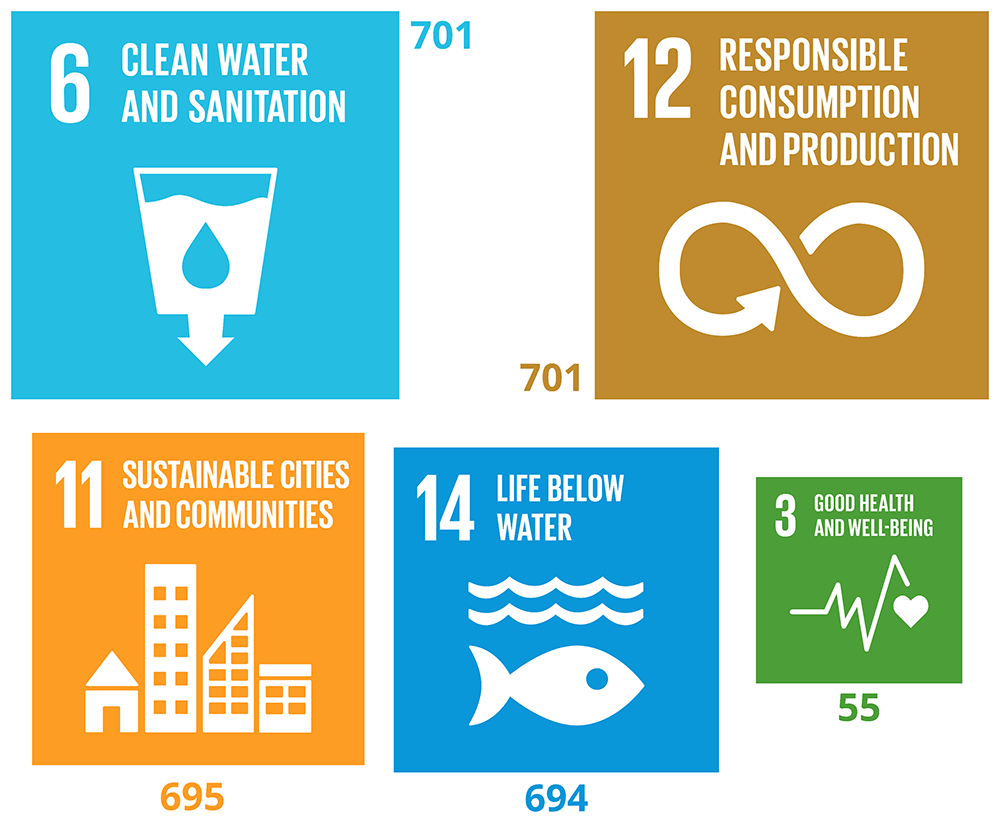
Through an analysis of the WoS database, it was possible to correlate the research corpus of the Articles DB with the Sustainable Development Goals (SDGs), as defined by the UN (SDGs UN definition). It appears that research on artificial material is related mainly to 4 goals (Figure 12). The majority of entries in our Articles DB address 3 to 4 SDGs.
a78bef5e-c91f-4cf0-8261-1f1679c87d82_figure12.gif

Figure 12. Sustainable Development Goals derived from the Articles DB through WoS analytics, along with their respective counts.

Clean Water and Sanitation (Goal 6); Sustainable Cities and Communities (Goal 11); Responsible Consumption and Production (Goal 12); Life Below Water (Goal 14); Good Health and Well-being (Goal 3).

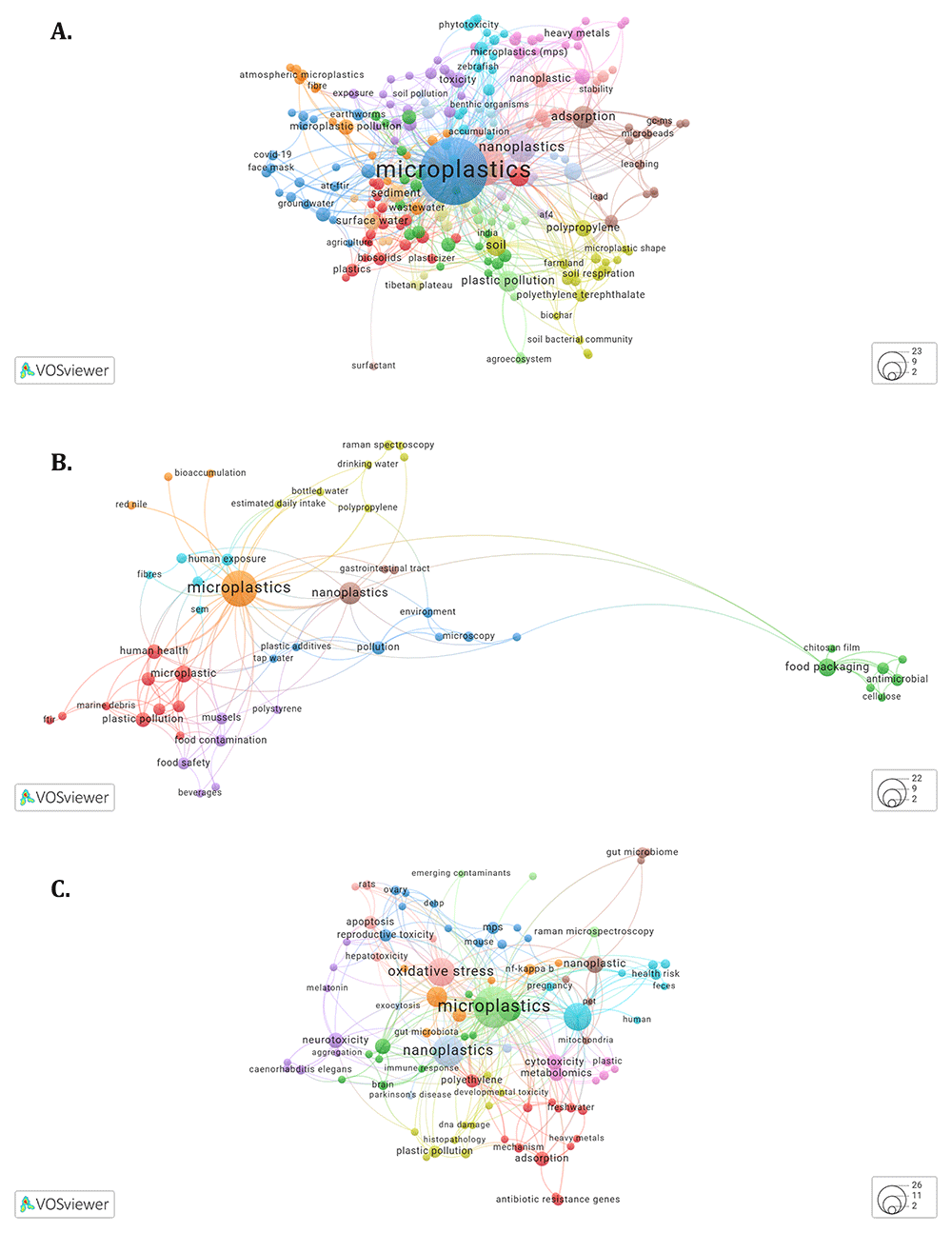
To streamline our Articles DB analysis, we employed version 1.6.20 of the VOSviewer software. By analyzing keyword co-occurrence, and by grouping related keywords into distinct clusters, VOSviewer allowed us to systematically identify frequently used and highly interconnected terms across the Articles DB. To explore the research landscape within the Articles DB, we conducted three separate analyses, focusing respectively on the Environment, Food, and Health macrodomains (Figure 13). The resulting maps demonstrated multiple interactions across the domains. Specifically, the Environment map featured health-related keywords such as “toxicity”, “ingestion”, and “risk assessment”, while the Health map included “environmental exposure”, and the Food map contained “human health”, “human exposure”, and “environmental”. These overlaps highlight the inherent interconnectedness of the topics that guided this bibliometric work.
a78bef5e-c91f-4cf0-8261-1f1679c87d82_figure13.gif

Figure 13. Maps obtained through VOSviewer from WoS Author Keywords.

Nodes represent keywords (with size reflecting frequency) and the thickness of the edges indicates the strength of co-occurrence. (A). Environment (VOS interactive map); (B) Food (VOS interactive map) and (C) Health (VOS interactive map).

Statistical analysis of the WoS database

Alongside the analyses of the Articles DB, we performed a statistical analysis on the comprehensive dataset generated from the initial screening queries (Figure 1). This broader analysis, encompassing a significantly larger number of results, allowed for a validation of the results presented in the previous sections over a wider dataset, through the identification of broader trends and patterns. This parallel approach confirms that the results obtained from the Articles DB are indeed representative of the wider research landscape represented in the WoS.

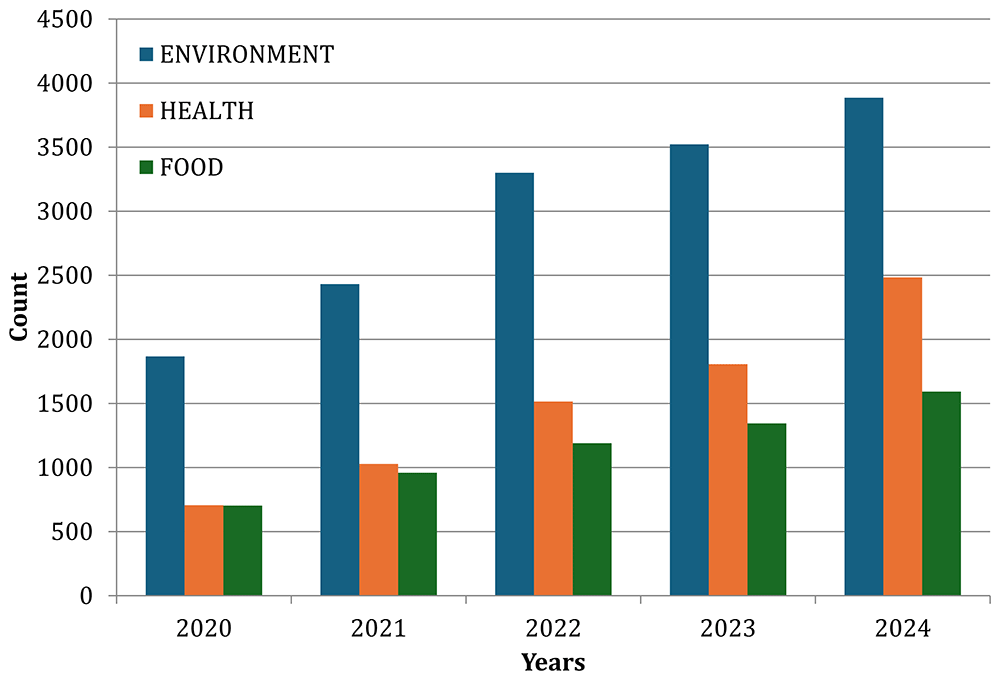
Figure 14 reveals a consistent increase in publication numbers across the Environment, Food, and Health macrodomains throughout the analyzed period. While the Environment research area continues to dominate in volume compared to Health and Food, as observed in Figure 4, the overall trend from the 28,341 articles represented in Figures 14 indicates a steady growth for all domains with Health exhibiting the most rapid growth trend.
a78bef5e-c91f-4cf0-8261-1f1679c87d82_figure14.gif

Figure 14. Overview of Research Trends from Initial WoS Screening.

Trends derived from WoS analysis of the 28.341 entries from the screening 1 step. For details on the queries used, refer to the supplementary information.

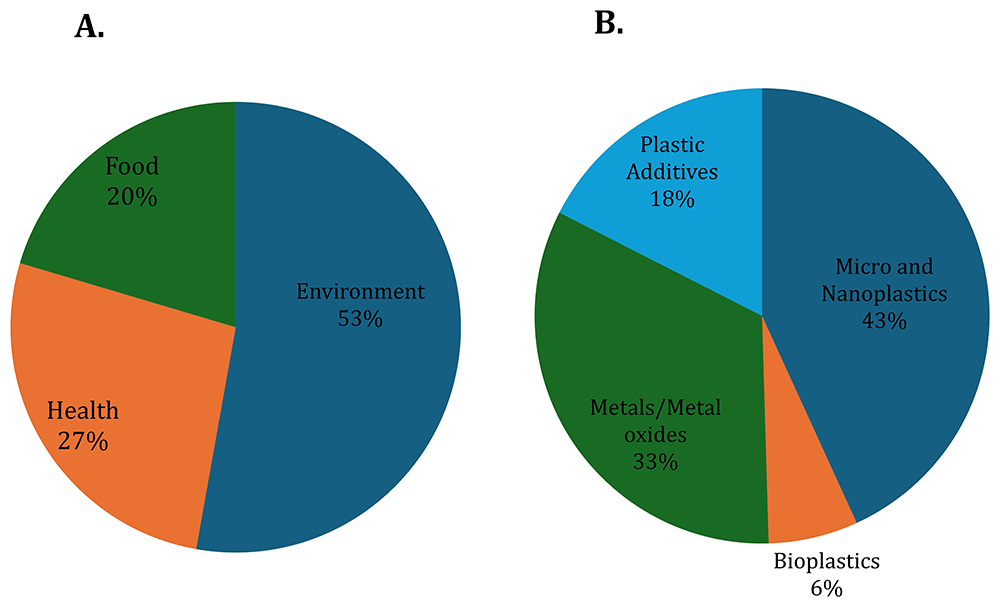
Figure 15 shows that the primary focus remains on MNPs, although studies focusing on Metals/Metal Oxides are comparatively more abundant. However, this representation may be distorted, as performing the Articles DB assessment it clearly emerged that the majority of articles resulting from the queries for Metals/Metal Oxides focused on different research areas that were not relevant for the One Health approach that was at the heart of our selection criteria.
a78bef5e-c91f-4cf0-8261-1f1679c87d82_figure15.gif

Figure 15. WoS-Derived Trends.

Trends derived from WoS analysis of the 56.021 entries from the screening 1 step. (A) Domains; (B) Selected topics. For details on the queries used, refer to the supplementary information.
Conclusions

This bibliometric study provides a comprehensive overview of the current research landscape on micro- and nano-scale material particles, from the standpoint of the potential impact on health. In particular, this bibliometric work highlighted the relations among the different research domains and supported the definition of a set of meaningful sub-thematics and methodologies that are commonly used in the field. MNPs dominate the current research focus, suggesting that they have become a central area of concern, driven by a growing recognition of their health implications beyond their known environmental ubiquity. The VOSviewer analysis further reinforces the interconnectedness of Environment, Food, and Health, demonstrating the relevance of the One Health approach.

A significant observation is the difference in the number of articles addressing micro- versus nano-scale research. Studies at the micro-scale dominate the current literature; however, in the Health domain there is considerable emphasis on the potential risks of nanoparticles. Metabolomics is the only sub-thematic that is used more at the nano-scale than at the micro-scale; epidemiological and toxicological studies are also experiencing a substantial shift in this direction. In the Environment domain, the impact of artificial materials on microorganisms, with a good attention to relevance of nano-scale materials, and on marine species has garnered significant attention. On the other hand, the analysis of the articles in the Methods category highlighted the absence of standardized approaches for the detection, characterization, and risk assessment of artificial materials, particularly at the nano-scale. This represents a critical bottleneck since it hampers the comparability and reproducibility of studies across various research contexts, thereby hindering the development of effective regulatory frameworks and risk management strategies.

Finally, this analysis also reveals aspects about the usage of technologies. We found that Microscopy techniques are widely used, whereas other approaches have a marginal utilization, such as Magnetic Resonance techniques, which, according to our results, have been employed in only 2% of studies. It is quite likely that this gap can be ascribed, at least in part, to the steep cost and difficulty of maintenance of specialized instruments. This makes them often inaccessible in public research laboratories. Research Infrastructures have a key role in promoting and enhancing the usage of cutting-edge instrumentation. Furthermore, collaborative efforts between RIs on technological aspects might lead to the development of innovative equipment and novel protocols beneficial to the entire community of current and potential new users engaged in the study of micro- and nano-scale material particles.

Ethical approval and consent

Ethical approval and consent were not required for this study.

Data availability

The datasets generated and analyzed during the current study (Persistent Identifier: 10.5281/zenodo.15369627) and the full query history used in the Web of Science™ (Persistent Identifier: 10.5281/zenodo.15370363) are available in the Zenodo repository. These datasets support the results and analyses reported in this article.

Underlying data

Repository name: [Zenodo]. https://doi.org/10.5281/zenodo.1536962749

The project contains the following underlying data:

[From Environment to Health: A One Health Landscape of Research on Selected Artificial Materials - Articles DB] The raw data

Data are available under the terms of the Creative Commons Zero "No rights reserved" data waiver (CC0 1.0 Public domain dedication).

Extended data

Repository name: [Zenodo]. https://doi.org/10.5281/zenodo.1537036350

This project contains the following extended data:

Supplementary Material. The full query history used in the Web of Science™

Data are available under the terms of the Creative Commons Zero "No rights reserved" data waiver (CC0 1.0 Public domain dedication).

Acknowledgments

The authors acknowledge the project partners and external experts whose discussions and feedback contributed indirectly to the conceptual foundation of this article.

We thank Dr. Laurens DB Mandemaker for his suggestions on the optimal use of Web of ScienceTM.

References

  • 1.  Rangel-Buitrago N, Ben-Haddad M, Nicoll K, et al.: Marine plastic pollution in the anthropocene: a linguistic toolkit for holistic understanding and action. Ocean Coast Manag. 2024; 248: 106967. Publisher Full Text
  • 2.  Huang Y, He T, Yan M, et al.: Atmospheric transport and deposition of microplastics in a subtropical urban environment. J Hazard Mater. 2021; 416: 126168. PubMed Abstract | Publisher Full Text
  • 3.  Patnana DP, Chandra BP: Determination of mass concentrations of airborne PET microplastics using liquid chromatography coupled to tandem mass spectrometry (LC-MS/MS). Environ Sci Atmos. 2024; 4(12): 1352–1357. Publisher Full Text
  • 4.  Xu Y, Ou Q, Jiao M, et al.: Identification and quantification of nanoplastics in surface water and groundwater by pyrolysis gas chromatography-mass spectrometry. Environ Sci Technol. 2022; 56(8): 4988–4997. PubMed Abstract | Publisher Full Text
  • 5.  Cheung CKH, Not C: Early signs of plastic degradation and fragmentation: a 40-day study in marine environments. Mar Pollut Bull. 2024; 207: 116809. PubMed Abstract | Publisher Full Text
  • 6.  Wahl A, Le Juge C, Davranche M, et al.: Nanoplastic occurrence in a soil amended with plastic debris. Chemosphere. 2021; 262: 127784. PubMed Abstract | Publisher Full Text
  • 7.  Zeb A, Liu W, Ali N, et al.: Microplastic pollution in terrestrial ecosystems: global implications and sustainable solutions. J Hazard Mater. Elsevier B.V., 2024; 461: 132636. PubMed Abstract | Publisher Full Text
  • 8.  Shafea L, Yap J, Beriot N, et al.: Microplastics in agroecosystems: a review of effects on soil biota and key soil functions. J Plant Nutr Soil Sci. John Wiley and Sons Inc., 2023; 186(1): 5–22. Publisher Full Text
  • 9.  Seo Y, Zhou Z, Lai Y, et al.: Micro- and nanoplastics in agricultural soils: assessing impacts and navigating mitigation. Sci Total Environ. Elsevier B.V., 2024; 931: 172951. PubMed Abstract | Publisher Full Text
  • 10.  Okoye CO, Addey CI, Oderinde O, et al.: Toxic chemicals and persistent organic pollutants associated with micro-and nanoplastics pollution. Chem Eng J Adv. 2022; 11: 100310. Publisher Full Text
  • 11.  Rahman A, Sarkar A, Yadav OP, et al.: Potential human health risks due to environmental exposure to nano- and microplastics and knowledge gaps: a scoping review. Sci Total Environ. 2021; 757: 143872. PubMed Abstract | Publisher Full Text
  • 12.  Yu Y, Kumar M, Bolan S, et al.: Various additive release from microplastics and their toxicity in aquatic environments. Environ Pollut. Elsevier Ltd, 2024; 343: 123219. PubMed Abstract | Publisher Full Text
  • 13.  Fries E, Sühring R: The unusual suspects: screening for persistent, mobile, and toxic plastic additives in plastic leachates. Environ Pollut. 2023; 335: 122263. PubMed Abstract | Publisher Full Text
  • 14.  Jimenez-Guri E, Paganos P, La Vecchia C, et al.: Developmental toxicity of pre-production plastic pellets affects a large swathe of invertebrate taxa. Chemosphere. 2024; 356: 141887. PubMed Abstract | Publisher Full Text
  • 15.  DeLoid GM, Cao X, Bitounis D, et al.: Toxicity, uptake, and nuclear translocation of ingested micro-nanoplastics in an in vitro model of the small intestinal epithelium. Food Chem Toxicol. 2021; 158: 112609. PubMed Abstract | Publisher Full Text | Free Full Text
  • 16.  Tamargo A, Molinero N, Reinosa JJ, et al.: PET microplastics affect human gut microbiota communities during simulated gastrointestinal digestion, first evidence of plausible polymer biodegradation during human digestion. Sci Rep. 2022; 12(1): 528. PubMed Abstract | Publisher Full Text | Free Full Text
  • 17.  Agrawal M, Vianello A, Picker M, et al.: Micro- and nano-plastics, intestinal inflammation, and inflammatory bowel disease: a review of the literature. Sci Total Environ. 2024; 953: 176228. PubMed Abstract | Publisher Full Text | Free Full Text
  • 18.  Jeong A, Park SJ, Lee EJ, et al.: Nanoplastics exacerbate Parkinson’s disease symptoms in C. elegans and human cells. J Hazard Mater. 2024; 465: 133289. PubMed Abstract | Publisher Full Text
  • 19.  Campen M, Nihart A, Garcia M, et al.: Bioaccumulation of microplastics in decedent human brains assessed by pyrolysis gas chromatography-mass spectrometry. Res Sq. 2024; rs.3.rs-4345687. PubMed Abstract | Publisher Full Text | Free Full Text
  • 20.  Marfella R, Prattichizzo F, Sardu C, et al.: Microplastics and nanoplastics in atheromas and cardiovascular events. N Engl J Med. 2024; 390(10): 900–910. PubMed Abstract | Publisher Full Text | Free Full Text
  • 21.  Ferheen I, Spurio R, Marcheggiani S: Emerging issues on antibiotic-resistant bacteria colonizing plastic waste in aquatic ecosystems. Antibiotics (Basel). 2024; 13(4): 339. PubMed Abstract | Publisher Full Text | Free Full Text
  • 22.  Udovicki B, Andjelkovic M, Cirkovic-Velickovic T, et al.: Microplastics in food: scoping review on health effects, occurrence, and human exposure. Int J Food Contam. 2022; 9(1): 7. Publisher Full Text
  • 23.  Wang M, Li Q, Shi C, et al.: Oligomer nanoparticle release from polylactic acid plastics catalysed by gut enzymes triggers acute inflammation. Nat Nanotechnol. 2023; 18(4): 403–411. PubMed Abstract | Publisher Full Text
  • 24.  Duan Z, Cheng H, Duan X, et al.: Diet preference of zebrafish (Danio rerio) for bio-based polylactic acid microplastics and induced intestinal damage and microbiota dysbiosis. J Hazard Mater. 2022; 429: 128332. PubMed Abstract | Publisher Full Text
  • 25.  Piyathilake U, Lin C, Bolan N, et al.: Exploring the hidden environmental pollution of microplastics derived from bioplastics: a review. Chemosphere. 2024; 355: 141773. PubMed Abstract | Publisher Full Text
  • 26.  Matavos-Aramyan S: Addressing the microplastic crisis: a multifaceted approach to removal and regulation. Environ Adv. 2024; 17: 100579. Publisher Full Text
  • 27.  Wang F, Xiang L, Sze-Yin Leung K, et al.: Emerging contaminants: a One Health perspective. Innovation (Camb). 2024; 5(4): 100612. PubMed Abstract | Publisher Full Text | Free Full Text
  • 28.  Dang F, Wang Q, Huang Y, et al.: Key knowledge gaps for One Health approach to mitigate nanoplastic risks. Eco Environ Health. 2022; 1(1): 11–22. PubMed Abstract | Publisher Full Text | Free Full Text
  • 29.  Ozturk O: Bibliometric review of resource dependence theory literature: an overview. Manag Rev Q. 2021; 71(3): 525–552. Publisher Full Text
  • 30.  Borgman CL, Furner J: Scholarly communication and bibliometrics. Annual Review of Information Science and Technology. 2002; 36(1): 2–72. Publisher Full Text
  • 31.  Scholl I, Koelewijn-van Loon M, Sepucha K, et al.: Measurement of shared decision making – a review of instruments. Z Evid Fortbild Qual Gesundhwes. 2011; 105(4): 313–324. PubMed Abstract | Publisher Full Text
  • 32.  Ejaz H, Zeeshan HM, Ahmad F, et al.: Bibliometric analysis of publications on the Omicron variant from 2020 to 2022 in the Scopus database using R and VOSviewer. Int J Environ Res Public Health. 2022; 19(19): 12407. PubMed Abstract | Publisher Full Text | Free Full Text
  • 33.  Tomaszewski R: Visibility, impact, and applications of bibliometric software tools through citation analysis. Scientometrics. 2023; 128(7): 4007–4028. PubMed Abstract | Publisher Full Text | Free Full Text
  • 34.  Page MJ, McKenzie JE, Bossuyt PM, et al.: The PRISMA 2020 statement: an updated guideline for reporting systematic reviews. BMJ. 2021; 372: n71. PubMed Abstract | Publisher Full Text | Free Full Text
  • 35.  van Eck NJ, Waltman L: Software survey: VOSviewer, a computer program for bibliometric mapping. Scientometrics. 2010; 84(2): 523–538. PubMed Abstract | Publisher Full Text | Free Full Text
  • 36.  Jin M, Liu J, Yu J, et al.: Current development and future challenges in microplastic detection techniques: a bibliometrics-based analysis and review. Sci Prog. SAGE Publications Ltd, 2022; 105(4): 368504221132151. PubMed Abstract | Publisher Full Text | Free Full Text
  • 37.  Wei X, Yang F, Chen D, et al.: Analyzing nanoparticle-induced neurotoxicity: a bibliometric analysis. Toxicol Ind Health. 2020; 36(1): 22–29. PubMed Abstract | Publisher Full Text
  • 38.  Alam MS, Tahriri F, Chen G: Trends, challenges, and research pathways in emerging contaminants: a comprehensive bibliometric analysis. Integr Environ Assess Manag. 2025; 21(3): 496–506. PubMed Abstract | Publisher Full Text
  • 39.  Mendoza M: Differences in citation patterns across areas, article types and age groups of researchers. Publications. 2021; 9(4): 47. Publisher Full Text
  • 40.  de Carvalho JGR, Augusto HC, Ferraz R, et al.: Micro(nano)plastic and related chemicals: emerging contaminants in environment, food and health impacts. Toxics. 2024; 12(10): 762. PubMed Abstract | Publisher Full Text | Free Full Text
  • 41.  Qamar W, Gulia S, Athar M, et al.: An insight into impact of nanomaterials toxicity on human health. PeerJ. 2024; 12: e17807. PubMed Abstract | Publisher Full Text | Free Full Text
  • 42.  Xuan L, Ju Z, Skonieczna M, et al.: Nanoparticles-induced potential toxicity on human health: applications, toxicity mechanisms, and evaluation models. MedComm (2020). 2023; 4(4): e327. PubMed Abstract | Publisher Full Text | Free Full Text
  • 43.  Singh G, Thakur N, Kumar R: Nanoparticles in drinking water: assessing health risks and regulatory challenges. Sci Total Environ. Elsevier B.V., 2024; 949: 174940. PubMed Abstract | Publisher Full Text
  • 44.  Fang C, Luo Y, Naidu R: Microplastics and nanoplastics analysis: options, imaging, advancements and challenges. TrAC, Trends Anal Chem. 2023; 166: 117158. Publisher Full Text
  • 45.  Mandemaker LDB, Meirer F: Spectro-microscopic techniques for studying nanoplastics in the environment and in organisms. Angew Chem Int Ed Engl. 2023; 62(2): e202210494. PubMed Abstract | Publisher Full Text | Free Full Text
  • 46.  Williams WA, Aravamudhan S: Micro-nanoparticle characterization: establishing underpinnings for proper identification and nanotechnology-enabled remediation. Polymers (Basel). Multidisciplinary Digital Publishing Institute (MDPI), 2024; 16(19): 2837. PubMed Abstract | Publisher Full Text | Free Full Text
  • 47.  Tang PL, Mckumskay R, Rogerson M, et al.: 2 Portable & handheld spectrometers. 2018.
  • 48.  Rai PK, Kumar V, Sonne C, et al.: Progress, prospects, and challenges in standardization of sampling and analysis of micro- and nano-plastics in the environment. J Clean Prod. 2021; 325: 129321. Publisher Full Text
  • 49.  Murgioni E, Morelli F, Raverae E, et al.: From environment to health: a one health landscape of research on selected artificial materials - Articles DB. Zenodo. 2025. http://www.doi.org/10.5281/zenodo.15369628
  • 50.  Murgioni E, Morelli F, Raverae E, et al.: From environment to health: a one health landscape of research on selected artificial materials - Search queries. Zenodo. 2025. http://www.doi.org/10.5281/zenodo.15370363