Introduction
Microalgae are an interesting source of functional ingredients because of their small footprint and ability to efficiently utilize CO2 to produce various valuable compounds. Microalgal cells can have a high-protein content (~50% DW) as well as lipids, sugars, pigments and other high-value components (Barkia et al., 2019; Koller et al., 2014; Tibbetts et al., 2015). Globally, hundreds of algal species are used as food, feed, and fertilizers, with recent applications in pharmaceuticals and cosmetics. However, in Europe, the adoption of microalgae as a novel source of functional ingredients is currently limited to only a handful of species (Caporgno & Mathys, 2018; Mendes et al., 2022). The global production value of dried whole-cell biomass of species such as Arthrospira platensis cyanobacteria and Chlorella vulgaris microalgae, species with novel food status in Europe, is worth hundreds of millions of euros (Fortune Business Insights, 2025). In contrast, high-value microalgal molecules, such as omega-3 fatty acids and β-carotene, could open up a significantly larger market (Selvam et al., 2024). However, their extraction and purification require highly complex processes involving cell lysis followed by intensive post-treatment (Figure 1). The costs of these downstream processes vary considerably, depending on the employed microalgal strain and growth strategy (autotrophic, mixotrophic, or heterotrophic). For instance, the cost of extracting and purifying soluble proteins ranges from 4 to 14 €/kgDW (dried weight), pigments from 5 to 70 €/kgDW, and oil from 4 to 15 €/kgDW (Ruiz et al., 2016). Their market value is often in the same order of magnitude as the downstream processing costs while the biomass production costs are at between 3 and 7 €/kgDW under large-scale cultivation using vertical flat panels (Lam et al., 2018). This makes it challenging to generate profitable chains under current circumstances (Chen et al., 2024; Show, 2022). Heterotrophic microalgal cultivation can lower biomass costs by allowing denser cultures while reducing contaminants. However, these require a constant stream of carbon source (often sugar), which could offset these advantages unless carbon-rich side-streams are used as growth media (Udayan et al., 2022). Thus, developing a precise and rapid process development, monitoring, and control platform to explore novel downstream processing approaches is critical to enable microalgal biotechnologies to reach their full potential.
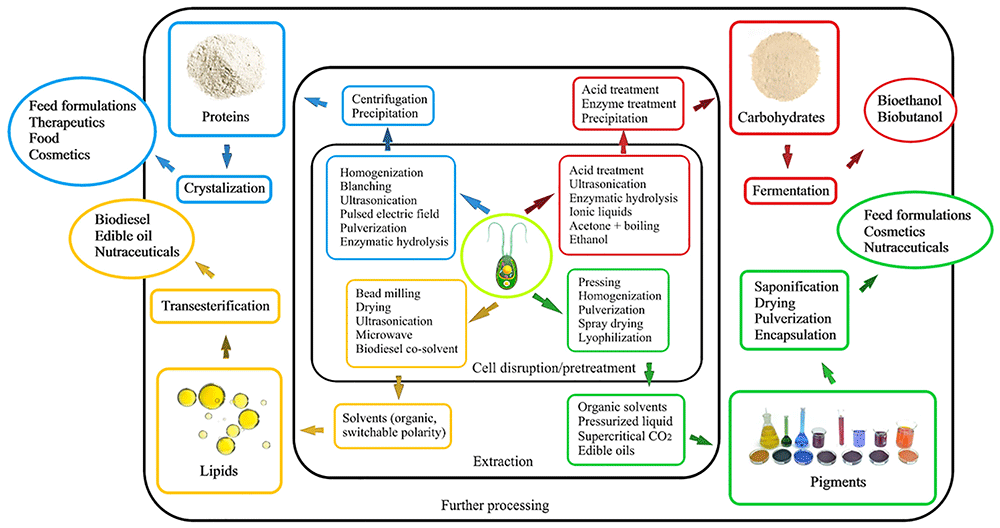
Figure 1. Downstream processing steps for the recovery of microalgal components such as proteins, carbohydrates pigments and lipids, commonly employed by single product biorefinery models.
One way to achieve this is to devise automated high-throughput process screening, development, optimization, and even production platforms. The current process development automation efforts involve the use of expensive liquid-handling robots that can automate repetitive tasks, boost productivity, ensure consistency, and manage large amounts of data. However, the initial setup costs for automated systems can be high, especially for small-scale operations and complex functionality (Torres-Acosta et al., 2022). Moreover, liquid-handling robots can lack flexibility and the ability to adapt to a new task, workflow, or substrate. These systems might require significant modifications, making them less adaptable than manual or semi-automated systems in specific research environments. Moreover, some liquid handling systems may not be compatible with every type of sample or material, such as microalgae cultures, which can have varying viscosities and properties. Thus, exploring less expensive microfluidic systems and external fields could lead to affordable process development and large-scale data acquisition. Moreover, these high-precision platforms can elucidate specific phenomena that are otherwise impossible using conventional systems. This will allow the integration of multiple production and processing steps at single-cell resolution for increased precision in cell transformation, cultivation, and manipulation, as well as the extraction of specific target components within one chip (Mehendale et al., 2020). Current high-precision 3D printing, laser cutting, and polydimethylsiloxane (PDMS)-based microfluidic production methods have reached technological maturity and are thus ready to mass-produce these devices, ensuring that the spike in demand is met (Saggiomo & Velders, 2015; Sanchez Noriega et al., 2021).
High-throughput process development using microfluidic technologies
Manipulating particles and fluids in the submillimeter region is generally encompassed by the umbrella term of microfluidics and lab-on-a-chip (LoC) concepts. Although the microfluidic field exploded in the late 90ies thanks to the PDMS replica molding invented by Whitesides (Xia et al., 1997), it has started fulfilling its promise as an analytical tool (Fonzo et al., 2025; Gurkan et al., 2024). These systems provide a wide range of advantages over traditional approaches, such as reduced costs, footprint, waste, precise control, and possible monitoring at single-cell resolution (Ongaro et al., 2022). Moreover, they can be scaled out through stacking multiple chips together and using them in parallel to increase their throughput in case larger quantities of product are required (Dubay et al., 2019; Wu et al., 2021). Although using microfluidics for high-throughput screening and even production systems seems counterintuitive considering the small amount of liquids involved in the chip, this approach has been used in commercial applications by companies such as Capsum (Capsum, 2025). Their proprietary technology uses parallel microfluidics for the large-scale fabrication of microdroplets used in beauty products, such as creams. These can be found in high-end products, such as ‘Hydra Beauty Micro Crème’ of CHANEL (V.G., 2017). This example demonstrates that the high-throughput production of ingredients is possible using microfluidics. Moreover, as stated before, the simplicity and lack of movable components could translate in relatively low production and maintenance costs (Battat et al., 2022; Nge et al., 2013).
These platforms allow the integration of multiple unit operations on a single chip, thus enabling less expensive and automated complete process development platforms. These approaches have become increasingly popular in recent decades and have been successfully employed in various applications such as cell culture (Iuliano et al., 2020), molecular tools for genome manipulation, sample processing and detection, biomass harvesting, compound extraction, and purification (Huh et al., 2010). Notable breakthroughs have also been reported in organ-on-a-chip and human-on-a-chip biomedical applications. A number of reviews are thoroughly addressing most of these applications and innovations (Huang et al., 2024; Ingber, 2022; Kumar et al., 2024; Shoji et al., 2024). The present manuscript focuses on novel concepts for microbes in general, and microalgae more specifically, high-throughput process development, and even production platforms incorporating LoC concepts and various external fields. This could provide an innovative alternative to traditional process screening and the high-precision production of functional ingredients.
Microalgal cultivation
Cultivating microalgal biomass represents a central part of microalgal biotechnology because of its impact on expressed metabolic pathways, and thus the growth and production of target metabolites. However, classic high-volume cultivation approaches reveal only the impact of these variables on the overall population and not at the cellular level (Westerwalbesloh et al., 2019). In addition, these systems are relatively complex and expensive, even at the bench scale. Thus, more targeted and accessible growth and analysis strategies are required to circumvent these limitations and to adequately understand these processes. Recent decades have brought a number of breakthroughs in the field through the development of microfluidic bioreactors that allow the cultivation and targeted analysis of a small number of algal cells and even single-cell approaches (Anggraini et al., 2022; Enders et al., 2024; Ozdalgic et al., 2021). As in the case of traditional cultivation, microfluidic strategies can be characterized as continuous-flow systems that use mechanical traps and batch techniques, represented by droplet microfluidics and microchambers (Figure 2).
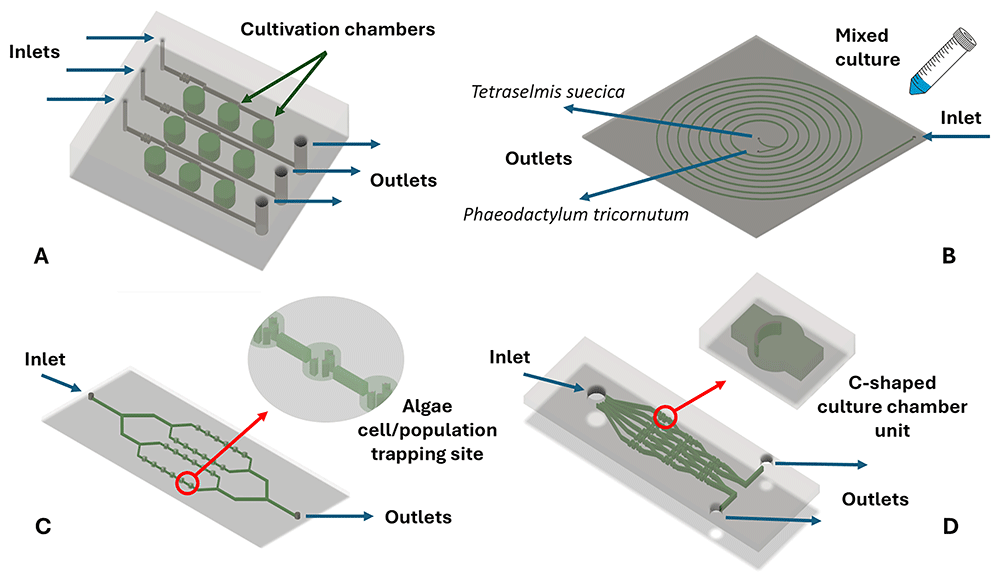
Figure 2. LoC systems develop to cultivate microalgal cells.
Batch and fed-batch approaches have been studied using micro-reactors (A) and spiral channels (B). Moreover, continuous systems have been developed using mechanical traps such as micropillar arrays (C) or small semispherical obstacles (D). These retain small populations of cells or even single cells while fresh medium is continuously provided.
Continuous-flow cultivation strategies most often use a series of microstructures to trap single cells or small cellular clusters, whereas media containing the required nutrients are continuously circulated. These so-called mechanical traps come in a variety of forms, each with their advantages and disadvantages. Small poles for instance arranged in semicircular shapes, with gaps smaller than the cell size, were used to trap microalgal cells flowing through (Kim et al., 2014). Moreover, microfluidic devices with integrated pneumatic valves have been developed to selectively release single cells from specific traps (Chai et al., 2021; Gong et al., 2023). In contrast, picoliter scale droplets and microchambers have been employed to develop microfluidic batch systems, allowing for high-throughput screening assays. Droplet-based microfluidics, including immiscible phases and hydrodynamic traps, were initially used for this purpose (Kim et al., 2017; Luan et al., 2020). More recent developments have focused on incorporating digital elements, such as electrowetting, allowing for the addition of fresh media to the droplets, as well as different reagents, such as fluorescent dyes (Karcz et al., 2022; Liu et al., 2023). Although these approaches have been successfully used to investigate the growth profile and metabolite accumulation of small groups of cells, even at single-cell levels, clogging issues and strict requirements in fabrication precision remain important hurdles.
Upstream process development and control
Advancements in microfluidic algal biotechnology are beyond the cultivation scope. Most of the advantages come from more precise manipulation, transformation, monitoring, selection, and control of individual cells, allowing a deeper understanding of their biology and responses. This allows for the faster and more efficient development of novel microalgal-based processes and products. The microalgal industry, as well as the microbial biotechnological sector, could benefit directly from these advancements. This could be achieved by enabling research and development activities with minimum operating costs and even full automation, similar to practices commonly found in the biomedical industry, but at a fraction of the costs.
Cell transformation│ There is a significant push towards biosourcing most of the building blocks presently used by various industries, including manufacturing, clothing, construction, food, pharmaceutical, and cosmetics, to reduce the environmental strains of our society (Beigbeder et al., 2019). Thus, there is a need to develop microbial and microalgal cell factories capable of converting readily available and waste substrates into these platforms and specialty molecules by inserting target gene constructs into these organisms. Presently, there are a range of delivery pretreatment strategies that are relatively invasive and can alter the exogenous DNA to be inserted or subsequent cell viability. Thus, LoC variations of established methods and completely new approaches have been developed in an attempt to circumvent these limitations. For instance, higher transgene expression levels have been achieved by employing a digital microfluidic electroporation system with an integrated on-chip cell culture (Im et al., 2015). Moreover, higher transformation efficiencies were achieved when using a ZnO nanowire-incorporated microdevice and pneumatic PDMS microvalve for high-throughput delivery of the hygromycin B resistance gene cassette (Hyg3) into Chlamydomonas reinhardtii cells (Bae et al., 2015). Furthermore, a fully-automated digital microfluidic method was developed for arrayed gene-editing in mammalian cells (Sinha et al., 2018).
Deep monitoring and machine learning│ LoC devices allow for a precise evaluation of the changes taking place during the cultivation of these microorganisms (Cabanelas et al., 2015; Gao et al., 2020). A series of traditional as well as novel approaches have been specifically developed for microfluidic applications for smooth integration and analysis (Gao et al., 2021; Sá et al., 2020). Some of the first such attempts consisted of integrating microfluidic flow cytometry using an external photodetector and illuminating glass chips with a laser. This allowed for rapid and reliable identification of phytoplankton species (Benazzi et al., 2007; Schaap et al., 2012). Moreover, droplet-based LoC culturing, staining, and analysis setups were used to select lipid overproducers from a microalgal mutant library through an integrated optical detection system in a flow-through manner (Kim et al., 2017). More recent efforts have led to the development and integration of optical sensors into microfluidic platforms consisting of organic light-emitting diodes and organic photodetectors, which can efficiently determine the optical, electrical, and geometric characteristics of microalgal cells (Lefèvre et al., 2015). Cellular capacitance and impedance changes were used to further distinguish between morphologically similar species and even among living and dead microalgal cells (Song et al., 2014; Wang et al., 2013). The big data generated by these sensing elements can be used, for instance, to train genetic algorithms for machine learning to better understand these processes.
Screening and isolating overproducers│ There is a largely untapped potential for microalgal biotechnology considering the sheer biodiversity of species, as well as specifically engineered strains. Thus, there is an evident need for either bioprospecting local candidates or separating engineered viable overproducers from untransformed cells. For instance, it was recently demonstrated that by employing a spiral microchannel, lift and Dean flow drag forces, microalgal species close in size were separated (Schaap et al., 2016). Recently, a dielectrophoresis-based (DEP) microfluidic sorting platform has been developed to separate and quantify C. reinhardtii microalgal cells into 6 different outlets based on their intracellular lipid content (Han et al., 2019). Direct current dielectrophoresis was additionally developed and successfully employed to separate viable from non-viable microalgal cells using microchannels containing insulated microstructures generating spatially defined nonuniform electric fields (Gallo-Villanueva et al., 2011; Song et al., 2012). These sorting strategies can also be used as process control strategies to remove bacterial contaminants from the media. For instance, some authors reported a purification efficiency of 99.8% when passing a mixed sample containing Coenochloris signiensis and bacterial cells through a 3-inlet microchannel by exploiting the different inertial forces experienced by these cells (Zhang et al., 2016).
Optimization of growth conditions and production of target metabolites│ These single-cell manipulation and monitoring strategies also hold great potential for precise process characterization and improvement (Figure 3). The combination of high throughput and small sample size makes these microfluidic strategies faster and less expensive tools to determine the optimal regions of interest. Several studies have used LoC approaches to investigate the impact of process variables such as light regimes, temperature, pH, and various nutrients and CO2 concentrations on specific desired outputs. For instance, great emphasis was made on the impact of light on cell growth and production of various metabolites due to the fact that the small volumes involved translate into reduced self-shading effects (Paik et al., 2017). Recently, a droplet-based LoC platform was successfully used to determine the effects of nutrient availability and temperature on the growth of C. vulgaris (Saad et al., 2019). Similarly, an array of microchambers was used to maximize the growth of Scenedesmus obliquus under non-limiting CO2 conditions (Castaldello et al., 2019). This game-changing study proved that CO2 can be effectively delivered under precise conditions to microalgal cells cultivated in microchambers. Moreover, the large amount of potential data continuously generated by such platforms could be used to train neural network algorithms, allowing for a better understanding of these processes and predictions regarding outputs, such as maximizing growth or production of certain targeted compounds.
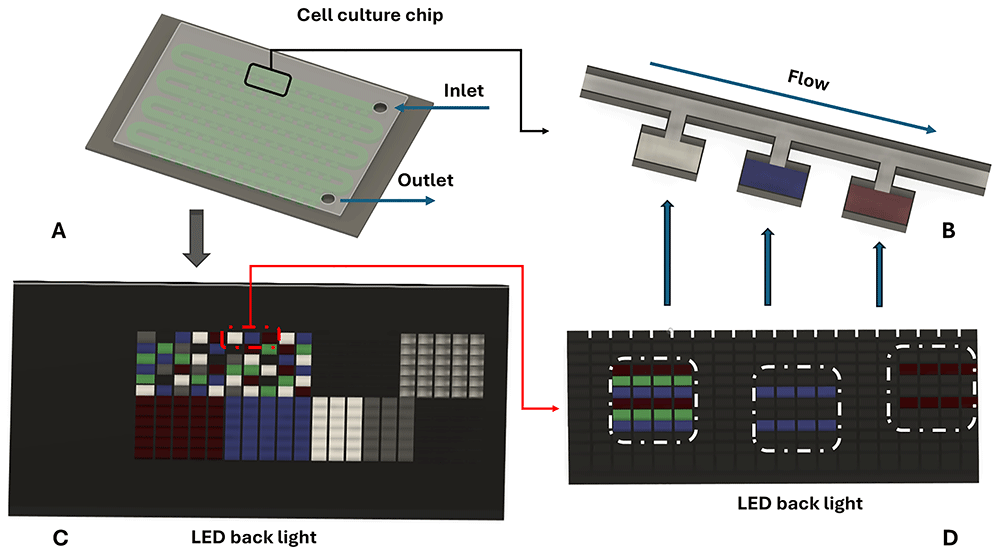
Figure 3. High-throughput LoC screening system to optimize growth parameters in microalgal cultivation.
A series of small cultivation chambers (A) are arranged along microfluidic channels providing fresh growth media (B). Below these chambers there is a platform with small LED lights (C) providing different combinations of wavelengths to each of the individual cultivation chambers (D). This allows the screening of numerous light conditions and regimes within one single LoC system (Bodénès et al., 2019).
Downstream process development
Microalgal biomass contains a cocktail of valuable functional molecules that must be gently extracted and separated prior to their formulation and use. However, these steps are very energy-intensive and technologically challenging, amounting to most of the overall process costs (Boboescu et al., 2018). For instance, various harvesting techniques have been conventionally employed, including flocculation, filtration and centrifugation (Fasaei et al., 2018). Flocculation has the lowest energy requirements, but requires chemicals, and the results vary based on the targeted species. Combinations of flocculation, membrane filtration, and centrifugation have been explored to further increase dewatering efficiency while reducing energy requirements (Kumar et al., 2023; Zhao et al., 2022). Cell lysis and product recovery, on the other hand, usually require harsh conditions, such as high temperature and pressure, as well as corrosive chemicals and hazardous solvents, often leading to the denaturation of more sensitive metabolites, making multiproduct recovery efforts very difficult (Boboescu et al., 2016; Slegers et al., 2020). Thus, there is a strong incentive to develop alternative approaches to circumvent these limitations. Among these, several LoC approaches have yielded promising results, suggesting that alternative solutions are available.
Cell harvesting has proven to be a challenging task prior to biomass processing because of its small size and similar density to that of water. This represents a critical step toward reducing the cost of subsequent treatment operations. For instance, a microfluidic chip has been developed to continuously concentrate microalgal cells by integrating microstructures retaining the cells while allowing the media to flow unhindered (Hønsvall et al., 2016). This allowed the successful concentration of Rhodomonas baltica, Chaetoceros sp., and Thalassiosira weissflogii microalgae, and could be an alternative for species that are difficult to harvest due to their properties or reduced size. Inertial forces are an efficient way to separate particles based on their different properties using hydrodynamic forces. The same mechanism was also used to concentrate various microalgal cells by driving them towards known equilibrium positions, while the excess media was removed through separate outlets, at a concentration factor of 3.28 (Wang & Dandy, 2017). The approach was demonstrated at large scale as well using Chlorella sp. and Spirulina sp. suspensions, reaching concentration factors of up to 3 (Carbonell Chacón, 2019; Liu et al., 2018; Salazar-González et al., 2024).
Once harvested, the microalgal biomass must be treated to extract and subsequently fractionate the targeted components. Some of the earlier attempts simply miniaturized existing techniques such as high-pressure homogenizers (Halim et al., 2012). However, the energy requirements for these approaches are still relatively high and very limited for LoC applications, as the subsequent use of solvents and acids would require compatible building materials such as glass and ceramics, further increasing production costs. Thus, alternative attempts have used microfluidic electroporation to weaken and permeabilize the cellular outer compartments by exposing cells to an electric field (Elersek et al., 2020; Kashyap et al., 2024; Li et al., 2024; Zhang et al., 2021). Exposing C. vulgaris cells to a continuous pulsed electric field successfully allowed the recovery of lipids at 51% efficiency in commercial solvents such as hexane. Thus, the focus shifted towards combining these electrical treatments with other approaches, such as mechanical stresses such as cyclic pressure, resulting in enhanced lipid extraction efficiencies (Bensalem et al., 2018; Carullo et al., 2022; Khoo et al., 2023).
Thus, these breakthrough innovations emphasize the potential of microfluidic approaches in providing high-throughput single-cell transformation, monitoring, and sorting, as well as product extraction and purification. Moreover, the nature of these devices allows the development of microfluidic chips that integrate several of these unit operations and work seamlessly together under continuous automated regimes for overall process optimization. Reliable integrated in-line process monitoring approaches were developed and used to, for instance, select different microalgal overproducers and optimize their growth conditions to maximize the production of target metabolites (Barata et al., 2016; Kerk et al., 2021; Zhou et al., 2021). The large volume of data generated by these platforms can be used within multifactorial or neural network models to design and optimize complete biotechnological processes with minimal investment and time. Moreover, if the production of larger quantities of biomass or product is required, the stacking and simultaneous operation of multiple microfluidic platforms can proportionally increase their throughput (Li et al., 2022; Riordon et al., 2019). Novel technologies, such as 3D printing, can be used to centrally or locally manufacture these platforms at a fraction of the costs required by automated liquid-handling robots. However, because these microfluidic platforms are usually made of resins, conventional processing agents such as organic solvents cannot be employed; thus, alternative strategies, such as external fields, are required.
External fields in LoC platforms
Using external fields throughout the different upstream and downstream steps to replace or enhance the effect of specific geometries and microstructures holds great potential for LoC process development. These represent the physical forces that can interact with specific particles based on their properties, intensity, and microfluidic geometries (Boboescu et al., 2018; Kieffer et al., 2025). The effects of these fields decrease with increasing distance between the source and target particles. Thus, operating microfluidic systems keeps these forces relevant and targeted. Under these conditions, the forces generated by these fields can sort, deflect, or trap particles, thus overcoming their specific gravity, Stokes drag force, and random Brownian motion. Consequently, they are perfect candidates for alternative downstream harvesting, extraction, and separation strategies (Table 1). Several previous studies have dealt with these forces in detail, characterizing them into various classifications such as active and passive techniques for particle separation (Ebrahimi et al., 2024; Mansor et al., 2025; Zhang et al., 2020). Here, however, we focus on the use of various external fields in conjunction with microfluidic channels and geometries to develop novel high-throughput process development platforms for microalgal biotechnology applications.
Table 1. External forces used for the continuous separation of particles.
These can be used to harvest and even sort microbial and microalgal cells of desired traits, as well as separate different compounds from a mixture once these cells have been lysed. Moreover, some of these fields such as acoustics and electric can be used for the cell lysis step as well (Liu et al., 2022).
| Fields | Force size (r)
dependence | Separation principles | Responsible
property of particle | Advantages | Disadvantages |
|---|
| Gravity | Centrifugal
force,
gravitational
force | Sedimentation field-
flow fractionation
(FFF), centrifugal
Chromatography | Density | High separation
efficiency | Require specific
sample, solvent or
membrane |
Electric field
(uniform) | Electrostatic
force | Electrophoresis (EP) | Charge, 𝜁 potential | Very high separation
and efficiency | Flow rates change
with chemistry |
Electric field
(nonuniform) | Dielectric
force | Dielectrophoresis (DEP) | Complex dielectric
constant (conductivity,
permittivity) | High throughput
and separation
efficiency | Requires high voltage.
Depends on medium
conductivity |
| Laser | Scattering
force | Photophoresis (PP) | Complex refractive
index (extinction
coefficient, refractive
index) | High separation
efficiency | Heating and
photodamage
to particles, low
throughput |
Magnetic field
(nonuniform) | Magnetic
force | Magnetophoresis (MP) | Magnetic
susceptibility | Very high
throughput, requires
relatively low cost | Requires long time
for magnetic bead
antibody labelling |
Magnetic field and
electric current | Lorentz force | Electromagnetophoresis
(EMP) | Conductivity | Very high efficiency | High cost |
| Ultrasonic wave | Acoustic
radiation
pressure | Acoustophoresis (AP) | Density,
compressibility | High separation
efficiency, controlled
cut off separation | Complex fabrication,
limited device material
to transmit acoustic
power efficiently |
Laminar and asymmetric flow
Using passive separation principles, such as drag forces, considerably simplifies the process because it does not require the generation of other external fields. In these cases, the driving force for separating the microparticles was generated by the architecture of the microfluidic device. Inertial microfluidics, for instance, represents a commonly used passive separation technique that employs straight, spiral, or serpentine microchannels (Tang et al., 2020). Shear inertial lift and wall lift are mostly present in devices with straight microchannels, whereas centrifugal forces and secondary flows dominate curved-channel platforms. These principles have been used to separate polystyrene beads of sizes ranging from 590 nm to 7.32 µm in a spiral microfluidic channel (Bhagat et al., 2008). Similarly, the insertion in a laminar flow of a structure of pillar arrays tilted at an angle generates unique flow streamlines, often exploited as deterministic lateral displacement of particles based on their size (Bhagat et al., 2008). Thus, larger particles displace laterally, while smaller particles tend to flow in a zigzag pattern through the pillars without experiencing lateral displacement, effectively achieving particle separation. This was demonstrated for instance using a microfluidic device to separate label-free viable from non-viable mammalian cells at 100% efficiency (Tottori et al., 2016). Moreover, a clog-free tunable microfluidic filter was developed to concentrate microalgal cells by exploiting hydrodynamic interactions around trilobite-shaped structures (Tottori et al., 2016). Although these passive approaches are promising, there are several significant limitations, such as particle-particle interactions, which can disrupt the equilibrium between the fluid and wall lift forces, severely impacting their efficiency.
Gravity and centrifugal forces
Gravity is one of the most commonly used external field methods for harvesting microalgal biomass. This exploits the gravitational and centrifugal forces acting on microalgal cells to concentrate them prior to their dewatering and subsequent treatment steps. Cell shape, size, and density determine whether using gravity represents a viable harvest method, as most of these species measure only a few microns and have a negligible specific gravity difference from that of their culture media (Roy & Mohanty, 2019). Most reported studies using gravitational forces for these purposes used conventional technologies, such as settling tanks. For instance, it had been demonstrated that both Scenedesmus dimorphus and C. vulgaris microalgae can be harvested through gravity sedimentation using a downward-flow settling tank with a maximum separation efficiency of 80% separation efficiency (Roy & Mohanty, 2019). However, this approach is limited by the morphology of the microalgal cells, their ability to aggregate, and long settling times. In addition to their incompatibility with continuous processes, LoC applications using passive sedimentation are not feasible.
One way to circumvent these limitations is to use centrifugal forces. These strategies can significantly accelerate the process and can be developed to work under continuous modes. However, one cannot simply scale down a centrifuge because the sedimentation phenomena are weak in microfluidic devices owing to the small Stokes values of the microalgal cells. Among the first microfluidic centrifugation attempts were the so-called “lab-on-a-disk” (LoD) systems, in which a disk, acting as the device foundation is rotated by a motor, generating a primary flow in a linear, radially outward direction. These platforms were specifically successful in processing blood samples to separate their components in a gradient medium (Kinahan et al., 2014). However, only recently have truly LoC centrifugation devices been successfully demonstrated. For instance, vortical flows have been generated by passively exploiting the geometry and topology of microfluidic devices without requiring motor-activated centrifugal forces. When a side chamber or repeating topological features, such as post arrays, are incorporated in microfluidic devices, hydrodynamic rotation and flow recirculation generate inertial effects that can be exploited to separate particles based on their size and density (Equation 1 and Equation 2) (Ahmed et al., 2020). For instance, a “vortex gear” was developed and successfully demonstrated for on-chip applications, by specifically generating two adjacent vortices opposite to each other, similar to a set of gears (Tsai et al., 2018). Moreover, microfluidic vortex shedding has been used to deliver mRNA into primary human T lymphocytes through cell membrane poration by integrating post arrays into microfluidic chips (Jarrell et al., 2019). Thus, these approaches hold great potential for LoC algal applications, not only for downstream separation strategies but also for the upstream genetic transformation of overproducing cell lines.
Buoyancy force is also present in addition to centrifugal and hydrodynamic drag forces. These forces create a steady-state lateral velocity (u) that depends on the particle diameter (Dp), particle, fluid density (ρp, ρf), and distance from the center of rotation (rd). The downstream velocity (v) depends on the hydrodynamic resistance of the channel (Rtot), input and output channel distances, and area of the channel (A).
Optical forces
A focused beam of light can be used to manipulate the particle towards which is directed by exploiting the mismatch in the refractive index between the cells and the medium. This is triggered by two forces: optical scattering, which tends to push the cells and particles away, and gradient forces, which attract particles with the highest refractive index towards the beam maxima (Equation 3 and Equation 4) (Yan et al., 2017). Thus, an optical sorter, which exploits the interaction of cells and other particles with an optical lattice, has been successfully employed, yielding sorting efficiencies of close to 100%, exceeding thus values reported for fluorescence-activated cell sorting (MacDonald et al., 2003). Moreover, efficient identification and sorting of individual leukemia cell lines have been demonstrated by combining multichannel microfluidics with laser tweezers Raman spectroscopy (Lau et al., 2008). The design was adjusted by identifying the optimal hydrodynamic focusing and pinch-flow fractionation based on device architecture, flow velocity, and laser intensity. Recent attempts have combined photoconductive substrates with transient electrodes to manipulate microparticles (Wu, 2011). These so called “optoelectronic tweezers” have been thus reported to deliver high-specificity single-particle manipulation under 100 000 times less optical intensity. However, integrating these devices into existing LoC platforms has proven challenging owing to the lack of fluidic components (Yan et al., 2017). Although there have been no studies using these separation principles in the context of LoC microalgal process development, the untapped potential is noteworthy because of its relative simplicity, low energy requirements, and easy integration on microfluidic platforms.
where c is the speed of light, m is the ratio between the refractive indices of the particle and the medium, and r is the vector of the position.
Electric field
The use of electric fields for various LoC biotechnological applications is very popular, owing to their relative simplicity and high tunability. The electric field manifests three forces on the cells and other microparticles: electrophoresis and dielectrophoresis. Electrophoresis refers to the migration of charged particles in the presence of a uniform electric field. This migration is primarily determined by the intensity of the applied electric field, electrophoretic mobility of the particle (determined by its surface charge), and electroosmotic flow (Equation 5). Among these approaches, capillary electrophoresis and miniaturized free-flow electrophoresis are the most commonly used methods. These proved efficient in separating nanometer-sized particles such as fluorescent molecules, proteins, enzymes, and even gold nanoparticles (Jeon et al., 2016; Jozanović et al., 2023; Salafi et al., 2017).
where a is the radius and E is the electric field.
Dielectrophoresis refers to the migration of a polarizable particle under the influence of an inhomogeneous electric field based on the difference in polarizability between microparticles and microfluidic media (Equation 6). Given these phenomena, a wide range of particles, such as cells and biomolecules, can be manipulated using dielectrophoresis. Dielectrophoresis phenomena have been successfully developed and used in different microalgal biotechnology applications, such as strain selection, analysis, separation, and concentration (Abt et al., 2020). Thus, these approaches allow for a wide range of highly tunable cell manipulation techniques such as focusing, trapping, concentration, filtering, and separation, which are often critical steps in microalgal biotechnology processes. However, certain limitations must be overcome, such as the large electric field requirements for smaller targeted particles to achieve forces of sufficient magnitude.
where r is the radius of the spherical particle; εm is the permittivity of the medium; ∇ is the del operator; and |Erms|2 is the squared electric field intensity (root mean square), which is equal to Ep2/2. The terms in the braces are the real parts of the Clausius–Mossotti factor, which is usually denoted by Re[Ke]. Here, εp, σp, and σm are the permittivity of the particle, conductivity of the particle, and conductivity of the medium, respectively; ω is the angular frequency defined by 2πf, where f is the frequency of the field, and τ = (εp + 2εm) / (σp + 2σm). The dielectrophoretic force depends on the frequency; when ω < 1/τ , the force is controlled by the conductivity, and when ω >1/τ , the force is governed by the permittivity.
Magnetic field
The magnetic force exerted on a particle is mostly governed by the difference between the magnetic susceptibility of the particle in question and the medium (Munaz et al., 2018). Additional factors such as particle volume and various properties of the magnetic field are also significant for the extent to which the magnetic force is felt by the particles. These can move towards a higher magnetic field (positive magnetophoresis) or away from the magnetic source (negative magnetophoresis) owing to the mismatch between the magnetic susceptibility of the particle and the media (Equation 7). Since most biological particles, such as cells and molecules, are diamagnetic, strategies such as magnetic labels and tweaking of the magnetic susceptibility of the media have been developed to achieve a sufficient particle-migration force (Sung et al., 2017). Numerous studies have reported efficient separation of microalgal cells using these techniques. For instance, the harvesting efficiency of S. dimorphus microalgal cells has been increased from 60% to 85% by optimizing the magnetophoretic separation process and the characteristics of the magnetic nanoparticle labels (Ge et al., 2015). Moreover, recent efforts have demonstrated label-free separation of biological compounds by negative magnetophoresis. Microfluidic devices have been developed to continuously separate paramagnetic cells such as deoxyhemoglobin red blood cells and diamagnetic cells such as white blood cells from blood samples based on their native magnetic properties, with efficiencies of 93.5% and 97.4%, respectively (Han & Frazier, 2006).
Thus, the force on a particle in a magnetic field depends on the difference in the magnetic susceptibility of the particle and the fluid (Δχ = χp − χf), the magnetic flux density (B), and its gradient (∇B). μ0 represents vacuum permeability.
Electromagnetophoresis exploits the Lorentz force that manifests when a magnetic field is combined with an electric current (Equation 8). Even though the phenomena are known for quite some time, more recent publications have revisited these strategies to exploit their potential to manipulate micro- and nanoparticles. For instance, the electromagnetic migration of polystyrene particles with various diameters ranging from 3 to 22 µm has been demonstrated (Namba et al., 2000). More recently, the electromagnetophoretic migration of nonconductive particles such as yeast cells has been observed in a capillary flow system and used to measure the dynamic binding force of the interaction between mannose chains outside the yeast cell and Concanavalin A (Iiguni & Watarai, 2010) thus, even if not yet proven directly in microalgal biotechnology processes, these approaches hold great potential for a wide range of upstream and downstream applications.
where μ is the magnetic permeability of the liquid medium, H is the magnetic field strength, j is the current density, V is the volume of the particle, and σ1 and σ2 are the conductivities of the spherical particle and medium, respectively.
Ultrasonic waves
Ultrasound is a mechanical acoustic wave with a frequency range of approximately 10 kHz–20 MHz. Water is an excellent medium for the propagation of acoustic waves, as indicated by its low attenuation coefficient compared with electromagnetic or light waves. At low frequencies (20–100 kHz), sound waves convey high energy to algal cells by cavitation and shear effects (Chia et al., 2019). On the other hand, high-frequency ultrasound waves of 1–10 MHz, could interact with the resulting microalgal particles through acoustophoresis (Figure 4). Two superimposed high-frequency sound waves can constructively interfere, generating a standing wave characterized by regions of maximal pressure oscillation amplitude, known as antinodes, and regions of zero displacement, known as nodes. The susceptibility of a suspended particle to a resonant ultrasonic field depends on the acoustic contrast factor (determined by its density and compressibility), relative to the suspending fluid (Urbansky et al., 2019).
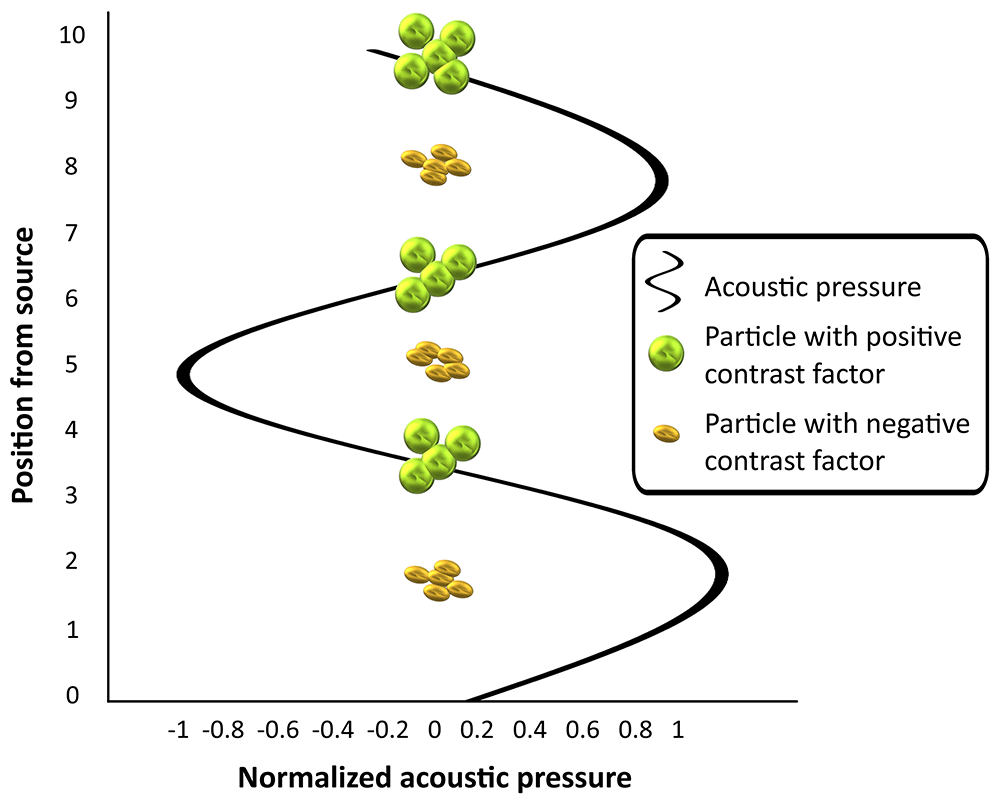
Figure 4. Particle response to a standing acoustic wave based on their acoustic contrast factor.
A positive contrast factor triggers particle migration towards the acoustic pressure nodes, while a negative contrast factor determines the particles to migrate towards the acoustic pressure antinodes.
The acoustic contrast factor (ϕ) can be calculated from the density (ρ) and compressibility (β) of the particles (p) and medium (m), which are suspended in (Equation 9) (Yosioka & Kawasima, 1955).
Particles with ϕ < 0 move towards the antinodal plane, whereas particles with ϕ > 0 move towards the nodal plane. In case the acoustic contrast factor is 0, the particles will not move in any direction (Leong et al., 2013). The underlying forces causing this movement and the accumulation of particles at the nodal or antinodal planes are called primary and secondary radiation forces, respectively. The former is a second-order nonlinear force that can be calculated from the particle radius (R), wavenumber (k), specific energy density (Eac), distance from the nodal point of the standing wave (x), and acoustic contrast factor (Equation 10).
Secondary radiation force plays a key role in harvesting microalgae through acoustic forces. This force moves particles within a plane together, which can result in the formation of larger aggregates and, therefore, easier harvesting through enhanced sedimentation forces (Leong et al., 2013). When an aqueous emulsion is subjected to a standing ultrasonic wave field, the primary acoustic radiation force (particle – acoustic field interactions) is expected to drive some of these particles towards the pressure antinodes of the standing wave field, while others migrate to the nodes, effectively separating them based on their different properties. Additionally, some of these components, such as oil droplets, coalesce owing to secondary acoustic forces (particle-particle interactions) and hydrophobic interactions between the triglyceride molecules, further aiding their separation from the rest of the mixture. These principles have been successfully applied to separate microalgal cells from growth media in small batch volumes and low-throughput systems (Hincapié Gómez & Marchese, 2015; Kumar et al., 2023). The cells were observed to migrate towards the nodes or antinodes of the standing wave and form agglomerates, which ultimately precipitate (Aligata et al., 2019). This could ultimately reduce the cost of algae harvesting by approximately two orders of magnitude.
Novel LoC high-throughput process development platforms
Combining these microfluidic systems with one or more external fields could provide a comprehensive high-throughput automated process development platform or even complete ingredient extraction, fractionation, and stabilization technology. Recently, we proposed a combination of acoustic fields and microfluidic channels for sorting microalgal cells of the desired biomass composition, as well as mildly disrupting and separating most of their main components (Kieffer et al., 2025). When coupled with a cell cultivation stage, this could lead to the development of a complete LoC solution to develop new microalgal biotechnological processes or even achieve high-precision production of functional ingredients (Figure 5). For instance, multiple small cultivation chambers or microreactors can be used for high-throughput screening of different process parameters, media compositions, and even mechanical stress to evaluate their impact on small populations of microalgal cells or even single cells. We recently demonstrated that by subjecting Arthrospira platensis cells to mild acoustically induced mechanical stimuli, biomass composition can be precisely manipulated with minimal negative impact on their growth (Marsousi et al., 2025). In- or online monitoring solutions can detect if the presence of desired characteristics, such as overexpression of a certain compound, is present among these cells and release them to the downstream stage of the LoC platform (Havlik et al., 2013; Porras Reyes et al., 2024). High-frequency acoustic standing waves have been envisioned as a label-free approach to sort the desired cell or group of cells and send them to the subsequent cell lysis stage, whereas the rest of the cells can be deviated back to the cultivation chambers or discarded (Kieffer et al., 2025). High-frequency acoustic pulses can be used to lyse microalgal cells, releasing their lipid droplets, chloroplasts containing photosynthetic pigments, protein-rich pyrenoids, nuclei, and starch granules. We recently demonstrated the increased efficiency of this cell disruption method compared to established benchmark technologies (Boboescu et al., 2022). Subsequently, the shear forces aid in breaking the different non-covalent bonds, keeping the cell components together, while preserving at the same time their structural integrity. This represents a critical condition for acoustic fractionation of purified compounds. Subsequently, by increasing and fine-tuning the acoustic frequencies, these particles can be separated into different spatial locations (nodes and antinodes), allowing the recovery of each of these fractions in distinct outlet streams (Figure 6).
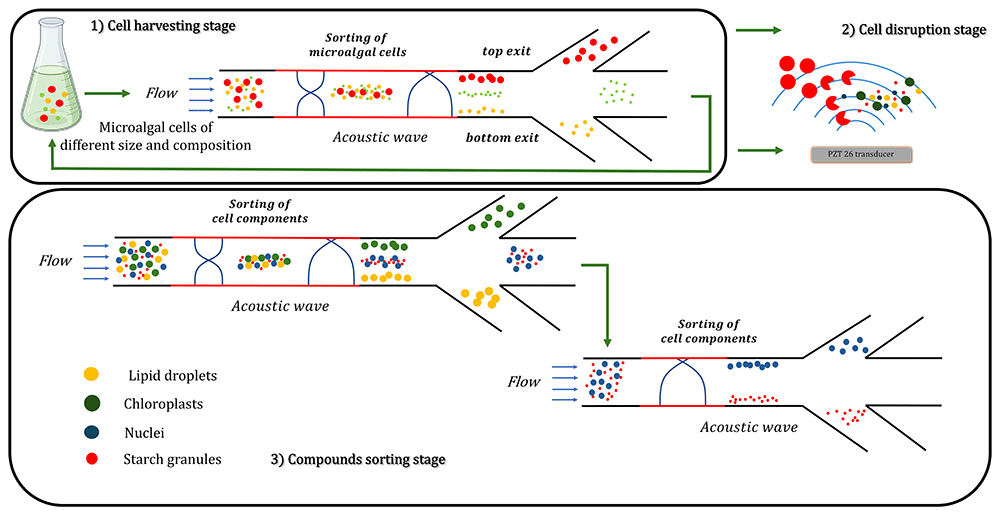
Figure 5. Acoustofluidic process to concentrate microalgal cells and extract their main components.
A heterogenous population of microalgal cells of the same species but with different sizes and biomass composition pass through a cell sorting stage where they are being separated based on their differences in acoustic properties (specific density and compressibility). The cells having the desired traits (e.g. high lipid content) are being diverted to the cell lysis stage via high-frequency acoustic standing waves. Here, lower frequency pulses mildly disrupt the microalgal cells and release their main components which are being further separated via successive stages based on their size and acoustic properties using higher frequency acoustic fields. Adapted from (Kieffer et al., 2025).
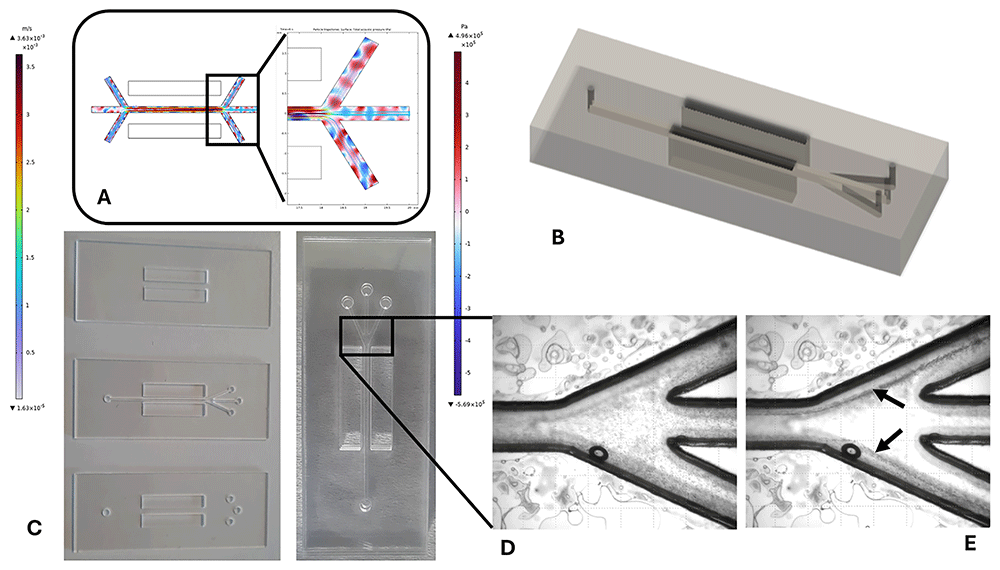
Figure 6. The process of designing, fabricating and testing acoustofluidic sorting systems.
The devices are first designed and modeled (A) to understand the nature of the generated acoustic radiation (right acoustic pressure bar) and how will this interact with the microalgal cells flowing through the microchannel (left particle velocity bar). This stage allows for further design optimization to increase the separation efficiency of the target cells and/or components. Next, the data is used to design (B) and fabricate (C) the microfluidic chip. This is used to perform subsequent tests to elucidate these interactions. Particles are observed flowing through the microchannel in an equally dispersed manner when the acoustic field is switched off (D), as well as being concentrated towards the two lateral outlets (highlighted by the two arrows) when the acoustic field is turned on (E).
We recently demonstrated that various fine structures can be 3D printed using alternative bio-based materials such as algal oils, which could be suitable for mass manufacturing of microfluidic structures, including acoustic LoCs (Fonzo et al., 2025). Microfluidic systems have been used to perform various processes under a higher output. For instance, high-throughput blood cell focusing and plasma isolation have been reported using spiral inertial microfluidic devices, increasing throughput from ml/hour levels to ml/min (Xiang & Ni, 2015). Moreover, stacking together multiple microfluidic platforms allows a significant throughput increase by scaling-out the process, for example, the company Capsum (Wu et al., 2021). Simple microfluidic devices have been successfully stacked to achieve the high-throughput electrokinetic manipulation of particles and cells (Xuan, 2019; Zhu et al., 2016). Researchers from the University of Maine and Harvard University Wyss Institute for Biologically Inspired Engineering have developed a low-cost microfluidic water purification system intended for developing countries. These devices are designed to operate continuously in parallel for prolonged periods of time at dozens of milliliters of treated water per minute per chip.
Two main drawbacks to the process economy are foreseen: manufacturing costs and productivity. The chip cost can decrease from >100 euros/device to <1 Euro per device if the production volume of chips increases from <100 up to millions of units (Jenkins et al., 2015; Su et al., 2016) with standard manufacturing technology, or even lower when using novel manufacturing approaches such as 3D printing (Felton et al., 2021). Furthermore, in contrast to standard equipment that can depreciate over the years, chips can be considered consumables; therefore, they are expected to be replaced after a certain time. Productivity is determined by the flow conditions per chip, which are intrinsically limited by the channel size. The flow rate typically ranges from a few mL min-1 to hundreds of mL min-1 however, it has been proven that a value of several mL min-1 can be achieved with novel technologies (Kojic et al., 2019). However, even if these advancements in chip manufacturing and parallelization could make this approach suitable for the production of specialty ingredients and process development applications, actual industrial-scale processing would require scaled-up technological solutions for the bulk products. Thus, the question remains whether the electrified, non-thermal, and solvent-free processes developed at the microfluidic scale can be translated into an industrial scale and if they are feasible.
Scalability and feasibility of novel electrified and non-thermal processes
Even if the promise of a microbial-based economy has often been alluded to, it always seems to be just out of reach, even if pilot facilities have been successfully operated for quite some time now (Barceló-Villalobos et al., 2019; Fuentes-Grünewald et al., 2021). One of the main reasons for this is that extracting each of the targeted cell components requires a different set of unit operations, each with specific parameters and solvents. Moreover, most often, once a certain compound is extracted, the rest of the biomass, representing more than 90% of the initial amount, cannot be further valorized, becoming thus a waste (Banu et al., 2020). Therefore, the only way microalgal-based specialty components can become a reality is to develop multiproduct biorefineries, with most of the different unit operations condensed into a single processing step (Lam et al., 2018; Slegers et al., 2020). The solution can be used to exploit specific forces triggered by external fields such as electrical fields, lasers, microwaves, and ultrasound to process microbial cells and their components (Pipliya et al., 2025).
At this stage, it is very difficult to provide accurate predictions of how these novel biorefinery approaches are compared to traditional technologies. Our recent observations in high-frequency acoustic harvesting, disruption, and separation of T-iso microalgae cells and their components revealed that lower frequencies of 20 kHz required a minimum of 4500 J to disrupt 90% of the microalgal cells, while only 1000 J was required at the highest investigated frequency of 1146 kHz (Boboescu et al., 2022). This translates to a reduction in energy requirements by up to six times when compared with current industry standards, such as bead milling. More than 90% of the energy introduced into the system for cell disruption is dissipated as heat in classical mechanical operations (Lee et al., 2017; Postma et al., 2015; Postma et al., 2017). Thus, electrical or acoustic fields can reduce the input of energy with respect to mechanical techniques, while preserving product functionality (Günerken et al., 2015; Lee et al., 2017). Similar energy requirements are extrapolated for the acoustic harvesting of microalgal cells as well, the harvesting efficiency can reach up to 70 ± 5% with an energy consumption of 3.6 ± 0.9 kWh·m-3 using an ultrasonically enhanced settler (Hincapié Gómez & Marchese, 2015). While these values are higher than passive approaches such as settling and flocculation, they could become significantly lower than active ones such as centrifugation (8 kWh·m-3) and even membrane filtration (9.7 kWh·m-3) (Castro-Muñoz & García-Depraect, 2021; Najjar & Abu-Shamleh, 2020). Moreover, filtration technologies are plagued by fouling issues, and flocculation is slow and not suitable for all microalgal species, whereas industrial centrifuges are expensive and require high maintenance. Acoustic harvesters are easily adaptable to continuous processes, have no moving parts, and are suitable for most microalgal species by tuning the frequency and intensity of acoustic standing waves.
Novel approaches include the extraction and separation of various microalgal components. If microalgal multiproduct biorefineries, for instance, could be developed using current benchmark extraction and purification technologies for carbohydrates, proteins, pigments, and lipids, these would represent up to 80% of the total process costs (Lam et al., 2018). Moreover, the harsh conditions used during these approaches could cause the denaturation of many of these compounds, and thus, their techno-functional and bioactive properties. Replacing these with milder electrified approaches such as acoustics, compound extraction, and purification would not only reduce microalgal biorefinery costs but also potentially enhance the functionality of the recovered ingredients (Corrêa et al., 2020; Corrêa et al., 2021; Pereira et al., 2023). Some non-thermal electrified processes, such as acoustic, pulse electric field, microwave, pressure, and cold plasma, have been demonstrated on a large scale under continuous or semi-continuous modes, suggesting their potential in industrial applications (Gusbeth, 2025; Rao et al., 2023; Yadav & Gogate, 2023). Even if the impact of these emerging technologies on the process economy has never been quantitatively addressed in the literature, it can be speculated that the sharp condensation of the classical cascade of unit operations also reduces labor and investment costs. In addition, the energy costs, especially for cell disruption and solvent evaporation, are expected to be significantly reduced.
Conclusions
Significant breakthroughs are required to fully enable biotechnological applications to generate some of the most used functional ingredients and platform molecules. This often translates into large, expensive, and time-consuming process development platforms that are out of reach for most parties involved. Microfluidic devices present several advantages over these classic approaches by providing inexpensive systems with a small footprint for high-throughput screening and optimization campaigns with single-cell resolution for analysis and control. Moreover, these platforms can be used in conjunction with external fields to retain, stress, transform, and sort cells and even target components in unique ways. This makes them perfect candidates for cost-effective microalgal biotechnology development platforms and production of specialty ingredients. This could lead to the development of novel large-scale electrified microalgal processing technologies to circumvent the need to use multiple complex unit operations and hazardous chemicals. An acoustofluidic device was proposed and briefly described as a potential novel automated process development and production platform. In addition, the scaling-up feasibility of such technologies is discussed, including how they can be compared from a financial perspective with benchmark approaches. We expect that these novel precision cultivation, control, and extraction techniques will enable new biotechnological solutions to replace much of the conventional carbon-intensive processes.
Ethics and consent
Ethical approval and consent were not required.