Introduction
The treatment of third-country nationals (TCNs) who find themselves in irregularised situations of stay and residence has consolidated as a critical issue in contemporary European Union (EU) migration policies. Among these TCNs, a specific subset has gained attention: those commonly referred to as ‘non-removable’ or ‘non-deportable’. These individuals typically remain in EU Member States under unique and uncertain circumstances. While they are often ‘known’ to national authorities, their expulsion is either not practically feasible or has been postponed or suspended due to various grounds, including humanitarian, health-related or other practical considerations.
Recently, EU Member States have grappled with establishing policies aimed at dealing with this unique group of TCNs. These policies officially aim at ‘balancing’ an ‘effective’ enforcement of immigration laws (i.e. chiefly increasing the number of expulsions) with the need to uphold fundamental rights enshrined in the EU Charter of Fundamental Rights (EU Charter) and other international human rights obligations. However, a metaphorical balance between ‘effectiveness’ and ‘human rights’ works to the detriment of the latter. It wrongly assumes that the EU Charter can be jeopardised in the name of ‘firm’ migration policies. Derogations or exceptions, however, negate the absolute and essential nature of some of these rights and their intrinsic link to human dignity. These complexities are amplified by diverse and diffuse national policy approaches and administrative practices covering irregularised TCNs across EU Member States.
This Article focuses on the scope and implementation of policy practices and approaches in seven EU Member States – Belgium, Germany, Greece, Italy, Spain, Sweden and Slovenia. It seeks to provide a comparative snapshot of the situation of non-expellable TCNs considering current national policy practices and their implementation dynamics in these selected countries. The analysis unpacks the notion of ‘effectiveness’ in these policies. Furthermore, the Article examines key issues and barriers to effective access to socio-economic fundamental rights by non-expellable TCNs in these EU member states, in particular access to healthcare, social assistance, adequate housing, work and justice, which are crucial for fostering a dignified life for every person.
Following this introduction, Section 2 analysis the relevant EU policy framework covering TCNs expulsions, chiefly the so-called EU Returns Directive, with particular attention to the provisions covering TCNs who cannot be expelled. Section 3 examines existing policy and legal approaches to non-removable irregularised TCNs, and the grounds for the postponement or suspension. Section 4 examines selected socio-economic rights, and access to effective remedies when accessing essential services, and highlights the extent to which irregularised, non-removable TCNs can lead a life of dignity. It explores barriers to these fundamental rights, and some of the challenges faced by individuals that complicate their journeys and lived experiences.
Methods
The analysis is based on desk research grounded on an exhaustive evaluation of relevant primary and secondary sources, as well as national reports conducted by MORE partners. The national reports were based on the extensive analysis of academic literature and publicly available policy documents related to not only return and readmission policies but also on hegemonic alternatives to these policies. That is, public-led initiatives, at any level of the state, that are part of return procedures, or which represent an alternative to return, and their enforcement mechanisms or that extend rights to irregularised TCNs.
Each MORE national partner conducted interviews with relevant stakeholders who are active in the field of migration management, particularly, in returns enforcement processes or decision-making or working on alternative regulations and practices to return and its enforcing mechanisms. Interviewees included a diverse range of key stakeholders relevant to addressing this issue, comprising policymakers, policy implementing authorities, NGO and IGO workers, policy analysts, academics, lawyers, police forces, and human rights monitors (see Table 1). This diversity ensured a broad and multi-faceted discussion on the treatment of irregularised third-country nationals. The interviews took place between February and June 2024. To ensure coherence across all participating counties, the partners followed common guidelines corresponding to the five guiding themes of the MORE project. Interviews were recorded and subsequently transcribed. A grounded analysis approach was utilised to examine and interpret the data. This process involved an in-depth review of the transcripts to assign initial codes based on the projects guiding themes.
Table 1. Interview participants.
| Code | Country | Role | Date |
|---|
| 1 | WP2-BE-IV-PM1 | Belgium | Academic | 12/03/2024 |
| 2 | WP2-BE-IV-PM2 | Belgium | NGO social worker – social support | 10/04/2024 |
| 3 | WP2-BE-IV-PM3 | Belgium | Lawyer and legal expert on migration law | 15/04/2024 |
| 4 | WP2-BE-IV-PM4 | Belgium | NGO social worker – social support | 17/04/2024 |
| 5 | WP2-BE-IV-PM5 | Belgium | NGO social worker – detention | 14/05/2024 |
| 6 | WP2-DE-IV-PM1 | Germany | NGO social worker – social support | 29/02/2024 |
| 7 | WP2-DE-IV-PM2 | Germany | Lawyer and legal expert on migration law | 04/03/2024 |
| 8 | WP2-DE-IV-PM3 | Germany | Expert on Roma issues | 23/04/2024 |
| 9 | WP2-DE-IV-PM4 | Germany | Expert on Roma issues | 23/04/2024 |
| 10 | WP2-DE-IV-PM5 | Germany | Lawyer and legal expert on social law | 03/05/2024 |
| 11 | WP2-DE-IV-PM6 | Germany | Head of a local immigration authority | 30/05/2024 |
| 12 | WP2-DE-IV-PM7 | Germany | Local immigration authority | Multiple dates |
| 13 | WP2-DE-IV-PM8 | Germany | Public officer – Ministry of the Interior | 27/05/2024 |
| 14 | WP2-DE-IV-PM9 | Germany | Public officer – Ministry of the Interior | 27/05/2024 |
| 15 | WP2-DE-IV-PM10 | Germany | Local immigration authority | 07/05/2024 |
| 16 | WP2-DE-IV-PM11 | Germany | Local immigration authority | 07/05/2024 |
| 17 | WP2-DE-IV-PM12 | Germany | NGO social worker – labour market | 06/05/2024 |
| 18 | WP2-DE-IV-PM13 | Germany | NGO social worker – labour market | 06/05/2024 |
| 19 | WP2-ES-IV-PM1 | Spain | NGO social worker – social support and academic | 25/04/2024 |
| 20 | WP2-ES-IV-PM2 | Spain | Lawyer and legal expert on migration law | 20/02/2024 |
| 21 | WP2-ES-IV-PM3 | Spain | Lawyer and legal expert on migration law | 20/02/2024 |
| 22 | WP2-ES-IV-PM4 | Spain | Lawyer and legal expert on migration law | 20/02/2024 |
| 23 | WP2-ES-IV-PM5 | Spain | Lawyer, legal expert and previously in government | 11/04/2024 |
| 24 | WP2-GR-IV-PM1 | Greece | NGO social worker – social support | 11/04/2024 |
| 25 | WP2-GR-IV-PM2 | Greece | IGO worker – returns | 25/04/2024 |
| 26 | WP2-GR-IV-PM3 | Greece | Academic | 15/04/2024 |
| 27 | WP2-GR-IV-PM4 | Greece | Lawyer and legal expert on human rights | 18/04/2024 |
| 28 | WP2-GR-IV-PM5 | Greece | Public officer – Police | 29/04/2024 |
| 29 | WP2-GR-IV-PM6 | Greece | IGO worker – returns | 26/04/2024 |
| 30 | WP2-IT-IV-PM1 | Italy | Lawyer and legal expert on migration law | 16/04/2024 |
| 31 | WP2-IT-IV-PM2 | Italy | Lawyer and legal expert on migration law | 22/04/2024 |
| 32 | WP2-IT-IV-PM3 | Italy | Human rights monitor | 23/04/2024 |
| 33 | WP2-IT-IV-PM4 | Italy | Public social worker – detention | 29/04/2024 |
| 34 | WP2-IT-IV-PM5 | Italy | Lawyer and legal expert on migration law | 07/05/2024 |
| 35 | WP2-IT-IV-PM6 | Italy | Project manager promising practices project | 25/05/2025 |
| 36 | WP2-SE-IV-PM1 | Sweden | Academic and in government | 23/05/2025 |
| 37 | WP2-SE-IV-PM2 | Sweden | Academic | 28/05/2024 |
| 38 | WP2-SE-IV-PM3 | Sweden | Public officer – Immigration Agency | 29/05/2024 |
| 39 | WP2-SE-IV-PM4 | Sweden | Public officer – Immigration Agency | 04/06/2024 |
| 40 | WP2-SE-IV-PM5 | Sweden | Public officer – Ministry of Justice | 05/06/2024 |
| 41 | WP2-SL-IV-PM1 | Slovenia | IGO worker – Asylum | 19/04/2024 |
| 42 | WP2-SL-IV-PM2 | Slovenia | Human rights monitor | 23/04/2024 |
| 43 | WP2-SL-IV-PM3 | Slovenia | Public officer – Police | 23/04/2024 |
| 44 | WP2-SL-IV-PM4 | Slovenia | Public officer – Detention | 23/04/2024 |
| 45 | WP2-SL-IV-PM5 | Slovenia | Public officer – Immigration Agency | 29/04/2024 |
Ethics statement
Ethical approval for this research was sought and received by the Comisión de Bioética de la Universidad de Barcelona (CBUB - Institutional Review Board IRB00003099), on July 20, 2023.
Ethical guidelines and standard procedures were established for all interviews, including the use of standardised informed consent forms and anonymisation processes. Any identifying information was strictly excluded from the analysis. Written or oral consent was obtained from all participants. Although written consent was the preferred method, certain participants chose to give oral consent exclusively, preferring not to leave a written trace of their involvement. Consent included permission to record the interviews.
To protect the anonymity and confidentiality of the interview participants, and to facilitate data management, each participant was assigned a code, following the pattern <Task number-Country-Focus group number-Participant number>. As it is necessary to be able to re-trace a participant's identity to fully respect the right to withdraw from the study, in this context it is more relevant to talk about “pseudonymisation” than of full anonymisation. Additionally, any information that might identify a participant was strictly excluded from the analysis process.
The assessment presents a comprehensive review of administrative practices and prevailing policy approaches in the seven EU Member States: Belgium, Germany, Italy, Greece, Slovenia, Spain and Sweden. It considers key policy and legal developments up to July 2024. The Article uses the terms ‘non-deportable’, ‘non-expellable’ and ‘non-removable’ interchangeably. The administrative category of ‘irregularised, non-removable’ TCNs does not include people seeking asylum and refugees. The analysis, however, does not provide a country overview of de facto and de jure approaches to regularisation mechanisms and procedures.
The EU return directive and non-removable TCNs
The Return Directive 2008/1151 aimed to provide horizontal rules to facilitate a cohesive approach to expulsions procedures and standards across the EU.2 The Directive grants EU Member States the option – not the legal obligation – to grant a residence permit on ‘compassionate, humanitarian, or other reasons’ (Article 6) to non-removable TCNs. Article 9 of the Directive (‘postponement of removal’) foresees the obligation for EU Member States to formally suspend removal in cases where expulsions would violate the principle of non-refoulement, or when the competent national authority reviewing an appeal against an expulsion decides to temporarily suspend the enforcement of a removal order. Beyond these ‘absolute bans’,3 Article 9.2 of the Directive does not require EU Member States to suspend removal even where it is simply unfeasible both in law and practice.
While the EU Return Directive fails to provide a harmonised approach covering and addressing the situation of legal limbo resulting from the protracted non-deportability of irregularised TCNs, some of its provisions (e.g. chiefly Article 14 which deals with ‘Safeguards pending return’) lay down clear legal obligations to EU Member States, which when read in combination with the EU Charter) and CJEU case-law, lay down a ceiling of administrative guarantees and rights which national policies cannot go below. However, as recognised by the EU Fundamental Rights Agency (FRA), while Article 9 expressly acknowledges that expulsion may be hindered by legal, practical, or humanitarian considerations, the Directive ‘provides only limited guarantees to ensure treatment in accordance with fundamental rights standards’4. The resulting picture is one of hyper heterogeneity, and fragmentation across EU Member States. This is so as regards both the transposition and practical implementation of the Return Directive’s provisions, and most importantly those related to non-returnable irregularised TCNs.5
In its 2013 evaluation of the Return Directive, the European Commission laid down a strict understanding of the policy notion of ‘effectiveness’, interpreting it as a statistical exercise with the overarching aim of increasing return rates. The evaluation raised concerns around the Directive’s lack of influence over the adoption of harmonised domestic procedural safeguards by EU Member States, including as regards policies on the application of safeguards in the return processes and subsequent stays or postponements of removals, accessing effective remedies and the provision of legal assistance to individuals impacted6. The evaluation also featured the Commission’s own interpretation of the grounds on which EU Member States should be obliged to suspend or postpone expulsions versus those where they would have the option to do so7. According to the evaluation, Article 9 of the Returns Directive includes both ‘shall’ and ‘may’ provisions. According to the Commission’s interpretation Member States are obliged to postpone removal of a TCN if it would violate the principle of non-refoulement, i.e. if the life or freedom of the TCN could be threatened. A Member State is also forced to postpone the return of a TCN if their enforcement is temporarily suspended by a competent judicial or administrative authority or a competent body composed of members who are impartial and who enjoy safeguards of independence (Article 13.2). However, ‘it is not compulsory for Member States to postpone removal if the physical or mental capacity of an individual person is not sufficient. Furthermore, Member States do not necessarily have to postpone removal if there are any technical reasons (such as lack of transport, failure of identification etc.)’. (Emphasis added).
That notwithstanding, the Directive and the Commission’s evaluation problematically blur the grounds where postponement or freezing of removal is a duty - not an option - and nurtures legal grey zones in its practical application. As previously argued by Majcher (2020), some of the grounds classified as ‘optional’ – including those qualified as ‘technical’ - may in fact entail an obligation for national authorities not to issue a Return Decision, or not to expel the person concerned. This leads to uncertainty regarding the exact situations where postponement or prohibition of expulsion should be consistently applied by all EU Member States,8 which has been identified as a key shortcoming of the Directive.9
Administrative and policy approaches to irregularised non-removable TCNs
Grounds for and process of suspending removals
What are the grounds for suspending the issuing of a return decision or the enforcement of a removal order? In terms of categorising the main existing modes of suspension, there is a fine line between those conceived of as legally binding ‘humanitarian considerations’ (i.e., narrower and requiring the suspension of expulsions), and those considered to denote ‘practical/technical’ and/or ‘political’ grounds (i.e. often portrayed as optional for states authorities). As highlighted above, the current EU policy imperative of ‘effectiveness’ is understood mainly through a statistical exercise focusing on the number of enforced removal orders and expulsions as the indicator of policy success. However, this perspective uncritically reframes some of these modes or grounds as ‘obstacles’ or ‘barriers’ to expulsions10.
A 2011 report by the EU Fundamental Rights Agency (FRA) classified ‘obstacles’ to removal into three major categories: (1) ‘humanitarian and legal obstacles’, (2) ‘technical obstacles’, and (3) ‘policy-related obstacles’11. The first group includes factors such as medical and health conditions; the protection of family and private life; humanitarian situations in the country of origin; as well as best interests’ considerations, overall creating a category covering obstacles largely stemming from human rights law. ‘Technical or practical circumstances’ could include administrative issues in determining a person’s nationality or legal identity, the absence of travel documents, or no means of safe modalities of travel or arrival12. A ‘policy-related’ consideration, meanwhile, may stem from values and commitments made in national constitutions, but it could also be based on discretionary measures taken by the national authorities to offer protection13.
This Article argues that these divisions are useful but not always clear-cut. Some ‘technical’ or ‘practical’ grounds may raise important considerations affecting the rights of those to be expelled, leading to a legal obligation not to issue a return decision and, in the positive, enforce a removal order. Humanitarian grounds are anchored by the generally applicable and customary law principle of non-refoulement14. The principle consists of a prohibition by states to expel, return (refoule), or extradite any person where there are substantial grounds for believing that s/he would be at risk or in danger of serious harm. This human right, enshrined in Article 4 EU Charter, is absolute in nature and accepts no derogations or exceptions – even at times of politically declared urgencies or ‘migration crisis’ – as it is closely linked to the respect for human dignity under Article 1 EU Charter15. Moreover, Article 5 of the Returns Directive 2008/11516, in combination with Articles 1, 4, and 19.2 of the EU Charter expressly forbid EU Member States from adopting a return decision or removing an irregularised TCN where this is the case17.
Medical or health considerations
Medical or health-related reasons are widely accepted as grounds for suspending removals and tend to be classified under the category of ‘humanitarian grounds’. The CJEU confirmed in Case C 69/21, X v. Staatssecretaris van Justitie en Veiligheid, that competent national authorities may adopt a return decision, or enforce a removal order, ‘only if it has taken into account that person’s state of health’. A return decision or enforcing a removal order should be precluded where it would expose a TCN to a ‘real risk of a significant reduction in his or her life expectancy or a rapid, significant and permanent deterioration in his or her state of health, resulting in intense pain’.18 According to the European Migration Network (EMN), Sweden indicates both physical and mental health as a justified reason to at least temporarily stay and postpone the enforcement of a return decision, which is listed under ‘humanitarian grounds’.19 ‘Physical state or mental capacity’ is also a recognised postponement ground in Greece.20 Likewise, Belgium recognises mental and physical health as valid reasons to temporarily halt expulsion.21 In Spain, the provision of emergency health care and basic treatment of illnesses count as grounds for postponing removals.22
According to the German Act on Residence (AufenthG), a ‘life-threatening or serious illness which would significantly worsen’ upon return may justify a deportation ban if there is a ‘substantial concrete threat’.23 Generally, the law assumes that deportation is not precluded on health grounds, unless a qualified medical certificate of an illness which might ‘interfere with deportation’ is provided, which could result in the temporary suspension of deportation and access to the so-called Duldung status, which is a toleration of stay that acknowledges non-deportability without extending a formal, more secure residence status.24
Slovenia recognises health reasons as grounds to extend the voluntary departure period.25 Further, it recognises that removal is not permitted if the TCNs has a life threatening health condition or if the removal could lead to a ‘serious and irreversible deterioration’ of their health.26 In Italy, should expulsion have a significant negative impact on the health of a returnee and appropriate medical documentation can be provided, expulsion will be postponed up to a year, granting a temporary residence permit for medical treatment.27
Pregnancies, which the EMN has categorised as ‘impediments of foreseeable duration’, may be grounds for temporarily suspending removals.28 Belgium, Germany, Sweden and Slovenia either issue documentation confirming the postponement of return in such cases, or – alongside Spain – extend the period for voluntary return.29 In Greece, the expulsion of pregnant women is prohibited during pregnancy up until six months post-partum.30 The Italian Immigration Code similarly prohibits the deportation of a pregnant woman and suspends removals up to six months post-partum.31
Family and private life, and the best interest of the child
According to CJEU case law, EU Member States may have legally binding obligations to halt expulsions when considering both family and private life considerations of irregularised TCNs32. In Sweden, a decision expelling an unaccompanied minor may not be enforced, unless the authorities have ascertained that the child will be received by an appropriate carer upon return.33 Swedish authorities must also consider whether the removal would result in a separation from their parent.34 Similarly, Belgian legislation refers to considering the child’s best interests before deciding to expel an unaccompanied minor.35 This includes assessing risks of human trafficking, examining the family situation in the country of return and the existence of appropriate reception conditions. TCNs under the age of 18 who arrived in Belgium unaccompanied and remain without a carer, will be issued a provisional residence document, considering the child’s best interests.36
The Germany also includes family unit considerations. The parents and family members living with an underage TCN holding a temporary residence permit may not be returned.37 Generally, the fact that a minor living in the family unit is attending school can also lead to the suspension of the enforcement of a removal order.38 Minors between 14 and 18, as well as young adults up to 21, if their deportation has been suspended, may be granted a temporary residence permit, which also applies to their parents.39 In Greece the law states that when implementing return decisions, authorities must consider the family life of the returnee and the best interests of children.40
Slovenia foresees that unaccompanied TNC minors irregularly staying will be appointed a guardian.41 The police may not issue a removal order unless the appointed guardian, based on consideration of all the relevant circumstances, has determined that return would be in the best interest of the child. Furthermore, removal can only take place if admission has been granted prior to return and it is ensured the child will be received by an appropriate carer.42 Similarly, Spain prescribes that unaccompanied minors are placed in child protective services.43 The maintenance of the family unit44 and allowing minors to access basic education45 are both grounds for suspending expulsion.
Generally, the legislation frames the situation of unaccompanied minors by the overarching aim of readmission cooperation with the third countries involved. For minors under the age of 16, the expulsion proceedings are suspended until a legal guardian is appointed, while those aged 16 to 18 can represent themselves.46 Minors under such guardianship are considered to be regular residents and, by request of the guardian or if the impossibility of return has been established, the minor is to be granted residence authorisation ex tunc,47 though that will not entirely prevent future repatriation if removal is found to be in the best interest of the child later on.48 There are avenues for renewing this permit past the age of maturity and access more stable residence and work permits for minors under guardianship.49 As in Italian legislation, a minor (up to 18) cannot be expelled unless they are following their expelled parent or guardian.50
Statelessness
Statelessness – as anchored by the 1954 United Nations Convention Relating to the Status of Stateless Persons – is envisaged as a formal ground for suspension of removal in Belgium and Slovenia. Although the Convention provides a roadmap towards establishing criteria to determine statelessness, the standards used differ between countries. The existence of discrepancies shows that formal grounds may not guarantee that individuals fulfilling the relevant criteria will benefit from a stay of deportation. Some may end up expelled despite meeting all the requirements for halting an expulsion, signifying that returns could enjoy priority even in cases where – in line with binding human rights obligations – suspending the removal would be mandated.
The Statelessness Convention has served as the basis for civil society advocacy efforts in Slovenia to introduce an appropriate statelessness determination procedure that would allow for the regularisation migrants with no citizenship51. Yet, even if statelessness has been determined, individuals are not granted protection on that basis and authorities have no obligation to consider a statelessness claim52 ex officio.
In Belgium, a new amendment has somewhat extended the rights of stateless persons.53 Individuals will be able to apply for admission to stay on the grounds of statelessness, with applications to be submitted to the Immigration Office – should the decision be made in their favour, they will be permitted to stay for a limited period that can ultimately be converted to an unlimited stay after five years.54 Spain includes exceptions for stateless individuals, if they meet the requirements of the Convention.55 They may obtain documentation that attests their status of statelessness56, and are eligible for a residence permit.57
Technical or practical grounds
In the countries observed, there are multiple examples of suspended removals on so-called ‘technical’ or ‘practical’ grounds, including reasons such as a lack of nationality or legal identification58, the cooperation of third country authorities as well as a lack of government capacity to carry out the deportation. Slovenia specifies that the removal of TCNs without a valid travel document may suspended.59 Likewise, the law stipulates that a lack of cooperation from the country of return or the unavailability of appropriate transportation are also grounds for suspensions.60 Similarly, Greece considers technical reasons for postponement including a lack of identification or appropriate transportation.61 Germany recognises temporary suspensions for those with unverified identities, who62 will receive a certificate confirming this suspension. Meanwhile, Belgium cites technical reasons for postponements including the ‘absence of means of transport’ or ‘the failure to identify’ the person subject to removal63.
Judicial proceedings
In Italy, a first appeal against a rejection of international protection or a return decision delays but does not prevent deportations, as expulsion orders are immediately enforceable.64 A similar framing is part of Slovenia’s65 and Sweden’s Aliens Act.66 The latter explicitly mentions that the suspensive effect of appeals can only be determined by the Migration Court, though prior to the Court’s judgment, the order will not be enforced.
In Greece, TCNs can appeal a return decision67, but its enforcement is not automatically suspended unless the Court decides or the TCN requests it.68 Spain offers the possibility to appeal against the administrative decision of expulsion69, but there is also no automatic suspensive effect.70 However, the suspensive effect can be requested71 or the authority hearing the appeal could suspend the enforcement if going forward with it would cause irreparable or severe damage, or if the decision is challenged on the grounds of being inconsistent with the legal order.72 Likewise, the suspensive effect of the appeal filed is not automatic in Belgium and must be requested on the grounds that the immediate enforcement of the decision would cause the applicant serious harm.73 There is also the possibility to invoke extreme urgency as a reason for suspending the order.74 The German Residence Act states that an objection or legal action against an expulsion order has suspensive effect, but does not alter the ‘operative effect’ of the administrative act terminating irregular residence.75
Victims of human trafficking
For victims of human trafficking, the 2024 EU Anti-Trafficking Directive includes a provision requiring Member State authorities not to prosecute or penalise such persons for their involvement in criminal or other unlawful activities.76 Beyond that, Member States are obliged to provide comprehensive and timely assistance and support to victims, which includes safe accommodation, medical care, psychological support, legal representation and other protection measures, regardless of their willingness to cooperate with the authorities.77 However, the Directive fails to ensure security of residence for victims beyond the framework of relevant legal proceedings and criminal investigations78 and does not oblige Member States to issue a residence permit outside of the scope of such processes.79 The national legislations sampled here reflect this ‘conditionality’ for supporting victims only as long as legal proceedings are underway.
Slovenia includes considerations for the treatment of irregularly residing victims of human trafficking, such as the extension of the period of ‘voluntary departure’.80 Additionally, the Aliens Act foresees the issuance of a temporary residence permit to victims of human trafficking, alongside victims of domestic violence and illegal employment.81 In Greece, it is possible to grant victims of human trafficking a special residence permit82, a practice that also exists in Germany.83 The German legislation further specifies that the temporary residence is ‘to be extended as a rule’ should ‘humanitarian or personal reasons or public interests’ demand the person’s presence on the territory. Belgium stipulates that foreign nationals without a residence permit are eligible to receive a temporary residence document of 45 days. Spain84 foresees the suspension of deportation of irregularly staying women if they are victims of gender or sexual violence. Likewise, the expulsion order will not be executed against victims of human trafficking and temporary residence can be authorised for them.85
Under Belgian law, special provisions related to victims of trafficking – which explicitly include unaccompanied minors – are problematically framed by the requirement of ‘cooperating’ with the authorities86 such as possibility of unlimited residence for those whose cooperation with the authorities have led to a conviction or whose contribution are considered crucial to the prevention of human smuggling or trafficking.87
Italy foresees special assistance and care for victims of violence, trafficking and serious exploitation. They may be issued a residence permit for up to six months, which can be renewed for one year (or more if necessary), allowing them to access care services, education and certain jobs.88 For victims of domestic violence, a special resident permit can be issued for a year, which also allows access to education, care and work, with the possibility to upgrade to a more durable permit later.89
Table 2. Actors involved in the process of issuing, enforcing, and suspending return decisions.
[Multiple actors might share competencies. Some authorities may not be principal actors but may – under certain circumstances – participate in the process, for instance, by providing information or assessment support to the authority issuing a decision. The information was provided by the MORE national research teams as a response to a written request by the Authors.]
| Actor issuing a return decision | Actor enforcing a return decision | Actor suspending a return decision |
|---|
| Police / Law Enforcement115 | Ministry116 | National authority117 | Local authority | Judiciary | Police /
Law Enforce-ment | Ministry | National authority | Local authority | Judiciary | Police /
Law Enforce-ment | Ministry | National authority | Local authority | Judiciary |
|---|
| BE | | | | | | | | | | | | | | | |
| DE | | | | | | | | | | | | | | | |
| EL | | | | | | | | | | | | | | | |
| ES | | | | | | | | | | | | | | | |
| IT | | | | | | | | | | | | | | | |
| SI | | | | | | | | | | | | | | | |
| SE | | | | | | | | | | | | | | | |
Overview of special, non-recognised ‘statuses’ for non-returnable TCNs and the authorities involved
Of the seven countries surveyed in this report, not all of them have formally established specific or ‘special statuses’ to describe the combination of irregularity and non-returnability (see Figure 1). While the word ‘status’ is used here, it is important to clarify that even if there is an administrative description provided for non-returnable irregularised TCNs, this does not constitute a ‘regular’ immigration status, nor does it ‘regularise’ their situation. These merely serve the purpose of recognising that an individual continues to stay ‘irregularly’ on the territory, but – despite a return decision – their removal cannot be enforced.
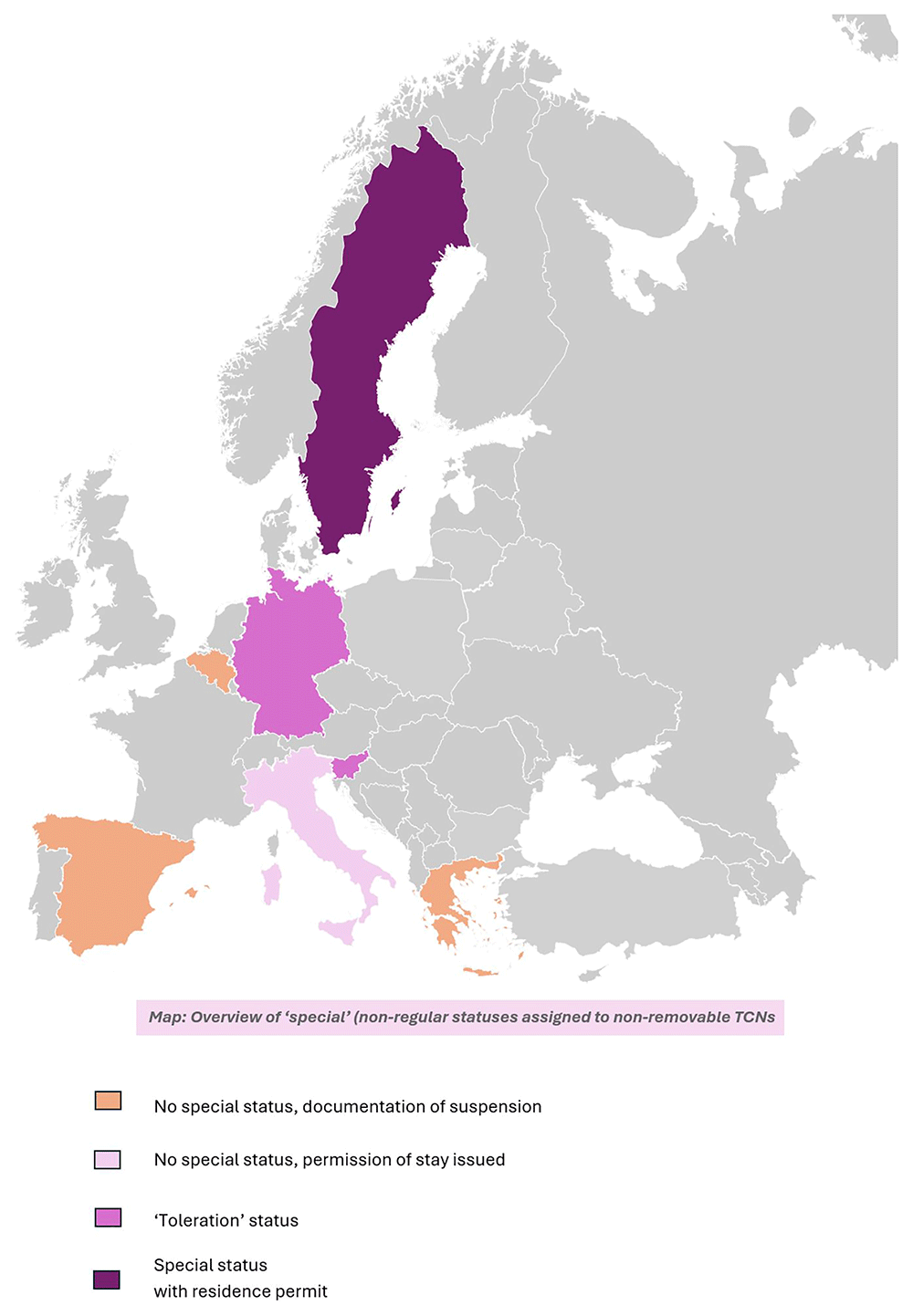
Figure 1. Overview of ‘special’ (non-regular) statuses assigned to non-removable TCNs.
Of the countries that have established a separate regime, Germany uses the term ‘Duldung’ (meaning ‘toleration’ of stay). Assigned by the ‘supreme authority’ in the given federal state, it is meant to recognise the individual’s presence in the country and the fact of their temporary non-returnability.90 It is not, however, a durable or regular status per se – nevertheless, the TCN will be issued a certificate confirming that the deportation is suspended.91 It may be obtained by individuals who cannot be deported due to de facto considerations.92 Despite such a recognition, the return order is only suspended and remains valid, meaning that it could be carried out if the conditions preventing expulsion are lifted, even before the expiry of the Duldung93. Not everybody that cannot be expelled has access to this regime, leaving them in a further precarious situation.94
In Slovenia, there is a ‘permission to remain’ – issued by the police that is also tasked with carrying out expulsions – allowing TCNs with a postponed return decision to stay for six months or longer if the reasons for non-returnability persist.95 The law specifies that the permission does not ‘cancel’ the individual’s obligation to leave the country.96 While not a ‘regular’ status, TCNs in this situation will receive a card authorising their stay on Slovenian territory.97 Those who cannot be removed are ordered to move to the ‘Centre for Aliens’ or restricted in their movements for stricter surveillance.98
There is no special regime established to describe the intersection of irregularity and non-removability in Sweden, Belgium and Italy, but non-returnable TCNs can prove that their deportation order was suspended by a certificate or other written confirmation issued to them.99 A temporary authorisation or permit to stay may also be issued in these three Member States.100 In some Swedish cases, however, there is no documentation that the Migration Agency has suspended the execution of the order, with only a de facto suspension of return taking place.101
The Swedish Migration Agency is the primary actor involved in expelling irregularised TCNs102 and even if they - even if the Agency not formally part of the process, whenever the enforcement of an expulsion seems to be hindered, the acting authority must keep the Agency informed.103 It is also tasked with reviewing cases that could result in granting a TCN a temporary residence permit and effect the simultaneous cancellation of a deportation order made by the same Agency.104 According to the Aliens Act, it is, however, possible that a permit is granted without the additional suspension of the return decision; nevertheless, the expulsion cannot take place until the permit expires.105 In general, the law states that the Agency has discretion to grant residence permits – which are valid for three years106 – in cases where there is an ‘impediment’ to the enforcement of a removal.107
Greece, where there is also no special title to describe irregularity, has established the police as the competent actor in enforcing and suspending return orders – in case of the latter, the police will also issue a written ‘postponement certificate’ to the individual.108 Throughout the validity of this certificate, its holder has the right to temporarily reside on Greek territory, though they must remain at the disposal of the competent authorities and cooperate with them to enable their removal later on.109 Spain has opted not to use a specific term either and there is no written confirmation of the postponement of returns.110 Residence permits – temporary ones or for the longer term –, as mentioned above, may be granted to victims of violence, human trafficking or on humanitarian grounds.111 There is also no specific term for irregularised status in Italy. Expulsion orders are executed by the police112 and can be suspended, as mentioned above, by a court hearing the appeal lodged against the deportation decision (see Table 3 for a list of grounds that could lead to the temporary delay or suspension of a deportation order in the seven countries examined).113
Table 2 provides an overview of the main actors involved in the process of issuing, enforcing, and suspending return decisions in the selected EU Member States. It is notable that in several of the selected countries (including Greece, Spain, and Slovenia), the competent authorities for issuing a return decision and enforcing a removal order are primarily immigration enforcement or police actors. Those issuing residence permits are under the discretion of relevant national Ministries or specialised asylum/migration national authorities114. On the other hand, when it comes to the suspension of removals, the competent actor may be a court (certain cases in Spain and Italy), a national or municipal administrative authority (Belgium, Germany and Sweden), or the police (Greece, Slovenia, and Spain). Additionally, ministries of the federal states in Germany may adopt deportation bans.
Table 3. List of grounds that could lead to the temporary delay or suspension of a deportation order.
[This includes de facto grounds and practical obstacles indicated as such by the national research teams, despite not being laid down as ‘formal’ rules. For this reason, considering all possible de facto grounds, the list may not be complete.]
| Grounds | BE | DE | EL | IT | SI | ES | SE |
|---|
| Non-refoulement | | | | | | | |
| Medical or health reasons | | | | | | | |
| Private and family life | | | | | | | |
| Best interests of the child | | | | | | | |
Inadequate conditions for
unaccompanied minors | | | | | | | |
| Victims of trafficking | | | | | | | |
Lack of nationality, ID or
adequate transportation | | | | | | | |
Lack of cooperation by
third country | | | | | | | |
| Statelessness | | | | | | | |
| Other grounds | Children in
compulsory
education | Studying in
the country | Elders’ best
interests | Subsequent
asylum application;
domestic violence | Ongoing
studies | | Environ-mental
disaster |
Consequently, the actors deciding on the suspension of removal could be the same authorities that also assess an application for international protection, which is the case in Sweden and partly in Germany. Furthermore, the competent authorities for issuing return decisions and for enforcing removal orders are not always the same in all the countries investigated. The current political push for competent national authorities to increase the % of expulsions at all costs may lead to a disproportionate issuing of return decisions as regards individuals where it shouldn’t be the case, or where it should have been known or expected by the relevant actors that the removal order would be either unlawful and/or unfeasible in practice.118
National and local authorities know that expulsion is not always legal, so obligations may arise to suspend a return order and/or its enforcement, as otherwise they would become liable or legally responsible. Furthermore, the heterogeneity in the national authorities respectively involved in the issuing of return decisions, the enforcement of removal orders and the handling of decisions on the suspension/postponement of expulsion and appeals/effective remedies, might well lead to coordination issues,119 as well as blame and responsibility-shifting games among these actors so as not to be the ones to be blamed for not meeting the overall EU priority to increase the numbers of enforced removal orders. This is the case for instance in Belgium, where the national actor responsible for adjudicating asylum, the CGRS, has emphasised that it lacks the competence to issue or regularise residence for non-removable TCNs. The resulting picture is one where there is a stark dissonance between EU policy priorities and practical realities, and what is qualified as ‘success’ and by whom, where ‘alternatives to return’ are proving to be a more effective and humane policy response.
Access to socio-economic rights and justice
The significance of upholding the human dignity of non-removable irregularised TCNs
All the core human rights instruments start from the premise that their core provisions, unless expressly indicated, apply to every person – without discrimination – irrespective of administrative status and without distinction of any kind, including ‘other status’120. This is based on the foundational premise that some rights are inherently indivisible from, and inherent to, the human dignity of every person.
The UN International Covenant of Economic, Social and Cultural Rights (CESCR) has established a clear obligation to state parties to uphold a right to a minimum adequate standard of living, including states’ obligation to secure the right to access to health facilities and essential medicines, as well as essential food, clothing, and basic shelter, including for undocumented TCNs.121 These standards are understood as linked to the inherent dignity of the human person and indispensable to the fulfilment of other human rights122. They are not just ‘aspirational’ but constitute legally binding obligations that EU Member States have committed themselves to. A similar approach inspires international labour standards, including those developed in the context of the International Labour Organisation (ILO) and the ILO Conventions on the Rights at Work. The ILO framework pays particular attention to the extent to which the right to work qualifies as decent work when considering the completeness of the working conditions afforded to every worker regardless of the migratory status123.
The European Social Charter (ESC) is of crucial importance here, too. The jurisprudence of the European Committee of Social Rights, which is mandated to interpret the ESC, has extended its personal scope of application and has found some states’ parties in violation of their obligations under the ESC in cases directly related to TCNs in an irregularised situation (not only including children). In the 2013 case Conference of European Churches (CEC) v. The Netherlands, the ESC found that the Dutch authorities' policy negating access to emergency social assistance by undocumented migrants violated Articles 13 (right to social and medical assistance) and 31 (right to housing)124. The Committee confirmed its previous jurisprudence by stating that this restriction impairs their rights to life, physical integrity, and human dignity125, and questioned the denial of shelter126 and emergency healthcare to irregularised TCNs in Netherlands127.
The standards laid down in the UN Global Compact on Migration (GCM)128 are of special significance here too. While the GCM is not a legally binding instrument, it provides an authoritative interpretative tool when assessing the alignment of current national and regional laws and policies in Europe in light of internationally recognised practices and principles. The GCM, and its follow-up and monitoring mechanism129, thus provides a framework for the better realisation of fundamental rights by EU Member States and European institutions within the scope of migration policy130. The GCM’s Objective 7 calls for states to facilitate transitions from one status to another and ‘to enable individual status assessments for migrants, including for those who have fallen out of regular status, without fear of arbitrary expulsion’. GCM Objective 15 underlines the commitment of signatory states ‘to ensure that all migrants, regardless of their migration status, can exercise their human rights through safe access to basic services’ (Emphasis added). It also makes express reference to what has been termed a ‘firewall131’ when calling to ‘ensure that cooperation between service providers and immigration authorities does not exacerbate vulnerabilities of irregularised migrants by compromising their safe access to basic services’.
As the CJEU confirmed in its case law, the main objective of the Returns Directive 2008/115, as stated in Recitals 2 and 4, is the establishment of ‘an effective removal and repatriation policy that fully respects the fundamental rights and dignity of the persons concerned’. Therefore, fundamental rights compliance is by design a core part of the equation and must go hand-to-hand in assessments of its ‘effectiveness’132. Beyond provisions in EU secondary migration law, however, EU primary law laid down in the Treaties is hierarchically higher and takes precedence over any provision laid in the EU Returns Directive, which must be aligned and compatible with the latter. This includes the EU Charter of Fundamental Rights which benefits from the same legal constitutional value as the Treaties. Human dignity is the starting point of the EU Charter. Article 1 recognises that human dignity is inviolable and ‘must be respected and protected’. Several of the above-mentioned rights are also categorized as ‘fundamental’ in the EU legal system and are therefore used as the foundations of our analysis in the following subsections of this Report.133 Many of these EU Charter rights refer to ‘everyone’ or ‘no one’, and therefore their personal scope is not limited or dependent upon citizenship or migration status.
Healthcare
For those who are already in a precarious situation of irregularity, accessing healthcare under Article 35 EU Charter can indeed be a matter of life or death, bringing the human right to life, as well as that of physical integrity and the prohibition of inhuman and degrading treatment to the forefront. Across the seven EU Member States examined, the landscape of policy approaches is varied. Some countries – including Belgium, Greece, Slovenia, Spain, and Sweden allow ‘medical reasons’ as a justification for the issuance of a residence permit, despite varying criteria and procedures across countries. However, this needs to be read in a general context where, as recognised by the EMN, ‘In practice, however, access can be challenging, especially given the fear of possible repercussions for migration status’.134
In Belgium, non-returnable TCNs are entitled to ‘emergency medical assistance’135; however, practical access is increasingly difficult due to bureaucratic hurdles and varying application processes across different Public Centres for Social Welfare (PCSW)136. Beyond the complex and cumbersome administrative procedures – such as those for obtaining an ‘urgent medical aid card’ – access is limited by strict conditions (e.g. providing an effective residency address) and language barriers.137
Regional discrepancies are also present in Germany, where individuals may generally receive insurance for cases labelled as ‘acute and painful illnesses’.138 The discretionary practices of local authorities contribute to more restricted access for some TCNs and there is a lack of a ‘standard canon’ established by the statutory health insurance fund that could facilitate uniformity across the entire country.139 Irregularised TCNs not having a ‘Duldung’ may visit a doctor to receive essential treatment, but need to cover the financial costs by themselves. According to the EMN (2021), a key challenge in accessing healthcare in countries like Belgium and Germany relates to irregularised migrants and healthcare officers’ knowledge of rights and entitlements.140
Italy offers emergency healthcare that includes persons in ‘irregular administrative situations’141. The so-called STP-card (Straniero Temporaneamente Presente or foreign person temporarily present) entitles irregularised TCNs to urgent emergency and essential health treatments, but not general check-ups or long-term care. Here, too, the scope and access to health benefits can vary regionally and those based in certain locations may have more difficulty getting the care they need.142 Mistrust in public authorities has been also signalled as a key obstacle in practice.143 In Slovenia, non-expellable TCNs are provided with ‘emergency healthcare’144. This however encompasses only emergency medical services ‘the omission of which would lead to irreversible and serious damage to the patient’s health or death’. The costs of other non-urgent medical care are to be covered by the patient.145 Those with temporary residence permits are entitled to obligatory insurance schemes on the condition of employment or being a family member of a person employed in Slovenia,146 highlighting once more the existence of systemic practical hurdles faced by irregularised individuals.
Beyond emergency care, Greece also offers access to ‘primary healthcare services147’ in public hospitals to those whose removal has been suspended. Spain has seen some fluctuation when it comes to accessibility: until 2012, the same level of healthcare was provided for all individuals – even if unregistered in the municipal census – irrespective of legal status. This was restricted between 2012 and 2018 so that irregularised residents could only access emergency care for serious illnesses.148 A 2018 Royal Decree law149 mostly restored the pre-2012 status quo, reinstating healthcare access to all, with the caveat that individuals are now required to demonstrate residency in Spain for at least three months, linked to the issuing of an invoice with financial and legal implications if unpaid.150 This rule has led to significant differences across the country, with some autonomous communities enforcing this while others do not.151
Sweden constitutes a more mixed approach, granting the ‘children of asylum seekers the same healthcare’ that minors with Swedish citizenship are entitled to. This inclusivity is not extended to adults, who may only receive care for ‘issues that cannot be postponed’, continuing with the trend of ‘emergencies only’ observed in the other countries in this Report. As acknowledged by the EMN (2021), ‘it is at the discretion of the medical officer to assess the urgency of the medical treatment and decide whether it falls within the obligation of urgent health care.’152
Adequate standard of living and housing
Adequate housing is an intrinsic component of the right to a minimum standard of living,153 and housing assistance is deemed essential to address social exclusion and poverty under Article 34 of the EU Charter. It must apply to every person irrespective of status and documentation, and without discrimination,154 as well as irrespective of income or access to economic resources. In practice, having proof of address or residence is often the administrative gateway towards effectively accessing other fundamental socio-economic rights by irregularised persons. The availability of appropriate housing is crucial to guarantee the human dignity and physical and emotional well-being of every individual.155
However, in reality, access to adequate accommodation is an uphill battle for most TCNs, in particular those living an irregularised migration status, with many TCNs having no effective and sustainable access to shelter and living in insecure and over-crowed housing, or living in destitution and homelessness in the most appalling conditions. Furthermore, evidence shows that EU Member States continue making use of de jure or de facto detention for reasons related to migration enforcement and expulsions.156
The EMN (2022) found that several EU Member States have implemented in their national policies so-called ‘alternatives to detention’, which may range from residency requirements, release on bail, the surrender/confiscation of identity or travel documents and/or compulsory stay in designated places/reception facilities or regions.157 Accommodation might take the form of collective or individual facilities. The FRA has underlined that there is a duty for states to provide adequate shelter to regularised and destituted TCNs who cannot be removed, in particular when they are not granted access to the labour market.158 Most often, however, previous research has highlighted how irregularised TCNs by and large rely on family members, friends and other social network contacts in order to find accommodation in the private sector,159 and the suspension of removal does not necessarily lead to granting housing.
In Greece and Germany, non-expellable TCNs have some entitlements to secure accommodation. Those holding a ‘Duldung’ status in Germany have difficulties in finding private flats160 and tend to be housed in central, shared accommodation – often in camps and reception centres –, with some federal states operating establishments specifically to house ‘persons obligated to leave the country’161. However, impacted individuals in reception centres are mostly redistributed to the municipalities.162 TCNs may be obligated to live in a reception centre if they do not comply with the ‘obligation to cooperate’ or have ‘concealed their identity’ to the competent national authorities.163 Meanwhile, persons who cannot be deported from Greece, and whose removal has been postponed, may have access to temporary housing in public or community facilities that help them meet their immediate living needs, which should be up to the standards required for the reception conditions of applicants of international protection164.
The options for low-cost housing are rather limited in Spain, and the situation is exacerbated by ever-increasing competition among those in need, leaving more people on the streets or in destitution165. Capacity constraints and other issues often result in newcomers being forcedly evicted from temporary accommodations, and accessing NGO-provided housing facilities usually entails long waiting times166. Furthermore, previous research has underlined how the Spanish authorities asked irregularised TCNs to surrender a valid identity/travel documents as an ‘alternative to detention’, which is also the case in Italy and Sweden.167
Local rules and administrative procedures play an important role in Italy too, where shelters can require proof of formal residency for admission. At the same time, council houses are largely inaccessible for non-returnable TCNs. Generally, access to public housing is tied to having legal residency and without it, particularly due to overwhelming differences in how local institutions apply the rules, many irregularised persons are denied access to assistance168. According to the EMN (2022) Study on ‘Detention and Alternatives to Detention in International Protection and Return Procedures’, alternatives to detention used in practice in Italy include reporting obligations, requirement to reside in a specific place and the obligation to surrender an identity or travel documents.169
In a similar vein to healthcare, Sweden has different rules for when children are involved: families with children are entitled to housing and basic support, while irregularised TCNs that have no children have no access to any housing assistance subject to the discretion of municipal authorities170 Individuals in Slovenia may access private housing at their own expenses, which is an enormous hurdle to overcome. Consequently, many people end up living in overcrowded spaces, in poor conditions, and at risk of forced eviction171.
In Belgium, irregularised TCNs, including those who are non-returnable, have no right to housing and no access to the property market, leaving them to destitution and homelessness. Many people use emergency accommodation centres which offer free and unconditional access to every person. However, when it comes to rejected asylum seekers, Belgian authorities have engaged in a serious ‘rule of law and reception crisis’172 consisting of their refusal to uphold EU reception conditions and comply with European and national court rulings compelling them to ensure equal access to these facilities, including by single men. The resulting picture has been an alarming increase in homelessness and inadequate and inhumane living conditions.173
The resulting picture is one where irregularised non-removable TCNs are not provided access to adequate housing conditions and are instead relegated to the margins of the private housing market, where high levels of structural discrimination exist and substandard housing conditions prevail,174 leading to housing precariousness.175 What EU member states often offer in terms of ‘shelter’ – when, and if at all - to irregularised TCNs does not therefore align with the human right to adequate standard of living under international human rights standards and Article 34.3 of the EU Charter,176 which identifies the right to social and housing assistance as a condition to address poverty and social exclusion, and to ensuring a ‘decent existence’.
Decent work
Employment can often be the first step towards leaving situations of administrative limbo. However, employment is also often conditional to having a recognised administrative status, which is not a given for irregularised TCNs who cannot be expelled. In a substantial majority of EU countries under examination irregularised TCNs are not allowed to have access to the labour market with severe restrictions applying both in law and practice. Even when access to the labour market occurs, conditions of employment do not align with the right of decent work,177 and informality and precarity constitute the norm.
This is so even though all the core international labour standards apply to all workers, including those enshrined and develop in the scope of the International Labour Organisation (ILO). Further, Article 31.1 of the EU Charter of Fundamental Rights requires EU Member States to ensure fair and just working conditions for ‘every worker’178. The Court of Justice in Luxembourg confirmed a broad interpretation of the term ‘worker’ covering also TCNs even when they are not authorized to work179. Furthermore, the 2009 EU Employers Sanctions Directive180 provides a few rights to irregularised TCNs, such as have the right to back payments of any outstanding remuneration, taxes and social security contributions.181
While it is generally not allowed to work in Germany without a legal status, persons who have a ‘Duldung’ toleration regime are granted access to the labour market after three months or, if they are obliged to live in a reception centre, after six months182. Even then, they may encounter significant barriers to securing a job (and a living wage) due to misconceptions among employers and precarious living conditions183. Greece allows non-returnable TCNs issued a formal suspension of removal to obtain a work permit and engage in specific labour market sectors – primarily agriculture, domestic work, animal husbandry, and clothing – and in specific geographical areas of the country. That notwithstanding, the effective implementation of this rule appears to be lacking in practice184.
Asylum seekers in Sweden have the right to work if they cooperate with the authorities regarding their identification, while rejected asylum seekers with a return decision must rely on alternative means to seek employment without regular status185. According to the EMN, ‘In Sweden, former asylum seekers who have been employed by the same employer for the last four months can apply for a work permit no later than two weeks after the return decision entered into legal force, provided that certain requirements are fulfilled’.186 Slovenia limits access to the labour market to TCNs who hold temporary residence permits or who meet the specific conditions outlined in the Aliens Act as well as the Employment, Self-employment, and Work of Foreigners Act187. Temporary residence permits can be granted to those who were allowed to stay in the country for at least 24 months due to the suspension of their removal.188
Belgian law prescribes that TCN workers must obtain a work permit, otherwise, they engage in ‘illegal employment’ under the EU Employers Sanctions Directive189, which could result in penalties for both the employer and the employee. Irregularised non-removable TCNs have therefore no access to the labour market. Irregularity tends to bar access to work permits, leading many to seek ’informal’ or ‘undeclared’ work.190 Furthermore, the overriding policy focus on ‘effectiveness of expulsions’ nurtures fear of being penalised and forcedly expelled, acting as barrier to irregularised TCNs reporting of unscrupulous employers to employment authorities.191 Such is the case in Spain as well, where those without a regular status cannot lawfully access the labour market but can engage informally, where they tend to contribute to structurally precarious sectors where labour exploitation has been well documented, such as in domestic and seasonal work sectors192.
Moreover, there is a noticeable inconsistency by relevant national authorities when it comes to undeclared work by irregularised TCNs. There is a double official discourse: on the one hand, emphasis is put on ‘effective’ enforcement of migration policies and the increasing of expulsions; and on the other, relevant authorities turn a blind eye to the use and exploitative conditions of undocumented labour by irregularised TCNs and fail to enforce corresponding labour standards legislation.193
Social assistance
Article 34 of the EU Charter underlines that ‘In order to combat social exclusion and poverty, the Union recognises and respects the right to social and housing assistance so as to ensure a decent existence for all those who lack sufficient resources’. These benefits may include pension, unemployment contributions, assistance in cash, care services, or vocational training194. When it comes to social assistance entitlement, national practices vary greatly across the EU countries examined. Greece’s Immigration Code195 extends rights and benefits under the national social protection system to TCNs with a regular residence and offers social protection to those who ‘transit’ in a regular manner or have received a residence permit for humanitarian reasons.196 Irregularised TCNs cannot access neither humanitarian system of assistance for benefits in cash and accommodation197 nor social welfare programs such as the Social Solidarity Income Program (KEA)198. To help those in need, including rejected asylum seekers and irregularised TCNs, civil society organisations have stepped up, offering aid through programs such as ‘Food for All’ to help individuals in precarious conditions meet their most essential needs.199
Human dignity, in conformity with the standards set out by the European Committee of Social Rights, was meant to headline the Belgian approach. According to Article 1 of the 1976 Act on the Public Social Welfare Centres (centres publics d’action sociale – CPAS)200, ‘Everyone is entitled to social assistance’. However, subsequent amendments – including, prominently, a reform in 2012 that encompassed Article 57201 – narrowed the scope concerning the reception of assistance for third-country nationals. In a 2022 judgment, the CJEU decided on a referral from the Belgian Court of Cassation that concerned a rejected asylum seekers with a return order and whether she was entitled to social assistance.202 The Court held that Article 6(4) of the Return Directive allows Member States to withdraw a return order and grant social assistance to irregularised TCNs following an application to remain on humanitarian and compassionate grounds. While the ruling allows for broader accessibility of social assistance in cases of possible non-returnability, the applicable Belgian law remains narrow on allowing irregularised, non-returnable TCNs to benefit from assistance. In a step forward, the Belgian Reception Conditions Act203 material assistance is available to minors staying irregularly on the territory with their parents, provided that the CPAS has established that the parents are unable to fulfil their maintenance obligation towards their child.204 Likewise, material assistance is extended to those third-country nationals ‘unable’ to leave a ‘reception structure’ for reasons including (1) finishing a school year, (2) pregnancy up until two months post-partum, or (3) medical inability.205
In Italy206, those TCNs holding residence permits of at least one year, as well as those having work and study permit receive the same treatment as Italian nationals and may benefit from social services, including economic and social assistance. This language clearly excludes irregularised, non-returnable TCNs, who have to turn to charitable organisations and civil society for material aid and other social assistance services.207 However, the 2020 EMN Country Report on Italy states that social assistance may be available in case of ‘extraordinary conditions’ and for those in ‘particular need or poverty’.208 Simultaneously, the EMN Country Report details that those TCNs who are detained in the so-called ‘Repatriation centres’ are guaranteed to receive minimum services free of charge, which include psychological and social assistance – the latter may be delivered by social workers.209
In Germany, the law210 clarifies that Duldung holders as well as individuals with an enforceable return order, even when that deportation order is not anymore or not yet enforceable, may claim the benefits during their stay on federal territory.211 Such assistance includes healthcare, though in exceptional circumstances – upon individual assessment – a person may be entitled to receive further benefits. More recently, limiting and reducing social assistance for asylum seekers have been subject to extensive debate in Germany.212 In this respect, a 2012 judgment of the Federal Constitutional Court has been referenced, where the First Senate held that the basic cash assistance paid under § 3 of the AsylbLG was insufficient and that the German Basic Law ensures a guarantee of a dignified minimum existence as a human right, to which both German and foreign nationals residing on the territory are entitled to.213 Crucially for the purposes of this Report, the court stated that ‘[h]uman dignity, guaranteed on Article 1.1 of the Basic Law, may not be modified in light of migration-policy considerations’.214 This judgment has established a strong constitutional basis for social assistance for all individuals, regardless of immigration status.
The Spanish Rights and Freedoms of Foreigners Act establishes the entitlement of all TCNs in Spain to basic social services and benefits irrespective of administrative status.215 By contrast, Article 14(1)(2) foresees that ‘resident foreigners’ may receive social security benefits and services under the same conditions as Spanish nationals, including both general and specific services. Consequently, there is a mandatory framework allowing irregularised TCNs to benefit from social services, albeit not to the same degree as regularly residing TCNs and citizens.216 However, diminishing access and limited amounts of support may depend on different municipalities and autonomous communities – discrepancies also arise from the fact that access to regularisation and regular residence status can vary across the country, which would aid TCNs in receiving broader and better social welfare benefits.217
Securing the special, yet still irregular status of ‘tolerated stay’ following the suspension or postponement of a return decision allows TCNs in Slovenia to exercise their rights to social assistance. This is based on the Aliens Act218, which grants TCNs who are ‘permitted to stay’ access to basic care in the form of cash social assistance in case they do not have their own means of subsistence.219 Article 75(4), however, includes a limitation to this right, making basic conditional upon compliance with Article 90(1)(2) of the Aliens Act. In brief, the two paragraphs foresee that the TCN cooperates with the competent authorities, mainly to voluntarily provide access to and submit all the relevant documents to establish their identity. Likewise, Article 75(5) stipulates that ‘basic care’ is not available to those admitted to a hospital, penitentiary or other state institution for the duration of their stay there. At the same time, ‘basic care’ is only available to those irregularised TCNs who remain ‘known to authorities’ and therefore also have been issued a return decision.220 Benefits beyond basic care, such as tax-funded and means-tested social assistance schemes aimed at preventing poverty and social exclusion221, are not available for irregularised TCNs.222
In Sweden, while irregularised TCNs are generally not entitled to support other than ‘emergency assistance’223 or lose access either upon receiving a deportation order or when the period for ‘voluntary departure’ expires224, social benefits may be provided by the Swedish Migration Agency or the Social Public Services under certain circumstances.225 The Agency is responsible for the provision of social benefits services to adults with minor children or unaccompanied minors until the day they depart from the country, as foreseen by the Act on the Reception of Asylum Seekers and Others.226 Meanwhile, each individual may apply for social benefits from the Public Services in the municipality they reside in.227 As stated by the EMN, granting such services depends on the discretion of the local authority, so it is possible that irregularised TCNs are granted support in line with the applicable Social Services Act.228
Effective remedies
For most irregularised TCNs, regularising their status remains a primary goal, which is only possible if they have access to effective remedies, including access to legal assistance. In cases related to expulsions of TCNs, this right in EU law, as enshrined in Article 47 EU Charter, requires effective access to an independent judicial authority and the automatic suspensive effect in cases raising non-refoulement, right to liberty or humanitarian issues, including cases where other fundamental rights might be put at risk. The accessibility of an effective remedy is also anchored by Article 13(1) of the Return Directive as the option of seeking either an appeal or a review procedure, which has also been confirmed by the CJEU.229
According to the Commission’s 2017 Return Handbook230, it must be laid down in domestic law that the appeal body can suspend the enforcement of a deportation order in individual cases. If there is a risk of refoulement, the reviewing authority should grant an automatic suspensive effect ipso jure. As per the Commission’s recommendation – to ‘strike the right balance between the right to an effective remedy and the need to ensure the effectiveness of return procedures’ –, an automatic suspensive effect is limited to cases such as non-refoulement and grave risks to life, limb and health.231
This notion of ‘balancing’ is profoundly problematic. It presupposes that the protection of fundamental rights – which includes the right to an effective remedy – and the principle of non-refoulement can be ‘weighed’ or ‘balanced’ against the overall aim of increasing ‘effectiveness’ by enforcing more return decisions. This implies that the policy goal of ‘effectiveness’ could override the obligation to protect the rights of individuals. In this context, the rights of TCNs are wrongly reframed as secondary, if not subordinated, to administrative effectiveness and overarching migration management policy aims. Such an approach can unavoidably undermine the very essence of the rights and principles which are absolute in nature while possibly leading to wrongful and illegal expulsions. The right to asylum and the liberties associated with it cannot be contingent on ever-changing political interests and their respect should not depend on the outcome of a ‘balancing’ of colliding interests or conflicting ‘policy dilemmas’.
According to a 2017 EMN Report232, appeals have automatic suspensive effect – albeit with notable exceptions – in three of the EU Member States examined here: Sweden, Slovenia and to some extent, Germany. Sweden does not seem to be granting any kind of access to legal services for irregularised TCNs.233 Persons may seek out NGOs and volunteering legal professionals for assistance.234 Initiatives, like the City Mission’s Migrationsträdet – a map displaying available service providers and helping users navigate the routes out of irregularity –, seek to provide information on the services available to irregularised individuals, thereby bridging the information gap that often prevents TCNs from benefitting from legal recourse. At the same time, avenues to appeal unfavourable decisions remain open.235 Removal order (Chapter 14, § 2) made by the Swedish Migration Agency alongside the rejection of an application for international protection (Chapter 14, § 14) can be appealed to a Migration Court.
Greece’s Immigration and Social Integration Code236 establishes a comprehensive right to appeal in Article 96. Article 96(1) specifically mentions return decisions and prescribes that such order be justified and communicated in writing to the TCN, alongside sufficient information about potential remedies. An automatic right of appeal is granted by Article 96(2), with Paragraph (3) specifying that appeals are to be filed to the competent administrative court. Crucially, Article 96(4) grants legal aid to those TCNs who are long-term residents and are looking to appeal a return decision without having sufficient resources to fund the judicial process. Additionally, Article 25 lays down related procedural safeguards, mentioning the possibility to appeal decisions rejecting residence permit applications as well as withdrawing existing permits – situations that could result in irregularisation.
The Belgian Residence Act237 establishes the ‘Aliens Litigation Council’ (also referred to as ‘Council for Alien Law Litigation’ or ‘CALL’), an administrative court with sole jurisdiction to hear appeals against administrative decisions related to access to and expulsions from the territory, as well as residence. Notably, as Article 39/2 spells out and the Immigration Office also stresses238, the Council’s jurisdiction is limited to examining the legality of the decision – meaning whether the Immigration Office made a procedural error or applied the law incorrectly – but cannot decide on the merits of the decision and its assessment of the applicant’s administrative situation. Should the Council decide to annul a return order, it will no longer be enforceable.
The issuance of return orders to irregularised TCNs are based on Article 110. Title III of the Act then goes on to detail the available remedies and recourse to the Belgian Council for Alien Law Litigation (established by Article 39/1), which can hear appeals in cases related to a refusal to grant international or another type of protection.239 Appeals may be submitted within 30 days following the reception of a negative decision. Crucially, the Immigration Office specifies that ‘requests’ to have a return decision annulled – via a submission to the Council – have, in principle, no suspensive effect.240 In general, a special appeal must be lodged in an order for the appeal to have a suspensive effect, and only if the appellant can demonstrate that the normal procedure would take too long.241 Persons detained for the purpose of preparing for removal may appeal to the Council Chamber of the Court of First Instance, which can order an individual’s release due to unjustified deprivation of liberty.242 However, it is possible that the return is enforced before the Council can even issue a judgment, signalling that such an appeal also does not have an automatic suspensive effect. In terms of aid, the Belgian Federal Agency responsible for the reception of asylum seekers is obliged to ensure the availability of legal assistance to the ‘beneficiaries of reception’.243
Spain’s Act on the rights and freedoms of foreigners states244 that foreigners have the right to effective judicial protection, while Article 21(1) further specifies that all administrative acts adopted in relation to TCNs may be appealed, including return orders. Furthermore, Article 22(1) affords them legal aid to the same extent as what is available to Spanish citizens, which, should the TCN not have the financial means, is provided free of charge alongside any necessary interpretation. As the EMN notes, Spain is among the few EU Member States that has mandatorily established access to legal assistance for irregularised TCNs to the same extent as those with a regular status.245
The Italian Immigration Code lays down different legal bases for appeals. Individuals may appeal an expulsion order246, and the order of a judge that ‘validates’ the enforcement of an expulsion by the police in line with Articles 13(5-bis) and Article 14(6), though the latter two do not suspend the enforcement of the removal order. As the EMN Synthesis Report of 2017 notes, an appeal against the return decision does not have suspensive effect in Italy, though it can be specifically requested by the appellant and the judicial authority will decide on it within 5 days.247
Slovenia’s Free Legal Aid Act248 includes general provisions for free legal aid. According to the EMN, the Slovenian Ministry of the Interior supports a free legal aid program aimed at TCNs in the return process to help them understand their status, any available possibilities and the consequences of potential non-compliance with the return decision.249 Otherwise, an individual looking for counselling may rely on civil society organisation who provide legal assistance for irregularised TCNs.250 Meanwhile, Article 87 of the Aliens Act lays down several provisions that allow individuals in irregular situations to seek legal remedy against unfavourable administrative decisions. Crucially, the right to appeal a return decision and right to free legal advice has its legal basis in Article 64(7). Furthermore, paragraph 6 notes that appeals against a return order or a decision refusing to extend the deadline for voluntary departure (Article 66), the right to free legal aid is available to TCNs under the conditions of the Free Legal Aid Act.
In Germany, individuals who are not granted international protection are given 30 days to leave the country, or, in case of appeal, the date of the return is 30 days after the ‘incontestable conclusion of the asylum procedure’ (DE Asylum Act Article 38(1)).251 Court action taken in such cases has suspensive effect252. However, only appeals against rejected asylum claims have a suspensive effects – generally, this is not the case in action brought against return decisions, though there may be some exceptions.253 Similarly to Belgium, persons can request an order for a suspensive effect.254 The action needs to be filed within one week of notification and if that deadline is met, then the enforcement of the removal is suspended until the competent court decides. An appeal to the second instance is possible if the first instance decision is not favourable to the appellant. Individuals who have been detained and are awaiting deportation are permitted to contact legal representatives alongside aid and support organisations. The Federal States are required, as a rule, to provide support and counselling at departure facilities255. Detainees may also apply to receive legal aid from organisations providing them and the staff of such organisations are allowed to visit individuals in detention centres256.
The EMN notes that legal aid is available to persons with a low income in Germany, irrespective of their citizenship, for a fee EUR 15, which can be waived.257 This can even encompass legal representation in civil and administrative matters. Yet, as the report concedes, just like in the rest of the Member States studied, access can be difficult. For one, unauthorised residents who are not in contact with the authorities are not able to apply for legal aid through the local authorities. They may instead rely on civil society organisations who provide free legal advice even to individuals who do not have a regular residence status. Particularly the organisations who specialise in asylum and migration law – including Refugee Law Clinics –, tend to be ‘heavily overloaded’ and cannot help all the TCNs who need support. On the other hand, language barriers and a lack of knowledge of the German legal system can prevent persons from benefitting from existing options.
Conclusions: Humanising EU migration policy
This article highlights significant disparities between the selected EU countries when it comes to their legal and policy responses to irregularised, non-returnable, TCNs. This fragmentation carries the acute reality of leaving individuals in a precarious state of ‘administrative limbo’, where their rights are inconsistently recognised and effective access to socio-economic support and justice is either absent or severely curtailed, pushing them towards destitution and precarity.
The analysis reveals critical commonalities, including the challenging pathways to freezing expulsions, as well as the systemic obstacles and structural discrimination faced by irregularised TCNs in accessing fundamental rights such as healthcare, housing, employment, and justice. Moreover, these findings indicate that access to legal support and effective remedies remains inadequate or inexistent in many of the countries under investigation. TCNs excluded from enjoying these fundamental rights are forced to rely on civil society organisations, which are often policed and underfunded in their work, rather than receiving the required assistance and support from competent national authorities.
The research underscores the need for the European Commission to ensure a more effective and timely enforcement of the protective elements of the EU Returns Directive in line with the EU Charter of Fundamental rights, as interpreted through CJEU standards and international/regional human rights obligations. Ultimately, the focus should be the reduction of inconsistencies and highly diverging national discretions to protect these already marginalised groups and ensure their successful social inclusion and dignity.
This analysis highlights that non-removable TCNs’ ‘hyper-heterogeneity’ also stems from the disproportionate political emphasis on ‘effectiveness’ as a numerical exercise on increasing enforced returns at all costs. This had led the European Commission and EU Member States’ governments to frame various modes or grounds legitimately justifying the freezing and suspension of expulsions as ‘obstacles’ and ‘barriers’, or as a voluntary or facultative options in their hands. The analysis provided in this article challenges this prevailing framing and shows that many of these grounds relate to absolute human rights. These rights, and the effective legal recourse to them, do not accept derogations in the name of ‘policy priorities’, even at times of politically declared ‘crisis’ (or otherwise). A policy focus on ‘effectiveness’ thus conceived, prevails over humane treatment and compliance with fundamental rights standards as required by the EU Treaties.
The currently predominant tendency of national actors to prioritise expulsions over dignified treatment creates tremendous legal uncertainties for TCNs, inhibiting their ability to seek out opportunities to extend their stay, either through the suspension of their expulsion or via regularisation or transition of status. Without comprehensive and accessible information on their rights and transitioning of status options,258 lack of clarity and an understandable fear of forcible deportation, prevents them from finding a way out of limbo. Therefore, the national policies examined in this article do not always comply with existing norms under EU law and CJEU case-law, international and regional human rights standards, and the commitments under the UN Global Compact on Migration, which calls for states to facilitate status transitions, individual status assessments, and safe access to basic services.
While some of the countries studied provide access to certain socio-economic rights, the effectiveness of such access remains troublingly limited by bureaucratic administrative barriers, registration obstacles, systemic discrimination faced by communities that are already rendered vulnerable by the circumstances of irregularity resulting from current policies and a prominent penalisation approach focused on their ‘willingness to cooperate’ with national authorities on their identification (nationality and/or legal identify) and expulsion procedures.
The research also reveals a highly heterogeneous and diverse landscape of national and regional authorities responsible for adopting return decisions and removal orders, handling the appeals and effective remedies against these decisions, assessing/issuing a suspension of expulsion and dealing with the transitioning of administrative statuses. In a political context where enforcing expulsions constitutes the overriding policy priority, there is a tremendous risk in ‘responsibility-shifting’, placing the blame of non-enforceability or the weight of support and legal navigation upon other competent national authorities, including local and civil society actors.
This article concludes that it is imperative to reaffirm an unyielding commitment to human dignity in EU policy. This is the indispensable foundation upon which all policies must lie, including the area of ‘migration’. Human dignity cannot be ‘balanced’ against migration management policy agendas but rather underscores the inherent human rights of each person and constitutes a key foundation and legitimation factor of European integration and its founding Treaty principles.
Ethics statement
Ethical approval for this research was sought and received by the Comisión de Bioética de la Universidad de Barcelona (CBUB - Institutional Review Board IRB00003099), on July 20, 2023.
Ethical guidelines and standard procedures were established for all interviews, including the use of standardised informed consent forms and anonymisation processes. Any identifying information was strictly excluded from the analysis. Written or oral consent was obtained from all participants. Although written consent was the preferred method, certain participants chose to give oral consent exclusively, preferring not to leave a written trace of their involvement. Consent included permission to record the interviews.
To protect the anonymity and confidentiality of the interview participants, and to facilitate data management, each participant was assigned a code, following the pattern <Task number-Country-Focus group number-Participant number>. As it is necessary to be able to re-trace a participant's identity to fully respect the right to withdraw from the study, in this context it is more relevant to talk about “pseudonymisation” than of full anonymisation. Additionally, any information that might identify a participant was strictly excluded from the analysis process.