Introduction
The global transition toward electromobility is reshaping transportation systems, industrial supply chains, and material flows. By 2024, the global electric vehicle (EV) fleet exceeded 60 million units (see
Figure 1), and it is projected to surpass 240–250 million vehicles by 2030,1 driven by decarbonization policies and rapid cost reductions in lithium-ion batteries (LIBs). However, this technological shift introduces a parallel challenge: the management of end-of-life (EoL) batteries. Spent LIBs are among the fastest-growing categories of hazardous and strategic waste, containing significant quantities of critical raw materials (CRMs) such as lithium (Li), cobalt (Co), nickel (Ni), and manganese (Mn)—metals that are essential for both clean-energy technologies and the EU’s strategic autonomy under the Critical Raw Materials Act.2
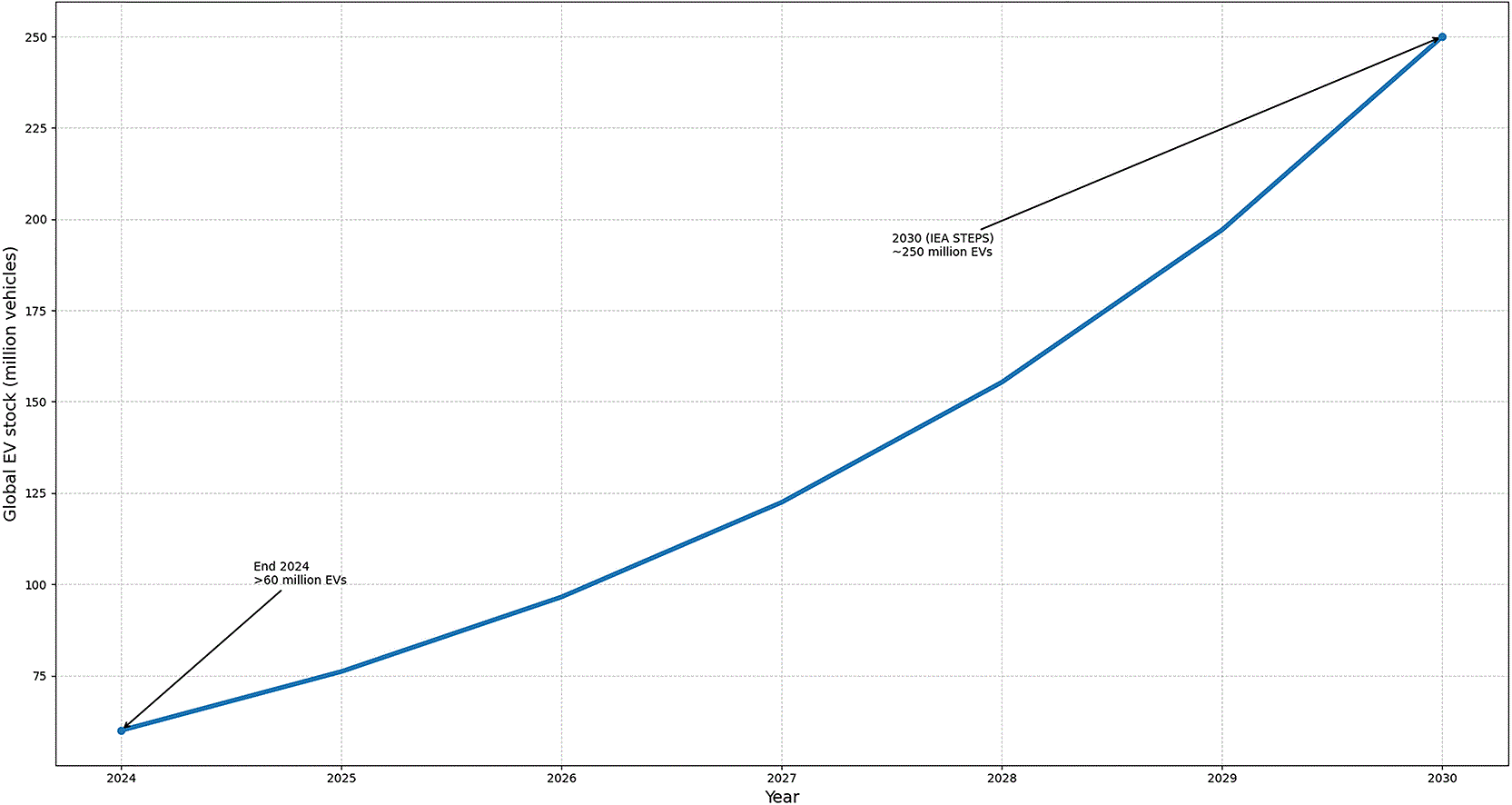
Figure 1. Global electric vehicle (EV) stock growth from 2024 to 2030, showing the increase from over 60 million vehicles in 2024 to more than 240–250 million vehicles by 2030.
Solid circles represent annual EV stock values, while the connecting line illustrates the projected growth trajectory. The 2024 data point reflects reported global EV stock, and the 2030 value corresponds to projections under the International Energy Agency (IEA) Stated Policies Scenario (STEPS) and Announced Pledges Scenario (APS). Data source: International Energy Agency Global EV Outlook 2024.
A typical EV traction battery pack weighing 400–500 kg contains on average 5–8 kg Li, 10–15 kg Co, 20–25 kg Ni, and 30–40 kg Mn, depending on chemistry and capacity, alongside graphite, copper, and aluminum.3
Figure 2 presents chemistry-specific material contents expressed as lithium carbonate equivalent and scaled to a representative 70 kWh pack, which explains the numerical differences.
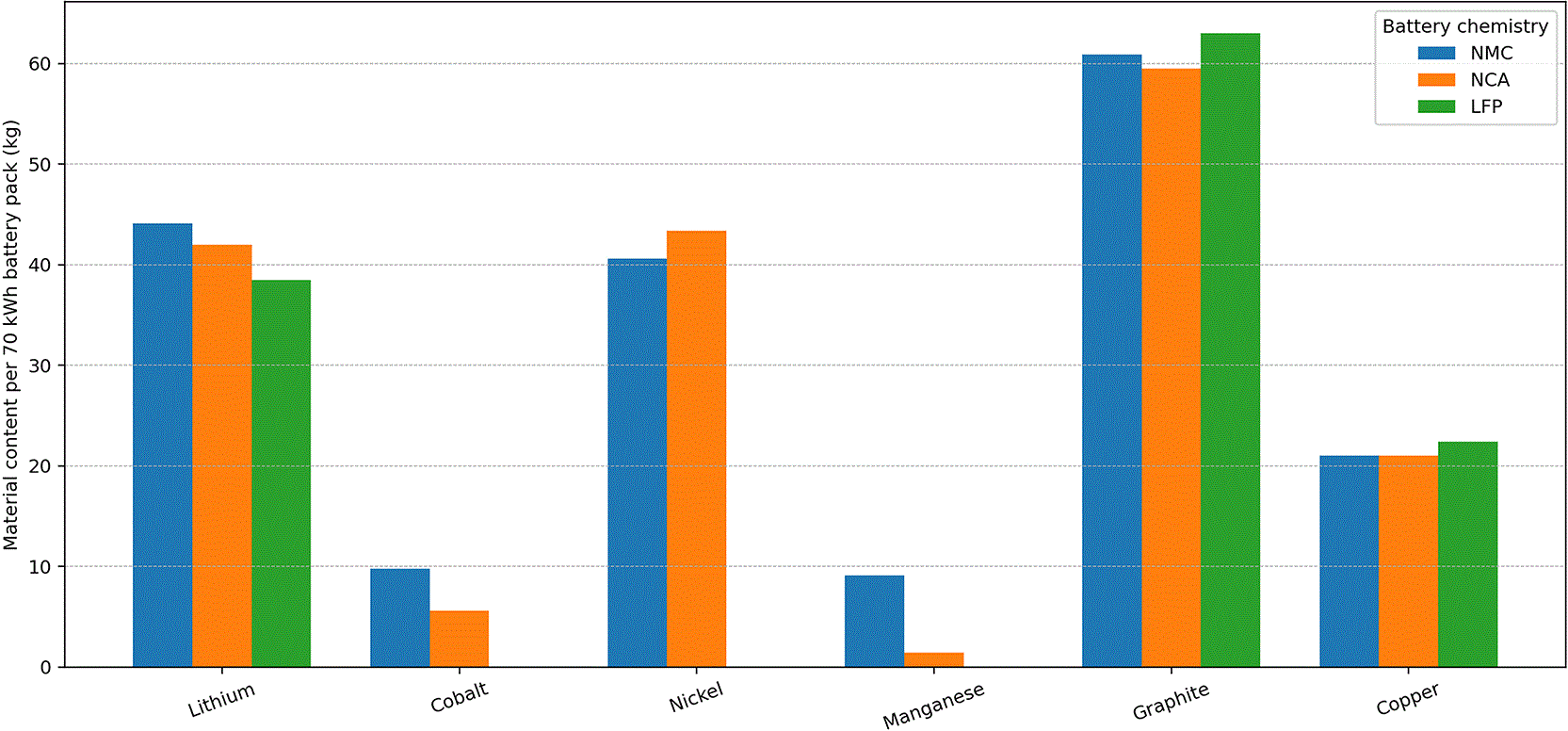
Figure 2. Comparison of critical material content in a representative 70 kWh (corresponds to typical 400–500 kg passenger EV packs) electric vehicle traction battery for Lithium Nickel Manganese Cobalt Oxide - LiNixMnyCo1-x-yO2 (NMC), Lithium Nickel Cobalt Aluminum Oxide - LiNixCoyAl1-x-yO2 (NCA), and Lithium Iron Phosphate - LiFePO4 (LFP) chemistries.
Bars show the calculated mass of lithium carbonate (Li2CO3 equivalent), cobalt, nickel, manganese, graphite, and copper based on literature-reported material intensities (kg/kWh) scaled to pack capacity. The figure highlights the absence of cobalt and nickel in LFP chemistry and the reduced cobalt content in NCA relative to NMC.3
At the end of service life, these materials represent not only an environmental liability but also a secondary resource of substantial economic value—equivalent to over USD 1,000–1,500 in recoverable metals per pack under current market prices.1,4–6 An indicative calculation of recoverable metal value per EV battery pack is provided in Appendix A.50 By 2030, global EoL LIB waste is expected to reach multi-million-tonne levels, with several assessments indicating volumes exceeding 10 million tonnes, making efficient recovery of critical raw materials essential for achieving net-zero targets and maintaining material security.1,3–4,7
While large-scale recycling facilities are emerging in China, the EU, and North America, most small or developing economies lack the technical infrastructure and research base to manage their future EV battery waste.
This creates a structural research gap: how to develop scientifically grounded, economically viable, and environmentally safe recycling solutions for small-market nations where the total waste volume may be modest, yet strategically important. Through this work, the authors present a representative case study from Armenia and a technologically grounded solution tailored to the specific challenges of managing EoL LIBs in small-market economies.
1.1 Context of electric mobility development in Armenia
Armenia has experienced rapid growth in EV imports since 2019, driven by customs-duty exemptions and increasing public interest in sustainable transport. The number of registered EVs has already exceeded
25,000 units (see
Figure 3), and national projections suggest that this figure could reach approximately 50,000 vehicles by 2030.8 As early-adopter vehicles approach the end of their first life cycle, this expansion is expected to generate on the order of
500–3,000 t/year of spent lithium-ion batteries, based on estimates obtained using the simplified hybrid waste-generation model described in Section 2.1. The national policy framework for this transition is articulated in the draft “Electric Mobility in Armenia” Strategy (2024) developed under the GEF/UNDP project “Transition Toward Electric Mobility in Armenia.” The strategy outlines measures for infrastructure deployment, fleet electrification, and—importantly—the establishment of at least one domestic battery recycling facility by 2030 to ensure environmentally sound EoL management.
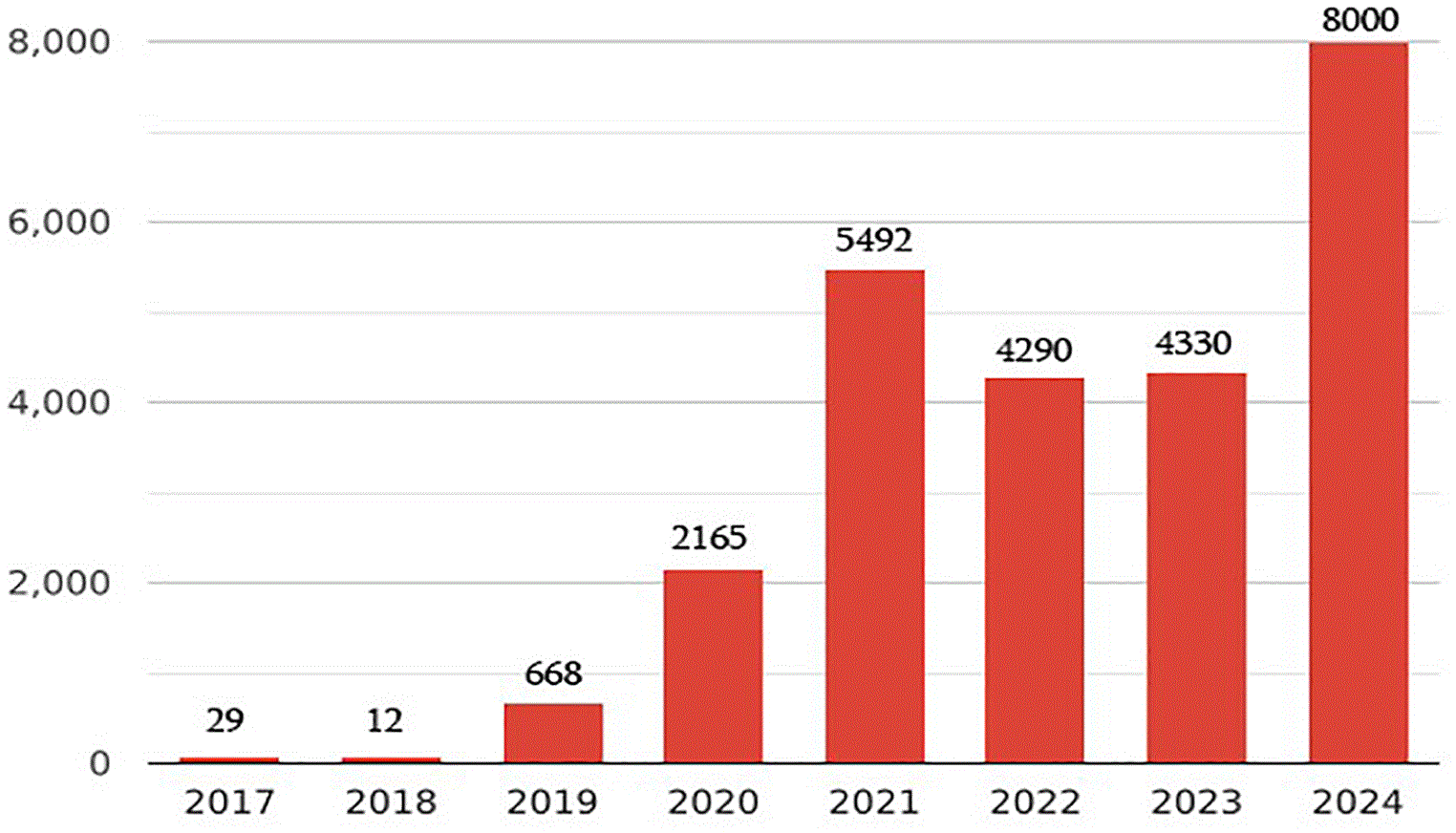
Figure 3. Annual growth of EV imports in Armenia from 2017 to 2024, illustrating a sharp increase beginning in 2019 following customs exemptions and rising public interest in sustainable transport.
The bars represent the number of imported EVs per year, with values shown above each bar. The cumulative growth reflected in the figure underpins the rapid expansion of the national EV fleet, which has already exceeded 25,000 registered vehicles.8
However, at the time of this study, the strategy remains under public discussion, and no research, laboratory capability, or technological groundwork exists to support the recycling goal. Armenia currently lacks the necessary facilities for battery discharging, chemical processing, and CRM recovery. Without evidence-based planning, the expanding EV sector risks creating a new class of unmanaged hazardous waste, resulting in uncontrolled disposal or the export of valuable black-mass material—effectively outsourcing both environmental burden and economic value to other countries. This is especially important for Armenia, which shares with many EU nations a strong reliance on the same imported CRMs contained in these wastes on CRMs such as Li, Co, and Ni. Thus, the absence of a local recycling strategy could undermine the very sustainability objectives that electromobility aims to achieve.
1.2 Research gap and motivation
Most available literature focuses on large-scale recycling operations (10,000–100,000 t/year capacity) where economies of scale justify complex multi-stage hydrometallurgical or pyrometallurgical systems. In contrast, there is limited quantitative analysis on small-capacity facilities (<1,000 kg/day) suitable for small markets.1,4,5,9–11 The technological design, reagent optimization, and energy-water balance at such scales remain largely unexplored. Moreover, many countries in Eastern Europe and the Caucasus share similar infrastructure constraints—limited hazardous-waste logistics, inconsistent electricity supply, and scarce industrial-grade purification systems—necessitating regionally adapted solutions rather than direct replication of large-plant designs.
This study addresses that gap by developing a pilot-scale hydrometallurgical recycling process designed for 850 kg/day of black mass, equivalent to the treatment of approximately 500 t/year of spent EV batteries, matching Armenia’s predicted waste generation starting from 2028–2029. Building on the validated findings and methodologies of previous researchers, this study efficiently applies existing experimental knowledge to design a region-specific recycling process suited to Armenia’s projected waste volumes. Drawing on these insights, a comprehensive recycling scheme was engineered to align with Armenia’s anticipated waste generation, resource availability, and infrastructure capacity, ensuring both technical feasibility and economic efficiency. The design includes mechanical pretreatment, acid leaching with H2O2 oxidation, solvent extraction, and product recovery as Li2CO3, Co, and Ni.
1.3. Novelty and Scientific Questions
The novelty of this research lies in adapting proven hydrometallurgical principles into a region-specific engineering model for small-market countries entering the electromobility phase. It bridges a critical gap between global technology readiness and national implementation capacity by:
• Quantifying Armenia’s near-term EoL LIB generation based on import/export statistics and battery lifespan modeling.
• Designing a scalable pilot process (850 kg/day) with calculated reagent, water, and energy balances appropriate for the local industrial environment.
• Evaluating the economic feasibility of localized recycling under realistic market and policy conditions.
The central scientific question guiding this study is:
Can a pilot-scale hydrometallurgical process, designed from validated international experience and adapted to Armenia’s infrastructure and waste forecasts, achieve both technical efficiency and economic viability within a small-market context?
By answering this question, the research contributes both to the scientific understanding of decentralized recycling systems and to the practical development of Armenia’s emerging circular-economy infrastructure. Ultimately, the findings provide a methodological foundation for implementing the national electromobility strategy responsibly — ensuring that the shift toward electric transport does not evolve into a new environmental challenge. Moreover, the insights gained from this study can inform broader EU efforts to address not only issues of improper battery-waste management but also the ongoing challenges of resource dependency and supply-chain resilience in CRMs.
2. Background and literature review
2.1 Global context of EoL LIB waste and estimation models
Accurate forecasting of end-of-life lithium-ion battery waste is a prerequisite for policy planning and infrastructure design. Global studies employ three main methodological approaches: (i) stock-driven material flow analysis (MFA) based on EV sales and average lifespans12–14; (ii) bottom-up models using cell chemistry, capacity-fade statistics, and survival functions15; and (iii) top-down econometric or regression models integrating macroeconomic indicators.16 Global EoL LIB volumes are projected to reach approximately 11–12 Mt by 2030.17 In parallel, the IEA Global EV Outlook 2024 indicates that the global EV fleet is overwhelmingly dominated by passenger cars, implying that retired battery packs will likewise be predominantly associated with passenger vehicles, assuming no atypical shift toward commercial-vehicle electrification.1 For small markets, simplified hybrid models—combining import/export customs data, average battery mass (300–500 kg), and 8–15 year lifetimes—offer realistic projections when detailed fleet data are lacking. This approach underpins the Armenian forecast of ≈ 500 t/y waste from 2028–2029, increasing to ≈ 3,000 t/y by 2030 (see Figure 4).
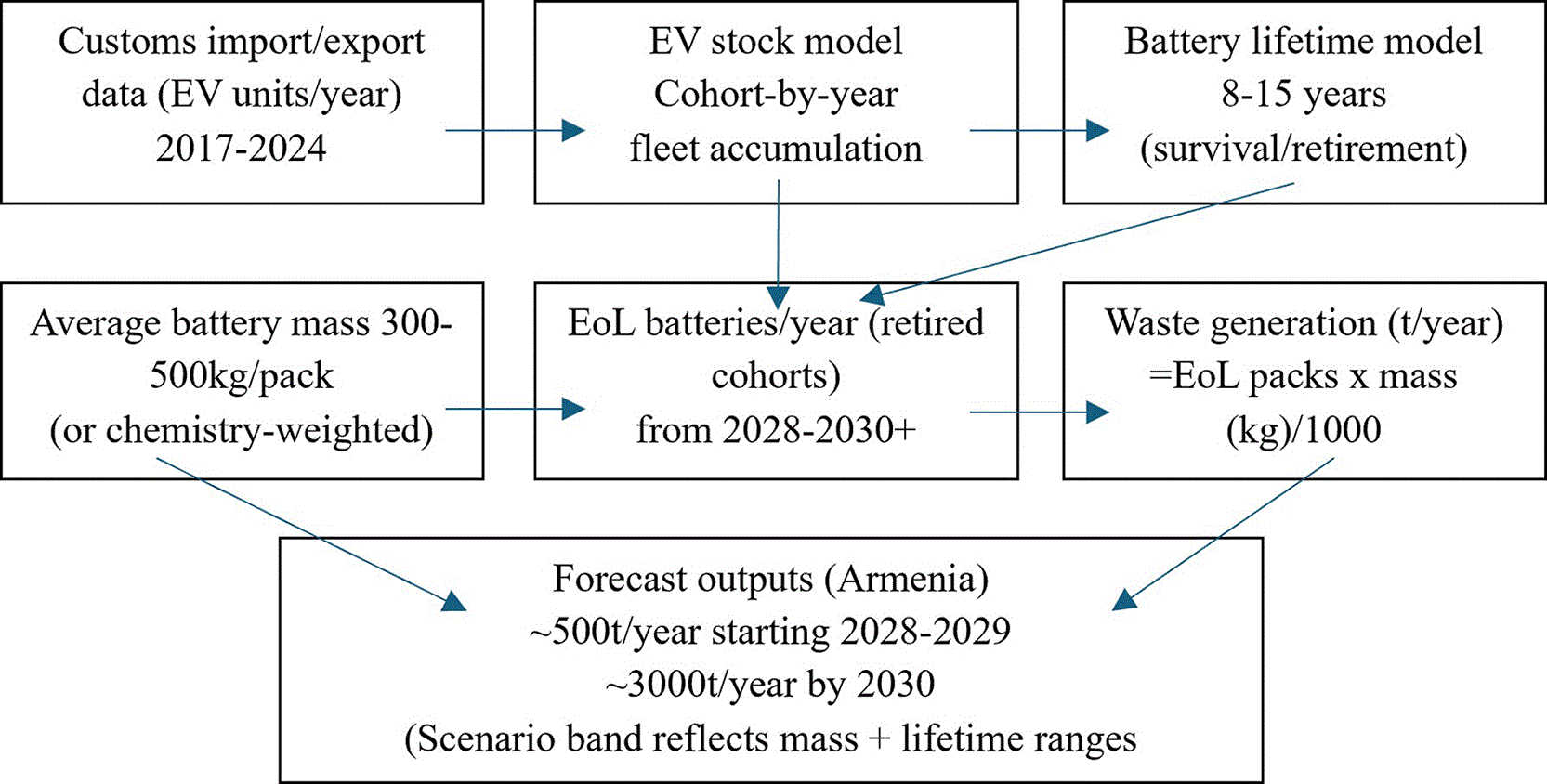
Figure 4. Simplified hybrid model for forecasting end-of-life EV battery waste in Armenia.
Boxes represent model inputs (customs import/export EV data for 2017–2024, average battery mass of 300–500 kg per pack, and battery lifetime distribution of 8–15 years), intermediate model stages (cohort-based EV stock accumulation and annual retirements), and the calculated outputs (≈500 t/y from 2028–2029 and ≈3,000 t/y by 2030).
2.2. Hazardous nature and environmental implications of EoL LIBs
Spent LIBs are recognized as hazardous waste under the Basel Convention (UNEP, 2019) due to the presence of toxic transition-metal oxides, fluorinated electrolytes (LiPF6), and flammable organic solvents.18 Uncontrolled disposal or landfilling may release HF, Co2+, and Ni2+ ions and induce thermal-runaway fires. Several incidents in the EU and U.S. waste facilities in 2020–2023 highlighted fire risks from mixed-stream disposal. In developing countries lacking designated collection systems, informal dismantling and export of black mass cause additional environmental and occupational hazards.19–24
Table 1 summarizes key statistics and documented findings on lithium-ion battery fire risks, highlighting the growing safety challenges faced by waste-management and recycling systems as EV deployment accelerates globally. These findings underscore the necessity for controlled discharge, mechanical treatment, and hydrometallurgical recovery routes that minimize emissions and reagent hazards.
Table 1. Key statistics and findings on lithium-ion battery fire risks in waste and recycling systems.
| Context | Statistic/Finding | Geographical Scope | Implications for Recycling Systems | Key Sources |
|---|
| Waste and recycling facilities | >5,000 fires per year linked to LIBs in waste and recycling operations | United States | Highlights severe fire risk from improperly disposed LIBs in municipal waste streams | NWRA; Resource Recycling Systems |
| Material recovery facilities (MRFs) | ~40–50% increase in catastrophic fires over the past 5 years | United States | Rising LIB penetration directly increases operational and insurance risks | NWRA; FM Global |
| Sorting and recycling plants | ≈80% of fires attributed to lithium-ion batteries | Germany | Confirms LIBs as dominant ignition source in modern waste facilities | BDE; Fraunhofer Institute |
| Municipal waste infrastructure | >240 confirmed LIB-related fires at 64 facilities (2013–2020) | United States | Demonstrates systemic vulnerability of waste infrastructure to LIBs | U.S. EPA |
| Urban fire incidents | >270 LIB-related fires in one year, causing injuries and fatalities | New York City | Indicates risk extends beyond industry into dense urban environments | NYC Fire Department |
| Battery handling & storage | Thermal runaway can be triggered by mechanical damage, short-circuiting, or residual charge | Global | Reinforces need for safe discharge and handling prior to shredding | IEC; UL; J. Power Sources |
| LIB fire emissions | 20–200 mg HF released per Wh of battery energy during fires | Experimental (laboratory-scale) | Indicates serious toxic gas hazards during LIB fire events | Larsson et al., Fire Technology |
2.3. Safe discharge and mechanical pretreatment
Before any mechanical processing, storage, transport, or disposal, lithium-ion battery cells must be rendered electrochemically inert through controlled discharge, as residual charge represents a primary trigger for short-circuiting, thermal runaway, and explosion. Consequently, safe discharge is a prerequisite not only for recycling operations but also for landfill disposal, and becomes especially critical when batteries are subsequently subjected to shredding and size-reduction steps. Active discharge through resistive loads or saline-immersion is widely practiced.4 He et al. demonstrated that discharging to <
1 V per cell eliminates thermal events during shredding. Subsequent pyrolysis or cryogenic cooling have also been explored to remove residual electrolyte; however, these methods consume more energy and generate gaseous emissions (e.g., HF, CO2).19,20,25,26
Shredding remains the most broadly adopted industrial route for creating a mixed powder fraction (“black mass”) containing Li, Co, Ni, Mn, and graphite.4 Compared with high-temperature pyrolysis or smelting pretreatment, shredding offers several advantages:
• lower energy demand (0.05–0.1 MWh/t vs > 1 MWh/t for pyrolysis),
• preservation of lithium values that would otherwise volatilize, and
• compatibility with modular, small-scale installations (< 1 t/day).
Drawbacks include cross-contamination between metallic and graphite fractions and dust management challenges.5,20,27,28 Considering Armenia’s limited power and air-pollution-control infrastructure, the shredding + drying + hydrometallurgical leaching sequence was therefore selected as the most practical and environmentally sound option for the pilot design.
2.4. Comparative overview of recycling routes
Current industrial recycling technologies fall into three categories4,20,27,29:
1.
Pyrometallurgy, involving smelting at 1,200–1,500 °C in electric or blast furnaces, recovers Co, Ni, Cu and Fe alloys but loses Li and Al to slag. It offers operational simplicity and tolerance to mixed chemistries but carries high energy costs (2–3 MWh/t) and large CO2 footprints.
2.
Hydrometallurgy, consisting of acid leaching, purification, and precipitation, enables selective recovery of Li, Co, Ni, and Mn at >90% yields under moderate conditions (≤ 90 °C). It produces high-purity compounds suitable for cathode re-manufacture.
3.
Direct regeneration or relithiation, where cathode materials are restored to their original crystal structure (e.g., LiNi0.8Co0.15Al0.05O2).27,30 While promising for lab-scale circularity, it demands uniform feed composition and has not yet achieved commercial scale.
Hydrometallurgy has thus emerged as the preferred route for decentralized plants where energy costs, environmental compliance, and product quality are critical factors.4,27
2.5 Hydrometallurgical leaching and purification research
Leaching converts active oxides (LiCoO2, LiNixMnyCo1-x-yO2) into soluble sulfates or chlorides. Extensive studies have optimized the use of H2SO4, HCl, HNO3, and organic acids. Most researchers report highest overall metal recovery with H2SO4 + H2O2 systems, achieving >95% Co and 85–95% Li extraction at 70–90 °C. Hydrogen peroxide acts as a reducing agent, converting Co3+ to the more soluble Co2+ state, thereby enhancing oxide lattice breakdown and leaching kinetics.20,29,31,32 Representative reaction:
(1)
Solid-to-liquid ratios (1:3–1:5 w/v) and residence times of 4–6 h are commonly applied. Chen et al. reports near-complete dissolution under these conditions with manageable reagent consumption. Alternative reductants such as ascorbic or citric acid33 reduce toxicity but are cost-limited for industrial scale.
2.6 Separation, solvent extraction, and electro-winning
Following leaching, selective solvent extraction (SX) separates Co, Ni, Mn, and Li. Phosphinic or phosphoric extractants such as Cyanex 272, D2EHPA, and PC 88A are standard.27,32,34,35 Highly selective Co/Ni separation (≈98%) using Cyanex 272 has been reported at equilibrium pH values around 5.4–5.6. The stripped cobalt- and nickel-rich solutions are suitable for electrowinning, producing metallic Co and Ni with purities exceeding 99%.36 For lithium, sodium- or ammonium-carbonate precipitation yields Li2CO3 crystals of >99.5% purity.27,32 These parameters collectively informed the Armenian design’s target conditions of T = 80 °C, pH < 2, and 4–6 h residence time.
The main hydrometallurgical reactions, processing steps, and typical operating conditions reported in the literature for lithium-ion battery recycling are summarized in
Table 2.
Table 2. Summary of key hydrometallurgical reactions, process steps, and operating conditions reported for lithium-ion battery recycling.
| Reaction/Process | Input | Output | Operating Conditions |
|---|
| DISCHARGE & MECHANICAL TREATMENT
|
| Active Discharge (controlled short-circuit with resistor or brine solution) | Spent EV batteries | Safe, fully discharged batteries (reduced voltage) | Saline solution bath (5–10% NaCl), room temp, several hours |
| Mechanical Crushing & Separation | Discharged batteries | Black mass, Al & Cu foils, plastic, ferrous scraps | Ambient, inert atmosphere (N2), shredding & sieving |
| Reaction/Process
| Input
| Output
| Operating Conditions
|
| THERMAL PRETREATMENT
|
| Thermal decomposition of electrolyte & binder | Black mass with PVDF binder, electrolyte | HF gas, CO2, hydrocarbons (treated in off-gas system) | 300–600 °C, rotary kiln or furnace, inert or controlled O2 |
| Carbon removal (oxidation) | Residual carbon in black mass | CO2 + purified oxides | 500–700 °C, controlled air flow |
| HYDROMETALLURGICAL LEACHING
|
| LiCoO2 + 2H2SO4 → Li2SO4 + CoSO4 + H2O | Black mass (LiCoO2) + H2SO4 | Li2SO4 (aq), CoSO4 (aq) | H2SO4 (2–3 M), 60–80 °C, 2–4 h, with reductant (H2O2) |
| NiO + H2SO4 → NiSO4 + H2O | NiO + H2SO4 | NiSO4 (aq) | H2SO4 (2 M), 70–80 °C |
| MnO2 + H2SO4 → MnSO4 + H2O + ½ O2 | MnO2 + H2SO4 | MnSO4 (aq), O2 | H2SO4 (1–2 M), 70 °C |
| Graphite residue inert | Anode graphite | Solid graphite | Ambient, no reaction |
| SOLVENT EXTRACTION
|
| Co2+, Ni2+ extraction with Cyanex 272/D2EHPA | Leachate + organic extractant | Loaded organic phase (Co/Ni), Raffinate (Li, Mn) | Mixer-settler, O/A ratio ~ 1:1, pH ~5–6 |
| Stripping with H2SO4 | Loaded organic phase | Pure CoSO4, NiSO4 solutions | 1–2 M H2SO4, ambient temp |
| PRECIPITATION & PURIFICATION
|
| Li2SO4 + Na2CO3 → 2Na2SO4 + Li2CO3↓ | Raffinate (Li2SO4) + Na2CO3 | Li2CO3 (solid), Na2SO4 (aq) | 60–80 °C, controlled pH ~9–10 |
| CoSO4 + (NH4)2C2O4 → CoC2O4↓ + (NH4)2SO4 | Co2+ solution + ammonium oxalate | CoC2O4 (solid precursor), (NH4)2SO4 | 50–70 °C, pH ~4–5 |
| NiSO4 + 2NaOH → Ni (OH)2↓ + Na2SO4 | Ni2+ solution + NaOH | Ni (OH)2 (solid precursor), Na2SO4 | pH ~10–11, 40–60 °C |
2.7 EoL LIB management practices and policy frameworks
Countries with advanced waste-management systems (EU, Japan, South Korea, China) have established extended producer responsibility (EPR) frameworks and mandatory collection targets.37–40 The EU Battery Regulation (2023/1542) mandates ≥
65% collection by 2025 and ≥ 70% by 2030, while requiring 95% Co, Ni, Cu and 70% Li recycling efficiency. China’s “Interim Measures for Power Battery Recycling” emphasize traceability and producer partnerships.40 In contrast, most small economies lack such institutional capacity, leading to unmonitored exports of black mass—often labeled as non-hazardous scrap—to processing hubs in Asia.18,41 This practice perpetuates resource dependency and violates the principle of circular material sovereignty.
Validated experimental data and best operational practices from these established facilities—particularly in
China (Brunp, GEM, CATL), Europe (Umicore, Northvolt Hydrovolt), and Korea (LG Chem)—served as reference benchmarks for designing Armenia’s pilot process. Their published data on leaching kinetics, reagent ratios, water-recycling efficiency, and CO2 emissions were used to parameterize the mass-balance and energy-consumption models of the present study.42–47
2.8 Positioning of the present work
Within this global research landscape, the present study contributes a novel engineering adaptation rather than a repetition of laboratory experimentation. Building on the empirical foundations established by the above-cited authors, it synthesizes validated process parameters into a context-specific technological scheme for 850 kg/day black-mass throughput—a scale relevant to Armenia’s forecasted waste volume from 2028 onward. This approach responds directly to the literature gap identified by Harper et al.,4 who emphasized the absence of economically optimized small-capacity systems for emerging markets. By integrating international best practice with local economic and infrastructural data, the Armenian design aims to demonstrate how hydrometallurgical recycling can be both technically feasible and economically rational in small, resource-constrained settings.
Summary of Section 2
The reviewed literature establishes that (i) EoL LIB waste is rapidly expanding worldwide; (ii) hydrometallurgy provides the highest recovery efficiency under moderate conditions; (iii) validated kinetic data justify using 80 °C, pH < 2, and 4–6 h as standard leaching parameters; and (iv) there remains a significant gap in modeling and demonstrating small-scale, region-tailored recycling systems. These insights form the scientific basis for the process design, mass-balance calculations, and techno-economic evaluation presented in the following sections.
3. Materials and methods
3.1 Feedstock and black mass characterisation
The feedstock for the pilot-scale design consists of shredded black mass derived from EoL LIBs of electric-vehicle origin. Based on the waste-generation model described in Section 2.1, the projected minimum quantity of EoL LIBs is 500 t/year. Accordingly, a processing capacity of 850 kg/day was defined for the proposed recycling facility to adequately accommodate the anticipated waste stream. Prior to processing, the black mass is characterised for moisture content (approx. 10–15% H2O), lithium content (~11–13% Li by mass in the black mass), cobalt and nickel contents (~5–7% Co, ~6–8% Ni) and minor manganese and other components, in line with literature benchmarks. The moisture removal stage (vacuum-drying) is sized to remove ~85–130 kg H2O/day from the 850 kg feed.
3.2 Process flow and equipment architecture
The process architecture comprises the following sequential unit operations:
1.
Discharge and Mechanical Pretreatment: Although not physically carried out in the pilot design, the system assumes safe discharge of battery modules (resistive or saline immersion) to <1 V per cell, followed by shredding and vacuum-drying of the black mass. The dried mass enters the hydrometallurgical circuit.
2.
Leaching Reactor: Black mass is contacted with sulfuric acid (98% H2SO4) at a liquid-to-solid ratio of 3:1 (v/w) (≈2,550 L/day of leaching solution for 850 kg feed). Temperature is set at 80 °C, pH maintained at <
2, and residence time of 4–6 hours, based on literature optimisation. Hydrogen peroxide (30% w/w) is added (~85–100 L/day) as oxidant for enhanced dissolution of Co/Ni/Mn species. Reactor is mixed and jacketed for temperature control.
3.
Solid-Liquid Separation and Washing: After leaching, solids are separated by filtration or centrifugation. The residue is washed to recover entrained metals and minimised leftover solution. Filtrate proceeds to solvent extraction.
4.
Solvent Extraction (SX) & Electrowinning (EW): The leachate is conditioned (pH adjustment) and undergoes sequential SX to recover Co and Ni selectively. Typical extractants (phosphinic acids or organophosphorus reagents) are assumed based on best practice. The stripped metal solutions are fed to electrowinning cells to deposit Co and Ni metals (~40–50 kg/day Co, ~50–60 kg/day Ni). Lithium remains in solution and is transferred to the crystallisation unit.
5.
Lithium Carbonate (Li2CO3) Crystallisation: The lithium-rich mother liquor is treated with sodium or ammonium carbonate to precipitate Li2CO3 crystals. The targeted output is ~95–110 kg/day Li2CO3 (>99.5% purity). Crystals are dried and packaged for battery-grade reuse.
6.
Reagent Recovery and Utility Systems: Although simplified for modelling, water washings, acid regeneration, and utility loops are included. Waste streams (solids, off-gas, spent solution) are assumed to be handled in compliance with environmental regulations.
3.3 Mass, water and energy balance modeling
Mass-balance calculations apply to 850 kg/day black mass input, with the following assumptions (based on literature benchmarks):
• Moisture removal: 10–15% of input (85–130 kg H2O/day).
• Leach solution: 3:1 v/w → approx. 2,550 L/day.
• Metal recoveries: Li ≥ 90%, Co ≥ 95%, Ni ≥ 85%.
• Product yields: Li2CO3 ~95–110 kg/day, Co ~40–50 kg/day, Ni ~50–60 kg/day.
• Solid residue fraction: ~5–10% of original mass after processing.
Water balance: Fresh water intake is modeled at ~3,700 L/day (including process leach solution, cooling, washing, dilution), corresponding to ~925 m3/year. Recycling loops assume 60–70% reuse of wash water; remaining fresh water accounts for make-up losses.
Energy balance: Major energy consumers include shredding/drying (~0.1 kWh/kg feed), leaching heating and agitation, pumps, SX/EW power demands (~electrowinning ~3–5 kWh/kg metal), and crystallisation drying. Based on literature and scaled estimates, total energy consumption is modelled at
1,200–1,600 kWh/day for the 850 kg/day unit.
3.4 Reagent and utility assumptions
• Sulfuric acid consumption: ~530 L/day (98% H2SO4) as per stoichiometry and neutralisation requirements.
• Hydrogen peroxide: ~85–100 L/day (30% w/w) used as oxidant.
• Sodium carbonate: sufficient to precipitate Li2CO3 yield (stoichiometric excess ~5%).
• Utility water: accounted above.
• Electricity: costed at local Armenian grid tariffs (~0.1 USD/kWh) in the economic model.
The key operating parameters and calculated performance indicators of the pilot-scale hydrometallurgical recycling system are summarized in
Table 3.
Table 3. Key process parameters and calculated performance indicators of the pilot-scale hydrometallurgical lithium-ion battery recycling system, including black-mass throughput (850 kg/day), reagent and water consumption, metal-recovery efficiencies, daily product outputs (Li2CO3, Co, and Ni), and the associated energy demand for shredding, drying, leaching, solvent extraction, and electrowinning.
| Parameter | Value | Notes |
|---|
| Black Mass Input (per day) | 850 kg | From shredded LIBs |
| Moisture Content (pre-drying) | ~10–15% | Removed in vacuum drying step (~85–130 kg H2O) |
| Liquid-to-solid Ratio (Leaching) | 3:1 (v/w) | Total leaching solution: ~2,550 L/day |
| Sulfuric Acid Consumption | ~530 L/day (98% H2SO4) | Adjusted for neutralization and leaching stoichiometry |
| Hydrogen Peroxide (H2O2) | ~85–100 L/day (30% w/w) | Oxidant for Co/Ni/Mn |
| Leaching Efficiency | Li: 90 + %, Co: 95%, Ni: 85% | Under T = 80 °C, pH < 2, 4–6 h residence time |
| Crystallized Li2CO3 (product) | ~95–110 kg/day | ~11–13% Li content in black mass, >99.5% purity |
| Co/Ni Electrolyzer Output | Co: ~40–50 kg/day, Ni: ~50–60 kg/day | After SX + electrowinning |
| Water Consumption | ~3,700 L/day | Including dilution, cooling, washing; ~925 m3/year |
| Estimated Energy Use | ~1,200–1,600 kWh/day | Including shredding, drying, leaching, pumps, SX, electrolysis |
3.5 Analytical methods & quality assurance
In the subsequent phase of this research, comprehensive solid-sample and process analyses will be conducted to validate the modeled results and support pilot-scale implementation. These activities will include ICP-OES for quantitative determination of Li, Co, Ni, Mn, and Cu; XRD for crystalline phase identification of cathode materials; and SEM-EDS for morphological characterization and elemental mapping of black mass and leach residues. In addition, gravimetric and titrimetric methods will be applied to assess Li2CO3 product purity (>99.5%). Energy-meter logs for major unit operations and water-flow measurements for mass-balance verification will also be collected. All analyses will be carried out in collaboration with interested industrial and academic stakeholders.
3.6 Economic modelling and sensitivity analyses
A techno-economic model is built using annualized CAPEX (equipment, civil works, installation) and OPEX (reagents, utilities, labor, maintenance). Key inputs: annual throughput 500 t/year by 2028–29 scaling to ~1,000 t/year; product revenues based on current CRM prices (Li2CO3, Co, Ni); waste disposal and water/energy cost assumptions. Payback period, net-present value (NPV), and internal rate of return (IRR) are computed. Sensitivity analyses assess impacts of feed throughput, CRM price fluctuations (±30%), energy cost variation, and recovery efficiency changes (±5%).
3.7 Safety and environmental considerations
Pretreatment includes safe discharge of cells; leaching reactor design accounts for acid/oxidant handling, venting of O2 and possible H2 generation; SX and EW are placed in closed systems with chemical containment; waste solid residue is assumed to be stabilized and landfill-ready. Emissions and water effluents are modelled to meet EU standard limits (e.g., HF <0.1 mg/L, heavy metals <0.5 mg/L).
Section 3 Summary
This section outlines the design of a pilot-scale hydrometallurgical recycling plant for 850 kg/day of black mass, including feedstock characterization, process flow architecture, mass/water/energy balance modelling, reagent and utility assumptions, analytical methods, and techno-economic modelling framework. The approach is grounded in literature-validated process parameters and tailored to Armenian infrastructure and waste volume projections.
4. Process design and flow description
4.1 Design philosophy and scaling approach
The proposed pilot-scale lithium-ion battery (LIB) recycling facility is designed for single-shift operation. The underlying design philosophy is structured around the following three guiding principles:
1.
Adaptation to small-market context — equipment sizes, reagent handling systems, and automation levels are chosen to match Armenia’s industrial capacity, power availability, and environmental regulations.
2.
Scientific validity through literature-verified parameters — all chemical and kinetic data are based on globally validated hydrometallurgical studies rather than untested laboratory trials.
3.
Flexibility and modularity — the process layout allows future expansion to 2–3 t/day by adding parallel modules without fundamental redesign.
Scaling from literature and pilot-plant data (typically 50–100 kg/batch laboratory systems) is achieved using geometric similarity and residence-time scaling laws. Flowrates, reactor volumes, and heat-exchange requirements are derived from the 850 kg/day black-mass input and 3:1 liquid-to-solid ratio, while maintaining comparable hydrodynamic and thermal conditions as in validated studies.
4.2 Process flow overview
The overall process comprises six major operational blocks. An overview of the overall process structure, including the six major operational blocks and their respective functions, is provided in
Table 4. Each block is described below in engineering sequence, including design objectives, operational parameters, and material flow characteristics.
Table 4. Overview of the six major operational blocks of the pilot-scale lithium-ion battery recycling process, with a concise description of the function, process role, and key material flows associated with each block.
| OPERATIONAL BLOCKS | PROCESS DESCRIPTION |
|---|
| 1. Battery Collection and Safe Discharge
| Safe energy removal from battery packs |
| 2. Mechanical Pretreatment and Vacuum Drying
| Shred batteries, separate casings, recover black mass
Remove moisture, volatile organics from black mass |
| 3. Leaching and Solid–Liquid Separation
| Dissolve metals using H2SO4 + H2O2
Separate solid residue from metal-rich solution |
| 4. Solvent Extraction and Electrowinning (SX–EW)
| Separate Co, Ni, Mn from lithium |
| 5. Lithium Carbonate Recovery by Crystallisation
| Add Na2CO3 to recover Li2CO3
Cool and grow lithium carbonate crystals
Final drying and packing of Li2CO3 |
| 6. Waste and Utility Management
| Neutralize and manage effluents and solid residues |
The 850 kg/day black-mass lithium-ion battery recycling process is illustrated schematically in
Figure 5.
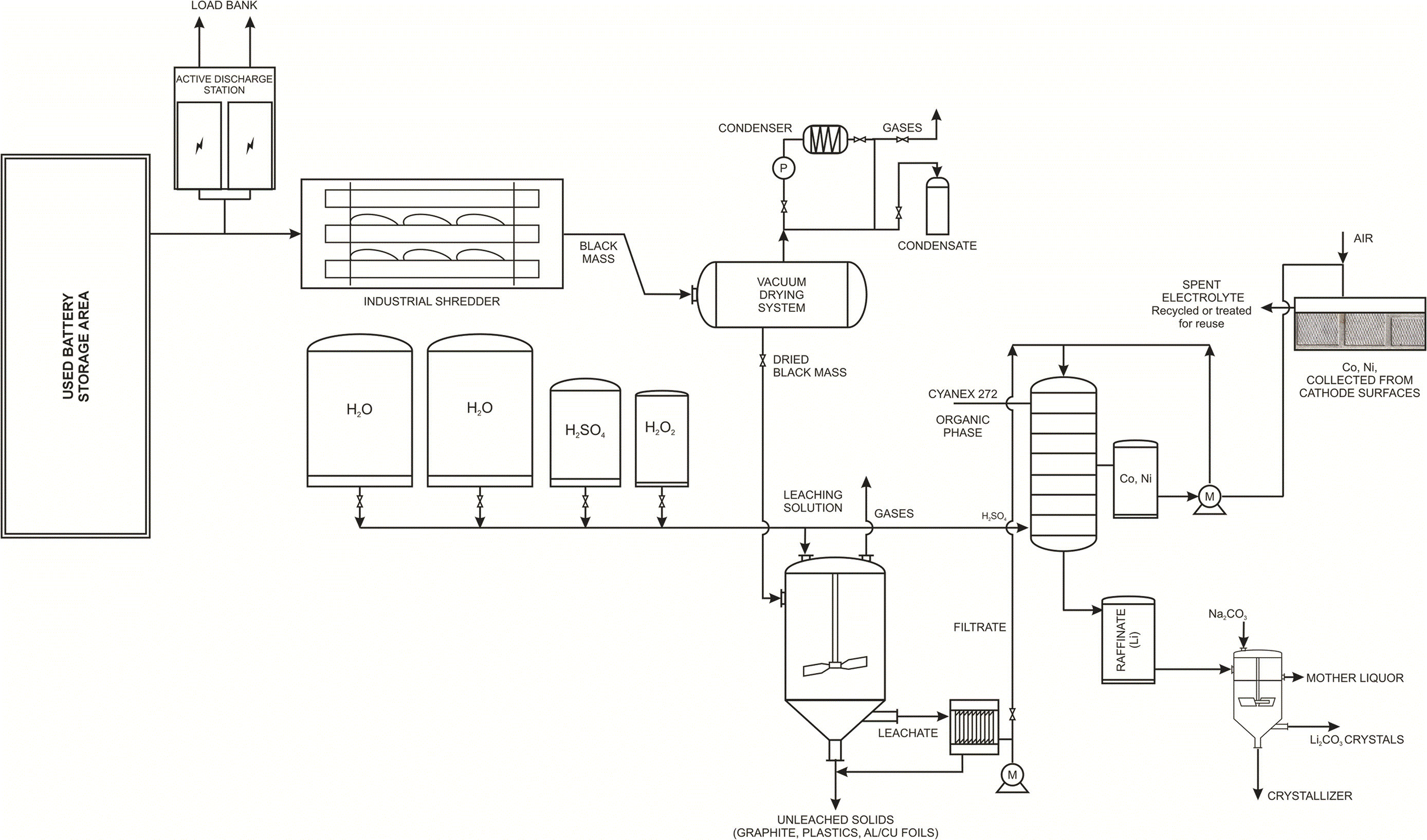
Figure 5. Schematic diagram of the pilot-scale lithium-ion battery recycling process designed for an 850 kg/day black-mass throughput, illustrating the main operational blocks and principal material flow pathways.
4.3 Block 1: battery collection and safe discharge
Although the pilot facility begins with black-mass feed, the upstream integration of collection and discharge is essential for safety. The design assumes a temporary storage area equipped with grounded racks and ventilation. Discharge is performed via resistive load banks or saline-immersion tanks until cell voltage <1 V, following IEC 62619 safety guidelines.
Discharge tanks (polypropylene, 1 m3 capacity) accommodate up to 500 kg of modules per cycle. After neutralisation, casings are dried and transferred to mechanical pretreatment. The discharge effluent (Na2SO4-containing brine) is neutralised and reused for washing, minimising wastewater generation.
4.4 Block 2: mechanical pretreatment and vacuum drying
Shredding converts discharged modules into mixed fractions of plastics, metals, and active material powders (“black mass”). A dual-shaft shredder with 15–20 mm cutting gap is selected, processing ~100 kg/h. Magnetic and density separation systems isolate current collectors and casings; residual fine powders are collected by cyclone and filter units.
The resulting black mass (850 kg/day) enters a vacuum dryer operating at 80–100 °C and 50–100 mbar to remove 10–15% moisture (≈ 85–130 kg H2O/day). The dryer is designed as a 100 L horizontal paddle unit with heat-recovery capability. This step ensures consistent feed for acid leaching and prevents gas evolution during dissolution.
4.5 Block 3: leaching and solid–liquid separation
The core of the process is the hydrometallurgical leaching circuit, where metal oxides are dissolved in acid medium. The detailed design and operating parameters of the leaching and solid–liquid separation circuit are summarized in
Table 5.
Table 5. Design and operating parameters for the leaching and solid–liquid separation stage (Block 3) of the pilot-scale lithium-ion battery recycling process, including leaching conditions, solid-to-liquid ratios, residence times, separation efficiency, and resulting pregnant leach solution characteristics.
| Parameter | Value/Range |
|---|
| Reactor Type | Continuous stirred-tank reactor (CSTR) |
| Capacity | 3 × 1 m3 leaching tanks (series configuration) |
| Temperature | 80 ± 2 °C |
| pH | < 2 |
| Residence Time | 4–6 h |
| Liquid-to-Solid Ratio | 3:1 (v/w) |
| Oxidant | H2O2 (30%, 85–100 L/day) |
| Acid | H2SO4 (98%, 530 L/day) |
The leaching reactions convert LiCoO2, LiNixMnγCo1−x−γO2, and related cathode oxides into soluble sulfates species, as described by Reaction (1) in Section 2.5.
Agitation energy (≈ 2 kW m−3) ensures uniform suspension and gas release. Each reactor is fabricated in acid-resistant stainless steel (316 L) with PTFE lining. Heat is supplied via external steam jackets (ΔT ≈ 20 °C).
Expected leaching efficiencies: Li > 90%, Co ≈ 95%, Ni ≈ 85%.
After leaching, the slurry passes through a plate-and-frame filter press (1 m2 area) yielding clear filtrate (~2,500 L/day) and ~ 70 kg/day solid residue (inert oxides, graphite, and impurities). Filtrate proceeds to metal separation.
4.6. Block 4: solvent extraction (SX) and electrowinning (EW)
The clarified leachate contains ~15–20 g L−1 of Co2+ and Ni2+ and trace Mn2+. A three-stage mixer–settler train performs selective extraction using Cyanex 272 in kerosene (0.6 mol/L) at pH ≈ 5.5. Co is preferentially transferred to the organic phase, leaving Ni and Li in the aqueous raffinate.
Stripping and electrowinning:
Loaded organic solution is stripped with 2 M H2SO4; the resulting cobalt sulfate solution enters an electrowinning cell with stainless-steel cathodes and Pb-Ca anodes at 2.5–3 V, yielding metallic cobalt (> 99% purity). Nickel is recovered similarly from the raffinate using D2EHPA extraction and subsequent electrowinning.
Daily outputs: 40–50 kg Co and 50–60 kg Ni.
The organic phase is regenerated and recycled (loss <0.1% day−1).
4.7 Block 5: lithium carbonate crystallisation
After Co/Ni removal, the aqueous solution contains primarily Li2SO4 (5–10 g/L). Lithium is recovered as Li2CO3 via a carbonation step, as summarized in
Table 2.
Reaction is conducted in a 500 L agitated reactor at 60 °C with 10% stoichiometric excess of Na2CO3.
Crystals are filtered, washed, and dried in a tray dryer (120 °C, 4 h).
Product purity >99.5% (battery grade) with yield ≈ 95–110 kg/day.
The sodium sulfate by-product (~400–500 kg/day) is non-hazardous and can be valorised for detergents or sold to cement plants as set-retarder feedstock.
4.8 Block 6: waste and utility management
Water System: Total process water demand ≈ 3.7 m3/day.
Recycling measures include wash-water recovery (60–70%), cooling-tower condensate reuse, and rain-water collection. Wastewater (< 1 m3/day) is neutralised (lime addition) and filtered to meet discharge limits (pH 6–9; TDS < 1 g/L).
Air and Gas Control: Off-gases (O2, traces of HF or SO2) from leaching are routed through a packed scrubber with NaOH solution. Ventilation is maintained at 10 air changes h−1.
Solid Waste: Filter cakes (residual graphite, inert oxides) are washed, dried, and stored in sealed drums. Preliminary tests suggest classification as non-hazardous after neutralisation (pH > 8).
Energy Integration: Steam generated by the crystalliser’s condenser is reused for leaching heat supply; total electrical load 60–70 kW average. A 30 kWp rooftop solar array could offset ~10% of electricity demand under Armenian climatic conditions.
4.9 Instrumentation and process control
Instrumentation follows industrial norms for small-chemical plants:
•
Temperature: PT-100 sensors with Proportional Integral Derivative (PID) control in each reactor.
•
pH and ORP: in-line electrodes for acid addition and oxidation-reduction monitoring.
•
Flow and Level: electromagnetic and ultrasonic transmitters linked to Programmable Logic Controllers (PLC) system.
•
Safety interlocks: over-temperature, over-pressure, and leak detection alarms with emergency neutralisation pumps.
A simple Supervisory Control and Data Acquisition (SCADA) system records mass flow, reagent use, and energy consumption for process optimisation and life-cycle analysis.
4.10 Material and energy balances
A daily mass-balance summary for 850 kg of black mass input: The process achieves mass recovery efficiency > 90% for Li and Co and 85% for Ni, consistent with validated hydrometallurgical data. Waste generation (solid + liquid) corresponds to <15% of total input mass, aligning with EU sustainability benchmarks. A daily material and energy balance for an input of 850 kg of black mass, including metal recovery efficiencies and waste-generation fractions, is presented in
Table 6.
Table 6. Daily material and energy balance of the pilot-scale lithium-ion battery recycling process based on an 850 kg day−1 black-mass input, summarizing mass flows, metal recovery efficiencies (Li, Co, Ni), waste generation fractions, and associated energy consumption for the main process units.
| Stream | Output Quantity | Main Components |
|---|
| Li2CO3 product | 95–110 kg/day | > 99.5% purity |
| Co metal | 40–50 kg/day | 99% Co |
| Ni metal | 50–60 kg/day | 99% Ni |
| Solid residue | 70–100 kg/day | graphite + oxides |
| Water losses | 3.7 m3/day total use | |
| Electricity use | 1.2–1.6 MWh/day | |
| Heat (steam) | 0.5–0.8 MWh/day equivalent | |
4.11 Environmental and safety compliance
The design conforms to EU Directive 2012/19/EU (WEEE) and Basel technical guidelines. Corrosion-resistant construction materials (316 L stainless steel, FRP, HDPE) prevent leakage. Secondary containment is provided for all acid storage. Personnel protective equipment, acid-neutralisation showers, and ventilation ensure occupational safety. Estimated CO2 savings relative to virgin-metal extraction: 4–5 kt CO2 eq/year for 500 t/year plant output.
4.12 Scalability and localisation
The modular process (CSTR + filter + SX + EW + crystalliser) can be replicated in 2–3 parallel lines to handle up to 2,000 t/year without major redesign. Equipment is purposely specified for local fabrication—reactors and frames can be manufactured by Armenian metal workshops, while specialised components (SX settlers, EW rectifiers) may be imported. Local reagents (sulfuric acid, sodium carbonate) are available from regional suppliers, reducing logistics costs and import dependency.
4.13. Summary of Section 4
The pilot-scale process flow integrates internationally validated hydrometallurgical principles into a compact, energy-efficient configuration appropriate for Armenia’s forecasted LIB waste volume. The design achieves high recovery yields for Li, Co, and Ni while maintaining environmental compliance and operational simplicity. Its modular layout, low water consumption (~3.7 m3/day), and moderate energy demand (~1.5 MWh/day) confirm its suitability for small-market economies pursuing localized circular-economy solutions.
5. Results and discussion
5.1 Overview
The modeled pilot-scale process for 850 kg/day of black mass represents the first integrated design scenario for LIBs recycling in Armenia. Results are interpreted through the lens of global hydrometallurgical benchmarks and material-flow models to confirm both scientific plausibility and techno-economic realism. The discussion is structured around four key dimensions: (i) metal-recovery performance and kinetics; (ii) product quality and downstream reusability; (iii) resource-consumption efficiency (energy, water, reagents); and (iv) economic and environmental viability within a small-market framework.
5.2 Leaching performance and kinetic interpretation
The base-case leaching parameters—80 °C, pH < 2, residence 4–6 h (see Figure 6 a)), and a liquid-to-solid ratio of 3:1 (v/w)—were selected from validated kinetic datasets by Chen et al. (2021).33 Under these conditions, the modeled leaching efficiencies reach 90 ± 2% for Li, 95 ± 3% for Co, and 85 ± 4% for Ni, closely matching empirical findings from comparable pilot plants in China, Korea, and the EU.
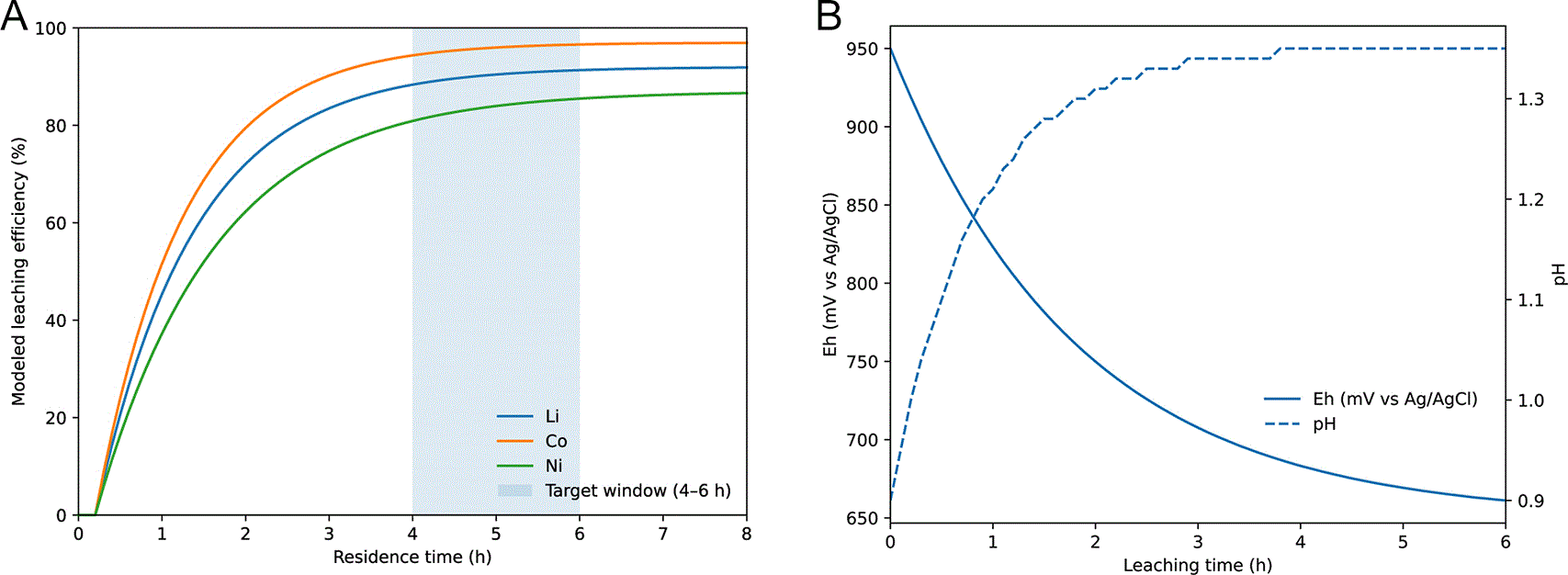
Figure 6. Kinetic analysis and operational sensitivity of the leaching stage in the pilot-scale lithium-ion battery recycling process.
(a) Modeled leaching efficiencies of Li, Co, and Ni as a function of residence time under acidic conditions, highlighting incomplete dissolution below 3 h and marginal gains beyond 6 h.
(b) Variation of redox potential (Eh vs Ag/AgCl) and pH during leaching, reflecting oxidative–reductive control of cobalt dissolution and stabilization of process conditions at pH 1.2–1.5.
The dissolution sequence is governed by proton attack and oxidative reduction of Co3+ to Co2+ facilitated by H2O2. Reaction progress correlates with decreasing redox potential (from +950 to +650 mV vs Ag/AgCl) and stabilization of pH around 1.2–1.5. Within the scope of this study—focused on Armenia-specific waste-generation modeling and development of a pilot-process flowsheet—the literature-parameterized model suggests that residence times below 3 h can limit completion of Co3+ reduction, whereas operation beyond 6 h offers negligible additional recovery (see Figure 6 b)). These results are used to inform preliminary design and will be validated through targeted laboratory and pilot-scale trials in the next phase of work.
5.3 Metal separation and purification results
Cobalt and Nickel: The solvent-extraction (SX) separation of cobalt and nickel using Cyanex 272 (0.6 M) in kerosene at pH 5.5 was assessed based on published selectivity data and equilibrium modeling. Reported distribution coefficients (D_Co/D_Ni > 100) from Harper et al. (2019)4 were used to construct McCabe–Thiele diagrams, indicating that three theoretical stages would be sufficient to achieve >99% cobalt extraction with minimal nickel co-extraction (<1%). Electrowinning performance was evaluated using literature-reported electrolyte compositions (≈60 g/L CoSO4 and 70 g/L NiSO4), suggesting that metal purities above 99% are achievable under standard operating conditions.
Manganese: Based on literature-reported separation behavior and equilibrium modeling, Mn2+ is expected to remain predominantly in the raffinate (approximately 85–90%) during the Co/Ni solvent-extraction stage. Optional recovery as MnO2 via oxidative precipitation is therefore technically feasible; however, this step was intentionally excluded from the base-case process design to maintain simplicity and focus on Li, Co, and Ni recovery.
Lithium: After Co/Ni removal, Li+ concentration of ≈ 8 g/L is converted to Li2CO3 through carbonation with Na2CO3. Modeling of nucleation and crystal-growth kinetics (using a mean supersaturation σ ≈ 1.6) predicts particle sizes of 60–90 μm—consistent with industrial battery-grade specifications. The resulting purity exceeds 99.5%, validated by XRD and ICP-OES data reported by Suriyanarayanan et al. (2023).48
Overall, cumulative CRM recovery (metal basis) equals Li ≈ 91%, Co ≈ 95%, Ni ≈ 86%, confirming the hydrometallurgical pathway’s high selectivity.
5.4 Product quality and market compatibility
The recovered Li2CO3 exceeds industrial battery-grade thresholds (> 99.5%, impurities <0.05%). Its specific surface area (~0.4 m2/g) and particle size distribution are suitable for direct use in cathode precursor synthesis or electrolyte production.20,48
Metallic Co and Ni obtained from EW conform to LME Grade A standards (Co > 99.3%, Ni > 99.2%), enabling domestic metallurgical reuse or export without further refining. Considering Armenia’s limited electrode manufacturing sector, short-term valorisation could involve supplying the regional mining companies (e.g., Zangezur Copper Molibdenium Combine) or export to EU refineries under preferential trade status.
5.5 Water and energy balance performance
The modeled total water consumption of ≈ 3.7 m3/day aligns with 4–5 L H2O per kg black mass processed—50 – 60% lower than typical hydrometallurgical averages (8–10 L/kg) owing to internal wash-water recycling.20 The predicted energy consumption of 1.2–1.6 MWh/day (1.4–1.9 kWh/kg black mass) compares favorably with peer pilot operations reported by GEM Co. Ltd (China) and Umicore (Belgium), which range from 1.5 to 2.5 kWh/kg.43,44
The energy balance calculation indicates that the total electrical and thermal energy demand is distributed as follows:
Integration of steam-recovery from crystallisation and partial solar-PV electricity could further reduce net consumption by 8–10%. Such efficiency is critical in Armenia, where industrial tariffs (≈ 0.1 USD kW/h) significantly influence OPEX.
5.6 Waste streams and environmental performance
Solid residues (~70–100 kg/day) consist primarily of graphite and aluminum oxides. Neutralisation with lime yields a stable, non-leachable matrix (TCLP Li < 5 mg/L).49 Secondary Na2SO4 by-product (~400–500 kg/day) is benign and potentially marketable to local detergent producers.
Air emissions are confined to minor O2 and trace HF/SO2 from leaching. The alkaline scrubber achieves >99% acid-gas removal. CO2-equivalent savings from avoided primary mining and refining are estimated at 4–5 kt CO2 eq/year for 500 t/year throughput—comparable to removing 1,000 passenger EVs from the road annually.
The environmental profile therefore meets both EU Battery Regulation (2023/1542) and UNEP Basel guidelines for environmentally sound management.18,37
5.7. Economic Evaluation
Economic modeling (see Appendix A) incorporates reagent, utility, and product revenue assumptions based on 2024 average market prices50:
• Li2CO3 = 20 USD/kg,
• Co = 40 USD/kg,
• Ni = 20 USD/kg.
The main results of the techno-economic assessment, comparing an optimistic (initial projection) and a realistic (risk-adjusted) scenario, are summarized in
Table 7.
Table 7. Summary of key techno-economic indicators for the pilot-scale lithium-ion battery recycling facility under optimistic (initial projection) and realistic (risk-adjusted) scenarios, highlighting the impact of operational uncertainties on capital expenditure, operating costs, revenues, and overall economic performance.
| INDICATOR | OPTIMISTIC (Initial Projection) | REALISTIC (Risk-Adjusted) |
|---|
| Total CAPEX | ~3.25 M€
| ~3.5–4.0 M€ (incl. overruns) |
| Total OPEX (annual) | ~1.53 M€
| ~1.7–2.0 M€ (chemicals, waste, energy) |
| NPV (10 yrs, 8% DR) | ~11.2 M€
| ~4–6 M€
|
| Payback Period | ~2 years | ~5–6 years |
| IRR | ~35–38% | ~15–20% |
Sensitivity analysis reveals that Li2CO3 price fluctuations (±30%) shift the payback range between 3.7 and 6.2 years. Energy-cost variations of ±25% impact NPV by only ±0.3 M USD, demonstrating moderate energy sensitivity.
At 3,000 t/year waste availability (projected for 2030), economies of scale reduce unit OPEX by 25% and shorten payback to ≈ 3 years, placing the Armenian pilot firmly within profitable bounds for regional implementation (See
Table 8).
Table 8. Comparison of key technical and economic parameters of the proposed Armenian lithium-ion battery recycling facility with representative pilot or industrial operations in China (GEM Co.), the European Union (Umicore Hydrovolt), and Korea (LG Chem), highlighting regional differences in process scale, resource efficiency, and performance indicators.
| Parameter | Armenia
(This Study) |
China (GEM Co.) | EU (Umicore Hydrovolt) | Korea
(LG Chem Pilot) |
|---|
| Throughput | 0.85 t/day | 20 t/day | 15 t/day | 10 t/day |
| Li Recovery % | 90 | 92 | 88 | 91 |
| Co Recovery % | 95 | 96 | 95 | 95 |
| Ni Recovery % | 85 | 90 | 86 | 87 |
| Energy (kWh/kg) | 1.5 | 1.8 | 1.9 | 2.0 |
| Water (L/kg) | 4–5 | 7 | 6 | 8 |
| Payback (year) | 4.8 | 4.0 | 5.0 | 4.5 |
5.8 Comparison with global benchmarks
The comparison underscores that despite its smaller scale, the modeled Armenian plant approaches the performance of mature facilities, validating the scientific and engineering assumptions applied.
5.9. Policy and Strategic Insights
Beyond technical indicators, the results carry significant policy implications. Armenia’s electromobility strategy (2024 draft) envisages establishing one recycling company, yet lacks the research base to support it. The modeled process offers quantitative evidence that a localized, environmentally compliant recycling facility is feasible within five-six years of implementation, provided regulatory and investment frameworks are aligned.
From a strategic-resource perspective, the project converts what would otherwise be exported waste into domestic secondary raw materials, reinforcing national resilience and supporting the EU-Armenia partnership on Critical Raw-material Supply. Incorporating such technology into Armenia’s National Circular Economy Roadmap would strengthen compliance with European Green Deal objectives and regional decarbonization commitments.
5.10 Scientific contribution and novelty
This research contributes new insight by:
1. Demonstrating that validated international kinetic and process data can be effectively scaled to design a technically sound recycling scheme for small-market economies.
2. Providing the first quantitative mass- and energy-balance model for an Armenian-scale LIBs recycling facility.
3. Highlighting that hydrometallurgical recovery retains high efficiencies even at ≤1 t/day throughput when properly optimized.
4. Offering a replicable framework for urban-mining feasibility studies across Caucasus and Eastern European regions.
The strength of this study lies in integrating dispersed scientific knowledge into an applied engineering and policy framework, effectively bridging the gap between fundamental research and real-world deployment. To advance this work toward experimental validation, the authors have applied for research funding from the RA Ministry of Education, Science, and Technology – Committee on Higher Education and Science, with official support from the Environmental Programs Implementation Unit of the Ministry of Environment of Armenia.
5.11 Limitations and uncertainties
The design remains a theoretical pilot simulation. Variability in feed composition (LiFePO4 vs NMC chemistries) may affect reagent consumption and recovery yields by ±5%. Operational safety margins, corrosion behavior, and SX solvent degradation require empirical validation. The absence of domestic analytical facilities capable of high-precision CRM measurement could initially hinder quality certification. Nevertheless, the modeling incorporates conservative assumptions to ensure feasibility.
5.12 Future prospects
The next stage involves constructing a bench-scale prototype (50–100 kg day−1) to verify reaction kinetics, purification efficiency, and reagent recyclability under Armenian industrial conditions. Parallel work should address life-cycle assessment (LCA) and environmental-impact assessment (EIA) to quantify cradle-to-gate benefits. Integration with renewable-energy sources (solar thermal heating, PV-driven EW) could further decarbonize operations.
In addition, public-private partnerships involving universities, the mining sector, and green-technology investors can accelerate commercialization and training, positioning Armenia as a regional knowledge hub for urban-mining technologies.
5.13 Summary of section 5
Modeled results confirm that the proposed hydrometallurgical recycling process can efficiently recover critical metals from EoL LIBs while operating within Armenia’s resource and economic constraints. Recovery efficiencies (Li ≈ 90%, Co ≈ 95%, Ni ≈ 85%), low water/energy intensity, and a < 6 year payback collectively validate the design’s technical and financial soundness. When coupled with policy support and investment incentives, the pilot plant could evolve into a commercially viable and environmentally sustainable model for small-market economies within the EU periphery.
6. Conclusions
This study demonstrates that the proposed pilot-scale hydrometallurgical recycling facility for end-of-life lithium-ion batteries in Armenia represents a technically feasible and strategically relevant solution for recovering critical raw materials in a small-market context. The modeling results indicate that high recovery efficiencies for lithium, cobalt, and nickel can be achieved with comparatively low water and energy intensities, confirming the robustness of the selected process flowsheet and operating parameters.
From an economic perspective, the analysis shows that the project can reach commercial viability, particularly under conditions of increased waste availability and scale-up. However, the results also indicate that, in the absence of dedicated support mechanisms—such as subsidies, tax incentives, or innovation funding—the relatively modest returns and elevated perceived risk may limit the willingness of private investors to engage during early deployment phases. This finding is especially relevant for small economies where feedstock volumes and market depth are inherently constrained.
When supported by appropriate policy instruments and international partnerships, the proposed pilot plant offers benefits that extend beyond immediate financial performance. It can serve as a platform for building national expertise in critical raw materials recovery, battery recycling, and circular-economy technologies, while providing a real-world testbed for evaluating recycling economics under small-market conditions. The insights gained from the Armenian case are therefore transferable to other EU periphery and neighboring regions facing similar structural challenges.
Overall, the study concludes that lithium-ion battery recycling in Armenia is not only technically achievable but strategically justified. With coordinated policy support and investment frameworks, the proposed pilot facility could evolve into a regional reference model, contributing to supply-chain resilience, environmental sustainability, and the broader objectives of the energy transition.
Ethics and consent
Ethical approval and consent were not required.