Public summary
Agriculture and forestry play a central role in addressing climate change, biodiversity loss and environmental pollution. Achieving these goals requires changes in how people make decisions, but changing such behaviour is often more challenging than simply providing information or introducing new technologies.
This paper examines twelve agricultural and forestry projects from across Europe to explore how different interventions are being used to encourage greater transition towards profitably, and environmentally sustainable practices. The projects included decision-support tools, demonstration farms, peer-learning networks, training programmes, awareness campaigns and behaviourally informed approaches known as Green Nudges.
The study found that Green Nudges are already being used in practice, even when project teams do not describe them using behavioural science terminology. Green Nudges rarely operate on their own; instead, they are typically combined with advisory services, demonstrations, social learning and other forms of support. Active inclusion of farmers and foresters was also a common feature of many projects, through living labs, farmer networks and collaborative learning activities. Although these people were often involved in implementing and refining interventions, they were less frequently involved in deciding which behaviours should be targeted or how behavioural interventions should be designed. To address this gap, the paper proposes a new concept called Co-Nudging, which builds on existing participatory approaches by involving farmers, foresters and other stakeholders in identifying behavioural barriers, selecting behavioural objectives and co-designing interventions from the outset.
The paper does not claim that Co-Nudging is proven to be more effective than existing approaches. Rather, it proposes a framework for future research and practice that seeks to combine behavioural science, participation and transparency in support of sustainability transitions across agriculture and forestry.
Interventions in forestry and agriculture
Current agri-food system trajectories are leading to widespread biodiversity loss and land ecosystem degradation, and failing to provide food security, nutrition, and sustainable healthy livelihoods to many.
1
Solving these environmental challenges relies on a green transition requiring profound changes in bioeconomy policies and initiatives towards more sustainable practices in agriculture and forestry. Most farmers and foresters seem to be aware of the urgency of increasing efforts in this area.
2
–
5
Similarly, several institutional actions are in place,
6
like the European Green Deal with its package of policy initiatives (for example, the 2023–2027 CAP), offering a key tool to achieve a sustainable transformation, placing farmers and foresters at the core of its actions. But, do people act according to what they say? Do they behave in accordance with their good intentions? By 2019, only 8.1% of the EU agricultural area was grown organically.
7
In the meantime, in France, only 6% of agricultural subsidies from the CAP was in support for agri-environmental and climate measures.
8
When making decisions, we all may fail to identify or even may not wish to adopt the optimal strategy. This will lead to actions that prevent a decision makers from reaching their targets, and/or cause an unnecessarily large negative impact on the surrounding society and the natural environment. Recognising the existence, the sources and especially the consequences of such decision-making, public policies adopt different types of measures, including financial rewards and incentives (subsidies, etc.), disincentives (taxes, fines, etc.), and regulation. Pre-existing individual and social biases, on top of legislative and financial levers, and variable access to and interpretation of technical information, create a dynamic context around each and every decision. This filters the number of potential options open to the decision maker down to a final selection, often observed at a population level as variable uptake of desired actions. Initiatives to influence this process, and so drive decisions towards a specific sub-set of options, can take the form of a range of activities and interventions (
Table 1), where an intervention is considered to be a message, stimulus, or action intended to bring about a specific change in a target group.
Table 1. Summary descriptions of alternative routes to influencing the decision architecture of farmers, foresters and their advisors.
| Route to influencing the decision architecture of farmers, foresters, and their advisors |
Description |
|---|
| Communication and/or Dissemination | Presentation of results of research (dissemination activities) or promoting general awareness of a topic, project, or initiative (communication activities). |
| Regulation | Interventions in regulation and legislation development or implementation, which provide specific incentives and/or restrictions in choice selection to increase adoption of sustainable practices. |
| Commercial/financial incentive | Interventions that impose either an economic cost or benefit associated with the selection or avoidance of specific choices selection to increase adoption of sustainable practices. |
| Community development | Interventions that require individuals/groups to commit to the use and/or avoidance of specific choice selections in order to join a defined group. |
| Campaign | Interventions that promote the adoption of general principles of a topic, but which does not target any defined decision-making by the target group. |
| Nudge | Minimally paternalistic behavioural interventions in the decision-making architecture which enhance the likelihood of optimal strategy adoption, leaving the decision maker’s choice set and financial incentives unchanged. |
While economic and legal interventions have been extensively used in many domains, such as fiscal policy, they have been criticised for their top-down nature and have yielded opposition and undesirable outcomes. As an alternative (and potentially a complement of
) these standard measures of intervention, recent policies include a less officious approach, based on “nudging”: targeting the behavioural context (or “architecture”) of the decision-making process, without modifying the monetary incentives or the legal framework and thus the choice set available to the decision-maker. These nudges may be used to improve uptake of existing interventions, or as direct interventions in their own right. Building on the concept of choice architecture developed by Thaler and Sunstein,
9
the ForestAgriGreenNudge project focuses on nudges relevant to decision-making affecting climate action, biodiversity protection and restoration, and reduction of emissions or concentrations of air pollutants, and in this context the following definition of Green Nudges is adopted:
GREEN NUDGES: Interventions in farmers’ or foresters’ decision-making “choice architecture” (framing of a problem, information available, presentation, etc.) which favour in a systematic and predictable way the adoption of sustainable practices, without modifying the economic incentives, nor reducing the decision-makers’ choice set, thus preserving their freedom of choice.
Nudges operate through two distinct cognitive pathways. They can target what is often called System 1: fast, automatic, intuitive processes that act on emotions and instinct, or; System 2: slower, more deliberate, reflective reasoning. While both types exist and can be effective, by System 2 nudges encouragement of individuals to think rather than merely react, they are seen as less manipulative and therefore more ethically defensible. System 1 nudges, by contrast, may be easier to implement and more immediately effective, but they operate by shaping behaviour without conscious reflection, raising concerns about manipulation.
The role of green nudges in agriculture and forestry
Since the seminal work by Simon,
10
economists, sociologists and political scientists agree that, in many domains of human decision making, choices deviate from optimality due to human decision-making biases, causing inferior outcomes for both the decision makers and wider society. Biases in the adoption of sustainable practices and behaviour in farming, forestry and the subsequent links of the supply chain up to the consumer may have significant negative consequences for our society and the environment. In a world in which freedom of choice is among the most important ethical principles, the importance of recognizing the existence of right and wrong decisions cannot be overestimated. Behavioural economics and economic psychology approaches are characterizing the biases detected in human decisions and starting to associate them with nudges which mitigate them. While traditional nudges often help individuals achieve their own long-term goals (e.g., healthier eating), green nudges frequently ask individuals to provide a public good at a private cost.
11
If choice architects systematically leverage cognitive biases without transparency, these interventions risk being perceived as manipulative state coercion, which can threaten democratic legitimacy.
12
Therefore, behavioural economics in the environmental sector must balance impactful interventions in choice architecture with respect for the target population’s agency.
Within agriculture and forestry, the literature shows a systemic bias toward consumer-facing interventions, often overlooking the operational realities of upstream primary producers.
13
,
14
Attempting to apply consumer-grade choice architecture directly to capital-intensive agricultural and forestry systems has led to a documented over-optimism in the field.
15
While cross-disciplinary meta-analyses suggest that choice architecture generally promotes behaviour change with a moderate effect size, notable discrepancies exist between controlled academic trials and real-world policy implementations.
16
Green Nudges are often found to have limited impact in isolation,
17
,
18
and in some cases, ‘boomerang’ effects are observed, where target groups behavioural change is the opposite to that intended.
19
This may be due to green nudges applied in isolation failing to address multiple barriers to change. Personalised feedback or decision support tools, for example, are more likely to be influential where they are embedded in existing advisory relationships or peer discussion, complimenting decision making processes rather than driving them.
20
Individual and societal determinants to change
Any intervention may be more or less successful in part due to the nature of pre-existing bias (positive or negative) within the groups or individuals targeted. A summary of common biases are provided in
Table 2; improving understanding of these biases, and which interventions are best targeted and/or adapted to accommodate or overcome them, is critical to advancing transition toward more sustainable practices in agriculture and forestry. While concepts such as cognitive biases, social norms and decision architecture are well established within behavioural economics and psychology, they are often discussed separately and may be unfamiliar to many working in more applied aspects agriculture, forestry and environmental management. Understanding these determinants is important because the effectiveness, efficiency and ethical acceptability of interventions depend not only on their design, but also on the behavioural barriers and motivations present within the target population.
Table 2. A summary of common cognitive biases affecting decision-making in agriculture and forestry.
| Individual Bias | Summary definition |
|---|
| Loss aversion | Individuals weigh losses more heavily than equivalent gains, leading to risk-averse behaviour when facing potential losses. |
| Ambiguity aversion | Preference for known risks over unknown probabilities, even when expected values are similar or higher. |
| Status Quo/default bias | Feeling strongly attracted (“anchored”) to previous choices, the “status quo” or the readily available (default) option. |
| Present bias/Hyperbolic discounting | Valuing excessively highly present gains over future ones/A decreasing devaluation of future options as the reference time is moved further into the future. |
| Cognitive limitations | Intrinsic sources of inability to process correctly the information available. |
| Other-regarding preferences | Deviations from utility/profit maximisation due to other-regarding concerns (altruism, envy, social comparison). |
| Social norms | Actions dictated by one’s (potentially biased) perception of what is socially accepted. |
| False consensus | Overestimating how common one’s own behaviours or beliefs are. |
| Herding | Automatism in imitation of others’ actions, sometimes ignoring their own information |
| Probability weighting | Tendency to distort probabilities in a way that leads to overestimation of low probabilities and underestimation of high ones |
| Reference points | Outcomes are evaluated relative to a reference level (e.g., status quo or expectations), not absolute values. |
| Framing effects | Different presentations of the same information (e.g., gain vs loss framing) lead to different choices. |
| Endowment effects | Individuals assign higher value to things they own relative to identical items they do not own. |
| Regret aversion | Avoidance of choices that could lead to future regret, even at the cost of better expected outcomes. |
| Complexity aversion | Preference for simpler choices; complex information leads to inaction or reliance on heuristics. |
| Peer pressure | Behaviour influenced by social approval or disapproval from peers. |
| Overconfidence | Overestimation of one’s knowledge, skills, or predictive accuracy. |
| Anchoring | Initial exposure to a number or value disproportionately influences subsequent judgments. |
Individual biases
Risk attitudes are among the most prominent features of individual behaviour, identified in the literature as a possible barrier to the adoption of new practices. Barham et al.
21
,
22
has hypothesized that risk aversion makes a farmer hesitate to adopt new methods or innovative decision support tools. The reverse result has also been reported on herbicide management problems
23
,
24
where risk aversion was leading to higher adoption. However, a general theoretical model, which considers risk aversion as both a barrier and a driver of adoption, does not exist. Furthermore, Kahneman and Tversky’s
25
Prospect Theory opened the way to a whole range of new terms and phenomena shown to play an important role in decision making under uncertainty, including Probability weighting (the tendency to distort probabilities in a way that leads to overestimation of low probabilities and underestimation of high ones), Loss aversion (a higher utility decrease from a loss than utility increase from a gain of the same size), Reference points (current earnings, aspiration level, subsistence level, etc., framing the consequences of decisions as gains or losses). Bontemps et al.
26
presented a study on French farmers, showing that more complete specifications of Prospect Theory (Cumulative Prospect Theory) with a joint consideration of reference points, loss aversion and probability weighting increased the percentage of pesticide use decisions explained through risk attitudes.
Time preferences are modelled through time discount factors, which are usually coefficients lower than unity which will express the present value of a unit gain in a later period. It has often been observed that the value loss perceived today for an amount obtained in one year is higher than the value loss estimated in later years. This ‘hyperbolic discounting’ can lead to short-term decision making. Other biases likely to be relevant for individual decisions include (but are not limited to): Framing effects, Ambiguity aversion, Endowment effects, Complexity aversion, Regret aversion, Peer pressure, Overconfidence and anchoring, that is, choosing the default or status quo option more often than optimal.
27
Societal biases
At a collective level, the “public good” nature of the consequences of farming and forestry decisions calls for special attention on social norms (Hillenbrand and Miruka
28
: collective beliefs about the behaviour of others in a reference group), leading to imitation of successful others or herding and social preferences, focusing on altruism, envy, inequity aversion, preference for actions with collective consequences. Socially shared expectations influence individual decision-making and interact with cognitive, economic, and institutional factors. In sustainability transitions such as the adoption of sustainable agricultural and forestry practices, social norms function as embedded and dynamic mechanisms that shape behaviour within social systems rather than as isolated behavioural drivers.
15
,
29
Interventions to drive transition towards more sustainable practices are grounded in the normative context in which decisions are made. This context includes cultural values, professional identities (for example, perceptions of “good farming” or “responsible forest management”), historical land-use practices, and dominant narratives related to productivity, stewardship, and innovation. Together, these elements establish reference points that shape which practices are viewed as legitimate, desirable, or inappropriate within a community.
29
Normative contexts are neither uniform nor static, varying across regions, farming and forestry systems, and social networks, and are shaped by interactions among farmers, foresters, advisors, cooperatives, markets, and society at large.
30
Within this context, different types of social norms influence behaviour through distinct pathways.
31
,
32
Descriptive norms concern perceptions of what others do and are especially influential when practices are visible and locally embedded, supporting social learning and reducing uncertainty. Injunctive norms reflect perceived social expectations and influence behaviour through anticipated approval or disapproval from relevant reference groups. Dynamic norms signal change over time and are particularly relevant for emerging sustainable practices that are gaining momentum but are not yet dominant.
15
Finally, personal norms arise when social expectations are internalized and experienced as moral obligations, forming the most proximal motivational driver of pro-environmental behaviour.
32
Social norms affect behaviour only insofar as they are perceived. Perceptions depend on the visibility of practices, communication channels, social networks, and the credibility of information sources.
33
Through social comparison, individuals assess their own behaviour relative to peers, often seeking legitimacy, belonging, or professional recognition; these processes help explain spatial clustering and diffusion of sustainable practices.
29
,
34
Importantly, norms rarely translate directly into behaviour. Their effects are mediated through psychological and cognitive individual biases, including perceptions of risk, confidence, values, and perceived behavioural control. Observing peer adoption can reduce perceived agronomic or financial risk, reinforce positive beliefs about environmental benefits, and strengthen confidence in one’s own capacity to adopt new practices.
35
,
36
A central insight from meta-analytic research is that personal norms play a key mediating role.
32
Descriptive and injunctive norms largely influence behaviour indirectly by strengthening internalized moral obligations, which in turn drive pro-environmental intentions and actions.
32
Adoption and retention of a given approaches is therefore best understood as a dynamic process involving consideration, trial, uptake, persistence, or abandonment rather than a simple binary decision.
29
Social norms can accelerate progression along this pathway but may also reinforce inertia when environmentally harmful practices remain socially dominant. Feedback loops are therefore integral to achieving change; as more farmers or foresters adopt sustainable practices, descriptive and dynamic norms evolve, visibility increases, and incentives for further uptake strengthen. Conversely, weak adoption can stabilize norms that favour conventional practices, slowing sustainability transitions.
32
Evidence from behavioural policy research indicates that addressing social norms alone typically have limited effect sizes when used in isolation. Their effectiveness increases substantially when combined with complementary instruments such as economic incentives, advisory services, skills training, and regulatory frameworks.
15
Although individual biases and social norms are often studied separately, in practice they interact continuously within real-world decision-making processes. The same intervention may therefore produce different outcomes depending on the behavioural barriers, motivations, social expectations and decision contexts present within a particular group. This complexity helps explain why behavioural interventions often show inconsistent results across studies and why generalisations regarding effectiveness are difficult to make. Rather than providing a direct framework for evaluating examples of interventions, the concepts of green nudges, biases, and individual and social norms presented above offer a theoretical lens through which intervention design can be interpreted. They also provide the foundation for the later discussion of effectiveness, efficiency and ethics, and for the proposal of Co-Nudging as a more participatory approach to behavioural change.
Evaluating green nudges in action
The purpose of this paper is not to quantify the impact of individual project interventions, but to examine how behavioural interventions are currently being designed and applied in European agriculture and forestry. Analysis of twelve recent projects/initiatives, using a common assessment framework, has identified recurring intervention patterns and consider their implications for the future development of Green Nudges. The findings suggest that behavioural interventions are rarely deployed in isolation and are most commonly embedded within wider participatory, advisory and social processes. On this basis, we propose a Co-Nudge framework as a potential next step in the evolution of Green Nudges.
Identification of relevant projects and initiatives for case studies
To date, the concept of Green Nudges has not been clearly defined within agriculture and forestry, and behavioural interventions are rarely described using consistent terminology. Nevertheless, a wide range of projects and initiatives seek to influence decisions related to biodiversity protection, climate mitigation and adaptation, sustainable pest and nutrient management, and wider sustainable management of complex ecosystems. To better understand how such interventions are currently being designed and implemented in practice, a scoping exercise was undertaken, initially identifying over 50 potential cases from which 12 were select and interviewed to develop case studies across Europe. Twelve European projects and initiatives were selected for assessment, comprising eight primarily agricultural case studies, three forestry-focused case studies, and one spanning both sectors. The selected cases covered a range of sustainability challenges, including biodiversity protection, climate mitigation and adaptation, pollution reduction, sustainable pest management, and nutrient management. Together, they provided a diverse set of examples through which different intervention approaches could be examined.
Common assessment framework for case study development
A common interview guide was developed to ensure consistent data collection across all case studies. Semi-structured interviews focused on project objectives, intended behavioural changes, intervention design, and implementation approaches. Interviews were conducted in two cycles (Spring-Summer 2025 and Winter 2026), with findings from the first cycle contributing to the development and refinement of the Green Nudge concept and associated classification framework. The second cycle incorporated additional questions relating to the effectiveness, efficiency, and ethics of interventions. Where necessary, follow-up interviews were conducted to collect supplementary information, ensuring that the same information was collected from all cases. Interview transcripts formed the primary source of evidence for case study development and were supplemented by project websites, publications, and other publicly available materials. None of the participants were minors, and all interviews were conducted with informed written consent.
Insights from the first interview cycle informed the development of the intervention classification framework (
Figure 1), which was subsequently applied across all case studies to distinguish Green Nudges from other intervention types. The framework was intended to classify interventions according to their design and implementation characteristics rather than their effectiveness. Consequently, interventions not classified as Green Nudges should not be interpreted as less successful or valuable, but simply as falling outside the Green Nudge definition adopted in this study. Draft case studies and classifications were reviewed by interviewees, and amendments were made where factual corrections or clarifications were requested.
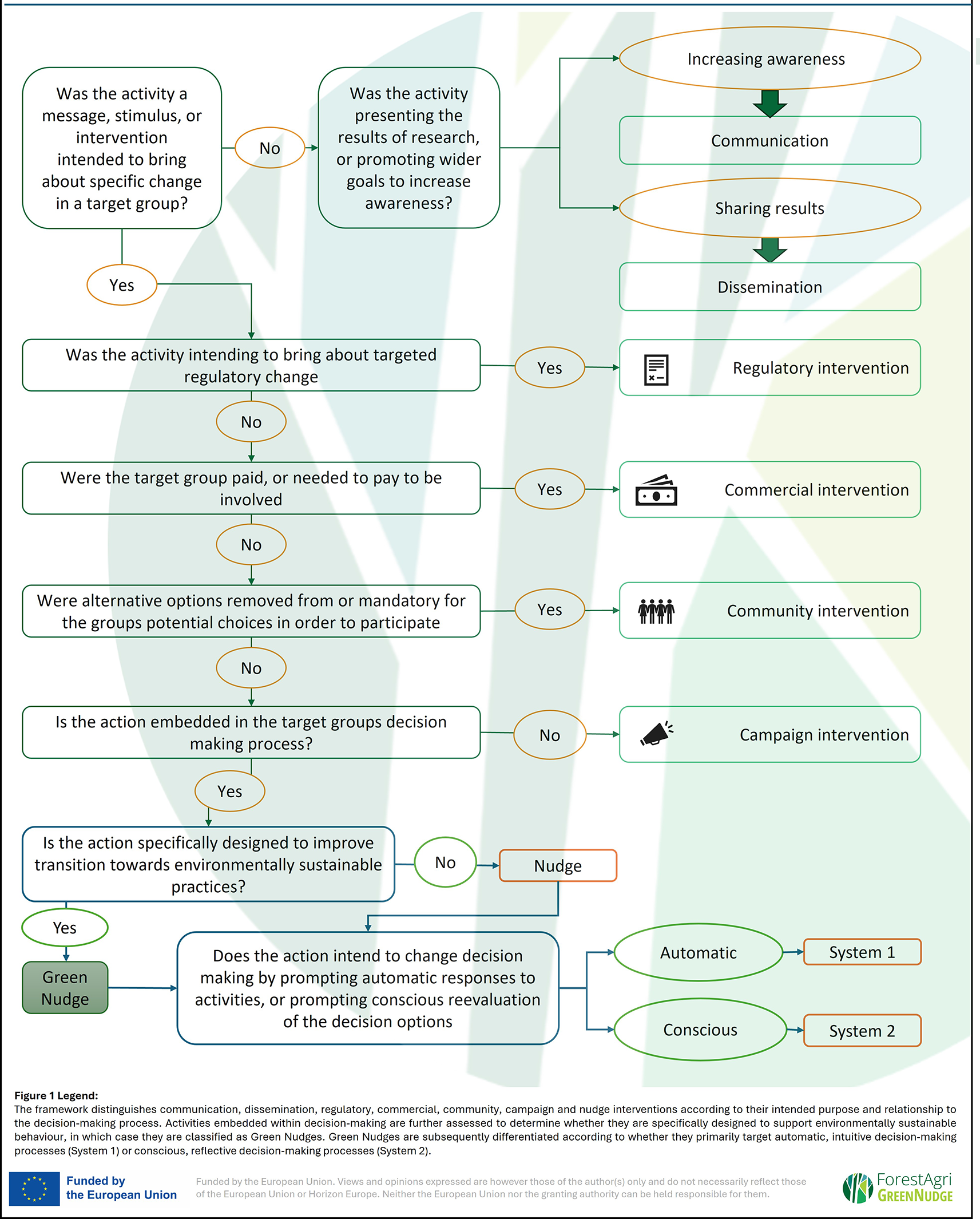
Figure 1. Flow chart for determining the nature of a given intervention.
The framework distinguishes communication, dissemination, regulatory, commercial, community, campaign and nudge interventions according to their intended purpose and relationship to the decision-making process. Activities embedded within decision-making are further assessed to determine whether they are specifically designed to support environmentally sustainable behaviour, in which case they are classified as Green Nudges. Green Nudges are subsequently differentiated according to whether they primarily target automatic, intuitive decision-making processes (System 1) or conscious, reflective decision-making processes (System 2).
Limitations of methodology
The primary objective was not to create a representative sample of projects, nor to quantify intervention outcomes, but to examine a diverse range of approaches that could be assessed. Selection was therefore deliberate, targeting projects and initiatives to give a diversity of cases across agricultural and forestry contexts and across environmental themes, namely biodiversity protection, climate action, and pollution reduction. Participation relied on the willingness of project representatives to take part in semi-structured interviews and provide sufficient information for assessment. Consequently, the case studies should be considered illustrative examples of the range of intervention approaches currently being applied in European agriculture and forestry, rather than an exhaustive or statistically representative review of practice. The greater number of agricultural than forestry case studies reflects this approach and does not imply an intended comparison between sectors.
Second, reliance on interview data introduced the potential for subjective interpretation and respondent bias. To address this, interview findings were supplemented with information from project websites, publications and other publicly available materials. Intervention classifications were reviewed by multiple members of the project team using the common assessment framework and subsequently validated with interviewees. As the analysis focused on the design and characteristics of interventions rather than their outcomes or impacts, the risk of subjective interpretation influencing conclusions was reduced.
Case study highlights
Twelve case studies were examined using a common assessment framework to explore how behavioural interventions are being used to support more sustainable decision-making in European agriculture and forestry. Eight case studies focused primarily on agriculture (IPM Decisions, EUCLID/IPM Game, TRAPEGO, RENOVATE, Nutri-Check Net, GOOD, Climate Farm Demo and the Yield Enhancement Network), three focused primarily on forestry (Climate Nudge, Chaudes-Aigues Forest Restoration and the forestry strand of Precilience), while ModernAKIS addressed both agriculture and forestry through Agricultural Knowledge and Innovation Systems (AKIS). Together, the case studies illustrate the diverse approaches being used across Europe to support biodiversity protection, climate adaptation and mitigation, sustainable pest management, nutrient optimisation and wider sustainability transitions.
Few initiatives explicitly identified implementation of nudges, despite many incorporating behavioural principles, and several projects primarily focused on communication, dissemination, awareness raising or network development. ModernAKIS, for example, sought to strengthen Agricultural Knowledge and Innovation Systems (AKIS) through networking, communication resources and training materials. Similarly, the Chaudes-Aigues Forest Restoration initiative used demonstration activities and stakeholder engagement to challenge prevailing assumptions about forest management, while Precilience used seminars, webinars and demonstration events to raise awareness of climate risks in boreal forestry systems. These interventions sought to inform and influence attitudes towards sustainability, but were not embedded within specific decision-making contexts and therefore were classified as communication or campaign interventions rather than nudges.
Other projects did, however, place behavioural interventions directly within the decision-making process. IPM Decisions developed an open-access platform providing pest forecasts and Integrated Pest Management decision-support tools intended to reduce uncertainty and promote more targeted crop protection decisions.
39
As one project representative explained, the objective was to help farmers “
make better informed decisions relating to pest management and avoid unnecessary treatments where the risk of pest activity is low”. Climate Nudge adopted a similar approach in forestry, embedding site-specific prompts and recommendations into an existing forest-owner portal. In both cases, beneficiaries retained freedom of choice, but information was presented in a way intended to support more sustainable decisions at the point those decisions were made.
Experiential learning emerged as another recurring theme. The EUCLID project developed an IPM Game; subsequently adapted and promoted in other projects such as IPMWORKS. This used realistic crop protection scenarios followed by facilitated reflection sessions, allowing participants to evaluate the consequences of alternative approaches to pest management. Likewise, RENOVATE developed a mobile training application that combined simulations, gamification and peer interaction to promote sustainable pesticide use within specialty crop systems. Both projects aimed to move beyond information provision alone and encourage active reflection on management decisions. As described in one interview, the purpose was not simply to inform farmers, but to “
show the different ways in which IPM measures can be applied, demonstrate the complexities of pest control, and support reducing pesticide usage”.
A third group of interventions focused on increasing the salience and personal relevance of environmental information. TRAPEGO tested whether personalised information on fungicide toxicity could influence Swiss viticulturists’ intentions to adopt fungus-resistant grape varieties.
38
Climate Farm Demo similarly encouraged farmers to assess their own greenhouse gas emissions and develop adaptation and mitigation plans through advisor-supported baseline assessments. In both projects, sustainability challenges were translated into farm-specific decisions. As described by Climate Farm Demo participants, the objective was to help farmers “
characterise their individual emissions” before working with advisors to develop practical actions suited to their own circumstances.
The GOOD project and Nutri-Check Net further demonstrated combining information with practical experience and social learning. GOOD used living labs, demonstrations and informational interventions to promote Agroecological Weed Management systems,
39
while Nutri-Check Net established Crop Nutrition Clubs in which farmers tested nutrient management tools alongside peers and facilitators. Rather than relying solely on information transfer, these projects sought to support behavioural change through collective learning and structured reflection. In Nutri-Check Net, participants were encouraged to adopt a simple “Plan, Check and Review” decision-making framework, providing an example of how behavioural support can be embedded within existing management processes.
Across many of the projects, peer learning and social interaction appeared at least as important as the technical intervention itself. Climate Farm Demo relied heavily on demonstration farmers communicating experiences to other farmers, while Nutri-Check Net, GOOD, EUCLID, RENOVATE and ModernAKIS all incorporated opportunities for farmer-to-farmer exchange (e.g.
40
). One interviewee described a key ambition to be creating resources and interactions that would “
support actors in making sustainable change”, while another emphasised the importance of helping farmers “
reflect on their choices, discuss them with peers and understand what actions could be applied to their farms”. These observations suggest that behavioural change was frequently viewed as a social process rather than individual evidence-based decision.
The Yield Enhancement Network (YEN) highlighted the challenges associated with intervention classification. YEN combines benchmarking, competition, peer comparison and farmer learning networks to encourage improvements in crop performance.
41
,
42
Participants receive personalised performance reports comparing their results against peers and against estimated production potential. Although benchmarking and social comparison are commonly associated with nudging approaches, YEN participation required payment or sponsorship. Consequently, the YEN approach was classified as a commercial intervention containing nudge-like elements rather than a nudge itself. Nevertheless, the initiative demonstrates how behavioural mechanisms can be integrated into wider innovation and learning systems.
Discussion on Green Nudges and other interventions
These twelve projects exist within the context of national and European legislation and regulations, which further influence the approaches taken and subsequent behavioural change. Green Nudges were identified, mostly reflective (System 2) interventions that encouraged farmers and foresters to consciously re-evaluate decisions through tailored information, simulations, benchmarking, demonstrations or facilitated discussion. System 1 mechanisms, including visual prompts, gamification and social comparison, were also identified but generally functioned as complementary tools designed to enhance engagement with wider learning processes rather than drive behavioural change independently. Despite identifying several Green nudges, few were described or designed explicitly using nudge terminology – limiting the extent to which they would be recognised in literature based meta-analysis. In many cases, project teams framed their work around knowledge transfer, innovation uptake, training, or advisory support, yet the practical design of their interventions directly altered decision environments in ways that align closely with recognised definitions of nudging. This suggests that Green Nudges are not an unfamiliar or experimental concept at project level, but rather an implicit practice that has developed organically as consortia have sought more effective ways to influence behaviour without enforcing compliance or relying on financial incentives. A striking observation across both agriculture and forestry was the repeated inclusion of participation, co-design, peer learning and social interaction. Although again these elements were rarely described using behavioural science terminology, they repeatedly emerged as central components of intervention design and implementation. This provides the foundation for the discussion that follows and informs the subsequent proposal of a Co-Nudge framework.
A proposed co-nudge framework – collaborative development of nudges
Participatory approaches are already common within agricultural and forestry innovation systems. Living labs, demonstration networks, advisory systems, stakeholder engagement processes and peer-to-peer learning initiatives all seek to involve farmers, foresters and other actors in sustainability transitions. Participation, however, typically begins after the sustainability challenge, behavioural objective, or intervention pathway has already been defined. Stakeholders are invited to refine, adapt, test or implement solutions, but generally have limited influence over the identification of behavioural barriers, the selection of target behaviours, or the design of the intervention architecture itself. Meanwhile, there is scope for improved integration of effective norm-based interventions, which: (i) leverage positive descriptive norms where uptake is already substantial, (ii) emphasise dynamic norms for emerging practices, (iii) activate injunctive norms through trusted messengers, and (iv) explicitly support internalization by linking sustainable practices to moral responsibility and professional identity rather than relying solely on external pressure. This highlights a broader challenge within behavioural interventions, namely the absence of a generalized theory or framework under which evidence can be organised and systematically extrapolated beyond the strict context under study. To move forward, we propose a shift in perspective: rather than viewing nudges as externally imposed tools, greater emphasis should be placed on collaborative approaches to behavioural intervention design.
Such collaborative nudges, we here name
Co-Nudges
, are developed with the active involvement of the people whose behaviour they seek to influence from the outset. Unlike conventional co-design or living lab approaches, which focus on the joint development of technologies, practices or innovations to address pre-defined problems, Co-Nudging focuses specifically on the collaborative identification of behavioural barriers, the selection of behavioural objectives, and the co-creation of interventions within the decision-making architecture itself. The emphasis is therefore not on participation in innovation, but on participation in the design, selection and refinement of behaviour-change interventions. This approach acknowledges that individuals are not passive recipients of interventions, and that people are capable of recognising their own shortcomings and, at least in principle, engaging in self-regulation. It also recognises that interventions should be designed with effectiveness, efficiency and ethical acceptability in mind, and that these may differ between actors and contexts. The distinction is not that Co-Nudges are participatory, but that participation occurs before behavioural objectives and intervention architectures are defined.
A central component of Co-Nudging is the
conscious nudgee principle. This requires that nudges are implemented in a transparent and participatory manner, encouraging farmers, foresters, or other target groups (i.e. those being nudged) to actively engage with and understand the intervention, its objectives and its mechanisms, rather than being treated as passive recipients. In contrast to approaches that seek to influence behaviour without explicit awareness, the conscious nudgee principle recognises that transparency and engagement may contribute positively to both intervention acceptance and effectiveness. Beyond transparency, which is itself an important element of good practice, the conscious nudgee principle may act as a nudge in its own right, increasing the probability of acceptance by nudgees.
43
Thus, Co-Nudging represents a step beyond informed consent towards active engagement of the nudgee in both the implementation process and the objectives of the intervention.
44
In doing so, it seeks to improve compliance with good practice principles while maintaining the behavioural effectiveness of interventions.
Co-Nudging also addresses the need for actor-specificity: different actors operating within different decision-making contexts (including individual and social biases and norms) may respond differently to similar interventions and may therefore require different forms of behavioural support.
45
Collaborative, transparent development of bespoke nudges explicitly embeds an understanding of why people make suboptimal decisions in the first place. Three broad causes may be identified:
i.
individuals may lack accurate or sufficient information;
ii.
individuals may be subject to cognitive biases that distort decision-making even when information is available;
iii.
there may be a conflict between individual incentives and collective outcomes, where what is rational for one person is harmful for society as a whole, and vice versa.
Each of these causes may be best addressed through different intervention approaches. Where information is lacking, communication and information provision may be sufficient. Where cognitive biases are influential, one option is to mitigate those biases through conscious reflection on options and consequences; another, more controversial approach is to exploit biases to steer behaviour, though this may compromise the ethical validity of the intervention. Where conflicts exist between individual and collective interests, interventions must create opportunities for individuals to consider wider societal impacts alongside personal outcomes.
These underlying causes are expanded in
Table 3, which groups individuals according to their motivations. Some are primarily self-interested and will only change behaviour when personal benefits are evident. Others are conditional cooperators who are willing to act if they observe similar behaviour in others. Some are unconditional cooperators who act according to principle regardless of wider behaviour, while others remain uncertain or open-minded and may be particularly receptive to influence. While these actor types were not assessed directly within the case studies, they provide a useful theoretical framework for understanding why different interventions may be required for different groups. Recognising these differences, and acknowledging that motivations may differ between topics and contexts, is essential for intervention design because no single approach is likely to be effective across all groups and situations.
Table 3. Conceptual Framework Linking Behavioural Barriers, Actor Motivations and Co-Nudge Design.
| | Nudgee attitudes and motivation |
|---|
|
Source of bias
|
Recommended nudge types
|
I do not want to be nudged to change (“Sailors of Ulises”)
|
I may want to be nudged but will not/cannot change in the short run (“Ulises”)
|
I want to listen to the nudge, as long as it is profitable for me (“Own profit motivation”)
|
I want to listen to the nudge and may change even at no personal gain as long as others do it too (“conditionally cooperative”)
|
I want to listen to the nudge and may change even at no personal gain and even if others don’t (“unconditionally cooperative”)
|
Uncertain what to expect, but I would like to participate nudging and being nudged (open-minded)
|
|
Wrong or insufficient information
| Informational nudge | Any nudge … but… Success of Co-Par Nudges unlikely.
Try System 1-activating nudges (unconscious processes, not requiring reflection or self-motivation) | Information on long term consequences of (non) sustainable decisions on me and the others | Information on consequences of (non) sustainable decisions on own decision maker’s profit | Information on long term consequences of (non) sustainable decisions, social norms and actions by others | Information on long term consequences of (non) sustainable decisions on me, others, and the environment | Any nudge. Success of Co-Par Nudges likely. Preferably, System 2-activating nudges (conscious processes requiring reflection and/or or self-motivation) |
|
Decision making biases
| Bias-mitigating nudge | Bias-mitigating information. Nudge raising self-awareness on biases (loss-risk aversion, status quo bias, confirmation bias) | Bias-mitigating information. Nudge raising self-awareness on biases (loss-risk aversion, status quo bias, confirmation bias) | Bias-mitigating and self-awareness: Individual (loss-risk aversion, status quo bias, etc) biases and social dilemmas | Bias-mitigating and self-awareness: Individual (loss-risk aversion, status quo bias, etc) biases and social dilemmas |
|
Social dilemma type of situations
| Other-regarding nudging message | Information on others, social norms and socio-environmental externality (effects of own decisions on others and the environment) | Information on consequences of (non) sustainable decisions on own profit. Try Kantian ethics (“if no one cares for others … “) | Information on long term consequences of (non) sustainable decisions for me others, nature, social norms and actions by others | Information on long term consequences of (non) sustainable decisions for me others, nature |
Elements of this Co-Nudging framework are already visible within existing projects and initiatives across Europe, and the value of participatory approaches is well established, for example through Living Labs.
46
The H2020 project IPMWORKS established a European network of demonstration farms and farmer groups supported by facilitators who encouraged participatory learning, testing and promotion of Integrated Pest Management approaches.
47
Similarly, collaborative and participatory elements were observed across several of the case studies reviewed in this paper. However, none explicitly involved target groups in the identification of behavioural barriers, the selection of behavioural objectives, and the co-design of interventions intended to influence specific decisions. While participatory approaches are becoming increasingly common across European projects and initiatives, communication and dissemination of research outputs remain the default route to influence behaviour, and underpin any collaborative methods. Although such activities are essential prerequisites for awareness and adoption, they are unlikely to generate sustained behavioural change when used in isolation.
29
We therefore propose Co-Nudging as a framework through which behavioural interventions can be integrated with wider participatory processes, allowing intervention design to respond more directly to the needs, motivations and decision contexts of the individuals involved. This is supported by, rather than responding to, communication and dissemination materials.
Initial recommendations for people looking to see change
The case studies highlight the challenges of evaluating behavioural interventions. Interventions have no intrinsic size in themselves; their contribution depends on the extent to which they influence behaviour and support desired outcomes. Three criteria are particularly relevant when assessing interventions: efficacy, the extent to which behavioural change is achieved; efficiency, the extent to which change is achieved in a proportionate use of resources; and ethics, the extent to which interventions respect the autonomy and agency of those affected. Despite a growing body of literature on nudges, relatively little can be generalised confidently across contexts with respect to these criteria. Interventions shown to be effective, efficient, or ethically acceptable in one setting may fail in another or only function under specific circumstances.
18
,
37
,
48
,
49
Consequently, policymakers and practitioners cannot yet rely on a universally applicable set of principles for designing behavioural interventions at scale. Instead, interventions must be selected and adapted to the specific context, behavioural barriers and motivations of the target group.
50
In practice, projects rarely relied upon a single intervention type, instead combining communication, demonstration activities, peer learning, advisory support, decision-support tools and behavioural interventions within wider programmes. This suggests that the success of behavioural interventions may be influenced as much by the surrounding social and institutional context as by the intervention itself, and targeted approaches are needed in order to achieve specific, measurable change. The case studies do not identify a single intervention that can be considered universally effective, efficient or ethical across agricultural and forestry contexts. Instead, they highlight several consistent principles that may support the development of future interventions.
1.
Design behavioural interventions collaboratively from the outset
Projects should engage the targeted decision makers (farmers, foresters and advisors) before sustainability objectives, behavioural targets and intervention approaches have been fully defined. Participation should extend beyond implementation and refinement to include identification of barriers, opportunities and potential intervention mechanisms. This may increase intervention legitimacy, improve contextual relevance and strengthen the ethical basis of behavioural change initiatives. Co-Nudging defines a framework through which this can be achieved for Green Nudges.
2.
Integrate behavioural interventions within wider support systems
The case studies suggest that Green Nudges rarely operate in isolation. Decision-support tools, demonstrations, peer learning, advisory services, communication activities and behavioural interventions were commonly combined within broader programmes. Future initiatives should therefore avoid treating nudges, or any intervention, as stand-alone solutions and instead consider how behavioural interventions can complement wider advisory, regulatory, community and knowledge-exchange activities.
3.
Match interventions to behavioural barriers and decision contexts
Different behavioural barriers require different responses. Information deficits, cognitive biases, social norms and conflicts between individual and collective interests are unlikely to be addressed through a single intervention type. Future programmes should place greater emphasis on understanding the motivations, constraints and decision environments of their target groups, collaborative with those groups, before selecting intervention approaches. This is likely to improve the efficacy, efficiency and ethical acceptability of interventions while reducing the risk of poor uptake or unintended outcomes.
50
,
51
Rather than asking how farmers and foresters can be nudged towards sustainability, progress toward greater adoption of sustainable practices would benefit from research addressing how behavioural interventions themselves can be developed collaboratively with those whose decisions are to be influenced. It is this shift in perspective that underpins the proposed Co-Nudge framework.
Disclaimer
The views expressed in this article are those of the authors. Publication in Open Research Europe does not imply endorsement of the European Commission.
Ethics and consent statement
All research involving human participants was conducted in accordance with the ethical principles of the Declaration of Helsinki. Ethical approval for the interview activities undertaken within the ForestAgriGreenNudge project was obtained from the Ethics Committee of Burgundy School of Business (BSB) prior to commencement of the research; the Ethics Committee of Burgundy School of Business with ethical review reference CERBSB2025–129, 31 January 2025). The study protocol was also reviewed by the project’s Independent Ethics Advisor. All participants were provided with information about the study and gave written informed consent prior to participation in the interviews. Participation was voluntary and participants were free to withdraw at any time. Personal data were collected, stored and processed in accordance with the project Data Management Plan and applicable data protection requirements.
Disclaimer
The views expressed in this article are those of the author(s). Publication in Open Research Europe does not imply endorsement of the European Commission.
Data and software availability
The findings presented in this paper are based primarily on semi-structured interviews conducted with representatives of twelve agricultural and forestry projects and initiatives. Interview transcripts and associated notes contain information that could potentially identify participants and were collected under conditions of anonymity. As participants did not provide consent for public release of these materials, the underlying qualitative data cannot be made publicly available, as advised during the ethics review (see Ethics and consent statement). Summary anonymised outcomes from the interviews, along with the interview guide and the informed consent documents, are available in Ramsden, M., Griffiths, O.& Bolton, M. (2026). Green Nudges in Action: Interview summaries from intervention case studies across Europe. Zenodo.
https://doi.org/10.5281/zenodo.21906579.
52
Data are available under the terms of the
Creative Commons Attribution 4.0 International license (CC-BY 4.0).
The information used to develop the case study summaries was supplemented by publicly available project websites, publications and project outputs cited throughout the manuscript. Requests for access to interview transcripts should be made to
Mark.Ramsden@adas.co.uk; raw transcript data is available subject to permission from each interviewee.
No software, code, models or other datasets were generated as part of this study.
Acknowledgements
The authors would like to express their sincere thanks to the representatives of the twelve projects and initiatives (ModernAKIS, IPM Decisions, EUCLID/IPM Game, TRAPEGO, RENOVATE, NUTRI-CHECK NET, GOOD, Climate Nudge, Chaudes-Aigues Forest Restoration, the Yield Enhancement Network, Precilience and Climate Farm Demo) who generously contributed their time, expertise and reflections through interviews undertaken as part of the ForestAgriGreenNudge project. Their willingness to discuss project objectives, intervention design, implementation approaches and lessons learned formed the foundation of the case studies analysed in this paper.
The authors also acknowledge the wider ForestAgriGreenNudge consortium, and partners in our sister project PRUDENT, for contributions to discussions on behavioural change, Green Nudges, intervention classification, effectiveness, efficiency and ethics, and the development of the Co-Nudge framework presented in this paper.
Finally, we thank the many farmers, foresters, advisors, researchers and stakeholders who participated in the projects and initiatives discussed in this paper. Although not directly involved in this research, their engagement, experimentation and willingness to explore alternative approaches have contributed significantly to advancing understanding of sustainability transitions in European agriculture and forestry.
References
-
Steffen
W
Richardson
K
Rockström
J
et al.
:
Planetary boundaries: Guiding human development on a changing planet.
Science.
2015;347(6223):1259855.
PubMed Abstract
Publisher Full Text
-
Despotović
J
Rodić
V
Caracciolo
F
:
Farmers' environmental awareness: Construct development, measurement, and use.
J. Clean. Prod.
2021;295:126378.
Publisher Full Text
-
Drescher
M
Warriner
GK
:
Environmental concerns and stewardship behaviors among rural landowners: What supports farmers and non-farmers in being good stewards?.
Frontiers in Sustainable Food Systems.
2022;6:758426.
Publisher Full Text
-
Ipsos:
Enquête d'opinion auprès des Français et des agriculteurs.
Lidl;2022.
-
Piwowar
A
:
Attitudes and opinions of farmers in the context of environmental protection in rural areas in Poland.
Environ. Monit. Assess.
2020;192(3):180.
PubMed Abstract
Publisher Full Text
Free Full Text
-
Ricart
S
Olcina
J
Rico
AM
:
Evaluating public attitudes and farmers' beliefs towards climate change adaptation: Awareness, perception, and populism at European level.
Land.
2019;8(1):4.
Publisher Full Text
-
Agence Bio:
Organic Sector in the European Union.
Agence Française pour le Développement et la Promotion de l'Agriculture Biologique;2021.
-
Agreste:
Statistical book 2020: Agriculture, Forestry, fisheries and food industry.
France:
Ministry of Agriculture and Food;2021.
-
Thaler
RH
Sunstein
CR
:
Nudge: Improving decisions about health, wealth, and happiness.
Penguin Books;2008.
-
Simon
HA
:
Models of bounded rationality: Economic analysis and public policy.
MIT Press;1982.
-
Schubert
C
:
Green nudges: Do they work? Are they ethical?.
Ecol. Econ.
2017;132:329–342.
Publisher Full Text
-
Hausman
DM
Welch
B
:
Debate: To nudge or not to nudge.
J Polit Philos.
2010;18(1):123–136.
Publisher Full Text
-
El Benni
N
Finger
R
Ammann
J
et al.
:
Aligning agricultural policy: discrepancies between public and farmer priorities.
Agric. Food Econ.
2025;13(1):55.
Publisher Full Text
-
Ferrari
L
Cavaliere
A
De Marchi
E
et al.
:
Can nudging improve the environmental impact of food supply chain?.
Trends Food Sci. Technol.
2019;91:184–192.
Publisher Full Text
-
Shukla
P
Messer
KD
Ferraro
PJ
:
Applying behavioral science to agriculture, food, and agri-environmental policymaking.
Food Policy.
2023;120:102484.
Publisher Full Text
-
Mertens
S
Herberz
M
Hahnel
UJ
et al.
:
The effectiveness of nudging: A meta-analysis of choice architecture interventions across behavioral domains.
Proc. Natl. Acad. Sci.
2022;119(1):e2107346118.
PubMed Abstract
Publisher Full Text
Free Full Text
-
Correa
M
Gsottbauer
E
Nordén
A
:
Nudging fails to increase conservation actions among farmers.
Frontiers in Environmental Economics.
2025;4:1648280.
Publisher Full Text
-
Spriet
A
Weijters
B
Wauters
E
:
Testing digital behavior change interventions to increase farmer enrollment in the soil passport eco-scheme: null results from a large-scale randomized controlled trial in Flanders.
J. Behav. Exp. Econ.
2026;123:102580.
Publisher Full Text
-
Sunstein
CR
:
Nudges that fail.
Behavioural Public Policy.
2017;1(1):4–25.
Publisher Full Text
-
Marinko
J
Kuzmanovski
V
Ramsden
M
et al.
:
Overcoming barriers to the adoption of decision support systems in integrated pest management in some European countries.
Agronomy.
2025;15(2):426.
Publisher Full Text
-
Barham
BL
Chavas
JP
Fitz
D
et al.
:
The roles of risk and ambiguity in technology adoption.
J. Econ. Behav. Organ.
2014;97:204–218.
Publisher Full Text
-
Barham
BL
Chavas
JP
Fitz
D
et al.
:
Risk, learning, and technology adoption.
Agric. Econ.
2015;46(1):11–24.
Publisher Full Text
-
Pannell
DJ
:
Pests and pesticides, risk and risk aversion.
Agric. Econ.
1991;5(4):361–383.
Publisher Full Text
-
Pannell
DJ
:
Optimal herbicide strategies for weed control under risk aversion.
Rev. Agric. Econ.
1995;17(3):337–350.
Publisher Full Text
-
Kahneman
D
Tversky
A
:
Prospect theory: An analysis of decision under risk.
Econometrica.
1979;47(2):263–291.
Publisher Full Text
-
Bontemps
C
Bougherara
D
Nauges
C
:
Do risk preferences really matter? The case of pesticide use in agriculture.
Environ. Model. Assess.
2021;26(4):609–630.
Publisher Full Text
-
Holst
S
Hermann
D
Mußhoff
O
:
Anchoring effects in an experimental auction – Are farmers anchored?.
J. Econ. Psychol.
2015;48:106–117.
Publisher Full Text
-
Hillenbrand
E
Miruka
M
:
Gender and social norms in agriculture: A review.
2019 Annual trends and outlook report.
IFPRI;2019; pp.11–31.
-
Dessart
FJ
Barreiro-Hurlé
J
Bavel
R
van
:
Behavioural factors affecting the adoption of sustainable farming practices: a policy-oriented review.
Eur. Rev. Agric. Econ.
2019;46(3):417–471.
Publisher Full Text
-
Dijk
WFA
van
Lokhorst
AM
Berendse
F
et al.
:
Factors underlying farmers' intentions to perform unsubsidised agri-environmental measures.
Land Use Policy.
2016;59:207–216.
Publisher Full Text
-
Cialdini
RB
Reno
RR
Kallgren
CA
:
A focus theory of normative conduct: Recycling the concept of norms to reduce littering in public places.
J. Pers. Soc. Psychol.
1990;58(6):1015–1026.
Publisher Full Text
-
Helferich
M
Thøgersen
J
Bergquist
M
:
Direct and mediated impacts of social norms on pro-environmental behavior.
Glob. Environ. Chang.
2023;80:102680.
Publisher Full Text
-
Lapinski
MK
Rimal
RN
:
An explication of social norms.
Commun. Theory.
2005;15(2):127–147.
Publisher Full Text
-
Festinger
L
:
A theory of social comparison processes.
Hum. Relat.
1954;7(2):117–140.
Publisher Full Text
-
Ajzen
I
:
The theory of planned behavior.
Organ. Behav. Hum. Decis. Process.
1991;50(2):179–211.
Publisher Full Text
-
Qiu
J
Liu
Y
He
M
et al.
:
Does the self-identity of Chinese farmers in rural tourism destinations affect their land-responsibility behaviour intention?.
Agriculture.
2021;11(7):649.
Publisher Full Text
-
Ramsden
M
Nordskog
B
Skog
TE
et al.
:
IPM Decisions Platform–a Pan-European online platform hosting decision support systems and associated resources for integrated pest management.
Open Research Europe.
2025;5:320.
Publisher Full Text
-
Zachmann
L
McCallum
C
Finger
R
:
Nudging farmers towards low-pesticide practices: Evidence from a randomized experiment in viticulture.
Journal of the Agricultural and Applied Economics Association.
2023;2(3):497–514.
Publisher Full Text
-
Vasileiou
E
Agnoli
L
Georgantzis
N
et al.
:
Informational nudges with adverse effects.
Open Research Europe.
2025;5:338.
Publisher Full Text
-
Tataridas
A
Anastasi
M
Vieites-Álvarez
Y
et al.
:
EU-funded research to advance agroecological weed management in Europe, Part I: vision.
Open Research Europe.
2025;5:211.
Publisher Full Text
-
Sylvester-Bradley
R
:
Yield Enhancement Networks engage farmers in ‘action research’ by identifying the most telling metrics.
The 1st International Conference on Farmer-centric On-Farm Experimentation.
2021.
-
Clarke
S
Berry
P
Sylvester-Bradley
R
:
Yield Enhancement Network: Helping farmers ‘measure to manage’ crops’ growth and development, nutrients and greenhouse gas emissions.
The Second International Conference on farmer-centric On-Farm Experimentation.
2024.
-
Junghans
AF
Cheung
TTL
De Ridder
DDT
:
Under consumers' scrutiny—an investigation into consumers' attitudes and concerns about nudging in the realm of health behavior.
BMC Public Health.
2015;15:336.
PubMed Abstract
Publisher Full Text
Free Full Text
-
Gelfand
SD
:
The meta-nudge—A response to the claim that the use of nudges during the informed consent process is unavoidable.
Bioethics.
2016;30(8):601–608.
PubMed Abstract
Publisher Full Text
-
Raineau
Y
Giraud-Héraud
E
:
Why do Social Nudges Actually Work? Theoretical and Experimental Elements from a Randomized Controlled Trial with Bordeaux Winegrowers. Bordeaux Economics Working Papers.2021.
-
Lupp
G
Zingraff-Hamed
A
Huang
JJ
et al.
:
Living Labs—A concept for co-designing nature-based solutions.
Sustainability.
2021;13(1):188.
Publisher Full Text
-
Lox
S
Triste
L
Wigboldus
S
et al.
:
Farm demonstration networks as learning environments.
Agroecol. Sustain. Food Syst.
2026;50(2):365–396.
Publisher Full Text
-
Siipi
H
Koi
P
:
The ethics of climate nudges: Central issues for applying choice architecture interventions to climate policy.
European Journal of Risk Regulation.
2022;13(2):218–235.
Publisher Full Text
-
DesRoches
CT
Fischer
D
Silver
J
et al.
:
When is green nudging ethically permissible?.
Curr. Opin. Environ. Sustain.
2023;60:101236.
Publisher Full Text
-
Ambrose-Oji
B
Goodenough
A
Urquhart
J
et al.
:
‘We’re farmers not foresters’: Farmers’ Decision-Making and Behaviours towards Managing Trees for Pests and Diseases.
Forests.
2022;13(7):1030.
Publisher Full Text
-
García-Gallego
A
Georgantzís
N
Jaramillo-Gutiérrez
A
:
Gender differences in ultimatum games: Despite rather than due to risk attitudes.
J. Econ. Behav. Organ.
2012;83:42–49.
Publisher Full Text
-
Ramsden
M
Griffiths
O
Bolton
M
:
Green Nudges in Action: Interview summaries from intervention case studies across Europe.
Zenodo.
2026.
Publisher Full Text