1. Introduction
According to the World Health Organization (
WHO, 2026), suicide is the third leading cause of death among young people aged 15–29 years worldwide. Approximately three-quarters of all suicide deaths occur in low- and middle-income countries. However, when differences in population size are considered, high-income countries have the highest suicide mortality rate, with 14.3 deaths per 100,000 population recorded in 2021 (
WHO, 2026).
Suicide mortality rates among Indigenous populations also vary considerably, not only across countries but also within them. In the absence of a comprehensive global data source providing comparable suicide mortality rates for Indigenous populations, comparable to the global data mentioned previously, this study draws on estimates reported in the academic literature included in its review sample. These estimates are presented to illustrate the variation documented across the populations and settings studied, rather than to establish direct comparisons, as they differ in several respects, including the periods covered, the populations examined and the methods used to calculate mortality rates.
With this caveat in mind, among the Nenets in Russia between 2002 and 2012,
Sumarokov et al. (2014) reported a suicide mortality rate of approximately 80 deaths per 100,000 population. Among Nenets men aged 20–29 years, the rate reached 391 deaths per 100,000 population. In Australia,
McHugh et al. (2016) reported an age-adjusted suicide mortality rate of 74 deaths per 100,000 population among Indigenous people in the Kimberley region during 2005–2014. In this context,
McHugh et al. (2016, p.33) underline that “collective trauma and ongoing socio-economic deprivation are drivers of escalating self-harm and suicide rates among Indigenous Australians. The most up-to-date suicide and self-harm rates for this population are likely to be underestimates (…)
[Our study] highlights the need for multidisciplinary, culturally appropriate, innovative and youth-focused approaches to suicide prevention activities”.
Canada has also recorded elevated suicide mortality rates in some Indigenous populations.
Pollock et al. (2018) reported a crude suicide mortality rate of 72 deaths per 100,000 inhabitants in the Inuit community in 2014. Elevated rates have also been documented among Indigenous populations elsewhere in the Americas. In Brazil, Paiva de Araujo et al. (2023) reported that the national suicide mortality rate among Indigenous people was approximately 18 deaths per 100,000 inhabitants in 2020, more than two and a half times the rate recorded for the Brazilian population as a whole. Among Indigenous people aged 10–24 years, the rate reached approximately 34 deaths per 100,000 inhabitants. These national figures nevertheless conceal substantial regional variation: suicide mortality rates among Indigenous populations were approximately 48 deaths per 100,000 inhabitants in Mato Grosso do Sul and 45 in Amazonas. Examining trends between 2000 and 2020, Paiva de Araujo et al. (2023) identified a decline in suicide mortality rates among Indigenous people in Mato Grosso do Sul, alongside an increase in Amazonas.
The considerations outlined above underscore the importance of developing a more comprehensive understanding of the dynamics underlying suicide among Indigenous populations, while also contributing to the broader study of suicide. Against this backdrop, the present study aims to map the academic literature on Indigenous suicide across disciplines, with particular attention to the aspects commonly classified as economic that are addressed in the studies reviewed. To this end, the systematic literature review was guided by the following research questions:
RQ1: What are the main antecedents, decisions, and outcomes of Indigenous suicide identified in the literature?
RQ2: How do these antecedents, decisions, and outcomes differ across the regions most extensively represented in the literature?
RQ3: Which economic aspects are addressed in the literature on Indigenous suicide?
It should be noted that the present study constitutes a preliminary stage of a more comprehensive literature review, as its findings are based on the publications included in the current sample. The broader review will seek to expand the body of literature examined and assess whether the patterns identified here remain consistent across a larger sample of studies. Accordingly, the findings presented in this paper should be interpreted as an initial mapping of the literature rather than an exhaustive account of the antecedents, decisions, outcomes and economic dimensions of Indigenous suicide.
2. Methods
Figure 1 summarizes the review process, which followed the Scientific Procedures and Rationales for Systematic Literature Reviews SPAR-4-SLR protocol (
Paul et al., 2021) and was reported in accordance with PRISMA 2020 (
Page et al., 2021; see Data availability: Appendix III). The Antecedents–Decisions–Outcomes (ADO) framework (
Paul & Benito, 2018) guided the classification and analysis of the included studies.
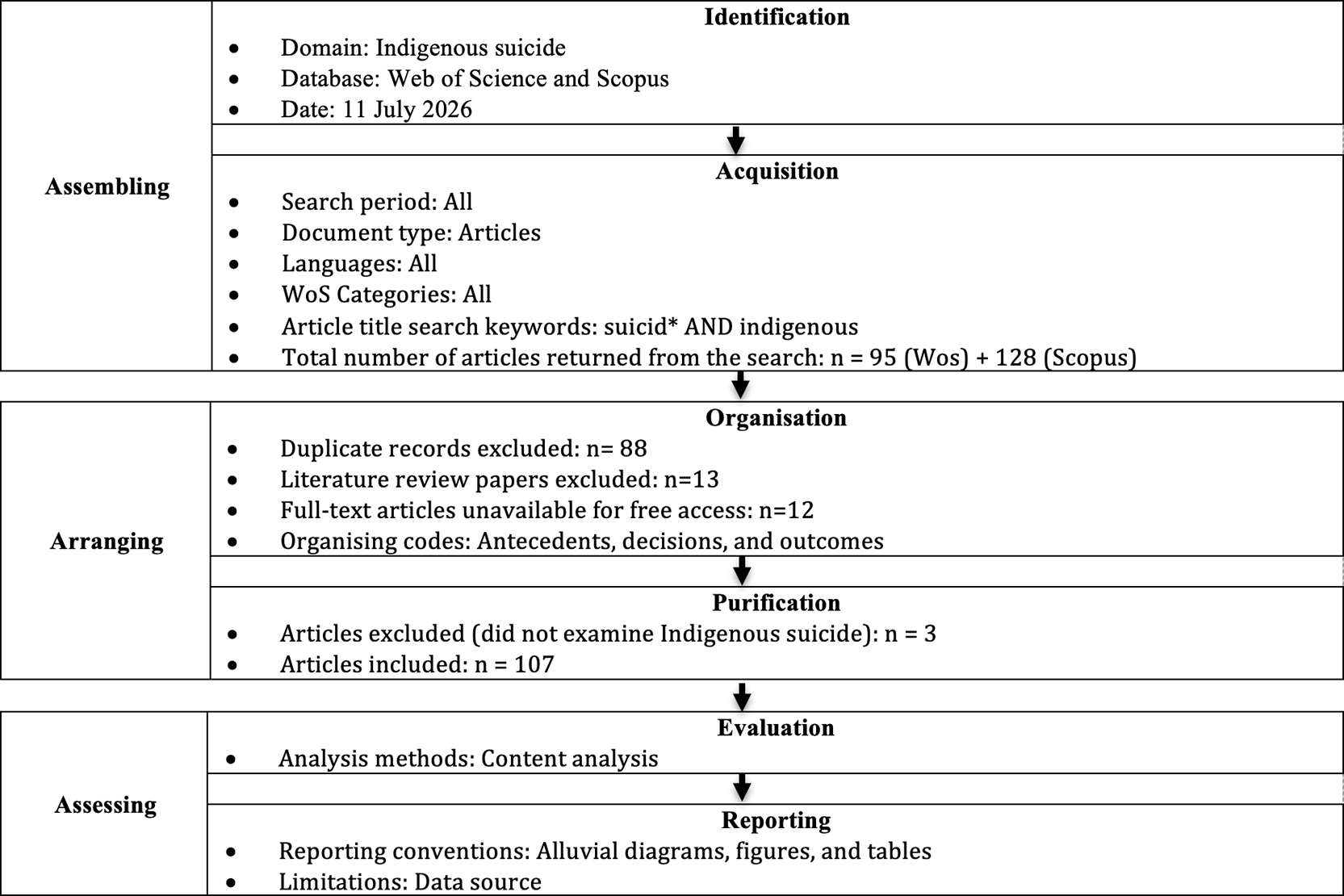
Figure 1. Data assembling, arranging, and assessing.
Source: Author’s elaboration based on
Paul et al. (2021).
The review included articles indexed in Web of Science (WoS) and/or Scopus that examined suicide among Indigenous populations. The database search was conducted on 11 July 2026.
The 107 eligible articles were read in full and coded by the author using inductive content analysis, following the stages described by
Elo and Kyngäs (2008). Initial codes were compared and consolidated into four antecedent, three decision and three outcome categories (Table 1, Data availability: Appendix I). Each article was assigned one category per ADO dimension, based on the aspect most central to its argument or findings (Table 2, Data availability: Appendix II). The geographical scope of each study was also recorded.
Category co-occurrences were summarised as frequencies and visualized using alluvial diagrams. As each article received one code per ADO dimension, it contributed one association to each pair of dimensions examined. No meta-analysis or sensitivity analyses were undertaken. Risk of bias, reporting bias and certainty of evidence were not formally assessed, given the nature of this study. Peer review and database indexation served as selection criteria rather than substitutes for a formal methodological quality assessment. However, the restriction to WoS and Scopus, as well as the search keywords, remains a potential source of selection bias, as discussed in the Limitations section.
3. Results
3.1 Antecedents, decisions and outcomes
The temporal distribution of the publications included in the review reveals a progressive increase in scientific output on the topic, as well as the relatively recent emergence of this field of research. The earliest publication included in the review dates from 2003, and approximately 75% of the publications appeared within the last decade.
Regarding the subject areas assigned by the indexing databases, considering that a single study may be classified under more than one area, Public, Environmental & Occupational Health accounted for the largest proportion of records (23%), followed by Psychiatry (16%), Psychology (15%), Medicine (14%), Social Sciences (8%), Biomedical Sciences (4%), and Arts & Humanities (4%). The distribution shown in
Figure 2 indicates a strong concentration of publications on this topic within health-related fields. Notably, none of the studies was classified under Economics.
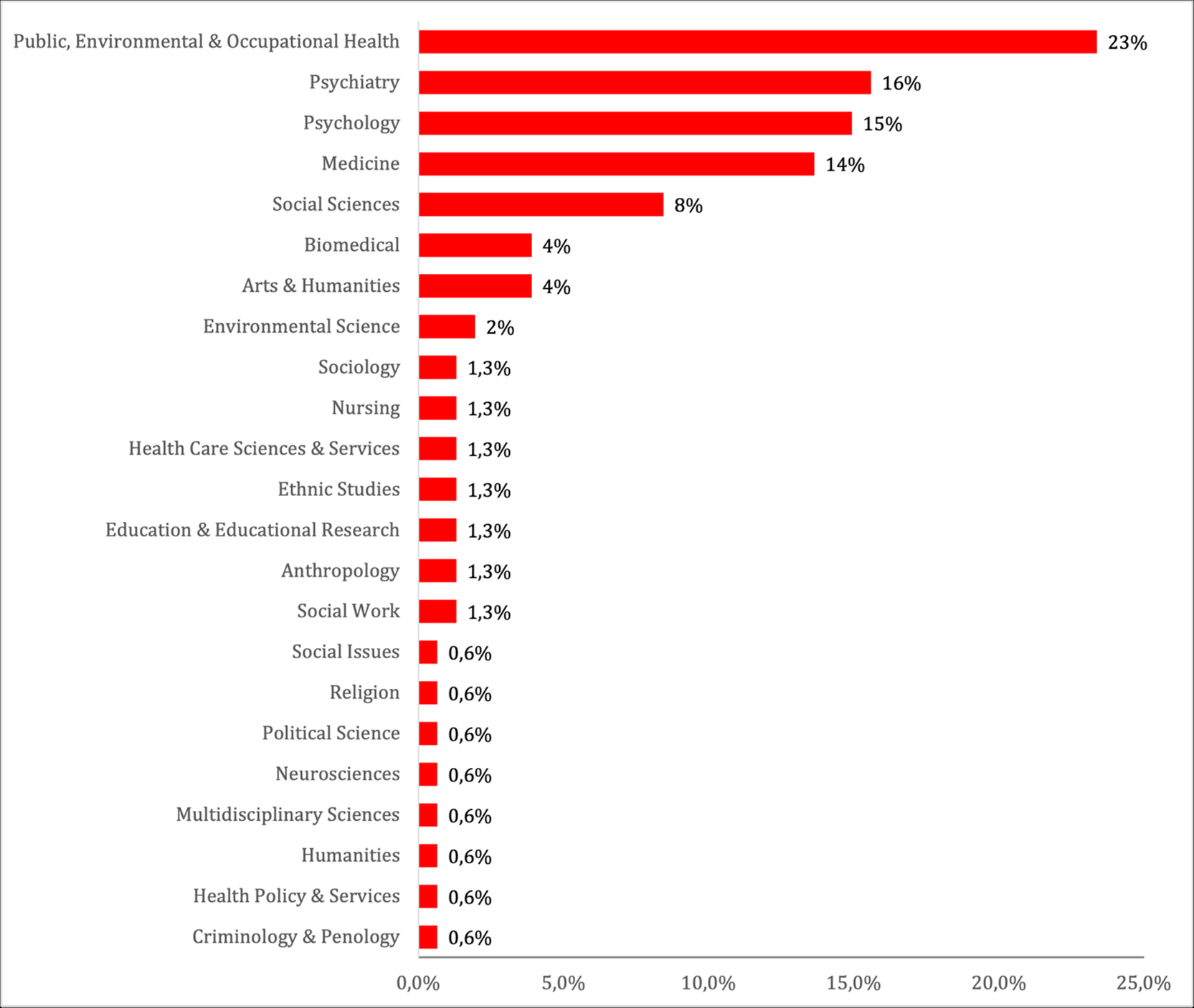
Figure 2. Distribution of publications by web of science or scopus category.
Source: Author’s own elaboration.
The systematic literature review identified four main groups of antecedents addressed in the literature: “Sociodemographics, Income and Poverty”; “Psychosocial Predictors and Trauma”; “Historical and Structural Factors”; “Protective Factors and Culture” (
Figure 3). The studies were relatively evenly distributed across these four categories.
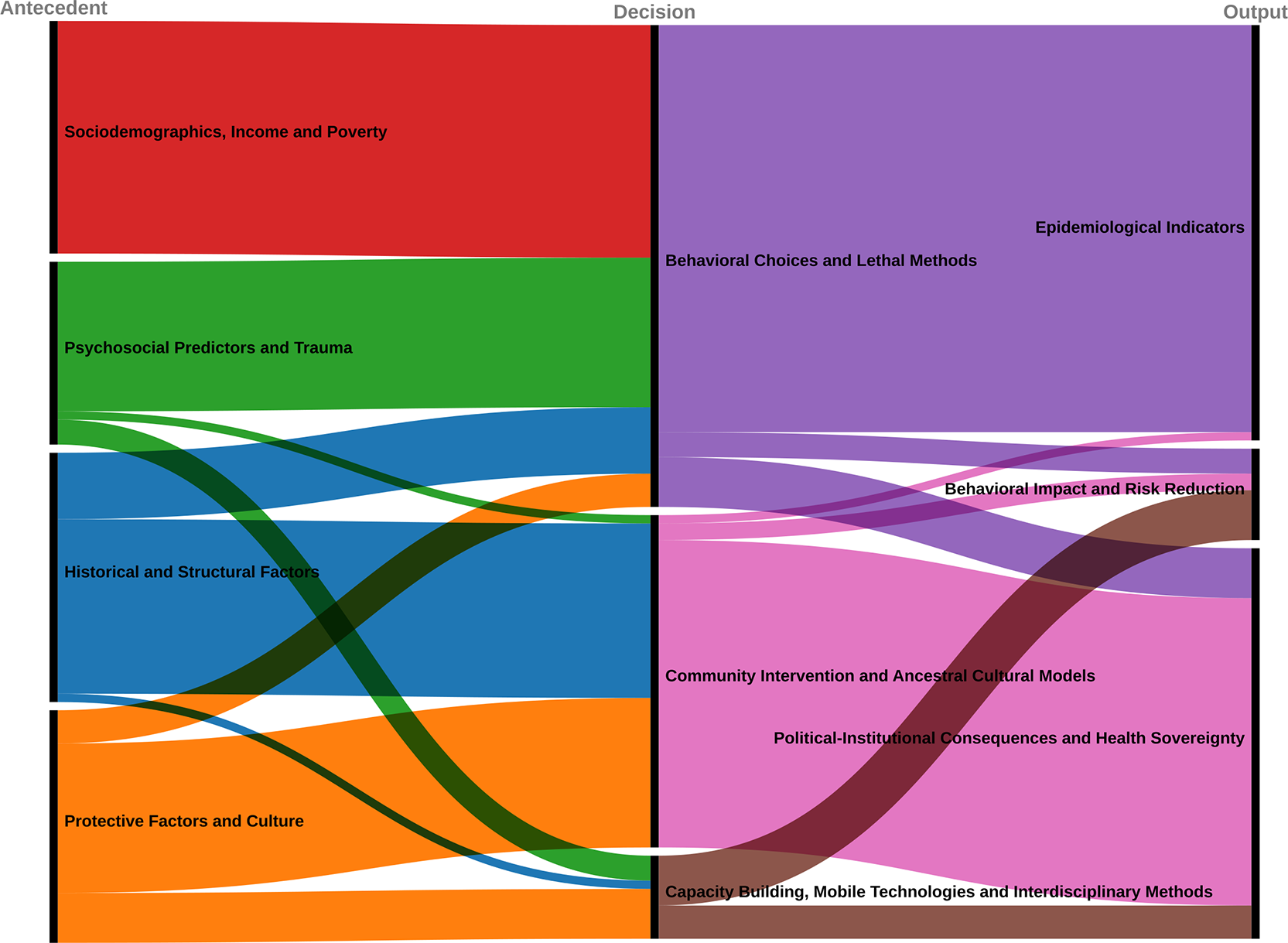
Figure 3. Distribution of antecedents, decisions, and outcomes (all regions).
Source: Author’s own elaboration.
Regarding the decisions reported in the literature, three categories were identified: “Behavioral Choices and Lethal Methods”; “Community Intervention and Ancestral Cultural Models”; “Capacity Building, Mobile Technologies and Interdisciplinary Methods”. Studies were concentrated primarily in the first two categories. A similar pattern emerged for outcomes, with most studies focusing on “Epidemiological Indicators” and “Political-Institutional Consequences and Health Sovereignty”. By contrast, “Behavioral Impact and Risk Reduction” received comparatively limited attention across all subject areas.
Regarding the relationship between antecedents and decisions, two distinct perspectives can be identified in the literature: one focuses on the individual and socioeconomic conditions associated with suicidal behavior, while the other emphasizes historical, structural and cultural factors in shaping community-based and culturally informed responses. Accordingly, “Sociodemographics, Income and Poverty” and “Psychosocial Predictors and Trauma” are the antecedents most frequently associated with decisions grouped under “Behavioral Choices and Lethal Methods”. In contrast, “Historical and Structural Factors” and “Protective Factors and Culture” are more frequently associated with decisions related to “Community Intervention and Ancestral Cultural Models”.
The relationship between decisions and outcomes reveals two predominant trajectories in the literature: one centered on behaviors and methods and their implications for epidemiological indicators, and the other focused on community-based and culturally informed responses and their political-institutional and health sovereignty implications. More specifically, “Behavioral Choices and Lethal Methods” is primarily associated with “Epidemiological Indicators”, whereas “Community Intervention and Ancestral Cultural Models” is more frequently linked to “Political-Institutional Consequences and Health Sovereignty”.
In terms of geographical distribution, Anglo-America, Oceania and, Latin America accounted for the largest shares of the studies reviewed, representing 36%, 22% and 21% of the publications, respectively (see Data availability: Appendix II). Studies conducted in European countries accounted for 8% of the total, a proportion similar to that of studies covering more than one continent. Asia and Africa had the smallest shares, accounting for 3% and 2% of the publications, respectively.
Among the regions with the largest shares of publications (Anglo-America, Oceania and Latin America), the main differences in the ADO configuration reveal distinct patterns. In Anglo-America, historical and protective factors appear more frequently as antecedents, particularly in their relationships with intervention models and the political-institutional and health sovereignty dimensions (
Figure 4). By contrast, the literature on Latin America places greater emphasis on socioeconomic factors, suicidal behaviors and epidemiological indicators (
Figure 5). Oceania exhibits a more even distribution across the ADO dimensions (
Figure 6).
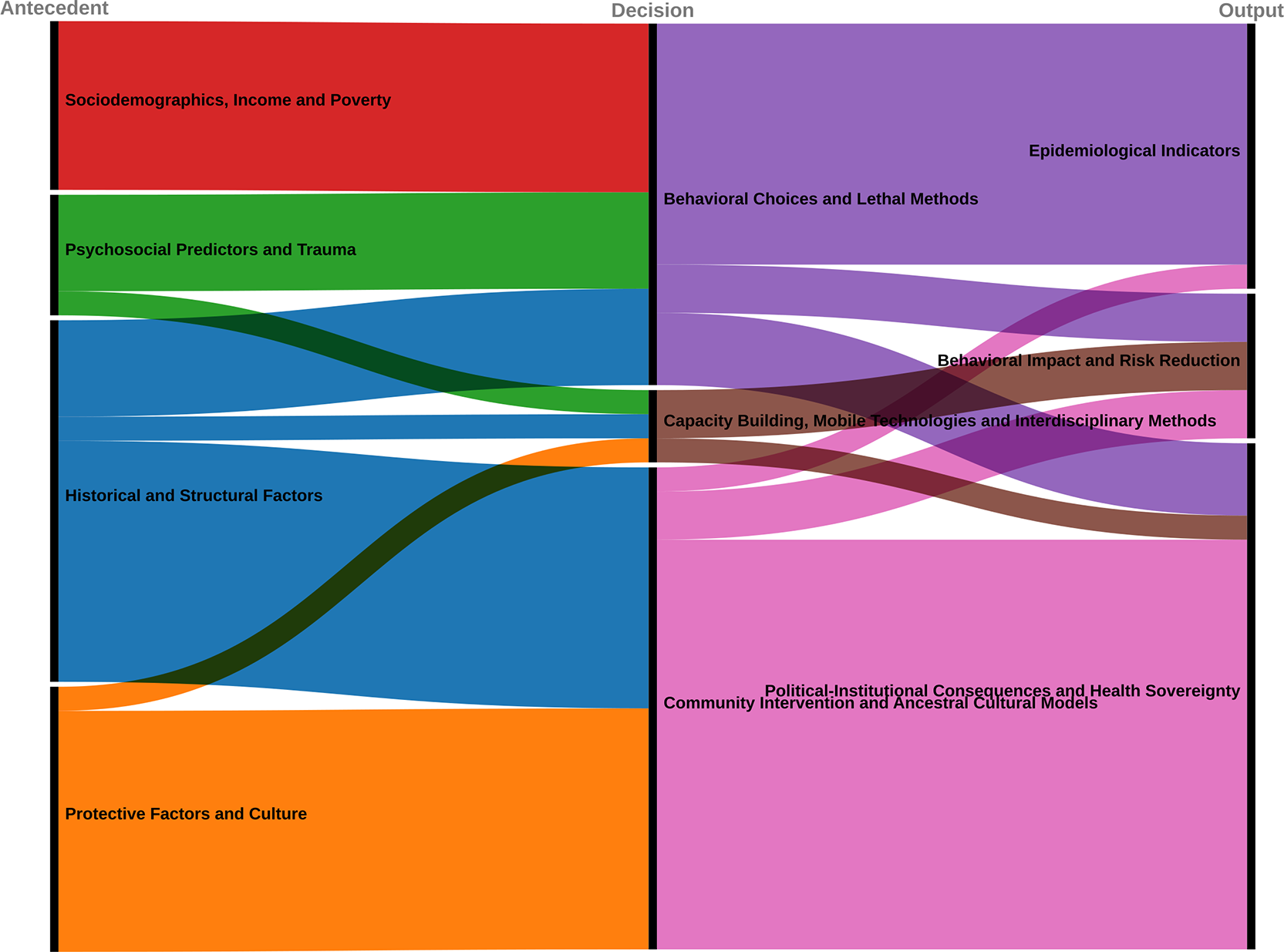
Figure 4. Distribution of antecedents, decisions, and outcomes (anglo-america).
Source: Author’s own elaboration.
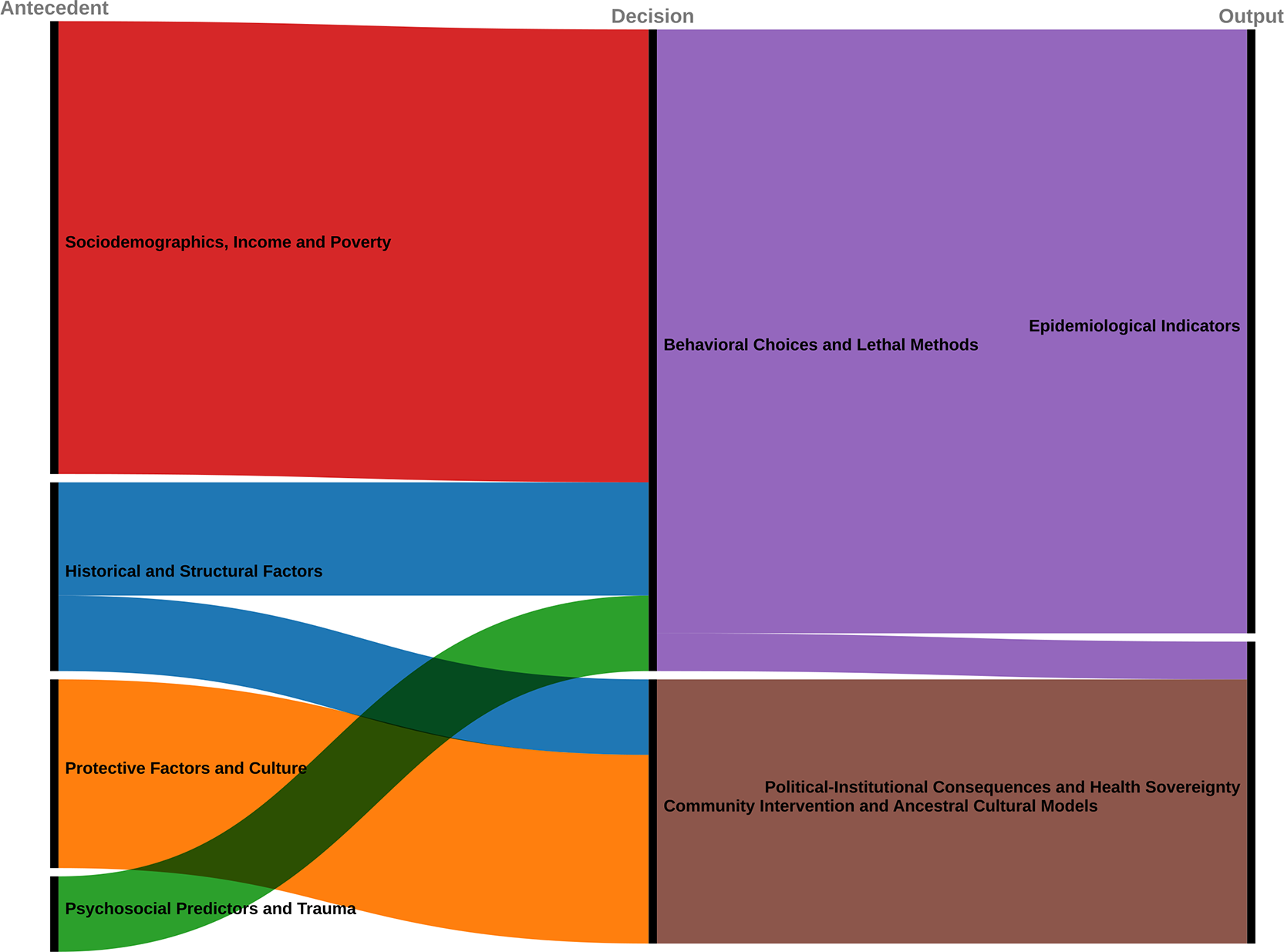
Figure 5. Distribution of antecedents, decisions, and outcomes (latin america).
Source: Author’s own elaboration.
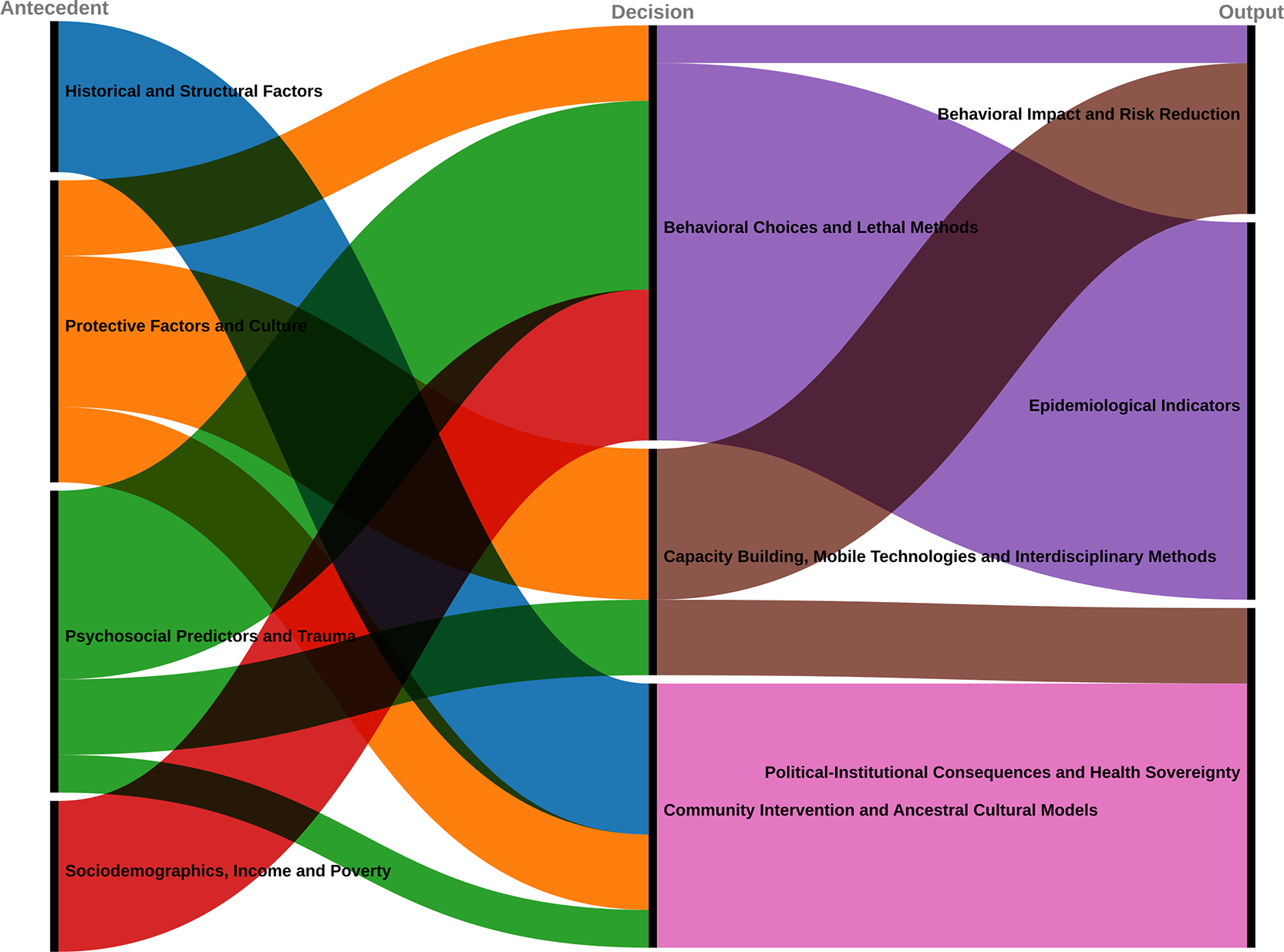
Figure 6. Distribution of antecedents, decisions, and outcomes (oceania).
Source: Author’s own elaboration.
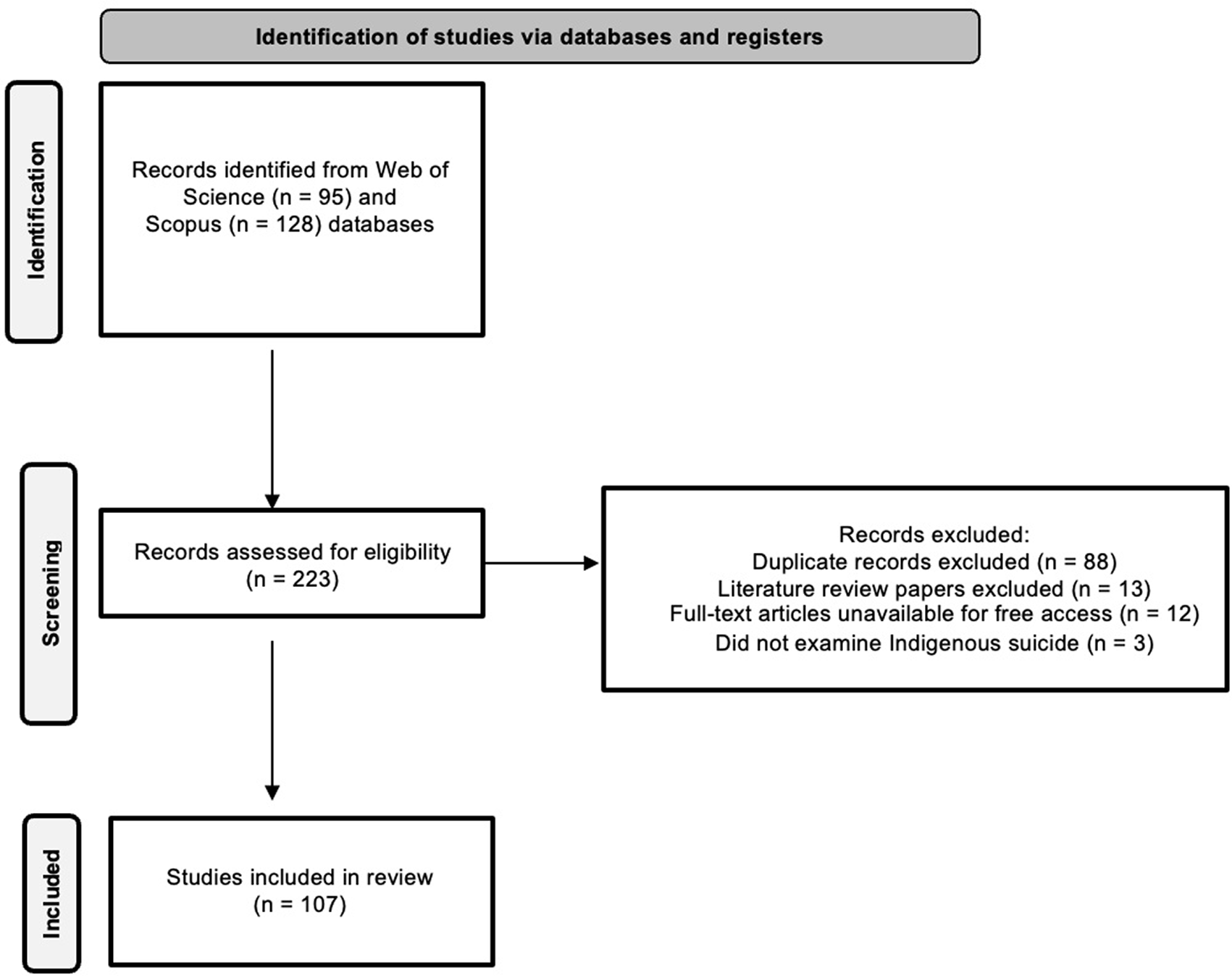
Figure 7. PRISMA 2020 flow diagram of study identification and selection.
In Europe, the ADO categories most frequently addressed were “Psychosocial Predictors and Trauma”, “Behavioral Choices and Lethal Methods” and “Epidemiological Indicators”. Studies covering more than one continent differed only in the antecedents dimension, with “Historical and Structural Factors” emerging as the most frequently addressed category. Studies conducted in Africa and Asia also focused predominantly on dimensions related to individuals’ circumstances and characteristics.
3.2 Economic aspects
The economic dimension of suicide among Indigenous populations is reflected across the different components of the ADO framework. Although none of the publications reviewed was classified under Economics, economic factors feature in the studies through several dimensions, including socioeconomic conditions, financial barriers to accessing services, and changes in traditional subsistence systems. These findings highlight the relevance of economic factors to understanding the phenomenon, despite the limited representation of Economics as a distinct disciplinary field in the literature reviewed.
In the selected studies, the economic dimension was examined through a range of indicators, including income (
Granheim et al., 2025;
Hajizadeh et al., 2019;
Lazzarini et al., 2018), occupational status (Chai, 2024;
Eckhoff et al., 2020;
Sumarokov et al., 2014), food insecurity (
Cao & Stack, 2026; Chai, 2024;
Hajizadeh et al., 2019), and economic inclusion (
Berman, 2025;
Cuervo & Del Rio, 2025;
Hajizadeh et al., 2021).
Other studies considered indicators related to educational attainment (
Cao & Stack, 2026;
Eckhoff et al., 2020;
Ritland et al., 2021;
Sianturi et al., 2024;
Sumarokov et al., 2014), unmet medical needs (
Cao & Stack, 2026;
McVittie & Ansloos, 2025), residential stability (
Cao & Stack, 2026;
Ritland et al., 2021), access to safe drinking water (
McVittie & Ansloos, 2025), and electricity (
Lazzarini et al., 2018), as well as participation in traditional subsistence activities (
Silviken et al., 2006;
Stoor et al., 2015). Importantly, these indicators did not serve the same analytical purpose across the studies: some were examined as potential antecedents of suicidal ideation, whereas others were considered outcomes following suicidal behavior. Their findings should therefore be interpreted in light of these distinct roles rather than treated as directly comparable measures.
With respect to income, for example,
Stack and Cao (2020) identified an inverse association between income and suicidal ideation: in their model, each one-unit increase in the income measure was associated with a 3.8% reduction in the relative probability of reporting suicidal ideation.
McVittie and Ansloos (2025) identified material deprivation as a recurring theme in interviews with educators working in Indigenous communities in Canada. The interviewees highlighted the importance of housing conditions, income, and access to resources and services in the context of suicide risk among Indigenous populations.
The importance of land and food systems was also highlighted by
Elliott and Bang (2024). Participants described how colonial occupation and the transformation of their territories had affected relationships with the land and traditional food-gathering practices, which they linked to suicide within their community. The relationship between land, living conditions and suicidal behavior is also addressed by
Urrego-Mendoza et al. (2017, p. 401), who state: “suicidal behaviors were observed among the indigenous peoples not only in recent times, but also during historical events, particularly throughout the colonial period, when collective suicide was a form of resistance against invasion and oppression. Today, the emergence of suicidal behavior is due to structural problems and to the imposition of social processes which contradict the indigenous peoples’ views on the world, thus altering their life conditions and their interactions with the land”.
Complementing this perspective,
Rodríguez et al. (2025, p. 12) describe disharmony in this context as a phenomenon that “encompasses causes ranging from armed conflict and extractive activities (associated with precariousness, loss of territory, violence by irregular groups, and spiritual vulnerability) to interpersonal tensions (such as physical or psychological aggression), as well as losses related to tradition, cultural clashes, and discrimination (pressures from Western leadership models, the influence of religious groups, and the decline of indigenous populations)”. Taken together, these studies highlight the importance of land, which is traditionally recognised as one of the principal factors of production in economics. For Indigenous peoples, however, land is not merely a source of material resources; it is also fundamental to their relationships, knowledge systems and identities.
The literature reviewed shows that the economic dimensions of suicidal behavior among Indigenous populations extend beyond income, employment, and access to goods and services. They also encompass the material conditions of subsistence and territorial transformations that affect food provision, the continuity of traditional practices, and community life. In this context, the economic dimension is examined both through specific indicators and within broader structural processes in which economic, territorial, and cultural factors are deeply intertwined. This diversity of approaches highlights the importance of understanding economic conditions within their historical and sociocultural contexts, while recognizing that, for Indigenous peoples, land holds significance beyond its value as a productive resource.
4. Final considerations
This study mapped the literature on suicide among Indigenous populations through the Antecedents–Decisions–Outcomes (ADO) framework and economic aspects. The analysis identifies recurring themes and relationships within the literature, while also revealing differences in research emphasis across geographical regions.
In response to RQ1, the review identified four main groups of antecedents: “Sociodemographics, Income and Poverty”, “Psychosocial Predictors and Trauma”, “Historical and Structural Factors”, and “Protective Factors and Culture”. These were relatively evenly represented in the selected studies. Decisions were grouped into “Behavioral Choices and Lethal Methods”, “Community Intervention and Ancestral Cultural Models”, and “Capacity Building, Mobile Technologies and Interdisciplinary Methods”, with research concentrated in the first two categories. Outcomes were addressed primarily through “Epidemiological Indicators” and “Political-Institutional Consequences and Health Sovereignty”, whereas “Behavioral Impact and Risk Reduction” received comparatively limited attention. The relationships between these dimensions revealed two recurring patterns: studies linking individual and socioeconomic circumstances to suicidal behaviors and epidemiological outcomes, and studies connecting historical, structural and cultural factors to community-based responses and their political-institutional implications.
With respect to RQ2, the geographical analysis showed that Anglo-America, Oceania and Latin America accounted for the largest shares of publications, but differed in their ADO configurations. Studies from Oceania displayed a more even distribution across the categories. In Anglo-America, historical and protective factors were more frequently addressed alongside community intervention models and questions of health sovereignty. The literature on Latin America placed greater emphasis on socioeconomic circumstances, suicidal behaviors and epidemiological indicators. These differences indicate how research priorities and analytical approaches vary across the regions most extensively represented in the review. They should not, however, be interpreted as evidence that the underlying dynamics of Indigenous suicide are confined to particular regions.
In response to RQ3, the review found that economic considerations were present across the ADO framework despite the absence of publications classified under Economics. The indicators examined included income, occupational status, food insecurity and economic inclusion, alongside educational attainment, housing stability and access to essential services. Other studies addressed economic conditions through changes in land access and traditional subsistence systems. Taken together, the findings suggest that the economic dimensions addressed in this literature cannot be adequately represented by income and employment indicators alone. They also require attention to the relationships between material conditions, land and the continuity of Indigenous ways of life.
4.1 Limitations
The findings should be interpreted in light of the review’s scope and analytical approach. Limiting the search to Web of Science and Scopus may have excluded relevant studies. Moreover, assigning each study to a single category within each ADO dimension required interpretive judgement, as some studies addressed overlapping themes. The geographical patterns identified therefore reflect the distribution and focus of the reviewed literature, rather than necessarily indicating differences in the prevalence or underlying dynamics of Indigenous suicide across regions. Similarly, the limited attention given to certain themes points to gaps in the literature, not to their absence in the communities studied.
Furthermore, restricting the search to articles containing the term “Indigenous” in their titles may have excluded relevant studies referring to specific populations, such as Inuit, Sámi or First Nations, without using this broader designation.
Ethics and consent
Ethical approval and consent were not required.
AI use disclosure
AI tools were used selectively to support manuscript preparation. ChatGPT assisted with formatting references according to APA guidelines and improving language consistency. The author reviewed and revised all AI-assisted content and retains full responsibility for the final manuscript.
Data availability
Appendix II contains the complete list of articles retrieved from Web of Science and Scopus and included in the review, together with their classifications according to the Antecedents–Decisions–Outcomes (ADO) framework presented in Appendix I. The PRISMA 2020 checklist (Figure 7 - appendix III), the other appendices (I and II), and search results from both databases are available in the Open Science Framework (OSF) repository. All materials are released under the
Creative Commons CC0 1.0 Universal Public Domain Dedication and can be accessed at:
https://doi.org/10.17605/OSF.IO/RJD69 (
Moraes, 2026).
Table 1: Description Antecedents–Decisions–Outcomes coding (Author’s own elaboration) (refer to Data availability: Appendix I).
Table 2: Articles and their A-D-O category (Data availability: Appendix II).
References
-
Agudelo-Hernández
F
Amaya
NV
Cardona
M
:
Suicide in a Colombian indigenous community: Beyond mental illness.
Int. J. Soc. Psychiatry.
2023;69(8):1986–1995.
Publisher Full Text
-
Agudelo-Hernández
F
Vélez Botero
H
Rojas-Andrade
R
:
Identification of factors associated with suicidal behavior in Colombian indigenous children and adolescents.
Int. J. Ment. Health.
2025;54(2):206–221.
Publisher Full Text
-
Allen
J
Wexler
L
Apok
CA
et al.
:
Indigenous Community-Level Protective Factors in the Prevention of Suicide: Enlarging a Definition of Cultural Continuity in Rural Alaska Native Communities.
Prev. Sci.
2025;26(2):246–257.
Publisher Full Text
-
Alvarez
ARG
:
Performance Methodologies in Suicide Prevention Research: Queerness, Colonization, and Co-Performative Witnessing in Indigenous Community.
Soc. Sci.
2024;14(1):11.
Publisher Full Text
-
Anderson
B
:
The structural violence of Indigenous suicide prevention policies in Canada.
Anthropology in Action.
2021;28(3):22–34.
Publisher Full Text
-
Anderson
B
:
“Abnormal mental health” and a blameless state—Canadian media representations of Indigenous suicide.
International Journal of Critical Indigenous Studies.
2022;15(1):58–82.
Publisher Full Text
-
Ansloos
J
Peltier
S
:
A question of justice: Critically researching suicide with Indigenous studies of affect, biosociality, and land-based relations.
Health: An Interdisciplinary Journal for the Social Study of Health, Illness and Medicine.
2022;26(1):100–119.
Publisher Full Text
-
Armstrong
G
Pirkis
J
Arabena
K
et al.
:
Suicidal behaviour in Indigenous compared to non-Indigenous males in urban and regional Australia: Prevalence data suggest disparities increase across age groups.
Aust. N. Z. J. Psychiatry.
2017;51(12):1240–1248.
Publisher Full Text
-
Austin
AE
Heuvel
C
van den
Byard
RW
:
Causes of community suicides among indigenous South Australians.
J. Forensic Leg. Med.
2011;18(7):299–301.
Publisher Full Text
-
Berman
M
:
Protective Effects of Community Institutions Against Suicide Death Among Indigenous Survivors of Historical Trauma in Rural Alaska.
J. Racial Ethn. Health Disparities.
2025.
Publisher Full Text
-
Braga
CMR
Nogueira
LMV
Trindade
LDNM
et al.
:
Suicide in indigenous and non-indigenous population: a contribution to health management.
Rev. Bras. Enferm.
2020;73(suppl 1):e20200186.
Publisher Full Text
-
Brown
K
Toombs
M
Nasir
B
et al.
:
How can mobile applications support suicide prevention gatekeepers in Australian Indigenous communities?.
Soc. Sci. Med.
2020;258:113015.
Publisher Full Text
-
Busch
L
Cihon
TM
Gone
JP
:
Systems of survivance: Reimagining indigenous suicide through the lens of culturo-behavior systems science.
Am. Psychol.
2026.
Publisher Full Text
-
Campbell
A
Chapman
M
McHugh
C
et al.
:
Rising Indigenous suicide rates in Kimberley and implications for suicide prevention.
Australas. Psychiatry.
2016;24(6):561–564.
Publisher Full Text
-
Cano Bedoya
SM
Mejía Merino
CM
Arango Urrea
JD
et al.
:
Intercultural practices for preventing suicidal behavior in Indigenous communities of Antioquia, Colombia.
AlterNative: An International Journal of Indigenous Peoples.
2025;21(2):339–349.
Publisher Full Text
-
Cao
L
Stack
S
:
Suicidality of Indigenous Teenagers as an Anomic Adaptation to Frustration: An Empirical Test (Correlates of Indigenous Teenage Suicidality).
Suicide Life Threat. Behav.
2026;56(3):e70103.
Publisher Full Text
-
Cao
L
Quinn-Hogan
A
Zhang
Y
et al.
:
Beyond Personal Pathology: Disability and Suicidality among Indigenous Peoples in Canada.
Canadian Review of Sociology/Revue canadienne de sociologie.
2026;63(4):e70048.
PubMed Abstract
Publisher Full Text
Free Full Text
-
Cardon
K
:
Suicide justice: Adopting Indigenous feminist methods in settler suicidology.
Health: An Interdisciplinary Journal for the Social Study of Health, Illness and Medicine.
2022;26(1):66–80.
Publisher Full Text
-
Carpenter
B
Harris
M
Jowett
S
et al.
:
Coronial Inquests, Indigenous Suicide and the Colonial Narrative.
Crit. Criminol.
2021;29(3):527–545.
Publisher Full Text
-
Chai
L
:
Disability and Suicidal Ideation among Indigenous Adults in Canada: Cultural Resources as Contingencies.
Arch. Suicide Res.
2024a;28(2):610–628.
Publisher Full Text
-
Chai
L
:
Food insecurity as a mediator and moderator in the association between residential mobility and suicidal ideation among Indigenous adults in Canada.
Soc. Psychiatry Psychiatr. Epidemiol.
2024b;59(6):1073–1085.
Publisher Full Text
-
Charry Lozano
L
Illera Rivera
D
Banguera Riascos
H
et al.
:
Suicidios de indígenas en Valle del Cauca, Cauca y Nariño (Colombia) antes (2018–2019) y durante la pandemia de la COVID-19 (2020–2021).
Rev. Neuropsiquiatr.
2023;86(2):102–108.
Publisher Full Text
-
Cousins
S
:
Suicide in Indigenous Australians: a “catastrophic crisis”.
Lancet.
2017;389(10066):242.
Publisher Full Text
-
Almeida
MN
de
Caixeta
CC
Santos Silva
ND
et al.
:
Challenges and Concerns in Assisting Indigenous People with Suicide Attempts.
Integr. Psychol. Behav. Sci.
2024;58(1):319–337.
Publisher Full Text
-
De Leo
D
Milner
A
Sveticic
J
:
Mental Disorders and Communication of Intent to Die in Indigenous Suicide Cases, Queensland, Australia.
Suicide Life Threat. Behav.
2012;42(2):136–146.
Publisher Full Text
-
De Leo
D
Sveticic
J
Milner
A
:
Suicide in Indigenous People in Queensland, Australia: Trends and Methods, 1994–2007.
Aust. N. Z. J. Psychiatry.
2011;45(7):532–538.
Publisher Full Text
-
Souza
MLP
de
Orellana
JDY
:
Suicide mortality in São Gabriel da Cachoeira, a predominantly indigenous Brazilian municipality.
Rev. Bras. Psiquiatr.
2012;34(1):34–37.
Publisher Full Text
-
Dudgeon
P
Holland
C
:
Recent developments in suicide prevention among the Indigenous peoples of Australia.
Australas. Psychiatry.
2018;26(2):166–169.
Publisher Full Text
-
Eckhoff
C
Sørvold
MT
Kvernmo
S
:
Adolescent self-harm and suicidal behavior and young adult outcomes in indigenous and non-indigenous people.
Eur. Child Adolesc. Psychiatry.
2020;29(7):917–927.
Publisher Full Text
-
Elias
B
Mignone
J
Hall
M
et al.
:
Trauma and suicide behaviour histories among a Canadian indigenous population: An empirical exploration of the potential role of Canada's residential school system.
Soc. Sci. Med.
2012;74(10):1560–1569.
Publisher Full Text
-
Elliott
E
Bang
M
:
Reducing Indigenous suicide: Recognizing vital land and food systems for livelihoods.
Am. J. Community Psychol.
2024;73(1–2):267–279.
Publisher Full Text
-
Else
IRN
Andrade
NN
Nahulu
LB
:
Suicide and Suicidal-Related Behaviors among Indigenous Pacific Islanders in the United States.
Death Stud.
2007;31(5):479–501.
Publisher Full Text
-
Elo
S
Kyngäs
H
:
The qualitative content analysis process.
J. Adv. Nurs.
2008;62(1):107–115.
Publisher Full Text
-
Fitzpatrick
SJ
Brew
BK
Read
DMY
et al.
:
Rethinking Suicide in Rural Australia: A study Protocol for Examining and Applying Knowledge of the Social Determinants to Improve Prevention in Non-Indigenous Populations.
Int. J. Environ. Res. Public Health.
2019;16(16):2944.
PubMed Abstract
Publisher Full Text
Free Full Text
-
Fonseka
TM
McKinley
GP
Kennedy
SH
:
Is tetraethyl lead poison affecting contemporary indigenous suicides in Ontario, Canada?.
Psychiatry Res.
2017;251:253–254.
Publisher Full Text
-
Gamio Cuervo
Á
Del Rio
M
:
‘Constantly invalidated by an intolerant and uncaring world’: Perceived etiology of suicidal thoughts among transgender, nonbinary, and gender expansive black, indigenous, and other people of color.
Int. J. Soc. Psychiatry.
2025;71(5):984–992.
Publisher Full Text
-
Goebert
DA
Hamagami
F
Hishinuma
ES
et al.
:
Change Pathways in Indigenous and Nonindigenous Youth Suicide.
Suicide Life Threat. Behav.
2019;49(1):193–209.
PubMed Abstract
Publisher Full Text
Free Full Text
-
Granheim
IPH
Kvernmo
S
Silviken
A
:
The association between suicide attempts and ethnic identity and discrimination among Indigenous Sami adolescents in Arctic Norway.
Int. J. Circumpolar Health.
2025;84(1):2561279.
PubMed Abstract
Publisher Full Text
Free Full Text
-
Granheim
IPH
Silviken
A
Larsen
CVL
et al.
:
Socio-demographic, psychosocial and environmental factors associated with suicidal behaviour in Indigenous Sami and Greenlandic Inuit adolescents; the WBYG and NAAHS studies.
Int. J. Circumpolar Health.
2021;80(1):1913939.
PubMed Abstract
Publisher Full Text
Free Full Text
-
Gray
M
:
Pathologizing Indigenous Suicide: Examining the Inquest into the Deaths of C.J. and C.B. at the Manitoba Youth Centre.
Studies in Social Justice.
2016;10(1):80–94.
Publisher Full Text
-
Hajizadeh
M
Bombay
A
Asada
Y
:
Socioeconomic inequalities in psychological distress and suicidal behaviours among Indigenous peoples living off-reserve in Canada.
Can. Med. Assoc. J.
2019;191(12):E325–E336.
Publisher Full Text
-
Hajizadeh
M
Hu
M
Asada
Y
et al.
:
Explaining the gaps in psychological distress and suicidal behaviours between non-Indigenous and Indigenous adults living off-reserve in Canada: a cross-sectional study.
CMAJ Open.
2021;9(1):E215–E223.
PubMed Abstract
Publisher Full Text
Free Full Text
-
Islam
MI
Sharwood
L
Chadwick
V
et al.
:
Protective Factors against Self-Harm and Suicidality among Australian Indigenous Adolescents: A Strengths-Based Analysis of the Longitudinal Study of Indigenous Children.
Int. J. Environ. Res. Public Health.
2022;19(15):9131.
PubMed Abstract
Publisher Full Text
Free Full Text
-
Jafri
B
:
Reframing Suicide.
GLQ: A Journal of Lesbian and Gay Studies.
2021;27(4):577–602.
Publisher Full Text
-
Kuipers
P
Appleton
J
Pridmore
S
:
Thematic analysis of key factors associated with Indigenous and non-Indigenous suicide in the Northern Territory.
Australia. Rural and Remote Health.
2012;12(4):2235.
Publisher Full Text
-
Kuipers
P
Lindeman
MA
Grant
L
et al.
:
Front-line worker perspectives on Indigenous youth suicide in Central Australia: Contributors and prevention strategies.
International Journal of Emergency Mental Health and Human Resilience.
2015;17(1):139.
Reference Source
-
Kuipers
P
Lindeman
MA
Grant
L
et al.
:
Front-line worker perspectives on Indigenous youth suicide in Central Australia: initial treatment and response†.
Adv. Ment. Health.
2016;14(2):106–117.
Publisher Full Text
-
Lawson-Te Aho
K
Liu
JH
:
Indigenous suicide and colonization: The legacy of violence and the necessity of self-determination.
Int. J. Confl. Violence.
2010;4(1):124–133.
Publisher Full Text
-
Lazzarini
TA
Gonçalves
CCM
Benites
WM
et al.
:
Suicide in Brazilian indigenous communities: clustering of cases in children and adolescents by household.
Rev. Saude Publica.
2018;52:56.
Publisher Full Text
-
Leenaars
AA
:
Suicide Among Indigenous Peoples: Introduction and Call to Action.
Arch. Suicide Res.
2006;10(2):103–115.
Publisher Full Text
-
Lester
D
:
Suicide Among Indigenous Peoples: A Cross-Cultural Perspective.
Arch. Suicide Res.
2006;10(2):117–124.
Publisher Full Text
-
Lester
D
:
Suicide among Indigenous Peoples.
Crisis.
2008;29(1):49–51.
Publisher Full Text
-
Lopes
J
Lindeman
M
Taylor
K
et al.
:
Cross cultural education in suicide prevention: Development of a training resource for use in Central Australian Indigenous communities.
Adv. Ment. Health.
2012;10(3):224–234.
Publisher Full Text
-
Martínez Silva
PA
Dallos Arenales
MI
Prada
AM
et al.
:
Un modelo explicativo de la conducta suicida de los pueblos indígenas del departamento del Vaupés.
Colombia. Revista Colombiana de Psiquiatría.
2020;49(3):170–177.
Publisher Full Text
-
McCalman
J
Bainbridge
R
Russo
S
et al.
:
Psycho-social resilience, vulnerability and suicide prevention: impact evaluation of a mentoring approach to modify suicide risk for remote Indigenous Australian students at boarding school.
BMC Public Health.
2015;16(1):98.
PubMed Abstract
Publisher Full Text
Free Full Text
-
McHugh
C
Campbell
A
Chapman
M
et al.
:
Increasing Indigenous self-harm and suicide in the Kimberley: an audit of the 2005–2014 data.
Med. J. Aust.
2016;205(1):33–33.
Publisher Full Text
-
McVittie
J
Ansloos
J
:
Supporting Indigenous Child Suicide Prevention Within Classrooms in Canada: Implications for School Psychologists and Educators.
Can. J. Sch. Psychol.
2023;38(1):105–122.
Publisher Full Text
-
McVittie
J
Ansloos
J
:
Feeling the Structural: School-Based Educators’ Perspectives on Indigenous Child Suicidality in Canada.
International Journal of Social Determinants of Health and Health Services.
2025;55(3):318–329.
Publisher Full Text
-
Mehl-Madrona
L
Mainguy
B
:
Narrative Approaches to North American Indigenous People Who Attempt Suicide.
Perm. J.
2020;24(2):19.032.
PubMed Abstract
Publisher Full Text
Free Full Text
-
Mestre
TF
Pelloso
FC
Borghesan
DHP
et al.
:
Disparities in Suicide Mortality Between Indigenous and Non-Indigenous Populations in Southern Brazil (2010–2019).
Int. J. Environ. Res. Public Health.
2025;22(9):1313.
Publisher Full Text
-
Moraes
M
:
Indigenous Suicide.2026, September 23.
Publisher Full Text
-
Museka
G
Hlatywayo
AM
:
COVID-19, mother-teachers and teen suicide-personality disorder: Exploring the synergies and readying for contingencies in Indigenous-Christian contexts.
Pharos Journal of Theology.
2024.
Publisher Full Text
-
Nasir
BF
Kisely
S
Hides
L
et al.
:
Translating research into action: The design and development of an Indigenous specific suicide intervention skills training program (I-ASIST).
Aust. J. Rural Health.
2022;30(6):870–875.
PubMed Abstract
Publisher Full Text
Free Full Text
-
Nasir
B
Kisely
S
Hides
L
et al.
:
An Australian Indigenous community-led suicide intervention skills training program: community consultation findings.
BMC Psychiatry.
2017;17(1):219.
PubMed Abstract
Publisher Full Text
Free Full Text
-
Naumenko
EA
:
Psychological factors in suicides among the Indigenous people of the Arctic Zone of Western Siberia in the XVII–XIX centuries (based on materials from the regional archives).
Bylye Gody.
2020;57(3):944–951.
Publisher Full Text
-
Nguyen
T
Ullah
S
Looi
JC
et al.
:
Indigenous suicide rates in the United States, Australia and New Zealand between 2006 and 2019.
Aust. N. Z. J. Psychiatry.
2023;57(10):1324–1330.
PubMed Abstract
Publisher Full Text
Free Full Text
-
Oliveira
CSD
Lotufo Neto
F
:
Suicídio entre povos indígenas: um panorama estatístico brasileiro.
Archives of Clinical Psychiatry (São Paulo).
2003;30(1):4–10.
Publisher Full Text
-
Orellana
JDY
Basta
PC
Souza
MLPD
:
Mortality by suicide: a focus on municipalities with a high proportion of self-reported indigenous people in the state of Amazonas, Brazil.
Rev. Bras. Epidemiol.
2013;16(3):658–669.
Publisher Full Text
-
Orellana
JD
Balieiro
AA
Fonseca
FR
et al.
:
Spatial-temporal trends and risk of suicide in Central Brazil: an ecological study contrasting indigenous and non-indigenous populations.
Rev. Bras. Psiquiatr.
2016;38(3):222–230.
Publisher Full Text
-
Page
MJ
McKenzie
JE
Bossuyt
PM
et al.
:
The PRISMA 2020 statement: An updated guideline for reporting systematic reviews.
BMJ.
2025;372: Article n71.
Publisher Full Text
-
Paiva de Araujo
JA
Fialho
É
Oliveira Alves
FJ
et al.
:
Suicide among Indigenous peoples in Brazil from 2000 to 2020: a descriptive study.
The Lancet Regional Health - Americas.
2023;26:100591.
PubMed Abstract
Publisher Full Text
Free Full Text
-
Paul
J
Benito
GR
:
A review of research on outward foreign direct investment from emerging countries, including China: What do we know, how do we know and where should we be heading?.
Asia Pac. Bus. Rev.
2018;24(1):90–115.
Publisher Full Text
-
Paul
J
Lim
WM
O'Cass
A
et al.
:
Scientific procedures and rationales for systematic literature reviews (SPAR-4-SLR).
Int. J. Consum. Stud.
2021;45(1):1–17.
Publisher Full Text
-
Peltier
S
Ansloos
J
:
Lifting each other up: decolonizing practices for mental health and suicide prevention through Indigenous youth peer support programming.
Couns. Psychol. Q.
2026;39(1):25–53.
Publisher Full Text
-
Pollock
NJ
Healey
GK
Jong
M
et al.
:
Tracking progress in suicide prevention in Indigenous communities: a challenge for public health surveillance in Canada.
BMC Public Health.
2018;18(1):1320.
Publisher Full Text
-
Polonijo
AN
Beggs
MK
Brunanski
D
et al.
:
Trends and Disparities in Suicidality Among Heterosexual and Sexual Minority/Two-Spirit Indigenous Adolescents in Canada.
J. Adolesc. Health.
2022;71(6):713–720.
Publisher Full Text
-
Qiao
N
Bell
TM
:
Indigenous Adolescents’ Suicidal Behaviors and Risk Factors: Evidence from the National Youth Risk Behavior Survey.
J. Immigr. Minor. Health.
2017;19(3):590–597.
Publisher Full Text
-
Rasmus
SM
Trickett
E
Charles
B
et al.
:
The qasgiq model as an indigenous intervention: Using the cultural logic of contexts to build protective factors for Alaska Native suicide and alcohol misuse prevention.
Cultur. Divers. Ethnic Minor. Psychol.
2019;25(1):44–54.
PubMed Abstract
Publisher Full Text
Free Full Text
-
Rasmus
S
Wexler
L
Allen
J
:
Setting a course to protect indigenous cultures and communities in our national suicide prevention agenda.
Clin. Psychol. Sci. Pract.
2022;29(3):223–226.
PubMed Abstract
Publisher Full Text
Free Full Text
-
Rasmus
S
Wexler
L
White
L
et al.
:
Examining community-level protection from Alaska Native suicide: An Indigenous knowledge-informed extension of the legacy of Michael Chandler and Christopher Lalonde.
Transcult. Psychiatry.
2024;61(3):399–416.
Publisher Full Text
-
Ritland
L
Thomas
V
Jongbloed
K
et al.
:
The Cedar Project: Relationship between child apprehension and attempted suicide among young Indigenous mothers impacted by substance use in two Canadian cities.
PLOS ONE.
2021;16(6):e0252993.
PubMed Abstract
Publisher Full Text
Free Full Text
-
Rodríguez
PE
Pantoja-Santander
A
Sapene
A
et al.
:
Violence and invisibility: a collective case study on suicide among Emberá Indigenous youth in the Colombian Pacific.
Frontiers in Education.
2025;10:1603754.
Publisher Full Text
-
Rowe
S
Ansloos
JP
:
Understanding Suicide from an Indigenous Cultural Lens: Insights from Elders in Canada.
J. Relig. Health.
2024;63(2):1038–1057.
Publisher Full Text
-
Shand
FL
Ridani
R
Tighe
J
et al.
:
The effectiveness of a suicide prevention app for indigenous Australian youths: study protocol for a randomized controlled trial.
Trials.
2013;14(1):396.
PubMed Abstract
Publisher Full Text
Free Full Text
-
Shepherd
SM
Spivak
B
Arabena
K
et al.
:
Identifying the prevalence and predictors of suicidal behaviours for indigenous males in custody.
BMC Public Health.
2018;18(1):1159.
PubMed Abstract
Publisher Full Text
Free Full Text
-
Sianturi
EI
Longe
VS
Arjadi
R
et al.
:
Suicide Behavior Among Indigenous and Non-Indigenous Living with HIV: A Cross-Sectional Study in Indonesia.
J. Immigr. Minor. Health.
2024;26(4):660–666.
Publisher Full Text
-
Silviken
A
:
Prevalence of suicidal behaviour among indigenous Sami in northern Norway.
Int. J. Circumpolar Health.
2009;68(3):204–211.
Publisher Full Text
-
Silviken
A
Kvernmo
S
:
Suicide attempts among indigenous Sami adolescents and majority peers in Arctic Norway: Prevalence and associated risk factors.
J. Adolesc.
2007;30(4):613–626.
Publisher Full Text
-
Silviken
A
Haldorsen
T
Kvernmo
S
:
Suicide among Indigenous Sami in Arctic Norway, 1970–1998.
Eur. J. Epidemiol.
2006;21(9):707–713.
Publisher Full Text
-
Souza
MLPD
:
Narrativas indígenas sobre suicídio no Alto Rio Negro, Brasil: tecendo sentidos.
Saúde e Sociedade.
2016;25(1):145–159.
Publisher Full Text
-
Souza
MLPD
:
Mortalidade por suicídio entre crianças indígenas no Brasil.
Cad. Saude Publica.
2019;35(suppl 3):e00019219.
Publisher Full Text
-
Souza
MLPD
Ferreira
LO
:
Jurupari se suicidou?: notas para investigação do suicídio no contexto indígena.
Saúde e Sociedade.
2014;23(3):1064–1076.
Publisher Full Text
-
Souza
MLPD
Orellana
JDY
:
Desigualdades na mortalidade por suicídio entre indígenas e não indígenas no estado do Amazonas, Brasil.
J. Bras. Psiquiatr.
2013;62(4):245–252.
Publisher Full Text
-
Souza
MLPD
Onety
RTDS
Souza
MLPD
et al.
:
Caracterização da mortalidade por suicídio entre indígenas e não indígenas em Roraima, Brasil, 2009–2013.
Epidemiologia e Serviços de Saúde.
2017;26(4):887–893.
Publisher Full Text
-
Stack
S
Cao
L
:
Social Integration and Indigenous Suicidality.
Arch. Suicide Res.
2020;24(sup1):86–101.
Publisher Full Text
-
Stoor
JPA
Berntsen
G
Hjelmeland
H
et al.
:
“If you do not birget [manage] then you don’t belong here”: a qualitative focus group study on the cultural meanings of suicide among Indigenous Sámi in arctic Norway.
Int. J. Circumpolar Health.
2019;78(1):1565861.
PubMed Abstract
Publisher Full Text
Free Full Text
-
Stoor
JPA
Eriksen
HA
Silviken
AC
:
Mapping suicide prevention initiatives targeting Indigenous Sámi in Nordic countries.
BMC Public Health.
2021;21(1):2035.
PubMed Abstract
Publisher Full Text
Free Full Text
-
Stoor
JPA
Kaiser
N
Jacobsson
L
et al.
:
“We are like lemmings”: making sense of the cultural meaning(s) of suicide among the indigenous Sami in Sweden.
Int. J. Circumpolar Health.
2015;74(1):27669.
PubMed Abstract
Publisher Full Text
Free Full Text
-
Sumarokov
YA
Brenn
T
Kudryavtsev
AV
et al.
:
Suicides in the indigenous and non-indigenous populations in the Nenets Autonomous Okrug, Northwestern Russia, and associated socio-demographic characteristics.
Int. J. Circumpolar Health.
2014;73(1):24308.
PubMed Abstract
Publisher Full Text
Free Full Text
-
Sveticic
J
Milner
A
De Leo
D
:
Contacts with mental health services before suicide: a comparison of Indigenous with non-Indigenous Australians.
Gen. Hosp. Psychiatry.
2012;34(2):185–191.
Publisher Full Text
-
Tighe
J
Shand
F
Ridani
R
et al.
:
Ibobbly mobile health intervention for suicide prevention in Australian Indigenous youth: a pilot randomised controlled trial.
BMJ Open.
2017;7(1):e013518.
PubMed Abstract
Publisher Full Text
Free Full Text
-
Trout
L
McEachern
D
Mullany
A
et al.
:
Decoloniality as a Framework for Indigenous Youth Suicide Prevention Pedagogy: Promoting Community Conversations About Research to End Suicide.
Am. J. Community Psychol.
2018;62(3–4):396–405.
PubMed Abstract
Publisher Full Text
Free Full Text
-
Ullah
Z
AlDhaen
E
AlDhaen
FS
et al.
:
Socio-Psychological Factors of Rising Trend of Suicidal Ideation among Indigenous Workforce: Evidence from Himalayan Range.
Int. J. Ment. Health Promot.
2023;1–10.
Publisher Full Text
-
Ullrich
JS
Peter
ET
Black
J
:
Centering Community, Indigenous Relationships, and Ceremony through an Alaska Native Collaborative Hub to Prevent Suicide and Promote Youth Wellbeing.
Am. Indian Cult. Res. J.
2024;47(1).
Publisher Full Text
-
Urrego-Mendoza
ZC
Bastidas-Jacanamijoy
MA
Coral-Palchucán
GA
et al.
:
Narrativas sobre la conducta suicida en pueblos indígenas colombianos, 1993–2013.
Revista Facultad Nacional de Salud Pública.
2017;35(3):400–409.
Publisher Full Text
-
Vanzolini
M
:
Direito ao feitiço.
Contemporânea - Revista de Sociologia da UFSCar.
2025;15.
Publisher Full Text
-
Walker
RJ
Campbell
JA
Dawson
AZ
et al.
:
Prevalence of psychological distress, depression and suicidal ideation in an indigenous population in Panamá.
Soc. Psychiatry Psychiatr. Epidemiol.
2019;54(10):1199–1207.
PubMed Abstract
Publisher Full Text
Free Full Text
-
Wexler
LM
Gone
JP
:
Culturally Responsive Suicide Prevention in Indigenous Communities: Unexamined Assumptions and New Possibilities.
Am. J. Public Health.
2012;102(5):800–806.
PubMed Abstract
Publisher Full Text
Free Full Text
-
Wexler
L
Trout
L
Rataj
S
et al.
:
Promoting Community Conversations About Research to End Suicide: learning and behavioural outcomes of a training-of-trainers model to facilitate grassroots community health education to address Indigenous youth suicide prevention.
Int. J. Circumpolar Health.
2017;76(1):1345277.
PubMed Abstract
Publisher Full Text
Free Full Text
-
Wexler
L
White
J
Trainor
B
:
Why an alternative to suicide prevention gatekeeper training is needed for rural Indigenous communities: presenting an empowering community storytelling approach.
Crit. Public Health.
2015;25(2):205–217.
PubMed Abstract
Publisher Full Text
Free Full Text
-
Widyawati
F
Al Qurtuby
S
:
Suicide in Manggarai, Eastern Indonesia: Comparative Perspectives from Islamic, Catholic, and Indigenous Law.
AL-IHKAM: Jurnal Hukum & Pranata Sosial.
2025;20(2):393–422.
Publisher Full Text
-
World Health Organization:
Suicide.
2026, 28 August.
Reference Source
-
Wycisk
O
Dinku
Y
Harrap
B
et al.
:
School environment as a risk and protective factor for self-harm and suicidality: Insights from the Longitudinal Study of Indigenous Children.
Aust. Educ. Res.
2025;52(6):4375–4399.
Publisher Full Text