Introduction
Natrix maura, a member of the Colubridae family, is a medium-sized, moderately robust freshwater snake that typically grows to just under one meter in length. It has a well-defined triangular head, a relatively thick body, and a short tail. The snake often features a distinctive dorsal zigzag stripe running along its body to the tip of the tail, which, along with its morphological and behavioral traits, can lead to confusion with viper species found in the western Mediterranean (Speybroeck et al., 2016). This is an example of Batesian mimicry, where a harmless species imitates the appearance and actions of a dangerous one to avoid predation (Santos, 2021). N. maura is widely distributed across the western Mediterranean region, ranging from Liguria in Italy, through central and southern France, across the entire Iberian Peninsula, and into the Mediterranean-climate zones of northwestern Africa, including Morocco, Tunisia, and Algeria. Introduced to Sardinia, Menorca, Mallorca and Corsica (Speybroeck et al., 2016).
N. maura is currently classified as ‘Least Concern’ on the IUCN Red List (Mateo Miras et al., 2009) in view of its wide distribution, presumed large population, and because it is unlikely to be declining fast enough to qualify for listing in a more threatened category.
N. maura thrives in aquatic environments such as rivers, lakes, and wetlands, particularly in warm, Mediterranean habitats (Speybroeck et al., 2016). These environments provide ideal conditions for the snake, where it hunts for prey such as amphibians and small fish. Additionally, N. maura plays an important ecological role as prey for larger predators, supporting the overall biodiversity and health of these ecosystems, contributing to the balance of species within its natural habitats (Santos, 2021).
Developing a high-quality reference genome for N. maura is essential for advancing our understanding of its unique genetic adaptations to freshwater environments. This genomic resource will not only enhance our knowledge of its physiological and ecological traits but also provide valuable insights into the evolutionary origins of venom in snakes. Additionally, it will offer broader implications for research on snake evolution and adaptation, contributing to our understanding of biodiversity and their ecological roles (Schöneberg et al., 2023).
N. maura may host parasites like trematodes, cestodes, and nematodes. These parasites are primarily found in the intestines but can also affect other parts of the digestive and respiratory systems, such as the pharynx, cloaca, trachea, and lungs (Santos, 2021). The snake's varied diet and habitat contribute to its high parasite diversity, with some parasites being acquired from common prey like amphibians (Santos, 2021).
The generation of this reference resource was coordinated by the European Reference Genome Atlas (ERGA) initiative’s Biodiversity Genomics Europe (BGE) project, supporting ERGA’s aims of promoting transnational cooperation to promote advances in the application of genomics technologies to protect and restore biodiversity (Mazzoni et al., 2023). This species falls within the regional reach of the Catalan Initiative for the Earth BioGenome Project (CBP), which is linked to ERGA (Corominas et al., 2024).
Materials & methods
ERGA's sequencing strategy includes Oxford Nanopore Technology (ONT) and/or Pacific Biosciences (PacBio) for long-read sequencing, along with Hi-C sequencing for chromosomal architecture, Illumina Paired-End (PE) for polishing (i.e. recommended for ONT-only assemblies), and RNA sequencing for transcriptomic profiling, to facilitate genome assembly and annotation.
Sample and sampling information
On 13th October 2023, an adult, female specimen of Natrix maura (Figure 1) was sampled by Salvador Carranza and Daniel Fernández-Guiberteau. The species identification via morphology based on Santos 2021 and barcoding was confirmed by Salvador Carranza, Daniel Fernández-Guiberteau and Laura Blasón. The specimen was collected by hand from the Siurana River, Poboleda, Tarragona, Spain. Sampling was performed under permit number SF/0179/23 issued to Salvador Carranza by the Generalitat de Catalunya. Euthanasia was performed by first administering anesthetic agents (alfaxalone [Alfaxan, 10 mg/kg intramuscular]), and once the animal was fully anesthetized, the spinal cord was severed at the neck to ensure death. The specimen's tissues were snap-frozen in liquid nitrogen immediately after harvesting and stored at -80°C until DNA extraction.
Vouchering information
Physical reference materials for the here sequenced specimen have been deposited in Museo Nacional de Ciencias Naturales (MNCN) https://www.mncn.csic.es, under the accession numbers MNCN-ADN-151759 & MNCN-ADN-151760.
Frozen reference tissue material of muscle tissue is available from the same individual at the MNCN under the voucher ID MNCN52208.
Images of the here sequenced specimen are available at the BioImage Archive under the accession SAMEA114541135: https://www.ebi.ac.uk/biostudies/BioImages/studies/S-BIAD1012
Data availability
Genetic information
The estimated genome size, based on direct measurements retrieved from Genomes on a Tree (Challis et al., 2023), is 2.3 Gb, while the estimation based on reads kmer profiling is 1.6 Gb. This is a diploid genome with a haploid number of 17 chromosomes (2n=34), including ZW sex chromosomes in female individuals (De Smet, 1978).
DNA/RNA processing
DNA was extracted from kidney tissue using the Blood & Cell Culture DNA Midi Kit (Qiagen) following the manufacturer’s instructions. DNA quantification was performed using a Qubit dsDNA BR Assay Kit (Thermo Fisher Scientific), and DNA integrity was assessed using a Genomic DNA 165 Kb Kit (Agilent) on the Femto Pulse system (Agilent). The DNA was stored at +4°C until used.
RNA was extracted using an RNeasy Mini Kit (Qiagen) according to the manufacturer’s instructions. RNA was extracted from four different specimen parts: ovary, liver, pancreas and lung. RNA quantification was performed using the Qubit RNA BR kit and RNA integrity was assessed using a Bioanalyzer 2100 system RNA 6000 Nano Kit (Agilent). The RNA was stored at -80°C until used.
Library preparation and sequencing
For long-read whole genome sequencing, a library was prepared using the SQK-LSK114 Kit (Oxford Nanopore Technologies, ONT), which was then sequenced on a PromethION 24 A Series instrument (ONT). A short-read whole genome sequencing library was prepared using the KAPA Hyper Prep Kit (Roche). A Hi-C library was prepared from liver and lung using the ARIMA High Coverage Hi-C Kit (ARIMA), followed by the KAPA Hyper Prep Kit for Illumina sequencing (Roche). The RNA libraries were prepared using the KAPA mRNA Hyper prep kit (Roche). All the short-read libraries were sequenced on a NovaSeq 6000 instrument (Illumina).
In total, 52x Oxford Nanopore, 88x Illumina WGS shotgun, and 163x HiC data were sequenced to generate the assembly.
Genome assembly methods
The genome was assembled using the CNAG CLAWS pipeline v2.2.0 (Gomez-Garrido, 2024). Briefly, reads were preprocessed for quality and length using Trim Galore v0.6.7 and Filtlong v0.2.1, and initial contigs were assembled using NextDenovo v2.5.0, followed by polishing of the assembled contigs using HyPo v1.0.3, removal of retained haplotigs using purge-dups v1.2.6 and scaffolding with YaHS v1.2a. Finally, assembled scaffolds were curated via manual inspection using Pretext v0.2.5 with the Rapid Curation Toolkit (https://gitlab.com/wtsi-grit/rapid-curation) to remove any false joins and incorporate any sequences not automatically scaffolded into their respective locations in the chromosomal pseudomolecules (or super-scaffolds). The blobtoolkit nextflow pipeline v0.6.0 (https://pipelines.tol.sanger.ac.uk/blobtoolkit/0.6.0/usage) confirmed the absence of contaminants. Finally, the mitochondrial genome was assembled as a single circular contig of 21,237 bp using the FOAM pipeline v0.5 (https://github.com/cnag-aat/FOAM) and included in the released assembly (GCA_964659585.1). Summary analysis of the released assembly was performed using the ERGA-BGE Genome Report ASM Galaxy workflow (De Panis, 2024b).
Genome annotation methods
A gene set was generated using the Ensembl Gene Annotation system (Aken et al., 2016), primarily by aligning publicly available short-read RNA-seq data from BioSamples: SAMEA114541140, SAMEA114541142, SAMEA114541145, and SAMEA114541148 to the genome. Gaps in the annotation were filled via protein-to-genome alignments of a select set of vertebrate proteins from UniProt (The UniProt Consortium, 2019), which had experimental evidence at the protein or transcript level. At each locus, data were aggregated and consolidated, prioritising models derived from RNA-seq data, resulting in a final set of gene models and associated non-redundant transcript sets. To distinguish true isoforms from fragments, the likelihood of each open reading frame (ORF) was evaluated against known vertebrate proteins. Low-quality transcript models, such as those showing evidence of fragmented ORFs, were removed. In cases where RNA-seq data were fragmented or absent, homology data were prioritised, favouring longer transcripts with strong intron support from short-read data. The resulting gene models were classified into three categories: protein-coding, pseudogene, and long non-coding. Models with hits to known proteins and few structural abnormalities were classified as protein-coding. Models with hits to known proteins but displaying abnormalities, such as the absence of a start codon, non-canonical splicing, unusually small intron structures (<75 bp), or excessive repeat coverage, were reclassified as pseudogenes. Single-exon models with a corresponding multi-exon copy elsewhere in the genome were classified as processed (retrotransposed) pseudogenes. Models that did not fit any of the previously described categories did not overlap protein-coding genes, and were constructed from transcriptomic data were considered potential lncRNAs. Potential lncRNAs were further filtered to remove single-exon loci due to their unreliability. Putative miRNAs were predicted by performing a BLAST search of miRBase (Kozomara et al., 2019) against the genome, followed by RNAfold analysis (Gruber et al., 2008). Other small non-coding loci were identified by scanning the genome with Rfam (Kalvari et al., 2018) and passing the results through Infernal (Nawrocki & Eddy, 2013). Summary analysis of the released annotation was performed using the ERGA-BGE Genome Report ANNOT Galaxy workflow (De Panis, 2024a)
Results
Genome assembly
The genome assembly has a total length of 1,738,090,269 bp in 210 scaffolds including the mitogenome (Figure 2 and Figure 3), with a GC content of 41.45%. It features a contig N50 of 36,526,383 bp (L50=13) and a scaffold N50 of 174,378,910 bp (L50=4). There are 75 gaps, totaling 15 kb in cumulative size. The single-copy gene content analysis using the sauropsida_odb10 database with BUSCO v5.5.0 resulted in 93.4% completeness (92.0% single and 1.4% duplicated). 91.35% of reads k-mers were present in the assembly and the assembly has a base accuracy Quality Value (QV) of 46.28 as calculated by Merqury.
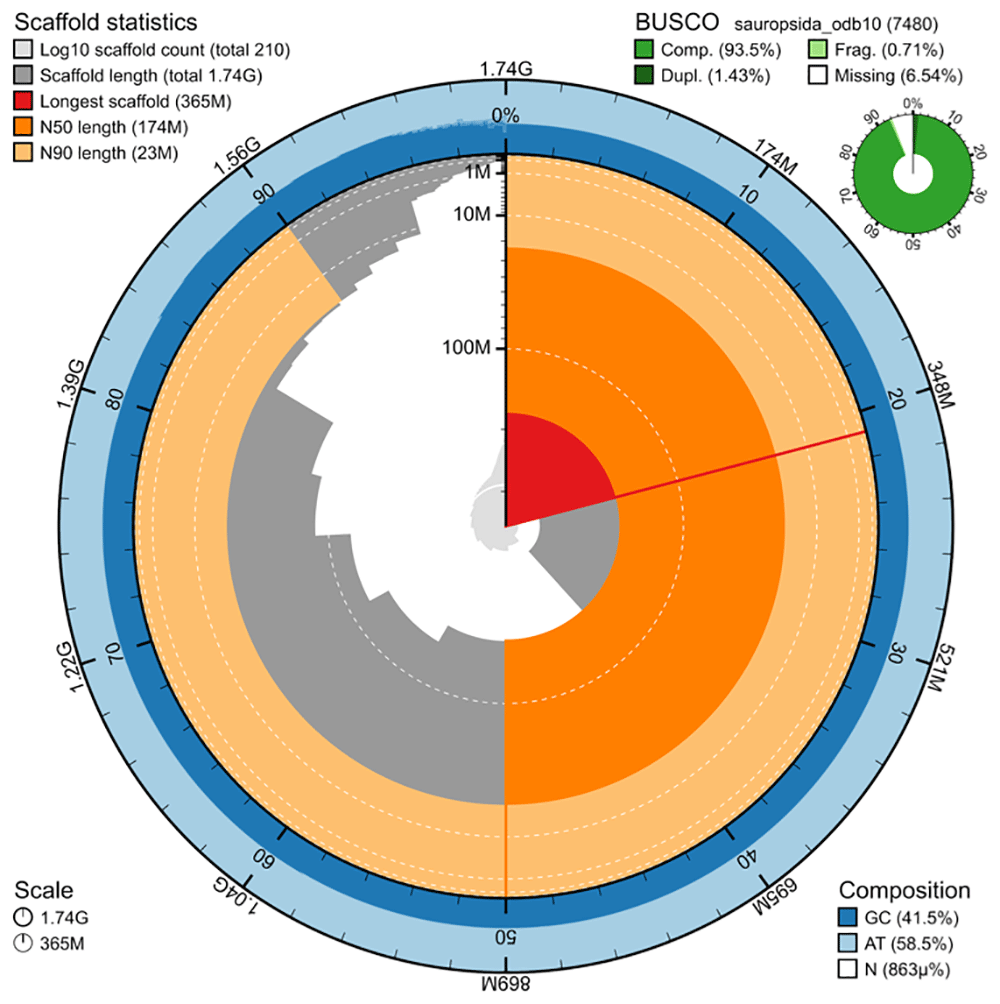
Figure 2. Snail plot summary of assembly statistics.
The main plot is divided into 1,000 size-ordered bins around the circumference, with each bin representing 0.1% of the 1,738,090,269 bp assembly including the mitochondrial genome. The distribution of sequence lengths is shown in dark grey, with the plot radius scaled to the longest sequence present in the assembly (364,621,453 bp, shown in red). Orange and pale-orange arcs show the scaffold N50 and N90 sequence lengths (174,378,910 and 23,029,681 bp), respectively. The pale grey spiral shows the cumulative sequence count on a log-scale, with white scale lines showing successive orders of magnitude. The blue and pale-blue area around the outside of the plot shows the distribution of GC, AT, and N percentages in the same bins as the inner plot. A summary of complete, fragmented, duplicated, and missing BUSCO genes found in the assembled genome from the sauropsida database (odb10) is shown on the top right.
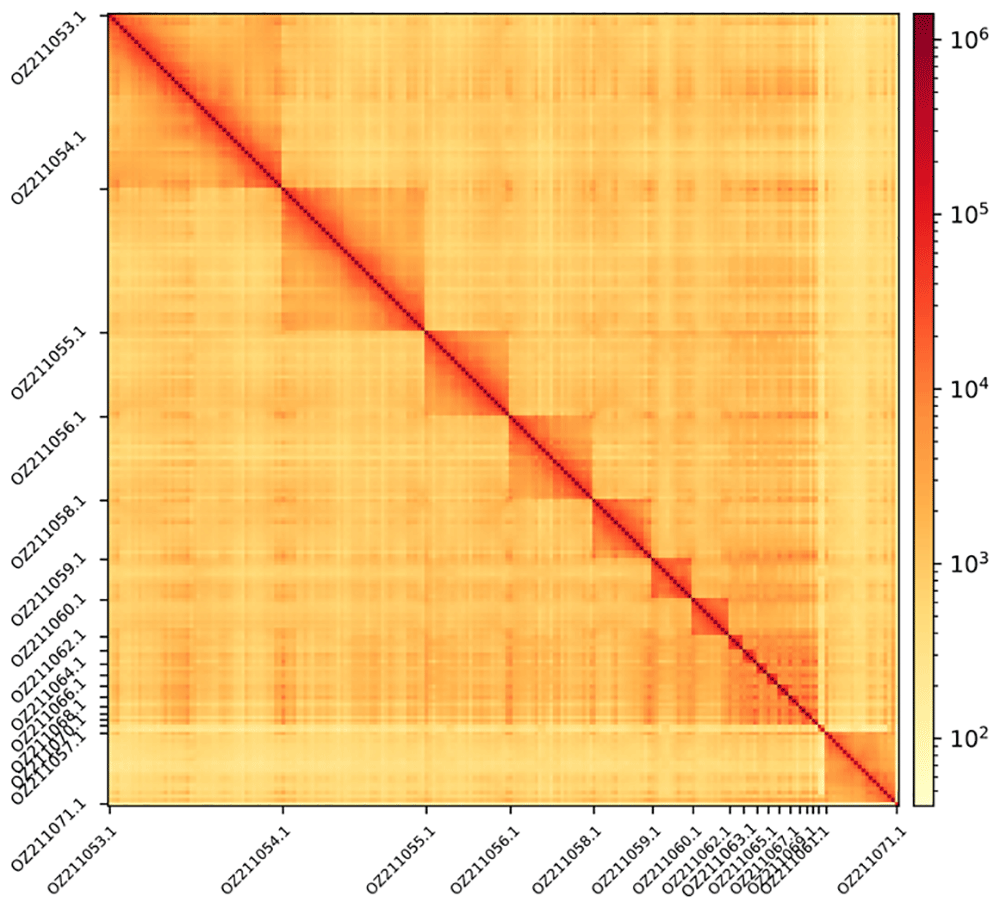
Figure 3. Hi-C contact map showing spatial interactions between regions of the genome.
The diagonal corresponds to intra-chromosomal contacts, depicting chromosome boundaries. The frequency of contacts is shown on a logarithmic heatmap scale. Hi-C matrix bins were merged into a 150 kb bin size for plotting. Due to space constraints on the axes, only the GenBank names of the chromosomes are shown, with alternating names displayed for the micro-chromosomes on the x- and y-axes.
Genome annotation
The genome annotation consists of 17,402 protein-coding genes with an associated 51,854 transcripts, in addition to 27 pseudogenes and 1,491 non-coding RNA genes of various types (Table 1). Using the longest isoform per transcript, the single-copy gene content analysis using the sauropsida_odb10 database with BUSCO v5.5.0 resulted in 93.4% completeness. Using the OMAmer Episquamata database for OMArk resulted in 95.85% completeness and 97.59% consistency (Table 2).
Table 1. Statistics from assembled gene models.
| No.
genes | No. transcripts | Mean gene length
(bp) | No. single-exon
genes | Mean exons per
transcript |
|---|
|
Protein-coding
| 17,402 | 51,854 | 41,684 | 491 | 15.2 |
|
Pseudogenes
| 27 | 27 | 7,337 | 2 | 6.7 |
|
lncRNA
| 981 | 1,663 | 21,796 | 88 | 3.6 |
|
snRNA
| 162 | 162 | 124 | 162 | 1.0 |
|
snoRNA
| 197 | 197 | 116 | 197 | 1.0 |
|
rRNA
| 73 | 73 | 610 | 73 | 1.0 |
|
miRNA
| 52 | 52 | 86 | 52 | 1.0 |
|
scRNA
| 15 | 15 | 194 | 15 | 1.0 |
|
Other non-coding
| 11 | 11 | 183 | 11 | 1.0 |
Table 2. Annotation completeness and consistency scores calculated by BUSCO run in protein mode (Sauropsida_odb10) and OMArk (Episquamata).
| Complete | Singular | Duplicated | Fragmented | Missing |
|---|
|
BUSCO
| 93.4% | 91.7% | 1.7% | 0.9% | 5.7% |
|
OMArk
| 95.85% | 93.78% | 2.06% | - | 4.15% |
| Consistent | Inconsistent | Contaminants | Unknown |
|---|
|
OMArk
| 97.59% | 1.57% | 0.00% | 0.84% |
Data availability
Natrix maura and the related genomic study were assigned to Tree of Life ID (ToLID) 'rNatMau1' and all sample, sequence, and assembly information are available under the umbrella BioProject PRJEB77787. The sample information is available at the following BioSample accessions: SAMEA114541135, SAMEA114541139, SAMEA114541140, SAMEA114541142, SAMEA114541148. The genome assembly is accessible from ENA under accession number GCA_964659585.1 and the annotated genome is available through the Ensembl ERGA-BGE project page (https://projects.ensembl.org/erga-bge/) and Ensembl Genome data & annotation site (https://beta.ensembl.org/). Sequencing data produced as part of this project are available from ENA at the following BioProject: PRJEB77785. Documentation related to the genome assembly and curation can be found in the ERGA Assembly Report (EAR) document available at https://github.com/ERGA-consortium/EARs/tree/main/Assembly_Reports/Natrix_maura/rNatMau1. Further details and data about the project are hosted on the ERGA portal at https://portal.erga-biodiversity.eu/data_portal/8585.
Author contributions
SC & DF-G collected the species, SC, DF-G, ST & LB identified the species, SC, ST & DF-G sampled and preserved biological material and provided metadata, RM, AB, RF & NE provided sampling and metadata support and management, LA and MG extracted DNA, prepared libraries, and performed sequencing, FCF, JG-G & FC performed genome assembly and curation under the supervision of TSA, LH and FM performed genome annotation, TB generated the analysis and report. All authors contributed to the writing, review, and editing of this genome note and read and approved the final version.
We are deeply saddened by the passing of Daniel Fernández-Guiberteau, who died in May 2025 after a courageous battle with cancer. Daniel was a passionate biologist whose work made a lasting impact on the conservation of reptiles and amphibians, particularly in Catalonia. His dedication, knowledge, and commitment to fieldwork and outreach were truly inspiring. This manuscript is a small tribute to his memory and to the legacy he leaves in herpetological research and conservation.
Acknowledgements
We would like to express our gratitude to Jhulyana López Caro and Eduardo Cáceres for their invaluable assistance in the field and laboratory. We acknowledge the support of the Freiburg Galaxy Team: Saim Momin and Björn Grüning, Bioinformatics, University of Freiburg (Germany), funded by the German Federal Ministry of Education and Research BMBF grant 031 A538A de.NBI-RBC and the Ministry of Science, Research and the Arts Baden-Württemberg (MWK) within the framework of LIBIS/de.NBI Freiburg. We would like to acknowledge the assembly reviewer, Lola Demirdjian from Genoscope. We also acknowledge the support of the Generalitat de Catalunya through the Departament de Salut and the Departament d'Empresa i Coneixement.
Faculty Opinions recommendedReferences
- Aken BL, Ayling S, Barrell D, et al.:
The ensembl gene annotation system.
Database (Oxford).
2016; 2016: baw093. PubMed Abstract
| Publisher Full Text
| Free Full Text
- Challis R, Kumar S, Sotero-Caio C, et al.:
Genomes on a Tree (GoaT): a versatile, scalable search engine for genomic and sequencing project metadata across the eukaryotic Tree of Life [version 1; peer review: 2 approved].
Wellcome Open Res.
2023; 8: 24. PubMed Abstract
| Publisher Full Text
| Free Full Text
- Corominas M, Marquès-Bonet T, Arnedo MA, et al.:
The catalan initiative for the earth biogenome project: contributing local data to global biodiversity genomics.
NAR Genom Bioinform.
2024; 6(3): lqae075. PubMed Abstract
| Publisher Full Text
| Free Full Text
- De Panis D:
ERGA-BGE genome report ANNOT analyses. WorkflowHub, 2024a. Publisher Full Text
- De Panis D:
ERGA-BGE genome report ASM analyses (one-asm WGS Illumina PE + HiC). WorkflowHub, 2024b. Publisher Full Text
- De Smet WHO:
The chromosomes of 23 species of snakes.
Acta Zoologica et Pathologica Antverpiensia.
1978; 80: 85–118. Reference Source
- Gomez-Garrido J:
CLAWS (CNAG’s long-read assembly workflow in Snakemake). WorkflowHub, 2024. Publisher Full Text
- Gruber AR, Lorenz R, Bernhart SH, et al.:
The Vienna RNA websuite.
Nucleic Acids Res.
2008; 36(suppl_2): W70–W74. PubMed Abstract
| Publisher Full Text
| Free Full Text
- Kalvari I, Nawrocki EP, Argasinska J, et al.:
Non-Coding RNA analysis using the rfam database.
Curr Protoc Bioinformatics.
2018; 62(1): e51. PubMed Abstract
| Publisher Full Text
| Free Full Text
- Kozomara A, Birgaoanu M, Griffiths-Jones S:
miRBase: from microRNA sequences to function.
Nucleic Acids Res.
2019; 47(D1): D155–D162. PubMed Abstract
| Publisher Full Text
| Free Full Text
- Mateo Miras JA, Cheylan M, Nouira MS, et al.:
Natrix maura: the IUCN red list of threatened species 2009. (e. T61538A12510365) [Dataset], 2009. http://www.doi.org/10.2305/IUCN.UK.2009.RLTS.T61538A12510365.en
- Mazzoni CJ, Ciofi C, Waterhouse RM:
Biodiversity: an Atlas of European reference genomes.
Nature.
2023; 619(7969): 252. PubMed Abstract
| Publisher Full Text
- Nawrocki EP, Eddy SR:
Infernal 1.1: 100-fold faster RNA homology searches.
Bioinformatics.
2013; 29(22): 2933–2935. PubMed Abstract
| Publisher Full Text
| Free Full Text
- Santos X:
Culebra viperina – Natrix maura. En: enciclopedia virtual de los vertebrados españoles. (A Salvador & A Marco, Eds.). Museo Nacional de Ciencias Naturales, 2021. Reference Source
- Schöneberg Y, Winter S, Arribas O, et al.:
Genomics reveals broad hybridization in deeply divergent palearctic grass and water snakes (Natrix spp.).
Mol Phylogenet Evol.
2023; 184: 107787. PubMed Abstract
| Publisher Full Text
- Speybroeck J, Beukema W, Bok B, et al.:
Field guide to the amphibians and reptiles of Britain and Europe. British wildlife publishing field guides. Bloomsbury Publishing, 2016. Reference Source
- UniProt Consortium: UniProt: a worldwide hub of protein knowledge.
Nucleic Acids Res.
2019; 47(D1): D506–D515. PubMed Abstract
| Publisher Full Text
| Free Full Text