Introduction
Family businesses are considered to be the oldest and most common form of entrepreneurship and they are beginning to play an increasingly important role in the modern economy (Marjański, 2015). Family organizations that are strong and dynamically developing are able to largely determine the ability of individual regions and even countries to be globally competitive (Marjański, 2015). Family businesses play an important role in both the global economy and the Thai economy – they generate national income, create many jobs, and have an important impact on shaping the organizational culture.
The share of family businesses in the total number of enterprises in global terms is 66%, and in the employment of employees about 80% (Family Business Yearbook, 2015, EY). It should be noted that the number of family organizations varies regionally in different parts of the world.
In the literature, there is a view that the family organization is treated as a system that presents the enterprise as three overlapping subsystems: family, enterprise and ownership (Jeżak et al., 2004). The specificity of family organizations can also be presented by means of two subsystems: the family system and the economic system. Strong connections between these systems affect the goals and the way the organization and family function, which makes them stimulants or destimulants of their development (Martyniuk, 2013). Given that both the family and the company have their own values, the feedback loop between them can be both a source of their development and limitations, an opportunity or a threat. The most important thing is that the values of each system through their mutual cooperation and interdependence support their mutual development (Jeżak et al., 2004). Family organizations are characterized by the specificity of the functioning of business activities. Strategic business goals are shaped on the one hand by ownership and family relations, and on the other by control of the organization. Taking into account that the prospect of functioning through generations is the most important challenge of these enterprises, the development of these organizations is of particular importance (Marjański, 2015). Family businesses as specific business entities combine traditionalism and innovation. Without values, the family organization cannot function, because it is necessary to reconcile feelings and reason and to maintain harmony between the human and economic aspects. The activity of a family organization generally does not assume that it is only a place of work, but results from the enthusiasm to implement plans and the ability to combine aspects resulting from family values with professional and, above all, personal ones (Safin, 1993). The basic goal of the family – as indicated by the philosophical context – is to shape virtues, and the family itself determines a happy life (Szczap, 2013), while the purpose of the enterprise is the creation of material goods and its development (Lichtarski, 2015). Taking the above into account, the specificity of the family organization consists in the simultaneous implementation of both of these goals.
The owners of family businesses are increasingly aware of the economy, which affects the rationality of their decisions, aimed at both the operational and strategic areas of the organization’s operations. Managers of family businesses wonder what will affect their success in the future (GUS, 2022; Sobczak, 2014): financial results and modern fixed assets, proper customer relations, professional product brand and a positive image of the company on the market (Bąk, 2011), or maybe all of them together?
The strategies of family organizations are mainly focused on functioning from generation to generation, as well as on long-term value growth. For such enterprises, a development strategy is needed that aims not only to ensure a sustainable competitive advantage, but also to transfer ownership and management of the organization, which take place in the process of intergenerational change (Marjański, 2015). The foundation of strategic planning in family businesses is primarily family values and the philosophy of the organization. An important role in this process is played by involvement, both in the process of entrepreneurial family activity and in the dimension of the organization’s activities (Lewandowska, 2013).
As a result of the recent changes that have taken place in the global economy, there has been a breakthrough in the existing paradigms of operation of business entities. Today, in order to thrive and even survive, they need to have the ability and flexibility not only to adapt, but also to anticipate, given the changing economic reality. For this reason, contemporary organizations place great emphasis on undertaking pro-innovation projects that adapt them to the conditions of the market economy, as well as the dynamics and complexity of their market environment (Borowiecki & Siuta-Tokarska, 2014). In addition, in the modern world, family businesses are struggling with many challenges, e.g. cyberattacks, high costs of raw materials and trade barriers, so professionalization of business is becoming a very important aspect in their functioning. It includes investment and business decisions, ownership issues, and family connections (Family – owned businesses: Leading in a evolving business ecosystem).
Today, one of the important aspects of family businesses is digital technology, which includes digitization, digitalization, and digital transformation.
Therefore, in order for a family organization to be successful, it should focus on business strategy, new technologies and the impact in which it affects society.
Digitization, digitalization and digital transformation are processes that are used by family businesses to improve and adapt their existing organizational solutions, which in turn also contributes to greater smoothness and efficiency of their operations.
Recent years, especially the pandemic period, have shown how important digitization has become in enterprises and that without investment in digitalization, it is impossible to run an effective business. Digitization is primarily about saving costs and significantly increasing the efficiency and effectiveness of the organization, as well as increasing its competitiveness and opening it to new markets and new customers (Flaziński, 2022).
Rapid technical and technological progress, the development of knowledge and globalization have contributed to the fact that the company’s strategy in the new economic model focuses on activities based on value innovation, as well as takes into account ethics and corporate social responsibility (Chybalski & Zakrzewska-Bielawska, 2012). In order for a modern organization to develop, it should implement a development strategy that takes into account both internal factors of the company: resources, potential and capabilities, and also adapts it to external economic conditions (Skowronek-Mielczarek, 2013).
The specific features of family businesses mean that they also have to face other management problems than in the case of non-family organizations. Family values make not only the owners, but also the employees of a family business feel responsible for its successes and failures. In addition, they are more involved in the organization’s activities, sacrificing themselves for it so that it can survive difficult, crisis situations. All this means that family businesses in the modern economy have great opportunities for dynamic development (Żukowska & Pindelski, 2012).
Family businesses in Thailand are now the backbone of Thailand’s economy due to their dynamic and rapid growth. In 2018, these organizations generated a value of THB 28 trillion, which was about 72% of the value of all businesses in Thailand. Family businesses, managed by family members, also accounted for more than 50% of organizations registered with SET in 2018 (Family-owned businesses: Leading in an evolving business ecosystem). In addition, family organizations provide employment for many employees in Thailand. In order to have the opportunity to develop and be competitive on the economic market, these enterprises must constantly improve their human capital through the development of talents, at the same time develop their opportunities and cope with threats in functioning on the economic market. Given that both the international, regional and local economic environment is constantly changing, family organizations should not only keep up with them, but be able to anticipate developments (Global Family Business Survey 2019 - Thailand Report).
Family businesses with deep family values that create trust and role models for the communities in which they operate, thus contributing to the long-term sustainability of society (Global Family Business Survey 2019 - Thailand Report).
Family organizations primarily implement long-term management strategies, due to plans to pass the company on to the next generation. A study conducted by the Global Family Business Survey 2019 – Thailand Report found that 76% of family organizations in Thailand have already passed the succession stage and are managed by a new generation – Figure 1.
Digitalization of family businesses in Thailand presented in the literature on the subject
The bibliometric analysis of articles on this topic was conducted in the Web of Science and Scopus databases. It was conducted based on thematic scope, fields of science and years of publication. It shows little intimacy with this topic. The analyses carried out are shown in Figure 2–Figure 13.
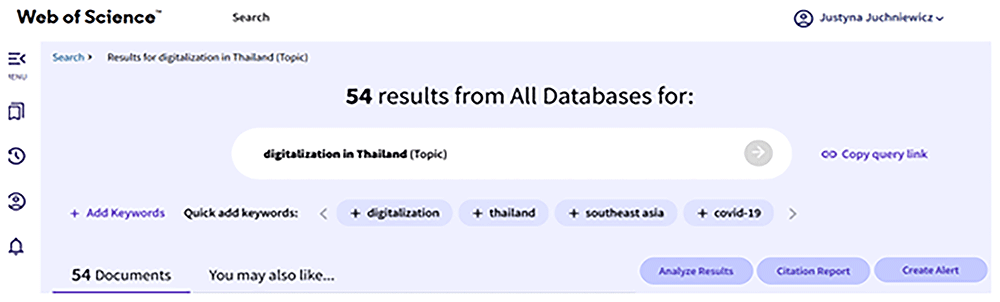
Figure 2. Number of publications indicated based on criteria in the Web of Science database.
Source: own research.
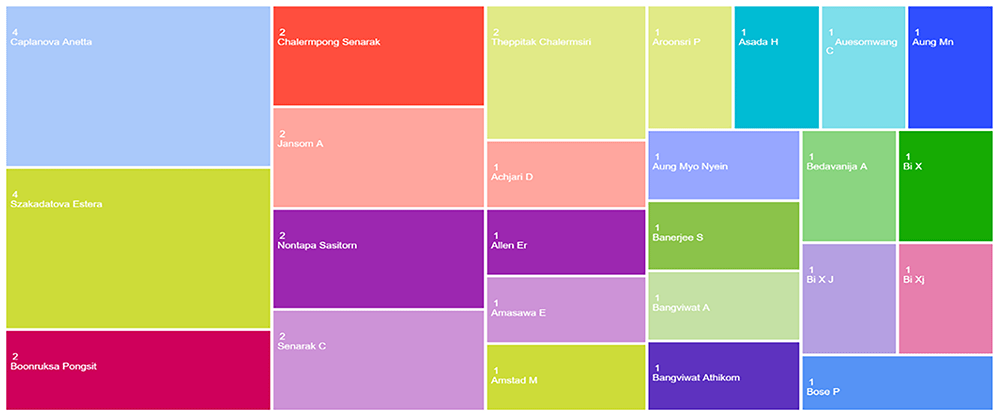
Figure 3. The article authors indicated based on criteria in the Web of Science database.
Source: own research.
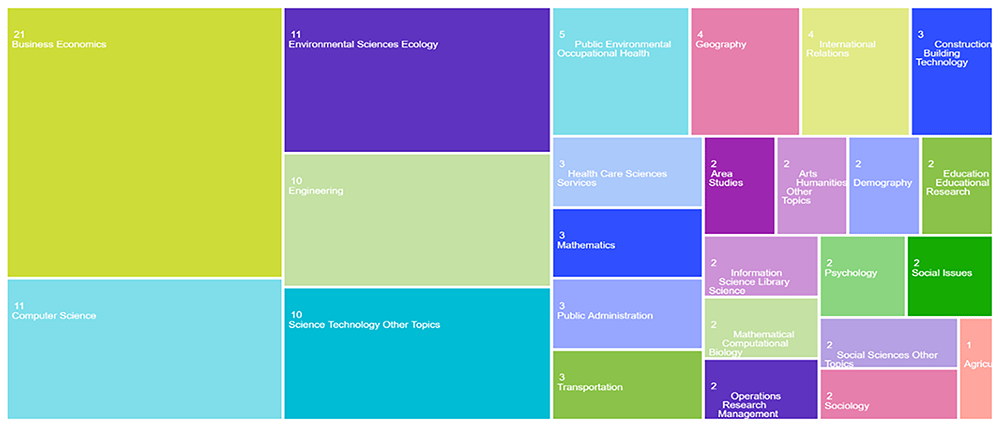
Figure 4. The areas of articles indicated based on criteria in the Web of Science database.
Source: own research.
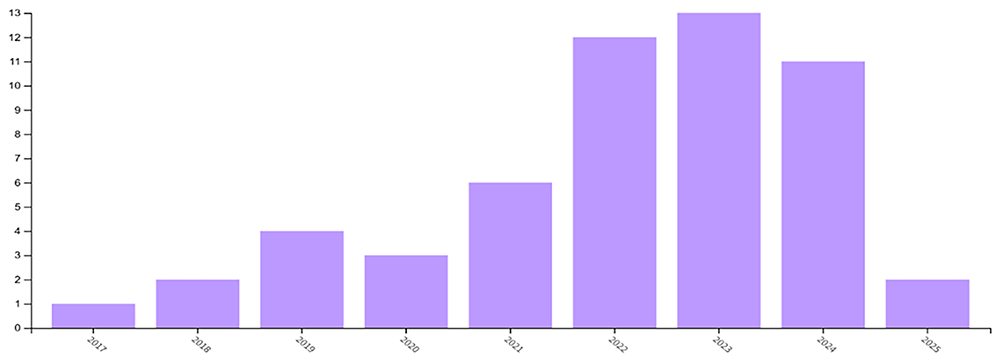
Figure 5. The years of publication of articles indicated based on criteria in the Web of Science database.
Source: own research.

Figure 6. Number of publications indicated based on criteria in the Web of Science database.
Source: own research.

Figure 7. Number of publications indicated based on criteria in the Web of Science database.
Source: own research.
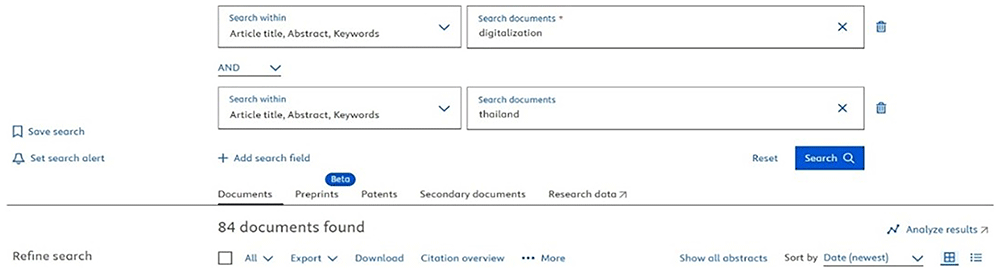
Figure 8. Number of publications indicated based on criteria in the Scopus database.
Source: own research.
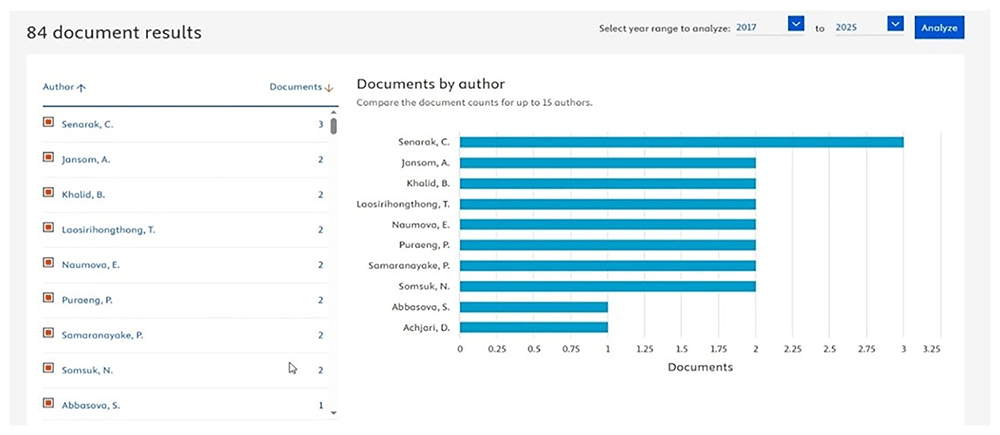
Figure 9. The article authors indicated based on criteria in the Scopus database.
Source: own research.
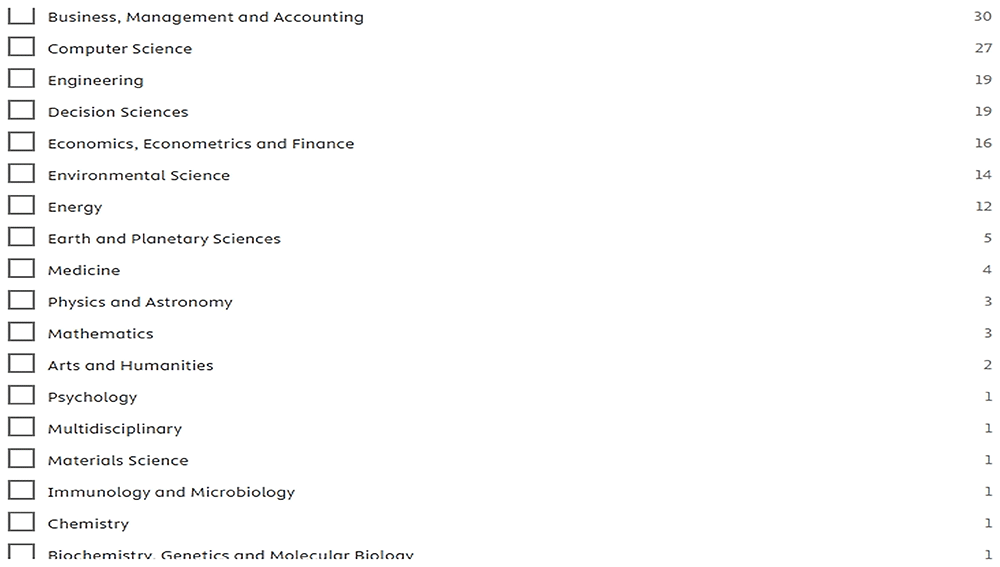
Figure 10. The areas of articles indicated based on criteria in the Scopus database.
Source: own research.
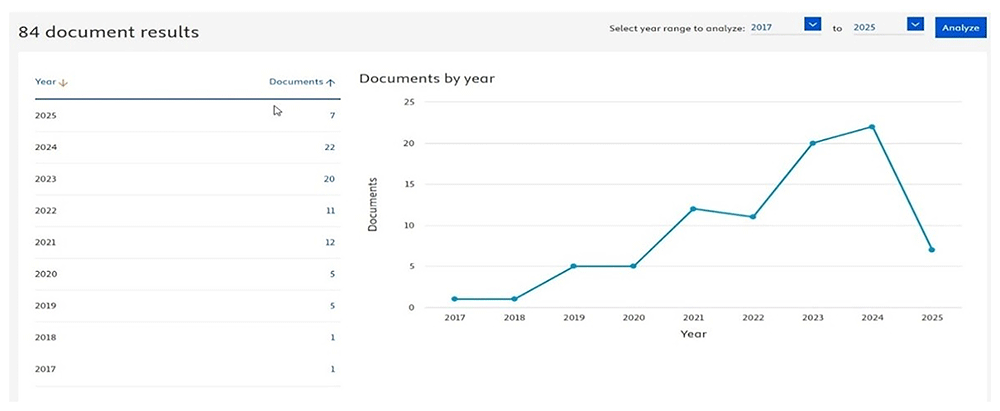
Figure 11. The years of publication of articles indicated based on criteria in the Scopus database.
Source: own research.
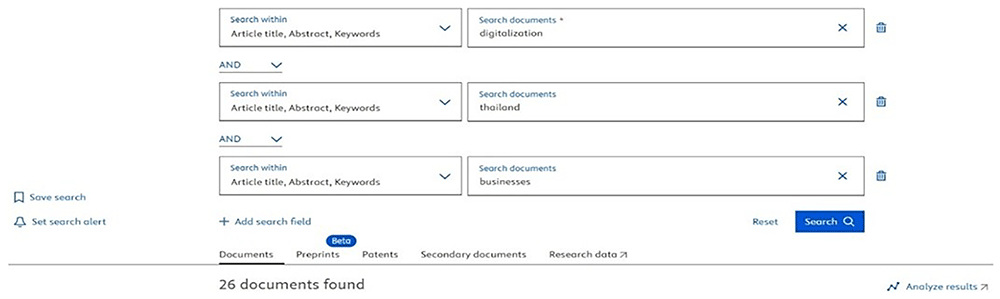
Figure 12. Number of publications indicated based on criteria in the Scopus database.
Source: own research.
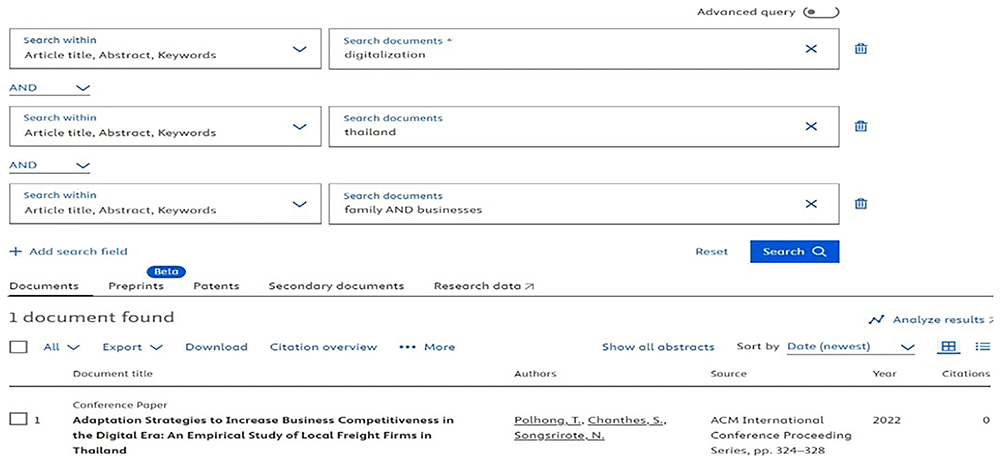
Figure 13. Number of publications indicated based on criteria in the Scopus database.
Source: own research.
Digital economy
The 21st century brought with it the fourth industrial revolution, based primarily on digital transformation. Technical means enable the rapid sharing and processing of digital text and graphic content. The environment of digital reality on the one hand allows better access to knowledge, and on the other hand, the creation of new knowledge, which is particularly important in the modern world. In addition, digitalization also allows for the creation of new organizational and technical solutions in enterprises, contributing to strengthening their competitive position on the market.
The Fourth Industrial Revolution is based on the following technological developments and trends, i.e.:
Big Data and Business Intelligence – a technology that allows you to collect, store and analyze huge amounts of data, which are then used to determine production imperfections. These tools enable data processing and drawing conclusions, which then support business activities.
Autonomous robots – robots that are more flexible, self-reliant than current robots, and are also able to interact with humans and other robots.
Simulation – Designers and system operators have the ability to use real-time data to map the physical world into a virtual model that can connect people, products, and machines.
System integration – the possibility of vertical and horizontal integration of various functions and departments in the company, enabling automated value chains and enabling the use of digital data at the management and production level.
Internet of Things (IoT), which provides real-time data sharing between all parts of the system, connecting embedded devices, offices, organizations, and manufacturing plants.
Cybersecurity – enabling reliable and secure communication, as well as identity and access management to users and machines.
Cloud computing – allowing for much greater data sharing between websites and company boundaries. In addition, a large part of IoT communications and large-scale data will be able to be delivered through this cloud, enabling other services based on production data as well.
Additive manufacturing – through 3D printing, it gives the possibility of quick design changes and the production of small batches, which leads to reduced raw material inventories and lower transport costs.
Augmented reality – systems based on it can support various services, e.g. selection of parts in the warehouse via mobile devices (Cichorzewska et al., 2020).
The digital economy has emerged in recent years as a new type of economy, as digitization processes have a universal and global reach and are used not only by organizations or selected sectors, but also by entire economies, societies, and also concern the relationships between societies and countries in the world.
Changes in the field of digital transformation, which are a consequence of technological development that are taking place in the modern global economy, are taking place at a very fast pace and have an important impact on global economic processes. In addition, the development of ICT technologies is one of the most important aspects affecting the functioning of modern business in the world. Digitization penetrating the economy and society is a very dynamic change, thanks to which new opportunities in m.in the sphere of production are created (Boratyńska et al., 2021).
It should also be pointed out that digitization, harmonizing the real and virtual worlds, is becoming a fundamental creator of change and innovation, covering most sectors of public administration, local government units, and the entire economy (Boratyńska et al., 2021).
However, digitalization also causes uncertainty, risk and various types of opportunities and threats for example related to the social effects of robotization and automation of processes in the economy and public administration, as well as security. To meet this, both entire sectors and individual enterprises, public administration, society, and national economies should carry out the so-called digital transformation (Boratyńska et al., 2021).
Digitalisation is also a major challenge for family businesses. In a study conducted by KPMG (Wu Hong, 2017) – this factor was indicated by 64% of family organizations – Figure 14.
Thailand Policy 4.0 in the context of the evolution of the Thai economy
Advanced Industry 4.0 solutions will allow for the production of a variety of and individualized products that are able to meet the different needs of customers. This is particularly important in the functioning of family businesses, which will be able to adapt to the specific needs of their customers to a large extent.
The Thai government aims in its political activities to fully integrate the Thai economy into the Thailand 4.0 economic model (Wiboonyasake, 2018) by modernizing the production structure and increasing the level of prosperity of the Thai people. This policy aims to create new organizations, including family organizations, which will generate higher incomes, as well as to reduce the import of technology and create innovative products. Through innovation, creativity, technology, and research and development, these enterprises will be able to increase their advantage to become more competitive in the economic market.
An important part of Thailand’s 4.0 policy, which supports the organization’s processes and business activities, is digitization. The basic assumptions of the Thailand 4.0 model are the following aspects: striving to make Thailand a rich, sustainable and stable country, developing the economy through technology, creativity and innovation, as well as striving for synergy involving all economic sectors (private sectors, banks, people, research and educational institutions) connecting them with a network of business alliances.
Thailand 4.0 is also strongly promoted among SMEs, family businesses and start-ups (Louangrath, 2017). through the rapid development of technology, it is possible to operate high-quality telecommunications and communication structures, which enables Thais to gain access to the Internet, as well as effective networking between all economic sectors. It is important that the goal of the transition of the economy to newer technologies is achieved through the cooperation of all economic sectors, for example SMEs, family businesses and start-ups. However, it should be noted that in order to grow faster, family organizations should implement highly developed technologies, while maintaining their own business capabilities. In addition, it is particularly important in this process that the owner of the organization skillfully supports the training and improvement of employee qualifications, as well as properly manages and develop talents, especially in the aspects of analyzing and solving problems.
Digital transformation, digitalization and digitization of family businesses
The development of technology is particularly visible in the modern economy, as today’s world is increasingly connected by digital technologies, i.e. digital transformation, digitalisation and digitization. Digital transformation by implementing technology into channels within an organization aims to create a digital business to achieve a new goal or a new market (Ashwell, 2017). Digital transformation is an innovation that allows people to interact with technology that is strongly correlated with the digitization process. It allows the family organization to better recognize the ever-changing behavior of customers.
The Gartner Research Institute has identified ten key technology trends for 2024. His opinion indicates that sustainable technology and intelligent applications are already the norm in the modern world, and engineering platforms and GenAI, which are developing dynamically, create new opportunities in the economic market. In addition, the concept of an expanded and connected workforce and customer-machine (10 trendów technologicznych Gartnera na 2024 rok) also plays an important role in the development of the working environment and customer relations.In addition, the Institute divided trends into 3 areas: protecting and preserving past and future investments, creating optimal solutions for the right stakeholders at the right time, and offering value to the changing segment of internal and external customers (10 trendów technologicznych Gartnera na 2024 rok) existing in the economy.
It is worth noting that in the process of implementing new technologies in an organization, the skill level of its owner is also important, who in this process should be a digital leader and support employees and the company.
One of the main pillars of Thailand’s 4.0 policy is digitalization. Its main goal is to develop the economy, its security, and moreover, in the long run, to achieve sustainable development of the country. In addition, digitalization can help an organization improve its processes, models, and business functions, by using digital technology in operations or knowledge (Anchalikasite, 2017).
Family businesses should be aware of the appropriate investment of financial resources in the development of technology, especially digitization, which will enable them to increase organizational innovation, as well as strengthen their competitive position on the market and increase revenues. However, according to research conducted by Deloitte (Kark et al., 2017), organizations invested only 16% in business innovation - Figure 15.
Digitalization of family businesses in Thailand – research results
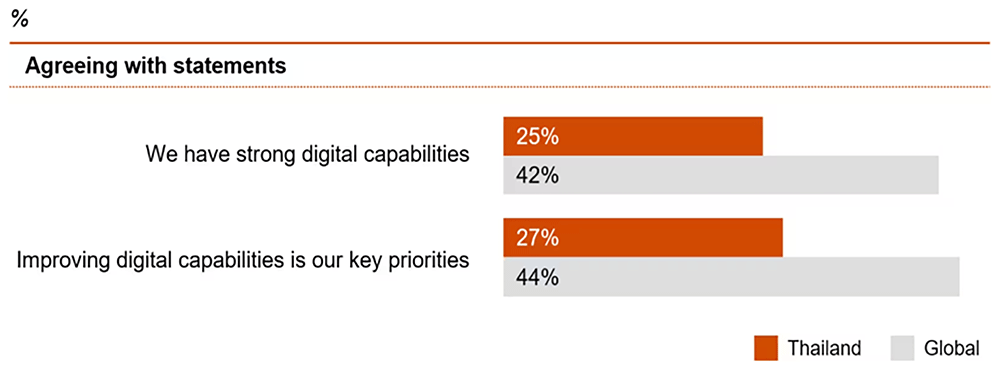
Research conducted by PwC’s 11th Global Family Business Survey: Thailand Report showed the level of digital opportunities in family organizations in Thailand and around the world. They pointed out that Thai family organizations are not prioritizing the digital transformation of their operations and that their digital capabilities are still limited, while enterprises around the world are transforming their organizations in the context of digitalization and to tailor customer-centric experiences (Figure 16). Only 27% of family business respondents in Thailand indicated that they consider improving digital capabilities to be a top priority (44% globally), and only 25% of organizations believe they have strong digital capabilities (42% globally) (PwC Global Family Business Survey, 2023).
The research also revealed that in most Thai family businesses, ESG and DEI are not the focus of their attention, as shown in Figure 17. Only 27% of organizations indicated that they actively communicate and protect their data usage (29% globally), and only 14% of enterprises respond effectively to data privacy breaches (27% globally).
Family organizations in Thailand are aware of the important impact of digital technology on their business. However, the results of a survey of businesses in Thailand and Asia-Pacific (APEC) indicated that family organizations in Thailand are not yet prepared for digital transformation (Global Family Business Survey 2019 – Thailand Report).
The majority of Thai family businesses (64%) felt vulnerable to digital disruption, given that it is the norm in the modern world – Figure 18.
Surveys of Thai family businesses also found that the majority (61%) believe their organizations are vulnerable to cyberattacks – Figure 19.
New technologies have led to fundamental changes in customer behavior by affecting their daily lives. New communication and marketing channels have also been created that allow customers to communicate and flow data instantly, meaning they have many choices for products and services. In addition, customer needs and expectations have increased significantly, posing challenges for businesses that need to find a way to meet these demands while maximizing revenue (Global Family Business Survey 2019 – Thailand Report).
Therefore, in order for Thai family organizations to continue to function, strengthen their competitive position on the market and develop, they must have a vision and think ahead. In addition, they should not only skillfully use current business opportunities resulting from the development of technology, but also be able to properly plan their activities in the future (Global Family Business Survey 2019 – Thailand Report).
In order to properly implement solutions related to digitization, it is necessary to have the right competences of employees in Thai companies. The results of another study on digital transformation in Thailand indicate the direction of soft skills development in the Thai market – Figure 20.
The results of the survey showed that Thai companies most often indicated the ability to think analytically in the digital transformation process (49%). This means that as technology evolves, you need to invest in continuous learning in order to acquire the skills you need to succeed. People with such skills are able to logically analyze information and properly solve professional problems (Leopold et al., 2018). In addition, they have the ability to introduce innovative solutions and ideas.
The next most important skills indicated by the respondents are: creativity, adaptability and leadership. This indicates that skills such as critical thinking, complex problem solving, and emotional intelligence are important. With the above in mind, organizations in Thailand will need to incorporate talent management into their organizational strategies in order to remain competitive in the market, in the face of rapidly changing employee skill requirements (Schwartz et al., 2017). Recognizing that the key to the professional future lies in ever-evolving human skills, talent management should lead to the continuous seizure of opportunities to develop one’s skills that evolve to fit into a rapidly changing environment (Thailand Digital Transformation Survey Report, 2020).
Another study conducted by The Thailand Digital Transformation Survey referred to the ranking of the types of digital talent that organizations consider very important in the context of the digital transformation of their companies and those that are a recruitment challenge for them. The results of the survey indicated that the most difficult and important talents to attract for organizations are: Data Analysts and Scientists, Digital Transformation Specialists, Data Science Specialists, Marketing and Digital Strategy Specialists, as well as Software and Application Programmers and Analysts, Process Automation Specialists, and User Experience Designers. On the other hand, digital competences that are less important to the organization and for which they have no problem recruiting are Cloud and IT Infrastructure Specialists (Thailand Digital Transformation Survey Report, 2020).
In the modern world, technology plays a very important role in business, as it improves business processes, which significantly affects customer service.
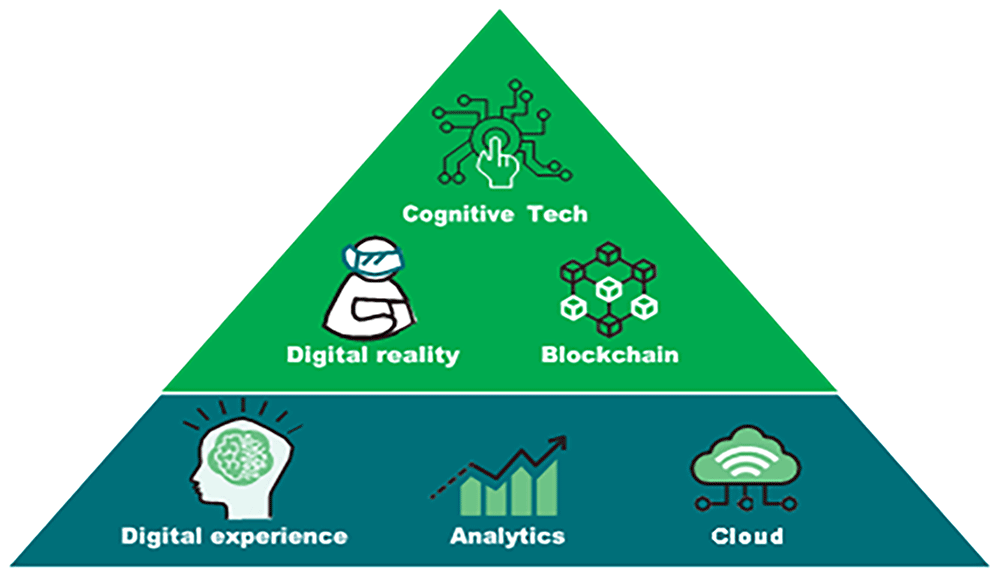
In the study conducted by Deloitte Tech Trend 2019, key technologies were divided into two groups. The first is core technologies: digital experiences, analytics, and the cloud, which have already been implemented in most organizations. The second advanced group consists of newer and more advanced trends: digital reality (AR, VR and IoT), cognitive technologies (AI and Robotics) and blockchain, which are rapidly gaining importance (Figure 21). However, research shows that the full potential of these technologies is still largely untapped, due to the fact that these technologies are constantly evolving and therefore not easy to understand (Thailand Digital Transformation Survey Report, 2020).
The research has shown that the main users of blockchain and AL technologies are sectors such as financial services, media and telecommunications, and technology. In contrast, IoT technology is generating more interest among consumers because they are more likely to use it in their organizations (Figure 22).
However, for young organizations, implementing such technology is not easy, due to the variety of functions it includes. Thus, talent selection will be a challenge for organizations, both in terms of lack of knowledge, skills, and experience (Thailand Digital Transformation Survey Report, 2020).
Conclusions
The digital economy is: network society, digital transformation and the data economy. Its specificity results from the closely related processes of dataification and networking, which have been changing dynamically in recent years, as a result of the implementation of new technologies for processing, collecting, analyzing and using data. In addition, artificial intelligence is also developing, enabling the personalization of products and services to the needs and expectations of individual recipients.
In the modern world, the digitalization of enterprises is becoming a necessity, because without investment in digitization, it is impossible to run an effective business.
Digitalization means, above all, cost savings and an increase in the efficiency and effectiveness of the company, as well as an increase in its competitiveness and opening up to new markets and new customers.
Businesses around the world are advancing digital transformation that leads to streamlined organizational processes. However, Thai family businesses, despite understanding the importance of digitalization in the functioning of their organization, still have fewer digital capabilities.
Research has shown that few Thai family organizations surveyed have high digital capabilities. And when considering the key priorities of Thai family organizations, only 27% said that improving digital capabilities is their business priority, compared to 44% of family organizations globally.
Digital technology is one of the megatrends that plays an important role in business in the modern world. Only a few Thai family organizations believe that they have a strategy to support digital change, and this is a big challenge for them to succeed.
Most management strategies for Thai family organizations lack both knowledge and understanding of the importance of the impact of digitalization on their functioning. As a result, the adaptations of business processes of these organizations are slower than those of other enterprises, which in turn affects the competitiveness of the family organization on the market. It is important that the new generation of Thai family business owners who are acquiring a business begin to recognize the importance of digital technology in the functioning of their organization, start investing in new technologies and use them in the management of the organization.
In this work, the research problem has been solved and the aim of the work has been achieved. In addition, through the implementation of this article, the research gap was filled and the planned added value was obtained.
The added value in the cognitive aspect of this work consists in systematizing and detailing the concepts, indicating the essence and specificity of family businesses and their level of digitization. This was done on the basis of literature on the subject.
The added value in the utilitarian area is related to the analysis of reports, through the presentation of conclusions and indications resulting from them, including relevant recommendations, which may be an important element of knowledge to be used by entrepreneurs in the future in the field of vision of the development of their organization in the light of the volatility of the economic market and the conditions of their operations. An important recommendation in this regard is the organization of conditions for entrepreneurs, through consulting, training and contacts with specialized institutions that would encourage and support them in the implementation of solutions in the field of digitalization, as well as enabling entrepreneurs to co-finance in this area.
Ethics and consent
Ethical approval and consent were not required.
Data availability statement
No data are associated with this article.
Faculty Opinions recommendedReferences
- Anchalikasite, Digitalization? 2017. Reference Source
- Ashwell ML:
The digital transformation of intelligence analysis.
J Financ Crime.
2017; 24(3): 393–411. Publisher Full Text
- Bąk M:
Ekonomiczne czynniki otoczenia przedsiębiorstwa a składniki majątku niewidzialnego. Zeszyty Naukowe Uniwersytetu Szczecińskiego, Szczecin, 2011; Nr 668. Reference Source
- Boratyńska K, Cieślik E, Kacperska E, et al.:
Gospodarka cyfrowa we współczesnym świecie – kraje V4. Wydawnictwo SGGW, Warszawa, 2021. Reference Source
- Borowiecki R, Siuta-Tokarska B:
Innowacje jako źródło sukcesu przedsiębiorstw w warunkach wyzwań współczesnej gospodarki. [w:] Współczesne kierunki nauk o zarządzaniu w kontekście dokonań naukowych Profesora Adama Stabryły, (red.) H. Bieniok, Mfiles.pl, Krakow, 2014. Reference Source
- Chybalski F, Zakrzewska-Bielawska A:
Strategia i prognozowanie działalności małej i średniej firmy. [w:] Zarządzanie małą i średnią firmą w teorii i w ćwiczeniach, (red.) M. Matejun, Wydawnictwo Difin, Warszawa, 2012. Reference Source
- Cichorzewska M, Hysa B, Wójcik P:
Wybrane aspekty zarządzania różnorodnością pracowników przemysłu 4,0. Wydawnictwo Politechniki Lubelskiej, Lublin, 2020. Reference Source
- Family Business Yearbook, 2015, EY. Reference Source
- Family-owned businesses: Leading in an evolving business ecosystem. Reference Source
- Flaziński K:
Digitalizacja jednym z warunków nowoczesnej firmy. 2022. Reference Source
- Global Family Business Survey 2019 - Thailand Report. Reference Source
- GUS: Determinanty sukcesu małych i średnich przedsiębiorstw. Warszawa 2022. Reference Source
- Jeżak J, Winnicka-Popczyk A, Popczyk W:
Przedsiębiorstwo rodzinne. Funkcjonowanie i rozwój. Difin, Warszawa, 2004. Reference Source
- Kark K, Shaikh A, Brown C:
Technology budgets: From value preservation to value creation. 2017. Reference Source
- Lewandowska A:
Decyzje strategiczne przedsiębiorstw rodzinnych jako implikacja wartości ich założycieli w świetle badań własnych. [w:] Modele biznesowe, (red.) B. Kożuch, Przedsiębiorczość i Zarządzanie, Tom XIV, Zeszyt 13, część II, Społeczna Akademia Nauk, Łódź, 2013. Reference Source
- Leopold TA, Ratcheva VS, Zahidi S:
The future of jobs report 2018. World Economic Forum, September 17, 2018. Reference Source
- Lichtarski J:
Podstawy nauki o przedsiębiorstwie. Wyd. Akademii Ekonomicznej im. Oskara Langego we Wrocławiu, Wrocław, 2015. Reference Source
- Louangrath P:
Thailand 4.0 readiness. 2017. Reference Source
- Marjański A:
Uwarunkowania strategii rozwoju przedsiębiorstw rodzinnych. [w:] Firmy Rodzinne – doświadczenia i perspektywy zarządzania, (red.) A. Marjański, M. Rebeca, C. Loeray, Przedsiębiorczość i Zarządzanie, Tom XVI, Zeszyt 7, część I, Społeczna Akademia Nauk, Łódź, 2015. Reference Source
- Martyniuk O:
Funkcjonowanie polskich przedsiębiorstw rodzinnych w okresie spowolnienia gospodarczego. Zarządzanie i Finanse, Nr 2/2, 2013. Reference Source
- PwC’s 11th Global Family Business Survey: Thailand Report. 2023. Reference Source
- Safin K:
Zachowania strategiczne przedsiębiorstw rodzinnych w RFN. Ekonomika i Organizacja Przedsiębiorstwa. Nr 2/1993. Reference Source
- Schwartz J, et al.:
2017 Deloitte Global Human Capital Trends, Rewriting the rules for the digital age. Deloitte University Press, February 27 2017. Reference Source
- Skowronek-Mielczarek A:
Strategie i metody rozwoju w praktyce polskich przedsiębiorstw. Organizacja i Kierowanie, Nr 4 (157), 2013. Reference Source
- Sobczak K:
Czynniki sukcesu małych i średnich przedsiębiorstw z kapitałem polskim i zagranicznym. Uniwersytet Ekonomiczny w Poznaniu, Poznań, 2014. Reference Source
- Szczap: Rodzina w poglądach wybranych filozofów. Wychowanie w rodzinie, t. VII (1/2013). Reference Source
- The Thailand Digital Transformation Survey Report. 2020. Reference Source
- Wiboonyasake M:
Industry 4.0 VS Thailand 4.0. 2018.
- Wu Hong C:
Family businesses in the digital economy. KPMG Services Pte.Ltd, 2017. Reference Source
- Żukowska J, Pindelski M:
Szanse i ograniczenia innowacyjnej strategii firm rodzinnych. Współczesne zarządzanie, Nr 4, 2012. Reference Source
- 10 trendów technologicznych Gartnera na 2024 rok. Reference Source









