An overview of the European skill mapping
The following section provides a more detailed overview of leading European academic and research institutions actively engaged in the development and dissemination of modelling techniques for steel casting and solidification (see overview in Figure 3). These centers represent key contributors to the advancement of numerical modelling within the European steel sector.
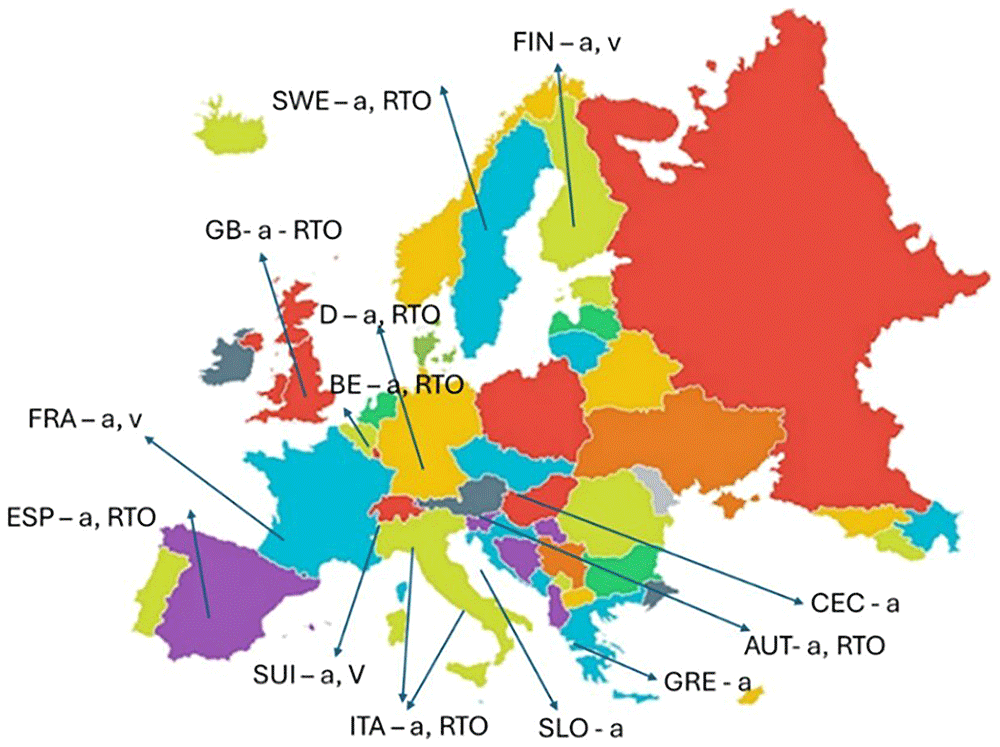
Figure 3. Geographic Distribution of European casting modelling expertise.
Legenda: a- academic frame; v = code developers; RTO = research centers.
Countries participating in the METACAST project are highlighted as representative and non-exhaustive examples of this expertise. Additionally, institutions from the United Kingdom were included to illustrate further contributions from countries whose general characteristics are summarized in Table 2. This expanded perspective aims to showcase the diversity and depth of modelling capabilities across Europe and to underline the collaborative nature of ongoing research efforts in this domain.
Table 2. Skill in steel continuous casting modelling per country, referring to academia or R&D centers.
| Country | Reference | Type | Skill | Main activity |
|---|
| France | CEMEF | A | Multiphysics, multiscale solidification modelling | Papers, support to codes |
| Transvalor SA | V | Multiphysics, multiscale casting and solidification software vendor | industrial application (problem solving) |
| Spain | SIDENOR I+D | RTO | Flow & solidification modelling | Papers, industrial application (problem solving) |
| Switzerland | ETH- Poly. Of Zurich | A | Flow modelling | Papers |
| CALCOM | V | solidification code vendor | industrial application (problem solving) |
| Italy | Politecnico di Milano | A | Flow & solidification modelling | Papers |
| Rina Consulting - CSM | RTO | Flow & solidification modelling | Papers, problem solving –numerical and physical tools |
| Slovenia | Ljubljana University | A | Flow & solidification modelling | advanced flow models (LES) coupled to solidification |
| Greece | Athens University | A | Flow modelling in mould | advanced flow models (LES) coupled to solidification |
| Austria | Montanuniversität Leoben | A | Flow & solidification modelling | advanced flow models coupled to solidification/clogging |
| Johannes Kepler University | A | Flow modelling | advanced flow models in casters |
| K1-MET | RTO | Flow modelling | advanced flow models in casters |
| Czechia | Ostrava University | A | Flow & solidification modelling | advanced flow models coupled to solidification |
| Germany | RWTH Aachen | A | Flow modelling | advanced flow models (tundish) |
| VDEh-Betriebsforschungsinstitut GmbH | RTO | Flow & solidification modelling | Papers, problem solving –numerical and physical tools |
| Belgium | CRM | RTO | Mould Flow modelling | Pilot plants (mould alloying) |
| Sweden | SWERIM
KTH | RTO
A | Flow & solidification modelling, Thermodynamics, refractories | Papers, problem solving –numerical and physical tools |
| Finland | Oulu University | A | Flow & solidification modelling | Papers, problem solving – |
| CASIM consulting | V | Flow & solidification modelling | Papers, problem solving –coupling with thermo-chemistry |
| UK | MPI (formerly CORUS) | RTO | Modelling validation (pilot plants) | Papers, problem solving |
Imperial College
Sheffield University
Warwick University | A | Flow modelling, thermodynamic modelling, material properties | Papers, partner in EU funded projects |
Italy. Significant contributors/players in the field of continuous casting and solidification modelling are involved in high-impact European projects. Collaboration between RTOs, academia, and industry ensures the constant innovation and implementation of cutting-edge solutions. Examples mentioned here are an RTO, RINA-CSM, and, as an academic, Politecnico di Milano.
a) Centro Sviluppo Materiali (CSM)14–19 is a leading RTO in Italy, specializing in metallurgical research and innovation. This has been pivotal in advancing solidification modelling for continuous casting processes, bridging the gap between academic research and industrial applications.
Key Areas of Expertise are:
Numerical Modelling: The CSM has developed proprietary software and methodologies for simulating the continuous casting process, including
Experimental Validation:
○ Experimental studies on solidification dynamics with lab and pilot tools.
○ Development of advanced high-temperature sensors for monitoring casting conditions.
Application and Collaboration with Industry:
○ Process enhancement (improved yield) and product quality (reducing defects such as cracks, porosity, and segregation in steel as-cast).
○ The development of design solutions, such as innovative mold designs aimed at cooling uniformity (reducing thermal stresses).
○ Collaboration with major Italian steel producers and globally known technology providers) to implement and use models in real casting operations.
Such work was disseminated when allowed in collaborations, via Peer-Reviewed Articles, in Congresses Participations often as Chairmen/Scientific Committee Members (e.g., METEC, SteelSIM, AIM Congresses), Research Projects via participation in European Union-funded projects such as Clean Steel Partnership initiatives, and collaborative projects with significant industry players (e.g., ArcelorMittal and Tenaris).
Computational Tools and Platforms. Proprietary, commercial, and open-source computational tools for steel casting and solidification
○ Custom Software via the development of in-house codes integrating thermodynamic databases (e.g., Thermo-Calc) with solidification models.
○ Commercial Software Expertise via extensive use of software such as ANSYS Fluent and ProCAST for industrial-scale modelling.
○ Open-Source tools like OpenFOAM.
○ High-Performance Computing (HPC).
Training in the modelling field was performed at the Steelmaking Client premises. Dissemination activity is a consolidated action, and it is worth mentioning the role of the leader in the parent project ‘VALCRA’13 aimed at analyzing, valorizing, and disseminating the achieved knowledge and results obtained in the previous projects.
b) Politecnico di Milano. Well-known for research applied innovations in metallurgy, with a focus on computational modelling and experimental validation.
Key Areas of Expertise are
Numerical Modelling: Expertise in simulating heat transfer, fluid flow, and phase transitions during steel casting using Computational Fluid Dynamics (CFD) and Finite Element Analysis (FEA) to address phenomena such as superheat dissipation, mushy zone behavior, and flow in molds. Moreover, the focus is on the
- Solidification Process Optimization (e.g., modelling dendritic and columnar-to-equiaxed transitions using cellular automaton and phase-field approaches; prediction of microstructural evolution and correlation with mechanical properties).
- Interface Phenomena (e.g., modelling the interaction between liquid steel and mold: thermal exchange at walls, slag formation heat transfer control, mold oscillation, and influence on casting surface quality).
Experimental Validation:
○ Support of state-of-the-art metallurgical labs for casting trials.
○ Availability of tools for advanced imaging techniques (e.g., in-situ synchrotron-based X-ray imaging for solidification studies).
Application and Collaboration with Industry:
Continuous Casting:
Process optimization is focused on enhancing slab quality, reducing defects, and improving yield.
Use of real-time data integration with process models for adaptive control.
The institution has contributed significantly to the field through publications and collaborations, via Peer-Reviewed Articles (on numerical modelling of dendrite growth and segregation in high-strength steels, on reducing defects in continuous casting molds through enhanced thermal management), Research Projects via participation in European Union-funded projects, and collaborative projects with significant industry players (e.g., ArcelorMittal and Tenaris).
Computational Tools and Platforms. Politecnico di Milano utilized and developed a range of proprietary and open-source computational tools for steel casting and solidification.
○ Custom Software via the development of in-house codes integrating thermodynamic databases (e.g., Thermo-Calc) with solidification models.
○ Commercial Software Expertise via extensive use of software such as ANSYS Fluent, MAGMASOFT, and ProCAST for industrial-scale modelling.
○ High-Performance Computing (HPC), via Leveraging HPC clusters for simulations with high temporal and spatial resolution.
Finally, concerning Training and Knowledge Dissemination, Politecnico di Milano is actively involved in educating the next generation of engineers and researchers through specialized courses on metallurgical process modelling and advanced solidification phenomena, workshops, and training programs for industrial partners, focusing on best practices in casting process design and optimization.
Germany. Similar to the previous section, examples mentioned refer to an RTO, Betriebsforschungsinstitut, and, as an academic, Aachen University (RWTH).
VDEh-Betriebsforschungsinstitut GmbH (BFI)20–23 is one of Europe's leading private-sector institutes for applied research and development in the field of steel technology. The main objective of the institute’s work is the optimization of steel production processes from economic and quality aspects. BFI has a staff of approximately 100 people, 70% of whom are scientists and engineers with long term experience on the processes of the steel industry.
BFI is well known in applied research, with a focus on computational modelling and experimental validation.
Key Areas of Expertise are:
Numerical Modelling:
Expertise in simulating heat transfer, fluid flow, and phase transitions during steel casting using Computational Fluid Dynamics (CFD) and Finite Element Analysis (FEA) in tundish and mold, including optimized Discrete Particle Models for gas bubbles and inclusions.
The main topics are modelling the inclusion behavior and meniscus fluctuation and their influence on steel cleanliness.
Expertise in numerical dynamic online solidification modelling for characterization of the solidification behavior and online control of the continuous casting process.
Experimental Validation:
○ State-of-the-art labs for casting trials with water models.
○ Advanced laser optical measuring techniques such LDA, PDA and PIV.
○ Fibre optical temperature measurements within the mould.
○ Surface temperature measurements with thermo-cameras.
○ Assessment of solidification behaviour via laser vibrometry.
Application and Collaboration with Industry:
Continuous Casting:
○ Process optimization is focused on enhancing slab quality, reducing defects, and improving yield.
○ Use of real-time data integration with process models for adaptive control.
○ studies of impurity segregation and its effects during cooling.
The institution has contributed significantly to the field through publications and collaborations via Peer-Reviewed Articles and Research Projects via participation in European Union-funded projects and collaborative projects with significant industry players (e.g., Salzgitter Flachstahl GmbH and AG der Dillinger Hüttenwerke).
Computational Tools and Platforms.
○ Commercial Software Expertise via extensive use of software such as ANSYS Fluent and COMSOL for industrial-scale modelling.
○ High-Performance Computing (HPC) for simulations with high temporal and spatial resolution.
In addition to technical expertise, BFI is an active partner in the RFCS program and has coordinated and contributed to numerous projects dealing with the casting process (RFCS Technical Group TGA2). Different departments of the BFI have participated in more than 40 ECSC and RFCS projects dealing with continuous casting.
RWTH Aachen University. The Department of Industrial Furnaces and Heat Engineering has been researching metallurgical reactors for several decades. In the field of continuous casting, both numerical models and 1:1 water models have been investigated for validation.
Key Areas of Expertise are:
Numerical Modelling: Expertise in the simulation of heat transfer, multiphase flow, and solidification using Computational Fluid Dynamics (CFD) and proprietary code. For steels with particularly large solidification intervals, their own solidification models are used, which are based on external phase-field calculations of the microstructure.
Moreover, focus is given on:
- Slag entrapment owing to the formation of flow rolls and near-edge flows.
- Multi-layer heat transfer modelling considering mold roughness, as well as solid and liquid slag skin.
Experimental Validation. The possibility of measuring the flow in water models for casters at full scale is as follows:
PIV flow measurements in several planes.
LDA measurements of 3D velocity at single points, as well as traversed measurements of flow fields.
High-speed recordings.
Particle separation measurements.
Residence time measurements.
Application and Collaboration with Industry. Development of flow models to describe and optimize outflow behavior at the submerged entry nozzle
Implementation of industrial submerged entry nozzles.
Modification of the submerged entry nozzle geometry.
Changing the immersion depth.
The institution has contributed significantly to the field through publications and collaborations, Peer-Reviewed Articles (on numerical modelling of fluid flow and physical validation), Research Projects via participation in nationally funded projects, and collaborative projects with significant industry players (e.g., ThyssenKrupp, SMS).
Computational Tools and Platforms. The Department for Industrial Furnaces and Heat Engineering at RWTH Aachen University utilizes and develops a range of proprietary and open-source computational tools for steel casting and solidification.
○ Commercial Software Expertise via extensive use of software such as ANSYS Fluent and OpenFOAM for industrial-scale modelling.
○ High-Performance Computing (HPC) via the institute’s HPC cluster and RWTH computing cluster
Finally, concerning Training and Knowledge Dissemination, RWTH Aachen University is actively involved in educating the next generation of engineers and researchers through specialized courses on simulation science, as well as practical courses on CFD for metallurgical processes.
Spain. The main contributor in the field is based on the literature and involvement in European Funded Projects, hereinafter is mentioned Sidenor Investigación y Desarrollo24–29.
Sidenor I+D is the R&D center of Sidenor, a market leader in the European special steel long product industry. Sidenor I+D has a manpower of 52 people (94% of them are PhD and engineers) working in two departments: Process and Product. One of the strengths of the SIDENOR I+D Process Department comes from easy access to the production plants in order to carry out, at an industrial level, the required experimental work, including process monitoring and data acquisition. Moreover, Sidenor accounts for two continuous casters of Billet and Bloom production in square and round formats, and knowledge transferability is one of the main goals of the R&D Team.
Key Areas of Expertise are:
Numerical Modelling: Over 40 years, Sidenor has experience in continuous casting modelling, focusing on steel grades ranging from low-carbon to bearing steel grades. Different mathematical models have been developed related to the main mold parameters, such as the magnetohydrodynamic, fluid control, and solidification phenomena.
Applied Modelling: In addition, investigations into applied modelling for the design of Alternative Mold Powders and optimization of the process for continuous casting of billets have been developed. These studies are complemented not only with theoretical calculations and computational simulations but also with real sample analysis.
In addition, the effect of shear-thinning behavior on slag entrapment and mold friction during continuous casting has been extensively studied for break out prevention.
Experimental Validation:
○ Mould temperature measurements within fibres or thermocouples.
○ Strand temperature measurements within the mould with line scanner.
○ Surface and internal quality assessments of the semiproducts.
○ Rework and rejection of rolled materials with different technologies, namely Circoflux and Novaflux, in finishing lines.
○ Sample macroetching analysis of surface and internal samples.
○ Water modelling for flow optimization in tundish.
Application to Sidenor continuous casters:
○ Surface defect reduction alters casting parameters from optimized values obtained from simulations, such as heat transfer, meniscus stability, and mold flux behavior.
○ Internal quality improvement from solidification models and temperature measurements.
○ Castability prediction models.
Computational Tools and Platforms:
○ Solidification models have been developed to characterize shell growth, stress strains, cast structures, and central quality/segregation.
○ Commercial IDS.
In addition, the R&D Center has extensive experience in carrying out RFCS projects over the last 20 years, both as coordinators and partners, in nearly all Technical Committees (TGA´s).
Austria30–45 Relevant expertise in Austria comprises the Montanuniversität in Leoben and Johannes Kepler University in Linz as universities, and K1-MET GmbH as RTO based in Linz/Leoben.
All three institutions have contributed significantly to the field through publications and collaborations, peer-reviewed articles and presence at relevant conferences, research projects in Austrian and EU contexts, and collaborative projects with significant industry players in the steel sector in Austria and Europe. In the case of the K1-MET, participation in RFCS projects was high.
Montanuniversität Leoben (MUL) is a technical university whose courses focus on the entire value chain of industrial processes and products, working on the development of green technologies and industrial transformation. It is Austria's only university for mining and metallurgy. In particular, two MUL chairs are involved in research activities toward the modelling of continuous casting, that is, the chair of ferrous metallurgy and the chair for the simulation and Modelling of metallurgical processes.
Key Areas of Expertise are:
Numerical modelling:
○ Experience in modelling and analysis of clogging phenomena in metallurgical processes.
○ Expertise in the numerical simulation of multiphase flows.
○ Expertise in the behavior and modelling of the interaction between non-metallic inclusions and refractory material.
Laboratories and experimental validation:
○ Experience in development, implementation, and interpretation of high-temperature experiments and measurements.
○ Expertise in metallographic/ analytical characterization of non-metallic inclusions.
○ Expertise in thermodynamic description of steel/slag/non-metallic inclusions systems.
○ Expertise in the description, analysis, and development of metallurgical processes.
Application and collaboration with industry:
○ Process optimization to enhance slab quality and reduce defects.
○ Integration of laboratory data (e.g., material properties) with process models for adaptive control.
○ Studies of impurity segregation and its effects during cooling.
Computational tools and platforms:
○ Commercial software expertise: Ansys FLUENT, FactSage, Thermocalc.
○ Open-source software expertise: Python-based codes.
Johannes Kepler University of Linz (JKU) is one of the largest universities in Austria and hosts activities on the modelling of continuous casting in two research groups: the Institute for Fluid Mechanics and Heat Transfer (JKU-ISW) and the Department of Particulate Flow Modelling (JKU-PFM). Both are actively involved in research projects on continuous casting and possess a wide range of expertise.
Key Areas of Expertise are:
Numerical modelling:
○ Experience and expertise in numerical investigations using Computational Fluid Dynamics (CFD) of multiphase flows in metallurgical plants (development/configuration/optimization of numerical models for the description of multiphase flows), particularly tundish and mold.
○ Expertise in analytical methods of fluid mechanics.
○ Expertise in the design of water model experiments of fluid flows in general, and continuous casting in particular, as well as the analysis of measurement data from water models, other experiments, and industrial plants.
○ Expertise in the validation of numerical models with appropriate experimental data.
Laboratories and experimental validation:
Application and collaboration with industry:
Computational tools and platforms:
○ Commercial software expertise: Ansys FLUENT.
○ Open-source software expertise: OpenFOAM, Python-based codes
As RTO, K1-MET GmbH is one of the leading and internationally renowned metallurgical competence centers for ferrous and nonferrous metallurgy in Austria. Cooperation is done with renowned national and international partners from the metallurgical sector to cover issues such as energy efficiency, circular economy, and climate-neutral metal production. Area 3 focuses on "Simulation and Data Analysis” and hosts several project activities on the numerical modelling and experimental validation of multiphase flows in tundish, SEN, and mold.
Key Areas of Expertise are:
Numerical modelling:
○ Experience and expertise in simulation (CFD and DEM) of multiphase flows in metallurgical plants.
○ Experience and know-how in research topics on numerical computation.
○ Experience in open-source software development.
○ Knowledge in the field of CFD modelling of particulate, gas, and liquid multiphase flows ( particularly in tundish, SEN, and mold.)
Application and collaboration with industry:
Computational tools and platforms:
○ Commercial software expertise: Ansys FLUENT, FactSage, Thermocalc.
○ Open-source software expertise: OpenFOAM, Python-based codes.
Sweden. Here, the role and skills of SWERIM, the most relevant RTO in the Country concerning continuous casting modelling, are highlighted. Indeed, other contributions in solidification can be ascribed to academia, especially KTH (Kungliga Tekniska Högskolan, ’Royal Institute of Technology’), although it is more focused on ingot casting, the object of METACAST.
Swerim2 46–64 has considerable knowledge and experience of various casting processes, ranging from component casting to continuous and ingot casting, as well as several testing and demonstration facilities, and can help with testing, simulation, and prototype castings on a pilot scale. The main features of this study are as follows.
Key areas of expertise:
Numerical modelling: SWERIM has developed a series of numerical models for continuous casting that have reached the level of Digital Twins because they can accurately represent the flow, heat transfer, and solidification within a CC machine. The Swerim digital twin stands out because of its potential for calculating slag infiltration and its effects on shell growth within the CC mold.
Experimental validation: SWERIM hosted the largest-scale liquid metal simulator based on a low-melting-point alloy in Europe. This allows the validation and development of flow control devices, such as submerged entry nozzles and stoppers. It also provides a test bed for analyzing and validating the Digital Twin results from CFD.
Application and Collaboration with Industry: SWERIM acts as a technology scout for Nordic steelmakers as well as coordinators for European initiatives, such as RFCS and Big-Ticket projects.
Congresses Participations: Regular key participants at the European Continuous Casting Conference, ESTAD, and STEELSIM are regular forums for modelling activities with the Digital Twin. Additional work on heat treatments and atomization (accessory to casting) at international conferences.
Computational Tools and Platforms. Proprietary, commercial, and open-source computational tools for steel casting and solidification: Custom Software via the development of in-house codes integrating thermodynamic databases (e.g., Thermo-Calc) with solidification models. Commercial Software Expertise via extensive use of software such as ANSYS Fluent, THERCAST, THERMOCALC, and ProCAST for industrial-scale modelling. Open-source tools such as OpenFOAM and 336 core High-Performance Cluster (HPC).
In this scenario, although not involved in the METACAST project, it is worth mentioning the contribution of United Kingdom (UK). Particular mention is given MPIUK the Materials Processing Institute). It is an independent not-for-profit research and technology center with particular emphasis on the steel sector and high-temperature energy-intensive processes. Its focus is on the piloting and upscaling of developments in the TRL3 to 7 range and subsequent industrial applications.
The Institute has a long history of participation in collaborative European Research both as the current independent organization (MPIUK) and before that as a process research center for Tata Steel and its predecessor organizations Corus and British Steel. It has participated in more than 100ECSC projects of which more than 60 have participated in continuous casting and computational modelling.
Key Areas of Expertise are the following.
Computational Modelling. Expertise in simulating casting and solidification processes including what follows.
Ladle and tundish: Temperature (heat transfer, thermal stratification phenomena) analysis.
Mould phenomena: heat transfer, fluid flow, meniscus stability, and mold flux behavior.
Solidification: Shell growth, stress strains, susceptibility to surface and internal defects, cast structure and mushy zone development, and central quality/segregation.
Data driven approaches linking casting parameters with product quality and defects.
The techniques employed include Computational Fluid Dynamics (CFD), Finite Difference and Finite Element Analysis, and data-driven approaches, such as Neural Networks and Machine Learning.
Experimental Validation: tools/approached available and used are:
- Laboratory simulation for metals and slags on a scale from grams to kilograms (induction and vacuum induction melting, high-temperature viscometry, reheating forging and rolling, process modelling).
- Tonnage pilot steelmaking simulation up to 7 tonne scale can process a full range of steel chemistries (EAF, LAF, and vacuum refining) with pilot continuous casting and ingot casting options. The pilot facility was digitally scanned for the ongoing development of the process twins.
- Analysis and characterization: (including Optical emission spectrometry, X-ray fluorescence, X-ray diffraction, scanning electron microscopy, optical microscopy, and other options). Many of these are supported by programmable high-temperature options and machine learning capabilities. In addition, computational thermodynamic packages were used for the prediction and verification of chemical and phase development. (e.g., FactSage and Thermocalc).
- Validation using data from industrial slab, bloom and billet casters.
Collaboration with Industry. Most work is carried out in direct support for industrial steel producers and is focused on process enhancements and optimization. In many cases, this work takes the form of multipartner collaborations.
Wider input. The Materials Processing Institute has contributed to steel sector development through projects, conference presentations, publications, and collaborations. The extensive range of these collaborations in the European sector can be gauged from the partnerships in the RFCS/European projects listed below. Continuous technical training is also provided65.
Efforts within the European Funding Programmes: RFCS.
In relation to EU-funded initiatives, Table 3 outlines the alignment between European Commission co-financed projects involving continuous casting modelling and the participation of project partners. Beyond showcasing the well-established expertise of the METACAST project partners in the relevant domains, the table clearly illustrates the long-standing synergy among them, sustained for more than 20 years of collaborative research and development.
Table 3. Projects on continuous casting modelling co-financed by the European Commission over the last 25 years and involvement of the project partners.
| Contract no. | Title | Date | Project partner involved |
|---|
| 7210-PR/013 | Behaviour of argon gas bubbles in casting machine | 2000 | CSM |
| 7210-PR/015 | Fine steel alloying during continuous casting | 2000 | CSM-BFI |
| 7210-PR/081 | Improved control of segregation in continuous casting & hot rolling processes | 2001 | CSM - SIDENOR |
| 7210-PR/016 | Measurement and modelling of crater end position and shape during transient casting conditions | 2001 | MEFOS (SWERIM) |
| 7210-PR/139 | New approaches of the initial solidified shell formation mechanisms in the continuous casting mold | 2002 | CSM-BFI |
| 7210-PR/081 | Improved control of segregation in continuous casting and hot rolling processes | 2002 | CSM, SIDENOR I+D |
| RFSR-CT-2003-00022 | Prediction of rolled product properties by correlation with as-cast structure & rolled product, plant process variables, plant process variables including modelling of segregation - PRESEG | 2003 | CSM- (VOEST ALPINE) |
| RFSR CT 2003 00003 | Improvement, control & prediction of cast & rolled products through development & application of novel engineering monitoring techniques - CASTDESMON | 2003 | CORUS UK LTD |
| RFSR-CT-2003-00027 | Enhanced steel product quality & productivity by improved flux performance in the mould through optimising the multiphase flow conditions & special regard to melting & entrapment - FLUXFLOW | 2003 | CSM- BFI- SIDENOR |
| RFSR-CT-2004-00010 | Cast product improvement by "through process" inclusion assessment and removal - CASTINCREM | 2004 | SIDENOR - BFI |
| RFSR CT 2005 00014 | Precipitation behaviour of micro alloyed steels during solidification and cooling - PRECIPITATION | 2005 | SWERIM -SIDENOR) |
| RFSR-CT-2005-00013 | Innovative tundish management for final steel thermal and chemical adjustment - TUNDJUST | 2005 | CSM- BFI |
| RFSR‐CT‐2005‐00011 | Enhanced as cast product quality by optimised mould taper design – SOLIMOULD | 2005 | CSM- BFI- SIDENOR |
| RFSR-CT-2005-00012 | Optimising slag film properties and determination of operational windows for lubrication, mould heat transfer and shell formation - SLAGFILMOWL | 2005 | CSM- BFI- SWERIM -SIDENOR |
| RFSR CT 2007 00012 | Improvement to steel cleanness, castability and surface quality through the application of magneto hydrodynamics during pouring and solidification- MAGNETOHYDRO | 2007 | BFI – SIDENOR |
| RFSR CT 2008 00007 | Integrated models for defect free casting - DEFFREE | 2008 | CSM - BFI |
| RFSR-CT-2009-00005 | Effect of transients on quality of continuously cast product - TRANSIENT | 2009 | BFI – SIDENOR |
| RFSR CT 2009 00006 | Identification of optimal mould lubrication conditions through an innovative hot and cold simulation method - LUBRIMOULD | 2009 | CSM- BFI- SWERIM -SIDENOR |
| RFSR-CT-2010-00006 | Intercolumnar cracking and its relationship to chemistry and applied strain - ICCRACK | 2013 | CSM- BFI- -SIDENOR |
| RFSR CT 2011 00005 | Development of a toolbox for direct defect prediction and reduction through the characterisation of the meniscus slag bed behaviour and initial shell solidification in CC - DIRECT–DEFECT TOOLBOX | 2014 | SWERIM |
| RFSR-CT-2011-00008 | Kinetics of precipitation during continuous casting of plate steels - KINPCC | 2014 | BFI- -SIDENOR |
| RFSR-CT-2011-00006 | Innovative process technology for ingot casting by application of simulation and measuring techniques - IPTINGOT | 2014 | BFI-SWERIM -SIDENOR |
| RFSP CT 2012 00007 | Application of fibre optical thermal monitoring at CC billet mould for improved product quality - FOMTM | 2015 | SWERIM -SIDENOR |
| RFSP CT 2012 00008 | Influence of composition and continuous casting parameters on the precipitation of microalloyed particles of B microalloyed steel grades and Mn alloyed steel grades (PMAP) | 2012 | SIDENOR, SWERIM |
| RFSP CT 2012 00011 | Investigation of innovative methods for solidification control of liquid steel in the mould – INNOSOLID | 2015 | BFI |
| RFSR-CT-2014-00009 | Investigation of the effect of Ti on clogging of feeding systems and its prevention for continuous slab casting - TICLOGG | 2017 | BFI |
| 847269 | Comprehensive Modelling, Monitoring and Control of Solidification for Optimisation of Continuous Casting Process – OPTLOCALHT | 2019 | SWERIM -SIDENOR |
| 754186 | Non-Newtonian mould fluxes – a smart viscosity response to enhancing production flexibility of steel grades prone to slag entrapment, NNEWFLUX | 2020 | SWERIM -SIDENOR |
| 847194 | Valorisation and dissemination of RFCS projects results and experience in steel surface quality issues: on as-cast cracks formation VALCRA | 2020 | CSM- BFI- SIDENOR- SWERIM |
| 754130 | Supporting control by inspection of surface quality and segregation on cast products through integration of novel online monitoring and advanced modelling into an accessible cloud access platform - SUPPORT - CAST | 2021 | BFI - SWERIM -SIDENOR |
| 800644 | Precipitation of Micro Alloy Particles in B and Mn alloyed steel grades and their Interaction between elements, segregation, and defects during continuous casting- PMAPIA | 2022 | SWERIM -SIDENOR |
| 799295 | Comprehensive Modelling, Monitoring and Control of Solidification for Optimisation of Continuous Casting Process, CONSOLCAST | 2022 | BFI- SIDENOR |
| 847334 | Embedded real-time analysis of continuous casting for machine-supported quality optimization - RealTimeCastSupport | 2023 | BFI |
| 41816052 | P4.1 "Tundish and Mold Operations", COMET research project, FFG, Austria | 2019 | K1-MET |
| 41816052 | P3.1 "Metallurgy-driven multiphase fluid modelling and simulation", COMET research project, FFG, Austria | 2023 | K1-MET, SWERIM |
| 41816052 | P3.4 "Hybrid Modelling: Hybrid mold – data evaluations around the CC process", COMET research project, FFG, Austria | 2023 | K1-MET |
EU programs have significantly supported this topic. To give an idea, Figure 4 gives how the ‘call priorities’’ (the main topics the funding programmes were focused on) have evolved in the last 15 years, while Figure 5 highlights the technical/technological trend relating to modelling development13. This shows how EU efforts and support are currently well-aligned with stakeholders’ needs and technical trends. Then, modelling trends should follow this way, namely, in the frame of enhanced and more complex (e.g., multiphysics) description and with shorter calculation times also thanks to increasing computing power.
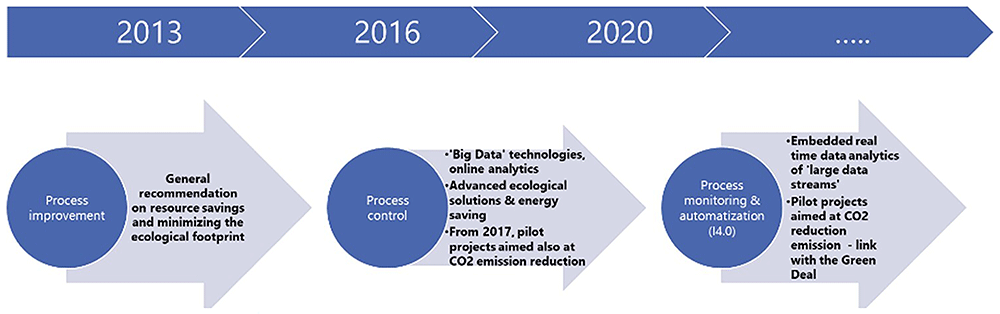
Figure 4. Evolution of the RFCS ‘call priorities’13.
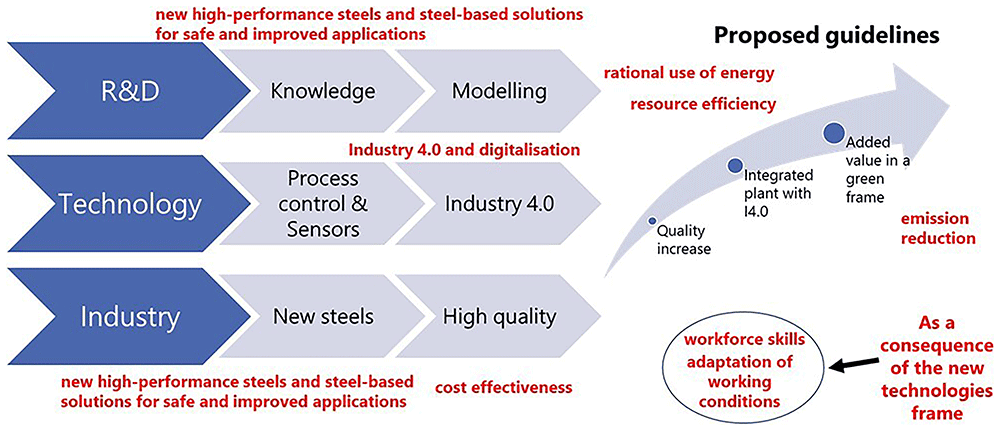
Figure 5. Technical/technological trend in casting process evolution13.




