Introduction
Sickle cell disease (SCD) is the most common hemoglobinopathy in sub-Saharan Africa (SSA) with Nigeria having the highest prevalence globally1,2. The World Health Organisation (WHO) has identified SCD as a public health burden due to its high morbidity and mortality rates. In SSA, most affected children die before their fifth birthday, and survivors face recurrent episodes of anemia, blood transfusions, crises, and repeated hospital admissions. These not only cause physical ill-health but also lead to significant psychosocial trauma for affected individuals and their families, creating a substantial socio-economic burden on families, society, and the country3. Therefore, preventing SCD is essential to reduce its overall burden.
Early diagnosis of SCD is a key strategy in controlling the disease, as it allows for the timely implementation of appropriate and acceptable measures. Screening for SCD can occur at various stages of life, with prenatal diagnosis (PND) being one of the earliest available options. PND is performed during early pregnancy for couples at risk of having children with SCD. This diagnosis can be conducted using invasive tests, such as chorionic villus sampling or amniocentesis, and more recently, a non-invasive technique has been developed. The non-invasive prenatal test screens for fetal SCD using cell-free fetal DNA from maternal plasma, eliminating the risk of miscarriage associated with invasive tests3,4. This method also allows for earlier screening than conventional invasive tests.
There is a scarcity of centers offering PND in Nigeria, and its acceptability is often influenced by religious beliefs5. The benefits of PND include early detection of abnormalities in the fetus, allowing a couple time to prepare psychologically, socially, and financially for the birth of an affected child if they choose to continue the pregnancy. It also provides the option to terminate the pregnancy if the birth of an affected child is not desired, in situations where pregnancy termination is acceptable and permissible. Additionally, PND can relieve anxiety early in pregnancy if the disease is excluded.
Although some studies have been conducted on the knowledge and acceptability of PND of SCD in the general population, there is a lack of research in Northern Nigeria focusing on mothers of children with SCD. These mothers are already carrying the burden of the disease, are at risk of having another affected child, and are important stakeholders in SCD control. This study aims to assess the awareness and acceptability of PND of SCD among mothers of children with SCD.
Methods
Study setting
The study was conducted in the Paediatric Haematology clinic of Ahmadu Bello University Teaching Hospital, Zaria, which operates weekly on Wednesdays. The clinic sees an average of 50 children with SCD each week.
Study design
This was a cross-sectional descriptive study.
Study population
The study population included mothers of children with SCD who were attending the clinic.
Inclusion criteria
All consenting mothers of at least one child living with sickle cell disease were included in the study.
Exclusion criteria
Exclusion criteria were menopausal mothers, mothers who had undergone bilateral tubal ligation, and mothers whose current spouse had an Hb genotype of AA.
Sample size determination
Using a prevalence of awareness of 0.25% among mothers of affected children as reported by Olatunya6, where n = sample size; Z = standard normal variate (1.96 at P<0.05); p = percentage of awareness of prenatal diagnosis (0.25); q = 1-p (0.75), d = absolute precision (0.05), a minimum sample size of 288 was obtained. However, 297 women were recruited for the study.
Sampling technique
A non-probability sampling method was used to sequentially recruit eligible mothers of affected children from the clinic as they presented to access care until the desired sample size was achieved. Recruitment took place from March to August, 2023.
Study protocol
Every eligible participant completed a structured interviewer-administered questionnaire, after obtaining informed verbal consent, to gather data on socio-demographic characteristics, awareness, attitude, and acceptability of prenatal diagnosis for SCD. None of the eligible participants declined participation. The data collected was pseudo-anonymized. Recruitment took place from March to August 2023.
Data analysis
Data were analysed using the Statistical Package for Social Sciences (IBM SPSS statistics) version 236. The level of significance was set at <0.05. Frequencies and percentages were used to describe categorical data, and Chi-square/Fisher's exact test was used to test for associations between variables.
Ethics and consent
Ethical approval (ABUTHZ/HREC/H32/2022) was obtained from the Health Research Ethics Committee of ABUTH, Zaria, on 14 September 2022. Participants were provided with adequate information, and informed verbal consent was obtained from all the study participants before the questionnaires were administered. Verbal consent was used because it has been established in a national document that Kaduna state (where the study was conducted) has a low literacy level, with only 18% of the female population reported to have attained secondary or higher education (National Health Demographic Survey, 2018). The study also posed a no-minimal risk to the participants and the information collected was de-identified. The scope of the study and process involved was discussed with each participant. The participant was allowed the opportunity to ask questions and her concerns addressed if any before giving consent. The questionnaires were de-identified, and confidentiality was strictly maintained. Collected hard copy data was securely stored, and only the principal investigator had access to the input data on a computer.
Results
A total of 297 mothers of children with SCD were recruited. The majority of the mothers (90.9%) were of Hausa ethnicity, 97.0% were of Islamic faith, 77.8% had below tertiary education, and 57.9% had no source of personal income. About one-third of the mothers were grandmultiparous women (≥5 deliveries). Additionally, 40.7% had more than one child affected by SCD, and about one-fifth had experienced the loss of at least one child due to SCD-related complications. Further details are provided in Table 1.
Table 1. Socio-demographic characteristics of mothers of children with SCD.
| Characteristic | Frequency (%) | Characteristic | Frequency (%) |
|---|
| Tribe | | Religion | |
| Hausa | 270 (90.9) | Islam | 288 (97,0) |
| Non-Hausa | 27 (9.1) | Christianity | 9 (3.0) |
| Educational level | | Parity | |
| Below tertiary | 231 (77.8) | <5 | 186 (62.6) |
| Tertiary* | 66 (22.2) | ≥5 | 111 (37.4) |
| Residence | | No. of children with SCD | |
| Rural | 79 (26.6) | 1 | 176 (59.3) |
| Semi-urban/urban | 218 (73.4) | ≥1 | 121 (40.7) |
| Personal source of income | | No. of sickle cell related deaths | |
| Yes | 125 (42.1) | 0 | 235 (79.1) |
| No | 172 (57.9) | ≥1 | 62 (20.9) |
Two-thirds of the affected children were aged five years or younger. The predominant hemoglobin genotype among the children was Hb SS (99%). Approximately half of the children experienced at least one crisis per month. In the past year, 55.2% of the children were hospitalized, and 44.4% received blood transfusions due to SCD-related complications. Detailed characteristics of the affected children attending the SCD clinic are provided in Table 2.
Table 2. Characteristics of the affected children attending the SCD clinic.
| Characteristic | Frequency (%) |
|---|
| Age (years) | |
| ≤5 | 197 (66.3) |
| >5 | 100 (33.7) |
| Haemoglobin genotype | |
| SS | 294 (99.0) |
| SC | 3 (1.0) |
| Average crisis per month | |
| 0 | 146 (49.2) |
| ≥1 | 151 (50.8) |
SCD-related blood transfusion
in the last one year | |
| 0 | 165 (55.6) |
| ≥1 | 132 (44.4) |
SCD-related hospital
admission in the last one year | |
| 0 | 133 (44.8) |
| ≥1 | 164 (55.2) |
Only 22.2% of the mothers (66 out of 297) had ever heard of PND for SCD. The most common source of information about PND was healthcare workers, while the least common source was electronic media. This is illustrated in Figure 1.
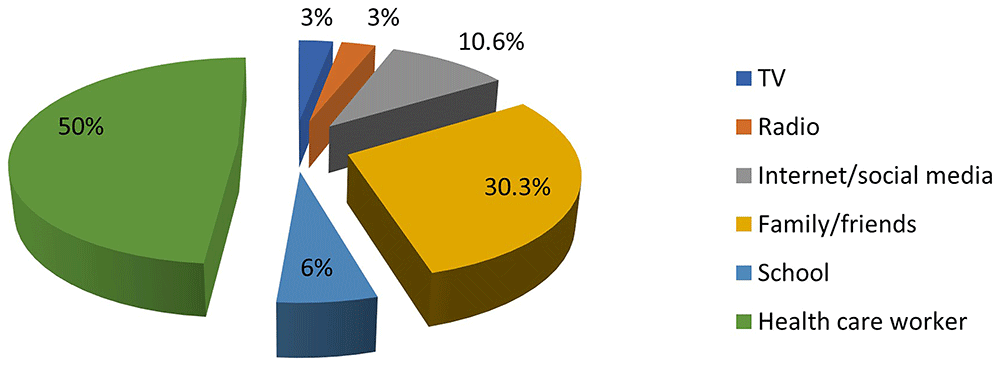
Figure 1. Sources of information about PND for SCD among mothers of affected children.
The colours represent the different sources of information about PND.
The majority of the mothers (44 out of 66) were unaware of the methods that can be used for PND. Among those who were aware, chorionic villus sampling or amniocentesis was the most commonly known method (14 out of 66). Only 13.6% (9 out of 66) of the mothers knew more than one method of PND. These findings are depicted in Figure 2.
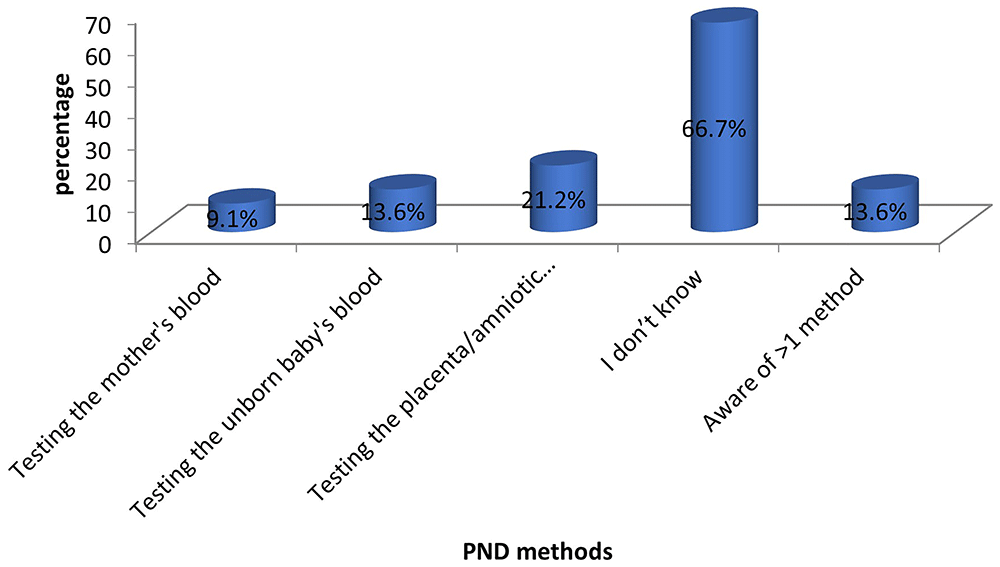
Figure 2. Awareness of PND methods among mothers of children with SCD.
The bars represent the methods of SCD PND known to the participants.
Only one mother (0.3%) had ever undergone a form of PND of SCD. However, when informed about PND of SCD, 93.3% of the mothers expressed willingness to accept the test. Among those who were not willing to accept PND, 45% were willing to accept the fate of having another child with SCD. These findings are detailed in Table 3.
Table 3. Acceptability of PND for SCD among mothers.
| Variable | Frequency (%)
n=297 |
|---|
| Ever had PND for SCD | |
| Yes | 1 (0.3) |
| No | 298 (99.7) |
| Willingness to accept PND in the future | n=297 |
| Yes | 277 (93.3) |
| No | 20 (6.7) |
Reasons for unwillingness to accept
PND in the future | n=20 |
| I will accept my fate | 9 (45.0) |
| No reason stated | 11 (55.0) |
Mother’s educational level, having a child experiencing at least one crisis per month, and receiving at least one blood transfusion or hospital admission in the past year were significantly associated with willingness to accept PND for SCD (p<0.05). These associations are presented in Table 4.
Table 4. Factors associated with the willingness to accept PND for SCD in future pregnancies.
| Frequency (%)
n=297 | |
|---|
| Factor | Will accept PND | Will not accept PND | p-value |
|---|
| Educational level | | | |
| Tertiary | 57 | 9 | 0.011 |
| Below tertiary | 220 | 11 | |
| Personal source of income | | | |
| Yes | 116 | 9 | 0.785 |
| No | 161 | 11 | |
| Place of residence | | | |
| Semi-urban/urban | 202 | 16 | 0.489 |
| Rural | 75 | 4 | |
| No. of SCD-related death | | | |
| ≥1 | 57 | 5 | 0.638 |
| 0 | 220 | 15 | |
| Average crisis per month | | | |
| ≥1 | 147 | 4 | 0.005 |
| 0 | 130 | 16 | |
SCD-related blood transfusion in
the last one year | | | |
| ≥1 | 128 | 4 | 0.034 |
| 0 | 149 | 16 | |
SCD-related hospital admission in
the last one year | | | |
| ≥1 | 161 | 3 | 0.000 |
| 0 | 116 | 17 | |
| No. of children affected with SCD | | | |
| ≥2 | 167 | 9 | 0.158 |
| 1 | 110 | 11 | |
Discussion
The global number of people with sickle cell disease (SCD) has increased by 41.4% over the past 21 years7. The birth prevalence of SCD among children under one-year-old is reported to be highest in Africa, ranging from 643 to 2800 per 100,000, with particularly high mortality rates8. This highlights the urgent need for effective SCD control measures in SSA to reduce associated morbidity and mortality. PND is one of the reproductive options available to couples at high risk of transmitting a serious genetic disorder. Awareness and utilization of PND have increased in developed countries, where it is routinely offered as part of informed reproductive choices, but remains low in Africa, which carries the highest burden of the disease9.
This study found a low level of awareness of PND for SCD, which aligns with findings by Olutanya et al. in Southwestern Nigeria10. Similarly, Munung et al. in a multi-country study of people directly affected by SCD, reported a low level of awareness of PND11. This low level of awareness mirrors the general awareness of prenatal diagnosis for other genetic conditions in various study populations, such as pregnant women12–14. The widespread poor awareness of PND for genetic disorders could be attributed to a lack of facilities and expertise for PND in Nigeria and the reluctance of some healthcare workers to recommend PND for SCD. A study among physicians found that nearly two-thirds would not recommend PND for at-risk couples10. This also highlights the low uptake of PND for SCD in this study, with only one mother having undergone PND in a previous pregnancy, as reported in a similar study in Nigeria14. In contrast, Okechukwu et al. found higher awareness of PND (52.2%) among parents of SCD children in South-South Nigeria15.
In this study, the internet and social media were not major sources of information about PND for SCD. In the digital era, this emphasizes the need for organisations responsible for SCD control to utilise these media to disseminate accurate and easily understandable information.
Following information on PND for SCD provided to participants in this study, the majority expressed a willingness to accept PND, consistent with reports by Ampumah et al. from Ghana and Wonkam et al. from Cameroon16,17. However, Olatunya et al. and Okechukwu reported lower acceptability rates in similar populations15. This could be due to differences in the intrinsic characteristics of the study populations. In the study by Olatunya, 97% of participants had only one affected child, whereas more than half of the mothers in this study had more than one affected child. Additionally, mothers in this study had experienced SCD-related deaths five times more frequently than participants in Okechukwu’s study. Caring for a person with SCD carries a significant psychological, financial, and physical burden18. This burden is even greater when more than one child in a family is affected by SCD, which may influence mothers' attitudes toward the acceptability of PND for SCD.
In this study, nearly half of the mothers who were unwilling to accept PND cited a willingness to accept the risk of having another affected child. Acceptance of one’s fate is closely associated with religious belief, similar to findings from southern Nigeria15. Religion is a strong factor in the decision-making process for prenatal screening19. This study found that severe manifestations of the disease evident by frequent crises, blood transfusions, and hospital admissions were associated with willingness to accept PND. The psychosocial burden faced by these mothers of affected children does not exist in other studied populations, such as healthcare providers or students20. Cultural, religious, and personal concerns about pregnancy termination are factors associated with willingness to accept PND for SCD11,19. Ampumah et al. in Ghana reported that parents of children living with SCD were more likely to use PND results to prepare for the birth of the child, and deciding to accept PND did not necessarily mean using that information to terminate the pregnancy16. Munung et al. in Ghana found a lower preference for PND as a SCD control measure largely due to its complex decision-making process and higher risk of stigmatization which are influenced by religious and cultural aspects attached to the termination of an affected pregnancy that can follow a PND11. In a resource-poor country where the resources to establish widespread PND is lacking; a populace whom cultural and religious beliefs influence their decision making; a restrictive abortion law and high burden of SCD-related morbidity and mortality, there is need to strengthen other less expensive control measures in the countries like premating/premarital counseling and testing and newborn screening. In the Nigerian setting, awareness and acceptance of premarital screening for SCD are already relatively high21, and studies have shown that many African individuals hold positive attitudes toward genetic counselling22. Evidence from a multi-African country study by Munung et al. further suggests that adolescents may be an ideal target group for early sickle cell trait screening, given their openness to receiving genetic information before marriage decisions are made11. This indicates a valuable opportunity to expand low-cost control measures. In contexts where religious leaders play a central role in guiding social and marital decisions, their involvement could significantly enhance the uptake and acceptability of other control measures like premarital screening. Engaging community faith structures—for example, offering voluntary carrier testing through local mosques or churches—may be culturally appropriate and effective. Religious leaders often hold strong influence and have been shown to express supportive attitudes toward premarital SCD screening, and they could play a constructive role in communicating the health implications of two carriers marrying23. Cell-free fetal DNA testing in maternal serum is currently unavailable in Kaduna, and only a few centres offer the service nationwide, at prohibitively high costs.
Educational level was the only socio-demographic variable of mothers associated with willingness to accept PND, similar to findings by Mattei et al. in a recent systematic review24. Other studies have also reported that educational level is generally associated with willingness to accept PND, not just for SCD25,26.
This study derives its strengths from the use of a large sample size; use of a relevant target population of women with a strong stake in control measures of SCD like PND; provides valuable insights into public health strategies and interventions in the control of SCD in a country with the highest burden of SCD and thus could inform future research and policy.
Limitations of this study include the use of a convenience sampling method as it does not randomly select mothers from the target population; reliance on self-reported data where the respondents may not truly reveal their beliefs and attitudes and being a single-centred study where the respondents were Muslims and of Hausa ethnicity which could limit diversity of perspectives represented in this study.
Conclusion
Only one-fifth of at-risk mothers were aware of PND as a control measure for SCD, and actual use of PND was very low. Most mothers expressed a willingness to accept PND and religious belief was the main reason for declining PND. Mother’s educational status and the severity of the child's disease were associated with a willingness to accept PND.
Ethics and consent
Ethical approval (ABUTHZ/HREC/H32/2022) was obtained from the Health Research Ethics Committee of ABUTH, Zaria, on 14 September 2022. Participants were provided with adequate information, and informed verbal consent was obtained from all the study participants before the questionnaires were administered. Verbal consent was used because it has been established in a national document that Kaduna state (where the study was conducted) has a low literacy level, with only 18% of the female population reported to have attained secondary or higher education (National Health Demographic Survey, 2018). The study also posed a no-minimal risk to the participants and the information collected was de-identified. The scope of the study and process involved was discussed with each participant. The participant was allowed the opportunity to ask questions and her concerns addressed if any before giving consent. The questionnaires were de-identified, and confidentiality was strictly maintained. Collected hard copy data was securely stored, and only the principal investigator had access to the input data on a computer.
Data availability statement
The data underlying this article are openly available in the Figshare repository under a CC BY 4.0. The dataset can be accessed via the following DOI 10.6084/m9.figshare.271952886.
Data are available under the terms of the CC BY 4.0
Acknowledgement
All the activities related to this research have been performed in compliance with the applicable national/local rules and respecting participants’ rights. The training on methodology/data analysis/publication drafting was received in the framework of the African Research Innovative Initiative on Sickle Cell Education project (GA 824021 — ARISE — H2020-MSCA-RISE-2018).
Faculty Opinions recommendedReferences
- 1.
Regional Committee for Africa: Sickle-Cell Disease: a strategy for the WHO African region. Geneva: World Health Organization, 2011. Reference Source
- 2.
Federal Ministry of Health: National guideline for control and management of Sickle Cell Disease. Abuja: Federal Ministry of Health, 2014. Reference Source
- 3.
Grosse SD, Odame I, Atrash HK, et al.:
Sickle Cell Disease in Africa: a neglected cause of early childhood mortality.
Am J Prev Med.
2011; 41(6 Suppl 4): S398–405. PubMed Abstract
| Publisher Full Text
| Free Full Text
- 4.
Kato GJ, Piel FB, Reid CD, et al.:
Sickle Cell Disease.
Nat Rev Dis Prim.
2018; 4: 18010. PubMed Abstract
| Publisher Full Text
- 5.
Ojewunmi OO, Adeyemo TA, Ayinde OC, et al.:
Current perspectives of Sickle Cell Disease in Nigeria: changing the narratives.
Expert Rev Hematol.
2019; 12(8): 609–620. PubMed Abstract
| Publisher Full Text
- 6.
Aliyu RM, Adebiyi NM, Sada SI, et al.:
Awareness and acceptability of prenatal diagnosis of Sickle Cell Disease among mothers of affected children in a Northern Nigerian Teaching Hospital. [Dataset], Figshare. 2024. http://www.doi.org/10.6084/m9.figshare.27195288
- 7.
GBD 2021 Sickle Cell Disease Collaborators: Global, regional, and national prevalence and mortality burden of Sickle Cell Disease, 2000-2021: a systematic analysis from the Global Burden of Disease Study 2021.
Lancet Haematol.
2023; 10(8): e585–e599. PubMed Abstract
| Publisher Full Text
| Free Full Text
- 8.
Colombatti R, Hegemann I, Medici M, et al.:
Correction: Colombatti et al. Systematic Literature Review Shows Gaps in Data on Global Prevalence and Birth Prevalence of Sickle Cell Disease and Sickle Cell Trait: Call for Action to Scale Up and Harmonize Data Collection. J. Clin. Med. 2023, 12, 5538.
J Clin Med.
2024; 13(10): 2893. PubMed Abstract
| Publisher Full Text
| Free Full Text
- 9.
Nzekwue C, Ogueh O:
Prenatal diagnosis and preimplantation genetic diagnosis for Sickle Cell Disease in Africa.
J Glob Med.
2022; 2(1): e75. Publisher Full Text
- 10.
Olatunya OS, Babatola AO, Ogundare EO, et al.:
Perceptions and practice of early diagnosis of Sickle Cell Disease by parents and physicians in a Southwestern state of Nigeria.
Sci World J.
2020; 2020: 4801087. PubMed Abstract
| Publisher Full Text
| Free Full Text
- 11.
Munung NS, Kamga KK, Treadwell MJ, et al.:
Perceptions and preferences for genetic testing for Sickle Cell Disease or trait: a qualitative study in Cameroon, Ghana and Tanzania.
Eur J Hum Genet.
2024; 32(10): 1307–1313. PubMed Abstract
| Publisher Full Text
| Free Full Text
- 12.
Ahmed Y, Panti AA, Umar A, et al.:
Knowledge and acceptability of prenatal diagnosis among pregnant women attending antenatal clinic in a tertiary health institution in Sokoto, Nigeria.
Int J Reprod Contracept Obstet Gynecol.
2021; 10(12): 3678–84. Publisher Full Text
- 13.
Ogamba CF, Babah OA, Roberts AA, et al.:
Knowledge, attitudes, and decision making towards prenatal testing among antenatal clinic attendees in Lagos University Teaching Hospital: an institution-based cross-sectional study.
Pan Afr Med J.
2021; 39: 106. PubMed Abstract
| Publisher Full Text
| Free Full Text
- 14.
Adenmosun O, Andrew M, Taiwo O, et al.:
Knowledge and perception of pregnant women on control measures for sickle cell disorder in South-Western Nigeria.
Int J Med Sci Health Res.
2018; 2(2): 200–12. Reference Source
- 15.
Okechukwu C:
Prenatal diagnosis in Sickle Cell Disease: in the eyes of the couple at risk.
J Adv Med Med Res.
2020; 32(10): 65–71. Publisher Full Text
- 16.
Ampomah MO, Atkin K, Flemming K:
The perception of parents with a child with Sickle Cell Disease in Ghana towards prenatal diagnosis.
J Community Genet.
2022; 13(6): 587–95. PubMed Abstract
| Publisher Full Text
| Free Full Text
- 17.
Wonkam A, Njamnshi AK, Mbanya D, et al.:
Acceptability of prenatal diagnosis by a sample of parents of sickle cell anemia patients in cameroon (sub-Saharan Africa).
J Genet Couns.
2011; 20(5): 476–85. PubMed Abstract
| Publisher Full Text
- 18.
Beli II, Ali LA, Onuoha CC, et al.:
Socio-economic burden of Sickle Cell Disease on families attending sickle cell clinic in Kano State, Northwestern Nigeria.
Glob Pediatr Health.
2024; 9: 100193. Publisher Full Text
- 19.
Ahmed S, Atkin K, Hewison J, et al.:
The influence of faith and religion and the role of religious and community leaders in prenatal decisions for sickle cell disorders and thalassaemia major.
Prenat Diagn.
2006; 26(9): 801–9. PubMed Abstract
| Publisher Full Text
- 20.
Animasahun BA, Nwodo U, Njokanma OF:
Prenatal screening for sickle cell anemia: awareness among health professionals and medical students at the Lagos University Teaching Hospital and the concept of prevention by termination.
J Pediatr Hematol Oncol.
2012; 34(4): 252–6. PubMed Abstract
| Publisher Full Text
- 21.
Ugwu NI:
Pre-marital screening for sickle cell haemoglobin and genetic counseling: awareness and acceptability among undergraduate students of a Nigerian university.
Int J Med Biomed Res.
2016; 5(1): 43–49. Publisher Full Text
- 22.
Akinola A, Kaushik M, Constance MS:
Sickle Cell Disease knowledge and attitude towards premarital genetic counselling of African students in Africa: a systematic review.
IJRAR.
2020; 7(3).
- 23.
Abubakar SB, Abdulqadir I, Magaji BA, et al.:
Knowledge, attitude and perception of traditional and religious leaders on pre-marital screening for Sickle Cell Disease in Sokoto.
Int J Med Public Health.
2019; 9(2): 36–41. Publisher Full Text
- 24.
Di Mattei V, Ferrari F, Perego G, et al.:
Decision-making factors in prenatal testing: a systematic review.
Health Psychol Open.
2021; 8(1): 2055102920987455. PubMed Abstract
| Publisher Full Text
| Free Full Text
- 25.
Arumugam S, Kalluri SS, Sharmila V, et al.:
Acceptability of prenatal screening tests among expectant mothers in India: insights and implications for public health.
Cureus.
2024; 16(5): e61246. PubMed Abstract
| Publisher Full Text
| Free Full Text
- 26.
Adekanbi AOA, Olayemi OO, Fawole AO:
The knowledge base and acceptability of prenatal diagnosis by pregnant women in Ibadan.
Afr J Reprod Health.
2014; 18(1): 127–32. PubMed Abstract