1. Introduction
The expansion of intensive agriculture in Europe over the past decades has resulted in a decline of farmland bird and insect populations (Almond et al., 2020; Donald et al., 2001; Raven & Wagner, 2021). Large-scale implementation of highly productive monocultures of intensively managed grassland replacing less productive herb-rich meadows has been a major driver for this decline (Kentie et al., 2015; Raven & Wagner, 2021). Despite this production increase, financing costs in the agricultural sector are increasing, (Jukema et al., 2020; Vink & Boezeman, 2018), and farm revenues are under pressure (Vrolijk et al., 2010).
Several contract mechanisms have been implemented to support farmers to implement management practices that provide public goods such as biodiversity. Agri-Environment Schemes (AES) have been implemented within the Common Agricultural Policy (CAP). Within an AES a farmer receives compensation for measures that support supply and quality of environmental public goods. Despite the long history of AES in the EU, there are long-standing doubts about their effectiveness (Kleijn et al., 2006; Princé et al., 2021). Specifically, there are concerns about the specific measures supported by the schemes (Cullen et al., 2021), triggers for participation and how these interact with farm characteristics (Tyllianakis & Martin-Ortega, 2021), and preferences regarding contract specifications. In the Netherlands, AES implementation has, since 2016, been coordinated through collectives of farmers, who, based on province-level (NUTS2 region) planning, jointly specify and implement measures. The agricultural collective is the beneficiary of the subsidy and is responsible for realizing the AES together with the farmers (Barghusen et al., 2021). In the 2023–2027 CAP programming period, a quarter of the CAP Pillar 1 budget is allocated to the successor of AES, the Eco-schemes. In the Netherlands, eco-schemes targeting biodiversity are seen as a priority (Runge et al., 2022).
Recently, Environmental Land Lease Contracts (ELLCs) have gained attention for supporting farmland biodiversity in Europe through agri-environmental measures. Such contracts, where land rent is reduced if farmers implement sustainable land management practices, seem to be attractive to farmers in different European countries (D'Alberto et al., 2024). Agricultural land lease is an important construction across Europe, with between 17% (Poland) and 90% (Slovakia) of land leased (Bradfield et al., 2023). There is little understanding about land lease contracts and their role in land management in high-income countries (Onofri et al., 2023). There are several indications that ELLC is seen as complementary to other contracts for AECPGs (Westerink et al., 2020) and that long-term lease is beneficial for the implementation of sustainable land use practices (Adenuga et al., 2021). Although Onofri et al. (2023) found a relation between contract flexibility and contract length, little is known about private contracts for AES, as well as about how contract specifications interact with contract uptake and contract clarity, and the interaction between leased and owned land and its role in sustainable land management is also not well studied, especially in high-income countries (Onofri et al., 2023; Vermunt et al., 2020).
This paper presents a case study on the impact of different contract designs of ELLC on the implementation of the agri-environmental measure of grassland extensification by farmers in a high-income country. We focus on a meadow-dominated region in the North of the Netherlands, given its relevance to European biodiversity, and the ongoing land management changes. Through the case study, we aim to increase insight in how different ELLC characteristics interact in influencing contract uptake, and through that sustainable land use management.
2. Background
2.1. Farmer decision making and environmental land lease contracts
Previous studies identified economic needs, motivational and psychological needs, previous participation and social interaction as factors influencing farmer’s intentions about sustainable land use. However, such intentions do not necessarily translate into actually entering contracts; in a review on the relation between intention and actual behavior, an average correlation between the intention and actual behavior of 0.45 was found (Ajzen, 1991).
Economic needs: Farmers can be motivated to participate in AES through compensation payments (Dedeurwaerdere et al., 2016; Lastra-Bravo et al., 2015; Runhaar et al., 2017), but payments should cover costs and income losses. In the Netherlands, on average, €417 per hectare per year is needed to improve farmland biodiversity indicators (Beldman et al., 2019), while the average income is €1000 per hectare. Current compensation payments are deemed too low and fail to cover the hidden costs, e.g., related to feed and landscape management (Westerink et al., 2018). Farmers would consider taking measures that have little impact on current farm activities when compensation payments are low, but only consider implementing more disruptive measures when payments are higher (Lastra-Bravo et al., 2015). For example, payments of €50 to €250 per hectare would only result in 2–8% more on-farm nature inclusivity, while high compensation payments could trigger 25% of dairy farmers to shift to a more nature inclusive farming style (Bouma et al., 2019). Dairy farmers are sensitive to higher compensation payments (Bouma et al., 2019). Finally, a larger farm size is assumed to facilitate implementation of more extensive measurements and participate in AES (Lastra-Bravo et al., 2015). However, it is also argued that this could just be the result of more eligible habitats for larger farms (Wilson, 1996) or as a result of specific contract types that benefit large farms financially (Wilson & Hart, 2000).
Motivational and psychological needs: general attitude toward conservation practices and intrinsic motivation influence the decision whether or not to enter AES (Lokhorst et al., 2011; Wilson & Hart, 2000). Farmers attitude is determined by problem awareness (Barghusen et al., 2021), a general higher valuation of nature (Stobbelaar et al., 2009) and communication among farmers and other stakeholders (Prager, 2015). However, up to 30% of farmers seem intrinsically resistant towards AES measure uptake (McGurk et al., 2020). Additionally, autonomy is deeply connected to the farming lifestyle and farmer identity, and is consequently important in decisions to adopt or resist new practices, including AES (Stock & Forney, 2014). This element of farmer self-identity can also be linked to resistance to a feeling of more governmental control and consequently result in an unwillingness to participate (Nilsson et al., 2019; Villanueva et al., 2015).
Knowledge and networks: Prior experiences with AES can influence farmers attitude; in general, previous engagement in AES is positively associated with future participation (Espinosa-Goded et al., 2010; Hynes & Garvey, 2009; Kusmanoff et al., 2016; Lastra-Bravo et al., 2015). Farmers can also be influenced by other farmers’ engagement in AES (Defrancesco et al., 2008). For example, neighbourhood effects among farmers have a significant influence on farmers’ intensity strategy (Spörri et al., 2021), and farmers are ten times more likely to engage in AES if all their neighbors are also engaging, compared to farmers without engaging neighbours (Cullen et al., 2021).
Interactions: economic, motivational, and social factors interact in influencing AES uptake. For example, farmers who are primarily financially motivated adopt less invasive measures than farmers who are intrinsically motivated (Van Herzele et al., 2013). Also, when farmers have a more negative attitude towards nature conservation, (economic) incentives can become more decisive in farmers’ choice to participate (Koetse & Bouma, 2022). Previous engagement and financial compensation also interact. Incentives such as higher compensation payments have more influence on farmers who are already more nature-inclusive (Bouma et al., 2019). Farmers who are currently engaged in AES are more incentivized by a lower degree of financial compensation to increase their engagement in a larger capacity, while farmers who are not yet engaging in contracts need higher incentives to increase their participation and they are less likely to take invasive measures (Koetse & Bouma, 2022).
2.2. Elllc’s in the netherlands
Exact areas of privately owned land in the Netherlands are unknown, but it is estimated that four large institutional investment companies (with a.s.r. real estate having the largest share) together owned around 45 003 hectares of agricultural land in 2019 (Doorn, 2019), corresponding to 8.6% of the total area of leased land (CBS, 2010). There are indications that the share of agricultural land owned by investment companies is increasing (Doorn, 2019). These investors have long-term return as prime motivation to invest in agricultural land. Therefore, they are more likely to accept a lower short-term return, and they also lease out land under long-term land lease contracts (Silvis & Voskuilen, 2018). The four large investment companies offer 63% of their land under long term contracts (>26 years) (Doorn, 2019).
Private legal entities such as churches or foundations with a specific societal purpose instead focus more on direct income, but also look for more permanent, long-term lease (Silvis & Voskuilen, 2018). A third group of large land owners are estates, who also have a focus on direct income revenue (Silvis & Voskuilen, 2018; Vernhout, 2019). Some private land owners increasingly implement specific land lease contracts that focus on more sustainable land use (ASR, 2021; GroeneKerken, 2023; Vernhout, 2019). In such contracts, farmers can receive a 5 to 10 per cent discount on their land lease fee if specific measures are implemented.
Additionally, in 2016, 5 267 of the 55 681 farm businesses in the Netherlands had contracts for agricultural nature conservation with (semi-) governmental parties or with major land-owning NGOs like Natuurmonumenten (Remmelink et al., 2019). Currently, over 11 000 farmers implement agri environmental measures under a collective contract.
Methods
We first map the location of extensive grassland plots in the study area, and explore the ownership of these plots (owned or leased) to determine the potential for ELLCs in the study area. Next, we identify which contract elements are most attractive to Dutch farmers, through analysis of survey data. An Agent-Based model (ABM) was developed that describes how farmers in the case study area convert intensive grassland to extensive grassland, influenced by ELLCs with different characteristics, in interaction with their personal characteristics and social network. The ABM builds on existing theory on farmer behavior combined with survey data and classification of satellite imagery to identify the current location of extensive grassland and potential changes under different scenarios. The following sections describe the case study, data collected, process of the survey analysis, satellite image classification and ABM design and scenario and sensitivity analysis. Our model exploration builds on data from 2021 (secondary data as well as survey data) and was performed in 2022.
2.3. Case study
The modelled area is in the north west of Friesland, in the north of the Netherlands (Figure 1). The region contains a mixture of grassland and cropland, a large part of the open grassland is considered suitable for meadow birds and part of the area is designated as a meadow bird reserve. Extensive grassland in this region is species rich, has a high groundwater level and might be flooded in winter, is mowed only once or twice annually, and is fertilized with manure only occasionally.
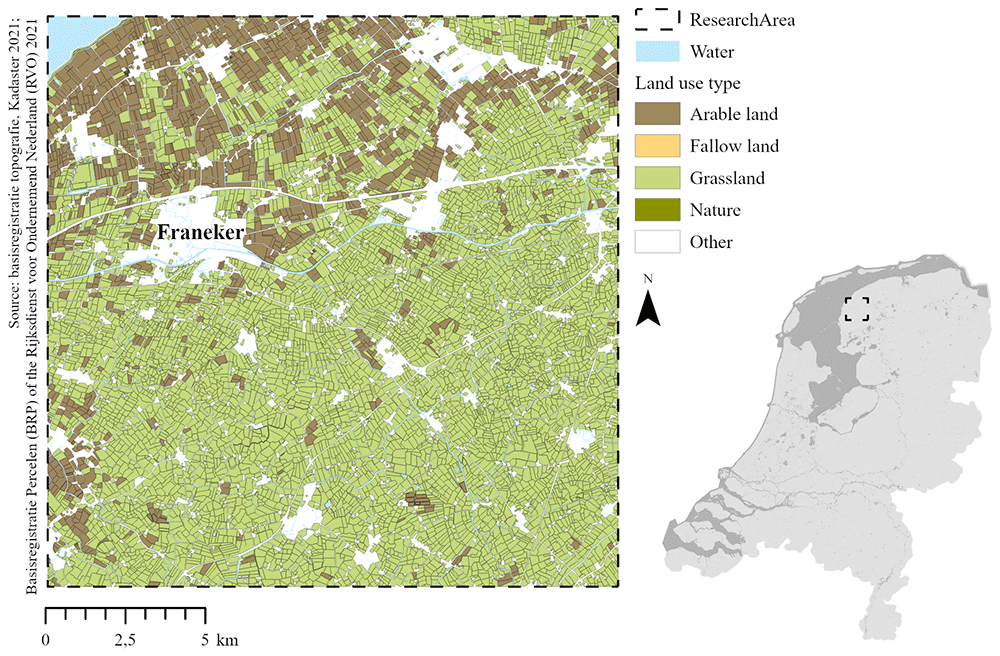
Figure 1. Case study area.
In Friesland, 25.8% of the agricultural land is leased under contracts shorted than 26 years (Table 1) (CBS, 2010). Most of these contracts are regular lease, followed by liberalized lease contracts (shorted than 6 years) and one-off lease contracts. This is comparable to the total leased land in the Netherlands, however, the amount of land under long-term lease contracts is higher than the national average.
Table 1. Agricultural land ownership in the Netherlands and Friesland in 2020 (CBS, 2010).
| The Netherlands | Friesland | |
|---|
| Area (km2) | % | Area (km2) | % |
|---|
| Ownership | 10364 | 57.4 | 1365 | 60.8 |
| Long term lease (> 26 years) | 472 | 2.6 | 132 | 5.9 |
| Leased (< 26 years) | 4802 | 26.6 | 580 | 25.8 |
| Regular | 2237 | 12.4 | 303 | 13.5 |
| Liberalized (< 6 years) | 138 | 7.3 | 121 | 5.4 |
| one off | 911 | 5.0 | 115 | 5.1 |
| other | 341 | 1,9 | 41 | 1.8 |
| Other | 2406 | 13.3 | 167 | 7.4 |
| Total agricultural land | 18044 | 100 | 2243 | 100 |
2.4. Data
Public data is used on areas officially designated as nature conservation, as well as a dataset containing the location of crop plots and crop type (Table 2). Additionally, data is used on land ownership and location of farm plots (BBR) that is directly based on the reporting of farmers themselves. A licence for the use of this data was obtained from the sourcing party (Table 2). Finally, survey data is used that originates from a survey done among farmers across 14 European countries in the context of the Horizon2020 project CONSOLE, conducted in 2021 (D'Alberto et al., 2024). This data is available upon request at the authors.
Table 2. Input data.
| Type of dataset | Dataset | Source | Access |
|---|
| Spatial (Shapefile) | Nature conservation plans
(natuurbeheerplannen 2021) | (Gedeputeerde Staten van Fryslân, 2020) | Public |
| Spatial (Shapefile) | Basic registration of crop parcels
(Basisregistratie gewaspercelen BRP 2021) | (Rijksdienst voor Ondernemend Nederland, 2019) | Public |
| Spatial (Shapefile) | Basic registration of businesses (Basis
bedrijvenregister, BBR 2021) | Rijksdienst voor Ondernemend Nederland (RVO)
- Ministry of Economics (state); www.rvo.nl | Restricted |
| Spatial (Raster) | Sentinel imagery 2021-03-31 | (Copernicus, 2021) | Public |
| Survey | CONSOLE survey 2021 | (D’Alberto, 2022) | Public |
2.5. Grassland classification
The location of current extensive grasslands is determined using a Sentinel image of the 31st of March 2021. This image is cloud-free, and imagery in spring, before the first mowing date, is most suitable for the classification of extensive grassland (Bekkema & Eleveld, 2018).
The S2REP index uses RED (Band 4), VNIR (band 5), VNIR2 (band 6) and VNIR3 (band 7) and is both sensitive to the growth status and the chlorophyll content of the crop (Frampton et al., 2013). A higher S2REP value represents a higher chlorophyll content, meaning that monoculture grassland has a higher S2REP value than extensive grassland. We first calculated the average S2REP value of parcels classified as nature conservation and other areas, by overlaying the nature conservation plan map (Table 2) with the S2REP map and calculating parcel level zonal statistics. Parcels within nature conservation areas had an average S2REP value of 724, compared to 719 elsewhere. The relative frequency graphs of the S2REP values and outside nature conservation areas show that an S2REP value of 721 is an appropriate cutoff between monoculture and extensive grassland (Figure 2).
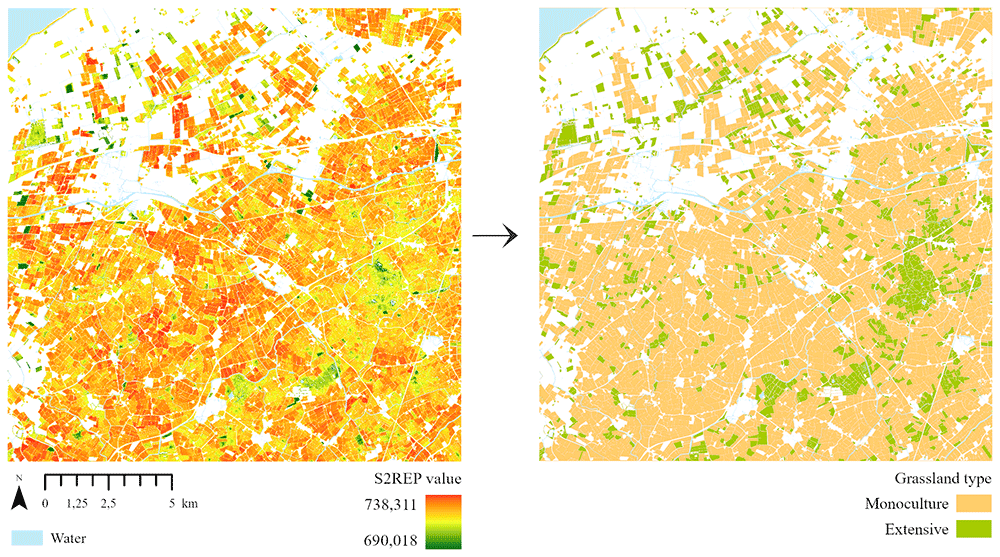
Figure 2. S2REP of the case study (left), and classification intensive and extensive grassland of modelled area (right).
The grassland classification was validated with a site-specific accuracy assessment using high spatial resolution imagery (0.08 m), collected the 20th of February 2021. Random samples of 10% of all extensive and 10% of all monoculture parcels were taken, and, using the high-resolution imagery manually classified as extensive or monoculture. Comparing the S2REP classification with the validation data showed that the grassland map had an overall accuracy (van Vliet et al., 2016) of 82.6%.
Eighty-five percent of the grassland in the study area is monoculture and 15% is extensive. Fifty percent of all monoculture grassland is owned (corresponding to 88% of all owned grassland) and 26% of monoculture grassland is under a lease contract (corresponding to 81% of all leased grassland).
2.6. Survey setup and analysis
The ABM is parameterized using survey data on farmer’s preferences with regards to contract characteristics. Within the H2020 project CONSOLE (www.console-project.eu), a pan-European survey among 2275 farmers, of which 201 in the Netherlands, inventoried farmer’s opinions on a range of different contracts for agri-environmental public goods, and about their behavior towards specific characteristics of such contracts. The survey is described in full in (D'Alberto et al., 2024) and available through D’Alberto (2022). Based on a literature review, the survey explores the 13 contract design features that are most relevant for the effectiveness of contract solutions. The survey started with questions on farm characteristics and previous contract engagement. The core of the survey included questions on the impact of pre-determined contract elements on farmer participation in AES, a Likert scale question (1 to 5) where respondents could choose their likelihood to enter an ELLC, and an open question in which respondents could give their opinion on ELLCs. As the open answers provide specific insight into respondents’ needs related to ELLCs, we coded and quantified the open answers to determine which elements are most decisive in farmers decision to enter an ELLC. Ethics approval for this study was provided by the ethical approval committee of the Faculty of Science of Vrije Universiteit Amsterdam on 10 June 2020.
We focus on the responses from Dutch dairy farmers (N=72) as these respondents most likely correspond to the farmers potentially implementing extensive grassland on leased land in the modelled area. Although the sample was small, its age and education level distribution was similar to that of the whole farmer population. Respondents had larger farms than average (99 vs 41 ha) and 87% of the respondents got more than 50% of their income from farming compared to 20% across the Dutch farmer population (Bradfield et al., 2024). Most dairy farmers (51%) state they are (very) likely to enter an ELLC in the future, 31% was unsure and 18% was (very) unlikely (Figure 3). With regards to farmer’s preferences related to ELLCs, 26% either provided no answer or stated the question does not apply to them and 22% gave an answer too specific to categorize (mentioned only once). The most frequently mentioned issues that trigger farmers to adopt ELLCs are financial compensation that reflects their efforts and yield decreases (mentioned by 18% of the respondents), longer contracts (10%), flexibility (8%) and clarity (8%). Some respondents request financial rewards beyond cost compensation. Respondents also emphasize they want measures to yield tangible changes in biodiversity, and consider this more challenging with shorter contracts. A 5-year contract is most popular and preferred by 56%, followed by a 10-year contract (30%), and only 13% of the respondents would be interested in a 1-year contract (D'Alberto et al., 2024).
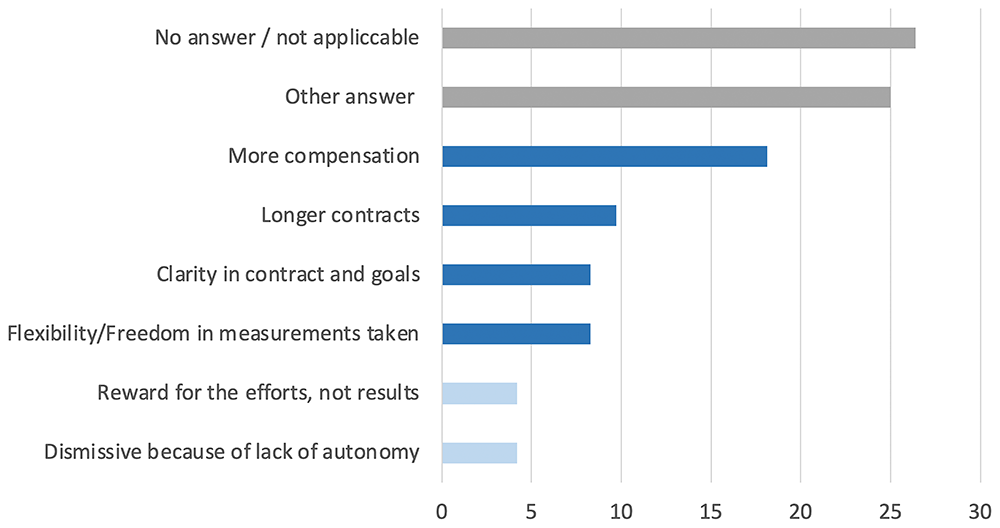
Figure 3. Farmer’s opinion on ELLCs.
Dark blue bars indicate the four most frequently mentioned themes.
Finally, respondents seek clarity in the contract and the long-term goals and they desire flexibility in choosing management practices, fitting to local conditions. More flexibility in management practices increases the likelihood to enter a contract for 83% of the respondents; for 13% it would have no effect (D'Alberto et al., 2024).
2.7. Agent based model
2.7.1. ABM design overview
The ABM simulates how the behavior of individual farmers changes the extent and pattern of extensive grasslands. The ABM is developed in NetLogo 6.2.2 (Wilensky, 1999). NetLogo is open-source software, published under GPL version 2. Figure SM1 provides an overview of the model, and the following sections describe the different decisions in the model (section 4.4.2–4.4.4) and the scenario and sensitivity analysis performed (section 4.4.5).
Farm size and location is based on the BBR (farm registration) dataset (Table 2), and current extensive grassland on each farm is determined through overlaying the grassland classification map (Figure 2) with a landownership map. It is assumed that each farmer who implemented extensive grassland is engaged in an ELLC. In general, large farms and farmers who previously engaged are more likely to enter again in the future (Lastra-Bravo et al., 2015). Our survey results confirm the relation between farm size and current engagement in ELLCs as well as with the probability to enter ELLCs in the future. Therefore, farmers are classified into six groups based on size and ELLC engagement, i.e. small (<50 ha) – medium (50 – 100 ha) – large (>50 ha) farms that do, or do not, engage in ELLCs. In the model, each farmer in the study area is assigned a “future participation likelihood” category. This is assigned randomly to each farmer, within each farm size-engagement group following the probability of future engagement within their group as identified in the survey (see supplementary material, table SM1).
2.7.2. Farmer behaviour parameterization
Likelihood to engage and actual engagement
As the survey (section 3.4) only inventoried the intention to enter a contract, not the actual behavior of signing a contract and implementing extensive grassland measures, we determined farmers’ engagement probability based on theories about the influence of habitual behavior (Graybiel, 2008; Schlüter et al., 2017), farmers likelihood categories and if they are continuing engagement in an existing contract or entering a new contract. All specific probabilities used in the model can be found in the supplementary material. The probability of continuing to engage within an existing contract when a farmer indicates to be likely to enter is believed to be high, as changing behavior results in more constraints compared to continuing current behavior. Consequently, farmers who are likely to enter will engage in their current contracts again after the contract has ended. Entering a new contract on a leased grassland plot where a contract is offered requires more effort, and consequently results in a lower probability of actual engagement. When farmers are very likely to enter a contract, the probability of entering a new contract is set at 50% and when farmers are likely 30%. Farmers who are (very) unlikely to enter will quit their current engagement in ELLC and do not enter new contracts that year.
The behavior of neighbours and the setup of the contract modify the participation probability. When a contract element is included in the model, farmers will be more likely to enter a contract and upon exclusion, they might be less likely to enter. This is implemented either by modifying a farmer’s likelihood category, or by modifying the participation probability within the likelihood category.
Contract elements
The contract elements most often mentioned by Dutch dairy farmers who own farmland in our survey (section 3.4) are considered in the model: level of financial compensation, contract length, clarity, and flexibility in measures (Figure 3). As farmers who are very likely to enter contracts are assumed to have a more positive attitude towards ELLC in general, they are assumed to be less influenced by the exclusion of elements in a contract. Farmers who are very unlikely to enter are assumed to have a more negative attitude towards ELLC and therefore are assumed to need more incentives to increase the probability of a positive change occurring in their likelihood value.
The inclusion of these elements affects the uptake in different ways (see supplementary material). Clarity, flexibility, and contract length can induce a shift to another likelihood category, with the probability of a shift following survey results. The level of financial compensation was deemed the most important contract element. Clarity in goals, flexibility, and contract length were rated equally important. Therefore, the level of financial compensation changes the probability of a likelihood group shift by 50%, the other elements by 25%. For flexibility and contract length, the survey quantifies how many respondents indicate the element will (strongly) increase or decrease their likelihood to enter a contract. We used these data to vary the probability of a likelihood category change, based on the percentage respondents who indicated a strong, moderate, or no impact of this contract element.
Finally, the survey data shows an interaction between flexibility and compensation payments. Freedom in measure choice triggers more farmers to participate, but will allow farmers to choose less disruptive measures instead of extensive grassland. With higher financial compensation more farmers will implement extensive grassland, even upon freedom of measure choice. This was included in parameterization of contract elements as indicated in Table SM5.
Neighbour impact
Neighbourhood effects among farmers can have a significant influence on farmers’ intensification strategy (Cullen et al., 2020; Defrancesco et al., 2008; Spörri et al., 2021). Therefore, a neighbour impact is added to the participation probabilities, to represent the social imitation mechanism (Ambrosius et al., 2022). If at least half of the neighbours currently engage in an ELLC, this increases the farmer’s likelihood of the farmer to enter, and if a lower number of neighbours is engaged, this decreases the likelihood. A search region of 35 hectares was used, representing on average 5 neighbours. The weight assigned to the mean of the participation of neighbouring farmers is set at 0.1 (the neighbour value). If the neighbour participation is higher than 50%, a positive influence on the participation probability is included and with a participation of less than 50% there is a negative influence. The amount of change of the participation probability is calculated as 0.1 times the percentage of neighbours with an ELLC.
Scenarios and model quality
Scenarios
We simulated contracts with and without flexibility in measures, with and without clear targets, with contract lengths of one year, five years, and ten years, and four levels of financial compensation (none, partly, full, and extra). This would theoretically yield 48 scenarios. However, not all theoretical combinations of contract elements were realistic, therefore, a set of 18 scenarios was selected (Table 3). We simulated a scenario with the most desirable contract design according to the survey respondents, a scenario with the least desirable contract design, contracts that resemble private contracts offered to farmers, and contracts that deviate from these main contracts in one or two contract elements, to allow exploring the effect of individual contract features and interactions among them. The standard used for private contracts are longer contracts, which are often more flexible, but with lower financial compensation.
Table 3. Scenario naming and area changes (ha) in extensive grassland area.
| Compensation | Flexibility (f) | Clarity (c) | Availability | Contract length |
|---|
| 1 | 5 | 10 |
|---|
| None (N) | no | no | | N1 / -770 | | |
| | yes | | | | |
| yes | no | | | | |
| | yes | | | N5fc / -415 | N10fc / -242 |
| Partial (P) | no | no | | P1 / -725 | P5 / -266 | |
| | yes | | P1c / -379 | P5c / 171 | |
| yes | no | | | | |
| | yes | 1% | P1fc / 372 | P5fc1 / 67 | P10fc / 152 |
| | | 2% | | P5fc2 / 172 | |
| | | 3% | | P5fc3 / 296 | |
| Full (F) | no | no | | | F5 / 450 | |
| | yes | | | F5c / 490 | |
| yes | no | | | F5f / 239 | |
| | yes | | F1fc / 175 | F5fc / 485 | F10fc / 497 |
| Extra € | no | no | | | | |
| | yes | | | | |
| yes | no | | | | |
| | yes | | | E5fc / 656 | E10fc / 676 |
The scenarios all assume a 1% increase in the availability of ELLC on leased farmland each year. A 1% increase in contract availability means that each year each of the leased monoculture grassland plots has a 1% chance an ELLC will be newly offered by the landowner. Ten runs were done for each scenario and average outputs were used to report results. For the scenario resembling private contracts (scenario P5fc, Table 3), the potential for the emergence of new contracts is highest. Therefore, we additionally conducted simulations to assess the potential effects of varying contract availabilities of 2% and 3%.
For the two scenarios most and least desired according to the survey respondents, the location of the decrease or increase in extensive grassland plots is visualized to determine the geographical distribution of the plots and consequences for connectivity. Patch metrics were calculated with FragStats in QGIS 3.4.
Model quality
A one-factor-at-a-time (OAT) sensitivity analysis is performed to determine the model's sensitivity to the individual variables, using the two most extreme scenarios as a basis. One scenario represents a contract that reflects the preferences of the majority of farmers, while the other scenario portrays a contract that contradicts farmers' preferences entirely. This includes a contract without flexibility, no compensation, no clarity and a 1-year contract length (scenario N1) and flexible contracts with payment compensation, clarity and a 5-year contract length (scenario E5fc) (Table 3). In the sensitivity analysis, we varied the weight of the parameters of the four contract characteristics (Tables SM3 and SM4), the neighbourhood impact, flexibility value (Table SM3) and the impact of participation likelihood on actual participation (Table SM2). For each of the parameters, a low and high value is tested on the two most extreme contract scenarios. The parameters are increased and decreased by 20% and the impact on the results is measured by determining the averages of 10 runs per scenario (7 (parameters) x 2 (values tested) x 2 (scenarios) x 10 (runs) = 280 runs in total). Additionally, we ran the model with the most extreme values of the input variables, determined through the OAT analysis (Ligmann-Zielinska et al., 2014): a combination of the high and low values of all seven parameters (4 (scenarios) x 10 (runs) = 40 runs). The uncertainty analysis consequently serves to determine the general resilience of the model and the one-factor-at-a-time exploration of the parameters is performed to establish which individual parameters have to biggest influence on the uncertainty of the model.
The model setup and results have been presented at an expert workshop. Through open questions that could be anonymously answered, eight experts were asked to reflect on the relevance of the ELLC elements included and the realism of the outputs in terms of uptake among farmers and extensive grassland area. Furthermore, the percentage of grassland under extensive management and changes therein over the course of the modelling were compared with changes in natural grassland over 2011–2021, to get an impression of the realism of the projected changes. Data were taken from the crop parcel database (see Table 1) and total areas and changes of permanent grassland and natural grassland per year were calculated.
3. Results
3.1. Impact of contract design
3.1.1. Impact of individual contract features
At the start of the simulation, 22% of the leased grassland plots in the study area is under an ELLC, totalling 1195 ha. With a 1% increase of contract availability each year, the change of leased extensive grassland area varies between a decrease of 770 ha (Scenario N1) and an increase of 656 ha (scenario E5fc, Table 3). The different contract features have clearly different effects on the change of extensive grassland area.
Compensation: with 5-year contracts that provide clarity and allow for flexibility, the area of extensive grassland differs from an -415-ha change (N5fc) upon no compensation to +656 ha upon extra compensation (Scenario E5fc) (Figure 4). In particular the difference between partial and full compensation strongly influences the contract uptake.
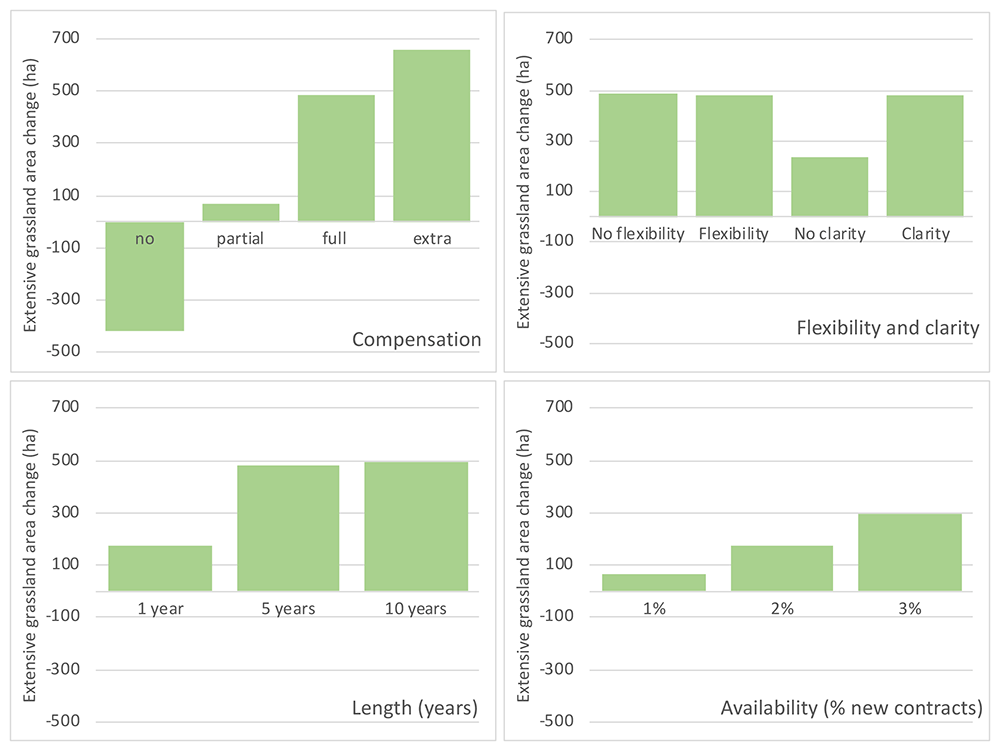
Figure 4. Impact of individual contract features on extensive grassland area change.
Contract length: under full compensation with contracts that provide clarity and allow for flexibility, the area of extensive grassland differs from +175 ha with a 1-year contract (scenario F1fc) to +497 ha with a 10-year contract (F10fc). The area of extensive grassland is more sensitive to shortening to one year than to expanding to 10 years. Both under partial (scenarios P1fc, P5fc1, P10fc) and under full (scenarios F1fc, F5fc, F10fc) compensation, the change in extensive grassland strongly differs between the 1-year and the 5-year contract, while the difference between the 5- and 10year contract is marginal (Table 3, Figure 4). Both a 1-year and 10-year contract are perceived as less attractive compared to a 5-year contract. However, as farmers cannot quit an ongoing contract, there are fewer contract changes with a 10-year contract length. A 1-year contract length means that each year contracts can be entered or quit. This results in more dynamic contract engagement, where also changes in assigned participation probability have more impact, also triggering changes in neighbourhood impacts.
Flexibility and clarity: with full compensation in a 5-year contract that provides clarity, allowing flexibility marginally changes the uptake of extensive grassland from 490 ha (no flexibility, F5c) to 485 ha (flexibility, F5fc). Clarity has a stronger effect than flexibility: with full compensation in a 5-year contract that allows for flexibility, providing clarity can increase the extra uptake of extensive grassland from 239 ha (no clarity, F5f) to 485 ha (clarity, F5fc).
Contract availability: Scenario P5fc closely resembles a commercial ELLC. Under a 1% increase of such contracts available, this scenario would result in an increase of 67 ha extensive grassland area after 20 years. However, under a 2% contract availability increase this percentage can increase to 172 ha and under 3% contract availability to 296 ha (Figure 4).
3.1.2. Interactions between contract features
As the compensation level had the strongest impact on the extensive grassland area, exploration of interactions focuses on compensation level.
Contract flexibility can have different effects, and interacts with financial compensation (Figure 5). While flexibility triggers more farmers to participate, it also provides farmers freedom to opt for less complex measures than extensive grassland. A higher flexibility therefore only results in increased areas of extensive grassland if financial compensation is sufficient. With partial compensation but no flexibility (Table 3, P5c) fewer farmers enter an ELLC but all implement extensive grassland, resulting in more extensive grassland than in a scenario with the same financial compensation but flexibility in measures (P5fc1). Upon full financial compensation (SF5c vs F5fc), this effect is moderated. Higher compensation and longer contract lengths both increase the uptake of extensive grassland, but the effects of contract length are stronger for partial compensation than for full compensation.
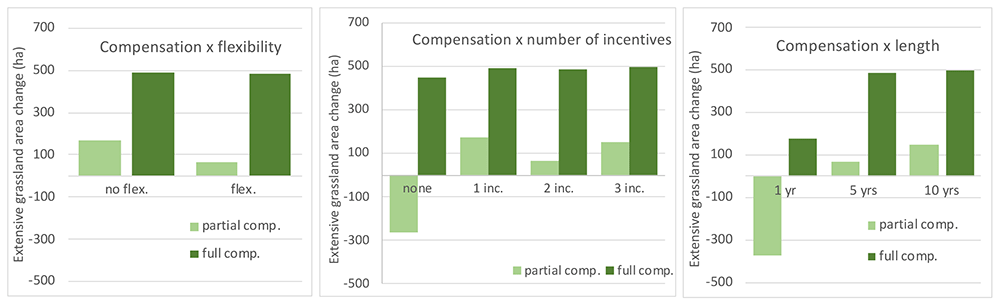
Figure 5. Interaction effects of contract features.
When more incentives are included in the available contracts, the likelihood of farmers to enter increases. This triggers farmers to renew existing contracts, and farmers who currently do not engage in ELLCs will become more likely to enter an ELLC in the future. Once farmers have an ELLC, their likelihood to stay in an ELLC increases. This means a positive feedback mechanism can occur once enough farmers start taking on ELLCs. However, a minimum level of incentives is needed to trigger farmers to continue their ELLC. Below this level, a reverse feedback can occur (Figure 5).
The scenarios with 5-year contract duration, flexibility and clarity but lower financial compensation (Table 3, scenario P5fc) is most representative for ELLCs offered by private landowners. Such contracts can increase the area of extensive grassland by just 67 ha (Figure 6). Removing flexibility from commercial contracts increases the extensive grassland change (see explanation above), but otherwise removal of contract features reduces the uptake of extensive grassland (Figure 6). Without financial compensation, the extensive grassland area could decrease by 415 ha (scenario N5fc) and when no other incentives are provided next to partial compensation a decrease is also detected (P5). With too little incentives, farmers who currently engage in ELLCs will thus be inclined to quit their ELLC. Increasing length of commercial contracts (scenario P10fc) has less effect than removing flexibility (Figure 6). Upon extra contract availability or increasing compensation, increases of extensive grassland are achieved, with an increase of up to 676 ha are achieved (scenario E10fc).
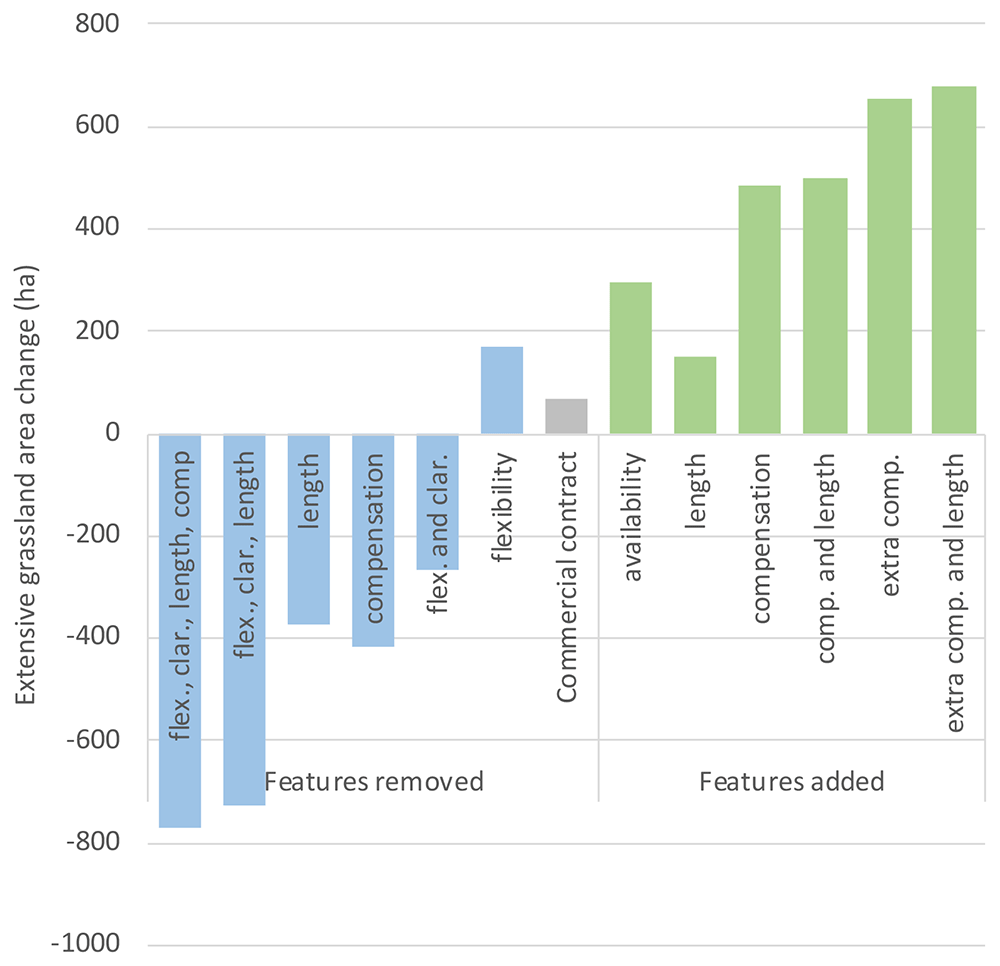
Figure 6. Effect of removal or addition of features to commercial ELLC.
3.2. Spatial patterns of extensive grassland
Despite the considerable increase in extensive grassland area in the scenario with the most strongly preferred set of contract features (E5fc), extensive grassland plots are poorly connected (Figure 7). While scenario N1 results 748 patches with a median size of 1.56 ha, scenario E5fc has 22% more patches (917), with a median size of 1.87 ha. The greatest connected area does differ considerably between scenarios, with 79 ha in scenario N1 and 270 ha in scenario E5fc. The level of landscape division however only improves marginally, from 99.99% divided to 99.98% divided. This lack of connectivity results firstly from the currently small area of ELLC extensive grassland (6% of total grassland) that is strongly scattered across the region (Figure 7). Secondly, it is the result of a lack of collaboration between landowners, meaning that in the scenarios ELLC were randomly offered across the modelled area. While the neighbourhood effects included in the model do result in clustering of uptake of new ELLC extensive grassland adjacent to existing areas, these effects, together with the limited availability of contracts, are not sufficient to result in new connections between extensive grassland.
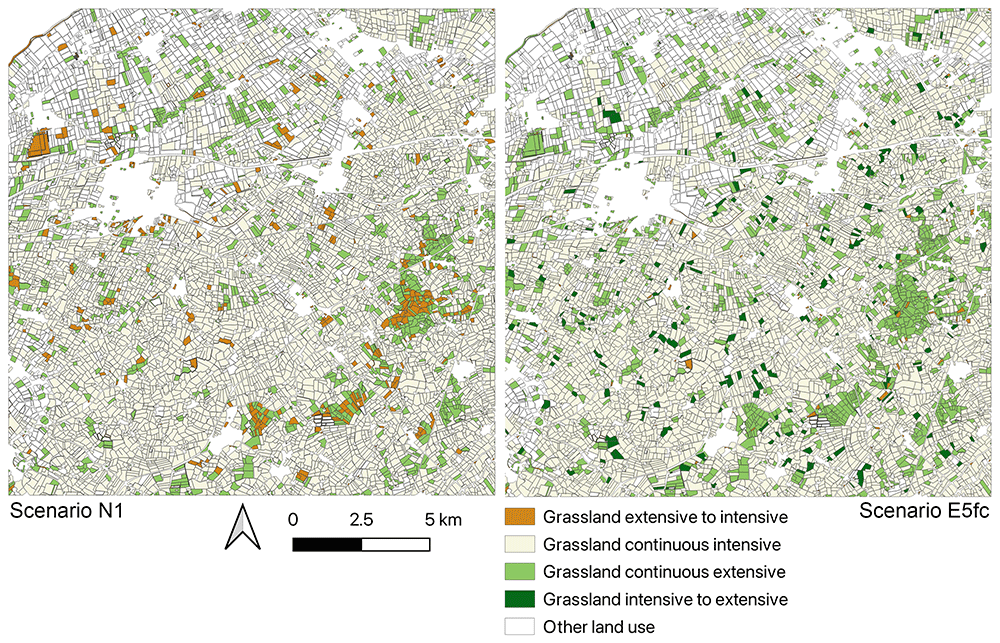
Figure 7. Spatial distribution of grassland plots and changes therein under the most and least desired scenarios (E5fc and N1).
3.3. Sensitivity analysis
Comparing the results of the sensitivity analysis with the difference between the extreme scenarios demonstrates that, despite big uncertainties, the extreme scenarios (N1 and E5fc) do not overlap in the resulting area of extensive grassland (Figure 8). Scenario E5fc might not differ from the base year in the most extreme sensitivity analysis settings, and scenario N1 would only result in a very small decrease of extensive grassland compared to the base year. Another notable observation is that in the high scenario, saturation is almost attained, which implies that a majority of farmers partake in these contracts if they are made accessible. The proportion of expansive grassland attained within this scenario thus approaches the maximal limit achievable for implementation of extensive grassland when offering only 1% of contracts.
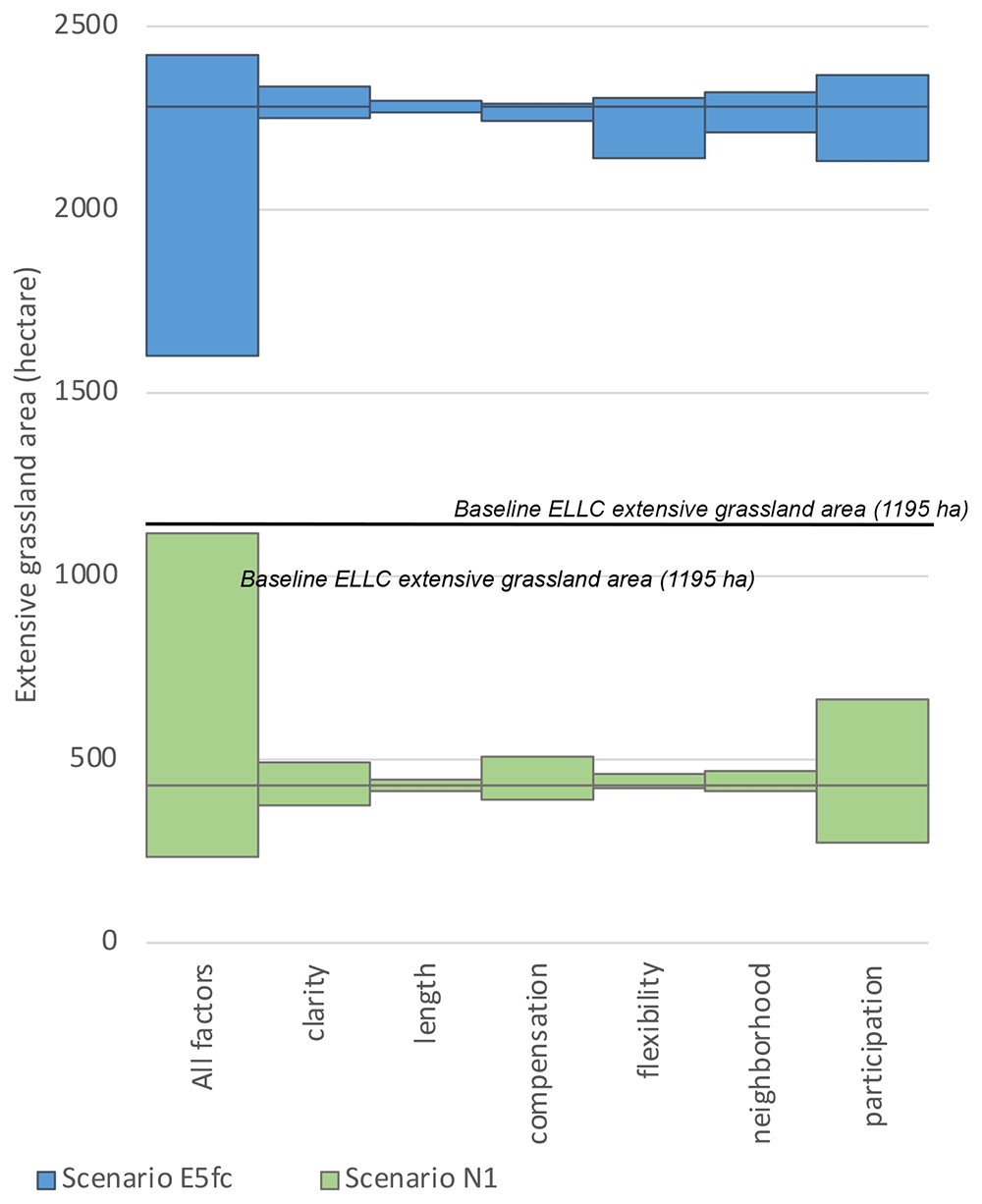
Figure 8. Impact of 20% decrease and increase of key model parameters on model outcomes in two extreme scenarios.
The individual sensitivity analysis reveals that the participation probability parameter (Table SM2) has the biggest impact on the uncertainty of the model outputs (Figure 8). This is not surprising, as this parameter has a direct impact on the area of extensive grassland. Flexibility is not included in scenario N1, but its impacts in scenario E5fc are second largest and can decrease the projected ELLC extensive grassland area by 20%. Third, a stronger impact of participation in the neighbourhood interacts with current participation in decreasing the likelihood category of farmers, resulting in lower participation rates. The level of compensation plays a stronger role in scenario N1 than in E5fc. The model is overall less sensitive to the contract length. While five years is overall the preferred contract length, preferences vary strongly among farmers, resulting in a shift of which farmers will enter contracts rather than an overall increase or decrease.
4. Discussion
4.1. Interpretation of results
Increasing knowledge is available about how land lease contracts support sustainable land use, however focused on non-Western countries, individual contract features, and on qualitative approaches. Our modelling experiments emphasise the essential role of financial compensation, consistent with Bouma et al. (2020), and quantify interactions with other contract features for a Western European case study. Partial financial compensation can only yield marginal increases in extensive grassland (Table 3) in scenarios with 1% annual contract availability and higher contract availability does not offset low financial compensation (Figure 6). Furthermore, farmers are more inclined to enter less-appealing contracts upon higher financial compensation (Hasler et al., 2019) and as some unfavourable contract conditions yield larger uptake of extensive grassland, financial triggers are an important basis for ELLCs (Juutinen et al., 2021). This can stimulate farmers to embark in longer contracts or in contracts with lower flexibility (Koetse & Bouma, 2022) that are both effective in supporting larger ELLC extensive grassland areas.
Previous engagement in AES contracts stimulates future participation (Koetse & Bouma, 2022; Lastra-Bravo et al., 2015) and results in positive feedbacks, that interacts with neighbourhood impacts. While farmers who already engage in ELCCs might have certain characteristics (e.g. intrinsic motivation) that make future engagement more likely, good experiences with sustainable farming measures also trigger farmers to adopt more measures (Weltin et al., 2021).
The neighbourhood effect itself appeared insufficient to yield connectivity of extensive grassland (Figure 8). However, the fact that relatively more leased parcels are under extensive grassland than owned parcels (Figure 2) suggests that ELLCs are effective triggers for nature inclusive management and that not owning land is not necessarily the main hurdle for implementing nature inclusive practices (Carolan, 2005; Ranjan et al., 2019). More data is needed on spatial patterns of landownership and the relations with nature inclusive practices to better understand this (Cortés-Capano et al., 2021). Collaborative action within collective contracts could stimulate clustering of measures, potentially beneficial biodiversity (Barghusen et al., 2021).
As a combination of public and private initiatives are believed to be beneficial for conservation practices (Koetse & Bouma, 2022) and Dutch farmers seem interested in ELLCs (D'Alberto et al., 2024), ELLCs might support implementation of nature inclusive practices. The preferred ELLC elements (medium length contracts, flexibility in measures, clarity on targets, high financial compensation) are mostly in line with previous studies on farmer preferences; however, our respondents preferred 5-year contracts, while often longer contracts are preferred. The preference for medium-length contracts could be attributed to the inflexibility of long contracts (Ruto et al., 2008).
4.2. Methodological considerations and potential model improvements
Our model assumptions and input data do have some limitations. We combined data and methods, ranging from semi-qualitative surveys, remote sensing imagery, literature, and agent-based modelling. Such a range of methods and data is inherent to modelling land use decision making (Manson & Evans, 2007; Tyllianakis & Martin-Ortega, 2021; Zagaria et al., 2017). Models should be constructed as simply as possible and as complicated as necessary. During model design, we therefore focused on ELLC elements and interactions and simplified other components of the system. The sample of 72 respondents provides good additional insight in farmer preferences. However, we were unable to consider heterogeneity within farmer size and ELLC experience groups.
The specific impact of each contract element was based on literature and tested in the sensitivity analysis. We did not account for contextual elements that can influence conservation practices on leased land, such as plot location or relations to the landlord (Leonhardt et al., 2021). Also, when exploring neighbourhood effects, we focused only on the spatial context and disregarded the social network. Consequently, we might have underestimated neighbourhood effects (Koetse & Bouma, 2022). We only considered a choice between entering a contract or not on land that farmers are already leasing. Under land scarcity, farmers might be willing to expand their land by entering an ELLC on new land. Our simulation therefore provides a minimum estimate of land lease dynamics. Furthermore, in the model farmers only enter one contract each year, and implement extensive grassland across the parcel. The ELLC elements are applied on all extensive grassland parcels. In reality, farmers can enter multiple contracts, that might offer a variety of measures. Moreover, extensive grassland, together with the higher water table that is often combined with extensive grassland, is considered the most effective meadow bird protection measure (Algemene Rekenkamer, 2021). With that, implementation of extensive grassland is considered a symbol of a more sustainable farming style.
Over 2011–2021, the area of permanent grassland in our case study increased by 1.6%. While in 2011 natural grassland comprised 7% of the total permanent grassland, this was decreased to 5% in 2021, with over 50% of the area of natural grassland lost in 10 years. Compared to these numbers, the changes in grassland area and extensive grassland area as projected in our model (Table 3) are modest and realistic. Results were presented at an expert workshop, that confirmed that the ELLC elements included were relevant and that the sensitivity scenarios provided insight in a realistic range of options. Incorporating stakeholders in the modelling area in the development of the model could increase the validity of the results (Tieskens et al., 2017; Zagaria et al., 2017).
A final limitation relates to the generalizability of the results. We simulate uptake of extensive grassland in ELLCs in a small case study, in a high-income country and a region that concentrates on high-intensity, grassland based dairy production, where a stable area-based subsidy is in place. The model is based on survey results on contract preferences that are largely in line with other settings (D'Alberto et al., 2024). Given the specifics of the case study, similar results might be expected in closely similar contexts (e.g. Bradfield et al. (2024)), while for other farming systems and regions either specific model parameterizations would be needed or results should not be generalized.
4.3. Implications
Incentives from both from public and private initiatives are necessary to increase mainstream nature inclusive farming (Koetse & Bouma, 2022) and ELLCs can provide such incentives. Higher financial compensation could be achieved when landowners offer a lower rent combined with other incentives, while farmers can simultaneously apply for government subsidies and other incentives, such as reduced interest rates or interest-only periods (Koetse & Bouma, 2022). Currently, more and more landowners are considering sustainability in land lease contracts. This applies to investors (ASR, 2021), churches (GroeneKerken, 2023), and government actors. For example, the Directorate-General in charge of public works and water management, plans to switch from regular land lease to environmental maintenance contracts along the main Dutch rivers (Rijkswaterstaat, 2023).
Currently, land lease regulations create a barrier for environmental lease contracts. However, a planned restructuring of the Dutch land lease law discourages lease terms shorter than six years and aims to expand opportunities for sustainability provisions, including regulations regarding manure and fertilizer, livestock density, pesticides, soil protection measures or ditch management. Dutch and regional governments will serve as role models in implementation of ELLCs (Ministerie van LNV, 2023). There is widespread agreement among stakeholders on key features of the new land lease law regarding contract length, certainty, the joint responsibility of landowners and leaseholder for responsible use of land, and a good balance between nature and farming (Groen Links & VVD, 2023). While our results are explorative, they indicate that designing ELLCs requires careful consideration of desired results and the exact contract setup. Desired results as well as ELLC elements should be aligned with the local landscape context. Contracts at least should have clear target outcomes and a medium length, while the measures included and level of autonomy of farmers should be matched with the desired outcomes. The Dutch National Real Estate Agency’s strategy to consider sustainability certificates upon setting land lease prices aligns with these recommendations (Rijksvastgoedbedrijf, 2024). This strategy offers higher financial incentives for more intrusive and less flexible measures, and will not allow decreasing environmental standards on land in subsequent ELLCs. Its six-year contract land is well in line with farmer preferences, and the 6-year contract length can allow a positive feedback. Based on our results, similar strategies would be recommendable for other land-owning government bodies, to provide the necessary amount of ELLCs that is needed to get to significant increases of nature inclusive farming.
Europe’s CAP is evolving into a more results-oriented model, aiming to improve the efficiency and effectiveness of direct payments. This will be supported by targeting funding to farmers who deliver on the green ambition. Targets and eligible measures in the CAP should be considered in private ELLCs, to avoid conflict and uncertainty.
Further insights in the relative importance of incentives on other measures are needed to consider the effect of different contract types. This requires monitoring of setup, uptake, costs and effects of ELLCs, and how stacking economic and non-economic incentives can best increase engagement in ELLCs and their effects. This study explored grassland-based dairy systems. While broader survey results suggest largely similar patterns, there are differences between farming systems in contract preferences (D'Alberto et al., 2024) and land tenure rights, and consequences should be explored for other farming systems. Finally, our study also highlighted the lack of insight and data on ELLCs in high-income countries, and we recommend that uptake of ELLCs and management interventions taken in ELLCs are better monitored and explored in such contexts.
5. Conclusions and recommendations
We simulated the impacts of a range of ELLC setups on the implementation of extensive grassland, showing that ELLCs representing current private contracts may slightly increase extensive grassland area. To achieve significant expansion of extensive grasslands through ELLCs, higher financial compensation is priority. However, a positive feedback loop, triggered by satisfying previous engagement and leveraged by neighbourhood impacts can, together with a range of positively perceived ELLC elements, result in an increase of ELLC extensive grassland by over 60%. Furthermore, our simulations demonstrated the interactions between contract elements. For example, flexibility of measures only results in more extensive grassland if financial compensation exceeds costs. A sensitivity analysis showed that flexibility in measures is crucial for the resulting area of extensive grasslands.
Several Dutch actors are implementing policies that align with these findings, by e.g. designing ELLCs where compensation increases with increasing standards of nature inclusiveness and decreasing flexibility. We recommend broader implementation of such ELLCs, throughout the farm system in Northwest Europe. Governments should take a triple role in offering ELLCs that optimally support nature inclusiveness on their own land, in setting standards and targets for private ELLCs, and in creating a supportive environment for private ELLCs, e.g. by differentiating maximum agricultural land lease prices by environmental contract features. Private land owners should take responsibility for the sustainable management of the land they lease out, and should be held accountable for implementing lease constructions that support such use. Such a system can both foster the increase of ELLCs needed to expand nature inclusive farming and support the spatial connectedness required for nature inclusive landscapes.
While land tenure contracts are demonstrated to contribute to uptake of nature inclusive farming, it is essential that these contracts align with local environmental conditions and with local land regulations. Hybrid contract solutions that aim to support nature inclusive farming that include ELLC support should therefore be included in CAP national strategic plans. Such solutions can contribute to multiple CAP objectives including fair income, environmental care, and preserving landscapes and biodiversity.
Ethics and consent
This study adhered institutional ethics policies of the Faculty of Science of Vrije Universiteit Amsterdam. A self-check provided by the Ethics review committee of the Faculty of Science (BETHCIE), Vrije Universiteit Amsterdam was done, and this determined that ethical approval was not required for this study under the condition that participants provided written consent upon participating. The consent form used to request written consent is included in the data package: Dataset Environmental Land Lease Contracts, DOI: 10.34894/FMTL2O (Schulp & Van Rosmalen, 2025).








