Introduction
The so-called “marine wildlife forests” associate dense marine biological communities with terrestrial forests, constituting aquatic ecosystems of high biodiversity that are fundamental for maintaining global ecological balance. Emblematic examples include coral reefs and seagrass beds, which harbor vast species diversity and play a crucial role in supporting human activities and climate regulation. Their relevance transcends the boundaries of the marine environment, encompassing socioeconomic and ecological impacts that influence the planet as a whole.
In terms of biodiversity and ecological functions, marine wildlife forests are comparable to tropical terrestrial forests. While the latter stand out for oxygen production and carbon dioxide capture, coral reefs play a similar role in the marine environment, acting as foundations of productivity and as habitats for thousands of species. Studies indicate that approximately 30% of marine life depends directly on coral reefs, despite occupying less than 1% of the ocean’s surface1. Similarly, terrestrial forests sustain complex food webs, with direct parallels in marine ecosystems, where keystone species regulate essential biogeochemical processes.
Human activities have generated significant impacts on these ecosystems. Overfishing, plastic pollution and other contaminants, global temperature increase, and ocean acidification are some of the main threats. These anthropogenic pressures compromise not only local biodiversity but also vital ecosystem services, such as protection against coastal erosion and support for artisanal fishing, an important source of food and income for millions of people. Furthermore, the degradation of these habitats intensifies the effects of climate change, reducing carbon storage capacity and aggravating the vulnerability of coastal communities.
Given the ecological and economic relevance of these ecosystems, it is imperative to conduct assessments that measure the economic value of ecosystem services provided by marine wildlife forests. Studies that quantify, for example, the role of coral reefs in generating fishery resources, tourism, or coastal protection can strengthen arguments in favor of investments in conservation and sustainable management. Additionally, incorporating these values into public policies promotes more integrated and efficient management, while raising society’s awareness about the tangible and intangible benefits of these ecosystems.
Marine wildlife forests play a crucial role for the planet, presenting characteristics comparable to terrestrial forests in terms of biodiversity and ecological functions. However, they face significant challenges arising from human activities, which demand urgent conservation measures. Economic assessment emerges as an indispensable tool to justify and prioritize investments, reinforcing the need for sustainable management of these ecosystems.
Given this context, this article aims to propose a methodological roadmap for the environmental economic valuation of marine wildlife forests, integrating socioeconomic approaches and international legislation that allow measuring the ecosystem services provided by these forests.
Theoretical foundations and practical applications of economic valuation of marine ecosystems
Environmental economic valuation constitutes an analytical process for attributing monetary value to goods and services provided by natural ecosystems, allowing their incorporation into public policy formulation and environmental management mechanisms. This methodological approach offers quantitative parameters that contribute to sustainable development based on three interconnected dimensions: the classification of ecosystem services, the theory of total economic value, and measurement instruments.
Ecosystem services represent the conceptual foundation of this paradigm, encompassing the benefits that ecosystems offer to society. These are classified into provisioning services (e.g., food and raw materials), regulating services (e.g., climate control and water purification), cultural services (e.g., recreation and spiritual value), and supporting services (e.g., soil formation and nutrient cycling).
The theory of economic value provides an analytical framework to capture the multiple dimensions of environmental value: direct use, indirect use, option, and existence value. Direct use value refers to the immediate use of natural resources, such as fishing and timber extraction. Indirect use value is related to benefits that are not directly consumed by individuals, such as climate regulation and water purification. Option value represents the possibility of using the resource in the future, for example, genetic resources for biotechnology. Existence value is given to a resource simply because it exists, regardless of present or future use, such as conservation based on ethical principles and legacy.
Operationalizing this theory requires measurement instruments that are divided into direct and indirect methods. Direct techniques assess individuals’ preferences through surveys that reveal willingness to pay for conservation. While indirect approaches infer values from observable market behaviors. The choice of method depends on the characteristics of the valuation objects, data availability, and socioeconomic context.
Within the scope of marine wildlife forests, coral reefs emerge as an emblematic case for understanding how they contribute to human subsistence and guide conservation efforts effectively. Various approaches are employed to estimate their values, considering regional variations, as well as local ecological, social, and economic contexts. Established methodologies include contingent valuation, direct economic contributions, and comprehensive ecosystem service assessments. These approaches help quantify the benefits provided by coral reefs and inform policy decision-making.
The application of these methods proves elucidative in studies such as the one conducted in Colombia, where Maldonado and Sánchez (2016)2 explore the importance of deep-water corals, which provide habitat for various species and services such as biodiversity protection. Using stated preference methods, it was possible to capture individuals’ willingness to pay to conserve these reefs. The results indicate that citizens of Bogotá, for example, are willing to contribute financially to the maintenance of these ecosystems, evidencing the intrinsic and existence value they attribute to corals, and highlighting the need for effective conservation policies.
The economic valuation of coral reefs in the Gili Gede region, Indonesia, was used to measure the local community’s willingness to pay. The research was conducted with structured interviews and data collection through questionnaires. Factors such as education, environmental concern, and household were identified as determinants in the willingness to pay value, highlighting the importance of awareness and environmental conservation policies to ensure the preservation of coral reef ecosystems3.
Cesar and Chong (2004)4 present a comprehensive analysis of coral reef environmental valuation methodologies, focusing on techniques such as contingent valuation, travel cost, and marginal productivity. The total economic value of coral reefs includes direct use values (such as tourism and fishing), indirect use values (such as coastal protection), and non-use values (such as existence and legacy value). The results indicate that the economic benefits of conserving coral reefs significantly outweigh the costs of their destruction, highlighting the importance of conservation policies and the creation of markets for sustainable use of marine resources.
The study by Nohara et al. (2024)5 used contingent behavior analysis and the Poisson-Inverse Gaussian (PIG) model with on-site sampling correction to estimate the benefits of coral reefs on Kume Island, Japan. The main results indicate that the extinction of coral reefs would have a significant impact on recreational demand for the island, with an annual consumer surplus of 5,898 yen per trip per capita. The degradation of coral reefs, due to ocean warming, excessive resource use, and soil erosion, highlights the importance of these ecosystems for tourism and recreation.
The random utility model based on travel cost was used to estimate the value of recreational ecosystem services provided by more than 170 outdoor locations on the island of Maui, Hawaii6. The methodology used by the authors combined data on coral cover and fish biomass with information about nearly 3,000 recreational trips made by Maui residents. The research results indicate that the 2014–2015 coral bleaching event caused annual losses in the order of $25 million for residents. Additionally, the study identifies areas where coral reef restoration would maximize welfare gains, demonstrating that impacts vary significantly between locations. The simulations also point out that access fees or green taxes can generate funds to finance conservation measures aimed at increasing coral reef resilience to climate change.
In the Asia-Pacific region, coral reefs contribute to the economy, generating approximately $25 billion between 2008 and 2012, mainly through fishing and tourism7. According to the study, tourism accounts for $19.5 billion, highlighting the importance of this sector. Thus, the research suggests that management policies aimed at maximizing economic benefits should be accompanied by effective conservation measures to ensure the sustainability of coral reefs.
In Sungai Cuka, South Kalimantan, Indonesia, Septiady et al. (2024)8 describe the valuation methodology focusing on the fishing and tourism sectors. The total economic value of coral reefs was calculated by the authors by summing indirect benefits such as erosion control and carbon sinks and direct benefits, with fishing and tourism.
Although these approaches provide relevant information for marine conservation, their application faces considerable challenges such as data limitations and regional disparities. For example, the high variability in economic productivity among countries in the Asia-Pacific region suggests that global estimates may not accurately reflect local realities7.
The theoretical foundations and practical applications of environmental valuation presented establish the basis for understanding how the quantification of the monetary value of ecosystem services contributes to effective conservation policies. The case studies provide robust instruments for using the methodologies, and these, when articulated with the international legal framework, can enhance environmental governance.
International legislation for marine biodiversity protection
The economic valuation of marine wildlife forests, as a strategic tool to strengthen environmental management, provides support to implement international agreements by quantifying the benefits of marine protected areas and guiding conservation priorities.
The multilateral international legislation applied to biodiversity protection in the oceans, such as marine wildlife forests, is varied. Initially, we can highlight the United Nations Convention on the Law of the Sea, from 1982, which in its preamble establishes that States should promote the peaceful uses of the seas and oceans, the equitable and efficient utilization of their resources, the conservation of living resources, and the study, protection, and preservation of the marine environment9.
Another important treaty is the United Nations Convention on Biological Diversity, from 1992, which includes among its objectives the conservation of biological diversity and the sustainable use of its components10. At the 10th Conference of the Parties (COP-10) of the aforementioned Convention, held in the city of Nagoya, Aichi Province, Japan, in 2010, the Strategic Plan for Biodiversity for the period 2011 to 2020 was approved11. In its target 11, it provided that by 2020, at least 17 percent of terrestrial and inland water areas and 10 percent of coastal and marine areas, especially areas of particular importance for biodiversity and ecosystem services, would have been conserved through effectively and equitably managed, ecologically representative and well-connected systems of protected areas and other effective area-based conservation measures, and integrated into wider terrestrial and marine landscapes11.
The Paris Climate Agreement, from 2015, a treaty linked to the United Nations Framework Convention on Climate Change (1992), is another international agreement whose central objective is to strengthen the global response to the threat of climate change and to enhance the capacity of countries to deal with the impacts arising from these changes. In its preamble, it recognizes the importance of conserving and enhancing sinks and reservoirs of greenhouse gases, ensuring the integrity of all ecosystems, including the oceans, and protecting biodiversity12.
Thus, the Paris Agreement aims to mitigate the potential impacts of climate change on ecological and social systems. For Sumaila et al. (2019)13, when addressing the benefits that the Agreement could bring to ocean life, the economy, and people, with its implementation, it would be possible to protect millions of tons of the annual global catch of the main revenue-generating fish species, as well as billions of dollars annually in fishermen’s revenues, fishing workers’ income, and household seafood expenditures. Additionally, this study predicts that 75% of maritime countries would benefit from this protection and that about 90% of this protected catch would occur in the territorial waters of developing countries. Therefore, the implementation of the Paris Agreement could be crucial for the future of the world’s oceanic ecosystems and economies, the research concludes13.
Finally, the most recent treaty subordinated to the United Nations Convention on the Law of the Sea that legally binds signatory States in the pursuit of marine biodiversity protection in international waters - which are outside the area of national jurisdiction, corresponding to more than 70% of the Earth’s surface. The High Seas Treaty was the result of international cooperation based on the Sustainable Development Goals (SDGs), specifically SDG 14, life below water, which aims to conserve and sustainably use the oceans, seas, and marine resources for sustainable development14.
In the preamble, the text of the aforementioned treaty recognizes the need to address, in a coherent and cooperative manner, the loss of biological diversity and the degradation of oceanic ecosystems due, specifically, to the impacts of climate change on marine ecosystems, such as ocean warming and deoxygenation, as well as ocean acidification, pollution, including plastic pollution, and unsustainable use.
Given this international legal framework, the articulation with the economic valuation of marine wildlife forests proves fundamental to implement the political commitments of conservation. The methodological roadmap presented in the next section describes the operationalization of marine biodiversity protection, aligned with the legal requirements of the analyzed treaties.
Roadmap for environmental economic valuation studies
An environmental economic valuation study in marine forests should follow a structured roadmap in order to generate robust contributions for the management and conservation of the analyzed ecosystem. The stages of a valuation study include: I) definition of objectives and scope; II) identification, classification, and mapping of ecosystem services and their main local, regional, or global beneficiaries; III) selection of the most appropriate valuation methodology; IV) data collection and analysis; V) statistical modeling to estimate total economic value (TEV); VI) synthesis and communication of findings to the scientific community, decision-makers, and local communities; and VII) application of results in local or international public policies (Figure 1).
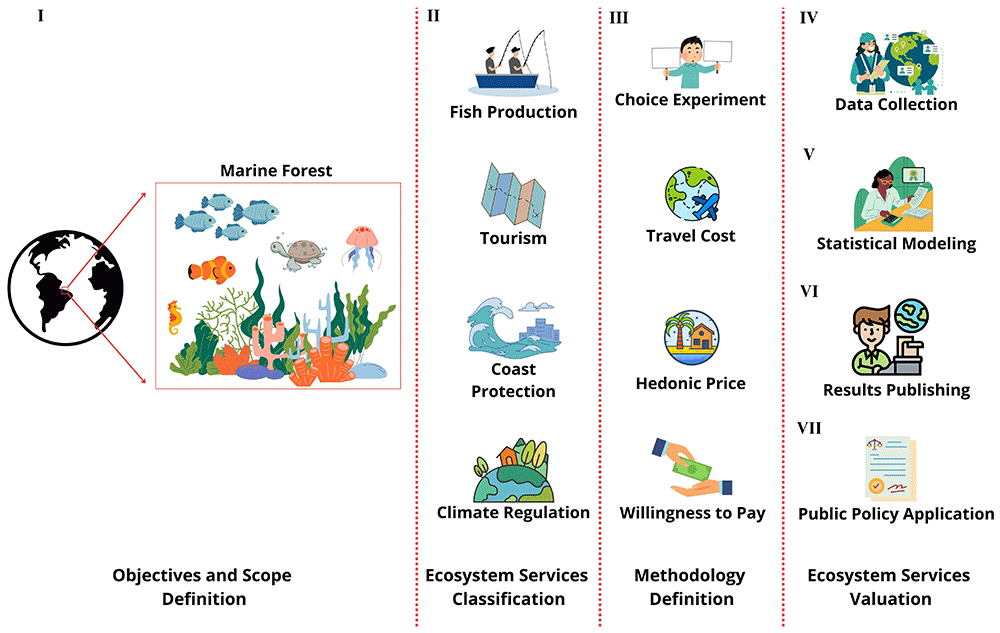
Figure 1. Roadmap for an environmental valuation study in marine forests.
Source: Prepared by the authors.
The definition of objectives and scope of the study is one of the most critical steps in an environmental economic valuation study, as it guides all subsequent stages. The objectives should be clear, specific, and aligned with the questions the study intends to answer. This is the phase where the geographical, temporal, and methodological limits of the environmental valuation analysis of a marine forest are delimited.
The location and physical extension of ecosystems and their zone of influence is relevant because marine forests can offer local and global benefits, such as sustenance for fishing communities around the forests through fishery production, tourism, carbon capture, and nursery for endangered species. The temporal limits of the analysis also need to be considered due to the influence that ecosystem services can have on the economy, whether in the short term, with fishery production revenues or travel and recreation costs, or in the long term, with coastal protection costs provided over the years. Logistical issues, such as access to georeferenced data and the feasibility of conducting field collections in the delimited area, also influence the definition of geographical boundaries.
The process of identifying and mapping ecosystem services and their beneficiaries aims to delimit the ecological, economic, and social relevance of the environmental good being evaluated. It is in this phase that ecosystem services are initially classified into provisioning (e.g., fishery resources and tourism), regulating (coastal protection against storms and floods), cultural (recreational and spiritual activities), and supporting (nursery for various marine species).
After the process of identifying and mapping ecosystem services, the methodologies and tools to be used to evaluate the use and non-use value of the listed ecosystem services are defined. Among the most used methodologies for valuing ecosystem services provided by marine forests are the methods of: I) contingent valuation; II) choice experiment modeling; III) travel costs; IV) hedonic pricing15.
The contingent valuation method is based on direct surveys with the community directly influenced by the evaluated ecosystem services. Respondents are presented with hypothetical scenarios and questioned about the value they would be willing to pay (WTP - Willingness to Pay) or accept as compensation (WTA - Willingness to Accept) for changes in the availability or quality of the evaluated ecosystem service16.
The modeling of ecosystem service values through choice experiments is very similar to the contingent valuation method. However, respondents are presented with hypothetical scenarios in which they must choose between alternatives that vary in attributes such as biodiversity, water quality, fishery production, access to protected areas, and associated costs of the evaluated ecosystem. From the respondents’ choices, econometric models are used to measure the relative importance of each attribute in the applied questionnaire and calculate the economic value of the provided ecosystem services. The method is widely applied to predict how environmental or regulatory changes can influence the well-being of visitors and local communities17.
Valuation through travel costs attributes a market value to ecosystem services based on the time and costs that visitors are willing to pay to access the evaluated ecosystem, including values paid for transportation, accommodation, food, and other associated expenses18. In the case of marine forests, where tourism depends on the ecological integrity of the ecosystem, this method is quite guiding for formulating access and natural resource conservation policies.
The hedonic pricing method considers that the value of real estate is influenced by its physical characteristics and the environmental attributes of proximity. Thus, through statistical analyses, it is possible to isolate the implicit value of environmental attributes in the market value of real estate that is in proximity to the evaluated ecosystem19.
The selection of methodology depends, in part, on the access and availability of economic and environmental data from the established study area, whether primary or secondary. Primary data are obtained directly through field research, questionnaires, interviews, and choice experiments with tourists, fishermen, and local communities, while secondary data are obtained through academic studies, government agency reports, and institutional databases. Some countries and institutions around the world have public databases with secondary information that can support environmental valuation studies in marine forest areas (Table 1).
Table 1. Secondary databases that can be used for economic valuation studies of ecosystem services provided by marine forests.
| Database | Website | Description |
|---|
| SocMon Global Database | https://www.socmon.org/database.html | Aggregates socioeconomic and climate adaptation data from interviews, questionnaires, and secondary data on marine environments |
| World Database on Protected Areas | https://www.protectedplanet.net/en | Provides data on conservation actions and marine protection areas carried out by governmental and non-governmental organizations |
| NOAA Coral Reef Watch | https://coralreefwatch.noaa.gov/ | Provides satellite data on ocean temperatures and coral bleaching events |
| Ocean Data Viewer | https://data.unep-wcmc.org/datasets | Aggregates marine biodiversity data from various scientific and conservation institutions |
| Ocean+ Habitats | https://habitats.oceanplus.org/ | Offers spatial and statistical data on marine habitats |
| AquaLink | https://aqualink.org/map | Provides sensor data, models, satellite observations, surveys, images, and videos for marine ecosystem monitoring |
| OECD Policy Instruments for the Environment (PINE) Database | https://oecd-main.shinyapps.io/pinedatabase/ | Provides data on environmental public policy instruments from OECD countries |
In environmental valuation studies, spatial, Bayesian, and panel regression models are tools that help relate environmental variables, such as the diversity of species present in marine forests, with economic indicators, such as tourism revenue and fishery productivity, enabling more precise inferences of use or non-use values of ecosystem services17,20,21. These techniques, by quantifying uncertainties, estimating the impact of ecosystem services on the local economy, and predicting future trends, provide essential support for formulating public policies for conservation and sustainable management of coral reefs, in addition to evaluating how different conservation policies can impact the economy in the long term15.
After estimating the value of ecosystem services, environmental valuation studies synthesize their results highlighting the effects that ecosystem services exert on the local or global economy. In many cases, these studies consolidate data from scientific publications from different regions and ecosystems in order to identify global patterns and list methodological challenges in estimating costs and benefits. The discussions of these studies regarding the found results frequently address the resilience of communities benefited by the evaluated ecosystems, in addition to dilemmas and trade-offs between preservation and environmental conservation and economic exploitation, questioning to what extent financial incentives for conservation are sufficient to overcome anthropogenic pressures, such as deforestation and overfishing.
By attributing an economic value to ecosystem services, such as climate regulation, biodiversity protection, and natural resource provision, these studies allow public managers and decision-makers to define the creation of priority areas and understand the financial and social benefits of environmental preservation. Based on these results, it is possible to create economic incentives, such as payments for environmental services, subsidies for sustainable practices, and taxes on polluting activities, ensuring that the costs of environmental degradation are incorporated into economic decisions. By estimating the influence of ecosystems on the economy, the studies help strengthen public and political awareness about the need to balance economic development with environmental protection.
Final considerations
This research presented an integrated methodological roadmap for the environmental valuation of marine wildlife forests, highlighting its importance as a strategic tool for the conservation and sustainable management of these ecosystems. The proposed approach, based on scientifically recognized valuation methods, suggests that the quantification in monetary terms of ecosystem services can strengthen the implementation of international agreements, such as the Convention on Biological Diversity and the High Seas Treaty. The presented case studies illustrate the applicability of valuation methodologies in various contexts, determining not only the economic value of these ecosystems but also their relevance for local communities and global biodiversity.
Despite the advances, the presented procedures face limitations. The scarcity of primary data in some regions, especially in developing countries, hinders the uniform application of methodologies. Additionally, socioeconomic and ecological variability may require methodological adaptations that are not capable of capturing the full complexity of these marine ecosystems. Other challenges refer to the integration of intangible values, such as cultural and ethical ones, in addition to the effects of external factors, such as climate change and global crises, which introduce uncertainties in long-term projections.
To overcome these limitations, future research could: expand data collection, using remote sensing technologies; develop hybrid methods, integrating valuation with traditional knowledge and multicriteria approaches; deepen resilience analyses, guiding climate change adaptation strategies; explore synergies with public policies; and strengthen interdisciplinary contributions.
Given the above, the economic valuation of marine wildlife forests is a tool capable of generating results that seek to balance conservation and development. These studies justify investments in preservation and conservation, in addition to reinforcing the central role of oceans in planetary sustainability. The implementation of the proposed roadmap can create favorable conditions for more effective and equitable public policies, ensuring that these critical ecosystems continue to sustain marine and human life for current and future generations.
Ethics and consent
Ethical approval and consent were not required for this study.
Data availability
This article type does not require data. The methodological roadmap presented is based on literature review and expert consultation rather than primary data collection or analysis.
Faculty Opinions recommendedReferences
- 1.
UN: United Nations: Protecting coral reefs. 2025. Reference Source
- 2.
Maldonado JH, Cuervo Sánchez R:
Valoración económica del parque nacional natural corales de profundidad.
Boletín de Investigaciones Marinas y Costeras.
2016; 45(1): 99–121. Publisher Full Text
- 3.
Akbar MA, Afifi M, Diswandi:
Application of contingent valuation method on economic valuation of coral reef ecosystems in Gili Gede Marine Area, West Nusa Tenggara.
Return: Study of Management, Economic And Business.
2023; 2(12): 1213–1227. Reference Source
- 4.
Cesar H, Chong C:
Economic valuation and socioeconomics of coral reefs: methodological issues and three case studies. In: Economic valuation and policy priorities for sustainable management of coral reefs. Penang, Malaysia: WorldFish Center, 2004. Reference Source
- 5.
Nohara K, Narukawa M, Hibiki A:
Using contingent behaviour analysis to estimate benefits from coral reefs in Kume Island, Japan: a Poisson-inverse Gaussian approach with on-site correction.
Aust J Agric Resour Econ.
2024; 68(4): 752–768. Publisher Full Text
- 6.
Fezzi C, Ford DJ, Oleson KLL:
The economic value of coral reefs: climate change impacts and spatial targeting of restoration measures.
Ecol Econ.
2022; 203: 107628. Publisher Full Text
- 7.
Bartelet HA, Barnes ML, Cumming GS:
Estimating and comparing the direct economic contributions of reef fisheries and tourism in the Asia-Pacific.
Mar Policy.
2024; 159: 105939. Publisher Full Text
- 8.
Septiady, et al.:
[Note: Full reference details not provided in original text] . 2024.
- 9.
UN. United Nations: United Nations convention on the law of the sea. Montego Bay, 1982. Reference Source
- 10.
UN. United Nations: United Nations convention on biological diversity. Rio de Janeiro, 1992. Reference Source
- 11.
UN. United Nations: Aichi target 11. 2010. Reference Source
- 12.
UN, United Nations: Paris Agreement. Paris, 2015. Reference Source
- 13.
Sumaila UR, Tai TC, Lam VWY, et al.:
Benefits of the Paris Agreement to ocean life, economies, and people.
Sci Adv.
2019; 5(2): eaau3855. PubMed Abstract
| Publisher Full Text
| Free Full Text
- 14.
UN. United Nations: Agreement under the United Nations Convention on the Law of the Sea on the Conservation and Sustainable Use of Marine Biological Diversity of Areas Beyond National Jurisdiction. New York, 2023. Reference Source
- 15.
De Valck J, Rolfe J:
Reviewing the use of proxies to value coastal and marine biodiversity protection: the Great Barrier Reef in Australia.
Mar Policy.
2022; 136: 104890. Publisher Full Text
- 16.
Nelson KM, Partelow S, Stäbler M, et al.:
Tourist willingness to pay for local green hotel certification.
PLos One.
2021; 16(2): e0245953. PubMed Abstract
| Publisher Full Text
| Free Full Text
- 17.
John Robinson P, van Beukering P, Brander L, et al.:
Understanding the determinants of biodiversity non-use values in the context of climate change: stated preferences for the Hawaiian coral reefs.
Ecosyst Serv.
2022; 53: 101393. Publisher Full Text
- 18.
Al Ismaili S, Al Abri I, Gulseven O, et al.:
Recreational value of different coral reefs richness levels in Oman.
J Outdoor Recreat Tour.
2024; 46: 100775. Publisher Full Text
- 19.
Nassiri A, Thébaud O, Holbrook SJ, et al.:
Hedonic evaluation of coral reef fish prices on a direct sale market.
Mar Policy.
2021; 129: 104525. Publisher Full Text
- 20.
Jarvis D, Stoeckl N, Liu HB:
New methods for valuing, and for identifying spatial variations, in cultural services: a case study of the Great Barrier Reef.
Ecosyst Serv.
2017; 24: 58–67. Publisher Full Text
- 21.
Carriger JF, Yee SH, Fisher WS:
An introduction to Bayesian networks as assessment and decision support tools for managing coral reef ecosystem services.
Ocean Coast Manag.
2019; 177: 188–199. PubMed Abstract
| Publisher Full Text
| Free Full Text







