Introduction
For many years, it was assumed that Theory of Mind, also known as mentalizing, was a slow, cognitively demanding process that is under the conscious control of an individual (Apperly, 2013; Birch & Bloom, 2007; Lin et al., 2010). However, a range of empirical findings accumulated over the last decade suggests that it may be possible to track others’ mental states spontaneously, i.e., without being specifically asked to do so, and automatically, i.e., without needing to exert cognitive control (e.g., Apperly & Butterfill, 2009; Santiesteban et al., 2014; Schneider et al., 2017). Various procedures have been employed to study this so-called implicit mentalizing in adults (as illustrated in Heyes, 2014), with one of the most commonly used paradigms being the dot perspective task (Gardner et al., 2018; O’Grady et al., 2020; Samson et al., 2010; Santiesteban et al., 2014; Westra et al., 2021).
In the standard version of the dot perspective task, participants are first presented with a perspective-taking prompt (‘YOU’ versus ‘SHE’/’HE’) and a number prompt (ranging from 0 to 3). Following this, a scene of a room appears, depicting a human avatar oriented either to the left or the right wall as well as a varying number of dots (Samson et al., 2010; Figure 1A). When all the dots are presented on the wall that the avatar is facing, then the participant sees the same number of dots as the avatar (consistent condition). In contrast, when at least some of the dots are presented on a wall that the avatar is not directly facing, then the participant and the avatar do not see the same number of dots (inconsistent condition). Both consistent and inconsistent conditions include so-called ‘self’ trials and ‘other’ trials. In ‘self’ trials, the participants are presented with a ‘YOU’ prompt that informs them that their task is to indicate whether the number prompt matches the number of dots in the room seen from their own perspective. In ‘other’ trials, the ‘SHE/HE’ prompt informs the participants that their task is to indicate whether the number cue matches the number of dots seen from the avatar’s perspective. The crucial results of the dot perspective task are that participants are slower and less accurate in responding from their own perspective when the avatar’s perspective and their own differ (inconsistent condition) than when the participant and the avatar see the same number of dots (consistent condition; Samson et al., 2010). This effect has been termed altercentric interference. Notably, this effect was also present (Samson et al., 2010, Experiment 3) when participants only ever made judgements about their own perspective (i.e., the participants were not asked to switch between their own and the avatar’s perspective) but did not occur when the central stimulus was a non-social object (i.e., a rectangle). Thus, the altercentric interference effect was originally interpreted as the participants processing the other’s visual perspective despite this not being relevant to the participant’s task, suggesting that the participants were implicitly mentalizing (e.g., Furlanetto et al., 2016; Nielsen et al., 2015).
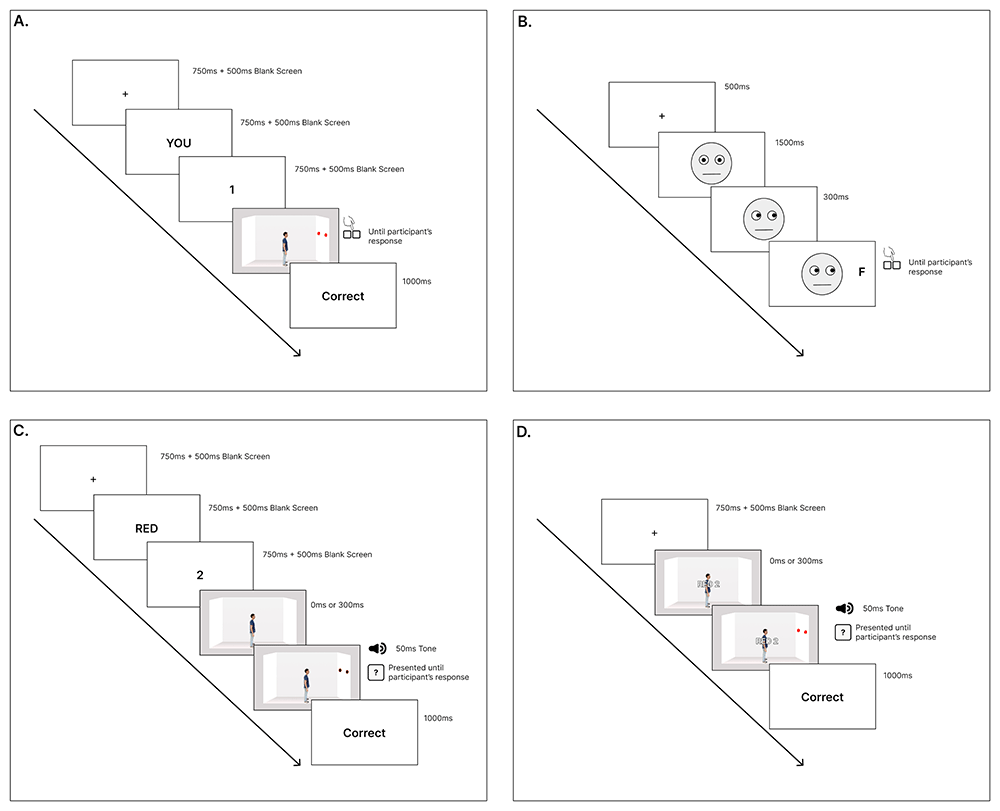
Figure 1. Examples of stimuli and timings of different versions of the dot perspective task and the gaze cueing paradigm.
Note. A depicts the structure of a trial within a typical dot perspective taking task (e.g., Samson et al., 2010). The first screen displays the fixation cross. The second screen displays the perspective cue (here, ‘YOU’ indicates to participants to take the self-perspective). The third screen displays the number cue (here, ‘2’ instructs participants to indicate whether they can see two dots). The fourth screen shows the scene of a room with an avatar and dots on the walls. In this example screen, the scenario depicts the inconsistent condition, in which the avatar’s perspective differs from the participant’s own perspective. Here, the correct answer would be ‘yes’, as there are two dots visible from the participants’ perspective. B depicts the structure of a trial within a typical gaze-cueing task (see Mckay et al. (2021) for a review of the different timings and stimuli used in gaze-cueing tasks). The first screen displays the fixation cross. The second screen displays a face with eyes looking straight ahead (note that not all gaze-cueing tasks include this screen). The third screen displays the eyes looking to the left or right. The last screen shows a target that appears on the left or right. In this example screen, the target is on the same side as the gaze direction. C depicts the structure of a trial from Experiment 2 by Bukowski et al. (2015). The procedure is similar to A except that the “YOU” prompt in screen 2 is replaced with a colour word “RED”. Furthermore, in the fourth screen, the avatar and room are depicted but no dots are presented and this screen is displayed either for 0 ms or 300 ms. Note also that in the fifth and last screen, the dots presented may be in red or green unlike in the original dot perspective task, where the dots were only presented in red. D depicts the structure of a trial from Experiment 3 by Bukowski et al. (2015). Here, the first screen is a fixation cross. The second screen shows the avatar in a room without dots but with a prompt overlayed on them indicating the colour and number of dots participants must respond to (e.g. “RED 1”). In the third and last screen, the dots are presented on the walls of the room.
Subsequent studies using the dot perspective task led to an ongoing discussion about the nature of the altercentric interference effect. Most critiques have been directed towards the assumption that the altercentric interference effect is indicative of visual perspective-taking (see for example Cole et al., 2016; Conway et al., 2017; Falck et al., 2014; Ferguson et al., 2017; Furlanetto et al., 2016; Heyes, 2014; Marshall et al., 2018; Santiesteban et al., 2014; Westra et al., 2021). However, there has also been increasing criticism of the claim that the altercentric interference effect is the result of an automatic process (e.g., Bukowski et al., 2015; Holland et al., 2021; O’Grady et al., 2020). Automaticity typically refers to processes that are unintentional, unconscious, difficult to alter or suppress, effortless, i.e., require minimal attentional resources, and purely stimulus-driven (O’Grady et al., 2020; Shiffrin & Schneider, 1977; for an opposing view, see Moors & De Houwer, 2006). Testing whether altercentric interference relies on an automatic process may be focused on either of the above characteristics (Samson et al., 2010, Experiment 3; Qureshi et al., 2010; Qureshi & Monk, 2018; Todd et al., 2017). Here, we investigate this question by focusing on the last characteristic, namely by assessing whether the altercentric interference effect is purely stimulus-driven.
The presence of the stimulus used in the dot perspective task, i.e., the avatar, has been shown to not be sufficient to trigger the altercentric effect (Bukowski et al., 2015; Gardner et al., 2018; O’Grady et al., 2020; Westra et al., 2021). Bukowski and colleagues (2015) suggest that this is because the participants need to first pay attention to the avatar in order to then implicitly take the avatar's perspective1. The authors base this reasoning on a set of experiments in which they compared the dot perspective task and a gaze cueing task. In the dot perspective task, the stimulus (e.g., the avatar) is presented at the same time as the dots on the wall(s), i.e., with no stimulus onset asynchrony (see Figure 1A). In contrast, in gaze cueing tasks, a gaze cue (e.g., eyes) is usually presented before the target stimulus is presented, i.e. there is a stimulus onset asynchrony, usually between 100 and 700 ms (e.g., Driver et al., 1999; see Figure 1B). Here, participants react faster to targets that appear at the location that was gazed at than to objects appearing in the location that was not gazed at - this has been called the gaze cueing effect. However, this effect does not appear when there is no stimulus onset asynchrony (Friesen & Kingstone, 1998; Frischen et al., 2007; Xu et al., 2012). Thus, the critical difference between a gaze cueing task and the dot perspective task is seen when the avatar/gaze cue and the target stimulus are presented at the same time (i.e., there is no stimulus onset asynchrony) - the altercentric interference effect is observed in the dot perspective task but the gaze cueing effect is not observed in the gaze cueing task.
Bukowski and colleagues (2015) argue that this discrepancy in results could be attributed to the attentional system prioritizing the avatar more in the dot perspective task than in the gaze cueing paradigm. In the dot perspective task, even in the version when only “self” trials are administered, participants are instructed to judge how many dots they see while ignoring the “stimuli in the middle of the room” (Samson et al., 2010, p. 1261). This instruction, in combination with the prompt ‘YOU’ (which signals that they will be asked to report what they see next), may induce a so-called ‘social mindset’ in participants, and therefore sufficiently increase the saliency of the avatar to produce the altercentric interference effect. In other words, after reading the instructions and the ‘YOU’ prompt, when the dots and the avatar appear at the same time, the participants may first focus their attention on the social stimulus, i.e., the avatar, and only then on the dots. In contrast, the absence of instructions and a prompt in the gaze cueing task may mean that the participants' attention is not drawn to the gaze cue in the same way. When the gaze cue and target stimulus are presented at the same time, both compete for the participants' attention. Thus, the attention drawn to the gaze cue may not be enough for the cue to then direct the participant's gaze to the location that is being gazed at. In contrast, when the gaze cue appears before the target stimulus, the participants' attention is more strongly drawn to the gaze cue (because of the absence of competition for attention from other stimuli), leading to the gaze cueing effect. Notably, other processes that are typically considered to be automatic or unconscious such as semantic priming are known to be modulated by participants’ attention (Naccache et al., 2002; McCarthy & Nobre, 1993). Bukowski and colleagues (2015) thus conclude that automatic computation of visual perspective or gaze cueing may require attention to first be focused on the other person.
Using the visual stimuli from the dot perspective task (room, avatar, dots) Bukowski and colleagues (2015, Experiment 3; see Figure 1D) showed that a non-social prompt placed over the avatar's chest was sufficient to produce the gaze cueing effect both with and without stimulus onset asynchrony. Thus, the location of the prompt was seemingly sufficient to draw the participants' attention to the avatar, which then directed their gaze to a specific side of the room even within the absence of a stimulus onset asynchrony. It is important to note that the prompt itself did not convey any information about a social stimulus or a perspective, merely what the target stimulus was (e.g., the prompt ‘RED 2’ indicated that the target was two red dots). Therefore, it was the location of the prompt that directed the participants' attention to the avatar and produced the subsequent gaze cueing effect.
The aim of the current study was to extend the above findings by focusing on whether - within the dot perspective task - participants' attention is drawn to the avatar when the context of the task promotes a social mindset. We were thus testing whether the semantics of the prompt used in the dot perspective taking can create a social mindset and direct attention to the avatar when there is no stimulus onset asynchrony, which then leads to an altercentric interference effect. We adapted the task and followed the procedure used by Bukowski and colleagues (2015) in their Experiment 2, in which the colour prompt ‘RED’ was presented before the room with the avatar appeared (see Figure 1C). In our colour prompts, the semantics were task-irrelevant, but the colour of the prompt indicated the colour of the target stimulus that participants must base their response on (e.g., a prompt written in red conveys the information that the target stimuli are red dots). We manipulated the semantics of the prompt such that one group of participants received a prompt that may have put them in a social mindset (i.e., the prompt ‘YOU’) while the other group received a control prompt (i.e., the prompt ‘NOW’). In addition, both groups were tested in a condition with 0 ms stimulus onset asynchrony and a condition with 300 ms stimulus onset asynchrony. If a 'social' prompt creates the social mindset that is sufficient to direct the participants' attention onto the avatar, then the gaze cueing effect should be produced with the ‘YOU’ colour prompt both with the 0 ms stimulus onset asynchrony and with the 300 ms stimulus onset asynchrony, while with the ‘NOW’ colour prompt, the gaze cueing effect should only be produced in the 300 ms stimulus onset asynchrony condition.
Methods
Participants
Participants were recruited through Prolific (https://www.prolific.ac/). Participants were eligible if they were native English speakers, aged between 18 and 60 years old, were not colour-blind (Vestner et al., 2022).
Participants were asked what gender they most identify with. While all participants could complete the study, only data from participants who identified as male or female were analysed – this was to control for any effects of an avatar that was not well matched to a participant's gender identity.
This study required two groups of participants, who each experienced two testing conditions. Based on a power analysis for a 2x2 ANOVA, to detect an effect size of medium partial eta squared of 0.06, with the alpha level set at 0.05, and statistical power set at 0.9, a minimum total sample size of 85 participants was required. We recruited 90 participants in total to ensure a sufficient number of participants per group to account for attrition. The recruited participants were aged between 19 and 60 years (mean: 37.5 years, standard deviation: 11.2 years). Data provided by Prolific indicated 56 reported their sex as male and 34 as female.
Before starting the experiment, participants received instructions about the study procedure. All participants gave informed written consent to participate by filling in an online (electronic) consent form. The experiment lasted approximately 35 minutes. After completing the study, participants were provided additional information about the experiment, thanked for their participation, and compensated with 4.50 euro for their time. The study was approved by the Ethics Committee for Research at the Faculty of Humanities and Social Sciences, University of Rijeka [640-01/25-01/25].
Dot perspective taking task
The stimuli consisted of a picture of a room with a centrally positioned avatar, oriented either to the left or to the right side of the room. As in Samson et al. (2010), female participants were presented with a female avatar and male participants with a male avatar. Participants who indicated that they identified neither as female nor as male were randomly allocated a female or male avatar, however, as previously stated, their data were not included in the analyses. A variable number of ‘dots’ (0, 1, or 2) appeared as red or blue ellipses on the left and/or right walls of the room (Figure 2) in each of 6 possible locations (3 per wall). The number of dots present on each wall was based on the configurations used by Bukowski et al. (2015)
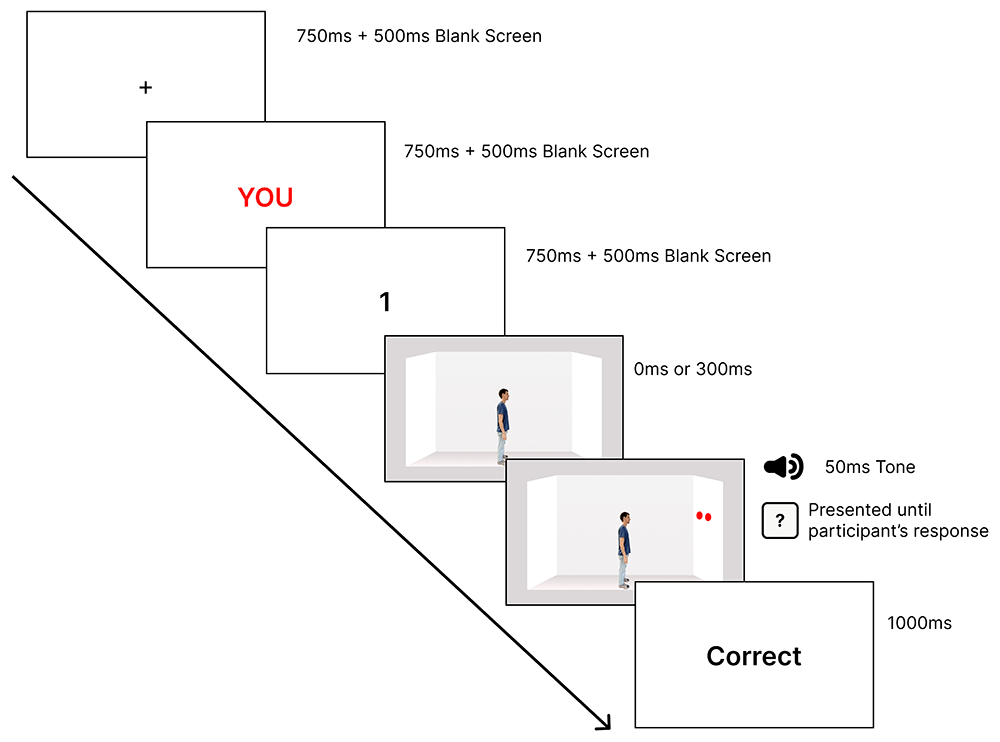
Figure 2. Timing of the events on each trial in the experiment.
Note. The timing of each event is displayed in milliseconds next to the corresponding picture of that event. In both groups, each trial started with a fixation cross to focus the participant's attention on the centre of the screen, which was followed by a brief blank screen. Next, both groups saw a colour prompt. For the perspective-taking cue group, this prompt was the word ‘YOU’ (presented in this figure); for the colour cue group the prompt was the word ‘NOW’. These words were displayed in red or blue (shown here in red). After another blank screen, a number prompt was shown (here ‘1’). Following the display of another blank screen, in the 300 ms stimulus onset asynchrony condition, the scene of a room with an avatar was presented first, and shortly after, coloured dots (here red; see magnified view of dots) appeared in the room. In contrast, in the 0 ms stimulus onset asynchrony condition, the avatar and the dots were displayed simultaneously after the blank screen. Shortly after, an auditory signal indicated when the participant could respond. In this scenario, the correct answer would have been to press the downward arrow key (‘no’), as there were two red dots, not one, visible in the room. The final screen displayed the feedback about the accuracy of the participant's response (here ‘Correct’).
Procedure
Participants accessed the experiment via a browser on their own computers. A link from the Prolific platform sent participants to the experiment which was hosted on a JATOS server; participation via a mobile phone or tablet was not permitted. As illustrated in Figure 2 the sequence of events within a trial closely followed that used by Bukowski et al. (2015, Experiment 2). The participants' task was to verify whether the content of the two prompts (colour prompt and number prompt) matched the content within the virtual room. One half of the participants received a colour prompt in form of the word ‘YOU’ (social mindset prompt group), while the other half received the control colour prompt in form of the word ‘NOW’ (control prompt group). Participants were randomly assigned to one of two experimental groups, and the prompts (‘YOU’/’NOW’) were displayed in either red or blue, which indicated to participants which colour of dots to focus on. The procedure was identical for both groups in all other aspects.
Before the experiment, all participants received instructions informing them that their task was to confirm whether they observe the same number of dots in the specified colour as indicated by the colour and number prompts. As part of the instructions, participants were given the opportunity to generate any number of example trials (selected at random) for each type of response (i.e., when the number prompt and prompt colour matched the number of dots in that colour and when the number prompt and prompt colour did not match the dots). After reading the instructions and providing informed consent, participants started the block of 40 practice trials. Following this, participants received feedback on the percentage of correct responses during and regardless of performance they were allowed to proceed to the test trials.
Each trial began with a fixation cross displayed at the centre of the screen (750 ms). After the 500 ms blank screen, participants saw a colour prompt (‘YOU’ for the perspective-taking prompt group and ‘NOW’ for the control prompt group) which was presented (750 ms) in red or blue, indicating which colour dots to take into account. After a blank screen (500 ms), participants were presented with a digit, varying from zero to two (750 ms). After that, in half of the trials, dot(s) (0–2 red and/or blue) appeared simultaneously with the avatar and walls (0 ms stimulus onset asynchrony condition) whereas in the other half of the trials, the dot(s) appeared shortly after the presentation of the scene (300 ms stimulus onset asynchrony condition). As in Bukowski et al. (2015; Experiment 2), immediately upon the presentation of the scene, a 50 ms auditory signal indicated when participants could respond. Participants then indicated whether the prompts matched the dots in the virtual room by pressing the upward arrow (yes- indicating that the dots matched the colour and digit prompt) or the downward arrow key (no- indicating no match for at least one prompt). After the participant’s response, feedback ‘Correct’, ‘Incorrect’, or ‘No response’ was presented (1 s). A ‘No response’ feedback was presented if 2 s had passed without a response from the participant.
The experiment consisted of a set number of blocks, filler, and test trials, following the design of Bukowski et al.'s (2015) Experiment 2. For both groups, in half of the trials, the target dots appeared on the wall the avatar gazed at (consistent condition), and in the other half the target dots appeared on the opposite wall (inconsistent condition). The trials were presented in random order across four blocks of 80 trials. There were 32 matching trials and 32 mismatching trials in each of the four within-subject experimental conditions (stimulus onset asynchrony of 300 ms versus 0 ms x consistent trials versus inconsistent trials). For example, the number prompts in the mismatching trials did not correspond to either the number of red, blue, or total number of dots. Furthermore, 64 filler trials without dots or with dots on the two lateral walls were added to balance the occurrences of number prompts across conditions. In each condition, an equal number of trials presented the avatar oriented to the left or right. Colour (red/blue) was equally distributed in both groups. Furthermore, as in Samson et al. (2010) trial orders within each block were pseudo-randomised, ensuring that no more than three consecutive trials of the same type occur.
Participants were then asked to complete an online funnelled debriefing questionnaire (Chartrand & Bargh, 1996; see Extended Data). The debriefing questionnaire was set up so that participants were only shown the next question once they had confirmed their answer to the previous question – following this confirmation the question was locked and was unable to be edited preventing participants from changing their answers based on the information indicated in later questions. The aim of administering this questionnaire was to explore whether there were any differences between the groups, and especially to determine whether participants in the perspective-taking prompt group were more likely to consciously focus on the avatar's perspective than participants in the control prompt group. After completing the funnelled debriefing questionnaire, participants received additional information about the study.
Materials
The dot perspective taking task was built using jsPsych (de Leeuw et al., 2023). The information sheets, funnelled debrief and debrief sections of the experiment were built with a combination of surveyJS (https://github.com/surveyjs) and custom JavaScript with the final debrief section of the experiment providing a graphical overview of the participants own results using the Observable Plot JavaScript library (https://github.com/observablehq/plot).
Images of one male and one female were used for the dot perspective taking task. The original images were taken against a white background. Using GIMP (GIMP version 2.10; https://www.gimp.org/), the person was selected and the remaining image turned transparent, to reduce potential influences of colours from each person’s clothing the colour saturation of the clothing was reduced.
For the dot perspective taking task the word prompt, number prompt and feedback to participants were displayed as HTML paragraph elements. The room and dots were generated as an SVG element. The SVG was originally created in Figma (https://figma.com) and the XML of the original image modified to allow the manipulation of which dots appeared based on the experimental condition (see Prein et al., 2024 for a similar use of SVGs to control the elements presented in online experiments) . The person’s image (facing left or right) was then displayed within this SVG. The tone indicating the appearance of the avatar was downloaded from https://pixabay.com/sound-effects/beep-125033/. During the instructions, participants were allowed to adjust the volume of the tone. All code used to create the experiment can be found at https://github.com/elegg/dot-perspective-word-prompt. The experiment itself was deployed using JATOS (Lange et al., 2015) and hosted at https://mindprobe.eu/.
Planned analyses
Main experiment
As in the original dot perspective task (Samson et al., 2010) and the study by Bukowski et al. (2015), only data for trials in which the number of dots matched the number prompt (i.e., matching condition) were considered in the analysis, and filler trials were excluded. Data were cleaned following the information provided by Bukowski et al. (2015). All reaction times longer than 2 seconds were removed (392 trials, i.e., 3.4% of all trials) as were data from participants whose mean errors were more than 3SD from the mean error rate (3 participants). Data from one further participant were removed because a technical error meant that an incorrect word that displayed to them as part of the test stimuli. When computing median response times (RTs), erroneous responses were excluded.
RTs on correct responses and error rates were combined into an inverse efficiency score. For the inverse efficiency score, we calculated the median reaction time across trials of each variable level used in the final analysis (consistency, stimulus onset asynchrony, and word prompt) and each participant and then divided this value by the accuracy rate for the same set of trials using the following formula:
Following Bukowski et al. (2015) we planned on excluding data from participants with an IES of 3SD above or below the mean inverse efficiency score, however, data from no participants needed to be excluded. We also calculated an altercentric inference index for each participant (equivalent to the ‘gaze congruency index’ in Bukowski et al., 2015) by subtracting the inverse efficiency score on consistent trials from the inverse efficiency score on inconsistent trials using the following formula:
A positive altercentric inteference index thus reflected participants having a lower inverse efficiency score in consistent than in inconsistent trials.
Reponses to funnelled debrief
We used the participants’ answers in the funnelled debriefing procedure to ascertain whether participants consciously focused on the avatar’s perspective, and if so, whether this was more pronounced in the perspective-taking prompt group than in the control prompt group. We counted the number of participants in each of the groups who responded positively and negatively to the fourth question in the debrief, which asked “Were you focusing on the number of dots the avatar could ‘see’ from its point of view?”. We compared the pattern of responses between the two groups using a chi-squared test.
Exploratory analyses
The planned ANOVA using the altercentric interference index was designed to only test differences in the size of the altercentric interference between the word prompt groups and the two stimulus onset asynchrony conditions. Thus, to detect whether there was an overall altercentric interference effect and whether this effect was influenced by word prompt and/or stimulus onset asynchrony, we ran a 2 (perspective taking prompt) x 2 (stimulus onset asynchrony) x 2 (consistency) analysis of variance using the inverse efficiency score as the dependent variable.
Results
Eighty-three participants (42 in the perspective-taking prompt group and 41 in the control prompt group) were included in the final analyses. Data from one participant were removed because they did not identify as either male or female and so we could not present an appropriate avatar, data from two further participants were removed because the participants did not complete the experiment, data from one participant was removed due to a technical error and data from a further three were removed because their accuracy was 3 standard deviations below mean accuracy.
Planned analyses
Dot perspective taking task
A 2 x 2 analysis of variance on the altercentric interference index found no statistically significant main effect of group (social prompt group: M = 32.59, SD = 84.90; non-social prompt group: M = 26.74, SD = 88.03; F(1,81) =0.17, p = .68, η2 = 0.002) and stimulus onset asynchrony (0 ms SOA: M = 26.04, SD = 98.32; 300 ms SOA: M = 33.36, SD = 72.61; F(1, 81) = 0.33, p = .33, η2 = 0.004). We found no statistically significant interaction between prompt group and stimulus onset asynchrony (F(1, 81) = 0.91, p=.34, η2 = 0.011).
Responses to funnelled debrief
Nineteen participants indicated that they had taken the avatar’s perspective (9 participants from the perspective-taking prompt group and 10 participants from the control prompt group). Accordingly, there was no statistically significant relationship between which word prompt participants received and whether they indicated that they had been taking the avatar’s perspective (χ2 (1, N = 83) = 0.00, p = 1.00, φ = 0)
Exploratory analyses
A 2 x 2 x 2 analysis of variance on the inverse efficiency score revealed a main effect of stimulus onset asynchrony (F(1, 81) = 90.91 p = <.001, η2 <0.03) and a main effect of condition (F(1, 81)= 17.55, p = <.001, η2 = 0.004). No other main effects or interactions were significant. Thus, participants had – regardless of group and condition - a higher inverse efficiency score when there was no stimulus onset asynchrony (M = 743.83, SD = 238.38 ) than where there was stimulus onset asynchrony of 300 ms (M = 666.75, SD = 223.47 ) and had– regardless of group and stimulus onset asynchrony – a higher inverse efficiency score in inconsistent (M = 720.14, SD =238.31) than consistent trials (M = 690.00, SD =238.31; Figure 3).
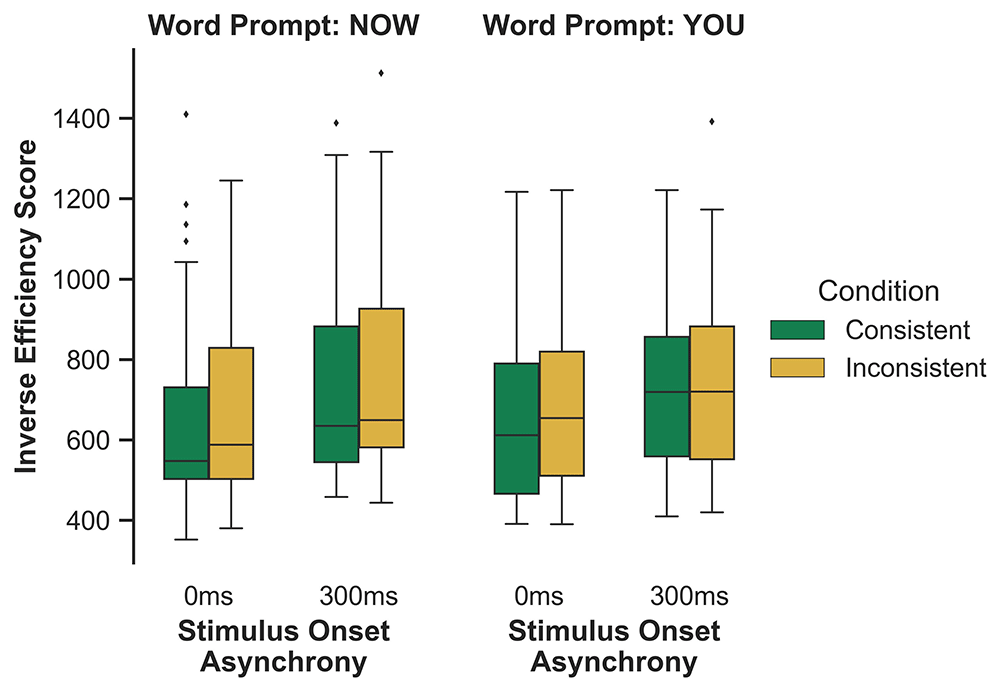
Figure 3. Inverse Efficiency Scores across word prompt type, condition, and stimulus onset asynchrony.
Note: Box and whisker plots showing median and interquartile range of the Inverse Efficiency Score for word prompt (‘NOW’ vs ‘YOU’), stimulus onset asynchrony (0 ms vs 300 ms) and consistency (consistent vs inconsistent).
Discussion
In this study, we tested the hypothesis that the context in which the dot perspective taking task is normally framed promotes a social mindset that focuses the participants’ attention to the avatar and thus leads to the altercentric interference effect, i.e., makes it more likely that participants responses are influenced by the direction (or perspective) of the avatar. We were thus specifically interested in testing whether the semantics of the prompt used in the usual dot perspective taking task (i.e., the prompt “YOU”) can create a social mindset and direct attention to the avatar and lead to an altercentric interference effect when there is no stimulus onset asynchrony. Accordingly, support for this hypothesis would come from a pattern of results whereby both a social and a non-social prompt would lead to the altercentric interference effect when there is 300 ms stimulus onset asynchrony (as the stimulus onset asynchrony itself can sufficiently direct the participants’ attention to the avatar) but where only the social prompt but not the non-social prompt would lead to the altercentric interference effect when there is 0 ms stimulus onset asynchrony. In contrast to these predictions, we found no statistically significant difference in the altercentric interference effect between groups that were presented with a social word prompt (“YOU”) and a non-social word prompt (“NOW”). Critically, as revealed by our exploratory analyses, this was the case because an altercentric interference effect was found in both groups. Thus, our results cannot be taken as empirical support for the hypothesis that attention towards the avatar responsible for the altercentric effect observed in the dot perspective taking task is due to participants adopting a social mindset caused by having observed the word prompt used in the task.
The results of our exploratory analysis – with the altercentric interference effect being found in both word prompt groups – requires further consideration because at first sight they appear to suggest that for the altercentric interference effect to occur at 0 ms stimulus onset asynchrony, it may not be necessary to have a manipulation that directs the participants’ attention to the avatar’s location when the avatar appears (sensu Bukowski et al., 2015). Further, although Experiment 2 of Bukowski et al. (2015) did not set out to test the role of a non-social prompt, they did replace the “YOU” prompt previously used in dot perspective taking tasks with a colour word (e.g., “RED”) and found no altercentric interference effect at 0 ms stimulus onset asynchrony. Thus, the procedure of their experiment was the same as ours except for the word prompts used – and our experiment found an altercentric interference effect at 0 ms for a non-social word prompt. However, it may be possible to reconcile the current results with both the result of Experiment 2 of Bukowski et al. (2015) and the view that attention to the avatar’s location may be necessary to produce the altercentric interference effect.
During Experiment 2 in Bukowski et al. (2015), the colour of the dots was indicated by the text of the word and the word’s ink colour (black) was irrelevant, while in our study, the text was irrelevant, and participants had to extract the information about the relevant colour from the ink colour. Several findings from the literature investigating interference in colour naming tasks indicate that this difference may have altered how participants attended to the location of the word prompt and the later display of the avatar in the same location. Firstly, participants take longer to name the ink colour of a stimulus when that stimulus is a word or pseudo-word than a series of non-letter symbols that cannot be read (Klein, 1964; Monsell et al., 2001), suggesting that reading is a process that is not inhibited (or not entirely) even when it is not relevant to the participants’ task. Secondly, when participants are asked to name either ink colour or text, interference when they are incongruent is asymmetric: interference is greatest when naming the ink colour (MacLeod, 1991; Protopapas et al., 2017). Finally, participants allocate greater attention when stimuli in Stroop-like tasks are incongruent (Olk, 2013). Thus, it is plausible that in our experiment, participants have increased their attention to the word prompt at the central location, where the avatar ultimately appears.
Whether such a change in attention to the central location persists to when the avatar appears and is substantive enough to alter how the avatar and dots are processed when they appear requires further investigation. However, support for the idea that different manipulations to participants’ attention can cause equivalent effects comes from the semantic priming literature, where it has been shown that whether semantic priming occurs can be influenced by manipulating when participants focus their attention (Naccache et al., 2002), where participants focus their attention (McCarthy & Nobre, 1993), and the attentional requirements of previous tasks (Kiefer et al., 2019). Experiment 3 of Bukowski et al. (2015) has already shown that an altercentric interference effect can be produced by manipulating the location and timing at which participants must focus their attention, specifically by placing the word prompt directly on the avatar’s location at the time the avatar appears. It is possible that our current study presents another way to alter how participants attend to the avatar, namely, by requiring participants to have previously attended to the ink colour of the word prompt.
In conclusion, although our results do not provide empirical support for the hypothesis that the word prompt used in typical dot perspective tasking tasks promotes a social mindset that is responsible for the emergence of the altercentric interference effect (even while there is no stimulus onset asynchrony), they may align with the hypothesis that the altercentric interference effect in the typical dot perspective task relies on attention being drawn to the avatar (Bukowski et al., 2015). It will be essential for future research to better establish whether and why such modulations to attention influence the altercentric interference effect. Doing so may allow the field to better align its views of automaticity that have developed in other research of automatic processes that may have important consequences for theoretical work that seeks to explain how we might rapidly compute others’ perspectives (Butterfill & Apperly, 2013; Carruthers, 2017).
Ethics and consent
The study was approved by the Ethics Committee for Research at the Faculty of Humanities and Social Sciences, University of Rijeka [640-01/25-01/25].
All participants gave informed written consent to participate by filling in an online (electronic) consent form.









