Introduction
The world's population has been dealing with severe climate change over the past few decades, and even the scientific community that did not acknowledge it no longer questioned it. One of the most vulnerable groups of agricultural producers is to control agricultural production in a way that mitigates climate change, while scientists' tasks are to create and build a system that will increase climate resilience. Climate change and biotic disturbances are increased global pressures that reduce crop productivity and increase the gap between crop production and food demand (Langensiepen et al., 2020). Europe and Pannonian Biogeographical Area are facing extreme weather conditions with more frequent, severe, and longer lasting droughts, followed by storms even reaching the level of “cellstorm” like in the summer of 2023. Followed by floods, drought, decreased soil quality, irregular distribution of precipitation, new pathogens and pests, similar storms caused major consequences across the World, and by 2100, the global average temperature is likely to exceed pre-industrial levels by 1–5.7 °C (Agho et al., 2025; Tchonkouang et al., 2024). Constant growth in food production demand is pressuring the food supply chain, and climate change has already impacted all agricultural sectors. Mentioned pressures create needs for adopting new strategies that can enhance the resilience of agricultural production systems, as a whole. New approaches are needed, which are better adapted to future climatic conditions and aligned with negative environmental impacts, such as carbon emissions and soil organic carbon (SOC) storage (Golchin & Misaghi, 2024; Grados et al., 2024). The Pannonian Biogeographical Area (PBA) is one of the 11 biogeographical regions defined by the European Environmental Agency (EEA). The PBA is dominated by a large flat alluvial basin that is transacted from north to south by two major rivers: the Danube and Tisza. Almost entirely surrounded by low-lying hills and mountains, the basin was once an ancient inland sea. Currently, the majority of its land is used for agriculture (71.3%), ranking it first in terms of production but second in terms of the proportion of land used for agriculture in Europe. Recognizing the urgency of the situation, the European Union (EU) has already taken decisive action to address the impacts of climate change across Europe (Suárez-Eiroa et al., 2024). Building climate resilience within this region is packed into ClimaPannonia, which aims to support the agricultural sector as a whole. By implementing innovative systemic solutions and fostering collaboration among the five countries within the region – Hungary, Serbia, Croatia, Romania, and Czechia – we offer solutions for future climate impacts across four identified agricultural sectors: crop production, the water-food nexus, agroforestry, and cattle production. These four sectors have the greatest impact on threatening food production security and at the same time have the power to create equilibrium in the system provided by nature by gathering different levels of responses in building climate resilience (Farooq et al., 2022; Webb et al., 2017). People’s awareness of climate change threatens crop productivity, especially in major food crops, but the impact on livestock and fisheries has been ignored (Syed et al., 2022). Climate change impacts Pannonian agricultural ecosystems and their effects on water resources, fisheries, and livestock (Stringer et al., 2021). These sectors are fundamental to human societies and provide essential resources for economic and food stability. Their production and sustainability are seriously threatened by climate change (Karimi et al., 2024). The hydrological cycle is disrupted by unstable climate scenarios, which results in changes to precipitation patterns, higher rates of evaporation, and variations in the frequency of extreme weather events, such as floods and droughts, as well as cellstorms across the PBA in 2023. Changes in the distribution of precipitation during vegetation seasons cause shifts in patterns and result in dry summers and extremely hot July. Surface and groundwater resources, which are essential for agriculture, are affected by this unpredictability (Andre et al., 2024; Grados et al., 2024). Rising global temperatures lead to higher rates of evaporation from lakes, rivers, and soils, exacerbating water scarcity, particularly in the semi-arid regions of PBA. This also impacts soil moisture, which is important for vegetation. However, the quality of water becomes questionable because higher water temperatures can intensify water pollution by promoting the growth of harmful algal blooms and reducing dissolved oxygen levels. The increased runoff from heavy rainfall caused by storm events can carry pollutants and sediments into lakes and rivers (Lan et al., 2024). In addition, aquatic ecosystems are highly sensitive to changes in climate, which affects the distribution and productivity of fish and other species. Increased temperatures across aquatic environments can alter the physiology and reproductive cycles of all living organisms (Blewett et al., 2022). Many species may shift their geographical range to seek cooler waters where possible, leading to changes in species distribution and potential disruptions in the food chain. Floods and droughts, which are the top dangers across PBA, can impact freshwater fisheries and aquaculture by altering water flow, temperature, and water quality. Heat waves during July and August can lead to fish death in both natural and farmed environments (Blewett et al., 2022; Dai et al., 2022). In addition, due to direct physiological effects on animals and indirect consequences such as altered feed availability and infections caused by mechanisms similar to those in crops, climate change presents serious problems in livestock production (Cheng et al., 2022; Habib-ur-Rahman et al., 2022). Rising temperatures and the increased frequency of heat waves can cause heat stress in livestock, leading to reduced feed intake and lower productivity. Additionally, decreased fertility is a negative outcome. Livestock requires significant amounts of water for drinking, which indicates that quality is questionable in these climate scenarios, particularly in arid and semi-arid regions, such as PBA. Climate change presents a complex web of challenges for crop and forestry production, water resources, and living organisms including livestock. These sectors are interconnected and the impacts in one area can lead to others. For this reason, in this manuscript, we have identified key agricultural sectors, which will be presented as a blueprint for creating further scenarios for building climate resilience. Addressing these challenges requires integrated and adaptive management strategies, including mitigation of greenhouse gas emissions and implementation of measures to enhance the resilience of these vital stems to the ongoing and future effects of climate change. That said, a graphical presentation of the new innovative systemic solutions for old threats, which have been present in Europe for decades, is presented in Figure 1. Similar concepts of approaching problems as a whole were recently published by RECROP COST 2025. They analyzed the responses of plants and offered Integrative Agricultural (IA) solutions in the crop production sector. The separate development of distinct fields of biological research was used for decades until the concept of integrative biology was introduced to connect different areas of scientific knowledge (Wake, 2008). Although still vague and relatively unfocused, term integration emphasizes the importance of a unifying approach to fully understand biological processes (Langensiepen et al., 2020).
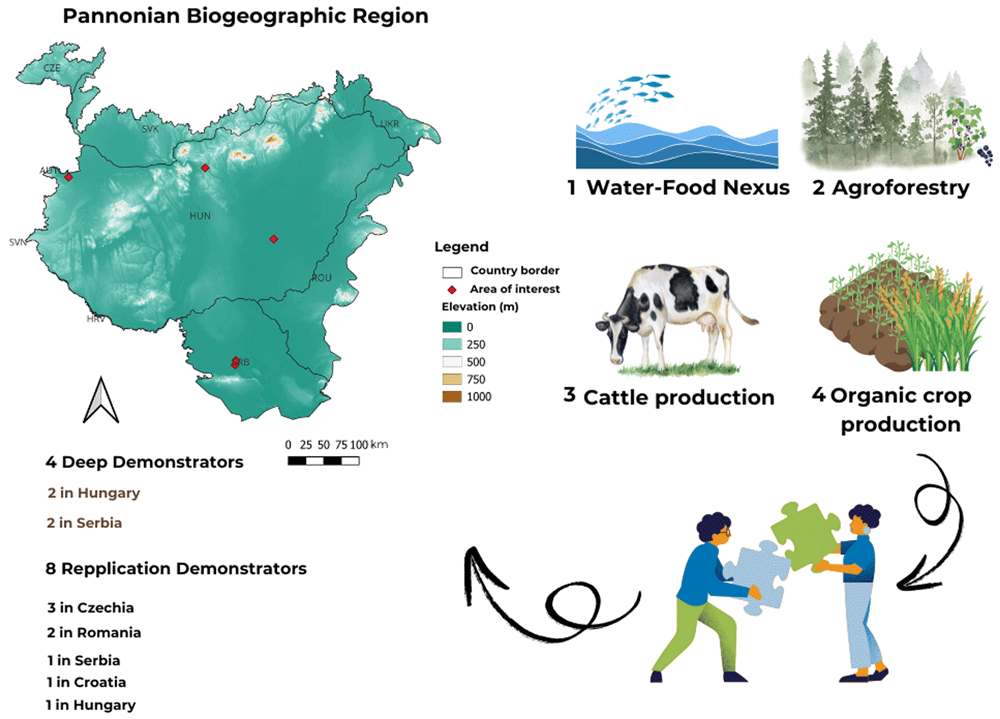
Figure 1. Cycle of resilience to climate changes across Pannonian Biogeographical Area (PBA), including parts of the region where innovative systemic solutions will be implemented across Europe (Hungary, Serbia, Croatia, Romania and Czechia).
Scheme made by: J. Grósz, M. Čurčić and V.Mladenov.
All factors in natural sciences are becoming more aware of the shortcomings of reductionist methods to comprehend the natural world and create integrative answers to active problems. Many of the pressing issues we face today, such as climate change, are complex and simple, isolated interventions. This realization has spurred a growing emphasis on innovative systemic solutions – approaches that consider the web of interactions within a system to create more effective and sustainable impacts across environments and ecosystems. Innovative systemic solutions in agriculture have moved beyond focusing on individual components. Instead, they embrace systems thinking, a holistic and integrative perspective that emphasizes understanding the behavior of an agricultural system as a whole. However, this needs to be tested and validated, which makes them more complex and difficult to manage.
Since most tests for agriculture are replicated across different environments to measure the performance across a range of environmental conditions to which a system might be exposed, multi-environment trials (MET) provide information that is necessary for further evaluations (Mladenov et al., 2023; Prado et al., 2024). In agronomic research, particularly within the context of METs, replication is not merely a desirable practice but also a fundamental necessity to evaluate the performance of different varieties or management practices across different environmental conditions. The goal is to mimic the diverse realities of agricultural production, and within this framework, replicate the practice of repeating treatments or experimental units multiple times within each environment we have set our experiments, as previously stated in Mladenov et al. (2019). Factors such as soil fertility, drainage, microclimate, pests, and disease pressure can significantly influence the performance of innovative systemic solutions in a single environment.
Based on these reasons, we decided to use the same kind of model and test and validate solutions for crop production, the water-food nexus, agroforestry, and cattle production (Figure 2). We strived for the consistency of the process and proposed innovative systemic solutions that will provide PBA sustainability. The plan was to develop a deep demonstrator site for every mentioned agricultural sector, and to develop and test innovative systemic solutions. Later, we will replicate the same solutions with the aim of building climate resilience in different environments across locations in Europe. In summary, 12 different environments will provide a research base in which all mentioned agricultural sectors will be evaluated and later implemented to serve as dams to climate change.
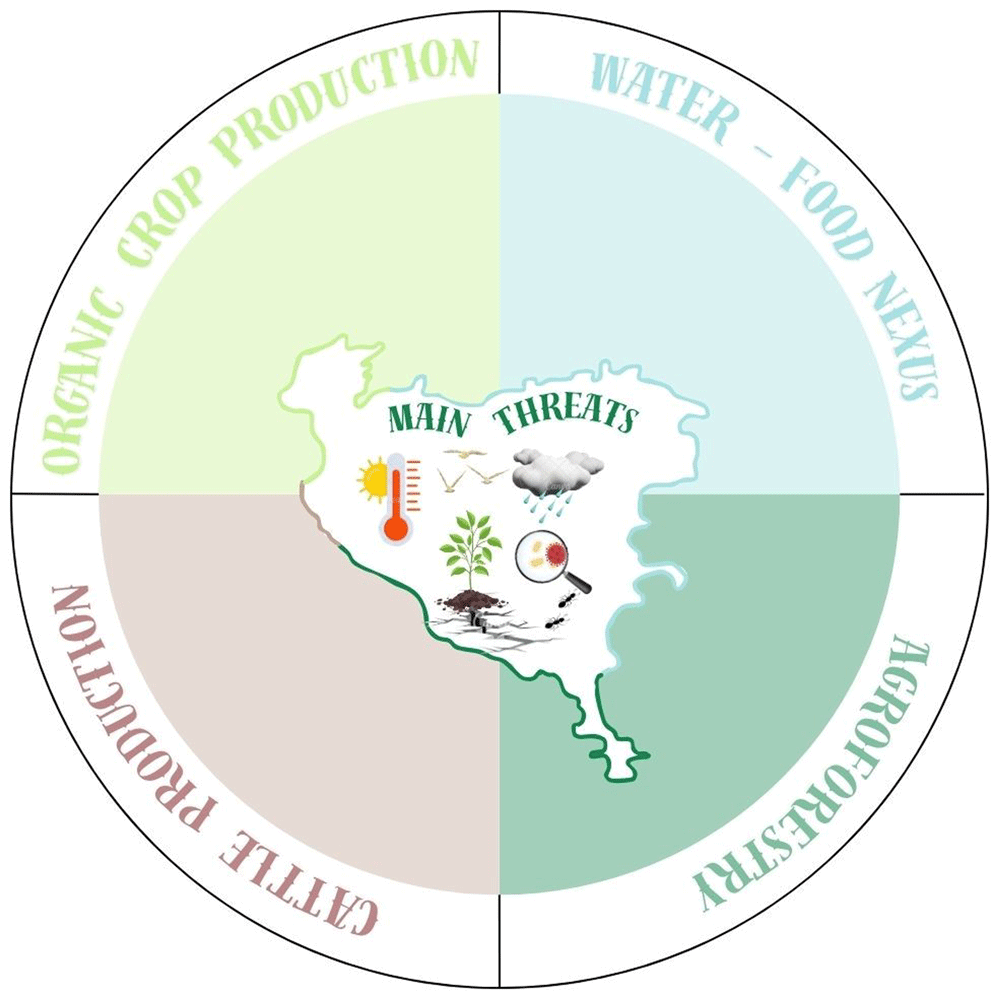
Figure 2. Pannonian Biogeographical Area (PBA) main threats (high temperatures, irregular distribution of precipitation, drought, pests, pathogens and loss of biodiversity) driven by climate change and proposed innovative systemic solutions across key agricultural sectors: (i) organic crop production in light green; (ii) water-food nexus in blue; (iii) agroforestry in dark green; and (iv) cattle production in brown.
Organic crop production – something old
The region of the Pannonia Basin is historically known as a significant area in Europe for the production of the main field crops, including wheat, barley, and corn (Jelen et al., 2024). Fertile soils and weather conditions are good preconditions for successful crop production, especially during the Green Revolution. However, intensive high-input production has caused different changes and even serious damage to natural resources, and these changes have become more pronounced under climate change conditions. Organic crop production is widely used as a management system to mitigate the adverse environmental impacts of food production and contribute to increasing soil health and activity, biodiversity, and enhancing biological cycles (Fernandez et al., 2022). According to EUROSTAT data, 16.9 million hectares (accounting for 10.5%) of EU agricultural land were under organic production in 2022, with a constant increase. The same source emphasizes that a significant expansion of organic production will be recorded in Croatia, Hungary, and Romania for the period 2012–2022. The question is whether organic production provides enough food for the world population, or should we apply systems or management practices in conventional agriculture that are widely used in organic production? The answer lies somewhere in the middle. Consumers will always be more focused on products from organic production; however, future global production should focus on improving the current state of resources for continuous production. Organic crop production is limited by different regulations; however, intensive conventional agriculture limits future production by different practices, which causes damage and pollution of soil, water, and air. Conventional and organic cropping systems apply different approaches in managing crops, while conventional cropping systems use mineral fertilizers and pesticides to obtain adequate yields. Organic production relies on long-term solutions for improved nutrient cycling and control of weeds, pests, and diseases (Watson et al., 2002). Several systemic solutions have been proposed within the Clima Pannonia project to improve the sustainability of crop production while also improving climate resilience. These solutions include the diverse use of legume-based systems. The first solution addressed soil fertility and improved nutrient availability. Soil organic matter content is a crucial indicator of soil fertility, which significantly declines in the soils of Pannonia, mainly in intensive agricultural fields. Based on the research of Vasin et al. (2021) on 1370 soil samples in Vojvodina Province, Serbia (south PBA), soil organic matter declined by an average of 0.5% for 20 years (1991–2011/2013). The authors also recommended several measures such as manure application, conservation tillage, green manure, and compost. Generally, manure application is a key strategy for improving crop yield by increasing soil fertility (Cai et al., 2019). It is a historically used and proven measure for improving soil health and quality. However, manure is limited in both organic and conventional production because of the low level of animal production. Soil nutrients are crucial for achieving adequate crop yield and quality, especially nitrogen availability. Therefore, there is a need to delimit nitrogen availability in organic production (Barbieri et al., 2021) and reduce the production dependence on mineral fertilizers in intensive systems. The proposed solution is to intensify crop rotation by implementing legume-based cover crops and choosing main crops with better Nitrogen Use Efficiency (NUE). Cover crops are crops grown between two cash crops used to prevent soil erosion, increase organic matter and nitrogen content, reduce weeds, etc. (Ćupina et al., 2017). Pure stands of annual legumes, such as field peas (Pisum sativum L.), common vetch (Vicia sativa L.), or their mixture with cereals, are usually grown as winter cover crops. They are included as green manure or even forage (Vujić et al., 2021) because of their short growing season and biologically fixed nitrogen (N) available for the main cash crop (Ćupina et al., 2017). The main crop in temperate regions is often corn for grain or silage; however, a new solution proposes the use of other crops, such as oilseed flax (Linum usitatissimum L.). Actually, the incorporating the flax in crop rotation can be considered as an „old“ crop in mid 20’s of the 21st century, having in mind that ancestral plant economies and artifacts of flax cultivating have been found in many countries of Pannonian region (Coward et al., 2008; Gutaker, 2014). Flax is growing in importance as it is a drought-tolerant crop, and it meets future agricultural demands and food production under the more evident climate changes of the 21st century. Climate change effects force farmers to change crops in terms of crop rotation, tillage practices, and sowing patterns. Intercropping, a system of simultaneously growing two or more crops in one field, can increase the sustainability of food production (Sahoo et al., 2024). Morugan-Coronado et al. (2020) considered intercropping as a tool for improving resilience to climate change and reducing the carbon footprint of agriculture. Intercropping is an agroecological technique used in organic crop production to enhance plant diversity in agroecosystems (Ratnadass et al., 2012). However, to obtain a positive effect of intercropping on each crop in the field, adequate plant species, optimized density, and sowing pattern need to be defined. Kumawat et al. (2022) indicated that the productivity and grain quality of staple crops, vegetables, oilseeds, and other crops could be increased by adding legumes to the production system. The yield advantage of the intercrop is usually measured by the Land Equivalent Ratio (LER, Mead & Willey, 1980), where values greater than 1 indicate higher productivity of intercrop components compared to their sole crops. In addition to higher resource use, enhanced crop stability (Raseduzzaman & Jensen, 2017), and increased yields (Balzan et al., 2016), intercropping can also reduce disease incidence in crop stands (Zhang et al., 2019) and suppress pests and weeds (Huss et al., 2022). Ratnadass et al. (2012) emphasized that this approach to controlling pests and diseases and reducing their impact on crop performance includes disruption of the spatial and temporal cycles, modifying crop microclimates, effects of allelopathy, and conservation of pests' natural enemies. In the study by Cao et al. (2015), the intercropping of wheat with maize, wheat, and sunflower was efficient for stripe rust and powdery mildew control, whereas intercropping wheat with potato or chili did not significantly reduce diseases compared to the pure stands. Although intercropping is an old practice, especially cereal-legume intercropping, there is a need to provide more information to Clima Pannonia project members about intercropping applicability and yield efficiency, but more frequently in extreme weather, which aggravates pest outbreaks and alternate disease infestation (Huss et al., 2022). Therefore, this second systemic solution is more oriented towards the control of pests and diseases in legume-based intercropping systems and towards improving the grain quality of intercrops. Intercropping comprises of different spatial arrangements of crops. It includes mixed intercropping with no distinct row arrangement (Agegnehu et al., 2008); row intercropping with crops sown in alternate rows (Glaze-Corcoran et al., 2020); strip intercropping, where crops are grown in strips wide enough for management and narrow enough to obtain mutual interaction (Juventia & van Apeldoorn, 2024); and relay intercropping, where the second crop is sown in the first crop stand prior to harvest (Yu et al., 2025). The third systemic solution is strip intercropping or strip cropping. When it is used in field crops, strip cropping breaks large plots on stripes for multiple reasons, including increased plant diversity in the field, increased diversity of root exudates and crop residues, improved pest and disease control (Croijmans et al., 2024) and weed suppression (Głowacka, 2014) in strip cropping compared to sole crops. Strip cropping increases the sustainability of crop production and farm income by growing drought-tolerant crops (Dutta & Bandyopadhyay, 2006). Jakhar et al. (2015) defined strip cropping as alternating stripes of soil-conserving and soil-depleting crops. The proposed solution integrates strip cropping of legumes, staple crops, and vegetables to improve soil properties, primarily nitrogen balance, as well as to mitigate insect and pathogen infestation. The use of stripes is not new in this region. It is used in vegetable production on small garden plots for household food production, where certain flower species or mixtures are grown. Today, it is still present in organic vegetable production. However, using strip cropping in field crop production is a new strategy for managing crop protection and nutrient balance and for obtaining ecosystem services while mitigating climate change. Wang et al. (2023) emphasized that relay narrow strips of a few crop rows of two-component intercrops are present in high-input systems in China, where a yield advantage is accomplished. Van Oort et al. (2020) stressed that even though yield gain is obtained as a result of complementarily for resource utilization primarily in border rows, strip cropping and specifically narrow strips is still a challenging practice in Western Europe, mostly because of the mechanization adapted for large and homogeneous fields. Considering the challenges of future agriculture, especially those related to commodity crops, some modern concepts or adapted old strategies could be highly suitable for organic farming, conservation, and conventional farming. The PBA, with 71% cropland, is one of the largest agricultural regions in Europe and is considered the most productive part of Southeast Europe, and is suitable for diverse crop production. Agroecological conditions and traditions of vegetable production are present in the region; however, the land use for vegetable growth can be increased, especially for organic production. For instance, in Hungary, the land use for organic fresh vegetable production in 2020 was only 1.2% (Molnar, 2022). The ongoing challenge in organic vegetable farming is the use of organic amendments for efficient and timely nutrient supply as well as the effective management of weeds, pests, and diseases (Dorais & Alsanius, 2015). In this cropping system, supplying plants with nutrients relies, to a lesser extent, on farmyard manure and much more on other organic materials, such as compost, legume-based green manure, milled legume seeds, and industry-processed biowaste material (Čabilovski et al., 2013; Katroschan & Hirthe, 2024). These organic materials differ in nutrient composition, which may cause difficulties, particularly in nitrogen supply regarding the synchrony between mineralization or organic fertilizers and timely demand, and between nitrogen content in the amendment and plant requirements. The fourth solution includes a “cut-and-carry” green manure strategy for efficient nutrient availability in vegetable production. Cut-and-carry refers to the direct field application of freshly cut biomass incorporated into the soil before sowing or by spreading it on the surface as a mulch (Katroschan & Hirthe, 2024). This agronomic practice involves cutting the aboveground biomass of crops with high nitrogen levels, mostly alfalfa (Medicago sativa L.) or legume-cereal/grass mixtures, and using it in other fields as fertilizer (Drakopoulos et al., 2016). When the biomass is plowed, it improves nutrient supply and organic matter content, while its surface application provides additional benefits, including soil moisture conservation, soil erosion protection, and weed suppression (El-Metwally et al., 2022). These additional benefits are particularly important for obtaining production in light of climate change effects and the rise in extreme weather events. The Pannonian region is characterized by a temperate climate with warm summers and a low level of annual precipitation of approximately 550 mm (Cornes et al., 2018). The majority of field crops are produced in rain-fed conditions, and in recent decades, the uncertainty of production has risen, with an increased frequency of drought events as well as their intensity. For instance, drought in 2003, 2007, and 2012 decreased corn yield by over 40% in Hungary, Romania, Slovakia, and Serbia (Nagy et al., 2018), whereas the Czech Republic and Slovakia suffered up to 50% yield loss of sugar beets and potatoes in 2015. These are some examples of demanding conditions for crop production, which, according to Kis et al. (2020), will be exacerbated due to climate change. Therefore, there is an urgent need to modify current cropping systems. The modification should be adjusted to each region, area, and plot to a much greater extent than it is now. For the PBA, organic and conventional farming needs to be primarily oriented towards maintaining or improving soil health and quality through intensifying legume-based crop rotation, by including diverse main cash crops on the plot with more drought-tolerant species such as buckwheat, millets, quinoa, and by modifying tillage practices. Moreover, pest and disease control requires an increased diversity of crops in the agroecosystem and changes in sowing patterns to reduce their pressure and yield loss. Considering the proposed strategies in different cropping systems, the question is: Are we really applying new cropping practices, or are we just adapting in the era of new technologies something old?
Cattle production – something new
In the past, smallholder livestock farmers responded to ecological and climatic changes by relying on their understanding of the local environment to manage and raise livestock. However, population growth, urbanization, environmental degradation, and rising demand for animal-based foods have undermined the effectiveness of traditional coping mechanisms (Sidahmed et al., 2008), further slowing down adaptation to climate change. Across the PBA, this historical reliance on local knowledge and extensive systems gives way to uncertainty. Climate-induced pressures, mainly temperature extremes, prolonged droughts, and variable precipitation, pose growing challenges to livestock production, especially in regions where cattle farming has traditionally played a secondary role in crop-based systems. The latest report by the Intergovernmental Panel on Climate Change (IPCC, 2021) indicates that the planet is now facing unequivocal and unprecedented climate risks. Intensifying heat waves, heavy precipitation, droughts, fires, and tropical cyclones are expected to affect all regions of the world. This poses a significant risk to the sustainability of livestock production. Changes in temperature and water availability influence livestock production by affecting the quantity and quality of pastures and forage crops, altering feed-grain production and costs, and shifting the distribution of diseases and pests (Henry et al., 2012). Unless significant reductions in greenhouse gas emissions occur in the coming decades, global warming of 1.5 °C and 2 °C above pre-industrial levels will be exceeded during the 21st century (IPCC, 2021). These risks are exceptionally relevant in the context of PBA, where cattle systems have historically been less dominant and are often fragmented, with limited access to resilient breeds or advanced housing infrastructure. However, this underutilization also presents a unique opportunity: the introduction or reintroduction of well-designed cattle systems could serve as a “new” strategic pathway for agroecological diversification and resilience.
The vulnerability of livestock production systems to global warming can be assessed based on animal performance and environmental factors that influence their risk exposure (Hahn, 1995). Heat stress is one of the significant effects of climate change on cattle performance and reproductive traits. Heat stress can be defined as a condition in which an organism's body is exposed to excessive heat that exceeds its ability to dissipate heat and maintain normal regulatory functions, during which a series of biochemical, hematological, molecular, and genetic adaptations are triggered (McManus et al., 2020). This effect is no longer occasional, but chronic in areas with increasingly frequent summer extremes. Traditional cooling methods and breed choices are insufficient, particularly when systems have been optimized for productivity under temperate conditions. The negative impact of heat stress is expected to become more severe in the future owing to ongoing global warming and continued genetic selection for higher production. The intensity of heat stress affecting cattle production and reproduction is determined by a range of factors, including ambient temperature and humidity, duration of the heat stress period, animal size, extent of nighttime cooling, housing conditions, production capacity, breed, coat color and type, and water availability (Becker et al., 2020; West, 2003). The intensification of heat stress-related impacts within the PBA underscores the need for adaptation strategies that move beyond technological fixes and engage in system-level redesign. Cattle production adaptation strategies exhibit a diverse array of adaptive mechanisms to manage various environmental stressors, including biological, physiological, morphological, and behavioral responses. From a biological standpoint, breeding indigenous or locally adapted livestock breeds is crucial for countering the heat stress challenges associated with climate change. These breeds have been found to have high heat tolerance and are adapted to harsh environmental conditions (Prasad et al., 2022). Introducing heat-tolerant or crossbred genotypes into lowland systems can enhance both productivity and resilience. At the same time, grazing strategies that integrate livestock into silvo-pastoral or mixed crop-livestock systems, long neglected in the region, could play a multifunctional role in maintaining grasslands, reducing wildfire risk, and restoring soil organic matter. Given that past breeding programs have primarily focused on improving production and efficiency, future strategies must prioritize the inclusion of climate-resilient genotypes to ensure sustainable cattle production under changing environmental conditions. Such approaches contrast sharply with earlier models in the region, which favored confinement, specialization, and genetic selection for high-yield animals, often at the expense of robustness. Although Holsteins have limited resistance to heat stress (Correa-Calderón et al., 2022), crossbreeding them with zebu breeds offers the potential to develop dairy cattle with improved heat tolerance that is suited to warmer climates (Berman, 2011; Pereira et al., 2008). Morphological and behavioral adaptations, such as the introduction of slick hair gene lines, shifting feeding times, or modifying barn structures to promote shade and airflow, also form a part of this new toolkit. In the PBA context, these tools are not yet widely adopted, but they point towards a model of cattle farming that is both place-based and climate-aware. One study compared the effects of shade, fans, and sprinklers individually, and concluded that the combination of fans and sprinklers was more effective at decreasing body temperature and respiratory rate due to enhanced evaporative cooling (Correa-Calderon et al., 2004). Reimagining cattle production as a tool for resilience, rather than a problem to be minimized, marks a conceptual shift. Although cattle production is certainly not new to the region, its potential role in climate adaptation strategies remains unmapped. This is precisely where its value lies: as a “new” and underutilized opportunity to close the loop between land use, biodiversity, and food system resilience. Cattle production must be designed to deliver multiple benefits: ecological restoration, income diversification, thermal comfort for animals, and carbon appropriation. This approach aligns with EU policy frameworks, such as the Green Deal and biodiversity strategy, as well as with farmers’ interest in flexibility and risk reduction. Therefore, in the context of building Pannonian resilience, cattle production is no longer just meat or milk. It is a functional component of a broader transformation, something old, something borrowed, and increasingly, something genuinely new. Therefore, we addressed climate adaptation in cattle production through applied research, as well as demonstration and reapplication activities, with the additional goal of promoting broader adoption of climate-smart practices across the PBA. These efforts focus on testing alternative feeding strategies based on feed materials from intercropping systems to reduce reliance on corn-based diets and mitigate food safety risks while deploying precision technologies to monitor heat stress and animal welfare in real time.
Agroforestry - something borrowed
As part of the PBA, the Carpathian Basin provides ideal conditions for fruit growth, which is why the fruits grown here are of excellent quality, taste, and nutritional value (Bajomi, 2019; Ficzek et al., 2017). In the last decade, climate change has made it difficult to produce berry crops in these regions. Berry species grown here play an important role not only in healthy nutrition but also in gene preservation and variety breeding. Currently, the problems caused by climatic extremes, such as strong radiation, less and uneven precipitation, atmospheric drought, and the lack of a microclimate suitable for berries, pose increasing challenges to the sector. Berry crops require more water during periods of drought, which increases the cultivation cost. Not only non-irrigated but also irrigated crops are at risk during prolonged dry spells, as limited irrigation water may be available to farmers, while atmospheric drought and the accompanying strong sunlight further increase the stress on crops. (Zagyvai-Kiss et al., 2020b) Under these conditions, production is less profitable, leading to a further decline in soft fruit yield and a reduction in the viability of production. To moderate meteorological extremes and make the production system economically viable, technological experiments and shading systems can be used. Both with and without irrigation, berry cultivation can be more successful and effective if shade reduces evaporation (Horváth et al., 2021; Zagyvai-Kiss et al., 2019). However, artificial shading systems are usually costly and vulnerable; therefore, using trees for shading and improving water balance can be a more practical and sustainable solution. In order to improve the microclimate, the Fruit Growing Research Center of National Agricultural Research and Innovation Centre (NARIC) - the legal predecessor of the Hungarian University of Agriculture and Life Sciences (MATE), and the Machine Testing Institute at Gödöllő (Gödöllői Gépkísérleti Intézet) previously conducted joint research in Fertőd, in which the effect of artificial shading on the development of berry plants was examined (Szalay et al., 2017). The technology gave good results in terms of production, but it did not work out because its sensitivity to storms made it vulnerable (Sillinger et al., 2019). To eliminate this problem, researchers, with the involvement of the Hungarian Forestry Research Institute (ERTI) and University of Sopron, created a poplar-berry experimental agroforestry system in 2016, where the trees provided shade for blackberries, blackcurrants, and raspberries (Zagyvai-Kiss et al., 2020a). Based on these results, thornless blackberries do not require shading, but in the case of raspberries and blackcurrants, a sharp contrast was observed between the shaded and treeless plant stands. Previous studies have shown that intercropping helps the climate adaptation of berry production, thereby making it more resource-efficient and competitive (Horváth et al., 2021; Visiné Rajczi et al., 2020). The excessive shading effect of fast-growing poplar trees has become unfavorable for the development of the introduced stand, and thinning of the rows of trees has become necessary to ensure the proper development of raspberry varieties replanted within the framework of the ClimaPannonia project. The aim of this innovative system-level solution is to improve the economic viability and climate adaptation of berry production within the PBA. In addition to increasing carbon dioxide sequestration per unit area, trees improve production conditions by providing shade. This improves the health of crops and reduces the need for chemicals and artificial nutrients. With the tests carried out in the experimental area, validation of previous observations with additional numerical data is planned, and recommendations are compiled for producers to make their raspberry cultivation more resilient and climate adaptive. Our hypothesis is that the results will show an improvement in the microclimate and water balance of the system, an increase in the efficiency of water and nutrient use, a more favorable yield, and an increase in ecosystem services, such as carbon sequestration and biodiversity. Despite being an innovative system, agroforestry and its use can be viewed as a hybrid system that is taken straight from nature.
Water food nexus – something blue
PBA has been facing challenges related to climate change, which affects the hydrological cycle. In addition to global atmospheric effects, regional characteristics, such as topography and hydrography, determine hydrological conditions. In hilly regions, runoff and related soil erosion endanger soil health, and consequently, agricultural production and food security (Mandal & Roy, 2024). However, even settlements in hilly watersheds are prone to sudden flood events that threaten infrastructure and property. In lowlands, the available water is determined by weather events, soil, and climate characteristics. Excess water and droughts can sometimes affect the same area in different parts of the year. This extreme water regime can be further altered (moderated or enhanced) by the soil properties characterizing the area. Water scarcity requires new methods for retaining precipitation water, including the amount collected on the sealed surfaces of settlements. To overcome the joint problem of water scarcity and excess water in populated and agricultural areas, an integrated catchment-level vision of water management is needed. The concept of Nature-based Solutions (NbS) was rooted at the beginning of the 2000s (Bassetti, 2021). For now, it is clear that this is an umbrella concept, which means that we have to consider NbS as a group, or more precisely, groups of methods (EEA Report, 2021, Figure 3). Numerous definitions of NbS (Bassetti, 2021; Cohen-Shacham et al., 2019; Dunlop et al., 2024; Eggermont et al., 2015; European Commission, 2024; IUCN, 2025) reflect the complexity of this issue. Now we are relying on the definition of the EEA Report (2021), saying: “Nature-based solutions for climate change adaptation and disaster risk reduction are actions that work with and enhance nature to restore and protect ecosystems and to help society adapt to the impacts of climate change and slow further warming, while providing multiple additional benefits (environmental, social and economic).” However, the definition of NbS might be complex, emphasizing that this is not exclusively about tools, but also the need for cooperation between different sectors of life, such as environmental, social, and economic. In the context of the ClimaPannonia project, it is important to highlight its social consequences. A key factor in the success of NbS implementation depends on the involvement of local stakeholders, such as residents, owners, farmers, municipalities, NGOs, and local governmental bodies, as several case studies point out (Giordano et al., 2020; Short et al., 2019). The diversity of Nature-based Solutions causes the biggest problem for everyday usage. Namely, we have to choose one or a few specific methods to solve our own specific problem. Because a wide variety of nature-based tools are available, we first have to be confident with the needs, choices, and limitations of our specific case, supporting ourselves in selecting the most appropriate tools. Second, we must be confident of the choices and limitations of NbS. How to do that? Experts refined the approach of NbS by creating subgroups of a wide range of tools. The main reason behind this was to distinguish those specific areas of usage that apparently behave differently, as other tools should be used in city environments, and others in rural areas.
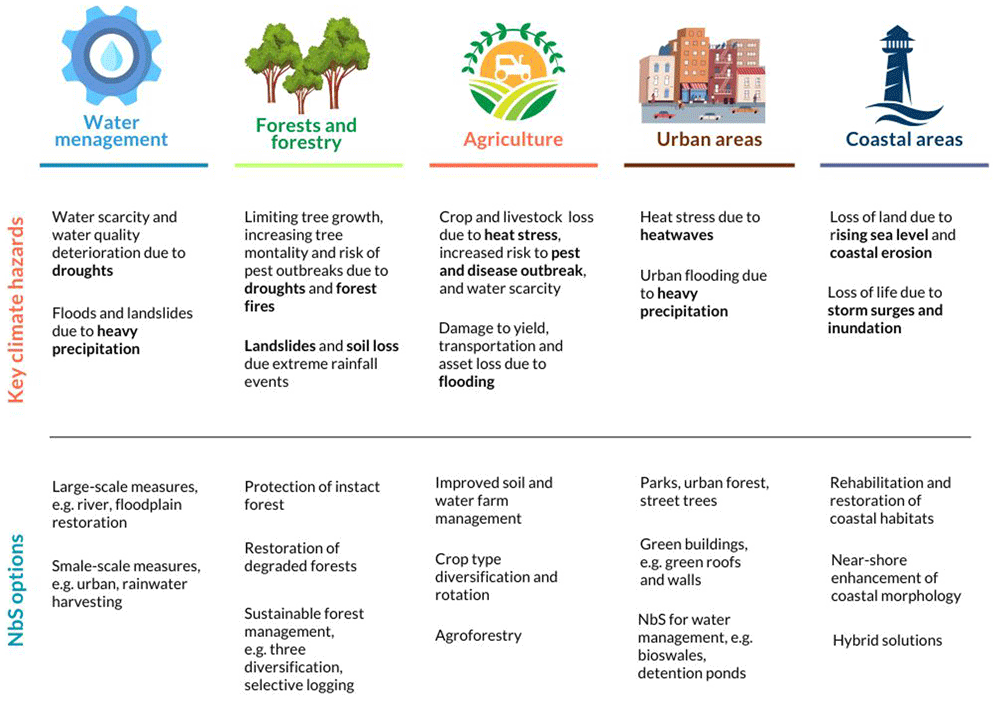
Figure 3. Key sectors to distinguish and creating groups for Nature-based Solutions, scheme made by authors upon EEA Report, 2021.
As shown in Figure 3, more tools are involved in every subgroup. If we know exactly our own case’s needs and limitations, we can choose the most appropriate approach. In addition, more tools can be applied to a specific situation that is supposed to strengthen each other by covering a complex problem. If we approach NbS from the perspective of a site-specific problem, we can note that several solutions can be used depending on the environment. For example, if we consider the effects of water, a wide range of challenges, such as water supply, water retention, maintaining soil moisture, preventing (flash) floods, or even a lack of water (droughts). Because climate change accelerates the hydrological cycle, causing extreme precipitation events more frequently, which has a major impact on the spatial and temporal distribution of water in the landscape, the issue of water might be considered as an indicator of climate change. Therefore, having or lacking water is a key factor in our lives. Accordingly, water-related natural retention measures can be collected in more sectors (NWRM, 2024). Such catalogues are helpful in determining what kinds of nature-based measures might be implemented at a specific site, with its specific problems. In the case of Püspökszilágy, the log dam tool was chosen by the settlement to eliminate the impact of flash floods (even mud floods) on the village (Picture 2). This is what we introduce here briefly and also presents some details of our related on-field research. Within the framework of this research, we investigated the effect of log dams on the moisture content of the surrounding soil profiles. Püspökszilágy is a small village in North-middle Hungary, about 50 km from the capital, Budapest. It is located in a hilly environment, surrounded by large agricultural plots and forests. As the village settles on the bottom of this hilly topography, precipitated waters also tend towards lower points of the landscape, feeding Creek of Szilágyi, the local stream. However, because of the altered spatial and temporal distribution of precipitation due to climate change, large and rapid rain events occur more often. In the past decades, settlements had to face flash flood events more frequently, which caused unexpected damage and problems to be solved (LIFE-MICCAC, 2018).
A few years ago, the municipality of Püspökszilágy applied for two LIFE projects, targeting the use of NbS for water retention and protecting the village from flash floods (LIFE LOGOS4WATERS, 2022; LIFE-MICCAC, 2018). Based on the experiences of international study trips organized by the LIFE, the village decided to install the so-called log dams in the tributaries of Szilágyi-creek, which collect and let surface waters from the large agricultural plots. These dams have pure wooden logs as building materials, which makes this kind of intervention very cost-effective and easily repairable. Their structure is different from that of classic concrete-based dams because it looks much more on a natural grid than on a solid wall. This is why log dams can allow the basic flow of creeks through (under) them if such a creek exists. During a flood (flash flood) event, the log dam can mechanically slow down and retain the peak of the flood, making the flood lower and smoother. However, usually one log dam is not scaled (large) enough to significantly decrease the risk of floods, so several such measures are advised to be installed in a single valley or tributary, one by one (Short et al., 2019). This was the same installation strategy used by Püspökszilágy. Five log dams and one earth-cored dam were installed in the tributary “Kiskövesi” ”by 2025. Thus, the occasionally large amount of rainwater collected from the agricultural plots, as a sub-catchment of Szilágyi-creek, can be slowed down in six steps in this tributary. As a result of these interventions, settlements no longer need to suffer from flash floods, which is an essential benefit of using NbS. In our present research within the ClimaPannonia Project, we try to better understand how log dams affect the soil moisture content in the surrounding soil profiles. The reasons for our intention are i.) to reveal the mechanism of water retention by a log dam, ii.) effect of retained water on the surrounding soil profiles; iii.) and provides measured on-field data to support more efficient agricultural activities. To achieve the aforementioned goals, we installed soil moisture meters in six drilled holes with five sensors in each hole. The subsurface probes at five different depths collected data of different characteristics of the soil profile, such as soil moisture, temperature, and electric conductivity. All the collected data are stored in data loggers placed on tree trunks, as shown in Pictures 1 d) and e). Data measurement occurred every 15 min, which is considered frequent enough to track the reflection of an occasional flash flood event in the bed and the soil profile. We hope that data will be collected in the future to provide new and valuable information about the relationship between precipitated and collected water, the effects of log dams, and soil moisture content. The PBA is similarly affected by climate change, as in other parts of Europe. Perhaps the most important consequence of the related and rapid changes is the increasing uncertainty of the availability of water, in a very wide sense. If we understand the importance and role of water in the landscape, we have already obtained a proper act to preserve water in space and time. When we would like to keep more water with a more favorable spatial and temporal distribution, we must first explore and understand both the basics of the natural processes and the justification of our everyday activity, with the possible connections between them. Because the availability of water will become increasingly uncertain, we must be familiar with all the possible tools to be used, which can help us to retain water in the landscape. However, it is also clear that intervention in a natural system may cause irreversible changes. This is why we have to make a priority list of water retention measures, trying to find a good balance between their economic, social, and ecological consequences. We believe that Nature-based Solutions can provide us with a good, long-term compromise and benefits for all sectors.
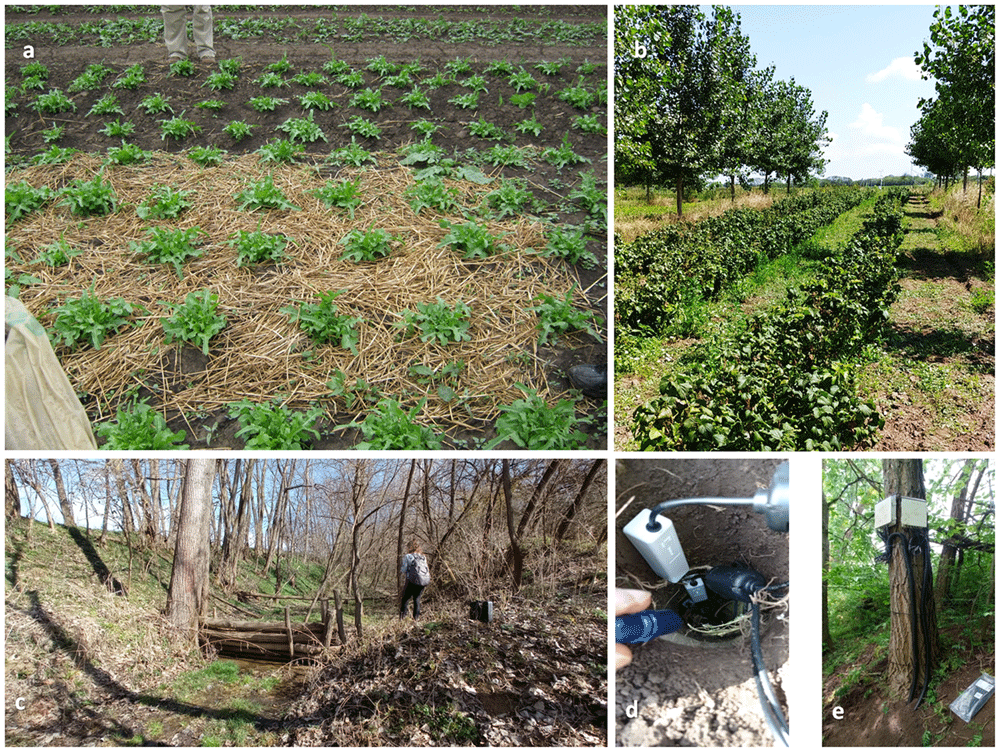
Picture 1.
a) Application of straw mulch in lettuce production for weed suppression, reducing soil moisture loss, and incorporation of organic carbon into the soil, Čabilovski et al., 2013; b) Berry production in a previously established alley cropping system at the Fertőd Research Station of the MATE Institute of Horticulture, Fruit Production Research Center, Vityi, 2024; c) A log dam in “Kisköves” tributary of Szilágyi-creek, Püspökszilágy, Halupka, 2025; d) and e) Soil moisture probes installed in the soil, and data loggers, in “Kisköves” tributary of Szilágyi-creek Püspökszilágy, Halupka, 2025.
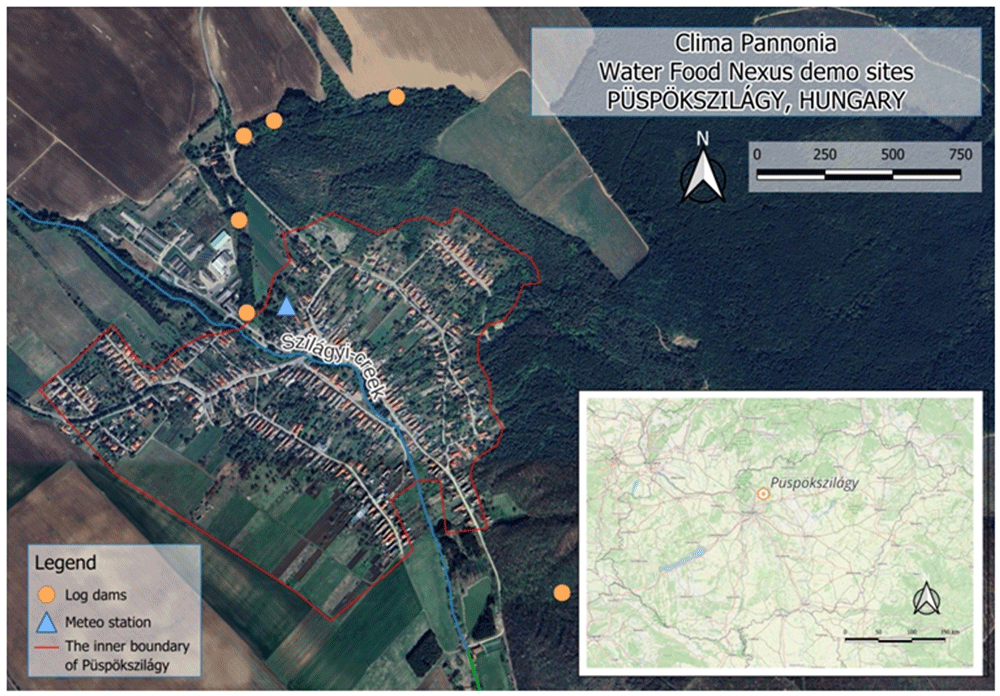
Picture 2. Satellite image of Püspökszilágy with log dams.
Large agricultural plots and forests can be observed around to village (Edited by G.Halupka. Background image: Google Satellite; GIS-software: QGIS 3.40.6-Bratislava).
Conclusion
The truth is that climate change has affected the entire globe, and the last ten years have caused far more harm than the past 50 years. Numerous strategies for building resilience and techniques to modify agricultural production to lessen the effects of climate change have been provided by Clima Pannonia and other efforts. By implementing the proposed innovative systemic solutions, we can guarantee safe food production. That is why we say “Yes I do” to Clima Pannonia. But, who is responsible for the planet's rapid decline? The rapid environmental degradation observed globally necessitates the examination of the causal agents. Critical inquiry arises regarding the imperative for a shift in human perspectives and an increase in awareness among diverse stakeholders, including individuals and corporations. Although the implementation of proposed solutions and innovative systemic strategies is unlikely to be detrimental, the complexity of achieving a comprehensive resolution remains a significant challenge.
Ethics and consent
Ethical approval and consent were not required.
Data availability
No data are associated with this article.
Faculty Opinions recommendedReferences
- Agegnehu G, Ghizaw A, Sinebo W:
Yield potential and land-use efficiency of wheat and faba bean mixed intercropping.
Agron Sustain Dev.
2008; 28: 257–263. Publisher Full Text
- Agho C, Avni A, Bacu A, et al.:
Integrative approaches to enhance reproductive resilience of crops for climate-proof agriculture.
Plant stress.
2025; 15(2): 100704. Publisher Full Text
- André J, d'Andrea F, Drobinski P, et al.:
Regimes of precipitation change over Europe and the Mediterranean.
J Geophys Res Atmos.
2024; 129(15): e2023JD040413. Publisher Full Text
- Bajomi B:
Mi lett a Kárpát-medence több ezer hagyományos gyümölcsfajtájával? National Geographic, 2019; Accessed 22 May 2019. Reference Source
- Balzan MV, Bocci G, Moonen AC:
Utilization of plant functional diversity in wildflower strips for the delivery of multiple agroecosystem services.
Entomol Exp Appl.
2016; 158(3): 304–319. Publisher Full Text
- Dutta D, Bandyopadhyay P:
Production potential of groundnut (Arachis hypogaea) with pigeonpea (Cajanuscajan) and maize (Zea mays) under various row proportions in rainfed Alfisols of West Bengal.
Indian J Agron.
2006; 51(2): 103–06. Publisher Full Text
- Barbieri P, Pellerin S, Seufert V, et al.:
Global option space for organic agriculture is delimited by nitrogen availability.
Nat Food.
2021; 2(5): 363–372. PubMed Abstract
| Publisher Full Text
- Bassetti F:
Nature-based solutions. 2021; Accessed 20 June 2025. Reference Source
- Becker CA, Collier RJ, Stone AE:
Invited review: physiological and behavioral effects of heat stress in dairy cows.
J Dairy Sci.
2020; 103(8): 6751–6770. PubMed Abstract
| Publisher Full Text
- Berman A:
Invited review: are adaptations present to support dairy cattle productivity in warm climates?
J Dairy Sci.
2011; 94(5): 2147–2158. PubMed Abstract
| Publisher Full Text
- Blewett TA, Binning SA, Weinrauch AM, et al.:
Physiological and behavioural strategies of aquatic animals living in fluctuating environments.
J Exp Biol.
2022; 225(9): jeb242503. PubMed Abstract
| Publisher Full Text
- Cabilovski R, Manojlovic M, Bogdanovic D, et al.:
Estimation of potentially mineralizable N from fertilizers in organic agriculture. The 1st International Congress on Soil Science XIII National Congress in Soil Science: SOIL - WATER - PLANT, September 23 – 26th, Belgrade, Serbia, 2013. Reference Source
- Cai A, Xu M, Wang B, et al.:
Manure acts as a better fertilizer for increasing crop yields than synthetic fertilizer by improving soil fertility.
Soil Tillage Res.
2019; 189: 168–175. Publisher Full Text
- Cao S, Luo H, Jin MA, et al.:
Intercropping influenced the occurrence of stripe rust and powdery mildew in wheat.
Crop Prot.
2015; 70: 40–46. Publisher Full Text
- Cheng M, McCarl B, Fei C:
Climate change and livestock production: a literature review.
Atmosphere.
2022; 13(1): 140. Publisher Full Text
- Cohen-Shacham E, Andrade A, Dalton J, et al.:
Core principles for successfully implementing and upscaling Nature-based Solutions.
Environ Sci Policy.
2019; 98: 20–29. Publisher Full Text
- Correa-Calderon A, Armstrong D, Ray D, et al.:
Thermoregulatory responses of Holstein and Brown Swiss heat-stressed dairy cows to two different cooling systems.
Int J Biometeorol.
2004; 48(3): 142–148. PubMed Abstract
| Publisher Full Text
- Correa-Calderón A, Avendaño-Reyes L, López-Baca MÁ, et al.:
Estrés por calor en ganado lechero con énfasis en la producción de leche y los hábitos de consumo de alimento y agua. Revisión.
2022; 13(2). Publisher Full Text
- Cornes RC, van der Schrier G, van den Besselaar EJM, et al.:
An ensemble version of the E-OBS temperature and precipitation datasets.
J Geophys Res Atmos.
2018; 123(17): 9391–9409. Publisher Full Text
- Coward F, Shennan S, Colledge S, et al.:
The spread of Neolithic plant economies from the Near East to Northwest Europe: a phylogenetic analysis.
J Archaeol Sci.
2008; 35(1): 42–56. Publisher Full Text
- Croijmans L, Van Apeldoorn DF, Sanfilippo F, et al.:
Crop species diversity levels with attract and reward strategies to enhance Pieris brassicae parasitism rate by Cotesia glomerata in strip intercropping.
Func Ecol.
2024; 38(3): 654–667. Publisher Full Text
- Ćupina B, Vujić S, Krstić D, et al.:
Winter cover crops as green manure in a temperate region: the effect on nitrogen budget and yield of silage maize.
Crop Pasture Sci.
2017; 68(11): 1060–1069. Publisher Full Text
- Dai Q, Hostert LE, Rondon JK, et al.:
Thermal tolerance of fish to heatwaves in agricultural streams: what does not kill you make you stronger?
Freshw Biol.
2022; 67(10): 1801–1814. Publisher Full Text
- Dorais M, Alsanius B:
Advances and trends in organic fruit and vegetable farming research.
Hortic Rev.
2015; 43: 185–268. Publisher Full Text
- Drakopoulos D, Scholberg JMS, Lantinga EA, et al.:
Influence of reduced tillage and fertilization regime on crop performance and nitrogen utilization of organic potato.
Org Agric.
2016; 6: 75–87. Publisher Full Text
- Dunlop T, Khojasteh D, Cohen-Shacham E, et al.:
The evolution and future of research on Nature-based Solutions to address societal challenges.
Commun Earth Environ.
2024; 5(1): 132. Publisher Full Text
- Eggermont H, Balian E, Azevedo JMN, et al.:
Nature-based solutions: New influence for environmental management and research in Europe.
GAIA-Ecological Perspectives for Science and Society.
2015; 24(4): 243–248. Publisher Full Text
- El-Metwally I, Geries L, Saudy H:
Interactive effect of soil mulching and irrigation regime on yield, irrigation water use efficiency, and weeds of trickle-irrigated onion.
Arch Agron Soil Sci.
2022; 68(8): 1103–1116. Publisher Full Text
- Environmental statement report. 2021; Accessed 21 June 2025.
- European commission. 2024; Accessed 19 June 2025.
- Farooq MS, Uzair M, Raza A, et al.:
Uncovering the research gaps to alleviate the negative impacts of climate change on food security: a review.
Front Plant Sci.
2022; 13: 927535. PubMed Abstract
| Publisher Full Text
| Free Full Text
- Fernández JA, Ayastuy ME, Belladonna DP, et al.:
Current trends in organic vegetable crop production: practices and techniques.
Horticulturae.
2022; 8(10): 893. Publisher Full Text
- Ficzek G, Nagyistván O, Király I, et al.:
Fruit quality of old apple cultivars of the Carpathian Basin.
Acta Hortic.
2017; 1172: 339–344. Publisher Full Text
- Giordano R, Pluchinotta I, Pagano A, et al.:
Enhancing nature-based solutions acceptance through stakeholders' engagement in co-benefits identification and trade-offs analysis.
Sci Total Environ.
2020; 713: 136552. PubMed Abstract
| Publisher Full Text
- Glaze-Corcoran S, Hashemi M, Sadeghpour A, et al.:
Understanding intercropping to improve agricultural resiliency and environmental sustainability.
Adv Agron.
2020; 162: 199–256. Publisher Full Text
- Głowacka A:
The effects of strip cropping and weed control methods on yields of dent maize, narrow-leafed lupin and oats.
Int J Plant Prod.
2014; 8(4): 505–530. Publisher Full Text
- Golchin A, Misaghi M:
Investigating the effects of climate change and anthropogenic activities on SOC storage and cumulative CO2 emissions in forest soils across altitudinal gradients using the century model.
Sci Total Environ.
2024; 943: 173758. PubMed Abstract
| Publisher Full Text
- Grados D, Kraus D, Haas E, et al.:
Agronomic adaptation strategies to climate change may increase soil greenhouse gas emissions. 2024.
- Gutaker RM:
The genetic variation of cultivated flax (Linum usitatissimum L.) and the role of its wild ancestor (Linum bienne Mill.) in its evolution. Disk University of Warwick, 2014. Reference Source
- Habib-ur-Rahman M, Ahmad A, Raza A, et al.:
Impact of climate change on agricultural production; issues, challenges, and opportunities in Asia.
Front Plant Sci.
2022; 13: 925548. PubMed Abstract
| Publisher Full Text
| Free Full Text
- Hahn GL:
Environmental management for improved livestock performance, health and well-being.
Jpn J Livest Manag.
1995; 30(3): 113–127. Publisher Full Text
- Henry B, Charmley E, Eckard R, et al.:
Livestock production in a changing climate: adaptation and mitigation research in Australia.
Crop Pasture Sci.
2012; 63(3): 191–202. Publisher Full Text
- Horváth J, Kalicz P, Gribovszki Z:
Az agrárerdészeti rendszerek hidrológiájának vizsgálata a fertődi gyümölcskutató intézet területén. In: Gribovszki Z, Kalicz P, Péterfalvi J, Konferenciakiadvany Sopron, Magyarország : Soproni Egyetem Kiadó. 2021; 58. : 32–37. Reference Source
- Huss CP, Holmes KD, Blubaugh CK:
Benefits and risks of intercropping for crop resilience and pest management.
J Econ Entomol.
2022; 115(5): 1350–1362. PubMed Abstract
| Publisher Full Text
- IPCC: Climate change 2021: the physical science basis. Contribution of Working Group I to the Sixth Assessment Report of the Intergovernmental Panel on Climate Change, Cambridge, United Kingdom, New York, 2021; 2391. Publisher Full Text
- IUCN world conservation congress. 2025. Reference Source
- Jakhar P, Adhikary PP, Naik BS, et al.:
Finger millet (Eleusine coracana)-groundnut (Arachis hypogaea) strip cropping for enhanced productivity and resource conservation in uplands of Eastern Ghats of Odisha.
Indian J Agron.
2015; 60(3): 365–371. Publisher Full Text
- Jelen Ž, Svetec M, Majerič P, et al.:
Contaminants in the soil and typical crops of the pannonian Region of Slovenia.
Sustainability.
2024; 16(19): 8678. Publisher Full Text
- Juventia SD, van Apeldoorn DF:
Strip cropping increases yield and revenue: multi-year analysis of an organic system in the Netherlands.
Front Sustain Food Syst.
2024; 8: 1452779. Publisher Full Text
- Karimi M, Tabiee M, Karami S, et al.:
Climate change and water scarcity impacts on sustainability in semi-arid areas: lessons from the South of Iran.
Groundw Sustain Dev.
2024; 24: 101075. Publisher Full Text
- Katroschan KU, Hirthe G:
Nitrogen supply by cut-and-carry biomass for vegetable crops and subsequent cereals.
Nutr Cycl Agroecosystems.
2024; 129(1): 53–71. Publisher Full Text
- Kis A, Pongrácz R, Bartholy J, et al.:
Multi-scenario and multi-model ensemble of regional climate change projections for the plain areas of the Pannonian Basin.
Idöjárás.
2020; 124(2): 143–309. Publisher Full Text
- Kumawat A, Bamboriya SD, Meena RS, et al.:
Legume-based intercropping to achieve the crop, soil, and environmental health security. In: Meena RS, Kumar S (Eds.) Advances in Legumes for Sustainable Intensification. Academic Press, 2022; 307–328. Publisher Full Text
- Lan J, Liu P, Hu X, et al.:
Harmful algal blooms in eutrophic marine environments: causes, monitoring, and treatment.
Water.
2024; 16(17): 2525. Publisher Full Text
- Langensiepen M, Jansen MA, Wingler A, et al.:
Linking integrative plant physiology with agronomy to sustain future plant production.
Environ Exp Bot.
2020; 178: 104125. Publisher Full Text
- LIFE LOGOS4WATERS Project. 2022. Reference Source
- LIFE-MICCAC Project. 2018. Reference Source
- Mandal D, Roy T:
Climate change impact on soil erosion and land degradation. In: Pathak H et al. (eds) Climate change impacts on soil-plant-atmosphere continuum. Singapore: Springer Nature Singapore, 2024; 139–161. Publisher Full Text
- McManus CM, Faria DA, de Bem A, et al.:
Physiology and genetics of heat stress in cattle.
CABI Reviews.
2020; 15(18). Publisher Full Text
- Mead R, Willey R:
The concept of a ‘land equivalent ratio’ and advantages in yields from intercropping.
Exp Agric.
1980; 16(3): 217–228. Publisher Full Text
- Mladenov V, Banjac B, Petrović S, et al.:
Mitigating abiotic stresses: a study on Pannonian basin wheat cultivars facing drought, cold, and heat.
Genetika-Belgrade.
2023; 55(3): 951–961. Reference Source
- Mladenov V, Dimitrijević M, Petrović S, et al.:
Genetic analysis of spike length in wheat.
Genetika-Belgrade.
2019; 51(1): 167–178. Publisher Full Text
- Molnar M:
Report on the status of organic agriculture and industry in hungary.
Ekoconnect.
2022. Reference Source
- Morugán-Coronado A, Linares C, Gómez-López MD, et al.:
The impact of intercropping, tillage and fertilizer type on soil and crop yield in fruit orchards under Mediterranean conditions: a meta-analysis of field studies.
Agric Syst.
2020; 178: 102736. Publisher Full Text
- Nagy A, Fehér J, Tamás J:
Wheat and maize yield forecasting for the Tisza river catchment using MODIS NDVI time series and reported crop statistics.
Comput Electron Agric.
2018; 151: 41–9. Publisher Full Text
- NWRM-Natural Water Retention Measures. 2024.
- Pereira AM, Baccari F Jr, Titto EA, et al.:
Effect of thermal stress on physiological parameters, feed intake and plasma thyroid hormones concentration in Alentejana, Mertolenga, Frisian and Limousine cattle breeds.
Int J Biometeorol.
2008; 52(3): 199–208. PubMed Abstract
| Publisher Full Text
- Prado M, Famoso A, Guidry K, et al.:
Optimizing multi-environment trials in the US Rice belt via smart-climate-soil prediction-based models and economic importance.
bioRxiv.
2024; 2024-07. Publisher Full Text
- Prasad RR, Dean MRU, Alungo B:
Climate change impacts on livestock production and possible adaptation and mitigation strategies in developing countries: a review.
J Agric Sci.
2022; 14(3): 240. Publisher Full Text
- Raseduzzaman M, Jensen ES:
Does intercropping enhance yield stability in arable crop production? A meta-analysis.
Eur J Agron.
2017; 91: 25–33. Publisher Full Text
- Ratnadass A, Fernandes P, Avelino J, et al.:
Plant species diversity for sustainable management of crop pests and diseases in agroecosystems: a review.
Agron Sustain Dev.
2012; 32: 273–303. Publisher Full Text
- Sahoo U, Malik GC, Maitra S, et al.:
Intercropping system: a climate-smart approach for sustaining food security.
J App Biol Biotech.
2024; 12(4): 30–36. Publisher Full Text
- Sidahmed AE, Nefzaoui A, El-Mourid M:
Livestock and climate change: coping and risk management strategies for a sustainable future. Proceedings of an International Conference. Hammamet, Tunisia, May 17–20. Cambridge: Cambridge University Press, 2008. Reference Source
- Short C, Clarke L, Carnelli F, et al.:
Capturing the multiple benefits associated with nature-based solutions: lessons from a natural flood management project in the Cotswolds, UK.
Land Degrad Dev.
2019; 30(3): 241–252. Publisher Full Text
- Sillinger F, Jung A, Dénes F, et al.:
Távérzékelésen alapuló kutatások málnaültetvényekben. AGROmashEXPO 2019.január 23-26, 2019.
- Stringer LC, Mirzabaev A, Benjaminsen TA, et al.:
Climate change impacts on water security in global drylands.
One Earth.
2021; 4(6): 851–864. Publisher Full Text
- Suárez-Eiroa B, Soto-Oñate D, Loureiro M:
The responsibility of the EU in climate change mitigation: assessing the fairness of its recent targets.
Mitig Adapt Strateg Glob Change.
2024; 29(8): 93. Publisher Full Text
- Syed A, Raza T, Bhatti TT, et al.:
Climate Impacts on the agricultural sector of Pakistan: risks and solutions.
Environ Chall.
2022; 6: 100433. Publisher Full Text
- Szalay K, Dénes F, Nagy GM, et al.: Málnatermesztés versenyképességének javítása optimális takarórendszer kialakításával. AgroMash Expo, Budapest, 2017; 25–28.
- Tchonkouang RD, Onyeaka H, Nkoutchou H:
Assessing the vulnerability of food supply chains to climate change-induced disruptions.
Sci Total Environ.
2024; 920: 171047. PubMed Abstract
| Publisher Full Text
- Van Oort PAJ, Gou F, Stomph TJ, et al.:
Effects of strip width on yields in relay-strip intercropping: a simulation study.
Eur J Agron.
2020; 112(3): 125936. Publisher Full Text
- Vasin J, Ninkov J, Zeremski T, et al.:
Soils of vojvodina – Quality and organic matter. (On Serbian) Земљишта Војводине–квалитет и органска материја. Рационално коришћење земљишта и вода у Србији, 2021; 133–138. Reference Source
- Visiné Rajczi E, Hofmann T, Rétfalvi T, et al.:
Az agroerdészeti rendszer hatása - bogyós gyümölcsök antioxidáns kapacitása. In: Czimber, Kornél (szerk.) Erdészeti Tudományos Konferencia, Sopron, 2022. február 10., Kivonatok Kötete Sopron, Magyarország. Soproni Egyetem Erdőmérnöki Kar (2022), 2020; 60. : 17.
- Vujić S, Krstić D, Mačkić K, et al.:
Effect of winter cover crops on water soil storage, total forage production, and quality of silage corn.
Eur J Agron.
2021; 130(1): 126366. Publisher Full Text
- Wang Z, Dong B, Stomph TJ, et al.:
Temporal complementarity drives species combinability in strip intercropping in the Netherlands.
Field Crops Res.
2023; 291(6842): 108757. Publisher Full Text
- Wake MH:
Integrative biology: Science for the 21st century.
BioScience.
2008; 58(4): 349–353. Publisher Full Text
- Watson CA, Atkinson D, Gosling P, et al.:
Managing soil fertility in organic farming systems.
Soil Use Manag.
2002; 18(s1): 239–247. Publisher Full Text
- Webb NP, Marshall NA, Stringer LC, et al.:
Land degradation and climate change: building climate resilience in agriculture.
Front Ecol Environ.
2017; 15(8): 450–459. Publisher Full Text
- West JW:
Effects of heat-stress on production in dairy cattle.
J Dairy Sci.
2003; 86(6): 2131–2144. PubMed Abstract
| Publisher Full Text
- Yu J, Rezaei EE, Reckling M, et al.:
Winter wheat–soybean relay intercropping in conjunction with a shift in sowing dates as a climate change adaptation and mitigation strategy for crop production in Germany.
Field Crops Res.
2025; 322: 109695. Publisher Full Text
- Zagyvai-Kiss KA, Csáki P, Kalicz P, et al.:
Reducing the impact of extreme environmental factors on berry plantations.
Geophysical Research Abstracts.
2020b; 22.
- Zagyvai-Kiss KA, Kalicz P, Csáki P, et al.:
Effects of trees on berry plantations – Beginning steps of a Hungarian agroforestry study. In: Kalicz P, Hlavčová K, Kohnová S, Rattayová V, Gribovszki Z (eds.) HydroCarpath-2019. Catchment Processes in Regional Hydrology: Coupling Field Experiments and Data Assimilation into Process Understanding and Modeling in Carpathian Basins. Wien, Ausztria 2019.11.14.Sopron: Soproni Egyetemi Kiadó, 2019; 45.
- Zagyvai-Kiss KA, Kalicz P, Csáki P, et al.:
Getting started with agro-forestry research at Fertőd - a hydrological point of view. In: Koponicsné Györke D, Barna R (eds.) Proceedings of the International Conference on Sustainable Economy and Agriculture Kaposvár. Hungary, Kaposvár University, Faculty of Economic Science, 2020a; 247–255.
- Zhang C, Dong Y, Tang L, et al.:
Intercropping cereals with faba bean reduces plant disease incidence regardless of fertilizer input; a meta-analysis.
Eur J Plant Path.
2019; 154: 931–942. Publisher Full Text