The Fast-Track Training program (FTT)
The full FTT program was structured into six blocks (Figure 2). The introductory segment lasted approximately one hour. The methodology block was divided into two parts with a combined duration of 2 hours and 30 minutes. The remaining blocks were completed in roughly 1 hour and 30 minutes. The program could be tailored to the needs of the visiting researcher, which implies that not all blocks were presented to all participants.
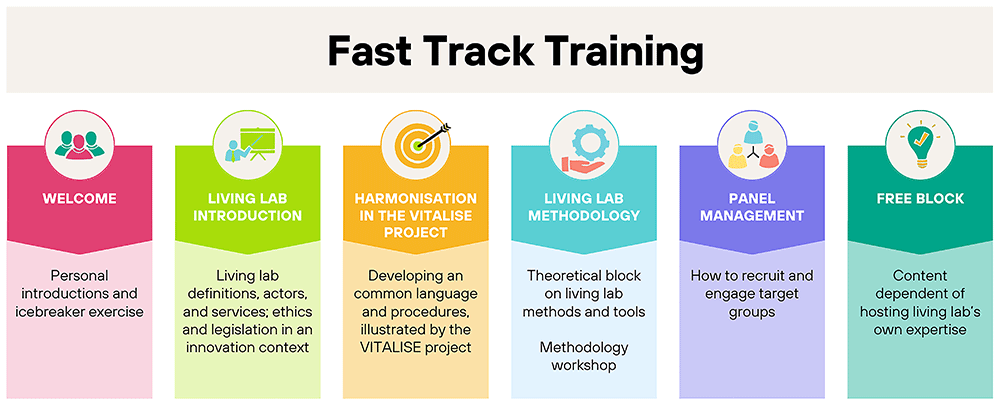
Figure 2. Overview of the training elements.
In the welcoming part, both the visiting researchers and the hosting living labs introduced themselves. An icebreaker exercise helped to set the tone. The icebreaker is an animation technique that makes participants more conducive to creativity and sharing. Typically carried out at the start of a meeting, it is an exercise that aims to relax the atmosphere and put the participants in a state of mind of openness necessary for the creative posture.
The second block aimed to provide a broad introduction in the world of Living Labs. The participants discovered for example what defines a Living Lab, which roles and actors can be found in the Living Lab context, and which services could be provided. Another important topic in this block was the ethical framework which had proven to be increasingly important in an innovation context where products, contexts and legislation can change at a quick pace. The block concluded with the discussion of ethical challenges and how to tackle them.
The third block was about the importance of harmonisation, which is the core business of the VITALISE project. Living Labs can use a variety of procedures operationalised in different ways. A harmonisation of the implemented services, infrastructures and language can help to achieve more cost efficiency, optimal use of time and resources and wider exploitation of research results from local communities to offer their valuable services in the Research and Development community. Therefore, the instructors guided the researchers through the objectives, challenges and different work packages of the VITALISE project, putting the focus on the different joint research activities to be conducted throughout the project.
The second training day started with a theoretical block on methodologies, followed by a methodology workshop. Starting from a design thinking perspective, different methods and tools were discussed. In the sixth block, theory was put into practice with a methodology workshop. Three options were possible: 1) The hosting living lab supported the visiting researchers with further elaboration of their study to be conducted during the visit, 2) the hosting living lab demonstrated a method or tool of their choice, or 3) The UX design speed testing template, provided by one of the consortium partners, was used as an example.
The fifth block comprised the issue of panel management and how to engage target groups. Recruitment strategies were examined as well as the motivators and barriers to participate for users. The benefit of having a panel database was explained. Trainers elaborated on how to start building up a panel and how to engage users on a long term. Finally, it also included how to monitor your panel activities.
The final block is a free block with content depending on the hosting living lab’s own expertise or best practices. As an example, a training block on how to work with companies and business model preparation was included in Belgium.
The complete set of educational materials prepared for the VITALISE Fast Track Training is also publicly available in the project website: https://vitalise-project.eu/fast-track-training/.
FTT survey results
Expectations
A total of 91 researchers who planned to visit nine different living labs (AIT, N = 5; AUTH, N = 17; GAIA, N = 9; INTRAS, N = 14; Laurea, N = 11; LiCalab, N = 18; McGill, N = 4; TREBAG, N = 8; and UPM, N = 6) completed the expectations questionnaire. Table 1 presents the number and proportion of participants who deemed a proposed training block relevant. The most frequently selected topic was the introduction and ethical framework, followed by target groups and panel management. The harmonization block was selected least often.
Table 1. Overview of the frequency and proportion of participants who indicated a certain training block as relevant before receiving the training (multiple blocks could be selected; N = 91).
| Topic | N | Proportion (%) |
|---|
| Introduction to Living Labs – Living Lab services – Ethical framework | 66 | 72.53% |
| Target groups – panel management | 47 | 51.65% |
| Methodologies workshop | 42 | 46.15% |
| Methodologies (theoretical framework) | 40 | 43.96% |
| The importance of harmonisation – VITALISE project | 36 | 39.56% |
Satisfaction and quality of the training
In total, 49 participants from 17 countries and four professional domains completed the FTT evaluation survey following their visits to seven different living labs (AIT, N = 1; AUTH, N = 14; GAIA, N = 7; INTRAS, N = 8; LiCalab, N = 7; TREBAG, N = 7; and UPM, N = 5). More female (N = 31) than male (N = 18) participants responded to the questionnaire and participants originated from many different countries, specifically from the UK (N = 7), Albania (N = 6), Poland (N = 6), Italy (N = 5), Romania (N = 5), France (N = 3), Slovenia (N = 3), Portugal (N = 2), Cyprus (N = 2), Ireland (N = 2), Israël (N = 2), the Netherlands (N = 1), Argentina (N = 1), Norway (N = 1), Belgium (N = 1), Colombia (N = 1), and Spain (N = 1). The majority of participants were from the academic field (Table 2).
Table 2. Researchers’ background.
| Domain | N | Proportion (%) |
|---|
| Academia | 41 | 83.67 |
| Entrepreneur | 2 | 4.08 |
| Government researcher | 3 | 6.12 |
| Industrial researcher | 2 | 4.08 |
| Other | 1 | 2.04 |
| Total | 49 | |
The overall satisfaction score regarding the FTT was 9.11 out of a possible 10 (SD = 1.07, Range 5-10; N = 47). Almost half of the participants indicated the maximum score (N = 22). Furthermore, we asked researchers to what extent the FTT met their expectations. On a scale from -2 (much worse than expected) to +2 (much better than expected), the mean score was 1.29 (SD = 0.74; N = 49). All participants indicated that the FTT was as expected or (much) better.
Researchers rated all training blocks in terms of quality and usefulness on a scale of 1 (very low to none) to 5 (very high) (Table 3). The training blocks were generally deemed of high quality. A Friedman test indicated a significant difference in quality rating between blocks, χ2 (4, N = 39) = 9.495, p = 0.05. A Wilcoxon signed-rank test indicated that there was only a significant difference between the Methodology – Theory block and the Harmonisation block, z = -2.829, p = .005. The Methodology – Theory block was rated significantly higher than the Harmonisation block. The average usefulness of all training blocks was also high, with minor differences indicating the highest usefulness of Panel management and lowest for The Vitalise project and the importance of harmonisation, although opinions on this topic varied widely. The Friedman test showed that the differences between the usefulness of the blocks did not reach significance, χ2 (4, N = 39) = 8.642, p = 0.07, although the result suggested a trend towards significance. The result of the analysis presented in Table 3 can also be found at (Konstantinidis et al., 2025).
Table 3. Quality and usefulness rating of the Fast Track Training blocks.
| | Quality1 | | Usefulness2 |
|---|
| Training block | N | Mean | SD | Min | Max | N | Mean | SD | Min | Max |
|---|
| Living Lab introduction | 48 | 4.63 | .64 | 3 | 5 | 48 | 4.50 | .77 | 3 | 5 |
| Harmonisation in the VITALISE project | 48 | 4.46 | .65 | 3 | 5 | 47 | 4.21 | .93 | 2 | 5 |
| Living Lab methodology - Theory | 46 | 4.76 | .43 | 4 | 5 | 45 | 4.58 | .66 | 3 | 5 |
| Living Lab methodology - Workshop | 41 | 4.71 | .60 | 2 | 5 | 42 | 4.55 | .63 | 3 | 5 |
| Panel management | 44 | 4.61 | .69 | 2 | 5 | 44 | 4.68 | .52 | 3 | 5 |
Forty-six participants (46) responded to the question how confident they felt after the FTT in applying the Living Lab concepts and methodology in their own specific context, on a scale from 0 (not at all) to 10 (very confident). Most participants were positive with a mean of score 8.54 (SD = 1.86) (Figure 3).
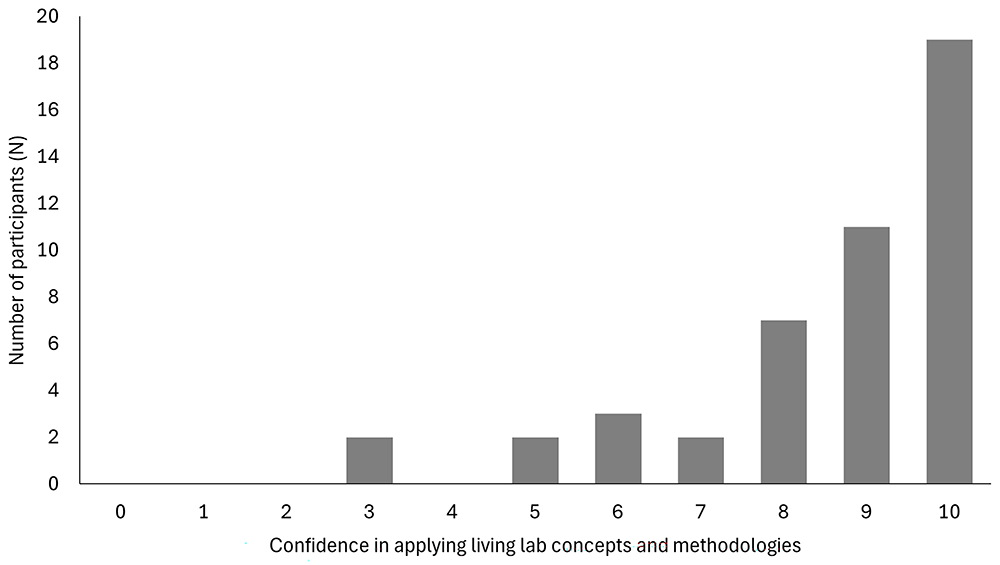
Figure 3. Confidence in applying the Living Lab concepts and methodology in their specific context after training (0 not at all - 10 very confident).
Least appreciated training block
Participants were asked which of the training blocks they would not like to attend again (forced choice). If they needed to cut one block, almost 40% of the participants (N = 18) selected the introduction session. The main reasons provided for this were that participants indicated that they already had sufficient prior knowledge on the topic or that the topic was quite general in comparison to the other more specific training blocks. Twelve respondents selected the block Harmonisation in the framework of the VITALISE project. They evaluated this topic as less relevant to their own research and, consequently, not a priority in an already tight schedule. Respectively six and four researchers would not attend the methodology theoretical session or methodology workshop again. Provided reasons were the presence of prior knowledge on these topics or already having a clear idea about the protocol and methodologies that were suitable for their own research. Two participants indicated that a methodology workshop was not provided by their hosting living lab so they chose this option. Some participants indicated that they found it useful, but because they had to pick one they would opt for the methodology theory training. Finally, only three participants would skip the panel management session.
Strengths of the training
When asked what they appreciated most regarding the training, four categories of responses were identified. The exchange and interactions with the hosting living lab experts were mostly valued (N = 21). Especially the open and interactive discussions, elicited by the presentations, made it possible to dig deeper into certain themes, methods, or struggles. Additionally, nineteen participants referred to specific content of the FTT training blocks. A wide variety of FTT topics was mentioned in this respect, which reflects the diversity of the interests of external researchers. The third category concerned the acquisition of new knowledge and insights in an efficient way (N = 14). Finally, seven researchers mentioned the flexible, on demand approach of the FTT, with even the opportunity to have the training (partly) online.
Some additional strengths were mentioned in the general remarks section. Twenty-one participants were positive and thankful for the training and the opportunity to follow this training and to work with the VITALISE consortium. As one participant phrased it: “It was great to know the objectives of the living lab and how I can support them, and how they can support me.” Another participant declared that this initial training was necessary to be able to understand the VITALISE project as a whole as well as the specific living labs they were working with.
Suggestions for additional topics
Participants had the possibility to make suggestions for additional topics to include in the training. Several researchers indicated that they liked the program in the current state (N = 17), for example since it covered enough diverse topics already. Another thirteen participants responded that the question was not applicable or that they didn’t know. Suggestions that were provided by other participants were firstly to make the FTT even more interactive by adding not only small exercises but also more extensive workshops showcasing for instance the use of specific tools throughout the different training blocks. Topics could also be expanded with more descriptions of use cases conducted by the hosting living lab. Some specific topics that were deemed relevant to add, were (international) communication and collaboration, measuring impact, how researchers make use of living labs, to collaborate in research projects, how to write academic publications or reports, and technological as well as social innovations. Finally, finance and funding were also deemed important, as well as how to scale-up and commercialise projects or a section on cross-border data collection and data analysis.
Some additional suggestions were provided in the general remarks section. One participant wished for longer sessions with more in-depth discussions on their specific research project. Another participant suggested to add more case studies of the hosting living lab into the methodology section. This opinion was supported by the suggestion of another participant who had a preference for an even more interactive training. Some participants mentioned the need to gain insight into what kind of collaboration could be expected from Living Labs in future, referring to networking collaborations, opportunities to collaborate in future (EU-)projects or in shared value models.
Evaluation of the NoteTheBook diary
Participants were asked to rate their experience with the NoteTheBook diary on a scale from 0 (“not useful”) to 10 (“very useful”). Six participants did not provide a response to this question. Among the 43 participants who did respond, a substantial proportion (N = 16) gave the maximum score of 10, indicating they found the diary very useful. Additionally, eight participants gave a high score of 8 or 9. Only three participants gave the diary a score lower than 5. Overall, participants were positive about the diary, with a mean score of 7.49 (SD = 2.77).








