Disclaimer
The views expressed in this article are those of the author(s). Publication in Open Research Europe does not imply endorsement of the European Commission.
Introduction
The integration of AI into software engineering is transforming the development pipeline, enhancing efficiency, productivity, and quality across various stages. AI techniques are being increasingly applied to various phases of the software development lifecycle, including requirements analysis, design, development, testing, and maintenance. These applications aim to improve processes and address challenges in software engineering1. AI-driven coding assistants have attracted significant investment, with nearly $1 billion in funding since early 20232. These tools are becoming integral to software engineering, automating tasks such as code generation, debugging, and testing, thereby enhancing developer productivity and efficiency. Additionally, AI assists in project management and DevOps by automating routine tasks, improving time estimates, and optimising continuous integration/continuous deployment (CI/CD) pipelines. This integration enhances efficiency and reliability in the development process3. The role of AI in software engineering is expected to expand, with AI agents anticipated to handle a significant portion of software engineering tasks soon. This evolution underscores the importance of integrating AI into development workflows to maintain competitiveness and efficiency.
In particular, generative AI and LLMs are transforming software development by automating key processes such as requirement gathering, code generation, testing, and debugging, while working in collaboration with human developers4. AI tools streamline development by interpreting natural language inputs to produce code, generate user stories, and create test cases, enhancing productivity, reducing errors, and enabling developers to focus on complex, creative tasks. With capabilities such as autocompletion, code synthesis, and adaptive testing, AI accelerates the development cycle, improves software quality, and optimises debugging by identifying and fixing vulnerabilities and inefficiencies, thereby reshaping how software is designed, built, and maintained.
AI-supported software development offers transformative potential but also poses several challenges that need to be addressed5,6. Achieving efficient and agile development through AI (Specific Objective 1 (SO), see Section 2) is complex due to the integration of advanced AI models into traditional workflows, often requiring significant adaptation of existing tools and practices. Integration complexity (SO1) adds to this challenge, as diverse systems, frameworks, and architectures must seamlessly interact. Resource optimisation (SO3) becomes critical in leveraging AI efficiently while minimising computational and energy costs, especially in building dynamic and resilient multi-architecture software. Ethical and regulatory considerations (SO5), including compliance with frameworks such as the AI Act, demand careful attention to ensure fairness, privacy, and transparency. Advanced code analysis and fault prediction (SO1) highlight the need for robust AI models capable of identifying vulnerabilities and inefficiencies, while scalability and resource constraints (SO3) pose difficulties in scaling AI solutions across large, resource-limited projects. Accurate evaluation and performance metrics (SO4) are essential for measuring the impact of AI tools on productivity and quality. Moreover, ensuring quality assurance (SO2) throughout the lifecycle remains challenging due to the dynamic nature of AI systems. Despite promises of efficiency and speed, many AI-enabled processes remain time-consuming (SO1), requiring refinement to match industry needs. Lastly, the integration of responsible software engineering practices (SO6) is vital to align AI-driven development with ethical, sustainable, and user-centric goals. Addressing these challenges holistically is essential to unlock the full potential of AI in software development.
The AI4sweng initiative7, a research and innovation action funded under the Horizon Europe Programme, focuses on delivering AI-powered support to software developers. Its goal is to reduce stress in agile development processes and enhance productivity, job satisfaction, and creativity. The mission of the AI4SWEng project is to deliver transformative AI-powered support for high-efficiency system design and development with resilience, reliability, security-privacy protection, energy efficiency, maintainability, and re-usability, as well as ethical and regulatory compliance, such as AI-ACT8. The focus is on using AI models, techniques, and tools to support the system development and evaluation pipeline by:
starting from data provenance checking, data extraction-generation-balancing, data cleaning, requirements engineering, data (re)-engineering, architecture specification, security and privacy protection and automated testing and
at the deployment stage, using AI for continuous evaluation, fine-tuning, refinement and re-optimisation of the solution.
Thus, the project aims to advance software engineering methods, tools, techniques, and best practices by leveraging novel AI Engineering and Data technologies. The focus is on developing and maintaining software for multi-architecture systems, efficient and agile modelling, reliability, and security-by-design, including vulnerability assessment and mitigation9.
Accordingly, AI4SWEng will deliver a software development platform capability and a TAT for AI-enabled software engineering to support all phases of the development lifecycle from requirements specification to (automated) testing of the most common building blocks of DevOps-MLOps solution stacks. This tremendous effort involves the design and development of an advanced framework for code analysis-generation, code-architecture, cross-compilation, validation, and semi-automatic creation of pre-conditions, post-conditions, and invariants for software modules. In this way, the project aims to support the automatic derivation of requirements and the development of conceptual and architectural models, architecture-to-code-to-architecture derivation, reverse execution, and dynamic code-slicing and debugging, code analysis for proactive code optimisation, fault prediction and location, as well as self-repair capabilities for reliability, resilience, and security in multi-architecture systems. Furthermore, recognising the worldwide shortage of AI-trained software engineering talent and the need for advanced training for the new generation of software developers with excellent skills in using such AI-powered tools to support agile development pipelines, AI4SWEng also provides user training particularly focused on crucial skills such as Prompt Engineering to support data analysis and quality improvement, code understanding, architecture specification, execution and dynamic-slicing.
This paper aims to announce the AI4SWEng mission as well as to inform the software development community about its promising strategy. This introduction is needed to reach a wider audience and raise awareness and discussions about the project scope. The presented solution can be helpful for other researchers to extend their vision towards the AI4SWEng perspective and foster joint studies and further exchange of knowledge and experiences. This overarching goal of the paper is presented in the following sections. Section 2 summarises the AI4SWEng objectives and the baseline background that motivates the project Consortium to propose the key innovations and solutions. Section 3 describes the high-level solution architecture and the underlying key innovations offered by the Consortium partners. Section 4 presents the use cases and the realistic strategy to prove the concept of the AI4SWEng idea. Section 5 summarises the expected impact in the medium and long term. Finally, Section 6 concludes the paper.
AI4SWEng background and objectives
AI4SWEng envisages advancing the state-of-the-art in AI-powered software engineering, emphasising a systematic and rigorous approach to designing, testing, validating, and maintaining software systems following established principles and best practice. A central goal of this endeavour is to address the challenge of AI bootstrapping for lifecycle support in AI-enabled software engineering. This involves leveraging LLMs to map natural language expressions of system requirements into formal specifications, while also facilitating data engineering, architectural design, code development, and testing. By harnessing AI, the project aims to enable task-specific “X-by-design” approaches, optimising the performance, reliability, and predictability of software systems through AI-driven development tools, such as the AI-SysDev and the TAT. Furthermore, the initiative aims to support the development of advanced systems characterised by parallelism, multiprocessing, and multi-architecture network-centric paradigms, aligned with the demands of modern system-of-systems engineering.
To enable the addressed advancement, AI4SWEng aims to revolutionise software engineering by leveraging responsible AI and data technologies, focusing on accelerating development and maintenance, particularly for multi-architecture systems. We address specific challenges in efficient and agile modelling, verification & validation (V&V), and vulnerability assessment & mitigation, all under the framework of responsible AI principles. Dealing with the above-mentioned scope, AI4SWEng has six Specific Objectives (SOs) listed below:
1. Improving the development-time analysis and operationalisation of architecture design, including monitoring software performance, AI-driven log data analysis and bug fix generation, dynamic slicing and reverse execution, pro-active fault prediction and identification, and recommendations for corrective actions.
2. Enabling more effective generative AI-driven requirements engineering, architecture specification and code analysis-generation for common functionalities, automated testing and optimisation, including architecture generation from code and automatically generating function test suites for a given architecture/code base.
3. Realising a generative AI-driven code adaptation framework for compiler code generation, cross-compilation, and test-case creation; software scalability-reusability through dynamic reconfiguration with CodeOps-DevOps support.
4. Strengthening auditable use of generative AI in software development, including source identification and data-provenance-aware training of generative AI systems. Analysis of the impact of AI-enabled software deployment for full functional compliance responsive to key performance metrics, e.g. resilience, reliability, security-privacy, energy efficiency and maintainability.
5. Adopting auditable security-privacy protection by design, socio-ethical acceptability (AI-ACT Compliance) and user acceptance.
6. Establishing a framework for software developer training to best exploit the resulting AI-powered tools to accelerate agile, efficient software engineering, using AI-generated insights to optimise software development decisions, resource allocation, and road-mapping the extension of the certified common code base. -including open-source availability of the resulting AI4SWEng tools and project -policy insights.
To address the recent challenges of software development, including hardware-based design and embedded programming, there is a critical need for research and development initiatives that advance the State-of-the-Art in responsible software engineering methods, tools, and best practices. AI4SWEng focuses on smart intelligent system specification, agile system and code development, advanced code analysis, fault prediction and location, and self-repair mechanisms enabled by emerging AI and data technologies. In line with the SOs mentioned above, the following major outcomes are expected (Expected Outcome – EO):
1. A suite of AI-powered tools and techniques for improved lifecycle software development and maintenance efficiency.
2. Higher developer job satisfaction and productivity through AI-powered support, particularly for accelerated resolution of the more stressful and time-consuming “pain-point” stages of the software development pipeline to achieve demonstrably reduced time-to-market for new software releases and faster turnaround times for resolving software issues.
3. Enhanced software development process quality with minimised bugs and proactive maintenance approaches.
4. Data-driven insights for informed design decision-making and strategic software development planning.
Aligned with these SOs and EOs, the AI4SWEng project envisages addressing the challenges that arise from the implementation of an AI-powered software development environment through specific paradigmatic responses designed to enhance efficiency, security, scalability, and ethical compliance. Energy efficiency is achieved using smaller, task-specific LLMs, particularly beneficial for deployment in resource-constrained environments such as Smart Edge nodes. The approach ensures that the system is inherently secure, with all processing and fine-tuning performed locally, eliminating the need for sensitive data to leave the premises of the client organisation. The system also features an auditable pipeline by leveraging techniques such as Retrieval-Augmented Generation (RAG), enabling the traceability of outputs to their original datasets. Scalability is ensured with task-specific LLMs with RAG, capable of handling extensive data sets and contexts exceeding the inherent capacity of the model. Moreover, the system is flexible, adapting and evolving based on organisation-specific proprietary data, thereby offering tailored solutions. Importantly, the project prioritises auditable ethical quality, ensuring that AI solutions align with societal values, stakeholder rights, and regulatory norms. This comprehensive strategy is supported by an intense solution framework and targeted key performance indicators, ensuring measurable impact across energy efficiency, security, scalability, and ethical compliance dimensions.
Policy background
The AI4SWEng project is set to make substantial contributions to the EU policy framework, with tangible impacts across key European strategic dimensions. By delivering technical innovations such as the AI-SysDev Tool, the Test Automation Toolkit (TAT), LLM-powered engineering components, and energy-efficient AI deployment, the project bridges advanced research with EU policy ambitions.
Strengthening the EU Industrial Strategy10: The AI4SWEng project approach to flexible, secure, decentralised, and AI-enabled software development aligns with the goals of the EU Industrial Strategy. Tools such as the AI-SysDev Tool and TAT empower SMEs to adopt automated, efficient, and standards-compliant development workflows, reducing costs and time-to-market. By enabling modular, scalable, and reusable code components, the project supports digital innovation ecosystems and contributes to a resilient and competitive European industry.
Advancing the European Green Deal11: Through the integration of TinyML, task-specific LLMs, and energy-aware automation tools, AI4SWEng supports the Green Deal objective to create a resource-efficient and sustainable economy. The platform enables low-energy AI inference at the edge, promotes efficient testing practices, and facilitates greener software development pipelines—contributing to lower emissions and reduced energy consumption in digital operations..
Supporting the Digital Single Market12: AI4SWEng promotes secure, standardised, and interoperable digital solutions. The use of Retrieval-Augmented Generation (RAG), data provenance tracking, and privacy-preserving LLM fine-tuning ensures compliance with data sovereignty and transparency requirements under the Digital Single Market framework. These features support the free flow of data, cross-border collaboration, and trustworthy AI adoption throughout the EU.
These contributions reflect how the AI4SWEng project technical outputs serve as enablers for major EU policy objectives, highlighting the potential of the project to drive sustainable, secure, and industrial-grade digital transformation. By embedding regulatory alignment, ethical safeguards, and energy efficiency at the core of its tools, AI4SWEng acts as a strategic force for European digital and green innovation.
Scientific background
AI-enabled code analysis and understanding support code generation, testing, debugging, documentation, and maintenance through natural language processing, machine learning, and deep learning to analyse software structure, semantics, and behaviour13. This includes addressing agile project management challenges through a theoretical pain point model, with generative AI proposed as a remedy for practical issues. Current advancements focus on code representation, synthesis, completion, summarisation, search, recommendation, testing, debugging, refactoring, and security. Notable tools include CodeBERT14, which encodes natural and programming languages into a unified semantic space; DeepCode15, which synthesises an executable code from test cases across multiple domains; and Code2Vec16, which encodes abstract syntax trees into fixed-length vectors for tasks such as summarisation, classification, and similarity detection. Automated software testing encompasses test execution, adequacy, prioritisation, suite reduction, fault localisation, program repair, and verification, offering a comprehensive framework for improving software reliability17.
AI-assisted code generation has gained significant traction with tools such as CoPilot18, which automates application development using AI models and natural language understanding. AlphaCode19 employs reinforcement learning to tackle complex programming tasks, while TransCoder20 by Facebook AI enables code translation across programming languages, facilitating legacy code migration and multilingual development. CodeNet21, an open-source dataset with 14 million samples in 50 languages, supports diverse programming tasks. Similarly, OpenAI Codex22 excels in code generation, translation, refactoring, and bug fixing. Despite these advancements, challenges persist, including limitations in understanding language semantics and achieving sophisticated code comprehension. Providers of integrated software development environments, such as JetBrains, are offering AI assistant functionalities that combine or switch between different commercial models for different applications23.
AI-enabled simulating reverse execution logic enables programs or systems to run backwards, reversing forward computations to aid in error correction, state restoration, and scenario exploration. Applications include reversible execution for robustness in embodied AI and industrial robots24, which integrates reversible computation with AI planning for robotic assembly tasks. The RAMSES framework25 uses reversibility and speculation to enable parallel execution in agent-based discrete event models. Additionally, ReVA26 serves as an AI assistant for reverse engineering, functioning as a disassembler-agnostic tool for reverse engineering tasks.
AI-enabled generation of pseudocode for reverse execution leverages AI to generate human-readable pseudocode from executable code, facilitating reverse engineering, debugging, and testing. By simulating reverse execution, this approach efficiently reconstructs prior execution states to identify and correct errors or explore alternative scenarios. Authors of a recent study introduced a novel methodology utilising large language models for static analysis through pseudocode simulation27. Additionally, a retrieval-based transformer model was proposed that combines code retrieval and generation techniques to produce pseudocode from executable code, further advancing the capabilities of AI in software analysis28.
AI-enabled reverse execution can be achieved by various methods, such as recording and replaying the program state, performing backward taint analysis, or using symbolic execution. Authors of a recent paper presented two systems that used reverse execution to triage and debug software failures in production: i) RETracer29 to triage software failures based on program semantics reconstructed from memory dumps; ii) REPT30 reconstructed the execution history with high fidelity by combining online lightweight hardware tracing of the control flow with offline binary analysis of the data flow.
The challenges and opportunities of using AI techniques to automate the reverse engineering of protected software were presented in 31. This study proposed some open research directions, highlighting the deployment of machine learning and symbolic execution.
AI-enabled automated design patterns and code suggestions enhance the efficiency, reliability, and maintainability of software development by providing automated guidance and feedback, supporting the creation of high-quality, consistent, and reusable code. A recent study demonstrated how design patterns can structure automation solutions in a modular and reusable manner, with examples highlighting the capabilities of UiPath, a robotic process automation platform, in implementing these patterns32. Other work has introduced an experimental approach for the automatic detection of design patterns in source code through machine learning, achieving high accuracy and scalability compared to traditional manual methods33. These advancements underline the potential of AI-driven solutions in streamlining software development processes and promoting best practices.
AI-enabled dynamic program slicing focuses on techniques such as targeting backward execution, recording and replaying program states, backward taint analysis, and symbolic execution to analyse and debug software. In a recent study, a novel hybrid dynamic-static slicing approach was introduced that balances accuracy and runtime cost. Evaluated on 21 failures across six widely deployed applications, the technique successfully recovered 94% of program statements in the dynamic slice while incurring only a 5% runtime overhead, demonstrating its effectiveness for debugging complex systems34. Similarly, AI-enabled automated trace generation leverages AI to generate and analyse execution traces—sequences of events or states representing software behaviour—for debugging, testing, optimisation, and reverse engineering35. Additionally, a recent review paper explored the role of AI in enhancing test automation through the automated generation of test scripts, test data, execution, maintenance, and root cause analysis, showcasing its potential to streamline software testing processes36. AI-enabled automated testing is to support the quality, efficiency, and reliability of software testing. AI-enabled automated testing tools can generate and prioritise test cases, analyse test results, identify defects, and provide feedback and recommendations. For instance, TestLab is an intelligent automated software testing framework, presented as a framework for the integration of various AI-powered (continuous) testing methods (vulnerability detection, security analysis, and test-case generation)37. A very recent study presented user reviews and ratings of various AI-augmented software testing tools in machine learning, self-healing heuristics, or computer vision, to enhance the capabilities of automated testing38.
White-box Testing of Deep Neural Networks (DNNs) examines the internal structure, mechanisms, and implementation details of models to evaluate correctness, robustness, and performance. Unlike black-box testing, white-box approaches require access to the model architecture, parameters, and training data. Key techniques include architecture analysis, parameter inspection, gradient and activation checking, coverage analysis, and adversarial or fuzz testing. Fuzz testing, exemplified by tools such as DeepHunter39, assesses model resilience against unexpected inputs, aiding in robustness improvement, failure mode identification, and security testing. Symbolic execution complements fuzzing by generating input candidates abstractly, covering multiple execution paths, and avoiding false warnings.
The AI4SWEng innovation mission aims to advance the capabilities of AI-powered tools for supporting software engineering pipelines by addressing both the performance of AI models and developers’ ability to effectively model and target problem subspaces. To go beyond the state-of-the-art, the project will enhance foundational support for tools such as the AI-SysDev Tool and TAT by leveraging open-source LLMs, trained locally on proprietary data to learn from past requirements and optimise tasks such as requirements engineering, architectural planning, code generation, and automated testing. For large-scale data/code exceeding LLM context limits, RAG strategies will enable scalability, transparency, and auditable lineage tracing. The innovation emphasises scalable LLM modelling, data acquisition and preparation, and seamless transitions from requirements engineering to architecture planning, code development, and testing, thereby optimising the end-to-end exploratory data analysis and modelling pipeline for software development.
AI4SWEng innovation landscape
The integrated solution stack is formed of Key Innovations and Outcomes (KIOs), each of which is planned to be developed as software-only or hardware-supported services. All underlying KIOs are integrated over the AI4SWEng AI Engineering Suite (Suite, hereinafter), i.e., KIO1, which is an online framework integrating other KIOs that are to be offered as complementary KIOs for joint deployment. KIO1 stands out as a distinctive tool that integrates KIOs as compliant with a typical DevOps-based software development lifecycle. As seen in Figure 1, KIO1 has a Graphical User Interface (GUI) enabling code generation, Rew/Fwd and execution functions at the front end. At the backend, each KIO is integrated as a service, governed by containerisation, so that the engineering suite has a flexible and modular architecture. KIO1 relies on a typical software development life cycle, starting with requirement engineering and planning (KIO3, KIO4) by enabling the NLP-to-Formal Requirements-to-Code planning. The second step is data management, which incorporates data generation, preparation, validation and quality checking (KIO5, KIO6). Coding is the third phase where design-by-contract code generation takes place (KIO9). Refinement/improvement is a crucial step that supports the coding by enabling bug Locate & Fix, reverse execution and dynamic slicing (KIO2) as well as energy-efficient model-driven code enhancement/generation (KIO10). The fourth phase is parallel with the refinements and improvements as it incorporates AI tools for cross-compilation and reconfiguration using the DevOps methodology (KIO8) and AI-powered test automation (KIO11) within the agile development cycle. The AI-SysDev Tool (KIO7) encapsulates all these four phases of the life cycle as LLM is used horizontally in other KIOs. Multi-level cybersecurity (KIO12) and developer training tools (KIO13) are other complementary tools intended to improve the resilience of the Suite against privacy and security issues and enhance the extrapolation and adoption of the KIO1 by stakeholders. The General Data Protection Rule (GDPR) and ethics, model reliability and integrity checking, awareness activities, and strategic alignment with mainstream software development products and standards will help the Consortium fulfil the usability, acceptability, interoperability, scalability, fairness and trustworthiness requirements of the KIO1. Brief descriptions of the KIO2-KIO13 are as follows.
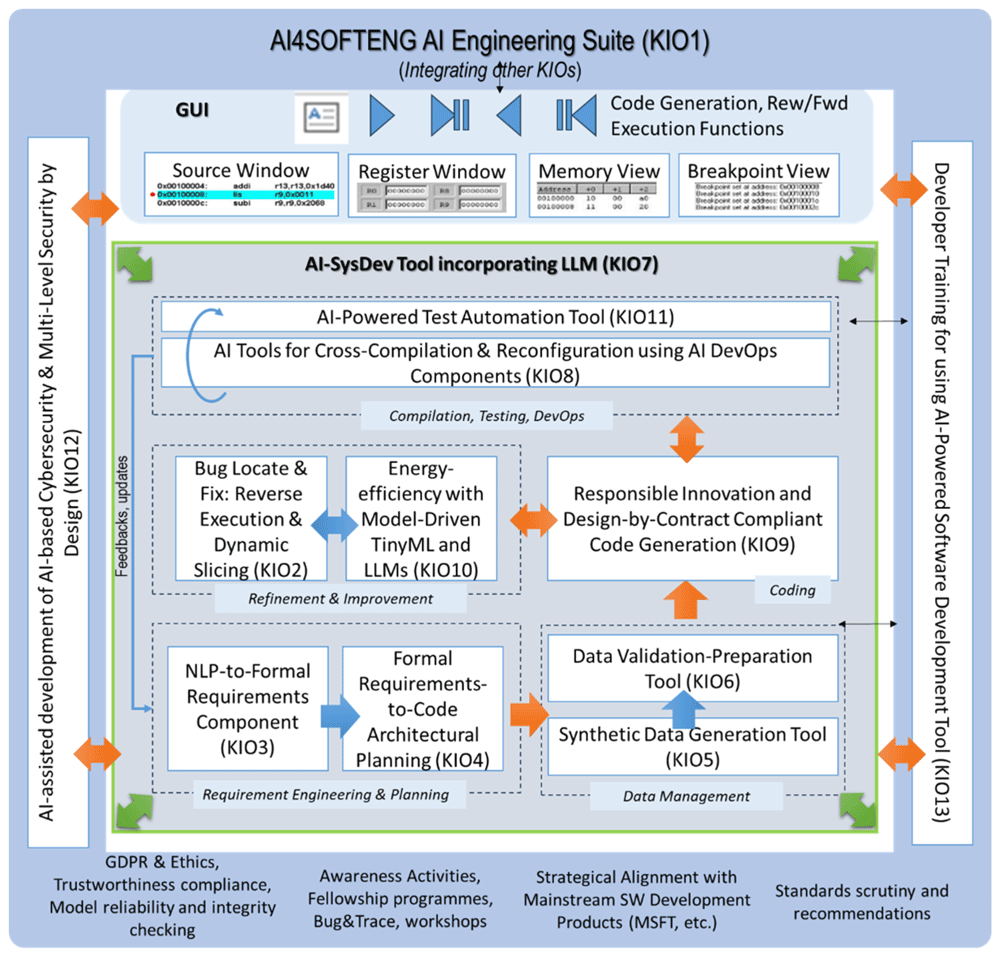
Figure 1. AI4SWEng AI Engineering Suite (KIO1) and underlying KIOs.
The effective integration of the KIOs into a cohesive and extensible framework is central to the success of the AI4SWEng Engineering Suite (KIO1). Each KIO represents a standalone innovation that addresses a specific challenge in the software development lifecycle—ranging from NLP-based requirement formalisation and code generation to automated testing, energy-efficient deployment, and ethical compliance. To support user interaction, KIO1 includes a graphical interface that enables code generation, reversible execution, and visualisation of development flows. To ensure that these components work in harmony, the proposed Suite implements a modular integration strategy based on standardised service interfaces, shared data formats, and orchestrated execution environments. This integration strategy adopts containerisation and microservice architecture to enable plug-and-play interoperability across KIOs. The platform enables flexible configuration and deployment, supporting diverse use cases and evolving software workflows by exposing each component as a service. A central integration layer manages the flow of data and control signals between KIOs, enabling iterative refinement loops, for example, linking the outcomes of automated requirement extraction and planning (KIO3, KIO4) with code synthesis (KIO9), and feeding runtime bug reports (KIO2) back into testing automation (KIO11) and reconfiguration modules (KIO8). Moreover, a unifying layer ensures semantic consistency and traceability throughout the development process. This includes the integration of Retrieval-Augmented Generation (RAG) pipelines for cross-KIO knowledge management, ensuring that generative AI outputs are both contextually grounded and auditable. KIO7 serves as an orchestration hub that coordinates LLM-based intelligence across the entire suite. Additional capabilities include energy-aware model-driven code enhancement (KIO10), AI-based cross-compilation and reconfiguration, and automated test generation. Complementary tools for multi-level cybersecurity (KIO12) and developer training (KIO13) further strengthen the resilience and adoption of the Suite. Finally, alignment with GDPR, ethical AI principles, and mainstream software development standards helps to ensure the usability, trustworthiness, and scalability of KIO1 across diverse stakeholders.
KIO2: bug locate & fix: reverse execution & dynamic slicing component
In complex multi-threaded and multi-processor environments, dynamic slicing with forward and reverse execution is essential for identifying and resolving intricate bugs. AI aids this process by analysing programs, isolating relevant segments, and simulating reverse execution logic to generate pseudo-code, offering insights into root causes. Developers can then rewind or replay execution scenarios to apply self-correcting algorithms. Microsoft Research BugLab40 leverages a deep learning model trained without labelled data using a self-supervised "hide and seek" approach. This involves two models—a bug selector and a bug detector—collaborating to identify and fix issues, such as incorrect comparisons or variable misuse. This approach highlights the growing trend of using AI for automated bug detection and repair, significantly reducing manual debugging efforts and accelerating development. The BugLab methodology, reminiscent of generative adversarial networks (GANs), employs a dynamic interplay between generating and detecting bugs.
KIO3: Natural Language Processing (NLP) to formal requirements component
KIO3 establishes a structured process for translating natural language descriptions into formal software engineering requirements. It begins by converting descriptions into user stories formatted as “As a [user type], I want [goal] so that [reason],” ensuring clarity and relevance to user needs. Functional and non-functional requirements are then defined, outlining the software features, its performance criteria, security measures, and usability standards. Wireframes are created to visually represent the software layout and functionality, offering a concrete understanding of its intended design. Acceptance criteria are established to determine when the software is complete and ready for delivery. Additionally, assumptions and constraints are documented to account for any factors influencing the development process. This systematic approach bridges the gap between natural language descriptions and formal requirements, advancing the development of Data Preparation Tools. These tools transform raw data into training sets for LLMs, which are fine-tuned using examples from the prepared data. A RAG strategy is implemented to address cases where input data exceeds the LLM context size. The integrated system is validated to ensure its functionality and effective performance within the targeted domain.
KIO4: Formal Requirements-to-Code architectural planning component
Building on the framework for translating natural language descriptions into formal software engineering requirements, KIO4 extends the process to code architectural planning, ensuring a smooth transition from requirements to implementation. By leveraging the fine-tuned LLMs from the previous stage, the approach supports mapping formal requirements to architectural components. The process includes requirements analysis to identify architectural elements and establish their mapping to guide planning. It formalises component properties, interfaces, and relationships, enhancing transparency in design decisions and supporting future maintenance. Architecture modelling and visualisation further aid this process, enabling integration and alignment with the broader software development pipeline. A real-time architectural suggestion mechanism, powered by fine-tuned LLMs, provides immediate feedback and recommendations, streamlining the architectural planning phase.
KIO5: synthetic data generation tool
As part of the broader trend of leveraging AI to enhance data availability and quality, advancements in AI-powered data synthesis and generation have become essential for developing robust AI systems. These techniques address challenges such as scarce or sensitive real-world data and imbalanced datasets, particularly in domains involving natural systems where minority classes are common. Reliable model performance in these scenarios requires balanced datasets while preserving the integrity of feature distributions across classes. KIO5 will build on recent innovations in data generation, including
1. NLP techniques using transformer-based LLMs trained on extensive code datasets to support data generation and programming tasks41;
2. Generative Models, such as GANs and Variational Autoencoders (VAEs), to synthesise data without requiring real-world collection42;
3. AI-Assisted Red-Teaming (AART), which automates data generation and augmentation to integrate adversarial testing earlier in development43; and
4. Tools such as the MIT Synthetic Data Vault44 provide open-source solutions for generating diverse data types.
5. These approaches aim to improve data quality and availability while maintaining pattern integrity across datasets.
KIO6: Data validation-preparation tool
The Data Validator ensures data quality by comparing properties against a generated schema and recommending updates with each data ingestion instance. It supports single-batch and inter-batch validation and verifies assumptions in the training code not reflected in the data. The Data Analyser computes statistical properties, while the Model Unit Tester identifies errors in training code using schema-based synthetic data. To operationalise the Data Understanding and Preparation phases of the Quality AI Framework (QAIF), the project will deploy the Data Quality Wrapper tool for automated preprocessing and report generation45. This approach emphasises quantifying observations, aligning with the data-centric AI paradigm that prioritises data quality and validation. Additionally, a Data Preparation tool will be implemented to extract, clean, and format existing textual and structured data, transforming it into training sets suitable for fine-tuning LLMs.
KIO7: AI-SysDev Tool incorporating LLM fine tuning and inferencing
LLM fine-tuning focuses on local training and customising open-source language models for tasks such as requirements engineering, architectural planning, code generation, and automated testing. Using examples from the Data Preparation Tool (KIO6), fine-tuned models adapt to project-specific needs. During inference, when input data exceeds the LLM context size, a RAG strategy is applied, including retrieval, re-ranking, and prompt compression46. This approach ensures better bug avoidance, standards compliance, and energy efficiency, aligning the fine-tuned LLMs with the needs of the software development process. The methodology extends to software maintenance and testing. In maintenance, LLMs assist with code refactoring, bug detection, and documentation by analysing the codebase and automating tasks. Fine-tuning models on domain-specific data enhances their relevance and integration into workflows. For testing, LLMs generate and analyse test cases, identify vulnerabilities, and simulate user interactions. Techniques such as Connectionist Temporal Classification (CTC) and encoder-decoder architectures are utilised for handling complex input-output sequences, enabling more effective and automated regression testing, and ultimately improving software quality and reliability. To further enhance user interaction insights, pre-trained CNNs (e.g., VGG, ResNet) and word embeddings (e.g., GloVe47, FastText48) are employed to encode web page snapshots and user actions into dense vectors. These embeddings are fine-tuned during training to align with task-specific requirements. Transformers, such as TransCoder49, support unsupervised machine translation for code adaptation between languages and webpage sampling improvements. By leveraging high-quality webpage samples, the system can recommend optimal module implementations and provide detailed feedback, overcoming limitations in traditional data logging and enabling more nuanced insights into user behaviour.
KIO8: AI Tools for cross-compilation & reconfiguration using AI DevOps components
Years of research in automata processing architectures and software engines have expanded the application domains of finite automata. However, fragmented software frameworks and restrictive licensing hinder cross-platform evaluation. To address this, MNCaRT50, a centralised suite for automata processing, supports state machine compilation, execution, and optimisation across platforms. Advancements in containerisation, exemplified by Docker, ensure OS-independent deployment and portability despite challenges in implementation. KIO8 focuses on developing generative AI tools for cross-compilation and reconfiguration, leveraging AI/ML to automate code, configuration, and deployment script generation for various architectures. These tools analyse existing codebases, identify optimisation opportunities, and generate platform-compatible, optimised versions. By accelerating development cycles and improving scalability and resource utilisation, this approach enhances software adaptability across frameworks, platforms, and hardware configurations. Integrating AI DevOps components into the development pipeline facilitates seamless integration, continuous deployment, and real-time optimisation. This innovation transforms traditional software development by fostering portability, scalability, and agility, enabling organisations to drive efficiency and innovation in their software engineering practices.
KIO9: responsible innovation and design-by-contract compliant coding
This KIO aims to enhance the LLM's ability to integrate ethical guidelines into data handling, ensuring adherence to principles of fairness, accountability, transparency, and compliance with privacy laws. By embedding ethical norms, LLMs can generate and process data responsibly, addressing biases and upholding socially accepted standards. The approach includes an ontologically guided framework for context-specific compliance, enabling LLMs to suggest data processing protocols and safeguarding measures. It also focuses on facilitating abstraction transformations for seamless tool integration, encoding non-functional requirements such as security and reliability in AI-understandable formats, and enabling LLMs to adapt to evolving user business requirements, ensuring responsiveness to dynamic compliance needs throughout the software lifecycle.
KIO10: energy-efficiency with model-driven TinyML and LLMs
Since 2012, AI system energy consumption has surged, accounting for up to 9% of global electricity use and 2% of CO2 emissions51. To address this, the AI community is prioritising energy-efficient development, exemplified by the AI4SWEng project Model-Driven TinyML for IoT Edge devices52. This approach leverages domain-specific modelling to tackle design and validation challenges, improving service quality, ML performance, privacy, security, and sustainability. By enabling resource-constrained edge devices to perform ML tasks locally, TinyML minimises energy consumption by reducing data transmission to the cloud. Task-specific LLMs perform on-device analytics, further cutting energy use.
AI4SWEng employs multi-level abstraction in software modelling, facilitating platform-independent and platform-specific development and validation. The project advances smart IoT services deployable on ultra-low-power microcontrollers. Using TensorFlow Lite and its microcontroller variant, it integrates model-driven software engineering with AI to generate efficient code for diverse IoT platforms.
KIO11: AI-Powered TAT
This initiative focuses on developing a TAT tailored to the agile software development pipeline by integrating advanced tools and methodologies. The American Fuzzy Lop Plus (AFL++) fuzzer53 will serve as a foundational component, providing robust fuzzing capabilities. The open-source OSS-Fuzz tool54 will be incorporated, either partially or fully, to enhance the TAT testing functionality. Additionally, LLMs will be deployed to automate key aspects of the tool, while the dynamic symbolic execution engine KLEE55 will complement the fuzzers by supporting symbolic execution tasks. To further strengthen the capabilities of the tool, integration with Angr will enable both static and dynamic (“concolic”) binary symbolic execution. The tool will also provide user guidance on effectively utilising Angr56, particularly in cases involving binary-format inputs. This cohesive approach ensures a state-of-the-art test automation solution, optimised for the demands of agile software development.
KIO12: AI-based cybersecurity & multi-level security by design
An AI-based cybersecurity solution is proposed as a service that promises Host and Network Intrusion Detection, particularly for identifying zero-day attacks that evade signature-based systems. However, challenges include a lack of representative datasets for training and evaluation and the complexity of configuring detection systems to address specific attack types, which influences feature selection and engineering. The AI4SWEng project addresses these issues by leveraging NLP to automate key aspects of cybersecurity: generating representative benign and malicious datasets from high-level communication scenario descriptions, using these datasets for training and validating AI-based detection systems, and assisting in the development of attack detection engines by automating technical decisions such as AI primitives and feature engineering. The approach extends beyond detection to response optimisation. The project also explores API misuse prevention by employing LLMs to derive and enforce technical requirements from contractual conditions, ensuring compliance with terms of use. Furthermore, LLMs are applied to detect real-world attack scenarios such as SQL Injection, Cross-Site Scripting (XSS), Man-in-the-Middle (MitM), Denial-of-Service (DoS), and phishing. Fine-tuned LLMs play a critical role in identifying vulnerabilities, generating secure code, conducting security checks, and recommending prioritised countermeasures, enabling robust security practices throughout the software development lifecycle.
KIO13: Developer training for using an AI-Powered software development tool
Advanced prompt engineering is essential to effectively leverage LLMs throughout the software development stages, including NLP-based requirements, architecture design, code generation, debugging, and optimisation. Addressing the global shortage of skilled software-AI engineers, this KIO focuses on delivering structured training programs with multimedia resources. These programs emphasise ontologically framed requirements, resource and constraint considerations, and compliance objectives to enhance prompt engineering and qualitative result evaluation. This initiative aims to transform the software engineering ecosystem by improving developer productivity, creativity, and job satisfaction, leading to faster time-to-market and increased market share for enterprises. KIO13 will offer advanced training in ontologically-rooted prompt engineering via a web service, incorporating tools for ontological engineering and visualisation to support requirements framing and prioritisation aligned with system design by contract.
Team and targeted use cases
AI4SWEng is a 42-month project, which commenced on December 1st, 2024, and funded as a Research and Innovation Action under the EU HORIZON-CL4-2024-DIGITAL-EMERGING-01-22 call with grant ID: 1011899087. AI4SWEng is implemented by a well-balanced and multi-disciplinary consortium, as listed in Table 1, comprised of 15 complementary partners, representing a total of eight countries worldwide, that is composed of 5 EU, and 3 Associated (UK, Türkiye and Switzerland) countries.
Table 1. List of Participants.
| Nr. | Legal Name | Short Name | Country |
|---|
| 1 | AI4SEC OU | AI4 | Estonia |
| 2 | EURECOM GIE | EUR | France |
| 3 | COMMISSARIAT A L ENERGIE ATOMIQUE ET AUX ENERGIES ALTERNATIVES | CEA | France |
| 4 | LIBERA UNIVERSITA DI BOLZANO | UNIBZ | Italy |
| 5 | FUNDACION INSTITUTO TECNOLOGICO DE CASTILLA Y LEON | ITCL | Spain |
| 6 | IDRYMA TECHNOLOGIAS KAI EREVNAS | FORTH | Greece |
| 7 | IDENER RESEARCH & DEVELOPMENT AGRUPACION DE INTERES ECONOMICO | IDE | Spain |
| 8 | THE UNIVERSITY OF READING | UREAD | United Kingdom |
| 9 | BITNET BILISIM HIZMETLERI LIMITED SIRKETI | BIT | Türkiye |
| 10 | INNOVA INTEGRA LIMITED | INN | United Kingdom |
| 11 | ATPHARMA ILAC SANAYI VE TICARET LIMITED SIRKETI | ATT | Türkiye |
| 12 | ERGUNLER INS. PET. UR. OTOMOTIV TEKS. MAD. SU UR. SAN. TIC. LTD. STI. | ERG | Türkiye |
| 13 | HAUTE ECOLE SPECIALISEE DE SUISSE OCCIDENTALE | HESSO | Switzerland |
| 14 | ERGTECH Research GmbH | ETCH | Switzerland |
| 15 | UNIVERSITE DE GENEVE | UNIGE | Switzerland |
The Consortium is a high-quality partnership fully capable of attaining the objectives of the project. Its complementarity is based on the diversified expertise, knowledge, and networks that our partners possess, substantially covering all skills, resources, and access to stakeholders required for successful implementation. In our current partner composition, we have partners for use cases in the intelligent software development sector. Our partners can be grouped into three main types:
i. R&D partners (RTOs) experienced in AI/ML, LLMs, and semantic web frameworks (AI4, EUR, CEA, UNIBZ, UREAD, IDE, ITCL, FORTH, HESSO, ETCH).
ii. Industrial partners and technology enablers that will develop the proposed system and deploy it to the facilities of use case organisations (EUR, ITCL, IDE, INNO, ERG, BIT, ATT, ETCH)
iii. Industrial partners which will provide systems, facilities or operational environments for use.
Targeted use cases
The AI4SWEng project aims to validate AI-powered tools for delivering efficient, reliable, and socio-ethically compliant (AI-ACT) software engineering solutions across diverse modern cyber-physical applications. These include smart compliance layers that support communication, standards, and regulatory compliance at both functional and non-functional levels. The project also focuses on adaptive Cyber-Physical Systems (CPS) capable of interacting with physical environments to provide intelligent and responsive services. In addition, it addresses the smart edge, a network layer comprising IoT devices that perform local data processing, analytics, and decision making to minimise latency, bandwidth demands, and privacy concerns associated with cloud computing. Furthermore, the project targets smart CPS, distributed systems that integrate data intelligence with physical processes through computation, communication, and control, enabling seamless feedback loops between cyber and physical components. This validation underscores the transformative potential of AI tools in enhancing software quality, trustworthiness, and efficiency in a wide range of applications.
AI4SWEng will be validated in five use cases, which are detailed below:
Use case 1 (horizontal)
Optimising Software Development Lifecycle Using LLM: This use case demonstrates how LLMs can optimise the Software Development Lifecycle (SDLC) by automating key processes and improving efficiency, accuracy and sustainability. Software professionals, including developers, project managers, and testers, can leverage LLMs to reduce time and effort on tasks such as generating software requirements, drafting problems, and writing code. The process begins with the Project Manager (PM) providing task details to an LLM-based platform, including priority, programming language, and tags. The platform generates draft issues based on predefined templates, complete with tags such as priority, size, and story points, and may include automated tests and initial code solutions. PMs then review and refine the generated content to ensure completeness and accuracy before approving it for implementation. LLM tools enable developers to implement tasks more efficiently while adhering to energy-efficient coding practices. The completed code undergoes an automated compliance check to ensure it meets company standards and reduces the likelihood of bugs and human errors. The approach also includes mechanisms to address alternative flows, such as prompting developers to correct input inconsistencies or resolve compliance issues before finalising the code. The result is an SDLC workflow that is faster, more accurate, and consistent, with reduced manual effort and improved standardisation between projects. The benefits of this LLM-powered system include significant time savings, enhanced accuracy, and adherence to agile and coding standards. It promotes collaboration through standardised documentation and contributes to sustainability by encouraging energy-efficient practices. By integrating automated issue and code generation into the SDLC, software organisations can transform their workflows, achieve greater productivity and improved outcomes while aligning with modern standards of efficiency and sustainability.
Use case 2 (vertical)
Automating Medical Report Generation Using LLMs: This use case demonstrates how LLMs, such as GPT-4, can revolutionise medical report generation in the healthcare industry, improving efficiency, accuracy, and patient care. Healthcare professionals, including doctors, nurses, and medical assistants, can leverage LLMs to automate the creation of accurate and detailed medical reports, reducing the time and effort required for manual documentation. The process begins with inputting patient-specific data from electronic health records (EHR), including demographics, medical history, symptoms, diagnostic results, and treatment plans. The LLM analyses the data and generates a draft medical report based on predefined templates, covering essential sections such as patient information, diagnosis, treatment plans, and follow-up recommendations. Healthcare professionals review and edit the draft to ensure completeness and accuracy before finalising and approving the report for storage in the EHR system. Automated compliance checks ensure the reports meet regulatory standards such as HIPAA and billing requirements. Once approved, the reports are securely stored and made accessible to authorised healthcare providers, with options for patient distribution. In cases of input data inconsistencies or compliance issues, the system prompts professionals for corrective action before proceeding. This approach significantly enhances efficiency by reducing manual workload, enabling healthcare professionals to focus more on patient care. It ensures the accuracy, consistency, and standardisation of medical reports while maintaining compliance with regulatory guidelines. By integrating LLM-based automation, healthcare organisations can streamline documentation practices, improving productivity and the overall quality of care.
Use case 3 (horizontal)
LLMs for Advanced Software Generation for FPGAs in C++ and High-Level Synthesis (HLS): This use case highlights the application of LLMs to streamline and enhance the FPGA software development lifecycle, addressing complex tasks such as deep learning implementations, cryptographic algorithm design, and video processing. The approach leverages fine-tuned LLMs trained specifically in C++ and HLS to generate and refine FPGA software iteratively. Through advanced prompting engineering techniques such as "Graph of Thoughts," the LLM engages in iterative reasoning, self-evaluation, and dynamic adjustments to produce code aligned with user-defined specifications.
Users provide textual input specifying program requirements, features, and functionalities. The LLM uses this input to iteratively generate HLS source code files, which are built into an FPGA project via automated scripts. Feedback from FPGA tooling, including timing and hardware usage reports, is integrated into the iterative process to refine the software further. This feedback-driven approach ensures the final output meets user requirements precisely, improving efficiency and customisation in FPGA software development. The use case demonstrates significant benefits, including enhanced efficiency, precision, and customisation in FPGA programming, enabling users to obtain tailored solutions for complex design requirements. By integrating advanced prompting engineering and fine-tuned LLMs, this approach showcases the transformative potential of AI in FPGA development, offering a robust framework for developing efficient and highly customised software solutions.
Use case 4 (vertical)
Next-Generation Battery Management in Electrical Vehicles (EVs) with AI-Driven TinyML Solutions: This use case employs Model-Driven TinyML to enhance battery Remaining Useful Life (RUL) prediction for Electric Vehicles (EVs) through a privacy-preserving, collaborative AI system. Combining graph neural networks (GNNs), large language models (LLMs), and federated learning, the system processes diverse data sources while maintaining privacy by avoiding raw data sharing. EV software engineers, TinyML developers, and data privacy specialists collaborate to develop a robust platform capable of real-time, accurate RUL predictions. The approach integrates advanced AI methodologies, including GNNs for sensor data analysis, LLMs for insights from unstructured data, CNNs for multi-dimensional sensor data, and Recursive Neural Networks (RNNs) for sequence predictions. Knowledge graphs provide contextualisation, while LSTMs, Autoencoders, and Random Forest Trees (RFTs) detect anomalies. Model pruning optimises efficiency, and transfer learning enhances robustness. Real-time predictions with self-repairing capabilities are achieved via federated learning, while self-adaptive algorithms and dynamic slicing with Bayesian Optimisation refine models and optimise resource allocation. The resulting federated TinyML model delivers accurate RUL predictions, maintains data privacy, and supports seamless deployment across platforms with reduced computational overhead.
Use case 5 (vertical)
AI-Powered GIS Integration for Smart Energy Management: This use case leverages the AI-SysDev platform to enhance the efficiency and reliability of Geographical Information Systems (GIS) for smart energy management. By integrating GIS data with energy demand and supply information, along with geographical and meteorological insights, the platform enables optimised energy distribution and seamless integration of renewable energy sources. Key actors include GIS software engineers, AI developers, energy management specialists, and data scientists.
The solution employs AI-driven techniques to generate user stories and functional tests using LLMs, integrate diverse datasets, and optimise energy distribution networks through machine learning. Predictive modelling forecasts energy demand and supply fluctuations, while renewable energy analysis evaluates output and its grid impact. Dynamic resource allocation and optimisation ensure real-time adjustments, with unit tests and simulations validating system performance. Deployment includes monitoring and feedback mechanisms for continuous improvement. The resulting AI-powered GIS platform minimises energy losses, enhances network reliability, and facilitates renewable energy integration. With self-adaptive mechanisms to address anomalies and optimise operations, this use case demonstrates advanced methodologies for sustainable, efficient, and reliable energy management systems.
Expected impact
AI4SWEng will have a positive impact on boosting responsible software engineering methods, tools, and best practices, leveraging novel AI and data technologies. Specifically, it seeks to enhance software development and maintenance for multi-architecture systems through efficient and agile modelling, verification, validation, vulnerability assessment, and mitigation. The AI4SWEng initiative will deliver a transformative toolset comprising the AISysDev Tool and the TAT integrated over the Suite (KIO1). These tools aim to revolutionise the agile software development pipeline by achieving significant improvements in efficiency and quality across multiple metrics, including reliability, resilience, and security of software solutions, as well as energy efficiency aligned with the Green Deal objectives and United Nations (UN) Sustainable Development Goals (SDG)57. The project is expected to reduce errors, bugs, and developer stress while boosting productivity, creativity, and code reuse. Additional benefits include faster time-to-market, enhanced profitability, and improved job satisfaction, ultimately fostering a higher quality work experience in software engineering.
The AI4SWEng project positions Europe as a global leader in sustainable, AI-driven software engineering. By aligning with the Green Deal and UN SDG goals and fostering strategic autonomy, it ensures competitive, environmentally responsible innovation across digital domains. The expected impacts of the project can be summarised in seven dimensions as listed below:
i. Shortened Software Development Time and Reduced Energy Consumption
ii. Efficient and Reliable Software Development Ecosystem
iii. Commercialisation of AI4SWEng Tools as Next-Generation AI-Powered IDEs
iv. Economic Impact and Cost Savings
v. Strategic Advantages in AI and Data for Europe’s Open Strategic Autonomy
vi. Reinforced European Industry Leadership Across the Digital Supply Chain
vii. Robust Industrial and Technology Presence in Diverse Applications
Ambition
Aligned with the impact dimensions of AI4SWEng, the consortium has a strong ambition to create a wider impact on the economic, technological, social, and environmental levels.
Economic impact
The AI4SWEng project is poised to drive a transformative economic impact within the software development sector, fostering innovation, sustainability, and industrial competitiveness. By empowering SMEs, lowering market entry barriers, and advancing green software development practices it stimulates economic activity and aligns with the EU objectives for a sustainable economy. AI4SWEng enhances the EU leadership in sustainable software development through industrial competitiveness, alignment with the principles of Industry 5.0 and contributions to the digital and green transition. Its innovations promise significant cost reductions, operational efficiency, and productivity gains, making the EU a more attractive destination for investment while driving R&D momentum and enabling global market penetration. This positions AI4SWEng as a catalyst for economic growth, technological advancement, and sustainable mobility in the evolving global economy.
Technological impact
The AI4SWEng project is set to revolutionise the software development landscape for EU research on automotive, mobility, energy, pharmacy and medical sectors, aligning with sustainable economy trends and policy directives. By enhancing AI-based intelligent software development, the project lowers market entry barriers for SMEs and enables dynamic responses to market demands, fostering greater accessibility and innovation. Through its strong emphasis on intelligent software testing technologies, AI4SWEng ensures optimal software performance and provides a competitive edge in rapidly evolving areas, such as generative and trustworthy AI. Demonstrating these advancements through targeted use cases, the project highlights measurable improvements in competitiveness and sustainability, showcasing its transformative potential for AI-driven software development practices across the automotive, health, energy and broader industrial sectors.
Societal impact
The AI4SWEng project delivers a multifaceted societal impact by transforming the targeted sectors with a strong emphasis on social sustainability and workforce development. By integrating AI-based intelligent software development technologies, the project enhances accessibility and cost-effectiveness, particularly benefiting SMEs. Its commitment to sustainable practices aligns with societal demands for environmentally responsible production, driving efficiency and innovation. Additionally, AI4SWEng investigates social indicators and frameworks to assess the broader social performance implications of AI-driven technologies, ensuring a balanced approach to technological advancement that addresses both economic and societal needs.
Environmental impact
Sustainability has become a critical concern for the 21st century, with the software industry, a key driver of EU economic growth, now at the forefront of integrating sustainable practices. AI4SWEng addresses this imperative by advancing sustainable software development and providing Software-as-a-Service (SaaS) solutions that minimise environmental footprints. By embedding environmental considerations into core operations, the project reflects the industry's commitment to ecological sustainability and sets a precedent for innovation. AI4SWEng promotes resource efficiency and reduced environmental impact, offering tangible pathways to align software development with broader sustainability goals, thereby redefining the relationship between technology, mobility, and environmental responsibility.
Conclusion
The AI4SWEng project represents a significant leap forward in software engineering, uniting leading experts across Europe to address critical challenges in multi-architectural, resource-constrained systems. By integrating trustworthy AI and advanced LLMs, the project aims to revolutionise the software development lifecycle with a focus on efficiency, reliability, security, and sustainability. The AI4SWEng transformative platform, including a comprehensive development suite, will empower developers with end-to-end support for agile workflows, reducing pain points, fostering creativity, and improving productivity. Through its innovative approach to integrating AI-driven solutions into software engineering, AI4SWEng aligns with societal and environmental goals, contributing to sustainable mobility and advancing European leadership in digital transformation. This initiative sets a precedent for the next era of intelligent, ethical, and sustainable software development, ensuring a lasting impact on industry, research, and society. In upcoming years, the AI4SWEng Consortium will delve into the KIOs and deepen research on these topics by advancing research on novel generative AI, testing and automation techniques.
Ethics and consent
Ethical approval and consent were not required.







