Introduction
Artificial Intelligence (AI) is gaining increasing prominence in the field of criminal justice. While studies and scientific initiatives by the community of scholars of criminal procedure proliferate1–3 1 – focusing on the critical issues related to the use of AI in such a sensitive area as criminal justice – AI-based tools are increasingly being used and tested within the judicial systems of various EU Member States. These tools aim to support judicial and investigative authorities in activities such as data analysis, evidence gathering and recidivism risk prediction, with the declared goal of improving the system’s efficiency and decision-making capacity4,5.
This is the context in which FUTURE was born – an EU-funded research project that seeks, on the one hand, to guide national legislators in regulating artificial intelligence within the field of criminal procedure, promoting a coordinated approach that respects both the shared supranational principles of due process and the fundamental rights of those involved in it. On the other hand, it aims to foster dialogue between the legal and the technical-scientific communities, to ensure that AI systems used or fated to be used in criminal proceedings are compatible with the structural guarantees of the fair trial.
The first phase of the project is aimed at collecting data on the use of AI in criminal proceedings in EU Member States. Mapping the current empirical scenario represents the first milestone of this research and an essential starting point for legal comparative analysis, ensuring that it is built on a better understanding of the real dynamics and actual uses of AI in criminal justice.
A mapping of the state of implementation of artificial intelligence in the criminal justice systems of EU Member States is currently complicated by several factors: first, the fragmented nature of available information and the linguistic barriers arising from the fact that the majority of the existing literature (as often happens in legal context) is not in open access and is published in multiple languages.
Public repositories on the subject are not exhaustive and do not specifically focus on artificial intelligence and criminal procedure6 2. Similarly, some national reports on AI implementation in criminal justice are often available in open source3, but they do not cover all EU countries. A previous attempt to collect data on the use of artificial intelligence in the judicial systems of the Council of Europe’s Member States was carried out in 2018 but was unsuccessful due to a low response rate to the questionnaire4.
Having a trend-based overview is, nonetheless, crucial to better understand how EU countries are approaching the use of AI within their criminal justice systems. Such understanding is a necessary precondition for identifying (and discussing) the main regulatory issues emerging in this field – issues that likely vary not only by country but also by the type of AI tool employed, by the objectives pursued and the procedural stage in which it is used.
The research conducted in this first phase of the project sought to fill this gap by combining various research methodologies, beginning with desk research on existing data drawn from databases, reports, scholar works, and public documents. This was complemented by the gathering of new data, intended to address the gaps identified above through the collaboration of experts in criminal procedural law and new technologies from EU countries.
It is important to stress that this study does not claim to provide an exhaustive mapping and description of every single AI system used or under development in EU Member States within criminal proceedings, as such an attemp would, on the one hand, be impossible, and on the other, unnecessary for the objectives of this research.
As will be shown, there is no full transparency regarding the use of AI systems in criminal justice, particularly in the investigative phase. In some countries, even where the use of AI tools is confirmed by official information, there is no full disclosure of the tools employed and of the their concrete use. Moreover, in federal states such as Germany, each member state of the federation adopts its own digital strategy which, while framed within the central government’s guidelines, maintains autonomy regarding the technological tools provided to the courts and the projects financed within its jurisdiction. This exponentially multiplies the number of projects developed or funded.
Finally, even if a precise mapping of every single AI tool used in criminal proceedings in each EU country were achieved, its relevance would be limited to a very narrow time frame, since the landscape is in constant and unstoppable evolution, with new tools emerging continuously and an ongoing proliferation of fundings and projects.
Anyway, for the purposes of this research, what really matters is not a precise and exhaustive mapping, but rather a reconstruction that identifies the main trends in AI use cases in criminal proceedings across European Union, so as to capture the widest possible range of types of systems employed or under development. This will allow the tools to be classified according to criteria that may serve as the foundation for the subsequent comparative legal analysis, as well as for initiating a fruitful dialogue with technological experts in the field of AI.
It should be clarified that although the data research also led to the acquisition of information relating to AI tools used more generally in law enforcement activities, which fall outside the temporal and conceptual boundaries of criminal proceedings, the mapping carried out here is specifically confined within those boundaries, as defined by the research project.
In particular, the term “criminal proceedings” refers exclusively to the stage that goes from the acquisition of information regarding a concrete criminal offence to the res iudicata. Therefore, tools used before or after this specific timeframe are excluded from the analysis. This refers, in particular, to predictive policing activities (which naturally occur prior to the acquisition of information about a crime)5, that fall outside the project’s scope. Likewise, tools employed after the final judgment—such as those relating to the enforcement of sentences—are also excluded6.
Methods
The analysis began with the study of data available in public repositories, such as the CEPEJ’s7 Resource Center on Cyberjustice and Artificial Intelligence, as well as in national reports, academic studies, and public documents from various Member States. These data were further complemented by the results of a survey designed and sent to a selection of legal practitioners (judges, prosecutors, lawyers) and academics (university professors and researchers) from each EU Member State. Respondents were asked to indicate, to the best of their knowledge, which types of artificial intelligence tools are currently used or under development within their respective national criminal procedural systems.
Data collection – both through document review and through the surveys – was carried out for each single EU country. In practice, for each Member State, the publicly available documentation was reviewed and subsequently integrated with the corresponding survey results.
Following data collection, analysis, and cross-referencing, it was possible to identify a rather indicative trend of the current scenario of AI implementation and use in criminal proceedings across almost all EU countries. At this stage, the AI tools in use were classified according to a specific categorization, different from the initial one used to structure the surveys.
Systematic review
CEPEJ Centre on Cyberjustice and AI is a public repository providing up-to-date information on AI systems and other cyberjustice tools used in the judiciary among the States of the Council of Europe. Information included in the repository is collected through members of the European Cyberjustice Network (ECN) – representing nearly all Council of Europe member States – and other public sources.
The information collected by the Resource Centre categorizes AI systems and cyberjustice tools into three main areas: field of application; implementation; target audience.
Within these three areas, further categorization is carried out:
– System application area includes the following subcategories: document search, review and large-scale discovery, online dispute resolution, prediction of litigation outcomes, decision support, anonymisation and pseudonymisation, triaging, allocation and workflow automation, recording, transcription and translation, and information and assistance services.
– Implementation distinguishes between public authorities, private providers, and academic institutions as the main actors involved.
– Target audience identifies the primary users, including judges and clerks, court users, management staff, lawyers, prosecutors/clerks and bailiffs.
For the purposes pursued by this research, the data contained in the Resource Centre present four fundamental limitations.
A first limitation concerns the coverage provided by the Resource Centre, as some countries are not included in the database. This is the case, for example, of the Netherlands, Belgium, Bulgaria, Cyprus, Greece, Luxembourg, Malta, Hungary, and Ireland. For some of these countries, it was possible to fill the information gap through surveys or by the extension of the systematic review to other sources discussed below. This is true, for instance, for the Netherlands, Greece, Luxembourg, and Hungary.
A second kind of limitation concerns the type of systems recorded. The information collected into the Resource Centre is not limited to artificial intelligence systems but more broadly concerns cyberjustice tools and this means that some of the systems listed fall outside the specific scope of this research project.
Based on the brief description provided in the repository or on the additional information available through linked resources, it is not always possible to determine whether a listed system is actually AI-based or relies on other technologies. In this respect, cross-referencing the data made available by CEPEJ with other publicly accessible documents and the results of the surveys helped to clarify some of these uncertainties8.
Thirdly, the mapping carried out by CEPEJ covers each jurisdiction as a whole, meaning that tools used in every justice field are listed together. Here too, complementing the CEPEJ data with additional sources was essential to understand whether certain tools were used within criminal proceedings9.
Finally, the information contained in the Resource Centre is not exhaustive, as also recognized on the database’s main presentation page10.
An example of this incompleteness can be found in the Italian system, where the Resource Centre does not list SARI, a facial recognition system that has been at the centre of considerable debate in Italian criminal procedural scholarship8,9 and is known to be used by investigative authorities. This tool was, however, identified through the responses to the questionnaire conducted as part of the project.
The incompleteness of the repository made it necessary to extend the research to additional sources. Apart from the survey11, for each European Union country supplementary information was sought in journal articles, national and international reports, public documents, and web pages (with particular preference given to governmental or other public administration websites, in order to ensure the reliability of the sources).
After the references, a section titled “Background Materials” has been included, providing a list of relevant documentation organized by country. All the listed documents are available as open-source.
Surveys
As part of the research methodology, further data collection was carried out through a structured online survey11 titled “MSCA-Project “Future”- mapping the use of AI systems in criminal justice in EU”. The survey, created via Google Forms, was distributed starting from the end of July 2025.
The questionnaire was sent to approximately 90 experts covering every EU Member State with specific expertise in the field of artificial intelligence and criminal procedure. When it was not possible to identify individuals with this kind of expertise for a given country, the survey was addressed to experts in criminal procedure and digitalization more generally. In cases where even this was not feasible, pre-existing contacts – primarily academic – were leveraged and asked to provide referrals to suitable experts who could complete the questionnaire.
Recipients of the questionnaire belonged either to the academic community (mainly university professors, but in some cases also PhD and post-PhD) or to the judicial sector (including judges, prosecutors, and lawyers). This targeted approach was adopted to ensure that the responses were provided by individuals with a high level of subject-matter expertise and familiarity with the national procedural and technological context.
The first section of the survey is dedicated to general information, including the country the respondent reports on and the collection of the consent for the processing of personal data. Respondents were asked here to indicate, on the basis on their knowledge, the number of AI systems currently used or under development in their country in the field of criminal procedure, or to specify whether no such systems were in use or information was unavailable or restricted.
Respondents who indicated the existence of AI systems were requested to provide additional details on each system in dedicated follow-up sections.
In these sections, experts were asked to name the AI system (if possible) and to provide a link to further available information, as well as inserting a brief description of its functioning. Other general and technical information on the system was also required, like the year of implementation, the current status of the system (under development, prototype/test version, fully operational) and whether it is specifically designed for the criminal justice field or is a general-purpose system adapted to justice.
Respondents were also required to specify who developed the system (choosing among government/public body, national private company, international private company), at which stage(s) of the criminal proceeding the system is used or intended to be used, and to indicate who, between justice practitioners, usually use the system during criminal proceedings (judges, prosecutors, lawyers, police, court clerks/administrative staff).
Other key questions concerned the level of autonomy of the system – where respondents could choose between fully autonomous, semi-autonomous, advisory only – and whether the decisions of prosecutors, judges, police, or defendants could be guided by the result of the system.
An open text field was left at the end for any additional comments regarding the system.
The core questions of the survey concerned the main purpose of the system, with respondents selecting the relevant category from a predefined list including: predictive policing; facial recognition; voice recognition; behavior recognition; other kind of biometric recognition; decision-making/decision-making support; prediction of legal outcomes; AI-generated/AI gathered evidence; evaluation of evidence; recording/transcription/translation of hearings; administrative use (e.g. workflow automation, triaging); document review/document analysis; anonymisation/pseudonymisation; or other12.
This classification was designed to offer respondents a structured framework and to cover a broad range of potential uses of AI in criminal justice. It was inspired by the classification proposed by the CEPEJ in its Resource Centre on Cyberjustice and Artificial Intelligence, but it was adapted to better reflect the specificities of criminal procedural field. For instance, while the category “decision-making” already appears in the CEPEJ Resource Centre, additional categories were introduced in the survey to also capture types of AI systems that support decision-making in criminal cases in more specific ways, and whose use may follow a recurring pattern either at a particular procedural stage or more generally throughout the criminal proceeding (e.g., the cathegory “facial recognition”). As will be shown in the following sections, after analysing the data, this initial classification was further refined and reorganised into a new categorisation scheme.
Analysis of the results of document review and surveys
The analysis was carried out through a systematic country-by-country mapping of AI systems identified from the results of the questionnaire and the document review analysis. For each Member State, the use of AI systems employed or under developement for criminal justice purposes was mapped individually, with the objective of establishing a structured inventory of concrete use cases12 13. The purpose of this mapping was not to provide a quantitative distribution of systems across countries, but to identify and classify relevant use cases that can constitute a comparative analytical basis for the subsequent stages of the research. Although some preliminary cross-country trends can already be observed, the emphasis of this work and of this phase of the project is on the nature and procedural purposes of use of the systems.
Moreover, no rigid distinction was drawn between systems already deployed and those still under development. Given the dynamic and rapidly evolving character of this technological domain, information concerning systems under development is of equal analytical relevance, as it provides insights into potential trajectories and future uses that may shape the landscape of criminal justice in the near future.
Certain systems were excluded from the mapping14 due to the impossibility, on the basis of the available documentation, of clearly determining the field of application (criminal, civil, administrative, or other) or of ascertaining whether they are genuinely AI-based systems rather than relying on other types of technology.
Additional categories of systems were excluded from the scope of the mapping for reasons of a different nature. A first category concerns so-called “chatbots” (such as those identified as being in use or under development in Germany and Austria), developed with the purpose of providing legal and procedural information to the general public. Their exclusion is justified by the fact that these systems do not perform functions instrumental to criminal proceedings, being designed to inform citizens and not to support legal professionals acting within the process.
A second category concerns widely available and generic AI tools (such as Copilot, mentioned in one of the survey responses from Estonia or Chat-GPT). In this case, a systematic mapping would be neither feasible nor meaningful, as it is objectively impossible to ascertain the specific tools that judges or prosecutors may use on their individual devices. The use of such tools may be regarded as a de facto widespread and almost self-evident background condition. As some authors have already pointed out13,14, the possibility of classifying such systems is rendered very difficult by the fact that they are capable of performing a wide variety of functions, ranging from translation to the identification of correlations between documents, from drafting legal texts to suggesting solutions for the judicial cases before the court. As a consequence, the proper placement of such systems in one category or another should be determined on a case-by-case basis, depending on the specific use to which they are put. These difficulties raise many doubts as to how these tools— which can have a profound impact on fundamental rights and on the general principles of judicial proceedings— should be regulated.
Regarding the classification of AI systems carried out after analysing the results obtained, the decision to revise the original classification was driven by the evidence emerging both from the questionnaire responses and from the document review. In particular, it became clear that certain categories had not been adequately identified or distinguished in the initial list provided to respondents and certain other categories were redundant.
For example, the category of data-mining AI tools emerged as deserving specific attention. It was therefore decided to draw a distinction between two types of data analysis activities: data extraction and categorization, which corresponds to a more administrative use of AI (such as the classification of documents contained in case files for organizational purposes), and data mining/document analysis, which involves a qualitatively different activity. In this latter case, the machine performs an analysis that is closer to an evaluative or interpretative activity traditionally carried out by human actors in criminal proceedings. This may concerns the assessment and interpretation of factual elements.
Similarly, some categories that were previously separated were merged to better reflect their functional overlap. A notable example concerns the different recognition categories (e.g., voice recognition, image recognition, behavioural recognition), which have been consolidated into a single broader “Recognition” category.
With regard to the so-called “predictive” tools, these were grouped under a single “Prediction” category, which includes both tools intended to predict factual elements (e.g., the risk of recidivism) and those aimed at forecasting legal outcomes (e.g., the likelihood of a specific decision being reached in a case). These two types of tools are united by a common pattern that what is generally referred to as “prediction” is not a genuine anticipation of future events, but rather the identification of the most probable outcome on the basis of past data, as the AI does not actually foresee future developments; instead, it infers the most likely scenario by extrapolating from past events3.
The following Table 1 outlines the categories identified, providing a brief description of each.
Table 1. Classification of AI systems.
| Legal Research | This category includes AI systems developed by public and private bodies used to support activities related to legal research, such as case law or legislation research. These tools are usually used by judges, prosecutors, lawyers, and other justice practitioners. |
| Workflow Automation | This category refers to AI tools employed to support the administrative and procedural management of cases. Examples include docket management, automated task allocation, triaging, and scheduling, with the objective of improving efficiency and resource allocation in the justice system. |
| Data Extraction/Categorization | The category refers to systems designed to automatically extract, classify, or structure information from legal documents. Such systems are often used to organize faster and more efficiently large volumes of data and documents related to the proceeding. In practice, these tools are primarily employed by court registries and administrative offices to improve the management of procedural files, which often contain large amounts of information. AI assists in identifying and extracting relevant elements and in categorizing them according to predefined criteria. |
| Anonymization | This category includes AI systems designed to automatically anonymize or pseudonymize personal data contained in judicial decisions or other legal documents, in compliance with data protection and privacy regulations. |
| Transcription/Translation | This category comprises systems used to automatically transcribe audio recordings of hearings or to translate legal and procedural documents. |
| AI-Based Evidence | This category refers to AI systems whose “smart functions” produce or collect results that could be used as evidence in criminal proceedings15 (e.g., algorithmic outputs, sensor data, automated recordings). |
| Evidence Evaluation | This category includes AI systems that can be used to assist in the assessment of evidence. Such systems may, for instance, evaluate consistency, reliability, or probative value of one or more evidences, thus supporting the judicial decision-making process. |
| Prediction | This category includes predictive systems that attempt to estimate future events or legal outcomes. In the context of this research, only risk assessment or post delictum predictive systems have been mapped, such as those estimating the risk of reoffending or the risk of being victim of violent behaviour (e.g., VioGén in Spain). Predictive policing tools are excluded, as they operate prior to the acquisition of a crime report and fall outside the scope of this study. |
| Recognition | This category includes biometric and non-biometric recognition technologies, such as facial recognition, voice recognition, behavioural analysis, or other automated identification techniques used in criminal justice contexts. |
| Data Mining/Document Analysis | This category covers AI applications aimed at analysing large datasets or corpora of legal documents, extracting patterns, trends, or relevant information that may impact investigations or judicial decision-making. This category can partially overlaps with decision-making and evidence evaluation, as these tools may also be used by judges or prosecutors to analyse all the factual elements acquired during the proceedings. They may, for example, identify correlations or reconstruct possible scenarios concerning how the facts may have unfolded, thereby providing cognitive support to fact-finding processes. |
| Decision Making | This category refers to AI systems used to support or influence judicial or prosecutorial decision-making, including recommendation systems. This category can overlap with others, as data mining tools, for example, may provide analytical outputs that serve as “suggestions” regarding the reconstruction of facts, while risk assessment or recognition systems may generate results capable of influencing a judge’s or prosecutor’s decisions. |
| Other | This residual category contains AI systems that do not fall neatly into any of the above classifications. It allows for the inclusion of emerging or atypical use cases, and leaves open the possibility of future conceptual refinement as technological and legal developments progress. |
Results
Based on the results of the data collection, for 20 EU countries at least one AI system currently in use in courtrooms or under development was identified15. This makes it possible to have an overview of how AI is being used in criminal proceedings across EU countries, thus reaching the project’s first milestone.
For some countries, it was not possible to gather sufficient data to confirm or exclude with a reasonable level of accuracy the use of AI in criminal proceedings or the existence of projects aimed at its development. This was the case for Belgium, Bulgaria, Cyprus, Ireland, Malta, and Slovakia. In these countries, the experts contacted did not provide answers to the questionnaire. In some cases, although not completing the survey, they answered the e-mail containing the invitation to fill in the survey and the privacy notice. In their replies, they highlighted issues or difficulties in providing accurate answers to the survey due to the lack of transparency in their country regarding the use of AI tools in criminal proceedings, especially those used in investigation16.
This is an element that also emerged from some of the survey responses. For certain countries, respondents indicated that they were aware of some AI systems being used in criminal proceedings, especially in the phase of investigation, but were not able to provide an exact number because the data were not publicly available, not transparent, or access was restricted17.
As will be discussed later on, it is reasonable to assume that a significant number of AI systems are being used in various ways within criminal proceedings across EU, particularly during the investigative phase, but that these uses may not come to light.
With regard to certain countries, such as Greece and Romania (although in the latter case this information emerged from only one of the two responses received, while another respondent reported the use of two AI systems in the Country for legal research purpose), the survey indicated that there are currently no AI systems in use. However, they represent a minority of the countries for which the survey produced results.
A table18 containing a schematic summary of the results obtained is provided below. From the table, it is possible to get an idea of which kind of systems are being used or developed most commonly in the various EU countries.
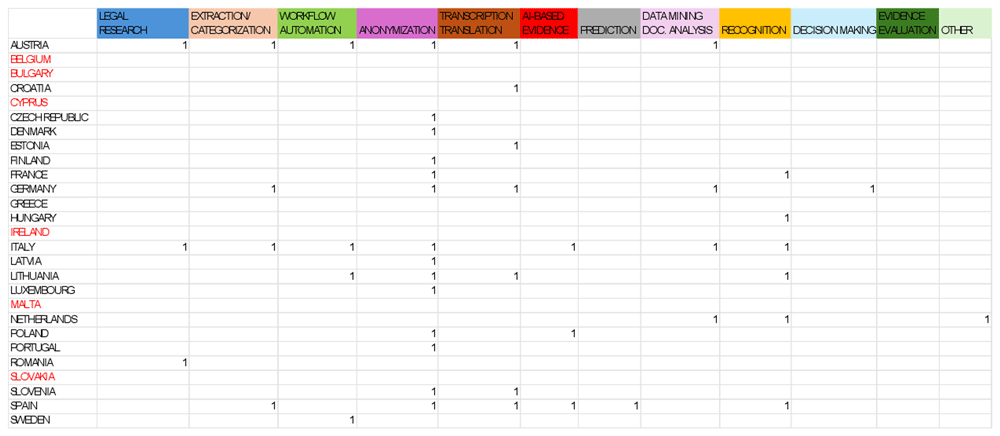
Image 1. Mapping of the use/development of AI systems by EU country.
The majority of the identified use or development cases concern systems aimed at the anonymization of judicial decisions. This is not surprising in light of the obligations stemming from the European legal framework in the field of personal data protection19, where the need to ensure transparency in the administration of justice must be balanced with the protection of personal data. But a probably stronger incentive to use and develop this kind of tools depends on another factor: anonymization is a prerequisite for the data contained in judicial decisions to be used to train AI algorithms in the field of justice20.
Among the categories of AI systems identified, it is possible to distinguish between two macro-groups. On the one hand, there are AI systems used to support humans in performing mechanical or organizational tasks, which, even when involving some level of assessment or evaluation, are not relevant to the core of judicial activity and have no direct impact on it. This category includes data extraction/categorization, workflow automation, anonymization, and translation/transcription systems.
A second category, by contrast, encompasses systems whose use tends to have a direct impact on judicial activity itself, as their outcomes may contribute to resolving the quaestio facti or the quaestio iuris. This includes AI-based evidence, evidence evaluation, data mining and data analysis, prediction, recognition, decision-making, and legal research systems.
What emerges from the results of this first phase is a clear prevalence of use or development cases involving systems performing organizational tasks. However, it is interesting to note that if anonymization systems are excluded, the situation becomes significantly more balanced.
The data collection did not reveal any application of certain uses of the AI that have traditionally been considered more disruptive. Among these, the most well-known and most concerning is undoubtedly that of the “robot judge”19–21, namely the use of fully autonomous AI systems in place of the judge for decision-making, that did not emerge in criminal procedural field. The same can be said about the algorithms used to assess the risk of recidivism of an individual21.
No cases emerged of AI being specifically employed for evidence evaluation22, even though such applications are conceivable and have, in fact, attracted critical attention from scholars and practitioners (for example, AI emotion recognition software25, that could be used to evaluate the reliability of a witness8,26.
As for the AI-based evidence category23, the empirical findings emerging from desk research and from the survey responses capture only a minimal fraction of the vast and expanding range of AI tools capable of generating data potentially relevant for criminal proceedings. One may think, for instance, of technologies such as voice assistants or wearable devices which, due to their diffusion and functional features, can be – and probably will increasingly be – significant sources of evidentiary material.
The results presented so far offer a snapshot of the current landscape which, while achieving the goal of providing an initial overview, inevitably suffer from a degree of inaccuracy. This is partly due to limitations that was known from the outset – the impossibility and indeed the lack of utility in attempting to track all AI systems rather than focusing on project/use cases – and partially due to a factor that only emerged after data collection and analysis: the probable lack of full transparency regarding the AI systems being used in EU countries.
This opacity could appear particularly relevant in the investigative phase of criminal proceedings especially in jurisdictions characterized by a strict distinction beetween a (secret) investigative phase and public trial.
Beyond this, it is also important to consider that certain AI systems may, by their very nature, remain undisclosed, as they do not produce outputs that can be directly submitted to the trial file, but rather support or influence the reasoning of legal actors in performing specific tasks. For instance, a public prosecutor using a data-mining tool to reconstruct the most plausible scenario is relying on AI to build a working hypothesis. This hypothesis may then guide the investigative efforts and ultimately shape the case, even though the AI-generated scenario itself is never formally introduced as evidence – unlike, for example, the geolocation of a smartwatch. In such instances, the use of AI can easily go unnoticed, yet its impact on the direction and outcome of the proceedings may be substantial and far-reaching.
A preliminary discussion
Although the purpose of this paper is limited to illustrating the results of the collection, mapping, and classification of data on AI systems deployed in EU criminal justice system, the picture outlined so far provides some food for though and it seems appropriate to dwell on two points that stand out from the data gathered.
The first concerns the issue of transparency in the use of AI systems in the field of criminal justice. As already said, some experts reported difficulties in identifying and indicating the AI systems in use in their country, despite the existence of publicly available and qualified sources confirming their use.
An example of this is Poland, where one of the survey respondants24 explicitly pointed to the lack of transparency regarding the use of AI systems, even though it is known that they are employed during investigations.
Another clear example can be found in Italy. The 2024 Report on the Administration of Justice25 expressly refers to a vaguely defined “Investigation Platform” based on artificial intelligence. The report provides very little additional information about this platform: no details are given about either its functioning or its intended purposes. From the few additional lines included in the report (“a web solution, supported by Artificial Intelligence (AI) and Business Intelligence (BI), which facilitates the work of law enforcement and prosecutors during preliminary investigations by improving data analysis and processing”), the system appears to be a data-mining tool.
Despite further research aimed at gathering information about this AI tool, nothing emerged from the available sources.
What stands out, is an additional layer of opacity surrounding the use of AI systems in criminal proceedings, one that goes beyond those already widely recognized and discussed by legal doctrine.
The academic debate on transparency and AI has typically focused on the inaccessibility of algorithmic source code (due to intellectual property protections), the difficulty (even if the source code were provided) of understanding how the system produces its outputs, given its structural “opacity”26, and the fact that even if it were possible to understand how an artificial intelligence system generated a particular association, the highly technical nature of the scientific knowledge that underpins its functioning could still prevent judges, other legal practitioners, and citizens from truly understanding the meaning of its result33.
The initial findings of this research point to a further problem: the lack of transparency about the very use of AI systems. This is particularly significant, as any call for greater transparency regarding the functioning of these tools is fundamentally undermined if there is no transparency about their deployment by public authorities in the first place.
Looking at the European legal framework, the situation does not offer much reassurance and, in fact, raises many questions that deserve to be addressed in the next stages of the research.
As for the AI Act27, it establishes some transparency obligations, but they tend to weaken significantly when law enforcement activities are involved.
Article 49 provides that deployers of high-risk AI systems who are public authorities or EU bodies must comply with registration obligations settled by Article 71, under which the information on the use of the system shall be accessible and publicly available in a user-friendly manner. However, registration and transparency obligations are mitigated for the area of law enforcement, since according to same Article 49(4), high-risk AI systems listed in Annex III, points 1, 6, and 7 – covering law enforcement, migration, asylum, and border control – are registered in a non-public section of the EU database referred to in Article 71, with only limited information included.
As for the documentation of the use of the system in the case file, Article 26 (10) only requires it for post-remote biometric identification.
Article 50 provides for specific information obligations for certain categories of systems, like those interacting with individuals or those used for emotion recognition or biometric categorisation, where users must be informed that they are engaging with or being exposed to an AI. However, specific exceptions are made precisely for law enforcement activities.
This is not particularly surprising if one considers that we are moving in a field in which it is necessary to balance the effectiveness of the investigation with counterstanding interests. This tension is not new and was already reflected in the European relevant regulatory framework before the entry into force of the AI Act.
In the LED28 legislative framework, for example, the necessity to balance the effectiveness of the investigation with the interest of those affected by investigative activities to access the information led to a system where no obligation is established to explicitly inform the public of the possible technologies to be used and their potential impact on the processing of personal data34. Not even for surveillance measures notification to the targeted person is required by the LED. Nonetheless, the existence of such a notification obligation has been inferred by the European Court of Human Rights in several judgments29, although it is limited to situations in which – and to the moment when – it does not interfere with the investigation. Albeit very narrow, this opens up a space for public scrutiny at least for more serious and impacting measures. Anyway, these obligations apply only when personal data are processed.
Thus, one cannot help but ask if it is conceivable to impose disclosure obligations on public authorities regarding the use of certain technologies regardless of whether personal data protection is at stake; and regardless of whether a decision affecting a specific individual has been adopted on the basis of an AI output, as Article 86 of the AI Act provides.
What if these rights or conditions are not met? Beyond these grounds, couldn’t disclosure obligations arise from the principle of transparency in the administration of justice? Could we consider that citizens have an interest in knowing what AI systems are used in criminal proceedings, regardless of whether these systems process their personal data or affect them?
While secrecy may be implicit – and is justified – in the realm of national security (as in intelligence activities, on the assumption that such data cannot be used against citizens in eventual criminal proceedings), isn’t the administration of justice a domain that should, in principle, abide by the fundamental rule of transparency? What is the countervailing interest opposing transparency in this case, when the issue is not informing (or not) an individual directly affected by the investigation (which would put at risk the investigation), but rather informing the citizens about the use of certain AI systems in a field where their personal freedom is at stake?
Another point that deserves to be stressed among the findings of the research conducted so far is the significant diffusion of AI systems that have been little studied or rarely identified as critical system until now, despite having the potential to exert a crucial impact on the fact-finding process.
While more discussed AI systems like those used for recidivism risk assessment or biometric recognition dominate the scene, AI systems used for data-mining and data analysis remain still scarcely addressed in criminal procedural literature30.
They are capable of analysing vast amounts of data in extremely short time, interpreting and identifying correlations among them, thereby effectively enabling the creation of new knowledge. Among these types of systems, the one called Hansken used by investigators in the Netherlands has so far attracted the greatest attention35. Not by chance it has been described as a system for the production of evidence36, but systems of this kind seem to do far more than merely produce evidence: they are potentially able to connect the pieces of evidence collected and to uncover hidden correlations and patterns within the data, thereby guiding investigatorsn (and judges) towards a reconstruction of the facts in which it can turn to be hard to determine how much stems from the human intellectual contribution and how much from the algorithm itself.
Moreover, if not used for the profiling of a natural person31, it could be controversial the inclusion of this kind of tools in the category of high-risk AI systems as defined by the EU AI Act and some authors, in fact, have expressed doubts about it of individuals involved in a criminal proceeding34 32.
This point calls for further reflection, and it would be particularly interesting to analyse how EU legal systems where such tools are beginning to be developed or deployed address these issues.
By way of conclusion
The analysis so far conducted has made it possible to outline that in most European countries, AI systems are already being used or are currently under development in the context of criminal proceeding. Only a very small number of countries except to this trend, but this observation should be also read in the light of another key element that emerged: in some jurisdictions a lack of transparency surrounding the use of AI systems in criminal proceedings has clearly come to light. In some cases, the use of AI by public authorities is known, but none or very little information is made publicly available and this inevitably raises questions about the compatibility of such a trend with fundamental principles such as transparency in the administration of justice.
The types of systems traced largely correspond to those most frequently discussed in the existing procedural law scholarship until now. Nonetheless, it emerged that the systems that have so far attracted the greatest attention from legal scholars and commentators – such as risk assessment tools for recidivism or biometric recognition – are not necessarily the most widespread in practice. On the contrary, what seems to be gaining increasing ground are technologies that have so far received comparatively little attention.
It is the case of data mining systems, that have a potentially significant impact on some of the most sensitive activities entrusted to criminal justice, like the reconstruction of the facts underlying the charges based on the evidence collected. In addition to encroaching upon areas of competence that should fall within the exclusive domain of professional figures such as judges or prosecutors, theese tools can potentially be used to profile the perpetrator of an offence or a suspect, as well as any other individual involved in the criminal investigation. For this reason, they may well deserve greater attention in the future.
AI disclosure
AI (ChatGPT and Deepl) was used to review the accuracy of the English language in drafting this article. In addition, it was employed to translate the documents contained in the section “Background Materials” when they were written in languages other than Italian, English, French, and Spanish.
The drafting of the text, the reconstruction carried out, and the opinions expressed are solely attributable to the author.
Ethics and consent
The participants to the survey “MSCA-Project “Future”- mapping the use of AI systems in criminal justice in EU” gave their consent to processing of their personal data. For the acquisition of informed consent, the relevant information notice (privacy notice) was sent to all professionals and academics invited to participate in the survey, attached to the invitation email containing the link to the questionnaire. Written consent was collected through the first questions in the initial section of the questionnaire, which concerned the request for consent to the processing of personal data and to the possible publication of the respondent’s name in project-related publications based on the collected data. The data contained in the datasets underlying the publication have been de-identified.
Data availability
This article contains the following underlying data:
Cascone, FUTURE results of the survey MSCA-Project Future- mapping the use of AI systems in criminal justice in EU [Data set], Zenodo, 2025, https://doi.org/10.5281/zenodo.17473213. The dataset contains the results of the survey conducted as part of the research project.
Cascone, Dataset of mapped ai systems. The use of Artificial Intelligence in EU criminal justice systems: first insights and emerging trends in an evolving landscape [Data set]. Zenodo, 2025 https://doi.org/10.5281/zenodo.17472809.
The dataset consists of a structured compilation of AI systems used or under development across EU Member States, based on survey responses and publicly available information listed in section “Background Materials”.
In addition to the dataset generated by the author, this study also contains publicly available pre-existing underlying data:
All data and materials are available on Open Science Framework.
Data are available under the terms of the Creative Commons Attribution 4.0 International license (CC-BY 4.0).
The data for this article also consists of bibliographic references, which are included in the References and in the section “Background Materials”.
Background materials
France
- Report “Rapport sur l’évolution de l’open data des décisions de justice (ODDJ) 2025”, French Ministry of Justice, available at https://www.justice.gouv.fr/sites/default/files/2025-08/rapport_oddj_2025.pdf
- Report “Rapport annuel 2023”, Cour de cassation (France), available at https://www.courdecassation.fr/files/files/RAPPORT%20ANNUEL/CCAS_Rapport-annuel_2023.pdf
- Gindre and Chambon, L’intelligence artificielle et l’administration de la justice : la police et la justice prédictives – perspectives françaises, in e-RIDP, 2023, https://penal.org/sites/default/files/files/A-10-23.pdf
- Gindre, Predictive justice in France, in Artificial Intelligence and Administration of Criminal Justice, edited by Juliette Lelieur, RIDP 2023, Vol. 94, issue 2, p. 165, available at https://dres.unistra.fr/websites/misha/dres/3._Droit_des_affaires/publications/E-version_RIDP_2023.2_AI_and_administration_of_criminal_justice.pdf
- Web page “Développer l’intelligence artificielle (IA) pour la Justice : entre innovation et sécurisation”, French Ministry of Justice, available at https://www.justice.gouv.fr/actualites/actualite/developper-lintelligence-artificielle-ia-justice-entre-innovation-securisation
- Article on website page Korii, “À Lyon, la reconnaissance faciale en procès”, available at https://korii.slate.fr/et-caetera/justice-lyon-banbanaste-reconnaissance-faciale-proces-photo-algorithme-preuve
- Article on website page La Quadrature du net, available at https://www.laquadrature.net/2019/11/14/korii-a-lyon-la-reconnaissance-faciale-en-proces/
- Lilieur, The Use of Facial Recognition Technology by Law Enforcement in France, Luxembourg, 8 November 2024, available at https://aiandcriminaljustice.uni.lu/wp-content/uploads/sites/260/2024/11/LELIEUR_8_November.pdf
Germany
- CEPEJ, Evaluation of the judicial systems 2024 (data 2022)” on Germany, available at https://rm.coe.int/germany-2024-2022-/1680b1f6d2
- Website page “Digitalisierungsinitiative für die Justiz” of the German Federal Ministry of Justice and Consumer Protection (BMJV), outlining its initiative to promote and coordinate digitalisation efforts in the judicial system across the federal states https://www.bmjv.de/DE/themen/digitales/digitalisierung_justiz/digitalisierungsinitiative/digitalisierungsinitiative_node.html
- Website page “Struki – Ländervorhaben” of the German Federal Ministry of Justice and Consumer Protection (BMJV), describing a specific federal-state project (“Struki”) under the judicial digitalisation initiative, available at: https://www.bmjv.de/DE/themen/digitales/digitalisierung_justiz/digitalisierungsinitiative/laendervorhaben/_doc/artikel_vorhaben_07_struki.html
- Website article “Künstliche Intelligenz in der Justiz – ein Update” on Legal-Tech.de, providing insights into current applications and projects of artificial intelligence in the German judicial system, available at https://legal-tech.de/kuenstliche-intelligenz-in-der-justiz-update/
- PDF document “Künstliche Intelligenz in der Justiz – Internationaler Überblick” (WD 7 – 017/21) by the Scientific Services of the German Bundestag, available at https://www.bundestag.de/resource/blob/832204/6813d064fab52e9b6d54cbbf5319cea3/WD-7-017-21-pdf-data.pdf
- Website page “Maschinelle Unterstützung bei der Anonymisierung von Entscheidungen – Ländervorhaben” of the German Federal Ministry of Justice and Consumer Protection (BMJV), describing a federal-state project on the automated anonymisation of court decisions within the judicial digitalisation initiative, available at https://www.bmjv.de/DE/themen/digitales/digitalisierung_justiz/digitalisierungsinitiative/laendervorhaben/_doc/artikel_vorhaben_08_maschinell.html
- Website page “Smart Sentencing” on Legal Tech Cologne, presenting a project on algorithmic sentencing assistance in the justice system, available at https://legaltechcologne.de/projekte/smart-sentencing/
- Website news article “Urteile für alle: KI soll beim Anonymisieren helfen” on RSW Beck, reporting on the use of artificial intelligence tool Jano for automating anonymization of court judgments, available at https://rsw.beck.de/aktuell/daily/meldung/detail/urteile-anonymisierung-ki-tool-jano
- Website page “ALeKS – Ländervorhaben” of the German Federal Ministry of Justice and Consumer Protection (BMJV), describing the federal-state project “ALeKS” within the judicial digitalisation initiative, available at https://www.bmjv.de/DE/themen/digitales/digitalisierung_justiz/digitalisierungsinitiative/laendervorhaben/_doc/artikel_vorhaben_14_ALeKS.html
- Website article “KI in der niedersächsischen Justiz” on Anwaltspraxis Magazin, discussing the use of artificial intelligence in the justice system of Lower Saxony (Germany), available at https://anwaltspraxis-magazin.de/fachbeitraege/elektronischer-rechtsverkehr/2025/03/21/b-ki-in-der-niedersaechsischen-justiz-120/
- PDF document “Digitalisierungsprozesse: Einsatzmöglichkeiten und Grenzen für Künstliche Intelligenz in der NRW-Justiz” (Sachverständigenanhörung, Vorlage 18/289) from the Landtag Nordrhein-Westfalen, available at https://www.landtag.nrw.de/portal/WWW/dokumentenarchiv/Dokument/MMST18-163.pdf
- Bernhardt, The Use of Artificial Intelligence in the Field of Justice, in Internet and New Technologies Law: Perspectives and Challenges, edited by Szostek and Zaluki, Nomos, 2021, p. 173
- Sprenger and Brodowski, ‘Predictive policing’, ‘predictive justice’, and the use of ‘artificial intelligence’ in the administration of criminal justice in Germany, in e-RIDP, 2023, available at https://www.penal.org/sites/default/files/files/A-02-23.pdf
Italy
- Report of the Italian Ministry on the administration of justice in 2024, available at https://www.giustizia.it/giustizia/page/it/relazione_su_amministrazione_giustizia
- Italian Ministry of the Interior press release on SARI, “Sistema Automatico di Riconoscimento Immagini: un futuro che diventa realtà”, available at https://www.interno.gov.it/it/notizie/sistema-automatico-riconoscimento-immagini-futuro-diventa-realta
- Opinion of the Italian Data Protection Authority on the SARI Enterprise system, 2018, available at https://www.garanteprivacy.it/web/guest/home/docweb/-/docweb-display/docweb/9040256
- Webpage of Polizia di Stato, article on SARI, available at https://poliziamoderna.poliziadistato.it/articolo/3536228dc7e38a89165859531
- Webpage of Carabinieri on SWOADS, available at https://tpcweb.carabinieri.it/SitoPubblico/home/informazioni/swoads
- Webpage of UniTrento on the AI system use to fight against illicit trafficking on the motorway https://pressroom.unitn.it/comunicato-stampa/lotta-ai-traffici-illeciti-sulla22-tre-nuovi-dispositivi-i-controlli
- Journal article Sole24Ore on AI to fill EAW, available at https://pg-perugia.giustizia.it/cmsresources/cms/documents/Il%20sole%2024%20ore%20.pdf
- Webpage Edunews24 on project SENECA, available at https://edunews24.it/tecnologia/torino-allavanguardia-lintelligenza-artificiale-rivoluziona-il-lavoro-dei-pubblici-ministeri-con-il-progetto-seneca
- Lupo, Regulating (Artificial) Intelligence in Justice: How Normative Frameworks Protect Citizens from the Risks Related to AI Use in the Judiciary, in European Quarterly of Political Attitudes and Mentalities, 2019, Vol. 8, p. 75, available at: https://www.ssoar.info/ssoar/bitstream/handle/document/62463/ssoar-eqpam-2012-2-lupo-Regulating_Artificial_Intelligence_in_Justice.pdf?sequence=1&isAllowed=y
- Official website of TogaAI: https://toga.cloud/landing
Netherlands
- Website of the Netherlands Forensic Institute (NFI), page concerning the tool called Hansken, a digital forensic search and analysis platform, available at https://www.forensischinstituut.nl/forensisch-onderzoek/hansken
- Demo on the use of Hansken, official website: https://www.hansken.nl/an-introduction-to-hansken/hansken-demo
- Van Beek et al., Digital forensics as a service: Game on H.M.A., in Digital Investigation, Vol. 15, 2015, p. 20
- Galič and Schuilenburg, AI and administration of criminal justice. Report on the Netherlands, in e-RIDP, 2023, available at https://penal.org/sites/default/files/files/A-04-23.pdf
- CEPEJ, Evaluation of the judicial systems 2024 (data 2022)” on Netherlands, available at https://rm.coe.int/netherlands-2024-2022-/1680b1f6e2
Poland
- Web page “Foster Transparency of Judicial Decisions and Enhancing the National Implementation of the ECHR (TJENI)”, Council of Europe, available at https://www.coe.int/en/web/implementation/tjeni
- Report “Study on case-weighting systems”, Council of Europe / CEPEJ, available at https://rm.coe.int/study-28-case-weighting-report-en/16809ede97
- Web page “Algorytm SLPS”, Ministry of Justice of Poland, available at https://www.gov.pl/web/sprawiedliwosc/algorytm
- Kusak et al., AI and administration of justice – predictive policing and predictive justice. Polish report, in e-RIDP, 2023, https://www.penal.org/sites/default/files/files/A-20-2023.pdf
Faculty Opinions recommendedReferences
- 1.
Golobardes A, Brozzetti F, Casarosa F, et al.:
JuLIA handbook. Artificial intelligence, judicial decision-making and fundamental rights. s.l.: Artigot Golobardes, Grasso, Iamiceli, Maugeri, 2025. Reference Source
- 2.
Ligeti K, Vermeulen G, Vervaele J:
Artificial Intelligence and Criminal Justice (Concept paper for the 2020-2024 IAPL cycle and resolutions of the XXIst International Congress of Penal Law, Paris, 25-28 June 2024). s.l.: Maklu, 2024. Reference Source
- 3.
Quattrocolo S:
Artificial Intelligence, computational modelling and criminal proceedings. A framework for a European legal discussion. s.l.: Springer, 2020. Publisher Full Text
- 4.
Ligeti K, Vermeulen G, Vervaele J:
Preface. Artificial Intelligence and Criminal Justice (Concept paper for the 2020-2024 IAPL cycle and resolutions of the XXIst International Congress of Penal Law Paris, 25-28 June 2024). s.l.: Maklu, 2024. Reference Source
- 5.
Europol: AI and policing. The benefits and challenges of artificial intelligence for law enforcement. An observatory report from the europol innovation lab, publications office of the European Union. s.l.: Publications Office of the European Union, 2024. Reference Source
- 6.
European Commission for the Efficiency of Justice: Resource center on cyberjustice and artificial intelligence. 2023. Reference Source
- 7.
Andrés-Pueyo A, Arbach-Lucioni K, Redondo S:
The RisCanvi: a new tool for assessing risk for violence in prison and recidivism.
Handbook of Recidivism Risk/Needs Assessment Tools.
s.l.: Singh, Kroner, Wormith, Desmarais, Hamilton, John Wiley & Sons Ltd, 2018. Publisher Full Text
- 8.
Belvini L:
Intelligenza artificiale e circuito investigativo. s.l.: Cacucci Editore, 2025. Reference Source
- 9.
Galluccio Mezio G:
Tecnologie di riconoscimento facciale. Una riflessione sul loro impiego con finalità investigative e probatorie. Cassazione penale, 2025. Reference Source
- 10.
Limante A, Sukyte M:
Comparative insights and future directions of AI in the courts of the Baltic States.
Int J Law Inf Technol.
2025; 33: eaaf002. Publisher Full Text
- 11.
Cascone:
FUTURE results of the survey MSCA-Project Future- mapping the use of AI systems in criminal justice in EU. [Data set]. s.l, Zenodo. 2025.
- 12.
Cascone:
Dataset of mapped AI systems. The use of Artificial Intelligence in EU criminal justice systems: first insights and emerging trends in an evolving landscape. [Data set]. s.l.: Zenodo. 2025.
- 13.
Gültekin-Várkonyi G:
AI Literacy for legal AI systems: a practical approach.
2025. Publisher Full Text
- 14.
Lai J, Gan W, Wu J, et al.:
Large language models in law: a survey.
AI Open.
2024; 5: 181–196. Publisher Full Text
- 15.
Quattrocolo S:
Prova e intelligenza artificiale. Prova scientifica. s.l. : Giuffrè, 2023. Reference Source
- 16.
European Commission: Directorate-General for Justice and Consumers: 2025 EU Justice Scoreboard, Communication from the Commission to the European Parliament, the Council, the European Central Bank, the European Economic and Social Committee and the Committee of the Regions, COM(2025) 375. s.l.: Publications Office of the European Union, 2025. Reference Source
- 17.
European Commission: Directorate-General for Justice and Consumers: EU Justice Scoreboard, Communication from the Commission to the European Parliament, the Council, the European Central Bank, the European Economic and Social Committee and the Committee of the Regions, COM(2024) 950. s.l.: Publications Office of the European Union, 2024. Reference Source
- 18.
European Commission for the Efficiency of Justice: Guidelines for the online publication of judicial decisions aiming at furthering legal knowledge. 2024. Reference Source
- 19.
Kaspar J, Harrendorf S, Butz F, et al.:
Artificial intelligence and sentencing from a human rights perspective.
Artificial Intelligence, Social Harms and Human Rights.
s.l.: Završnik and Simončič, Palgrave Macmillan, 2023; 3–34. Publisher Full Text
- 20.
Ulenaers J:
The impact of artificial intelligence on the right to a fair trial: towards a robot judge?
Asian Journal of Law and Economics.
2020; 11(2): 20200008. Publisher Full Text
- 21.
Sourdin T:
Judge v robot? Artificial intelligence and judicial decision making.
UNSW Law Journal.
2018; 41(4). Publisher Full Text
- 22.
Angwin J, Kirchner L, Larson J, et al.:
Machine bias. There’s software used across the country to predict future criminals. And it’s biased against blacks. ProPublica Online Edition, 2016. Reference Source
- 23.
Flores AW, Bechtel K, Lowenkamp CT:
False positives, false negatives and false analysis: a rejoinder to “machine bias: there is software used across the country to predict future criminals. And it is biased against the blacks.
Federal Probation Journal.
2016; 80(2). Reference Source
- 24.
van Dijck G:
Predicting recidivism risk meets AI Act.
Eur J Crim Policy Res.
2022; 28: 407–423. Publisher Full Text
- 25.
Valcke P, Clifford D, Dessers VK:
Constitutional challenges in the emotional AI era.
Constitutional Challenges in the Algorithmic Society.
s.l.: Micklitz, Pollicino, Reichman, Simoncini, Sartor and De Gregorio, Cambridge University Press, 2021; 57–77. Publisher Full Text
- 26.
Cascone G:
Emotional biometrics: a preliminary analysis of critical aspects concerning the use of the last AI frontier in criminal procedure.
El Proceso en tiempos de cambio. VII Processulus, Encuentro de jóvenes investigadores en derecho procesal.
s.l.: Arrabal Platero, Conde Fuentes and García Molina, Colex, 2023. Reference Source
- 27.
Ligeti K:
AI evidence and criminal proceedings (forthcoming). s.l.: Hart Publishing, 2025. Reference Source
- 28.
Gless S:
AI in the courtroom: a comparative analysis of machine evidence in criminal trials.
Geo J Int'l L.
2020; 51. Reference Source
- 29.
Grimm PW, Grossman MR, Cormack GV:
Artificial intelligence as evidence.
Nw J Tech & Intell Prop.
2021; 19(1). Reference Source
- 30.
Quezada-Tavárez K, Vogiatzoglou P, Royer S:
Legal challenges in bringing AI evidence to the criminal courtroom.
New J Eur Crim Law.
2021; 12(4): 531–551. Publisher Full Text
- 31.
Seng D, Mason S:
Artificial intelligence and evidence.
Singapore Academy of Law Special Issue on Law and Technology.
2021; 33. Reference Source
- 32.
Gless S, Lederer FI, Weigend T:
AI-based evidence in criminal trials?
Tulsa L Rev.
2024; 59(1). Reference Source
- 33.
Cascone G:
Artificial intelligence and criminal procedure: fundamental rights, procedural principles and regulatory challenges.
Luiss Law Review, 2023. Reference Source
- 34.
Erdogan I:
Diving into the Iceberg: establishing transparency in AI for law enforcement. European Papers, 2024; 9(3): 956–977. Publisher Full Text
- 35.
van Beek HMA, van Eijk EJ, van Baar RB, et al.:
Digital forensics as a service: Game on.
Digit Investig.
2015; 15: 20–38. Publisher Full Text
- 36.
Galič M, Das A, Schuilenburg M:
AI and administration of criminal justice. Report on the Netherlands. e-RIDP, 2023. Reference Source









