Introduction
Climate is a global public good, and climate change represents perhaps the most difficult collective action problem in human history1. When such problems concern common pool resources like the atmosphere, they take the form of a “Tragedy of the Commons”2. Climate change mitigation can be promoted through two broad mechanisms: by influencing social preferences—changing players’ motivations and behaviors—or by creating institutions, i.e., modifying or introducing rules of the game. In this paper we focus on the latter, and specifically on Nordhaus’ proposal of climate clubs voluntarily formed by countries3, an idea recently taken up by the G7 under the German presidency4,5.
Agreements on global public goods are difficult because individual countries have an incentive to defect, prioritizing national over global benefits. International environmental agreements have therefore been modeled as coalition-formation games6–8. In these models, the equilibrium number of signatories follows from internal and external stability conditions: no member should prefer leaving, and no outsider should have an incentive to join. Such conditions are necessary because treaties like the Kyoto Protocol and, to an even greater extent, the Paris Agreement cannot be externally enforced and must rely on incentives for compliance. Yet, these coalition models rarely generate strong mitigation efforts, particularly when free-riding temptations are high. Coordination is further hampered by wealth asymmetries9,10 and by both strategic and scientific uncertainty11,12.
Tagliapietra and Wolff13 argue that if the three largest economies—the United States, the European Union, and China—were to agree on a coordinated carbon border tax, such an initiative could trigger a global cascade of mitigation efforts. Their argument is grounded in the idea of minilateralism: progress on climate policy can emerge from a small coalition of major emitters whose joint actions reshape global incentives. By internalizing carbon costs at the borders, this coalition would make free-riding less profitable and thus attract additional countries over time. This reasoning aligns closely with the original spirit of Nordhaus’ climate club proposal, yet it places greater emphasis on trade policy as a mechanism for diffusion.
In contrast, Vogt14 highlights structural tensions that undermine such coalitions. His analysis shows that both wealthy and poorer countries may have incentives to leave a climate coalition, albeit for different reasons: rich countries tend to prefer withdrawal when they bear disproportionate abatement costs, whereas poorer ones gain by avoiding the disutility of inequality while still improving their absolute payoffs outside the coalition. Beyond these distributional motives, other strands of the literature have examined how cooperation dynamics depend on membership constraints. Dannenberg and Barrett15 show that when group membership is partly involuntary and agents cannot freely choose their coalition, cooperation tends to emerge only slowly because learning and expectations adjust gradually. Heitzig and Kornek16 extend this reasoning to dynamic environments, demonstrating that efficient coalitions can still arise if participants are sufficiently farsighted or if short-term coordination opportunities—such as post-linkage negotiation windows—are seized promptly. Together, these studies underscore how the timing, flexibility, and perceived fairness of coalition formation critically shape the prospects for sustained international cooperation.
Recently, Nordhaus has taken a new perspective on the issue at hand, incorporating the concept of repeated games. In his latest work17, the author expands upon the one-shot approach to encompass multiple periods, introducing a novel method that tackles "supportable policies" in a scenario involving multiperiod clubs. The study introduces a fresh aspect by considering the interaction between club effectiveness and rapid technological change, both of which are crucial to achieving the objectives of international climate policy. Nordhaus argues that trade sanctions alone will be too expensive to achieve significant abatement if not paired with rapid technological innovation, and that innovation by itself is still susceptible to countries free riding. However, the study suggests that the joint effect of those factors opens the door to achieving climate goals.
Karatayev et al.18 have tackled the challenges associated with large-scale negotiations where committing to mitigation efforts can be expensive and uncommon. They propose a strategy that involves a well-timed policy shift from local to global legally binding agreements, which is shown to be more effective than relying solely on local, global, or both types of agreements concurrently. The rationale behind this approach is that local agreements help to build commitment and encourage mitigation in early-adopting groups, while global agreements are more effective in encouraging late-adopting groups to join the effort.
Several experimental studies have been conducted to investigate the formation of coalitions and the effectiveness of proposed institutions to mitigate climate change. McEvoy and Stranlund19 found that the pay gap between coalition members and non-members negatively impacts coalition formation rates. Bosetti et al.20 focused on effort coordination between coalition members and non-members in the context of a catastrophe and found that a sizable coalition of early investors in clean technology is more likely if benefits are appropriated by members. Schmidt and Ockenfels21 found that negotiating a uniform common commitment is more effective than negotiating individual commitments or commitments tailored to specific situations. Finally, Dong et al.22 found that financial incentives for developing countries lead to higher global contributions towards emissions reduction and effectively reduce emissions, even without binding enforcement. These experimental results highlight the importance of carefully designed experiments to shed light on the applicability of proposed institutions for mitigating climate change. Our work in this paper contributes to this direction.
A recent experiment by Casari and Tavoni (2024)23 tested Nordhaus’ climate club proposal under more realistic conditions, allowing sanctions to be costly for both sides and permitting counter-punishment. They found that clubs increased cooperation but not overall surplus, as mutual sanctions produced efficiency losses. Our study differs by focusing on the institutional rather than economic design of clubs. We examine how formation rules (unanimity versus majority) and credible sanctions influence cooperation and coalition stability in larger, heterogeneous groups. In this way, our work complements Casari and Tavoni’s stress test by identifying the institutional conditions that make climate clubs viable.
As we have seen in our brief literature summary, the idea of climate clubs has been the subject of much theoretical research. This is also true for coalitions and similar institutions to fight climate change. However, the question naturally arises as to the real applicability of all those results.
There are two main reasons for this. First, the climate clubs proposal does not come with specific rules of the game to form the clubs. And it is possible that different rules about club formation yield different outcomes. In the theoretical literature, results are often negative (meaning that coalitions either do not form or are unstable). And many mechanisms proposed to deal with these issues have not been tested at all. Second, many possible game-forms associated with the climate clubs would have multiple equilibria. For example, if one thinks others are not going to join the club, and there are costs if not enough others join, then it is not optimal to pledge membership.
We therefore adopt an experimental approach to assess the viability of climate clubs as a mitigation tool. The question is timely, given current discussions on establishing a G7 climate club5. Our experimental approach points to several important insights:
Climate clubs increase and stabilize cooperation for both participant types, i.e. highly- and lowly-endowed participants.
The unanimity rule to form the climate club has little effect on the global contribution level.
Highly-endowed participants contribute more when sanctions are present.
We thus find that, in this framework, Nordhaus' sanctioning scheme stabilizes cooperation levels and makes them resilient; it also provides strong incentives to form a large coalition of committed participants. Furthermore, the rule of unanimity is useful to establish robust coalitions and to avoid free-riding behaviors on commitments, but it is not required to achieve high levels of cooperation.
Experimental setup
The design of the laboratory experiment has been mainly inspired by Nordhaus (2015)3 regarding the introduction of climate clubs within the framework of the climate change game, and by Kosfeld, Okada and Riedl (2009)24 regarding the institution formation in N-player games. It is important to summarize Nordhaus' proposal in order to see how our experimental setup reflects it.
The key idea behind the climate club is that members agree to undertake harmonized emissions reductions. For example, countries belonging to the club may commit to implement policies leading to a minimum domestic carbon emission price ($25 per ton of carbon dioxide in Nordhaus 20153, the figure itself is not relevant for the discussion, but nowadays it is of course outdated and prices in the EU at the time of writing are approaching $100 per ton of carbon dioxide). Countries would be at liberty to choose their own specific mechanisms (such as carbon tax, cap-and-trade, or hybrid designs). Crucially, countries that are not members of the club are penalized. Nordhaus suggested that members could impose uniform percentage tariffs on the imports from non-members into the club territory. Our experimental design captures these features of Nordhaus' groundbreaking proposal.
In this manner, a strategic situation is created so that countries acting in their self-interest will join the club assuming very high levels of emissions reductions. The advantage of Nordhaus’ system is that countries that do not comply can expect a punishment that is credible, because the members of the club benefit from it. In his paper, Nordhaus examined in detail the club and then considered an empirical model to show that it could actually work. His simulated model, with parameters taken from climate models, allows him to investigate the characteristics of stable climate clubs for different emission reduction targets. The main result he obtains from the model is that significant reductions in emissions can be obtained with clubs that are stable.
In accordance with this proposed institution, in our experiment we consider a group of N subjects playing together for an iterated sequence of rounds. At the beginning of each round, all participants make public announcements, i.e. pledges, regarding their will of taking part in a climate club. Subsequently, all participants decide if they want to ratify their participation within the coalition based on the number of other willing participants. In one treatment, the climate club is formed if and only if all pledging participants ratify their participation (unanimity rule), that is, a unanimous agreement must be achieved.
At the end of the round, all participants within the club costly abate their emissions and benefit from taxation on non-participants. We contrast the behavior observed in the climate clubs treatment against three baseline treatments. The simplest one did not consider climate clubs at all, that is, being a standard public goods game having the same multiplication factor. The second one included climate clubs but without having taxation on non-participants and without the unanimity rule to form the club. The third one included the unanimity rule but not taxation.
Considering the four experimental treatments, 210 subjects participated in the experiment (average earnings = 12.96 EUR). Participants play 15 rounds in the same group of 6 members. Each group included two A-type participants, who were endowed with 20 points and were earning a fourth of the public good, and four B-type participants, who were endowed with 10 points and were earning an eighth of the public good. Each round included four stages:
1. Pledging stage: subjects pledge their intention to join the coalition, but the pledge is not binding; this stage was not included in the standard public goods game treatment; This pledge decision will remain in their history of pledge decisions over the entire experiment, and participants have the history of pledge decisions of group mates available during the entire experiment. The same will occur with the rest of the decisions participants have to make in a round.
2. Commitment stage: played only by participants who pledged to joining the club in the previous stage, while the rest of the participants simply skip this stage; subjects can confirm their positive pledge; this stage was not included in the standard public goods game treatment;
3. Contribution stage: if the coalition is formed, members of the coalition contribute with their entire round endowment while subjects who are not in the coalition freely contribute to the public good; if the coalition is not formed, each participant freely contributes;
4. Payoff stage: subjects earn their round payoff; the total amount of points collected in the public good is multiplied by a multiplication factor of three and then distributed to all group members proportionally to their participant type; if a coalition is formed, benefits and sanctions are implemented (only for treatment T4).
We ran four different treatments. In treatment T1, there was only the contribution stage, i.e., it was a (heterogeneous) public goods game. Treatment T2 allowed clubs to be formed even if some of the members who initially pledged to join withdrew their pledge, whereas in treatment T3 clubs were only formed by unanimous ratification of all pledges. Both in T2 and T3 there were benefits to club members but no punishment to non-members. Treatment T4 introduced the punishment to non-members and at the same time it kept the unanimity rule. This last treatment was the one that more closely reflected the spirit of Nordhaus' proposal, so we will refer to it as the climate club treatment. The experimental setup including its four stages and for the T4 treatment is depicted in Figure 1. The English translation of the experimental instructions is provided in the supplementary information, see Section 1.
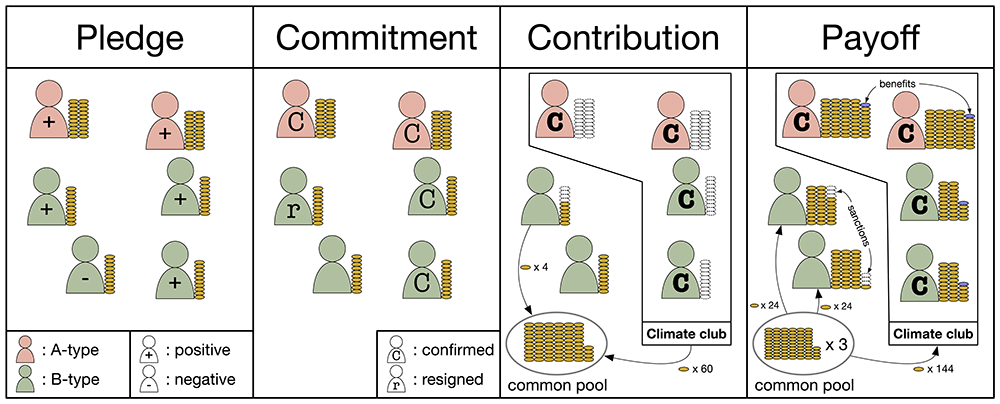
Figure 1. The experimental design comprises up to three active stages and a payoff stage per round.
The six group participants are segmented into two A-type and four B-type players, where each A-type player carries the equivalent weight and endowment of two B-type players. In the baseline (T1), only contribution and payoff stages are present. The pledge stage includes participants' intent to join a climate club, ratified in the commitment stage. Climate clubs form according to treatment scenarios without (T2) or with (T3) unanimity. The payoff scheme adjusts with the introduction of sanctions and benefits (T4).
Results
The findings of our study are summarized in Figure 2, which reports the average weighted pledges (panel a) and commitment ratios (panel b) by treatment and participant type. The baseline treatment (T1) serves as a control and does not include these stages. When considering the total possible positive pledges as eight—derived from four B-type participants (weight = 1) and two A-type participants (weight = 2)—the average number of pledges remains around six or seven. This indicates that nearly all group members pledge positively, with no significant treatment effects at the global level (Mann–Whitney (MW) test; group and individual levels, p > 0.05). An exception arises when comparing T3 and T4 at the individual level (MW test; W = 999, p = 0.020), where a slightly higher preference for positive pledges is observed when sanctions are introduced. A closer look at participant types reveals a statistically significant difference within T3. In this treatment, A-type participants pledge positively less often than B-type participants (MW test, individual level; W = 230, p = 0.036*). A plausible interpretation is that, under the unanimity rule required for club formation, A-type participants may feel less pressure to join, anticipating that others will secure club formation without their own commitment. This pattern, however, disappears in T4, where sanctions and corresponding benefits are introduced—underscoring the importance of coupling unanimity rules with enforcement mechanisms.
Turning to the commitment stage (Figure 2b), participants generally ratify their pledges more frequently when a unanimity rule applies. This occurs consistently across T3 and T4 (MW tests — group level: T2–T3, W = 8, p = 0.021*; T2–T4, W = 8, p = 0.006**; T3–T4, W = 25, p = 0.536; individual level: T2–T3, W = 546.5, p = 0.002**; T2–T4, W = 893, p < 0.001***; T3–T4, W = 1162.5, p = 0.240). This evidence confirms that the unanimity rule fosters stronger commitment from the initial pledging stage. The earlier difference between participant types persists at this stage as well: in T3, A-type participants again ratify less frequently than B-type participants (Wilcoxon signed-rank test; W = 233, p = 0.023*). By contrast, when sanctions are implemented in T4, A-type participants’ commitment rates rise to match those of B-type participants (Wilcoxon signed-rank test; W = 493.5, p = 0.422), further confirming the effectiveness of sanctions in sustaining engagement and compliance.
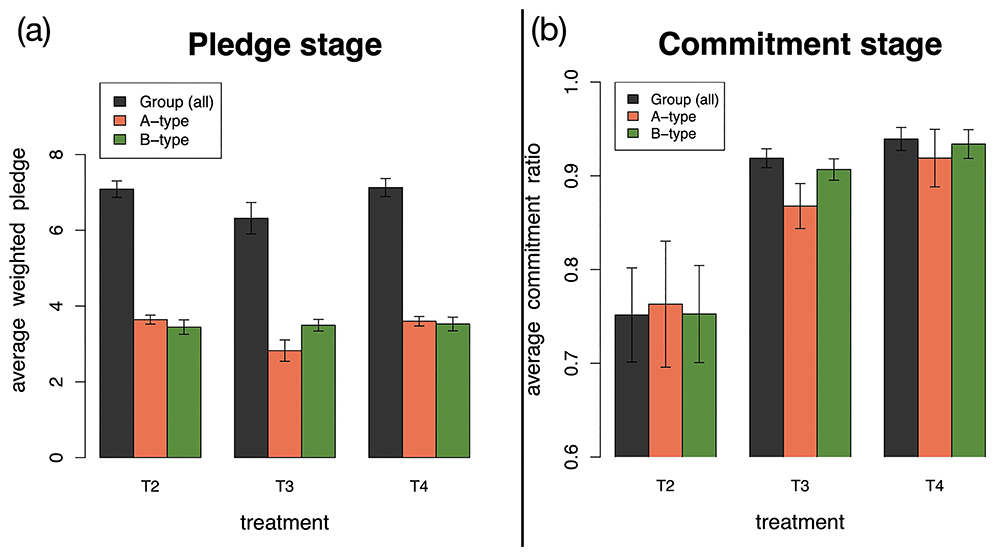
Figure 2.
Average weighted pledge (a) and commitment ratio (b) by participant type and treatment.
Figure 3 reports the normalized contributions to the public good (PGG) by treatment, round, and participant type. Contributions are normalized with respect to the total endowment per group (80 points), participant type (20 points for A-type and 10 points for B-type participants), and treatment. Overall, contributions to the common pool remain consistently high across all treatments. Although a decline in contributions is observed in T1, T2, and T3, this decay is notably less pronounced than in standard public goods game experiments. Formal tests are reported in the supplementary information (see Section 2.3), where we estimate the round trend both via OLS and a robustness specification (fixed effects by group and participant with two-way clustered standard errors). Both analyses show a significant negative slope only in T2 and T3, while T1 and T4 are not significant; even in T2–T3 the magnitudes are modest, consistent with a decay that is less pronounced than in standard public-goods experiments. The sustained cooperation can be attributed to the repeated interaction within fixed groups, which promotes direct reciprocity, as well as to the informational transparency of the design. Participants continuously observed the pledges, commitments, and contributions of all group members, with a five-round memory window. Such transparency likely fostered reputational incentives, as high contributions signaled reliability and commitment to collective goals. An interesting oscillatory pattern emerges in T3, corresponding to rounds in which climate clubs failed to form and contributions subsequently dropped. Despite similar average contributions in T2 and T3, behavior diverges by type. In the supplementary information (see Section 2.3), we find a significant A–B gap in both treatments: in T2, A-types contribute more than B-types; in T3, the pattern reverses. A pooled fixed-effects model confirms a strong and negative A–B gap only in T3, while the T2 gap attenuates and is not significant, indicating that part of the T2 difference is absorbed by persistent group heterogeneity. Notably, the unanimity rule in T3 appears to motivate B-type participants to contribute more, whereas A-types contribute relatively more under the non-unanimity setup T2. Finally, in the climate-club treatment (T4), contributions increased relative to all other treatments. Formal tests in the supplementary information (see Section 2.3) show that all T4–other differences are statistically significant. The stability analysis further indicates that behavior is more stable in T1 (albeit at much lower contribution levels) and in T4 (at higher levels) than in T2–T3. The presence of sanctions not only raised average contribution levels but also reduced their variability across rounds, indicating that sanctions stabilized cooperative behavior over time.
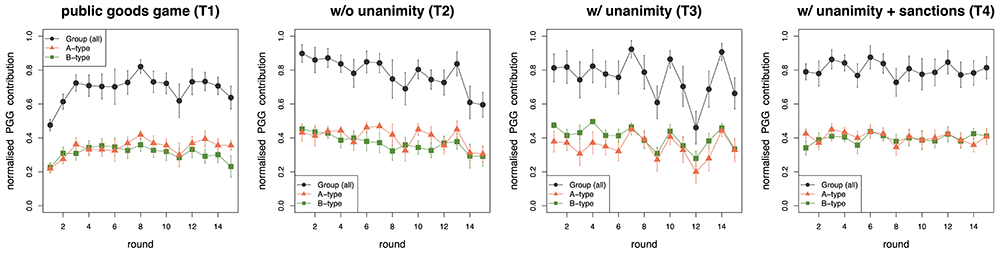
Figure 3. Normalised contribution by participant type, round and treatment.
Finally, Figure 4 illustrates the composition of climate clubs by participant type, round number, and treatment. This analysis sheds light on the evolution of group dynamics and potential learning effects over time. Overall, behavioral patterns appear similar across treatments during both the initial and final rounds, suggesting a convergence of strategies as the game progresses. In T2, the typical climate club displays relatively homogeneous composition, usually including at least one A-type participant and about two B-type participants. This pattern persists in T3 for A-type participants, while the average number of B-type members within the club increases significantly (Welch t-test group level: T3–T2, t = 2.225, df = 219.95, p = 0.027*). By contrast, T4 exhibits a distinct and stable pattern: both A-type participants almost always join the club—approximately 90% of the time from the earliest rounds—while one or two B-type participants are often left outside. This configuration indicates that sanctions encourage stronger and earlier engagement among high-endowment players, reinforcing the role of enforcement mechanisms in sustaining cohesive coalitions.
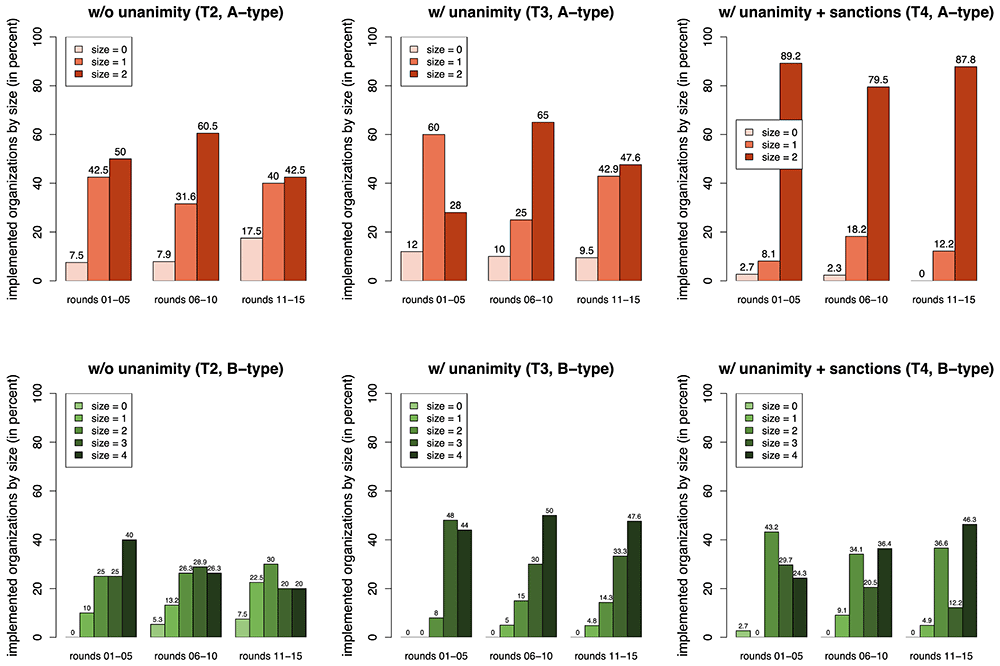
Figure 4. Climate club composition by participant type, round number and treatment.
In summary, our results indicate that Nordhaus’ sanctioning scheme effectively stabilized and reinforced cooperative behavior. It created strong incentives for participants to form large and highly committed clubs, maintaining cooperation even under potentially destabilizing conditions. Sanctions had a particularly pronounced effect on wealthier participants, who faced greater potential losses when poorer members coordinated to form clubs that excluded them. This suggests that, in principle, climate clubs could serve as a mechanism through which less affluent countries exert leverage on richer ones—though the economic asymmetries in the real world are far greater than in our stylized experimental setting, so this interpretation must be made with caution. Pledges also played a crucial role in sustaining cooperation. Many participants appeared to adhere to their initial declarations even in the absence of explicit enforcement, indicating that voluntary commitments can exert genuine behavioral influence. Finally, the unanimity rule enhanced the robustness of the clubs. When club formation required unanimous agreement, pledges were almost always honored, and coalitions proved more stable. Nonetheless, similarly high levels of cooperation were achievable without unanimity, suggesting that while the rule strengthens collective commitment, it is not essential for achieving it.
Discussion
The central message emerging from our experiment is that Nordhaus’ sanctioning scheme stabilizes cooperation and makes it resilient to potential breakdowns. Sanctions not only strengthen commitment within groups but also create strong incentives to form large and cohesive clubs of highly engaged participants. This effect is especially pronounced among highly endowed, or wealthier, participants, who respond more strongly to the presence of credible punishment mechanisms. The unanimity rule, although not indispensable for achieving high levels of cooperation, contributes to the robustness and stability of clubs by ensuring that commitments are more likely to be honored. Furthermore, pledges themselves play a pivotal role in sustaining cooperation: participants tend to respect their initial declarations even without external enforcement, suggesting that preliminary discussions and voluntary commitments can act as effective coordination devices in collective action contexts.
Our findings contrast with those of Casari and Tavoni23, who focus on the inefficiencies that arise when sanctioning and counter-punishment entail significant costs. In their framework, trade sanctions and retaliation dampen the overall effectiveness of climate clubs, reducing both cooperation and aggregate welfare. By contrast, our results indicate that when sanctions are credible, well-calibrated, and embedded within transparent institutional procedures, cooperation not only increases but also becomes more stable. This difference highlights that the institutional architecture of climate clubs—the rules governing membership, decision-making, and enforcement—may be as decisive for their success as their economic design. In other words, the durability of climate cooperation depends not only on the magnitude of incentives but also on the way in which collective commitments are structured and communicated.
Naturally, our work comes with limitations. As in most laboratory studies, the participant pool—university students—cannot fully replicate the preferences, strategic reasoning, or political constraints of actual policymakers. The debate on the external validity of laboratory experiments in economics remains open. Levitt and List25 strongly argue that laboratory findings may not translate easily to real-world behavior, while Camerer26 counters that experimental evidence remains essential for understanding the mechanisms underlying cooperation. Regardless of this ongoing discussion, further research using different samples, cultural contexts, and more naturalistic or field-based settings would be valuable to test the robustness of our conclusions. Alternative methodological approaches, such as large-scale simulations or agent-based models calibrated to real data, could also complement experimental evidence and help capture general equilibrium effects that are beyond the scope of controlled laboratory environments.
Another limitation concerns the scope of our experimental design, which does not include the possibility of retaliation by countries that remain outside the club. Retaliation could reduce the attractiveness of joining a climate club by offsetting some of the benefits of membership. However, such effects would likely be limited if a sufficiently large fraction of countries participate, as our data suggest. In this case, the collective weight of the club could deter effective retaliation, preserving the stability of the coalition.
In addition, we have not explored the full range of mechanisms that could facilitate or hinder group formation. For instance, we observed that anonymity can help sustain cooperation by reducing reputational pressures that might otherwise induce short-term opportunism. Nevertheless, future work could test the role of intermediate decision rules, such as supermajority requirements, to assess whether they balance inclusivity and efficiency more effectively than unanimity. Likewise, while our findings confirm the usefulness of sanctions, it would be valuable to systematically vary their magnitude to identify the optimal level of deterrence that maximizes cooperation without imposing excessive costs. Finally, the small group size adopted here—an unavoidable constraint to ensure statistical control—limits the direct comparability with real-world institutions. In practice, climate clubs may need to encompass dozens of countries. Yet, as Nordhaus3,17 and Tagliapietra and Wolff13 suggest, a coalition of only a few major economies could already generate substantial global leverage by setting de facto international standards.
Lastly, as mentioned in the introduction, institutional design is only one of the two main levers to address climate change. The other concerns the evolution of social preferences—namely, the willingness of individuals and nations to act pro-socially even when immediate self-interest would dictate otherwise. These two mechanisms are likely to be mutually reinforcing. Well-designed institutions, such as climate clubs, can harness and amplify intrinsic motivations, while strong social norms can, in turn, make institutions more legitimate and self-enforcing. Encouraging moral commitment and a sense of shared responsibility becomes easier when cooperative behavior is already visible and rewarded. In this sense, effective climate clubs may represent not only a policy innovation but also a vehicle for fostering enlightened self-interest on a global scale.
Materials and methods
We programmed the online experiment using oTree (v1.3) (43) and recruited participants through the IBSEN platform (44). Before each session, participants were randomly assigned to one of the four treatments. Three experimental sessions were conducted in November 2020, involving a total of 195 active participants (out of 210 recruited) who completed the entire experiment. Experimental points were converted into real money at an exchange rate of 50 points = 1 EUR. On average, participants earned 12.96 EUR (≈15 USD), including a 2 EUR participation fee. At the beginning of each session, participants had up to ten minutes to read detailed instructions about the task. Those who were absent at the start or who missed more than two decisions during the experiment were excluded from payment. In such cases, automatic decisions were implemented, randomly sampled from other active participants within the same session. Each session lasted approximately 50 minutes. The supplementary information provides the full experimental instructions and representative screenshots, see Section 1.
This study was conducted in accordance with the principles of the Declaration of Helsinki. The experimental protocol was reviewed and approved by the Comité de Ética en la Investigación (Committee of Ethics in Research) of Universidad Carlos III de Madrid, under approval reference CEI2019_007 (approval date: 29 April 2019). The experiment involved fully anonymous participation and collected no personal or sensitive data. All participants provided written informed consent before taking part in the experiment, through an electronic confirmation screen implemented in the oTree interface. Participants were informed about the purpose of the study, the anonymity of their responses, and their right to withdraw at any time without penalty. Supplementary information (Extended Data) — including the English translation of the full experimental instructions, screenshots of the oTree interface, and an example consent form — are available in the Zenodo repository linked under Data Availability.
Use of AI tools
In accordance with the F1000 AI Policy, the authors disclose that ChatGPT (GPT-5, OpenAI, November 2025) was used to assist in improving the clarity and presentation of the manuscript and in drafting R code for data analysis. The use of this tool was limited to language refinement and code preparation under the direct supervision of the authors. All conceptualization, data analysis, interpretation of results, and conclusions are entirely the work of the authors.
Data availability
All data supporting this study are openly available in Zenodo27at: https://doi.org/10.5281/zenodo.17610157
The repository includes:
– The full experimental dataset and variable definitions;
– The Extended Data, including:
• English translations of the experimental instructions,
• Representative screenshots of the oTree interface used during the experiment,
• Example consent form used in participant recruitment.
All materials are shared under the Creative Commons Zero (CC BY 4.0 or CC0 1.0 Public Domain Dedication) license, as specified in the Zenodo record. Readers who require further clarification about the dataset or analysis may contact the corresponding author. No new software was developed as part of this study.
Faculty Opinions recommendedReferences
- 1.
Barrett S:
Choices in the climate commons.
Science.
2018; 362(6420): 1217. PubMed Abstract
| Publisher Full Text
- 2.
Hardin G:
The tragedy of the commons: the population problem has no technical solution; it requires a fundamental extension in morality.
Science.
1968; 162(3859): 1243–1248. PubMed Abstract
| Publisher Full Text
- 3.
Nordhaus WD:
Climate clubs: overcoming free-riding in international climate policy.
Am Econ Rev.
2015; 105(4): 1339–1370. Publisher Full Text
- 4.
Precht P:
Should Canada join a climate club?
Can Foreign Policy J.
2022; 28(3): 343–351. Publisher Full Text
- 5.
Blenkinsop P:
G7 leaders commit to climate club, make carbon-cutting pledges: draft communique summary. 2022. Reference Source
- 6.
Hoel M:
International environment conventions: the case of uniform reductions of emissions.
Environ Resour Econ.
1992; 2: 141–159. Publisher Full Text
- 7.
Carraro C, Siniscalco D:
Strategies for the international protection of the environment.
J Public Econ.
1993; 52(3): 309–328. Publisher Full Text
- 8.
Barrett S:
Self-enforcing international environmental agreements.
Oxf Econ Pap.
1994; 46(Supplement_1): 878–894. Publisher Full Text
- 9.
Tavoni A, Dannenberg A, Kallis G, et al.:
Inequality, communication, and the avoidance of disastrous climate change in a public goods game.
Proc Natl Acad Sci U S A.
2011; 108(29): 11825–11829. PubMed Abstract
| Publisher Full Text
| Free Full Text
- 10.
Gosnell G, Tavoni A:
A bargaining experiment on heterogeneity and side deals in climate negotiations.
Clim Change.
2017; 142(3): 575–586. PubMed Abstract
| Publisher Full Text
| Free Full Text
- 11.
Barrett S, Dannenberg A:
Climate negotiations under scientific uncertainty.
Proc Natl Acad Sci U S A.
2012; 109(43): 17372–17376. PubMed Abstract
| Publisher Full Text
| Free Full Text
- 12.
Dannenberg A, Löschel A, Paolacci G, et al.:
On the provision of public goods with probabilistic and ambiguous thresholds.
Environ Resource Econ.
2015; 61: 365–383. Publisher Full Text
- 13.
Tagliapietra S, Wolff GB:
Form a climate club: United States, European Union and China.
Nature.
2021; 591(7851): 526–528. PubMed Abstract
| Publisher Full Text
- 14.
Vogt C:
Climate coalition formation when players are heterogeneous and inequality averse.
Environ Resour Econ.
2016; 65(1): 33–59. Publisher Full Text
- 15.
Dannenberg A, Barrett S:
Cooperating to avoid catastrophe.
Nat Hum Behav.
2018; 2(7): 435–437. PubMed Abstract
| Publisher Full Text
- 16.
Heitzig J, Kornek U:
Bottom-up linking of carbon markets under far-sighted cap coordination and reversibility.
Nat Clim Change.
2018; 8(3): 204–209. Publisher Full Text
- 17.
Nordhaus WD:
Dynamic climate clubs: on the effectiveness of incentives in global climate agreements.
Proc Natl Acad Sci U S A.
2021; 118(45): e2109988118. PubMed Abstract
| Publisher Full Text
| Free Full Text
- 18.
Karatayev VA, Vasconcelos VV, Lafuite AS, et al.:
A well-timed shift from local to global agreements accelerates climate change mitigation.
Nat Commun.
2021; 12(1): 2908. PubMed Abstract
| Publisher Full Text
| Free Full Text
- 19.
McEvoy DM, Stranlund JK:
Inequality aversion and coalition formation. 2016. Reference Source
- 20.
Bosetti V, Heugues M, Tavoni A:
Luring others into climate action: coalition formation games with threshold and spillover effects.
Oxf Econ Pap.
2017; 69(2): 410–431. Publisher Full Text
- 21.
Schmidt KM, Ockenfels A:
Focusing climate negotiations on a uniform common commitment can promote cooperation.
Proc Natl Acad Sci U S A.
2021; 118(11): e2013070118. PubMed Abstract
| Publisher Full Text
| Free Full Text
- 22.
Dong Y, Ma S, Zhang B, et al.:
Financial incentives to poor countries promote net emissions reductions in multilateral climate agreements.
One Earth.
2021; 4(8): 1141–1149. Publisher Full Text
- 23.
Casari M, Tavoni A:
Climate clubs in the laboratory.
J Behav Exp Econ.
2024; 110: 102211. Publisher Full Text
- 24.
Kosfeld M, Okada A, Riedl A:
Institution formation in public goods games.
Am Econ Rev.
2009; 99(4): 1335–1355. Publisher Full Text
- 25.
Levitt SD, List JA:
What do laboratory experiments measuring social preferences reveal about the real world?
J Econ Perspect.
2007; 21(2): 153–174. Publisher Full Text
- 26.
Camerer CF:
The promise and success of lab-field generalizability in experimental economics: a critical reply to Levitt and List.
SSRN.
2011. Publisher Full Text
- 27.
Antonioni A, Cabrales A, Sánchez A:
Dataset for Climate clubs: an experimental study of Nordhaus’ proposal to mitigate climate change. 2025. http://www.doi.org/10.5281/zenodo.17610157








