Introduction
Carbon Capture, Utilization, and Storage (CCUS) has emerged as a contested yet important technology for helping the decarbonization of various industries, and to overall help the efforts to mitigate climate change (IEA, 2013). While often portrayed as a mean to decarbonize “hard-to-abate” industrial sectors, CCUS is increasingly featured in national and international climate strategies, corporate sustainability roadmaps, and energy transition planning. However, despite its promise, CCUS remains politically and socially disputed as questions raise concerns regarding its long-term effectiveness, risks of fossil fuel lock-in, ethical dimensions, and, importantly, public legitimacy (McLaughlin et al., 2023).
Public acceptance and stakeholder engagement are crucial for the deployment of CCUS infrastructure. Yet, while scholarship has examined public perception and knowledge gaps around CCUS (Brunsting et al., 2011; Raimi et al., 2024), considerably less attention has been paid to how stakeholders are represented in public discourse, particularly through the lens of media narratives. The media plays a pivotal role in shaping societal perceptions, amplifying certain voices while marginalizing others, and ultimately influencing which stakeholders are perceived as legitimate actors in climate governance.
To address this gap, this paper applies a combined analytical framework, drawing on stakeholder theory (Freeman, 2010) and the Narrative Policy Framework (Schlaufer et al., 2022), to investigate how CCUS-related narratives are constructed and disseminated in national media across three European countries: Romania, Greece, and Denmark.
Stakeholder theory, as developed by Freeman (2010), emphasizes the ethical and strategic importance of including all parties who are affected by or can affect a business’s activity. This theoretical lens helps identify whose interests are considered—and whose are ignored—in CCUS implementation. The Narrative Policy Framework (Shanahan et al., 2018) offers a methodology for identifying narrative elements—such as characters, plots, and policy beliefs—in public discourse. The Narrative Policy Framework (NPF) has proven especially useful in contexts where policy meaning is socially constructed and contested, as is the case with emerging climate technologies like CCUS.
Through this framework, this study seeks to answer the following research questions: (1) Which stakeholders are most prominently represented in CCUS media narratives, and in what narrative roles (e.g., hero, villain, victim)? (2) How does the visibility or invisibility of certain stakeholders reflect and reinforce existing power asymmetries in the CCUS landscape? And (3) What does this reveal about the media’s role in constructing stakeholder legitimacy in the context of climate mitigation?
The focus on Romania, Greece, and Denmark is intentional, as they are all part of the ConsenCUS project as demonstration countries.1 These three EU member states differ in terms of CCUS maturity, political-economic structure, and public discourse environments, offering a comparative lens for understanding how national contexts mediate stakeholder representation. The purpose of this research is to identify the main characteristics of CCUS narratives in these three countries where CCUS demonstrators have been implemented by the ConsenCUS project, and whether any change has been noticeable over the course of four years of the study. Romania and Greece are countries where CCUS is less established and public awareness is relatively low, while Denmark presents a more mature context with active policy experimentation and broader public engagement.
Ultimately, this research contributes to a broader debate about legitimacy, environmental justice, and the social dimensions of the energy transition, as well as the implications for public policy. It argues that without a critical examination of stakeholder narratives and media dynamics, there is a risk of implementing technologies like CCUS in ways that perpetuate existing stakeholder inequities and undermine long-term public trust, as well as the policy implications that result from a disproportionate involvement of different stakeholders.
Theoretical framework
The notion of stakeholder has been a central concept for a very wide range of fields, including business management, project planning, public policy, and sustainability studies. The term was popularized in the 1980s through the work of R. Edward Freeman (2010), who argued that organizations should consider the interests of all parties affected by their operations, not just shareholders. Looking closer at what defines a stakeholder from Freeman’s perspective, they are often looked at from a perspective of “who benefits or who is affected by the organization”. As a result, the notion of stakeholder can include many types of organizations and individuals, ranging from suppliers that benefit from their sales to the organization, workers who value their jobs, and customers who buy whatever services or product the organization delivers (Freeman, 2010; Stacy, 2024). The stakeholder theory extends to those impact the organization’s efforts. These stakeholders once again include government and local communities and civic organizations that can officially regulate or informally place restrictions on how the organization operates.
In the public and nonprofit sectors, the stakeholder model has been applied to ensure transparency, accountability, and social legitimacy through the involvement of all relevant parties. As a result, this concept of ethical stakeholder involvement has gained visibility in discussions on sustainability and corporate social responsibility, emphasizing the need for organizations to address environmental and social concerns alongside financial performance.
Overall, stakeholder theory can be used as a means to understand either the problem of value creation (e.g. in a rapidly changing and global business context, how is value created and traded), the notion of business ethics (e.g how should business tackle the wider impact of its activities when they affect local communities or the environment), or the problem of managerial mindset (How should managers think about management to better create value and explicitly connect business and ethics) (Freeman et al., 2010). Therefore, stakeholder theory has evolved to support more inclusive decision-making processes that account for diverse perspectives and to the potential impact of a business’s activity on a variety of social groups. As a result, the stakeholder approach can provide a framework for understanding complex relationships and navigating competing demands in a structured and ethical way (Freeman et al., 2010).
Regarding both social CCUS acceptance and involvement, stakeholder theory offers a useful framework for understanding how stakeholder interests interact with a company’s actions and future CCUS-related projects. This framework can help us more effectively assess and navigate these dynamics, more specifically to: 1) identify the relevant stakeholders involved in CCUS projects (who are they in this specific context), and 2) examine the ethical concerns related to capitalism, as discussed by Freman, particularly focusing on whose interests and issues are prioritized during the development of these projects, and how corporate interests influence the overall direction of CCUS initiatives.
Previous literature on the importance of stakeholders in the context of CCUS projects (Brunsting et al., 2011; Feliciano & Hanak, 2025; Malone et al., 2010) approached the notion of a stakeholder from two perspectives: i) either a very wide definition of what a stakeholder is, mostly referring to a general public as the stakeholder while discussing issues such as knowledge or general perceptions related to CCS/CCUS (Malone et al., 2010), or ii) focus on a more specific set of stakeholders (e.g. local communities, local government) and target their approach more on the matters related to the implementation of a CCS/CCUS project that directly affects the lives of people living in those communities.
As a result, for CCS/CCUS projects, identifying stakeholders and engaging them in project-related activities is a crucial step. This can help establish the legitimacy of such projects, manage social risks, enhance public support, and encourage participatory decision-making (Malakar et al., 2025; Sovacool et al., 2023; Waller et al., 2023). Therefore, properly identifying the most relevant, as well as the most impacted stakeholders, is an important albeit difficult task, given the local context of each project. Based on previous literature (Brunsting et al., 2011; Feliciano & Hanak, 2025; Malakar et al., 2025; Reiner & Liang, 2012), the stakeholders involved in discussing various CCUS projects are most often the energy companies, local communities/public, as well as local and national governments. Thus, understanding the interests and viewpoints of various stakeholders is important, especially in the context of CCUS acceptance, as a less specialized general audience/general public tends to be more reluctant to CCUS projects than a more specialized audience (Raimi et al., 2024).
Although the task of identifying relevant stakeholders for CCUS projects has been more thoroughly discussed in literature, there is still a need to understand their objectives, interests and stances when it comes to their own involvement in project deployment, as well as their view on other stakeholders. To this purpose, this paper will use the narrative policy framework to gather and assess various publications concerning CCUS.
The Narrative Policy Framework (NPF) is a theoretical public policy approach that was originally designed to scientifically assess the role of narratives in the policymaking process (Kuenzler et al., 2025). The NPF has been recommended as the best-practice framework to apply on so-called “social site characterization” in exploring CCS projects (Brumbaugh & Rupp, 2020). It is straightforward to apply and based on the assumption that narratives contain core elements (see Figure 1) whose relative presence can be assessed between coalitions and over time to better understand how narratives influence beliefs and perceptions at the local level, but also policymaking at the strategic level. As such, the NPF offers a useful way of standardizing narrative analysis that allows for cross-comparison and impact analysis.
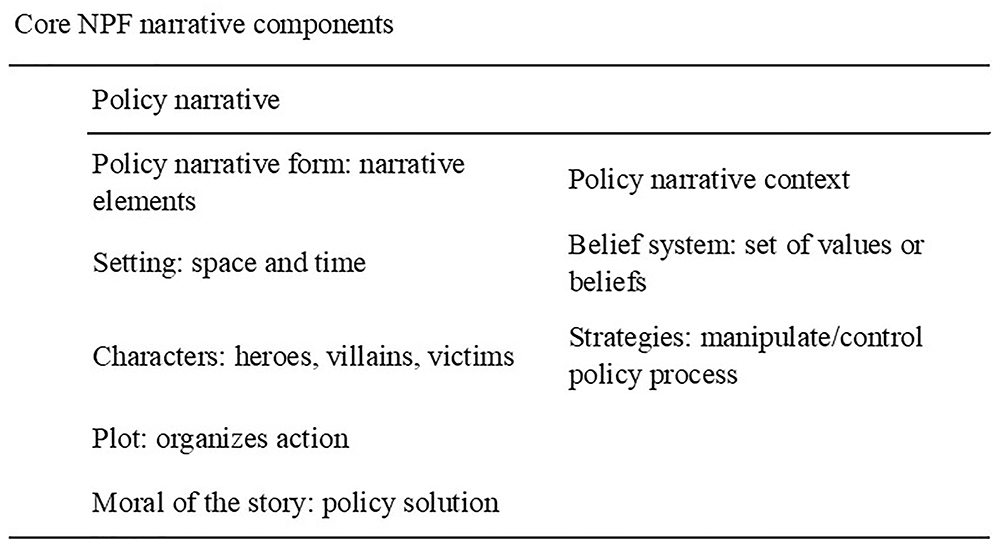
Figure 1. Core narrative components under the NPF.
From Shanahan et al., 20182.
Several modifications were made to the NPF criteria proposed by Shanahan, Jones, and McBeth (2018) to enhance the framework’s applicability to the analysis of CCUS narratives:
Stance on CCUS: Each article was classified according to its position toward CCUS—pro-CCUS, anti-CCUS, neutral/matter-of-fact, or ambivalent/unclear.
Heroes and villains: business/industry actors (e.g., cement companies); environmental groups (e.g., NGOs, think-tanks); government/public sector bodies (e.g., ministries, local authorities); cultural/historical actors (e.g., heritage organisations); universities/researchers; and other entities.
Victims: wildlife/nature/environment; economic concerns (e.g., industrial profitability); cultural/historical concerns (e.g., heritage protection); safety/security (e.g., CO2 leakage risks); social issues (e.g., employment); other human concerns; or combined bio- and anthropocentric concerns.
The results section presents the identified narrative elements as observed in media and institutional articles from the selected countries. Owing to the relatively small dataset, the findings are analysed qualitatively. The following section outlines the data sources used to collect the media and institutional materials analysed under the NPF framework.
Stakeholder theory, on the other hand, emphasizes that the impact of a business on the environment and on various groups affected by its activities should be understood through the lens of who is affected, how they are affected, and how well their interests and concerns are represented. The theory basically focuses on two key issues: the ethical representation of stakeholders and the identification of those stakeholders in relation to a given business activity.
Combining the stakeholder theory with the Narrative Policy Framework (NPF) provides both a normative lens and an empirical toolkit for analysing media coverage of CCUS. Stakeholder theory identifies who matters in the context of this technology (their interests, power, and the ethical implications of how they are represented), while the NPF systematically decodes the stories that media and actors tell about those stakeholders (e.g., which actors are cast as heroes, villains, or victims or what policy solutions are promoted). More specifically, this joint theoretical framework allows for (1) identifying who are the most notable stakeholders and how are they portrayed in the media/public statements by companies and governments (e.g., as a hero, villain or victim), (2) identifying who are the most visible stakeholders in the CCUS landscape, and (3) understanding the media’s role in constructing stakeholder legitimacy in the context of climate mitigation. For CCUS, which is a technically complex and policy-sensitive technology, this combined approach is especially valuable because it links ethical and interest-based questions (who should be heard, who benefits, who is harmed) to empirical evidence about storytelling, framing, and public perception that shape deployment and policy outcomes.
Methods and research questions
The analysis has been conducted on several types of narrative sources, whose components have been extracted and coded for analysis. The main objective of this analysis, as indicated by the theoretical framework, has been to:
1) Conduct a mapping of the relevant stakeholders, based on the notions/questions provided by the stakeholder theory of “who should be heard”, “who benefits”, “who is harmed”;
2) Identify relevant narratives from the previously established stakeholders and interpret them using the NPF analysis framework.
Building on the previously described theoretical framework that combines stakeholder theory with the NPF framework for narrative analysis, this study followed two main steps: first, identifying relevant stakeholders and their statements; and second, examining these narratives to determine their main characters and the individuals who most frequently speak about CCUS.
To identify the main stakeholders for the topic of CCUS, this analysis has used the categories proposed by Freeman (2010). Stakeholders are classified into two groups: primary stakeholders and secondary stakeholders. Primary stakeholders mainly include those directly affected by a company’s activities such as shareholders, creditors, customers, suppliers, managers and employees, and state and local communities. Secondary stakeholders are those not directly and obviously influenced by a company’s success or failure. This group includes regulators, competitors, media, and civic institutions (Freeman, 2010; Tan, 2014).
In the context of CCUS, which is the focus of this analysis, the relevant stakeholders may include several of the previously mentioned categories, with minor adjustments. For instance, for the study of CCUS, considerably less emphasis needs to be placed on primary stakeholders, as the discussion addresses a broad, large-scale topic, with greater attention given to secondary stakeholders. Also, the stakeholder categories have been adapted to reflect the more policy-oriented and societal impact dimensions of CCUS, and to capture the perspectives of other relevant stakeholder groups not identified in Freeman’s original analysis:
- Shareholders/businesses/companies
- National government
- National authorities
- Governmental organizations (international)
- Local communities
- NGOs and civil society
- Universities and researchers
- Media
The second step of this framework involves the use of NPF framework to identify and analyze the narratives from the previously mentioned stakeholders. The analysis period is from 1st of May 2020 to 1st of May 2024, on media outlets and institutional statements from Romania, Greece and Denmark. More specifically, the analysis and data collection part will consist of meso-scale level analysis using the narrative policy framework, operationalized through content analysis of several selected narrative sources.2 To assess strategic narratives on CCUS of national and international scale, meso-scale analysis is the most appropriate.
To identify narratives focused on CCUS, the research covers both textual and visual narratives from the previously identified stakeholders, as well as statements and articles from the general media. More specifically, the following types of documents and media will be covered:
National strategies and plans (e.g., National Energy and Climate Plans, long-term decarbonisation strategies, industrial strategies, Recovery and Resilience Plans, hydrogen strategies, coal phase-out strategies);
Public statements, speeches or press releases from decision-makers;
Public statements, speeches or press releases from businesses and companies – top 10 emitters in the energy and industry sectors;
Statements from intergovernmental organizations,
Statements from the European Union;
Statements from the national government/national authorities;
Statements/articles from NGOs and civil society;
Media content: articles and editorials from: the five most-circulated national journals; the five most-circulated national publications for energy or climate news; international journals
The decision rules on including or excluding visual or textual data from analysis are as follows: 1) the source must include at least one “character” (hero, villain, or victim) and 2) it must take some form of policy stance (for or against CCUS; ambivalent or unclear positions are also acceptable). The analysis has not included the data sources that only mention CCUS once.
Search of relevant media databases for the above sources has been conducted based on a keyword search (for national strategic narratives, in local language): “carbon capture and storage”, “carbon capture and utilization”, “carbon capture, utilization and storage”, “CCS”, “CCU”, “CCUS”, “carbon capture”, “carbon utilization”, “carbon storage”, “CO2 capture/utilization/storage”, “carbon dioxide capture/utilization/storage”. For international narratives, it includes “geoengineering”/”climate engineering”.
The analysis has been conducted on several types of narrative sources, whose narrative components have been extracted and coded for analysis. Once identified, the narratives will be read and analyzed according to the NPF framework and logged into a pre-established codebook (see Appendix 1, as well as the Zenodo data files: Panica, D., Niculicea, A.-M., & Sorescu, D. (2025). Data files for monitored media and institutional publications on CCUS in Denmark, Romania, and Greece 2020–2024]. Zenodo. https://doi.org/10.5281/zenodo.17398308).
Research questions
The objective of this analysis is to understand who the most visible stakeholders in the realm of CCUS are, what their interests are, and if differences in visibility provide insight into existing power asymmetries. The analysis seeks to answer the following research questions:
1) Which stakeholders are most prominently represented in CCUS media narratives, and in what narrative roles (e.g., hero, villain, victim)?
The first question relates to the stakeholder theory’s principle that all affected parties (i.e. stakeholders) should be considered by the decision makers (Freeman, 2010). In this case, however, as the subject is not directly tied to a corporate actor but rather to a technology, shifting the focus from what businesses should do to how the interests of all relevant stakeholders are represented, and whether there are discrepancies in their stances. This question is also connected to the hypothesis that, in the context of CCUS as an emerging technology, there is limited publicly available knowledge — particularly among non-specialist audiences (Mota-Nieto & García-Meneses, 2024) – that may result in only the most specialized voices possessing the expertise needed to engage meaningfully in discussions about CCUS.
The second question is linked to a hypothesis that the components of CCUS narratives in Romania, Greece and Denmark will differ. It will be answered based on findings from monitoring strategic narratives using the NPF and a comparative case study approach.
The third question in linked to the ethical aspects of the stakeholder theory where it adds an ethical in considering how all affected parties’ interests are being portrayed. The hypothesis in this case is that stakeholder visibility is directly linked to their capacity to influence decision-making for deployment of this technology (Buure et al., 2024; Storrs et al., 2023)
This last question is linked to the hypothesis that media plays an important role in shaping both the knowledge and perceptions around CCUS (Asayama & Ishii, 2017; Buure et al., 2024; Gough et al., 2017; Jiang et al., 2022). The role of media in this regard is to present and discuss the interests of various stakeholders.
Findings
Greece
In Greece, the stakeholders that dominated the CCUS discourse have been businesses and NGOs, while the government, academia and local communities have played rather secondary roles. Businesses were often portrayed as champions of innovation3; NGOs as watchdogs, being a critical voice in the context of CCUS4; governments as supporters of industry5; universities and researchers as neutral innovators6; and local communities as overlooked victims7.
By looking at each stakeholders’ representation in the media, at how frequently they are referred to in media articles, as well as at the company statements, it is revealed that mass-media have been the stakeholder with the greatest number of authored narratives (126 narratives for all four years of the analysis period) – see Table 1. This is to be expected, as the media, unlike other stakeholders, typically refrains to simply presenting (usually in an informative manner) the stances of other stakeholders (either business or NGOs). For example, media coverage focused only on presenting achievements (e.g., the Ptolemaida 5 lignite plant’s possible conversion using CCS and referencing studies on Greece’s CCS potential), while not looking into a broader discussion on the overall impact and potential benefits of these projects8. However, media itself as a stakeholder did not take a strong stance.
Table 1. Stakeholders authoring narratives in Greece.
| Greece: Stakeholders authoring narratives |
|---|
| 2020–2021 | 2021–2022 | 2022–2023 | 2023–2024 | Total |
|---|
| National government | - | - | 1 | 3 | 4 |
| National authority | - | - | 3 | - | 3 |
| Business/company | 1 | 4 | 6 | 14 | 25 |
| NGOs/civil society | 5 | 3 | 1 | 2 | 11 |
| University/Research institutions | 1 | 4 | - | 1 | 6 |
| Media | 3 | 18 | 44 | 61 | 126 |
| Other stakeholder13 | - | 2 | 2 | - | 4 |
The large industrial emitters, on the other hand, have been one of the most engaged and cited stakeholders throughout the analysis. With 25 authored narratives, businesses are the second stakeholder by the number of authored narratives (see Table 1), with 30 total mentions in their own or other stakeholder's narratives, either as a hero, villain or victim.
Specifically, businesses promoted their net-zero initiatives and involvement in research projects (e.g., Titan’s9 participation in international research), often portraying their objectives on CCUS as a necessary tool for facilitating a green transition and minimizing economic disruption for major fossil fuel companies like Shell and BP, or they focus on presenting CCUS in the media as a necessary tool for decarbonization. These narratives included private companies such as Energean, recognized for leading the Prinos CO2 storage project10, or the CEO of EDEYEP11 who extolled the fossil fuel industry’s expertise as essential for deploying CCS.
As for businesses, they frequently cast themselves in the media as heroes, promoting their projects as key to Greece’s decarbonization. For example, an op-ed by Energean’s CEO12 acknowledged shared heroism: crediting the company, infrastructure operator DESFA, and governments for their roles in advancing CCS. Specifically, they are the most mentioned hero in Greek media/public statements with 22 narratives mentioning them positively (see Table 2). More specifically, while businesses tend to brand themselves positively in the media14, other stakeholders such as NGOs and the media themselves sometimes recast them as “villains” for extending the use of fossil fuels through CCUS, or for failing to provide sufficient public information and engage with local communities15. In some instances, businesses have also been villainized alongside the government for the same reason16.
Table 2. Stakeholders mentioned in Greece by role and number of narratives.
| Stakeholder mentioned in narrative | Hero | Villain | Victim | Total mentions |
|---|
| Business/industry | 22 | 8 | - | 30 |
| Conservationists/environment | 1 | - | - | 1 |
| Government/public sector | 1 | 9 | - | 10 |
| University/researchers | 10 | - | - | 10 |
| Other stakeholders21 | 11 | 9 | - | 20 |
| Wildlife/nature/environment | - | - | 4 | 4 |
| Economic concerns | - | - | 3 | 3 |
| Social concerns | - | - | 1 | 1 |
| Other human concerns | - | - | 3 | 3 |
| Both bio and anthropocentric | - | - | 5 | 5 |
Universities and researchers were among the most praised stakeholders, ranking as the second most frequently mentioned 'heroes' with 10 mentions. Notably, they were never portrayed as villains, despite contributing with only six authored narratives themselves. Overall, their role was viewed very positively, with their achievements and progress praised by the media.
NGO’s on the other hand, have been one of the most polarizing presence in the Greek media. Leading environmental NGOs in Greece (such as The Green Tank, WWF, and Greenpeace) are consistently critical of CCUS. Greenpeace for example stood out with three anti-CCUS statements17, while the Green Tank adopted a more nuance stance, endorsing the use of CCUS only for specific industries18. NGOs have been one of the most consistent stakeholders when it comes to opposition to CCUS, and the most vocal one with 11 authored narratives (see Table 2), but their overall stance being not well received by the other more visible stakeholder as they were mentioned only once as a hero (by another NGO). Overall, the NGOs evince a tendency to either portray themselves as heroes for standing up to businesses who wish to implement this technology as a mean to their own ends, as well as portray the government (5 times), business (1 time) or both (2 times) as villains (ex: WWF Greece criticized the European Commission for relying too heavily on CCUS in its 2040 climate strategy. Greenpeace Greece was more direct, condemning fossil fuel companies as “the dirty dozen” and framing CCS as a “dangerous distraction19.” Greenpeace also implicated governments for enabling these industries, arguing that without political pressure, companies will not change.)
Government authorities at both national and EU levels were subtly depicted by environmental NGOs such as Greenpeace as subtle villains (5 narratives) and enablers of a carbon lock-in, promoting questionable clean technologies like CCS to meet 2050 net-zero goals. In other two articles, businesses and the government were both portrayed as complicit in prolonging the use of fossil fuels (once for bypassing local residents in developing the Skaramangas shipyard, or by Greenpeace Greece, for "finding creative ways", including CCS, to avoid necessary measures. Overall, governments as stakeholders were heavily criticized by NGOs and received little praise. In fact, only one narrative portrayed a government as a 'hero' (that reference was specifically to the Norwegian government20). When discussing their own interventions, they have not been overly active in authoring narratives, with only four narratives authored by the national government and three by a national authority.
One of the least mentioned stakeholders have been the local communities, which had very few narratives focused on their interests (two narratives focused on how local communities have noted the launch of certain CCU projects). One of these statements involved the Milaki cement plant in Evia, and the other the Skaramangas shipyard project and they both have portrayed the local communities as heroic for standing up to companies who want to start projects. It is worth mentioning that while these articles were not explicitly anti-CCUS, they reflected strong dissatisfaction with the project rollout process, particularly regarding the lack of community consultation from the business side22. This is especially concerning as community acceptance is influenced by the perceived project impacts (Klok et al., 2023). Without genuine proactive communication from the business side, gaining the acceptance of local communities may prove difficult (Eberenz et al., 2024).
Romania
When examining the distribution of authored narratives, Romania showed a much smaller variety of engaged stakeholders compared to Greece. Media dominated with 62 authored narratives, followed by businesses with 10. NGOs and international governments each contributed three narratives, while academia was offered just one narrative. These findings are similar to the Greek case study, where CCUS narratives were largely shaped by media voices. And just as in Greece, the media mainly acted as a conduit, serving as the arena where all narratives were disseminated, and within this landscape, businesses were one of the most dominant voices.
This very low involvement of the public could be explained by the complexity of the topic itself, as non-technical individuals are not likely to engage or trust topics which they are not accustomed to or knowledgeable of (Eberenz et al., 2024; Larkin et al., 2023; Tardin-Coelho et al., 2025). As a result, the topic itself is rather discussed by businesses themselves in their public statements or media articles that tend to portray and discuss matters related to the interests of businesses: either they discuss and announce specific CCS projects (e.g., the HeidelbergCement proposal for carbon capture at Slite (Norway)23, the Orca Direct Air Capture24 project in Iceland (launched in September 2021 and which generated several media articles in Romania), the LEILAC25 project, the UK’s NW Hydrogen Alliance26 and others), or they simply present and praise the achievements and project objectives of businesses (e.g. the launch of OMV Petrom’s 2030 strategy27, which includes €5 billion of funding for clean technologies including CCS, which generated a large number of media articles).
Overall, most narratives framed businesses as the main protagonists, highlighting technical know-how, investment in CCUS, and their role in decarbonization. These stories were often authored by the media – especially the industry-focused media. However, this high level of media exposure also brought significant negative coverage, with businesses frequently portrayed as villains: appearing in 11 different narratives that framed them in this way (see Table 3). Most articles cited the CCUS’s long-term safety or accused companies of using it to delay the energy transition (which has been the most present argument against CCUS)29. One notable example of business vilification has been during a of a community backlash against CCUS related in a news article written by Realitatea.net30 and the consequent news coverage which depicted OMV’s Boțești31 storage project as dangerous and exploitative for the local community, followed by an extended negative campaign run in the prime time of Realitatea TV for several months thereafter. It was prompted by OMV Petrom’s plans to develop a CO2 storage site in Boțești. Following the campaign, the plan faced backlash from the local community. That article sparked significant coverage, leading to 24 articles that month (compared to just five in the previous months), while also shining some light on the interests of another type of stakeholder: the local communities.
Table 3. Stakeholders mentioned in Romania by role and number of narratives.
| Stakeholder mentioned in narrative | Hero | Villain | Victim | Total mentions |
|---|
| Business/industry | 39 | 11 | - | 50 |
| Government/public sector | 5 | 10 | - | 15 |
| University/researchers | 3 | - | - | 3 |
| Other stakeholders28 | 10 | 2 | - | 12 |
| Wildlife/nature/environment | - | - | 6 | 6 |
| Economic concerns | - | - | 5 | 5 |
| Safety/security concerns | - | - | 1 | 1 |
| Social concerns | - | - | 1 | 1 |
| Other human concerns | - | - | 2 | 2 |
| Both bio and anthropocentric | - | - | 4 | 4 |
Governments on the other hand, have been both villainized and framed as heroes during this analysis period. They were cast as heroes in five narratives, though these references focused primarily on international actors such as the EU, which was praised for its clean energy legislation32, or the government of Denmark for leading a good fight against the climate change33. Governments were also featured as heroes in communications by Romanian authorities, although their positioning on CCUS remained quite vague (e.g., one question on CCS was addressed by a Member of Parliament to the Ministry of Energy in April 2021 but was met with a relatively vague answer that does not indicate a positioning of the Ministry on the topic34).
In contrast, the Romanian Government was portrayed as a villain, primarily for the exact opposite reason: its failure to provide businesses with an adequate legal framework to support investments in CCUS, or the EU imposing unrealistic emissions targets on the country’s major polluters (mostly by companies affected by Romania’s CO2 storage obligations35,36). NGO voices were small (with only three narratives authored), and local communities’ interests only came into discussions after a controversy related to the start of a CO2 storage site37.
Although NGOs are not portrayed as neither villains nor heroes by no other stakeholder, their positions have been well represented in the media though their own public statements (NGO’s authored a total of three. They are one of the stakeholders who villainize both the government, and the companies for investing and approving CCUS, while highlighting their concerns for the economic, social and environmental problems this technology might cause. Some NGOs have also been advocating for calling out CCUS as a form of ‘greenwashing’, as it is being promoted by actors who have large stakes into the fossil fuel industry and used as means to continue the use of fossil fuels38.
Lastly, when discussing victims, one of the most frequently raised concerns has been the potential environmental effects of CCUS implementation (six narratives), particularly the risk of carbon lock-in. The second most common concern highlighted in the media relates to the economic impact of CCUS, mainly the potentially high costs of launching such projects (5 narratives). In addition, some narratives raised both ecological and social concerns, focusing on the effects on the labour force as well as broader environmental impacts.
Overall, the stakeholder landscape in Romania has not been quite as diverse in terms of stakeholder’s engagement in media narratives, given the lack of authored narratives by national authorities, national government or university/research institutions. Nevertheless, CCUS has been the topic of many debates between different stakeholders, and many positionings and concerns have been raised during this analysis period. From concerns of the local communities that have felt overlooked by business, to media articles that both praised and critiqued the potential of CCUS projects, this topic gained a strong popularity since 2020, as the number of authored narratives increased year by year (see Table 4).
Table 4. Stakeholders authoring narratives in Romania.
| Romania: Stakeholders authoring narratives |
|---|
| 2020-2021 | 2021-2022 | 2022-2023 | 2023-2024 | Total |
|---|
| International government | - | 1 | 2 | - | 3 |
| Business/company | 2 | 4 | 3 | 3 | 10 |
| NGOs/civil society | - | 2 | - | 1 | 3 |
| Media | 8 | 18 | 25 | 14 | 62 |
| Other stakeholder | 1 | - | - | - | - |
However, although the number of narratives has increased, the diversity of stakeholders represented in them has not. The narratives continue to be led by the same stakeholders, which may create challenges for public acceptance, especially if the government, business and NGOs do not involve other stakeholders, such as local communities. Since the acceptance of this technology is closely tied to both the availability of information on CCUS and the extent to which local communities feel engaged in the development of new projects, the lack of diversity could be problematic. (Eberenz et al., 2024; Klok et al., 2023; Larkin et al., 2023; Schomakers et al., 2025).
Denmark
Denmark’s stakeholder landscape has been quite different when compared to the ones in Romania and Greece, from the perspective of the most represented voices on the topic of CCUS. Unlike Greece and Romania, Denmark’s CCUS debate has been more pluralistic, as businesses, the government, political parties, NGOs, and even city authorities were all involved in the media discourse and in public statements. In this case, mass media acted primarily as a communication channel, keeping the discourse informative while also expressing criticism toward politicians. Businesses led the promotion of CCUS through their projects, while government and political actors played both hero and villain roles: praised for enabling legislation but criticized for over-reliance on CCS and policy shortcomings. NGOs were more active than in the other two cases, voicing both caution and outright opposition, while local communities and citizens surfaced in moments of resistance. Media coverage amplified these perspectives, sometimes celebratory, other times sharply critical.
More specifically, businesses have been one of the most visible stakeholder during this analysis period, with a total of 24 authored narratives (see Table 5), and with 24 total mentions as a villain or hero in other stakeholders’ narratives, or their own (see table Table 6). Interestingly, while businesses did not have the highest number of authored narratives or mentions overall, they were the most frequently portrayed heroes, with 19 narratives casting them in this role. Notably, 14 of these were self-authored, as companies such as Aalborg Portland, Nordsofonden, and INEOS presented themselves positively, either for investing in CCS or positioning themselves as pioneers of large-scale CCS and low-carbon innovation. Joint ventures were also framed as heroes for fostering collaborative, cross-sector progress. Unlike in Greece and Romania, Denmark’s media landscape featured fewer villains overall, with only businesses and the government receiving negative portrayals. Businesses were mainly criticized for their commitments to CCUS, which critics framed as attempts to secure other advantages rather than genuine climate responsibility39.
Table 5. Stakeholders authoring narratives in Denmark.
| Denmark: Stakeholders authoring narratives |
|---|
| 2020–2021 | 2021–2022 | 2022–2023 | 2023–2024 | Total |
|---|
| National government | 6 | 3 | 13 | 7 | 29 |
| National authority | - | - | 5 | 5 | 10 |
| Business/company | 1 | 9 | 7 | 7 | 24 |
| NGOs/civil society | 1 | 6 | 4 | 11 | 22 |
| University/Research institutions | - | - | 4 | 3 | 7 |
| Media | 10 | 18 | 26 | 17 | 71 |
| Other stakeholders40 | 9 | 8 | 8 | 1 | 26 |
Table 6. Stakeholders mentioned in Denmark by role and number of narratives.
| Stakeholder mentioned in narrative | Hero | Villain | Victim | Total mentions |
|---|
| Business/industry | 19 | 5 | - | 24 |
| Conservationists/environment | 2 | - | - | 2 |
| Government/public sector | 16 | 11 | - | 27 |
| University/researchers | 5 | - | - | 5 |
| Wildlife/nature/environment | - | - | 2 | 2 |
| Economic concerns | - | - | 4 | 4 |
| Social concerns | - | - | 4 | 4 |
| Other human concerns | - | - | 1 | 1 |
| Both bio and anthropocentric | - | - | 1 | 1 |
The most visible and active stakeholder during this analysis period was the government, with 29 authored narratives by national government and 10 narratives by a national authority (see Table 5). Most of the authored narratives focused on presenting the government’s efforts in supporting CCS in Denmark, and for facilitating international CCS cooperation, while also highlighting the importance of CCS/CCUS for achieving the climate objectives (e.g., a public statement from the Ministry of Energy, Climate and Utilities positioned the government in a modestly heroic role, citing efforts to scale up CCS through new funding opportunities under the North Sea Agreement41). It is also worth noting that although the government issued many statements celebrating these projects, and was often portrayed as a hero in such narratives, it still faced criticism, being depicted as a villain in 11 other narratives (see Table 6), making the government the most criticized stakeholder in Denmark. Most of these stances (found in 4 narratives out of 11) came from NGOs, which argued against CCUS as a measure for decarbonization42, or were specifically against the government giving permission for CO2 storage43. There were also media articles that criticised the exact opposite, more exactly, the delays in CCS deployment (both though statements made by the Danish Council on Climate Change and the Confederation of Danish Industry) despite its reliance on CCUS to meet climate goals44. Overall, the government as a stakeholder held a quite visible and controversial stance in Dannish media, being at the same time one of the most mentioned, as well as one of the leading stakeholders in terms of narratives authored. This is not surprising, as the other case studies revealed a similar pattern: governments are typically seen as supportive of businesses investing in CCS, while other stakeholders (particularly NGOs) have been the most critical of this stance45.
NGOs as a stakeholder have also been active and visible in the Danish media, as three of them (Youth Climate Council, Noah, Concito and the Danish Society for Nature Conservation) made public statements referencing CCUS, while other articles highlighted conservationists and cautious politicians as heroes in an anti-CCUS narrative, while a fourth credited multiple parties—including the Danish Parliament, SMEs, and international actors, for advancing CCS. Concito maintained a moderate pro-CCS stance, while Noah opposed CCS but supported CCU. Other NGOs remained ambivalent or unclear in their positions, as some NGOs have strongly criticized CCUS implementation, while other remained more supportive. One media article covering a citizen’s association’s stance towards CO2 storage emphasized both environmental and community-level harm from corporate-led CCS projects46.
Political parties emerged as a distinct stakeholder in the Danish media, being either praised (particularly by industry) for their role in supporting and managing CCUS investments or criticized for their generally positive stance toward CCUS. For example, one public statement credited the government, praising its role in building a CCUS cluster in North Jutland,47 while some government bodies (including ministers, Parliament, and even Denmark as a whole) were depicted as heroes for enabling legislation, forging international agreements, and guiding Europe’s green transition. One statement from the Danish People’s Party, also framed their role in shaping the North Sea Agreement as climate leadership. On the other hand, one media article criticized politicians and climate scientists for over-relying on CCUS in climate models, portraying this as dangerous complacency,48 while another article criticized Aalborg Portland and Prime Minister Mette Frederiksen for benefiting from a CO2 tax model that lacked enforcement.49
A less prominent stakeholder group consists of universities and research institutes. They authored a total of seven narratives and were portrayed as heroes in five, with none framing them as villains. In authoring their own narratives, universities and researchers typically highlighted the benefits and achievements of their CCUS projects, while in narratives by other stakeholders they were praised for their contributions. For example, one researcher was credited for innovation and technological breakthroughs. Only one university figure, a PhD researcher from Aalborg Portland, was explicitly credited as a hero for technological contributions50.
A more overlooked stakeholder were the local communities, as discussions on the impact of CCUS implementation were sometimes met with either praise and optimism about what CCUS can bring,51 or with concerns from citizens associations. For example, one article suggested that overreliance on CCS could harm the environment by allowing emissions to persist.52
Lastly, on victims, Danish media narratives tended to highlight two main types of concerns: economic and social. These were typically framed around the financial costs of CCUS projects, portraying businesses as victims in need of support during the green transition, particularly through financial assistance for CCUS. At the same time, the narratives stressed that ambitious climate policies, such as CO2 reduction targets, should not override basic economic considerations53. Social concerns, on the other hand, refer to potential impacts on the job market,54 as well as possible public costs associated with CCUS implementation55.
Denmark differs from Greece and Romania regarding its multi-actor CCUS debate: not just businesses, but also government, parties, NGOs, and local communities have actively shaped the discourse. While industry cast itself as the central hero, government was the most contested actor, hailed as a leader in some contexts but sharply criticized for complacency, lock-in, and favoritism. NGOs were more active than in the other case studies, offering both support and opposition. Eventually, Denmark’s discourse reflected both enthusiasm for technological leadership and unease over social, environmental, and political risks, suggesting a more dynamic but also more polarized public conversation
Discussion
The following discussion sums up the stakeholder dynamics in Greece, Romania, and Denmark, highlighting some similarities, differences, and more importantly, implications for CCUS governance and legitimacy. The main stakeholders addressed throughout the narrative periods in all three case study countries have been: 1) businesses/the industry; 2) the government, 3) media, 4) NGOs; and 5) local communities – as described in the methodological section. Based on their media discourse, statements and positioning on the matter of CCUS, the following stakeholder interests can be deduced:
Businesses/the industry – one of their main interests about CCUS has been to preserve their profitability while aligning with decarbonization goals. For example, in Romania OMV Petrom highlighted in their 2030 business strategy their goals towards CCUS56, investing €5 billion of funding for clean technologies including CCS. In Greece, Energean is recognized for leading the Prinos CO2 storage project57, while in Denmark Aalborg Portland highlights their technological contribution to this technology58. This type of portrayal may stem from the perception of carbon capture technologies as a critical tool for reducing CO2 emissions from industrial facilities (Yaashikaa et al., 2023), making them a strategic objective. Accordingly, businesses often present CCS in a highly positive light, and their media narratives adopt a similarly promotional stance. However, this framing also invited criticism from other stakeholders, which sometimes view such projects as greenwashing, and in some cases, it has led to backlash from local communities.
Governments -- their objectives are not so clear, compared to other stakeholders. As a result, the role and goals of governments tend to be more to balance decarbonization objectives with economic stability. For example, in Denmark government officials have been more active in stating their opinions and objectives, and have undertaken a more proactive role in establishing a CCS/CCUS framework (e.g. the North Sea Agreement), while in countries such as Greece and Romania government had a more vague positioning in the media, with also less authored narratives.
NGOs – tend to focus on preventing greenwashing and fossil fuel entrenchment. Based on most media articles, as well as statements from visible NGOs such as Greenpeace in Greece and Romania, or NOAH in Denmark, their interests are not as unitary in terms of interests towards CCUS, as some might see it as a false solution (e.g Greenpeace in Romania and Greece59), while others might adhere to a more specific usage of CCUS, preferably for specific hard-to-abate sectors, such as cement (e.g the Green Tank in Greece60), or strictly anti CCS (e.g Noah in Denmark61). Overall, NGOs, although differing in their positions and reasons for rejecting CCS/CCUS, play an important watchdog role. They closely monitor developments, particularly government actions, and criticize measures that do not align with their overall perspective on CCS/CCUS.
Mass media -- stakeholder with the highest level of input across all case study countries, yet it primarily acted as a conduit for other stakeholders—mainly industry and NGOs. Only occasionally did journalists adopt a more critical or investigative stance on CCS.
Local communities – the most underrepresented stakeholder. While media articles sometimes highlighted community backlash, their interests were largely overlooked by other stakeholders and became visible only in moments of opposition. As seen in the Boțești case in Romania, local communities primarily seek transparency, inclusion in decision-making, and protection from environmental and economic harm.
Firstly, the stakeholder theory (Freeman, 2010) claims that organizations should encourage good communication practices with all parties who affect or are affected by their activities not just shareholders, but also employees, communities, governments, NGOs, etc. The theory emphasizes power, legitimacy, and urgency as determinants of stakeholder salience (Mitchell et al., 1997). In this context, the analysis underlines a significant discrepancy in how stakeholders are represented. Stakeholders such as businesses held significantly more visibility (see Table 2, Table 3 and Table 6) and overall dominate the discourse on CCUS in all case-study counties given both the number of authored narratives, and the number of mentions within other stakeholders narratives. This can be explained by the fact that media, as a stakeholder, predominantly acted as an amplifier, either presenting and forwarding narratives (as seen in Romania and Greece, where only a few articles adopted a critical stance or addressed the potential implications of CCUS) or, at times, introducing opposing viewpoints while maintaining journalistic distance (as seen in Denmark62).
Secondly, the portrayal of governments as stakeholders gives important insights into how they are perceived in the media by other actors. Findings show that governments have been among the most criticized stakeholders in relation to CCUS, sometimes only second to businesses. The government was the most frequently portrayed villain in Greece (Table 2) and Denmark (Table 6), and the second most in Romania, after businesses (Table 3). One of the most frequently mentioned critiques were either because of failing to provide adequate frameworks to support CCUS projects or for offering incentives to businesses to adopt what was seen as an unproven and unreliable technology, intended to protect corporate profit margins. This type of portrayal is unfortunate as, in the context of CCUS, governmental trust and trust in local authorities has been demonstrated to be one of the leading factors into communities’s acceptance (Eberenz et al., 2024; Klok et al., 2023; Larkin et al., 2023; Schomakers et al., 2025).
Lastly, this imbalance highlights a larger issue of legitimacy and power. When discourse is largely shaped by a few well-represented actors, such as businesses and government entities, the process risks excluding other stakeholders. Less visible stakeholders, such as local communities, have had limited influence in the CCUS discourse in our case studies, given both the number of authored narratives, and the number of narratives where they were mentioned. This is especially concerning in the current context of CCUS development, especially as recent debates increasingly highlight that public buy-in/ community acceptance is critical for large-scale CCUS (Buure et al., 2024; Cismaru & Ciochina, 2024; Oltra et al., 2020; Liu et al., 2021; Schomakers et al., 2025; Storrs et al., 2023; Tardin-Coelho et al., 2025), and that without a high level of acceptance, communities can become distressed and backlash against the companies who are trying to develop a project within their community (such as was the case in Skaramangas or Botesti). In this context, the discussion should include the notion of "Just CCUS", which underscores that communities must shape, not just live through the development of clean energy projects (Lowell, 2024; Middleton et al., 2025).
Conclusions
Media can play an important role in forming, shaping and expressing public opinion (Buure et al., 2024; Gough et al., 2017; Jiang et al., 2022; Romanach et al., 2015; Yoon & Hernández, 2021), and as an information channel it can raise awareness about issues related to unfamiliar technologies (Romanach et al., 2015), or it can act as a medium where certain actors can become a legitimate voice in relation to a topic (Castelló et al., 2016; Kwestel & Doerfel, 2023). Because of this, media presence and frequency can shape public opinion and attitudes toward specific issues, while also reflecting the biases of those producing the content (Buure et al., 2024). Following Freeman’s perspective on stakeholder relationships (Freeman, 2010), when questions of fairness arise, it is essential that the interests of all stakeholders are acknowledged and made visible.
This study has provided insights into how stakeholders and their interests are portrayed in relation to CCUS projects, as well as how they present their own positions though media and their own statements. Among the identified stakeholders, only a few were highly visible in the media, while others were dominating the discourse. Overall, the analysis highlights two key conclusions with important policy implications:
1. The media analysis shows a clear need to integrate the interests of all relevant stakeholders into the development of CCUS projects. Local communities have been systematically overlooked, both in terms of media visibility and in the number of narratives in which they appear. This trend was consistent across all case-study countries, with Denmark being a limited exception through the No to CO2 coalition, a citizens’ association that voiced its concerns regarding CCS/CCUS projects. When developing new technologies, technical soundness and economic feasibility alone may not ensure widespread adoption. Addressing this gap is crucial for achieving community acceptance, as the lack of public support can slow down or even restrict project implementation (Kainiemi et al., 2015; Klok et al., 2023).
2. Governments have been present but heavily criticized stakeholders. Businesses, NGOs, and local communities have all directed criticism toward governments. While it is important that these concerns are expressed in the media, the fact that governments were among the most vilified stakeholders raises concerns about trust, particularly from local communities. Governmental trust is essential for the proper adoption of clean technologies, and addressing this issue is important especially in the context of increasing public acceptance (Eberenz et al., 2024; Klok et al., 2023; Larkin et al., 2023; Schomakers et al., 2025).
Policy recommendations
Following on the mentioned findings, this section provides some policy recommendations. Because of the lack of media presence local communities had during this analysis period (engaged sparsely and only reactively), there is an urgent need to include participatory mechanisms that would give voice to stakeholders currently marginalized in CCUS debates. To address this, businesses as well as governments should focus their attention on community engagement when discussing green technology projects: include community advisory panels in project development or participatory impact assessments, especially during early-stage project planning. This aligns with the emerging discourse on “Just CCUS63” and helps ensure that decisions reflect the values of many stakeholders rather than top-down industrial interests.
Second, governments need to strengthen public perception and trust, particularly in regions where CCUS projects are implemented. To build trust, governments must actively involve communities and citizens in the decision-making process. (OECD, 2025).
Finally, this research highlights the importance of narrative pluralism. For CCUS to gain durable legitimacy, the communication landscape must include and encourage not just technical arguments, but also social, ethical, and community-based concerns. One important policy implication would be the design of public communication strategies that deliberately incorporate multiple framings (including those critical of CCUS or those emphasizing alternatives like nature-based solutions), as well as an overall capacity building in media for assessing and providing adequate critical reactions to other more visible stakeholders.
Limitations
This study faces several methodological challenges. The NPF positivist/structuralist approach tends to reduce complex social realities into predefined categories. While useful for analysis, it risks oversimplifying the more complex nature of narratives and overlooking important contextual dimensions. Then, the NPF framework itself involves a degree of subjectivity, since the application of decision rules and interpretation of the narratives can differ between researchers. To mitigate this, the study relied on shared definitions of NPF categories outlined in the codebook and regular exchanges among researchers, as recommended by (Shanahan et al., 2018).
Algorithm biases, paywall restrictions and language barriers may have limited the coverage of data sources by this research. As Google News and the Google search engine have been used for gathering relevant media, underlying algorithms might have provided a bias in the types of media available for review and analysis. Paywall restrictions and language barriers also limited access to some media sources, possibly generating an unavoidable selection bias towards free media. For translations, automatic browser translation was generally used, supplemented by an AI-powered translator where needed (for example, for uploaded documents in pdf format).
Furthermore, this research has not weighed the importance of journalistic styles or foci (e.g., economy- or environment-focused media outlets) or of wider media positioning (e.g., left- or right-wing press) in the formulation of narratives, primarily due to the low number of analysed articles. It has also focused on “top-down” narratives from media and institutional sources, rather than “bottom-up” narratives driven by the public. Future research should expand the data sources to incorporate multiple perspectives in CCUS storytelling and assess the relative influence of journalistic factors in narrative development.
Finally, the broader context of the COVID-19 pandemic likely influenced both the volume and tone of media coverage on CCUS, representing a limitation of this study. Future research should extend the timeframe of the NPF analysis to examine how global crises shape media attention to topics such as CCUS, which remain less prominent in public debate compared to other climate change measures like renewable energy or energy efficiency.
Ethics and consent
Ethical approval and consent were not required.
Data availability
Underlying data
Zenodo. Files for Monitored Media and Institutional Publications on CCUS in Denmark, Romania, and Greece 2020–2024”. DOI: https://doi.org/10.5281/zenodo.17398308 (Panica et al., 2025)
The project contains the following underlying data:
Denmark_2020–2021.xlsx (Data collected on Denmark from 1st of May 2020 to 1st of May 2021)
Denmark_2021–2022.xlsx (Data collected on Denmark from 2nd of May 2021 to 1st of May 2022)
Denmark_2022–2023.xlsx (Data collected on Denmark from 2nd of May 2022 to 1st of May 2023)
Denmark_2023–2024.xlsx (Data collected on Denmark from 2nd of May 2023 to 1st of May 2024)
Greece_2020–2021.xlsx (Data collected on Greece from 1st of May 2020 to 1st of May 2021)
Greece_2021–2022.xlsx (Data collected on Greece from 2nd of May 2021 to 1st of May 2022)
Greece_2022–2023.xlsx (Data collected on Greece from 2nd of May 2022 to 1st of May 2023)
Greece_2023–2024.xlsx (Data collected on Denmark from 2nd of May 2023 to 1st of May 2024)
Romania_2020–2021.xlsx (Data collected on Denmark from 1st of May 2020 to 1st of May 2021)
Romania_2021–2022.xlsx (Data collected on Denmark from 1st of May 2020 to 1st of May 2021)
Romania_2022–2023.xlsx (Data collected on Denmark from 1st of May 2020 to 1st of May 2021)
Romania_2023–2024.xlsx (Data collected on Denmark from 1st of May 2020 to 1st of May 2021)
Data are available under the terms of the Creative Commons Attribution 4.0 International license (CC-BY 4.0).
Extended data
Zenodo. Files for Monitored Media and Institutional Publications on CCUS in Denmark, Romania, and Greece 2020–2024”. DOI: https://doi.org/10.5281/zenodo.17398308 (Panica et al., 2025)
This project contains the following extended data:
Data files_data sources.pdf (This file presents the data sources used for applying the NPF methodology of the study)
Data files_definitions of NPF criteria.pdf (This file defines the Narrative Policy Framework (NPF) criteria used in the methodology of the study)
Data files_sample codebook.pdf (This file presents a sample codebook for applying the NPF methodology in the study)
Data are available under the terms of the Creative Commons Attribution 4.0 International license (CC-BY 4.0).
Acknowledgments
The authors would like to thank the ConsenCUS project consortium for their openness to providing feedback and suggestions to strengthen this manuscript. The authors are grateful to Luciana Miu and Radu Dudău for their valuable feedback and insightful comments on earlier drafts of this article.
Faculty Opinions recommendedReferences
- Asayama S, Ishii A:
Selling stories of techno-optimism? The role of narratives on discursive construction of Carbon Capture and Storage in the Japanese media.
Energy Res Soc Sci.
Narratives and Storytelling in Energy and Climate Change Research,
2017; 31: 50–59. Publisher Full Text
- Brumbaugh A, Rupp JA:
Wabash CarbonSAFE Subtask 4.1 – Application of policy frameworks for improved Carbon Capture and Storage social site characterization & stakeholder engagement. DOE-FE0031626-2. University of Illinois at Urbana-Champaign, IL (United States), 2020. Reference Source
- Brunsting S, de Best-Waldhober M, (Ynke) Feenstra CFJ:
Stakeholder participation practices and onshore CCS: lessons from the Dutch CCS case Barendrecht.
Energy Procedia.
10th International Conference on Greenhouse Gas Control Technologies,
2011; 4: 6376–6383. Publisher Full Text
- Buure K, Kainiemi L, Levänen J:
Uncovering opinions on the unfamiliar: investigating the attitude atmosphere around CCUS through media discourses.
J Clean Prod.
2024; 447: 141558. Publisher Full Text
- Castelló I, Etter M, Nielsen FÅ:
Strategies of legitimacy through social media: the networked strategy.
J Manag Stud.
2016; 53(3): 402–432. Publisher Full Text
- Cismaru DM, Ciochina RS:
Understanding factors that influence risk perception in strategic communication: the case of CCUS communication. In: Communication in uncertain times, edited by Sabine Einwiller, Jens Seiffert-Brockmann, Stefania Romenti, and Chiara Valentini, Advances in Public Relations and Communication Management. Emerald Publishing Limited, 2024; 7. . Publisher Full Text
- Eberenz S, Dallo I, Marti M, et al.:
Nine recommendations for engaging with the public and stakeholders for Carbon Capture, Transportation, Utilization, and Storage.
Energy Res Soc Sci.
2024; 118: 103804. Publisher Full Text
- Feliciano D, Hanak D:
Industry stakeholder perceptions of Carbon Capture, Utilization, and Storage: the case study of the Tees Valley industrial cluster.
Green and Low-Carbon Economy.
ahead of print,
2025; 3(4). Publisher Full Text
- Freeman RE:
Strategic management: a stakeholder approach. Cambridge University Press, 2010. Reference Source
- Freeman RE, Harrison JS, Wicks AC, et al.:
Stakeholder theory: the state of the art.
Acad Manag Ann.
2010; 4(1): 403–445. Publisher Full Text
- Gough C, Cunningham R, Mander S:
Societal responses to CO2 storage in the UK: media, stakeholder and public perspectives.
Energy Procedia.
2017; 114: 7310–7316. Publisher Full Text
- IEA:
Nordic Energy Technology Perspectives. 2013. Reference Source
- Jiang K, Ashworth P, Zhang S, et al.:
Print media representations of Carbon Capture Utilization and Storage (CCUS) technology in China.
Renew Sustain Energy Rev.
2022; 155: 111938. Publisher Full Text
- Kainiemi L, Eloneva S, Toikka A, et al.:
Opportunities and obstacles for CO2 mineralization: CO2 mineralization specific frames in the interviews of Finnish Carbon Capture and Storage (CCS) experts.
J Clean Prod.
2015; 94: 352–358. Publisher Full Text
- Klok CW, Kirkels AF, Alkemade F:
Impacts, procedural processes, and local context: rethinking the social acceptance of wind energy projects in the Netherlands.
Energy Res Soc Sci.
2023; 99: 103044. Publisher Full Text
- Kuenzler J, Stauffer B, Schlaufer C, et al.:
A systematic review of the Narrative Policy Framework: a future research Agenda.
Policy Polit.
2025; 53(1): 129–151. Publisher Full Text
- Kwestel M, Doerfel ML:
Emergent stakeholders: using Multi-Stakeholder Issue Networks to gain legitimacy in corporate networks.
Public Relat Rev.
2023; 49(1): 102272. Publisher Full Text
- Larkin P, Gattinger M, Bird S:
Carbon Capture, Utilization, and Storage: public confidence in risk decision-making. In: Democratizing risk governance: bridging science, expertise, deliberation and public values, edited by Monica Gattinger. Springer International Publishing, 2023. Publisher Full Text
- Liu B, Xu Y, Yang Y, et al.:
How public cognition influences public acceptance of CCUS in China: based on the ABC (Affect, Behavior, and Cognition) model of attitudes.
Energy Policy.
2021; 156: 112390. Publisher Full Text
- Lowell DA:
Uncaptured: the CCUS boom, environmental justice, and cancer alley.
Wash Univ J Law Policy.
2024; 74(1). Reference Source
- Malakar Y, Brent K, Bester A, et al.:
Navigating stakeholder heterogeneity in carbon dioxide removal governance.
Nat Rev Clean Technol.
2025; 1(1): 95–105. Publisher Full Text
- Malone EL, Dooley JJ, Bradbury JA:
Moving from misinformation derived from public attitude surveys on carbon dioxide capture and storage towards realistic stakeholder involvement.
Int J Greenh Gas Control.
The Ninth International Conference on Greenhouse Gas Control Technologies, 2010; 4(2): 419–25. Publisher Full Text
- McLaughlin H, Littlefield AA, Menefee M, et al.:
Carbon Capture Utilization and Storage in review: sociotechnical implications for a carbon reliant world.
Renew Sustain Energy Rev.
2023; 177: 113215. Publisher Full Text
- Middleton E, Miranda M, Mehdi Q:
Environmental justice and CCS infrastructure: overlaps and oversights at the national and state levels.
Journal of Climate Resilience and Justice.
2025; 2: 57–72. Publisher Full Text
- Mitchell RK, Agle BR, Wood DJ:
Toward a theory of stakeholder identification and salience: defining the principle of who and what really counts.
Acad Manag Rev.
1997; 22(4): 853–86. Publisher Full Text
- Mota-Nieto J, García-Meneses PM:
A stakeholder-centred narrative exploration on Carbon Capture, Utilisation and Storage: a systems thinking and participatory approach.
Energy Res Soc Sci.
2024; 113: 103563. Publisher Full Text
- OECD: Government at a Glance 2025. Government at a Glance. OECD Publishing, 2025. Publisher Full Text
- Oltra C, Preuß S, Germán S, et al.:
Stakeholders’ views on CCUS developments in the studied regions. STRATEGY CCUS. European Union, 2020. Reference Source
- Panica D, Niculicea AM, Sorescu D:
Data files for monitored media and institutional publications on CCUS in Denmark, Romania, and Greece 2020-2024. [Data set]. Zenodo. 2025. http://www.doi.org/10.5281/zenodo.17398308
- Raimi KT, Wolske KS, Sol Hart P, et al.:
Exploring public perceptions of carbon capture and utilization in the U.S.
Sustain Prod Consum.
2024; 50: 314–26. Publisher Full Text
- Reiner D, Liang X:
Stakeholder views on financing Carbon Capture and Storage demonstration projects in China.
Environ Sci Technol.
2012; 46(2): 643–51. Publisher Full Text
- Romanach L, Carr-Cornish S, Muriuki G:
Societal acceptance of an emerging energy technology: how is geothermal energy portrayed in Australian media?
Renew Sustain Energy Rev.
2015; 42: 1143–50. Publisher Full Text
- Schlaufer C, Kuenzler J, Jones MD, et al.:
The narrative policy framework: a traveler’s guide to policy stories.
Politische Vierteljahresschrift.
2022; 63(2): 249–73. Publisher Full Text
- Schomakers EM, Engelmann L, Ziefle M:
Public Preferences for Local Carbon Capture and Utilization implementation: a French-German Comparison.
Energy Policy.
2025; 206: 114781. Publisher Full Text
- Shanahan EA, Jones MD, McBeth MK:
How to conduct a narrative policy framework study.
Soc Sci J.
2018; 55(3): 332–45. Publisher Full Text
- Sovacool BK, Baum CM, Low S:
Beyond climate stabilization: exploring the perceived sociotechnical co-impacts of carbon removal and solar geoengineering.
Ecol Econ.
2023; 204: 107648. Publisher Full Text
- Stacy RN:
Stakeholder theory. | EBSCO Research Starters, 2024. Reference Source
- Storrs K, Lyhne I, Drustrup R:
A comprehensive framework for feasibility of CCUS deployment: a meta-review of literature on factors impacting CCUS deployment.
Int J Greenh Gas Control.
2023; 125: 103878. Publisher Full Text
- Tan Y:
3 - Corporate governance in the banking sector. In: Performance, risk and competition in the chinese banking industry. edited by Yong Tan. Chandos Asian Studies Series. Chandos Publishing, 2014. Publisher Full Text
- Tardin-Coelho R, Bharadwaj B, Ashworth P:
Carbon Capture Utilisation and Storage (CCUS) and public perceptions: a systematic literature review.
Int J Greenh Gas Control.
2025; 145: 104393. Publisher Full Text
- Waller L, Rayner T, Chilvers J:
Searching for a public in controversies over carbon dioxide removal: an issue mapping study on BECCS and afforestation.
Sci Technol Hum Values.
2023; 48(1): 34–67. Publisher Full Text
- Yaashikaa PR, Senthil Kumar P, Saravanan A, et al.:
A biotechnological roadmap for decarbonization systems combined into bioenergy production: prelude of environmental life-cycle assessment.
Chemosphere.
2023; 329: 138670. Publisher Full Text
- Yoon L, Hernández D:
Energy, energy, read all about it: a thematic analysis of energy insecurity in the U.S. mainstream media from 1980 to 2019.
Energy Res Soc Sci.
2021; 74: 101972. Publisher Full Text








