Introduction
The extensive rise in wireless communication speed and security requirements has led to major advancements in optical wireless technologies, specifically light fidelity (LiFi). LiFi uses the visible-light spectrum to deliver wireless connectivity and complements traditional RF methods in certain scenarios. Because LiFi exploits the wide, license-free optical spectrum, it can offer higher throughput, lower latency, and better energy efficiency than RF under favorable channel and alignment conditions, with energy efficiency depending strongly on coverage area, link geometry, and implementation. In healthcare, the need for interference-free, cyber-resilient links has intensified with digital transformation (telemetry, imaging, EHRs).1
Electromagnetic interference (EMI) immunity is a key reason LiFi can outperform RF in hospitals. Hospital settings demand EMI-free communication because RF signals from Wi-Fi and Bluetooth, along with other wireless devices, can interfere with MRI scanners, pacemakers, and patient-monitoring systems.2 Unlike RF, optical signals do not penetrate walls appreciably, reducing eavesdropping risk.3 It is, however, observed that in practice LiFi receivers could continue to be vulnerable to EMI pickup via photodetectors and front-end electronics, and this must be taken into account when designing on the system level.
A modern LiFi system can be implemented with a Direct-Modulated Laser (DML), which provides compact, high-energy efficiency operation at gigabit-per-second (Gbps) speeds while using single integrated devices without external modulators. Compared with LED-based LiFi, DMLs offer higher modulation bandwidth (up to multi-GHz), better linearity, and lower noise, enabling stable high-rate links in dense, time-critical hospital networks (e.g., telemetry, imaging, robotic/remote procedures, and AI-assisted diagnostics).4
Directly modulated laser sources allow a modern LiFi system to be built with compact transmitter architecture and high modulation bandwidths whilst avoiding external modulators. Although DMLs support bandwidths that are higher than LEDs, theoretical and practical stability in hospital settings also requires alignment robustness, the nature of receiver noise, ambient light, and mobility.
Recent studies support DML-LiFi’s suitability for clinical environments, with 500-nm DML links achieving BER <
at >20 m5. These outcomes reflect the ability to perform a link-budget when conditions are perfect, and lines-of-sight are maintained, instead of the performance of reliable deployment. These findings motivate further system-level analysis and parameter optimization for indoor hospital scenarios.
Building on our prior optical-wireless research, we modeled snow-induced penalties with ANN-based BER prediction for FSO links,5 designed inter-building FSO backbones with RF redundancy,6 explored Li-Fi/IoT integration toward 6G architectures,7 and developed simulation-driven FSO performance models.8 We also analyzed optical-wireless links using Fresnel-lens collection under diverse atmospheric conditions9 and investigated Gaussian-beam propagation effects for FSO system performance.10,11 Together, these studies establish a methodology of environment- and device-aware modeling for optical wireless networks. However, they also reveal a remaining gap: the indoor, EMI-safe optimization of direct-modulated-laser (DML) LiFi in hospital rooms and wards—where device-level parameters (launch power, modulation index, beam divergence, receiver aperture), rather than outdoor weather, dominate reliability, security, and throughput. The current paper bridges this gap with the creation of a hospital-specific DML-LiFi model and a 4-parameter optimization model, which offers a theoretical understanding of how the four parameters affect BER, SNR, and Q-factor under idealistic indoor conditions.
However, a hospital-specific optimization of DML-LiFi—covering transmit power, modulation index, beam divergence, and receiver aperture—remains under-reported. This paper addresses that gap by developing a simulation-driven model (OptiSystem + MATLAB) and quantifying how these four parameters jointly shape BER, SNR, and Q-factor at clinically relevant distances. The aim is to examine theoretical link-budget feasibility and parameter sensitivities of DML-LiFi in hospital-scale indoor DML-LiFi applications. It is the contribution of the four-parameter optimization study that sets the upper-bound performance trends, and not the validation of deployment-ready reliability or the resolution of mobility, blockage or eye-safety constraints.
Literature review
LiFi Fundamentals and Healthcare Applications: The research group led by Haas et al.12 introduced LiFi, which has since matured from concept to deployed technology; recent demonstrations report 100 Gbps speeds through wavelength-division multiplexing. Kavipriya et al.1 validated LiFi’s medical potential via real-time hospital trials that met EMI requirements. Mosaif and Rakrak3 showed LiFi’s suitability for secure, high-resolution telemedicine imaging and data transfer. These experiments prove to be feasible but at the same time point to practical limitations in the areas of coverage, alignment and noise on the environment.
DML Advancements and Performance Optimization: Recent DML research demonstrates gigabit-per-second transmission speeds through advanced modulation innovations (Zhu et al.4). Nonlinear distortion remains a key challenge; pre-distortion and compensation techniques can mitigate it (Dimitrov and Haas12). Channel and device parameters also matter: Al-Khaffaf and Hujijo13 reported that narrowing beam divergence improved SNR by ~15 dB at 20 m, while Li and Sang14 showed receiver-aperture sizing trades off BER and thermal noise, requiring careful detection/noise-suppression design. These are works that focus on the sensitivity of parameters but typically take idealized or controlled conditions. Hybrid Systems and Adaptive Techniques: Abejide et al.15 combine LiFi (for secure patient-data transfer) with Wi-Fi (for mobile services on handhelds). Zaki Rashed et al.16 use transmission coding to improve BER under fluctuating conditions. Fernandes et al.17 recommend visible/IR LiFi operation to reduce alignment sensitivity in hospitals. These methods using standalone optical links can emphasize the point that complementary methods might be needed to overcome blockage and mobility. Security and Environmental Robustness: The physical confinement of LiFi hampers eavesdropping; security can be further enhanced with physical-layer encryption (Rahaim and Little18). EMI-management protocols for critical care (Lapinsky and Easty2) provide operational guidance complementary to LiFi deployment. However, EMI pickup at the receiver side and the shot noise caused by ambient light are still pertinent concerns in a real system. Remaining Challenges: Despite these advances, optimizing DML-LiFi specifically for hospital rooms/wards is underexplored. For high data rates, the relationship between modulation index and laser linearity requires systematic study.19 Field evidence for hybrid tracking/alignment in dynamic clinical spaces remains limited.20 Other inside wireless optical solutions have also been suggested, such as LED-based LiFi, MIMO LiFi, and VCSEL array transmitters, to improve coverage and robustness, with bandwidth, spatial confinement, and alignment sensitivity trade-offs.
This paper addresses that gap by developing a hospital-specific DML-LiFi model (OptiSystem + MATLAB) and quantifying how joint tuning of transmit power (-5 to 5 dBm), modulation index (0.4–1.0), beam divergence (1–4 mrad), and receiver aperture (2–8 mm) impacts BER, SNR, and Q-factor. The findings offer theoretical instructions on the parameter sensitivity and upper-bound link performance in idealized indoor circumstances. In order to place the proposed LiFi system in the larger research context, a comparison between the main performance indicators and design features thereof with the existing studies should be drawn. Most of the literature has concentrated on optimizing individual parameters (i.e. BER, SNR, or modulation format), though few have also analyzed the same parameters simultaneously in the context of hospital conditions where energy saving, EMI safety and data integrity are essential. A comparative summary of LiFi system investigations that were chosen is presented in
Table 1 and indicates variations in the wavelength selection, modulation methods, and application. This analogy encourages the current study as one of the theoretical investigations about the optimization of DML-LiFi parameters, not as an ultimate means to overcome the the challenges of indoor hospital communication.
Table 1. Comparison of LiFi system studies and the proposed DML design.
Study/
Reference |
Environment
Focus |
Device Type |
Parameters
Investigated |
Reported
Metrics |
Key Limitations |
|---|
Kavipriya et al.
(2022)
1 | Hospital (general
trials) | LED-based LiFi | Launch power only | BER | Did not address EMI-sensitive
zones or multi-parameter
tuning |
Mosaif &
Rakrak (2019)
3 | Hospital
surveillance | LED-based LiFi | Range & data rate | BER, imaging
quality | Limited to surveillance, no
physical-layer modeling |
| Zhu et al. (2017)
4 | Laboratory | DML | Modulation techniques | Data rate,
bandwidth | No hospital-specific
constraints or BER/SNR/Q
study |
Al-Khaffaf &
Hujijo (2018)
13 | Indoor (generic) | Optical wireless | Beam divergence | SNR | Studied divergence alone,
not integrated with other
parameters |
Li & Sang
(2017)
14 | Outdoor | Laser link | Receiver aperture | BER, SNR | Focused on atmospheric
noise, not indoor EMI-safe
environments |
Fernandes et al.
(2023)
17 | Hospital | Visible/IR LiFi | Alignment robustness | BER | Did not provide quantitative
tuning rules |
Rahaim & Little
(2017)
18 | Generic indoor | Optical wireless | Security | Interference metrics | Did not model BER/SNR/Q or
hospital constraints |
This Study (Ajay
Sharma
et al.,
2025)
| Hospital
rooms/wards
(EMI-sensitive)
| Direct-Modulated
Laser (DML)
| Launch power,
modulation index,
beam divergence,
receiver aperture
(joint)
| BER, SNR,
Q-factor
(simulated and
modeled)
| |
Directly modulated lasers are also higher bandwidth compared to LED-based LiFi systems which generally have broad spatial coverage capabilities but with lower modulation bandwidth. VCSEL array methods enhance the strength of alignment but add another degree of complexity to the system. The suggested framework does not purport itself to be superior over all deployment scenarios but offers an organized hospital-based parameter sensitivity line with a controlled indoor assumption.
Novelty and innovation
This paper makes several original contributions that distinguish it from previous studies on optical wireless communication and LiFi systems:
Hospital-Specific Optimization Framework
The current LiFi literature deals with generic indoor environments, or local-scale experiments, without considering the high electromagnetic interference (EMI) limits, privacy concerns, and dependability needs of hospital settings. A hospital-centred framework of DML-LiFi optimization proposed in this paper pays specific attention to EMI-sensitive conditions and privacy limitations of the physical layer. The framework will be used to examine theoretically whether links can work under ideal indoor conditions, but not purport that it can work in real hospital networks under interference-free or deployment-ready conditions.
Multi-Parameter Joint Optimization
Previous studies have examined modulation index, beam divergence, or launch power individually in isolation. Conversely, this paper simultaneously optimizes four parameters of the device-level launch power, modulation index, beam divergence, and receiver aperture, and measures their interactive effect on BER, SNR, and Q-factor, as a multi-dimensional design guide to the system engineer. This combined analysis offers multi-dimensional design knowledge of the sensitivities and trade-offs of the parameters of the system in the detector-noise-limited scenario and does not resolve in every practical system impairment.
The hardware design of transmitters and receivers is not new in principle. The novelty of the work is in the collaborative four-parameter sensitivity model that is optimized to the conditions of a hospital-scale indoor system, where various device-level parameters are optimally adjusted and mapped to BER, SNR, and Q-factor under the EMI-sensitive conditions.
Integration of OptiSystem and MATLAB Simulation
The current study introduces a reproducible simulation workflow, which combines OptiSystem to model an optical system and MATLAB to analyze it, allowing them to perform parametric sweeps and sensitivity mapping over clinically-relevant distances. In this case, internal consistency between the analytical trends and simulation outputs has been used as validation, as opposed to benchmarking experimental results or field validation. This integrated workflow supports systematic exploration of design parameters under controlled and idealized assumptions.
Quantitative Design Guidelines for Clinical Deployment
Unlike other previous studies, which mainly present individual performance measures, the current paper generates quantitative design recommendations such as ≥ +5 dBm in distances of more than 15 m, modulation index 0.8–1.0, beam divergence 1–2 mrad, and receiver apertures 4–6 mm. Such tangible principles enable hospital information technology strategists to create stable and EMI-compliant LiFi connections to vital telemetry and medical imaging information.
Positioning DML-LiFi as a Superior Alternative
This paper establishes DML-based LiFi as a high-bandwidth optical wireless solution, which has a high physical-layer confinement and symbol-rate capability when the line-of-sight is well-aligned. Instead of purportedly addressing reliability or safety issues inherent in hospital wireless systems, the work emphasizes the theoretical benefits of DML-LiFi and outlines its drawbacks compared to RF, LED-based LiFi, MIMO LiFi and VCSEL-array solutions, especially on coverage, alignment, mobility and eye-safety issues.
The contributions offer an upper-bound performance baseline and parameter insight in a structured form that can be used to guide experimental validation in the future, hybrid architecture, and systems design with a reliability concern in clinical communication networks.
Methodology
The research method follows a systematic process for designing, simulating, and analyzing a DML-based LiFi system for hospital spaces. The research methodology combines virtual optical system simulation and mathematical modeling with parametric analysis to measure the essential BER, SNR, and Q-factor performance metrics. It is designed to evaluate theoretical link-budget feasibility and parameter sensitivity in controlled and idealized indoor environments, rather than to assess deployment-level reliability in operational hospital environments.
A LiFi system uses a direct-modulated laser (DML) operating at 500 nm to transmit data at 1 Gb/s using on–off keying (OOK) (
Figure 1 and
Figure 2).21–23 An electrical/receiver front-end bandwidth of ~5 GHz is used to preserve pulse shape at 1 Gb/s under idealized receiver bandwidth assumptions.
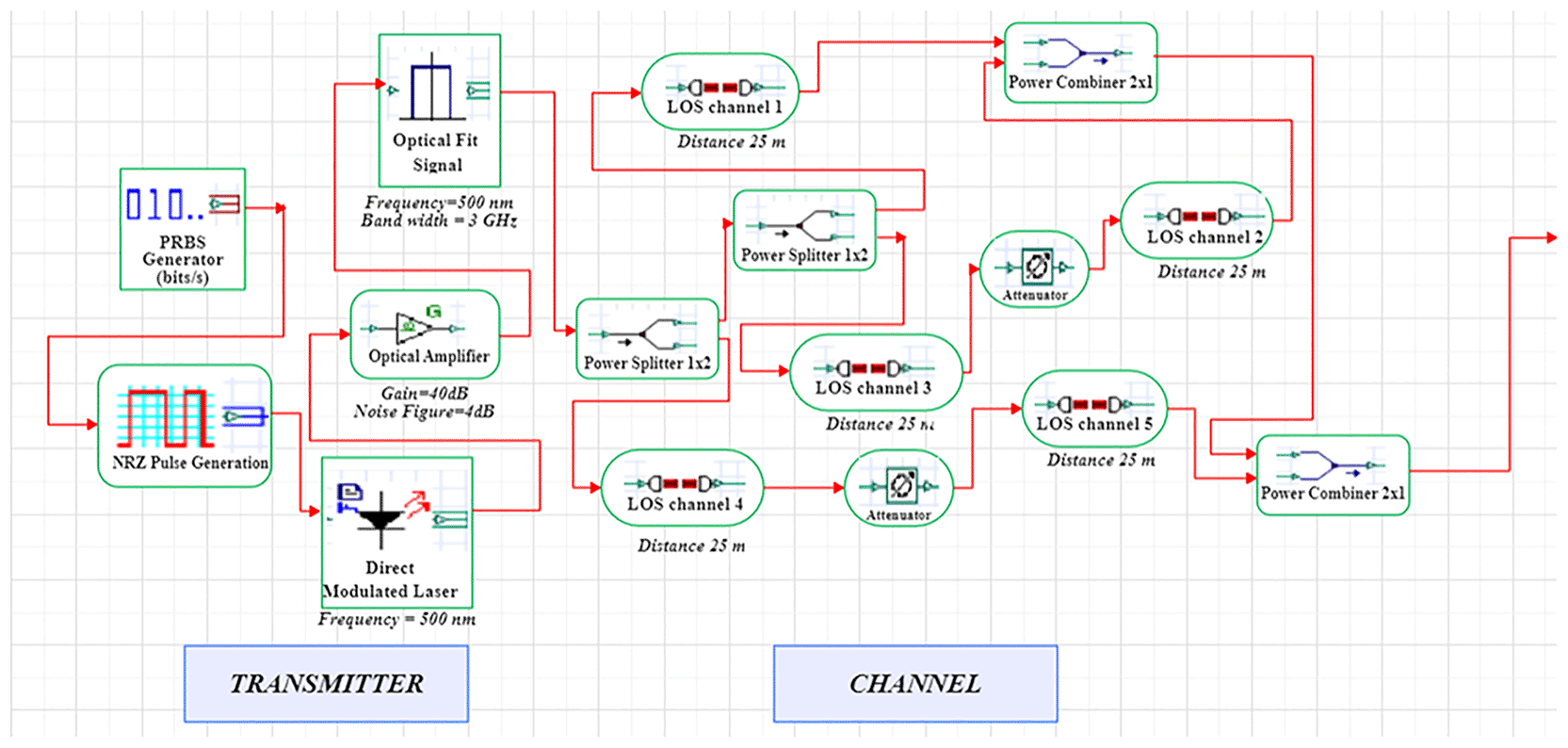
Figure 1. LiFi Transmitter and Channel Model with DM Laser at data rate of 1 GHz.
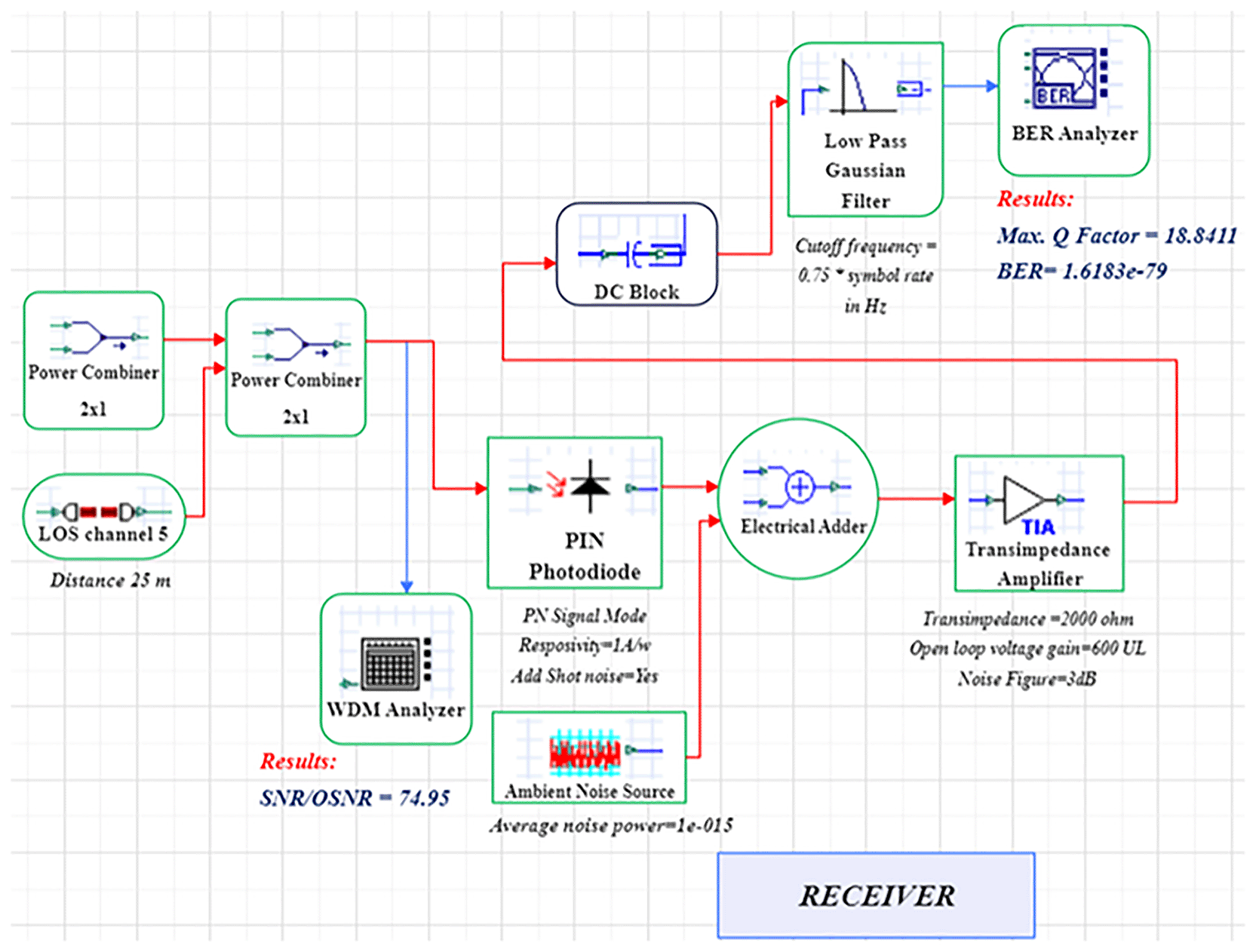
Figure 2. LiFi Receiver Model with DM Laser at data rate of 1 GHz.
In order to model an idealized high-gain receiver front end, a 10 dB optical amplification stage with a proposed noise figure of 4 dB is added. This noise figure is a simplified detector-noise-limited assumption that fails to describe frequency-dependent noise behaviour of transimpedance amplifiers (TIA). The simulation uses an optimized line-of-sight (LOS) channel model, including free-space path loss, beam-divergence-driven geometric coupling, and additive receiver noise. The LOS model reflects perfectly aligned indoor link and lacks active misalignment, obstruction and fading as a result of movement. The signal conversion from optical to electrical takes place through a PIN photodiode (responsivity = 0.8 A/W) at the receiver, while the receiver aperture size (2–8 mm) is swept to determine light-collection efficiency and its noise trade-offs. The simulation uses a 25 m reference link representative of inter-bed/room distances in hospitals.
The system is modelled in OptiSystem (version 22.0) using a structured workflow, and data post-processing is carried out in MATLAB R2024b (GNU Octave open-source alternative). OptiSystem is a proprietary optical simulator, and equivalent results can be reproduced using the mathematical framework described below. In the transmitter module, the DML is configured with input power levels ranging from -5 dBm to +5 dBm in 2 dB increments and modulation indices spanning 0.4–1.0. Beam-spread effects are captured by varying beam divergence between 1–4 mrad. The PIN photodiode uses electrical filters to lower inter-symbol interference, and a receiver front-end noise figure of 4 dB. These parameter ranges are selected to study sensitivity trends rather than represent fully deployed configurations.
The PIN photodiode uses electrical filters to reduce inter-symbol interference, although residual ISI effects at very low BER are not explicitly modeled. For each parameter combination, BER, SNR, and Q-factor are computed at the decision point; Q is estimated as (μ1–μ0)/(σ1+σ0), and BER follows the standard
approximation, while SNR is derived from signal and noise powers at the sampler. The BER formulation based on erfc assumes additive white Gaussian noise and becomes inaccurate for very high Q values. Based on this, values of BER obtained in very low error rates must be considered as analytic lower limits as opposed to forecasts about operational reliability. This workflow uses sensitivity maps to establish the relationship between device-level parameters (power, modulation index, divergence and aperture) and analytical reliability criteria (e.g., BER <
, Q > 6) in idealized optical conditions, with noise at the detector.
All component parameters and analysis scripts are documented for reproducibility. Equivalent analysis can be replicated using GNU Octave without requiring proprietary software. Reproducibility in this context means numerical stability of the analytical and simulation model as opposed to experimental or field validation.
The term optimization in this work is used to refer to a systematic parametric search and sensitivity study within predefined parameters of launch power, modulation index, beam divergence and receiver aperture. There was no formal nonlinear or multi-objective optimization algorithm (genetic algorithms or particle swarm optimization) used. The configuration reported is the optimum parameter combination in the parameter space covered which meets analytical reliability criteria in the idealized detector-noise-limited scenario. It does not assert a mathematically certain world optimum.
Mathematical modeling
The optical wireless communication theoretical approach to the LiFi channel and receiver performance uses standard analytical models commonly adopted in optical wireless communication literature. These models are used to give a tractable first-order understanding of link-budget feasibility and parameter sensitivity under idealised indoor conditions, as opposed to a complete representation of all physical impairments of realistic LiFi systems.
To calculate the received optical power Pr at the detector, one uses the line-of-sight (LOS) Lambertian model:
(1)
where Pt is the transmitted optical power, Ar is the receiver aperture area, d is the link distance, and m is the Lambertian emission order defined by
(2)
Lambertian LOS model is a model which is also well-aligned with the indoor optical link and does not take into consideration the dynamic misalignment, shadowing, and the effects of mobility.
The electrical signal-to-noise ratio (SNR) is expressed as
(3)
where R is the photodiode responsivity, and
and
denote shot and thermal noise variances, respectively. The noise terms have been modeled in this work as additive Gaussian noise, and they are used to model noise limited to the detector; ambient-light-noise of shots, pickup electromagnetic interference, and frequency-dependent receiver noise are not explicitly modeled. To predict the performance of systems through the analytical relationships of distance, received power and signal quality parameters, the following models are used. Each model relates a key performance measure (BER, Q-factor or SNR) with transmission distance or signal quality to provide support to both theoretical and simulation outcomes.
BER Vs. Distance
The bit error rate (BER) is a measure of the reliability of the link, and it increases with the distance when the received optical power decreases because of the free-space attenuation. BER and distance are represented by a power-law relationship:
(4)
Such relationships are meant to be trend models to assist in interpretation and are not designs of real physical descriptions of indoor LiFi channels, where
at
= 25 m,
is the transmission distance, and n is the distance exponent. This term is applied only as an empirical trend model to demonstrate the distance sensitivity on the assumption of detector-noise-limited. It is not aimed at substituting strict error-function-based BER formulations in the case of very low error probabilities.14,24,25
Q-Factor Vs. Distance
Q-factor is the quality of the signal at the receiver, which is negatively proportional to the distance due to cumulative attenuation and noise. Q-factor vs distance is a model of power law form, which is defined as:
(5)
The parameter m depends on the modulation index as well as beam divergence when Q
ref equals 18.84 (reference Q-factor at d
ref = 25 m). Relevant research from DML optimization studies shows that m takes the value 2 for this quadratic relation.4,5
SNR Vs. Distance
Signal-to-noise ratio (SNR) is the ratio between the power of the received signal and the total power of noise. It obeys the inverse-square law of the free-space optical channels, where SNR is rapidly decreasing with distance. The mathematical expression is in the form of:
(6)
Where SNRref = 74.94 dB (reference SNR at dref = 25 m), and k = 2 (distance attenuation factor). The inverse-square law emerges from free-space optical propagation models according to references.14,24,25 This relation encodes the dependence of the first order distance and fails to consider frequency selective noise or bandwidth limited receiver effects.
SNR Vs. BER
The correlation between SNR and BER establishes the correlation between signal quality and error performance in LiFi communication. In the case of on-off keying (OOK) modulation, the analytical expression of the relationship between these parameters is:
(7)
The theoretical framework exhibits wide use in optical communication systems while researchers both theoretically and analytically validate optical signal quality metrics.12,26,27
Results
Distance Vs. BER
The result in
Figure 3 indicates that BER increases with distance due to path loss and reduced received optical power, but higher launch power reduces BER. At short range (1–10 m), all tested power settings achieve similarly low BER, yet beyond ~15 m, the low-power cases (–5 dBm and 0 dBm) no longer sustain the target error floor. Launch power is found to be a prevailing parameter in analytical BER trends when the detector-noise-limited hypotheses are taken (e.g. BER <
as a reference criterion). To achieve reliable patient data transmission at longer distances, hospital LiFi systems should operate at ≥ +5 dBm. These findings demonstrate theoretical link-budget viability as opposed to assured working reliability. In practice, real-world applications benefit from adaptive power control (APC) that increases launch power as range and coupling losses grow, while backing off at short range to limit energy use and eye-safety exposure.
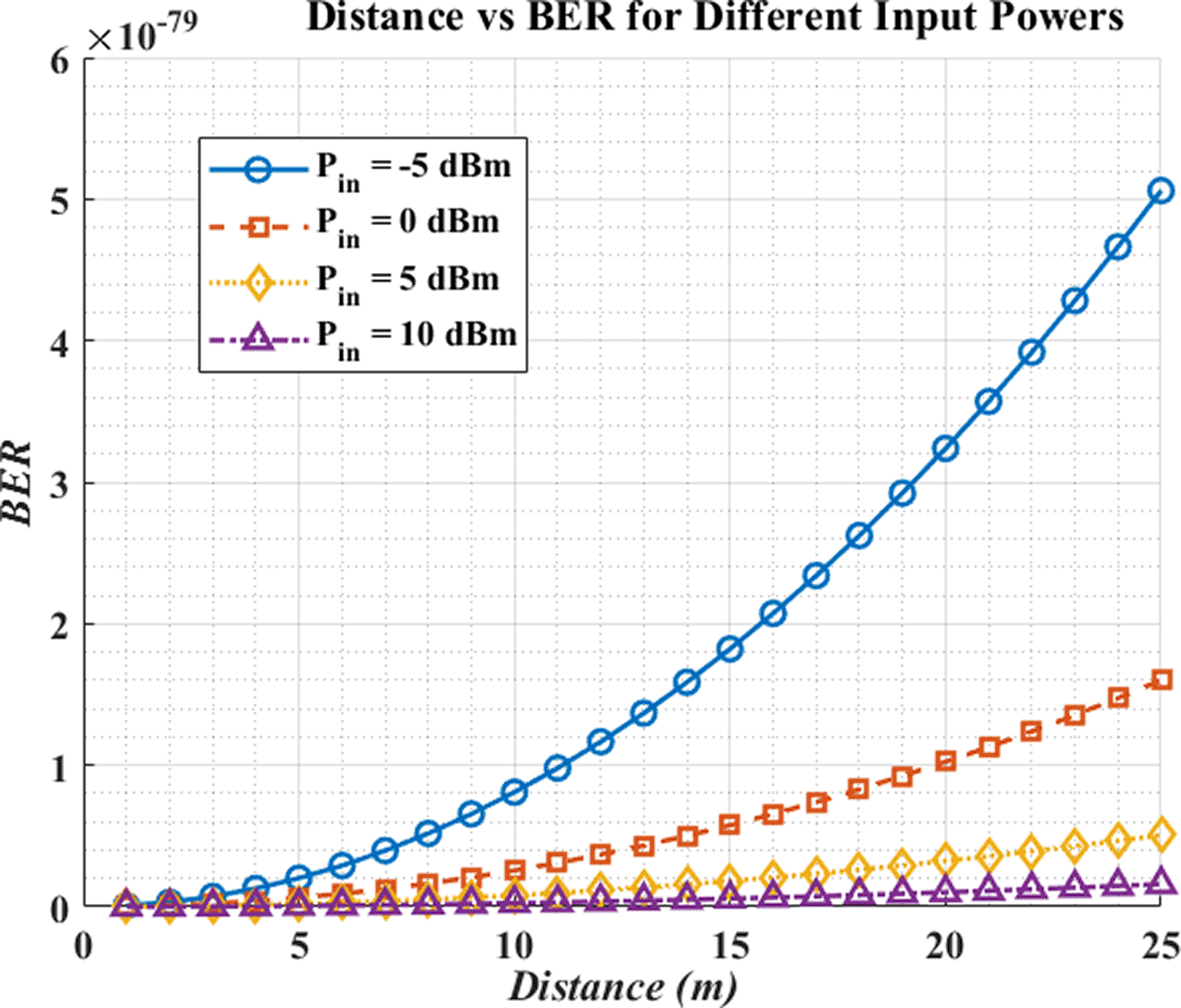
Figure 3. Distance vs BER for different input powers.
Distance Vs. Q-Factor
Figure 4 plots Q-factor versus distance for multiple modulation-index settings, highlighting how signal quality evolves with range. As expected, Q decreases as distance increases due to path loss and accumulated noise/jitter, while higher modulation indices (0.8–1.0) consistently yield larger Q across all distances; reducing the index to 0.4 lowers Q.
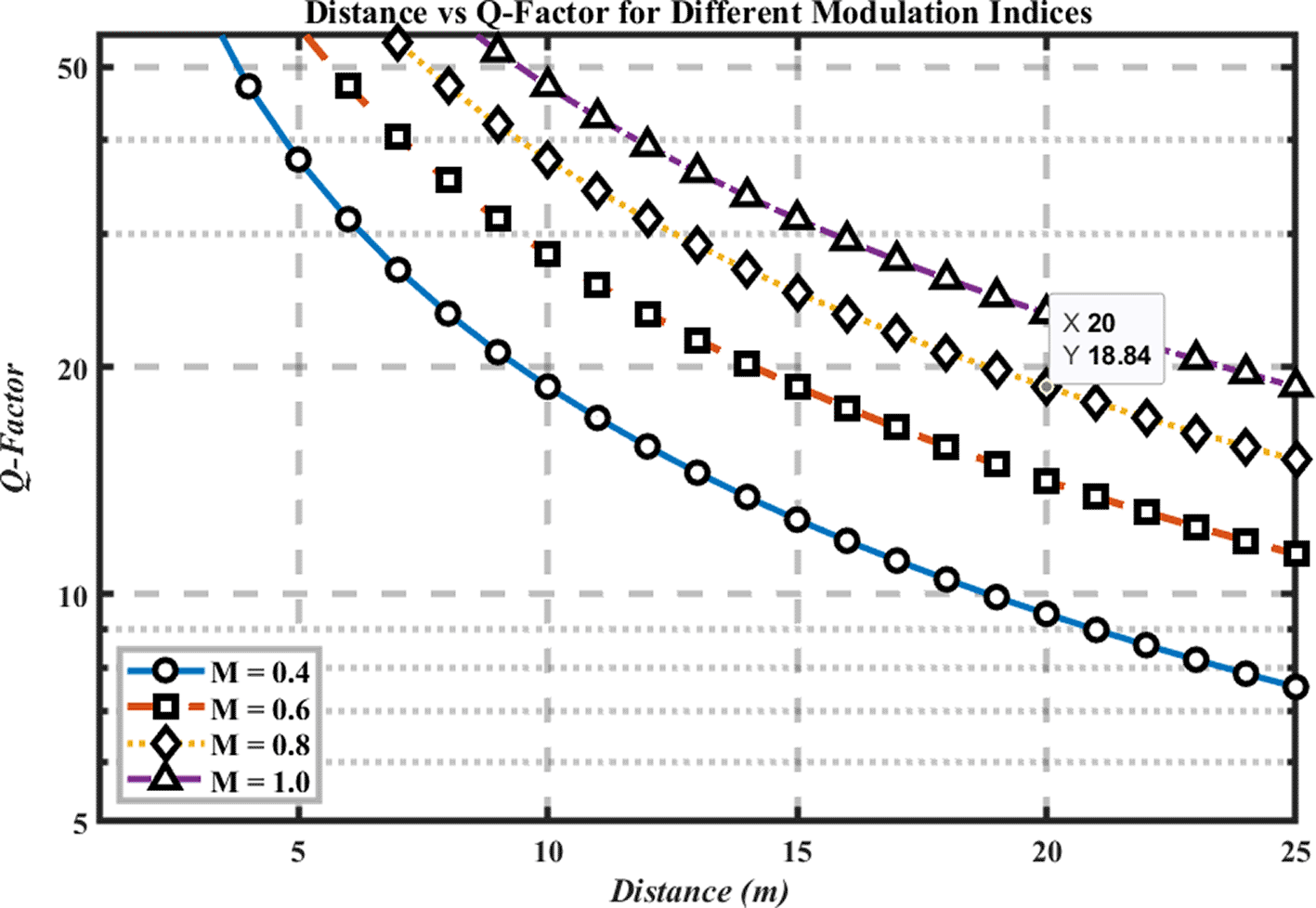
Figure 4. Distance vs Q-factor for different modulation indices.
At the 25 m baseline, Q ≈ 18.84, demonstrating a substantial margin over the Q = 6 error-free threshold. This margin corresponds to best-case performance based on the assumption of Gaussian noise instead of reliability at deployment levels. The figure’s y-axis scaling emphasizes the relative Q variations with distance, making the impact of modulation index immediately visible. Practically, keeping the modulation index ≥ 0.8 preserves high signal quality over the tested ranges, whereas low-index operation (~0.4) risks approaching the Q = 6 boundary sooner.
Implication for hospital links: selecting a sufficiently high modulation index—while remaining within the DML’s linear region—provides an effective lever to maintain distance-robust performance. This supports the overall optimization strategy in terms of analytical reliability benchmarks (BER <
, Q > 6) under idealized conditions.
Distance Vs. SNR
Figure 5 shows SNR versus distance for beam divergences of 1, 2, 3, and 4 mrad. SNR decreases approximately with the inverse square of distance due to geometric spreading and path loss, and smaller divergences maintain higher SNR by concentrating optical power on the receiver aperture. The MATLAB analysis computes SNR(d) for each divergence, confirming that larger divergences broaden the spot and accelerate SNR degradation as range increases.
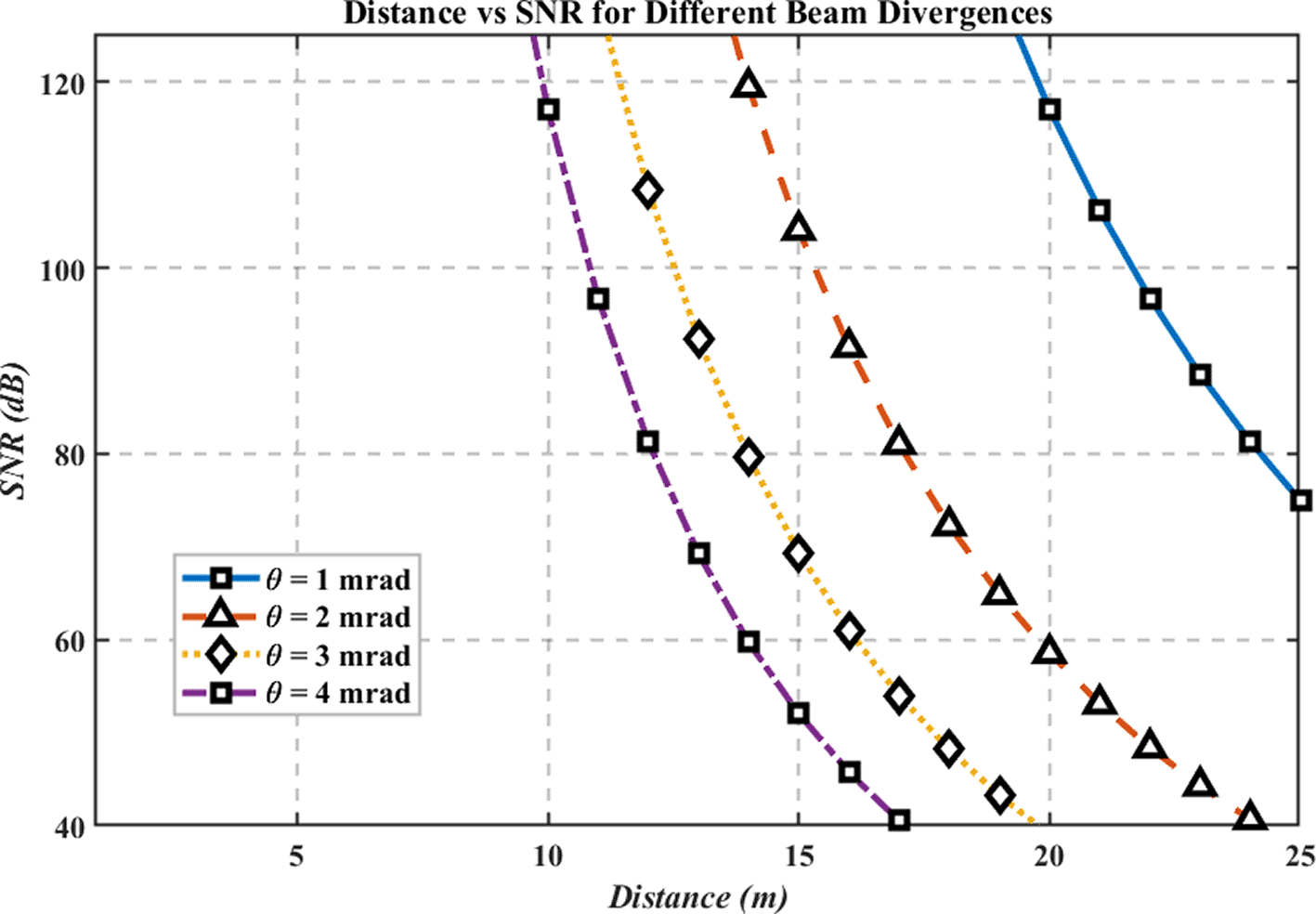
Figure 5. Distance vs SNR for different beam divergences.
At the 25 m baseline, SNR ≈ 74.94 dB. Beyond ~25 m, high-divergence beams (3–4 mrad) exhibit a faster SNR decline than narrow beams (1–2 mrad); conversely, limiting divergence (≈1–2 mrad) preserves stronger SNR over longer distances. Design implication for hospital links: use narrower beam divergence to enhance SNR at room-to-ward scales, subject to alignment tolerance, mobility, and eye-safety considerations that are not explicitly modeled here.
SNR Vs. BER
Figure 6 shows the relationship between SNR and BER for the proposed DML-LiFi link. As expected, BER decreases rapidly (quasi-exponentially) as SNR increases, consistent with the OOK/AWGN relation BER ≈
with Q increasing with SNR.
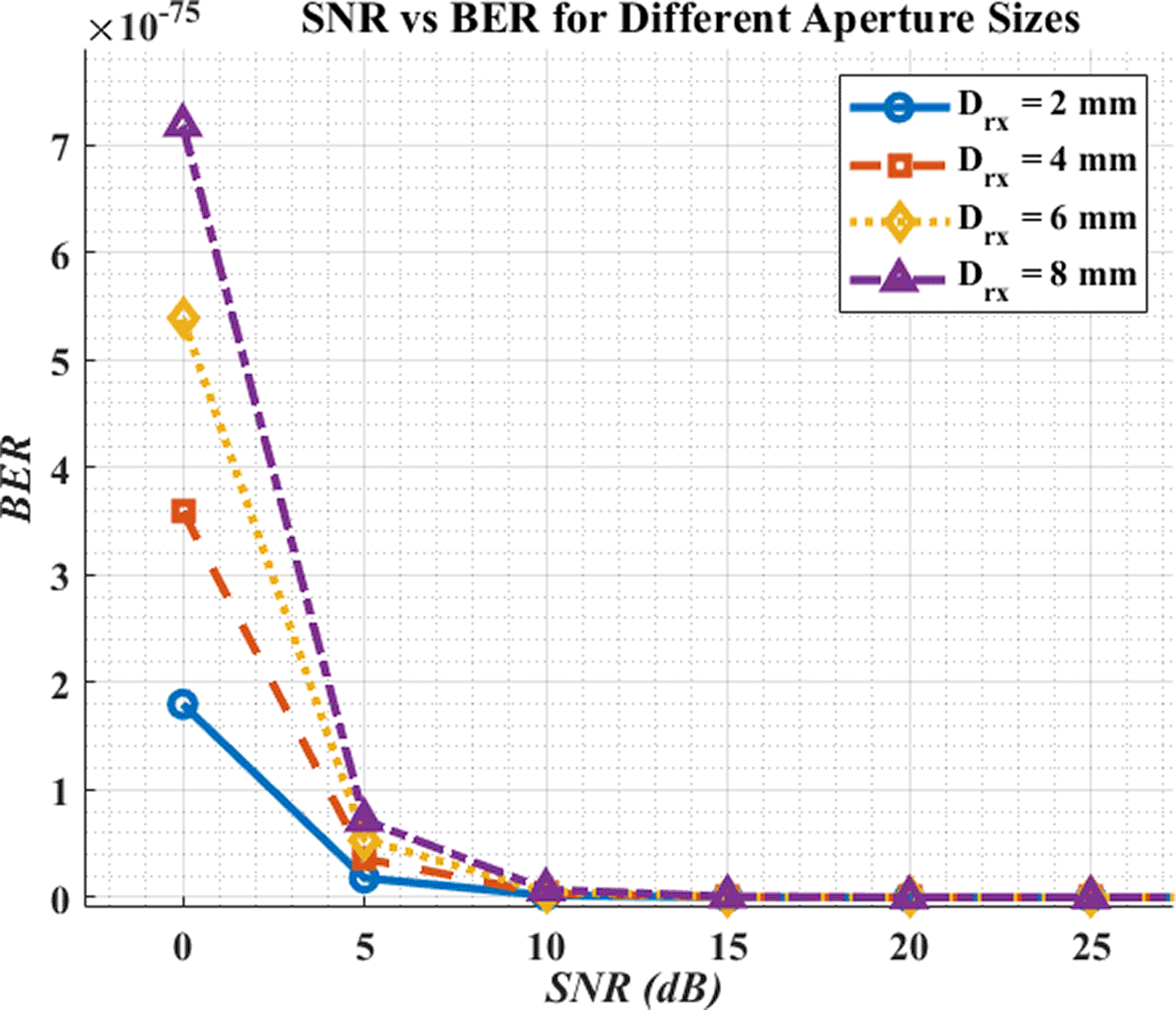
Figure 6. SNR vs BER for different aperture sizes.
Aperture size affects the operating SNR by trading optical collection (signal) against added ambient/shot noise: increasing the aperture generally shifts the link to a higher SNR region up to a practical optimum; at the same SNR, however, BER is essentially identical regardless of aperture—the difference is that aperture changes where on the SNR curve the system operates.
Thus, there is a design trade-off: apertures that are too small under-collect signal, while excessively large apertures admit more background light and jitter; an intermediate aperture (e.g., ~4–6 mm in our sweeps) offers a good balance.
Figure 5 further confirms the expected monotonic relationship: BER falls near-exponentially as SNR increases. Within the tested aperture sweep (2–8 mm), BER improved progressively with larger apertures because more optical power reached the detector, moving the operating point to a higher SNR region. These curves agree with the analytical OOK/AWGN model and our MATLAB/OptiSystem predictions, validating that the system behaves as theory anticipates. In practice, fixed receivers can leverage larger apertures (≈6–8 mm) for maximum margin, whereas compact/mobile clinical devices benefit from mid-range apertures (≈4–6 mm) to limit background-light capture. Overall, appropriate tuning of launch power, beam divergence, modulation index, and aperture enables DML-LiFi to meet hospital-grade targets (BER <
; Q > 6) with a comfortable SNR margin.
Discussion
The four distinct graphs in the simulation results demonstrate how various performance factors affect the operation of Direct-Modulated Laser (DML)-based LiFi systems within hospital environments. The achieved findings demonstrate the operational trade-offs among signal quality, power consumption, noise, and an optimized line-of sight and detector-noise-limited conditions, while accounting for hospital environmental limitations.
Distance Vs. BER
The initial graph illustrates that Bit Error Rate (BER) increases because signal attenuation happens when the communication distance expands. The system offers reliable communication during proximity because all power levels generate comparable low BER measurements between 1 to 10 meters. The BER rises dramatically beyond 15-meter distances for those power input levels below -5 dBm or 0 dBm, which stresses the need to use proper power levels for long-distance communication. In the simulated and idealized conditions, the launch powers of about +5 dBm are necessary to sustain analytical levels of BER at the distance of over 15 meters. The research findings indicate adaptive power control represents a practical capability to optimize power usage through real-time distance monitoring and environmental factor assessment, thus increasing operating efficiency with preserved communications integrity, even though here not expressly modeled are the aspects of implementation, e.g., eye safety, mobility and the changes in ambient light.
Distance vs Q-Factor
Signal quality becomes inferior as the transmission distance extends because of increasing attenuation rates based on the Q-factor measurement. The Q-factors reach their maximum levels when using M = 0.8 or M = 1.0 modulation indices, while observing higher Q-factors primarily at extended distances. The evaluation shows that the modulation index dictates how signal quality is maintained while transmitting over longer distances. The performance optimization depends greatly on the selection of an appropriate modulation index because systems using higher modulation indices consistently deliver superior signal quality irrespective of tested distances. Precise laser linearity becomes necessary when operating with higher modulation indices to achieve better signal quality, since this process demands precise laser linearityand this need can be a limitation in real-world operation beyond an ideal laboratory environment or simulations.
Distance vs SNR
The third graph demonstrates that the Signal-to-Noise Ratio (SNR) exhibits quadratic reduction with distance due to the inverse square law behavior. A reduction in beam divergence ranging from 1 to 2 mrad yields superior SNR readings compared to the 3–4 mrad values since narrower beams concentrate their energy more precisely, thus maintaining better signal fidelity and less noise interference. The data shown in the graph validates the need to select narrow beam divergences when hospitals want to achieve dependable communication systems with high signal-to-noise ratios. Accurate placement and alignment of narrow beams remain essential, yet these designs are easily affected by disruptions that occur from equipment motions or alignment problems. Hybrid tracking systems used for alignment maintenance would improve the system’s operational effectiveness by addressing this issue though these mechanisms cannot be the subject of the current theoretical research.
SNR vs BER
The final plot establishes that increasing SNR results in a significant BER reduction. An established principle shows that higher signal quality (SNR) delivers better communication reliability. Receiver aperture size strongly affects BER at any predetermined SNR level according to the graphical analysis. The combination of improved SNR through larger apertures comes at the expense of increased noise, which diminishes BER performance. The essential trade-off must be considered during LiFi system design for hospitals because it directly affects the reliability of data transmission through BER performance. Achieving maximum efficiency in light reception requires optimization of receiver aperture diameter. Hospital LiFi systems should use apertures measuring between 4–6 millimeters to obtain maximum effectiveness between BER reduction and noise management,with the assumptions of controlled indoor lighting and detector-noise-limited. Design choices need special attention because they determine how well errors can be minimized and how the communication system stability can be enhanced.
The evaluation of four performance graphs confirms that design parameters, including input power along with modulation index and beam divergence, and aperture size, define the optimum operation of DML-based LiFi systems used within hospital spaces. The system’s key metrics of BER, Q-factor, and SNR depend on the mutual effects between all parameters. The research shows hospitals must achieve equilibrium between system component adjustments to satisfy hospital requirements, which involve maintaining strong reliability and electromagnetic compatibility, and patient data security compliance, at an analytical level of performance.
Table 1 summarizes the comparative context of previous LiFi studies and highlights how this research advances beyond them through multi-parameter optimization and a theoretical design analysis of EMI sensitivity based on a hospital. Three technology enhancements, including adaptive power control methods alongside hybrid beam alignment systems and optimized aperture dimensions, will enhance LiFi system reliability in dynamic hospital installations,to be validated by experiments in the future and by integrating hybrid systems.
The findings are supposed to be considered as analytical upper-bound trends that assume a detector-noise-limited and well-aligned line-of-sight assumption.
System Resilience and Fail-Safe Communication Architecture
Hybrid LiFi–RF Communication for Fail-Safe Operation
Although Direct-Modulated Laser (DML)-based LiFi offers high throughput, electromagnetic interference (EMI) immunity and physical-layer security in typical hospital operations, optical wireless connections are very vulnerable to misalignment, obstruction, and power outage in extreme conditions like potentially damaging earthquakes or structural damage. Pure use of an optical connection can thus interfere with communication continuity during an emergency situation.
To alleviate this risk, a hybrid LiFi-RF architecture will be introduced in which LiFi will be used as the main high-capacity and EMI-safe communication layer, and a low-speed, ruggedized RF backup will ensure that the connectivity remains fail-safe in case of interference in the optical path. The RF layer is not designed to match the performance of LiFi, but it will ensure the bare minimum of connections to sustain life-critical data and control signaling. LiFi and RF Hybrid operation has demonstrated the ability to greatly increase the availability and strength of the network by dynamically switching to handover and load balancing, especially in the case of blockage or mobile conditions, which is perfectly appropriate in mission-critical hospital applications.28
On-Premise Network Independence through Edge Computing
There is a need to keep hospitals in the event of an external telecommunication infrastructure failure. In this regard, the proposed DML-LiFi system is expected to work in conjunction with on-premises edge computing capabilities and provide the hospital with the opportunity to act as an autonomous information island in the event of external network disruptions.
In this design, LiFi connections between interconnected clinical devices and interconnected local servers, the data processing, storage, and clinical decision support are processed on the local level. This provides a guarantee of continued connectivity to the telemetry of patients, medical imaging, and electronic health records with a lower latency and without reliance on cloud connectivity. Earlier research has established that these distributed edge-based architectures enhance robustness, fault tolerance, and data availability in critical infrastructure systems to a large extent.29
Optical Wireless Backhaul for Disaster Recovery
Inter-building connectivity can also be achieved with the help of optical wireless technologies in case fiber connections are broken. The free-space optical (FSO) communication has received considerable research attention as a license-free, high-speed backhaul system that can be deployed quickly to supply the high-capacity connections among important infrastructure devices in the wake of disaster-related scenarios.30
The suggested DML-LiFi system is a constituent in a resilient optical wireless ecosystem, with LiFi and FSO enhancement of indoor clinical communication and emergency inter-building backhaul, respectively, in the event of terrestrial infrastructure degradation.
Conclusion
This work set out to optimize a hospital-grade DML-LiFi link and quantify how launch power, modulation index, beam divergence, and receiver aperture jointly shape BER, SNR, and Q-factor. In general, with proper tuning of the launch power, beam divergence, modulation index, and aperture, DML-LiFi is capable of meeting the criterion of analytical reliability (BER <
, Q
> 6) under idealized conditions, SNR ≈ 74.94 dB, and Q ≈ 18.84, at optimized line-of-sight and detector-noise-limited conditions for clinical traffic.
Superiority over existing options: Compared with RF-only links, the proposed DML-LiFi design is intrinsically EMI-safe, confines propagation to rooms for stronger physical-layer privacy, and exploits the license-free optical spectrum for higher usable capacity. Relative to LED-LiFi, direct-modulated lasers provide GHz-class bandwidth with better,modulation capability, albeit with narrower coverage and increased alignment sensitivity, enabling high-rate links under well-aligned line-of-sight conditions in dense clinical spaces. This work offers a hospital-oriented optimization framework, which also looks at four paramount optical parameters and correlates them to the main performance measures (BER, SNR, Q-factor) as opposed to the previous LiFi literature that generally studied these parameters separately. Actionable design rules (problems addressed): To overcome distance-induced loss and maintain hospital-grade reliability (BER <
; Q > 6): use ≥ +5 dBm beyond ~15 m with adaptive power control; keep the modulation index ≈ 0.8–1.0 while remaining in the DML’s linear region; prefer narrow divergence (≈1–2 mrad) with proper mounting/lightweight tracking to tolerate motion; select mid-range apertures (~4–6 mm) for mobile devices (balancing collection vs. background light), with larger (~6–8 mm) feasible for fixed receivers. These guidelines are theoretical operating ranges calculated under simplistic assumptions as opposed to prescriptive deployment considerations.
Objective, contribution, and significance: The objective was a hospital-specific optimization of DML-LiFi. The contribution is a reproducible simulation-based OptiSystem+MATLAB framework that yields four-parameter (launch power, modulation index, beam divergence, and receiver aperture) deployment guidelines tied to BER/SNR/Q targets. Although DML-LiFi has proven to be a better choice in terms of EMI-sensitive and high-throughput clinical communication, at a theoretical performance level, practical implementation in hospital setups would be best realized when deployed as part of a robust hybrid architecture with resilience and fail-safe back-up connectivity, as discussed in the previous section. The significance lies not only in the achieved performance but in offering the first reproducible and parameterized blueprint for EMI-safe, high-throughput indoor LiFi systems that can inform future experimental validation and system-level reliability studies in hospital environments.
Future scope
The study also paves the way for future work in several critical areas, including further testing in actual hospital environments with surgical lights and moving equipment, which will form a key basis for upcoming research activities. A hybrid communication network that links LiFi systems to Wi-Fi technology using machine learning methods enables smooth network transfers between multiple pathways for healthcare capabilities.
Further research will also expand the current two-dimensional sensitivity analysis to three-dimensional response-surface models and formal multi-objective systems, such as Pareto-front exploration to help a systematic analysis of trade-offs between BER, SNR, and Q-factor.
Ethics and consent
Ethical approval and consent were not required for this study as it did not involve human participants, animals, or sensitive personal data.
Data availability
No external datasets were generated or analyzed in this study. All data used in this paper were generated internally through OptiSystem 22.0 and MATLAB R2024b simulations. OptiSystem is a third-party, proprietary optical system simulator used for link modelling. Where possible, the mathematical procedures are described so that equivalent simulations can be reproduced. MATLAB R2024b was used for post-processing and plotting; an open-source alternative, GNU Octave, can be used to run the analysis scripts. Due to licensing restrictions associated with the proprietary OptiSystem software and institutional policies governing third-party simulation tools, the complete simulation project files and raw output datasets cannot be publicly deposited.
No ethical or institutional review board (IRB) approval was required for this study, and no restrictions on data sharing were imposed by an IRB or equivalent body, as the work did not involve human participants, animals, or sensitive personal data.
However, the simulation parameter sets, MATLAB analysis scripts, and supporting numerical results can be made available for academic and non-commercial research purposes upon reasonable request, subject to compliance with the relevant software licensing conditions.
Access requests can be directed to Lalit Garg (lalit.garg@um.edu.mt) or Ajay Sharma (ajay.sharma@um.edu.mt).
Acknowledgements
The authors acknowledge the support of the Department of Computer Information Systems, Faculty of Information and Communication Technology at the University of Malta, for facilitating the simulation work.
References
- 1.
Kavipriya P, Ebenezar Jebarani MR, Lakshmi S, et al.:
Real time data communication through Li-Fi in hospital environment.
AIP Conf Proc.
2022; 2452(1): 070003. Publisher Full Text
- 2.
Lapinsky SE, Easty AC:
Electromagnetic interference in critical care.
J Crit Care.
2006; 21(3): 267–270. PubMed Abstract
| Publisher Full Text
- 3.
Mosaif A, Rakrak S:
A Li-Fi based wireless system for surveillance in hospitals.
Biomed Spectrosc Imaging.
2019; 8(3–4): 81–92. Publisher Full Text
- 4.
Zhu NH, Shi Z, Zhang ZK, et al.:
Directly modulated semiconductor lasers.
IEEE J Sel Top Quantum Electron.
2017; 24(1): 1–19. Publisher Full Text
- 5.
Che D, Matsui Y, Schatz R, et al.:
200-Gb/s direct modulation of a 50-GHz class laser with advanced digital modulations.
J Lightwave Technol.
2021; 39(3): 845–852. Publisher Full Text
- 6.
Sharma A, Xuereb PA, Garg L:
Evaluating the impact of snow on free-space optical communication using artificial neural networks for BER prediction.
In:
Proc IEEE Int Conf Cognitive Computing in Engineering, Communications, Sciences and Biomedical Health Informatics (IC3ECSB)
Greater Noida, India;
2025; 1222–1226. Publisher Full Text
- 7.
Sharma RS, Kaler RS:
Designing of high-speed inter-building connectivity by free space optical link with radio frequency backup.
IET Commun.
2012; 6(16): 2568–2574. Publisher Full Text
- 8.
Sharma A, Xuereb PA, Garg L:
Integration of Li-Fi and IoT for Sixth-Generation (6G) communication systems.
In:
Proc 2024 Int Conf Emerging Technologies and Innovation for Sustainability (EmergIN).
IEEE,
2024. Publisher Full Text
- 9.
Sharma A, Kaler RS:
Simulation modeling of free space optical communication system.
J Opt Commun.
2023; 44(s1): s1973–s1977. Publisher Full Text
- 10.
Sharma A, Kaler RS:
Performance analysis of optical wireless link under various atmospheric conditions using Fresnel lens technique.
J Optoelectron Adv Mater.
2015; 17(3–4): 296–301. Reference Source
- 11.
Sharma A, Kaler RS:
Performance investigation of free space optical communication system using Gaussian beam wave.
J Optoelectron Adv Mater.
2015; 17(3–4): 302–306. Reference Source
- 12.
Dimitrov S, Haas H:
Information rate of OFDM-based optical wireless communication systems with nonlinear distortion.
J Lightwave Technol.
2012; 31(6): 918–929. Publisher Full Text
- 13.
Al-Khaffaf DAJ, Hujijo HSR:
High data rate optical wireless communication system using millimeter wave and optical phase modulation.
ARPN J Eng Appl Sci.
2018; 13(23): 9086–9092. Reference Source
- 14.
Li H, Sang X:
SNR and transmission error rate for remote laser communication system in real atmosphere channel.
Sens Actuators A Phys.
2017; 258: 156–162. Publisher Full Text
- 15.
Abejide AE, Pandey S, Kota MR, et al.:
Hybrid modulation approach for next generation optical access networks.
In:
Proc 2020 12th Int Symp Commun Syst, Netw Digital Signal Process (CSNDSP).
IEEE,
2020. Publisher Full Text
- 16.
Zaki Rashed AN, Hasane Ahammad SK, Daher MG, et al.:
Various transmission codes for the control of bit error rate in both optical wired and wireless communication channels.
J Opt Commun.
2022; 45(s1): s475–s493. Publisher Full Text
- 17.
Fernandes V, Parab J, Pinto C, et al.:
Li-Fi transmission and reception in visible and IR light in a hospital environment.
In:
Data Science and Intelligent Computing Techniques.New Delhi, India:
SCRS;
2023; 197–208. Publisher Full Text
- 18.
Rahaim M, Little TDC:
Interference in IM/DD optical wireless communication networks.
J Opt Commun Netw.
2017; 9(9): D51–D63. Publisher Full Text
- 19.
Nugraha TA, Ardiyanto Y:
Li-Fi technology for transmitting data in hospital environments.
In:
Proc 2020 1st Int Conf Inf Technol, Adv Mech Electr Eng (ICITAMEE).
IEEE,
2020. Publisher Full Text
- 20.
Haas H, Yin L, Wang Y, et al.:
What is LiFi?
J Lightwave Technol.
2016; 34(6): 1533–1544. Publisher Full Text
- 21.
Wu L, Zhang Z, Dang J, et al.:
Adaptive modulation schemes for visible light communications.
J Lightwave Technol.
2015; 33(1): 117–125. Publisher Full Text
- 22.
Dong F, Singh R, O’Brien D:
Adaptive MIMO-VLC system for high data rate communications.
In:
Proc 2020 IEEE Globecom Workshops (GC Wkshps).
IEEE,
2020; 1–6. Publisher Full Text
- 23.
Ke X:
Communication lasers and their modulation technology.
In:
Handbook of Optical Wireless Communication.
Singapore:
Springer Nature;
2024; 85–128. Publisher Full Text
- 24.
Akbari M, Olyaee S:
Performance analysis of total attenuation effects and different values of transmitter power on bit error rate and signal-o-noise ratio for free space optical communication.
Recent Adv Electr Electron Eng.
2022; 15(3): 234–242. Publisher Full Text
- 25.
Dang A:
A closed-form solution of the bit-error rate for optical wireless communication systems over atmospheric turbulence channels.
Opt Express.
2011; 19(4): 3494–3502. PubMed Abstract
| Publisher Full Text
- 26.
Nebendahl B, Schmogrow R, Dennis T, et al.:
Quality metrics in optical modulation analysis: EVM and its relation to Q-factor, OSNR, and BER.
In:
Asia Commun Photon Conf.Optica Publishing Group, 2012. Reference Source
- 27.
Freude W, Schmogrow R, Nebendahl B, et al.:
Quality metrics for optical signals: eye diagram, Q-factor, OSNR, EVM and BER.
In:
Proc 2012 14th Int Conf Transparent Optical Networks (ICTON).IEEE, 2012. Publisher Full Text
- 28.
Wu X, Wang Z, Haas H, et al.:
Hybrid LiFi and WiFi networks: A survey.
IEEE Commun Surv Tutorials.
2021; 23(2): 1398–1420. Publisher Full Text
- 29.
Sahni Y, Cao J, Zhang S, et al.:
Edge mesh: A new paradigm to enable distributed intelligence in internet of things.
IEEE Access.
2017; 5: 16441–16458. Publisher Full Text
- 30.
Khalighi MA, Uysal M:
Survey on free space optical communication: A communication theory perspective.
IEEE Commun Surv Tutorials.
2014; 16(4): 2231–2258. Publisher Full Text







