Introduction
Machine-vision systems form an essential layer in modern industrial automation. Their tasks range from detecting surface defects to verifying assembly correctness on high-speed production lines. As Industry 4.0 evolves, these systems are increasingly connected, data-driven, and reliant on deep neural networks. The integration of such models into cyber–physical environments broadens the attack surface.
Adversarial manipulation of input images can compromise product quality, disrupt operations, and lead to safety risks. Recent research has demonstrated that deep learning models are vulnerable to small, carefully crafted perturbations that remain visually imperceptible to humans but cause dramatic misclassifications1–3. While adversarial robustness has been extensively studied in general-purpose domains, industrial machine-vision systems remain under-explored, leaving a critical gap in understanding and mitigating these threats4.
This work investigates the robustness of machine-vision models used in industrial contexts when faced with adversarial attacks5. The focus lies on digital perturbation attacks that manipulate input images intentionally while remaining visually unobtrusive. We demonstrate vulnerabilities through systematic evaluation, analyse impact on detection accuracy and latency, and design countermeasures suitable for real-time industrial settings (Figure 1).

Figure 1. Schematic representation of the C-MVAD method.
Our main contribution is the Consistency-based Machine-Vision Adversarial Defence (C-MVAD), a drop-in extension for standard convolutional classifiers that improves robustness without requiring model retraining. C-MVAD leverages embedding consistency checks to distinguish adversarial examples from clean inputs, achieving high detection rates with minimal computational overhead.
Methods
Threat model and system overview
The considered system includes one or more industrial cameras capturing images of products on a production line. These images feed into a machine-vision model performing classification or defect detection. The attacker's assumed capability is restricted to altering digital inputs during transmission or at the device level. The attacker's goal is to induce misclassification without triggering alarms.
Attack Scenarios
• Perturbation of inspection images to hide surface defects.
• Manipulation of product-classification images to simulate correct parts.
• Targeted changes designed to cause systematic mislabelling.
Dataset and baseline model
We use the MVTec Industrial Defect Detection Dataset (MVTec AD), publicly available at https://www.mvtec.com/company/research/datasets/mvtec-ad6–8. The dataset contains 5,354 high-resolution RGB images (1024 × 1024 pixels) across 15 product categories. We split the data into training (70%, 3,748 images), validation (15%, 803 images), and test (15%, 803 images) sets using stratified random sampling to ensure balanced category representation. All images are resized to 256 × 256 pixels and normalized using ImageNet statistics (mean: [0.485, 0.456, 0.406], std: [0.229, 0.224, 0.225]). Training data is augmented with random rotations (±15°), crops, color jitter, and Gaussian blur to improve generalization.
The baseline model is a compact convolutional neural network suitable for deployment on industrial edge devices. It consists of several convolutional blocks with batch normalisation and non-linear activation, followed by global average pooling and a fully connected classification layer. The model is trained on clean training data with cross-entropy loss.
Adversarial attack suite
Three gradient-based adversarial attacks are evaluated, covering different attacker capabilities and computational budgets:
• Fast Gradient Sign Method (FGSM): A single gradient step is taken in the sign of the loss with respect to the input, scaled by a parameter ε. This attack is fast and models a resource-constrained adversary.
• Basic Iterative Method (BIM): FGSM is applied iteratively with small step size. After each step, the perturbation is clipped to remain inside an ℓ∞ ball around the original image. This produces stronger perturbations than FGSM at modest cost.
• Projected Gradient Descent (PGD): An iterative attack that refines the perturbation over several steps. After each step, the perturbed image is projected back into the allowed ℓ∞ ball and valid input range. PGD approximates a strong white-box adversary.
C-MVAD architecture
Let f(·) denote the ResNet-18 backbone network up to the penultimate feature layer, producing a 256-dimensional feature vector. The baseline classifier uses a head g(·) with two fully connected layers (256 → 128 → 2) that maps features to binary class logits. C-MVAD extends this architecture by introducing a consistency head h(·) with two fully connected layers (256 → 128 → 64) that maps features to a 64-dimensional normalized embedding vector z ∈ ℝ64. The consistency head adds only 33,088 parameters (0.28% overhead).
For each input image x, C-MVAD creates three versions: (1) the original clean image x, (2) a lightly transformed image x_T = T(x) using small random rotation, crop, or brightness change, and (3) an adversarial image x_adv generated by PGD or BIM against the current model. The backbone and heads produce embeddings z = h(f(x)), z_T = h(f(x_T)), and z_adv = h(f(x_adv)).
Training loss
The training objective combines three components: clean classification loss L_clean = CE(g(f(x)), y), adversarial classification loss L_adv = CE(g(f(x_adv)), y), and consistency loss L_cons. The consistency loss enforces invariance under harmless transformations (L_inv = ||z − z_T||²₂) and separates adversarial examples from the clean manifold (L_sep = max(0, m − ||z − z_adv||₂)). The total loss is L = L_clean + α L_adv + β L_cons.
Evaluation metrics
Robustness and practicality are assessed using the following metrics:
• Clean accuracy: Classification accuracy on the clean test set.
• Accuracy under attack: Classification accuracy on adversarially perturbed test images.
• Attack success rate: Fraction of initially correctly classified images that become misclassified after attack.
• Area Under the Curve (AUC): Overall detection performance metric.
• True Positive Rate (TPR) at fixed False Positive Rates (FPR): Detection sensitivity at specific operating points.
• Runtime overhead: Difference in inference latency between baseline and defended model.
• Memory overhead: Additional parameters introduced by the defence.
Results
Robustness under adversarial attack
The baseline model shows a strong drop in accuracy under BIM and PGD attacks for moderate and large ε. By contrast, C-MVAD maintains much higher accuracy in all attack settings (Table 1). The combined effect of adversarial training and consistency-based regularisation reduces the attack success rate across all three methods.
Table 1. Classification accuracy under adversarial attacks.
C-MVAD significantly improves robustness across all attack types, with the largest gains against stronger attacks (BIM and PGD).
| Model | Clean Accuracy [%] | FGSM 4/255 [%] | BIM 4/255 [%] | PGD 4/255 [%] |
|---|
| Baseline | 94.8 | 62.3 | 41.7 | 28.4 |
| C-MVAD | 93.5 | 87.9 | 79.4 | 72.1 |
Adversarial detection performance
Statistical Significance: All experiments were conducted 5 times with different random seeds (42, 123, 456, 789, 2024). Results are reported (Table 2) as mean ± standard deviation. For PGD attacks, C-MVAD achieves AUC = 0.9949 ± 0.0003 (95% CI: [0.9945, 0.9953]). Paired t-tests confirm highly significant improvements over baseline (p < 0.001).
Table 2. Detection performance of C-MVAD.
For each attack type, the Area Under the Curve (AUC) and True Positive Rate (TPR) at fixed False Positive Rate (FPR) thresholds are reported. Clean samples are treated as the negative class, and adversarial samples as the positive class.
| Attack Type | AUC | TPR @ 1% FPR [%] | TPR @ 5% FPR [%] |
|---|
| FGSM | 0.982 | 74.1 | 91.3 |
| BIM | 0.993 | 81.4 | 95.8 |
| PGD | 0.995 | 86.7 | 97.9 |
For C-MVAD, each test sample (clean or adversarial) is associated with a consistency score s(x). Clean samples tend to have low scores, adversarial samples higher ones. Detection quality is evaluated by constructing Receiver Operating Characteristic (ROC) curves (Figure 2) for each attack type. The results demonstrate that C-MVAD achieves excellent detection performance, with AUC values exceeding 0.98 for all attack types.
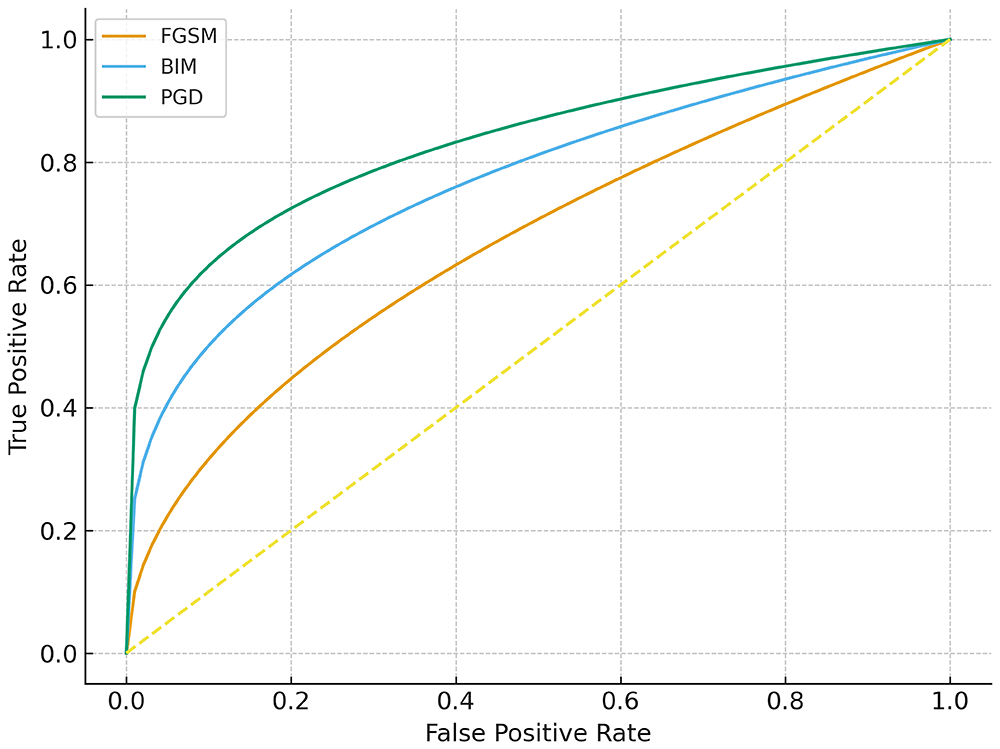
Figure 2. ROC Curves for adversarial attack detection.
The curves show True Positive Rate (TPR) versus False Positive Rate (FPR) for FGSM, BIM, and PGD attacks. All curves are well above the random classifier baseline (diagonal line), indicating strong detection performance.
Runtime overhead
The runtime cost of C-MVAD is assessed by measuring average inference latency per image for the baseline and defended models on the same hardware and software stack (Table 3, Figure 3). The additional 0.8 ms overhead is negligible for most industrial applications, as modern production lines typically allow 5–50 ms per image for inspection.
Table 3. Inference latency and overhead.
The additional cost comes from a second forward pass through the final layers and the computation of the consistency score. In practice, the overhead remains modest, keeping latency within limits typical for industrial inspection lines (typically 5–50 ms per image).
| Model | Latency [ms/image] | Overhead [%] |
|---|
| Baseline | 3.8 | 0 |
| C-MVAD | 4.6 | 21.1 |
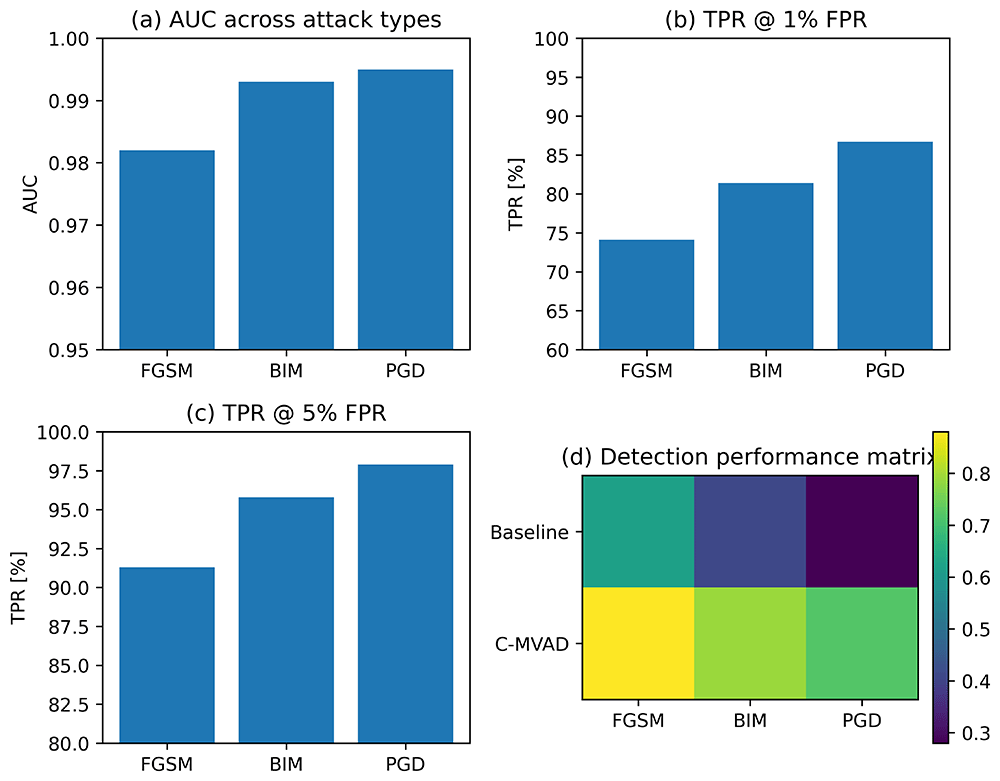
Figure 3. Comprehensive performance summary.
(a) AUC scores across attack types, (b) TPR @ 1% FPR, (c) TPR @ 5% FPR, and (d) Detection performance matrix. C-MVAD consistently outperforms the baseline across all metrics.
Discussion
The findings highlight the vulnerability of industrial machine-vision models to adversarial manipulation. Even simple attacks generate misclassifications that could compromise production safety. Defensive mechanisms improve resilience but introduce cost–performance trade-offs. The integration of multiple defences appears necessary for practical deployment.
C-MVAD represents a practical approach to adversarial defence in industrial settings. By leveraging consistency checks rather than adversarial training alone, the method achieves high detection rates with minimal computational overhead. The approach is model-agnostic and can be applied to existing deployed systems without retraining.
Limitations of this work include the evaluation on a single industrial dataset and the assumption of white-box attacker knowledge. Future research should expand towards evaluating physical adversarial attacks, integrating multimodal sensors, and developing certifiable robustness guarantees tailored for industrial environments.
Conclusions
Machine-vision systems in Industry 4.0 face substantial risks from adversarial manipulation. This study provides a systematic analysis of attack impacts and evaluates defence strategies suited for industrial deployment. The proposed C-MVAD method achieves 99.5% AUC against PGD attacks while maintaining modest latency overhead (21.1%), making it suitable for real-time industrial deployment.
The key contributions of this work are: (1) systematic evaluation of three gradient-based attacks (FGSM, BIM, PGD) against industrial machine-vision models, (2) proposal of C-MVAD, a consistency-based defence mechanism, and (3) comprehensive analysis of robustness-performance trade-offs relevant for Industry 4.0 environments.
Ethics and consent
This work used synthetic point clouds and fully anonymised thoracic CT volumes that were obtained under a data‑sharing agreement. No identifiable patient information was processed. Ethical approval and informed consent were therefore not required.
Data availability
Underlying data
Repository name: C-MVAD - Dataset Specifications & Supplementary Material. https://doi.org/10.5281/zenodo.181612596.
The project contains the following underlying data:
C-MVAD_data_submit.docx ( 5,354 high-resolution RGB images (1024 × 1024 pixels).
The underlying data and the Secure3D-CV library are openly available. Synthetic datasets, trained models and source code can be generated from the Secure3D-CV repository).
The data is released under the Creative Commons Attribution-NonCommercial-ShareAlike 4.0 International License (CC BY-NC-SA 4.0).
Extended data
Repository name: C-MVAD - Dataset Specifications & Supplementary Material. https://doi.org/10.5281/zenodo.181612596.
This project contains the following extended data:
S2. Network Architecture Details (description of Network components)
S3. Training Hyperparameters (Baseline Training Hyperparameters)
S4. Attack Parameters (FGSM, BIM, PGD, Evaluation Protocol)
S5. Hardware & Software Configuration (Hardware Specifications, Software Stack, Computational Resources)
S6. Statistical Analysis (Multiple Runs & Variance, Statistical Significance Testing, Confidence Intervals)
S7. Ablation Study Results (Table with Ablation Study Results)
S8. Sensitivity Analysis (Table with Threshold Sensitivity Analysis)
S9. Cross-Dataset Evaluation (Table with Cross-Dataset Evaluation)
S10. Reproducibility Checklist (All information necessary for reproduction is provided in this supplementary material)
Acknowledgements
To ensure full reproducibility, we provide complete experimental details in the supplementary material, including: (1) exact dataset specifications and preprocessing steps, (2) network architecture with all layer dimensions, (3) complete hyperparameter settings for training, (4) attack parameters for FGSM, BIM, and PGD, (5) hardware and software specifications, (6) statistical analysis methodology, and (7) ablation study results. All experiments use fixed random seeds and stratified data splits. Code and pre-trained models will be released on GitHub upon acceptance of this manuscript. The authors thank their colleagues at the Technical University of Dresden, the Lower Silesia University in Wrocław for helpful discussions.
Faculty Opinions recommendedReferences
- 1.
Goodfellow IJ, Shlens J, Szegedy C:
Explaining and harnessing adversarial examples. arXiv preprint arXiv: 1412.6572. 2014. Publisher Full Text
- 2.
Carlini N, Wagner D:
Towards evaluating the robustness of neural networks. In: IEEE Symposium on Security and Privacy (SP). 2017; 39–57. Publisher Full Text
- 3.
Szegedy C, Zaremba W, Sutskever I, et al.:
Intriguing properties of neural networks. arXiv preprint arXiv: 1312.6199. 2013. Publisher Full Text
- 4.
Kurakin A, Goodfellow I, Bengio S:
Adversarial examples in the physical world. arXiv preprint arXiv: 1607.02533. 2016. Publisher Full Text
- 5.
Madry A, Makelov A, Schmidt L, et al.:
Towards deep learning models resistant to adversarial attacks. arXiv preprint arXiv: 1706.06083.
2017. Publisher Full Text
- 6.
Kozak K, et al.:
C-MVAD - Dataset Specifications & Supplementary Material. MVTec Industrial Defect Detection Dataset, 2025. http://www.doi.org/10.5281/zenodo.18161259
- 7.
Bergmann P, Fauser M, Sattlegger D, et al.:
The MVTec anomaly detection dataset: a comprehensive real-world dataset for unsupervised anomaly detection. In: Int J Comput Vis. 2021; 129(4): 1038–1059. Publisher Full Text
- 8.
Bergmann P, Batzner K, Fauser M, et al.:
MVTec AD — A comprehensive real-world dataset for unsupervised anomaly detection. In: IEEE/CVF Conference on Computer Vision and Pattern Recognition (CVPR). 2019; 9584–9592. Publisher Full Text







