Introduction
The genus Carlina L. (Asteraceae) comprises a group of thistle-like taxa, including annual, biennial, and perennial species, typically characterized by spiny leaves and distinctive capitula, with both ligulate and tubular florets surrounded by robust, often leaf-like, spiny bracts (Dimopoulos et al., 2013; Tutin, 1964).
Native to Europe, the Mediterranean Basin, and parts of Asia, several members of the genus have long attracted attention for their ornamental qualities and seeds of some Carlina species, remain commercially available for ornamental horticulture and landscaping. Among the members of this genus, Carlina dia, also known by its local name Καρλίνα του Δία, stands out due to its rarity and unique appearance - as it is the only species in the genus Carlina with no spines. This species is an endemic plant of Crete, Greece with a restricted and fragmented distribution, found in four locations in eastern Crete Island, in Dia islet and in Dionysades islet group. It is confined to crevices of hard limestone cliffs, usually near the coast and flowers during summer months (Grigoriadou et al., 2020). From an evolutionary perspective, it is considered a Tertiary relict and belongs to the small and ancestral subgenus Lyrolepis Meusel & Kästner (Grigoriadou et al., 2020). This phylogenetic position renders it an unusual representative of the genus and underscores its importance as a relic of an older evolutionary lineage.
Fewer than 1,000 mature individuals persist in highly fragmented subpopulations, each typically numbering fewer than 250 plants. All known subpopulations occur within the NATURA 2000 sites GR4310003 and GR4320006, and the species is formally protected under the Bern Convention (Appendix I) as well as the Greek Presidential Decree 67/1981. The International Union for Conservation of Nature (IUCN) currently classifies C. diae as Endangered, with an ongoing decline in population size, primarily driven by overgrazing and habitat degradation (Fournaraki et al., 2024).
Although Carlina dia is extremely localized, it plays a significant role in the functioning of the ecosystems it inhabits. Unlike most species of the genus, it lacks spiny structures, yet its perennial rosettes help stabilize shallow soils on rocky slopes and contribute to the maintenance of fragile montane habitats (Sardans & Peñuelas, 2013). The species’ capitula, which flower during the dry summer months, provide critical nectar and pollen resources for a range of pollinators, including solitary bees and other insects that sustain local biodiversity (Herrera, 2024; Lucas et al., 2018). In addition, its growth form likely contributes to creating small microhabitats that support invertebrate assemblages, thereby enhancing habitat heterogeneity (Grigoriadou et al., 2020; Sardans & Peñuelas, 2013; Valli et al., 2021). Beyond these ecological functions, C. diae represents a unique evolutionary lineage whose loss would not only diminish the functional diversity of Cretan Mountain ecosystems but also erase a living relic of Tertiary floras.
Unlike other species with a history of ornamental use, Carlina diae is not cultivated and only a few individuals are maintained in ex-situ collections. Consequently, its conservation requires urgent and targeted measures. In this context, genomic studies—and particularly the comprehensive annotation of its genome—represent a crucial step toward safeguarding its genetic diversity, informing conservation strategies, and enhancing our understanding of its unique evolutionary history.
The generation of this reference resource was coordinated by the European Reference Genome Atlas (ERGA) initiative’s Biodiversity Genomics Europe (BGE) project, supporting ERGA’s aim of promoting transnational cooperation to promote advances in the application of genomics technologies to protect and restore biodiversity (Mazzoni et al., 2023).
Materials & Methods
ERGA's sequencing strategy includes Oxford Nanopore Technology (ONT) and/or Pacific Biosciences (PacBio) for long-read sequencing, along with Hi-C sequencing for chromosomal architecture, Illumina Paired-End (PE) for polishing (i.e. recommended for ONT-only assemblies), and RNA sequencing for transcriptomic profiling, to facilitate genome assembly and annotation.
Sample and sampling information
On 20th November 2023, Eleftheria Antaloudaki sampled leaves of one specimen of Carlina diae (hermaphrodite monoecious), which were identified using the Flora Europaea and the Atlas of the Aegean Flora (Strid, 2016). The specimen was collected originally on 9th May 2023 by Manolis Avramakis at the Gulf of Panagia at Dia islet and was moved and transplanted in the small botanic garden of the Natural History Museum of Crete at Knossou premises, Heraklion, Crete, Greece. Sampling was performed under Presidential Decree 67/1981 issued by the Greek Government. Approximately 10 g of fresh leaves were cut off the individual and were immediately flash frozen in liquid nitrogen. The material was stored in -80 °C until DNA extraction.
Vouchering information
Physical reference material for the here sequenced specimen has been deposited in the Herbarium of the Botany Division of the Natural History Museum of Crete https://www.nhmc.uoc.gr/en/departments/botany under accession number NHMC 42.13475.
Frozen leaf material is available from the same individual at the tissue collection of the Genomics and Genetic Resources Division of the Natural History Museum of Crete https://www.nhmc.uoc.gr/en/departments/genomics under voucher ID NHMC 42.13475.
Genetic information
The estimated genome size, estimated by Genomes on a Tree (GoaT) by ancestral state reconstruction, is 3.75 Gb. This is a diploid genome with a haploid number of 10 chromosomes (2n=20). The entire Carlina genus is uniformly diploid, with no known polyploid species within the genus. All information for this species was retrieved from Genomes on a Tree (Challis et al., 2023).
DNA/RNA processing
DNA was extracted from 1 g of leaves using a conventional CTAB extraction followed by a commercial purification using Qiagen Genomic tips (Qiagen). A detailed protocol is available on protocols.io (Vacherie et al., 2022). DNA fragment size selection was performed using Short Read Eliminator (PacBio). Quantification was performed using a Qubit dsDNA HS Assay kit (Thermo Fisher Scientific) and integrity was assessed in a FemtoPulse system (Agilent). DNA was stored at 4 °C until usage.
Library preparation and sequencing
Long-read DNA libraries were prepared with the SMRTbell prep kit 3.0 following manufacturers' instructions and sequenced on a Revio system (PacBio). Two Omni-C libraries were prepared using the Dovetail Omni-C Kit (Dovetail Genomics, Scotts Valley, CA, USA) after plant nuclei isolation. Briefly, flash-frozen leaves (1.5 g) were cryoground in liquid nitrogen and pure nuclei were first isolated following the “High Molecular Weight DNA Extraction from Recalcitrant Plant Species” protocol described by Workman et al. (2018). Once the nuclei had been isolated, the pellets were treated as mammalian cells and Omni-C libraries were prepared according to the Mammalian Cell Protocol for Sample Preparation v1.4. The final libraries were sequenced on an Illumina NovaSeq X Plus instrument (Illumina, San Diego, CA, USA) with 2 × 150 read length. In total 61× PacBio HiFi and 210× HiC data were sequenced to generate the assembly.
Genome assembly methods
The genome was assembled using the Genoscope GALOP pipeline (https://workflowhub.eu/workflows/1200). Briefly, raw PacBio HiFi reads were assembled using Hifiasm v0.21.0-r686 (Cheng et al., 2021). Remaining allelic duplications were removed using purge_dups v1.2.5 (Guan et al., 2020) with default parameters and the proposed cutoffs. This assembly was scaffolded using YaHS v1.2.2 (Zhou et al., 2023) and assembled scaffolds were then curated through manual inspection using PretextView v0.2.5 (Harry, 2022) to remove false joins and incorporate sequences not automatically scaffolded into their respective locations within the chromosomal pseudomolecules. Chromosome-scale scaffolds confirmed by Hi-C data were named in order of size. Summary analysis of the released assembly was performed using the ERGA-BGE Genome Report ASM Galaxy workflow (https://doi.org/10.48546/workflowhub.workflow.1104.1).
Genome annotation methods
A gene set was generated using the Ensembl Gene Annotation system on a previously released version of the reference genome (GCA_965177975.1). (Aken et al., 2016), primarily by aligning publicly available short-read RNA-seq data from BioSamples SAMEA112287425 and SAMN16450721 to the genome. Gaps in the annotation were filled via protein-to-genome alignments of a select set of clade-specific proteins from (UniProt Consortium, 2019), which had experimental evidence at the protein or transcript level. At each locus, data were aggregated and consolidated, prioritising models derived from RNA-seq data, resulting in a final set of gene models and associated non-redundant transcript sets. To distinguish true isoforms from fragments, the likelihood of each open reading frame (ORF) was evaluated against known plant proteins. Low-quality transcript models, such as those showing evidence of fragmented ORFs, were removed. In cases where RNA-seq data were fragmented or absent, homology data were prioritised, favouring longer transcripts with strong intron support from short-read data. The resulting gene models were classified into two categories: protein-coding, and long non-coding. Models that did not overlap protein-coding genes and were constructed from transcriptomic data were considered potential lncRNAs. Potential lncRNAs were further filtered to remove single-exon loci due to their unreliability. Putative miRNAs were predicted by performing a BLAST search of miRbase (Kozomara et al., 2019) against the genome, followed by RNAfold analysis (Gruber et al., 2008). Other small non-coding loci were identified by scanning the genome with Rfam (Kalvari et al., 2018) and passing the results through Infernal (Nawrocki & Eddy, 2013).
Results
Genome assembly
The genome assembly has a total length of 4,151,721,093 bp in 102 scaffolds, including two mitogenomes and one plastid genome (Figure 1 & Figure 2), with a GC content of 39.3%. The assembly has a contig N50 of 23,495,317 bp and L50 of 55 and a scaffold N50 of 416,577,109 bp and L50 of 5. The assembly has a total of 354 gaps, totalling 36.4 kb in cumulative size. The single-copy gene content analysis using the Embryophyta database with BUSCO v5.8.0 (Manni et al., 2021) resulted in 97.9% completeness (91.1% single and 6.8% duplicated). 98% of reads k-mers were present in the assembly and the assembly has a base accuracy Quality Value (QV) of 75.5 as calculated by Merqury (Rhie et al., 2020).
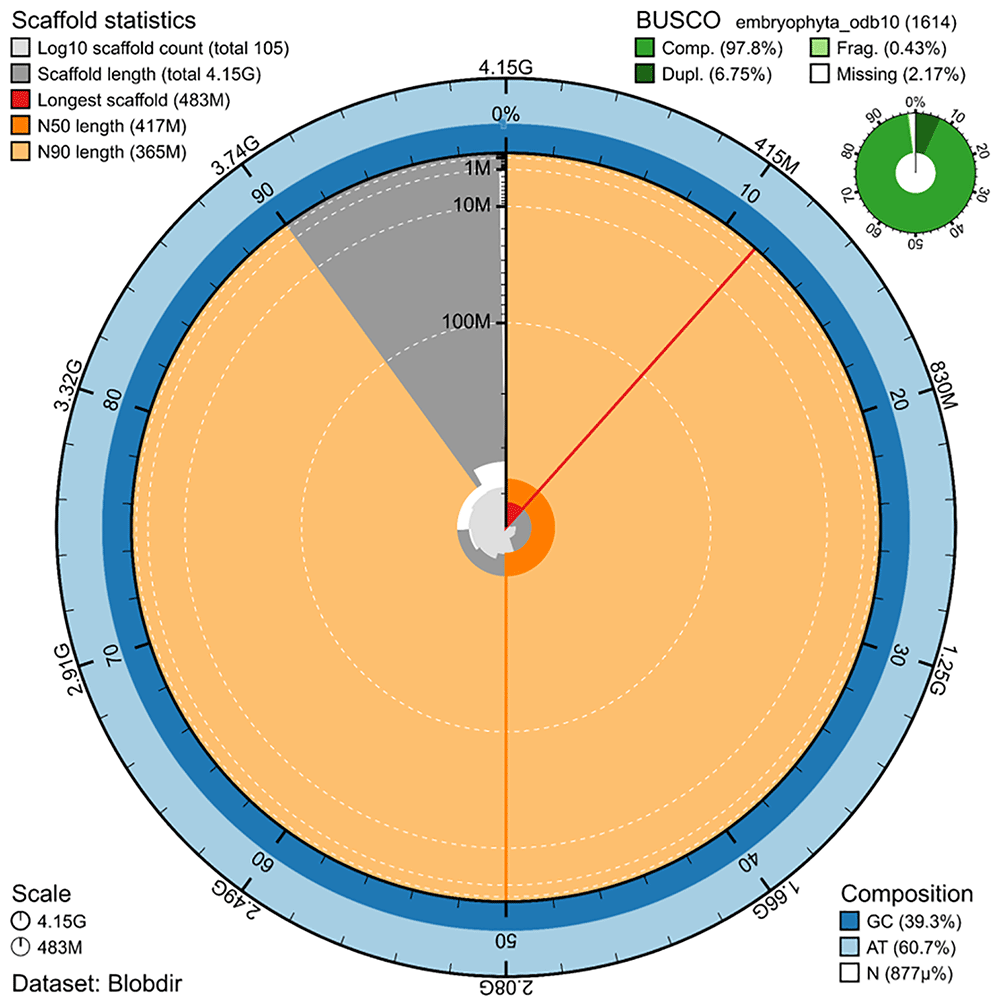
Figure 1. Snail plot summary of assembly statistics.
The main plot is divided into 1,000 size-ordered bins around the circumference, with each bin representing 0.1% of the 4,151,721,093 bp assembly including the two mitochondrial genomes. The distribution of sequence lengths is shown in dark grey, with the plot radius scaled to the longest sequence present in the assembly (483 Mb, shown in red). Orange and pale-orange arcs show the scaffold N50 and N90 sequence lengths (416,577,109 bp and 365,390,074 bp), respectively. The pale grey spiral shows the cumulative sequence count on a log-scale, with white scale lines showing successive orders of magnitude. The blue and pale-blue area around the outside of the plot shows the distribution of GC, AT, and N percentages in the same bins as the inner plot. A summary of complete, fragmented, duplicated, and missing BUSCO genes found in the assembled genome from the Embryophyta database (odb10) is shown in the top right.
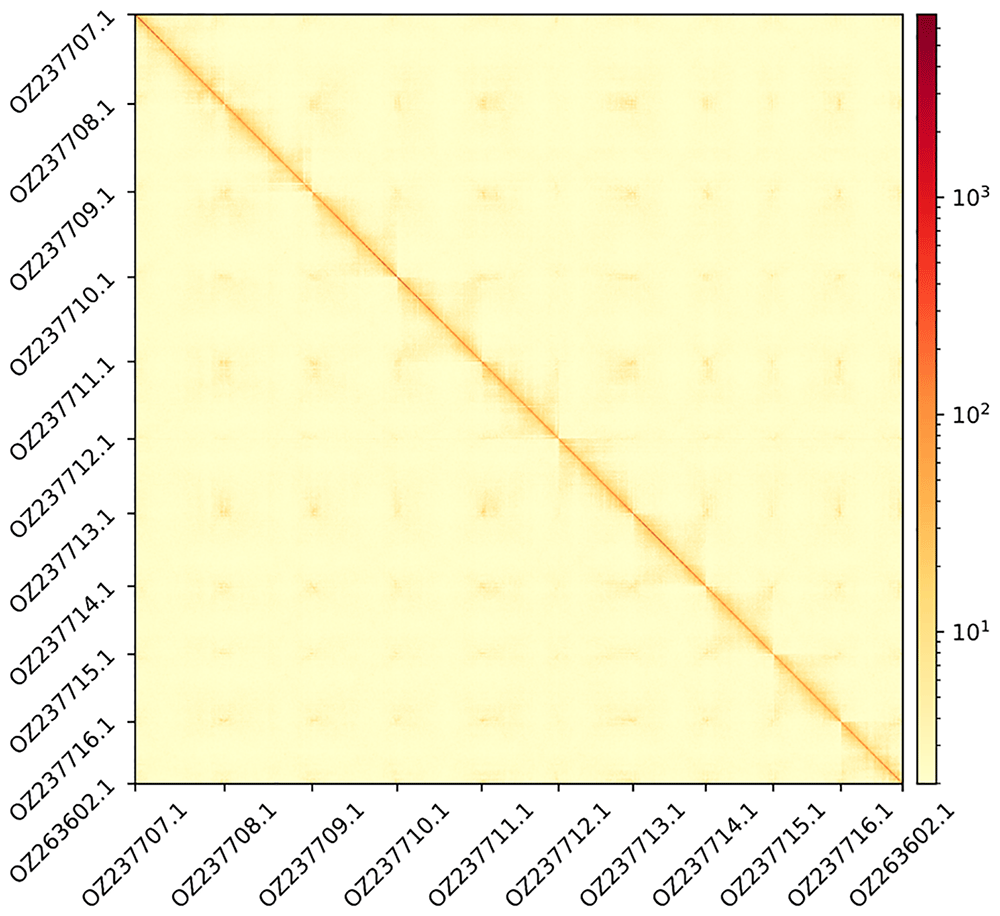
Figure 2. Hi-C contact map showing spatial interactions between regions of the genome.
The diagonal corresponds to intra-chromosomal contacts, depicting chromosome boundaries. The frequency of contacts is shown on a logarithmic heatmap scale. Hi-C matrix bins were merged into a 400 kb bin size for plotting. The Hi-C contact map shows the 10 chromosomes and the plastid genome (GenBank accession: OZ263602.1).
Genome annotation
The genome annotation consists of 27,296 protein-coding genes with associated 37,392 transcripts, in addition to 27,739 non-coding genes (Table 1). Using the longest isoform per transcript, the single-copy gene content analysis using the embryophyta_odb10 database with BUSCO resulted in 88.8% completeness. Using the OMAmer Viridiplantae-v2.0.0.h5 database for OMArk (Nevers et al., 2025) resulted in 94.5% completeness and 92.0% consistency (Table 2).
Table 1. Statistics from assembled gene models.
| No.
genes | No.
transcripts | Mean gene
length (bp) | No. single-
exon genes | Mean exons
per transcript |
|---|
| mRNA | 27,296 | 37,392 | 4,619 | 1,689 | 5.4 |
| pseudogene | 0.00 | 0.00 | 0.00 | 0.00 | 0.00 |
| snoRNA | 13,205 | 13,205 | 106 | 13,205 | 1.0 |
| lncRNA | 5,658 | 5,963 | 1,254 | 640 | 2.2 |
| snRNA | 305 | 305 | 145 | 305 | 1.0 |
| rRNA | 7,778 | 7,778 | 203 | 7,778 | 1.0 |
| tRNA | 793 | 793 | 75 | 793 | 1.0 |
| Other ncRNA | 6,879 | 6,879 | 68 – 100 | 6,879 | 1.0 – 1.0 |
Table 2. Annotation completeness and consistency scores calculated by BUSCO run in protein mode (embryophyta_odb10) and OMArk (Viridiplantae-v2.0.0.h5).
| Complete | Single copy | Duplicated | Fragmented | Missing |
|---|
| BUSCO | 1,433 (88.8%) | 1,359 (84.2%) | 74 (4.6%) | 104 (6.4%) | 77 (4.8%) |
| OMArk | 10,586 (94.5%) | 7,773 (69.4%) | 2,813 (25.1%) | - | 612 (5.5%) |
| Consistent | Inconsistent | Contaminants | Unknown |
|---|
| OMArk | 25,101 (92.0%) | 722 (2.6%) | 0.0 (0.0%) | 1,473 (5.4%) |
Data availability
Carlina diae and the related genomic study were assigned to Tree of Life ID (ToLID) 'daCarDiae1' and all sample, sequence, and assembly information are available under the umbrella BioProject PRJEB84159. The sample information is available at the following BioSample accessions: SAMEA115717571 and SAMEA115717572. The genome assembly is accessible from ENA under accession number GCA_965177975.2 and the annotation is available through the Ensembl website (https://projects.ensembl.org/erga-bge/). Sequencing data produced as part of this project are available from ENA at the following accessions: ERX14170105, ERX14170108, ERX14170109, ERX14170716, ERX14170717, ERX14170718, ERX14170719, ERX14170720, ERX14170721, ERX14170722, and ERX14170723. Documentation related to the genome assembly and curation can be found in the ERGA Assembly Report (EAR) document available at https://github.com/ERGA-consortium/EARs/tree/main/Assembly_Reports/Carlina_diae/daCarDiae1. Further details and data about the project are hosted on the ERGA portal at https://portal.erga-biodiversity.eu/data_portal/538483.
Author contributions
DK and RM coordinated the project; EA collected the species; EA identified the species; EA and DK sampled and preserved biological material and provided metadata; AsB, RM, RF, NE, MS, EB, PL, NP, and TM provided support in sampling, shipping of biological material, metadata collection, and management; the GST extracted DNA, prepared libraries, and performed sequencing under the supervision of AM, CC, KL, PHO and PW; LD and JMA performed genome assembly and curation under the supervision of JMA; FM, VPBE, and LH performed genome annotation; CB generated the analysis and report. All authors contributed to the writing, review, and editing of this genome note and read and approved the final version. This work is part of the species assigned to Genoscope, which was instrumental in the wet lab, sequencing, and assembly processes, and represents a key contribution to BGE's outputs.
Acknowledgements
The authors would like to thank Manolis Avramakis, technician of the Botany Division of the Natural History Museum of Crete, who collected, transplanted the specimen from the wild, and maintains the botanic garden of NHMC, where Carlina diae is transplanted. We acknowledge the support of the Freiburg Galaxy Team: Saim Momin and Björn Grüning, Bioinformatics, University of Freiburg (Germany), funded by the German Federal Ministry of Education and Research BMBF grant 031 A538A de.NBI-RBC and the Ministry of Science, Research and the Arts Baden-Württemberg (MWK) within the framework of LIBIS/de.NBI Freiburg. We would like to acknowledge the assembly reviewer, Fernando Cruz from the Centro Nacional de Análisis Genómico (CNAG).
Faculty Opinions recommendedReferences
- Aken BL, Ayling S, Barrell D, et al.:
The ensembl gene annotation system.
Database (Oxford).
2016; 2016: baw093. PubMed Abstract
| Publisher Full Text
| Free Full Text
- Challis R, Kumar S, Sotero-Caio C, et al.:
Genomes on a Tree (GoaT): a versatile, scalable search engine for genomic and sequencing project metadata across the eukaryotic Tree of Life [version 1; peer review: 2 approved].
Wellcome Open Res.
2023; 8: 24. PubMed Abstract
| Publisher Full Text
| Free Full Text
- Cheng H, Concepcion GT, Feng X, et al.:
Haplotype-resolved de novo assembly using phased assembly graphs with hifiasm.
Nat Methods.
2021; 18(2): 170–175. PubMed Abstract
| Publisher Full Text
| Free Full Text
- Dimopoulos P, Raus T, Bergmeier E, et al.:
Vascular plants of Greece: an annotated checklist. 2013. Reference Source
- Fournaraki C, Bazos I, Choreftakis M:
Carlina diae. The IUCN Red List of Threatened Species 2024. 2024.
- Grigoriadou K, Sarropoulou V, Krigas N, et al.:
GIS-facilitated effective propagation protocols of the endangered local endemic of crete Carlina diae (Rech. f.) Meusel and A. Kástner (Asteraceae): serving ex situ conservation needs and its future sustainable utilization as an ornamental.
Plants (Basel).
2020; 9(11): 1465. PubMed Abstract
| Publisher Full Text
| Free Full Text
- Gruber AR, Lorenz R, Bernhart SH, et al.:
The Vienna RNA websuite.
Nucleic Acids Res.
2008; 36(Web Server issue): W70–W74. PubMed Abstract
| Publisher Full Text
| Free Full Text
- Guan D, McCarthy SA, Wood J, et al.:
Identifying and removing haplotypic duplication in primary genome assemblies.
Bioinformatics.
2020; 36(9): 2896–2898. PubMed Abstract
| Publisher Full Text
| Free Full Text
- Harry E:
PretextView (Paired REad TEXTure Viewer): a desktop application for viewing pretext contact maps. 2022. Reference Source
- Herrera MC:
Refrigerated flowers in the torrid Mediterranean summer.
Ecology.
2024; 105(3): e4268. PubMed Abstract
| Publisher Full Text
- Kalvari I, Nawrocki EP, Argasinska J, et al.:
Non-coding RNA analysis using the Rfam Database.
Curr Protoc Bioinformatics.
2018; 62(1): e51. PubMed Abstract
| Publisher Full Text
| Free Full Text
- Kozomara A, Birgaoanu M, Griffiths-Jones S:
miRBase: from microRNA sequences to function.
Nucleic Acids Res.
2019; 47(D1): D155–D162. PubMed Abstract
| Publisher Full Text
| Free Full Text
- Lucas A, Bodger O, Brosi JB, et al.:
Floral resource partitioning by individuals within generalised hoverfly pollination networks revealed by DNA metabarcoding.
Sci Rep.
2018; 8(1): 5133. PubMed Abstract
| Publisher Full Text
| Free Full Text
- Manni M, Berkeley MR, Seppey M, et al.:
BUSCO update: novel and streamlined workflows along with broader and deeper phylogenetic coverage for scoring of eukaryotic, prokaryotic, and viral genomes.
Mol Biol Evol.
2021; 38(10): 4647–4654. PubMed Abstract
| Publisher Full Text
| Free Full Text
- Mazzoni CJ, Ciofi C, Waterhouse RM:
Biodiversity: an atlas of European reference genomes.
Nature.
2023; 619(7969): 252. PubMed Abstract
| Publisher Full Text
- Nawrocki EP, Eddy SR:
Infernal 1.1: 100-fold faster RNA homology searches.
Bioinformatics.
2013; 29(22): 2933–2935. PubMed Abstract
| Publisher Full Text
| Free Full Text
- Nevers Y, Warwick Vesztrocy A, Rossier V, et al.:
Quality assessment of gene repertoire annotations with OMArk.
Nat Biotechnol.
2025; 43(1): 124–133. PubMed Abstract
| Publisher Full Text
| Free Full Text
- Rhie A, Walenz BP, Koren S, et al.:
Merqury: reference-free quality, completeness, and phasing assessment for genome assemblies.
Genome Biol.
2020; 21(1): 245. PubMed Abstract
| Publisher Full Text
| Free Full Text
- Sardans J, Peñuelas J:
Plant-soil interactions in Mediterranean forest and shrublands: impacts of climatic change.
Plant Soil.
2013; 365(1–2): 1–33. PubMed Abstract
| Publisher Full Text
| Free Full Text
- Strid A:
Atlas of the Aegean Flora. Part 2: maps.
Englera.
2016; 33: 1–878. Reference Source
- Tutin TG:
Flora Europaea: Alismataceae to Orchidaceae (Monocotyledones).
1964. Reference Source
- UniProt Consortium: UniProt: a worldwide hub of protein knowledge.
Nucleic Acids Res.
2019; 47(D1): D506–D515. PubMed Abstract
| Publisher Full Text
| Free Full Text
- Vacherie B, Labadie K, Falentin C:
HMW DNA extraction for long read sequencing using CTAB. 2022. Publisher Full Text
- Valli AT, Koumandou VL, Iatrou G, et al.:
Conservation biology of threatened Mediterranean chasmophytes: the case of Asperula naufraga endemic to Zakynthos Island (Ionian Islands, Greece).
PLoS One.
2021; 16(2): e0246706. PubMed Abstract
| Publisher Full Text
| Free Full Text
- Workman R, Timp W, Fedak R, et al.:
High molecular weight DNA extraction from recalcitrant plant species for third generation sequencing. 2018. Publisher Full Text
- Zhou C, McCarthy SA, Durbin R:
YaHS: yet another Hi-C scaffolding tool.
Bioinformatics.
2023; 39(1): btac808. PubMed Abstract
| Publisher Full Text
| Free Full Text