Introduction
Speculative, radical, critical, experimental, and plain weird musical instruments and sound-generating devices of all types have been extensively researched in DIY (Timoney et al., 2020), Do-It-With-Others (DIWO) (Koutsomichalis, 2025; Richards, 2013), New Interfaces for Musical Expression (NIME) (Bin, 2023; Bowers & Archer, 2005), and various other contexts (Koutsomichalis, 2020; Koutsomichalis, 2022). Numerous studies have shown that experimental instruments can be an invaluable pedagogical tool in the classroom (Bowers et al., 2023; Masu & Morreale, 2021; McPherson et al., 2016). Richards, in particular, have been involved for over two decades in DIY/DIWO/NIME vis-á-vis hybrid contexts, wherein instruments seamlessly merge with learning, music composition, and experimentation with electronics. Drawing on speculative design (Dunne & Raby, 2024), post-optimal approaches to electronic objects, and slow-tech trends, he has explored various alternative approaches to electronic music, broadly advocating an object-oriented approach that pivots on the design of apparatuses meant to speculate, rather than to meet well-delineated technical standards (Richards, 2018).
Richards has been invited to facilitate a “Speculative Circuits” workshop of this sort for a mixed gender group of third and fourth year students in the department of Multimedia and Graphic Arts in the Cyprus University of Technology in Limassol the fall of 2024. The workshop took place in the facilities of the Media Arts & Design Research Lab (MADLab), which lasted two days, and approximately 30 students participated. Speculative Circuits revolved around the making of a series of experimental sound apparatuses but also involved a collective public performance and provided ample space for socializing and just “hanging-around” —as to be further explained in the next section. The rationale for this endeavor is twofold: First, it seeks to implement a well-established method in an actual classroom for its pedagogical merits; second, it aspires to further investigate thereof and to eventually contribute qualitative data back to the ongoing discourse. Accordingly, this brief report describes the method at play, presents the results, and articulates the preliminary conclusions. As such, it is expected to be of practical use to academic actors seeking to facilitate similar endeavors in real-life classrooms and as part of curricula broadly related to music composition or performance, instrument design, multimedia applications, physical computing, or similar. Furthermore, it is intended as a qualitative report supported by real-life evidence that should be of interest to researchers investigating this and related sub-areas.
Method
Richards' workshop has been primarily structured around his “Radical Nails” prototype that, in turn, draws significantly from his prior “Bed of Nails” instrument (Richards, 2018). Radical Nails have surfaced as hardware mash-up devices and speculative sound circuits that hybridize the Bed of Nails with another experimental instrument known as “Simple & Radical” (Patel & Richards, 2020). The former has a prominent sculptural quality; it features several nails on a piece of wood and various electronic components interconnected by virtue of wire, that is, without relying on a printed circuit board, breadboard, or similar. Instead, circuity is realized by wrapping the wire around the nails to electrically couple them to the various electronic components that are sustained between them. The body of the instrument is a freeform construction typically implemented from a piece of scrap wood. Arguably, such an instrument borrows from “ugly" construction methods where electronics are brought together in more or less ad hoc, even haphazard, fashions. The Simple & Radical is a digital wavetable synth implemented directly on a the so-called "Radical Chip”, original part of another synth made commercially available (Richards, 2019). Simple and radical decouples the core chip from the latter and sets out a workshop challenge in which it can be made into a standalone sound apparatus directly on a strip board.
Radical Nails combine aspects from both of these projects. The “radical chip” was the main sound-generating element. However, it is now part of a bed of nail design so that the user can immediately interface with it by touching the nails. Accordingly, Radical Nails can be played by one or more individuals who touch the nails with their fingers to modulate the generated sounds. Schematics and codes for Radical Nails are made available on Richards’ website. The particular incarnation used for this workshop is also meant as an exploration of reductionist electronics design, which only involves the radical chip, a 10 K resistor that acts as a rudimentary digital-to-analog converter, a coupling capacitor in the output to block any direct current, a battery holder, and a jack socket for connection with a sound system.
The workshop has been staged as a continuous hybrid event —a certain way of curating events as a continuous flow of individual activities fusing into one another that has been tried out on many different occasions in the MADLab. In this particular case, the workshop kicked off with a hands-on making session the morning of the first day, and at the same time, some of the participating students scheduled their regular class . This session lasted for approximately three hours. Following a one-hour lunch break, MADLab remained open for another three hours for students to drop in and out at their own convenience so as to troubleshoot their designs, have questions answered and concerns addressed, or socialize and engage with Richards and one another. The second day started with one of the so-called “MADLunch” concerts. Local audiences were invited to have their lunch in the performance space before, during, and after the actual performance.
On this occasion, local audiences, facilitators, participating students, and students who had not yet attended Richards’ workshops have been present (some of them with their lunch indeed) during the sound-checks, rehearsals, and actual performance. The latter involved several students who participated in a hands-on session on the previous day. They performed together with Richards and their newly constructed radical nail instrument. Immediately after the concert, a second hands-on session took place on the time a different group of students had their class scheduled, so as to allow anyone who could not make it on the first date to attend. Following a brief coffee break after the end of this session, another drop-in/out troubleshooting and socializing session was conducted.
During the first hands-on session, the first group of participating students was asked to source nails, hammers, and handsaws from local shops and look for scrap pieces of wood. Some rather large pieces of wood were found so that the students went on to cut individual pieces for their devices. Without much introduction, Richards asked the students to immediately go on making several "beds of nails,” hammering eight nails on top of each of the pieces they had just sawed. Only after several such objects had been ready did he proceed to briefly explain how loudspeakers work, what kinds of electrical signals we need to trigger, and how the proposed circuit could be used to this end. The students went on implementing the circuit individually and at their own pace, while Richards and the author of this report provided supervision and individual tutoring, answering questions and explaining important topics in electronics design and sound synthesis in doing so. The second hands-on session was largely similar; only pieces of wood and hand tools were already available in space.
Results
At the start of the workshop, the students had not been particularly eager to do so; they were very soon drowned in and immersed in the process of working with the various materials and making elements. Hammering nails have proven to be an almost addictive activity, at least for this particular group of students. Hammering is noisy (and thus can be rather fun) and challenging (and thus can be very addictive). A playful, yet also creatively challenging, condition has been enacted in this fashion and has been sustained throughout both days of the workshop. This is clearly documented in Figure 1–Figure 3 and Figure 4, illustrating students “having fun” while making or while trying out their radical nail instruments. It is also very well supported in that most students did not want to break, while several of them stuck much longer than their actual class or came back later in the afternoon to finish their device. That is, for most of the participating students, what used to be a (sometimes boring) lesson very quickly transformed into a very tangible desire to “finish making this weird thing.”
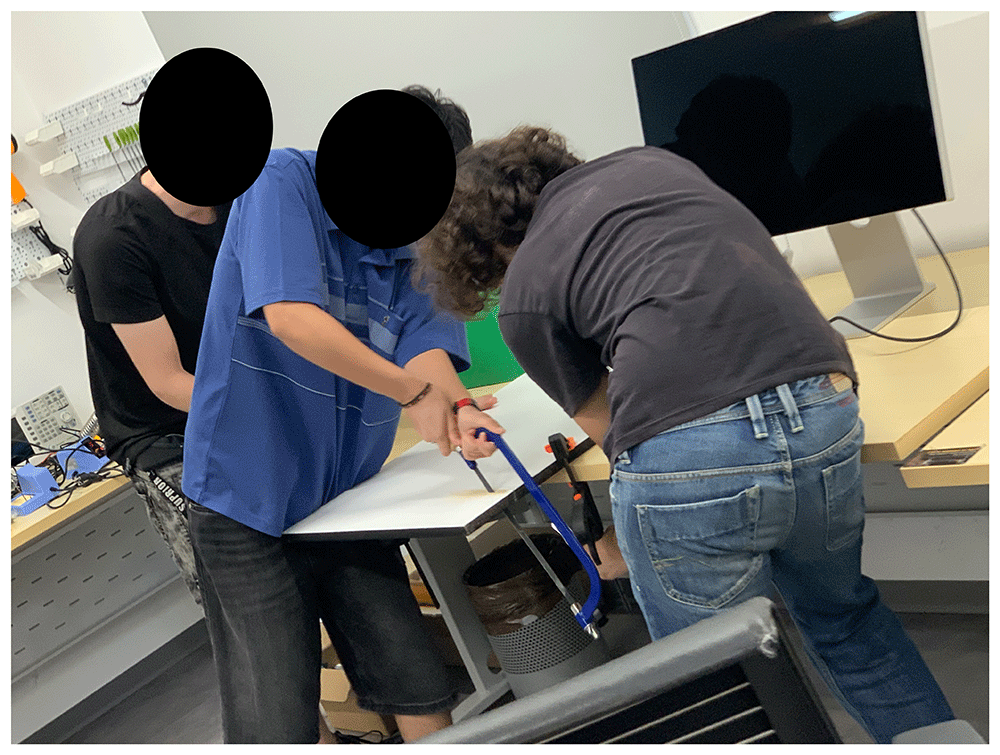
Figure 1. Students cutting a piece of wood to prepare “Bed of Nails” substrates.
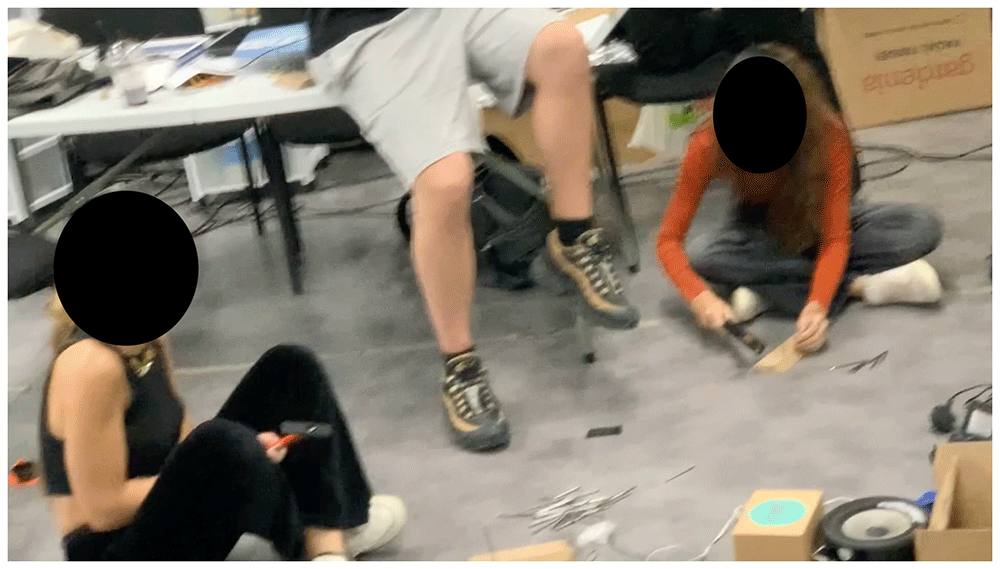
Figure 2. Students enjoying themselves hammering the nails.
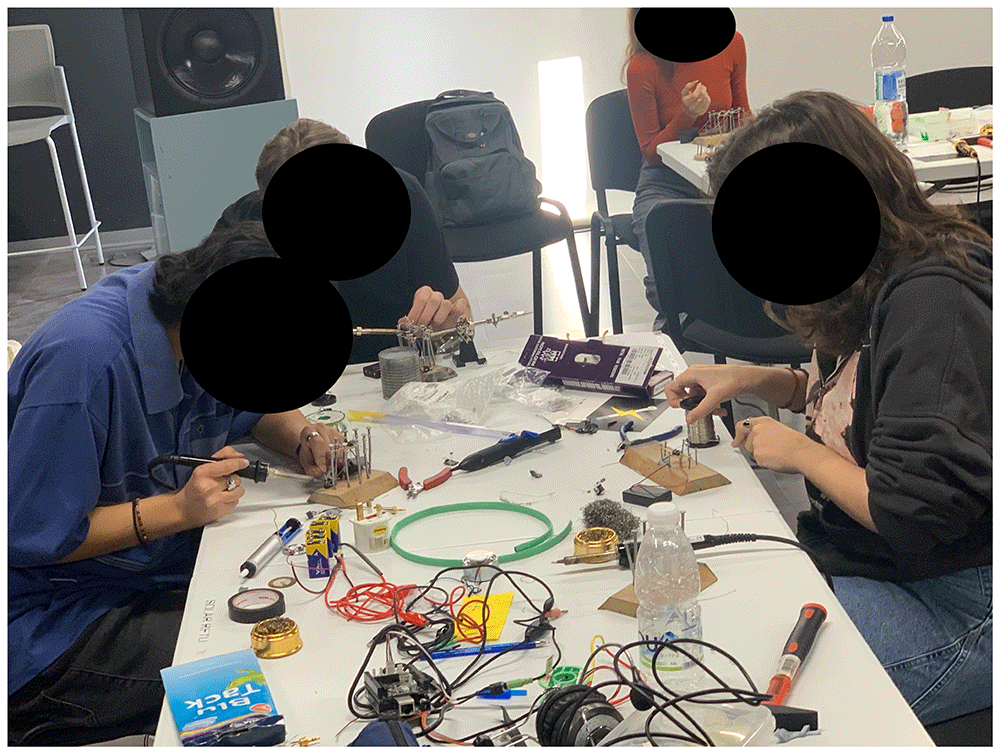
Figure 3. Students immersed in the making process.
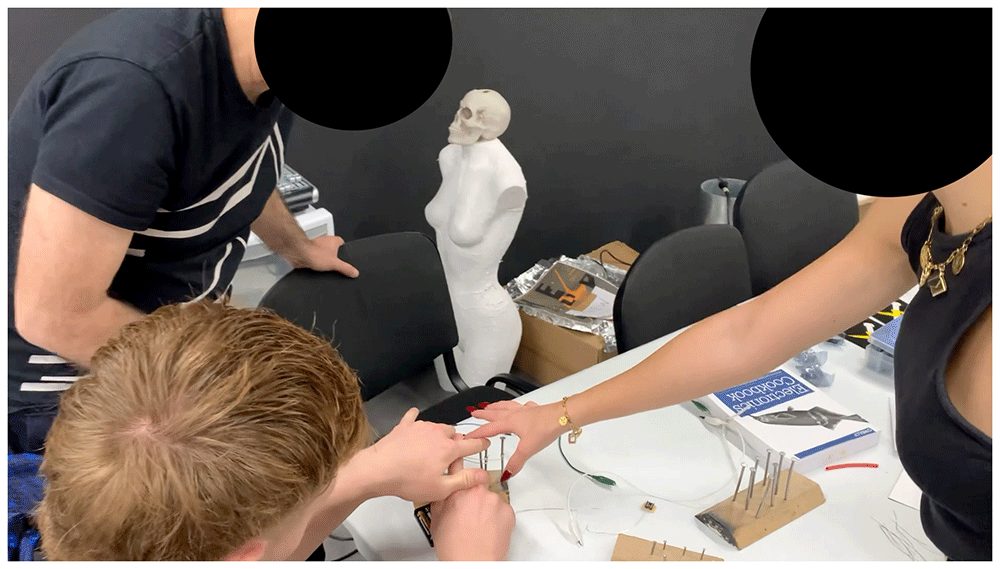
Figure 4. Two students trying out a finished Radical Nails instrument together.
Figure 5 shows a close-up of a student soldering the edges of the wire on an almost complete apparatus, Figure 6 illustrates an example of a finished instrument in the hands of a student, and Figure 7 depicts an ad-hoc micro-exposition of several Radical Nails, all made by students.
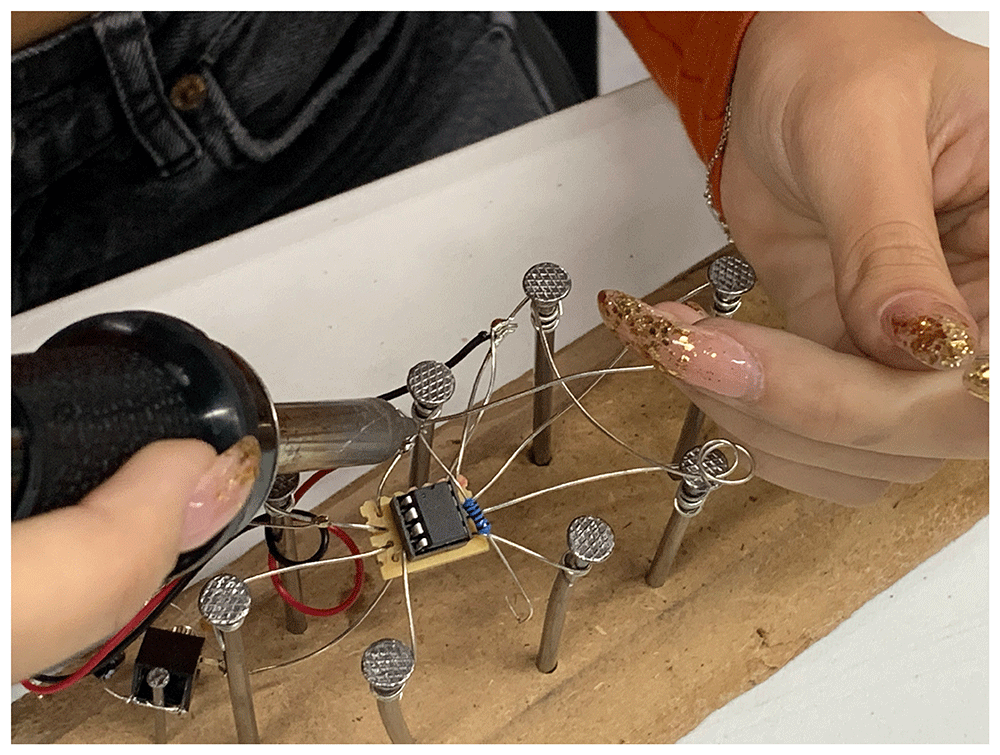
Figure 5. Making close-up.
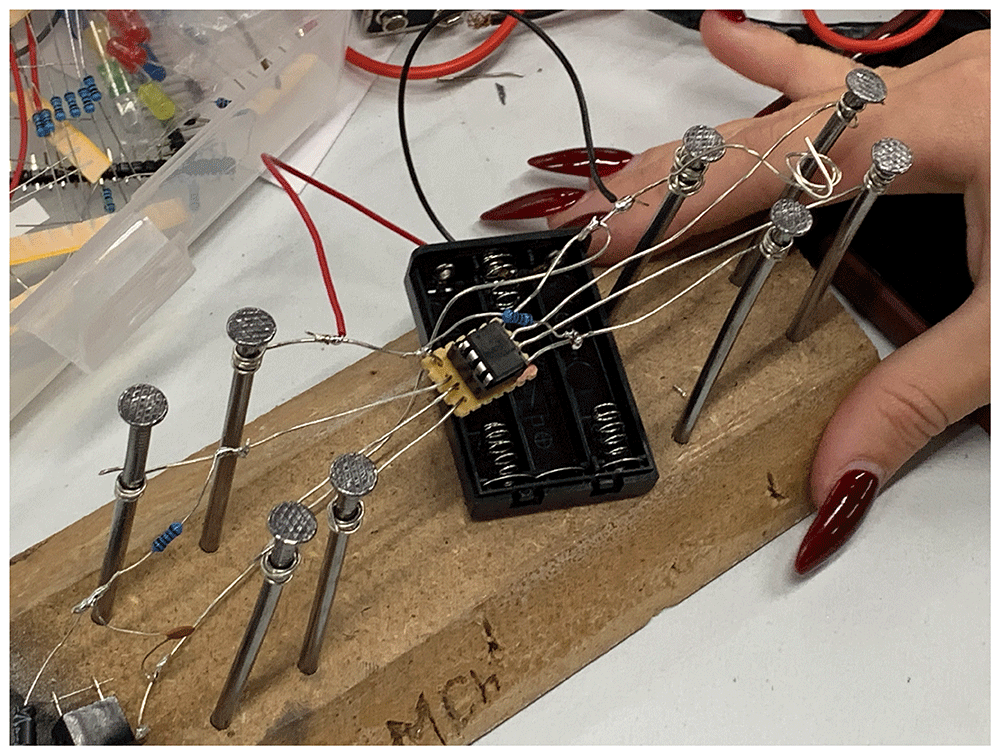
Figure 6. Close up of a finished Radical Nails instrument.
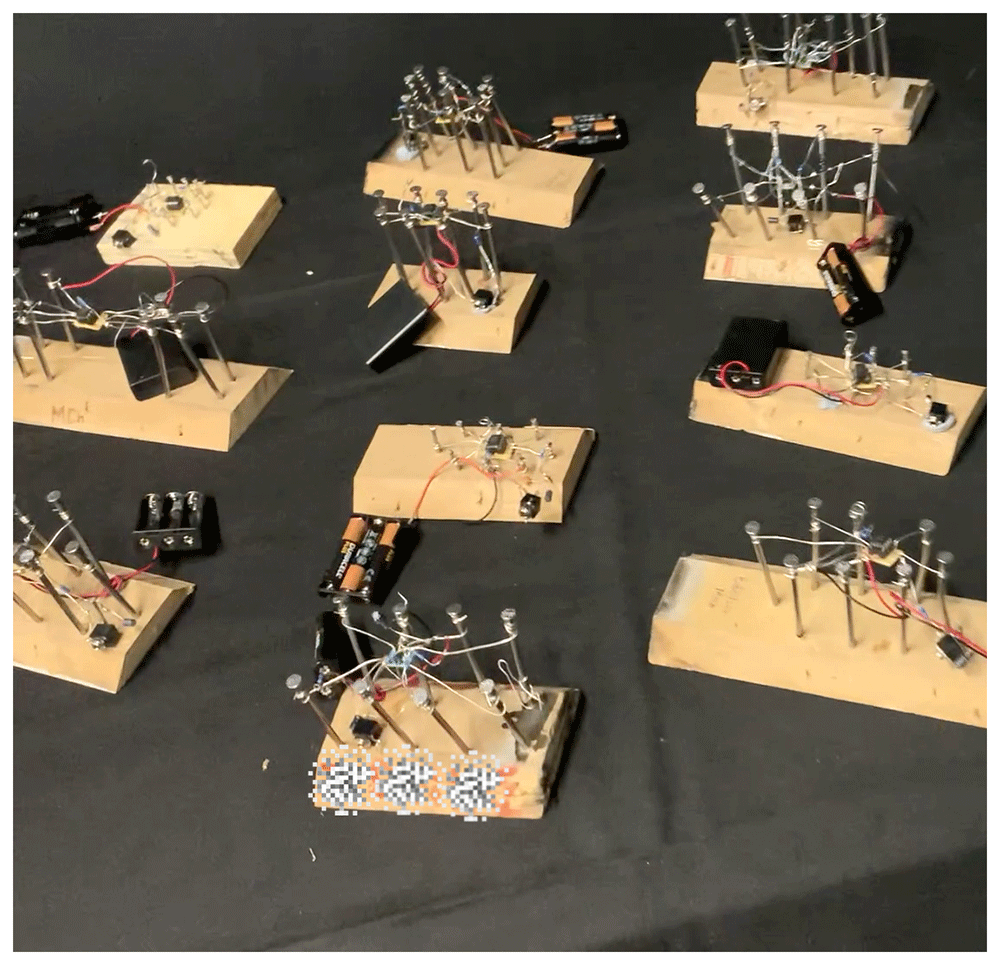
Figure 7. An ad-hoc mini-exhibition of several Radical Nails instruments made by the students.
Most students who participated in the first hands-on session were very eager to improvise with their devices on the second day. The audience was primarily comprised of another group of students. Accordingly, the performance served as an introduction to the overall workshop experience for this group. The second workshop session was primarily for this second group of students to also make their own instances of Radical Nails; however, some students from the first group also participated as they had not yet finished their instruments or in order to socialize.
Discussion
The project explores how speculative, rather than technical, approaches towards the design of musical instruments and sound apparatuses can lead to a new artistic practice. The suggested method is part-playful, part-absurdist, and part very serious, effectively bridging learning, enjoying oneself, and creating art. In an actual classroom setting, the specifics of Radical Nails as well as a curation in the style of a continuous-flow-of-activities seem to have furthered a much more socially relevant kind of classroom, one that is certainly reminiscent of Dewean pragmatism (Dewey, 1997) and 4E cognition approaches to education (Videla & Vela, 2023). Indeed, for the two days of the activity, the classroom facilitated intergenerational co-making and individuated learning-by-doing. In just a few hours, the students engaged in a didactic, yet also playful, activity that kept them involved for a much longer period than their normal encounter with this particular class. The structure of Radical Nails is such that making them very quickly became their own goal and the classroom transformed from a place they were supposed to attend for three hours (with a break in between) to an ongoing event lasting two days wherein playing, sharing knowledge, co-making, and music took place in the coming waves.
The overall experience suggests itself for what the author has elsewhere referred to as a “democracy of (more-than-)humans” ideal that seeks the establishment of micro-communities “affording co-production, co-exhibition, co-learning and the active engagement of individuals with one another as well as with all sorts of materials, tools, technologies and ways of working” (Koutsomichalis, 2025). Indeed, while the overall success of the workshop has certainly been due to Richards’ workshopping skills and experience, the importance of the nails and other materials involved should be underscored. The physical act of hammering nails, sawing wood, and working with wire has been a very important aspect of this workshop that significantly accounts for its immersion, playfulness, and, eventually, a great (we believe) learning experience. As documented in the figures above, engaging with physical materials immediately transformed the classroom into an addictive playground that the students did not want to leave.
It has certainly been Richards’ expertise that further sustained the affordancies of hammering and working with materials; however, Richards’ expertise on its own sake has a lot to do with trusting materials and objects in luring individuals into creative contexts. This is explicit in several of his academic essays, especially with respect to the object-oriented approach he claims to advocate (Richards, 2013; Richards, 2018). It is also explicit in his avoiding breadboards or printed circuit boards in favor of unconventional materials such as nails and pieces of wood. During the workshop, Richards explained that the former already introduced abstractions so that instead of thinking about what they made and followed the flow of electricity with their hands and eyes, the students would think about some particular abstraction, such as a matrix (in the case of the breadboard). Thus, Richards is well aware that the materials he employs are themselves important actors in the overall learning experience and invest a lot in them.
Conclusion
This brief report overviews the speculative sound circuit workshop facilitated by John Richards, which takes place in the context of two real-life university classrooms. The workshop draws on prior work by Richards and, most specifically, on his project Radical Nails. Accelerated by a hands-on and a “continuous-flow-of-activities” curatorial philosophy, and as described above, the overall workshop fostered a dynamic interplay between technical experimentation, creative expression, and social engagement. Materials that are rather unconventional in the technological classroom, namely, nails, wood, and hammers, have been shown to play a central role in achieving this. Moreover, merely having a catalytic effect, it seems that physically engaging with them has the capacity to cultivate a collective, playful, and pedagogical ethos for students. In such a playful environment, students and facilitators can co-construct knowledge through making technical troubleshooting, collective music making, and freeform socializing. This has the capacity to redefine the classroom as a space for intergenerational co-making and playful experimentation, as discussed in other studies by Richards et al.. The emphasis is on speculative, non-technical design frameworks that prioritize creativity and material affordances over rigid technical standards. Accordingly, Dewean values and an overall DIWO ethos have been suggested, yet one wherein materials surface the process as particularly important actors. This is in tandem with the author’s suggestion elsewhere vis-á-vis a “democracy of (more-than-)humans’ ideal seeking the establishment of contexts that promote co-production and co-learning by virtue of their active engagement with one another, as well as with actual materials, tools, and technologies.
Ethics and consent
Ethical approval and consent were not required.
Data availability
Additional data needed to facilitate ‘speculative sound circuits’ workshopping are freely available at https://doi.org/10.6084/m9.figshare.30904412 (Koutsomichalis et al., 2026).
Data are available under the terms of the Creative Commons Attribution 4.0 International license (CC-BY 4.0). This dataset has been put in place and made available by the author but only comprises materials authored by John Richards and Max Wainwright. The dataset includes code; wavetables; images of the sample realised devices; schematics; pin-out diagrams; a bill of materials; and explanatory text. These are enough for a basic implementation/replication of the workshop and can also function as the starting point for further experimentation and related future research as well as inspirational material for workshops that are similar in spirit.
Acknowledgements
John Richards is acknowledged for facilitating the Speculative Sound Workshop and for providing schematics and codes for the implementation of Radical Nails.
Faculty Opinions recommendedReferences
- Bin SA:
Where few NIMEs have gone before: lessons in instrument design from Star Trek. In: Proceedings of the International Conference on New Interfaces for Musical Expression. 2023; 48–53. Publisher Full Text
- Bowers J, Archer P:
Not hyper, not meta, not cyber but infra-instruments. In: Proceedings of the 2005 conference on New interfaces for musical expression. 2005; 5–10. Publisher Full Text
- Bowers JM, Richards J, Shaw T, et al.:
Raw data, rough mix: towards an integrated practice of making, performance and pedagogy. In: Proceedings of the International Conference on New Interfaces for Musical Expression. 2023; 417–427. Publisher Full Text
- Dewey J:
Democracy and education. New York, NY: Simon and Schuster, 1997. Reference Source
- Dunne A, Raby F:
Speculative everything: design, fiction, and social dreaming. Cambridge, MA: MIT press, 2024.
- Koutsomichalis M:
Rough-hewn hertzian multimedia instruments. In: Proceedings of the International Conference on New Interfaces for Musical Expression. 2020; 619–624. Publisher Full Text
- Koutsomichalis M:
Instruments that are more than instruments (and other stories).
Ricercare.
2022; 15: 76–106. Reference Source
- Koutsomichalis M:
Make, learn, exhibit and share with others: the case of Inhibition.
DIY Alternative Cultures Society.
2025; 3(1): 78–100. Publisher Full Text
- Koutsomichalis M, Richards J, Wainwright M:
Supporting Data for Speculative Sound Workshop by Dirty Electronics [Dataset].
Figshare.
2026. http://www.doi.org/10.6084/m9.figshare.30904412
- Masu R, Morreale F:
Composing by hacking: technology appropriation as a pedagogical tool for electronic music. In: Teaching Electronic Music. London: Routledge, 2021; 157–171. Publisher Full Text
- McPherson AP, Chamberlain A, Hazzard A, et al.:
Designing for exploratory play with a hackable digital musical instrument. In: Proceedings of the 2016 ACM conference on designing interactive systems. 2016; 1233–1245. Publisher Full Text
- Patel AD, Richards J:
Pop-up for collaborative music-making. In: Proceedings of the International Conference on New Interfaces for Musical Expression. 2020; 452–457. Publisher Full Text
- Richards J:
Beyond DIY in electronic music.
Organised Sound.
2013; 18(3): 274–281. Publisher Full Text
- Richards J:
Speculative sound circuits. In: Proceedings of Politics of the Machines-Art and After. 2018. Publisher Full Text
- Richards J:
Radical Chip and Radical Nails. 2019; Accessed Jul 24, 2025. Reference Source
- Timoney J, Lazzarini V, Keller D:
DIY electronics for ubiquitous music ecosystems. In: Ubiquitous Music Ecologies. London: Routledge, 2020; 52–70. Publisher Full Text
- Videla R, Veloz T:
The 4E approach applied to education in the 21st Century.
Constructivist Foundations.
2023; 18(2): 153–157. Reference Source







