Introduction
The establishment of the European Economic and Monetary Union (EMU) represents one of the most ambitious economic experiments in modern history, fundamentally testing the limits of monetary integration in the absence of political and fiscal unification. For over two decades, the Euro has survived existential crises, sovereign debt contagions, and global supply shocks, yet the central economic question regarding its viability remains unresolved: Can a single monetary policy effectively stabilize a union of structurally diverse economies? This question dates back to the seminal work of (Mundell 1961), who formalized the theory of Optimal Currency Areas (OCA). Mundell posited that for a currency union to be welfare-enhancing, its member states must either share highly synchronized business cycles to make a single interest rate appropriate for all, or possess alternative adjustment mechanisms—specifically flexible labor markets and fiscal transfers—to absorb asymmetric shocks. In the absence of these conditions, the surrender of national monetary sovereignty transforms a common currency from a tool of stability into a “golden straitjacket,” potentially exacerbating regional divergences rather than smoothing them.
The theoretical debate surrounding the formation of the Euro Area (EA) was defined by two opposing views regarding the evolution of these asymmetries. On one side, the “endogeneity hypothesis” proposed by (Frankel and Rose 1998) argued that the very act of joining a currency union would accelerate trade integration, thereby synchronizing business cycles and endogenously satisfying the OCA criteria over time. On the other side, (Krugman 1993) offered a more pessimistic “specialization hypothesis,” suggesting that greater integration would lead to regional specialization in industries—much like the auto industry in Michigan or technology in California—thereby making region-specific shocks more frequent and increasing the asymmetry of business cycles. If Krugman’s view holds, the Euro Area would not naturally converge toward an optimal union but would instead require robust federal stabilizers to manage inherent structural divergences.
The empirical record of the Euro Area’s first twenty-five years offers a complex verdict on this debate, characterized by distinct phases of apparent convergence followed by violent fragmentation. During the “Great Moderation” leading up to 2008, the compression of sovereign yield spreads gave the illusion of integration. However, the Global Financial Crisis and the subsequent Sovereign Debt Crisis exposed deep structural fissures. As noted by (Lane 2006), the early years of the Euro were marked by persistent inflation differentials that were not merely transitory noise but symptoms of structural divergence between the “core” and the “periphery.” (Angeloni and Ehrmann 2007) further highlighted that in a monetary union, inflation differentials can be destabilizing because they lead to divergent real interest rates: countries with booming economies and high inflation experience lower real interest rates, stimulating them further, while stagnating economies with low inflation face higher real rates, deepening their recession. This pro-cyclical dynamic, often referred to as the “Walters Critique,” complicates the mandate of the European Central Bank (ECB), which must target an aggregate inflation rate that may not reflect the economic reality of any single member state.
While a substantial body of literature has analyzed these asymmetries, most studies rely on aggregate measures of synchronization or static average correlations over long time horizons (Giannone et al. 2010). I argue that these aggregate metrics are insufficient for diagnosing the health of a currency union because they mask the behavior of the “tails” of the distribution. In a heterogeneous union, stability is threatened not by the average behavior, but by the specific subset of countries that diverge significantly from the equilibrium path. A mean correlation of 0.8 may seem high, but if it hides a persistent negative correlation for a major economy like Italy or Greece during a crisis, the political and economic viability of the union is compromised. Furthermore, static analyses fail to capture the time-varying nature of integration. As (Alesina et al. 2002) warned, currency areas that appear optimal at one point in time may become suboptimal as economic structures evolve or as the nature of global shocks shifts. The transition from the demand-driven shocks of 2010 to the supply-driven energy shocks of 2022 necessitates a dynamic framework to evaluate how the internal cohesion of the EA responds to different types of stress.
This paper contributes to the literature by adopting a distributional and time-varying approach to comparative economic integration. Following the methodological intuition of (Quah 1997), who argued that convergence is best understood through the dynamics of the entire distribution rather than mean regression, I compare the Euro Area (EA-12) against the United States (US-51). I treat the US not merely as a control group, but as the empirical benchmark of a functional OCA, characterized by a fully integrated federal fiscal system and high labor mobility (Eichengreen 1990; Blanchard and Katz 1992). My dataset covers the period 1999–2024, employing rolling-window correlations of Real GDP, Real GDP per capita, GDP deflator, and Population to detect structural breaks in integration. I formally test the difference between the EA and US distributions using non-parametric Kolmogorov-Smirnov (K-S) tests and permutation tests, allowing me to determine whether observed asymmetries are random variations or evidence of deep structural fragmentation.
My analysis uncovers a fundamental paradox that challenges the standard narrative of European integration. I find that while the Euro Area exhibits a relatively high degree of synchronization in aggregate Real GDP—often comparable to the US—the mechanisms of adjustment differ radically. In the United States, I observe a significantly lower correlation of Real GDP per capita compared to the Euro Area. This counter-intuitive finding is explained by the role of labor mobility. Consistent with (Krugman 1993) and (Dorn and Zweimüller 2021), I show that the US acts as a highly fluid labor market where asymmetric shocks trigger migration. When a specific US state suffers a downturn, workers leave, altering the population denominator and effectively "de-correlating" per capita income shocks from output shocks. This mechanism stabilizes living standards across the union without requiring perfect business cycle synchronization.
In stark contrast, the Euro Area lacks this “safety valve.” I find that population correlations in the EA are chaotic and often negatively related to the business cycle, suggesting that migration is not a structural smoother but a reactive symptom of extreme distress. Consequently, asymmetric output shocks in Europe translate directly into persistent per capita income divergences. This finding has profound implications for the political sustainability of the union, as it implies that the costs of asymmetric shocks are internalized locally rather than dispersed across the union. Furthermore, my analysis of the GDP deflator reveals that the Euro Area suffers from “fat tails” in its inflation distribution. While US inflation is strongly correlated across states—confirming the effectiveness of the Federal Reserve’s unified stance—the EA displays significant dispersion, particularly during the post-2020 supply shocks. This supports the view of (Checherita-Westphal et al. 2023) that fiscal policies and energy dependencies in Europe drive idiosyncratic inflation dynamics that monetary policy alone cannot tame.
The inability of the ECB to address these heterogeneous dynamics highlights the “impossible trinity” of the Euro Area: a strict no-bailout clause, a single monetary policy, and the absence of a federal fiscal capacity. (Ferrero 2009) and (Gali and Monacelli 2005) have demonstrated theoretically that in the absence of flexible prices or labor mobility, a currency union requires fiscal transfers to close the output gap. My empirical results provide robust evidence that the Euro Area is currently trapped in a suboptimal equilibrium where high output correlation is deceptive, concealing a lack of risk-sharing mechanisms. By documenting the breakdown of per capita convergence during the Sovereign Debt Crisis and the resurgence of inflation asymmetries in the post-COVID era, I provide a quantitative basis for the argument that the Euro Area requires structural reform. The current architecture forces member states to rely exclusively on internal devaluation—a painful and politically costly adjustment—whereas the US benchmark demonstrates the necessity of either fluid labor markets or fiscal federalism to sustain a monetary union in the long run.
Structural asymmetries
Having established the theoretical imperatives of Optimal Currency Area (OCA) theory, I now turn to the empirical evaluation of economic integration in the Euro Area (EA-12) relative to the United States (US-51). My primary objective in this section is to determine whether the Euro Area has converged to a structural configuration capable of sustaining a single monetary policy without the aid of federal fiscal stabilizers. To do so, I treat the United States not merely as a comparative control group, but as the empirical benchmark of a functional monetary union—a jurisdiction where the “one-size-fits-all” interest rate is rendered effective by high labor mobility and fiscal risk-sharing. If the Euro Area were a fully integrated economic entity, I would expect the probability distribution of business cycle correlations between its member states to mirror that of US states. To rigorously test this hypothesis, I analyze the distribution of correlations for Real GDP, Real GDP per capita, GDP deflator, and Population, employing both visual inspection of histograms and non-parametric statistical testing.
I begin by examining the distribution of pairwise correlations within the Euro Area, presented in
Figure 1. The histograms reveal a heterogeneous landscape that hints at the underlying structural tensions of the union. First, regarding Real GDP, the mass of the distribution is concentrated heavily on the right side, indicating a reasonably high degree of output synchronization. This finding is consistent with the “endogeneity hypothesis” of (Frankel and Rose 1998), suggesting that the implementation of the Single Market and the common currency has successfully integrated industrial supply chains. Second, the Real GDP per capita distribution mirrors the behavior of aggregate output, being heavily skewed toward positive unity. This implies that in the Euro Area, income shocks are fully internalized by member states rather than dispersed. Third, the GDP deflator exhibits a concerning “fat tail” on the left side, where a non-trivial subset of member states shows inflation dynamics that are weakly correlated with the rest of the union. This dispersion confirms the warnings of (Lane 2006) and suggests that the ECB’s single target may be misaligned with domestic price pressures in specific countries. Finally, the Population histogram is chaotic, with a significant portion of correlations falling below zero. This suggests that demographic shifts in Europe are not synchronized with the business cycle, failing to act as a stabilizer during asymmetric shocks.
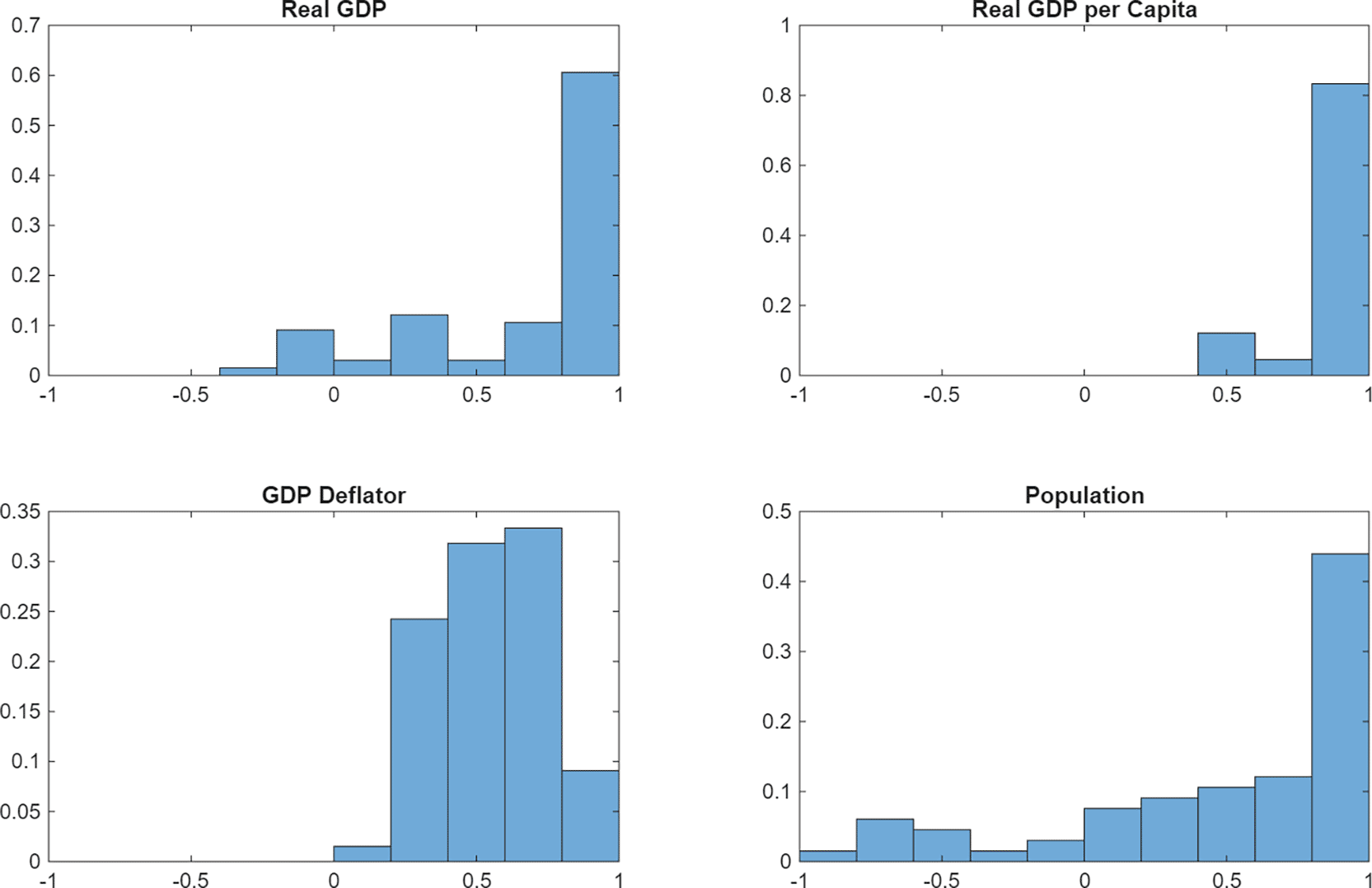
Figure 1. Histograms of correlations in the Euro Area (EA-12).
To contextualize these findings and establish a standard for optimality, I turn to the United States.
Figure 2 presents the correlation histograms for the US states, which serve as the benchmark for a functional OCA. First, the Real GDP histogram indicates high synchronization—qualitatively similar to the Euro Area—suggesting that both unions share a similar degree of trade integration. However, the Real GDP per capita histogram stands in stark contrast to the European case; it is centered much lower, with a significant mass near zero. This distinct distribution validates the seminal hypothesis of (Blanchard and Katz 1992) regarding regional evolutions: in the US, asymmetric shocks trigger labor migration, effectively "de-correlating" per capita income shocks from output shocks and stabilizing living standards. Third, the GDP deflator histogram is tightly clustered near 1.0, confirming that inflation is largely a federal phenomenon where price dynamics are uniform across the union. Finally, the Population histogram shows a stable distribution that complements the per capita findings, confirming that labor mobility acts as a continuous shock absorber—a feature notably absent in the chaotic data observed in the Euro Area.
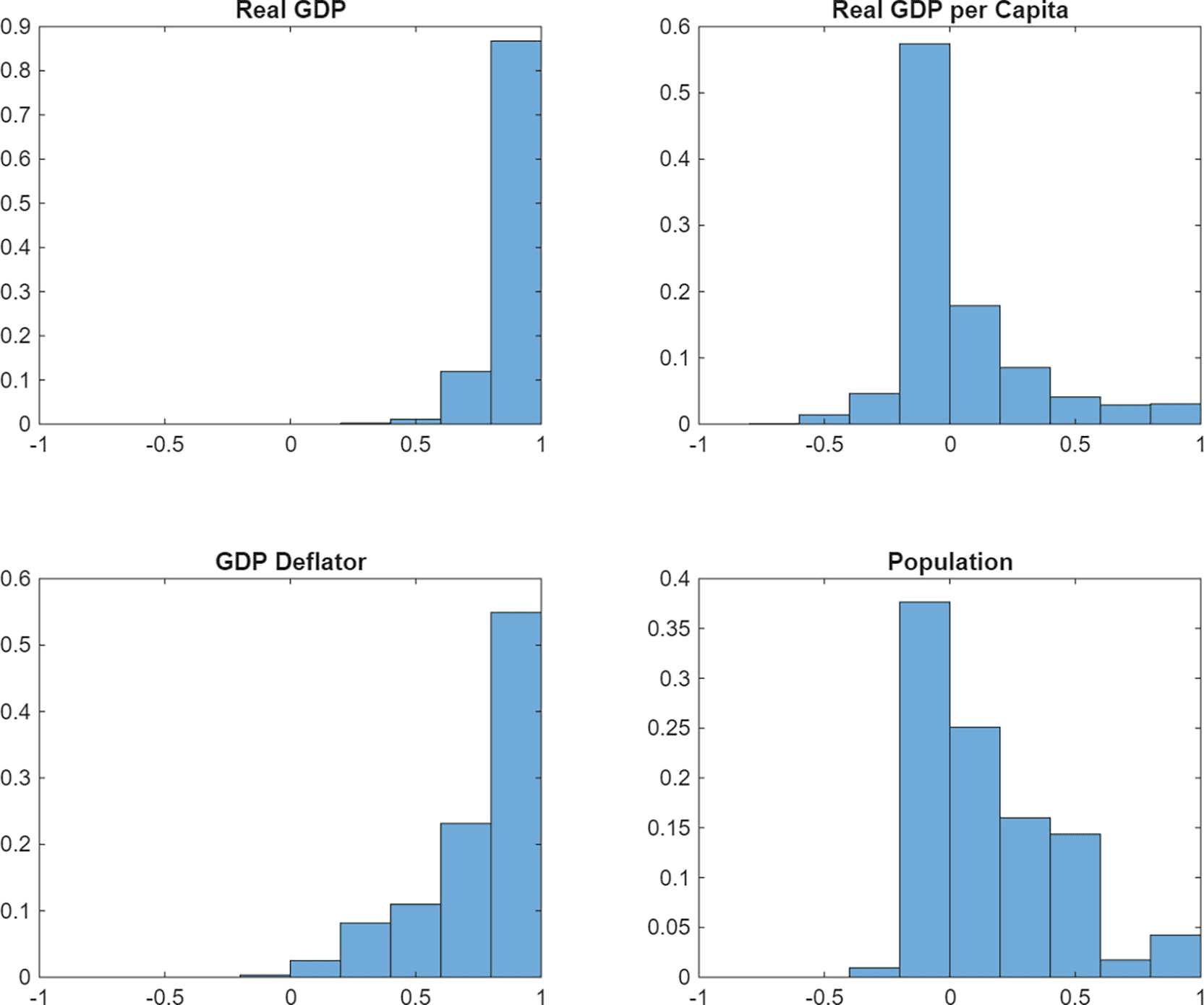
Figure 2. Histograms of correlations in the United States (US-51).
To formally compare these diverging patterns and overcome the visual limitations of binning, I employ the Empirical Cumulative Distribution Function (ECDF), which plots the proportion of observations falling below each correlation threshold.
Figure 3 overlays the US (blue line) and Euro Area (orange line) distributions for direct comparison. The ECDF analysis exposes the fundamental structural flaw of the Euro Area with greater precision. In the top-right panel corresponding to Real GDP per capita, the US curve rises sharply around zero, while the EA curve remains flat until high positive values. This gap visualizes the lack of a “safety valve” in Europe. Because European workers do not migrate in response to shocks as readily as their American counterparts—as predicted by (Krugman 1993)—the Euro Area exhibits a paradoxically high correlation of per capita income. This is not driven by welfare convergence, but by the fact that shocks are fully internalized within national borders. Additionally, the GDP Deflator panel in the bottom-left confirms the “fat tail” risk: the EA curve lags significantly behind the US curve, indicating a structurally higher probability of divergent inflation rates that the central bank cannot easily address.
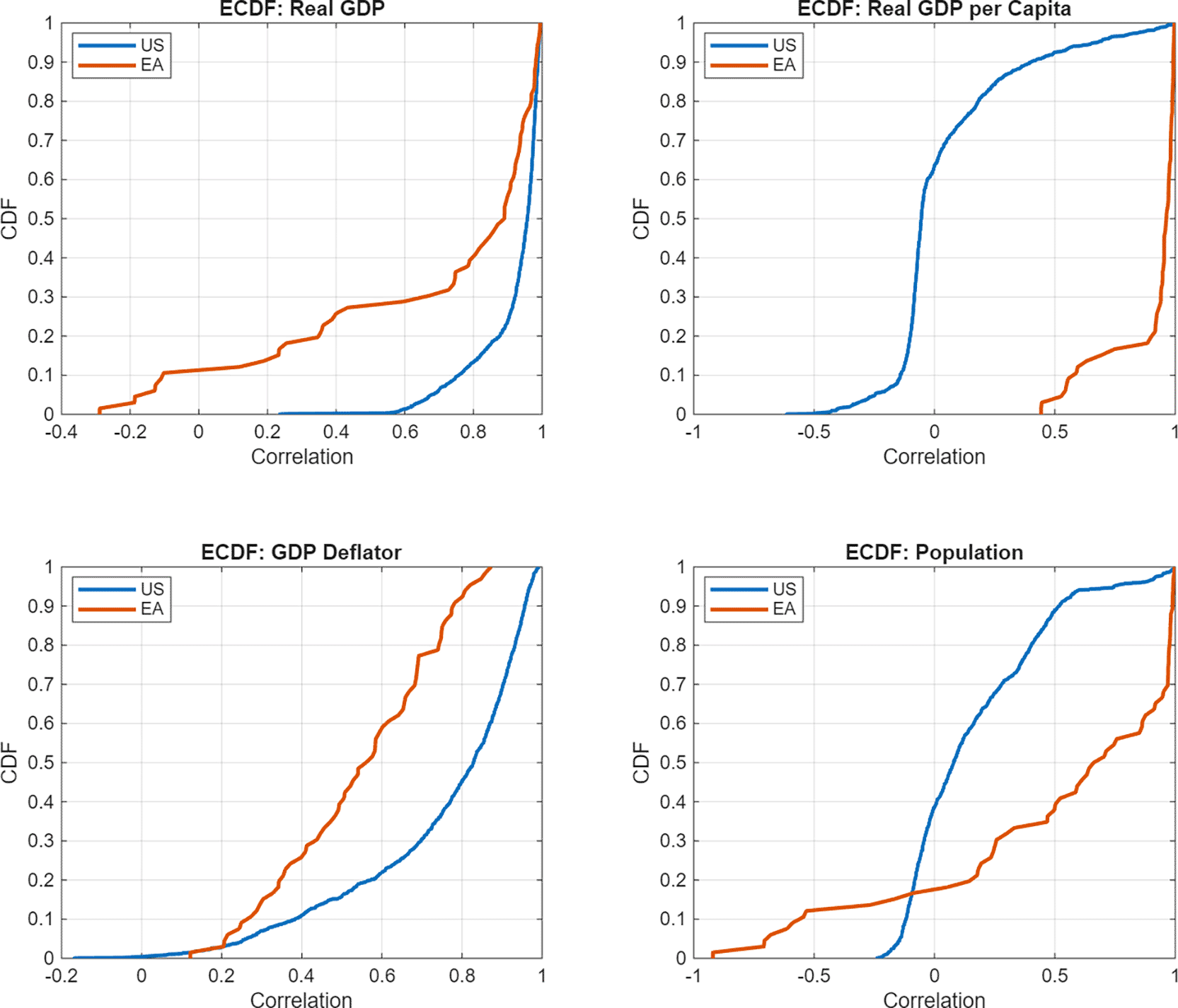
Figure 3. Empirical CDF comparison: US (Blue) vs. EA (Orange).
While the visual evidence suggests distinct underlying distributions, statistical formalization is necessary to rule out random variation. To this end, I employ the Kolmogorov-Smirnov (K-S) test, a non-parametric method that quantifies the distance between two empirical distributions. The null hypothesis posits that the Euro Area and US correlations are drawn from the same underlying distribution.
In this setting, the comparison is conducted using the full distributions of pairwise regional correlation coefficients rather than summary moments. Each observation corresponds to an off-diagonal element of a regional correlation matrix, capturing the degree of comovement between two regions. This approach allows the test to detect differences not only in average correlation levels but also in dispersion and overall distributional shape, providing a comprehensive assessment of regional synchronization patterns across the two economic areas.
Table 1 reports the results of the two-sample K-S tests for all variables considered. The null hypothesis of equal distributions is rejected at any conventional significance level for Real GDP, Real GDP per capita, the GDP deflator, and Population. The magnitude of the K-S statistics indicates economically meaningful differences in the structure of regional correlations, with particularly pronounced divergence in Real GDP per capita (
). These results suggest that regional comovement in the United States and the Euro Area is governed by fundamentally different distributional patterns.
Table 1. Kolmogorov-Smirnov and permutation tests for equality of correlation distributions.
| Real GDP | Real GDP p.c. | GDP deflator | Population |
|---|
| KS statistic
| 0.335 | 0.908 | 0.488 | 0.527 |
|
| 1275 | 1275 | 1275 | 1275 |
|
| 66 | 66 | 66 | 66 |
| Asymptotic
-value |
|
|
|
|
| Permutation
-value |
|
|
|
|
A potential econometric concern is that pairwise correlation coefficients are not independent observations—each region enters multiple correlation pairs (e.g., Germany-France, Germany-Italy)—which might inflate the significance of standard asymptotic tests. To address this, I complement the classical K-S test with a permutation-based procedure that does not rely on strict independence assumptions. Under the null hypothesis of distributional equality, correlation coefficients are exchangeable across groups. The permutation test pools all correlations, repeatedly reallocates them between the US and Euro Area samples while preserving sample sizes, and recomputes the K-S statistic for each draw to obtain an empirical reference distribution.
The permutation results, reported in the bottom row of
Table 1, strongly corroborate the asymptotic findings. In all cases, the observed K-S statistics lie in the extreme upper tail of the permutation distributions, yielding
-values below
. This confirms that the detected differences in correlation distributions are not driven by sampling variability or dependence artifacts, but reflect robust and systematic differences in regional comovement between the United States and the Euro Area.
Time-varying divergence
While the distributional analysis in the previous section establishes the existence of deep structural asymmetries between the Euro Area and the United States, static distributions effectively compress twenty-five years of history into a single snapshot. This compression risks obscuring the most critical feature of the Euro Area’s pathology: its instability. The “endogeneity hypothesis” of (Frankel and Rose 1998) posits that currency unions should evolve toward greater synchronization over time as trade ties deepen. Conversely, the “specialization hypothesis” of (Krugman 1993) suggests that integration might amplify divergences by encouraging regional industrial concentration. To adjudicate between these competing visions, I must look beyond the average and analyze the evolution of integration through time. By computing the mean pairwise correlation of the key variables using 5-year rolling windows from 1999 to 2024, I can detect structural breaks and assess how the cohesiveness of the union responds to exogenous shocks. The resulting time-series analysis narrates a history of “false convergence” followed by violent fragmentation.
I begin by analyzing the synchronization of the business cycle, measured by Real GDP.
Figure 4 displays the evolution of the average pairwise correlation for both unions.
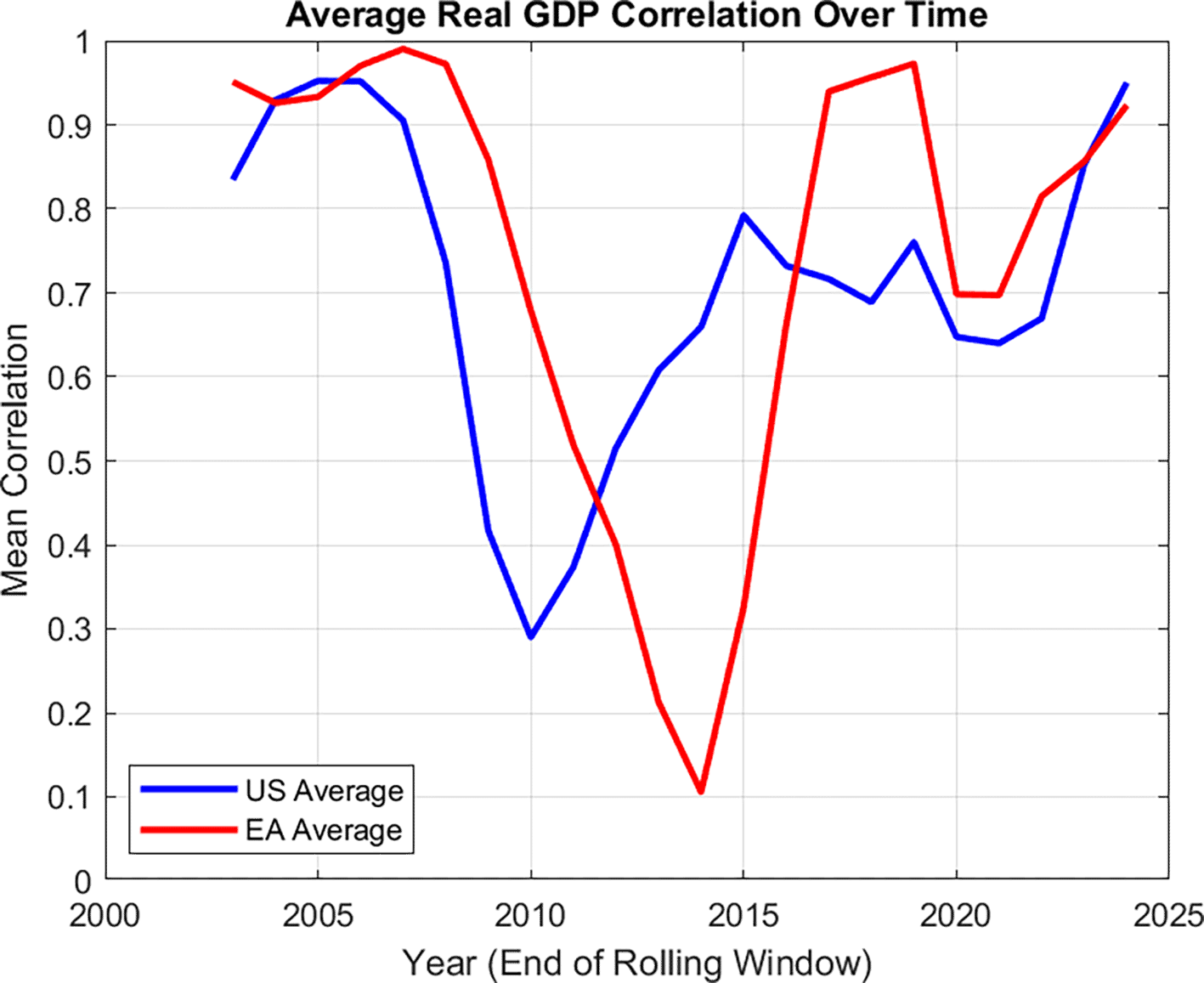
Figure 4. Evolution of average Real GDP correlation (5-year rolling window).
The evolution of Real GDP synchronization offers the first empirical challenge to the convergence narrative. In the initial years of the Euro (1999–2008), the Euro Area appeared to be on a trajectory of rapid integration. The average correlation rose sharply, hovering near 0.95 and briefly surpassing the US benchmark. This period, often characterized as the “Great Moderation,” likely masked underlying imbalances. The high synchronization was driven more by a global growth cycle and the convergence of nominal interest rates than by genuine structural alignment. However, the Global Financial Crisis of 2008 and the subsequent European Sovereign Debt Crisis exposed the fragility of this synchronization. While the US correlation (blue line) dipped only moderately and recovered quickly, confirming the resilience of its federal stabilizers, the Euro Area correlation (red line) collapsed. The precipitous drop in the 2010–2014 period reflects the “asymmetric reaction to symmetric shocks.” While the initial financial shock was global, the lack of a central fiscal authority in Europe forced member states into divergent policy responses. Core economies like Germany maintained fiscal space and recovered, while periphery economies were forced into pro-cyclical austerity and internal devaluation, driving their output cycles out of phase with the union aggregate.
The true extent of this fragmentation is even more visible, and economically significant, when I examine the evolution of Real GDP per capita.
Figure 5 presents the rolling correlations for this metric.
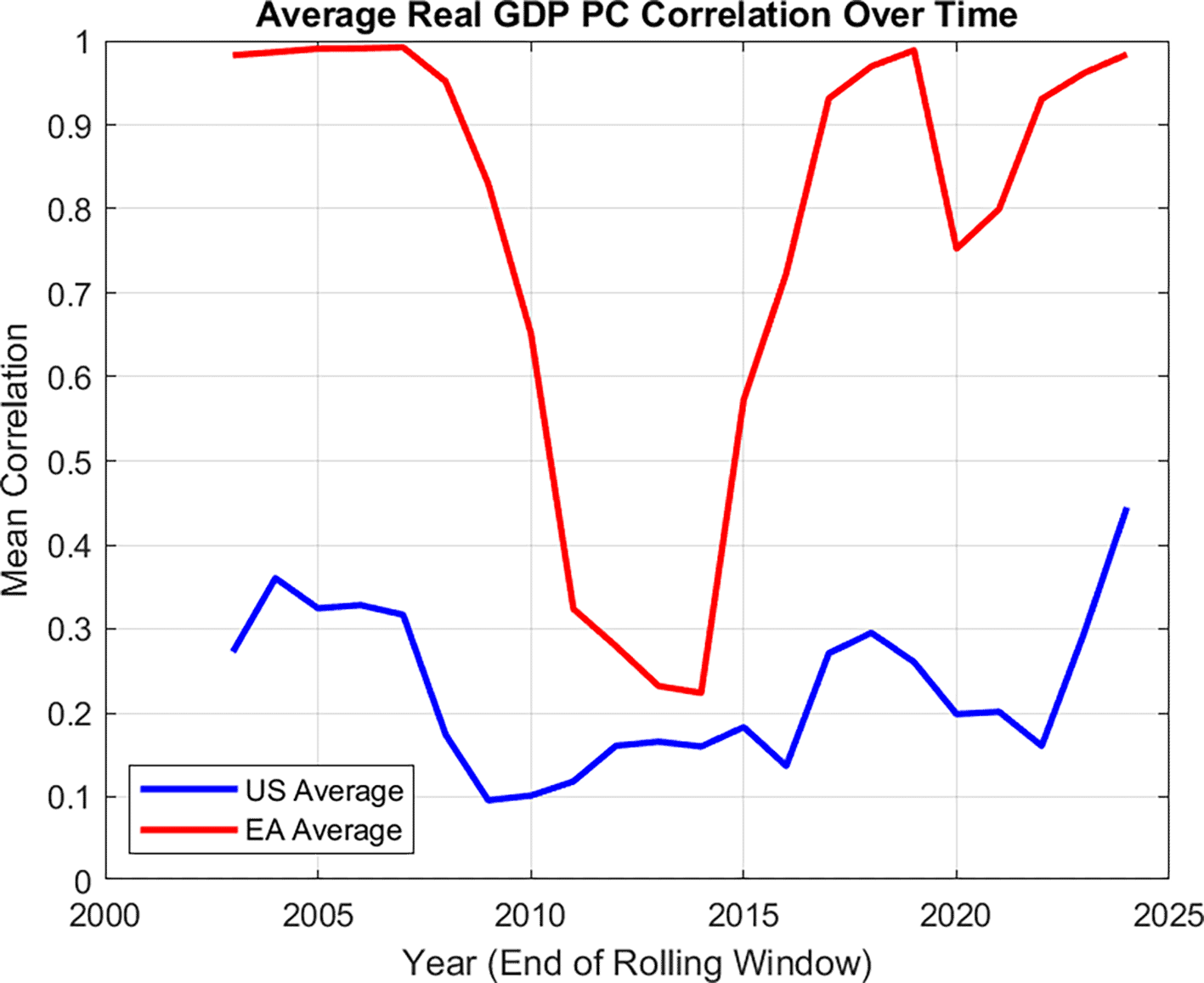
Figure 5. Evolution of real GDP per Capita Correlation (5-year rolling window).
This plot arguably constitutes the “smoking gun” of the Euro Area’s structural deficiency. As discussed in Section 2, the US maintains a consistently low correlation of per capita income (hovering between 0.1 and 0.4) because labor mobility acts as a continuous shock absorber. The Euro Area, by contrast, exhibits a "cliff-edge" dynamic. Until 2008, per capita correlations were extremely high, creating an illusion of welfare convergence. However, as the Sovereign Debt Crisis intensified, this convergence evaporated. The correlation coefficient plummeted from near-unity to below 0.3 within a span of five years. This collapse indicates that during the moment of maximum stress, the economic fortunes of European citizens diverged radically. Without the safety valve of migration or the cushion of federal transfers, the recessionary burden fell entirely on specific national populations, breaking the link between the aggregate union performance and local living standards. The subsequent recovery of this metric in the post-2016 period should be viewed with caution; it likely represents a cyclical recovery rather than a structural fix, as the underlying lack of fiscal union remains unaddressed. The data clearly demonstrates that the Euro Area is prone to “welfare decoupling” precisely when unity is most required.
This narrative of instability extends to the nominal side of the economy.
Figure 6 plots the average correlation of the GDP Deflator, a proxy for domestic inflation pressures.
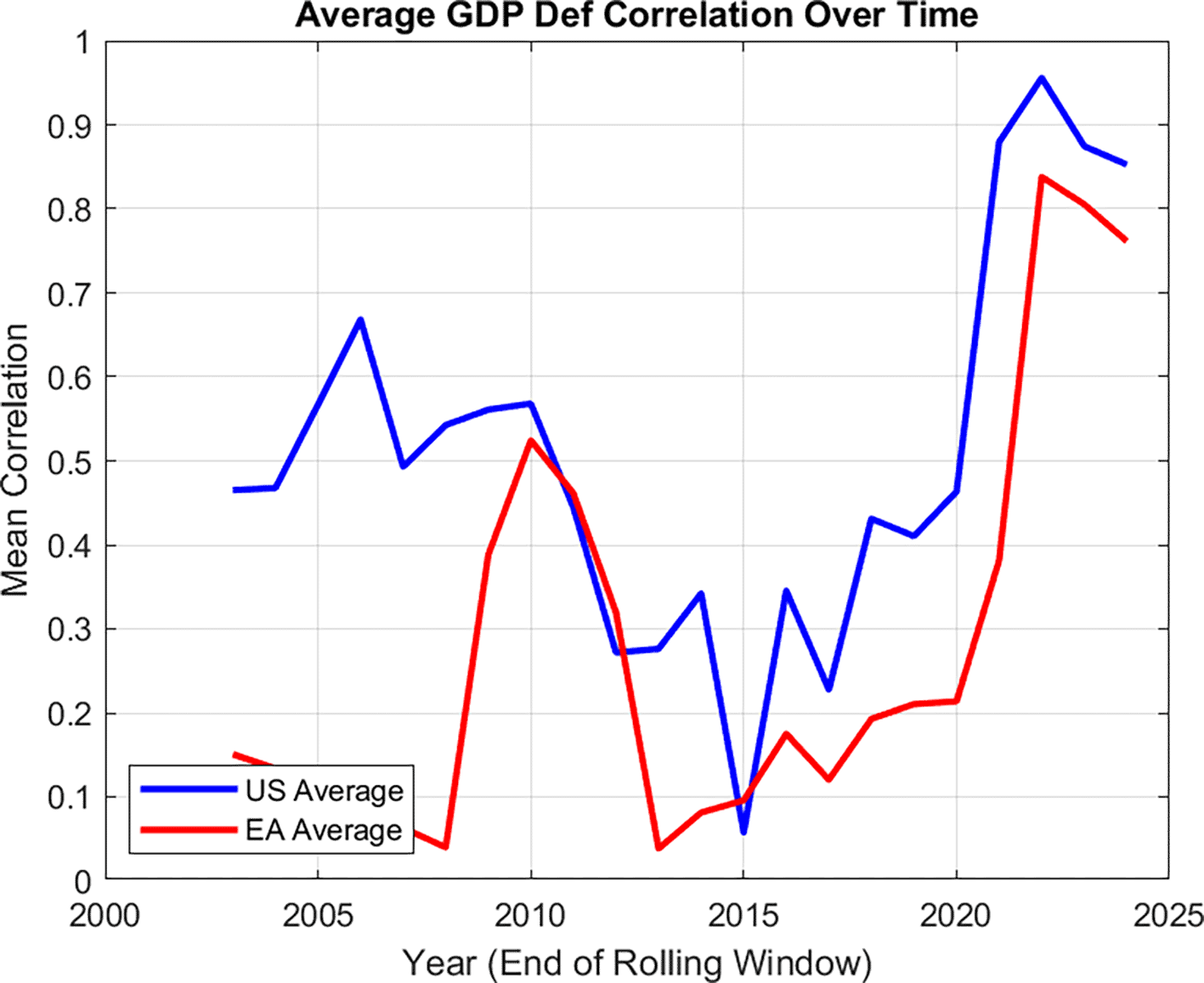
Figure 6. Evolution of GDP deflator correlation (5-year rolling window).
Historically, US inflation correlation has remained robustly high, rarely dipping below 0.5. This stability confirms that the Federal Reserve operates in a unified price environment. In contrast, the Euro Area exhibits extreme volatility. Two specific episodes of divergence stand out in
Figure 6. The first is the 2012–2015 period, where the correlation dropped to near zero. This corresponds to the era of “lowflation” and deflationary risks in the Southern periphery, while the Northern core maintained positive inflation. This divergence made the ECB’s single monetary policy effectively impotent: a near-zero interest rate was insufficient to stimulate the South while potentially fueling asset bubbles in the North. The second episode of inflation divergence occurs in the post-2020 period, following the COVID-19 pandemic and the Russian invasion of Ukraine. While US inflation correlations rose, reflecting a unified demand-side stimulus and broad-based supply constraints, the Euro Area correlation initially collapsed before rebounding. This volatility reflects the asymmetric dependence of European economies on external energy shocks. As noted by (Checherita-Westphal et al. 2023), fiscal measures to shield consumers from energy prices varied wildly across member states, creating idiosyncratic inflation dynamics. Unlike the US, where energy is a domestic resource and fiscal policy is federal, the EA’s inflation landscape is fractured by national energy mixes and fiscal capacities. This "fat-tailed" behavior of inflation means that supply shocks in Europe are inherently more destabilizing than in the US, as they drive member states further apart rather than affecting them symmetrically.
Finally, to understand the roots of these divergences, I examine the evolution of labor market integration through Population correlations, shown in
Figure 7.
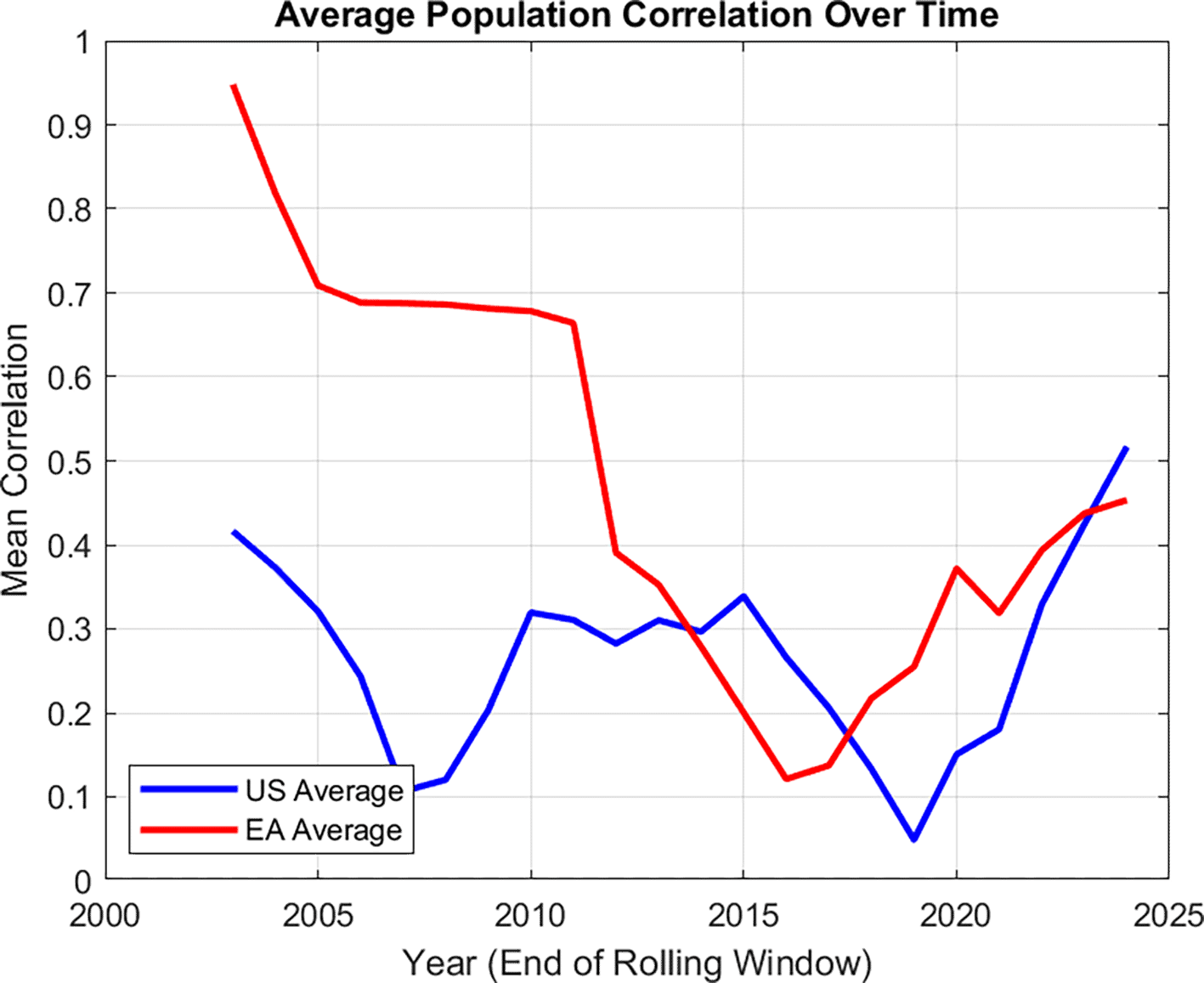
Figure 7. Evolution of average population correlation (5-year rolling window).
This figure confirms the diagnosis regarding labor markets. The US population correlation is remarkably stable, fluctuating around a structural mean. This stability implies that migration in the US is a constant background feature of the economy—a reliable mechanism that operates in both booms and busts to smooth regional disparities. The Euro Area, however, displays a chaotic pattern. The sharp spikes and subsequent collapses suggest that migration in Europe is episodic and reactive. The large movements observed around 2015 do not correlate with a smoothing of the business cycle but rather align with exogenous crises, such as the Syrian refugee influx or the extreme distress of the Greek economy. A labor market that only integrates under duress does not provide the “optimal” adjustment mechanism envisioned by (Mundell 1961). Instead of smoothing the business cycle, such reactive migration often exacerbates the “brain drain” from depressed regions, potentially lowering their long-term growth potential and further de-synchronizing their cycles from the core.
In summary, the time-varying analysis reveals that the Euro Area is not merely “less integrated” than the United States; it is structurally unstable. The high correlations observed during tranquil periods (1999–2008) proved to be a fair-weather phenomenon, evaporating exactly when the union needed them most. The divergence of Real GDP per capita during the crisis years and the persistent volatility of inflation correlations demonstrate that the Euro Area lacks the automatic stabilizers—both fiscal and demographic—that sustain the United States. While the US economy absorbs shocks through a combination of federal risk-sharing and fluid labor movement, the Euro Area allows shocks to fracture the union, forcing convergence to occur through the painful and politically destabilizing channel of internal devaluation. This dynamic evidence strongly supports the view that without significant institutional reform to create a central fiscal capacity, the Euro Area will remain vulnerable to the next asymmetric shock.
Conclusion
This paper has re-evaluated the economic integration of the Euro Area through a distributional lens, utilizing the United States as a benchmark for a functioning Optimal Currency Area. By employing rolling-window analysis and non-parametric testing, I have uncovered deep structural asymmetries that challenge the stability of the European monetary union.
My central finding is the identification of a “convergence paradox.” While the Euro Area exhibits high synchronization in aggregate Real GDP, this apparent integration masks a fundamental rigidity. I observe that in the United States, labor mobility acts as a continuous shock absorber; when asymmetric shocks occur, workers migrate, effectively de-correlating regional per capita income from output volatility. In the Euro Area, this mechanism is critically absent. My results show that migration in Europe is reactive rather than structural. Consequently, asymmetric shocks are fully internalized by member states, leading to the violent fragmentation of per capita income convergence I observed during the Sovereign Debt Crisis.
Furthermore, I find that the Euro Area exhibits a "fat-tailed" distribution of inflation correlations compared to the tight clustering found in the US. This structural heterogeneity implies that a single monetary policy is frequently ill-suited for the extremes of the union, simultaneously fueling overheating in the core and stagnation in the periphery.
The policy implications of my analysis are clear. The Euro Area remains a suboptimal currency area not because of insufficient trade integration, but because it lacks the federal stabilizers present in the US. In the absence of the high labor mobility that defines the American economy, monetary policy alone cannot bridge the gap. To achieve long-term resilience, the Euro Area requires a functional substitute for migration: a deeper fiscal union with the capacity for cross-border risk sharing. Without such structural reform, the union will remain vulnerable to recurrent fragmentation.
Ethics and consent
Ethical approval and consent were not required for this study.
Data availability
All data underlying the results presented in this article are publicly available under open licences permitting reuse.
DOI: https://doi.org/10.5281/zenodo.17963023 (Navarro, J. (2025)). Data Convergence Paradox: Euro Area vs. United States
This project contains the following underlying data:
Data are available under the terms of the Creative Commons Attribution 4.0 International
All datasets are freely available and distributed under open licenses permitting reuse (CC-BY or equivalent, depending on the source). These datasets can be used to replicate the analyses and findings presented in this article.
References
- Alesina A, Barro RJ, Tenreyro S:
Optimal Currency Areas.
NBER Macroecon. Annu.
2002; 17: 301–345.
- Angeloni I, Ehrmann M:
Euro Area Inflation Differentials.
The B.E. Journal of Macroeconomics.
2007; 7(1): 1–35.
- Blanchard OJ, Katz LF:
Regional Evolutions.
Brook. Pap. Econ. Act.
1992; 1992(1): 1–75.
- Checherita-Westphal C, Freier M, Muggenthaler P:
Euro Area Inflation Differentials: The Role of Fiscal Policies Revisited.
ECB Working Paper Series, no. 2774.
2023.
- Dorn D, Zweimüller J:
Migration and Labor Market Integration in Europe.
J. Econ. Perspect.
2021; 35(2): 49–76.
- Eichengreen B:
One Money for Europe? Lessons from the US Currency Union.
Econ. Policy.
1990; 5(10): 117–187.
- Ferrero A:
Fiscal and Monetary Rules for a Currency Union.
J. Int. Econ.
2009; 77(1): 1–10.
- Frankel JA, Rose AK:
The Endogeneity of the Optimum Currency Area Criteria.
Econ. J.
1998; 108(449): 1009–1025.
- Gali J, Monacelli T:
Monetary Policy and Exchange Rate Volatility in a Small Open Economy.
Rev. Econ. Stud.
2005; 72(3): 707–734.
- Giannone D, Lenza M, Reichlin L:
Business Cycles in the Euro Area.
NBER Macroecon. Annu.
2010; 24(1): 363–400.
- Krugman P:
Lessons of Massachusetts for EMU.
Adjustment and Growth in the European Monetary Union.
1993; 241–261.
- Lane PR:
The Real Effects of European Monetary Union.
J. Econ. Perspect.
2006; 20(4): 47–66.
- Mundell RA:
A Theory of Optimum Currency Areas.
Am. Econ. Rev.
1961; 51(4): 657–665.
- Navarro J:
Data Convergence Paradox: Euro Area vs. United States. [Data set].
Zenodo.
2025. Publisher Full Text
- Quah DT:
Empirics for Economic Growth and Convergence.
Eur. Econ. Rev.
1997; 41(3-5): 913–930.