1. Introduction
1.1 Positive Energy Districts in the European climate-neutrality agenda
Cities play a decisive role in addressing climate change, as they concentrate population, energy consumption, greenhouse gas emissions, and climate-related risks. In the European Union, urban areas account for the majority of final energy use and carbon emissions, driven by the built environment, transport systems, and urban infrastructure. Against this backdrop, the European Green Deal and the Mission for Climate-Neutral and Smart Cities have identified urban districts as strategic intervention scales to accelerate decarbonisation while improving quality of life, social inclusion, and resilience.1
Within this policy landscape, Positive Energy Districts (PEDs) have emerged as a flagship concept to operationalise climate-neutral objectives at district scale.2 PEDs are commonly defined as energy-efficient and energy-flexible urban areas or clusters of buildings that achieve net-zero greenhouse gas emissions and actively manage an annual surplus of renewable energy production in interaction with the broader urban energy system. Beyond energy balance, PEDs are increasingly understood as socio-technical and multi-benefit urban systems capable of integrating technological, environmental, social, economic, and governance dimensions.3
In 2020, the Strategic Energy Technology (SET) Plan Action 3.2 and the Joint Programming Initiative Urban Europe (JPI UE) set the ambitious target of supporting the planning, deployment, and replication of 100 Positive Energy Districts (or Positive Energy Neighbourhoods) in Europe by 2025.4,5 This target has catalysed coordinated research, innovation, and implementation efforts across multiple member states, involving cities, research institutions, industry partners, and civil society in an integrated R&I programme.
As of 2025, a critical mass of PED-relevant projects and initiatives has been established throughout Europe, evidencing significant progress toward this objective. These include pilot and demonstration districts such as the La Fleuriaye district in Carquefou (France), EnStadt:Pfaff in Kaiserslautern (Germany), and PED-oriented sustainable redevelopment areas in cities like Turku (Finland). Broader research and planning initiatives such as Cities4PEDs are exploring framework conditions for PEDs in cities including Brussels, Stockholm, and Vienna, strengthening governance and policy alignment across urban contexts.
Although many historically sustainable communities such as Bo01 in Malmö (Sweden) and energy-positive housing clusters like the Solar Settlement in Freiburg-Vauban (Germany) predate the formal PED programme, they now serve as reference inspirations for PED development, illustrating how integrated design for energy performance, liveability, and sustainability can be operationalised at district scale. These examples demonstrate that PED principles can be applied to both new developments and retrofitted urban areas, reinforcing the replicability and adaptability of the concept.
Despite notable advances and the proliferation of PED initiatives, critically assessing the quality, integration, and human-centred outcomes of these efforts remains essential to fulfil their potential as models for scalable and equitable climate-neutral urban transformations. PEDs implementation requires coordinated actions across multiple domains, including urban planning, building design, energy system engineering, climate adaptation, and citizen engagement. This complexity is further amplified by climate change, which is altering baseline environmental conditions, increasing the frequency of extreme events, and reshaping energy demand patterns, particularly for cooling, heating, and energy flexibility.6 This underscores the need for structured methodological frameworks capable of generating robust evidence across energy, environmental, economic, and social dimensions.
1.2 Limitations of current PED planning and design practices
Most PED initiatives under development in Europe have so far prioritised technological optimisation and mitigation-oriented strategies, focusing on energy efficiency, renewable energy production, and district-scale energy systems. While these components are essential, excessive emphasis on technological performance risks overlooking critical aspects related to urban microclimate, human comfort, social equity, and liveability.
Current PED planning practices often rely on fragmented workflows, in which urban climate analysis, building energy modelling, and district energy system optimisation are conducted using separate tools and datasets, frequently without systematic interoperability. As a result, decision-making processes may lack transparency, comparability, and robustness, particularly in early design stages when strategic choices have long-term implications. Moreover, many existing approaches struggle to translate complex simulation outputs into actionable knowledge for designers, planners, and municipal decision-makers.
Another major limitation concerns the insufficient integration of climate adaptation strategies into PED design. While PEDs are widely framed as mitigation instruments, climate change is increasingly affecting local microclimatic conditions, thermal comfort, outdoor liveability, and infrastructure performance. Urban heat island effects altered wind patterns, extreme precipitation, and prolonged heatwaves directly influence energy demand, system resilience, and human well-being. Addressing these challenges requires planning and design approaches that explicitly couple mitigation and adaptation, rather than treating them as separate objectives.
1.3 Towards human-centred and climate-responsive PEDs
In response to these limitations, a growing body of literature advocates human-centred and socio-technical approaches to the energy transition, emphasising that technological innovation alone is insufficient to achieve climate-neutral and resilient cities. From this perspective, PEDs should be conceived not merely as energy-positive systems, but as places designed for people, capable of delivering multiple co-benefits such as thermal comfort, health, accessibility, social cohesion, and environmental quality.
A human-centred PED approach prioritises energy demand reduction through climate-responsive urban design, passive strategies, and nature-based solutions, before optimising energy production and flexibility. It recognises urban microclimate as a critical determinant of both energy performance and human experience, and it frames energy systems as embedded within broader socio-ecological urban systems. Furthermore, it calls for decision-support frameworks that can accommodate multiple objectives, stakeholders, and temporal horizons, supporting collaborative planning and informed governance.
Despite increasing recognition of these principles, there is still a lack of operational, integrated frameworks capable of supporting human-centred PED design and evaluation in practice. While advanced simulation tools for urban climate, building energy performance, and district energy systems are widely available, their combined use remains limited, and methodological guidance on how to integrate them coherently across design and implementation stages is scarce.
1.4 Research gap, objectives, and contribution
This paper addresses the identified gap by proposing a human-centred, climate-responsive decision-support framework for the design and evaluation of Positive Energy Districts, explicitly grounded in a socio-technical understanding of urban energy transitions. Building upon previous research conducted by the authors and others, the contribution advances existing approaches by integrating urban microclimate analysis, urban building energy modelling, and district-scale energy system optimisation within a unified methodological structure that supports the assessment of both technical performance and social outcomes.7
The proposed framework is designed to support ex-ante and ex-post evaluation of PED scenarios, enabling the systematic exploration of alternative urban development pathways while prioritising energy demand reduction, thermal and hygrometric comfort, affordability, and broader social co-benefits. By structuring the combined use of interoperable simulation tools, the paper demonstrates how technical analyses can be mobilised to generate evidence that is meaningful for people-centred planning, inclusive decision-making, and just energy transitions, rather than serving purely optimisation-driven objectives.
The applicability of the framework is illustrated through two contrasting European case studies located in different climatic, urban, and governance contexts. These cases allow the discussion of how local conditions, institutional arrangements, and planning cultures shape the ways in which Positive Energy Districts can deliver social value, including improved quality of living environments, reduced exposure to energy poverty, and enhanced urban resilience.8
By framing Positive Energy Districts as socio-technical and climate-responsive urban systems, this research contributes to social sciences scholarship by bridging technical modelling with questions of governance, equity, and everyday urban experience, and by supporting the implementation of PEDs as instruments for sustainable, inclusive, and socially just urban transformations.
1.5 Structure of the paper
The structure of the paper is designed to facilitate a progressive analytical and interpretative discussion of Positive Energy Districts as socio-technical and human-centred urban transformations. Section 2 provides a contextual foundation for the study by outlining the conceptual and theoretical debates relevant to the field, drawing upon literature concerning Positive Energy Districts, human-centred energy transitions, climate-responsive urban design, and the utilisation of modelling and simulation as knowledge-support tools in urban planning and governance.
Section 3 introduces the methodological and decision-support framework developed in this study, focusing on its conceptual logic, analytical structure, and role in enabling evidence-informed and socially relevant decision-making processes, rather than on technical tool development per se. Section 4 then examines the application of the framework through two European case studies located in Ludvika (Sweden) and the Stuttgart Metropolitan Region (Germany). This section emphasises the interpretation of results in relation to lived experience, including thermal comfort, affordability, quality of indoor and outdoor spaces, and the influence of local planning and governance contexts.
Section 5 provides a comparative analysis and critical discussion, highlighting how integrated environmental, economic, and social benefits emerge across different contexts, as well as the limits, trade-offs, and uncertainties associated with the proposed approach. Section 6 provides a detailed reflection on the implications of the findings for planning practice, municipal governance, and policy development. The section pays particular attention to social inclusion, equity, and the conditions for replication and scaling. Finally, Section 7 concludes the paper by synthesising the main contributions and outlining directions for future social sciences research on climate-responsive and socially inclusive Positive Energy Districts.
2. Conceptual and theoretical background
2.1 The evolution of the Positive Energy District concept
The concept of Positive Energy Districts (PEDs) has evolved rapidly over the past decade, emerging at the intersection of urban energy planning, sustainable urban development, and climate policy. The PED concept is rooted in the notion of net-zero and positive-energy buildings. However, it expands the spatial and systemic scope of energy balance from individual buildings to urban districts. In this context, interactions among buildings, infrastructures, public spaces, and users can be leveraged to address complex sustainability challenges.
Within the European research and policy frameworks, PEDs have been recognised as a key instrument for the operationalisation of climate-neutrality objectives on a district scale. Initiatives such as the Strategic Energy Technology (SET) Plan and subsequent European programmes promote PEDs as integrated and energy-flexible urban areas capable of achieving net-zero greenhouse gas emissions whilst producing renewable energy surpluses. It is important to note that PEDs are not conceived as isolated technical artefacts, but rather as embedded components of wider urban and regional systems. These systems interact with energy networks, mobility patterns, land-use planning, and socio-economic structures.
Despite the increasing convergence around core principles – such as energy efficiency, local renewable energy production, and flexibility – there is still no single, universally accepted definition of a PED. This conceptual plurality is indicative of the diversity of urban contexts, governance arrangements, climatic conditions, and development pathways across Europe. Consequently, PEDs are increasingly regarded as context-dependent and process-oriented initiatives, rather than as fixed end states. This underscores the importance of adaptable methodologies and reflective evaluation frameworks.
2.2 PEDs as socio-technical and multi-scalar urban systems
From a social sciences perspective, PEDs can be conceptualised as socio-technical systems, in which technologies, spatial configurations, institutional arrangements, and social practices co-evolve.9 This interpretation is informed by the socio-technical transition theory, which underscores that energy transitions are shaped not only by technological innovation, but also by governance structures, policy frameworks, user behaviour, cultural norms, and power relations.
At district scale, PEDs operate across multiple spatial and temporal scales. In terms of their spatial configuration, these elements are interconnected by buildings, open spaces, energy infrastructures and mobility systems. This necessitates coordination between design disciplines and planning institutions. It is therefore notable that PEDs can function in both the present and the future, in order to adapt to climate change impacts, evolving energy demand patterns, technological developments, and shifting policy priorities.
The multi-scalar nature of this character presents considerable challenges in terms of planning and evaluation. Decisions made during the preliminary design stages, such as urban morphology, land-use allocation, or the integration of green infrastructure, can have long-term consequences for energy demand, microclimate, and social outcomes. Concurrently, district-scale energy systems and governance arrangements must retain sufficient flexibility to respond to uncertainty, encompassing climate variability and shifts in routine practices.
2.3 Human-centred approaches in energy transition and urban design
Human-centred approaches have become increasingly prominent in social sciences research on energy transitions and urban development. These approaches pose a challenge to techno-centric paradigms by placing people’s needs, experiences and well-being at the core of planning and design. In the context of PEDs, a human-centred perspective emphasises that energy systems should ultimately support quality of life, rather than being treated as autonomous optimisation problems.10
Human-centred PEDs prioritise outcomes such as thermal and hygrometric comfort, health, accessibility, affordability, and social inclusion.11 In the context of climate change, these dimensions assume particular significance, as they disproportionately impact vulnerable populations through heat stress, energy poverty, and exposure to extreme events. The integration of social considerations into PED planning is therefore a key factor in facilitating more equitable and resilient urban transitions.
Methodologically, adopting a human-centred perspective necessitates the utilisation of tools and frameworks that can translate environmental and energy performance into indicators that are meaningful for lived experience. This encompasses the evaluation of indoor and outdoor comfort levels, the accessibility of public spaces, and the distribution of benefits and burdens across diverse social groups.12 Furthermore, it suggests a transition from single-objective optimisation to multi-criteria evaluation, where a range of objectives, including energy, environmental, social and economic factors, are considered concurrently.
2.4 Climate-responsive urban design and the role of microclimate
Urban microclimate plays a crucial role in shaping both energy demand and everyday comfort in cities. Variables such as solar radiation, wind patterns, air temperature, humidity, and surface characteristics are strongly influenced by urban form, material choices, and the presence of vegetation and water.13 These microclimatic conditions directly affect building energy performance, outdoor comfort, and the perceived liveability of urban spaces.14
Climate-responsive urban design seeks to actively engage with these dynamics by shaping urban environments in ways that reduce climatic stress and enhance passive comfort. Strategies such as building orientation, shading, urban greenery, green roofs, permeable surfaces, and ventilation corridors can significantly reduce heating and cooling demand while improving outdoor thermal conditions. For PEDs, such strategies are particularly relevant because energy demand reduction constitutes a precondition for achieving positive energy balances.
It is becoming increasingly evident that nature-based solutions and green-blue infrastructure are recognised not only for their climatic benefits, but also for their broader social and ecological value.15 Beyond the scope of thermal regulatory functions, these systems have been demonstrated to facilitate stormwater management, enhance biodiversity, improve air quality, and foster psychological well-being. The integration of these dimensions into PED planning necessitates methodological approaches that can capture combined energy, environmental, and social impacts.
2.5 Simulation tools as knowledge-support instruments in urban energy planning
The increasing availability of simulation tools has had a significant impact on urban energy and climate research. Urban Building Energy Modelling (UBEM), microclimate models, and district energy system simulations facilitate detailed exploration of energy demand, environmental conditions, and system configurations across multiple scales.
From a social sciences perspective, however, the relevance of these tools lies not only in their analytical capacity, but in their role as knowledge-support instruments for planning and governance.16 However, in practice, the utilisation of these technologies is frequently hindered by factors such as fragmentation, substantial data requirements, and challenges in integrating results across diverse domains. Furthermore, the outputs of simulations are often expressed in technical terms that are challenging to interpret and communicate to non-specialist stakeholders, including citizens and local decision-makers.
The efficacy of evidence-based urban energy planning is contingent not merely on the utilisation of sophisticated tools, but rather on the integration of comprehensive frameworks that structure their application, elucidate underlying assumptions, delineate socially pertinent indicators, and facilitate interpretation and deliberation. Such frameworks are of particular importance in the context of PEDs, where multiple objectives, actors, and values must be balanced, and where early planning decisions have long-lasting social and spatial consequences.
2.6 Positioning of this research within existing literature
Existing research in the field of PED has made significant contributions to the understanding of district-scale energy systems, technological solutions, and performance metrics. The present study is an extension of previous research undertaken by the authors, which explored the integration of urban microclimate analysis, building energy simulation, and district energy modelling. This earlier research highlighted the potential of interoperable workflows to support PED design and evaluation.
However, a significant amount of the existing literature remains focused on specific tools, technologies, or isolated case studies, with comparatively limited attention being given to comprehensive decision-support frameworks that explicitly foreground human-centred and climate-responsive objectives. The translation of simulation-based evidence into actionable guidance for designers, planners, and municipalities thus remains a key challenge.
The present paper builds upon and extends existing work by consolidating methodological advances into a coherent socio-technical framework that explicitly integrates climate adaptation, energy demand reduction, and social co-benefits. This approach contributes to the advancement of social sciences scholarship by integrating technical modelling with critical issues of governance, equity, and the quotidian experience of the urban environment. Furthermore, it facilitates the practical implementation of Positive Energy Districts as a means for achieving sustainable, resilient, and socially just urban transformation.
3. Research design and methodological framework
3.1 Research design and analytical orientation
The present research adopts a methodological approach with the objective of developing, formalising, and validating an integrated decision-support framework for the planning, design, and evaluation of human-centred and climate-responsive Positive Energy Districts. Rather than introducing a new simulation tool or technological solution, the study focuses on the systematic combination of existing and well-established modelling approaches within a coherent analytical structure. This approach is intended to support evidence-informed, collaborative, and socially relevant decision-making processes, enabling the interpretation of technical analyses in relation to human experience, governance contexts, and broader societal objectives.
The research design is grounded in the understanding of Positive Energy Districts as socio-technical urban systems, shaped by the interaction of technologies, spatial configurations, institutional arrangements, and human practices.17 Accordingly, the development of the framework is informed by conceptual insights from socio-technical transition theory, climate-responsive urban design, and human-centred planning. Consequently, these theories provide the interpretative lens through which technical analyses are structured and assessed. From this standpoint, methodological integration is not pursued as an end, but rather to connect environmental performance, energy demand, and human experience across various scales.
Methodologically, the framework organises the combined use of urban microclimate analysis, urban building energy modelling (UBEM), and district-scale energy system optimisation in a way that allows results to be interpreted in relation to comfort, affordability, environmental quality, and broader social outcomes. The framework is illustrated and examined through its application to two contrasting European case studies, located in different climatic, urban, and governance contexts. This enables exploration of both contextual specificity and methodological transferability.
It is noteworthy that the case studies are not regarded as isolated demonstrations of technical performance. Instead, they function as interpretative validation environments, through which simulation outputs produced in previous research phases are re-analysed and synthesised within the proposed framework. This approach facilitates the identification of cross-cutting insights, synergies, and trade-offs that would otherwise remain largely invisible in single-domain or purely techno-economic analyses. As the following section will demonstrate, this contributes to the study’s strengthening the contribution to social sciences research on urban energy transitions and decision-making.
3.2 Principles underpinning the human-centred PED framework
The proposed framework is based on a set of guiding principles reflecting theoretical insights from social science research on energy transitions, as well as practical lessons from the implementation of PED. These principles are conceived as normative and analytical orientations that influence how evidence is generated, interpreted and utilised within planning and governance processes.
The first guiding principle is the adoption of a ‘demand-first’ logic that prioritises reducing energy demand through climate-responsive urban design, passive strategies and nature-based solutions, before optimising energy supply and system flexibility. From a socio-technical perspective, energy demand is not simply understood as a technical variable, but as the outcome of spatial arrangements, material choices, and everyday practices. Reducing baseline demand is therefore essential to achieving positive energy balances at a district scale and supporting energy affordability, social acceptance and long-term resilience, particularly in the context of changing climatic conditions.18
A second principle concerns the integrated treatment of climate change mitigation and adaptation. Rather than addressing these objectives separately, the framework considers them as interdependent dimensions of urban transformation. Microclimatic analysis and comfort assessment are positioned as foundational inputs to energy modelling and system optimisation.19 This enables climate-adaptive design strategies to be evaluated in terms of environmental performance and human well-being. This integrated approach reflects the growing recognition that mitigation and adaptation strategies must be co-designed to avoid unintended trade-offs and social inequities.
Furthermore, the framework explicitly adopts a human-centred approach, recognising thermal and hygrometric comfort, accessibility, outdoor liveability and broader social benefits as vital performance domains, alongside conventional energy and carbon metrics. This approach supports a shift away from purely techno-economic optimisation towards multi-criteria evaluation methods that are aligned with wider sustainability, equity and quality of life objectives. It also reflects critiques within the social sciences of energy planning approaches that marginalise lived experience.
Finally, the framework is conceived as iterative and multi-scalar, supporting analysis and evaluation across different spatial scales – from buildings to districts – and different timeframes, including current conditions and future climate scenarios. This reflects the understanding that PED development is an evolving process shaped by uncertainty, learning and institutional adaptation. By enabling both ex-ante scenario exploration and ex-post-performance assessment, the framework promotes adaptive planning and governance over one-off, deterministic solutions.
3.3 Structure of the integrated decision-support framework
Building on these principles, the framework is structured as a design-to-operation continuum, in which knowledge is progressively generated, interpreted, and refined across successive analytical phases. Rather than being conceived as a linear workflow, the framework is designed as a relational and iterative structure that allows feedback between phases and supports reflexive decision-making (Figure 1).
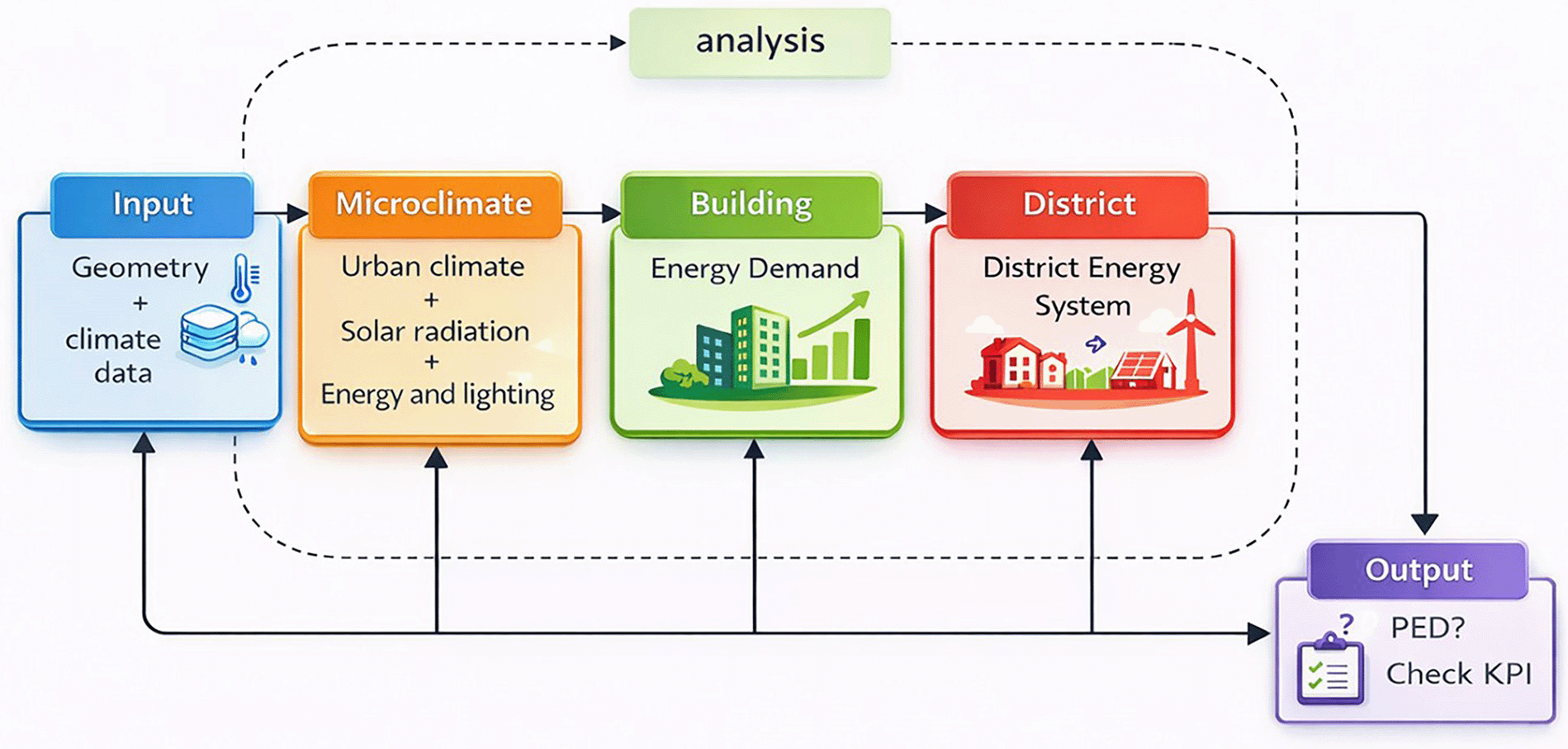
Figure 1. Conceptual structure of the human-centred, climate-responsive decision-support framework for Positive Energy Districts, illustrating the integration of urban microclimate analysis, building energy modelling, and district-scale energy assessment across design and governance stages.
The first phase focuses on context and baseline analysis, encompassing urban morphology, climatic conditions, resource availability, regulatory constraints and existing energy infrastructures. This phase establishes a shared understanding of local conditions and constraints, which is essential for socially grounded, context-sensitive planning decisions.
The second phase addresses climate-responsive and demand-reduction strategies, examining the effects of urban form, materiality, vegetation, and nature-based solutions on microclimate, outdoor comfort, and building energy demand. This phase highlights the role of spatial and environmental design in shaping everyday experience and energy needs, thereby linking physical interventions to human-centred outcomes.
The third phase concerns energy performance and system configuration, integrating building-scale energy demand profiles with district-scale renewable energy production, storage and distribution systems. System configuration is informed by the outcomes of previous phases to ensure that energy solutions respond to reduced demand and improved comfort conditions rather than compensating for suboptimal urban design.
The final phase focuses on evaluation and decision support, translating simulation outputs into key performance indicators that are aligned with the objectives of the Positive Energy District and human-centred priorities. These indicators are intended to facilitate comparison across scenarios and communication between designers, planners, municipalities and other stakeholders.
3.4 Tool ecosystem and interoperability strategy
In defining a methodology for the operationalisation of the proposed decision-support framework, a tool ecosystem was defined through a process informed by systematic literature review, prior empirical testing, and selection criteria that extended beyond technical performance. In accordance with the social sciences orientation of this study, tools were selected not only for their scientific validation and reliability, but also for their interoperability, transparency, and capacity to support interpretative and collaborative decision-making in planning and governance contexts.
Rather than constituting a fixed or prescriptive tool chain, the ecosystem is conceived as a flexible analytical environment, within which different modelling approaches can be combined and adapted to specific urban contexts. The framework draws upon three categories with complementary functions: urban microclimate modelling, urban building energy modelling, and district-scale energy system modelling. In combination, these tools facilitate multi-scalar analysis of environmental performance, energy demand, and system-level implications.
3.4.1 Urban microclimate modelling as a basis for human-centred assessment
Urban microclimate analysis is predominantly facilitated by three-dimensional, physics-based models, which can simulate interactions between built form, surfaces, vegetation, and atmospheric conditions at both high spatial and temporal resolutions. These models offer insights into the distribution of air temperature, wind patterns, solar exposure, humidity, and mean radiant temperature under different urban configurations and climate scenarios.
Within the framework, microclimatic analysis fulfils a twofold interpretative function. Firstly, it generates evidence concerning outdoor thermal comfort, environmental quality, and liveability. These factors are directly connected to human-centred objectives such as the usability of public space, health, and well-being. Secondly, microclimatic outputs are employed to generate locally adapted climatic inputs for subsequent energy modelling, thereby enabling the assessment of building energy demand under conditions that reflect actual urban environments, as opposed to standardised weather datasets. In addressing this gap, microclimate modelling serves as a linkage between spatial design decisions and both energy and social outcomes.
3.4.2 Urban Building Energy Modelling as a link between space and demand
Building-scale energy performance is assessed through Urban Building Energy Modelling (UBEM) approaches operating within parametric modelling environments. These tools facilitate the representation of multiple buildings with a range of geometries, construction characteristics, and use profiles, while maintaining a level of abstraction compatible with district-scale analysis.
The adoption of microclimate-adjusted climatic data within the UBEM framework facilitates the capture of the influence of urban form, materiality, and climate-responsive design strategies on heating and cooling demand, indoor thermal conditions, and overall energy intensity. From a social sciences perspective, this step is of relevance as it establishes a connection between spatial and environmental design choices, everyday energy needs and comfort conditions. These variables, in turn, impact factors such as affordability, health and vulnerability. The parametric nature of the modelling environment has been demonstrated to support scenario exploration, thereby enabling systematic comparison of alternative design options and facilitating dialogue among designers, planners, and municipal actors.
3.4.3 District energy system modelling and socio-technical performance
At district scale, energy system modelling is a key tool for assessing energy production, storage, distribution, and flexibility under different system configurations. These tools facilitate the exploration of renewable energy integration, thermal and electrical network design, and storage strategies, while accounting for environmental and economic performance.20
Within the overarching framework, district energy system modelling is directly informed by the aggregated building energy demand derived from UBEM, thereby ensuring consistency across various scales and reinforcing the demand-first logic underpinning the framework. This integration facilitates the evaluation of energy sharing strategies, system resilience, and progress towards PED objectives related to energy balance and carbon neutrality. It is important to note that system performance is interpreted not only in technical terms, but also in relation to long-term affordability, robustness, and public value creation. These are central concerns in socio-technical transitions.
3.4.4 Interoperability and data exchange as decision-support enablers
The proposed interoperability strategy constitutes a significant methodological contribution of the framework. It facilitates data exchange across modelling environments without requiring software development tailored to specific needs. The function of parametric modelling platforms is to act as integration interfaces, thereby facilitating the transfer of geometric information, climatic data, and performance indicators between microclimate, building energy, and district energy models.21
This approach is evidenced by a pragmatic understanding of modelling practice in real-world planning contexts. Rather than aspiring towards absolute data continuity, an often unrealistic and redundant objective, the framework aspires to achieve a level of integration that is adequate to facilitate transparent, timely, and interpretable decision-making. In doing so, it achieves a balance between scientific robustness and practical feasibility, recognising uncertainty as an inherent feature of urban planning rather than a methodological flaw.
3.5 Performance domains and human-centred indicators
The overarching objective is to provide a framework that facilitates integrated, socially meaningful evaluation. The proposed framework is organised into five interrelated performance domains, which collectively reflect the multi-dimensional objectives of human-centred and climate-responsive Positive Energy Districts.
The aforementioned domains encompass a variety of factors, including but not limited to: the urban microclimate and the assessment of thermal comfort, incorporating variables such as air temperature, wind conditions, solar exposure, and comfort indices; the evaluation of building energy performance, expressed through indicators such as energy demand, energy use intensity, and end-use profiles; the performance of district energy systems, encompassing energy balance, the share of renewable energy, flexibility, and emissions; the consideration of environmental co-benefits, including stormwater management capacity, enhancement of air quality, and support for biodiversity; and the evaluation of social and human-centred benefits, encompassing outdoor liveability, accessibility, and potential contributions to health and well-being.
The structuring of performance assessment around these domains is conducive to multi-criteria comparison of PED scenarios and facilitates communication of results to a range of stakeholders. This configuration facilitates the translation of technical evidence into categories that resonate with the priorities of planning, policy, and society. Consequently, it enhances the relevance of the framework for governance and participatory decision-making processes.
3.6. Limitations and scope of applicability
Whilst the proposed framework facilitates integrated and evidence-informed evaluation of Positive Energy District scenarios, it is recognised that several limitations must be acknowledged. As is the case with all simulation-based approaches, the analyses rely on simplified representations of urban geometry, material properties, system behaviour, and occupant practices. Furthermore, the presence of uncertainties pertaining to climate projections, socio-economic transformations, and the evolution of governance conditions cannot be entirely eradicated.
However, from a social sciences perspective, these limitations do not detract from the value of the framework. The overarching objective of the framework is not to provide precise predictions of future performance, but rather to facilitate comparative, exploratory, and strategic decision-making processes. The programme’s primary strength lies in its ability to reveal relative differences between scenarios, identify synergies and trade-offs across performance domains, and structure informed dialogue among actors with different forms of expertise and responsibility.
The framework is therefore best understood as a decision-support and learning instrument, applicable in early-stage planning, scenario development, and policy evaluation processes. The transferability of the model is less dependent on the utilisation of tools, and more dependent on the adoption of its fundamental principles and analytical logic. These principles and logic can be adapted to a variety of urban, climatic and governance contexts.
4. Empirical case studies as socio-technical testbeds for human-centred positive energy districts
4.1 Case study 1 – Ludvika (Sweden): Human-centred PED development in a cold-climate context
4.1.1 Urban, climatic, and social context
The first case study is in Ludvika, a small urban centre in central Sweden (Figure 2). According to the Köppen–Geiger climate classification, Ludvika is characterised by a cold continental climate (Dfb) with long and cold winters, short summers, and pronounced seasonal variability in solar radiation and outdoor comfort conditions.22,23,24 The analysed district consists of a residential cluster of three multi-storey buildings accommodating approximately 150 inhabitants, embedded in a suburban layout with shared open spaces and surface parking.
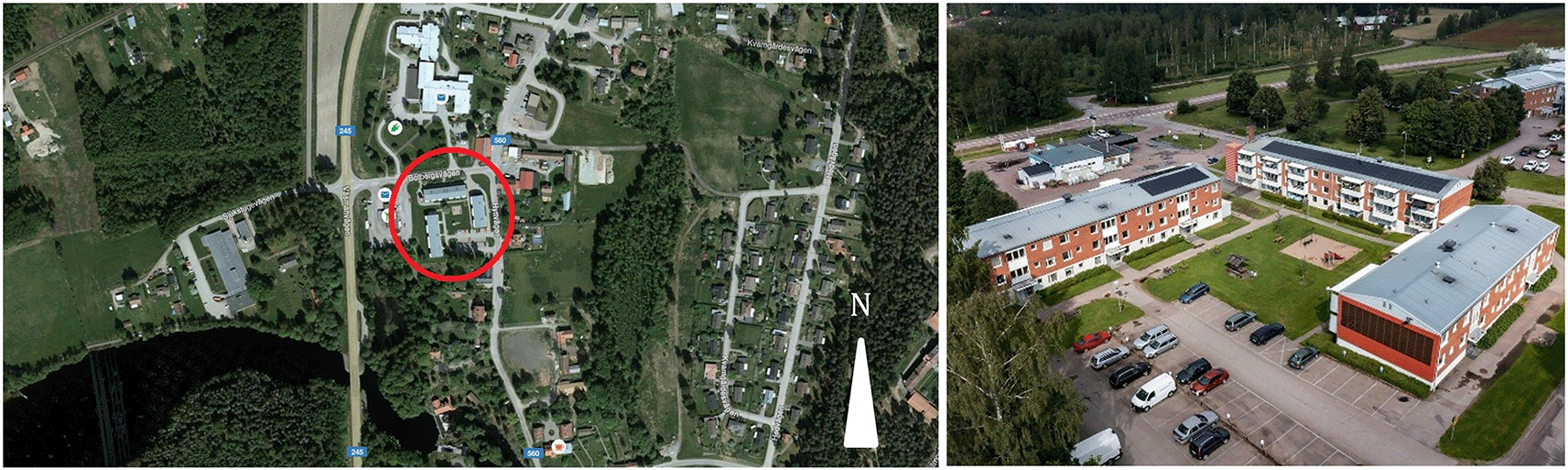
Figure 2. Location and urban context of the Ludvika case study, illustrating the spatial configuration of the residential cluster and its surroundings (Google Earth, 2025).
From a socio-environmental perspective, Ludvika represents a particularly relevant context for investigating human-centred Positive Energy Districts, as climatic conditions directly shape both energy affordability and everyday comfort, both indoors and outdoors. Space heating is identified as the primary driver of annual energy demand, while the increasing prevalence of summer heat stress and increased solar exposure, as observed in Nordic regions, are beginning to impact outdoor liveability and indoor thermal conditions.25 These dynamics illustrate how climate change introduces new vulnerabilities even in contexts that are traditionally dominated by heating.
The settlement had previously been identified as a “towards-PED” initiative, with on-site photovoltaic production and relatively high building energy performance. However, previous development phases have primarily concentrated on energy balance objectives, with minimal consideration given to microclimatic quality, outdoor comfort, and the broader social benefits associated with climate-responsive urban design. This study serves as an instructive case for examining how a human-centred, integrated framework can reveal additional value beyond conventional PED assessments.
4.1.2 Baseline conditions: energy performance, microclimate, and lived experience
The baseline conditions have been assessed through the combined use of urban microclimate modelling, building energy simulation, and district energy system analysis. Rather than treating these analyses as isolated technical assessments, they were interpreted as complementary lenses on lived experience and everyday constraints.
A series of microclimatic simulations have been conducted, the results of which have exposed several critical issues that have implications for the utilisation and perception of outdoor spaces. During summer periods, high levels of solar exposure on façades and paved surfaces resulted in elevated surface and mean radiant temperatures in courtyards and pedestrian areas. This led to a reduction in the duration of outdoor activity and limited opportunities for informal social interaction. Conversely, winter simulations highlighted cold wind exposure and limited solar access in key areas, further constraining outdoor accessibility during the long winter months.
Indoors, these microclimatic conditions resulted in increased heating demands in winter and rising cooling loads in summer, despite relatively efficient building envelopes. Building energy simulations confirmed that baseline demand profiles were strongly influenced by external microclimatic conditions rather than by building systems alone. This finding serves to reinforce a key socio-technical insight, namely that energy demand is not merely a by-product of technological efficiency, but rather is co-produced by spatial design, climate, and everyday practices.
Of particular significance is the observation that these energy patterns are directly associated with social implications. In cold-climate contexts such as Ludvika, high heating demand is closely linked to household energy expenditure, with potential consequences for energy affordability and vulnerability, particularly among low-income households or residents with limited control over building systems. The baseline analysis thus provides a critical reference point for evaluating the social relevance of subsequent design interventions.
4.1.3 Climate-adaptive strategies and human-centred design interventions
The framework was developed to support the design and testing of strategies that were climate-adaptive and multi-scalar, with the aim of achieving two objectives: firstly, the reduction of energy demand, and secondly, the improvement of comfort. These strategies were developed and tested because of the baseline assessment. The selection of interventions was guided not only by technical effectiveness, but also by their capacity to enhance everyday living environments and human–nature relationships.
Key strategies included the strategic introduction of tree planting and green infrastructure to provide summer shading while preserving winter solar access; the use of permeable and vegetated surfaces to reduce surface temperatures and improve stormwater management; microclimate-sensitive reconfiguration of open spaces to enhance wind protection and solar exposure in frequently used areas; and building-integrated nature-based solutions, such as green roofs, contributing to thermal insulation and microclimate moderation.
These interventions were conceptualised as socio-technical measures, with the capacity to effect changes in both environmental conditions and everyday practices, rather than as isolated technical solutions. In this sense, design strategies function as mediators between climate adaptation, energy demand reduction, and social well-being.
4.1.4 Reinterpreting simulation results through a human-centred lens
4.1.4.1 Outdoor comfort, liveability, and social interaction
The simulation results for the climate-adapted scenario have indicated substantial reductions in summer surface and radiant temperatures, particularly in courtyards and pedestrian areas. These enhancements have been shown to result in the creation of more functional and aesthetically pleasing outdoor areas, thereby encouraging extended periods of leisure, spontaneous interactions, and social engagement during periods of higher temperatures.
During the winter months, a combination of factors including reduced wind exposure and enhanced solar access has been shown to have a positive impact on the accessibility and perceived safety of outdoor environments. This, in turn, has the effect of supporting the year-round use of shared spaces. In Nordic contexts, where climatic barriers often limit outdoor social life, such improvements are of particular significance. The enhancement of outdoor comfort, consequent to the interventions, has been demonstrated to engender social cohesion and to reinforce the understanding of PEDs as liveable neighbourhoods, rather than merely energy systems.
4.1.4.2 Indoor comfort, energy demand, and affordability
Building energy simulations incorporating microclimate-adjusted conditions have demonstrated quantifiable reductions in both heating and cooling demand. While percentage reductions may appear moderate from a purely technical perspective, their social relevance is substantial.
A correlation has been demonstrated between reduced energy demand and decreased household energy expenditure, enhanced resilience to energy price volatility, and improved indoor thermal stability. These outcomes are of particular importance for vulnerable groups, including elderly residents and children, for whom thermal stress poses heightened health risks. A reduced reliance on mechanical systems has also been demonstrated to enhance the robustness of the system during extreme weather events or potential system disruptions.
In this context, the reduction of energy demand emerges as a social strategy, contributing to equity, health, and quality of life alongside PED performance targets.
4.1.4.3 Air quality, health, and environmental perception
The introduction of vegetation and green infrastructure has been demonstrated to enhance local air quality through the sequestration of pollutants and the reduction of dust, as indicated by ecosystem service simulations. Whilst the topic of air quality is frequently addressed at urban levels, the implementation of local initiatives within residential districts has the potential to yield substantial health benefits, particularly for vulnerable demographics.
It is evident that the impact of increased vegetation extends beyond quantifiable effects, encompassing enhancements in perceived environmental quality and the cultivation of stronger emotional connections between residents and their immediate environment. This strengthening of the human-nature relationship is conducive to pro-environmental behaviours and acceptance of energy transition measures, which are frequently underestimated in terms of their long-term success in PEDs. Adopted climate-adaptation design strategies impacts on the existing building cluster in Ludvika are shown in
Figure 3 and in
Figure 4.
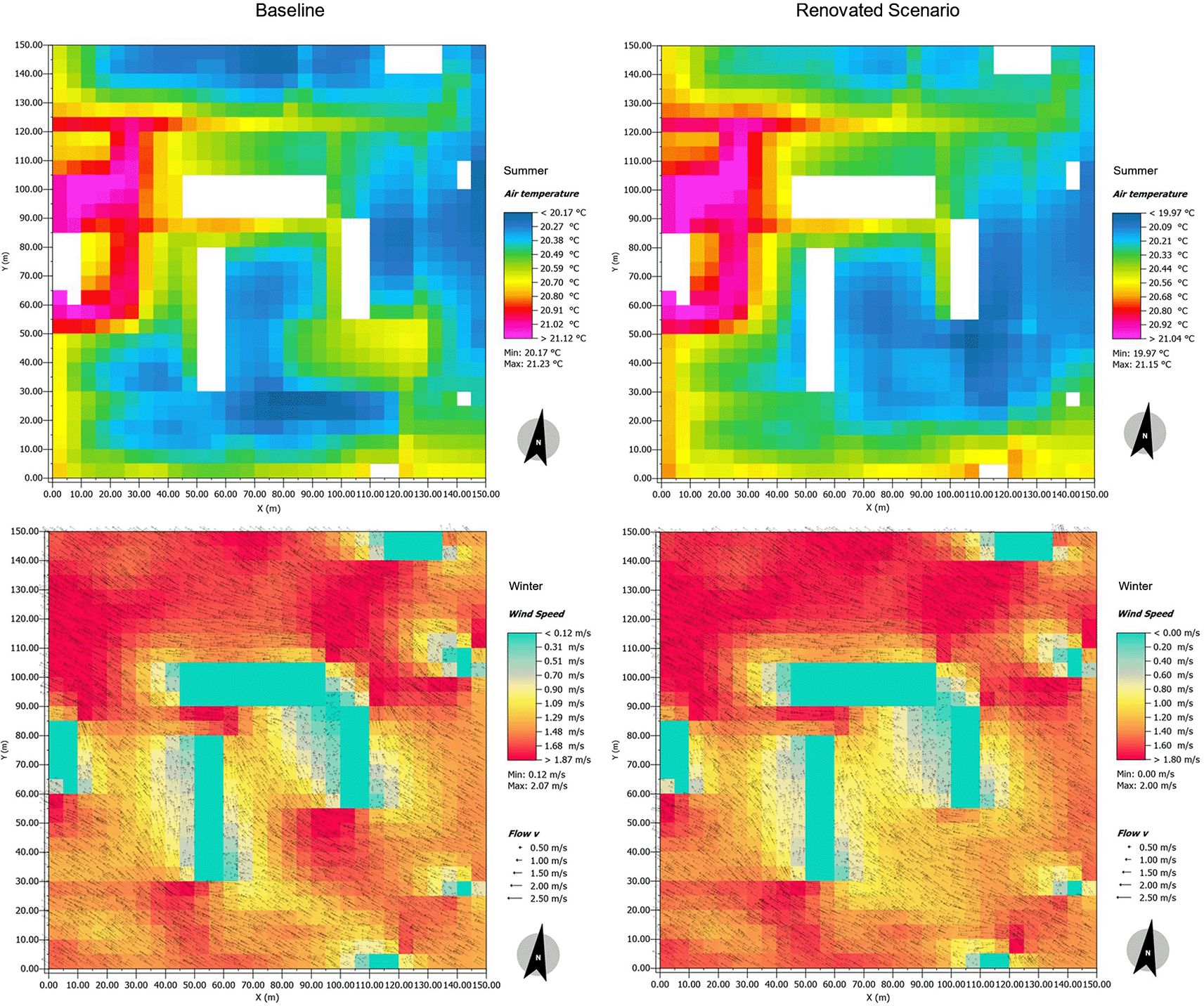
Figure 3. Spatial distribution of air temperature (summer conditions) and wind speed (winter conditions) under baseline and renovated scenarios in the Ludvika case study.
The comparison highlights the effects of climate-responsive urban design strategies on outdoor microclimatic conditions, showing reductions in heat accumulation during summer and modified wind patterns during winter. These changes contribute to improved outdoor thermal comfort and support climate adaptation objectives at district scale.
Figure 4. Cumulative solar radiation on building façades and Universal Thermal Climate Index (UTCI) distribution for baseline and renovated scenarios in the Ludvika case study (21 June–21 September).
The results illustrate how modifications to urban form and envelope design influence solar exposure, outdoor thermal stress, and human comfort conditions, supporting a demand-first and human-centred approach to Positive Energy District design.
4.1.5 Implications for Positive Energy District performance
At district scale, reduced energy demand has been demonstrated to directly improve the optimisation of local energy systems, increasing self-sufficiency, reducing emissions, and lowering operating costs (Figure 5). The findings of this study demonstrate that comfort-oriented, climate-adaptive strategies are indeed effective in supporting PED objectives, rather than competing with them.
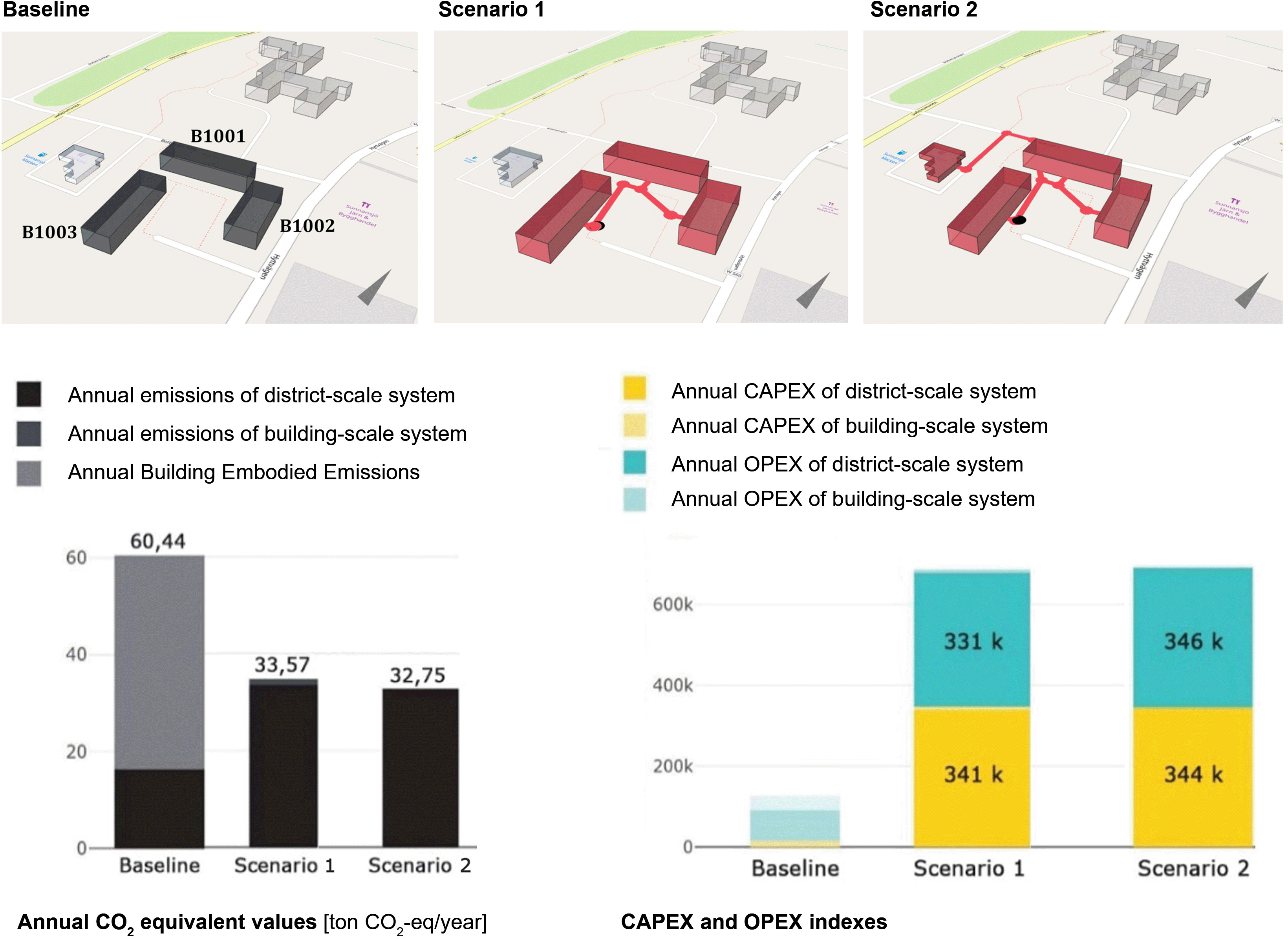
Figure 5. Comparison of baseline and alternative district energy system scenarios in the Ludvika case study, including spatial configuration of energy infrastructures, annual CO2-equivalent emissions, and CAPEX and OPEX indicators.
The results highlight trade-offs and synergies between environmental performance and economic implications, illustrating how integrated energy system design can support decarbonisation while informing decision-making on affordability and long-term system viability.
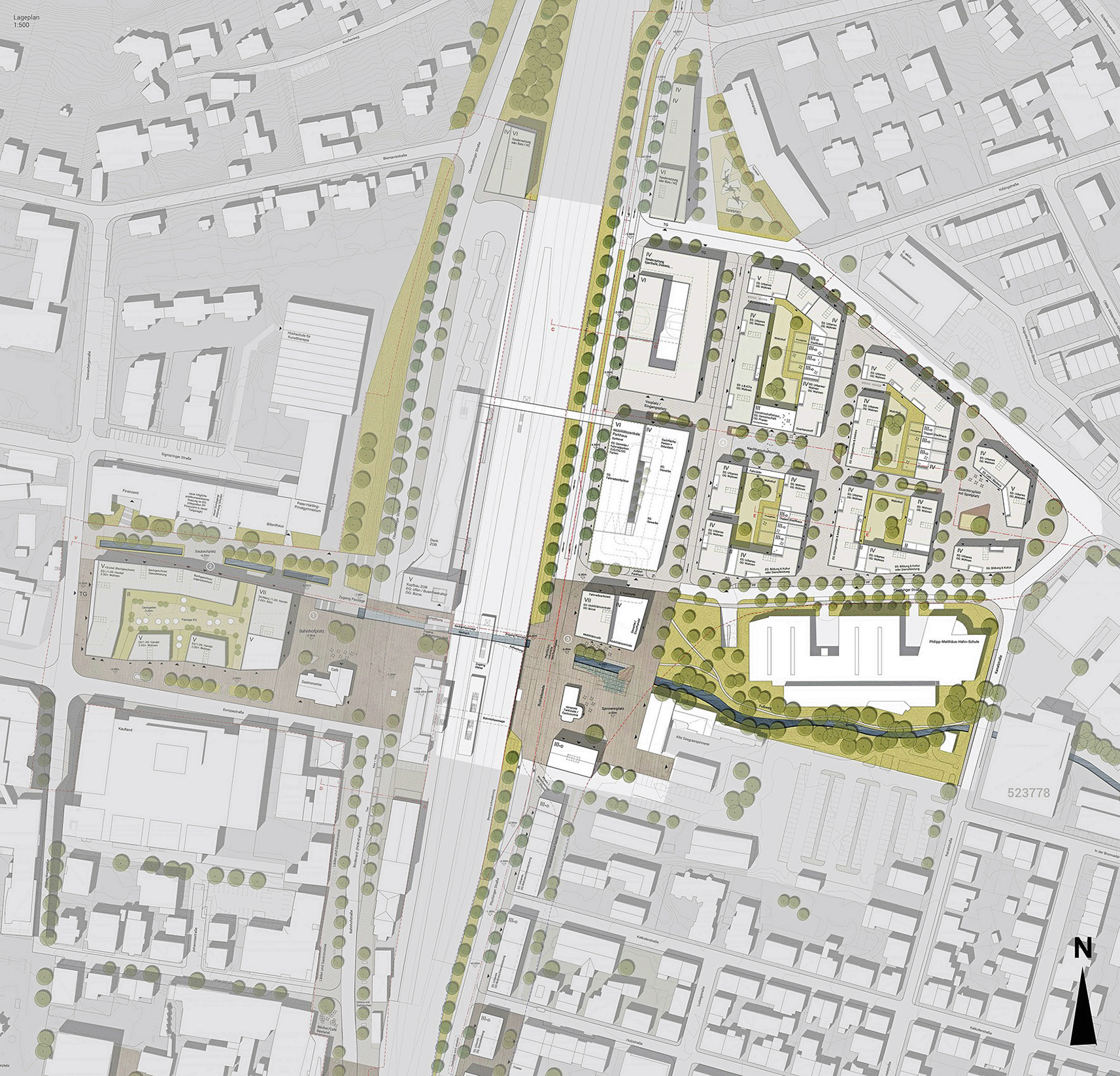
Figure 6. Location and urban context of the Nürtingen case study within the Stuttgart Metropolitan Region, highlighting the mixed-use urban fabric (Hosoya Schaefer Architects AG, Urban design of Bahnstadt, Nürtingen.
(Hosoya Schaefer Architects AG, Urban design of Bahnstadt, Nürtingen. City Planning Office, 2018).
The Ludvika case demonstrates how integrating microclimate analysis, energy modelling, and human-centred interpretation within a unified framework facilitates coherent decision-making and unveils synergies that are obscured by siloed approaches.
4.1.6 Lessons learned from the Ludvika case
The Ludvika case demonstrates that: (i) human comfort and energy performance are highly intertwined in cold-climate contexts; (ii) climate-adaptive and nature-based strategies provide synergistic social, environmental, and energy benefits; (iii) reducing energy demand fosters affordability and social resilience; and (iv) simulation tools, when integrated within an interpretive framework, effectively facilitate human-centred PED design and communication.
4.2 Case Study 2 – Stuttgart Metropolitan Region/Nürtingen (Germany)
4.2.1 Urban, climatic, and governance context
The second case study is situated in the Stuttgart Metropolitan Region, in the city of Nürtingen (Baden-Württemberg, Germany) (Figure 6). The study area falls within the temperate oceanic climate zone (Cfb) under the Köppen–Geiger classification. This context is characterised by a temperate Central European climate (Cfb) with relatively warm summers, milder winters, and an increasing frequency of heatwaves, intense precipitation events, and urban heat island effects. In contrast to the cold-climate conditions experienced in the Ludvika case, the Nürtingen context demonstrates a structural shift in urban energy challenges, characterised by a transition from heating-dominated demand to cooling demand, peak electricity loads, and outdoor thermal discomfort.
The selected study area is a mixed-use district undergoing transformation, located in close proximity to major transport infrastructure and embedded within a broader municipal development strategy. The coexistence of residential, commercial, and service functions within a relatively compact urban fabric serves to intensify interactions between buildings, public space, mobility, and environmental conditions. From a socio-technical perspective, this configuration renders Nürtingen particularly well-suited for the exploration of the operation of Positive Energy Districts as integrated urban systems, as opposed to their functioning as isolated technological interventions.
From a governance perspective, the case is embedded within the German Energiewende framework and benefits from relatively advanced planning instruments, strong municipal involvement, and established traditions of stakeholder and citizen participation. The institutional context in question facilitates the exploration of PED implementation as a governance-driven process, in which design decisions, policy frameworks, and participatory mechanisms collectively influence outcomes. Consequently, Nürtingen offers a significant perspective on the alignment of human-centred PED strategies with local planning cultures and regulatory environments.
4.2.2 Baseline conditions: microclimate, energy demand, and liveability
The baseline conditions have been assessed through the integrated decision-support framework, which combined urban microclimate modelling, building energy simulation, and district-scale energy analysis. The approach adopted in this study was to interpret these assessments not as purely technical diagnostics, but as representations of everyday urban experience and lived environmental conditions.
Microclimatic simulations revealed pronounced summer heat stress in streets, courtyards, and semi-public open spaces. The presence of elevated levels of solar radiation, in conjunction with a lack of adequate shading and the presence of substantial impervious surfaces, gave rise to surface and mean radiant temperatures that were notably higher than expected, particularly during periods of extreme heat. These conditions had a significant impact on pedestrian activity and prolonged outdoor use, thereby directly undermining the quality and inclusivity of public space.
Indoor energy simulations demonstrated a parallel trend. A substantial body of research has demonstrated that residential and mixed-use buildings, which are often distinguished by their expansive glazed facades and minimal passive shading features, have exhibited an escalating demand for cooling during the summer months. These patterns are indicative of a more extensive challenge confronting numerous Central European cities, where building stocks originally designed for winter performance are progressively vulnerable to overheating risks in the context of climate change.
From a social perspective, these baseline conditions have clear implications for equity, affordability, and well-being. The elevated demand for cooling has been demonstrated to contribute to increased electricity consumption and peak loads, which in turn has been shown to result in higher energy bills and the exacerbation of inequalities between households with differing access to cooling technologies. Concurrently, the deterioration in outdoor amenities has imposed constraints on opportunities for social interaction, leisure activities and independent mobility. This phenomenon has had a disproportionately adverse impact on groups that place greater reliance on public spaces, including children, elderly residents and households with lower incomes.26
4.2.3 Climate-adaptive and human-centred design strategies
Within the proposed framework, climate-adaptive strategies have been developed with a strong emphasis on outdoor comfort, accessibility, and environmental quality. These strategies reflect priorities identified in local planning documents and participatory processes. It is important to note that these strategies were not conceived as isolated technical measures, but rather as human-centred design interventions with the potential to reshape everyday practices and perceptions of the urban environment.
Key strategies included the integration of urban green-blue infrastructure, combining tree planting, permeable surfaces, and water-sensitive design to mitigate heat stress while improving stormwater management; the introduction of shading strategies for façades and open spaces, reducing solar gains without compromising daylight access; the deployment of green roofs and vegetated surfaces, contributing to thermal insulation and microclimate moderation; and the spatial reconfiguration of public spaces to enhance walkability, safety, and inclusiveness.
The interventions in question were selected on the basis of their ability to generate multiple and interconnected benefits, with the aim of supporting thermal comfort, environmental quality, and energy demand reduction simultaneously. In this sense, climate-adaptive design functions as a mediating layer between climate mitigation, adaptation, and social well-being within the PED framework.
4.2.4 Human-centred interpretation of simulation results
4.2.4.1 Outdoor thermal comfort and quality of public space
Microclimatic simulations indicated substantial reductions in mean radiant temperature and surface temperatures in outdoor spaces following the implementation of climate-adaptive strategies. These changes have been shown to result in a significant enhancement of outdoor thermal comfort, particularly during periods of extreme summer weather conditions, thereby facilitating an increase in the duration and frequency with which public spaces are utilised.
From a human-centred perspective, enhanced outdoor comfort has been demonstrated to support a number of socially relevant outcomes. The creation of more inviting courtyards and pedestrian areas has been demonstrated to facilitate social interaction and community life, thereby strengthening neighbourhood identity and supporting informal social practices. Furthermore, improved thermal conditions have been shown to encourage active mobility, thereby rendering walking and cycling more attractive alternatives to car use. Moreover, a reduction in heat stress has been demonstrated to have a direct impact on public health, by lowering the risks associated with exposure to high temperatures.
In a mixed-use district such as Nürtingen, where public space quality is closely linked to economic activity and social inclusion, these benefits are particularly significant.
4.2.4.2 Indoor comfort, energy demand, and cost implications
Building energy simulations incorporating microclimate-adjusted conditions have been shown to result in measurable reductions in cooling demand and greater stability of indoor thermal conditions. While absolute energy savings exhibited variability across building typologies, a consistent outcome was the reduction of peak electricity demand, which is critical for both system-level resilience and household affordability.
From a social sciences standpoint, these outcomes have important implications. A reduction in cooling demand has been shown to result in lower electricity bills, particularly during the summer months when energy costs tend to reach their peak. Concurrently, enhanced indoor comfort has been demonstrated to reduce reliance on energy-intensive cooling technologies, thereby mitigating the risk of energy poverty and enhancing thermal comfort without imposing an additional financial burden. It is evident that the prevention of protracted overheating has a beneficial effect on the health and well-being of individuals in indoor environments, a fact that is especially pertinent for those populations considered to be vulnerable.
In a regulatory context such as Germany, where building energy standards are already relatively rigorous, these findings emphasise the added value of district-scale, climate-responsive strategies in addition to individual building compliance.
4.2.4.3 Air quality, water management, and environmental co-benefits
The integration of green-blue infrastructure resulted in the generation of additional environmental co-benefits. The simulations indicated that there would be an improvement in local air quality because of the filtration of pollutants, and a reduction in the resuspension of particulate matter. In addition, there would be a substantial reduction in stormwater runoff. These effects have been demonstrated to enhance safety and resilience during extreme precipitation events, which are projected to increase under climate change.
The environmental enhancements are of direct social pertinence. The positive correlation between air quality and respiratory health is particularly salient for children and elderly residents. A reduction in runoff has been demonstrated to decrease the risk of flooding, whilst concurrently enhancing both the perceived and actual safety of the area. Furthermore, the presence of vegetation and water elements has been demonstrated to enhance visual quality and environmental perception, thereby contributing to psychological well-being and place attachment.
Collectively, these outcomes serve to reinforce the interpretation of PEDs as multifunctional urban systems, delivering a broad spectrum of benefits that extend well beyond energy metrics alone. Adopted climate-adaptation design strategies impacts on the urban environment in the mixed-use district in Nürtingen are shown in
Figure 7.
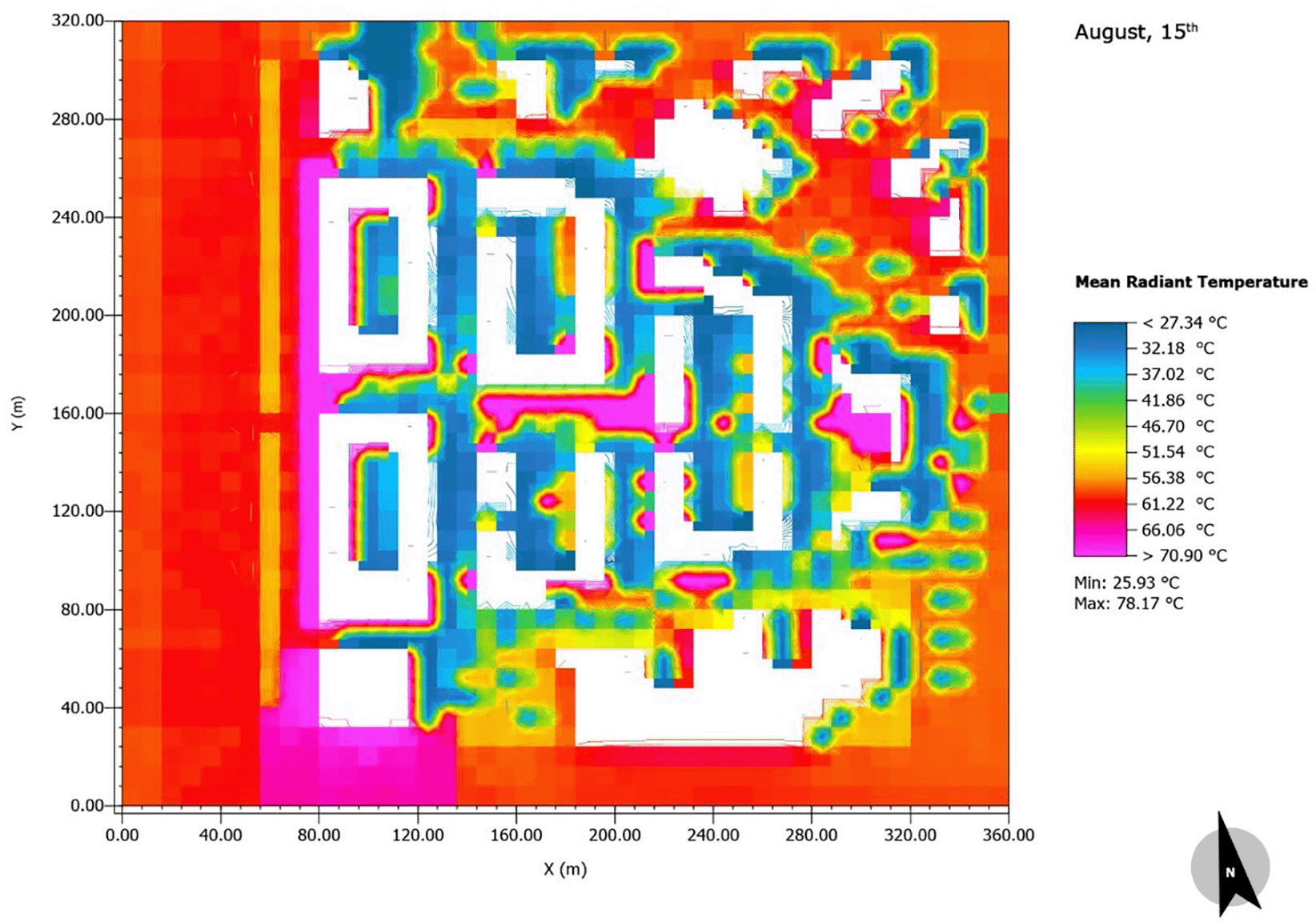
Figure 7. Spatial distribution of mean radiant temperature (MRT) under summer conditions (15 August) in the Nürtingen case study.
The map illustrates the interaction between urban morphology, surface materials, and solar exposure, highlighting areas of elevated thermal stress in outdoor spaces. The results support the interpretation of microclimate modelling as a tool to identify critical comfort conditions and to inform climate-adaptive urban design strategies aimed at improving outdoor liveability.
4.2.5 District energy system performance and social implications
At district scale, reduced energy demand and improved load profiles enabled more effective configuration and operation of local energy systems, including district heating and renewable electricity generation. Scenario analyses have demonstrated that integrating climate-adaptive urban design with energy system planning resulted in reduced carbon emissions, decreased operational costs, and enhanced system flexibility and reliability (Figure 8).
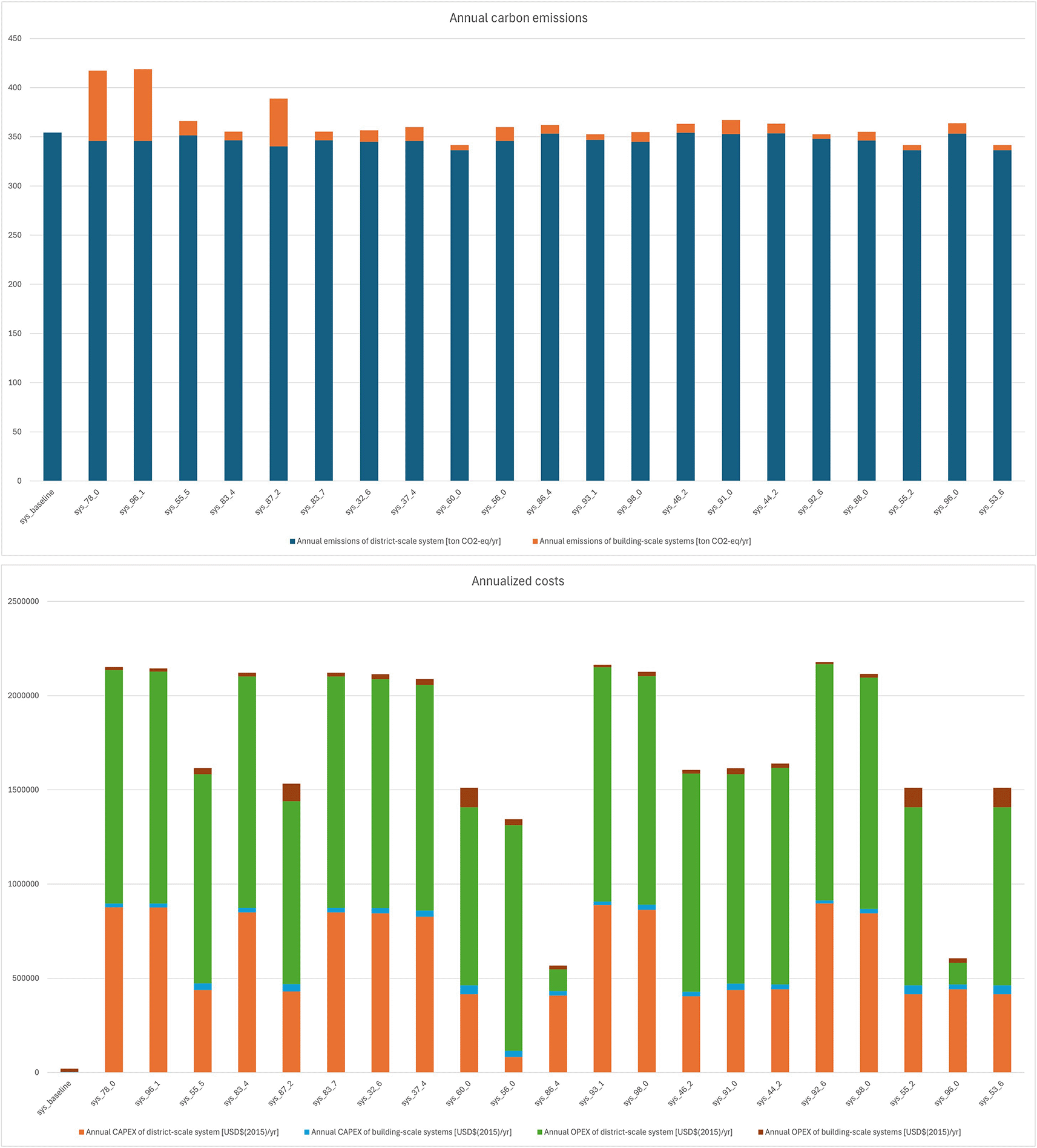
Figure 8. (above) Comparison of annual CO2-equivalent emissions across baseline and alternative district energy system scenarios in the Nürtingen case study, distinguishing contributions from district-scale and building-scale systems.
The results illustrate how different system configurations influence decarbonisation outcomes at district level, supporting scenario-based evaluation of mitigation strategies within a Positive Energy District planning context. (below) Annualised costs (CAPEX and OPEX) associated with baseline and alternative district energy system scenarios in the Nürtingen case study, disaggregated by district-scale and building-scale components. The comparison highlights trade-offs between investment costs, operational expenditures, and long-term economic performance, providing decision-support insights relevant for municipalities and planners when balancing decarbonisation objectives, affordability, and system viability.
These system-level enhancements, when considered in their broader context, serve to indirectly bolster social objectives. This is achieved by means of stabilising energy costs, reducing exposure to price volatility, and fortifying long-term energy security for residents. From a socio-technical perspective, enhanced system robustness fosters increased trust in local energy infrastructures and contributes to the broader legitimacy of PED initiatives.
4.2.6 Lessons learned from the Nürtingen case
The Nürtingen case study offers several key insights. Firstly, in temperate Central European climates, the challenges confronting human-centred Positive Energy Districts are twofold, namely the demands for heat stress and cooling. Secondly, climate-adaptive urban design has been demonstrated to enhance public space quality and liveability, thereby generating cascading social and health benefits. Thirdly, the reduction of energy demand at district scale supports both system resilience and household affordability, thereby reinforcing the social relevance of PED strategies. The case demonstrates the significance of governance and participatory contexts in aligning technical solutions with local needs, expectations, and values.
In conjunction with the Ludvika case, these findings illustrate the adaptability and resilience of the proposed framework across a range of climatic, urban, and institutional contexts, thereby substantiating its applicability for socially inclusive and climate-responsive PED development.
5. Cross-case analysis and discussion: Integrated benefits of human-centred positive energy districts
5.1 From single-domain optimisation to integrated benefit generation
The comparative analysis of the Ludvika (Sweden) and Stuttgart Metropolitan Region/Nürtingen (Germany) case studies demonstrates that Positive Energy Districts cannot be meaningfully evaluated through energy balance or carbon metrics alone. Instead, PEDs emerge as multi-benefit socio-technical urban systems, in which environmental, ecological, economic, and social outcomes are deeply interlinked and mutually reinforcing. This finding calls into question prevailing techno-centric evaluation paradigms and supports a broader understanding of PEDs as instruments of urban transformation rather than solely as energy infrastructures.
Despite considerable variations in climate, urban morphology and governance context, both case studies demonstrate the consistent efficacy of climate-responsive and human-centred design strategies in facilitating integrated benefit generation. Interventions initially conceived to improve microclimate and comfort – such as the introduction of vegetation, shading provisions, surface permeability, and spatial reconfiguration – produced cascading effects across multiple domains. These included a reduction in energy demand, an improvement in the performance of district energy systems, an enhancement in environmental quality, and tangible improvements in everyday well-being.
It can be concluded that the analysis provides a robust confirmation of the central hypothesis that forms the theoretical foundation of the proposed framework. The findings indicate that the prioritisation of human-centred outcomes does not compromise the performance of the Positive Energy District. Conversely, it enhances the feasibility, robustness, and social acceptability of PEDs by addressing the conditions under which energy systems are used, perceived, and governed. This transition from single-domain optimisation towards integrated benefit generation signifies a seminal contribution to both PED research and social sciences scholarship on sustainability transitions.
5.2 Environmental and ecological benefits
5.2.1 Microclimate regulation and climate adaptation
The two case studies demonstrate that climate-adaptive design strategies have the potential to significantly improve local microclimatic conditions, albeit in different ways, reflecting their specific climatic contexts. In Ludvika, interventions primarily reduced cold wind exposure and moderated seasonal solar loads, thereby supporting thermal comfort across extended winter periods while avoiding summer overheating. In Nürtingen, the predominant benefits pertained to the mitigation of summer heat stress, with substantial reductions in mean radiant temperature, surface overheating, and perceived thermal discomfort in public spaces.
From an environmental perspective, these microclimatic improvements are significant. The moderation of extreme conditions, facilitated by climate-responsive design, has been demonstrated to engender a reduction in dependence on mechanical heating and cooling systems, a reduction in peak energy demand during extreme weather events, and an enhancement in the overall climate resilience of urban districts. It is important to note that these effects are achieved through spatial and ecological interventions rather than through energy technologies alone. This reinforces the role of urban design as a central component of climate adaptation strategies.
5.2.2 Ecosystem services and ecological performance
The integration of nature-based solutions and green-blue infrastructure resulted in measurable ecosystem services in both case studies. These included enhanced air quality through pollutant sequestration and particulate matter reduction, improved stormwater management through increased infiltration and delayed runoff, and increased biodiversity potential within dense urban environments.
In addition to quantifiable environmental indicators, these ecological improvements also influenced the perceptual and relational dimensions of the urban environment. The increased presence of vegetation and visible natural processes has been demonstrated to enhance residents’ environmental awareness and strengthen human–nature relationships. From a social sciences perspective, this dimension is of relevance, as it contributes to the long-term acceptance of sustainable infrastructures and supports behavioural alignment with climate and energy objectives. In this sense, ecological performance is not only an environmental outcome, but also a social mediator of urban sustainability transitions.
5.3 Economic benefits and system efficiency
5.3.1 Energy demand reduction and system optimisation
Across both case studies, energy demand reduction has been identified as a structural and cross-cutting economic benefit. In Ludvika, reduced heating demand resulted in a reduction of operational requirements for district energy systems. Conversely, in Nürtingen, reduced cooling demand led to a reduction in peak electricity loads during summer periods. The aforementioned effects have been found to translate into improved system efficiency, increased utilisation of local renewable energy sources, and reduced emissions at district scale.
Significantly, the energy demand reduction has facilitated a more effective system configuration, encompassing smaller installed capacities, improved integration of energy storage, and enhanced operational flexibility. From a system perspective, these outcomes reduce capital and operational costs over the lifecycle of energy infrastructures and increase robustness under uncertain future conditions.
5.3.2 Economic robustness and long-term affordability
The proposed framework is expected to contribute to economic robustness at both household and district levels by stabilising energy demand and reducing exposure to peak loads. Whilst accurate financial outcomes are contingent on local rates, market mechanisms and regulatory frameworks, simulation results clearly indicate that climate-responsive, demand-oriented design strategies can reduce household energy expenditures, mitigate vulnerability to energy price volatility and decrease long-term public and private expenditure on energy infrastructure.
From a socio-technical perspective, these economic benefits are critical because they influence trust, legitimacy, and willingness to engage with energy transition initiatives. Investments in climate-adaptive and human-centred design should therefore be regarded not as additional costs, but as long-term value-generating strategies that support stable and socially acceptable energy systems.
5.4 Social benefits: affordability, comfort, quality of spaces, and governance
In order to explicitly address the social dimension of Positive Energy Districts, this subsection synthesises evidence related to affordability, energy poverty, thermal and hygrometric comfort, quality of life environments, and governance arrangements. As previously mentioned, these dimensions illustrate how PEDs function as everyday living environments, not only as technical systems.
5.4.1 Affordability and energy poverty
Energy affordability has emerged as a critical, yet frequently underrepresented, dimension of PED implementation. In both Ludvika and Nürtingen, a reduction in energy demand through climate-responsive design directly resulted in a decrease in household energy expenditure. In contexts where heating is the primary energy demand, such as Ludvika, this effect is particularly salient in mitigating winter energy poverty. Conversely, in contexts where cooling dominates, such as Nürtingen, it reduces exposure to rising summer electricity costs.
The incorporation of affordability into the design of PEDs through the reduction of energy demand supports a forward-looking approach to the issue of energy poverty, thereby complementing policy instruments such as subsidies or social tariffs. From a social sciences perspective, this approach aligns with the principles of energy justice by addressing structural drivers of vulnerability rather than relying solely on compensatory measures.27
5.4.2 Thermal and hygrometric comfort as a social objective
The findings of this study demonstrate that thermal and hygrometric comfort are significant factors in determining environmental performance and human well-being. In both case studies, enhanced microclimatic conditions yielded more stable indoor environments, reduced overheating and cold stress, and improved indoor air quality and moisture balance.
The outcomes of this study have direct implications for health, productivity and quality of life, particularly for sensitive groups such as children, elderly residents and individuals with pre-existing health conditions. It is therefore important to understand comfort not as a secondary or subjective outcome, but as a core performance criterion for human-centred Positive Energy Districts. Furthermore, comfort can be considered a key indicator of social sustainability.
5.4.3 Quality of indoor and outdoor living spaces
The transformation of outdoor spaces was among the most visible social benefits observed across both case studies. Conversely, underutilised or thermally inhospitable areas underwent transformation into comfortable, aesthetically pleasing, and readily accessible environments. This initiative has been instrumental in fostering increased social interaction, informal community life, and perennial utilisation of public spaces.
In addition, indoor environments have also been shown to benefit from improved thermal stability and reduced reliance on mechanical systems. This, furthermore, enhances perceived dwelling quality and residents’ attachment to place. Collectively, these elements contribute to the concept of “healthy and wealthy spaces,” where environmental quality, comfort, and social value coexist and reinforce one another.
5.4.4 Governance schemes and collaborative decision-making
The cross-case analysis emphasises the pivotal function of governance and decision-support structures in translating technical potential into social benefits. The proposed framework facilitates transparent comparison of scenarios, communication of complex modelling results to non-technical stakeholders, and alignment between municipal objectives, design strategies, and citizen needs.
In Nürtingen, participatory planning processes have been shown to amplify the social relevance of technical solutions by embedding considerations of comfort and liveability into the decision-making process. In Ludvika, the framework revealed opportunities to further strengthen social outcomes through more explicit integration of human-centred criteria. The findings emphasise the necessity for governance models that can integrate technical evidence with social priorities, supported by accessible and interoperable decision-support tools.
5.5 Transferability, trade-offs, and limitations
The cross-case analysis confirms that while specific design solutions are context-dependent, the logic of integrated benefit generation is transferable across climatic, urban, and governance contexts. The framework provides a shared analytical structure capable of guiding PED development under diverse conditions.
Concurrently, trade-offs endure. These include the balancing of model complexity with usability, quantitative precision with decision-support relevance, and short-term investment costs with long-term social and environmental value. It is imperative to acknowledge these trade-offs to circumvent the pitfalls of overconfidence in simulation outputs and to preserve the framework’s function as a catalyst for informed judgement and deliberation, as opposed to a tool for deterministic decision-making.
6. Implications for planning, governance, and policy
6.1 Implications for urban and architectural design practice
The findings of this research underscore the necessity for a paradigm shift in urban and architectural design practice regarding Positive Energy Districts. Instead of approaching PEDs as energy systems appended to an otherwise conventional urban form, the findings emphasise that PEDs should be conceived as integrated socio-technical environments, in which spatial configuration, environmental performance, energy systems, and everyday human experience are inseparable.
For designers, architects and engineers, this implies that urban microclimate and human comfort must be treated as primary design drivers, rather than as secondary performance checks conducted after form-making decisions have been finalised. The early-stage choices concerning building orientation, massing, façade articulation, surface materials, vegetation, and the configuration of open spaces exert a decisive influence on energy demand, system sizing, and social outcomes. The integration of microclimatic analysis into the conceptual design phases enables design teams to prioritise passive and climate-responsive strategies, thereby reducing reliance on technological compensation and enhancing long-term robustness.
In this context, the integrated use of urban microclimate modelling, Urban Building Energy Modelling (UBEM), and district-scale energy system analysis should be understood not as a prescriptive optimisation exercise, but as a design exploration and decision-support process. These tools enable practitioners to quantify the energy and comfort implications of climate-adaptive strategies, transparently compare alternative spatial and technological scenarios, and identify synergies between building-scale and district-scale interventions. It is important to note that this approach is underpinned by a demand-first logic, which aligns the reduction of energy demand with objectives related to affordability, comfort, and resilience. Furthermore, it reinforces the role of design quality as a fundamental element of sustainable urban development.
6.2 Implications for municipal planning and decision-making
The establishment of Positive Energy Districts by municipalities signifies a twofold opportunity: firstly, it operationalises climate-neutrality targets; secondly, it introduces a governance challenge that extends beyond conventional planning routines. The implementation of PEDs necessitates coordination across multiple departments, including planning, energy, environment, housing, and social services, as well as engagement with external stakeholders, utilities, and citizens.
The findings of this study suggest that municipalities would benefit from the adoption of integrated decision-support frameworks capable of bridging technical analysis and policy objectives. The proposed framework is designed to facilitate municipal decision-making by organising complex modelling outputs into comparable performance domains, making trade-offs between energy performance, comfort, cost, and environmental quality explicit, and providing robust evidence to support planning and investment decisions.
By enabling ex-ante scenario testing, municipalities can assess the long-term implications of design and infrastructure choices before implementation, reducing the risk of lock-in effects and costly retrofits. Concurrently, ex-post evaluation facilitates monitoring, institutional learning, and adaptive management over time. This dual capacity has been demonstrated to enhance municipal resilience in the face of climatic uncertainty and evolving socio-economic conditions, while simultaneously promoting transparency and accountability in decision-making processes.
Of particular significance is the way the framework fosters interdisciplinary discourse within local administrations, thereby providing a common analytical framework that facilitates collaboration between technical and social policy domains. This approach has been demonstrated to facilitate the overcoming of siloed governance structures, which are frequently identified as a contributing factor to the challenge of integrated climate and energy action.
6.3 Governance schemes for human-centred Positive Energy Districts
The implementation of human-centred Positive Energy Districts is contingent on effective governance, which is identified as a critical enabling condition. The case studies demonstrate that technical potential alone is insufficient if not embedded within governance arrangements capable of integrating social priorities, regulatory constraints, and stakeholder interests.
The proposed framework is designed to support governance processes by enhancing transparency in decision-making, providing a shared and interpretable evidence base for discussion among stakeholders, and enabling participatory processes through accessible visualisation and scenario comparison. The translation of complex simulation results into human-centred indicators, including comfort, liveability and affordability, serves to lower barriers to engagement and facilitate informed deliberation.
For municipalities, this implies a shift towards collaborative and iterative governance models, in which PED development is regarded as an ongoing learning process rather than a one-off project. These models are of particular importance in the context of socially sensitive issues, including energy affordability, energy poverty, and social acceptance of energy transition measures. It is evident that these challenges cannot be resolved through technical solutions alone; rather, sustained engagement, trust-building, and institutional flexibility are requisite.
The integration of human-centred performance indicators into formal evaluation and approval processes serves to further strengthen the alignment between PED initiatives and broader urban policy objectives, including public health, social inclusion, and community cohesion.
6.4 Affordability, equity, and public value creation
A significant policy implication of this research pertains to the relationship between PED design, energy demand reduction, and energy affordability. The findings indicate that climate-responsive urban design and demand-first strategies contribute directly to reduced household energy consumption, thereby mitigating vulnerability to energy price volatility and promoting more equitable energy transitions.
For municipalities, this underscores the significance of conceptualising Positive Energy Districts not exclusively as climate mitigation or technological innovation initiatives, but as instruments of public value creation. By incorporating affordability, comfort, and quality of life factors into PED evaluation frameworks, local authorities can proactively tackle energy poverty, ensure that the benefits of the energy transition are distributed more equitably, and strengthen public support for climate policies.
This standpoint is especially pertinent in a context of rising energy prices and socio-economic uncertainty, where public acceptance of energy transition initiatives is increasingly contingent on tangible improvements in everyday life. Human-centred PEDs offer a means to align climate action with social policy objectives, reinforcing the legitimacy and durability of urban sustainability strategies.
6.5 Alignment with European policy frameworks and missions
The proposed framework aligns closely with European policy objectives, including the Mission for Climate-Neutral and Smart Cities, the Strategic Energy Technology Plan, and broader EU strategies on climate adaptation, resilience, and social inclusion. By operationalising climate-neutrality at district scale while explicitly integrating social and environmental dimensions, human-centred Positive Energy Districts provide a concrete pathway toward mission-oriented urban transformation.
The proposed framework is designed to support key European priorities by promoting the integration of climate mitigation and adaptation measures, enhancing liveability and resilience in urban districts, and facilitating replicability and scalability across diverse contexts. For municipalities participating in European programmes and initiatives, the framework can serve as a common methodological reference, enabling knowledge exchange, benchmarking, and coordinated action across cities and regions.
In this sense, the framework contributes not only to local planning practice, but also to the development of shared European approaches to sustainable and socially inclusive urban development.
6.6 Replicability and scalability conditions
While Positive Energy Districts are, by their own nature, dependent on their specific context, the comparative analysis confirms that the methodological logic of the proposed framework is transferable. The concept of replicability does not imply the replication of identical technical solutions; rather, it suggests the adoption of shared principles, performance domains, and decision-support processes that can be adapted to local conditions.
Conditions for replicability are dependent on the early integration of microclimate and energy analysis into planning processes, the use of interoperable and transparent toolchains, institutional capacity to interpret and act upon simulation-based evidence, and governance structures that support collaboration and long-term learning.
The scalability of these initiatives is contingent upon the capacity of municipalities to assimilate these frameworks into their prevailing planning and regulatory practices, thereby transcending the limitations of isolated pilot projects and towards the attainment of systemic urban transformation. Achieving this shift necessitates not only technical competence, but also political commitment, institutional coordination, and sustained investment in human-centred planning capacities.
7. Conclusions and future research
7.1 Summary of aims and main contributions
The present paper aims to address a persistent and widely acknowledged gap in the planning and implementation of Positive Energy Districts (PEDs). This gap pertains to the absence of operational, integrated, and human-centred decision-support frameworks capable of coherently linking urban microclimate, building energy performance, district energy systems, and socio-technical evaluation. While discourse and implementation of PEDs have advanced rapidly in Europe, many initiatives remain constrained by fragmented toolchains, siloed expertise, and techno-centric performance metrics that insufficiently capture lived experience, social distributional effects, and governance complexity.
In response to this identified gap, the paper developed and tested a human-centred, climate-responsive decision-support framework that explicitly prioritises energy demand reduction through climate-adaptive urban design. The framework integrates urban microclimate modelling, Urban Building Energy Modelling (UBEM), and district-scale energy system analysis within an interoperable workflow, and structures evaluation around multi-domain performance indicators encompassing energy, carbon, comfort, environmental co-benefits, affordability, and governance relevance.
The framework was validated through two contrasting European case studies - Ludvika (Sweden) and the Stuttgart Metropolitan Region/Nürtingen (Germany) - leveraging existing simulation outputs and reinterpreting them through a unified conceptual lens. The contribution of this work lies not in the production of new numerical results, but rather in the reframing and synthesising of existing evidence to generate cross-cutting insights that would remain largely invisible within single-domain or purely techno-economic analyses.
The primary contribution of this research is not the development of a new simulation engine or optimisation method, instead the advancement of a replicable methodological approach that supports designers and municipalities in navigating the socio-technical complexity of PEDs, translating modelling outputs into actionable and socially meaningful decisions, and foregrounding public value alongside energy targets.
7.2 Integrated benefits as a structural outcome of human-centred PED design
A central conclusion emerging from the cross-case analysis is that integrated benefits are not merely “co-benefits”, but rather represent structural outcomes of human-centred, climate-responsive PED design. In both Ludvika and Nürtingen, interventions initially introduced to moderate microclimate and improve comfort – such as vegetation, surface permeability, shading, and climate-sensitive spatial configuration – generated cascading effects across energy demand, system performance, environmental quality, and social well-being.
From an environmental and ecological standpoint, the analysis substantiates that microclimate-sensitive strategies mitigate heat stress and wind exposure, regulate surface temperatures, optimise stormwater management, and enhance local air quality. It is evident that climate adaptation strategies are not merely ancillary to PED objectives; rather, they can prove instrumental in achieving energy and carbon goals. This is achieved by lowering cooling demand, stabilising load profiles, and increasing system robustness under extreme climatic conditions.
From an economic and system-efficiency standpoint, demand reduction improved the feasibility and resilience of district energy systems by decreasing required installed capacity, enhancing flexibility, and reducing long-term operational costs. Although percentage reductions in energy demand may appear modest in isolation, their implications are amplified at district scale, where peak shaving, load smoothing, and flexibility have disproportionate effects on costs and emissions.
Most importantly, the case studies demonstrate that PEDs must be evaluated through a social value lens. The enhancement of indoor thermal and hygrometric comfort, in conjunction with the transformation of outdoor spaces into safer, more accessible, and more liveable environments, directly impacts quality of life and health. A reduction in energy demand has been shown to result in a decrease in household energy expenditure and a reduction in exposure to price volatility. This offers concrete pathways towards energy affordability and the mitigation of energy poverty risks. The findings of this study demonstrate that human-centred PED design is not only ethically and politically desirable, but also technically robust and economically prudent.
7.3 Methodological insights: interoperability, uncertainty, and decision relevance
The research demonstrates that interoperability among existing tools, when structured within a clear and coherent framework, enables a level of integrated analysis that is rarely achieved through conventional workflows. The utilisation of microclimate outputs to inform building energy simulations, and the aggregation of building-level demand profiles into district energy system analysis, supports consistent multi-scale evaluation and avoids common inconsistencies arising from disconnected modelling assumptions.
Concurrently, the study validates that PED modelling is intrinsically influenced by uncertainty. The sources of uncertainty are manifold and include simplifications of geometry and urban morphology; assumptions regarding occupancy, behaviour, and comfort preferences; limitations in climate data and downscaling techniques; parameter uncertainty in nature-based solutions and ecosystem service modelling; and variability in technology performance and future energy prices.
Rather than perceiving these uncertainties as limitations that compromise the efficacy of modelling, the proposed framework unambiguously acknowledges uncertainty as an inherent characteristic of urban decision-making. The objective of the model is not to deliver precise predictions, but rather to support comparative, strategic, and transparent decision-making processes. This enables stakeholders to identify robust options, explore trade-offs, and understand sensitivities. In this sense, the framework aligns with the real-world needs of designers and municipalities, who must act under uncertainty and whose primary requirement is not certainty, but clarity and legitimacy in decision-making.
7.4 Implications for designers and municipalities: operationalising human-centred PEDs
The findings of the present study serve to reinforce the notion that the objectives of the Positive Energy District cannot be reliably achieved through energy system optimisation alone. This is of particular significance for designers, architects and engineers. Human-centred PED delivery necessitates the early and explicit integration of microclimate and comfort analysis into urban and architectural design processes. This ensures that urban form, open space quality, and nature-based solutions are conceived as core components of energy strategies, rather than as aesthetic or secondary considerations.
This suggests a transition in professional practice towards climate-responsive design as an energy strategy, where passive and nature-based measures actively shape demand profiles, system sizing, and long-term performance. In this context, simulation tools should be used as exploratory and interpretive supports, enabling informed design choices rather than prescribing optimal solutions.
The research indicates that PEDs function primarily as governance projects for municipalities and local authorities. Local administrations are obliged to coordinate planning, energy, environmental, and social policies, whilst ensuring that benefits are distributed equitably and aligned with public value objectives. The proposed framework is designed to support municipalities by facilitating transparent scenario comparison, enhancing communication with stakeholders, and integrating technical interventions with outcomes such as liveability, affordability, and resilience. In an era characterised by escalating energy costs and mounting climate risks, the strategic positioning of PEDs as instruments of public benefit creation is imperative to ensure their legitimacy and foster long-term social acceptance.
7.5 Visionary directions for next-generation PED research and practice
Whilst the proposed framework represents a significant methodological advancement, the analysis also reveals a clear research frontier: the transition from tool-supported design towards continuously learning and adaptive Positive Energy Districts. A range of scientifically grounded and visionary approaches have been identified:
Future research should advance the framework toward district-scale digital twins, integrating real-time sensor data, smart meter information, and user feedback with simulation models. The implementation of such systems would facilitate continuous commissioning, adaptive operation, and transparent monitoring of PED performance, thereby transforming modelling from a design-phase activity into an ongoing governance instrument.
Further interdisciplinary research is needed to strengthen the linkage between thermal and hygrometric comfort, affordability, and energy poverty. Developing comfort and affordability indicators that explicitly capture distributive impacts would enable PEDs to contribute more directly to just energy transitions, thereby making equity outcomes measurable and operational.
Future research in the field of PED should incorporate more robust ecological modelling, including biodiversity indicators, long-term ecosystem service valuation, and assessments of vegetation resilience under future climate scenarios. This would facilitate a transition from energy-positive districts to regenerative urban systems.
The integration of integrated modelling workflows into participatory processes remains a critical challenge. Future work should explore participatory modelling approaches that allow residents, local businesses, and municipal actors to co-evaluate scenarios, strengthening legitimacy, local knowledge integration, and behavioural alignment with PED goals.
In order to facilitate the large-scale deployment of PEDs, further research is required to contribute to shared benchmarking protocols, interoperable data standards, and reproducible workflows. Such efforts are essential to move from isolated pilot projects toward systemic, mission-oriented urban transformation across Europe.
7.6 Towards people-centred positive energy districts
The present study demonstrates that Positive Energy Districts can serve as effective vehicles for climate-neutral city transitions, but only if they are conceived as human-centred, climate-responsive socio-technical systems. The integration of urban microclimate analysis, building energy modelling, and district energy system assessment within a coherent decision-support framework enables designers and municipalities to identify solutions that reduce energy demand, enhance comfort, improve environmental quality, and support affordability and social resilience.
By reframing PEDs as multi-benefit urban transformations rather than energy balance exercises, this paper provides both a scientifically grounded methodology and a forward-looking research agenda. The subsequent generation of PED research and practice should be built upon this foundation to develop adaptive, participatory, and regenerative districts capable of delivering climate neutrality alongside healthy, equitable, and liveable urban futures.







